Woman Rescuer Helps Bigfoot Female Who Couldn’t Give Birth – Then a Miracle Happened.
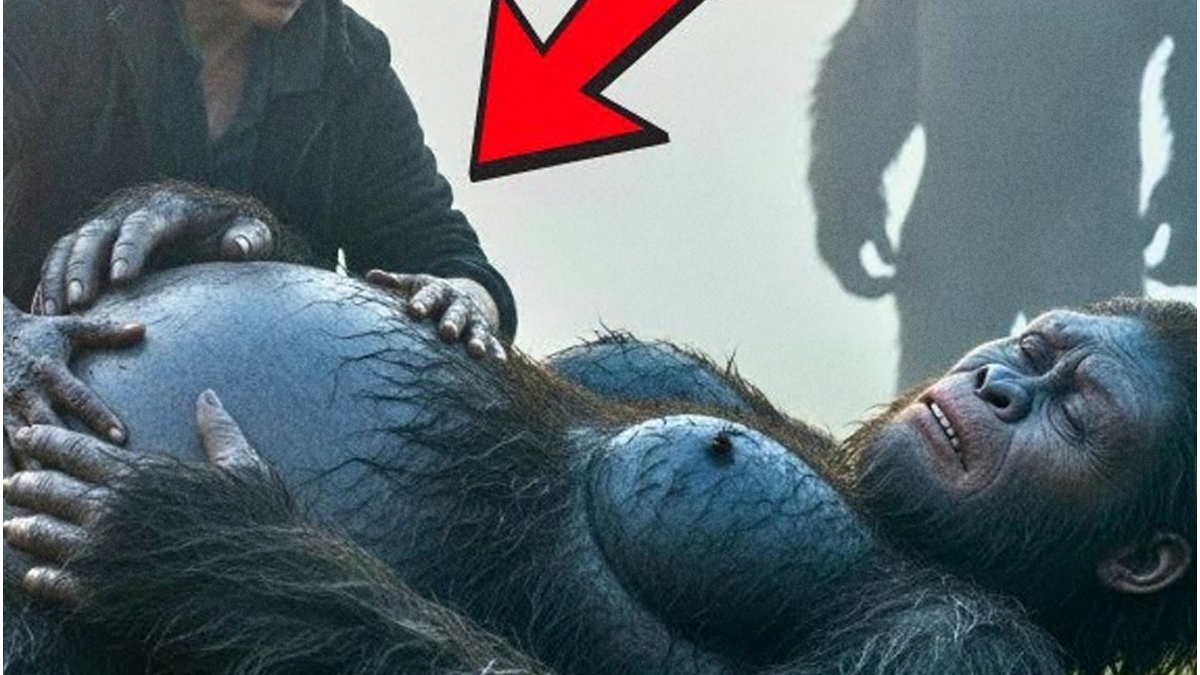
Woman Rescuer Helps Bigfoot Female Who Couldn’t Give Birth – Then a Miracle Happened.
Easy now.
I’m here to help.
Just try to breathe.
Have you ever dared to deliver a baby for a 9- ft Bigfoot in the middle of a stormy forest?

One cold, rain soaked night in Northern California, Martha Keane, a widowed veterinary nurse, hears a desperate cry echoing from the Shasta Trinity Woods.
What she finds changes everything.
A female Bigfoot in a life-threatening labor, guarded by her towering mate, wildeyed and terrified.
Against all instinct, Martha steps forward.
No words are exchanged.
Just breath, blood, and the bond of shared fear.
And beneath the trembling trees at dawn, a creature is born.
And so is a sacred connection that defies species, silence, and sorrow.
But the world doesn’t stay quiet for long.
Hunters come.
Blood is spilled.
And in one final act of love, the Bigfoot male lures the danger away, risking everything.
What follows is not a fantasy.
It’s a story of compassion, trust, and the invisible ways we save each other.
Because sometimes saving a life is how we end up saved.
So tell me, where are you watching this from?
How far can this story of silent kindness travel?
To each of you out there, wherever you may be, we send our warmest thanks and hope this tale finds you in a place of peace.
Spring rains clung to the roof shingles like cold breath caught between pine needles, the kind that seeped into the bones without asking.
Outside the forest of Shasta Trinity stirred in shadows, cloaked in fog and the thick scent of wet bark.
In a small timber cabin just off a dirt trail that had forgotten what pavement felt like, Jasper, the old shepherd mix with a limp in his left hind leg, lifted his head from the worn rug.
He didn’t bark, just stared toward the woods with the kind of stillness that comes before a storm.
That’s when the second sound came.
Low, broken, almost human, if not for the rasp that cut through it like metal on gravel.
A sound like something trying to stay quiet and failing.
Martha Keane was already halfway to the coat rack.
She moved like someone who’d lived enough years to know when fear should be heated and when it should be ignored.
Tonight, she ignored it.
She paused at the door, slid her arm through the sleeve of a thick wool cardigan, and took the flashlight off the hook beside the old calendar still turned to March.
Her hands lingered on the latch.
She glanced down at her medical bag, faded green canvas with the corners frayed, a zipper that only worked if you coaxed it gently, and then looked back at Jasper.
His ears didn’t twitch, but his eyes followed her.
No growl, no whine, just silence.
The woods were soaked.
Earth puddled under each step.
The path she used to take to check on orphaned fawns and the occasional barbed wire injury now led her into something she didn’t recognize.
The forest had a different kind of hush tonight.
Not peaceful listening.
Trees leaned like eavesdroppers.
Every pine needle heavy with cold.
The flashlight cast a narrow beam that dissolved into the mist just a few feet ahead.
It wasn’t enough, but it was all she had.
And still she followed the sound.
It took her to a dip in the terrain, the kind of natural basin where water pulled and runoff gathered.
There, under the thick shelter of towering pines, lay something that made her stop breathing.
Massive, curled, still, but not dead.
Its chest moved, shallow, erratic.
Each inhale sounded like air being pulled through teeth made of rusted blades.
It was covered in wet matted fur, dark and sllicked with mud.
But even beneath the mess, she saw the rise of a distended belly.
Labor, not just pain.
She didn’t move, didn’t step forward, didn’t dare.
Then a shift in the darkness, not from the shape on the ground, but from behind.
It emerged from the side like part of the forest had unlatched.
A figure taller than any man, shoulders broad enough to block the faint moonlight above, chest rising in deep, steady breaths.
It didn’t growl, didn’t charge.
It stepped between Martha and the creature on the ground, and then it stood there for a breathless second.
She expected violence, but it never came.
Instead, the towering figure, clearly male, if she had to assign a term to it, lowered his gaze, not to her face, but to her hands, or more precisely, the bag she carried.
Something in its eyes fixed there, like it knew what the bag meant, like it had seen something like it before.
The stare wasn’t a challenge.
It was a question.
She knelt, slow, deliberate.
Not close enough to touch, just enough to let him see.
Her voice, when it came, was calm and soft.
Not soothing, not scared, just honest.
My name’s Martha.
I’m here to help.
She doubted the words meant anything to him, but tone matters more than language in a forest like this.
She set the bag down, keeping her hand above it in full view, and unzipped it slowly.
The sound of metal teeth parting echoed louder than it should have.
Rain softened around them, drizzle turning to mist.
In the distance, a creek whispered, a steady hum of water against rock.
She moved toward the fallen creature, female, now clearly visible, and saw the eyes open slightly, bloodshot and rimmed with exhaustion.
Martha reached into the bag for her stethoscope, breath shallow as she leaned in.
The smell was thick, iron, musk, earth, but beneath it, something strangely familiar.
Fear, pain, hope, maybe.
She pressed the scope gently to the swollen abdomen and closed her eyes.
There it was, a heartbeat.
Two, actually, but only one strong.
The other faint, erratic, one baby still fighting.
One already too quiet.
She bit the inside of her cheek, forcing her own panic back into its cage.
Her hands moved without needing instruction.
Years of veterinary work surfacing like muscle memory.
She looked up once into the female’s eyes.
There was no pleading in them, just a slow blink, a kind of surrender, a kind of trust.
Martha knew what had to be done.
If she left now, that baby wouldn’t make it.
Maybe neither of them would.
The forest wouldn’t remember their names.
It wouldn’t leave a grave marker.
It would swallow them whole, and by morning there’d be nothing left but disturbed pine needles and the silence of something lost.
She reached back into the bag for gloves and gauze, knowing it wouldn’t be enough.
But it had to be the male.
He hadn’t moved.
He watched everything.
Not looming, not threatening, just watching, like someone who understood how fragile moments like these could be.
And in that stillness, beneath dripping trees and the soft hiss of rain against leaves, Martha Keane knelt beside something the world claimed didn’t exist and chose to stay.
She didn’t know why.
Not really.
It wasn’t about proof or bravery or stories to tell later.
It was about the weight in her chest that refused to let her walk away.
Because sometimes the forest offers no explanations, just a moment, just a choice.
And sometimes that’s enough.
The morning had barely broken through the wet gray sky when Martha returned, her boots still slick from the night before.
The first thing she did was check the clearing.
Still quiet, still breathing.
The forest hadn’t changed its mind yet.
The second thing she did was grab her old red backpack and repack it with fresh gauze, clean shears, a rolled bandage still sealed in plastic.
And two small vials of sedative meant for injured deer or livestock.
She debated bringing more, decided against it.
This wasn’t a surgery.
It was an act of survival measured in heartbeats.
She looped a length of braided rope over her shoulder, thick, smooth, something she’d used before to secure a nervous moose’s legs, and took a pair of leather gloves from the nail near the porch.
Then she stepped back into the wet.
Every sound in the woods felt closer now.
Birds didn’t sing.
Wind didn’t whistle.
Everything had the hush of a hospital waiting room.
She moved slow, always letting her weight settle before taking the next step.
Not because of fear, but because fear can startle a creature into doing something you both regret.
When she reached the low grove again, the shapes hadn’t shifted.
The male still stood like a statue built from soaked bark.
The female, she’d begun trembling again.
Martha didn’t need to touch her to see the pain.
She crouched nearby.
Not too close.
Not yet.
Her voice low, the same tone she’d once used when approaching a trapped coyote with glass in its paw.
I’m going to give her something.
It’s safe.
Just enough to slow the pain down.
She waited.
The male.
He didn’t blink, but he didn’t move forward either.
So, she reached slowly into her side pouch and drew the first vial, uncapped the needle, checked the dosage, whispered to herself without realizing.
She pinched the muscle above the hip, just like with elk, and injected the sedative in short, careful doses, one on each side, a breath, then another.
The female’s eyes flickered, her breathing shallow but steadier.
Martha placed one hand gently on the lower abdomen and felt the rigid resistance of a body that had been in labor too long.
She muttered a curse under her breath, then reached for the stethoscope.
Two heartbeats again, one slow and steady, one skipping like a weak signal on a radio.
She closed her eyes.
Guilt curled under her ribs like smoke.
Then she opened her eyes and moved.
She used the rope to guide the legs into a better position.
Not pulling, not tying, just easing the joints to open space for what had to come next.
The contractions had stalled during the night.
The first sack was already half delivered, the shape of a skull visible through the slick translucent membrane.
But there was no motion inside, nothing pressing against the wall.
The second sack was still deep inside, faint twitches rippling through it, barely there.
Still trying, Martha wiped sweat from her brow, though the air was still cold.
Her hands trembled.
She braced both knees, leaned over, and pressed gently on the abdomen to help the process along, shifting fluid guiding muscle.
Her breath fogged against the female’s ribs.
A low sound came from the mother’s throat.
Not pain this time, but something primal, something raw.
Not a cry, not a call, just sound.
Martha didn’t flinch.
She didn’t have time to be scared.
Minutes passed, then another hour.
Her wrists achd.
Her back screamed.
She whispered something under her breath again.
Not a prayer.
Not quite.
More like a promise.
I’m still here.
And then movement.
The second sack slid forward.
Not fast, not clean, but enough.
She reached for it as carefully as she’d ever touched anything.
Tore the membrane with the edge of her shears and pulled the infant out into her arMs. Wet, cold, lighter than she expected.
No cry.
She rubbed its chest.
No movement.
She turned it gently, cleared its nose and mouth rubbed again.
Then faintly, just faintly, the flicker of air in.
A tiny twitch.
Then another, a rasp, a high, trembling gasp, and then finally a sound.
Not loud, but real.
The female made a noise.
Then something between a moan and a sigh.
Her hand.
No, her fingers reached toward the space where Martha knelt.
Not quite touching, but close.
A gesture raw and silent.
Martha bowed her head and leaned forward so their foreheads touched just for a second, just long enough to say, “I didn’t leave.”
She wrapped the newborn in a clean cloth she tucked inside her coat.
Its limbs curled toward her instinctively, as if warmth was all it knew how to ask for.
She placed it near the mother’s arm, then stepped back.
The male, he was closer now.
She hadn’t noticed him move, but he stood barely three strides away, his breath heavy, his shoulders rising and falling like thunder on legs.
He didn’t reach out, didn’t snarl, just lowered his gaze once, briefly to the blood on her hands.
Martha didn’t move.
She let him look.
The clearing had gone so still she could hear the faint crackle of melting frost sliding from pine branches overhead.
Somewhere far off, a crow called out twice and then nothing.
Martha’s breath finally caught up with her.
She rose to her feet, not fast.
Her joints protested, but her mind was clear.
She took the used syringe, capped it, slid it back into the pouch, zipped the bag closed slow again.
Her legs felt like paper, but she stood.
A flash of yellow caught her eye on the ridge above.
Brief, quick, gone.
Lantern light, not natural, too straight, too purposeful.
She looked toward the male.
He had turned his head, seen it, too.
They were not alone.
She took one slow step back, then another.
The forest seemed to shift with her.
The creek was louder now, more insistent, as if reminding her time was not endless.
Back at her cabin, she grabbed what she could.
Extra dressings, heavier blankets, a spare thermal tarp, and a flashlight with a full charge.
She didn’t tell Jasper where she was going.
He already knew.
His eyes met hers without expectation or resistance.
She returned to the grove just before dusk.
The female had not moved much, but her eyes tracked Martha’s every step.
The baby lay curled beside her rib cage, breathing in short, steady hiccups.
The male paced a wider circle now, watching, guarding.
The light on the ridge had disappeared.
Martha didn’t ask why they hadn’t left.
She just knelt again, changed a dressing, draped the thermal wrap carefully over the mother’s legs.
She placed a bowl of warm water at her side and scattered dry leaves around the bedding to keep dampness from creeping in.
Her fingers worked from memory, from instinct, from something older than language.
She stayed until dark fell completely, until the cold slipped under her coat and settled deep into her spine.
Then she stood.
She turned to leave.
The male stepped out of the shadows again, blocking the path just long enough to remind her who she was walking away from.
Then he moved aside.
No threat, no sound, just that same look as before, the one that asked no favors, the one that didn’t forget.
As she made her way back down the hill, her feet crunching into softened earth, the fog settled in again.
Lights flickered in the distance.
Distant campsites or something else.
She didn’t know.
She walked faster and in her mind, the sound of that first tiny breath replayed over and over again.
Thin, ragged, and more precious than anything she could name.
And still, the rain didn’t stop.
Three days passed like breath in cold glass.
Each one slow, fogged, and barely holding shape.
The rain pulled back in ribbons, leaving the pine needles slick and dark like they’d been brushed in oil.
Martha moved early each morning with her sleeves still damp from the night before, hauling bundles wrapped in canvas, one hand always clutching the tarp edge, the other swatting brambles that never used to grow this fast.
She’d set up the shelter on a little rise above the creek, just far enough from the muddy bend where the water chattered and spit, but close enough for her to fetch clean buckets.
The structure wasn’t much.
Blue tarpollen stretched tight over pine poles, anchored with stakes from her tool shed and knots she remembered from an old trail guide someone gave her back when she thought she’d live by hiking.
There were stones circled for a fire, stacked wood she split by hand, and a battered steel kettle she hung from a chain that used to hold up flower baskets on her porch.
She hadn’t used it in years.
Now it hissed every morning, spilling steam into the quiet air, like it belonged there all along.
The creature, Iron, though she hadn’t named her out loud yet, stayed under the tarp.
She moved only to shift her weight, lean toward the child, or track Martha’s hands with cautious, alert eyes.
The newborn slept mostly, tucked in a wool blanket torn from an old saddle pad, he maybe she breathed in short, steady whiffs, fingers curled, legs twitching once in a while like a pup still chasing something inside a dream.
Thorne hovered around the edges, always outside the fire light, always far enough to not be a threat, but never out of reach.
His movements were slow, like someone walking a fence line, not circling, guarding.
Sometimes he’d step just close enough for Martha to hear the deep draw of his breath or see the gleam of light slide across the ridge of his shoulder.
But he never stepped between her and the others again.
Not after that first night.
He watched her boil water, fold bandages, hang strips of rabbit jerky on a low branch to dry.
He watched her stir cornmeal into a paste and leave it on a flat stone alongside a metal bowl of warm creek water and three broken pieces of dog biscuit Jasper didn’t finish.
She didn’t ask if they’d eat.
She just set it down, walked 20 paces back, and sat on a log like she had nothing to do with any of it.
That’s how it worked.
Distance, patience.
She never turned her back, but she never forced a gesture either.
They didn’t either.
And that balance, quiet as it was, held for a time.
One afternoon, while the fire had died down to faint coals and the sun pressed a soft gold through the canopy, something changed.
The baby stirred.
Not just the flutter of limbs or breath hiccups, but a full body motion, a push.
He she rolled slightly and let out a squeaky breath that sounded more curious than startled.
The mother stirred, shifted her palm around him in a gentle arc, and fell still again.
That’s when Martha felt it.
Something touched her.
Not pain, not warmth, just contact.
She looked down.
A tiny fingertip, wet, dark, and barely formed, had brushed her jeans near the knee.
She hadn’t noticed him crawl.
Hadn’t felt a sound, just that one touch.
When she glanced over, the child had already snapped back to the fold of his mother’s arm, eyes wide and watching, like a rabbit sensing thunder, like he just crossed a line and wasn’t sure if the world would forgive him for it.
There was no growl, no huff from the mother, and Thorne didn’t step forward, just silence again, the kind that feels thicker than it should be.
Martha stayed still.
She didn’t smile, didn’t move.
She just let her hand settle beside her hip, palm flat on the log, open, not reaching.
Then she exhaled slow and steady, and whispered something only the wind could carry.
After that moment, the distance didn’t feel as wide.
That night, clouds rolled in, but didn’t weep, just drifted like ghosts over the treetops.
Back at the cabin, Jasper’s ears twitched in his sleep.
The porch light stayed off.
Everything was quieter now until the knock.
Three short wraps, not loud, not urgent, just enough.
She opened the door with a flashlight already in her grip and her boots halfon.
On the porch stood Roy Garner, badge clipped to his belt, a thermos under one arm, and a look that said he’d come straight from a conversation he didn’t like.
“I was in town,” he said, shifting his weight on the boards.
“Heard some talk.”
Martha stepped aside without a word.
He walked in like he used to back when they’d patch up barn cats together or laugh over how many times someone misdialed her number thinking she was the bakery.
They were at Gordon’s last night.
The hunters, that trio from Eureka, plus some tagalongs talking too loud about things they don’t understand.
Roy set the thermos on her counter then pulled out a folded paper flyer style.
Someone’s put up a cash bounty for proof.
Not an actual photo, not a print.
They want remains.
Martha didn’t touch the paper.
They mentioned this area.
The ridge trail near the Twin Creeks.
Close enough.
She said nothing.
Don’t leave anything behind.
No food, no scraps, no footprints if you can help it.
You know how they track.
Martha nodded slowly.
She felt the weight of it settle between her ribs like cold soup.
Roy didn’t stay long.
He didn’t want dinner.
Didn’t ask questions she couldn’t answer.
But before he left, he paused at the door.
“You’re sure, aren’t you?”
He asked.
Her eyes didn’t blink.
“I saw them,” he gave a small nod.
“Then just don’t get caught being kind.
Not around here.”
She watched his tail lights disappear down the dirt road, the dust too damp to rise.
Inside, she sat on the floor for a long time, staring at her old boots, trying to remember when people stopped seeing mercy as a virtue.
The next morning, back in the grove, something else had changed.
The leaves around the sleeping area had been cleared, not torn up, not trampled, but gently peeled back, as if someone had swept them aside.
Beneath the straw bedding, bark had been stripped and stacked, forming a subtle cushion against the damp.
At the edge of the shelter, someone had built a small barrier, sticks woven roughly like a windbreak.
Martha crouched and ran her hand along the work.
It wasn’t random, not wild animal scatter.
This had intention.
She turned slowly, scanning the woods beyond.
Thorne stood at the edge of the creek, backlit by a shaft of morning light, arms loose at his sides, chest rising slow.
He didn’t move, but he didn’t vanish either.
Martha stood too.
She didn’t raise her voice, just nodded once, the way you would to someone who showed up when they didn’t have to.
The silence between them wasn’t empty.
That evening, when the sky turned purple and the clouds gathered like thoughts unsaid, Martha brought a small bundle wrapped in cloth, dry socks, some carrots, a folded packet of dried fish.
She left it near the creek beside a stone she’d marked with a white X.
Then she walked back through the trees, her boots brushing moss that held the shape of her step a little longer than usual.
Something had shifted again.
Not loud, not sharp, but real.
And that shift, she knew, would only lead deeper, because kindness, once given, has a way of being remembered, even by those who never learned the word for it.
The sky had forgotten how to wake clean that morning, hanging low and colorless like a wet sheet stretched over the ridge.
The fog pressed in early, not drifting like before, but sinking, thick and full of old breath.
Martha’s boots squatchched into the muddy slope as she carried a thermos of warm barley broth and a pouch of fresh gauze up toward the shelter.
The forest, so familiar just days ago, now felt uncertain, like it had taken a half step back and was waiting for something to happen.
And something did.
It started with a sound.
Off, wet, sudden.
Not the creek, not the wind.
It came from the ferns near the dog leg bend in the trail where dappled sunlight used to peek through.
But not this morning.
This morning, everything was gray, flat, indifferent.
Martha froze.
Her grip tightened on the thermos.
Then she heard it again.
Another rustle, sharp and urgent.
She ran.
Her feet found the path before her mind did.
Mud pulled at her ankles.
Branches slapped her shoulders.
The sound grew louder.
Something was moving, thrashing just past the rockout crop near the blackberry brush.
She broke through a line of ferns and nearly dropped everything in her hands.
Iron lay sprawled in the undergrowth.
One leg caught in something glinting metal, dark and jagged and cruel.
A steeljawed trap, not a snare, not one of those half-rusted homemade clamps meant for coyotes.
This was heavy duty, illegal.
Martha could see where it had bit through flesh near the bend of the knee, and the blood wasn’t bright anymore.
It was thick, clotted, black as old oil on pine bark.
The baby, still small, still unsure of the world, was curled against her belly, silent but wideeyed.
The color of his gaze was changing now, taking on that golden amber sheen like fog caught in late sun.
But today there was no sun.
Before she could take a step closer, the underbrush behind her exploded.
Thorne barreled into view, a dark blur of mass and breath, all muscle and intent.
He planted himself between Martha and Iron so fast she had to jump back to keep from being knocked over.
His arms didn’t rise, his teeth didn’t flash, but his body was a question now, a warning wrapped in tension.
His breath steamed into the morning, thick and ragged, chest heaving like a bellows held too long in flame.
Martha raised both hands, fingers open.
Her voice came out lower than she expected.
I didn’t do this.
He didn’t blink, didn’t move.
She pointed slowly toward Iron, who’d stopped thrashing now, but was clearly fading.
Lips parted, eyes unfocused.
She’s losing blood.
I have to help her.
Still nothing.
So, she did the only thing that made sense.
She dropped her bag onto the ground, opened it wide, and reached for the radio.
It crackled when she pressed the button, a burst of static, then a voice, tiny and half asleep.
“Dr. Marsh, Lillian, it’s me.”
There was a pause, then the sound of shuffling, a soft grunt.
“Martha, you okay?”
“No,” she said, and her voice cracked on the second word.
“I’ve got a steel trap.
It’s deep.
I need a lever system.
I need a wedge.”
Another pause.
Then Lillian’s voice sharpened.
Cut through the static like a bone saw.
You’re out there.
Where the hell are you?
Same clearing near the creek.
Dusk side, north slope.
Jesus.
The line went quiet for a second.
Then came the instructions.
Measured, focused.
The kind that only came from someone who’d seen too many bad things and learned how to hold them anyway.
You need to stabilize the leg.
Get two branches length of your forearm.
One clean cloth.
You’ll wedge the hinge first.
Don’t trigger the spring or she’ll lose it completely.
Martha nodded even though no one could see her.
Got it.
I’ll send Roy.
No, she said fast.
They’ll track him.
Martha, I’ll handle it.
Just stay on the line.
She set the radio down, voice still humming in the air, then turned to Thorne.
His eyes hadn’t left her hands.
He didn’t move when she knelt.
Didn’t stop her when she crawled slow and sideways toward Iron’s leg.
The trap was brutal, commercial grade, clean edges, thick steel jaws, the kind sold online to men who didn’t ask questions.
The chain was buried beneath the dirt, bolted to a ground plate.
Martha took out her knife and dug around it, pushing leaves and old pine needles aside until she found the anchor point.
She couldn’t move it, not with her weight alone.
So she reached for two branches she’d passed on the trail.
One she slid under the hinge.
The other she placed against the locking bar.
Her hands were soaked with blood now.
Not just smeared, drenched.
It stuck to her wrists, her sleeves, the creases in her palMs. Iron stirred once, then went limp again.
Martha inhaled through her teeth and pressed down.
The trap didn’t budge.
She cursed.
Quiet, sharp, and tried again.
The wood creaked, then snapped.
“Damn it!”
She fumbled in her bag, grabbed a roll of gauze, and shoved it between the hinge.
Not strong enough, not thick enough.
The trap wouldn’t release without pressure on both sides.
Her pulse thudded in her ears.
Behind her, thorn shifted.
One massive foot planted a little closer.
Martha didn’t look back.
“If you want her to live,” she whispered.
You have to trust me.
She pressed again.
The second branch cracked, but this time it held long enough.
With her knee braced and her back straining, she twisted her whole weight into the angle.
The trap hissed, released.
Iron didn’t cry out.
She didn’t move, just slumped, her leg free.
Blood pooling fast now in the damp earth.
Martha wrapped the limb in what fabric she had, applied pressure, counted heartbeats in her head.
1 2 3 4.
Still shallow, still there.
The sound of branches crunching made her look up.
Roy was there, not stomping, not shouting, just stepping through the mist, face set hard like wet stone, his hand on his holster even though he hadn’t drawn.
He saw the blood, the trap, the creature.
He didn’t blink.
“You didn’t call,” he said, voice flat.
“She would have died,” he nodded once, then looked at the trap.
That’s marked.
One of the seizures still under federal seal.
Anyone moves it, it’s obstruction.
Martha’s jaw clenched.
So, what should I have done?
Let her die?
Roy crouched beside the wreckage.
Pulled out a small pad and signed something quick.
Tore the page loose, handed it to her.
Officially, he said, I was here first.
You followed after.
She stared at him.
That won’t hold.
It’ll hold long enough.
Behind them.
Iron groaned faintly.
They moved together then, Martha guiding the cloth, Roy lifting gently under her arMs. She was heavy, solid, the weight of a creature not meant to be carried.
But they managed.
They got her to the edge of the woods, to the old livestock pen behind Martha’s house, long since abandoned but dry, with enough room to lay her down and work by lantern light.
As they settled her against the straw, the baby let out a tiny sound, barely more than a breath.
Thorne, standing just inside the door, didn’t move, but his eyes burned into Martha like the promise of a storm.
Outside, the wind shifted.
The sky bruised darker, and in the distance, something echoed, sharp, hollow, and not meant to be heard by ears that choose silence.
But it was too late now to unchoose.
And as Martha pressed her palm against the still warm skin of a wounded mother, she knew this was only the beginning of what it meant to not walk away.
Under the thin breath of dawn, the roof line of Martha’s cabin wore a veil of fog, clinging like quiet regret.
The old livestock pen out back, unused for years, had been stripped of cobwebs, cleared of brittle hay, and scrubbed with boiled creek water until the smell of rot gave way to something faintly sweet, like split pine, Martha hadn’t meant for it to become a recovery ward.
But now, with Iron’s breath ragged and slow, and the baby curled against her like a second heartbeat, it was the only place that made sense.
She’d lined the walls with old quilts and fleece blankets, all worn soft with time, tacked tarps over the cracked slats where wind might crawl through.
Laid down layers of fresh straw, then gently folded a loop of mended netting around the open gate, not to trap, just to give a sense of boundary.
And every hour she came back to check, to adjust the soaked dressing around the leg, to keep the warm compress pressed to Iron’s side, to whisper something low and rhythmic.
Not words, just breath bent into music.
The same kind she used to hum when the power went out, and her daughter was too small to understand what darkness really meant.
That morning she sat with her back against the far wall, knees pulled up, the kettle steeping in the corner with a few dry needles dropped in for aroma.
She hadn’t slept, not really.
Just closed her eyes sometimes and listened to the way the wood settled in the cold.
Iron had drifted off again, her face turned slightly toward the warmth.
The baby moved in fitful spurts, murmuring against her chest.
Outside, the wind clicked softly in the gutters.
The kind of hush that made sound feel too loud.
Martha looked down at her hands.
The bandage tape stuck to her wrists.
Blood still under her nails.
She pressed her palms together just to feel something solid.
Something still there.
In the quiet, a memory rose.
Uninvited, unwanted.
Her daughter’s breath shallow and sudden.
That last winter when the fever climbed and wouldn’t come back down.
The space between each breath widening until it didn’t anymore.
The silence after that had been unbearable.
But now, now she couldn’t stop listening for breath.
Watching chests rise and fall.
She wasn’t trying to save anyone anymore.
She just couldn’t let another mother break.
She stood slow, every joint stiff, pulled a pail of hot water from the stove, and stepped outside to dump it at the tree line where the runoff trickled down into the hollow.
That’s when she saw it.
A new trench.
Not wide, not deep, but fresh.
Soil packed with purpose, rimmed with neat bootsized mounds, and a steady incline leading water away from the pen’s foundation.
Another stretch curved around to the north side where the slope dropped.
A wedge of bark had been jammed into the edge to divert the flow even farther.
She stared for a long time.
That wasn’t there last night.
She followed it with her eyes, then looked toward the woods.
A shadow moved just once, then gone.
He’d been here, not during the day, not while she sat watch.
Sometime between midnight and now, when her head finally leaned against the post, and her breath slipped long and even, Thorne had come, not to knock, not to speak, just to fix what needed fixing.
She returned inside and found the small stack of river rocks in the corner, four of them, dry and warm, lined up beside the pallet where Iron slept.
Someone had shaped a windbreak at the base of the vent hole, too, packing it with bundles of dry grass twisted into ropes.
They directed the flow of warm air inward, gently instead of letting it escape into the cold.
Martha traced it with her fingertips, the work tight, efficient.
Someone had studied how the heat moved, had taken the time to shift it silently for her.
She blinked hard, then wiped her palms on her jeans and picked up the kettle again.
The baby stirred and made a soft noise, eyes fluttering beneath furrowed lids.
Iron didn’t wake, but her breathing was steadier now.
Not perfect, not strong, but less ragged.
The swelling had begun to retreat.
Around midday, a truck engine growled up the road in a loose gear.
The tires didn’t spin, just rolled slow and deliberate up the path until the front end of Royy’s patrol vehicle nudged the split rail fence.
Jasper barked once from under the porch, then gave up and flopped down again.
Roy stepped out with a look that said he didn’t come for coffee.
Martha met him halfway down the porch steps, wiping her hands on a rag that used to be a shirt sleeve.
“They’re tracking now,” he said without small talk.
“I heard him this morning.
One of the scouts said they picked up a trail near Dunlap’s Ridge.
“Something spooked the deer up there.”
“They’re close,” she muttered.
“They’ll come down this way by evening.”
Martha didn’t answer.
He handed her a new roll of sterile wrap and a plastic tube of penicellin paste.
“Lilian said this might help, and she said not to try the old whiskey trick, not with something that size.”
Martha took it without looking up.
He lingered a moment, then added, “They asked me questions at the station about you, about supplies logged out, missing paperwork.
You tell them.”
I told them to go to hell.
She almost smiled.
They’ll be back.
Might not be me next time.
I know.
He nodded toward the woods.
That one, the big one.
He’s not just watching you.
He’s learning you.
I know that, too.
Before he turned to leave, he reached into his coat and pulled out a small metal key, pressed it into her hand.
My father’s old trap door safe, bottom of the cedar chest in my basement.
There’s paperwork in there, a few maps, one or two things that might buy you time if it comes to that.
She closed her fingers around the key.
I won’t be around much longer.
They’re moving me to But County.
Reassignment.
Quiet.
When?
End of next week.
Her throat tightened.
“They know you’ve seen something.
They don’t want to know.
They just want it gone.”
He looked out toward the trees again.
“You going to run?”
“No,” she said.
“I’m going to finish what I started.”
He turned, stepped back into the truck, and didn’t say goodbye.
That night, as the shadows lengthened, and the cold crept down through the beams of the barn roof, Martha lit the small lantern and sat in the corner beside Iron’s pallet.
She crushed the last of the dried wild mint into the broth, stirred it gently, and let the scent carry.
The baby reached out blindly and found her wrist.
Not hard, just barely.
A touch of trust.
She looked down at him, at his long fingers, his curling dark hair, his eyes opening wider now with each day.
There was understanding in those eyes, not full, not formed, but growing.
Outside, the wind curled in from the south.
She heard a distant rustle, like branches moving too close together, then silence again.
Later, just before the oil and the lantern burned out, she stepped to the door and cracked it open to breathe in the dark.
She didn’t expect to see him, but he was there.
Thorne, standing just beyond the fence line, his shoulders catching the faint edge of moonlight, breath rising in short plumes.
He didn’t speak, didn’t step forward, just looked at her with something between waiting and knowing, and in his stillness, she felt the weight of something passing from him to her, an understanding, unspoken, but undeniable.
She nodded once, then closed the door.
Inside, the baby was asleep again.
Iron’s chest rose and fell with quiet resolve.
And in that hush, Martha felt it.
The forest hadn’t turned against them.
Not yet, but it had started to listen more closely.
She stepped back into the shadows and let the night hold its breath.
Under the suffocating stillness of a low October sky, the light never truly arrived.
Just a dull glow behind the clouds like a tired eye struggling to open.
Fog bled into every edge of the forest swallowed the slope, filled the hollow behind Martha’s house like rising flood water.
The air smelled like rust and wet pine, and everything that could hold a drop of moisture did.
Inside the cabin, even the floorboard seemed to sweat.
It had started the night before.
Headlights in the trees.
Too far to be a neighbor.
Too slow to be a passer by.
One, then two.
Then a brief third flicker that blinked out before the tires stopped crunching.
Martha had stood on her porch barefoot, heart ticking behind her ribs, eyes scanning the treeine where the road hooked east beyond the cedar break.
Nothing moved, not even Jasper, who’d gone stiff and silent beside the porch swing.
She didn’t need to hear the doors open to know what they meant.
Men don’t drive that far on muddy switchbacks with flashlights taped to rifles unless they’re planning to stay until something bleeds.
By morning, the dogs had stopped barking up in Bernett Hollow.
That told her more than any radio ever could.
She dressed without sound.
Black shirt, thick denim, coat that didn’t scream for attention.
In the barn, Iron was sleeping in fits again, leg wrapped in clean gauze, the swelling down but not gone.
The baby had curled into the softest corner of straw, barely visible beneath the quilt stitched with her daughter’s name in fading purple thread.
Martha touched the edge of it like it might burn.
She hadn’t meant to use it.
But some things you carry just to know you still can.
Then the first shot cracked.
Far off.
Muffled, but real.
Not a warning.
A kill.
She didn’t flinch.
Just turned back inside, grabbed the old 22 from the nail behind the door.
Not for shooting, not for showing, just to have, and slipped it beneath the bench in the entryway.
Then she picked up the radio.
“Roy,” she said, her voice barely above gravel, static, then a hiss.
“I know,” he said.
“They’re close.
They’ve got dogs.”
How many?
Four trucks.
Maybe five.
Twoman teaMs. They’re working the ridge line.
Not your side yet.
They will.
I’m on it.
He didn’t ask.
Didn’t tell her to run.
Instead, 20 minutes later, he was in her yard, slinging a can of pig’s blood from the back of his truck and dragging it in a line from the edge of the old sugar maples down through the gully that led away from the barn.
He worked fast, every gesture tight.
Efficient without a word.
Martha watched from the back porch, not asking, not stopping him.
“You sure?”
She asked once.
He didn’t answer until he was done.
“They’re already on the move.
Just need to steer them the long way down.
He popped the trunk, pulled out a strip of fur soaked in something red, and tossed it onto a nearby rock.”
“Bought us a window?”
She exhaled.
“How long?”
“Not enough.
That night, everything slowed down.
She blacked out every window in the cabin, hung an old quilt over the barn door from the inside, and tucked the baby closer to the heating stone beneath the pallet, left just enough space for air flow.
Set a bowl of warm water near Iron’s head.
Checked it twice.
The child’s eyes stayed open more now, blinking slower, longer, holding on just a second past where you’d expect.
He wasn’t afraid, just quiet like he knew.
By dusk, headlights crept closer.
One pair then another.
They didn’t roar in, didn’t shout.
That was worse.
She could hear the scrape of boots, the metallic rattle of slung weapons.
Someone whispered a name too low to catch.
Then a beam of light slashed across the far edge of the pasture, catching fog like smoke.
Jasper growled from beneath the floorboards and went still again.
Martha stood at the kitchen window, counting the seconds between passes.
Seven lights, three paused too long at the split rail fence.
One turned off.
She didn’t touch the radio.
Not yet.
Out back in the high ground above the barn, something moved.
A dark silhouette against darker trees.
It stood tall, arms loose, shoulders wide enough to block the path of the moon.
Thorne.
He didn’t need to be seen to be known.
He stepped forward just far enough for his body to be caught in the spill of a flashlight from below, then lifted his head high, deliberate, and let out a low, guttural sound that wasn’t a roar, wasn’t a howl, but something in between.
A warning that didn’t need translation.
The forest paused, then chaos broke.
Shouts, footsteps slamming into brush.
A second light swinging fast toward the rise, a third catching only mist in the empty space where he’d been.
One shot rang out, then another.
Wild, no impact.
Royy’s voice cracked over the radio.
I gave him a false read.
Sent him 2 mi south.
“You sure?”
She asked, already knowing the answer.
“They’re chasing ghosts.”
She didn’t thank him.
He didn’t wait for her to.
Later that night, after the trucks pulled away, after the voices faded into the low roar of the valley, Martha walked the edge of her property line with a flashlight turned low.
Every few feet, she knelt, checked the traps she hadn’t set, kicked over the markers they’d left behind.
One of them had dropped a glove, camouflage print, still damp with sweat.
She didn’t pick it up, just left it there in the mud.
When she reached the barn, she paused.
Inside, the lantern was still burning.
Iron hadn’t moved, but in the fresh straw near the vent, someone had drawn three lines in the dust.
Not scratched, not random.
Three marks, deliberate, like a signature or a message.
She stared at them until her knees achd, then covered them with a folded towel and turned out the light.
The hunters would come again.
She knew that now, but so would he, and that somehow meant she could sleep.
Under the soft breath of a spring wind, the light fell in streaks across the grass-like memory.
Warmed gold, quiet, and almost hesitant.
Days had passed without gunfire.
No tires chewed up the gravel.
No beams swept through the pines at night.
Just wind threading between trees and the quiet groan of the forest returning to itself.
It wasn’t peace, not really.
Just the kind of pause that comes when everyone’s holding their breath, waiting to see if the silence will stay.
And in that hush, the hollow behind Martha’s house began to breathe again.
The barn took on a rhythm.
Heat by sunrise, fresh bedding by noon, boiled roots and bone broth cooling on the shelf by dusk.
Iron, though still stiff in her right leg, had begun standing on her own, her weight shifting with caution, but not weakness.
Each movement came with a grunt, low and strained.
But she moved, and with her came the child, now alert in ways Martha couldn’t name.
His limbs longer, his gaze steadier.
He followed his mother’s shadow like a tether, but more and more he let his own curiosity pull ahead.
He no longer startled when Martha approached.
He no longer hid behind Iron’s side when she lit the lantern or brushed fresh hay near their bedding.
One morning, as she knelt to refill the water basin, he crept within arms reach.
She could feel the warmth of his breath on her sleeve.
Could see the pulse at his throat flicker like a moth’s wing.
Then a small sound, not quite a chirp, not a word, but something aimed at her.
A soft thread of air, deliberate, a call without language.
She didn’t answer, just turned her hand upward, palm open, and let him decide.
He didn’t touch her, but he stayed.
By the fourth day, the limp in Iron’s gate had softened to a hesitation.
Martha watched from the porch that morning, coffee cooling beside her as Iron took five full steps along the fence line without stopping.
The baby stumbled after her barefoot and sure.
When they reached the far post, she paused, turned toward the trees, stood there a long time.
Then came the sound, a hush before it, like the forest stopped breathing.
Then clear and low, a call, not loud, not a warning, just a long, drawn out exhale that carried across the ridge line like smoke.
Martha stood slowly, her spine tightening before her breath did.
Iron didn’t flinch.
She turned fully toward the sound and gave no answer, but her shoulders lifted and the child pressed close to her side.
From the trees came motion.
Thorns stepped through the shadows as if they parted for him alone.
His shoulders filled the gaps between the cedars.
His chest moved in long, careful pulls, as if he knew every breath mattered now.
He didn’t speak, didn’t reach out.
He just stood there watching the barn, the fence, the place where Martha stood with her mug in hand and her pulse climbing in her ears.
Iron moved first.
She walked to the fence and leaned her shoulder gently against the post, her head dipping once, not submissive, not unsure, just recognition.
The child peeked around her leg, blinking once, twice, then slowly walked forward.
Martha stayed where she was, her hand resting on the porch rail.
She didn’t move, didn’t speak, but something inside her pulled taut and quiet.
Something that knew a moment was opening.
The child crossed the yard with steps still clumsy, but no longer uncertain.
At the fence, he paused, reached out.
Thorne knelt.
It was not a grand reunion, no roar, no embrace, just closeness.
Stillness, the way old trees lean into wind.
And in that silence, something passed between them, unseen, unnamed, but as clear as a stream that knows its direction.
Later, when the sun dipped and turned the field to amber, Martha opened the barn gate wide.
Iron stepped out first, not hurried, not afraid, she walked as if this had always been part of the plan.
The child followed her, casting one long look back toward the cabin.
Then he turned toward the trees.
At the edge of the forest, Thorne waited.
Martha didn’t follow them.
She just stood there, hands still resting on the latch, the scent of cedar and old straw clinging to her skin.
She didn’t cry.
She didn’t smile, but her chest achd with something she couldn’t name.
Iron reached her mate and touched her forehead lightly to his.
Then she stepped aside giving space.
The child approached him, paused, and lifted his face.
Thorne reached out, touched the top of his head with a hand big enough to cover it whole.
They didn’t leave immediately.
They stood there, the three of them, as the light fell and the sky took on that heavy blue just before full dark.
Then, one step at a time, they disappeared into the trees.
And just like that, the hollow was still, not empty, not abandoned, just quiet.
Martha stepped back inside without turning on the porch light.
She sat down at the table, folded her hands around the mug she hadn’t finished, and let the silence settle in her bones.
Outside, the grass stirred with wind.
No trucks came that night, no dogs, no men with flashlights.
Only the distant echo of something soft and low, like a memory being carried across the timberline.
A sound not meant for her, but one she would remember.
The first days of summer came quiet, as if the world had tired itself out and decided to rest.
Light fell slower on the porch.
Dust hung longer in the air, and the wind that used to pull at the shingles now just whispered across the eaves like an old friend checking in.
Martha moved slower, too.
Not from age, not from pain, but from the weight of what had passed through.
She didn’t need clocks anymore to mark time.
The changes were written in the way the grass yellowed under the sun, in how the creek behind her house lost its angry spring froth and started moving like molasses through the rocks, in the way the woods, once tight with watching, now exhaled.
She sat on the porch each morning with the same chipped mug filled with weak coffee that her stomach could tolerate, and stared out at the treeine like it still held someone she owed something to.
The roof above her was mossy again.
The rafter she’d meant to fix now softened from one too many rains, but she didn’t mind.
Let things lean.
Let things grow wild.
She wasn’t chasing tidy anymore.
Jasper lay at her feet, his muzzle grayer, his body heavier, though he still raised his head when the wind changed direction.
The barn out back stood open now.
No need to hide.
No footprints to erase.
The bedding had been cleared.
The quilt washed and folded.
She kept the space clean, though it stayed empty.
Empty, but not forgotten.
That morning, she heard the rumble of tires before she saw them.
Not fast, not hostile, just familiar.
Royy’s truck eased up the old gravel stretch and parked where it always had, just shy of the fence line, where the sycamore leaned in like it wanted to overhear every goodbye.
He stepped out slow.
He was thinner now, the kind of thin that comes not from hunger, but from carrying too much of something you can’t drop.
His shirt hung looser, and the dark under his eyes had settled in permanent.
He didn’t wear the badge anymore, but it still followed him, and how he scanned the woods first, not the porch, in how he approached like something might still be watching.
Martha didn’t rise, just offered the small nod that had come to mean more between them than any words.
Roy climbed the steps with a grunt and sat beside her.
His hands clasped in front of him like he had to hold something still.
They reassigned me, he said after a while.
I figured Trinity County.
I’ll be gone by next week.
You say goodbye to the station.
He shook his head.
Didn’t feel like it mattered.
They sat in that for a while.
The air thick with honeysuckle and engine heat.
He pulled something from his pocket.
A folded note.
Slid it across the railing.
They’re reviewing Lillian’s license.
Said some supplies were logged out without full paperwork.
I don’t think they’ll push it, but she’s done.
She said she’d rather lose her clinic than lie about what she saw.
Martha didn’t unfold the paper.
She didn’t need to read it.
She says she doesn’t regret it.
Roy added.
Said to tell you that.
Martha stared out toward the trees.
I wouldn’t take any of it back.
No, he said almost to himself.
Me neither.
Then something in the silence shifted.
Royy’s gaze lifted past the trees toward the ridge where the sun caught the tops of the furs and threw gold across the clearing.
He narrowed his eyes.
Martha followed his line of sight.
At the edge of the wood, three shapes moved between light and leaf.
Not sudden, not dramatic, just present.
Stepping into view like the forest had decided to let them be seen.
Thorne led, his gate steady, his chest broader than Martha remembered.
Or maybe she was just now seeing it without fear between them.
Behind him, Iron moved with a calm purpose, the stiffness in her leg no longer a limp, but a mark of where she’d been.
And between them, small no longer, the child walked.
Not a toddler, not quite a youth, but full of that unspoken grace that only comes from being born into a world that required silence before sound.
The three of them paused near the ridge.
They did not approach the fence, did not wave, did not bow.
They simply stood there, bathed in the amber light of late morning.
Roy stood slowly, hat in hand.
Martha stayed seated.
The child stepped forward, one pace, then another, then stopped, not in fear, just to look, his eyes, amber and alert, met hers across the wide stretch of field.
He tilted his head the same way he had once before in the barn when he didn’t yet have words for trust.
And then without cue, he turned not to run, not to vanish, just to walk beside his mother and father as they crossed into the deeper woods.
No sound marked their exit.
No final gesture, just the stillness that followed them, like the air itself paused to let them pass.
Roy exhaled and sat back down.
I guess that’s it, he said.
Martha didn’t answer.
Not yet.
She let the quiet fall like a blanket.
Let it settle over her like the ache in old bones.
Then finally she spoke.
No, that’s just what it looked like.
Roy frowned.
What do you mean?
She turned her face toward him, her voice soft, certain.
That wasn’t an ending.
That was a return.
He didn’t ask what she meant.
Didn’t need to.
The wind shifted.
A slow, steady hum across the tall grass, catching the edge of the porch steps from the trees.
A single sound carried a low drawn note, almost like a song.
Not mournful, not wild, just full.
It echoed once, then drifted off.
Martha set her coffee down.
Let the warmth linger in her palMs. She looked out at the ridge one last time and felt her chest rise steady with the air.
She wasn’t waiting anymore.
She was listening.
And far away, in some place deeper than most folks will ever find on a map, a memory answered back.
Sometimes the most extraordinary stories don’t come from grand gestures or heroic feats, but from quiet decisions made in the stillness of the heart.
A choice to stay when it would be easier to walk away.
To offer warmth instead of fear.
To listen, not just with ears, but with patience.
In a world too often defined by what we take, there’s something sacred about simply giving care.
With no promise of return, no name etched in stone, no need to be known.
Because compassion, once given, has a way of echoing.
It leaves no map behind, no clear path forward.
But it lives in the small things.
In the way someone reaches out without words, in the way a wound begins to close, not from medicine alone, but from the trust that someone stayed.
These are the stories that remind us we don’t have to understand everything to choose mercy.
That mystery doesn’t always need solving.
Sometimes it just needs honoring.
The world is wide and much of it still waits in shadow.
But not everything in the dark is lost.
Not everything that hides is dangerous.
And not everything that walks on two legs is human.
Somewhere out there, something remembers the hand that didn’t pull away.
The door that stayed open.
The kindness that came without condition.
And maybe that’s all it takes to change the ending of a story.
Thank you for walking with us through this quiet corner of the woods.
If this story touched something in you, if it made you think, made you feel, or simply reminded you of what it means to care, please let us know in the comments.
We’d love to hear what stayed with you.
And if you’d like to hear more stories like this, where the extraordinary meets the deeply human, don’t forget to like, subscribe, and share with someone who might need a little wonder tonight.
We’ll see you out there, wherever kindness finds its way back home.








