WEEPING Bigfoot Mother Begs A Man To Save Her Dying Son – What Happened After Will Break Your Heart
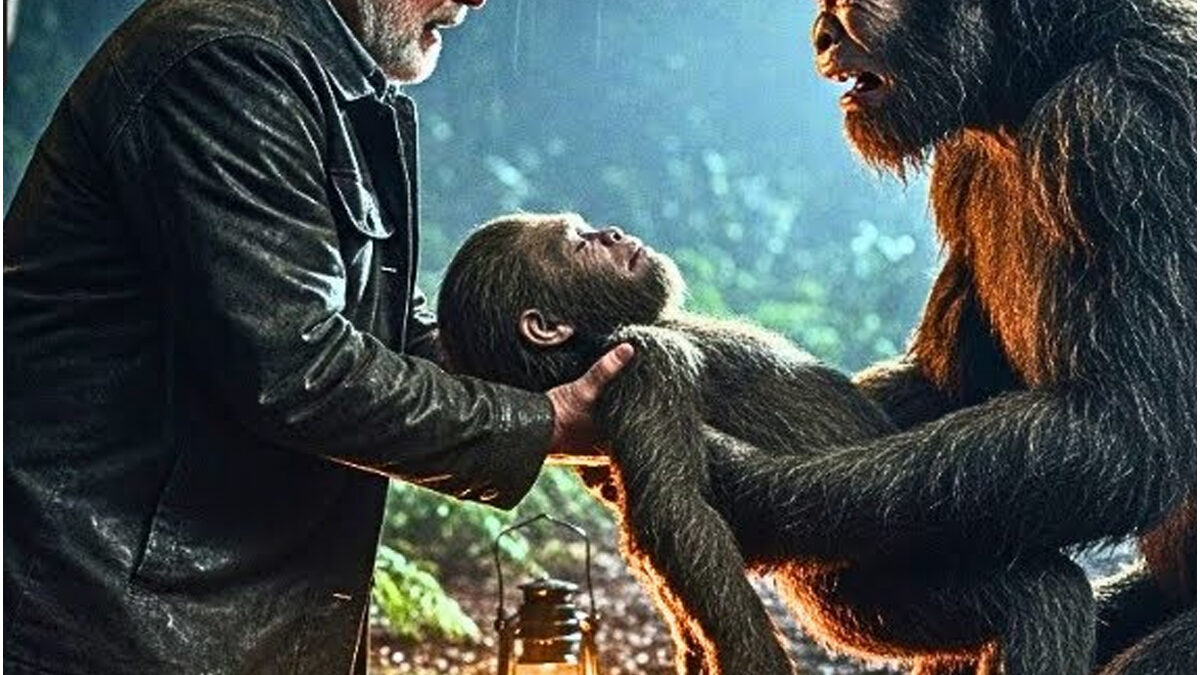
WEEPING Bigfoot Mother Begs A Man To Save Her Dying Son – What Happened After Will Break Your Heart
What would you do if on a stormy night a towering creature stepped out of the forest and placed its feverstricken child into your arms, looking straight into your eyes for help instead of harm.
The truth that few people know is that in Ohio 1993, a retired park ranger named Alton Merik faced exactly that moment.
And the Bigfoot he met wasn’t a monster, but a desperate mother.

This isn’t folklore told around a campfire.
It was recorded in the family’s journals and passed down through his granddaughter, who witnessed it all.
Watch closely and you’ll discover how Alton used nothing but wild herbs and makeshift care to fight for the child’s life.
How he outwitted a prying neighbor during the storm.
And the unforgettable moment when the Bigfoot mother bowed her head in gratitude at the very place Alton once mourned his own son.
Today, Alton’s granddaughter still keeps the notebook filled with every detail, from the child’s broken breathing to the oil lamp left glowing on the porch as a silent thank you.
And if you skip this story, you may never again hear a firsthand account of Bigfoot, not as a beast of fear, but as a mother bound by love.
The air held its breath.
Not quite evening, not quite night, just that bruised hour where the last light ducked behind the ridge, leaving the trees to whisper among themselves.
A thick, humid silence pressed in around the Merrick homestead, broken only by the lazy flick of fireflies and the long, churing chorus of crickets.
So loud it could have been mistaken for rain if one wasn’t paying attention.
Alton sat on the edge of the porch swing, sleeves rolled, fingers wrapped around the warm brass curve of an old oil lamp.
The glass chimney was still smudged with soot from the last burn, and he cleaned it like a ritual, slow, deliberate, thumb running over the same streak again and again, not really trying to make it spotless.
His hands were calloused like river rocks.
The grooves etched deep from years of work that no one saw anymore.
A gust of air passed low, warm like an exhale from the earth.
It brought the scent of something old.
Stone that had just tasted water.
Moss freshly bruised.
Something waiting.
If you can’t mend the cracks in this world, he muttered to no one in particular.
Eyes still on the glass.
At least keep your hands warm enough to hold someone else’s when they reach out.
Behind him, the wooden screen door creaked and clicked.
Nora, with her sleeves pinned up to the elbows and a woven basket tucked against her hip, stepped onto the porch with the quiet steadiness she always carried.
She didn’t say anything.
She didn’t have to.
She hung sprigs of wild mint and be balm from the low rafter beside the porch light, fingers working twine with an ease passed down through generations.
Her clothes smelled of crushed green and a touch of lavender.
From inside the house, the sound of a jar lid popping shut echoed.
Small hands determined.
Ren, 10 years old and already curious about everything that bloomed, hissed, or rained in these hills.
She stepped outside, holding up a mason jar proudly like it was treasure.
“Mama, did it ever flood here bad enough to drown the cliffs?”
She asked, staring toward the hollow.
Norah glanced at Alton before answering, tone even thoughtful.
“Long time ago, before your grandpa’s boots had holes.”
Ren’s eyes widened as she turned toward her grandfather.
“Was it true?”
Alton didn’t answer immediately.
He looked past her, out toward Conkl’s hollow, where the pine stood in quiet formation, dense and dark like a secret held too long.
His jaw clenched without meaning to.
Something in his chest stirred.
An old bruise shifting beneath skin.
The shadows moved differently now.
Clouds were stacking high in the sky.
A slow churn of grays and yellows.
The wind had changed, coming from the southeast now, the kind that curled low to the ground, dragging its belly along the dirt.
And then it came, a sound, thin at first, like the high moan of a tree straining under its own weight.
Long, deep.
It rolled up from the hollow like steam through the rocks.
Too low to be bird.
Too round to be coyote.
Not human, but not entirely.
Not.
It stopped every hand midair.
Norah lowered her last string of herbs.
Ren’s jar clinkedked against the railing.
Alton froze, not in fear, in recognition.
The sound reached again, deeper now, trailing off like breath through grief.
He rose slowly from the swing, placing the lamp gently on the edge of the table.
His hand lingered on the handle a second too long.
Then he pulled on his worn canvas jacket.
The one with a stitched up elbow and fraying collar like armor.
“I’ll be back,” he said softly.
Norah’s brow tightened.
“You sure?”
He nodded.
She looked at the sky, the horizon lit in an ugly copper line.
“Storm’s coming.”
“I know.”
He picked up the lamp, now lit, its flame steady even as the wind toyed with the porch screen.
“Lock the coupe,” he added.
Just in case.
She understood without needing explanation.
He descended the steps slow and deliberate, boots tapping hollow against the porch wood, then crunching into the damp gravel path.
Behind him, Ren whispered something into her jar like it was a spell.
Norah caught her hand gently and led her inside.
The moment the porch door swung shut, the rest of the world swelled loud.
Crickets, wind, the coming storm building in the belly of the sky.
Alton made his way past the fence, past the tall grasses that tickled his knees, past the old cedar pole, still holding his late son’s horseshoe from 20 years back.
Down the trail now toward the treeine.
The lamp flickered but didn’t falter.
He moved with care, as he once had decades ago, while patrolling park trails before his knees turned against him.
Every step felt watched.
The path was soft.
Mud pressed under heel, stone slick with moss.
The valley called again.
This time there was something else in it.
Something smaller, a broken note, like a sob.
He slowed, his breath catching.
The sound didn’t belong to any creature he knew.
And Alton had known them all.
Bobcats, barred owls, foxes, even the black bears when they wandered too far eaSt. But this, this was sorrow, echoed in bone.
He climbed a low ridge, lamp raised, watching the trees lean into each other like old friends conspiring.
And then it came again, closer, a drawn out cry that cracked halfway through.
Not just grief, desperation.
He stood still, and from somewhere in the trees behind his thoughts, the memory returned.
Flash, mud, rock, a shout swallowed by water.
A boy’s silhouette vanishing behind green.
A voice never answered.
Alton blinked hard.
Not now.
The wind brought with it the first taste of rain.
Not wet yet, just the iron of it.
He gripped the lamp tighter, pressed forward.
Lightning stitched the sky above the hills.
Sudden and white, casting the forest in a ghost light.
For a blink of a second, something moved at the edge of the light.
A shimmer behind the trees.
Then gone, but not before he saw it.
The shape, the height, the stillness.
Not bear, not man.
Alton stood, breath tight in his cheSt. The lamp danced slightly in his grip, the flame within warping the edges of the glass.
The forest didn’t breathe for a moment, and then the sound came again, this time unmistakably layered.
A mother’s cry, broken, raw.
He felt it deep in his sternum like someone had reached in and knocked once on his heart just to see if it would answer.
He did because something inside him knew the shape of that sound.
Knew what it meant to beg for a miracle and get silence in return.
So he kept walking toward it.
And somewhere far behind him through the window of the kitchen, Norah stood motionless with the towel still in her hand, watching the light of the lamp shrink with every step.
Alton didn’t look back because the sound was calling again and this time it wasn’t going to stop.
The path had narrowed, swallowed by undergrowth and slick with wet leaves.
Alton moved slow, letting his eyes adjust to the heavy dark that pressed between the trees like velvet soaked in rain.
The lamp was off now.
He’d pinched the flame out as soon as he left the lower field, relying instead on the faint light of the moon when it dared to slip through the moving clouds.
Above him, the night churned, the hush before a downpour, the kind of silence that tightens the skin across your back without telling you why.
He knew this trail.
Knew the bend where a sycamore split into two like a broken trident.
Knew the tilt of the ground before it dipped toward the old rock house.
But tonight it felt changed, not in form, but in spirit.
The trees breathed heavier.
The air moved slower.
Something had walked this way before him.
Something that carried weight, not just in step, but in meaning.
When he came through the tangle of young birch and rounded the slope, the world seemed to stop.
No wind, no crickets, just the sound of his own breath pulling tight in his cheSt. Then he saw it.
Not all at once, just a shape at firSt. A silhouette against the darker dark, broad shoulders hunched forward, knees bent, one hand braced against the earth, the other cradling something in its arMs. He stopped moving.
The shape didn’t flee.
It didn’t growl, didn’t even startle.
It simply shook gently, a trembling that moved from its shoulders to its spine to the tips of its long matted hair.
The sound it made wasn’t a sound meant to travel.
It was meant to stay right there at the edge of breath.
A sound for the child it held, not for the man watching.
Alton’s heart didn’t race.
It slowed like something in him recognized the posture, the stillness, the refusal to let go, even when it was too late.
He stepped forward once, boots sinking in the leaf thick mud.
Closer now, he could see the creature in fuller shape.
9 ft, maybe more, crouched low, hair wet and clumped, fur dark with moisture.
One leg drawn beneath it, the other bent outward for balance.
Arms massive, but folded around something small, delicate, a bundle, a figure not moving.
And that face, not beast, not man, but something in between, something ancient and exhausted, and absolutely spent.
Their eyes met.
Not a word past, not a snarl, not a warning, just a look.
Worn, raw, and full of the kind of ache that didn’t need translation.
Alton didn’t reach for his lamp.
He didn’t run.
He didn’t flinch.
He just knelt, slow and careful, about 10 ft away.
Let his coat gather dirt.
Let the silence speak firSt. Then he did something he hadn’t done in years.
He opened both hands, palms up, empty.
No offering, no demand, just presence.
It was the way you stood before a wounded horse too proud to limp.
The way you spoke to a dog too broken to wag.
The way you let someone know they still had a choice.
The wind stirred again.
Soft and wet and cold now.
Carrying the scent of bark and stone and the sharp green edge of moss torn loose.
The creature watched him.
Then, after a long stillness, it moved.
Not faSt. It leaned forward gently, deliberately, and placed the small bundle it had held onto the muddy earth between them.
The bundle shifted slightly, a breath, or something close.
Thin limbs curled in, chest rising, barely, fur matted with sweat and dirt.
It was a child, and it was burning up, even from where he knelt.
Alton could feel the heat rising from its skin like steam from a stone set too close to fire.
He pulled off his coat without thinking, laid it open in the mud, and reached forward.
Slow, the way you do when the animal in front of you might still change its mind, but it didn’t.
The creature, no, the mother, watched him closely, but didn’t stop him.
Her chest heaved once, then held a breath she didn’t let out.
He slid the small body into the coat, wrapped it tight like he once did with Ren when she was born early and frail and fighting for every breath.
The child stirred faintly.
A dry cough caught in its throat.
Then nothing more.
Alton looked back at the mother.
Her eyes never left his.
He nodded once low, and for the first time she moved backward.
Just a half step, but it was enough.
Rain began to fall, sparse at firSt. One fat drop landed square on the child’s brow, sizzled against the heat.
Alton pulled the coat tighter and rose.
The child was heavy in the way all sick children are.
Languid, loose, bones gone soft from fever.
He turned, cradling the bundle close, stepping back the way he came, every part of him screaming to move faster, but knowing better than to run.
Behind him, the mother followed.
Not too close, not too far.
She kept her shape in the trees, just enough to be seen, just enough to remind him.
This was trust, but not surrender.
By the time they reached the lower clearing, the rain had thickened.
Not yet a storm, but urgent.
It beat against the brim of Alton’s hat, soaked the edges of the coat wrapped around the child.
He stepped out from the trees and into the yard, passing the cedar post, passing the edge of the chicken coupe.
Porch lights still glowed like a star left behind.
The door creaked open before he even called out.
Norah stood in the threshold, her face pale, mouth already parted in question.
Alton didn’t speak, just looked at her, then down at what he carried.
Ren appeared behind her, eyes wide, hands pressed together under her chin like she was praying.
The mother’s shadow moved at the treeine, watching, Norah stepped aside, wordless, swift, Alton crossed into the warm, dry air of the house, the rain dripping off his shoulders, off his boots, onto the wood floor.
They didn’t ask what it was.
Not yet, because it was a child.
And children, no matter what they look like, no matter where they came from, do not get left in the woods to burn from the inside out.
He moved past the stove, into the hallway, into the back porch where the old tool shed connected through a side door.
He would make do.
He always had.
Behind him, the door creaked again, just once, then silence.
No slamming, no sound of it locking, because some doors once opened like that don’t ever close the same way again.
And the forest from the edge of the trees let out one long breath like it was finally being heard.
The shed still smelled of rust and old pine.
Rain tapped hard on the tin roof, sharp and fast like fingers drumming from nowhere.
Inside, light from a kerosene lamp cast long shadows over the battered workbench.
The row of tools on hooks, the sagging shelves stacked with jars of bent nails and dried glue that hadn’t held anything in a decade.
Alton had cleared the center space just enough.
One tarp folded smooth, corners anchored with bricks, one wool blanket, moth eaten but thick, laid down in the center, and beside it a cast iron pot already starting to steam.
The child lay in the blanket now, skin sheened with sweat, chest rising too fast, then too shallow.
Alton had his hand on its back, not pressing, just resting, like a steady rhythm might coax the body to remember how to breathe.
He hadn’t spoken in 10 minutes.
The silence was too full for words.
Behind him, Norah was crouched by the stove, tending the pot.
Mint leaves floated like drowned feathers across the surface.
She had found some dried elderflower, added a pinch, not enough to work miracles, but enough to help coax the lungs open, soften the fever.
Ren stood on tiptoe beside the wash basin, ringing out another cool rag.
Her face was pale, but focused.
Her hands didn’t shake.
She had helped birth a goat last spring and helped bury it 6 weeks later.
She knew the weight of things.
The wind shoved hard against the shed walls, rattled the window pane above the sink, but nobody flinched.
The storm outside was far easier to understand than the thing lying quiet in the center of the floor.
The mother hadn’t entered.
She sat in the dark just outside the open shed door, crouched low in the mud, her eyes level with the child inside.
Rain ran off her shoulders like she didn’t notice it.
She stayed motionless except for her breathing.
That strange slow rhythm, a growl that never opened into a sound, just a low vibration under her ribs, like the earth humming through her bones.
She never stepped over the threshold, but she never looked away.
Alton moved carefully.
He took a handful of willow bark shavings from a jar he had almost forgotten was there, crushed them gently in his palm, and added them to a second bowl of hot water.
The smell was sharp, bitter.
Salison.
He dipped a cloth and placed it at the child’s neck, then under the arms, then the inside of the knees.
Ren copied him with a second cloth.
Norah checked the child’s pulse, not with a watch, just with the pads of her fingers and her own breath as a metronome.
The child shifted once, barely.
Its tiny fingers curled for a second, grasping at the wool, then released.
Alton leaned close, whispered nothing, just exhaled slowly through his nose.
Let the warmth of his breath roll over the child’s brow like a promise.
Ren started humming soft, a tune he hadn’t heard in 20 years, old as duSt. Something passed down from his mother’s side.
A lullabi about a red bird that never came back in winter.
The child didn’t stir, but the sound did something to the air.
Even the mother responded.
She made a noise deep and low.
Not a copy, not a melody, but a tone that seemed to follow the pitch, like she understood the shape of the tune, even if not the meaning.
She joined the song without singing.
Just a low echo from outside the shed, barely audible above the rain.
Ren didn’t stop.
Neither did Alton.
The child’s breath caught once sharp, then again, its chest stuttered, ribs tightening under the fever.
Norah placed a small tin mug at its lips.
Touched with elderflower water.
Just a drop.
The child didn’t resist, but it didn’t swallow either.
The temperature was peaking now.
Alton reached for the cast iron pot and slid it closer to the blanket, placing it just beside the child.
Steam rolled out thick and sweet with mint and bark and something wild.
He grabbed another blanket, threw it over two chairs to form a tent, lowered it over the child’s midsection without touching the face.
A vapor cave.
Ren reached under and dabbed the chest again.
Her small hand never shook.
The mother leaned forward just an inch.
Her fingers gripped the edge of the door frame but didn’t pass through.
She didn’t speak.
She didn’t move.
She just watched.
The child started coughing now.
Weak at first, but wet.
Real.
Alton tapped gently between the shoulder blades.
A motion more instinct than technique.
Keeping time with Ren’s counting.
1 2 3.
A pause.
Then a shallow breath.
Then a longer one.
Another cough.
The child twitched under the blanket.
Groaned.
A dry, broken sound that still managed to cut through the storm like a siren.
It was alive.
The fever wasn’t gone.
But the body had remembered it was still here.
Outside, the mother closed her eyes for the first time.
Her head dropped just slightly, one hand still gripping the frame.
Her back rose and fell once.
Alton shifted his weight, knees screaming, but he didn’t move from beside the child.
Norah passed him a fresh cloth.
He pressed it to the small chest, the heartbeat under it, a nervous flutter.
Another coughing fit, this one stronger, then sleep.
Not limp, not fading, but sleep.
Norah stood slowly.
Moved to the basin, rinsed the cloths one by one.
Her fingers were red from the heat.
Ren slumped back on her heels, eyes still fixed on the bundle.
She didn’t ask questions.
She didn’t need answers.
Alton looked toward the door.
The mother was still there, still in the same spot.
He looked at her, and for the first time, he thought he saw something in those eyes that didn’t belong in animals.
Or maybe it always had and people just forgot how to see it.
Something ancient and grateful.
The storm had started for real now.
Wind in full swing.
Rain blowing sideways across the yard.
Trees groaning.
The shed creaked but held.
Outside.
The mother didn’t flinch.
Didn’t blink.
Just breathed.
And across the muddy ground through the thickness of rain and wood smoke and steam.
Something passed between them that didn’t need words.
It said, “I gave you everything I have.”
It said, “If it lives, it will be because you didn’t turn away.”
Inside, the lamp flickered once.
The flame leaned sideways like it was watching, too.
And the child slept on, arms limp, chest warm but not burning, wrapped in a coat that had once belonged to Alton’s son, and hadn’t seen daylight since the boy vanished into trees that never gave him back.
Behind the workbench, Norah pulled a dry flannel over her shoulders and sat against the wall, arms folded.
She didn’t cry.
Ren crawled to her and laid her head on her lap.
Alton stayed by the child, one hand resting gently on its side.
The shed buzzed with the storm above, but inside it was still, and in that stillness, for the first time in a long time, something held.
No questions, no noise, just the breath of three generations, and the eyes of a mother who had placed her child in the hands of strangers, because the forest had no other answer.
Rain hit the tin like hammers.
Now outside the door, headlights skimmed the yard.
Just a flash, white across the chicken wire, across the far wall, then gone.
Someone passing or not passing.
Nobody moved.
The child’s breath stuttered once, then leveled.
Alton exhaled finally.
Not relief, not yet, but a beginning.
And far beyond the trees, where the trit was after one, when the child jerked under the blanket like something had snapped loose inside its ribs.
The old thermometer laid forgotten in the tin pan.
Alton hadn’t trusted it in years anyway.
But he didn’t need a number to know the fever had reached its edge.
The body moved wrong, tense, then slack, breath skipping, then returning like a sob, trying not to be heard.
The wool blanket clung damp to its sides, and the skin beneath felt tight as leather soaked too long in fire.
Nora knelt back down beside the tarp, her hair stuck to her cheeks, arms shaking from crouching too long.
She brushed the child’s brow and whispered something soft, though Alton couldn’t catch the words.
They weren’t for him.
She reached for the mug of warm brew, carefully tilted a spoon to the child’s lips.
Let it touch.
Let the taste linger, then pulled back before the risk of choking returned.
Ren sat just behind her, back pressed against the cabinet, one hand holding a fresh towel, the other clenched in her lap.
She had stopped humming.
She was counting again under her breath.
Slow, even.
She’d gotten good at keeping time without needing to speak.
Outside, wind screamed across the fields like it was chasing something too fast to catch.
The tin roof of the shed groaned at each push.
Water beat the glass in relentless bursts.
And somewhere far off, lightning flashed so hard it lit the rafters like bones.
The mother hadn’t moved.
She was still at the doorway.
Rain had soaked the fur at her shoulders.
Beads clinging to the ends like tiny bells.
Her breathing stayed deep, measured, like she was feeding that rhythm into the child from a distance.
Her eyes never blinked, never drifted.
Not once since the storm began.
The child’s chest began to flutter.
Quick, shallow, then it stopped just for a beat.
Alton didn’t speak.
He shifted position again, pulling the second pot closer, adding water, another handful of bark and mint, adjusting the makeshift tent.
Norah reached under the blanket with both hands, pressing the cloths again, wiping the joints, the temples, the soles of the feet.
Ren’s voice cracked the count.
She picked up again.
1 2 3.
Then the child let out a breath that sounded like it had been waiting its whole life to escape.
Long rattling, empty.
The chest didn’t rise again for too long.
Alton leaned in, pressed his ear to the back.
Nothing.
He started patting again.
Barely more than a tap.
A rhythm, a reminder.
In through the nose, out through the mouth.
A trick learned from an old ranger who’d once revived a snow choked fawn this way.
Norah reached under the chin, held the jaw lightly, not to open it, just to steady it.
She whispered again, louder now.
No prayers, just sounds of encouragement.
Human sounds, the child gasped.
Not big, but enough.
Then again, the breath returned.
Thin, but real.
Still wrong.
Still tangled in the fever, but real.
Ren let out a sob she immediately tried to swallow.
That’s when they heard it.
Tires grinding over wet gravel.
Not fast, but coming.
Norah looked up.
Alton froze.
The sound stopped outside the fence line.
Too far to see headlights, but close enough to hear the door open.
Then the cough.
Not the child.
A man, raspy, flemy, familiar.
Boots on rock.
Alton stood quickly.
Turned down the lamp with a fast twist of the knob, plunging the shed into thick amber dimness.
Not dark, but nearly.
He crossed to the door, stepping wide to block the view inside.
The figure coming up the path wasn’t in a rush.
Flashlight swinging in short arcs, beam cutting across the wet grass like a searcher too bored to find anything.
Roy Pritchard.
His old cap was soaked through, brim dripping.
He wiped his nose with the back of his hand and leaned into the fence post without greeting.
“Storms got the coyote stirred,” Roy muttered.
“Heard something over this way.
Alton didn’t answer at firSt. He just stared.
The shed behind him was still.”
“Too still, but the rain covered enough sound to pass for quiet.”
“Maybe your chickens got spooked,” Roy added, stepping closer.
“Maybe,” Alton said, his voice flat.
Roy moved his flashlight toward the ground.
It landed on a print, a smudge in the mud.
Not fresh, but big.
The kind that left more questions than it answered.
He narrowed his eyes.
Bent low, then stood again.
You fix your gate yet?
He asked.
Alton didn’t blink.
Hadn’t had time.
Roy stepped closer.
Alton stepped forward.
They were almost chest to chest now.
Just two men standing in the dark with too many ears and not enough words between them.
Roy sniffed once, looked past him.
“You burning something?”
“Herbs?”
Alton said.
“Sick chicken.”
Roy squinted.
Storml put it down anyway.
Alton didn’t respond.
He didn’t need to.
Roy wiped his mouth with the back of his hand again, stepped back slowly, then looked toward the shed.
Inside, behind the half-closed door, a glass jar shifted on the shelf.
It rolled, teetered, then stopped.
Ren’s hand held it steady, silent.
Roy didn’t see.
He turned his flashlight toward the field again, squinting as if the dark might suddenly confess something.
Then he reached down, grabbed a twig, and jabbed it into the ground near the fence line.
“I’ll swing back by in the morning,” he said.
Alton didn’t answer.
Roy nodded once, not at him, just to himself, then walked away, his boots leaving loud, sticky echoes in the mud.
When the truck engine started, Alton waited.
Didn’t move.
Waited until the sound of the tires was long gone, swallowed by the wind and trees.
Only then did he step back inside.
Norah exhaled like she’d been holding it the entire time.
Ren’s eyes were glassy, but she hadn’t cried.
The child’s chest rose again.
The steam still drifted from the pot.
The fever hadn’t broken, but it hadn’t won either.
Alton crossed to the door and pulled it closed, but not all the way.
The mother was still there, still watching, still breathing that low, steady thrum.
And then something shifted in her.
Not movement, not sound.
Her shoulders twitched, a ripple through her back.
Her face pulled slightly to one side, eyes clenched.
Her hand gripped the edge of the doorway hard, but she didn’t scream.
Whatever sound lived inside her, she didn’t let it out.
Just one long shiver, then stillness again.
Alton saw it.
He didn’t say anything.
He didn’t need to.
She had heard the man, too.
She had watched the light come and go, and she had buried her scream where it couldn’t betray her child.
Alton crouched beside the blanket again, touched the child’s forehead, still burning, still red.
But under the palm, a faint sound, a breath, steadying, Ren started counting again, quiet, almost asleep where she sat.
Norah wiped the edge of the mug, replaced the herbs in the pot.
The night raged outside.
Inside, the air was thick with heat and wood smoke and old fear, but it held.
And in that pocket of silence, between the storm and the breath, something passed like the changing of a guard, something old, something sacred.
And though no one said a word, they all felt it at once.
They were not alone.
Morning broke slow and gray, like someone had forgotten to wake the sun.
The rain had thinned, but left behind a film of damp air that clung to the skin like a fever that hadn’t let go.
The chicken yard was speckled with puddles.
Little mirrors reflecting the swollen clouds overhead.
A few hens pecked cautiously at the mud, their feathers sticking to their sides, heads twitching with each gust of breeze.
The storm had passed, but the quiet it left behind didn’t feel peaceful.
It felt like something holding its breath.
Inside the shed, the child hadn’t moved much.
Fevered sleep had given way to something lighter.
A half waking days.
Its chest rose in short, shallow pulses, but it was breathing.
The worst had passed for now.
The mother still crouched outside the shed door, never stepping inside, her massive shape hunched, but alert.
Her fur steamed slightly where it met the humid morning air, and her eyes never left the child for more than a blink.
She didn’t ask to be closer.
She simply remained silent and watching as if her presence alone could keep death from circling back.
Ren was curled against a burlap sack in the corner, her head resting on a folded apron, cheeks smudged with sleep and herbs.
She had stayed up through most of the night, counting breaths, changing cloths, humming when the tension in the room grew too heavy.
Norah knelt by the stove, stirring a fresh pot of water, her movement stiff from cold and crouching.
Alton stood at the door, one hand on the frame, eyes scanning the far edge of the yard where the gravel path bent out of sight toward the road.
They all heard it at the same time, tires coming slow, not rushing like an emergency, but not casual either.
Ren stirred.
Norah stood up.
Alton didn’t move from the door.
He squinted into the gray light, jaw tight, boots sunk slightly into the wet earth just beyond the threshold.
The truck pulled in at the far gate, tires cracking over damp stone.
The passenger side door opened first, then the drivers, Roy, Pritchard, and a second man Alton didn’t know well, just recognized from the post office.
Light jacket, white baseball cap, smoker’s cough.
Roy raised a hand in a lazy sort of wave like he was greeting a neighbor, but it didn’t reach his eyes.
He looked toward the coupe, then toward the shed.
“Morning!”
He called.
Alton didn’t answer.
Ren sat up straight now, blinking toward the door.
Norah caught her eye, gave a tiny shake of the head.
“Quiet, still!”
Roy took a few steps forward.
The man beside him trailing close, pretending not to notice the tension.
Figured we’d check on that critter, Roy said.
You said something was getting at your chickens.
I said the wind had him riled.
Alton said back, voice flat.
Roy gestured to the coupe.
Could have sworn I saw something run through here last night.
Big thought you might want a second set of eyes.
Alton stepped out fully now, blocking most of the door behind him.
The air smelled of ash and wet soil and something sharper, like a plant crushed underfoot.
The way Bbomb smells when you snap it fresh and wild.
I don’t need help.
Roy looked past him.
The second man moved toward the coupe.
Norah rose fast but quiet and stepped into the shadow between Alton and the shed wall.
Ren ducked low again.
Inside, the child let out a short whimper, too soft to carry far, but Alton heard it.
So did the mother.
She stiffened at the door, one hand brushing the threshold, just barely resisting the instinct to push through.
Alton turned slightly as if to adjust his stance, using his shoulder to obscure the narrow gap in the door where someone might catch a glimpse too much.
Roy stepped closer, squinting at the ground.
The muddy patch near the shed had mostly dried, but one large print, roughly the size of a dinner plate, still held shape.
Too clean, too different, and not human.
He crouched, ran a finger along the edge.
Big raccoon, he said, half laughing, half testing.
Alton didn’t react.
From the corner of his eye, he saw Norah move.
Quiet as a fox, she stepped toward the coupe, unlatching the gate.
A single hen darted out, squawking as if the world were ending.
Another followed, flapping hard, scattering feathers and panic across the yard.
Roy jerked upright, “What the!”
Alton shouted, “Damn birds!
Every time it rains!”
He chased after them, waving his arms, stomping toward the fence line.
Roy spun to follow, confused, trying to get a handle on the sudden motion.
Inside the shed, a soft clink rang out.
A glass jar on the shelf, nudged just enough to start rolling.
It tipped, started to fall.
Ren reached out too slow.
Then, without sound, a large hand reached from the shadows.
The mother caught the jar midair, barely an inch from the floor, and held it steady in her massive palm.
Her fingers moved with impossible gentleness.
She placed it back on the shelf, not making a sound.
Ren stared up at her.
Neither moved.
Outside, the commotion continued.
Alton pretending to trip, muttering curses, the hens flapping and darting like feathers on a fire.
Royy’s friend lit a cigarette and leaned against the coupe.
After a minute, Roy gave up the chase.
You always run your yard like a circus.
Alton was bent over, breathing hard, covered in wet feathers and irritation.
You come here to insult my chickens, or you done snooping.
Roy didn’t smile.
Just checking in, Al.
Neighbors look out for each other.
You’d know that if you still came to town.
Alton didn’t bite.
Roy looked once more toward the shed.
Then at the house, then back at the track in the mud that had started to dry beneath the tireless morning.
You got visitors?
Alton shook his head.
Roy took a step back toward the truck.
Maybe I’ll come by tonight.
Catch whatever it is that’s messing with your fence.
Alton said nothing.
Roy paused at the edge of the yard, boots caked in red clay.
He looked down, tapped one toe against a short stake sticking out of the mud, a marker he must have placed himself, a sign, a message, not forgotten.
Then he climbed into the truck.
They drove off slower than they’d come.
Alton didn’t move until the dust from the tires was gone.
Then he turned back to the shed and closed the door all the way, locked it.
Inside, Ren finally exhaled.
The mother stepped back into the shadows, returning to her spot just outside, silent as ever.
The child stirred, not much, but enough.
Its fingers reached across the blanket, not clutching wildly like before, just moving toward the nearest warmth.
They brushed against Alton’s hand, found it, and held.
The fever wasn’t gone, but something had shifted.
Norah returned the hen to the coupe, quietly latched the gate, and started cleaning the muddy prince by the side of the shed.
Her hands moved fast, scooping dry dirt and spreading it like nothing unusual had happened.
Alton joined her with a tin can, helping tamp down the worst of the tracks.
Ren sat by the child again.
She reached for its arm gently, resting her pinky against its elbow like it was the most delicate thing she’d ever touched.
The shed held its silence, but it wasn’t the same silence as the night before.
Now it breathed with something else.
Not fear, not yet safety, but a choice made, a path taken, and somewhere between the sound of boots leaving and the breath of a child warming beneath wool.
A kind of trust had taken root, deep in the earth, and deeper still in the hearts of those who had dared to keep it hidden.
The sky cracked open in silence that morning.
Not with thunder, but with that thick, yawning brightness that comes after too many days of gray.
Light slid across the hills like a slow tide, pouring over wet bark, glinting on puddles that had shrunk to silver scars in the clay.
The trees steamed gently, letting go of the storm in the only way they knew how.
A new heat crept up from the earth.
Not fire, not fever, but breath.
Slow, solid in the shed.
The stillness had changed.
The kind that held its breath last night now sighed.
The fever had broken, not all at once, but in stages.
The child’s skin no longer burned beneath the wool.
The tremors had quieted.
The breath came low and steady, like the slow drawing of a bow string that no longer snapped back.
The body, once limp and clenched in turns, now curled inward against the blanket, face tilted into the crook of the mother’s coat that still cradled one side.
The eyes opened near noon, not wide, not startled, but with a slow blink, the way animals wake when they sense calm around them.
The whites of its eyes were still tinged, but the dark pupils held a softness now, depth like polished riverstone.
The child turned its face slightly, nestling into its mother’s scent, chest pressing close like it had never left the womb of the woods.
Ren noticed firSt. She had been reading aloud from her small, worn notebook.
A whisper of a story she half made up to pass time, to keep the air soft.
When the child stirred, she dropped her voice and stared.
“It’s awake,” she breathed, voice cracking.
Norah came close, knees already raw from kneeling, and smiled in a way that didn’t quite know how to land.
Alton stepped closer, but didn’t speak.
He just watched.
The way someone watches the first sprout crack open a seed after a long drought, not with celebration.
With reverence, the mother leaned forward.
Her face broke from its usual stillness, her eyes shimmering like heat off asphalt.
She placed her hand low, just above the child’s chest, not pressing, just hovering, then tapped once with two fingers.
The child turned its head again and reached up barely, but the motion was there.
Tiny fingers curled weakly toward the air.
Ren reached for a small ceramic cup filled with crushed berries, thinned into a juice Norah had steeped with mint and elder flour.
She held it out.
The mother didn’t move, but her gaze locked on Ren like a teSt. Ren lowered the cup slowly to the child’s lips.
It sipped, one mouthful, then another.
The mother’s shoulder slumped, not in defeat, but in release.
She looked toward Alton, then just once, and raised her hand to her chest, pressed her palm flat against the thick fur above her heart, held it there for a breath, then lowered it again.
No words, but the gesture cut through him deeper than any speech.
Outside, the earth had started to dry.
The top layer of clay cracked in small webbed patterns, lifting in curls, the kind of heat that made the grass hum.
The scent of leaf rot faded.
The smell of stone returned.
Alton stepped out onto the porch outside the shed.
The air was clean, sharper now.
He looked toward the edge of the woods, toward the old line where his property ended and the forest began.
There, imprinted in the brittle clay, was a mark he hadn’t seen before.
A heel, massive, deep.
It had stopped exactly at the border, not one step further.
The shape was unmistakable.
The length, the spread of the toes.
Something had stood there during the night.
Not the mother.
This was larger, broader.
The impression wasn’t just physical.
It felt like presence lingered.
Whoever had come hadn’t come to threaten.
They had come to stand guard.
Alton didn’t call out, didn’t go near it.
He just took off his hat and held it at his side.
A small bow.
Not for deference, for acknowledgement.
The forest had its rules, and someone had upheld them.
Back inside the shed, the air had shifted, too.
Norah folded the last of the used cloths, placing them into the wash tub.
She didn’t hum.
She didn’t rush.
She just moved like someone who’d carried weight and finally found a place to set it down.
Ren whispered something again to the child.
This time, a name.
Little one, she said gently, tapping her chest the way the mother had.
You’re a fighter.
The child didn’t speak, but it blinked slowly.
The mother shifted, her great hand resting beside the girls, and in that moment, Ren reached forward, tiny fingers brushing the thick fur above the mother’s knuckle, and left her touch there, like a stitch to bind the silence.
No one pulled away.
Inside the house, Alton returned with a fresh pot of water and a tin of oats.
Breakfast had come late.
They hadn’t eaten properly in over a day.
Norris set the table without a word.
Her hands moving by muscle memory.
The kind of rhythm born of long years of doing the same thing for someone who’s no longer at the table.
The shed door stayed open now.
Not wide, but enough.
The mother didn’t try to come in.
She didn’t need to.
Her child was breathing.
That evening, when the heat began to soften and the sun pushed low against the tree line, Alton walked the length of the fence near the back pasture just past the old maple tree split by lightning back in ‘ 87.
He found the marker again, another footprint, a second, then a third.
They stopped at the same place, not one step into the yard.
He crouched beside them, ran his hand over the edge of the print.
The clay flaked under his palm.
They had come again, not to visit, to guard, to wait.
Back inside the shed, the mother hadn’t moved all afternoon, but her ears had twitched twice.
Once at the sound of a hawk overhead, once at a dog barking far off beyond the creek.
She didn’t look tired.
She looked ready, like she knew this moment wouldn’t last forever, like she knew what came next, and accepted it.
Later that night, after the sun had dropped behind the cliffs and the last light bled through the boards of the porch in threads of gold, Alton returned to the shed.
In his hands he held a plank of wood, smooth on one side, weathered, faded, carving across the center, something he’d once etched for a boy who never came home.
It had sat in the barn rafters for years, collecting duSt. He placed it gently near the wall, not hidden, but not displayed.
Then he looked toward the child, asleep again, breath even, limbs tucked beneath the blanket.
He didn’t speak, but something unnoded in his cheSt. Not all the way, but enough.
He turned to leave, stopping just long enough to glance back once.
The mother nodded, a single dip of her head.
The lamp in the shed burned long into the night, and outside, near the rift where the woods met the land, a soft rumble passed through the earth like a warning too gentle to be afraid of, a voice without sound, saying, “We are still here.”
The afternoon hung gold in the trees, all the way down the ridge to Canwell Cliffs.
The air had gone still again, but this time it wasn’t waiting for a storm.
It was waiting for something quieter, something harder, the kind of goodbye you don’t say with words, the kind you walk.
Alton carried the child, wrapped in his old wool coat.
The boy, no, not quite a boy, had weight to him now, not just from the bones and fur and skin warming back into life, but from the silence, the trust, the breath that had come back during the hardest night and stayed.
His fingers rested lightly at Alton’s collar, not gripping, just present.
Each rise and fall of his tiny chest pressed into Alton’s own, like a rhythm they shared without trying.
Ren walked ahead, swinging a tin kettle back and forth in her hand.
It clanked gently, half full of warm berry water, still sweet and steaming.
Norah followed behind, scanning the tree line with that calm, sharp look she wore when coyotes were near.
There was no danger now.
But still, you don’t walk this far from the house unless you know which direction the trouble will come from.
The trail was mostly dry.
The sun had split the last of the mud, baked it into flat ribbons of clay, leaves crunched underfoot, brittle from the long drink they’d taken two days ago.
Alton didn’t speak.
He didn’t need to.
Every step forward was an answer to something he’d been asking for 20 years.
They reached the old marker around sundown.
A thin wooden board nailed to a tree stump that had long since rotted beneath it.
The carving had faded.
His son’s name had never been etched.
Just a shape, a small circle, and a smaller one inside it.
It wasn’t a gravestone.
It was a place to stop, a place to breathe, a place where something once turned back and never made it home.
The mother stopped when she saw it.
Her pace had been slow behind them by a dozen steps.
She didn’t carry the child now.
She didn’t need to.
But when her eyes found the post, her whole body seemed to fold downward.
Not collapse, not from pain, from something heavier.
Her head dipped low.
One arm cradled across her middle.
Her other hand touched the stump.
She didn’t tremble.
She just bowed.
A moment passed, then another.
Alton stepped forward.
He placed his hand at top the board over the old carving.
The grain was soft now, weatherworn, familiar.
His fingers fit there like they always had.
He didn’t cry, not because it didn’t hurt, but because it didn’t need to hurt the same way anymore.
The mother stood again.
She stepped forward, her hands still pressed to her cheSt. She turned just slightly and touched two fingers to her heart, then reached them out slow toward Alton.
She didn’t touch him.
She didn’t have to.
Behind them, the woods shifted.
Not a sound, not a rustle, but something large emerged through the trees, taller than her, broader in the shoulders.
Still, waiting, another figure, a guardian, Alton didn’t speak.
His body stayed still, like the land itself had fused him in place.
The mother turned to her child.
She reached with both arms, slowly, gently.
Alton felt the boy’s fingers tighten slightly at his collar.
Then ease, he passed the child forward.
Their eyes didn’t leave each other.
Neither man nor beaSt. Just two beings in the presence of something greater than understanding.
The child was home.
The mother stepped back toward the tall figure.
He hadn’t moved, but when she reached him, she didn’t hesitate.
She placed one hand on his cheSt. He responded by bowing his head just slightly.
They turned as one.
Moved into the trees.
Not fast, not glancing back.
No sound, just gone.
Alton didn’t follow.
He didn’t take a step.
The edge of the clearing was enough.
That invisible line where property ends and something older begins.
He had kept his promise.
He had not crossed it.
Behind him, Ren stood quiet, holding the kettle like an offering that had nowhere left to go.
Then she stepped forward, pulled the scarf from her neck.
It was soft red flannel, faded from years of wash.
She folded it neatly, walked to the marker, and placed it in the mother’s hand.
No, not the mother.
She was already gone.
So Ren laid it gently on the old tree stump above the faded carving like a gift or a prayer.
Norah didn’t speak.
She reached down, pressed her palm once against the earth, then rose.
They began to walk back slowly, the sun behind them now, lowering into the ridge.
Shadows stretched long across the clay path.
Alton didn’t turn around.
He carried nothing in his arms now, but something had shifted in his spine.
The stoop in his shoulders didn’t seem so heavy.
His breath, for once, came easy.
Behind him, the woods took a breath, too.
A long one.
A sound not made of words.
A sigh that passed through every limb and leaf.
Peace.
But not an ending.
Not yet.
Just a pause in the storm.
That night, the house felt wider.
Not empty.
Just quieter.
The kind of quiet that didn’t ache.
Just settled.
Norah stood at the sink, sleeves rolled, hands dipped in soapy water as she scrubbed the last pot.
The tin ladle clinkedked gently against the rim.
No rush, no one speaking.
The smell of stew still lingered in the wood walls, clinging to the curtains with the faint scent of mint and ash.
Ren had fallen asleep on the couch, a book still open on her chest, one hand resting over a blank page where her pencil had slipped midthought.
Her boots were muddy from the walk, but no one told her to take them off.
Her face looked lighter, like something had been lifted from her without her knowing it.
Her breathing matched the faint rhythm of crickets outside, steady, unhurried.
Alton sat on the porch.
Same chair, same view.
The boards beneath his boots had dried from the storm, though they still held the scent of rain.
His hands rested on his knees.
Still, the old oil lamp swung gently beside him from a rusty hook in the post, flame steady, casting soft amber circles across the wall.
He hadn’t lit it for them.
He hadn’t lit it to guide anything back.
He lit it because something in him had changed.
Because you keep the light on when you’ve been handed grace.
Because sometimes you don’t call out.
You just stay visible in case someone’s still watching from the dark.
The coupe was closed.
The shed door latched.
The blankets folded, but Alton’s hand still bore the warmth from where that small fevered palm had held onto his fingers like a memory that didn’t want to fade.
Across the yard, the fence line melted into the black shape of woods.
The clay path they’d walked earlier now bore only faint dents.
The larger tracks at the edge softened by heat and wind.
The rain had done its part, smudging what needed to be erased.
Alton hadn’t scrubbed them away.
He let the weather decide because not all things are meant to laSt. Some are meant to pass through you.
Inside, Norah dried her hands and turned the kettle off, leaving the warmth in the kitchen to carry through the floorboards.
She didn’t speak either.
She moved like she had all her life.
But now there was less weight behind each step, like she no longer needed to brace for a storm.
Just walk through the house and listen.
That was enough.
On the edge of the table lay Ren’s notebook.
Its spine was cracked, the corners curled.
A red ribbon marked a page near the back.
On it, in her tight but gentle hand, she’d written a line earlier that evening.
Sometimes the forest sends someone to keep a promise we forgot we made.
That was all.
No title, no punctuation, just that Alton hadn’t read it.
Not yet.
But he’d seen her writing it.
Her brow furrowed, her lips moving silently as she shaped the words.
A child trying to understand something the world had no names for.
The porch light caught a glint off the metal handle of the coupe.
The breeze shifted again, brushing through the trees like a soft breath.
No sound beyond that, just the kind of night that doesn’t need to be filled.
Out near the fence line, the last print, the one Roy had missed, was half gone now, edged over with new dust, the top layer curling away in pieces.
Alton had walked past it just after sundown.
He hadn’t touched it.
He hadn’t needed to.
It wasn’t for him anymore.
It had served its purpose.
He reached into the side pocket of his coat and pulled out the old matchbook from the shed, thumbmed it once, then tucked it back.
The lamp stayed lit.
He didn’t need more light, just enough to be seen.
Down the trail, past the clearing, past the place where the child had been returned.
Nothing stirred.
No sound of retreat, no whisper of return, but the trees still felt closer.
Not watching, not waiting, just there, like family you trust enough not to knock.
Alton leaned back in the chair, letting his spine creek against the wood, his breath slow, his fingers tapped once against his thigh.
Old habit from his park ranger days.
1 2 3.
Just checking rhythm.
Still there.
Still here.
He’d thought for a long time that maybe some debts couldn’t be paid, that you carry them long enough and they become part of your blood, that no matter what kindness you offer the world, it never sees you, never gives back, just keeps taking.
He’d watched good men wear themselves down to stumps trying to make things right.
He’d buried more than one person who thought the past could be fixed if they just stayed quiet enough or loud enough or useful enough.
But he hadn’t saved the boy in the woods.
Not the first one.
And maybe that was the point.
You don’t get to choose who you save.
You just stay ready for the next one who needs you to try.
The lamp flickered once in the breeze, then steadied again.
A single moth tapped at the glass, danced briefly in the halo of light, then vanished into the night.
Somewhere deeper in the woods, a distant knock echoed.
Three short thuds muffled by trees and time.
He didn’t rise.
He didn’t answer.
Not because he was afraid, but because he understood not everything is meant to return.
Some things just leave you changed.
Norah stepped out onto the porch behind him, wrapped in her shawl, holding a mug in both hands.
She didn’t sit.
She didn’t speak.
She just stood beside him, watching the edge of the trees like she could still see them there somewhere in the dark.
Ren stirred inside, mumbling in her sleep, one hand brushing across the pages of her book.
In the distance, a whip poor Will called once, then fell silent.
Alton reached up and adjusted the flame.
Not higher, not lower, just steady.
A light that said, “I’m still here.
No need to knock.
Sometimes life doesn’t leave us with answers.
It leaves us with echoes.
A breath caught in the woods.
A handheld when it mattered moSt. a light left burning, not to summon anything back, but simply to say, “You’re not alone if you’re looking for warmth.”
In a world where grief can settle into the corners of our homes like dust, and memory clings to the steps we take each morning, there are moments that remind us not everything needs to be explained to be understood.
Not everything needs to be seen to be real.
Because kindness doesn’t always arrive with fanfare.
Sometimes it slips in through the back door.
Quiet, steady, wrapped in dirt stained blankets or carried in the hands of someone who has no reason to care but chooses to anyway.
Healing doesn’t always look like a miracle.
More often, it’s a quiet decision to stay, to try, to hold the fevered, the frightened, or the forgotten until they find their breath again.
Until they can walk back into the dark with a little less fear in their cheSt. And love, love is rarely loud.
It doesn’t always call itself by name.
Sometimes it’s just a child’s hum in the quiet, a cup left warm, a door left a jar.
It’s the kind of thing that roots itself in silence and keeps us human.
Even when the world tells us to harden.
Even when we’re tired, especially when we’re tired, there are boundaries not drawn by maps, but by truSt. Lines we don’t cross, not because we’re afraid, but because we know what lies beyond them deserves dignity, too.
Respect isn’t owed to what we understand.
It’s owed to what chooses not to harm us, even when it could.
And grace is what we offer in return, not out of obligation.
But because we remember what it means to be fragile, too.
In the end, we may never be able to explain the things we’ve seen or felt.
We may never be believed, but maybe that’s not the point.
Maybe the point is we answered.
We stayed.
We became the keeper of something sacred, even if only for a night.
And sometimes that’s enough.
If this story reached you, if it stirred something quiet in your chest, or reminded you of someone you miss, someone you tried to save, or someone who once saved you, leave us a note in the comments.
Let us know how you keep the light burning.
And if you’re new here, welcome.
You’re not alone in how deeply you feel.
Subscribe, follow along, and help us grow this circle of stories that remind us there’s still goodness in the dark.
Thanks for listening.
Truly, we’ll be here.








