The Molasses Tsunami That Killed 21 People | Disaster Documentary
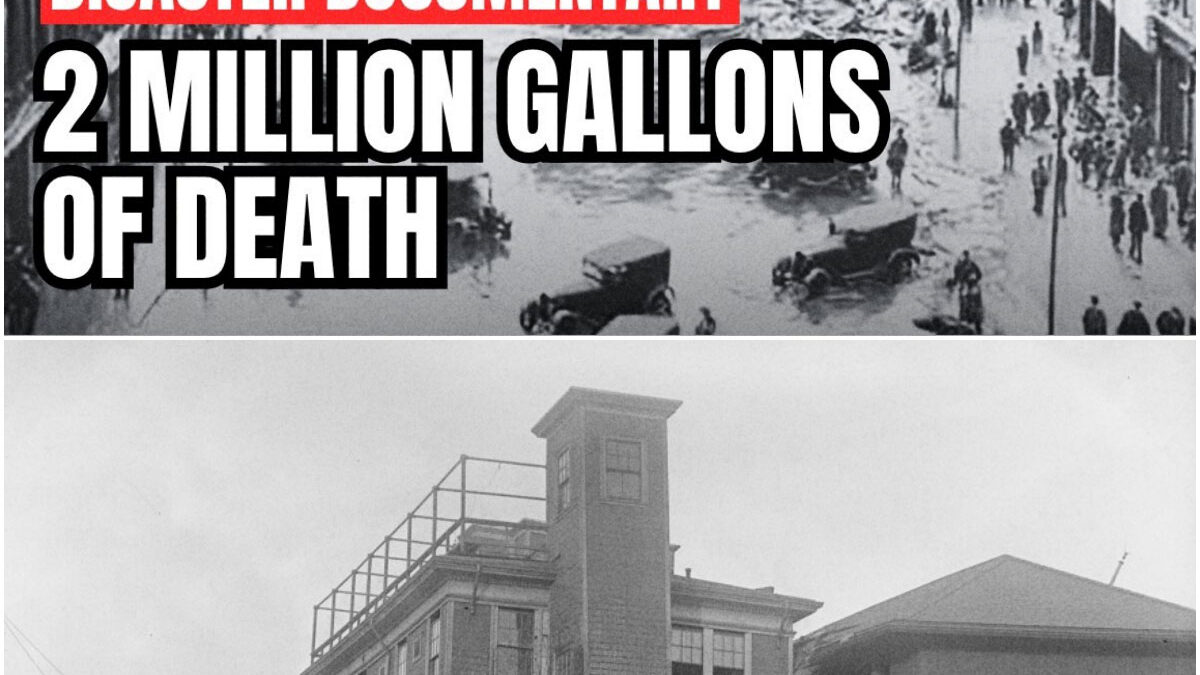
The Molasses Tsunami That Killed 21 People | Disaster Documentary
January 15th, 1919.
Boston, Massachusetts.
At 12:40 p.m., the Earth shuddered.
A steel tank on Commercial Street split apart with a sound like cannon fire.

In an instant, 2.3 million gallons of hot molasses surged into the streets.
A brown tidal wave 25 ft high roaring through the north end.
Horses, wagons, men, all swallowed whole.
Buildings crumpled, rail lines twisted.
The air itself turned sweet and suffocating.
When the wave finally stopped, silence returned to a city buried in syrup.
21 people were dead.
How on earth could something like this happen?
Before the wave, before the wreckage, Commercial Street was a place of ordinary rhythm.
Freight cars rattled along the warves, carrying coal, lumber, and barrels of coals of syrup bound for the Purit’s distilling company.
The air smelled faintly of sugar, a sticky sweetness that clung to the cobblestones and drifted down from the giant steel tank towering over the north end.
For the people who lived nearby, dock workers, Italian immigrants, children who played stickball in the shadows, the tank was just part of the landscape, 50 ft high and 90 ft across, it loomed above the railard like a dull gray moon.
When the wind blew, the metal groaned, but no one paid it much mind.
Inside the tank held molasses shipped from the Caribbean, thick and warm, destined for rum and industrial alcohol.
In winter, a deer arrived by the shipload, pumped into the tank so fast that the steel walls sometimes wept dark streaks.
Men would patch the leaks with tar, laughing that the thing was sweating sugar.
To the company, it was progress, proof of a booming industry feeding the war effort and the nation’s thirst.
To the families below, it was just another reminder that they lived in the shadow of someone else’s ambition.
On that cold January morning, the streets were alive with routine.
Horses pulling wagons, children chasing marbles, dock hands shouting over the hiss of steam.
The molasses inside the tank was a few degrees warmer than the winter air, expanding with quiet pressure.
No one could see the seams straining.
No one noticed the small rivullets leaking down the sides.
By noon, the temperature had begun to rise, and so had the danger.
The warning signs, the story of the great molasses flood didn’t begin with the explosion.
It began long before with a tank that was never meant to hold so much, and a company that didn’t want to wait.
When the Purity Distill Purity Distilling Company decided to build its storage tank on Boston’s waterfront in 1915, the world was at war.
The US had not yet entered the fighting, but industrial alcohol distilled from molasses was in high demand.
It fueled ammunition, smokeless powder, and the factories that supplied Europe’s armies.
Every gallon meant profit, and every delay meant competition might seize the advantage.
Purity’s parent company, United States Industrial Alcohol, pushed for speed.
Within weeks, the tank rose from the ground at 529 Commercial Street, a hastily riveted giant of untested steel.
No engineer signed off on its design.
No city inspector measured the plates or checked the seaMs. To the men who built it, it was just another industrial job, another paycheck before the next contract.
When they finished, the tank gleamed in the winter sun, a hollow giant looming over the north end’s crowded streets.
Some of the workers joked that you could hear it groan even before it was filled.
Others said the metal was too thin, less than half an inch in some places, but deadlines ruled and paperwork was secondary.
The company wanted molasses inside it by the end of the month.
The first shipments arrived that December.
As the thick syrup poured in, dark stains began to appear along the rivet lines.
Neighbors noticed the leaks almost immediately.
Children would run up with pales and collect the dripping molasses, licking it from their fingers as it oozed down the sides.
For the residents, it was a harmless curiosity, a sweet, endless fountain in their backyard.
But to the men who understood steel, it was something else, a warning.
The tank wasn’t airtight, and it wasn’t strong.
When filled to capacity, it creaked like a ship under strain.
Inside the company’s offices, complaints came and went.
One worker, foreman Isaac Gonzalez, reported the leaks to his superiors.
He was told to paint over them.
The logic was simple.
If you can’t see the leaks, no one can talk about them.
So, he did as ordered, covering the dark molasses streaks with brown paint, hiding the symptoms beneath a fresh coat of denial.
Still, the tank groaned on quiet mornings.
The sound echoed through the neighborhood, a deep metallic sigh that rattled windows and set dogs barking.
Local residents grew used to it.
They joked that the tank was alive.
Some said they could feel the ground tremble when it was being filled.
Yet no one imagined the scale of danger that lurked within.
Part of the problem was trust, the kind born from habit and hope.
The people of the north end lived among machinery and noise.
Factories boomed, trains screeched, ships groaned in their moorings.
A few odd sounds were nothing new.
What frightened them more was poverty, not steel, and purity distilling.
Like many industrial giants of its time, operated in a world where safety was still an afterthought.
There were no federal standards for pressure vessels, no municipal oversight for chemical storage.
Companies relied on common sense and cost efficiency.
If a structure held, it was deemed sound.
If it failed, the blame was often buried with the dead.
Still, some within the company knew the truth.
In 1916, when the tank was first filled to the brim, rivets began to pop.
Small sharp cracks that echoed like gunfire.
Workers scrambled to repair the damage, but each fix was temporary.
A few engineers from other firms upon hearing of the leaks warned that the design was fundamentally unsound.
But their warnings never reached the top.
There was money to be made, and soon with war on the horizon, the demand for industrial alcohol surged again.
The company’s Boston tank became its beating heart, storing molasses bound for a distillery in Cambridge.
The turnover was constant.
Tankers docking, hoses pumping, trains loading.
With every shipment, the strain deepened.
Then came prohibition.
In late 1918, Congress passed the 18th amendment banning the manufacturer and sale of alcohol.
For United States industrial alcohol, it was a looming crisis.
Once the amendment took effect, the company’s core product of rum and ethanol beacon would be heavily restricted.
Executives knew time was running out.
They needed to convert as much molasses as possible into industrial alcohol before the ban became law.
That winter, the tank was filled higher than ever.
More than 2 million gallons pressed against its steel walls, and the January air turned bitter cold.
Steel contracts in the cold, but inside the tank, the molasses was warm, newly arrived from the Caribbean.
The temperature difference widened the stress across every seam.
Isaac Gonzalez noticed it first.
Each morning he would inspect the tank, noting the leaks, the groans, the subtle bulging near the base.
He reported what he saw, but his warnings, like before, went unanswered.
Managers assured him the tank had held for years it would hold again.
He wasn’t the only one worried.
A Boston engineer named Arthur Jel, the man technically responsible for the tank’s design, had no formal training in structural engineering.
His background was accounting.
Yet, he insisted the structure was sound.
He’d even allow the tank to be filled before a pressure test could be performed, arguing there was no time to waste.
Every shortcut, every act of confidence built toward a single inevitability.
By early January 1919, small tremors had become part of daily life on Commercial Street.
Residents heard them as dull thuds, the sound of the tank shifting under its own burden.
A few joked that the monster was hungry, others just crossed themselves quietly when they passed.
But for the company, the numbers mattered more than the noise.
Each shipment meant profit, and each delay risked ruin.
Even as workers complained that the seams were oozing again, more molasses was pumped in.
The day before the explosion, a delivery arrived from Puerto Rico.
Thousands of gallons of fresh, warm syrup.
The tank accepted it all, rising to the very top.
No one took measurements.
No one checked the pressure.
The next morning, January 15th, dawned bright and cold.
Ice rimmed the harbor, and the streets of the North End glistened with frost.
Inside the tank, the new molasses began to cool and thicken.
As it did, gas built up in the small pockets where hot syrup met cold steel.
The pressure climbed silently.
At 12:30 p.m., Gonzalez walked the yard.
He felt the ground vibrating faintly.
Not enough to alarm him, but enough to notice.
A few minutes later, office workers nearby heard sharp metallic clicks, rivets shearing off one by one.
To anyone else, it sounded like a distant engine backfiring.
By 12:39, the vibrations had become a steady hum.
A team of workers unloading a freight car turned to see the tank bulge outward, a subtle ripple moving across its curved face.
They froze for a heartbeat, unsure of what they were seeing, and then a sound like thunder.
The warnings had been everywhere.
They were written in the stains on the tank’s skin, the size in the steel, the laughter of children collecting molasses from its leaks.
They were spoken in Gonzalez’s reports, in the quiet doubts of laborers, in the half-finished calculations never checked by an engineer.
But in 1919 America, progress demanded faith.
Faith in industry, in speed, in human ingenuity.
Boston’s North End believed that the men who built such things must know what they were doing.
The company believed its product was too valuable to pause.
When faith replaces caution, history writes its own verdict.
The disaster unfolds.
At 12:40 p.m., the tank burst.
The sound tore across the harbor like a canonade, a deep concussive roar that shattered windows and sent pigeons rocketing into the sky.
In the split second that followed, the top of the tank lifted free and folded outward like a tin can under a giant’s heel.
Steel plates, some weighing several tons, ripped loose and spun through the air.
Then the wave came.
2 million gallons of hot molasses surged outward with the force of an explosion.
A thick brown wall racing faster than a man could run.
Witnesses would later say it moved like a living thing, rolling, churning, devouring everything in its path.
25 ft high at its peak, it hit the narrow streets of Boston’s North End with unstoppable momentum.
A freight car loaded with stone was the first to vanish.
The wave lifted it clean off the tracks and hurled it through the air like driftwood.
Next went the firehouse, a solid two-story brick building crushed in an instant as the syrup wrapped around it, then imploded it from within.
Horses screamed as the molasses filled their lungs.
Men on the street didn’t even have time to shout.
The waves struck with the pressure of hundreds of pounds per square in.
Wooden homes splintered, iron railings bent.
Freight cars rolled end over end, carried by the flood like toys.
The air itself became heavy, sweet, and suffocating as the scent of sugar blanketed the neighborhood.
On Commercial Street, workers from the nearby railroad yard were thrown into the air.
Some tried to grab onto fences or telegraph poles, but the force tore them loose.
One man was found later at top a pile of debris nearly a block away, his clothes hardened into a sticky shell.
Children playing by the warf never had a chance.
The waves swept them away silently, their laughter replaced by the dull roar of syrup tearing through wood and brick.
Within seconds, the flood had reached the waterfront.
The Boston and Worcester freight office collapsed, its timbers cracking like matchsticks.
A team of mules pulling a wagon was swallowed whole.
The driver, a veteran of the Great War, later said it was like being hit by a bomb.
The steel fragments of the tank became shrapnel, slicing through air and flesh alike.
A sheet of metal the size of a door flew nearly 200 f feet and embedded itself in a warehouse wall.
Windows shattered across the district, and the elevated railway trestle that ran along the street groaned as the wave struck its pillars.
A trolley car was just passing overhead.
Passengers screamed as the structure swayed beneath them, steel supports twisting under the impact.
The motorman breakked hard, believing an earthquake had struck.
Below him, the street was gone, replaced by a churning sea of brown, for the people trapped at ground level.
The nightmare was only beginning.
The molasses, still warm from the Caribbean sun, cooled quickly in the January air.
As it thickened, it turned from fluid to tar, trapping everything it touched.
Those who survived the initial blast soon found themselves sinking, unable to move, unable to breathe.
Men shouted for help, their voices muffled under the syrup.
Some tried to crawl across the surface only to be pulled under again.
The more they struggled, the deeper they sank.
Horses thrashed wildly until the weight of the molasses stilled them.
A police officer stationed nearby, Frank Mcmanis, radioed the central station in disbelief.
His message was short and frantic.
Send all available rescues.
There’s a wave of molasses.
Few understood what he meant.
The first rescuers to arrive came on foot.
Drawn by the sound of collapsing buildings and the strange cloying smell in the air.
They waded into a scene of devastation unlike anything Boston had ever witnessed.
Whole sections of Commercial Street were gone.
Freight cars lay overturned, timbers protruding from the sticky mass like broken bones.
A horse cart lay on its side, the animal still attached, its legs pointing skyward beneath the crust of hardened syrup.
Nearby, a small boy was found pinned against a lamp post, his body coated entirely in molasses.
Rescuers had to chip him free with boards.
At the firehouse of Engine 31, men had been eating lunch when the flood hit.
The building collapsed almost instantly, trapping several firefighters in the basement.
The surviving men upstairs scrambled to escape, but the stairs had been washed away.
The Chief Lieutenant Frederick Murray managed to climb through a window just before the upper floor caved in.
He turned to see the debris pile shift, a faint cry from below.
His men were still alive, buried under 20 tons of syrup and brick.
By 12:45, the entire north end was chaos.
The molasses wave had flattened an area of two city blocks and continued seeping outward toward the harbor.
It filled basement, cellers, and alleys, seeping into every crack.
The sound had drawn crowds from the surrounding neighborhoods.
Dock workers, factory hands, mothers clutching children, all staring at what looked like the aftermath of a chemical attack.
They couldn’t even walk across the ground.
Every step pulled at their boots, holding fast like quicksand.
Some fell, unable to rise again without help.
Ambulances and wagons began to arrive, but they could not reach the worst areas.
The molasses was waste deep in places and thickening by the minute.
Horses refused to move through it.
Men grabbed ladders, doors, and anything that could float to reach survivors.
A group of sailors from the USS Nantucket morowed nearby, rushed ashore with ropes and planks.
They found the scene silent except for the crackle of breaking timbers and the faint cries of those still trapped.
One sailor later wrote that the smell was overpowering, like burnt sugar and death.
They tried to drag people free, but the syrup clung to clothing and skin like glue.
Each rescue took minutes that felt like hours.
The cold wind from the harbor turned the molasses to sludge, freezing it around the wounded.
On the far side of the wreckage, a group of children from the neighborhood school had been walking home.
One girl, 10 years old, was found alive hours later, floating unconscious on a piece of debris.
Her brother was never found.
In the midst of it all, the elevated train trestle loomed precariously.
Support columns bent inward.
One rail hanging loose over the street.
Had the trolley not stopped in time, dozens more might have died.
By 1 p.m., the roar had faded into eerie stillness.
The wave had spent its fury, leaving behind a landscape transformed.
A quarter of a million gallons of molasses coating everything in sight.
Boston had never seen destruction like it.
Buildings stood at odd angles pushed off their foundations.
The ground itself rippled underfoot.
What had once been a bustling industrial yard was now a brown wasteland, glistening in the weak winter sun.
For hours, no one knew how many had died.
The survivors were dazed, covered in syrup, staggering toward the edges of the flood.
A few tried to help others, pulling at arms and legs half buried in the goo.
Some succeeded.
Others could not tell whether the shapes they found were people or animals until they scraped the molasses away.
By nightfall, the flood had claimed nearly everything in its path.
The last cries faded into the cold.
What remained was silence and the smell of sugar, heavy and sweet, hanging over the city like a ghost.
When the roar faded, Boston’s north end fell into a strange, sticky silence.
Only the faint hiss of steam and the creek of settling wreckage broke the stillness.
The sweet heavy scent of molasses blanketed the waterfront, clinging to brick walls, to shattered beams, to the bodies of the living and the dead.
From the harbor came a single ship’s horn sounding again and again, a signal of distress that no one knew how to answer.
The first organized rescuers arrived minutes later.
Policemen from nearby Station 1, sailors from the USS Nantucket, and doctors from the city hospital.
They found a neighborhood unrecognizable.
Freight cars lay twisted on their sides.
Telephone poles leaned at impossible angles.
The air was thick enough to taste.
The policemen tried to run, but each step was a battle.
The molasses reached their knees, thick as wet cement, pulling at their boots with a sucking sound.
Every motion demanded effort.
Every breath burned sweet.
One officer compared it to walking through hot tar.
A voice cried out nearby, faint, muffled.
The men followed it, slogging toward a collapsed stable.
Beneath the wreckage, they found a horse thrashing weakly, its nostrils caked shut.
They tried to free it, but the animal was too deep in the syrup.
When they pulled, only its harness came away.
Everywhere they turned, there were cries, a chorus of trapped voices fading one by one.
They began to dig with their bare hands, scraping through syrup and splinters.
A group of sailors tied ropes around their waists, anchoring themselves to the railway trestle, afraid the sticky current might pull them down.
They pulled survivors free.
Men, women, and children coated head to toe in molasses, coughing and gasping, eyes wide with shock.
A woman named Maria Dustasio was found near her doorway, her dress hardened into a crust.
She had tried to shield her son.
The rescuers lifted the child from her arMs. He was gone.
Maria lived, but she would never again walk without a limp.
As daylight faded, hundreds of volunteers poured into the north end.
Firefighters, soldiers from Fort Banks, even local factory workers arrived with shovels and ropes.
The army brought search lights and portable pumps, their beams cutting through the winter twilight like pale swords.
The glow reflected off the syrup, turning the entire district a deep, glimmering amber.
By 5:00 p.m., the flood had cooled into a thick, treacherous crust.
Beneath it, the molasses remained warm.
A slow, viscous sea that trapped everything it touched.
Rescue teams had to crawl on planks to avoid sinking.
Horses and wagons lay half submerged, their outlines barely visible beneath the sheen.
Somewhere under the collapsed firehouse, the men of Engine 31 were still alive.
From a hole in the brick work came faint pounding.
The rescuers shouted back and began to dig.
They worked in pairs, taking turns when the fumes made them dizzy.
The molasses sucked at their tools and stiffened around their arMs. Every shovel of debris grew heavier as the syrup hardened in the cold.
After hours of digging, they reached the basement.
A dark cavity filled with debris and sticky water.
Lieutenant Murray called out and a voice answered.
They found two men clinging to a beam, barely conscious, their faces gray with exhaustion.
One more lay nearby, his hand frozen around a broken ladder rung.
He had drowned within reach of the surface.
The survivors were carried out on stretchers, their bodies steaming in the cold.
The rescuers wept as they wiped the syrup from their faces.
By midnight, the scene looked like something from a battlefield.
Soldiers lit bonfires to thaw the air.
Doctors set up a makeshift hospital in the north end pavingard.
Tables were lined with oil cloth, instruments soaked in alcohol, the smell of sugar mingling with antiseptic.
Nurses cutaway clothing stiff as armor.
Every patient told the same story, the sound, the shock, the suffocating wave.
One man described being lifted from the ground and hurled through a window, his body wrapped in syrup like a cocoon.
Another said he had seen horses running with fire behind them, the reflection of sunlight on the wave surface.
Outside, men with axes hacked through doors and fences, searching for anyone who might still be alive.
They worked until their arms failed, until their clothes froze solid.
At dawn on January 16th, the city awoke to the scale of what had happened from the air, a view captured later by the newspaper photographers, the devastation stretched for blocks.
Building sat at crooked angles.
The elevated railway sagged dangerously.
Streets once gray with cobblestones were now glazed in brown.
Reporters arrived by the dozens.
They wrote of a flood of molasses that moved like lava.
Crowds gathered along the edges, staring in disbelief.
Some dipped sticks into the syrup as souvenirs.
Others crossed themselves quietly and walked away.
The dead were still being pulled from the wreckage.
Bodies were hard to recognize, darkened and stiffened by the molasses.
It took days to account for everyone.
21 people were killed, from dock workers to children, and more than 150 injured.
Several horses, dogs, and cats were found where the wave had caught them midstride.
The cleanup was almost as brutal as the disaster itself.
The city brought in hundreds of men with brooms, mops, and shovels.
Fire hoses were connected to hydrants, blasting water across the streets for hours at a time.
The runoff flowed into the harbor, staining it brown.
For weeks afterward, Boston Harbor shimmerred like coffee under the winter sun.
Workers said the molasses clung to everything.
Boots, uniforms, hair.
The more they tried to wash it away, the stickier it became.
Crews would finish a shift and still find their clothes stiff the next morning.
Horses slipped and fell on the slick pavement.
Men cursed as they hauled barrels of hardened syrup to waiting carts.
Even the city’s rats, drawn by the sweetness, became a problem.
Thousands swarmed the waterfront at night, gorging themselves until they drowned in the sludge.
Each morning, their bodies were swept up with the debris.
Within days, the newspapers had given the tragedy a name, the Boston molasses disaster.
Others called it the Great Molasses Flood.
The headlines bordered on disbelief.
How could something so absurd cause so much death?
But for those who lived through it, the absurdity made it worse.
Funerals began almost immediately.
The Church of the Sacred Heart overflowed with mourers, families of Italian immigrants, long shoremen, and firefighters.
Coffins were lined in rows, each one smaller than the last.
Priests spoke of God’s mercy, but outside the smell of molasses still hung in the air.
In the days that followed, investigators descended on the scene.
Engineers from the city, the state, and even the Navy examined the remains of the tank.
They found steel plates peeled back like petals and rivets scattered like seeds.
One expert described it simply.
She failed from within.
The company, United States Industrial Alcohol, moved quickly to control the story.
Their lawyers claimed sabotage, an explosion planted by anarchists.
It was a convenient theory in a city still on edge from labor unrest and wartime paranoia, but few believed it.
The evidence pointed to something simpler and more damning negligence.
In the weeks before the disaster, residents had heard the tank groaning.
Leaks had been painted over, not repaired.
No permit had ever been issued for the structure.
No test performed to verify its strength.
The company had saved money and lives had paid the price.
By February, cleanup crews were still scraping syrup from the cracks in the street.
In warm sunlight, it liquefied again, oozing from under doors and between bricks.
Even months later, when rain fell on the north end, the scent of sugar rose from the pavement.
Children called it the sweet rain.
Adults couldn’t bear the smell.
The molasses had seeped into everything, basement, walls, even the soil beneath the streets.
When summer came, it fermented in the heat, filling the air with a sour tang.
Rats returned, and the city was forced to dig up entire sections of road to cleanse the ground.
The memory lingered longer than the syrup.
In offices across Boston, conversations turned from pity to anger.
The newspapers began publishing testimony from survivors, engineers, and city officials.
Each account added to a growing realization that the disaster had been avoidable.
It wasn’t fate or sabotage or it was greed and haste.
Meanwhile, life tried to return.
The railway trestle was repaired, ships docked again, and factories resumed work.
But the neighborhood’s rhythm had changed.
People spoke in quieter tones, eyes drawn instinctively toward the empty space where the tank had stood.
At night, when the wind blew from the harbor, the smell of molasses returned, faint, almost sweet.
Some said it was a curse.
Others said it was simply the Earth remembering.
The last body wasn’t found until 4 months later.
It was dragged from the harbor, preserved by the syrup, and carried through the streets in silence.
By then, the lawsuits had begun.
Over a 100 families filed claims against United States Industrial Alcohol, alleging wrongful death and negligence.
The case would become one of the longest civil trials in Massachusetts history, lasting nearly 6 years.
But for the survivors, for the families who still scraped hardened syrup from their walls, no verdict could change what had happened that cold January afternoon.
Boston had witnessed many disasters before.
Fires, shipwrecks, epidemics, but nothing so strange, so grotesque, so senseless.
When the reporters left and the work crews moved on, the North End remained haunted.
The stains faded, but the memory did not.
People said that on hot summer days when the air was still, you could still smell the molasses.
Even now, a century later, they say the scent lingers faintly near Commercial Street.
The sweetness of a tragedy that should never have happened.
The rescue and aftermath.
For days after the flood, Boston’s north end resembled a battlefield.
Every surface glistened with sugar.
Every sound echoed with labor.
The scrape of shovels, the bark of orders, the endless hiss of water hoses trying to wash a neighborhood clean.
At first, rescuers worked by instinct, not plan.
There were no maps of where people might be trapped, no blueprints of the wreckage.
They moved by sound, by faint knocks, by muffled cries beneath the hardened crust.
When the voices stopped, they marked the spot with flags and kept digging.
The first night had been a chaos of mercy and exhaustion.
Now, under the gray light of the following morning, the work grew methodical, grim.
Firefighters from every station in Boston joined the effort.
Police lined the streets to keep back the crowds, though the curious still came.
Hundreds of Bostononians trudging to the harbor to see the flood of molasses they had read about in the papers.
The city had never witnessed anything so grotesque and yet so mesmerizing.
Men tied rags over their faces against the stench.
A strange cloying sweetness mixed with the smell of decay.
In the weak sunlight, the molasses shimmerred like amber glass.
Beneath it, they knew lay bodies.
The US Army established a command post in a nearby warehouse.
Captain Edward J.
McCarthy, a veteran of the Great War, coordinated rescue and cleanup efforts with military precision.
He requisitioned pumps, hoses, and steam engines.
Engineers constructed makeshift scaffolding to reach the upper floors of damaged buildings.
The soldiers moved through the ruins with pickaxes and crowbars, sometimes crawling through openings only wide enough for a single man.
Every hour brought discoveries.
A cart driver found near the pier, his arms still locked around the reinss of his drowned horse.
Two dock workers unearthed beneath a collapsed shed, fused together by hardened syrup.
The body of an 11-year-old boy recovered from a cellar, his shoes still polished for school.
At noon, the fireboats from the harbor joined in, blasting high pressure streams into the wreckage to soften the molasses.
The jet sent plumes of sticky spray high into the air, coating nearby buildings and new, but it was the only way to reach the trapped.
The water mixed with the syrup and pulled into brown lakes that steamed in the cold.
Doctors stood by with stretchers and blankets, their gloves coated with sugar.
They worked silently, their expressions fixed.
Many of them had served in France only months before.
They said the scene looked the same.
Men dug from mud, faces half buried, limbs twisted by unseen forces.
The work went on without pause.
As night fell again, electric lamps from the army’s trucks lit the district in a ghostly glow.
The syrup reflected the light like oil.
Every step left an imprint.
Every breath carried the same heavy sweetness.
By the third day, the rescue turned to recovery.
Hope had run its course.
The missing were presumed dead.
Crews began clearing debris in larger sections, piling the splintered remains of homes and rail cars along the wararf.
City engineers took photographs, black and white plates showing the flattened landscape, the twisted girders, the great steel fragments of the tank lying like toppled monuments.
Those images would soon circle the world.
At city hall, Mayor Andrew Peters held emergency meetings.
The Purity Distilling Company sent representatives, their suits immaculate, their boots spotless.
They promised to pay for the cleanup and expressed regret for the unfortunate accident.
But in private they still spoke of sabotage.
Few on the ground believed them.
The rescue had shown too much.
The paint smeared over old leaks.
The paperthin skies of pithin steel.
The absence of inspection records.
Men who had worked near the tank came forward to testify.
Foreman Isaac Gonzalez among them.
His voice trembled as he told officials.
I warned them it was unsafe.
I told them it groaned every time we filled it.
Reporters recorded every word.
The public mood shifted from pity to anger.
Still, the cleanup had to continue.
The city hired dozens of laborers, Irish, Italian, and Portuguese immigrants, to scrape the streets with shovels.
Horses dragged sledges piled with debris to the docks, where barges carried it out to sea.
Each load dripped syrup the whole way.
By the end of January, nearly 100 men worked daily along Commercial Street.
They sang old work songs to keep time in sea shanties and labor chants, their voices echoing over the sticky ground.
At noon, they gathered for lunch, sitting on overturned barrels, hands too sticky to open bread.
Steam from the soup kitchens mingled with the smell of molasses, creating a strange sweet fog that rolled over the harbor.
Children from nearby neighborhoods watched from behind ropes, some carrying tin cups to collect bits of hardened syrup for candy.
The adults scolded them, but many couldn’t help smiling faintly.
Life somehow was still finding its rhythm.
Inside the makeshift morg, the bodies were laid out in neat rows.
Identification was slow.
Many victims had no surviving family in the city.
Priests from Sacred Heart Church moved between the tables, whispering prayers in Italian, English, and Latin.
Reporters kept their distance.
The photographs were never printed.
Funerals stretched through the winter.
21 coffins passed through the narrow doors of the church, each one escorted by a small parade of neighbors walking in silence.
Outside, sleet fell softly, mixing with the sugar that still coated the steps.
By February, the smell began to sour.
The mixture of molasses, sea water, and refues had fermented in the cold, releasing a sickly odor that carried for miles.
Residents kept their windows closed even on mild days.
Laundry left to dry came back tacky.
Children complained that their shoes stuck to the sidewalks.
The molasses crept into places no one expected.
Basements filled with brown water each time the tide rose.
Rats thrived.
The newspapers reported a plague avoided to rodents overrunning the waterfront.
Men were hired just to set traps and burn the bodies.
For the families of the dead, grief mixed with disbelief.
The absurdity of it to die not by fire or war or storm, but by syrup made mourning heavier.
One mother told a reporter, “I cannot even tell my children what took him.
They would not believe me.
And yet, amidst the ruin, acts of quiet heroism endured.
Firefighter George Lehey of Engine 31 refused to leave the site even after his shift ended.
For days, he searched for his missing comrades, sleeping in the station’s wrecked basement between shifts.
When the final body of his crew was found, he insisted on carrying the stretcher himself.
Sailors from the Nantucket stayed long after their orders expired.
They spent weeks helping residents rebuild walls and shovel out sellers.
One of them, Seaman John Callahan, wrote in his journal, “We came here to fight the sea.
Instead, we fought sugar.
It clung to everything, to our boots, our hands, our thoughts.
As winter gave way to spring, the north end began to change.
The ruins were cleared, the ground repaved, yet traces remained.
When the sun warmed the cobblestones, a faint sweetness rose from below.
People said it was as if the earth itself exhaled the memory.
In April, the city convened a grand jury to determine fault.
Engineers presented their findings.
The tank had been too thin, the steel brittle, the rivets inadequate.
Temperature changes between the warm syrup and the cold air had expanded the contents until the seams gave way.
It was a failure of science, of oversight, and of conscience.
The company denied everything.
Their lawyers argued that anarchists, perhaps Italian immigrants, angered by war profitering, had planted explosives.
It was a claim designed to deflect blame onto the very community that had suffered most.
But the evidence said otherwise.
The tank had ruptured outward, not inward.
No traces of powder were found, and the neighborhood, poor though it was, had shown nothing but pride in its work.
Forensic metallurgy was still a new science, yet even early tests revealed the truth.
The steel contained too little manganese, making it brittle in cold weather.
The tank had been doomed from the moment it was built.
The revelation struck Boston like another wave.
In taverns and tenement kitchens, people spoke bitterly of the arrogance of distant men in suits.
Editorials demanded accountability.
If molasses can flow like blood in our streets, one paper wrote, then industry itself must answer.
The trial that followed would last 6 years, producing over 20,000 pages of testimony, the longest civil case Massachusetts had ever seen.
Witness after witness recounted the warnings ignored, the leaks painted over, the groans dismissed as harmless.
In 1925, the court delivered its verdict.
United States Industrial Alcohol was guilty of negligence.
They paid more than a million dollars in damages, the equivalent of over 15 million today.
Each family received compensation, though no amount could erase the sound of that day.
For Boston, the ruling meant more than money.
It marked a turning point, the birth of modern corporate accountability.
Engineers began drafting stricter safety codes.
City inspectors gained authority to demand proof of integrity for every large structure built.
For the first time, public safety outweighed profit on the scales of American industry.
Yet in the North End, the scars remained.
Residents spoke of the flood for decades.
Passing the story down to children who would grow up doubting it was real.
They said that on humid days when the wind came from the harbor, the air still smelled faintly of molasses.
Old men sitting on stoops would close their eyes, remembering the sound, not just the roar of the explosion, but the cries that followed, the thick silence afterward.
One of them years later summed it up in a single sentence.
It was like the sweetness turned against us, the legacy.
By the time the trial ended in 1925, the great molasses flood had already passed into legend.
But for Boston, the legacy of that strange and terrible day reached far beyond the harbor.
It reshaped the city’s relationship with industry, with law, and with the quiet assumption that progress could never turn against its makers.
When Judge Hugh Wgden delivered his decision, his words were measured, but their weight was enormous.
United States Industrial Alcohol, he ruled, had shown reckless disregard for public safety.
The tank, he wrote, had been a monument to negligence.
In a nation still coming to terms with industrial growth, those phrases landed like a hammer blow.
For decades, factories and refineries had operated with minimal oversight.
They built fast, cheap, and confident, trusting in luck more than in standards.
The molasses tank at 529 Commercial Street had been just one of thousands of uninspected structures across the country.
But its failure was too public, too bizarre, too deadly to ignore.
In the months following the verdict, city governments everywhere began drafting new regulations.
In Boston, the building department introduced mandatory stress tests for all large storage tanks.
Engineers were now required to certify designs with signatures, a simple act that would become standard practice nationwide.
Professional engineering itself changed because of it.
Before 1919, anyone could call himself an engineer.
After the flood, lensure became law in Massachusetts.
Structural calculations were no longer left to accountants and guesswork.
Steel composition, rivet quality, and pressure tolerances were to be documented, tested, and verified.
Across the United States, the tragedy in Boston appeared in engineering textbooks as a case study in material failure.
Metallergists pointed to the brittle steel lacking enough manganesees to flex in the cold as evidence that modern industry needed science, not shortcuts.
It was a humbling lesson learned at a terrible price.
But the legacy reached beyond steel and law.
It also touched something deeper, the public conscience.
For the working people of Boston’s North End, the flood revealed how invisible their lives were to those who profited above them.
The tank had loomed over their homes for 4 years, leaking and groaning.
Yet no one in power had listened.
When it burst, it didn’t just drown a neighborhood.
It exposed the distance between ordinary citizens and the corporation shaping their world.
In the early 20th century, that gap was vast.
Labor unions were rising, wages were low, and immigrant communities often bore the brunt of industrial risks.
The great molasses flood joined a growing list of tragedies that would fuel reform alongside the triangle shirtwaist fire in New York and the cherry mine disaster in Illinois.
Newspapers that had once mocked the idea of industrial regulation began publishing editorials demanding it.
If sweet syrup can slay the innocent, one columnist wrote, then who among us is safe from negligence?
In its own strange way, the disaster became a symbol of accountability, proof that even the absurd could be deadly if left unchecked.
For years afterward, companies feared being compared to the molasses tank.
The phrase entered legal circles as shorthand for gross negligence.
In classrooms, professors used it to teach future engineers that every bolt, every rivet, every calculation mattered.
The north end itself changed slowly.
The ruins were cleared.
And in 1928, the city built a new park where the tank once stood.
Grass replaced the scorched earth, and a small plaque eventually marked the site.
Children played where their grandparents had once fled for their lives.
Yet memory clung to the air.
In summer, when the sun baked the ground, old residents swore they could still smell the sugar rising from the soil.
For decades, sailors docking in Boston Harbor told newcomers the same story.
That on warm days, the wind carried a faint scent of molasses, as if the past refused to wash away.
In the 1940s, urban renewal began reshaping the waterfront.
The elevated railway was dismantled, new warehouses rose, and the memory of the flood started to fade.
But historians never forgot.
The photographs on black and white, stark and strange, circulated in archives and museuMs. They showed the unthinkable.
A city street buried in syrup, horses frozen midstride, policemen kneedeep in a glistening sea.
Students looking at those images often laughed first, then they read the captions.
The laughter always stopped.
By the 1950s, engineers began citing the disaster as one of the earliest examples of forensic engineering, the science of understanding why structures fail.
The lessons learned from Boston informed bridge design, dam construction, and the emerging field of materials testing.
In a quiet, indirect way, lives saved in later decades owed something to those lost in 1919.
The compensation awarded nearly a million dollars also set a precedent.
For the first time, a corporation was held financially responsible for large-scale industrial negligence in the United States.
That ruling would echo through later cases, mining explosions, chemical leaks, factory fires.
The law now had language for accountability, language born from syrup and sorrow.
Yet the personal legacies were harder to quantify.
Families displaced by the flood scattered across the city.
Some never returned to the north end.
Others rebuilt on the same narrow streets.
Their new homes standing on foundations poured over the old molasses, soaked soil.
One of those who stayed was firefighter George Lei.
Every year on the January 15th, he walked to the harbor before dawn and stood where Engine 31 had fallen.
He never spoke during those visits.
Neighbors would see him there, cap in hand, gazing towards the water as the first light touched the wolves.
When he died in 1943, his son scattered his ashes at that same spot.
For the children who had survived, the memory lingered as both nightmare and myth.
They told it to their own grandchildren decades later, the day the streets ran brown, the day the air turned sweet and deadly.
Some exaggerated, as memory does, claiming the wave was 100 ft high, or that molasses still seeped from the bricks on humid nights.
But beneath the embellishment lay truth, the terror of ordinary life overturned in an instant.
Boston carried that story quietly, almost reluctantly.
Unlike the great fires or shipwrecks, the molasses flood seemed too strange for somnity.
It lacked the heroic tragedy of war or the moral clarity of protest.
It was a farce made fatal, a reminder that the line between comedy and catastrophe can be measured in inches of steel.
Still, the lessons endured.
By midentury, the phrase, “Remember the molasses flood,” had become an informal motto among safety inspectors and engineers.
It meant test everything.
Trust nothing unverified.
The disaster also entered American folklore.
Poets wrote of it.
Songwriters mocked it.
Humorists retold it with disbelief.
But each retelling, however lightigh-hearted, carried an undertone of unease.
Because behind the absurd image, a city drowned in syrup, was a truth too human to laugh away.
That negligence is indifferent and suffering universal.
In 2019, on the centennial of the flood, Bostononians gathered again at the site.
A simple ceremony marked the occasion, descendants of victims, historians, firefighters, engineers.
They stood in a circle near where the tank once rose, holding small glass jars filled with molasses.
A bell told 21 times.
When it ended, the crowd fell silent.
The wind from the harbor was cold and clean, carrying only a faint sweetness from a bakery nearby.
Yet for a moment, everyone swore they could smell it.
That unmistakable scent of sugar and salt and thyme.
A local historian read the final passage from the 1925 verdict aloud.
Public safety is a public trust.
Those who profit from the labor of others must bear the burden of care.
The words drifted out over the water, and for a brief second, the past felt near enough to touch.
A century later, the great molasses flood remains one of the strangest disasters in American history.
Tragic, improbable, unforgettable.
It stands as a reminder that history is not only written by wars and politics, but by the quiet failures of bolts and men.
Every engineer who double-checks a calculation, every inspector who refuses to sign an untested design, carries its legacy forward.
And in the heart of Boston, beneath layers of asphalt and time, the ground still remembers, sticky with the weight of what it once endured, the reflection of a horrible event.
Today, Commercial Street bears no sign of the monster that once stood there.
The elevated railway is gone.
The warves rebuilt.
The air filled not with sugar but with salt and diesel.
Yet if you stand near the baseball field that occupies the old yard and listen past the traffic, you can almost hear it.
The faint hum of the harbor, the whisper of steel under strain, the memory of a day when sweetness turned to sorrow.
Boston has grown around the scar, layering time over tragedy.
The north end that once trembled beneath the tide of syrup now hums with the clatter of dishes, the smell of bread, the laughter of tourists.
Apartments rise where tenementss once leaned, and few who passed by noticed the small bronze plaque set into the brick wall.
Its words are simple.
Sight of the great molasses flood.
January 15th, 1919.
21 lives lost.
No marble monument, no grand statue, just metal and memory.
And somehow that feels right.
The people who died here were ordinary dock workers, laborers, mothers, children.
They had no medals, no headlines waiting for them.
Their stories lived quietly in family kitchens in the accents of grandchildren who still say, “Nondo was there that day.”
When historians retell the story, they often dwell on the absurdity.
How could molasses, something poured on pancakes, become a killer?
But those who study disasters know that absurdity is often the mask of arrogance.
Behind every unthinkable tragedy lies a choice made too quickly, a warning ignored, a cost calculated too low.
The tank was never just a storage vessel.
It was a symbol of an era that mistook profit for progress.
The men who built it are long gone, but their decisions live on in every safety code written afterward.
Every bridge inspected, every dam tested, every structure signed off by a licensed engineer carries a trace of Boston’s syrup stained past.
The flood made failure visible.
It forced a nation to see that the invisible, the chemistry of steel, the physics of pressure, the ethics of care matters just as much as the visible monuments of success.
And yet, for all the laws and lessons, the human part endures deepest.
Survivors spoke for years about the silence after the wave, that heavy, uncanny quiet when the noise stopped and only the smell remained.
They said it wasn’t grief they felt first, but disbelief.
The mind refusing to accept that something so strange could be real.
One woman later said it felt like the end of the world, only sticky.
Her words, half comic and half tragic, captured the way people cope when reality bends too far.
Perhaps that’s why the story still holds us.
It reminds us that catastrophe doesn’t always announce itself with fire or thunder.
Sometimes it seeps slowly, gathering pressure behind thin walls, until the moment everything gives way.
And sometimes what bursts forth isn’t flame, it’s sugar.
A century later, the smell has faded.
But the lesson has not.
When modern engineers walk through classrooms lined with diagrams and formulas, they still study the great molasses flood.
They analyze stress curves and metal fatigue.
They calculate load distribution.
They trace the path of failure through brittle steel.
But what they’re really studying is responsibility.
The invisible bond between those who build and those who trust.
For the families who lost everything, that bond came too late.
Their children grew up with the story instead of the fathers who might have told it.
In family albums, photographs show men in flat caps and suspenders, women in long skirts standing on stoops.
No one could guess that within months those same streets would be gone.
Time has softened the faces, but not the loss.
At the Boston Fire Museum, a section of rusted steel from the tank sits behind glass.
It’s pitted and bent, rivet holes torn wide like wounds.
Visitors stare, some smiling at the oddity, others reading the plaque in silence.
Fewing along she is sen.
There isn’t much to see yet.
That single piece of metal once held the weight of 2 million gallons and the trust of a city.
It failed both.
Each January 15th, a few locals still gather by the harbor to remember.
They bring candles, flowers, sometimes even small bottles of molasses.
The ceremony is short.
No speeches, no cameras, just names read aloud, 21 of them carried off by the wind.
When the last one fades, someone usually says the same line.
May we never again learn safety from sorrow.
The world has kept that promise unevenly.
Disasters still come.
Bridges collapse.
Mines explode.
Reactors melt.
And each time investigators trace the chain of neglect that led there.
The details change.
But the pattern remains.
The pressure builds.
The warning signs multiply.
And somewhere someone decides to look away.
The molasses flood stands as the quiet ancestor of them all.
A sticky ghost reminding us that physics does not forgive pride.
In the North End, life goes on above layers of buried sweetness.
Beneath asphalt and time, the soil still holds traces of sugar.
When heavy rain falls, the runoff smells faintly sweet before it meets the sea.
Scientists have tested it.
There’s nothing left to harm, just the memory suspended in the earth.
But residents like to say the city keeps a taste of that day, as if history itself refuses to let go.
It’s easy to see the story as quaint now, a curiosity from another age.
But to walk those streets with the past in mind, is to feel something larger, a reverence for the fragility of what we build.
The same hands that raise towers and bridges can, through haste or hubris, sew the seeds of ruin.
Progress is not merely invention.
It is vigilance.
If you visit the site at dusk when the harbor light turns gold and the air cools, you can almost imagine the shapes of that vanished world, the gas lamps, the cobbled street, the giant tank rising above the rooftops.
You can hear the distant groan of steel, the whistle of a train, the shouts of dock workers ending their shift.
Then for an instant you can feel the weight of stillness before the sound, that moment when everything seemed normal seconds before the walls gave way.
That is the power of remembering, not to relive the horror, but to keep watch against its return.
History often writes itself in blood or fire.
Here it wrote in syrup.
And yet the lesson is the same.
That civilization depends on conscience as much as on craft.
Every riv, every regulation, every cautious pause before a decision carries the echo of those 21 lives.
They are part of the blueprint.
Now, more than a century later, when the wind drifts in from the Atlantic and the evening light glints off the water, it’s said the air in the north end turns just a little sweeter.
Most people don’t notice, but if you stop for a moment, if you breathe deeply and listen, you can almost sense it.
The whisper of a wave that once rolled through these streets, the sweetness that turned to sorrow, the silence that followed.
When the molasses finally stilled and the shovels fell silent, Boston learned what every city must someday learn.
That progress untested can drown its own promise.
That safety is written not in steel but in responsibility, and that even the smallest negligence can become a tide no one can outrun.
When the sweetness fades, the lesson remains.
And in the quiet heart of the city, where the sea meets the stone, the ground still remembers.








