From Islam to Christianity: Tortured and Left to Die, Yet Jesus Rescued Me – Christian Testimony
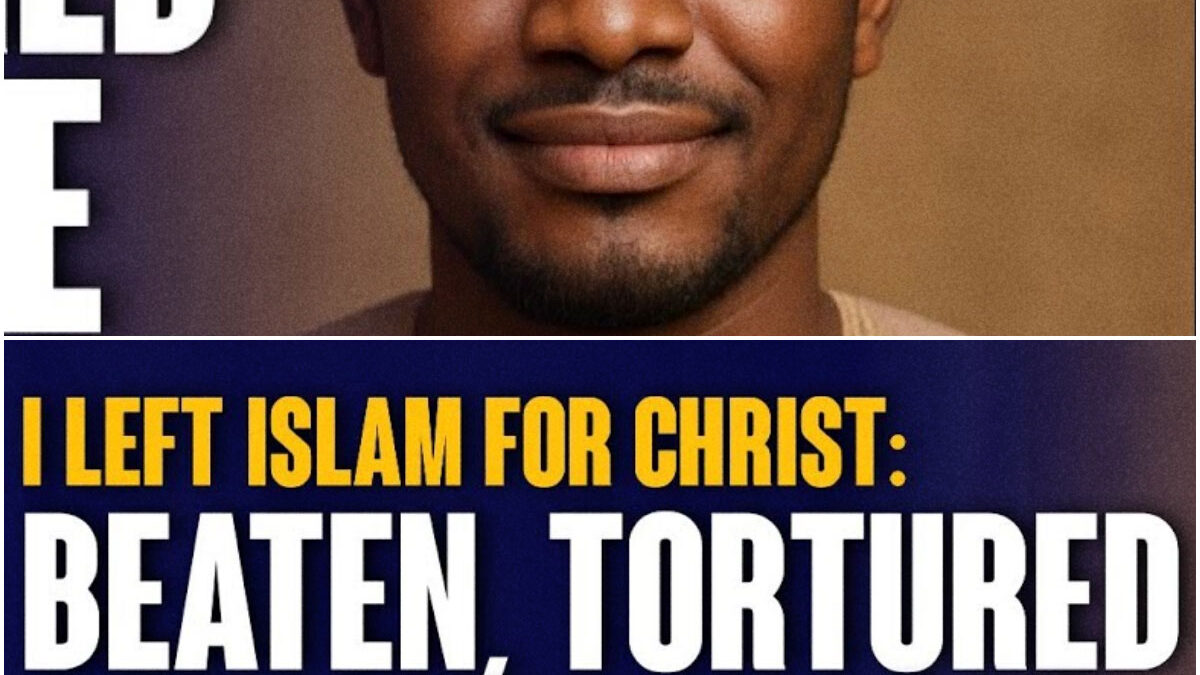
From Islam to Christianity: Tortured and Left to Die, Yet Jesus Rescued Me – Christian Testimony
Today we have the profound privilege of hearing from brother Jabril who comes to us from Maiduguri, a city in the northern reaches of Nigeria.
His testimony of how God’s relentless love broke through the deepest darkness to bring him into the light of Christ is living proof that God can reach anyone anywhere at any time.
No heart is too hardened.
No soul is too far.
No life is beyond his reach.

I urge you to listen with your whole heart.
Open yourself to see how God once again works miracles that shatter everything we think we understand.
Miracles that leave us breathless.
Miracles that remind us he is still very much alive and moving.
Before we begin, please subscribe to this channel and like this video.
Your simple action helps us reach countless souls who desperately need to hear these words of hope.
And would you do something for me?
In the comment section below, say a prayer for brother Jabril.
Lift him up.
Let him know he’s not alone.
My name was Gabriel Muhammad.
That’s who I was when I still walked in darkness.
When I still carried the weight of Islam on my shoulders.
But then I met ChriSt. I encountered his love.
A love so vast, so overwhelming, so undeserved that it changed everything.
Today I am Joseph, reborn, remade, a new creation.
Before I share my story, I must thank the Encountering Jesus channel from the depths of my heart.
They opened their doors to me.
They gave me a platform to speak.
I was born in Maiduguri in the northern heartland of Nigeria.
My community, the only world I knew, was almost entirely Muslim.
And in that world, Christians weren’t just unwelcome.
They were hated, despised, treated as less than human.
They had no freedom, no voice, no safety.
To profess faith in Jesus openly was to sign your own death warrant.
And when they died, and they did die often and violently, nothing happened.
No justice, no investigation, no consequences.
In fact, sometimes the killer was celebrated, praised, honored for defending Islam.
These believers never knew the peace, the joy, the freedom that Christians in other parts of the world take for granted.
They lived in constant fear, constant danger.
And I watched it all, never once questioning if it was right.
I remember one particular day, a day seared into my memory.
My father and my brothers, men I loved and respected, went out with fury in their eyes.
They set an entire Christian neighborhood ablaze.
Flames consumed homes.
Screams filled the air.
And why?
We stood there watching the fire rise.
And we felt no shame, no guilt, no remorse.
We believed we were doing something righteous, something honorable.
We were protecting our faith, defending our prophet’s name.
To us, this was holy work.
And in our hearts, we had a question.
A question we threw at the sky like a challenge.
We’d heard Christians say their God protects them, that vengeance belongs to him, that he fights for his people.
So we waited.
We watched.
We expected him to act.
But we saw nothing.
No divine intervention.
No lightning from heaven.
No judgment falling on us.
The boy who was killed, no vengeance came for him.
The mother clutching her children as flame surrounded them.
Silence from heaven.
The countless women violated, their dignity stolen in the crulest ways.
Nothing.
The villages Boo Haram decimated.
Communities wiped from existence.
Women dragged away to become sex slaves.
Men forced into brutal labor.
Where was their God?
The orphaned children crying in the rubble.
Their parents murdered.
Their futures destroyed.
Where was this God who claimed to see everything, to care about everything?
To us, this silence was proof.
Undeniable proof.
Their god was weak, powerless, false.
A fantasy desperate people clung to because they had nothing else.
But oh, how wrong we were.
How devastatingly beautifully wrong.
Because this God we mocked, he wasn’t silent.
He wasn’t absent.
He wasn’t weak.
He was patient, strategic, working in ways we couldn’t see, in places we’d never think to look.
And he had a plan not just for those suffering Christians, but for me, for Gabriel Muhammad.
He reached down into my world of hatred and violence and pride.
He called my name.
He claimed me as his son.
And he used the most unlikely instrument to do it.
A young Christian teacher named Samuel who came to our school.
When Samuel arrived, God was making his declaration.
He was saying to me, to my family, to everyone who doubted him, I will show you who I am.
I am the God who sees.
The God who acts.
The God for whom nothing, absolutely nothing, is impossible.
This is where my story truly begins.
Where everything I thought I knew came crashing down.
Where the God I called false proved himself more real than anything I’d ever known.
So stay with me.
Walk with me through this journey.
Because what God did in my life, he can do in anyone’s life.
Even yours.
Even the person you think is too far gone.
Even the one who seems completely unreachable.
God specializes in the impossible.
And I’m living proof.
I was 19 in my final year of secondary school when Uncle Sam arrived.
He wasn’t actually my uncle.
That’s just what we called him.
The way we called all the core members uncle or auntie.
He came to teach us literature and government.
Sent from some southern state I’d never been to.
From the first day, something about him felt different.
Not in a loud way.
He didn’t preach or argue or try to prove anything.
He was just calm, peaceful in a way I couldn’t name.
While other teachers shouted and threatened, he spoke softly.
When students mocked him, he smiled.
When we failed, he encouraged us instead of insulting us.
I noticed things, small things at firSt. He never joined us for prayers.
When we spread our mats in the school compound, he would stand quietly to the side, respectful but separate.
I watched him sometimes when I should have been focused on my own prayers, wondering what he was thinking.
Was he embarrassed?
Did he feel left out?
But his face never showed discomfort.
Just that same quiet peace.
One afternoon after class, he praised my essay, called it thoughtful, said I had a gift for seeing beyond the surface.
I felt proud seeing.
We started talking more.
He’d ask about my plans for university, what I wanted to become.
I felt like he actually cared, not just as a teacher checking boxes, but as someone who genuinely wanted to know me.
One day, I asked him.
I tried to be casual about it.
Respectful.
I asked why he didn’t pray with us.
He looked at me for a moment and I saw something shift in his eyes.
Caution maybe or care.
He told me he did pray just in a different way.
I asked if he was Muslim.
He said no quietly.
He was a Christian.
I’d known Christians before or thought I had.
The few families who lived on the edges of our neighborhoods, who kept to themselves, who we were taught were misguided, clinging to a corrupted book.
But Uncle Sam didn’t seem misguided.
He seemed more peaceful than anyone I knew.
I asked if I could know who Jesus was to him.
My heart was beating faster.
He smiled then, gentle and sad at the same time.
He explained that Jesus was everything to him, not just a prophet, but the son of God.
That Jesus had died so he could know God personally, not through rules or fear, but through love, through forgiveness.
He could never earn.
I didn’t understand.
The words felt strange, almost dangerous.
But something in the way he said them, the warmth, the certainty that wasn’t arrogant, but tender.
It stayed with me.
That night at dinner, I mentioned it casually to my father.
I thought it was just interesting, something worth sharing.
I told him one of our teachers was a Christian and had been explaining his faith to me.
My father’s hand stopped halfway to his mouth.
The room went silent.
He asked me to repeat what I’d said.
I did, confused by his reaction.
He stood up so fast his chair fell backward.
His face transformed into something I’d never seen before.
Rage, yes, but also fear.
He demanded to know if this man had spoken to me about Christianity in school, who he was.
I tried to explain that he’d just answered my question.
My father shouted at me to be silent.
The next day, my father stormed into the school.
I heard his voice from my classroom.
Loud, furious, threatening.
He demanded to see the principal.
He called Uncle Sam a corruptor of youth, a snake sent to poison Muslim children.
The principal, terrified of conflict in a city already tense with religious violence, promised immediate action.
After that, Uncle Sam became distant.
He still taught our class, but he wouldn’t meet my eyes.
When I tried to talk to him, he politely excused himself.
I understood he’d been warned.
Speaking to me had put him in danger, but it hurt.
I felt like I’d betrayed him just by being honest with my father.
Then one day, he wasn’t there.
They told us the teacher had been transferred just like that.
No goodbye, no explanation.
I felt empty, guilty, like I’d cost him something important.
A week later, a woman from his neighborhood came to find me after school.
I recognized her vaguely.
She looked nervous, kept glancing around.
She asked if I was Jabril, the student Sam had spoken about.
I nodded.
She pushed a small wrapped package into my hands.
She said he’d left that morning in a hurry, but had left this for me, that he’d said I would understand.
I took it home, waited until everyone was asleep, and opened it in my room.
Inside was a letter written in neat handwriting and a small book, a New Testament Bible.
My hands shook as I read the letter.
He apologized for having to leave without saying goodbye.
He said they told him it wasn’t safe to stay, but he wanted me to know that meeting me wasn’t an accident, that God had shown him something special in me, a hunger for truth, a heart that asked real questions.
He said he was praying that one day I’d find what I was searching for, that Jesus loved me more than I could imagine.
That’s all he wanted me to know.
He asked God to guide me and sign his name.
I sat there for a long time staring at those words about Jesus loving me more than I could imagine.
Why would he risk his life just to tell me that?
What kind of love was worth that kind of danger?
I hid the letter in the Bible under my mattress between the wooden slats where no one would find them.
And every night before I fell asleep, I touched the edge of that hidden book and wondered what secrets it held that could make a man so brave, so peaceful, so willing to lose everything.
That small box on the university entrance form should have been nothing, just a formality.
Religion, Muslim, or Christian?
I’d checked Muslim on a 100 forms before without thinking.
But this time, my pen hovered.
This time, I felt something catch in my cheSt. Two years had passed since Uncle Sam left.
I’d finished secondary school, done well on my jam, and was preparing for university.
Life had moved forward in all the expected ways.
But that hidden Bible had stayed under my mattress, untouched, but never forgotten.
Sometimes at night, I’d press my hand against it through the thin foam.
Feeling its shape, remembering that letter, I kept thinking about what he’d written about Jesus loving me.
I checked Muslim.
Of course I did.
What else could I do?
But afterward, my hand felt heavy.
That night, I couldn’t sleep.
I kept thinking about that box, about the weight of that single word, Muslim.
It was supposed to be simple.
It was who I was, who my father was, who every person I loved and respected was.
But for the first time in my life, it felt like a question instead of an answer.
I pulled out the Bible.
The pages were thin, delicate.
I opened it randomly.
Gospel of Matthew.
The words felt strange at first, formal and old.
I read about Jesus teaching on a mountain.
About being blessed if you’re meek, merciful, hungry for righteousness, about loving your enemies, praying for those who persecute you.
I’d heard some of this before in Islamic teachings, but something about the way it was written here felt different, more personal, like it wasn’t just commands, but an invitation.
I started reading every night, just a little.
I told myself I was curious, that it was academic, that understanding Christianity would make me better at defending Islam.
But that wasn’t true.
The truth was, I felt pulled, like something was calling me through those pages.
I read about Jesus healing the sick, touching lepers that everyone else avoided, eating with sinners and tax collectors, forgiving a woman caught in adultery when everyone wanted to stone her.
The stories kept showing me someone who loved people the religious leaders rejected.
Someone who said he came not for the righteous but for the broken.
I thought about Uncle Sam’s face when he talked about Jesus.
That peace, that certainty that wasn’t arrogant, that love that made him risk everything.
Slowly over weeks, I noticed something happening when I read a feeling in my room.
Not scary, but comforting.
Like I wasn’t alone.
Sometimes I’d stop reading and just sit there feeling this quiet presence and my heart would feel full in a way I couldn’t explain.
I started having dreaMs. In one, someone called my name, not loud, but gentle, like a father calling a child home.
I woke up with tears on my face and didn’t know why.
I began praying differently.
Not the prayers I’d memorized, not the ritual prostrations I’d done all my life.
I just talked out loud sometimes.
In my head.
Other times, I asked if he was real, if he could show me who he was.
I told him that if Uncle Sam was right, if this wasn’t just stories I wanted to know, I needed to know.
Nothing dramatic happened.
No lightning, no visions, just that feeling growing stronger, like warmth spreading through my cheSt. Like light pushing back darkness I didn’t know I’d been living in.
One night, I couldn’t sleep.
I was reading John’s Gospel about the word being with God and being God.
And suddenly I felt it so strongly I had to put the book down.
Warmth flooded through me.
Peace so complete it almost hurt.
I didn’t hear a voice, but I knew somehow I knew Jesus was real.
Jesus was here.
Jesus had been reaching for me all along.
I sat on my mattress, tears streaming down my face, and I didn’t understand it all.
Didn’t understand how God could have a son.
Didn’t understand the Trinity.
Didn’t understand how to reconcile everything I’d been taught with what I was feeling.
But I knew one thing with absolute certainty.
I’d been touched by something beyond religion, beyond tradition, beyond everything I could explain.
I whispered into the darkness that I didn’t know what this meant or what to do, but that I felt him.
And in that small room in my duguri, with a forbidden book in my hands and fear and wonder waring in my heart, something in me changed.
Something that could never go back.
The bus to Abuja was crowded and hot.
I squeezed into a seat near the back, grateful just to be going somewhere anywhere outside my Duri.
My cousin was getting married and my mother had insisted I go.
A rare permission for my father, probably because he thought it would be good for me to see family, to remember who I was.
But I wasn’t the same person anymore.
Months of secret reading, secret prayers, secret wrestling with questions I couldn’t ask anyone had changed me.
I felt like I was living two lives.
The obedient Muslim son everyone saw and this other person, this seeking, confused, hungry person no one knew about.
The man next to me was on his phone speaking housea, but with an accent that told me he wasn’t from the north.
I tried not to listen, but his words cut through the noise of the bus.
He was thanking Jesus, saying they’d arrived safely, that God was faithful, praising God.
My whole body tensed.
He said it so naturally, so openly.
In my duguri, those words would be dangerous.
Here, a few hours south, he said them without even looking around.
Something pushed me.
I don’t know what.
Fear and courage mixed together.
I leaned slightly toward him and spoke quietly, asking if he was a Christian.
He turned to me and his face broke into a smile.
Warm, open, no suspicion.
He said yes and asked if I was.
I didn’t know how to answer.
I opened my mouth and nothing came out.
He seemed to understand something.
He gestured to the empty seat across the aisle.
Someone had just gotten off.
He suggested we talk.
I moved over, my heart pounding.
He introduced himself as Pastor David.
I told him my name and he didn’t flinch at how Muslim it sounded.
He asked what was on my mind.
Everything spilled out.
I don’t know why.
I barely knew him.
But I told him about Uncle Sam, about the Bible hidden under my mattress, about the presence I felt when I read, about the dreams, about the confusion and the fear and the feeling that Jesus was real.
But I didn’t know what to do with that.
He listened without interrupting.
When I finished, he was quiet for a moment.
Then he asked if he could tell me what Jesus did for me.
I nodded.
He didn’t preach.
He just explained simply clearly.
He told me that Jesus died not to make people change religion, but to bring them to God.
That salvation wasn’t about being Muslim or Christian, but about receiving the gift that Jesus offered, forgiveness, life, relationship with God as father, not master.
He told me that Jesus loved me before I ever knew his name.
That he’d been drawing me all along.
He said I didn’t have to clean myself up firSt. Didn’t have to understand everything.
I just had to say yes.
Tell him I wanted what he was offering.
That’s all.
Something in me broke open.
It was like everything I’d been reading, everything I’d been feeling suddenly clicked into place.
This wasn’t about religion.
This was about Jesus.
About saying yes to this person who loved me enough to die for me.
The wedding was beautiful.
My cousin looked happy.
The family celebrated.
I smiled and participated and tried to be present.
But all night I couldn’t stop thinking about Jesus, about Pastor David’s words, about the choice I knew I was standing on the edge of.
The next morning, I met Pastor David again.
We’d exchanged numbers and he’d invited me for breakfaSt. We sat in a small cafe and he looked at me with such kindness.
He asked if I was ready.
I said I didn’t know honestly that I was afraid that I didn’t know what would happen.
My family, he told me he knew that he wasn’t going to lie to me.
That following Jesus might cost me everything, but that Jesus was worth it and that he would never leave me.
I thought about Uncle Sam risking his job, his safety just to plant a seed.
I thought about that presence I felt in my room, that peace that didn’t come from me.
I thought about Jesus touching lepers and loving sinners and inviting the weary to come to him.
I was so tired.
Tired of pretending.
Tired of living two lives.
Tired of being afraid.
I whispered that I wanted to follow him.
That I wanted Jesus.
Pastor David reached across the table and took my hands.
Right there in the cafe, he prayed with me.
I don’t remember all the words.
I just remember him thanking Jesus for pursuing me, for loving me, for saving me.
And I remember whispering that I was his, that I didn’t understand everything, but I was his.
Peace washed over me.
Not excitement, not emotion, just calm, like something that had been missing my entire life finally clicked into place.
Like I’d been holding my breath for 19 years and finally exhaled.
When I opened my eyes, I was crying.
Pastor David was, too.
He welcomed me home.
I traveled back to my Duguri different.
The same bus, the same roads, but I wasn’t the same.
I felt Jesus with me.
I wasn’t alone anymore.
When I got to my room, I pulled out the Bible from under my mattress.
This time, I didn’t hide it.
When I finished reading, I left it on my desk.
A small act, but it felt enormous.
I started praying openly in my room, not toward Mecca, but talking to Jesus, thanking him, asking him to help me, asking him to show me what comes next.
I knew it wouldn’t stay hidden forever.
I knew my family would find out.
I knew there would be consequences.
But for the first time in my life, I felt free.
Afraid, yes, but free.
I should have been more careful.
I should have hidden it better.
But part of me, I think, was tired of hiding.
Tired of living a lie.
It was evening.
I was in my room reading the book of John, whispering the words to myself, feeling that peace settle over me like it always did now.
I didn’t hear my mother’s footsteps.
Didn’t hear her open the door.
She said my name.
I looked up.
She was standing in the doorway, frozen, staring at the Bible in my hands.
Time stopped.
I saw her face cycle through confusion, recognition, shock, then horror.
Pure horror.
She asked what I was holding.
Her voice was barely a whisper.
I couldn’t speak, couldn’t move.
The Bible felt heavy in my hands.
She rushed forward and snatched it from me, staring at the cover like it might burn her.
She kept calling on Allah, asking what I had done.
I tried to say her name.
She asked if I knew what this was, what it meant.
She was shaking, clutching the Bible to her chest like she didn’t know whether to hide it or destroy it.
She said that if my father found out that he would kill me.
She asked if I understood that he would kill me.
I tried to ask her to let me explain.
She asked what I could possibly explain.
If I’d become a kafir, if I’d betrayed Allah, betrayed the family.
She collapsed onto my bed, sobbing, asking how long I’d had this.
I couldn’t lie to her.
I said 2 years.
She wailed.
The sound cut through me.
It wasn’t anger.
It was grief.
Like I’d already died.
I told her to please listen.
I knelt in front of her, taking her hands.
I said I’d found something.
Found peace.
Found Jesus.
She pulled her hands away like I’d burned her.
She told me not to say that name, not to say it in this house.
I told her I couldn’t pretend anymore.
My voice broke that I’d tried.
I tried to ignore it to push it away, but I couldn’t.
That Jesus was real, that he loved me, that he’d saved me.
She said I was loSt. She stood up, backing toward the door, the Bible still clutched in her hands, that I was lost and she didn’t know how to save me.
I told her she didn’t have to save me, that he already had.
She stared at me like I was a stranger.
Then she ran from the room.
I heard her wailing to my father, heard his heavy footsteps on the stairs.
I stood in the middle of my room, shaking, praying.
I kept asking Jesus to help me.
My father burst through the door like a storm.
His face was twisted with rage I’d never seen before.
Not when I failed exams, not when I disrespected him.
Never like this.
He asked how I dared.
He crossed the room in two strides and slapped me so hard I fell.
He asked how I dared bring this filth into his house.
I tasted blood.
I tried to call him Baba to plead.
He kicked me.
I curled up trying to protect myself.
He called me ungrateful.
Asked after everything he’d taught me, everything he’d given me, how could I do this?
He kicked me again.
He said I was spitting on my family, spitting on Allah.
My brothers came in.
They joined.
Fists, kicks, words that hurt worse than the blows.
Traitor, apostate, shame, disgrace.
When they finally stopped, my father stood over me.
He said I would renounce this tomorrow, that I would go to the mosque and publicly renounce this madness.
I looked up at him through swollen eyes.
I told him I couldn’t.
He stared at me like he couldn’t believe I’d spoken.
Then he grabbed me by my shirt and dragged me to the small storage room at the back of the house.
He threw me inside.
He told me I would stay there until I came to my senses.
The door slammed shut.
I heard a lock click.
I lay on the concrete floor in the darkness, my body screaming with pain, and I prayed.
Not elegant prayers, just Jesus’s name.
Over and over, his name felt like water in a desert.
Days blurred together.
They brought me little food, stale bread, water.
My father came sometimes to ask if I was ready to repent.
I told him I couldn’t D.
Each time there were more beatings.
My brothers took turns, called me demon-possessed.
My father quoted Quran, shouted about apostasy, about honor.
My mother would come late at night sometimes when everyone slept.
She’d slip water through the crack under the door, whisper prayers in Arabic, beg me to just say the words even if I didn’t mean them.
She said I could believe whatever I wanted in my heart.
I told her I couldn’t lie, not about this.
She asked if I wanted to die, if that’s what I wanted, to die for this.
I thought about Jesus on the cross, about disciples beaten, imprisoned, killed, about Uncle Sam risking everything just to tell me about this love.
I told her that if I died, I’d be with him.
She sobbed and left.
Time lost meaning.
Days became weeks, maybe months.
I developed a fever.
My leg where my brother had kicked me swelled and wouldn’t heal properly.
I lay in my own filth sometimes because they wouldn’t let me out to wash.
But in that darkness, I felt Jesus so clearly more clearly than I ever had.
When I was too weak to pray words, I just whispered his name.
When the pain was too much, I felt his presence like arms holding me.
I had nothing left, no strength, no hope in myself, just him.
And somehow that was enough.
One night, I woke to voices.
My father’s voice low and hard.
He said there was no other choice, that I would not turn back, that I’d chosen my path.
My mother’s voice desperate, begging him, saying please that I was his son.
He said I stopped being his son when I worshiped that false god, that they’d tried everything, that now there was only one way to restore their honor.
She said he couldn’t.
He said it was decided tomorrow he would take me away.
It would be done.
Silence.
Then my mother’s broken crying.
I lay there understanding.
My father was going to kill me.
Not enraged, but deliberately to restore the family’s honor.
Two, to punish apostasy the way he believed the Quran commanded.
I should have been terrified.
Maybe I was.
But more than fear, I felt sad.
Sad for my father.
Sad for what this would cost my mother.
Sad that they couldn’t see what I saw.
That Jesus was worth more than honor, more than tradition, more than life itself.
I prayed, telling Jesus that if this was it, I was ready.
I thanked him for everything, for saving me.
I asked him to take care of my mother.
I must have fallen asleep.
I woke to the sound of the lock clicking.
The door opened slowly.
My mother’s face appeared, stre with tears, terrified.
She whispered at me to come quickly.
I tried to stand.
Pain shot through my leg.
I couldn’t put weight on it.
She ducked under my arm, supporting me.
She said I had to run.
That my father was sleeping, but he would wake soon.
That I had to go.
I said her name.
She told me to go.
She was weeping, kissing my face, pushing me toward the door.
She said God would go with me.
That she didn’t understand my God.
But she saw he was strong in me.
She told me to go.
My sister appeared from the shadows.
Between them, they helped me to the back door.
My sister pressed something into my hand, money wrapped in cloth.
I hugged my mother.
She clung to me, shaking.
She said she was sorry that she couldn’t protect me.
I told her she was protecting me now.
She kissed my forehead one last time.
Then she pushed me out the door.
I limped into the darkness.
Every step was agony.
My leg dragged, but I kept moving.
I didn’t know where I was going.
Just away, away from death, toward life.
I walked until I couldn’t anymore.
Then I collapsed by the side of a road on the edge of the city.
I lay there under the stars, shivering, wondering if I would die there.
But I wasn’t afraid.
Jesus was with me.
I felt him.
I knew him.
I whispered, “Thank you,” into the darkness.
“Thank you for life.
Whatever comes next, thank you.”
And I closed my eyes, too exhausted to be afraid.
Too broken to do anything but truSt. I don’t remember how long I lay there.
Time became strange.
The cold of night, then the heat of morning sun, then cold again.
I drifted in and out.
Sometimes I prayed, sometimes I just breathed.
I woke to someone shaking my shoulder gently.
A voice asking if I could hear him, if I was hurt, what had happened.
I opened my eyes.
A man’s face swam into focus.
Kind eyes concerned.
I tried to speak, but my throat was too dry.
He lifted a water bottle to my lips.
I drank, coughed, drank again.
He introduced himself as Pastor Elijah, said he’d been driving to morning prayers and saw me here, asked if I could move.
With his help, I sat up.
Everything hurt.
My leg was swollen, purple.
I looked down at myself, filthy, bloody, broken.
I whispered that I needed help.
He said he could see that, that we should get me somewhere safe.
He helped me into his car.
I must have passed out again because when I woke, I was lying on a mat in a small room, clean, quiet, light coming through a window.
A woman was cleaning my leg wound.
I winced.
She apologized softly, said it was infected, but that they’d take.
Pastor Elijah appeared in the doorway, saying I was awake, that was good, that I’d been sleeping for 2 days.
2 days.
I tried to sit up asking where I was.
He told me I was at their mission compound, that I was safe here.
Over the next days, they pieced together my story.
I told them everything.
Uncle Sam, the Bible, my conversion, the imprisonment, the escape.
They listened without judgment, without surprise, like they’d heard stories like mine before.
Pastor Elijah said quietly that I wasn’t the first and wouldn’t be the laSt. They cared for my leg, fed me, let me reSt. Slowly, my body began to heal.
But more than that, my heart began to settle.
I’d been living in fear for so long.
Fear of being discovered, then fear of my family, then fear of dying.
Now in this place of safety, I could finally breathe.
I started attending their prayer meetings, learning worship songs, reading the Bible openly for the first time in my life.
One of the pastors began discipling me, teaching me properly about Jesus, about grace, about what it meant to follow him.
I learned that following Jesus wasn’t just about believing.
It was about learning to walk like him, to forgive like him, to love like him.
That was the hardest part.
Forgiveness.
One night, I sat with Pastor Elijah under the stars.
I admitted I was so angry at my father, at my brothers.
They hurt me.
They tried to kill me.
He said he knew.
I asked how I could forgive that.
He was quiet for a long time.
Then he reminded me that Jesus forgave the people who crucified him.
While they were still nailing him to the cross, he asked his father to forgive them.
Not because they deserved it, because that’s who he is.
I said I wasn’t Jesus.
He agreed, but said Jesus lived in me now and his power could do what I couldn’t.
He looked at me and explained that forgiveness isn’t a feeling.
It’s a choice.
That I had to choose to release them, to give them to God, and keep choosing every day until one day I’d realized the anger didn’t control me anymore.
I thought about that for a long time.
I wrote letters to my mother, carefully worded, sent through people I trusted.
I told her I was safe, that I loved her, that I was okay.
I never got a reply.
I didn’t know if she even received them, but I kept writing, kept praying for her.
Years passed.
The mission compound became my home.
I grew stronger in body, in faith.
I helped with the ministry, started learning how to counsel other believers who’d escaped persecution.
I remembered what I’d gone through, and I wanted to be for them, what these people had been for me.
Sometimes at night, I’d think about my family.
Wonder what they were doing, if my mother was okay, if my father ever regretted what he’d done, if my sister was safe.
I prayed for them every day, even when it hurt.
Especially when it hurt.
Because Jesus taught me that love doesn’t stop when people hurt you.
Love keeps going, keeps praying, keeps hoping, even when there’s no response, even when it costs everything.
And slowly, slowly, the anger loosened its grip.
Forgiveness didn’t happen all at once.
It came in small moments.
A prayer where I meant the words, a memory without the sharp pain.
A day when I thought about my father and felt sad for him instead of hate.
Jesus was healing me, not just my body, my heart.
The call came from a cousin I hadn’t spoken to in 10 years.
He asked if this was my number.
My hands shook.
I said yes.
He told me my mother was in Abuha for a wedding this weekend.
My heart stopped.
I asked if she was alive.
He sounded confused, saying, “Of course, she was alive.
Why wouldn’t she be?”
He said he didn’t know what happened between me and the family, that no one talked about it, but he thought I should know she was here if I wanted to see her.
I called Pastor Elijah.
He’d moved to Jaws by then, but we stayed close.
He told me to go, that this was from God.
I traveled from Jaws to Abuha with no plan, no idea what I’d say.
10 years.
She might not even want to see me.
She might hate me.
She might turn away.
But I had to try.
The wedding was at a hotel.
I waited outside watching people arrive.
Then I saw her, older, grayer, but unmistakably her.
I stepped forward.
Our eyes met.
She froze.
Her hand flew to her mouth.
For a moment, I thought she’d run.
Then she rushed forward and we collided.
She wrapped her arms around me and made sounds that weren’t words, just grief and relief poured out.
We stood there crying in the hotel parking lot while people stared.
I didn’t care.
She kept saying I was her son, that I was alive.
I told her I was.
We sat on a bench away from the crowd.
She held my hands like she was afraid I’d disappear.
She said she’d prayed for me every day, every single day, that she didn’t know where I was, if I was safe.
She couldn’t finish.
I told her I’d written letters.
She said she never got them, that my father had made sure nothing reached her, that he’d said I was dead to them.
The words hurt, but I’d expected them.
I asked how he was.
She looked away, said he was old, silent, that he didn’t speak of me, wouldn’t hear my name.
She touched my face and asked what happened where I went.
I told her not everything that would take hours, but enough.
About the mission compound, about Pastor Elijah, about learning to follow Jesus, to forgive, to live in peace despite everything.
She listened, tears streaming down her face.
When I finished, she said quietly that she didn’t understand my faith, that she never would, but she saw it had kept me alive.
And for that, she thanked my God.
I told her I had something to say.
She looked worried.
I said I’d forgiven everyone, my father, my brothers, everyone that Jesus taught me how, Jesus, and that I wanted her to know.
I didn’t hate anyone, that I prayed for all of them every day.
She broke down again, asking how I could forgive what they did.
I told her it was because Jesus forgave me first for everything, and his love was bigger than all of it.
We sat in silence for a while.
Then she said something that nearly broke me.
She said my sister had been reading that book.
I asked if she meant the Bible.
She nodded, saying yes in secret like I had done.
That my sister asked her questions she couldn’t answer.
She looked at me and said she told her that if she ever found me to ask me.
Hope blazed in my cheSt. I asked if she was here.
She said no.
That my sister couldn’t come.
But she’d tell her she saw me, that I was well, that I was happy.
Before we parted, she held my face in her hands.
She said she never stopped being my mother.
Never stopped loving me.
I told her I knew.
She told me to go back to my Jesus, to keep preaching him if I must, that she couldn’t walk that road.
But she saw it had given me peace.
And maybe that was enough.
She kissed my forehead, blessed me in Arabic, old words I’d heard all my life, words that felt different now, holy in a new way.
We held each other one more time.
Then she walked back to the wedding and I walked back to my life.
But something had healed.
Something I didn’t know could heal.
I stood on the side of the road waiting for a taxi and I prayed.
I thanked Jesus for letting me see her again.
For forgiveness.
For love that doesn’t end.
And I felt him there the way I always did.
Not loud.
Just present.
Just enough.
I’m older now.
My hair is starting to gray.
I limp when it rains.
My leg never fully healed.
But I’m alive.
I’m free.
I’m his.
I work quietly helping people like me, converts who ran, believers in danger.
I connect them with safe houses, with pastors who understand.
I counsel them through the fear, the grief, the guilt.
I tell them it’s okay to miss their families, okay?
That following Jesus doesn’t mean you stop loving the people who hurt you.
I visit school sometimes, not as a teacher.
I don’t have the credentials for that.
But as a volunteer, a mentor, I sit with students who seem lost, who ask questions others won’t answer.
I see myself in them.
That hunger, that confusion, that fear of wanting something more.
I never push.
I learned that from Uncle Sam.
He didn’t push.
He just lived, loved, and when I asked, he answered.
So I do the same.
I listen.
I retra continue care.
And when they ask, I tell them about Jesus.
There’s a wooden box in my room, small, worn.
Inside is that letter from Uncle Sam.
The paper is brown now, fragile.
The ink has faded in places, but I can still read it.
The words about God showing him something special in me.
About Jesus loving me more than I could imagine.
I read it when I’m discouraged.
When the work feels too hard, when another believer disappears.
When another family disown their child.
When I hear about someone killed for their faith.
I read it and remember faith starts with one act of courage, one seed of love.
Uncle Sam probably never knew what happened to me.
He left my degree thinking he’d failed, thinking his time there meant nothing.
He couldn’t have known that one conversation, one letter, one small Bible would grow into this, into a life, into freedom, into a testimony that’s helped others find their way.
I wonder about that sometimes.
How many seeds he planted that he never saw grow?
How many students remembered his kindness years later?
How many lives he touched without ever knowing?
I carry that same pocket New Testament everywhere.
The cover is falling apart.
Pages are loose.
I’ve taped it together so many times.
People offer to buy me a new one, a proper Bible.
But I can’t let it go.
It’s not just a book.
It’s a reminder of where I came from.
Of what Jesus did, of love that costs everything and gives everything.
Last week I was in a small church in Jo.
They’d asked me to share my testimony.
I told them the whole story.
Uncle Sam, the hidden Bible, the imprisonment, the escape, the reunion with my mother.
When I finished, a young man approached me.
He couldn’t have been more than 20.
His hands were shaking.
He said quietly that he was from Sooto, that he’d been reading the Bible in secret for 6 months, that he was afraid, that he didn’t know what to do.
I looked at him and saw myself 19 years old, confused, terrified, standing on the edge of a decision that would change everything.
I put my hand on his shoulder and asked him to tell me his story.
We sat for 2 hours.
I listened.
I didn’t judge.
I didn’t rush.
When he asked what he should do, I told him the truth.
That following Jesus might cost him everything.
His family, his home, maybe his life.
That I wouldn’t lie to him about that, but that Jesus was worth it and that he wouldn’t walk alone.
His eyes filled with tears.
He asked how I survived.
I said simply that it was Jesus.
Not my strength, but his.
Every single day, his strength, not mine.
He nodded slowly and asked if I would pray for him.
I said, “Of course.”
We prayed right there in the empty church.
I asked Jesus to give him courage, to show him the way forward, to protect him, to give him the same peace that carried me through my darkest days.
When we finished, he hugged me and thanked me for not giving up.
After he left, I sat alone in that church for a long time.
I pulled out the old letter, unfolded it carefully, read those familiar words one more time.
The words about Jesus loving me more than I could imagine.
If only Uncle Sam knew.
If only he could see what his words became.
How one teacher’s courage rippled forward through years, through lives, through generations.
But maybe he does know.
Maybe in heaven he sees.
Maybe Jesus showed him what they did together.
The harvest from that one small seed.
I folded the letter, put it back in my pocket, and walked out into the evening.
The sun was setting over Yos painting the sky orange and pink.
I thought about my mother praying for me somewhere in my duguri.
My sister reading her hidden Bible.
The young man from Sookoto wrestling with his decision.
All the believers scattered across the north, holding on to Jesus in secret, in danger in faith.
We’re all seeds Uncle Sam planted.
Him and a thousand others like him.
Teachers, pastors, friends who risked everything to tell us about Jesus.
Who loved us enough to plant seeds even when they’d never see the harveSt. I pray I can do the same.
That somewhere years from now, someone will remember a conversation we had.
A prayer we shared.
A moment when they felt seen, loved, valued, and that memory will give them courage when they need it moSt. That’s all any of us can do really.
Plant seeds, love people, point them to Jesus, trust him with the reSt. I limp toward home as darkness falls.
My leg aches.
I’m tired.
But I’m not alone.
I’ve never been alone.
From that first moment I whispered his name in my room in my duguri to right now walking through Joe’s.
He’s been here at home.
I make tea, sit by the window, open my worn Bible, not the pocket one, a bigger one now.
But I keep the pocket one on the table beside me.
I read about how unless a grain of wheat falls to the ground and dies, it remains only a single seed.
But if it dies, it produces many seeds.
Uncle Sam fell.
He died to himself, to safety, to comfort.
And look what grew.
I fell.
I died to family, to honor, to everything I knew.
And Jesus made something beautiful from that death.
Maybe that’s what following Jesus means.
Falling like seeds, dying like seeds, trusting that somehow in ways we can’t see, God will bring life from our surrender.
I close my eyes and pray for my mother, my sister, my father, even though it still hurts.
For the young man from Sooto, for all the secret believers.
For all the Uncle Sam’s planting seeds in dangerous places.
And I thank Jesus for everything.
For love that pursued me when I didn’t even know I was loSt. For grace that saved me when I had nothing to offer.
For strength that carried me when I had none of my own.
I open my eyes, pick up that pocket Bible one more time, run my fingers over the cracked cover, whisper into the quiet room that he planted a seed and Jesus made it grow.
And somewhere I imagine Uncle Sam smiling.
Somewhere Jesus smiles, too.
Not because I did anything great, but because his love never fails.
His seeds always grow.
His light always breaks through darkness.
I’m just a man from Maiduri who said yes.
Who kept saying yes even when it cost everything.
And somehow by his grace that was enough.
It’s always been enough.
It will always be enough.
I set the Bible down gently and look out the window at the stars beginning to appear.
Tomorrow I’ll wake up and do it again.
Visit someone who’s hurting.
Pray with someone who’s afraid.
Listen to someone who has questions they’re terrified to ask.
Plant another seed the way Uncle Sam planted one in me.
I don’t know what will grow.
I won’t see most of it.
But I know the one who makes things grow.
And I trust him.
That’s all faith really is.
Trusting him when you can’t see.
Following him when it doesn’t make sense.
Loving him even when it costs you everything.
Because he loved me firSt. When I was still lost, still Muslim, still running from him.
He loved me.
He planted that seed through a teacher I barely knew.
He watered it through a hidden book.
He grew it in darkness and prison and pain.
And he’s still growing it.
Every day, every conversation, every prayer, I finish my tea, say one more prayer, then I crawl into bed.
Grateful, for life, for breath, for another day to serve him.
The pocket Bible sits on my nightstand right next to the letter.
My two most precious possessions.
Reminders of where I’ve been, of who saved me, of why I keep going.
Before I close my eyes, I whisper into the darkness one more time.
Thank you, Jesus, for Uncle Sam, for second chances, for love that never gives up.
And I fall asleep peaceful, knowing tomorrow I get to do it all again.
Plant seeds, trust God, point people to Jesus.
It’s a simple life, a quiet life.
Not the life my father wanted for me, not the life I imagined at 19, but it’s the life Jesus gave me.
And I wouldn’t trade it for anything.
Not for safety, not for family approval, not for all the honor in the world because I know him and he knows me.
And that’s everything.
That’s always been everything.
That will always be everything.








