Three DEADLY Explosions That Shattered Entire Cities | Disaster Documentary
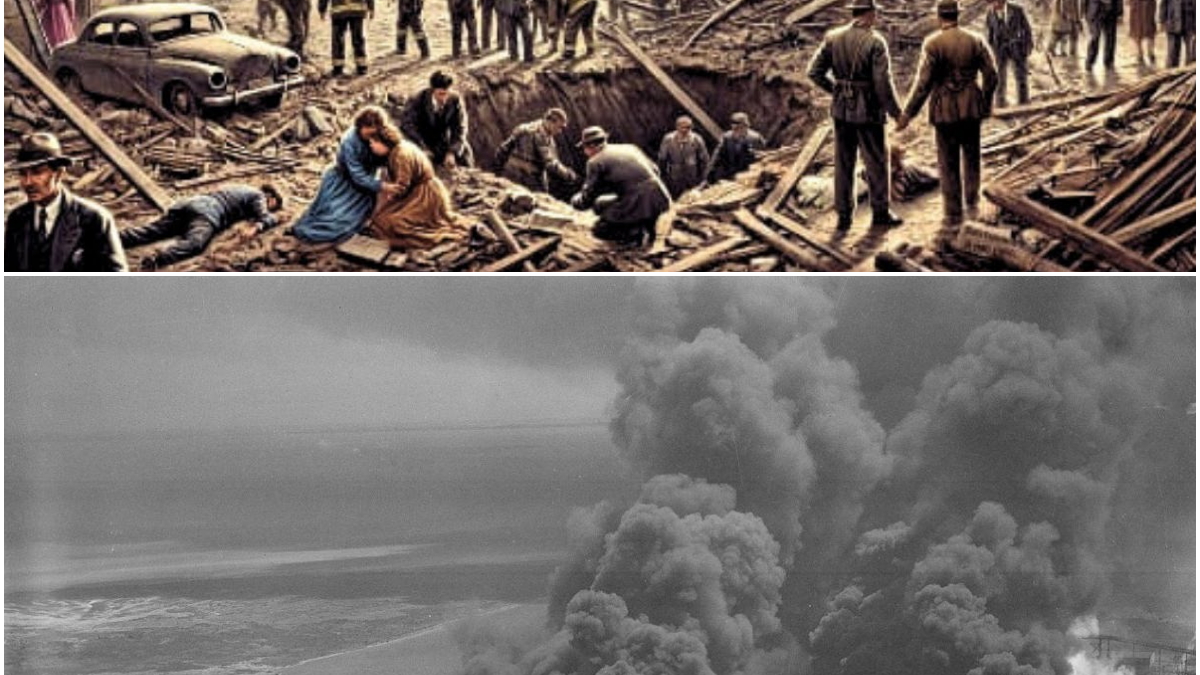
Three DEADLY Explosions That Shattered Entire Cities | Disaster Documentary
In the first half of the 20th century, industry pushed forward faster than safety ever could.
Across cities and quiet neighborhoods, people lived and worked beside materials powerful enough to erase whole blocks in an instant.
From London’s East End to the streets of Cali to a workingclass neighborhood in Cleveland, three explosions would leave scars that lasted for generations.
These are the stories of ordinary days that turned into moments the world would never forget.
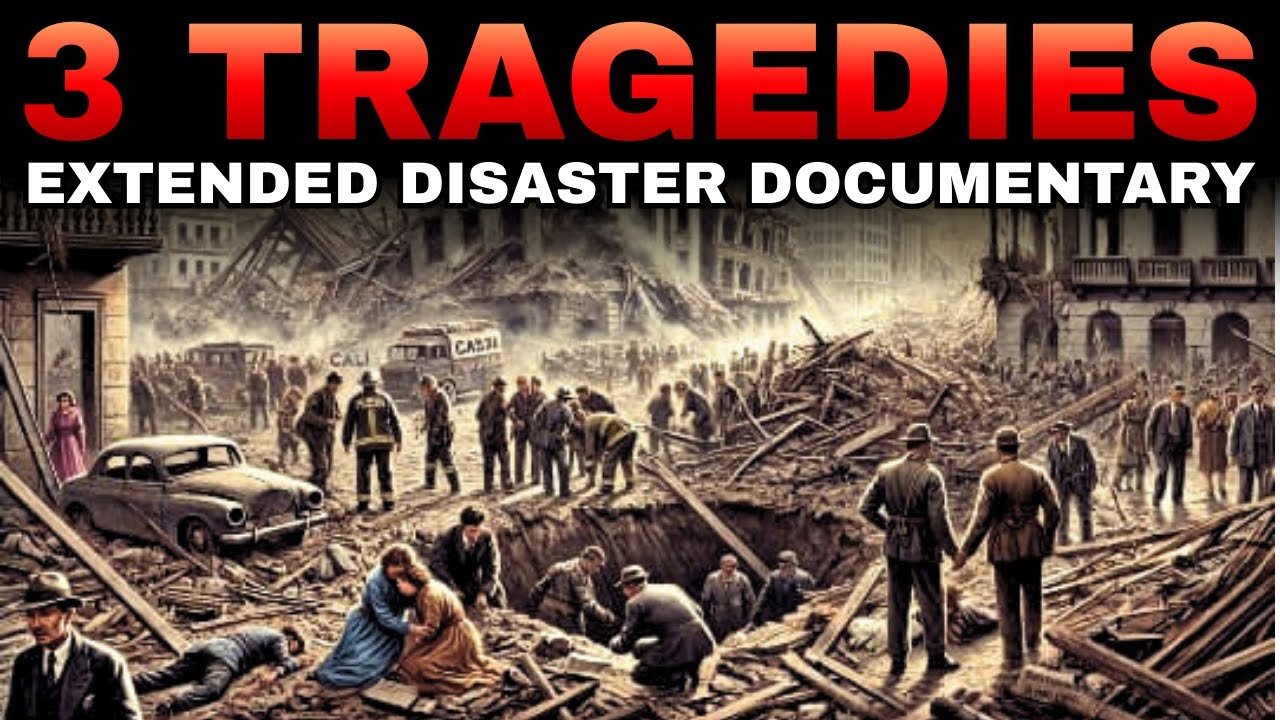
January 19th, 1917, Silvertown, East London.
The night air trembles as a fire glows behind factory walls.
Inside the Bruna man munitions plant, workers shout over the hiss of steam and crackle of burning timber.
Then at 6:52 p.m., the world turns white.
A shockwave slams through the city, ripping the roofs from homes, shattering windows as far as the West End.
Gas lights flicker.
Rail lines twist like ribbon.
Londoners drop to the ground, certain the Germans have struck again.
But this was no air raid.
It was something far more human and far more preventable.
By 1917, London was a city both fortified and fragile.
Nearly 3 years of war had stretched its nerves thin.
The hum of factories had replaced the songs of the streets, and every warehouse, mill, and foundry seemed to pulse with the same single-minded rhythm.
Feed the front, fuel the fight.
In this fever transformation, safety became an afterthought.
The British Empire’s survival depended on production, and so ordinary neighborhoods became extensions of the battlefield.
In the East End, the docks of Silvertown glowed through the night.
The district had once been known for glass works and sugar refineries, a patchwork of labor and grit along the tempames.
But in 1915, under government pressure, one of its largest industrial sites, the Bruner Mond Chemical Works, was converted into a TNT purification plant.
It was a decision born of necessity and of denial.
The plant stood surrounded by houses, shops, and public houses, all within a few hundred ft.
Moving it to an isolated site was deemed impractical.
So, the war came home instead.
The irony was that Bruna Mond had built its reputation on soda crystals, a harmless domestic product.
His directors had resisted making explosives, warning that their facilities were never designed for such volatile work.
But the Ministry of Munitions insisted the need for TNT was desperate, and London’s existing transport links made the site ideal for quick distribution.
Engineers retrofitted the buildings, trained new crews, and began the dangerous work of purifying the crude explosive powder that powered the shells raining down on the Western Front.
For the people of Silvertown, the new factory meant jobs and wages when both were scarce.
Each dawn, hundreds of men and women walked through its gates, past the sign that declared no smoking danger of fire.
Inside, the air shimmered faintly with the yellow dust of Trinituane, coating skin, clothes, and hair in a fine toxic sheen.
The women who handled the substance came to be called canaries.
Their faces tinged a sickly yellow from exposure.
They laughed about it sometimes, as if joking might make it less real.
The facto’s presence became an unspoken truth of life in the East End.
People lived beside it, worked inside it, and prayed it would never fail them.
Trains rattled past its gates.
Children played in its shadow, and housewives hung laundry on lines strung between walls that hid a stockpile of raw explosive powerful enough to erase the entire district.
By the winter of 1917, the war’s appetite had grown insatiable.
The demand for shells never slowed, and the men and women of Silvertown labored under the weight of both duty and danger.
They could not have known that the same war effort which sustained their wages was quietly constructing their ruin.
In the city’s rush to arm itself, it had built a weapon pointed inward, one that would soon detonate at the heart of London itself.
The men and women of Silvertown worked in a powder factory they tried not to think about.
Each morning the streets around Silvertown filled with the shuffle of boots and the clatter of lunch tins.
The faces in the crowd were young and old, men returned from the front with injuries that left them unfit for battle.
Women whose husbands were far away in France, and boys barely out of school who wanted to help the war effort in any way they could.
They joined the steady line of workers filing into the Bruner Mond works, past the centuries, and the warning signs, their breath visible in the cold.
Inside the gates, the air grew heavier.
The hum of machinery mixed with the sharp scent of chemicals and steam.
The workers moved methodically through narrow aisles lined with vats, pipes, and storage drums, each step governed by caution and habit.
A single spark could have spelled catastrophe, but routine dulled the fear.
They learned to work slowly, to keep their sleeves tight and their tempers tighter.
The explosions, they were told, were rare, the kind of thing that happened somewhere else to someone else.
Among them were the Canary girls, women whose skin and hair had turned a faint yellow from constant exposure to TNT dust.
They joked about it during breaks, calling one another gloworms, pretending the danger was distant.
But many felt the toll quietly, nausea, headaches, weakness that lingered long after their shifts ended.
It was wartime and discomfort was a form of patriotism.
Nobody wanted to be seen complaining.
In those days, the line between civilian and soldier had blurred.
Every shell, every cartridge, every ounce of purified explosive seemed to link the workers directly to the trenches of the Western Front.
They imagined that somewhere in France their labor might save a British regiment from being overrun.
That thought gave purpose to the long hours and the constant risk.
We were part of it, one worker later recalled, and that made it worth the danger.
Yet the danger was greater than anyone admitted.
The plant was surrounded on all sides by terrace housing, rows of narrow homes with shared walls and thin windows.
Children played in the streets, unaware that the same factory which gave their parents a living also stored hundreds of tons of TNT.
Some nights, when the glow from the furnaces flickered against the low clouds, the air itself seemed to pulse with unease.
But the people of Silvertown had lived with smoke and fire all their lives.
They trusted that someone somewhere was keeping them safe.
The managers of Brunamond followed the ministry’s instructions, reporting every small fire, every chemical reaction that ran too hot.
Most were extinguished quickly.
The memory of past accidents elsewhere lingered.
Reminders of how easily heat and nitration could spiral out of control, but habits hardened and vigilance wavered.
The work continued because it had to.
And so, as the winter deepened, the people of Silvertown carried on, living beside a bomb they could not see, bound together by routine and resignation.
In a city at war, danger had become ordinary, and ordinary was the most dangerous thing of all.
The fire that changed everything began like so many others.
January 19th, 1917 began without distinction.
A bitter wind swept across the tempames, carrying the smell of coal smoke from the nearby docks.
Inside the Brunamond plant, the dayshift was ending.
Workers scrubbed residue from the purification vats, cleaned tools, and prepared to hand off to the night crew.
The usual noises filled the air, steam valves sighing, metal clanging, the faint hiss of gas lamps.
To anyone watching, it looked like any other winter evening in wartime London.
Shortly after 6:00, a small fire was spotted in the melt house near one of the TNT purification units.
It wasn’t unusual.
Fires had happened before.
Minor incidents quickly controlled.
A few workers reached for sand and water buckets while others sounded the internal alarm.
Flames licked up a wooden beam and danced along a pipe coated with dust.
The air began to shimmer with heat.
Supervisors moved quickly but not decisively.
Witnesses later recalled a moment of hesitation whether to evacuate or fight the fire on site.
The plant’s manager, George WA, a veteran engineer known for his calm, believed they could contain it.
He stayed behind to direct the efforts.
For a few tense minutes, it seemed he might be right.
The flames dimmed, smoke thickened, and hoses drenched the immediate area.
But deep inside the unit, where a zu from earlier batches clung to metal, the heat kept building.
Outside the factory walls, the world remained unaware.
Commuters passed by on the trams that rattled along North Wulitch Road.
Children in the nearby houses were finishing their evening tea.
Shopkeepers were pulling down their shutters.
The glow of the fire barely rose above the factory roof line.
Only a faint column of smoke betrayed the danger within.
By 6:45 p.m., the situation had changed.
A sudden roar of heat forced the fire brigade to retreat from the building.
Windows shattered outward, scattering shards onto the yard.
Workers fled through the gates, shouting warnings to those nearby.
Wa, still inside, was last seen shouting for more men to clear the remaining barrels.
He knew what was coming.
What no one could grasp in those final moments was the sheer scale of the risk.
Stored within the plant was roughly 50 tons of TNT, unstable, volatile, and already warming from the fire’s growing intensity.
It was enough explosive to flatten an entire district.
Yet, the streets outside were still filled with people.
At 6:52 p.m., the fire reached the purification building’s core.
The TNT ignited in a blinding flash that turned night into day.
For a fraction of a second, there was silence.
Then a sound so violent it seemed to tear the air itself apart.
In that instant the factory, the fire, and much of Silvertown ceased to exist.
At 6:52 p.m., London was shaken to its core.
At 6:52 p.m., the sky above the tempames erupted in light.
The explosion tore through the Brunammon plant with the force of a battlefield shell, magnified a thousand times.
For a moment, the night vanished.
Witnesses miles away described the horizon turning white, then red, as a rolling thunderclap ripped through London.
People as far as Guilford and Cambridge heard the blast.
Windows shattered in Essex.
Doors flew off hinges in the West End.
The city, long accustomed to the fear of Zeppelin raids, thought the Germans had struck again.
But no airship had come.
The enemy was the city itself.
In Silvertown, the effect was beyond imagination.
The entire works disintegrated in an instant.
The shockwave flattened houses in every direction.
Streets were erased.
Iron girders flew like splinters.
A 60tonon steel gassometer tank was hurled across the temps, landing in the river’s shallows.
Freight cars were lifted from the rails and tossed like toys.
People standing blocks away were thrown to the ground, dazed, their ears bleeding from the pressure.
Fires ignited across the district.
The neighboring flower mill burst into flames, turning into a roaring torch that illuminated the devastation.
Whole blocks of terrace homes were burning or gone entirely.
The smell of dust, smoke, and chemicals filled the air.
Those who survived stumbled through a wasteland of debris and silence.
For many, the only sound was the ringing in their ears.
At nearby pontoon dock, railway workers looked up to see a cloud of fire rising thousands of feet high.
“It was like the end of the world,” one man later recalled.
“Everything went up and then everything came down.
The ground shook as if struck by an earthquake.
The clock at a nearby church stopped precisely at 652.
Across the river in Greenwich and the aisle of dogs, residents rushed to their windows to see the glow spreading over the water.
Flames climbed higher than the tallest cranes.
The reflection on the tempames made the whole river seemed to burn.
Many believed London’s eastern districts were gone entirely.
For nearly a full minute, the shock wave echoed outward.
Gas manses ruptured.
Roofs caved in miles from the epicenter.
The telegraph network went down and rail lines buckled.
Hundreds of thousands felt the force without understanding its cause.
In the chaos of war, the first thought was always the same.
The enemy had reached them.
But there were no sirens, no search lights, no engines in the sky.
Only the slow realization that the danger had come from within.
By the time the echo faded, Silvertown was unrecognizable.
Where once stood homes, workshops, and factories, there was now a crater 50 m wide and deeper than a house.
The night that had begun with fire now ended in ruin, and the heart of the East End beat no more.
The streets of Silvertown disappeared in seconds.
When the blast subsided, what had once been Silvertown was no longer a place, only a shape in the smoke.
The rows of narrow terrace houses that once lined North Woolitch Road were gone, erased as if swept from the earth.
Fires raged in every direction, painting the ruins in orange and black.
The few walls still standing leaned at impossible angles.
Their interiors laid bare to the cold night air.
Families stumbled from cellars, coughing, faces gray with ash.
Some found only rubble where their neighbors had lived minutes before.
The destruction was precise in its cruelty.
On one side of a street, a row of homes still stood.
On the other, nothing but a crater filled with smoldering timber and twisted rails.
The explosion had followed no pattern, its fury determined by chance by which way the blast wave turned when it met a wall, a gas line, or a roof beam.
Survivors spoke of people simply vanishing, their bodies never recovered, their names known only from the list drawn up in the days that followed.
The royal docks, only a few hundred yards away, looked as though they’d been shelled.
Barges burned at their moorings.
Warehouses collapsed inward.
And the cranes that once towered over the river now lay in heaps of steel and cable.
The air shimmered with dust so thick it dulled the moonlight.
Flames danced along the water, fed by leaking oil and chemicals.
The sound of sirens began to rise, distant at first, then closer as fire brigades from across London raced toward the East End.
In the streets beyond, chaos spread.
Shopfronts shattered miles from the epicenter.
At the Wulitch Arsenal, soldiers dropped their tools, certain the enemy had bombed the city.
People poured from underground stations and tram stops, dazed and terrified.
For those nearest the blast, there was no time to flee.
Witnesses recalled a sudden wind, hot, violent, carrying with it shards of glass and dust that cut the skin.
Then came the silence, heavy and absolute.
In one small house near the docks, a woman found her husband alive, but her children gone.
In another, a man clawed through debris to find a single photograph amid the wreckage.
These fragments, a button, a shoe, a bent watch, became the only remains of entire families.
Rescue workers would later mark the ruins with chalk, writing the number of bodies found inside.
Though in many cases there were none to count.
By the end of the night, more than 900 homes had been destroyed or rendered uninhabitable.
73 people were dead, hundreds wounded, and thousands left without shelter.
The blast had struck at the very core of London’s working class.
People already burdened by rationing, war taxes, and grief from the front.
Now the war had found them in their own beds.
In the cold hours that followed, Silvertown survivors stood among the flames and ash, waiting for dawn, unsure whether the city would ever remember them or if it too would simply move on.
The first responders raced toward what they thought was a zeppelin attack.
Within minutes of the blast, London’s night sky was alive with confusion.
Fire crews from across the city were jolted into motion, their horses and engines tearing down cobblestone streets toward the glow on the eastern horizon.
To many, it could only mean one thing, a zeppelin raid.
The east end had been bombed before, and the scale of the explosion suggested a direct hit.
Yet, as the first engines reached Silvertown, the truth was far worse.
There was no enemy in the air.
The enemy was fire itself.
The streets leading to the Brunamond works were impossible.
Craters yawned where roads had been, and rails twisted like corkcrews across the tram lines.
Rescuers picked their way through debris, dragging hoses over rubble and broken glass.
The air was thick with the smell of cordite and sulfur, mingled with the choking fumes of burning chemicals.
A soft, persistent rain of ash fell over the district, coating everything in pale gray dust.
Firemen had to cover their faces with wet rags just to breathe.
They found scenes of devastation that defied belief.
The factory was gone.
Nothing remained but a deep pit still glowing red at its center.
The surrounding homes were flattened or burning fiercely.
Cries came from the ruins, faint and scattered, as survivors called out for help.
Many rescuers later said they could not tell where voices came from.
Sound seemed to come from everywhere and nowhere at once.
Ambulances began to arrive from nearby hospitals, their headlights cutting narrow paths through the smoke.
Doctors and nurses waded through the mud and debris, tending to the wounded in makeshift triage stations.
The injured arrived on doors, on carts, sometimes carried in blankets by neighbors.
Burns, fractures, and shock were everywhere.
Many of the victims were unrecognizable, their faces stre with soot and blood.
Others wandered aimlessly, silent and glassy, unable to comprehend what had happened.
At the royal docks, naval personnel joined the effort, forming human chains to pass water buckets and lift rubble by hand.
Soldiers from the Wulitch arsenal soon followed, using shovels and picks to dig for survivors.
Some of the men were veterans of the Western Front, and even they said the destruction reminded them of the battlefields of France.
Through it all, the fires burned.
Gas manses continued to roar, and every new gust of wind sent embers spiraling across the ruins.
Explosions still sounded, smaller now, but enough to make rescuers flinch.
Ammunition stores from nearby rail cars detonated intermittently, sending showers of sparks into the night.
By midnight, thousands of people had converged on the area.
Some searched for loved ones.
Others came simply to help.
The silence that followed each new collapse was unbearable.
Everyone listening for the faintest sign of life beneath the wreckage.
And amid that chaos, London’s first responders, firemen, medics, dock workers, soldiers kept digging, kept carrying, kept fighting a battle with no enemy to defeat.
In the glow of the fires, London understood the cost of its own industry.
When dawn finally came, the flames still burned.
Smoke drifted low across the temps, carrying the acrid scent of chemicals and charred timber.
The scale of the destruction became visible in the gray morning light.
A landscape flattened as if by artillery.
Rows of homes were reduced to foundations, their bricks scattered like dice across the mud.
In the center lay the remains of the Bruner Mond works, now a crater so vast that rescuers said you could fit a house inside it.
London had seen fire before, but never like this.
The city’s eastern edge looked like a battlefield.
Carts carried the wounded to makeshift hospitals set up in churches and school houses.
Families wandered between the ruins, calling out names, sifting through ash for any trace of the lives they’d built.
One survivor, a woman named Ellen Hurley, recalled finding only the handle of her teapot in the rubble of her kitchen.
Everything else, she said, was gone.
Not burned, not broken, gone.
Fire brigades continued their work long after exhaustion set in.
Water pressure had fallen, so they pumped directly from the river, sending muddy streams over glowing embers.
The men’s faces were blackened with soot, their eyes red from smoke.
Many had worked through the night without food or rest.
By now, the official toll was beginning to emerge.
73 dead, more than 400 injured, and 900 homes destroyed or damaged beyond repair.
Yet, those numbers barely conveyed the human weight of the disaster.
In the nearby Woolitch Infirmary, rows of beds filled with the burned and the broken.
Nurses moved quietly among them, changing bandages, offering water.
The patients rarely spoke.
Some were factory workers, others were simply residents who had been sitting down to supper when their walls came down around them.
The shock ran deeper than pain.
“It was like the war had come to my doorstep,” one man later said, and didn’t bother to leave.
Among the dead was George Wer, the factory manager, who had refused to abandon his post when the fire began.
He had remained inside, directing efforts to contain the blaze until the final seconds.
When his body was found, it was near the place where the fire had started.
Newspapers would later call him a hero, a man who stayed to the end, knowing what it would cost him.
As night fell again, the fires began to dim.
The people of Silvertown gathered in silent groups, staring at the crater that had once been the heart of their neighborhood.
Londoners from across the city came to see the devastation for themselves.
Crowds standing at the police cordons, hats in hand, whispering as if at a funeral.
The East End had always been the engine of Britain’s industry, its furnaces and factories keeping the empire alive.
But now, in the glow of its own ruin, London understood the price of its ambition.
The explosion was not an accident.
It was a consequence of wartime denial.
In the weeks that followed, the official explanations began to take shape.
Investigators from the Ministry of Munitions arrived within days, moving through the ruins with clipboards and guarded expressions.
They measured the crater, interviewed survivors, and reviewed the plant safety records.
What they found was both predictable and damning.
The Silvertown explosion, they concluded, was not an act of fate.
It was the inevitable outcome of decisions made in haste and held in denial.
From the beginning, experts had warned that the Brunamond Works was a disaster waiting to happen.
The company itself had objected when ordered to purify TNT on its premises.
Its directors knew the site, surrounded by homes and warehouses, was unsuitable for explosives.
The ministry’s own engineers had agreed, recommending that the dangerous operations be moved to an isolated area outside the city.
But the demands of war silenced caution.
The Western Front consumed thousands of shells each day.
Every delay in production was measured in lives lost abroad.
And so the work went on.
Documents later revealed that safety complaints had been filed as early as 1916 after several small fires and chemical reactions had forced temporary shutdowns.
The correspondence between Bruna Mond and the government read like a slow motion warning, each letter more urgent, each reply more dismissive.
The necessity of maintaining output, one official wrote, must outweigh hypothetical risk.
It was bureaucracy speaking in the language of inevitability.
The physical design of the factory only worsened the danger.
TNT purification required intense heat and open vats of volatile compounds.
The equipment, never intended for such work, was retrofitted hastily.
Ventilation was poor.
Storage areas overflowed with raw materials and fire brakes were minimal.
When the blaze began on January 19th, the factory held roughly 50 tons of explosive, enough to destroy a city block for every ton.
For those who survived, the investigation felt hollow.
They didn’t need a report to tell them what they already knew.
That profit, pressure, and pride had built the bomb that killed their neighbors.
A worker named William Cross put it plainly.
They said we were fighting the Germans, but the war took us all the same.
His words carried the truth no official statement could disguise.
In Parliament, questions were raised, but quietly deflected.
The nation was still at war, and public morale could not withstand a scandal about government negligence.
The newspapers were instructed to keep coverage minimal, to focus on heroism rather than failure.
Britain mourned, but it did not rage.
Not yet.
And Silvertown’s destruction was written off as the cost of victory, a tragedy, but a necessary one.
It was easier to call it an accident than to admit what it really was, a collision between human error and human ambition.
The people of the East End buried their dead while the war pressed on, and in offices far from the crater, production continued.
Now, unbroken and unquestioned.
Out of the crater, a new awareness of industrial danger began to rise.
When the fires were finally out, and the dead were laid to rest, London began to reckon with what Silver Town had revealed.
The explosion had not just destroyed a neighborhood.
It had exposed the fragile line between progress and peril that defined the industrial age.
The war had forced Britain to build faster, to produce more, to blur the boundaries between factory and front line.
But Silvertown’s crater was impossible to ignore.
It was a wound carved into the capital itself, and it demanded answers.
Public attention grew slowly as wartime censorship eased.
Local newspapers began printing the names of the victims, accompanied by photographs of smiling families now gone.
Benefit committees were established to support the hundreds left homeless.
Donations poured in from across the city.
Pennies from school children, shillings from dock workers, even contributions from soldiers abroad who had read about the explosion in dispatches.
The response was humble, human, and deeply British.
If the government would not make it right, the people would.
Behind closed doors, policymakers faced a reckoning.
The Silvertown disaster prompted the Ministry of Munitions to re-examine every similar site in the country.
Inspectors were dispatched to chemical works in Kent, Cheshure, and the Midlands, where munitions plants operated close to towns and rail lines.
Within months, several were relocated or rebuilt to meet new safety standards.
The concept of buffer zones, physical distances between explosive materials and civilian areas, began to take shape.
It was a lesson written in smoke and blood.
The explosion also reshaped public perception of the industrial risk.
Before Silvertown, the hazards of chemical production had been treated as part of life, an acceptable cost of progress.
Afterward, the illusion cracked.
The working classes who had built the empire’s factories and filled its trenches began to see that patriotism could not protect them from policy.
They called it fate.
One east end survivor later said, “But fate didn’t store TNT next to our houses.”
Memorials followed.
In 1919, a plaque was placed near the site to honor those killed, though for years it stood alone in an empty field.
The land was cleared, then rebuilt.
In time, new streets and warehouses rose where the crater had been, as if London were determined to erase the scar.
Yet beneath the pavement, traces of the explosion remained.
Fragments of brick, twisted metal, and glass fused by heat.
The earth itself still carried the memory.
The lessons of Silvertown reached far beyond the tempames.
Across the world, from Canada to Australia, governments studying wartime production cited the disaster as proof of what could happen when urgency overrode caution.
The phrase another silver town entered engineering reports as shorthand for catastrophe born of complacency.
It was a name no city wanted to repeat.
Out of destruction came regulation, and from silence awareness.
The people of Silvertown had paid in lives for knowledge their leaders had refused to learn.
The sound of Silvertown echoed far beyond the East End.
Long after the smoke cleared, the echo of that night lingered.
For those who survived, the memory of the explosion never faded.
The blinding flash, the sudden silence, the world ripped apart in an instant.
Some never spoke of it again.
Others told the story for the rest of their lives, unable to forget how an ordinary evening turned into a moment that defined them forever.
The blast had ended in seconds, but its sound carried through generations.
The people of Silvertown rebuilt because there was no other choice.
Within months, temporary housing appeared among the ruins.
Rows of pre-fabricated huts and brick shells hastily erected by local councils.
Families returned to the only place they knew, sweeping away the soot, planting flowers where the crater’s edge once lay.
The river kept flowing.
Trains resumed along repaired rails, and the steady rhythm of labor returned to the east end.
Life, as always, pressed forward, stubborn, bruised, and unbroken.
Yet the wound beneath that resilience remained.
For decades, the Silvertown explosion was remembered quietly, often overshadowed by the wars that came after.
When the Second World War brought the Blitz to London, survivors of 1917 watched the skies burn again and said it felt familiar.
The same shock, the same courage, the same sound of walls falling in the dark.
The difference, they noted, was that this time the destruction came from an enemy’s hand, not their own.
In the years that followed, historians began to see Silvertown as more than an accident, as a symbol of the human cost hidden behind progress.
It was a story about trust and about blindness.
How a nation so intent on defending itself could overlook the danger it had built within.
For engineers, it became a case study.
For citizens, a warning.
For families, a scar passed down through quiet remembrance.
Today, the sight of the explosion bears little resemblance to what it once was.
Roads and warehouses now cover the ground, and commuters cross the same stretch of land each day without knowing what sleeps beneath their feet.
A memorial stands nearby, simple and unadorned, inscribed with the names of those who died.
Each January, a handful of people gather there, descendants, historians, locals, and for a moment, the noise of the city seems to pause.
Standing there, it’s hard not to imagine the sound that once tore through this place.
A single deafening instant that reached as far as a 100 miles away.
The echo may have faded, but the meaning endures.
That progress without caution can destroy the very people it seeks to protect.
The story of Silvertown is not just about an explosion.
It is about the price of urgency, the silence of warnings, and the strength of those who rebuild from ashes.
Because sometimes the loudest explosions come not from hatred, but from haste.
October 20th, 1944.
Cleveland, Ohio.
At 2:41 p.m., the quiet streets of the East End erupted in fire.
Deafening roar split the afternoon as a massive gas tank ruptured, hurling steel through the air like shrapnel.
Flames leapt stories high, swallowing homes, cars, entire blocks in seconds.
A wave of heat melted asphalt.
Windows shattered miles away.
The blast was so fierce it shook the foundations of downtown.
In a single instant, a working-class neighborhood vanished beneath a pillar of fire and smoke.
How on earth could something like this happen?
In the autumn of 1944, Cleveland’s East End was a neighborhood of rhythm and routine.
Rows of modest homes lined the narrow streets, their porches crowded with flower boxes and bicycles.
The war had filled the factories and shipyards with noise and pride.
Men in soot strealls walked home at dusk with their lunch pales, while women chatted over fences, and children played stickball beneath the faint smell of gasoline drifting from the refinery district.
Along East 61st Street stood the East Ohio Gas Company.
Four great steel tanks holding thousands of barrels of liqufied natural gas.
To most residents, the tanks were part of the skyline as ordinary as church steeples or water towers.
They trusted the men who worked there.
The plant supplied warmth to a city of nearly a million people.
Its pipelines feeding the boilers that kept Cleveland alive through bitter winters.
Inside the facility, engineers monitored gauges and valves that hissed softly like steam engines at rest.
The company had pioneered the process of storing natural gas in liquid form, an innovation that allowed vast reserves to be held in small spaces.
It was efficient, economical, and they believed safe.
But beneath that confidence lay something unseen.
The liqufied gas kept atus 260° was heavier than air.
If it ever escaped, it would roll across the ground like a cold fog, invisible and deadly.
Few outside the company understood that.
Fewer still imagined it could happen.
As October wore on, the city prepared for another gray Ohio winter.
Families stacked firewood, children gathered leaves, the hum of industry filled the air, and in the shadow of the shining storage tanks, a quiet pressure was building, one that no one could see and no one was ready for.
The warning signs.
In the months before October 1944, Cleveland’s East End pulsed with the quiet certainty of industry.
The East Ohio Gas Company’s plant on East 61st Street stood like a fortress of progress.
Four massive steel tanks shimmering in the sun, symbols of a city confident in its modernity.
The company was proud of what it had built.
By the early 1940s, East Ohio Gas had become a pioneer in the storage of liqufied natural gas or LNG, a process that allowed enormous volumes of gas to be condensed by cooling it hundreds of degrees below zero.
It was cuttingedge technology developed under the supervision of the company’s engineers and praised by the American Gas Association as a triumph of wartime innovation.
Tank number.
One had gone into service in 1940, followed by number.
Two and number three soon after.
Each was a towering cylinder of welded steel plates, their do tops visible for blocks.
Tank number four, completed in 1942, was the largest, holding nearly 5 million cubic feet of liqufied gas.
Inside the gas sat at -260° F, maintained in a fragile balance between temperature and pressure.
At the head of the company was Emser, a man of numbers and progress.
His engineers, men like Abe Flider, the plant superintendent, and RL Smith, the chief engineer, shared that same faith in the science they had helped create.
They trusted the math, the metallurgy, the the meticulous safety systeMs. They believed, as so many did in that era, that American industry could outthink nature itself.
But the steel used for the tanks was not designed for such extremes.
The lower nickel content, chosen partly for cost and wartime material shortages, made the metal brittle at cryogenic temperatures.
It was a decision made years earlier, a small compromise buried in the specifications.
No one could yet see the invisible crack forming in the future.
By the autumn of 1944, Cleveland’s plant was operating near capacity.
The war effort demanded it.
Natural gas fueled factories, ships, and homes, and the company’s reputation for reliability was well earned.
Inside the control building, gauges flickered steadily, the lines humming with life.
Outside, workers walked their rounds, checking valves and listening for leaks.
A routine as familiar as breathing, but small signs began to appear.
In early October, one technician noticed a faint frost building near the base of tank number four.
It wasn’t unusual, a condensation often formed where cold gas met warm air, but this frost was persistent, thicker, some spreading farther each day.
When he ran his hand across the steel, it came away damp and bitterly cold.
He mentioned it to his foreman, who nodded and made a note to inspect it later.
A few days afterward, another crewman reported hearing a soft hiss from one of the lower joints.
The sound came and went, barely audible beneath the drone of compressors.
He chocked it up to normal venting pressure.
“Keep an eye on it,” the foreman said.
“We’ll check it during the next maintenance cycle.”
Maintenance cycles were rare in 1944.
The war left little room for downtime.
To the residents of the surrounding neighborhood, mostly workingclass families, many of them recent immigrants.
The tanks were simply part of the landscape.
The children called them the silver giants.
At night, the facility glowed faintly under flood lights, the vapor from the stacks drifting into the dark.
It was a comforting sight, a promise of heat for the coming winter.
But in the week leading up to the explosion, several neighbors began to notice something strange.
A faint sweet odor lingered near the plant.
Not strong, but unfamiliar.
It smelled like chemicals.
One resident would later recall, “Not smoke, not oil, something sharp, like the air after a spark.”
Inside the plant, a handful of workers felt uneasy.
Chief Engineer RL Smith reviewed pressure readings that seemed inconsistent with the previous month’s averages.
Small fluctuations, nothing dramatic, but odd enough to warrant a closer look.
He ordered additional temperature checks on the liquid gas circulating between the tanks.
The readings came back slightly higher than expected, suggesting increased boiloff.
That meant more vapor was building inside the system and more pressure on the tanks.
Still, there were no alarms, no immediate reason to shut down.
The company’s procedures were considered state-of-the-art.
Relief valves were installed.
Emergency dikes surrounded each tank, and the plant had passed every inspection by both the company and the city.
Yet, one thing no inspector could see was happening beneath the surface.
As the liqufied gas cycles through pumps and pipes, minute vibrations and temperature shifts were stressing the steel seaMs. The brittle metal, chilled for years, was slowly losing its resilience.
Every degree of contraction widened microscopic cracks.
On the morning of October the 20th, 1944, the day dawned cool and overcast.
Workers arrived as usual, clocking in before 8.
Inside the control building, supervisors reviewed the previous night’s readings.
Tank number Thor’s temperature had stabilized overnight, a reassuring sign.
No one yet knew that liquid gas had begun seeping from a small fracture at the base.
The leak was slow, invisible, and silent.
By midm morning, a thin vapor was spreading across the ground around the tank.
LNG is heavier than air to all.
It doesn’t rise.
Instead, it hugs the earth, rolling like fog through the grass and over the curb, invisible except for the way it bends the light.
Within hours, it had drifted beyond the plant’s fence line and into the narrow streets of the East End.
In one home, a woman hanging laundry on East 61st Street noticed the air felt colder than usual.
“It was like walking through ice,” she said later.
“I could see my breath, even though it wasn’t that cold out.”
Around noon, a maintenance worker spotted a patch of frost nearly a foot thick on the tank’s lower shell.
He touched it and felt the steel flex, just slightly, but enough to raise alarm.
He called for his supervisor, who arrived minutes later.
Together, they listened.
The faint hiss had grown louder.
A steady whisper of escaping gas.
Superintendent A.E.
Fler was notified immediately.
A veteran of the gas industry, Fler was known for his calm, methodical approach.
He ordered the area roped off and instructed his men to begin depressurizing the line that fed tank number four.
But as they worked, pressure gauges began to spike.
Something in the system was preventing the gas from venting properly.
At 1 p.m., Chief Engineer Smith arrived at the site.
He examined the frost buildup and the readings, then conferred briefly with Flighter.
They agreed to shut down tank number four temporarily and monitor it for further change.
The decision, though cautious, came too late.
Liquid gas continued to leak from the crack and spread outward unseen.
As it evaporated, it displaced oxygen in the surrounding air, creating an expanding cloud of vapor.
This invisible blanket rolled down the slight grade of East 61st Street, pooling in low spots and seeping into storm drains.
The city’s sewer system became a network of unseen danger.
Shortly after 1:30 p.m., several residents on Sinclair Avenue reported smelling gas inside their homes.
A mechanic working in his garage struck a match to light a cigarette and the flame flickered blue, then went out.
He frowned, unaware that the air itself was becoming unbreathable.
At the plant, Flighter radioed for assistance from the main office.
A crew was dispatched with additional tools and instruments.
When they arrived, they could hear the hiss clearly now, a sharp, steady sound like air escaping a tire.
Frost covered the lower third of the tank, gleaming white in the weak afternoon light.
No one yet understood the scale of the danger.
They believed, as the manual said, that any vapor would dissipate harmlessly into the air.
But the air that day was still and heavy.
The gas stayed low, creeping outward with every minute.
Around 2 p.m., a plant worker walking near the southern perimeter noticed vapor rising from a manhole cover.
It shimmerred faintly, almost like steam.
He pointed it out to a colleague who shrugged.
“Probably just condensation,” he said.
10 minutes later, an office cler in the control building made her final note of the day.
“Tank for pressure holding steady,” she wrote.
“No further rise.”
It was the last entry ever recorded at the East Ohio gas plant.
At 2:30 p.m., Flider and Smith stood near the tanks base, discussing their next step.
The plan was to begin transferring the remaining liquid into the adjacent tanks and close number four for a full inspection.
As they spoke, the hiss stopped abruptly.
The men exchanged glances.
It might have meant the pressure had equalized or that the leak had frozen shut.
No one could know that inside the tank the steel wall had begun to fracture.
The brittle metal gave way under the combined stress of internal pressure and temperature differential.
Cracks raced upward like lightning bolts through ice.
At 2:41 p.m., the first rupture tore open a seam near the bottom of the tank.
A plume of liqufied gas burst outward, engulfing the yard in a blinding white mist.
Within seconds, it ignited, either from a passing spark, an electrical motor, or static discharge.
The fireball that followed would erase the final traces of warning.
But in those quiet, harrowing hours before the blast, the signs had been there, the frost, the hiss, the smell of gas drifting through the streets.
They were small things, easy to dismiss, easy to postpone.
Each man did his duty as he understood it.
Each trusted the system that had never failed before.
The East Ohio gas plant had been an emblem of progress until the moment progress turned on itself.
And now, with one crack in one steel tank, that illusion of safety was about to disappear in fire.
The disaster unfolds.
The blast began as a sound, deep, guttural, almost alive.
For a split second, it was only vibration.
The earth heaving beneath the worker’s boots, the walls bowing outward.
Then came the roar tank number.
Four disintegrated in a single violent motion.
Steel plates weighing tons were ripped apart like foil, hurled hundreds of feet into the air.
A column of flame burst upward.
White at the core, orange at the edges, so bright it turned shadows to silhouettes.
The shock wave flattened everything within yards of the tank.
Pipes fencing the control shack gone in an instant.
At the edge of the yard, Superintendent Ae Flider and Chief Engineer RL Smith were thrown to the ground.
One man was killed instantly.
The other, dazed and bleeding, crawled to his feet to see the unimaginable.
The entire tank site engulfed in fire.
The liqufied gas, now vaporized by heat, poured outward in rolling waves, igniting as it met the air.
The fire spread faster than any human could move.
Within seconds, flames reached the perimeter fence and leapt across East 61st Street.
Houses on the opposite side exploded into flame.
Roofs ignited like kindling.
Residents thought at first it was an air raid.
The war was still raging overseas, and Cleveland’s factories produced equipment for the military.
I thought the Germans were bombing us, one woman later said.
The sky just turned white and the windows blew in.
For blocks around, people were thrown from their chairs.
Windows shattered, doors tore from hinges.
A wave of pressure rolled through the city, toppling telephone poles and shattering storefront glass nearly a mile away.
Then came the silence.
A half second where the world seemed to stop before the fire began to roar again, louder than before.
Inside the plant, the remaining tanks began to heat rapidly.
The inferno surrounded them, sis, their steel shells glowing red.
Tank number three, only a few yards away began to buckle under the rising temperature.
Relief valves screamed as superheated vapor vented into the flames, feeding them higher.
The men who survived the first blast tried desperately to act.
Some ran toward the control building, others toward the gates.
Fler was last seen shouting orders, waving his arms for his crew to get clear.
Moments later, a second explosion tore through the yard, sending a column of fire hundreds of feet high.
Across the neighborhood, chaos rained.
Families poured into the streets, clutching children, faces stre with soot and blood.
The air was thick with heat and smoke so hot it seared lungs.
Cars ignited where they stood.
Wooden porches burst into flame just from the radiant heat.
At the corner of Slair Avenue and East 61st, the blast threw a street car from its tracks.
The conductor covered in glass stumbled into the street calling for help.
Passengers climbed through shattered windows, their clothes smoldering.
A mile away at the downtown offices of East Ohio Gas, President Emser heard the explosion and felt the windows tremble.
Moments later, the phones began to ring.
Reports of fire, of a tank explosion, of chaos on the east side.
He ordered all available crews and fire equipment to the scene, not yet realizing how vast the disaster was.
The Cleveland Fire Department responded within minutes.
Engine companies from across the city converged on the east end, sirens wailing through smoke so thick it turned noon to twilight.
But as the first engines arrived, they faced a nightmare beyond comprehension.
The main gas lines feeding the plant had ruptured, and the escaping vapor ignited in towering plumes.
Streets were impossible.
Fire hydrants hissed steam as hoses melted in the heat.
The firefighters could only stand back, helpless, as block after block erupted.
One engine company managed to set up near Sinclair Avenue, attempting to protect a row of houses from the spreading flames.
But the radiant heat was unbearable.
Within seconds, paint blistered, and the men were forced to retreat.
The fire chief radioed a desperate call for reinforcements.
We need every truck in the city.
This whole district is burning.
At that moment, the true scale of the disaster began to unfold.
The liqufied gas had not only escaped into the air.
It had flowed into the sewers, turning the city’s underground network into a fuse.
Beneath the streets, invisible rivers of vapor moved through the storm drains, searching for an outlet.
Blocks away from the plant, manhole covers began to rattle, then lift.
Blue flames licked out from the cracks in the pavement.
In basements, the in smell of gas grew stronger.
Within minutes, explosions began erupting across the neighborhood, one house at a time, then dozens.
On East 59th Street, a bakery vanished in an instant, its brick walls collapsing outward.
On a 62nd, a row of garages exploded, hurling debris across yards.
Each new blast sent fire leaping higher into the blackening sky.
People ran without knowing where to go.
Mothers carried infants through smoke choked streets.
Men tried to drive their cars to safety only to find roads blocked by burning debris.
Fire engines weaved through crowds, horns blaring.
Somewhere, a church bell began to ring, not from ceremony, but from the heat warping its metal.
At 2:45 p.m., less than 5 minutes after the first explosion, the fire could be seen from 20 m away.
Witnesses on Lake Erie saw a towering pillar of smoke rising over the city, glowing orange at its base.
Downtown office workers crowded at windows, watching the eastern horizon burn.
In the neighborhoods nearest the plant, the air became unbreathable.
The heat stripped oxygen from the streets.
Eyewitnesses described fire rolling like water, moving down alleys and around corners.
It was not the kind of fire that could be fought.
It was alive, feeding on vapor, unpredictable and unstoppable.
Fire Chief Walter McCormick, arriving on scene, surveyed the destruction and made the grim calculation.
“This was no longer a firefight.
It was an evacuation.”
He ordered his men to pull back, set up perimeter lines, and focus on rescuing survivors.
“We couldn’t put it out,” one firefighter later said.
“We could only try to stop it from taking the rest of the city.”
By 3 p.m., police began closing off streets miles from the epicenter.
Hospitals across Cleveland were put on emergency alert.
The first injured began arriving at S Vincent Charity Hospital and Huron Road Hospital lur burns, broken bones, smoke inhalation.
Many were unrecognizable, carried in on makeshift stretches or in the arms of strangers.
Inside the fire zone, those who could still move searched for loved ones.
In one house near his 59th, a mother broke through a burning door to reach her son’s crib.
She emerged minutes later, cradling him, both alive but scorched.
In another, a man tried to dig through rubble with his bare hands until neighbors pulled him away.
His skin raar from heat.
The city’s civil defense units, already active due to wartime precautions, mobilized quickly.
Loudspeakers mounted on trucks moved through nearby districts, warning residents to evacuate immediately.
The Red Cross set up aid stations at local schools and churches, providing water and blankets to day survivors who had lost everything.
But the fire was still spreading underground.
In the sewers beneath East 55th Street, gas vapor continued to move north and west.
Shortly after 3:15 p.m., another explosion ripped through the intersection of East 55th and Gradina Avenue, blowing manhole covers skyward and igniting new fires in the residential blocks beyond.
Every time firefighters thought they had contained the blaze, it reappeared somewhere else.
The gas lines beneath the city were feeding it from within, a chain reaction.
No one could control.
At city hall, Mayor Frank Louch received constant updates from police and utility officials.
He declared an immediate state of emergency and requested assistance from nearby communities.
The National Guard was placed on standby.
Laos later described the view from the roof of city hall.
It looked like the end of the world.
By late afternoon, nearly half a square mile of Cleveland’s east side was burning.
The heat was so intense that telephone wires melted and street lights drooped.
Overhead, black smoke blotted out the sun.
The roar of the flames was a constant thunderous sound like freight trains colliding.
For the families trapped inside the perimeter, time lost all meaning.
Some crouched in cellars, covering their mouths with wet cloths.
Others fled toward the railroad tracks, guided by the sound of fire engines and the screams of neighbors.
A few caught in the open threw themselves into ditches or behind stone walls, praying the heat would pass.
One survivor, Josephine Lang, recalled later, “I saw the sky turn to fire.
Everything around us was burning.
I thought the world had exploded.”
At 3:30 p.m., more than 40 minutes after the first blast, tank number three finally gave way.
The explosion was even greater than the first.
Steel fragments, some weighing several tons, rain down across the city.
One piece was found nearly a half mile away.
The force of the blast shattered windows in downtown Cleveland.
The second major explosion sealed the fate of anyone still inside the immediate radius.
Entire blocks disappeared under fire.
The flames merged into one massive inferno stretching nearly a mile wide.
As the day darkened, the glow could be seen across the lake, reflected in the clouds.
A burning wound on the skyline of industrial America.
And still beneath the surface, the gas kept flowing.
The city would not sleep that night.
The East End, once a neighborhood of porches, corner shops, and laughter, was gone, consumed in a storm of fire no one saw coming, and no one could stop.
As darkness fell over Cleveland, the fire burned brighter.
The east end was a sea of molten orange, a landscape stripped of shape and sound except for the roar of flame and the crash of collapsing homes.
By 4 p.m., every available firefighter in the city was on scene.
More than a 100 men battled the inferno with little more than courage and desperation.
They faced temperatures so high that the air shimmerred like glass.
Boots melted.
Hoses burst in their hands.
The water turned to steam before it even reached the flames.
Chief Walter McCormack called for backup from nearby suburbs.
Lakewood, Palmer, Shaker Heights, every department that could spare a truck.
They came in convoys, sirens wailing, their crews grimfaced as they approached a horizon that looked like a rising sun.
But still, there was no single fire to fight, only dozens.
Everywhere the gas had traveled, explosions followed.
Each manhole could become a bomb.
Each crack in the street could vent vapor that caught fire without warning.
One fire captain later said, “You could hear the street breathing, hissing and groaning like something alive.”
In the command tent hastily erected two blocks from the epicenter, Mayor Lashia stood with fire officials and East Ohio gas executives, including President EMs. Essa’s face was gray with ash and disbelief.
Can’t be spreading through the mains, he kept saying, but the evidence was undeniable.
Gas lines that fed the entire east side were compromised.
The system designed to bring warmth had become a weapon.
McCormick ordered his men to cut the main supply valves leading into the East 61st Street District.
Crews with wrenches and torches crawled through smoke to reach the underground gates.
They turned the wheels until their hands blistered, but many valves had already fused from heat.
The gas kept flowing.
Meanwhile, the city’s hospitals were overflowing.
Ambulances brought the burned and injured in endless succession.
At St.
Vincent Charity Hospital, the hallways filled with stretchers.
Nurses wrapped burns with whatever bandages they could find.
Doctors worked by candle light when the power failed.
The smell of smoke clung to every patient.
Across the river at Huron Road Hospital, a young intern described the scene as a flood of humanity.
Faces I couldn’t recognize.
People without names.
Entire families arrived together, sometimes with only one survivor able to speak.
At the disaster site, firefighters began to find the bodies.
Some were still in the streets, overcome by heat as they fled.
Others were discovered in basement where they had taken shelter, asphyxiated by the gas.
The youngest was 2 years old.
By 5:00 p.m., the third storage tank tank number two began to fail.
Flames had already warped its steel casing, and the internal pressure was rising fast.
Firefighters on the northern perimeter could hear the low groan of metal bending.
“Get back!”
Someone shouted.
Seconds later, the tank ruptured.
The explosion sent a rolling shock wave through the neighborhood, flattening what little remained standing.
The Cleveland plane dealer described the blast the next morning as a roar that seemed to lift the sky.
The fireball climbed hundreds of feet into the air, then broke apart, showering burning debris across an even wider radius.
For a moment, it seemed the entire city might go up.
But a shift in the wind gave the firefighters a chance.
Around 5:15 p.m., a cold gust from Lake Erie pushed the flames back toward the river, slowing their advance westward.
McCormack seized the moment.
He ordered his men to establish a fire break along East 55th Street, the last barrier between the Inferno and the heart of Cleveland.
They dug trenches.
They flooded the gutters.
They sprayed the roofs of the nearest homes, praying the wind would hold.
By nightfall, the fire line was a desperate flickering wall of steam and smoke.
At 6 p.m., the sun sank behind the smoke.
For the first time in hours, the fire began to lose some of its fury.
Tank number one, the smallest and oldest still stood.
It was scorched and dented, but intact.
Engineers feared it could still explode if the heat persisted, so water was poured onto it through the night, truck by truck, bucket by bucket.
The streets were unrecognizable.
Whole blocks had turned into glowing embers.
Cars melted into puddles of metal.
Fire hydrants twisted like paper.
In some places, the asphalt had liquefied and run downhill in black rivers.
The survivors wandered in silence.
They moved through the ruins like ghosts, clutching what few belongings they could carry.
A photograph, a Bible, a single shoe.
Volunteers from the Red Cross handed out coffee into blankets under the harsh glare of emergency lights.
Priests walked among the crowds offerings prayers over the smoldering remains.
At city hall, Lush addressed the press briefly, his voice low and measured.
“We are doing everything humanly possible,” he said.
But the scale of this disaster is beyond anything Cleveland has ever faced.
By 9:00 p.m., small fires continued to burn, but the main inferno had begun to subside.
The gas mans feeding the area were finally shut off completely.
What remained was a landscape of devastation, an area more than a square mile reduced to ash.
That night, the temperature dropped below freezing.
Steam rose from the ruins as the city’s water hoses ran continuously.
Firemen took shifts, sleeping on the ground, too exhausted to speak.
Their faces were black with soot.
Their hands roar.
It was like fighting a volcano, one of them said.
In the early hours of October 21st, the flames finally died down enough for search teams to move in.
What they found defied imagination.
The East Ohio gas plant was gone.
Nothing but twisted girders and a craterware tank number.
Four had stood.
Surrounding it was a wasteland of leveled homes and scorched foundations.
Bodies lay where the fire had caught them on sidewalks and doorways and cars.
Some were found blocks away, hurled by the force of the blasts.
Entire families had perished together.
The final count would never be exact.
Officially, 131 people were confirmed dead, though many believed the true number was higher.
The youngest victims were children returning from school, the oldest pensioners who never had time to flee.
Among the dead were more than a dozen employees of the East Ohio Gas Company, including several of the plant senior engineers.
Superintendent Fderer was killed instantly in the first blast.
Chief Engineer Smith’s body was found the next day near the edge of the plant.
His watch stopped at 2:42 p.m. In the quiet after the flames, Cleveland’s east end was unrecognizable.
Once a bustling working-class neighborhood, it now looked like the surface of the moon.
Craters, debris, silence.
The Red Cross established temporary shelters in schools and churches for the thousands left homeless.
Lines formed for food and blankets.
The smell of smoke hung in the air for days.
Even miles away, soot rained down like snow.
The next morning, crowds gathered at police barricades, staring in disbelief.
It was like something out of a nightmare.
A reporter wrote, “No street signs, no houses, only ruins.”
East Ohio gas executives tooured the site in stunned silence.
President Esser stood at the edge of the crater, hat in hand, as investigators from the state fire marshall’s office arrived.
No one spoke.
The only sound was the hiss of cooling metal.
By evening, the fires were officially declared under control, but the work was far from over.
Crews continued to dig through the ruins for days, uncovering remains and fragments of what once were homes.
Volunteers came from across the state to help bury the dead and comfort the living.
The city of Cleveland was left shaken.
For decades, it had been a symbol of American industry.
The city that powered factories, fueled ships, and forged steel for victory overseas.
But now, it had become a symbol of fragility, a reminder that progress, unchecked, could destroy as easily as it could build.
In the days that followed, headlines around the nation carried the story, Cleveland in flames, 130 dead in gas explosion.
President Roosevelt was briefed on the disaster.
Congressional inquiries were discussed.
The nation’s gas industry went silent, knowing that this event would force a reckoning.
For the people who lived through it, there would be no forgetting.
The night the sky burned over Cleveland was etched into memory, a scar that stretched across generations.
One survivor, Frank Wargo, who lost his wife and daughter in the fire, summed up the feeling shared by so many.
You go to bed one night in your own house and the next day there’s nothing, just smoke and fire where your life used to be.
By the time the last embers cooled, the city had changed forever.
The following morning the sun rose pale and cold over the ruins of East 61st Street.
The smoke hung low, drifting out over Lake Eerie like a shroud.
And in that silence, the first investigators stepped carefully into the crater, notebooks in hand, trying to understand how such a thing could have happened, and what must change so it would never happen again.
The rescue and aftermath.
The morning after the explosion, the smoke still hung over Cleveland like a second sky.
Dawn came quietly, pale and gray, filtering through the haze that drifted across the ruins of the East End.
The air was thick with the smell of ash, metal, and burned earth.
It was hard to tell where the city ended and the destruction began.
Fire crews were still at work.
Steam hissed from blackened craters.
Water pulled in the streets, running black with soot.
Every few minutes, a wall collapsed or a steel beam shifted, sending a dull echo through the silence.
At sunrise, the first rescue teams moved in.
They were joined by police officers, National Guard troops, and volunteers.
Hundreds of them, armed with shovels, picks, and bare hands.
They combed through the wreckage for anyone who might still be alive.
But the fire had been too hot, the blast too complete.
Hope faded quickly.
In what had once been a row of homes along East 61st Street, rescuers uncovered the twisted frame of a baby carriage.
Nearby, a small cast iron stove lay half buried in the mud, still warm.
A man lifted it aside and whispered, “They never had a chance.
For everybody recovered, there were others that could not be identified.
The heat had been so intense that it erased faces, erased homes, erased even the boundaries of streets.
In some places, nothing remained but foundations and the outlines of burned lawns.
Firefighters worked in shifts around the clock.
They drank black coffee from tin cups and stood silent when the stretchers came out.
There was no ceremony, only the slow, methodical task of finding the dead.
By noon on October 21st, the official death toll had risen to 79.
By evening, it was over 100.
The Red Cross set up command centers in nearby schools and churches.
Volunteers passed out sandwiches, blankets, and clothing.
Hundreds of families had lost everything, not just their homes, but every photograph, every keepsake, every trace of a life before the fire.
At St.
Invitas Church on Lash Avenue.
Father John Petravic opened the doors to the displaced.
He stood in the doorway as lines of soot streaked families filed in offering quiet words and a place to rest.
You could see it in their eyes, he said later.
They weren’t just tired.
They were broken.
Reporters from across the country arrived that day.
The Cleveland plane dealer and the press devoted their front pages to the catastrophe.
Photographers climbed the rubble, capturing scenes that defied belief.
A house reduced to a single chimney, a car melted into its driveway, the skeletal remains of tank number, four jutting like ribs from the earth.
For the first time, the rest of America saw what had happened in Cleveland.
A modern city undone in seconds by its own invention.
At city hall, Mayor Frank Louch declared a week of mourning.
Flags flew at half mast.
The mayor visited the scene personally, accompanied by city engineers and representatives from East Ohio Gas.
He spoke briefly to the press afterward.
“This is not just a tragedy for Cleveland,” he said.
“It is a lesson written in fire.”
Investigators from the state fire marshall’s office arrived that afternoon, led by Deputy Marshall Thomas Kenny.
They began photographing the ruins and interviewing survivors.
From the beginning, one question guided their work.
What caused tank number?
Fought a rupture.
Engineers from the US Bureau of Mines and the American Gas Association joined the inquiry.
They sifted through fragments of steel, searching for clues in the mangled metal.
Each piece was numbered, cataloged, and shipped to a temporary lab downtown.
Within days, a theory began to take shape.
The steel used to construct the tank, a low nickel alloy, had become brittle at the extreme cold of liquefied gas.
A tiny crack, invisible to the naked eye, had likely grown under stress until it tore the wall apart.
It was not negligence in the conventional sense.
The tank had been built according to the accepted standards of its day.
The engineers had done what they believed was right, but the science itself had failed them.
No one had understood until that day how dangerous cryogenic temperatures could be to ordinary steel.
Still, the public demanded answers.
Families wanted to know why the plant had been built so close to homes, why there had been no warning, no evacuation, why the company’s confidence had outweighed caution.
In the neighborhood surrounding the plant, anger mingled with grief.
At the temporary morg established in a high school gymnasium, hundreds gathered to identify the dead.
Many could not.
The bodies were burned beyond recognition.
For those who could not be identified, mass graves were dug at Calvary Cemetery.
The funerals went on for days.
One of the survivors, Mrs. Anna Stler, who lost her husband and two sons, told a reporter, “They said it was safe.
They told us not to worry.
But look, look what SAFE has done.”
Inside East Ohio gas, there was silence.
President EMs, visibly shaken, issued a brief statement expressing deep sorrow for the loss of life and property and pledged full cooperation with investigators.
Behind closed doors, the company’s engineers poured over blueprints and reports, trying to understand what they had missed.
In the meantime, the people of Cleveland came together in ways rarely seen before.
Churches opened their doors to the homeless.
The Salvation Army provided food and shelter.
Local radio stations broadcast lists of survivors and missing persons.
Donations poured in from factory workers, shopkeepers, and school children across the city.
By October 23rd, the fires had cooled enough for crews to begin clearing debris.
Bulldozers moved slowly through the wreckage, pushing aside the charred remains of homes.
Every so often, the work stopped when another body was found.
A whistle would blow.
Everyone would stand in silence.
In total, 131 lives were lost.
More than 600 people were injured.
Nearly 200 families were left without homes.
Property damage was estimated at $10 million, the equivalent of more than $160 million today.
But the true cost could not be measured in money.
It was in the faces of the survivors in the empty lots where laughter once lived.
For weeks, the east end smoldered.
The stench of burned gas lingered long after the flames were gone.
At night, you could still see small fires glowing in the rubble as if the earth itself refused to cool.
Investigators continued their work for months.
In December 1944, the Cleveland Fire Department released its official report.
The disaster had begun with a leak from tank number four.
The low temperature brittleleness of its steel caused a catastrophic rupture.
The liqufied gas escaped, vaporized, and ignited, setting off a chain reaction that destroyed the plant and the surrounding neighborhood.
It was, they wrote, a calamity unforeseen in modern industry.
The findings prompted an immediate re-evaluation of LNG storage across the United States.
The US Bureau of Mines issued new guidelines requiring the use of high-nickel steel for low temperature applications.
Cities across the country ordered inspections of gas facilities within their limits.
But for Cleveland, those reforms came too late.
On Christmas Eve of that year, a memorial service was held at St.
Paul’s Shrine.
The church overflowed with mourers, families, firefighters, city officials, and the weary men who had dug through the ruins.
Candles lined the altar.
The names of the dead were read aloud one by one.
Many in the congregation wept openly.
Outside, snow began to fall.
The ashes of the east end were still warm beneath the ground.
In the months that followed, rebuilding began slowly.
The East Ohio Gas Company purchased the land surrounding the old plant and cleared the site completely.
No new tanks would ever stand there again.
The company pledged to pay compensation to victims families and rebuild the destroyed homes.
Though for many, no amount could replace what was lost.
By the spring of 1945, grass had begun to grow where the plant once stood.
Children returned to play in nearby streets, though they were quieter now.
The neighborhood carried its scars in silence.
Some families never came back.
They moved to other parts of the city, unable to face the memory of what had happened.
Others stayed, determined to rebuild their lives where they had lost everything.
Decades later, survivors would still remember the sound, that first terrible roar that split the sky.
They would speak of it in hush tones, as if the air itself still held the echo.
The East Ohio gas explosion remained the deadliest industrial accident in Cleveland’s history, and one of the worst on American soil.
But it also became the foundation of modern gas safety.
From its ashes came new regulations, new materials, new vigilance.
Every LNG tank built afterward would bear the lessons written in Cleveland’s smoke.
Yet for those who lived it, those changes brought little comfort.
They remembered faces, not reforMs. They remembered the heat that peeled paint from walls, the silence after the flames, the empty chairs at the kitchen table.
One firefighter, Thomas Walsh, who had worked 36 hours straight at the scene, spoke years later.
We thought we’d seen everything.
Factory fires, oil tankers, explosions at the docks.
But nothing like that.
It wasn’t a fire.
It was the end of a neighborhood.
And in many ways, it was.
Cleveland rebuilt.
Streets were renamed.
New houses rose from the ashes.
But the memory remained, buried beneath foundations and sidewalks.
A reminder of the price paid for progress.
In the years after the disaster, a small plaque was placed near the site.
Its words were simple.
In memory of those who perished in the East Ohio gas explosion, October 20th, 1944.
May such tragedy never come again.
People who walked by often stopped to read it, some with tears, others with silence.
And on windy days, when the air carried the faint scent of the lake, a few said they could still smell the ghost of gas on the breeze.
The legacy.
The flames of the East Ohio gas explosion had long been extinguished.
But the scars they left behind changed more than a neighborhood.
They changed the very way America thought about progress.
In the weeks that followed the disaster, Cleveland’s newspapers chronicled every step of recovery.
The funerals, the relief funds, the cleanup.
But beneath the headlines, something deeper was taking root.
An awareness that the pursuit of innovation carried consequences.
Before October 1944, liqufied natural gas was seen as the fuel of the future.
Cheap, efficient, and virtually limitless.
The East Ohio Gas Company had been a pioneer, one of only a handful in the world capable of storing and distributing Leng.
The system had worked flawlessly for 4 years.
The plant had supplied nearly a third of Cleveland’s heat.
Now it was gone.
In the first technical conferences after the explosion, engineers spoke with an unfamiliar tone.
Humility.
Representatives from the American Gas Association, the US Bureau of Mines, and the National Fire Protection Association gathered to study the ruins and the official investigation.
Out of those meetings came the first national standards for LNG design and operation.
New rules required high nickel steel for cryogenic containment, materials proven to withstand the extreme cold of liqufied gas.
Double wall construction became mandatory with leak detection systems and emergency venting to release pressure before a rupture could occur.
Plants were to be built far from residential districts, surrounded by wide safety zones.
These standards, still refined decades later, became the foundation for every LNG facility in America.
They were born from the wreckage of Cleveland.
For scientists, the explosion forced new understanding.
Metallergists at the Carnegie Institute of Technology conducted tests on the steel recovered from tank number four.
Under a microscope, they found the unmistakable pattern of brittle fracture, a clean crystalline break that spread at the speed of sound through cold metal.
The steel had failed exactly as it was designed not to.
Their findings led to an entirely new branch of material science.
Fracture mechanics, the study of how microscopic cracks propagate under stress.
The lessons learned from Cleveland were applied to airplanes, ships, bridges, and reactors.
Every structure where failure could mean catastrophe.
In a quiet way, the disaster made modern engineering safer for everyone who came after.
But in Cleveland, the focus remained on rebuilding.
The East End, once a tight-knit community of Polish, Slovenian, and Hungarian families, was slowly repopulated.
Streets were cleared, utilities restored, new houses built.
Yet nothing was the same.
Those who returned found empty lots where their neighbors once lived.
Some streets had been rerooed, their names changed, as if the city itself wished to forget.
In 1946, East Ohio Gas began construction of a new plant, not in Cleveland, but in Harpersfield Township, far from dense population.
It incorporated every safety improvement then known, remote storage, automatic shut off systems, and reinforced containment.
Company officials were careful to emphasize transparency and accountability.
The lessons had been costly, but they had been learned.
By the 1950s, LNG once again became part of America’s energy future.
But its rebirth carried the imprint of that October day.
Every engineer, every inspector knew the story of Cleveland.
It was taught in classrooms, referenced in safety manuals, cited in legal cases, and whispered among plant managers whenever new tanks were proposed near homes.
In that sense, the 1944 explosion never truly ended.
It lived on as a warning, a reminder that even in times of optimism and innovation, nature has limits that demand respect.
Cleveland itself changed, too.
The city had always been defined by its industry in steel, oil, gas, and manufacturing.
But the East Ohio disaster exposed the fragility beneath the pride.
In the postwar years, civic’s planners began moving hazardous industries away from residential areas.
Zoning laws were rewritten.
Fire codes were strengthened.
City inspectors received new authority to shut down unsafe operations.
It was the beginning of a broader national trend, the birth of modern industrial safety regulation.
What Cleveland endured became part of the groundwork for agencies that would emerge decades later, including the Occupational Safety and Health Administration, OSHA, and the Environmental Protection Agency, EPA.
The seeds of regulation were planted in that field of fire.
For the families who lost loved ones, though those changes were small consolation.
The survivors carried their grief quietly.
Some refused to speak of it again.
Others told their children stories, not of the explosion itself, but of life before it, as if to keep that memory alive in a gentler form.
One woman, Theresa Novak, whose father had been a fireman that day, remembered growing up with his helmet displayed in their living room.
He never talked about it,” she said decades later.
“But sometimes I’d find him sitting there looking at that helmet.
He’d just stare.
You could see the fire in his eyes.”
In 1954, on the 10th anniversary of the disaster, a modest ceremony was held near the site.
A small crowd gathered.
Survivors, city officials, and a handful of firefighters who had been there that day.
They placed a wreath where tank number four had once stood.
Mayor Anthony Celebr spoke briefly.
From the ashes of tragedy, Cleveland rebuilt wiser, safer, and more united.
A new generation grew up unaware of what had happened.
The East End returned to normal life.
The gas plant site became a maintenance yard, then a vacant lot, and finally, decades later, a park.
Only those who had been there still remembered the smell of gas, the deafening roar, the glow that turned night into day.
But every so often, the memory resurfaced.
In 1964, on the 20th anniversary, local papers revisited the story.
Reporters interviewed survivors and firefighters, now gay-haired, their voices steady, but haunted.
We did everything we could, one said.
But when gas catches fire like that, there’s nothing on earth that can stop it.
Their words were not of guilt, but of awe, an acknowledgement of how powerless humans can be before the forces they create.
By the late 20th century, the Cleveland explosion was studied less as a tragedy and more as a turning point, a case study in engineering ethics and public responsibility.
Universities used it to teach lessons about system design, risk assessment, and the moral duty of industry.
Even in the 21st century, the story remained relevant.
Whenever new LG terminals were proposed in Massachusetts, Texas, or California, local activists cited Cleveland.
Remember 1944, they would say, remember what happens when safety comes second.
The disaster also reshaped the public’s relationship with energy.
Before it, Americans trusted industrial power almost blindly.
After it, they began to ask questions about pipelines, refineries, chemical plants, and the invisible infrastructure that ran beneath their neighborhoods.
The age of unquestioned faith in industry gave way to an age of accountability.
Cleveland’s resilience became part of the story, too.
The same city that had witnessed one of America’s worst industrial disasters went on to rebuild itself into a center for research, medicine, and education.
Out of loss came reinvention.
The East End tragedy had humbled the city, but it had also hardened its resolve.
In 1994, on the 50th anniversary, the Cleveland Historical Society erected a permanent memorial near the old plant site.
It was simple and solemn.
A stone marker surrounded by flowers bearing the names of the 131 who died.
Survivors families gathered for a ceremony.
Some brought photographs.
Others brought children and grandchildren who had only heard the story in fragments.
One elderly man, Edward Puscar, who was 8 years old in 1944, stood before the plaque and said softly, “I still hear it sometimes, that boom.
I see the fire in the sky.
You don’t forget something like that.”
By then the neighborhood had changed completely.
Where rows of houses once stood, there were warehouses, parking lots, and new streets.
But beneath the pavement, the memory remained.
Every year since, a handful of people still visit on October the 20th to leave flowers or light a candle.
Most are descendants of the victiMs. A few are retired firefighters.
They come not to reopen wounds, but to honor endurance.
The human capacity to survive, to rebuild, to learn.
The legacy of the East Ohio gas explosion is not only written in engineering codes or city archives.
It lives in the unseen safety valves, the warning alarms, and the distance now kept between danger and home.
It lives in every decision to test, to question, to slow down before another risk is taken.
It is, in every sense, a lesson bought with lives.
Nearly a century later, the site where it happened remains quiet.
Grass sways where flames once roared.
Children play where steel once melted.
Most who pass by have no idea that beneath their feet lies ground that once shook with the force of 3 million cubic feet of gas igniting at once.
But for those who know it’s sacred ground.
The East Ohio gas disaster was a wound in the story of American progress.
A reminder that advancement without reflection is perilous and that safety must be earned, not assumed.
From that moment forward, every engineer who designed a tank, every inspector who signed a report, and every official who approved a permit did so under the shadow of Cleveland.
That shadow has saved countless lives since.
And though the city has moved on, the echoes of 1944 remain in every siren that wales through the night in every family that still remembers the light that turned day to fire.
When Cleveland rebuilt, it built not just stronger tanks, but a stronger conscience.
And in that sense, what was lost that day became part of something larger.
The collective memory of a nation learning again and again what progress truly costs.
The reflection.
Today, the East 61st Street District of Cleveland is quiet.
On most days, the only sounds are passing cars in the distant hum of industry.
Trees sway where flames once rose.
Children play on sidewalks poured long after the fire.
The ground has healed, but beneath it lies the memory of everything that happened here.
If you walk through the neighborhood in the early morning, the air still carries a faint scent of the lake.
There are no plaques at every corner, no reminders of the inferno that once consumed these streets.
Yet the people who live here know in a way that this is hallowed ground, not because of glory, but because of loss.
In the archives of the city, the photographs remain.
Black smoke rising over rooftops, twisted girders glinting in the light.
Firefighters standing amid ruin.
They look out at us from another age.
An America at the height of its confidence brought suddenly to its knees by the very technology it trusted most.
The East Ohio gas explosion was not an act of nature.
It was born of calculation.
Decisions made in boardrooms and design tables where the drive to innovate met the limits of understanding.
Those limits were invisible until they weren’t.
Yet the story that followed is not only one of destruction.
It is one of awakening.
When the last fires were out, when the bodies were buried and the ash swept away, the city did what it always had.
It rebuilt.
But in doing so, it built differently, safer, wiser, more aware of the line between ambition and arrogance.
In that way, the legacy of 1944 extends far beyond Cleveland.
It’s written in the codes that govern modern engineering.
In the cautious signatures of inspectors, in the emergency sirens that test each month across the country.
Those sounds, ordinary, reassuring, exist because of what happened here.
For the survivors, life went on.
They found new homes, new work, new routines.
Children grew up and had children of their own.
The fire became a story told around kitchen tables, growing softer with time.
Your grandfather was there, they’d say.
He saw the sky turn to fire.
But for the men who had fought the flames, the firefighters, the engineers, the laborers, the memory never left.
Some said they could still feel the heat years later, still hear the roar of the first blast in their dreaMs. They lived with the knowledge that the line between progress and peril is always thinner than it seeMs. Cleveland honored them in quiet ways.
Streets were named for the fallen.
Training manuals bore their lessons.
The gas industry adopted the reforms their deaths had demanded.
And in that way they became more than victiMs. They became teachers to generations who would never know their names.
Time, however, does what time always does.
It moves forward.
The city changed.
The factories closed.
The steel mills fell silent.
And in the rhythm of modern life, the explosion of 1944 faded from everyday conversation.
But every October, a few still gather at the site, descendants, historians, and the last of the old firefighters, to stand where the tanks once stood.
They bow their heads, lay flowers, and say little, because there is little left to say.
The East Ohio gas disaster remains after all these years, more than a cautionary tale.
It is a mirror held to the American century, a reminder that the same ingenuity that builds can also destroy if left unchecked.
That progress without humility invites tragedy.
We like to think that we have learned that our systems are stronger, our safeguards foolproof, but the ghosts of Cleveland whisper otherwise.
Every pipeline leak, every industrial fight, every accident born of oversight carries their echo.
It says, “Remember.
Remember the frost on the tank.
Remember the hiss that no one heard in time.
Remember the families who trusted the skyline that betrayed them.
And perhaps most of all, remember that no invention, no matter how advanced, can replace the simple discipline of care.
The people who lived here, the workers, the mothers, the children, never asked to become part of history.
They wanted warmth in winter, food on the table, a home safe from war.
Instead, they became witnesses to a lesson the world would study for generations.
Their legacy is quiet but vast.
It lives in every home heated safely.
In every gas flame that burns cleanly behind glass.
In every engineer who checks one more line, one more seal, one more bolt before calling a system complete.
Cleveland still breathes because of them.
America still builds because of them.
The ground they once walked is ordinary again.
Grass, pavement, laughter.
But it carries a story that should never be forgotten.
Because in 1944, for one terrible afternoon, an entire neighborhood vanished in light.
And from that light came understanding.
When the flames finally died and the last whistle fell silent, Cleveland stood in the smoke and looked inward.
And in that silence, a nation learned what it cost to build itself.
August 7th, 1956.
Cali, Colombia.
Just after 1:00 a.m., the city slept beneath a humid blanket of summer air.
Then, without warning, the night tore apart.
A white flash split the sky, followed by a roar so violent it erased the sound of everything else.
Streets vanished.
Buildings folded inward.
Windows shattered miles away.
The heart of Cali became a crater of flame and dust where entire neighborhoods ceased to exist in a single instant.
When dawn came, the city was unrecognizable.
So how could an ordinary night end in unimaginable ruin?
The warning signs.
In the days leading up to August 7th, Cali pulsed with its usual rhythm.
The city alive with commerce, noise, and heat.
Vendors crowded the markets.
Buses rattled through narrow streets.
Children played barefoot in the courtyards of the San Nicholas Nero districts.
Few paid attention when a convoy of army trucks rumbled quietly through town late that afternoon.
They had come from Buena Ventura, the Pacific port, carrying dynamite in Tenda, intended for road construction in the mountains.
To most, it was an unremarkable sight.
Military trucks passed often, and in 1950s Colombia, the presence of soldiers meant safety.
But these seven vehicles were different.
Each truck carried thousands of kilograms of explosives, more than 40 tons in total, packed in wooden crates and covered with canvas tarps.
There were no warning labels, no escorts to clear the route, no safety perimeter once they stopped for the night.
By dusk, the convoy had reached Calli’s 7th Avenue.
The drivers, weary from the winding mountain roads, pulled into a railard near the downtown district to rest.
They parked close together, unaware that beneath them ran a maze of fuel lines and sewer tunnels that could carry fire-like veins beneath the city.
Residents nearby noticed the trucks, but thought little of it.
Some saw soldiers unloading supplies and assumed the army was preparing for maneuvers.
Others said they smelled fuel or heard something shifting inside one of the trucks.
Still, no one questioned the decision to leave so much dynamite in the heart of a crowded urban neighborhood.
Warnings had come before, quietly and always ignored.
Months earlier, engineers from the Ministry of Public Works had raised concerns about the transport of explosives through populated areas.
There were no specialized containers, no trained handlers, no regulation that kept volatile cargo away from civilian centers.
The paperwork, as one official later admitted, was as explosive as the cargo itself.
But Colombia in the 1950s was a nation in transition, industrializing, rebuilding, and still scarred by the political violence.
Bureaucracy often moved slower than the trucks it tried to control.
As night fell, the air cooled.
Street lamps flickered over the parked convoy.
The soldiers shared cigarettes, then drifted to nearby homes and bars to sleep.
Around them, families closed their shutters against the summer insects.
A few children peered curiously at the olive green vehicles, unaware they were looking at a ticking bomb that stretched across 40 city blocks.
Somewhere in that quiet, a fuse was metaphorically burning, invisible, unheeded, and nearly ready to ignite.
The disaster unfolds.
It was just after 1:00 a.m. when the first shock rippled through Callie’s sleeping core.
Dogs began barking in the distance.
Somewhere a truck engine coughed to life.
Then silence again.
The strange almost expectant pause that comes before catastrophe.
In the railard along 7th Avenue, seven army trucks sat in a line.
The heavy tires pressed into the dusty ground.
The air was still heavy with humidity and the faint scent of gasoline lingered from the day’s traffic.
A watchman at a nearby warehouse later told investigators he saw a blue spark, as if metal had scraped metal in the dark.
Others claimed they heard a pop like a tire bursting.
Whatever it was, the chain reaction began in that instant.
A fire erupted beneath one of the trucks, small at first, a thin orange tongue licking at the undercarriage.
Within seconds, it spread to the crates of dynamite stacked in the bed.
Soldiers scrambled from their makeshift camp, shouting for water, for sand, for anything to stop the blaze.
But the fire didn’t just grow.
It roared.
The dynamite began to sweat and hiss.
A chemical reaction had already started.
Those who lived nearby woke to the shouts and the flicker of light.
Housewives peered from windows, confused.
Men stepped into the street in their undershirts.
One witness remembered seeing the soldiers running, waving their arms, warning people to get back, but by then it was far too late.
At 10:06 a.m., the first explosion tore through the heart of Cali.
The blast was so powerful it vaporized the line of trucks and carved a crater more than 50 ft deep into the street.
The shock wave raced outward at hundreds of miles hour.
Entire rows of houses disintegrated in a single breath.
People were thrown from their beds.
Concrete fractured, walls folded, roofs sailed into the night.
In the nearby Obero and San Nicholas neighborhoods, entire families vanished without a trace.
The detonation flattened everything within 40 city blocks.
Those who weren’t killed outright staggered into the streets, dazed, their skin burned and shredded by glass.
The air was filled with dust and screaMs. And then came the second explosion.
It wasn’t dynamite this time, but the infrastructure itself.
Gas lines ruptured beneath the ground, igniting into roaring pillars of flame.
Transformers blew apart one after another, sending arcs of electricity snapping through the ruins.
Fire leapt from house to house.
By 1:10 a.m., downtown Cali was an inferno.
Witnesses miles away saw a flash on the horizon and thought a volcano had erupted.
In Palmyra, 20 m to the north, the shockwave shattered windows.
In Bugger, people ran from their homes, convinced the end of the world had come.
At the San Juan Dios Hospital, nurses rushed to the windows as debris rained onto the roof.
The glass exploded inwards, slicing through curtains and walls.
Doctors grabbed flashlights, shouting over the den.
Within minutes, the first wave of survivors stumbled through the doors, burned, bleeding, carrying others who could no longer move.
The explosion had struck so close to the center of Cali that no single district could be called the epicenter.
The destruction formed a jagged wound across the map, from the railard through the commercial district, across entire neighborhoods of modest homes and workshops.
In the chaos, rumors began to spread.
Some said the army had been attacked.
Others whispered of sabotage, that communist guerrillas had planted bombs.
Still others believed an earthquake had opened beneath the city.
Radio operators tried to reach Bogatar, but the lines were down.
For nearly an hour, Cali was cut off from the rest of the world.
Those who survived described scenes that defy comprehension.
A bus filled with passengers was lifted from the road and torn apart midair.
A tram car was thrown onto its side like a toy.
A nearby school collapsed into itself, trapping the night watchmen inside.
Fires burned so hot they melted the cobblestones.
In the ruins of San Nicholas, a mother searched for her children among the wreckage of her home.
She later told investigators she could hear them crying beneath the debris, faintly like echoes, but could not reach them.
The smell of gunpowder and burning oil filled the air.
Every few minutes, smaller explosions rippled through the wreckage as leftover dynamite and fuel caught fire.
By 2:00 a.m., the city’s few surviving firefighters were already overwhelmed.
Their trucks had been destroyed in the initial blast, and those still standing had no water pressure.
The pipelines were shattered.
Men formed human chains, passing buckets from the river, but it was useless.
The flames devoured everything in their path.
Soldiers from the third brigade stationed on the outskirts of the city rushed toward the glow on the horizon.
When they arrived, they found streets turned into trenches filled with rubble and corpses.
The smell of charred flesh hung thick over the ruins.
Commanders gave up any pretense of organization.
The first priority was simply to pull the living from the fires.
By dawn, the smoke hung low over Cali like a black ceiling.
The rising sun turned a dull rust red.
Survivors moved like shadows through the wreckage, silent except for the distant sobs that carried over the heat.
In the crater, where the trucks had once stood, there was nothing, only twisted steel and a hole big enough to swallow a building.
The first reporters arrived from Bogatar that morning, traveling in jeeps and on foot where the roads had collapsed.
They described a city that no longer existed, a cali of ghosts, they called it.
Entire neighborhoods had been reduced to gray ash.
Churches were flattened.
Hospitals overflowed.
There were too many dead to count and more still missing beneath the rubble.
The exact moment of the explosion would be recorded with chilling precision.
One oay 6 a.m. August 7th, 1956.
But the scale of the destruction was beyond measurement.
In one instant, more than 40 tons of military dynamite had detonated at the center of a living city, and the horror was only beginning.
Morning broke over Cali like a funeral shroud.
The air was thick with dust and the metallic scent of blood.
Smoke curled from every direction, rising in hundreds of thin black columns that merged into a single choking cloud over the skyline.
Birds circled high above the devastation, disoriented by the smell of burning wood, flesh, and gasoline.
From the surrounding hills, families who had fled in the night looked down upon their city and wept.
What had once been the vibrant heart of Colombia’s third largest city was now a wasteland.
Streets were gone, replaced by trenches, open craters, and smoking debris.
The explosion had carved a scar through the city that stretched more than a kilometer long.
When daylight revealed the full extent of the destruction, even the soldiers who had fought through the night stood in silence.
Their boots crunched over glass that covered the streets like frost.
In some areas, the heat was still so intense that the soles of their shoes stuck to the ground.
Bodies lay everywhere.
Some burned beyond recognition, others frozen in positions that spoke of their final moments.
Hands raised, faces turned, arms outstretched.
Families huddled around what was left of their homes, calling names into the rubble.
Every few minutes, another cry would rise.
Someone had found a loved one, alive or dead.
In the heart of the crater where the trucks had exploded, P the earth still smoldered.
The blast had been so violent that the dynamite fused with the soil itself.
Investigators would later describe it as a pit of molten stir.
Pieces of the trucks were found more than a mile away.
The most an axle embedded in a school wall, a tire hanging from a tree, a soldier’s helmet wedged into the side of a church.
The first rescue efforts were chaotic.
There was no central command, no plan, only instinct and desperation.
Men tore at the debris with their bare hands, searching for movement.
Women formed lines to carry buckets of water from broken mains.
Priests moved quietly among the ruins, giving last rights to the dying.
As word spread, help began to arrive from nearby towns.
Fire brigades from Palmyra, Buger, and Tulua raced toward the city.
Their trucks sputtering through clouds of ash.
Volunteers came on foot, bringing shovels, stretches, and cloth to cover the dead.
The roads into Cali were clogged with carts carrying the injured.
Every hospital overflowed within hours.
At the San Juan Dios Hospital, the hallways were lined with makeshift beds, wooden doors, benches, even cardboard boxes.
Doctors worked without rest.
They performed surgeries by candle light.
Their hands shaking from exhaustion.
Supplies ran out before noon.
No gauze, no bandages, no morphine.
Nurses tore their uniforms into strips to wrap wounds.
One young nurse later recalled, “It was like a battlefield.”
The people came in waves and burned, bleeding, crying for their children.
We could not tell who was alive or who was already gone.
Meanwhile, the army cordoned off the downtown district, fearing more explosions.
There were rumors that not all the dynamite had detonated.
Search teams moved cautiously through the rubble, listening for faint hissing sounds or the crackle of fire beneath the debris.
Any spark they feared could ignite another chain reaction.
By noon, the president of Colombia, General Gustavo Roas Pineia, arrived by plane.
From the air, he could see the full horror.
41 city blocks reduced to ash.
As his motorcade passed through the shattered streets, the silence of the crowd said everything.
No speech could match the grief that hung over the ruins.
Survivors begged for news of missing relatives.
Children wandered aimlessly, covered in dust, calling for their parents.
The army began marking bodies with chalk, a number for each, before they were wrapped in sheets and carried to improvised morgs.
By evening, the dead filled entire warehouses.
The smell was unbearable.
In the midst of the chaos, stories of unimaginable survival began to emerge.
A newborn was found alive beneath a collapsed roof, shielded by her mother’s body.
A tram conductor, blown from his vehicle, woke up two blocks away with only a broken arm.
A night watchman at a nearby factory had been thrown clear of the explosion by a falling wall.
A strange twist of fate that saved his life.
But for most, there were no miracles.
In some neighborhoods, entire families were erased from the record.
Their homes gone, their names never recovered.
Churches lost their parishioners.
Businesses vanished overnight.
Cali’s population fell silent under the weight of collective loss.
Engineers surveyed the destruction and struggled to comprehend the force that had done it.
The blast radius exceeded that of many wartime bombings.
The crater was so large that it distorted the city’s drainage patterns.
Experts estimated that the Pernese explosion released energy equivalent to several kilotons of TNT, nearly the same as a small atomic bomb.
And yet, it had not been an act of war.
It was carelessness, neglect, the deadly intersection of bureaucracy and routine.
As night fell on August 7th, the fire still burned.
The city glowed red under the smoke, its once bright lights now replaced by the flicker of destruction.
Survivors sat in the streets wrapped in blankets, staring at what was left.
In the faint light, it looked as if the city had been bombed from the sky.
That night, the sound that haunted the most was not the explosion.
It was the silence that followed.
The stillness after the screams had faded, the quiet realization that their world had changed forever.
Journalists from around the world began to arrive the next morning.
Photographers waded through the debris, capturing images that would shock the international press.
A child’s shoe lying alone in the dust.
A tram overturned beside a row of headless statues.
Soldiers carrying bodies through smoke that never seemed to lift.
Foreign correspondents compared the devastation to Hiroshima, a comparison that survivors found both horrifying and strangely fitting.
The official death toll would remain uncertain for decades, but estimates ranged from 1,300 to over 4,000.
Thousands more were injured.
Tens of thousands were left homeless.
In Bogatar, government officials scrambled to contain public outrage.
Questions filled the newspapers.
Why had army trucks been parked in a densely populated area?
Who had authorized their transport without proper safety measures?
Where the regulations failed?
The answers were slow and often unsatisfying.
Investigations revealed that the convoy had made multiple unscheduled stops during its journey.
In towns where the drivers had taken rest breaks, sometimes near schools and homes.
At every point, the danger had gone unnoticed.
There were no national guidelines for the storage or transport of explosives.
The tragedy in Cali was the result of a system built on habit, not seized safety.
Even as officials debated responsibility, the people of Cali faced a simpler truth.
Their city, their families, their history had been blown apart by their own government’s negligence.
In the weeks that followed, the smell of smoke lingered long after the fires went out.
The ruins were still warm to the touch.
Lutters scavenge through the debris for anything of value, scraps of metal, pieces of furniture, sometimes even the clothes of the dead.
The army patrolled the streets, rifles slung low, their faces blank with exhaustion.
Cali would rebuild, but not quickly.
The destruction of 41 city blocks meant years of reconstruction.
For now, the survivors built shelters from corrugated tin and wood.
They slept in the open air, unable to return to the homes that no longer existed.
Every night, as darkness settled over the ruined city, the memories returned.
The flash, the thunder, the unending fire.
They had survived a man-made apocalypse, and no one could yet explain how or why it had been allowed to happen.
The rescue and the aftermath.
The hours after the explosion blurred into days, for those who survived, time lost all meaning.
The sun rose and set behind a veil of smoke, turning the sky a sickly orange.
The air was so thick with dust that it burned the throat to breathe.
Every street was filled with a single sound.
Shovels striking rubble.
Cali had become a city of rescuers.
Men, women, even children joined in, digging through the debris with bare hands, searching for life beneath the ruins.
Soldiers worked beside civilians, their uniforms torn and faces stre with soot.
At first, the hope was strong.
People still believed there were survivors trapped below.
They called out names into the wreckage, pausing to listen, straining for any reply.
Sometimes they found it, a faint cry, a hand reaching through the dust.
Those moments kept the effort alive, but more often they uncovered silence.
The central crater where the explosion began was still smoldering, radiating heat like a furnace.
Steel had melted into twisted ribbons, and the asphalt had bubbled like tar.
Bodies recovered from the edges were barely recognizable.
Their features erased by the blast.
Soldiers covered them with sheets, carried them to trucks, and drove them to makeshift morgs set up in churches and schools.
Inside San Pedro Cathedral, rows of the dead were laid side by side, wrapped in white cloth.
Priests moved quietly among them, sprinkling holy water, whispering prayers.
Outside, families lined up in silence, clutching photographs, hoping to recognize a face.
For many, there was nothing left to identify.
No rings, no clothes, no trace at all.
By the second day, international aid began to arrive.
Planes landed in nearby airfields carrying medical supplies and food.
The Red Cross set up tents where doctors treated burns and fractures in the open air.
Colombia’s neighboring countries sent money and volunteers.
From Venezuela came blankets.
From Panama antibiotics, from the United States, crates of surgical equipment.
But even the best supplies couldn’t replace what had been lost.
Clean water, electricity, shelter, and above all, peace.
The army imposed martial law to restore order.
Lutters had begun scavenging in the wreckage, and some soldiers, pushed beyond exhaustion, reacted with violence.
Gunfire echoed through the ruined streets at night.
Fear returned to the survivors, not from the explosion, but from what people might do when stripped of everything.
In the hospitals, the wounded kept arriving.
Their injuries were unlike anything the doctors had seen.
Deep burns, internal bleeding, lungs blackened by dust.
The smell of antiseptic mixed with the stench of decay.
Morgs overflowed.
Corpses were stacked in corners, tagged with numbers when names were no longer possible.
Refrigeration failed under the tropical heat.
To prevent disease, mass graves were dug on the outskirts of the city.
Bulldozers pushed earth over hundreds at a time.
Still, the living pressed on.
Mothers searched through refugee camps, calling out for children who never came.
Workers gathered scraps of wood and sheet metal to build new shelters.
Priests held outdoor services where entire neighborhoods knelt together, praying for the strength to rebuild.
In Bogatar, the government launched an investigation.
Committees were formed, reports drafted, responsibility passed from one department to another.
But in the ruins of Cali, bureaucracy meant little.
The people wanted answers and none came.
The army claimed the explosion was caused by an accidental spark.
Officials called it a tragic coincidence.
Yet everyone knew it was more than that.
For years, explosives had been transported without proper care, and no one had intervened.
The disaster was the result of a pattern, one born of haste, neglect, and indifference.
As journalists poured into the city, survivors told their stories.
An elderly shopkeeper described waking up beneath his collapsed roof, trapped beside his wife, who never moved again.
A school teacher spoke of digging for her students by lantern light.
A soldier recalled being thrown 50 m and waking up with his uniform burned away.
Their voices filled the newspapers, each one adding to the collective portrait of tragedy.
Photographs soon reached the international press.
An entire block reduced to ash.
A priest standing amid ruins holding a broken cross.
A child covered in dust staring at the camera with eyes too old for his age.
Those images traveled farther than words could, and for the first time the world saw the scale of what had happened.
Within a week, the first funerals began.
Coffins lined the streets, carried on trucks, carts, even on shoulders.
Bells rang for hours each day, their sound echoing through the empty lots where houses once stood.
For every name called, there were 10 unknowns.
The ground itself seemed too heavy with loss to hold them all.
The explosion also changed the rhythm of the nation.
August 7th was already a holiday in Colombia.
The anniversary of the Battle of Bukakar, a symbol of independence and triumph.
That irony was not lost on anyone.
On that same date, a century later, freedom celebration had turned to mourning.
As the days passed, attention turned to rebuilding.
Engineers mapped the devastation, dividing it into zones of total loss.
In some areas, it was impossible to reconstruct.
The soil was contaminated with fuel and ash.
The government promised funds and new housing, but progress was slow.
For months, survivors lived under canvas tents in what became known as the city of shadows.
Psychologists would later describe the population as collectively traumatized.
The survivors slept in short bursts, startled awake by phantom sounds.
The echo of that first explosion repeating endlessly in their minds.
Children stopped speaking for days.
Adults refused to light stoves, terrified by the smell of fuel.
And yet, amid the despair, something else grew.
A fierce sense of solidarity.
People who had lost everything shared what little they had.
Strangers became family.
Churches reopened as centers of refuge.
Musicians played soft hymns among the tents at night.
The people of Cali refused to let the explosion define them entirely as victiMs. Still, the wound cut deep.
A city that had once been known for its rhythm, its laughter, its music was now marked by a silence that felt sacred, even holy.
The dead were not merely buried in the earth.
They lived in every brick that would be laid in the years ahead.
By the end of 1956, reconstruction had begun in earnest.
Bulldozers cleared the crater, filling it with soil.
Streets were redrawn, new buildings planned.
Yet, no one forgot what lay beneath.
Beneath the pavement and the fresh concrete rested the remains of thousands, an unmarked grave that stretched across 40 blocks.
For many, the rebuilding was both a physical and spiritual act, a declaration that life, however fragile, would go on.
But for others, the scars were too deep to heal.
Survivors spoke of hearing phantom cries at night.
A mother swore she could still smell smoke when it rained.
Every August, the city grew tense as the anniversary approached.
The explosion had ended in seconds, but its aftermath would linger for generations.
Cali’s skyline, once a symbol of progress, had become a reminder of loss.
The city had been reborn, but never the same.
A lasting legacy.
The ruins of Cali stood as a warning long after the fires went out.
For weeks the city was silent, except for the distant hum of machinery, and the cries of those still searching.
Eventually the smoke cleared, and sunlight returned to the broken streets, but nothing about the light felt the same.
It fell upon a city that had changed forever, one whose name would now be spoken in the same breath as the world’s great catastrophes.
When investigators from Bogotaar arrived, they brought clipboards, cameras, and the authority of the state.
They expected a mystery, perhaps an act of sabotage.
Instead, they found something far more damning.
The simplicity of negligence.
The army had been transporting dynamite through civilian areas for years without specialized vehicles, without fireproof containers, and without oversight.
The convoy that night had been routed through Cali purely out of convenience.
The drivers had stopped to rest because there was nowhere else to go.
Every safeguard that could have prevented the explosion was missing, replaced by a habit and complacency.
The official report published in 1957 concluded that an accidental fire had ignited the cargo.
But those words did little to ease the anger.
Newspapers accused the government of whitewashing the truth.
The people of Cali demanded accountability, not excuses.
Still, no one was prosecuted.
The army issued a statement of regret and returned to its duties.
The country moved on, at least on paper.
Yet, something had shifted beneath the surface.
The explosion had exposed not just a failure of safety, but a moral reckoning.
Colombia was entering the modern age, but the systems meant to protect its people were relics of another time.
Engineers began drafting new regulations for the transport of explosives.
Future shipments would require specialized storage, secure routes, and civilian oversight.
The army reluctantly complied, its reputation shaken, but intact.
Cities across the nation reviewed their emergency response systeMs. Fire brigades trained for chemical fires.
Hospitals stockpiled burn treatments.
For the first time, disaster preparedness entered the national vocabulary.
Still, the reforms came too late for those already buried beneath the streets of Cali.
In the years that followed, reconstruction transformed the landscape.
Where the crater once lay, new streets were paved and buildings erected.
The wounds of the explosion were covered with fresh concrete, as if the city were trying to erase its own memory.
But memory has a way of seeping through.
For decades, older residents refused to walk near the old explosion site after dark.
They said the air there felt different, heavier, quieter.
They avoided it not out of superstition, but out of respect.
The ground beneath them had swallowed too many lives to tread lightly upon.
By the early 1960s, Cali had regained its rhythm.
The new downtown bustled with activity again.
Music drifted from cafes, buses rolled along widened avenues, and the city’s population swelled with migrants seeking opportunity.
But underneath the new prosperity ran a current of unease.
For those who remembered, every sudden noise carried the echo of that night.
Writers began to chronicle the tragedy.
Poems appeared in local newspapers mourning the night of thunder.
Songs were composed in memory of the lost.
Journalists published testimonies from survivors who still carried the blast in their bones.
One woman described the sound as a second sun.
It rose in an instant and burned everything it touched.
In 1976, 20 years after the explosion, the city held its first official commemoration.
Thousands gathered near the site, now busy commercial district, to light candles and read the names of the known dead.
Priests led prayers.
The mayor spoke of the tragedy that forged our unity.
Yet many felt the gesture hollow.
There was still no monument, no museum, no central place to grieve.
It would take nearly half a century for the city to fully acknowledge what had happened.
In the late 1990s, as Colombia faced new waves of violence and instability, historians and journalists revived the story of the Cali explosion as a symbol of forgotten suffering, an early warning about the cost of indifference.
The archives were reopened, the testimonies reprinted, and a new generation began to ask the same haunting question.
How could a convoy of explosives be left in the middle of a city?
By the 2000s, urban planners and cultural institutions finally began to treat the event as more than an accident.
It became a chapter in the city’s identity.
Documentaries aired on television featuring black and white footage of the aftermath.
Survivors, now elderly, shared their memories in trembling voices.
They spoke not with anger, but with a quiet insistence that the story be remembered accurately, without embellishment or denial.
For the families who lost everything, memory itself became the memorial.
In homes rebuilt from the ashes, photographs of loved ones hung beside small crosses or candles.
Children and grandchildren grew up hearing the same bedtime story told not to frighten them, but to teach them that carelessness, even unintentional, can destroy a city in seconds.
Academics studying the disaster noted its farreaching influence on Colombia’s industrial policy.
Regulations on mining, transport, and construction were rewritten over the following decades, each carrying the faint imprint of Cali’s tragedy.
And while the reforms were often unevenly enforced, they marked a turning point, a slow recognition that modernization required accountability, not just ambition.
Yet, beyond laws and logistics, the explosion left a deeper, more human legacy.
It became a symbol of fragility, of how easily progress can turn to ruin when safety is treated as an afterthought.
It reminded a nation that development without compassion, without attention, can be as destructive as war.
In Cali, the story has never entirely faded.
Every August, residents still gather to remember.
Some bring flowers to the site, others simply pause in silence.
The modern city hums around them.
Traffic, neon lights, laughter.
But for a few minutes each year, the noise softens in that quiet.
You can almost hear the echoes of 1956, the distant rumble, the shockwave, the unearly silence that followed.
In schools, teachers recount the event not only as history, but as a lesson in civic responsibility.
The explosion, one educator wrote, was not born of evil.
It was born of ordinary mistakes multiplied by indifference.
Those words became a refrain, a warning for a country that would face many more trials in the years ahead.
As Colombia grew into the late 20th century, the scars of Kali’s disaster receded into the background of a nation marked by larger conflicts.
But to the people who lived through it, no war compared to that single night.
They carried its memory quietly in the rhythm of their lives, in the hesitation before lighting a match, in the way they looked toward the horizon whenever thunder rolled.
Today, few visible traces of the explosion remain.
The streets are paved, the buildings modern, the crater buried beneath layers of progress.
Yet for those who know where to look, subtle signs endure.
A small plaque near a church wall.
A faded photograph in a shop window.
An old man who still refuses to sleep through the anniversary night.
The legacy of the Cali explosion is not written in monuments or museuMs. It lives in the consciousness of a city that learned the hard way that tragedy does not end when the smoke clears.
It lingers in memory, shaping how people build, how they plan, and how they care for one another.
And in that sense, the victims did not vanish into history.
They became part of it.
Silent witnesses reminding future generations that progress must never outrun precaution and that even in peace, danger waits for those who stop paying attention.








