This Bobcat Cub Thinks the House Cat Is His Mom – Their Bond Will Melt Your Heart!
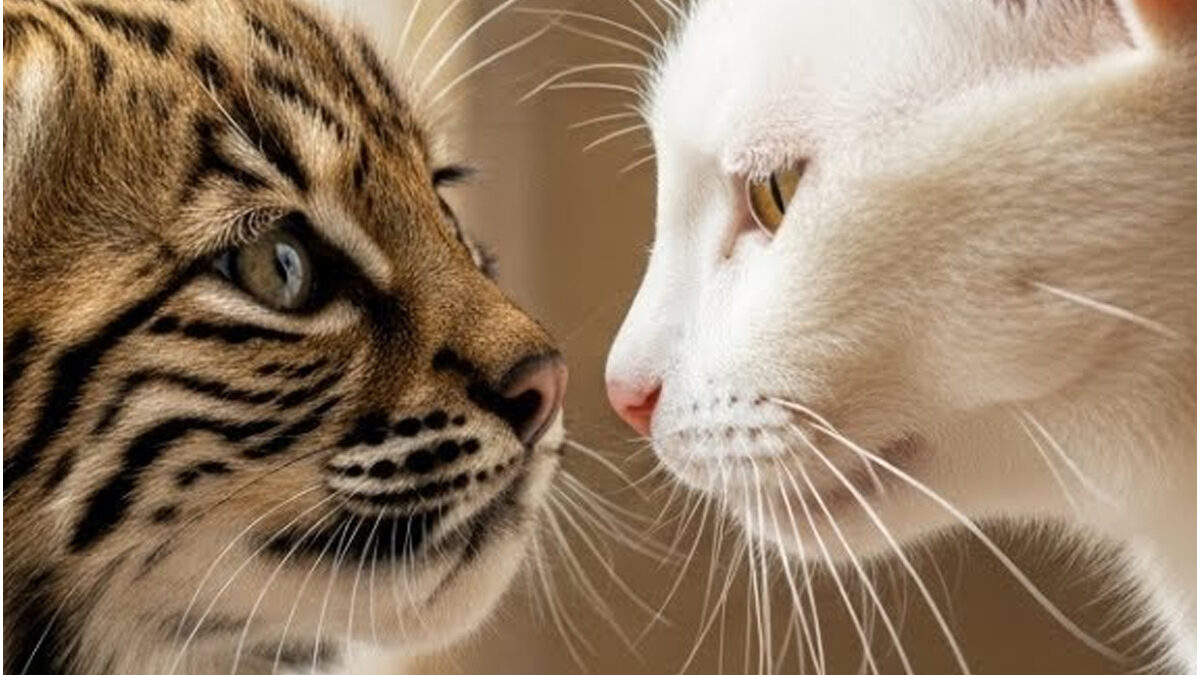
This Bobcat Cub Thinks the House Cat Is His Mom – Their Bond Will Melt Your Heart!
An old ranger thought his cabin was silent forever until a cry from under the porch changed everything.
In the misty hills of Willow Creek, an old ranger named Harold Mason thought he had seen every secret the wild could hold.
Until one rainy evening, he heard a sound beneath his porch that would change his life forever.
What he found wasn’t just a frightened bobcat cub.

It was a heartbeat that would rekindle everything he thought he’d loSt. As the days passed, the wild creature began to believe that Harold’s house cat was her mother.
And what followed was a bond so pure, so unexpected that it would melt hearts across the world.
This is not a story about taming the wild.
It’s about finding home in the most unlikely places.
The rain had been falling all afternoon, the kind that didn’t shout, but whispered, steady, cold, and patient.
In the quiet town of Willow Creek, Oregon, most people had already drawn their curtains and settled beside their fires.
Harold Mason hadn’t.
At 68, he preferred the sound of rain to television, and the old ranger in him still liked to watch the forest breathe.
His cabin sat on the edge of the cedar woods, where the scent of ping and earth always lingered after a storm.
That evening, as twilight dimmed the porch lights, he heard it.
A sound that didn’t belong.
It came faintly at first, almost lost beneath the drizzle.
A whimper, thin and uneven, rising and falling like something unsure of its own voice.
Harold paused, hand still on his coffee mug.
The sound came again, a fragile cry that cut through the hum of rain hitting the gutters.
It wasn’t a raccoon.
It wasn’t a bird, either.
After decades in the wilderness, Harold could tell the difference.
This sound carried something raw.
A note of fear tangled with hope.
He set down the mug, slipped on his boots, and stepped out onto the porch.
The air bit through his flannel shirt.
The boards creaked beneath his weight as he leaned over the railing, listening.
There, beneath the far corner of the porch, something shifted.
A flash of movement, too small for a deer, too deliberate for a squirrel.
“Hello there,” he murmured, his voice softer than the rain.
Harold crouched, his knees protesting, and aimed his flashlight toward the sound.
Two eyes blinked back, amber, wide and unblinking.
They glowed in the beam, not round like a cat’s, but sharper, wilder.
The creature was trembling, soaked to the skin, huddled against the beams of the porch.
For a long moment, they just looked at each other, man and animal, two souls caught in the same storm.
Then Harold saw it clearly.
The tufted ears, the short tail, the spotted coat clinging to thin ribs, a bobcat cub.
Well, I’ll be damned,” he whispered.
Instinct told him to step back.
Every ranger manual, every lecture he’d ever given warned against interfering with the wild.
But standing there in the rain, watching that tiny creature shiver, Harold felt something stir in him, an old reflex, the one that didn’t follow rule books.
He reached out slowly, palm up, letting the cub see his hand.
It didn’t growl.
It didn’t even flinch.
Its breathing came in shallow, frightened bursts.
“Easy now,” Harold said.
“You don’t have to be scared.”
The cub’s fur was tangled with mud and pine needles.
When he finally slid his hand beneath it, he could feel the thinness of its body, the frail, rapid heartbeat that pulsed against his palm.
It wasn’t much more than a handful of bones and courage.
He wrapped it gently in his old ranger jacket and stood up, the porch light flickering in the mist behind him.
Inside the cabin smelled of cedar smoke and rain soaked wood.
The fire in the stove had burned low, just embers now, but Harold stirred it to life again.
He set the small bundle near the hearth on an old towel.
The cub stayed still, its sides heaving lightly, eyes following every movement he made.
From the armchair by the fire came another sound.
A low offended Mr. Tilly.
Harold’s 12-year-old tabbycat, queen of the cabin, didn’t take kindly to guests.
She stretched her neck, sniffed the air, and narrowed her eyes at the small shape on the towel.
“Now don’t start,” Harold muttered.
“It’s just for tonight.”
Tilly jumped down from her chair, tail flicking, and approached the newcomer with the slow, suspicious grace of a cat who’d seen too much of the world.
The bobcat raised its head weakly, but didn’t move.
They stared at each other for what felt like a long time.
Harold held his breath, half expecting claws or hissing.
Then something unexpected happened.
Till he blinked once, slowly, deliberately.
In cat language, that meant peace.
The bobcat blinked back.
Harold exhaled and sank into his chair.
“Well,” he said quietly.
“Looks like you’ve been accepted by the boss.”
He poured himself a cup of coffee, though it had gone cold.
The storm drumed gently on the roof.
The fire popped and hissed, and the tiny creature by the hearth tucked its nose beneath its paw.
Tilly lay down a few feet away, pretending indifference, but keeping one eye half open.
Harold leaned forward, elbows on his knees, and studied the little stranger.
The spots on its coat were faint, but clear.
Its paws were too big for its frame.
“Where’s your mom, huh?”
He asked softly.
The cub didn’t answer, of course.
Its eyes fluttered closed.
That silence filled the room differently than the kind he was used to.
For years, the cabin had been quiet, too quiet since Mary passed.
He’d learned to live with the echoes of his own voice, the sound of one set of footsteps.
But this silence wasn’t empty.
It was alive, heavy with breath and warmth.
He sat there a long while, watching the cub’s chest rise and fall.
Somewhere in the woods outside, thunder rumbled again, far away now.
He thought of all the times he’d found injured animals during his ranger days, how some made it, some didn’t.
He should call the wildlife center in the morning.
That was the right thing to do.
But tonight, he couldn’t bring himself to move it again.
Harold reached for the blanket draped over the couch and laid it closer to the cub, careful not to startle it.
The fire light painted the room in amber and gold, shadows swaying gently on the walls.
The smell of smoke and wet pine filled the air.
He sat back in his chair and whispered, “You’re safe now, little one.”
The cub’s ears twitched.
Its breathing slowed.
Outside, the rain softened to a drizzle.
Inside, the old clock ticked steadily, marking the kind of time that didn’t feel lonely anymore.
Harold didn’t know it yet, but that sound beneath his porch, the fragile cry of a lost wild heart, had already changed everything.
When he finally turned off the lamp, the cabin glowed softly from the fire.
The bobcat slept soundly.
Tilly dozed with her tail curled close, and for the first time in a long time, Harold Mason felt that the world, in all its wildness, had found its way back home.
The next morning broke pale and cold, the kind of Oregon dawn that came slow through the fog.
The air smelled of wet cedar and smoke.
Harold woke early, as he always did, when the first bird outside dared to call.
For a moment, he forgot what had happened the night before.
The quiet felt different, warmer somehow.
Then he looked toward the hearth.
The blanket near the fire stirred.
Two small tufted ears twitched.
The little bobcat raised its head, blinking against the light.
Its coat, now dry, shimmerred faintly in shades of tan and gold.
It wasn’t afraid.
Not anymore.
Well, good morning trouble,” Harold said softly.
His voice came out rough with sleep.
The cub yawned, a wide, clumsy yawn that showed tiny white teeth, and blinked at him as if to say, “You again?”
Harold smiled.
He hadn’t realized how long it had been since someone looked back at him like that, with curiosity instead of pity.
He moved carefully to the kitchen, still watching the cub from the corner of his eye.
He poured water into the kettle, fed another log to the fire, and reached for an old saucer.
He didn’t have milk, but there was warm water and a little leftover chicken from last night.
He shredded it into thin pieces and set the plate down gently near the towel.
The cub sniffed the air, tilted its head, then crept forward.
One paw at a time, it approached the food, stopped, glanced up at Harold, then back at the plate.
Finally, it began to eat slowly at firSt. Then, with surprising hunger.
Well, Harold murmured.
Guess that answers one question.
Behind him came a soft.
Tilly had emerged from the bedroom, her tail flicking with the authority of someone whose morning routine had been interrupted.
She jumped onto the table, her yellow eyes narrowing at the new guest on the floor.
“Now don’t you start, Miss Tilly,” Harold said.
“We’ve got company for a bit.
Mind your manners.”
“Tilly didn’t hiss,” but her ears flattened slightly.
She stared at the bobcat with the kind of intensity that only cats can manage.
Half suspicion, half calculation.
The cub looked up, froze midbite, and stared back.
The moment hung in the air like a held breath.
Then Tilly did something unexpected.
She blinked again slowly, just once, and turned her head toward the window.
The tension broke.
The cub went back to eating.
Harold let out the breath he hadn’t realized he was holding.
Good girl, he whispered to Tilly.
You’ve got more grace than I do.
After breakfast, Harold stepped outside to gather some firewood.
The storm had left the forest floor slick with pine needles and rainwater.
The creek behind the house murmured softly, swollen, but calm.
It reminded him of his younger years, those long patrols through the forest when every track and sound told a story.
He hadn’t realized how much he missed it until that moment.
When he came back in, the cub was exploring awkwardly, clumsily.
It sniffed the rug, pawed at the corner of the Yong coffee table, and then, as if testing the world, climbed onto the very armchair that had been Till’s throne for a decade.
Tilly, to her credit, only sighed.
She hopped up beside the chair and curled her tail around her body, pretending not to care.
Harold stood in the doorway, watching them both.
“Well,” he said, chuckling.
Looks like I’m officially outnumbered.
For the rest of the morning, the house hummed with a kind of quiet energy.
The cub, he hadn’t named it yet, alternated between napping and wandering, as if memorizing every sound and scent of its new surroundings.
Harold worked around the cabin, fixing a loose hinge on the porch door, sweeping up bits of mud tracked in from the night before.
Every few minutes he found himself glancing toward the fire just to make sure the small creature was still there, still breathing, still safe.
When afternoon came, a faint sun broke through the clouds.
Light spilled across the floorboards, golden and thin.
The cub stretched in the warmth, eyes half-closed.
Harold sat nearby, the newspaper unread in his lap.
He thought of Mary then, how she used to leave the back door open for strays, cats mostly, sometimes even injured birds.
She had a soft spot for anything that looked loSt. He’d teased her once, said she was running a halfway house for wildlife.
She’d just smiled and said, “Maybe they need a place to rest before they remember who they are.”
Now looking at the bobcat sleeping on her old blanket, Harold felt something twist gently in his cheSt. Maybe that was what this was, a place to reSt. By evening, he’d made up his mind.
He picked up the old rotary phone that hung by the kitchen window and dialed the number for Dr. Lorna Green, the wildlife vet in town.
She’d helped him before when an owl got tangled in fishing line years back.
Lorna Green speaking.
Evening, Doc.
It’s Harold Mason.
Well, Harold, that’s a surprise.
What kind of trouble are you in this time?
Found a young bobcat under my porch last night, he said.
Soaked, half starved.
I’ve got it here by the fire now.
There was a pause.
Harold, you know the rules.
You’re not supposed to keep wild animals inside.
I know.
Just couldn’t leave it out in the storm.
Her voice softened.
How young?
Small, maybe 8, 10 weeks.
Ears tufted, thin as a branch.
Another pause.
All right, she said.
If it’s stable, I’ll come by tomorrow morning to take a look.
Don’t feed it milk.
Whatever you do, cats can’t handle it.
Got it.
Chicken’s fine.
Fine for now.
But Harold, don’t get attached.
He smiled faintly.
I’ll do my beSt. When he hung up, the house felt quieter.
The fire had burned low again.
Tilly and the cub were lying near each other now, a careful foot of distance between them.
Their breathing rose and fell in a strange harmony.
Harold sat in his chair and watched them.
He didn’t turn on the radio.
Didn’t need to.
The sound of two living hearts was enough.
Night came early.
The woods outside turned dark and secretive.
Rain started again, tapping gently at the windows.
Harold threw another log on the fire, poured himself a cup of tea, and leaned back.
At one point, the cub stirred and lifted its head.
Its eyes caught the fire light.
Deep amber, wild but calm.
Harold met its gaze.
You’re safe here, he said softly.
For tonight anyway.
The cub tilted its head almost as if it understood.
Then to his surprise, it let out a small sound.
Not quite a meow, not a growl either.
Something in between, soft and uncertain, a voice just finding itself.
Till’s ear flicked, but she didn’t move.
She only opened one eye, looked at the cub, and blinked again, slow and deliberate.
Harold smiled.
Guess that’s how you say good night.
Later, as he climbed into bed, the old boards of the cabin creaked beneath his feet.
The familiar song of solitude.
But tonight, that solitude felt different.
It wasn’t empty.
It was shared.
In the quiet hours before dawn, Harold woke once, half dreaming.
He thought he heard footsteps, soft, small, moving across the wooden floor.
He didn’t open his eyes.
He just listened.
The steps paused.
A gentle weight settled at the foot of his bed, and then the faintest sound of purring drifted through the darkness.
He smiled to himself, eyes still closed.
Guess you found your spot,” he whispered.
And somewhere between the steady rhythm of the rain and that soft new heartbeat in his home, Harold Mason drifted back to sleep, unaware that this was no passing visitor.
The wild had crossed his threshold, and in its quiet way, it had chosen to stay.
When morning came, the light was soft and gold, filtering through the lace curtains that Mary had sewn years ago.
The rain had finally stopped.
The cabin smelled of smoke, cedar, and the faint wild musk of something new, something alive.
Harold stirred in bed, stretching stiffly before swinging his legs over the side, his slippers found the floor and his toes brushed against fur.
He looked down.
The bobcat cub was curled at his feet, asleep on his old wool rug, its small body rising and falling in rhythm.
Tilly was perched on the dresser, watching, tail wrapped neatly around her paws.
“Well, seems I’ve been replaced,” Harold muttered with a grin.
He reached down slowly, brushing a finger along the cub’s back.
The fur was soft now, dry and warm.
The little creature twitched once, then stretched out fully, paws spled, mouth open in a silent yawn.
Harold chuckled under his breath.
It had survived the night.
That alone felt like a small miracle.
He rose, fed the stove, and put on the kettle.
The morning routine that had once felt dull now carried a quiet excitement.
He scrambled a few eggs, left a plate of scraps by the hearth, and poured his first cup of coffee.
The cub approached the plate shily, sniffed, then began to eat, tail flicking nervously.
That’s it, kid.
You’ll need your strength.
Behind them, Tilly jumped down, landing softly beside Harold’s chair.
She tilted her head toward the cub, ears forward, eyes calculating.
Harold tensed, ready to intervene, but Tilly only stepped closer, sat down, and began to groom herself, as if declaring that she was still in charge, but willing to share the kingdom.
“Guess you’re both learning,” Harold said softly.
He watched them for a long while, marveling at how natural it all seemed.
Wild and domestic, side by side, no rules, no expectations.
The fire popped, the clock ticked, and the house felt less like an echo and more like a heartbeat.
By noon, the cub began following Tilly everywhere.
When she jumped onto the windowsill, it tried to copy her, scrambling awkwardly before tumbling back onto the rug.
When she batted at a dangling thread from the quilt, the cub joined in, pouncing clumsily and missing every time.
Harold laughed until tears pricricked his eyes.
“You’re a real piece of work, aren’t you?”
He said.
“Think you’re just like her.”
The cub blinked, headcocked, and then made a small sound, something between a chirp and a purr.
It startled Harold at first, that soft rumble rising from such a wild little cheSt. Then he realized it was trying to imitate Tilly.
That night, when Dr. Lorna arrived, she brought a small carrier and a set of gloves.
Her boots tracked mud onto the porch as she stepped inside, shaking off the cold.
“Well,” she said, scanning the room.
“You’ve made yourself quite a little zoo, haven’t you?”
Harold smiled.
He or she seems to be adjusting.
Dr. Lorna crouched by the cub, watching as it sat beside Tilly near Tone the fire.
She Lorna corrected gently after a moment.
About 10 weeks old, malnourished, but healthy enough.
You got lucky.
Or she did, Harold replied.
Lorna examined the bobcat carefully, checking its eyes, ears, and paws.
The cub tolerated it all, though her gaze never left Harold.
“She trusts you,” Lorna said quietly.
“That’s rare.”
“She’s just smart,” Harold said.
“Knows who feeds her.”
Lorna chuckled, but her tone turned more serious as she stood.
“You know she can’t stay forever.
Wild instincts always come back.
It’s best to get her to a rehabilitation center soon.
Harold nodded, though his eyes stayed on the cub.
Soon, he promised.
Lorna hesitated at the door.
Don’t wait too long.
You might forget she’s wild.
After she left, the house felt heavier.
Harold sat by the window for a while, watching fog drift through the pines.
He could still hear her words echoing in his head.
Don’t forget, she’s wild.
He knew she was right, but as he turned back to see Tilly grooming the little bobcat near the fire, the thought of letting her go already felt impossible.
That evening, as the last light faded, Harold decided to give her a name.
It didn’t seem right to keep calling her kid or trouble.
He leaned back in his chair, studying her spots, her tufted ears, the way her tail flicked lightly as she dreamed beside the fire.
Bobby,” he said finally.
“You look like a Bobby.”
The cub stirred, opened her eyes, and looked at him.
Really looked at him.
Then she blinked once, slow and sure.
Harold smiled.
“Bobby it is.”
Over the next few days, Bobby grew stronger.
She followed Till’s lead in everything, from napping positions to washing routines.
She learned how to stalk shadows, how to stretch.
Across sunbeams, how to curl up in the smallest spaces imaginable.
Sometimes she’d climb onto Harold’s lap without warning, heavy and awkward, her paws pressing against his cheSt. “Well, aren’t you full of yourself?”
He’d laugh, scratching behind her ears.
She’d rumble a strange little purr that rattled like a distant train.
The days rolled into one another.
Rain, fog, and brief spells of sunlight colored their small world.
Harold filmed a few short clips on his old phone.
Nothing fancy, just Bobby’s antics.
Tripping over a rug, chasing her own tail, or trying to hunt the pull string of the blinds.
He sent one to his niece, who replied within an hour.
Uncle Harold, that’s the cutest thing I’ve ever seen.
He chuckled, typing back with clumsy thumbs.
Don’t tell anyone I broke the rules.
A few days later, she texted again.
You’re going viral.
People love her.
Harold frowned.
Viral, he muttered aloud.
Good grief.
He hadn’t meant to share Bobby with the world.
But he couldn’t deny the strange comfort in knowing that others were smiling because of her.
The comments his niece forwarded said things like, “This made my day or I can’t stop.”
Laughing.
One woman wrote, “I lost my husband last year.
Watching this helped me feel less alone.
That one he read twice.
Maybe he thought laughter had a way of mending what time couldn’t.
Every evening he’d sit by the fire with his coffee watching Bobby and Tilly.
The old Tabby had grown patient, almost motherly, tolerating Bobby’s clumsy play.
Sometimes when the cub got too rough, Tilly would give her a soft bop on the nose.
No claws.
Just a reminder of manners.
Bobby would freeze, look guilty, and then settle down again, curling against her like a child.
Harold began to notice something deeper.
Bobby wasn’t just imitating Tilly.
She was learning how to be gentle, how to coexiSt. Her wildness wasn’t gone, just softened by safety.
One night, as Harold read by the fire, Bobby climbed onto the rug beside Tilly and began pawing at her belly.
Not aggressively, but searching, almost pleading.
Tilly didn’t move, didn’t hiss.
She just stretched out and let the cub tuck herself underneath her chin.
Harold swallowed hard.
He knew what he was seeing.
The little bobcat was looking for milk that would never come.
And yet instead of rejection, she found warmth.
Instinct?
Harold whispered to himself.
Maybe love’s an instinct, too.
Outside the wind sighed through the pines.
The fire cracked and spat.
Inside, three hearts beat quietly in sink, one old, one domestic, and one wild.
When Harold turned out the lights that night, he stood for a long time at the window, watching mist rise from the valley.
The forest stretched dark and endless, full of secrets he once thought he understood.
Now, as Bobby purrred softly in the shadows near the hearth, he realized how much he still had to learn.
He smiled faintly, shaking his head.
Guess we’re all just trying to remember who we are.
And as he climbed into bed, he could hear that strange uneven purr again, half wild, half home, echoing softly through the cabin.
It was the sound of two worlds finding a rhythm.
The sound of something lost, beginning to heal.
By the time morning light spilled through the curtains, Harold was already awake, sitting at the kitchen table with his coffee and notebook.
He had begun keeping small notes about Bobby’s behavior, not out of duty, but curiosity.
Old habits die hard.
Once a ranger, always a ranger.
He wrote, “Eats well.
Sleeps near Tilly.
No signs of aggression.
Mimics domestic behavior.”
He smiled at his own handwriting.
“Domestic behavior,” he muttered.
“Never thought I’d use that phrase about a bobcat.”
Across the room, Bobby yawned wide enough to show tiny teeth and stretched so hard she rolled off the rug.
Tilly gave her a look that only an older cat could muster.
Part annoyance, part forgiveness.
Bobby blinked back, then flopped onto her side and reached a paw toward Till’s tail.
“You two are quite the comedy act,” Harold said.
The cabin, once defined by stillness, now had its own small orchestra.
The scratch of claws on wood, the soft thud of paws racing down the hallway, the occasional crash of something that probably shouldn’t have been touched.
All of it gave the place new life.
Even the silence between sounds felt different, full instead of hollow.
That week, Harold’s niece called again.
Her voice bubbled through the receiver.
Uncle Harold, that video’s everywhere.
The bobcat and your cat.
People can’t get enough of them.
I didn’t think folks cared that much about two animals sleeping by a fire.
It’s more than that, she said.
People say it makes them feel calm, like there’s still kindness in the world.
Harold rubbed his chin.
Well, I’ll be.
Maybe we all need reminding.
After hanging up, he watched Bobby chase her own tail in circles until she collapsed in a heap beside Tilly.
The old tabby sighed, stood, and climbed onto the armchair, her dignity intact.
Harold laughed so loud it startled them both.
It wasn’t the kind of laugh that came from amusement.
It came from gratitude.
Later that afternoon, he took the camera outside for once.
The air was crisp and thin sunlight filtered through the trees.
Bobby followed him out to the porch, pausing at the edge, nose lifted to the wind.
For the first time, Harold saw her hesitate.
Not from fear, but curiosity.
The forest called to her in ways the cabin never could.
He crouched down beside her.
“Smells familiar, huh?”
Bobby didn’t move closer.
She just sat there, tail twitching, pupils wide as she stared into the dense woods.
Then, as if remembering where she was, she turned and brushed lightly against his knee before padding back inside.
That night, Harold wrote in his notebook again, “Interested in outside, responds to scent of woods, still returns voluntarily.”
He underlined the last sentence twice.
It felt important.
Over the following days, the bond between Bobby and Tilly deepened.
Harold began noticing small things.
Tilly would leave bits of food uneaten for Bobby or shift her body slightly to make room when the cub settled too close.
When Bobby played too rough, Tilly didn’t lash out.
She’d simply give her a single tap on the head, then turn away.
Bobby learned quickly.
But Harold also noticed something else.
When Bobby slept, sometimes her paws twitched, claws flexing, lips curling slightly as if she were chasing something in her dreaMs. Instincts didn’t disappear.
They only slept, waiting.
One quiet evening, as wind moved through the cedar trees, Harold sat by the fire reading an old field guide to wild cats.
It was the kind of book he hadn’t opened in years.
The chapter on bobcat development made him pause.
At 12 weeks, cubs begin to sharpen their hunting reflexes.
They play less for fun and more for preparation.
He looked over at Bobby, who was now stretched out beside Tilly, both asleep.
The fire light flickered across their fur, two shades of gold and gray blending into the same warmth.
Harold closed the book.
Maybe you’ll stay a little longer,” he whispered.
The next morning brought visitors.
Dr. Lorna pulled up in her dusty pickup, stepping out with a clipboard in hand.
Harold greeted her with coffee, and they stood on the porch, watching the two cats through the window.
“She’s thriving,” Lorna said, impressed.
“Healthier than I expected.
She’s got a good teacher.”
Harold nodded toward Tilly, who at that very moment was washing Bobby’s eyes with deliberate patience.
Lorna smiled.
Still, you’ll have to think about what comes next.
Wild animals don’t stay tame, Harold.
It’s not in their nature.
I know, he said.
But look at her.
She’s just a baby.
She’s a baby with claws, Lorna said gently.
And one day she’ll use them without thinking.
That’s how nature keeps balance.
Her words lingered long after she left.
That night, Harold sat on the porch with his lantern, staring out into the dark foreSt. The trees whispered as they swayed, their branches heavy with rain.
Somewhere in the distance, an owl called.
He imagined what it must feel like to belong to something so vast, so free.
Behind him, he heard the creek of the screen door.
Bobby patted out onto the porch, silent as a shadow.
She climbed up beside him and sat, her golden eyes reflecting the lamplight.
For a long moment, they just sat together, watching the darkness breathe.
You know, Harold murmured.
There’s a whole world out there waiting for you.
Bobby blinked, then tilted her head as if the thought puzzled her.
She turned and pressed her small body against his arm.
The warmth of her fur carried the faint scent of cedar and smoke.
Harold felt a knot form in his throat.
“Not yet,” he said quietly.
“Not tonight.”
When they went back inside, Tilly was already curled on the chair.
Bobby joined her without hesitation, tucking herself beneath the older cat’s chin.
Tilly didn’t move, just purred.
A deep rhythmic sound that filled the room.
Harold sat by the fire until his eyes grew heavy.
He couldn’t help thinking about what Lorna had said.
Maybe the wild wasn’t something you could erase.
Maybe at best you could only give it a safe place to rest before it returned to where it belonged.
In the middle of the night, he woke to the sound of scratching, not frantic, just steady.
He reached for his flashlight and followed the sound to the front door.
Bobby was there sitting quietly, paw resting on the wood, staring out through the glass pane.
“Dreaming again?”
Harold whispered.
She turned, her eyes glowing in the faint light, and chirped, a soft, wild sound.
Neither pet nor stranger.
He knelt beside her, resting a hand on the door.
On the other side, rain had started again, tapping gently against the porch.
“You’ll go when it’s time,” he said.
“But for now, you’re home.”
She blinked slowly, then lay down beside the door, her back against his hand, and drifted off to sleep.
Harold stayed there a while, listening to the rain.
He thought of Mary again, how she’d once said that every creature carried two hearts, one for surviving, one for belonging.
He looked down at the little bobcat, breathing softly, caught between both.
In that moment, he realized that maybe he was, too.
By dawn, the fire had burned to embers, and the forest outside was wrapped in fog once more.
Harold watched as the first bird called from the cedar trees.
Inside the two cats stirred, stretching, yawning, returning to the rhythm of another quiet day.
The world beyond might have been wild and unpredictable.
But in this small cabin for now, everything was calm.
The wild had found its peace, and somewhere in the soft hush between breath and bird song, Harold Mason understood.
Sometimes instinct doesn’t disappear.
It simply rests beside love, waiting to wake when the world calls it home.
Autumn came quietly to Willow Creek.
The mornings grew sharper, the light more fragile.
A thin mist lingered above the fields until midm morning, and the smell of damp earth filled the air.
Harold had always loved this season.
It was the rers’s time when the forest whispered and every sound carried meaning.
But that year, autumn carried something different.
It felt alive as if the trees themselves were watching the small cabin and the two creatures who had made it their den.
Bobby was growing faSt. Her coat thickened, spots deepening to a rich gold and chestnut.
Her eyes, still wild amber, had learned to soften when she looked at Harold or Tilly.
Yet sometimes, when the window was open and the wind carried the scent of pine and prey, those same eyes would narrow, and something deep inside her would flicker awake.
It began one morning.
Harold was stacking firewood behind the cabin when he heard a rustle near the porch.
At first, he thought it was the wind, but then he saw her.
Bobby crouched low, muscles tight, tail twitching.
Her gaze was locked on a small sparrow hopping along the railing.
“Hey now,” Harold called softly, setting the logs down.
“That little bird’s not for you.”
Bobby didn’t move.
Every part of her body was focused, poised, beautiful, and terrifying in its precision.
She took a silent step forward, shoulders rippling under her fur.
“Bobby,” Harold said again, firmer this time.
The bird fluttered its wings, and in that instant, Bobby leapt.
It was fast, too fast for Harold to stop.
Her claws caught only air as the sparrow took flight, leaving a single feather drifting to the porch.
Bobby landed hard, skidding slightly, then froze, watching the sky where the bird had disappeared.
Harold felt something tighten in his cheSt. It wasn’t anger, just the quiet ache of realization.
Nature was calling her back.
Bobby turned toward him, then, ears twitching, eyes wide.
For a moment, she looked almost ashamed, as if she understood that something had changed.
Harold sighed and knelt down, picking up the feather.
“Can’t fault you for being what you are,” he said.
He laid the feather gently on the porch rail.
Bobby sniffed it once, then padded back inside.
That night, the fire crackled softly as Harold wrote in his notebook.
Attempted to hunt, instincts stronger, still responds to voice.
Feels like a shift, something waking.
He closed the book and stared at the embers.
“It’s starting,” he murmured.
“I knew it would.”
The following days confirmed his worry.
Bobby grew restless, pacing near the door whenever wind stirred the leaves.
Her play with Tilly became rougher, less about chasing tails and more about testing strength.
One afternoon, she startled Tilly so badly that the old cat hissed for the first time in weeks.
Hey, that’s enough,” Harold said, stepping between them.
Bobby froze, ears flat, eyes confused.
Then she slunk away, tail low, hiding beneath the table.
Tilly looked up at Harold with weary eyes as if asking, “What’s happening to her?”
“I don’t know,” he whispered.
“But I think it’s time we faced it.”
That evening, he called Eli Turner, his old friend and one of the few people who still drove up to visit from town.
“Eli, it’s Harold.”
“Well, I’ll be damned,” Eli said with a laugh.
“Haven’t heard that voice in months.
How’s retirement treating you?”
“Peaceful,” Harold said.
Then, after a pause, mostly, Eli’s tone changed.
“Something wrong?
Got myself a situation.
You remember that bobcat cub I told you about?
The one from under your porch?
You didn’t keep it, did you?
Harold hesitated.
I did.
And she’s growing faSt. Too fast, maybe.
Eli sighed.
You know what I’m going to say, right?
She belongs to the wild, Harold.
Always did.
Yeah, Harold said quietly.
But she doesn’t know that yet.
The next morning, Eli’s truck rumbled up the gravel road.
He stepped out, his Ranger jacket still patched with years of service, his gray beard wet with dew.
When he saw Bobby sitting in the window, he let out a low whistle.
“She’s beautiful,” he said.
“You did right by her.”
Bobby watched him cautiously as he stepped inside.
“But she’s not a pet, Harold.
You’ve done what you can.
Now it’s time to let her go.
I know, Harold said.
But she’s still just a kid.
How do you let go of something that doesn’t know how to survive yet?
You teach it, Eli said simply.
The hardest part of caring for something wild is knowing when to step back.
They stood in silence, watching Bobby play with a loose thread from the rug.
She pounced, missed, and tried again.
Her movements were graceful, but her focus was sharper than before.
That afternoon, Harold took Bobby outside for the first time in weeks.
The sun hung low behind the pines, and the air smelled of rain.
Bobby walked beside him at first, ears twitching, tail swishing curiously.
But when a leaf blew across the yard, she lunged, catching it midair.
Her eyes flashed.
See,” Harold said softly to Eli.
“She’s learning.”
Eli nodded.
“She already knows.
You’re the one still learning.”
Later, after Eli left, Harold sat alone on the porch steps.
The forest was quiet except for the distant hoot of an owl.
Inside, he could hear Tilly purring on the couch, the steady rhythm that had come to mean home.
Bobby was sitting near the porch rail again, staring into the woods.
“Thinking about leaving me already,” Harold said.
She didn’t turn, but her ears twitched at the sound of his voice.
The wind carried the scent of rain and something else.
Wild musk, faint, but familiar.
Bobby stood slowly, tail stiff, nose lifted.
She took one step toward the treeine, then another.
Harold’s chest tightened.
“Not tonight,” he whispered.
Bobby hesitated, then looked back at him.
For a moment, the air between them seemed to hold its breath.
Then she turned, padded, back to the porch, and rubbed her head against his knee before curling up beside him.
The fireflies began to rise from the grass, glowing softly in the dusk.
Harold reached down, running his hand along Bobby’s back.
Her fur was warm, alive with quiet strength.
“You’re not mine,” he said.
“But I’m glad you’re here.”
That night, as he sat by the fire, he replayed the scene over and over in his mind.
The crouch, the leap, the look in her eyes.
It wasn’t violence.
It was truth.
Nature had whispered, and she had listened.
He poured himself a cup of tea, the old kettle whistling softly.
Tilly climbed into his lap, purring deeply.
Bobby lay by the hearth, her paws twitching in dreams, maybe chasing, maybe remembering.
Harold looked at them both, the tame and the wild, and realized that love in its purest form wasn’t about keeping.
It was about understanding the space between.
Outside, the wind shifted.
A single pine cone fell onto the porch with a hollow thud.
Bobby’s ears flicked, but she didn’t wake.
Harold leaned back, eyes heavy, whispering into the quiet.
You’ll go when you’re ready.
I just hope I’m ready, too.
The fire burned low, throwing long shadows on the walls.
In those flickering shapes, Harold could almost see Mary’s face again, smiling, gentle, the way she used to when she talked to strays.
Every creature, she had once said, needs to find its own way home.
And as the last ember dimmed, Harold realized that maybe that was true for him, too.
He wasn’t just teaching Bobby how to live free.
He was learning how to let himself feel alive again.
The days that followed were still, in that quiet way, autumn has before it turns to winter.
The forest around Willow Creek shimmerred gold and copper, leaves falling in soft spirals to the damp earth.
Harold’s world slowed down with the season.
Morning coffee on the porch, afternoon walks under the thinning trees, evenings by the fire with the two cats, one domestic, one wild, and both unknowingly stitching warmth back into a heart he thought had grown cold.
But there was a change in Bobby that Harold couldn’t ignore.
She was restless now, pacing more often, watching the door for longer stretches.
When he stepped outside to split wood or fetch water, she’d press her nose to the window pane, eyes following every movement.
She wasn’t afraid of the outside anymore.
She wanted it.
That morning, as he stacked the last of the firewood, Harold saw her crouched near the screen door, muscles tense, eyes locked on a leaf drifting across the porch.
When the wind lifted it again, she lunged, powerful, graceful, and faSt. She hit the screen with such force that it popped open, sending her stumbling onto the porch.
“Bobby!”
Harold shouted.
She froze, half on the steps, the world open and waiting beyond.
Then, instead of running, she turned back to him.
For a moment, neither of them moved.
Rain had started again, fine as dust, turning the light silver.
Harold stepped closer, heart pounding.
Come on, girl.
Inside.
Bobby hesitated, her tail twitching.
The forest loomed behind her, dark and endless.
Then, with a small sound, half chirp, half sigh, she padded back in.
Harold shut the door gently and sank to his knees beside her.
You scared me half to death,” he whispered, resting a hand on her back.
Bobby blinked, unbothered, and pressed her head against his hand as if nothing had happened.
That night, Harold sat alone by the fire long after both cats had fallen asleep.
He turned Mary’s old wedding ring between his fingers, feeling the grooves she used to wear smooth with time.
He missed her voice most on nights like this.
The steady tone that always made hard choices seemed softer.
He reached for the phone and dialed a number he hadn’t used in months.
It rang twice before Eli answered.
Harold.
It’s me, he said quietly.
You still work with that rehab center out by Pine Ridge.
Yeah.
Why?
Harold hesitated, staring into the flames.
Think it’s time I called them.
There was a long pause on the line.
When Eli spoke again, his voice was careful, gentle.
“You sure?”
“No,” Harold said, a small broken laugh escaping him.
“But I think it’s right.”
The next morning, Eli drove up with a thermos of coffee and two sandwiches.
They sat on the porch, not saying much at first, just watching the mist lift off the trees.
She looks strong, Eli said finally, nodding toward Bobby, who sat in the window, tail flicking.
Too strong to stay here, Harold replied.
She needs what I can’t give her.
Eli took a slow sip from his cup.
You did good, Harold.
You gave her a chance.
Harold stared at the horizon.
Yeah, but it feels like I’m about to lose her.
Eli didn’t argue.
He just placed a hand on Harold’s shoulder and said, “Sometimes loving something means setting it free before it remembers what it’s missing.”
That evening, Harold called Dr. Lorna Green.
“I think it’s time,” he said simply.
“I can meet you tomorrow,” she replied.
“We’ll take her to the rehabilitation center near Pine Ridge.
They’ll prepare her for release in spring.”
“Thank you, Doc.”
After he hung up, the cabin felt impossibly quiet.
The fire crackled softly, casting golden light across the worn wooden floor.
Tilly slept in her usual chair, but Bobby was awake, sitting at the foot of the hearth, staring at him.
Her eyes glowed in the dim light as if she already knew.
Harold sat down his mug and crouched beside her.
“You’re going on a little trip tomorrow,” he said.
Going to meet some folks who know what to do with wild hearts like yours.”
Bobby tilted her head, blinked, and chirped that strange little sound she always made when she didn’t understand but wanted to try.
Harold smiled even as his throat tightened.
“You’ll do just fine.”
That night, he couldn’t sleep.
He sat at the kitchen table long after midnight, a single lamp burning.
Outside, the forest whispered in the wind.
Inside, the clock ticked slow and steady, a metronome for memory.
Every sound seemed louder, the creek of the floorboards, the sigh of the fire, the steady rhythm of two animals breathing nearby.
He thought about all the things Mary had said over the years, how love and letting go were often the same act, just seen from different sides.
He thought about every creature he’d rescued as a ranger.
Foxes, eagles, even an old bear cub once, and how each time when the moment came to release them, he’d tell himself it was duty.
But this time, it wasn’t duty.
It was something deeper, more personal.
Near dawn, he heard movement.
Bobby patted over from her blanket and sat by his chair, looking up at him with those same amber eyes that had stared out from under his porch months ago.
She chirped softly.
“Yeah,” he said.
“I know.
I can’t sleep either.”
He reached down and scratched behind her ears.
She leaned into his hand, purring in that uneven way that still sounded half wild.
“You’re something special.
You know that?”
He whispered.
“You taught me more about living than I ever thought I had left to learn.”
When the sun rose, the cabin glowed in that pale Oregon light that makes everything look softer than it is.
Harold packed a small crate lined with the blanket Bobby had slept on since the first night she arrived.
He placed her gently inside.
She didn’t resist, just looked around, curious but calm.
Tilly sat by the door, watching with narrowed eyes as if she too understood.
When Harold knelt to say goodbye to her, she pressed her head into his hand.
I’ll bring her home if I can, he promised, though he knew it wasn’t true.
The drive to Pine Ridge was quiet.
The forest passed in a blur of orange and green, the road winding through memories.
Every few miles, Harold glanced at the crate on the passenger seat.
Bobby was calm, her gaze fixed on the passing trees.
Once she made a soft sound, not frightened, just aware.
At the rehabilitation center, Dr. Lorna met him at the gate.
“She’s in good hands now,” she said.
“We’ll keep her safe.
Teach her to hunt again.
When she’s ready, we’ll let her go.”
Harold nodded, but his voice caught when he said, “She already knows how to live.
I just hope she remembers me kindly.”
As Lorna lifted the crate, Bobby turned her head and met Harold’s eyes.
It was the same look from that night under the porch.
Fear and trust intertwined.
Then slowly she blinked once.
Harold swallowed hard.
That’s my girl.
When he drove back home, the cabin felt larger, emptier.
The fire burned lower than usual, and even Till’s purring couldn’t fill the silence.
Harold sat down in his chair, staring at the empty blanket by the hearth.
He whispered to the quiet, “You did good, kid.
You did real good.
For a long time, he sat there listening to the sounds of the forest outside.
It was the same forest he’d always loved.
But now, it felt different.
Alive in a way it hadn’t before.
He could almost imagine her out there, breathing the same air, walking beneath the same stars.
He poured a cup of coffee and stepped out onto the porch.
The wind moved through the pines soft and steady.
He closed his eyes.
“You’ll find your way, Bobby,” he said.
“We both will.”
And as the first light of dawn broke over the trees, Harold Mason realized that sometimes the hardest choice isn’t between holding on and letting go.
It’s learning to do both at the same time.
The days after the drive to Pine Ridge felt hollow.
The way a house sounds after a child leaves for college.
Quiet but heavy with echoes.
Every creek of the floor.
Every sigh of the wind seemed to carry a memory of her.
The soft patter of paws on wood.
The playful chirp when she wanted attention.
The way she’d watch him shave in the morning like she was trying to understand what kind of creature he was.
Tilly stayed close those first few days, curling beside Harold more than she had in years.
Maybe she missed Bobby, too.
Or maybe she just sensed that the cabin’s balance had shifted.
Whatever the reason, her steady purring became the sound that filled the emptiness.
A week passed and then another.
Rain began again, heavy and persistent, soaking the earth and drumming on the roof.
The storms rolled in one after another, just as they did every November in Willow Creek.
But this one felt different.
The forest seemed restless, uneasy.
Even the birds had gone quiet.
On the third night of the storm, the wind roared down from the mountains, shaking the windows.
Lightning flashed over the ridges, and thunder followed like a heavy drum.
Harold had seen storms before, worse ones, but something about this one unsettled him.
Maybe it was the way the wind howled through the cedar trees like a living thing, or the way Tilly paced, tail twitching, before retreating under the couch.
He stood by the window, staring into the sheets of rain.
Somewhere beyond those trees, miles away, Bobby was out there, alone, maybe afraid, maybe wild again.
He wanted to believe she was safe at the rehabilitation center, sleeping in some warm enclosure.
But as another bolt of lightning split the sky, the thought struck him.
What if she wasn’t?
He shook it off.
They know what they’re doing, he told himself.
She’s fine.
Still, he couldn’t sleep.
The wind pressed against the walls, and branches scratched at the glass like hand trying to get in.
Around midnight, he gave up trying and sat by the fire, feeding it one log after another, just to keep the cabin’s heartbeat steady.
By 2:00 in the morning, the rain had turned into a full tempeSt. The porch roof groaned, and the gutters overflowed.
Tilly crouched by his chair, ears flat.
That was when he heard it.
A sound just faint enough to make him doubt his own mind.
A cry.
Not the moan of wind or creek of wood, but something else.
Something alive.
He froze, holding his breath.
There it was again.
Faint, high-pitched, familiar.
“No,” he whispered, standing up.
He grabbed his flashlight and coat, ignoring Till’s warning meow.
The moment he opened the door, the storm slammed into him, cold and merciless.
Rain hit his face like needles.
The light cut through the darkness, revealing nothing but swirling mist and water.
“Bobby!”
He shouted into the storm.
The sound was swallowed instantly.
He stepped off the porch, boots sinking into the mud.
The forest beyond was a wall of black and white lightning flickering behind the pines.
He took another step, then another, his breath coming hard.
Bobby, he yelled again.
For a moment, there was only the wind.
Then there, a movement near the edge of the clearing, a small shape low to the ground, slipping between shadows.
Bobby.
He ran toward it, nearly losing his footing on the slick ground.
The flashlight beam caught the glint of eyes, amber, wide and wild.
She was there, soaked, trembling.
Her fur plastered to her body.
Bobby, what in God’s name?
Before he could finish, a crack of thunder rolled so loud it shook the earth.
Bobby bolted, disappearing into the darkness.
Wait.
Harold stumbled forward, the beam of light darting through the trees.
The rain blurred everything, branches, rocks, the earth itself.
He could barely see 2 ft ahead.
He called again and again, voice, but there was no answer, only the pounding of rain and the roar of the storm.
Finally, exhausted, he stopped.
His breath came in ragged gasps, his coat heavy with water.
The flashlight flickered, then went dark.
He stood there in the blackness, heart hammering, listening to the storm scream around him.
When the beam finally flickered back to life, he realized he had no idea which way he’d come.
The cabin, the path, gone, just trees and rain and his own ragged breathing.
For a man who had once spent decades reading the forest like a book, it was a humbling feeling.
He closed his eyes and forced himself to listen.
Not to the storm, but beneath it, to the small things, the drip of water from a branch, the rustle of something moving nearby.
The faintest, softest sound, a whimper half hidden in the wind.
He turned toward it, stumbling forward, following that sound until his knees hit something solid, a fallen log.
And beneath it, movement.
Bobby, he breathed.
She was wedged under the log, trembling.
One paw twisted at an angle that made his stomach drop.
Mud streaked her coat and her sides heaved with shallow breaths.
When he reached for her, she didn’t run.
She only looked up at him, eyes wide and scared.
“It’s okay,” he said, his voice breaking.
I’ve got you.
He used all his strength to lift the edge of the log just enough to slide her free.
She was lighter than he remembered, all bones and muscle.
He cradled her against his chest, shielding her from the rain, and began the long walk back through the storm.
By the time he reached the porch, his legs burned and his vision swam.
Tilly was waiting by the door, meowing frantically.
He kicked off his boots, rushed inside, and laid Bobby near the fire.
Her paw was swollen, but her breathing steadied as the warmth reached her.
“Easy now,” he whispered, wrapping her in the old wool blanket she had once slept on.
“You’re home.”
He sat beside her for hours, drying her fur, keeping the fire alive.
At one point she tried to stand, then whimpered softly and collapsed again.
“Don’t you dare give up on me,” he said.
“Not after all this.”
Outside, the storm began to fade.
By morning, the sky was gray but calm.
Harold brewed coffee with trembling hands, his body aching from the night’s ordeal.
When he looked back at the hearth, Bobby was still there, sleeping deeply.
Her breathing slow but steady.
He crouched beside her, brushing a finger over her ear.
“You always did have a way of finding trouble,” he said softly.
“And finding your way back.”
A gentle purr rose from her chest, faint, uneven, but real.
The sound filled the cabin, wrapping itself around him like warmth after cold.
Harold leaned back against the wall, eyes heavy, heart full.
He didn’t know why she’d run from the rehab center, how she’d found her way through miles of forest and rain.
But deep down, he knew one thing.
Some bonds can’t be taught or trained.
They’re simply born, wild, fragile, and true.
As the fire crackled, the storm clouds broke apart, letting in a thin beam of morning light.
It fell across the two of them.
An old man and a half- wild cat.
Survivors in their own way.
Harold smiled wearily and whispered.
Guess neither of us was ready to let go.
Outside the forest dripped with the aftermath of the storm.
Quiet now, as if holding its breath.
Inside, the silence wasn’t empty anymore.
It was full of everything that mattered.
The next morning dawned pale and cold.
The light that crept through the cabin windows felt fragile, as though the forest itself was waking after a bad dream.
Rain still clung to the cedar branches, dripping rhythmically onto the porch roof.
Harold moved carefully through the cabin, his knees stiff, his hands trembling slightly from exhaustion.
Bobby was still asleep near the hearth, wrapped in the blanket that had belonged to Mary, the one Harold had once sworn he’d never use again.
Its familiar blue pattern, now worn and frayed, looked almost like an extension of the bobcat’s spotted fur.
Every rise and fall of her breath reassured him that she was alive here against all odds.
Tilly sat close, eyes half closed, her tail flicking lightly in what Harold could only describe as a kind of silent guardianship.
She wasn’t just tolerating Bobby anymore.
She was watching over her.
“Looks like you’ve found yourself a nurse,” Harold said softly, crouching beside them.
Bobby stirred, her paw twitching.
When she opened her eyes, they weren’t wild anymore.
They were tired.
Yes, but calm, trusting.
She shifted slightly, wincing as she moved her injured leg.
Harold reached out, laying a gentle hand over her side.
“Easy, girl,” he murmured.
“You’re safe now.”
He poured water into a bowl and set it beside her, then made a call to Dr. Lorna Green.
She answered on the second ring, her voice warm, but weary.
“Harold Mason,” she said.
I was about to call you.
You won’t believe this.
The bobcat we brought in went missing last night.
Harold swallowed hard, staring at Bobby by the fire.
I believe it, he said.
She’s here.
There was silence on the other end.
You’re joking.
Not even a little.
Harold, that’s over 30 miles from Pine Ridge.
I know.
How is she alive?
Shaken, hurt a little, but breathing.
Looks like she ran through the storm to get here.
Lorna sighed heavily.
“I’ll be damned.
She must have tracked you by scent.
Animals can do that, but 30 m through mountain terrain.”
“She’s stubborn,” Harold said, a faint smile tugging at his lips.
“Guess she gets that from me.”
Lorna’s tone softened.
“I’ll come check on her this afternoon.
Just keep her warm and quiet.
After hanging up, Harold sat by the fire again.
He fed a log into the flames and watched the sparks drift upward.
The heat filled the room, and for the first time since the storm began, the cabin felt alive again.
Hours passed slowly.
Outside, the forest began to dry, the dripping easing into occasional whispers of wind.
Harold used the time to clean up the mud on the porch, the fallen twigs, the damp rugs inside.
Every movement felt like part of a ritual, as though by restoring order to the cabin, he was helping heal something deeper, too.
By afternoon, Dr. Lorna’s truck rumbled up the gravel path.
She stepped out with her medical bag and a look that mixed concern with disbelief.
When she saw Bobby lying near the fire, her expression softened immediately.
“Well, you little miracle,” she said, kneeling beside the cub.
“You weren’t ready to say goodbye, were you?”
Bobby blinked slowly, her ears twitching.
Lorna examined the injured paw, frowning as she worked.
“Swollen, but no fracture,” she said.
“You did the right thing keeping her warm.
She’ll heal.
Will she be able to go back?
Harold asked quietly.
In time, Lorna said, meeting his eyes.
But not now.
She came back for a reason, Harold.
Sometimes the wild doesn’t just call.
It comes looking for the place it felt safe.
Harold nodded, though his throat felt tight.
You think she’ll try to leave again?
Lorna smiled faintly.
Maybe, maybe not.
She might just need to remember why she came here in the first place.
When she left, Harold stood on the porch, watching her truck disappear down the road.
The forest was still, bathed in soft light that turned the damp branches to gold.
He turned back to the cabin and saw Bobby watching him from the window, her face framed by the fading glow of the fire.
That night, as darkness settled, Harold found himself drawn to the cedar grove behind the cabin.
It was where Mary had loved to sit, her quiet corner, she used to call it.
The old wooden bench was still there, halfcovered in moss.
He carried Bobby’s blanket out with him, shaking off the pine needles, and laid it under the biggest cedar.
The scent of rain and earth rose around him.
The forest was alive again, humming softly with insects and the distant call of an owl.
Harold sat down, letting the quiet settle into his bones.
He thought of Mary’s voice again, her hands planting wild flowers near this very spot.
He thought of the storm and the long night when he’d thought he’d lost Bobby for good.
And he thought of how even after all of that, she’d found her way back through miles of darkness and rain, guided only by something no map could explain.
He looked at the blanket, blew against the dark soil, and whispered, “You brought her home, didn’t you?”
The wind moved through the cedar branches, gentle and low, almost like a sigh.
When he returned inside, the fire had burned down to glowing coals.
Bobby was awake now, lying with her head on her paws, eyes reflecting the light.
Harold knelt beside her.
“You’ve got a stubborn soul,” he said quietly.
“That’s what’ll keep you alive out there someday.”
Bobby blinked, then shifted, pressing her head lightly against his hand.
Tilly, half asleep, raised her head and gave a slow blink of approval before settling again.
That small moment, the three of them, together in the glow of the fire, felt like the closing of a circle.
Later that night, Harold sat by the window, looking out toward the cedar grove.
The moonlight fell across the clearing, illuminating the blue blanket he’d left beneath the tree.
It looked almost like a promise.
He thought about how life worked in its strange looping ways.
How sometimes what you send out into the world finds its way back to you when you least expect it.
Maybe love was like that, too.
A circle, not a line.
As he turned away, he heard it.
The soft, steady rhythm of purring layered with the occasional chirp from Bobby’s dreaMs. The sounds blended into something deeper, like the forest breathing inside his home.
Harold smiled.
Sleep well, little one.
You’ve earned it.
The rain started again before dawn, soft this time, like a lullabi.
And when Harold stepped outside the next morning, he saw something that stopped him cold.
A tiny pine cone resting on the blue blanket under the cedar.
He stared at it for a long moment, his heart tightening.
He didn’t know if Bobby had brought it there or if the wind had simply done the work for her, but somehow he knew what it meant.
“Thank you,” he whispered to the trees, to the wind, to the wild itself.
Then he walked back inside, his hands warm despite the chill.
The world outside was wild and vast, but here in the small glow of his cabin, the line between love and nature had blurred completely.
The following days unfolded like a long exhale.
The storm had passed.
The land had quieted, and Harold Mason found himself moving through each day with a strange peace, gentle, but edged with something that felt like waiting.
Bobby was healing quickly.
The swelling in her paw had gone down, and though she still limped slightly, her energy was returning.
He would catch her sitting by the window, eyes locked on the cedar grove, as if the forest were whispering a secret she was trying to remember.
Sometimes she would lift her nose, catching the wind’s scent, and Harold could see the pull inside her, a tension between warmth and wilderness.
He didn’t try to stop her anymore.
He only watched quietly, knowing that love’s truest form wasn’t possession, but permission.
One gray morning, the sky broke open with a streak of sunrise, the kind that paints even the wetest branches gold.
Harold stood on the porch with his mug of coffee, breathing in the cold air.
The ground was still soft from the recent rains, dotted with pine needles and deer tracks.
He had been awake most of the night, half listening to the forest beyond the windows.
There was a kind of stillness to the world before dawn, a silence so deep it carried its own hum.
And in that silence, Harold felt it again, the sense that something was coming.
When he turned, he saw Tilly sitting in the doorway, tail curled neatly around her paws.
Her eyes followed his gaze toward the trees.
You feel it too, don’t you?”
Harold said softly.
He didn’t have to wait long.
A rustle came from beyond the cedars.
Faint at first, then clearer.
Measured careful steps through wet leaves.
Harold’s heart stilled.
He sat down his coffee, squinting toward the treeine as the light grew stronger.
Then, through the mist, a shape appeared.
Low, graceful, deliberate.
Bobby.
She paused at the edge of the clearing, framed by dawn light and drifting fog.
Her coat shimmerred, healthier than before, marked with patterns that seemed carved from sunlight itself.
She was larger now, stronger, her movements sure and quiet.
She stood there for a long moment, simply watching the cabin.
Harold didn’t move.
He barely breathed.
Well, he whispered, “Look who found her way back.”
When Bobby finally stepped forward, her paws left soft prints in the mud.
She didn’t rush.
She moved like the forest itself, steady, certain.
As she reached the porch, she stopped again, eyes lifting to meet his.
The wildness was still there, alive and bright.
But something else lingered, too.
Recognition.
Harold crouched down slowly, voice gentle as the morning light.
You remember, don’t you?
Bobby didn’t come closer.
She didn’t need to.
For a few seconds, they simply looked at each other.
Man and bobcat, two creatures who had shared something unspoken.
Then she blinked once.
Slowly.
Harold felt his chest tighten.
It was the same look she’d given him that first night under the porch.
And again, the day he’d shun, said goodbye.
That same language, silent, ancient, and perfect.
“Good girl,” he murmured.
“You did it.”
Behind him, Tilly stepped onto the porch.
Her tail brushed the wood, and she let out a low, familiar trill.
Bobby’s ears perked.
The two cats regarded each other across a short distance, one old, one wild, both shaped by love.
Bobby took a single step forward, then another, stopping just short of the porch’s edge.
She leaned her head slightly, eyes soft, then let out a small, throaty chuff, the same sound Harold had read about in his ranger days, a sound bobcats made when greeting someone they trusted.
Tilly responded by blinking slow and calm.
Harold couldn’t help the smile that broke across his face.
Guess family comes in all kinds, huh?
The light grew brighter.
The mist began to lift, revealing the deep greens and golds of the forest beyond.
Bobby turned her head toward the trees, then back at Harold one last time.
For a moment, he thought she might come closer, but she didn’t.
Instead, she stepped aside, circling the yard with a kind of quiet reverence, sniffing the edges of the porch, the old wood pile, even the cedar bench Mary used to love.
When she reached the blue blanket under the big cedar, she paused.
Harold watched as she lowered her head, pressing her nose gently against it.
Then she sat down beside it, her body framed by the morning light.
She remembers, Harold whispered.
She really remembers.
He didn’t approach.
He knew better than to break the moment.
Instead, he stood there with his hands in his pockets, feeling the wind stir his hair and the sunlight warm his face.
Minutes passed in stillness, the kind of silence that fills rather than empties.
Then, as if on some invisible cue, Bobby rose again.
She turned toward the trees, tail flicking once, and walked back into the foreSt. Not quickly, not like an escape, just a steady, certain stride, every step carrying her further into her own world.
Harold stayed on the porch until her shape disappeared among the pines.
When he finally looked down, he saw what she had left behind.
A small perfect pine cone resting on the blanket.
He chuckled softly.
“You and your gifts,” he said, voice breaking on the edge of a laugh and a sigh.
Tilly brushed against his leg, looking up as if to say, “She’ll be back.”
“Yeah,” Harold said.
“Maybe she will.”
He picked up the pine cone and turned it over in his hand.
It was still damp from the morning dew, smelling faintly of earth and cedar.
He set it on the mantle beside Mary’s old photograph, the one where she was kneeling in her garden, smiling at some unseen animal.
“She’d have loved you, Bobby,” he said quietly.
“Maybe she sent you.”
That night, as the last light faded and the crickets began their song, Harold sat by the fire, Tilly curled against his side.
He stared at the flames, thinking about circles again.
How life, loss, and love never really ended, only changed shape.
He didn’t feel sadness.
Not exactly, just a deep, quiet gratitude for the storm that had brought Bobby back, for the dawn that had let her go again, and for the thin golden thread that somehow connected them still.
As the fire crackled lower, Harold’s eyelids grew heavy.
He thought he heard something outside.
Soft steps, the faint rustle of pine needles.
He didn’t get up.
He didn’t need to.
He knew.
Out there in the dark, just beyond the circle of light, Bobby was watching, guarding, maybe thanking him in the only way she knew how.
And inside in that small warm cabin, Harold Mason drifted into sleep with the peace of a man who understood that love once given freely always finds its way back home.
Morning arrived slowly, the kind that takes its time to pull the world out of shadow.
The air carried the scent of wet cedar and smoke.
When Harold stepped onto the porch, the forest glistened with dew, and the first sunlight caught in the branches like small trembling fires.
He leaned on the railing with his cup of coffee and looked toward the cedar grove.
The blue blanket still lay beneath the tree, and resting on it was another pine cone, smaller than the one before.
He couldn’t help but smile.
“Well, I’ll be damned,” he murmured.
He walked across the yard, boots sinking into the soft earth.
When he reached the blanket, he crouched down and picked up the pine cone, turning it slowly in his hands.
It was fresh, sticky with sap, like it had been plucked straight from the branch.
He looked around the treeine, half expecting to see her amber eyes watching him, but the woods were quiet.
“She’s making a habit of this,” he said softly.
It became their rhythm.
Every few days, another gift appeared.
A feather, a smooth riverstone, once even a half- chewed pine bough.
Each one he placed carefully on the mantle beside the photograph of Mary and the first pine cone.
The collection grew into a kind of conversation, wordless, but steady, a bridge between two lives that were never meant to overlap, and yet somehow did.
Tilly, for her part, seemed to approve.
Whenever Harold found one of Bobby’s offerings, she’d sit beside it, tail flicking, eyes bright, with what could only be described as pride.
Sometimes Harold caught her sitting at the window at night, her gaze fixed on the treeine.
He liked to imagine that she and Bobby still spoke in their quiet, mysterious way, two souls bound by something older than language.
The story of the old ranger and his wild daughter, as folks in town had started to call Bobby, continued to ripple beyond Willow Creek.
One morning, Dr. Lorna Green drove up the gravel path with a newspaper folded under her arm.
You made page five, she said, grinning as she handed it over.
The headline read, “Retired ranger reunited with Bobcat.”
He raised, “A story of wild love and quiet miracles.
Harold chuckled.
Guess the world’s running out of things to talk about.
Lorna sipped from the cup of coffee he offered her and shook her head.
You’d be surprised.
People need stories like this.
Something that reminds them that the wild isn’t something to fear.
It’s something to understand.
He nodded.
Maybe.
Or maybe we just need to be reminded we still belong to it.
They sat on the porch in silence for a while, listening to the wind move through the trees.
When Lorna stood to leave, she glanced toward the cedar grove.
You think she’ll keep coming back?
Harold looked at the blanket where the morning light was spilling across its folds.
I think she already knows her way home.
That afternoon, as the sun dipped low, Harold went about his usual routine, sweeping the porch, feeding, tilly, checking the firewood stack.
The forest had begun to hum with late autumn life, the distant call of a woodpecker, the rustle of squirrels collecting the last of the season’s spoils.
Everything felt exactly as it should, and yet Harold couldn’t shake the feeling that he was being watched.
He turned, scanning the trees.
For a moment, nothing.
Then he saw her.
Bobby was crouched at the edge of the woods, perfectly still, her shape blending into the modeled light.
She was larger now, no longer the fragile cub who had once fit into his flannel shirt.
Her coat gleamed, and her muscles rippled with quiet strength.
She watched him for a moment, then took a few steps forward, her movements deliberate and graceful.
Harold didn’t speak.
He just smiled, hands resting on the railing.
She approached slowly, her ears twitching, her eyes fixed on him.
When she reached the base of the porch, she paused, looked at him once more, and and set something down.
A single flawless bird feather, white and gray, light as air.
Then, without a sound, she turned and melted back into the foreSt. He waited for several minutes just to be sure she was gone before stepping down to pick up the feather.
It shimmerred in the fading light, so delicate that he could feel it tremble between his fingers.
Well, he said, his voice soft.
Looks like you’re learning to share the forest with me.
That night, Harold placed the feather beside the pine cones and stones.
The mantle looked less like a collection and more like a shrine, an altar to connection, to love without ownership, to the beautiful in between.
Later, he wrote a letter to his niece, who had been following his story from afar.
He told her about Bobby’s return.
The gifts and how the forest seemed to breathe differently now.
He ended it with a line he didn’t quite plan.
One that seemed to come from somewhere deeper.
Maybe the wild doesn’t leave us.
It just waits for us to listen.
Days turned to weeks, and each morning Harold found himself waking before dawn.
Coffee in hand, eyes scanning the treeine.
Sometimes Bobby appeared, sometimes she didn’t.
But even in her absence, the forest felt full, alive with her presence.
Then came a morning unlike the others.
The world outside was blanketed in fog, thick and silver, the kind that made everything seem suspended in time.
Harold stepped onto the porch, breath rising in pale clouds.
He listened to the hush of the forest, the faint drip of condensation from the roof, and then he saw it.
Movement near the cedar grove.
Bobby emerged from the mist, but this time she wasn’t alone.
At her side was a smaller shape, a juvenile bobcat, thin but alert, its ears tufted like hers.
The young one looked no older than 6 months.
Harold’s heart lurched.
“Well, I’ll be.”
Bobby stopped a few yards from the porch.
The smaller bobcat hesitated behind her, wideeyed.
She turned her head slightly, giving a soft chuff, the same gentle call she once gave to Tilly.
The cub stepped forward, uncertain, then followed her lead.
They came to the blanket under the cedar.
Bobby lay down, the cub beside her, both framed by the pale morning light.
Harold stayed frozen on the porch, afraid even a breath might break the spell.
He watched as Bobby turned her head toward him and blinked, slow and deliberate.
Then she nudged the cub gently, as if introducing him to the strange, quiet human who had once been her world.
For a moment, the forest, the cabin, and the sky seemed to hold still.
“Welcome home,” Harold whispered.
Bobby’s ears twitched.
She rose slowly, giving the cub one last nudge toward the trees.
The little one hesitated, then followed her into the mist, their shapes fading together until only the sound of rustling leaves remained.
When Harold looked again at the blanket, a new gift had appeared.
A single perfect pine cone, smaller than the rest, lying beside the old ones.
He laughed quietly, shaking his head.
Guess you’re teaching your young the same tricks.
He brought the pine cone inside and placed it carefully at top the others.
The collection was now six gifts deep.
Each one carrying a memory.
Each one proof that love doesn’t end.
It evolves.
That evening, as the fire flickered low and the world outside turned to dusk, Harold sat in his old rocking chair, the mantle glowing before him.
Tilly purrred softly at his feet.
“Funny thing,” he said, staring into the flames.
I used to think the forest was something you leave behind when you get old.
Turns out it’s been waiting for me to come back.
The wind outside rose gently, carrying the faint scent of cedar and the sound of something moving through the underbrush.
He didn’t look up.
He didn’t have to.
He already knew.
“Good night, Bobby,” he whispered.
“And thank you for everything.”
The fire popped once, scattering sparks like small stars.
Outside in the growing dark, a soft chuff answered him.
Harold Mason leaned back in his rocking chair.
The fire light painting soft gold on his worn face.
The sound of that gentle bobcat call lingered in the night like a lullabi.
He smiled faintly, watching the sparks twist upward through the chimney’s throat.
Winter was settling into Willow Creek.
The trees had shed their last leaves, and frost crept over the porch rail each morning like delicate lace.
Harold’s knees achd more in the cold now, and his breath came slower, heavier.
But he didn’t mind it as much these days.
Every creek of the cabin floor, every gust of wind through the cedar grove, it all felt like part of a language he finally understood.
He had learned in ways he couldn’t have guessed, that love wasn’t always about holding on.
Sometimes it was just about being present when something or someone found their way home.
That evening, as the light faded from the windows, Eli Turner stopped by for the first time in months.
The headlights of his old truck cut through the misty dark, bouncing off the wet road before dimming near the porch.
Harold heard his boots crunch across the gravel.
“You still keeping the forest company out here?”
Eli called, his voice warm and teasing.
Harold smiled.
Someone has to come in before you freeze.
Inside, Eli shook off the cold and hung his coat by the door.
He was still broad shouldered, his rers’s badge now dulled by years of fieldwork.
They sat by the fire, steaming mugs of coffee between them.
“Place looks the same,” Eli said.
“Peaceful.”
Peaceful is one word for it, Harold said.
Quiet might be another.
Eli chuckled.
You and that cat of yours still causing a stir online.
My wife won’t stop showing her friends that video.
The old ranger and his bobcat family.
You’ve gone and become a legend.
Harold waved a hand.
It’s not a story about me.
Folks just needed something soft in a hard world.
Guess Bobby and Tilly gave them that.
Eli studied his friend for a moment, then glanced toward the window where frost was already forming at the edges.
You see her lately?
Bobby?
Eli nodded.
Last week, Harold said quietly.
She brought another pine cone.
Smaller one this time.
Must be one of the young ones first finds.
Eli raised an eyebrow.
So, she’s got cubs now.
Looks that way.
Harold smiled, though his eyes shone in the firelight.
She’s doing just fine out there.
Strong, wild, exactly how she should be.
Eli leaned back, his expression softening.
You did good, Harold.
Not everyone could have let her go.
Harold poked at the fire with the iron poker, watching the embers shift and spark.
“I didn’t let her go,” he said finally.
I just stopped trying to keep her.
They sat in silence for a while after that, letting the fire do the talking.
The wood cracked softly, the rhythm of it steady as breath.
When Eli stood to leave, he paused at the door.
“You ever think about moving closer to town?
It’s rough out here in the winters.”
Harold shook his head.
“This is where I’m supposed to be.
Besides, she wouldn’t know where to find me otherwise.
Eli smiled, still leaving the porch light on for her, huh?
Harold’s lips curved upward, that same quiet grin he’d worn since Bobby’s first night under his roof.
I don’t wait for her, he said.
I just keep the light on.
Eli clapped him on the shoulder.
Take care of yourself, old man.
I’ll do my best, Harold replied.
When the truck’s engine faded into the distance, the world fell still again.
Harold returned to his chair and stirred the fire back to life.
Tilly, now moving slower herself, hopped onto his lap, curling into the familiar shape she had always taken.
Her warmth against his knees eased the chill.
Outside, snow had begun to fall, soft and silent.
It gathered on the porch rails, the roof, the cedar branches.
The world looked gentler under its cover, as if the forest were putting itself to bed.
Harold closed his eyes for a moment, listening to the hush.
Somewhere in that quiet, he imagined the sound of soft paws moving through snow, the rustle of fur brushing past low branches, the faint jingle of the wind.
The next morning, he woke early, the light outside dim and gray.
He poured himself a cup of coffee and stepped onto the porch.
His breath clouded in the cold.
The snow had deepened overnight, hiding the old footprints, covering everything in white.
But there, just at the edge of the yard, were new tracks, bobcat tracks.
He followed them slowly, the air crisp and sharp in his lungs.
The prince led him past the wood pile, through the clearing to the cedar grove.
There, beneath the largest tree, was the blanket, half covered in snow now.
And beside it, something new.
A small rounded stone, smooth, river polished.
Harold crouched down and picked it up, brushing off the froSt. The stone was warm from the morning sun, faintly heart-shaped.
He laughed under his breath, his voice soft and rough all at once.
“You sure know how to make an old man feel remembered,” he said.
He set the stone in his coat pocket and stood still for a while, breathing in the scent of pine and cold earth.
The forest was utterly still.
No wind, no sound, just the steady hush of snow.
It struck him then with a kind of quiet clarity how much life he’d been given through these moments.
The laughter, the waiting, the small exchanges of truSt. He thought of Mary again, how she used to say that love never leaves, it just changes homes.
That evening, as dusk settled again, Harold built up the fire.
He took out the stone and placed it on the mantle beside the pine cones and the feather.
The collection glowed in the flickering light.
It wasn’t just a display.
It was a story, a promise, he whispered to the empty room.
If she comes back again, she’ll find it waiting.
Hours later, when the snow outside had turned silver under the moon, Harold dozed in his chair.
The flames dimmed and the shadows stretched long across the cabin walls.
Somewhere beyond the porch, a soft sound stirred, the crunch of snow under cautious paws.
Bobby stood at the edge of the porch, larger now, her coat thick and shimmering in the moonlight.
Her eyes caught the faint reflection of the fire inside.
She stayed there for a long time, watching.
Harold stirred in his sleep, as if some small part of him still felt her presence.
The light from the hearth flickered over his face, soft and calm.
Bobby’s ears twitched.
She made the quiet chuffing sound again, a wild, gentle farewell, and turned back toward the trees.
As she disappeared into the forest, the porch light glowed behind her, steady and warm.
The snow swallowed her tracks before the wind could.
Inside Harold’s fire burned low but steady, and though his eyes were closed, a faint smile lingered on his lips.
The promise between them, the firelight promise, had been kept.
Winter came and went like a long sigh.
Snow thickened, then melted into silver streams that carried the memory of ice down the hill toward Willow Creek.
The days grew longer, softer.
By March, the fields had begun to green again, and Harold’s cabin seemed to hum with new life, the quiet return of birds, the drip of thawing branches, the gentle creek of wood expanding under warmer air.
Time had softened everything.
The ache in his knees, the heaviness in his chest, even the grief he once carried like a shadow.
There were mornings he’d wake and forget just for a heartbeat that he was alone.
And in those moments he would swear he heard the soft pad of paws across the porch or the faint throaty chuff that had once filled the nights.
He never turned right away.
He’d simply sit in his chair, sip his coffee, and wait, as if acknowledging that love didn’t always have to be seen to be real.
The forest around him had changed, too.
What had once felt lonely now felt alive.
Deer passed through more often.
Birds nested in the eaves again.
Even a family of foxes had taken to crossing near the cedar grove each dawn.
It was as if the wild, once held at bay by silence and loss, had decided to come back, not to claim the land, but to share it.
One late afternoon, as Harold sat on the porch carving a small piece of cedar, a sound reached him, a low rustle beyond the treeine.
His hands stilled.
The forest had a way of disguising its movements, but this sound was familiar in a way that stirred something deep inside him.
He looked up.
There she was.
Bobby stood at the edge of the clearing, poised in the light of the sinking sun.
Her coat glowed gold and amber.
Her muscles sleek beneath it.
She was magnificent, larger than he remembered, but unmistakable, the queen of her forest, and yet somehow still that same creature who had once shivered under his porch.
Harold rose slowly, setting his carving knife aside.
“Well,” he said softly, his voice catching, “you came back.”
Bobby didn’t move right away.
She only watched him, eyes bright and calm.
Then, with unhurried grace, she began to walk forward, silent, certain, each step measured.
When she reached the porch, she stopped, looking up at him.
Between them hung the years, the laughter, the storms, the waiting.
Every heartbeat of their strange story lingered in that small distance.
Harold crouched carefully, his old joints protesting.
“You look good, kid,” he murmured.
Stronger than ever.
Bobby’s ears twitched.
Then slowly, she lowered herself onto the porch boards, tail curling around her legs.
She didn’t flinch when he reached a handout, though she stayed just far enough to remind him what she was.
Wild, free, untamed.
The two of them stayed like that for a long while, watching the sky turn orange and violet over the mountains.
Tilly dozed by the window inside, her tail flicking in the last light.
The air smelled of cedar smoke and melting snow.
When the first star appeared, Bobby turned her head toward the forest, then back at Harold.
She blinked once, slowly, deliberately.
It was the same blink she’d given him the day he found her.
The same gesture that had bridged the gap between fear and trust, between wild and home.
Harold felt his throat tighten.
“Yeah,” he whispered, voice trembling.
“I remember, too.”
He didn’t move, didn’t speak again.
Words would have broken the spell.
Instead, he let the silence hold them.
The man who had given her shelter and the creature who had given him purpose.
After a moment, Bobby stood.
She walked to the edge of the porch, turned once more to look at him, and blinked again.
One last slow blink that said everything language couldn’t.
Then she stepped down into the grass and vanished into the deepening dusk.
Harold stayed there till the stars thickened until the night grew cold around him.
When he finally went inside, he noticed something glinting on the porch boards.
A single feather, white, soft, perfect.
He picked it up, smiling through the ache in his cheSt. “Always a gift,” he said quietly.
He set it on the mantle beside the pine cones, the stone, and the photograph of Mary.
The fire light flickered over them all.
Each one a memory, a marker of love in its many forMs. The days that followed were peaceful.
Harold’s body slowed, but his heart seemed lighter than it had been in years.
Sometimes he’d find himself talking aloud to the empty cabin, telling stories as if someone were still listening.
Maybe in some way she was.
And then one morning, after a long night of gentle rain, Harold didn’t wake with the dawn.
The fire in the hearth had burned to ash.
The mug on the table was still half full.
Tilly lay curled beside his chair, quiet and still.
Outside the forest was alive with bird song.
When Eli Turner arrived two days later to check on his old friend, he found the cabin peaceful, untouched, untroubled.
On the porch near the steps were fresh paw prints in the mud, bobcat tracks.
Eli stood there for a long moment, hat in hand, staring at them.
Then he looked up toward the cedar grove.
A shape moved there briefly, large, graceful, silent.
It paused, watching him.
He swallowed hard, whispering.
You came back for him, didn’t you?
The figure in the grove tilted its head, blinked once, then turned and slipped away into the trees.
When the sun rose higher, its light poured through the cabin window touching the mantle.
The pine cones glowed like small embers.
The feather shown pale gold, and beside them lay something new, a single perfect paw print pressed faintly in duSt. That afternoon, Eli buried Harold beneath the cedar tree where Mary once planted wild flowers, where Bobby had left her first gift years ago.
He laid the blue blanket over the soil and whispered a quiet prayer, not of farewell, but of gratitude.
As he turned to leave, a warm breeze stirred the branches.
A soft chuff echoed through the clearing, faint, almost like a sigh.
Eli smiled.
He heard you,” he said softly.
“He always did.”
That night, under a wide, quiet sky, the forest seemed to glow from within.
And if you stood on the porch of that old cabin, you might still hear it, the gentle crackle of fire light, the faint rhythm of two hearts, once wild, now forever at peace.
Because love, Harold Mason had learned, doesn’t end.
It only changes form.
And somewhere out there, beyond the cedar grove, two amber eyes blinked once in the dark.
The blink of forever.
If this story touched something in you, if you felt the warmth of that fire, the pull of the wild, or the quiet peace Harold found, let us know in the comments.
Type one if you believe love like that never truly fades or zero if you think some hearts are meant to stay wild.
And if you’d like to keep walking with us through stories like this, stories of healing, hope, and the wild bonds that make us human, hit subscribe, tap the bell, and join our growing circle here in the Echo Wild Stories family.
We’ll keep the fire burning for you right here, waiting for the next tail to find its way








