She Disappeared From Hope, BC in 1968 – Years Later, They Found Her Living With Three Bigfoot Children
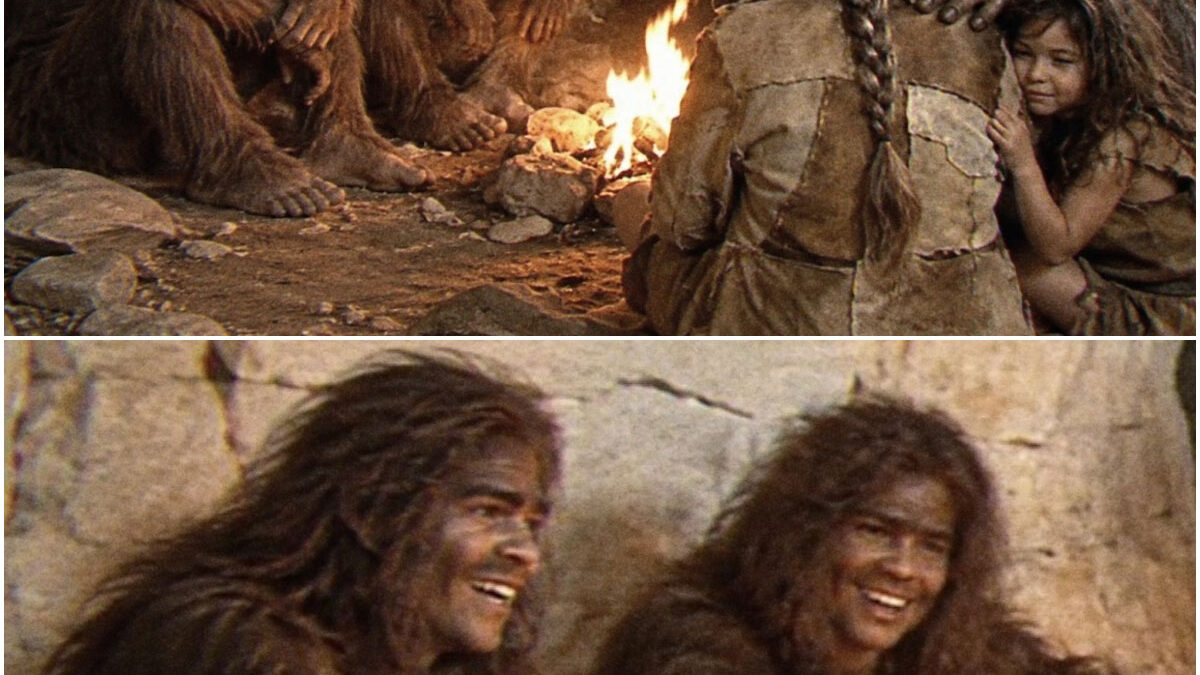
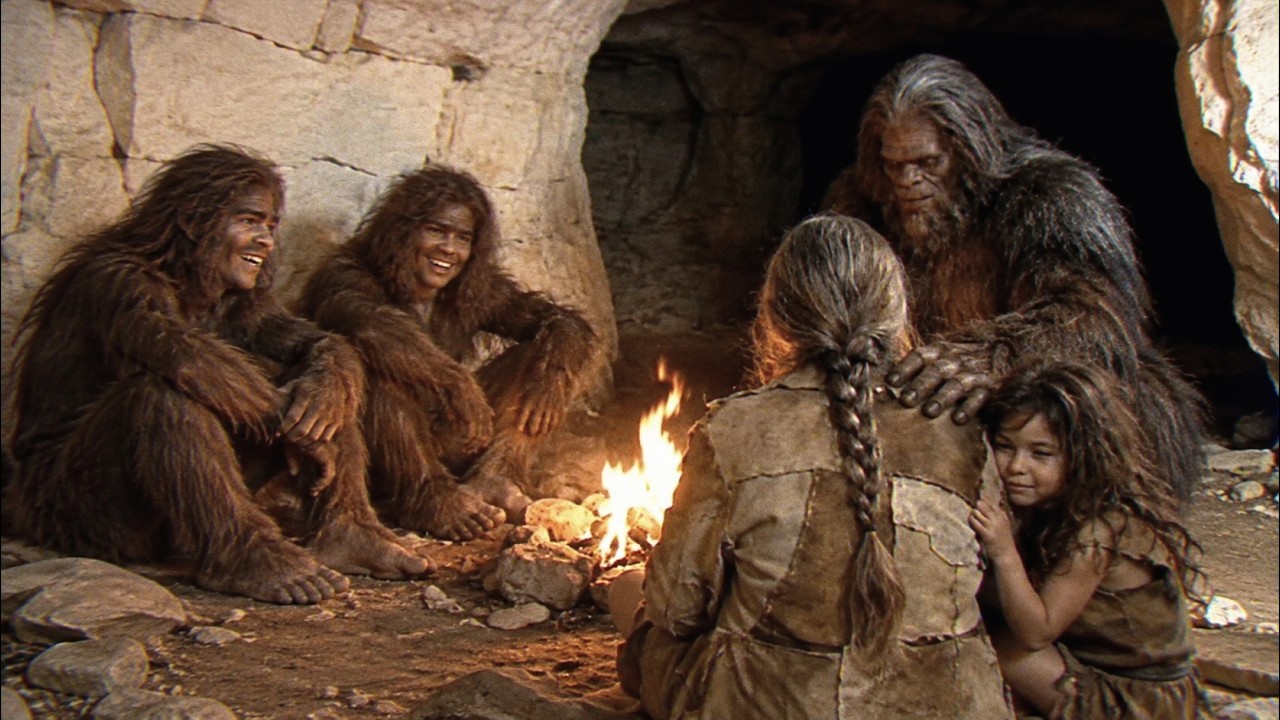
She Disappeared From Hope, BC in 1968 – Years Later, They Found Her Living With Three Bigfoot Children
In March of 1968, a young woman named Heather Cameron walked out of her parents’ kitchen in Hope, British Columbia, told her mother she was going for a hike up the Cocaala and was never seen again.
Three decades later, on the 2nd of August, 1998, I crawled out of a sump in a cave system about 40 kilometers east of town and met her face to face.
She was alive.
She was healthy.
She was raising three children inside that cave with her.
And the man who had fathered those children was the kind of man you do not put on a missing person’s poster because the world has not yet built the language that would let you describe him.
That is what I have to give you first because anything I say after this would feel like a delay and you did not click on this to be delayed.
My name is Doug Brimer.
I am 71 years old.
I worked for 33 years as a hydrogeeologist for the province of British Columbia, mapping aquifers and tracing groundwater contamination across the lower mainland and the Fraser Canyon and the Cascade Mountains east of Hope.
I retired in 2017 and live with my wife on a halfacre of land in Yarrow in the Fraser Valley where I keep bees and watch the sandill cranes come through every October.
I am a member of the British Columbia Spelological Federation and I have been since 1976.
I have logged something like 4,000 hours underground over the course of my life, mostly in the caves on Vancouver Island and a few in the crow’s nest country.
But the caves that mattered the most to me in the end were the ones nobody had mapped.
The ones that were not in any of the Federation registries because the people who had found them had decided for one reason or another to keep their mouths shut.
I am going to tell you what I found in one of those caves.
I should have told my wife 30 years ago, and I almost did several times.
And every time I came close to it, I would think about Heather Cameron sitting on a flat rock at the back of a chamber with her youngest daughter on her lap, looking at me with the patient steadiness of a woman who had spent every day of those 30 years preparing for the moment a stranger walked into her home.
And I would close my mouth and pour another cup of coffee and find something else to talk about.
My wife is 68 years old and she has emphyma and she is not going to be with me forever and I do not want to die with this still inside me.
And Heather, when I last saw her in 2023, looked me in the eye and told me I could decide for myself when it was time.
I have decided it is time.
I grew up in Chilowak about an hour west of Hope along the TransCanada Highway in a house my father built with his own hands in 1948.
My father worked as a milright for one of the lumber outfits in Mission and my mother taught Sunday school at the Menanite Brethren Church even though we were Anglican because she liked the people.
We were one of those Fraser Valley families that drove out to Hope on summer weekends because hope was where the mountains began.
Pass Hope going east on Highway three.
The world changed.
The valley narrowed into the Cascades.
The trees got bigger.
The mountains pressed in close on both sides of the road like a long stone hallway.
My father loved that drive.
He said it reminded him of the country he grew up in in southern Alberta, only without the wind.
I was 9 years old the morning the Hope slide came down on the 9th of January, 1965.
My father took me with him in the truck.
A few weeks later to look at the scar.
The whole southwestern face of Johnson Peak had broken off and slid down into the Nickel Valley and buried about 3 kilometers of Highway 3 under 60 m of rock and ice.
Four people had died under there.
Two of them were never recovered.
I remember standing on the shoulder of the rerouted highway with my father and looking at that raw gray scar on the mountain and feeling for the first time in my life the size of the country I had been born into.
I told my father when we got back in the truck that I wanted to be a geologiSt. He said geologists do not make any money.
I said I did not care.
He laughed and started the truck and drove me home.
I did become a geologist eventually or close enough to one.
Heather Cameron’s disappearance in March of 1968 was a story I knew from the time I was 12.
Hope is a small town even now.
And in 1968, it was smaller.
My uncle Bill, my father’s older brother, was a logger working out of Hope at the time.
And he came over for supper at our house in Chilowak one Sunday in April and told my parents about the Cameron girl.
She was 22.
She had walked out of her parents’ house on a Saturday morning.
Told her mother she was going for a hike up the Cockihala drainage and never came back.
The RCMP had searched for two weeks, dogs, helicopters, volunteer crews from Hope and Princeton and Chillowak.
They had found her water bottle and one of her hiking boots on a ridge above Boston Bar Creek and after that nothing.
They had called off the search and ruled it presumed drowned or presumed loSt. My uncle said the worst part was the mother.
The mother had stood in the family living room when the RCMP came to tell her the search was over.
And she had said in a voice everybody in the room could hear that her daughter was not dead, that her daughter had gone where she needed to go and was alive somewhere and would come home when she was ready.
The priest who was there had tried to gently correct her, and the mother had told the priest to leave her house and never come back.
I thought about Heather Cameron a lot over the years.
But I do not know why.
I had never met her.
But that detail about her mother had stuck in me the way certain stories do.
The way a splinter you can’t see works its way deeper into your hand until eventually it surfaces somewhere else.
I asked about Heather when I was in high school.
I asked about her again at university when I started doing field work in the Cascades.
I read the old newspaper accounts in the Hope Standard Archives.
By the time I was 30, I knew the basic outline of her life.
She had been the younger of two daughters.
Her sister, Catherine, had drowned in the Fraser River in 1962 at the age of 20 while trying to retrieve a fishing rod knocked loose from a boat.
Catherine’s body was recovered three weeks later near Yale.
Heather had been 16 when that happened.
By all accounts, she had been a quiet, brilliant, peculiar young woman before her sister’s death.
And afterward, she had become something the small medical establishment of Hope, BC, in the mid60s did not have a good category for.
She heard things, she saw things.
She told her family there were people in the mountains who watched their house at night.
What I learned later through a long conversation with her younger cousin in 2004 was that the family had been preparing in the spring of 1968 to have Heather committed to Riverview Hospital in Kquitlam.
The cousin, who had been a teenager at the time, told me that Heather’s parents had taken her down to Vancouver for an evaluation in February of 68, and the evaluating psychiatrist had recommended a six-month inpatient stay.
The admission date was set for the second Monday of March.
Heather walked out of the house on the Saturday morning before that Monday and did not come back.
The cousin told me she had always believed Heather knew exactly what she was doing.
Heather had been trying for years to make her family understand what she was seeing in the trees behind their house, and the only choice she had been left with was to go and find what she had been seeing on her own terms while she still could.
I am giving you this background because it matters for what comes next.
Heather Cameron did not get lost in the mountains east of Hope in March of 1968.
She walked into them on purpose.
She had a destination in mind.
And what was waiting for her in the high country above the Somalo drainage was something she had been waiting for since she was a child and something that had been waiting for her in its own patient way for almost as long.
I did not learn any of this until the 2nd of August 1998.
Before that day, I was a 43-year-old hydrogeeologist with a good marriage and a teenage son and a part-time obsession with the car formations of southern British Columbia.
After that day, I was a man who knew, a man whose silence was no longer accidental, but chosen.
I have lived in that silence for almost three decades and I have decided now in the spring of my 71st year that the silence has held long enough.
The cave system was reported to the BC speliological federation in the summer of 1997 by a pair of moose hunters out of Princeton.
They had been working a high basin in the headarters of a creek that runs into the Somalo country off the maintained trail system.
One of the hunters had stepped into what he thought was a rabbit hole on the side of a limestone outcrop and had instead dropped about 4 ft into a vertical shaft that turned out to be the entrance to a large void in the rock.
He had backed out, marked the spot on his map, and called the Federation when he got home.
The Federation sent a reconnaissance team that fall who went down about 30 meters on rope and confirmed the existence of a substantial cave system.
Snow came in early that year and the team had to abort before they could do a proper survey.
The cave was placed on the project list for the following summer.
Russ McKay and I were assigned the initial survey.
Russ was a couple of years older than me, retired Coast Guard, a Vancouver Islander who had taken up caving in his 30s and never stopped.
He was the best partner I ever had in a cave.
Steady, methodical, did not panic.
We were given the coordinates in a 3-week window in late July and early August, and we drove up the Hope Princeton on the 28th of July 1998 with my old truck loaded down with rope and ladders and 1,000 lbs of survey gear.
The approach itself took 2 days.
The hunter’s coordinates put the entrance about 14 km off the highway on a slope that did not have a trail.
We followed a Forest Service road as far as it would take us, parked, and humped our gear in over a ridge and down into the headwater basin of the creek.
The terrain was old growth in the lower elevations, mostly western hemlock and Pacific silver fur, with the occasional yellow cedar in the deeper draws.
As we climbed up out of the timber, the slope opened into a small alpine meadow, and at the upper edge of the meadow against a wall of pale gray rock, we found the entrance exactly where the hunter had marked it.
A horizontal slit in the limestone about a meter and a half wide and half a meter high set back under an overhang, so it was almost invisible from the meadow.
You could have walked past that opening a dozen times and not seen it.
We made camp at the lower edge of the meadow that evening.
Rust cooked.
I sat on a rock and looked up at the slit in the limestone and thought in the way you think when you are about to go into a place no one has been into properly before that we were about to learn something.
Cavs think this way every time they enter a new system.
Almost every time what we learn is the geology, the hydraology, the shape of the passages almost every time.
I had been caving for 22 years by that point, and I had never entered a cave system that gave me even a passing thought that I might be entering it with somebody else’s permission.
The signs were already there if I had known how to read them.
The cave had a smell coming out of it that I had not encountered in any other cave I had been in.
A warm, musky, organic smell, almost like a barn in winter that the Federation team had noted in their report and attributed to bats.
There were no bats.
We learned that the next day.
We went underground at 6:30 in the morning on the 29th of July.
The entrance opened into a sloping passage that dropped about 10 m at a 40° angle, then turned into a true vertical pitch of about 35 m into the upper chamber.
We rigged a rope.
Russ went down.
I followed.
The upper chamber was big, about 20 m across and 10 high, with a flow stone wall on the east side that was beautiful in our headlamp beaMs. a frozen cascade of pale orange calite with the texture of poured candle wax.
There were three passages leading out of the chamber.
The Federation report indicated the team had explored the north passage for about 100 meters before turning back.
We rigged our survey baseline and started working.
For the first two days, we worked the north passage.
It deadended in a small chamber with a sump in the floor.
Water filled blue green surface absolutely still.
Russ and I were both convinced the interesting passages were going to be the east and the southweSt. We started on the southwest on day three.
The southwest passage was different from the start.
It was larger.
It had air movement, a steady, cool draft we could feel on our faces.
Air movement in a cave is the most exciting thing a cavern can feel because it tells you with absolute certainty that the system goes somewhere somewhere big.
We followed the southwest passage for about 400 m on the first day and it kept going down, kept getting bigger, opened into a series of chambers connected by short crawlways.
By the end of that day, we had descended about another 40 m below the upper chamber and were in a substantial gallery with a stream running across the floor.
We marked a control point at the stream crossing and packed out for the night.
The next morning at the stream crossing, we found the first sign.
On a flat slab of rock about three meters in from the stream sitting where we could not have failed to notice it on our way back through.
There was a small stack of three smooth riverstones.
The largest at the bottom, the smallest on top.
Each one chosen for how it fit against the one above it.
The stones were not from inside the cave.
They were rounded river cobbles, the kind of stones you pick up out of an active stream bed where running water has tumbled them for thousands of years.
The stream in the cave was not that kind of stream.
It had a bed of fresh limestone gravel and not a single rounded cobble in it.
Whoever had put those three stones on the slab had carried them in from outside the cave system.
Russ and I stood there for a long time looking at that stack of stones.
After a while, Russ said in a voice he kept very level, “Somebody has been in here.”
I said, “Yes.”
He said recently.
I said that is what it looks like.
We discussed turning back.
That was the prudent thing to do.
A Federation survey team that encounters evidence of unknown occupation in a previously unserveyed system is supposed to retreat to the surface, file a report, and let the Federation decide whether to involve law enforcement.
That is the protocol.
Russ and I are both careful men, and we knew the protocol.
Russ said he wanted to look just a little further.
The stones did not feel like a warning, he said.
They felt like a marker.
They felt like something a person leaves to say, “This is a known place.
This has been walked.”
I felt the same thing.
We agreed to continue for one more hour.
If we found anything else, we would turn back.
We found something else within 15 minutes.
About a 100 meters beyond the stream crossing.
The passage widened into a small al cove on the left side.
On the floor of the al cove, set out on a smoothed area of fine cave silt, were three carved wooden objects, pieces of pale yellow cedar, each about the length of my forearm.
Each one carved into a shape I could not entirely name.
The largest looked like a long-bodied fish with a notched tail.
The middle one looked like a bird with a long neck folded back along its body.
The smallest was a four-legged animal, maybe a deer, maybe a martin.
The wood was dry.
The carvings were old, the surface darkened by time and handling.
The cut marks worn smooth.
The tools used to make them were not industrial tools.
The cuts were the cuts of stone tools or of bone.
And the wood had been finished by abrasion, by smoothing with grit and water and time, not by sanding.
These were old objects made by hand in a tradition that did not belong to anybody whose work I had ever seen.
Russ was crouching beside me.
He said, “Doug,” I said, “I know.”
He said, “What do you want to do?”
I looked at the passage ahead of us, dark, sloping down, air still moving, the smell stronger here, the warm, musky smell of something organic and alive somewhere in this cave system.
I said, “I want to keep going.”
He said, “I do too.”
We left the carvings where they were, and we kept walking.
Over the next two hours, we found a dozen more signs.
Stacks of stones at every junction.
A bundle of dried plants tied with what looked like spruce route tucked into a wall crevice.
A small fire ring on the floor of a side chamber.
The ash old and powdery.
The stones blackened from many uses.
Footprints in the silt of the main passage.
Large bare footprints longer than my outstretched hand.
The toes spled and the arch deep.
And in among them smaller prints, child-sized, the kind of footprints a barefoot child makes when she has been running ahead of an adult down a familiar passage in the dark.
We were no longer surveying a cave system.
We were walking into someone’s home.
We stopped finally at the lip of a large chamber.
The passage opened in front of us and dropped away into a void.
And our headlamp beams went out into that void and showed us in fragments of space much bigger than anything we had been in so far.
We could not see the floor of the chamber from where we stood.
We could not see the far wall.
The air coming up at us was warmer than the air behind us.
And the smell that I had been noticing all the way down was thick and present.
That musky organic warmth.
And overlaid on it now sharp and clear was the smell of wood smoke.
Not old ash, fresh smoke from a fire that was burning somewhere below us in that chamber right now.
While we stood on the lip looking down, I turned off my headlamp.
Russ saw what I was doing and turned his off, too.
We stood in absolute blackness and waited for our eyes to adjust to whatever light there was on the chance that there might be any.
After about a minute, I realized there was a pale orange flicker, faint low, coming from down and to our right, somewhere on the floor of the chamber.
Fire light reflected off a limestone traveling up through the cool air of the cave, just barely visible if you knew to look for it.
I leaned close to Russ and spoke as quietly as I could.
I said, “There are people down there.”
He said, “I see it.”
I said, “We have to go down.”
He said, “I know.”
He said, “Doug, what is your plan when we get down there?”
I did not have a plan.
I had never had a plan.
I had spent 22 years of caving, avoiding situations that required plans.
Because in a cave, the best plan is to follow the rope back to the surface and tell someone else what you found.
But standing on the lip of that chamber, with the wood smoke rising up at me, and the carved wooden bird, and the small barefoot footprints, and the patient stack of three riverstones at every junction, all pressing in on the back of my mind, I knew with a certainty I cannot now explain that we were going down, that we had to, that whoever was down there had been leaving us a trail of breadcrumbs for the last two hours, and the breadcrumbs led to the fire light.
And the breadcrumbs were not a trap.
They were an invitation.
I turned my headlamp back on, dimmed to the lowest setting.
Russ did the same.
We rigged a hand line at the lip of the chamber because the descent was steep, maybe a 30° slope down loose breakdown, and we did not want to send any rocks rolling ahead of us.
We started down slowly, one step at a time, testing every foothold before we put our weight on it.
We were about 10 m down the slope when I heard her voice.
She was speaking quietly.
The acoustics of the chamber were strange, the way they often are in large rooms underground.
The sound carrying in unexpected directions, bouncing off curved walls and arriving at your ears from places that did not match where the speaker was.
I could not tell at first where the voice was coming from, but I could hear plainly the cadence of English, a woman’s voice, calm, conversational, as if she were sitting in a kitchen somewhere, having a slow, late night talk with a friend.
I stopped on the slope and held up a hand.
Russ stopped behind me.
We listened.
The voice said, “The rope is fine.
Both of you can come down.
Just take your time and watch the loose rock on the right side.
There is a better path on the left.
Russ and I looked at each other in the dim red light of our dialed down headlamps.
Russ mouthed, “Did you hear what I just heard?”
I nodded.
The voice had given us specific, accurate routing information for a slope we were standing on in a chamber we had assumed nobody knew we were entering.
Either she had been watching us for some time with or without our knowing, or she had heard the small sounds of our descent, and could read the slope from below.
Either way, she knew we were here, and she had decided to speak.
I cleared my throat.
I called into the chamber, “Ma’am, my name is Doug Brenner.
I am with the British Columbia Spelological Federation.
My partner is Russ McKay.
We are surveying this cave system.
We are not armed.
We did not know anyone was living down here.”
There was a pause of about 10 seconds.
Then the voice said, “I know who you are, Mr. Brener.
You marked the springs above the second meadow last summer when you were doing the watershed assessment for the Kokihalla.
I watched you for 2 days.
You set up a little folding stool by the lower spring, and you ate sandwiches your wife made you, and you talked to yourself about bass salt contact zones.
You are not a man I am afraid of.
Come down.
I will not bring the rest of my family in until we have spoken.
I stood on that slope for a long time without moving.
The folding stool, the sandwiches, the basalt contact zones she had described with perfect accuracy.
Two days of my work the previous summer in a remote drainage above Somalo Creek, an assignment I had carried out completely alone.
I had told the Federation when I had filed my report that I had felt watched the entire time.
I had attributed it to the kind of low-grade paranoia that anyone gets when they are doing field work by themselves in country where there are bears.
I had written in my field notes the words, “I think I might have had company today.”
I had not believed myself.
I had been wrong not to.
I called back, “Ma’am, may I ask your name?”
The pause was longer this time.
When she answered, her voice was different, lower, more careful.
“My name is Heather Cameron,” she said.
“I am from Hope.”
I walked into these mountains on the 9th of March, 1968.
I imagine you have heard of me.
I had to put my hand flat against the wall of the chamber to keep my balance.
Russ steadied me with a hand on my shoulder.
He had not heard about Heather Cameron.
He was a Vancouver Islander.
The story had not crossed the straight, but he could read my face in the dim light, and he could tell from whatever he saw there that the name meant something.
I call back.
Heather, I know who you are.
I have known who you are since I was 12 years old.
My uncle Bill logged out of hope in 1968.
He told my family about you.
I am very glad you are alive.
I heard her laugh.
It was a soft sound, surprised and a little tired.
The kind of laugh a person makes when something they have been bracing for for 30 years finally arrives in a form gentler than they had imagined.
Mr. Brenner, she called up, “Come down.
The slope is safer than it looks.
There’s a flat shelf about halfway down where you can rest if you need to.
Come slowly.
My youngest is in here with me.
She is asleep against the back wall.
Please do not shine your big light at her.
She has not seen a stranger before.
We came down slowly.
I went first this time.
The slope was easier than I had expected, with a band of solid rock running along the left side that gave reliable footing.
If you stayed close to the wall.
About halfway down, I reached the flat shelf she had described.
A level lip of breakdown, maybe 2 meters wide and three deep where you could stand and catch your breath.
The fire light was brighter now, no longer just a flicker, but a real warm orange glow filling the lower half of the chamber.
I could see in that glow the outline of a fire pit.
Stones arranged in a circle around a low flame burning in a bed of carefully tended coals.
The smoke went up cleanly.
There must have been a vent somewhere above, a natural chimney in the limestone drawing the air.
The fire had been planned.
The chamber had been chosen for it.
Whoever lived down here understood the geometry of their home.
Beyond the fire, I could see the dim shape of a sleeping platform built up off the floor against the back wall.
A low wooden frame piled with what looked like furs and woven mats.
A small shape lay on the platform under a blanket, the smallest shape I had seen in a long time.
A child sleeping, and between the fire and the platform, standing with her back to us, looking at the sleeping child, was a woman in a long coat made of pieced hide.
Her hair was gray, mostly with streaks of the chestnut it must have been when she was young, and it hung down her back in a single thick braid almost to her waiSt. She was a small woman, 5 and 1/2 ft maybe.
She did not turn around.
She said over her shoulder, “You can keep coming.
Stop at the bottom of the slope.
Stay there until I tell you.
Do you have water with you?”
I have not had to make conversation with someone who hadn’t acclimatized in a long time, and I cannot remember if you bring water on a descent like this one or if you find it inside.
I said, “We have water.”
She said, “Good.
Drink some.
You will need it for what comes next.”
Russ and I came the rest of the way down the slope.
We stopped at the bottom on a flat sandy patch where the chamber floor began about 10 m from the fire.
We unclipped our packs and set them down.
I took out my water bottle and drank, and Russ did the same.
The woman by the fire did not turn around.
She moved very slightly the small adjustments of a person watching a sleeping child, making sure the blanket was still in place, that the breathing was steady.
Her shadow on the back wall of the chamber cast by the fire light was long and gentle.
I could see in the geometry of that shadow the same shape I had seen in old newspaper photographs in the Hope Standard archives a young woman in a dark coat standing in her parents’ front yard in March of 1968 smiling slightly for the camera 3 weeks before she walked out of that yard and disappeared.
She let us stand there for what felt like a long time, maybe 2 minutes, maybe five.
I did not check my watch.
Eventually, she said, “All right, I’m going to turn around now.
Please do not move toward me.
Please do not raise your voices.
My family is in the next chamber.
They can hear everything we say.
They are not going to come in unless I call them.”
I would like to keep it that way for as long as I can.
She turned around.
The face in the fire light was the face from the missing person’s posters, 30 years older, weathered by three decades of mountain life.
But the same face, the same wideset eyes, the same firm mouth, the same small inward smile I had seen in the one photograph that had been in the papers for years afterward taken at the high school graduation she had attended four years before she vanished.
She was 52 years old.
She looked older than that and younger than that at the same time.
Brown by sun and wind and softened by quiet she was.
And I am not exaggerating the calmst person I have ever stood in a room with.
I have been getting ready for this conversation for a long time.
She said, “I want to ask you a few things before we go any further.
Is that all right with you?”
I said, “Yes, ma’am.
Are you a religious man, Mr. Brener?”
My mother raised me Anglican, but I have not been a regular churchgoer since I was a young man.
I would not call myself religious.
No, but I would not call myself a stranger to the idea either.
She nodded.
That is good enough, she said.
The reason I ask is that what I am going to tell you and what I am going to show you is the kind of thing that some people receive as a sacred matter and some people receive as a scientific matter.
And there is no point trying to choose between those two categories because they are the same thing dressed in different language.
I have spent 30 years living inside the answer to a question I started asking when I was 8 years old.
I am going to share the answer with you because you have walked into the middle of my home and there is no other way for this conversation to go.
But I am going to ask you before I share it whether you can keep a secret.
I said yes.
Russ said yes.
She said I know you both mean it tonight.
I want you to know that I have lived with the cost of secrets for 30 years and I know what they cost and I am asking you to take on that cost willingly with your eyes open.
There is no version of this in which you walk out of here, file a report and let the world come visit me.
There is only the version in which you keep this to yourselves for the rest of your lives and the version in which my family disappears further into the mountains tonight and you spend the rest of your lives wondering whether you actually saw what you saw.
Either way, you do not bring anyone back here.
Are we clear on that?
We were clear on that.
She let out a long breath.
She said, “All right, then I’m going to tell you the whole story.
Sit down.
It is going to take a while.
And before I start, you should know that my husband is going to come in partway through because he likes to be present when I talk about him.
And I want you to be ready for what he looks like because he is not what your training has prepared you for.
He is gentler than he looks, but he looks like something.
Russ and I sat down on the sandy floor of the chamber, our backs against a low slab of breakdown that made a kind of natural bench.
Heather stayed by the fire.
She added two small sticks to it, adjusted the angle of a piece of driftwood, and settled herself on a flat rock that was clearly the place where she always sat.
The child on the sleeping platform had not stirred.
I could see the slow rise and fall of her breathing under the blanket.
And I could see in the fire light a small hand with longer fingers than a child’s hand should have resting on the edge of the platform near the wall.
Heather began at the beginning.
She had been seeing them since she was 8 years old.
The first time was on a fall afternoon in 1954 when her father had taken her along on a deer hunting trip up the Sumalo.
He had left her sitting on a stump while he scouted a draw.
And she had looked up from drawing in her notebook and seen on the slope above her a tall figure standing very still in the trees watching her, hair covered, heavy in the shoulders.
The figure had stood there for a long time, and then it had stepped back into the timber and was gone.
She had said nothing to her father when he came back.
She knew at 8 that what she had seen was not a thing you mentioned out loud.
After that, they came around more often to the house mostly at night.
Her parents owned a small acreage on the upper part of Wallace Street in Hope with a slope behind it that ran up into Crown Land, and from her bedroom window she could sometimes see in the moonlight a tall shape moving along the tree line behind the orchard.
Once when she was 11, she had heard a long low call from very close to the house that went on for maybe 12 seconds and made the glass in her window tremble.
Her father, who had also heard it, had told her at breakfast the next morning that it was a moose calling.
He had said it in a tone that meant the conversation was over.
When she was 13, she tried to tell her mother.
Her mother had taken her to see Dr. Bose, the family physician in Hope, who had listened with the careful patience of a man who was used to listening to teenage girls and had prescribed a course of phenobarbatital to help her sleep.
Heather had not taken the pills.
She had hidden them in her dresser and flushed them down the toilet one at a time over the course of three months.
She had stopped telling her mother what she was seeing.
She had started instead going out to meet them.
Not for long at first, just walks.
She would slip out the back door at night and walk 50 m up the slope into the timber and stand very still and wait.
The first time one of them came close enough for her to see clearly was in the summer of 1961 when she was 15.
A female, she thought, smaller than the one she had seen at 8, though still much larger than a person.
The female had come down through the trees with absolute silence, stopped about 10 meters away, and the two of them had looked at each other in the dim light for what Heather guessed had been 5 minutes.
Then the female had turned and walked back uphill, and Heather had gone back to bed.
It went on like that for years.
She did not tell anyone.
She did not try to photograph or record or follow.
She just learned in the patient way a person learns when nobody is teaching them the rhythms of when they came near and what they did when they were near.
The female who had come down to look at her in ‘ 61 was not just a curious individual but something more like a designated observer.
The female came back every year.
By the time Heather was 18, the two of them had developed a quiet routine.
Once a month or so in the warm months, Heather would walk up into the trees on a moonlit night and the female would be there.
They did not touch.
They did not communicate in any way Heather could have described in words, but they sat together.
That was the closest word Heather had for it.
Then her sister Catherine drowned.
That was in July of 1962.
Heather was 16.
The drowning broke something in her parents that did not get repaired.
Her mother became distant.
Her father started drinking.
The household, which had been quiet and orderly, became quiet and brittle.
The change at home pushed Heather further into her time in the trees.
The female noticed.
The female brought her things after Catherine’s death, a small carved bird the first time, a piece of dried meat the second, a folded square of soft hand hide the third.
Heather kept all of these.
She hid them in a tin box under her bed.
By the spring of 1968, her parents had decided they could not handle her anymore.
She had finished high school in ‘ 64 and had refused to apply to university.
She had taken a job as a clerk at the Hope Post Office and worked there for 3 years, kept to herself, lived in her parents’ house, paid her board, but she was still going up into the trees at night.
Her parents had figured this out.
They had assumed in the absence of any other explanation that she was meeting a man.
Her mother had tried to talk to her about it.
Heather had told her mother the truth finally after years of silence and her mother had wept and called Dr. Bose the next morning.
The trip to Vancouver and the evaluation at the assessment clinic had followed.
The admission paperwork to Riverview had been signed by her father.
Heather had been told in late February of ‘ 68 that she would be going down to the hospital in two weeks.
She had nodded and not argued, and she had spent the next two weeks getting ready.
She did not intend to die in the mountains.
She intended to go and live there with the people she had been watching her whole life, who had been watching her back, and who she had decided in the careful and unhurrieded way that she made decisions were a more honest fit for her than the family she had been born into.
She was 22 years old.
She knew the country east of Hope, as well as anyone who had not done logging or surveying in it.
She had been preparing in small ways for years.
A second set of warm clothes hidden in a hollow tree two kilometers up the cockihala.
A folding knife and a fire striker buried in an old coffee can on the ridge above Boston Bar Creek.
A canvas bag of dried foods cashed under a flat rock in the high meadow above the Sumalo headarters.
The morning she walked out of her parents’ house.
She had a route in her head and supplies along that route, and she had told nobody about any of it.
She had left her water bottle and one boot on the ridge above Boston Bar on purpose because she wanted the search to end somewhere that would not lead anybody to where she was going.
The female found her on the third night.
Heather had hoped in a half-formed way that the female would recognize her at the new location, would come to her, would lead her further into wherever it was that she lived.
What had actually happened was simpler and stranger than that.
Heather had built a small fire in a hollow under a rock overhang and was sitting next to it eating a piece of dried apple from her canvas bag.
And the female had walked up to the edge of the fire light exactly as she had walked up to the edge of the trees behind the house in hope so many times before and had stood there looking at her.
Heather had said out loud, “My name is Heather.
I am not going back.
I am not equipped to do what you do.
I will need help.
The female had stood there for a long time.
Then she had walked away.
Heather had thought in that moment that she had miscalculated, that she would freeze to death in that meadow within a week.
The female came back at dawn.
She brought two others with her.
One was the male Heather had seen as a child, much older now, the leader of the family group, the one Heather would later come to understand as something like her father-in-law.
The other was a younger male about Heather’s own age, a tall young being who would over the following 12 years become the man she shared her life with.
The three of them stood at the edge of Heather’s small clearing and looked at her.
And Heather looked at them, and after a while the old male made a sound, a long low call that started in his chest and went on for about 8 seconds.
Heather, who had been hearing those calls from her bedroom window since she was a child, made the only sound she could think to make in response, which was to hum back three notes, the lowest she could manage.
The old male tilted his head, the female and the young male looked at each other.
The young male turned and walked off into the timber, and the female crouched down at the edge of the clearing, and the old male sat down on his hunches and watched, and the three of them stayed with Heather for the rest of that day, until the young male came back at dusk, with three other females carrying a long bundle of cured hides and a kind of woven netting.
And they took her, with great patience and gentleness, deeper into the country than she had ever been.
That was how it started.
She skipped over a great deal of what came next.
The first winter had been the hardeSt. She had not known how to live the way they lived.
She had been ill several times.
The old male, the patriarch, had not been sure she would survive.
The female, who had been watching her since childhood, who Heather called her sister-in-law, had cared for her like a mother during the bad weeks.
By the spring of 1970, Heather had learned enough.
She had been accepted.
The young male had begun coming to sit near her in the long evenings, the same way the female used to sit near her in the trees behind her parents’ house in hope.
The pattern, Heather said, was the same pattern her family had been doing all along.
The species changed, the pattern did not.
Her first child had been born in the late spring of 1976, a daughter.
She had named her Iris.
Iris was 22 now in the next chamber listening to this conversation and would come in if Heather called for her.
Her second child, a son, had been born in 1983.
She had named him Aaron.
He was 15.
He was off with his father somewhere up in the higher chambers tonight doing whatever it was the boys did when their father was teaching them.
Her third child, another daughter, had been born in 1990.
She had named her Ren.
She was 8 years old.
She was a small shape sleeping on the platform against the back wall, and Heather did not want to wake her.
Her husband was her own age, give or take.
He had been 24 or 25 by her best guess when she had first seen him in the high meadow in the spring of 1968.
He was about 55 now.
The longest lived members of his family had lived past 120.
His own father, the old male who had welcomed her, was still alive somewhere up in the back chambers, an enormous, slow, deeply silver-haired man whose memory contained things that had happened in those mountains before her grandmother was born.
There was a whole family group living in this cave system, 11 of them, including her three children.
They had moved into this particular cave network in the early 80s when the logging roads had started getting too close to their previous home further south.
The cave was their winter ground.
In summer they ranged widely, but they returned here when the cold came.
She wanted to introduce me to her husband before she told the rest of the story.
The rest of the story was easier with him in the room.
She turned her head toward a passage that led off the chamber to the left and made a sound.
Not loud, not a call, a soft musical phrase, two notes rising, one note falling that she pushed out into the darkness.
The sound was answered immediately somewhere down the passage by a deeper version of itself.
Two notes rising, one note falling.
A few seconds later, I heard the small dry sounds of large bare feet walking unhurriedly on cave floor, and a figure came out of the passage into the firelight, and the figure was a homminid, and he was very large, and he was looking at me.
I am going to describe him as carefully as I can.
He was about 7 and 1/2 ft tall.
He had to stoop slightly to clear the passage entrance, and when he straightened up in the chamber, the top of his head was perhaps 30 cm below the ceiling.
He was covered in dense dark hair, the color of wet bark and evening light, with patches of silver across his shoulders and chest that came in the way silver comes to a wolf in streaks and brushed lines rather than all at once.
His arms were long, longer in proportion than a human’s would be, and his shoulders were as wide as a small doorframe.
His face had a heavy brow and a wide flat nose and a strong jaw.
His eyes were dark and set deep under the brow, and they were intelligent.
They studied me with the calm appraisal of a man who has been told a stranger is in his home, has accepted the situation on the advice of his wife, and is doing the work of evaluating whether his wife was correct.
He came over to the fire and sat down on a flat rock opposite Heather.
And the fire light caught him from a different angle.
And I could see in that angle the way the muscles of his upper arms moved under the skin and the hair when he settled himself and the way his hands rested on his knees and the way his eyes went from me to Russ and back to me.
He was beyond any doubt I had ever held about anything a person.
Not a man, as I had been raised to use the word, but a person with the absolute weight of personhood.
The kind of presence that walks into a room and changes the air pressure.
Heather said something to him in a series of soft tonal sounds,” he answered.
The exchange went on for maybe a minute, and at the end of it, he made a small gesture with one of his enormous hands, a gesture I read as something like, “Proceed.
You have my permission.”
Heather turned back to us.
“His name in his language is not something I can pronounce with a human throat,” she said.
The closest I can come to it is a sound I make for him in private, which is also not something I want to share.
So, I just call him my husband.
He is fine with that.
He has known my language for longer than I have known his.
They learn ours more easily than we learn theirs.
I asked her if he understood English.
She said yes.
He had been listening to her speak it for 30 years.
He spoke very little of it himself because his vocal anatomy was not built for it, but he understood it as well as she did.
And he could read the cadences of a conversation and tell when a person was lying and when a person was telling the truth.
And he had told her before he came in that we were telling the truth.
That was why he had agreed to come in.
I asked her then the question that had been forming on me since I had first seen the carved cedar fish in the small al cove off the main passage.
I asked her what she wanted us to do.
She did not answer right away.
She looked at her husband.
He looked at her.
The fire moved between them.
After a long pause, she said, “I want you to do what your conscience tells you with one condition.
The condition is that you do not bring anyone back here.
Not researchers, not the Federation, not law enforcement, not the press, not your families.
If you tell anyone, you tell them as a story, not as a location.
You do not write down where this cave is.
You do not mark it on any map.
You burn your field notes for this trip, and you write a new set that describe a survey of an empty, unremarkable cave system that ends at a sump and goes nowhere.
The Federation will accept those notes.
They have accepted many like them over the years.
I asked her how many cave systems in BC contained families like hers.
She did not know.
Her husband had been told by his father that there were other families in the mountains of British Columbia in the high country of Alberta in the wet country of southeast Alaska and down through the Cascades into Washington and Oregon and northern California.
Her husband’s people did not have a sense of total population.
They had a sense of their own family group, their own seasonal range, and a faint awareness of the other groups whose ranges they over overlapped with at the edges.
Her husband estimated when pressed that there might be 50 families in the British Columbia mountains with maybe a dozen members each.
What mattered, she said, was that there were not many.
That every single one of them lived in some version of the way she lived.
That every one of them depended for their survival on the willingness of the small number of humans who knew about them to keep their mouths shut.
Mr. Brenner, she said, I am asking you to keep your mouth shut for the rest of your life.
I am asking the same of Mr. McCay.
If you agree to this, you will not be doing it for me.
You will be doing it for my children and for my children’s children and for every family group on this continent that has so far avoided the kind of attention that would end them.
I looked at Russ.
Russ looked at me.
We did not have to talk about it.
I said, “Heather, I agree.”
Russ said, “Ma’am, I agree.”
She nodded.
She said, “All right, then I am going to call my children in.
They want to meet you.
They have not met a human besides me in a long time.”
She made another musical phrase, longer this time, four notes that climbed and then resolved almost immediately from the passage her husband had used.
Two younger figures came into the chamber.
The oldest Iris was a tall woman, 6 and 1/2 ft, slim and dark-haired, with her mother’s wide said eyes, and her father’s heavy brow and a quiet face that did not yet know what to do with its first real look at a stranger.
The middle one, Aaron, was nearly his father’s height already.
15 years old and skinny in the way teenage boys are skinny with long arms and a face still settling into itself, the human and the other not yet fully resolved across his features.
They came in slowly.
They sat down beside their mother.
They looked at Russ and me with curiosity and with a careful, learned weariness that did not come from instinct, but from being taught.
Heather introduced us.
She used our full names.
She told the children in the same calm voice she had used with us that we were friends, that we had walked into their home by accident and had been polite enough not to make a problem of it and that we were going to keep their secret.
The children nodded.
Iris said in clear English with a careful low voice, “It is nice to meet you both.”
Aaron said, “Hi.”
He gave a small wave.
His hand was enormous on the end of a teenage arm.
The youngest, Ren, woke up while we were still in the chamber.
She sat up on the platform, rubbed her eyes, and looked across the fire at me and Russ with the open, uncomplicated curiosity of an 8-year-old.
She had her father’s brow.
She had her mother’s mouth.
Her hair was a dark chestnut color, much like her mother’s must have been at her age, and it stuck out in all directions in the way the hair of a child who has just been sleeping sticks out.
She slid off the platform and walked over to her mother and climbed into her lap.
And from that position, with her father’s hand resting lightly on her small back, she watched us for the rest of the evening with the careful interest of someone meeting a new species.
We stayed in the chamber for about three more hours.
Heather told us more of the story.
She told us about the loss of her first pregnancy in 1973 and how her sister-in-law had sat with her for two weeks afterward, never leaving her side.
She told us about the death of the old patriarch’s maid in 1988.
The funeral the family had held in a small chamber deeper in the system.
The way they had laid the body on a slab of clean flow stone and covered it with cedar branches and spent four days sitting with it before they took it out through the back exit and buried it on a high ridge in country none of us were ever going to see.
She told us about teaching her children to read in English using books I would later send her under a fake name to a post office box in Princeton.
She told us about the long winters and the short summers and the patients slow rhythms of a life that was not measured in hours and weeks and years, but in older units her husband’s people had been using for as long as they had been a people.
When we finally got up to leave, Heather walked with us back to the slope.
Her husband stayed by the fire with Ren.
Iris and Aaron came partway up the slope with us and stopped at the lip of the chamber.
Heather climbed up with us to the lip and stood there for a moment looking back down at her family.
She said, “The next time you come, come alone, one of you at a time.
Bring a letter from the other.
I would like to keep a correspondence going if that is acceptable to you.
I have been writing things down for 30 years and I have nobody to read them.”
I said it was acceptable.
Russ and I did not talk for the entire walk back to the surface.
We did not talk while we packed our gear at the upper chamber.
We did not talk while we ascended the rope.
We came out into the alpine meadow at 3:00 in the afternoon into the kind of bright August sunlight that made everything we had just seen feel like a dream that we were watching dissolve as we walked.
We sat down on a flat rock in the meadow and looked at each other.
And after a long time, Russ said, “Doug, are you going to do what she asked?”
I said, “Yes.”
He said, “So am I.”
He said, “I am not even going to tell my wife.”
If I said neither am I.
We hiked out the next day.
We filed the false survey notes.
We burned the real ones in a fire pit behind my house in Yarrow.
A week later, watching the pages curl and blacken, sitting in lawn chairs with cups of coffee and not saying much.
The Federation accepted our report.
The cave system was logged as a small deadend carsted feature with no further intereSt. It has not been visited by the Federation in the 27 years since.
I have been back 23 times.
I started going alone in the spring of 1999.
I brought a sealed letter from Russ to Heather and a sealed letter from me.
I brought books.
I brought a small radio that I left for the children with extra batteries.
I brought sewing needles and good thread and a roll of wax canvas.
Heather met me at the lip of the chamber.
We sat by the fire for a whole afternoon.
She read both letters and laughed in places and was quiet in others.
And at the end she handed me a thick handwritten document of her own addressed to Russ telling him things she had not been able to tell either of us in the cave because her husband had been there.
Russ wrote back.
I carried letters between them for the next 16 years until Russ died of pancreatic cancer in February of 2015.
His last letter to Heather lives now in a small wooden box in the back of her chamber along with the rest of the correspondents.
Iris is 50 next year.
She has had three children of her own, all by a young male from one of the other family groups who came through on a kind of long traveling courtship in the spring of 2002.
Her oldest is 23.
He is taller than his grandfather.
He visited my house in Yarrow once in 2020 on a long quiet night when my wife was at her sisters in Calgary and there was no one to see.
He stood in my kitchen and drank a glass of water and looked at my paintings of the Fraser River and asked me in a voice I felt in my sternum whether the world was really as hard for his people as his mother had told him it was.
I said yes.
I said your mother is right.
He said thank you.
He stayed for an hour.
Then he walked out my back door and crossed my yard and disappeared into the timber that runs up to the foothills and I have not seen him since.
Aaron is 42.
He has a mate from his own family group, an older female.
They have no children yet.
Heather tells me they are trying.
Ren is 36.
She is the most curious of the three.
She is the one who has pushed her mother hardest over the years on the question of whether she could spend some time among humans.
Heather has told her every time the same thing she told Russ and me on the night we first met, which is that the cost is too high.
Ren is the one I worry about.
She knows what she has loSt. She’s the one who reads the books I bring most carefully and asks the most questions and looks the longest at the photographs of my grandchildren when I show her the family album.
Heather is 80 years old this year.
Her husband is older than her by a few years and is still by his species standards in his middle age.
He has gone gray across the chest and silver around the face, but he is strong and slow and patient and he sits beside her in the evenings the same way he sat beside her on the night I first met him.
The old patriarch, his father, died in 2011.
The family held a funeral and Heather told me about it the next time I came.
Sitting by the same fire and I felt the loss of a being I had never properly met as if he had been my own grandfather.
There is a small Karen on a ridge somewhere in those mountains that I will never see.
And inside it are the bones of a homminid whose memory contained things that had happened in those mountains 600 years ago.
The family is going to have to move further north within the next decade as the logging roads creep up the Sumalo and the Cockala and the empty places of the southern Cascades grow smaller every year.
I am not the only one who knows about them.
There are others, other hydrogeeologists, other foresters, a couple of old loggers in Princeton, a retired RCMP officer in Hope who once spent a long evening with Heather’s family in 1976 when he stumbled into them while tracking a poaching case and decided then and there to lose the trail.
We do not have a club.
We do not have a newsletter.
We do not have a name for ourselves.
We just know.
We carry the knowing the way Heather’s family carries their bones up into the high ridges carefully privately with the understanding that the carrying is itself a form of love.
My wife is going to die within the next year or two.
The doctor in Chilowak has told us as much.
She does not know about Heather.
I have decided not to tell her.
The knowing would not give her any comfort in her last months and it might cost her some peace.
But I think sometimes when I am sitting with her in the evenings with the fire going and the cranes calling somewhere out over the river that she would have liked Heather.
They were the same kind of woman.
Quiet, watchful, stubborn in a way that did not announce itself.
My wife would have understood, I think, why a young woman in 1968 walked into the mountains east of Hope and never came back.
She would not have called it madness.
She would have called it the only honest move that woman had left.
There is one more thing.
The last time I went to the cave in October of last year, Heather walked me out to the lip of the chamber and turned to me and put her hand on my shoulder.
She has small hands weathered, brown by sun and wind, the hand of a woman who has done physical work for a long time.
She looked at me with the same calm, steady eyes she had used on me at the bottom of the slope 30 years ago.
Doug, she said, “When I die, my husband will bring you a stone.
He will leave it on the bench outside your back door, where you will find it in the morning.
The stone will be flat and white and about the size of your palm.
It will be smoothed on both sides.
When you see it, you will know I am gone.
You will not need to come back here after that.
The children will know how to live.
They have been ready for a long time.”
I told her I understood.
I want you to know something, she said.
I have spent 37 years in this cave, and I have not regretted one of them.
Not the lost ones, not the cold ones.
Not the difficult bursts, not the long winters, not the fact that my mother died in 1976 without knowing I was alive.
I would not trade what I have built here for any other life on Earth.
And I want you to take that with you when you finally tell someone.
I do not want to be remembered as a tragedy.
I want to be remembered as a woman who knew what she was doing.
I told her I would carry that with me.
She let go of my shoulder.
She stepped back.
She looked at me for a moment longer and then she went back down the slope to her family.
And her husband was waiting for her at the fire.
And her youngest daughter Ren was sitting on the floor reading an old paperback copy of Anne of Green Gables that she had been working on for 3 months.
I climbed the rope I walked out into the meadow.
The sun was setting.
I sat down on the same flat rock Russ and I had sat on 27 years before and I looked at the slope above me in the timber below and I thought about a young woman walking up the Cocaala on a Saturday morning in March of 1968 with a small canvas bag and a plan and the people who had been waiting for her up in the high meadow and the long quiet life she had made for herself in a cave where the fire light glowed against limestone walls and her children grew up reading books by lamplight and her husband sat beside her on a flat rock at the back of the chamber and did not need to say anything because they had been together for 56 years and the silence between them was its own conversation.
There are still mountains in this country where the old quiet things live.
There are still people in those mountains who know who they are and have chosen with their eyes open to share the silence.
There is a cave east of Hope, BC, that contains a woman who walked out of her parents’ kitchen in March of 1968 and was never seen again by anyone who was looking and three children who carry the blood of two old species and a husband who came down to the meadow on the third morning of her exile to look at her and decide what kind of welcome she deserved.
He decided she deserved a good one.
He has been giving it to her ever since.
My name is Doug Brenner.
I am 71 years old.
The cave is not the point.
The woman in the cave is not even the point.
The point is that the world is bigger and stranger and gentler than the daylight version of it suggests.
And there are still people who have walked into that bigger world on their own terMs. And there is room in that bigger world for a life that the smaller world would not have known how to hold.
Heather Cameron knew that when she was 22 years old, she bet her life on it.
She won.
The fire is still burning at the back of that chamber tonight.
I hope it burns for a long time yet.








