28 Workers Killed in Explosion From a Temporary Pipe Repair | Disaster Documentary
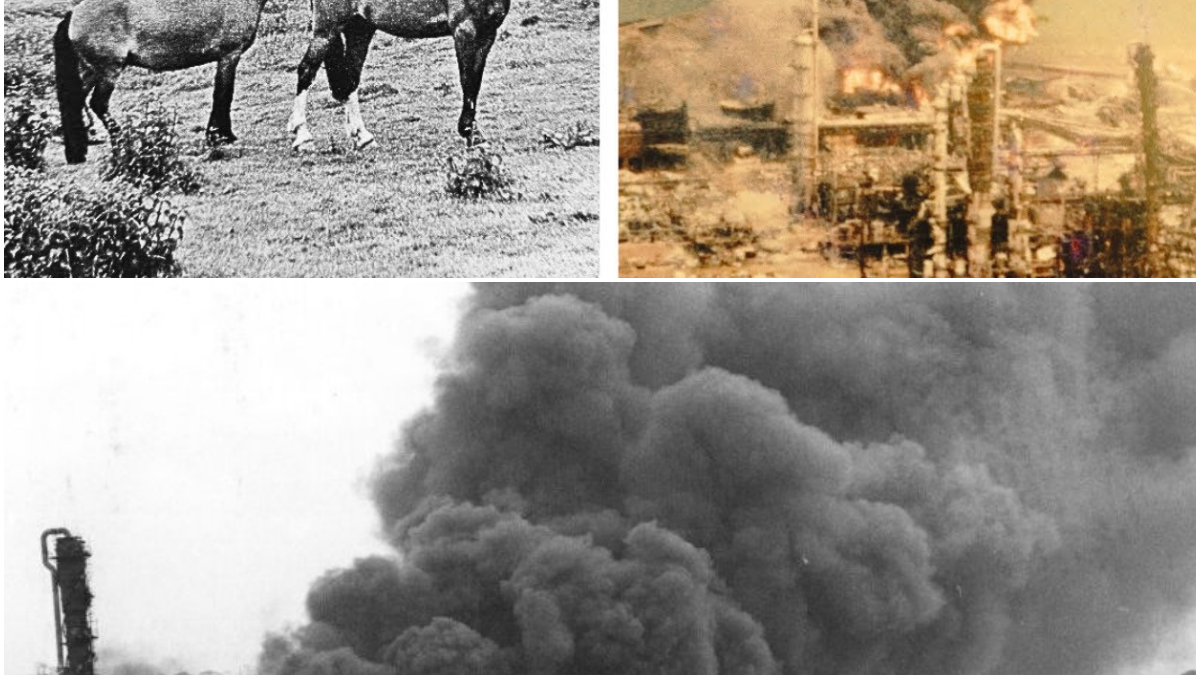
28 Workers Killed in Explosion From a Temporary Pipe Repair | Disaster Documentary
June 1st, 1974.
Flicksburgh, Lincolnshire.
A clear afternoon turns to white fire.
A deafening roar shakes the valley as a shock wave races across the river Trent.

Houses collapse, windows explode outward, and a column of flame rises hundreds of feet into the air.
Steel melts, air burns, the sound carries for miles, mistaken for a bomb or the end of the world itself.
In the chemical works at the edge of town, everything that was solid is suddenly vapor.
And in that silence after the blast, one question hangs in the smoke.
How could this possibly have happened?
A quiet village faced unseen danger.
Before the noise, before the smoke, Flexra was a quiet place.
A few hundred people lived along the banks of the river Trent, surrounded by fields and hedge that stretched into the horizon.
It was the sort of English countryside where the loudest sound was the wind against a church steeple.
Then in the early 1960s, the world changed.
Britain was rebuilding and chemical plants became the symbols of progress.
Imperial Chemical Industries chose Flicksborough for a new site drawn by its flat land, its river access, and its promise of isolation.
Steel towers began to rise above the trees, followed by pipes, tanks, and flare stacks that glowed through the night.
Locals found work at the new plant.
It paid well.
It seemed safe, and it gave the small village a sense of purpose.
What once smelled of soil and rain now carried the sharp odor of solvents and oil.
Children grew up watching plumes of steam drift above the rooftops, unaware that every hiss of pressure was a reminder of the balance being tested inside.
Flicks had entered the modern age, a place where prosperity hummed in the pipes and danger was hidden in plain sight.
This chemical risked everything at Flicksborough.
At the core of the Flexra plant was a simple goal, to turn raw chemicals into nylon.
The process depended on a liquid called cycllohexane, a clear, highly flammable solvent that looked harmless enough in a glass vial.
Inside the plant, however, it was heated, compressed, and pumped through a series of massive steel reactors.
Each one building pressure like a contained storm.
Cycllohexane was the bloodstream of the operation.
It flowed through miles of pipe, feeding the oxidation units that converted it into capriactam, the base ingredient for nylon fibers.
When handled correctly, it was efficient and predictable, but the margins for error were measured in fractions of a second.
A single leak could turn invisible vapor into an explosive cloud capable of destroying everything around it.
The workers who ran the process understood its rhythm, the vibrations, the heat, the smell of solvent in the air.
They trusted the instruments, the valves, and above all, the routine.
Each shift was a pattern of precision, repetition, and blind faith.
Cyclexane made modern life possible.
Nylon stockings, car tires, carpets, parachutes.
It was progress bottled under pressure, waiting for one small weakness to let it all escape.
A temporary fix sealed their fate.
In early 1974, reactor 5 was discovered to be leaking.
It was a structural crack, the kind that demanded a shutdown and extensive repairs.
Closing the plant would halt production for weeks, costing money the company did not want to lose.
Engineers searched for an alternative.
They found one in a hurried idea that seemed practical at the time.
Bypassed the damaged reactor entirely.
A temporary pipe was built to connect reactor 4 to reactor 6.
It was an improvised solution constructed on site with available materials.
The new line did not follow the original design, and its geometry created a dog leg shape that placed unusual stress on its joints.
Welders did their best with what they had, and supervisors approved the work after only basic checks.
Drawings were drafted but not fully reviewed.
Calculations were made but not thoroughly tested.
When the bypass was installed, it turned a complex system into something unfamiliar.
The plant resumed operations.
The pressure returned and cycllohexane flowed through a pipe never meant to carry it.
The modification was considered temporary.
Yet, it became part of the daily routine.
No one believed it would fail.
No one imagined that the weakest link had just been built with their own hands.
Pressure built while no one noticed.
For several weeks, the bypass line appeared to hold.
The plant ran with its usual rhythm, a steady blend of noise, vibration, and the deep mechanical pulse of the reactors.
Workers walked past the new pipe each day, noting its unusual shape, but trusting that if it had passed inspection, it must be safe enough.
Nothing in their surroundings hinted at the danger collecting in the metal.
Heat stressed the dog leg pipe.
Pressure flexed it.
Vibrations from the reactors shook it with every cycle.
The bellow’s joints, meant only for small adjustments, began absorbing forces it was never designed to handle.
When the plant was quiet, the pipe creaked softly, a sound easily dismissed as part of the industrial backdrop.
No alarms sounded, no gauges spiked.
The danger grew quietly, hidden behind insulation and steel.
By late May, the stresses had reached a breaking point.
Still, nothing appeared unusual.
Men worked their weekend shifts, unaware that the bypass line had begun to deform.
The system stability rested on a few millimeters of strained metal.
On the afternoon of June 1st, the sun shone over Lincolnshire.
It was warm and still, and beneath that calm surface, the weakest part of the plant was about to give way.
The blast that changed Britain forever.
At 4:53 p.m., the bypass finally failed.
A section of the dog leg pipe tore open, releasing a roaring jet of cycllohexane under tremendous pressure.
The liquid flashed into a dense white cloud, spreading across the plant in seconds.
Workers nearby saw only a blur of mist, a strange moving fog rolling low across the ground.
Some froze.
Others shouted warnings lost in the mechanical noise.
There was no time to run.
The cloud found an ignition source.
And in that instant, the world changed.
The explosion erupted with a force that dwarfed anything the village had ever known.
A fireball rose hundreds of feet into the sky, bright enough to be seen from towns miles away.
The shock wave tore through the chemical works, collapsing buildings, shredding metal, and hurling debris in every direction.
Walls folded.
Roofs were lifted into the air.
Steel frames twisted like wire.
Men who had been standing a moment earlier were gone in the blink of an eye.
Homes in the village shook violently, their windows bursting outward as if struck by invisible hammers.
Doors flew off hinges.
Ceilings cracked open.
Families dropped to the floor, unsure if the explosion came from the plant or from something far worse.
The sound rolled across the countryside, echoing over the River Trenton, reaching as far as Grimby.
Some believed a plane had crashed.
Others thought it was an earthquake.
A few wondered if war had returned.
Inside the plant, chaos turned to fire.
Tanks ruptured, releasing more fuel that ignited as it spilled.
Flames climbed high, carried by the summer air.
A black plume rose like a pillar, visible for miles.
Where the racked complex had stood was now an open crater of burning fragments.
The ground itself seemed to pulse with heat.
Trucks overturned, pipelines snapped apart.
The plant had been a symbol of modern efficiency, but in seconds it became a field of devastation.
The men working that Saturday had little chance of survival.
Many were caught at the heart of the vapor cloud, where the force of the explosion left almost nothing behind.
Others were struck by flying debris or trapped under collapsing structures.
Those who escaped found themselves running through smoke and fire, calling for colleagues who would never answer.
Some stumbled out of the gate, covered in soot and blood, dazed and moving without direction.
Outside the plant, the destruction spread far beyond the fence line.
Nearly 2,000 homes were damaged.
Streets filled with broken glass, roof tiles, and frightened families searching for loved ones.
Children cried in confusion.
Neighbors gathered in their gardens, staring toward the column of flame rising from the plant.
A few grabbed buckets, unsure what else to do.
Volunteers rushed toward the site, only to be driven back by the heat.
The air was thick with the smell of burning chemicals.
Fire brigades from across the region raced toward Flicksborough.
As they approached, they saw the scale of the disaster and realized they were not facing a simple industrial fire.
The flames were too hot, the debris too unstable, and no one yet knew what chemicals remained inside the damaged tanks.
Firefighters set up lines around the perimeter, spraying water to cool neighboring units and prevent further explosions.
They moved cautiously, aware that the ground beneath them was still shifting from the blast.
Rescue crews searched for survivors where they could, but the heart of the plant was too dangerous.
Burning metal collapsed without warning.
Pools of chemicals ignited as they touched air.
Emergency workers had to choose between bravery and caution, knowing that one misstep could cost more lives.
They carried injured men to makeshift triage areas set up in nearby fields where doctors and nurses treated burns, fractures, and shock.
Some victims were barely conscious, murmuring about colleagues still inside.
As night fell, the fire continued to burn.
The glow lit the sky like a grim beacon, drawing crowds of onlookers who stood in silence, their faces illuminated by the flames.
Police formed cordons, keeping people back as explosions cracked through the night.
Residents of nearby villages were evacuated, unsure whether to take only a coat or their entire belongings.
Rumors spread quickly, each more frightening than the last.
Some feared toxic gases drifting through the air.
Others believed the entire plant might collapse into the ground.
By midnight, the full magnitude of the tragedy was becoming clear.
28 men were confirmed dead, though the destruction made recovery slow and painful.
Many families waited for news that would never come.
The plant that had once provided stability and pride had now delivered heartbreak on a scale Flicksborough had never imagined.
The explosion had torn through more than buildings.
It shattered the illusion that modern industry was safe simply because it was modern.
It exposed the fragility of systems built on pressure, heat, and chemical reactions that allowed no margin for error.
And as the flames burned into the next day, a grim realization settled over the region.
Something catastrophic had gone wrong inside the plant.
Something avoidable.
Something overlooked.
The quiet fields of Lincolnshshire had become the unwilling stage for one of Britain’s worst postwar industrial disasters.
Firefighters fought an unknowable inferno.
When dawn approached on June 2nd, Flicksborough was still burning.
The flames had lost some of their height, but the heat remained fierce enough to keep firefighters at a distance.
Pools of cycllohexane and other chemicals continued to ignite as they leaked from ruptured vessels, sending bursts of fire into the air that echoed like artillery.
The sound was unsettling and unpredictable, a reminder that the danger was far from over.
Every shift of the wind carried sparks toward the surrounding buildings, and every loud crack forced crews to pull back and reassess.
The firefighters worked in rotations, their faces smudged with soot and sweat.
They aimed powerful streams of water at the remaining tanks, attempting to keep them cool enough to prevent further explosions.
Some of the tanks glowed faintly, their metal sides buckled from the unimaginable heat of the initial blast.
Even approaching them required careful judgment.
The ground was littered with twisted steel, craters, and debris that could shift without warning.
A single unstable structure could collapse, sending a cascade of flaming material down on anyone nearby.
At the plant’s perimeter, officers coordinated the growing response.
Fire brigades had come from across Lincolnshire, Humbersside, and Yorkshire.
Each crew bringing specialized equipment and experience.
They set up command posts in what had once been manicured lawns and parking areas.
Radios buzzed with instructions and warnings.
Maps of the chemical works were laid out on hoods of fire engines marked with grease pencils as crews identified hazards, safe zones, and the area still too dangerous to enter.
No one truly knew what remained intact inside the ruins.
Evacuation orders spread through nearby villages.
Families packed what they could and left their homes in long lines of cars, watching the sky burn behind them.
The smoke carried the sharp odor of solvents, acids, and scorched earth.
Some residents covered their faces with cloth soaked in water.
Others simply held their children close.
They moved quietly as if sound itself might disturb the unstable ruins and trigger another explosion.
Schools, churches, and community halls opened their doors to the displaced, offering blankets, food, and reassurance.
In a night that felt longer than any they had lived through.
In makeshift field hospitals, doctors treated the wounded.
Some had deep burns.
Others had been thrown by the shockwave and suffered broken limbs or concussions.
There were cuts from flying glass, breathing difficulties from smoke, and the silent haunted look of survivors who had seen something they could not yet explain.
Medical staff worked under flood lights powered by generators, the equipment humming in the background while nurses moved steadily from patient to patient.
The injured spoke softly, describing flashes of light, walls collapsing, and the strange fog that had surged through the plant just before the explosion.
Inside the site itself, firefighters continued to battle the blaze.
Their greatest fear was a secondary detonation.
The plant had stored large quantities of chemicals, many of which were hazardous even in normal circumstances.
The explosion had compromised every safety system, leaving vast, unpredictable pockets of danger.
Each step into the plant required nerve and calculation.
Crews used long hoses and remote monitors to avoid getting too close.
At times, the fire would die down, only to flare again as fresh fuel leaked from hidden ruptures beneath collapsed structures.
Despite the danger, a few workers insisted on helping.
They knew the plant’s layout and recognized equipment that firefighters had never seen before.
Some pointed out paths through the rubble that were safer than they appeared.
Others identified tanks still intact, but at risk of rupturing.
Their guidance saved time and possibly lives.
But carrying it out demanded immense courage.
Every return toward the flames meant risking exposure to toxic fumes, collapsing debris, or a sudden flashover that could engulf everything nearby.
As the night wore on, the heat cast rippling waves across the ground.
Firefighters poured thousands of gallons of water into the heart of the burning ruins, their hoses creating small rivers that flowed into culverts and ditches.
Steam billowed in thick clouds wherever the streams met the flames, creating a fog so dense that it was impossible to see more than a few feet ahead.
Crews advanced slowly, using poles to feel the ground before stepping forward, wary of holes left by fallen equipment or ruptured pipes.
At sunrise, a grim silence settled over the site.
The fires had weakened, leaving smoldering pockets that crackled like dying embers.
The metal framework of the plant stood twisted and skeletal, silhouetted against the pale morning sky.
It looked less like a factory and more like the remains of a bombed out industrial district.
Firefighters, exhausted and holloweyed, continued to cool the area, knowing that even a single spark could reignite the devastation.
Surveyors and engineers arrived soon after, though their work could not begin until the last flames were extinguished.
They walked the perimeter with slow steps, staring at the ruins that had once formed a precise and orderly chemical process.
Laboratories were gone.
Control rooms were unrecognizable.
Pipe racks lay scattered across the ground like broken spines.
The central reactor area had become an open cavity filled with burnt debris and warped steel.
No equipment was salvageable.
As investigators began to understand the scale of destruction, families waited beyond the cordon, hoping for news about the missing, some already knew the truth, but remained anyway, unwilling to leave the place where their loved ones had taken their final breaths.
They stood quietly, hands clasped, staring toward the smoke rising from the shattered remains.
Each hour that passed brought no comfort, only the harsh reality that the violence of the explosion had left little behind to recover.
By midday, the fire was finally under control.
The flames no longer towered above the sight, and the smoke began to lift into the open sky.
But the sense of loss remained, settling over the village like a second heavier shadow.
The fire had not only consumed steel and fuel, it had taken fathers, sons, friends, and neighbors.
It had scarred a community that had trusted the industry built beside it.
And even as the last embers hissed under streams of water, everyone understood that the story of Flicksborough was no longer about a chemical plant.
It was about the lives torn apart, the questions waiting to be answered, and the long path ahead to understand how such devastation could happen on a quiet Saturday afternoon.
The investigation revealed terrifying truths.
When the flames finally subsided and investigators entered the wreckage, they stepped into a landscape that defied easy explanation.
The react complex was reduced to a crater.
Buildings that had once contained precise equipment were now piles of twisted metal, their contents scattered or vaporized.
The heat had been so intense that tools, valves, and structural supports had melted into unrecognizable shapes.
The team quickly realized that locating the cause of the explosion would require more than examining the ruins.
They needed to understand the decisions that had shaped the plant in the weeks before the disaster.
The first clues came from fragments of pipe buried beneath debris near where Ractor 5 had once stood.
These pieces were bent and torn, their metal edges peeled outward like the petals of a scorched flower.
Engineers on site recognized them immediately.
They belonged to the bypass line that had been installed hastily only months before.
The investigators traced the broken sections, mapping where each one had landed when the blast expelled them across the site.
The pattern suggested violent failure under pressure, the kind that occurs when metal has been pushed far beyond its limits.
Interviews with surviving workers and staff revealed the sequence of events that had led to the construction of the temporary line.
Reactor 5 had been leaking, and shutting down the plant would cost time and money.
The decision to bypass the reactor was taken quickly based not on thorough engineering evaluation but on practical necessity.
The plant needed to keep running and the bypass seemed like an efficient solution.
It was drawn up in rough sketches built on site and approved without a formal design review.
Those responsible believed they had made a reasonable choice under pressure.
Investigators soon discovered that the bypass had been supported by bellows joints, flexible sections intended only for minor adjustments.
These joints were never designed to handle the heavy vibrations created by the reactors.
Under normal conditions, they would compensate for small thermal expansions.
In the bypass, however, they were asked to absorb the relentless shaking of a system operating at high pressure.
Metallergical analysis revealed fatigue marks on the bellows, signs that they had been deforming steadily in the weeks before the explosion.
The pipe had not burst suddenly.
It had been failing for days.
Attention turned to the decision-making process within the plant’s management and engineering teaMs. Records showed that the bypass had been treated as temporary, yet it had been integrated into full production without a comprehensive stress analysis.
Even the workers who installed it expressed concern about its unusual angle.
The dog leg shape created a sideways force that put additional strain on the joints.
These concerns, however, never climbed high enough the through the chain of command.
The plant had deadlines to meet and the bypass functioned well enough to keep operations moving.
The investigators examined the design documents available and found gaps that were difficult to ignore.
Some calculations had been made, but others were missing or incomplete.
Sketches replaced engineering drawings.
Decisions were communicated verbally rather than formally documented.
Safety protocols existed but were not enforced consistently.
It became clear that the culture at the plant placed a higher value on continuity of production than on rigorous verification.
No one intended to take risks, but small shortcuts accumulated until the bypass became a silent liability.
Witness accounts provided additional insight.
Workers recalled unusual vibrations during the weeks leading up to the explosion.
One described hearing faint creeks in the area, sounds that were easy to dismiss amid the constant hum of machinery.
Another remembered noting a slight misalignment in the pipe.
These observations were never formally reported.
They seemed minor at the time, hardly worth interrupting operations.
Yet, in hindsight, each small warning was a piece of a larger signal that no one recognized fully until it was too late.
Investigators also reviewed maintenance logs and discovered that the plant had faced other mechanical issues in the months before the incident.
None were catastrophic, but they pointed to a facility under pressure, both physically and organizationally.
Staff were experienced, but they were stretched thin.
The plant had evolved over time with new equipment added, old systems modified, and procedures adapted on the fly.
What began as a carefully engineered installation had become a patchwork of additions and fixes, each one altering the stresses in ways that were not always understood.
The bypass decision became the central focus of the inquiry.
Experts reconstructed its design using what little documentation remained.
They built models to simulate the forces acting on the bellow’s joints and showed that even at normal operating conditions, the pipe would have flexed significantly.
Under higher temperatures or pressures, the vibrations increased dramatically.
In certain conditions, the pipe would twist enough to threaten the integrity of the bellows.
These models confirmed that the bypass had never been safe.
It had endured longer than it should have, only because metal sometimes tolerates abuse until the moment it cannot.
Perhaps the most troubling finding was that the plant had not been required to submit the bypass for outside review.
Regulations governing chemical plants existed, but they allowed significant internal discretion on modifications.
The Flexbra disaster exposed a flaw in this system.
Temporary solutions meant to bridge short-term needs could evade the scrutiny applied to permanent installations.
This regulatory gap allowed the bypass to operate with far less oversight than the rest of the plant.
As more details emerged, the investigation shifted from technical failure to organizational failure.
Engineers had acted with good intentions, trying to keep the plant running.
Managers had approved decisions based on trust in their staff.
Everyone believed they were making sound judgments.
Yet, these judgments lacked the rigorous checks that could have prevented disaster.
The tragedy was not the result of a single mistake, but of a chain of misjudgments that formed slowly, almost invisibly over time.
By the time the inquiry reached its conclusions, the narrative was clear.
The explosion had not been an unavoidable accident.
It had been the predictable result of a system where small risks accumulated into a catastrophic vulnerability.
The bypass, the lack of formal testing, the reliance on temporary solutions, and the absence of thorough oversight had created the conditions for disaster.
The story of Flicksborough was not just about a chemical plant.
It was about how human decisions, even well-intentioned ones, can create a path toward tragedy when caution is set aside.
Britain realized something was deeply wrong.
In the days after the explosion, Britain was forced to face a truth it had long ignored.
The country that had built ships, bridges, refineries, and chemical plants with pride now found itself staring at the ruins of one of its own creations.
The Flicksborra disaster was not a distant tragedy.
It had happened in a peaceful village on a warm afternoon without warning.
The shock rippled through newspapers, radio broadcasts, and conversations in pubs and factories across the nation.
People who had never heard the word cycllohexane now spoke it with a mixture of fear and disbelief.
Government officials arrived quickly, surveying the damage with somber expressions.
They walked past rows of broken homes and through the cordons surrounding the plant.
They spoke with firefighters who had spent the night battling flames and with families who had lost fathers, sons or brothers.
The scale of the destruction was overwhelming.
The chemical industry was vital to Britain’s economy.
Yet, the site before them suggested that something fundamental had gone wrong.
The country had placed immense trust in modern industry, believing that technology and expertise alone could guarantee safety.
Flicksboro shattered that belief.
As news spread, public attention turned toward the question that had lingered since the blast.
How could such a disaster occur without warning?
Editorials called for answers.
Politicians demanded accountability.
Communities near other chemical plants wondered whether they might be next.
Workers across the country looked differently at the pipes and valves they handled each day.
The explosion had exposed a fragile truth.
Industrial progress carried risks that few fully understood.
What had been considered safe because it was familiar was now seen as vulnerable.
The government announced a formal inquiry and hearings began in a mixture of public halls and official chambers.
Engineers, managers, and workers sat before panels of experts, recounting decisions made under pressure, maintenance issues, and the circumstances surrounding the bypass installation.
Their testimonies were steady yet burdened with emotion.
Some spoke with regret.
Others defended their actions, insisting they had followed accepted practices.
Many admitted that the culture of the plant favored continuity over caution.
The inquiry room became a space where the cost of routine assumptions was laid bare.
Engineers from universities and regulatory bodies presented their findings.
They used diagrams, calculations, and models to demonstrate how the bypass pipe had failed.
They explained the vibrations that had stressed the bellows, the absence of formal analysis, and the lack of oversight that allowed the modification to operate unchecked.
The audience listened in silence as the story took shape layer by layer.
The tragedy was not a mystery.
It was a warning.
A warning that had gone unnoticed until it erupted into fire.
Families of the victims attended the hearings as well.
They sat quietly, holding on to photographs and memories as they listened to the technical details.
For them, the inquiry was not simply about structural failure.
It was about the men who had walked into the plant that Saturday and never returned.
They listened to descriptions of pressure, metallurgy, vibration, and stress.
Knowing that behind each scientific term was a human life, some wiped their eyes, others stared straight ahead, determined not to let grief overshadow the need for truth.
The inquiry revealed deeper issues within the chemical industry as a whole.
Plants across Britain had adopted informal practices similar to those that led to the bypass.
Temporary modifications were common.
Documentation varied widely.
Some companies relied on institutional knowledge rather than standardized procedures.
Many operations had grown over years with old systems patched into new ones creating complexities that few fully understood.
The industry had expanded faster than its safety culture.
Flicksburgh brought this imbalance into harsh focus.
Regulators faced criticism for their limited oversight.
Existing laws required inspections and proper documentation, but these rules allowed companies substantial leeway in implementing changes.
Safety departments were often small and underfunded, expected to monitor operations too vast for their resources.
The inquiry made clear that regulation had not kept pace with technological advancement.
It was not enough to trust companies to manage their own risks.
The consequences of failure were too severe to rely solely on internal judgment.
Public pressure mounted for change.
Communities living near chemical plants demanded stricter safeguards.
Workers sought clearer procedures and stronger protections.
Newspapers published detailed accounts of the inquiry highlighting the vulnerabilities exposed by the disaster.
Engineers from across the country began reviewing their own facilities, aware that any oversight could lead to similar tragedies.
Flicks had become a national conversation, one that questioned the very foundation of Britain’s industrial practices.
Debate grew over the role of economic pressure in the disaster.
Many argued that the rush to install the bypass reflected broader tensions between productivity and safety.
Chemical plants operated on tight schedules.
Downtime cost money.
Temporary solutions allowed operations to continue when equipment failed.
But these solutions carried risks that were not always visible.
The inquiry suggested that the disaster was not only technical but cultural.
It arose from a mindset that valued efficiency over thoroughess, certainty over caution, and routine over reflection.
As the inquiry neared its conclusion, recommendations began to take shape.
They called for stricter regulation of plant modifications, mandatory design reviews, standardized safety protocols, and improved training for engineers and workers.
They urged the government to establish independent oversight bodies with authority to inspect and enforce compliance.
These proposals were designed not only to prevent another flicksborough but to redefine the relationship between industry and public safety.
When the final report was published, it was sobering.
It outlined the sequence of decisions and misjudgments with clarity and restraint.
It avoided assigning blame to individuals, focusing instead on systemic shortcomings.
The report warned that without significant reform, similar disasters could occur elsewhere.
It pointed out that the explosion had been avoidable.
It described the chain of events as a failure of process, communication, and oversight.
And it reminded the nation that progress must be matched by vigilance.
In the months that followed, the industry began to adapt.
Safety committees were formed.
Plants revised their procedures.
New engineering standards were adopted.
The government strengthened regulations, ensuring that temporary modifications would undergo rigorous scrutiny.
These changes did not come easily, nor did they erase the grief felt in Flicksborough, but they marked a shift in the nation’s understanding of industrial responsibility.
The disaster had forced Britain to confront the hidden risks of modern life and to recognize that safeguarding human lives required more than trust in expertise.
It required constant attention, humility, and the willingness to question even the most familiar routines.
The lessons pointed to hidden dangers.
In the aftermath of the inquiry, Britain’s engineering community found itself at a crossroads.
The explosion had exposed weaknesses not just in one plant, but in the broader philosophy guiding industrial decision-making.
Engineers, managers, and policymakers began examining their own assumptions with a seriousness that had been absent before.
Flicks had stripped away the illusion that experience alone was enough to guarantee safety.
It showed that even skilled teams working with good intentions could overlook dangers when pressed by time, cost, or routine.
The lessons that emerged were as sobering as they were essential.
One of the first realizations was the need for rigorous scrutiny of every modification, temporary or permanent.
The bypass at Flicksborough had been treated as a short-term fix.
But in practice, it became part of the process.
Engineers across the country now saw that any change to a chemical system carried consequences that extended beyond its immediate purpose.
They reviewed their own facilities, searching for pipes, valves, or joints that might have been installed quickly, patched together, or left without formal analysis.
Safety no longer meant simply following procedures.
It meant questioning the assumptions behind those procedures.
Regulators responded by strengthening oversight.
New rules required detailed documentation for all plant modifications, comprehensive design reviews, and clear lines of accountability.
Safety systems gained prominence in budgets and planning meetings.
Instead of being seen as obstacles to productivity, they became essential elements of responsible operation.
Training programs expanded, teaching engineers not only how to design systems, but how to evaluate risks, understand failure modes, and respect the limits of machinery.
The disaster made clear that even advanced technology could falter without disciplined oversight.
Companies introduced hazard studies, systematic methods for identifying potential failures before they could occur.
Teams gathered to imagine unlikely scenarios and to map out chains of events that might lead to catastrophe.
What once sounded like pessimism became recognized as professional duty.
The memory of Flicks lingered in these meetings, a reminder that unseen vulnerabilities could remain dormant for years before revealing themselves in a single terrible moment.
The industry learned to value anticipation instead of reaction.
At universities, engineering programs revised their curriculara.
Students studied the Flicksborough case, tracing the progression from a cracked reactor vessel to a catastrophic explosion.
Professors used the disaster to teach not just technical principles, but ethical responsibility.
Future engineers learned that their decisions carried real consequences for real people.
They were taught that safety required humility and the willingness to admit uncertainty.
The story of Flicksborough became a part of their education, a caution that would follow them throughout their careers.
Across Britain, communities living near industrial sites demanded transparency and communication.
They wanted to know what chemicals were stored, how they were handled, and what plans existed for emergencies.
Companies began hosting meetings, sharing information, and building trust.
The silent acceptance that had once surrounded chemical plants was replaced by informed vigilance.
Residents understood that industry brought jobs and prosperity, but they also understood that it carried risks that needed clear, honest oversight.
In every blueprint drafted after 1974, in every modification reviewed with fresh caution, the lessons of Flicksborough lived on.
The disaster had carved its message into the nation’s understanding of industry.
It taught that progress required more than innovation.
It required stewardship.
It required care.
And it required the constant recognition that machinery, no matter how advanced, could not prevent catastrophe when human judgment faltered.
The reforms that followed did not erase the tragedy, but they reshaped the country’s approach to industrial safety.
They served as a memorial in action rather than stone, a promise that the mistakes of Flicksborough would not be repeated.
In this way, the lessons written in blood were translated into blueprints, forging a safer future built on the hard-earned knowledge of a single devastating afternoon.
Unanswered questions remain.
In the years that followed the disaster, the village of Flicksborough rebuilt itself quietly.
New roofs replaced the ones torn away by the shockwave.
Windows were repaired and gardens grew again where shards of glass had once littered the soil.
The physical scars faded, but the memory of that June afternoon never left the community.
It lived in conversations held in kitchens and pubs, in the silence that fell whenever the anniversary approached, and in the way people glanced toward the old plant site whenever the wind carried a sharp industrial scent across the fields.
The land where the chemical works once stood did not return to its former shape.
Even after debris was cleared and the ground was leveled, the space felt changed.
The air seemed to hold remnants of the past.
A quiet reminder that progress could impose a heavy cost.
For some residents, the view toward the site brought a sense of unease.
For others, it stirred a determination to remember, to ensure that the lives lost were not overshadowed by the technical language of reports or the slow passage of time.
The disaster was not simply a historical event.
It was part of the village’s identity.
Families of the men who died found their own ways to honor them.
Some gathered in private reflection, lighting candles or sharing stories that preserve the humor, dedication, and character of those who had been lost.
Others participated in community memorials, standing shoulderto-shoulder in quiet remembrance.
Each year, as June returned, so did the weight of memory.
Houses that had once vibrated with the explosion now held more peaceful rituals.
Yet the emotions remained as vivid as the day itself.
For those who had survived the blast, the memories were sharper still.
They recalled the roar, the blinding flash, the strange wind that swept across the ground in the moments before they understood what was happening.
Some carried physical injuries.
Others bought emotional ones marked not by scars but by the lingering knowledge of how close they had come to death.
They spoke rarely, but when they did, their accounts held a depth that no diagram or report could convey.
They reminded the world that behind every analysis of stress and pressure were human beings whose lives had been changed forever.
As the decades passed, the story of Flicksbor entered the national consciousness.
It became a case study in universities, a chapter in books about industrial safety, and a reference point in discussions about risk and responsibility.
Students studied the diagrams and timelines, tracing the chain of events that led to the explosion.
But the village knew that the true story was more than a sequence of technical failures.
It was a story of ordinary people caught in the path of extraordinary force, of families who had placed trust in a system that ultimately failed them.
Even now, the memory of Flicks carries a quiet warning.
It reminds communities and industries alike that safety is not a static achievement, but a living commitment that must be renewed with every decision.
It reminds policy makers that oversight must evolve alongside technology.
And it reminds engineers that the lines they draw on blueprints represent more than metal and pressure.
They represent lives.
Along the river Trent, the sun still rises over fields that sway with the wind, just as they did before the plant was built.
Birds still perch on the branches that overlook the quiet water.
From a distance, the land appears unchanged.
Yet for those who know its history, the landscape carries a second layer, one shaped not by geography, but by collective memory.
It is the memory of a village that endured the unthinkable, rebuilt itself, and refused to let the lessons of its tragedy be forgotten.
In the stillness that now surrounds the former plant site, the echoes of that June afternoon remain.
They remind all who pause to listen that progress must walk hand in hand with caution, that lives cannot be replaced by efficiency, and that the past speaks not to dwell in sorrow, but to guide the future.
The memory endures, carried by the people, the land, and the lessons forged in fire beside the River Trent.








