Why Steam Locomotives Exploded Like Rolling Bombs
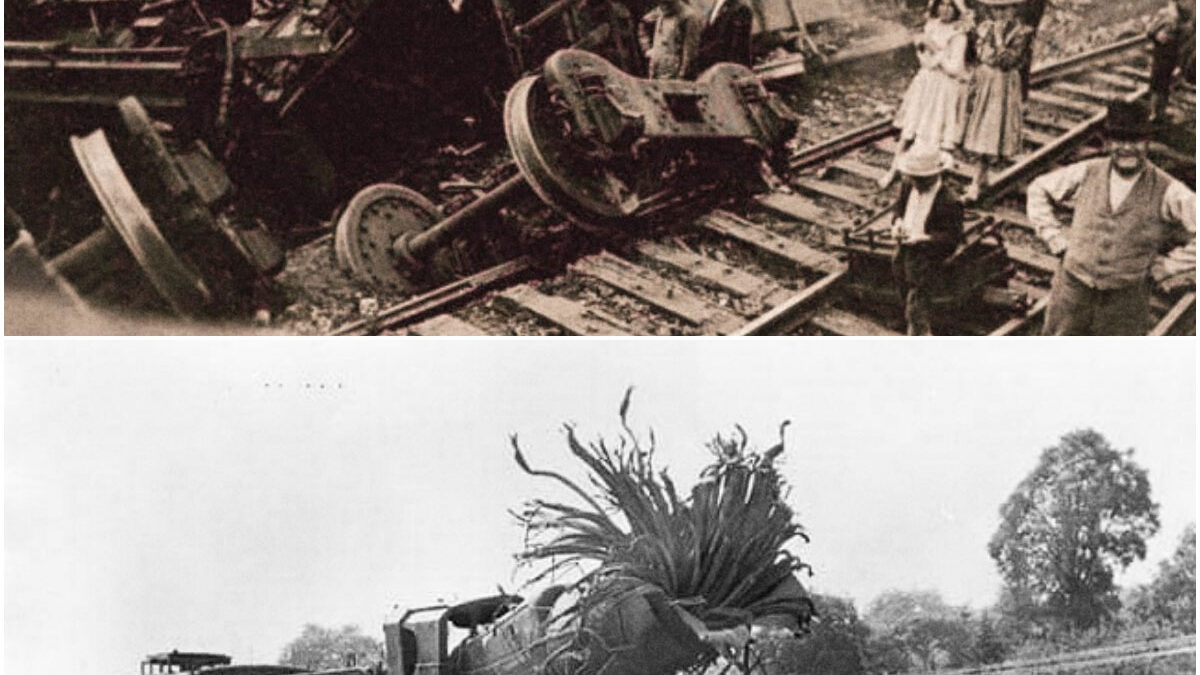
Why Steam Locomotives Exploded Like Rolling Bombs
There are disasters that arrive with warning.
And then there are the steam locomotive boiler explosions of early America where entire engines vanished in a single violent breath.
Crews were thrown hundreds of feet, towns shook, and investigators found little more than twisted metal scattered along the rails.

For decades, men rode inches from pressures that could kill without hesitation.
How did a machine built to move a nation become one of its most unpredictable killers?
And why did it take so long to stop?
If stories like this move you, consider subscribing to our channel to help preserve the forgotten stories of those who built our world.
To understand how these disasters unfolded across the 1860s through the 1930s, we begin with the moment the firebox failed.
The explosion struck without warning on a cold morning in the early 1870s when a locomotive barreled across a stretch of rural track at full speed.
Farmers working nearby later said the sound came from beneath the earth itself.
A deep concussion that shook fences and startled livestock for miles.
When rescuers reached the scene, they found almost nothing recognizable.
The boiler had torn apart in a shower of iron fragments.
The running gear lay twisted in the brush, and the cab had simply ceased to exist.
Only the rails, bent upward like ribbon, hinted at the force unleashed.
These disasters emerged during a time when steam power was still young and American railroads were expanding faster than the country could fully understand the risks.
Boilers carried pressures few engineers of the day had been trained to interpret.
Yet every mile demanded more speed, more heat, and more strain.
A man working inside the cab lived beside machinery operating near its limits, often relying on gauges that fogged, trembled, or lagged behind reality.
One moment of low water or uneven heat could turn the firebox into a crucible.
The danger was made worse by how close crews worked to the threat.
The engineer stood within arms reach of the boiler shell, and the firemen knelt directly beside the incandescent furnace that fed it.
They learned to read the mood of the machine by sound and vibration, trusting instinct where science had yet to catch up.
Some sensed trouble early, others never received a sign.
When investigators pieced through the wreckage, they noticed something unsettling in the shattered plates and ruptured seaMs. The violence never began at the moment of the blast.
It had been building quietly inside the boiler long before anyone could see it, hinting at a deeper problem waiting to be understood.
In the decades after the Civil War, American locomotives grew more powerful, and with them grew the invisible forces that made boiler explosions so devastating.
Inside every engine, water sat above a raging fire, slowly transforming into high pressure that strained against the iron shell.
Temperatures climbed unevenly.
Metal expanded and contracted, and riveted seams endured a constant cycle of stress.
Early metallurgy struggled to keep pace.
Iron plates contained impurities that weakened them from within, and no two boilers reacted to heat in quite the same way.
Most crews understood the general danger, but few grasped the physics at work beneath their boots.
Pressure inside a boiler did not rise in a steady line.
It surged and dropped in sudden pulses, reacting to the quality of the water, the intensity of the fire, and the slightest change in speed.
A locomotive climbing a grade could push its boiler closer to the edge than anyone realized.
If the water level dipped low enough to expose the crown sheet, the metal could overheat in minutes.
Investigators studying wrecks from the 1870s and 1880s often found evidence of this volatile behavior.
Cracks radiated from weak seaMs. Stabbolts snapped cleanly in two, and sections of plates showed discoloration from extreme heat.
These clues revealed a harsh truth.
That high pressure did not merely support the engine’s power.
It constantly tried to tear the machine apart.
Railroads demanded speed, but each increase in performance brought the boilers closer to conditions they were never fully designed to withstand.
Understanding this unstable environment became the key to preventing future disasters.
Yet, the men in the cab had to make sense of it in real time, while the locomotive thundered beneath them, leaving little margin for error.
Life inside the cab during the height of the steam era was a study in endurance.
The firemen worked inches from a furnace that glowed so brightly it washed the interior of the cab in shifting orange light.
Every shovel of coal altered the balance inside the boiler, raising pressure, feeding the fire, and changing the temperature of the metal that surrounded them.
The engineer, standing beside a narrow array of gauges, listened constantly for the faint taps and groans that signaled stress.
Most of what they relied on was not written in manuals.
It was learned by feel.
The cab was blisteringly hot in summer and bitterly cold in winter.
Cold dust coated every surface, and vibrations rattled through the soles of a man’s boots until his legs stiffened.
The work demanded concentration, even on the longest shifts, because a moment of distraction could mask the earlier signs of trouble.
Men spoke of the boiler as though it had a temperament, sometimes calm, sometimes restless, and always capable of turning on them without warning.
Experienced crews developed instincts that saved lives.
They could sense when the water glass read falsely or when the firebox demanded adjustment.
Yet, even these skills had limits.
In many recorded accidents from the late 19th and early 20th centuries, both the fireman and engineer reacted within seconds of noticing danger.
But the boiler had already crossed a threshold from which no human decision could reverse it.
Despite these hardships, thousands of men continued to work the rails because the job offered respect and steady pay.
What they faced each day was rarely visible to passengers peering from comfortable coaches, unaware of the risks hidden just ahead of them.
The contrast between public perception and the reality inside the cab grew sharper as locomotives grew larger, creating pressures that stretched the abilities of even the most seasoned crew.
As rail lines stretched across the country in the late 19th century, the demand for speed changed everything about how locomotives were operated.
Schedules grew tighter, freight loads grew heavier, and engines were pushed through long runs with little time for cooling or maintenance.
Towns relied on punctual trains for mail, livestock, and passengers, and railroad companies measured success by how quickly they could move goods across mountains, plains, and growing industrial regions.
Pressure inside the boilers rose with each demand for faster service, forcing the machinery into conditions that left little room for error.
Engineers understood that speed meant risk.
The faster a locomotive moved, the more heat was pulled across the boiler shell, creating temperature gradients that weakened metal from the inside.
High speed also increased vibration, shaking bolts loose and stressing seams that were already fragile.
If a boiler had a hidden defect or a section of plate thinner than intended, the force of rapid travel could magnify that weakness several times over.
Investigators studying fastmoving engine failures often found twisted fragments thrown astonishing distances, a sign of how much energy was released when pressure and velocity collided.
Railroads rarely slowed to address these issues.
Competition between companies pushed them to advertise the quickest routes, and engineers took pride in maintaining aggressive timets.
Delays invited reprimands, and every last minute had to be made up on the next stretch of track.
Even when a locomotive behaved unpredictably, crews often chose to press forward, trusting that they understood the limits of their machine.
Yet, the more miles they covered, the clearer it became that speed was not just a measure of performance.
It was a stress test applied daily to boilers already carrying enormous internal strain.
Beneath the rush of steel on rail, new weaknesses were forming that few men had the tools to recognize until it was too late.
During the closing decades of the 19th century, locomotive boilers revealed a flaw that no amount of experience from the cab could overcome.
The limits of the metal itself.
Many boilers were built from iron plates forged with inconsistent quality, containing pockets of slag or uneven thickness that weakened them long before they were riveted into place.
When exposed to constant heating and cooling, these imperfections grew into hidden fractures.
Stabbolts weakened slowly over years of service, and seams that looked solid from the outside began to separate under pressure.
Railroad shops did what they could with the tools of the era.
Workers tapped plates with hammers to listen for hollow tones, a rudimentary way of finding internal defects.
They patched weakened sections with reinforcing straps or replaced bolts one at a time, often without fully understanding how close the boiler was to failure.
Metallergy was still evolving, and engineers rarely had accurate records about the structure or condition of older engines.
Some locomotives had served across multiple railroads, leaving gaps in their maintenance histories and plenty of opportunities for unnoticed deterioration.
Accident reports from the 1890s often described plates that tore along old manufacturing lines, revealing coarse grains and impurities that had been present since the day the metal was formed.
These failures were not sudden acts of chance.
They were the final stages of processes that had been unfolding inside the boiler for years.
Even well-maintained engines carried these risks because the fundamental materials had limits that were not widely understood.
For crews, the reliability of the boiler depended not only on daily operation, but on decisions made long before the locomotive ever left the factory.
And as the 20th century approached, the need for stronger, safer construction became impossible to ignore, especially as locomotives continued to grow in size and power.
Among the most dangerous conditions inside a steam locomotive was the moment the water level slipped too low.
In the early 20th century, crews depended on narrow glass gauges that could cloud, stick, or fracture in cold weather.
If the water dropped beneath the crown sheet, the metal above the firebox began to overheat rapidly.
Within minutes, temperatures could climb far beyond what the plate could endure.
When cold water finally rushed across that overheated surface, the sudden change triggered an explosive flash of steam that tore through the boiler like a charge of dynamite.
Railroad companies instructed crews to maintain careful control over feed water, but real world conditions made that guidance difficult to follow.
Injectors clogged with sediment from hard water.
Pumps faltered on steep grades when locomotives leaned forward.
Vibrations caused gauges to misread levels, leaving firemen uncertain whether they were looking at a rising column of water or nothing more than foaming turbulence.
Even the best crews faced moments when Instinct had to bridge the gap between what the instrument said and what the boiler actually needed.
Accident investigations frequently revealed the unmistakable signs of low water failure.
Crown sheets bowed downward, staybolts sheared off, and firebox walls collapsed from the shock.
These findings showed how quickly overheated metal surrendered once structural integrity was lost.
Some crews attempted to recover by cutting the fire or adding water slowly, but by the time the danger became obvious, the conditions inside the boiler were often already past the point of control.
The tragedy of lowwater explosions was how preventable they appeared on the surface, yet how difficult they were to manage while a locomotive labored across miles of track.
And as the nation moved into harsher winter seasons, a new set of challenges emerged that pushed boilers even close to their limits.
Winter brought some of the most unpredictable dangers to steam locomotives in the early 20th century.
As temperatures dropped, feed water thickened with ice crystals that clogged injectors and narrowed pipes.
Frost formed on gauge glasses, blurring the line between safe and unsafe levels.
Even a seasoned fireman could misread the instruments when the cab was trembling over frozen rails.
Crews spoke of mornings when every adjustment felt delayed, as though the cold itself slowed the engine’s response.
In those conditions, pressure could swing erratically, rising sharply before anyone recognized the threat.
Freezing weather also created uneven stress across the boiler shell.
Plates contracted at different rates, opening hairline gaps along seams that had survived years of heavy service.
Rivets lost their grip as metal shrank around them, and staybolts that once held firm became brittle.
A locomotive working hard through snow or climbing a frosty grade placed enormous strain on its structure.
Investigators examining winter disasters often found that the blasts originated in spots where cold had weakened components that normally performed without issue in warmer months.
The crew’s environment made the work even more hazardous.
Steam condensed instantly against frigid air, filling the cab with swirling vapor that obscured vital readings.
Gloves stiffened, tools slipped, and the roar of the firebox offered little comfort against the constant chill.
These physical burdens made concentration harder and mistakes more likely, especially on long hauls where exhaustion set in.
Winter did not simply challenge locomotives.
It exposed every floor they carried.
Engines that survived thousands of miles in moderate weather could fail within minutes under severe cold.
For firemen and engineers, each run through snowbound territory became a test of endurance and anticipation because pressure behaved differently when the world around them froze to a standstill.
Speed shaped nearly every decision on America’s railroads during the early 20th century.
As locomotives grew stronger, companies pushed for faster schedules that tested both machinery and crew.
A hard running engine created intense draft through the firebox, feeding the flames and raising boiler pressure in ways that surprised even experienced engineers.
The faster the train moved, the more violently the boiler expanded and contracted.
This constant flexing stressed seams that were already aging, and it magnified vibrations that loosened rivets and fatigued bolts.
An engine operating at high velocity was powerful, but it also lived closer to the edge than anyone wanted to admit.
Timets left little room for caution.
A single delay, whether from weather, track conditions, or heavy freight, meant crews were expected to recover lost minutes on the next stretch of line.
Firemen shoveled harder, engines worked hotter, and boilers carried pressures near their maximum rating for long periods without relief.
Investigations into high-speed failures often found evidence that the machinery had been pushed beyond what the original builders intended.
In some cases, the final blast occurred only minutes after the engine had been urged faster to meet a deadline.
Passengers rarely understood the risks.
They felt only the smooth acceleration and the impressive power of the locomotive at full stride.
Inside the cab, the experience was very different.
The floor vibrated, gauges trembled, and the firebox roared with renewed intensity.
Engineers could feel the strain through the throttle and in the pitch of the steam exhaust.
Subtle warnings that the machine was being driven hard enough to test its limits.
Speed delivered progress and prestige, but it also created a burden that fell entirely on the engine structure.
And as the need for faster runs continued to rise, another threat emerged, one that grew not from motion, but from the quiet corners of the repair shops where these boilers were meant to be kept safe.
Behind the scenes of every steam locomotive was a repair shop struggling to keep pace with the demands of a nation in motion.
By the early 20th century, maintenance crews worked under enormous pressure, often with limited time and aging equipment.
Boilers arrived with sootpacked tubes, worn staybolts, and seams that had endured thousands of heating cycles.
Shop workers cleaned, patched, and reinforced what they could, but many engines were returned to service long before their internal weaknesses were properly understood.
The pace of American railroading left little opportunity for the careful inspection these machines truly required.
Some shops relied on patching techniques that masked deeper issues.
A thin plate might be overlaid with a reinforcing strap rather than replaced entirely.
Rivets judged good enough were left untouched.
Paper logs documented repairs inconsistently, and locomotives that changed ownership carried maintenance histories that were incomplete or lost altogether.
What looked sturdy on the outside could hide a network of microscopic cracks inside the metal, each one growing with every mile.
Investigators reviewing disaster sites often traced failures back to these overlooked weaknesses.
Stabbolts meant to anchor.
The firebox showed signs of stretching long before they snapped.
Areas that had been patched more than once revealed layers of repair that shifted under pressure.
In some cases, a boiler that appeared sound in the shop became dangerously unstable once exposed to the full heat of the firebox.
Maintenance practices were improving, but the scale of the rail system made it difficult for any shop to guarantee perfection.
For the men in the cab, the condition of the boiler was a matter of trust, built on the hope that each repair had held firm.
Yet, as locomotives continued to evolve and railways demanded even greater power, a new era of oversight began to take shape, one that would challenge long-standing habits across the industry.
As the 20th century progressed, pressure mounted for stronger oversight of locomotive boilers.
For years, railroads had relied on their own inspectors, men who worked hard, but often lacked standardized training or the authority to remove engines from service.
Public concern grew as explosions continued to claim lives, particularly in heavily traveled regions where accidents disrupted entire communities.
With each disaster reported in local papers, calls for federal involvement gained volume.
By the 1910s, lawmakers began shaping rules that would force railroads to adopt consistent safety practices across state lines.
New regulations required more frequent inspections, better recordkeeping, and strict monitoring of boiler pressure limits.
Inspectors gained the legal right to condemn an engine they deemed unsafe, a power that frustrated some company officials, but likely prevented many accidents.
Detailed logs tracked repairs, and staybolts were numbered so workers could identify patterns of recurring stress.
These measures helped reduce the frequency of catastrophic failures, though they could not eliminate them entirely.
Even the best oversight could not account for every hidden floor inside an aging boiler.
Railroad executives resisted the changes at first.
Inspections slowed operations and newly enforced standards meant some locomotives had to be sidelined for extensive repairs.
But the trade-off became difficult to dispute.
Engines cleared under the revised rules operated more reliably and firemen and engineers gained renewed confidence in their equipment.
Safety began moving from a patchwork of local policies to a structured system that reflected the scale of the expanding rail network.
Yet oversight could only reach so far.
Regulations addressed mechanical weaknesses, but they could not soften the human losses that followed each explosion.
Families, towns, and whole communities felt the impact long after the wreckage was cleared, revealing a side of these disasters that statistics alone could never describe.
When a boiler explosion struck a locomotive in the early 20th century, the damage did not end at the tracks.
Entire communities felt the loss.
Engineers were often wellknown in the towns where they lived, respected for their skill and trusted with the lives of passengers carried through every season.
Firemen were frequently young men, just beginning their careers, earning modest wages, but holding a position that brought pride to their families.
When a blast claimed a crew, the void they left behind was felt in kitchens, churches, and quiet neighborhoods far from the roar of the rails.
Newspapers described these events with a formality that softened nothing.
Articles listed the names of the dead, their ages, their surviving families, and the grim details of the wreckage.
Some towns held public funerals when multiple men were lost at once.
In places where railroading was a major employer, the emotional shock rippled out to workers who knew they could just as easily have been assigned to the ill- fated engine.
Widows funds and railroad benevolent societies offered some help, but they could not replace a provider at a time when a single income often supported an entire household.
Children grew up remembering the day their father did not return home, the day neighbors gathered at the door with quiet condolences.
These personal stories rarely entered official reports, yet they shaped how later generations viewed the risks of the steam era.
Behind every accident number stood a family adjusting to life without someone who had left for work, believing the routine would continue unchanged.
This human cost revealed an uncomfortable truth that progress on the rails was built not only on steel and steam, but on the sacrifices of those who operated the engines.
And as locomotives increased in size and strength during the coming decades, the stakes for every crew rose even higher.
By the early decades of the 20th century, American locomotives were growing into massive machines unlike anything crews had handled in previous generations.
Larger boilers, higher pressures, and longer fireboxes meant more power, but they also introduced new vulnerabilities.
These engines demanded precise firing, steady water management, and constant attention to the expanding surfaces that held back thousands of pounds of internal force.
A minor flaw that might have remained manageable on a smaller engine could become catastrophic on these newer giants.
With greater size came greater consequences when something went wrong.
Builders aimed to strengthen construction by using improved steel plates and more reliable riveting techniques.
Yet the sheer scale of the boilers presented challenges.
Larger surfaces expanded unevenly and extended staybolt grids carried stresses that earlier designs never encountered.
Some engines developed hidden distortions after only a few years of service.
Changes that were nearly impossible to detect during routine inspections.
Investigators who studied major explosions from the 1910s and 1920s often found that the initial failure began in an overstress section that had quietly weakened long before the final blast.
Operating these larger engines required crews to adjust their instincts.
Boiler response times changed with size.
Water surged differently when the locomotive climbed a grade or break suddenly.
Engineers who had mastered smaller locomotives sometimes struggled to anticipate the behavior of the new machines.
Firemen learned that even small mistakes in feeding the fire or adjusting injectors had amplified effects inside the enlarged boiler shell.
As the nation pushed for faster trains and more powerful locomotives, the margin for misjudgment narrowed.
These engines were triumphs of engineering, but they were also unforgiving to those who worked them.
And even though advancements reduced some risks, the explosive potential inside every boiler remained, setting the stage for the final troubled years of the steam era.
By the 1930s, steam locomotives still powered much of America.
But the age of catastrophic boiler explosions was slowly drawing to a close.
Improvements in metallurgy, inspection protocols, and crew training had begun to reshape daily operations.
Newer boilers used stronger steel and standardized testing reduced the number of engines running with hidden flaws.
Yet accidents did not disappear entirely.
Even with better construction, metal fatigue continued to accumulate over years of hard service, especially in locomotives that operated on demanding mountain routes or pulled heavy freight across the industrial heartland.
Investigators from the period noted how aging boilers developed stresses that eluded traditional inspection methods.
Plates that had endured decades of expansion cycles grew brittle at their edges.
Stabbolts weakened internally while appearing intact from the outside.
Some locomotives carried the scars of hurried wartime production.
Their components built rapidly during national emergencies and later placed into routine service without full evaluation.
When these engines failed, the result could still be devastating, though less frequent than in earlier decades.
Crews felt the shift as well.
Younger firemen entered service with better instruction, learning the science behind water levels, temperature gradients, and pressure curves.
Engineers gained more reliable gauges and clearer safety thresholds.
Even so, the responsibility remained immense.
A lapse in judgment or a sudden mechanical change could still threaten the entire engine.
The steam era was safer, but it was never truly safe.
For many, these final years carried a sense of transition.
Diesel locomotives were beginning to appear on select lines, offering power without the volatility of a pressurized boiler.
Yet, steam remained the dominant force, a familiar companion on countless routes.
And while mechanical risks were improving, another question lingered, one that involved not the engines themselves, but how the public perceived the dangers that surrounded them.
To most passengers of the early 20th century, the steam locomotive appeared almost indestructible.
They saw polished brass, confident crews, and engines that thundered through stations with a sense of purpose and control.
The public rarely considered what happened inside the boiler or how close the machinery operated to its limits.
Railroads cultivated this perception.
They advertised comfort, speed, and reliability, and newspapers relied heavily on railroad revenue, which meant stories about explosions were often treated with caution or buried beneath more favorable headlines.
Tragedies were reported, but rarely with the detail that conveyed how dangerous the work truly was.
For many travelers, the smooth ride masked the reality just ahead of their coach.
A slight tremor in the rails or a drifting plume of steam seemed ordinary, not signs of immense pressure held in balance by glowing metal.
Even when towns witnessed the aftermath of an explosion, the broader understanding of the danger faded quickly, the nation was moving forward, and steam was the visible engine of that progress.
Acknowledging its risks challenged a narrative that businesses and communities depended upon.
Crews often kept their concerns private.
Engineers spoke among themselves about boilers that behaved unpredictably or gauges that seemed unreliable.
But such conversations rarely reached the public.
Firemen who sensed instability inside the firebox might mention it only to co-workers, aware that a reputation for worry could cost them opportunities.
The culture of the time expected resilience even when the stakes were immense.
This divide between public perception and mechanical truth created an illusion of safety that lingered for decades.
Passengers saw confidence, power, and precision.
While those in the cab lived with the knowledge that one unseen failure could undo everything.
And as the steam era began yielding to new technologies, a final question remained.
One that centered on the legacy of the men who had carried these risks mile after mile.
The history of steam railroading cannot be told without acknowledging the men who worked closest to its dangers.
Engineers and firemen formed a partnership built on trust, each relying on the other to recognize the subtle shifts in heat, sound, and rhythm that signaled trouble inside the boiler.
Their days began before sunrise when engines still sat cold and quiet and ended long after the wheels stopped turning.
Many came from families with generations of railroad service.
Carrying forward a craft that demanded both skill and courage.
These men accepted risks that were rarely discussed outside railroad circles.
They learned to steady themselves against the cab’s vibration, to read the color of the fire and to judge water levels in conditions that changed by the mile.
Younger firemen often trained under veterans who taught them habits that could not be found in manuals.
How to listen for a muffled hiss in the tubes, how to sense uneven draft through the firebox, or how to react when the boiler felt unsettled beneath their feet.
Experience became its own form of protection, though never a guarantee.
Communities recognized their importance.
Engineers were greeted by name in small towns, and firemen, often not much older than the children waving at passing trains, held a place of pride among local workers.
Yet beneath that respect lay the quiet acknowledgement that each journey carried uncertainty.
When accidents occurred, families faced sudden loss, and fellow railroaders stepped forward to support them, bound by the shared understanding of their profession’s weight.
As the steam era advanced, these men became symbols of a world powered by human judgment as much as machinery.
Their roles would shift as new technologies emerged, raising a question that would shape the future of American railroading.
How would the industry reinvent itself when the era of fire and steam finally gave way to something entirely new?








