Why Early Steam Boilers Were Guaranteed to Explode | Disaster Documentary
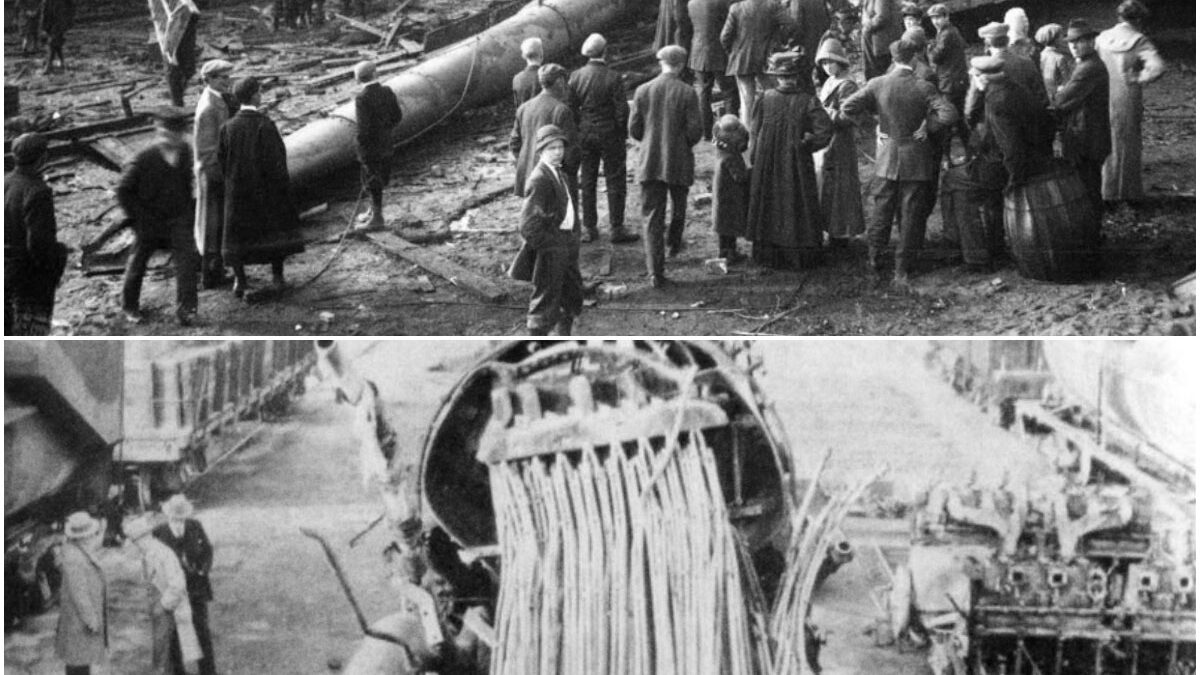
Why Early Steam Boilers Were Guaranteed to Explode | Disaster Documentary
Boiler explosions were not small industrial mishaps.
They were total structural failures that tore factories apart in seconds, sending fire, steam, and steel fragments through entire work floors.
Across America, these disasters erased crews without warning, even in plants that believed they were safe.
Men stood near these boilers every day, trusting systems that were already failing.
And as the nation industrialized, the blast only grew stronger and more frequent.

What forced these machines to keep exploding despite every warning?
Before we begin, if stories like this matter to you, consider subscribing to help preserve the forgotten tragedies that shaped America’s industrial past.
Now, let us step inside the first moments when a single failure turned an ordinary workday into a catastrophe.
The morning of the 1905 Grover Shoe Factory boiler explosion began like any other with crews moving through the brick building as coal fires warmed the old steel shell in the basement.
Nothing seemed unusual.
The machinery thumped with its usual rhythm and the air carried the familiar scent of leather and glue.
Yet deep inside the boiler, a weakness that inspectors had warned about years earlier was spreading through the metal, turning every rise in pressure into a loaded question about how long the vessel would hold.
Workers on the lower floors felt the heat building, but most had grown used to it.
Heavy industry demanded endurance, and few men expected comfort.
What they did expect was time.
Time to react if something went wrong.
Time to reach an exit.
Time to hear a change in the heartbeat of the machine that would tell them danger was close.
But in factories like this, time often disappeared long before the workers realized it.
The boiler had been patched more than once.
Each repair buying only a little more life for equipment that was already beyond its intended service years.
The pressure gauge showed numbers that the operators recognized, yet the gauge could not reveal what corrosion was doing to the shell from within.
Small leaks had been seen around the seams earlier in the winter, and though the repairs held for a while, the structure beneath them was weakening with every heating cycle.
Just after noon, the pressure rose through a narrow band where the metal had the least margin.
The crew kept feeding coal, unaware that the wall of the boiler was already stretching beyond its ability to recover.
The vessel began to deform, a change far too subtle for the human eye.
The steel had reached a critical point where its strength collapsed, not gradually, but all at once.
In that fraction of a second, the entire equation of heat, pressure, and fatigue tipped in a single direction.
The first sign was a violent shudder that ran across the building, surprising workers on every floor.
Some felt the floor roll as if the earth had shifted beneath them.
Others heard a cracking sound like giant timbers snapping.
The final rupture came instantly after.
The boiler tore open in a white flash that filled the basement, throwing bricks, iron, and boiling water outward with a force that lifted parts of the structure off their foundations.
The blast ripped through the lower levels and into the factory above.
Floors collapsed under the surge of pressure.
Walls burst outward and sent debris across the yard and into the nearby street.
Men on the ground floor vanished beneath falling beams while others were thrown clear of the building entirely.
Those who survived the initial impact described the world going silent for a moment before the noise caught up with them.
When the steam cleared, the damage was absolute.
Entire sections of the plant had been erased in a single instant.
Crews that had started the shift together were now separated by ruin.
Some alive, many not.
The Grover event showed the country that boilers were not just tools of progress.
They were powerful vessels waiting for the smallest failure to unleash their stored energy in the most destructive way imaginable.
Long before a boiler ever exploded, the process that would determine its fate began in the mills where its steel was forged.
In the late 19th century, American metallurgy was advancing quickly.
But the materials used for high pressure vessels often lagged behind the ambitions of the industries they served.
Steel plates varied in quality from batch to batch with impurities buried inside the metal that could remain invisible for years.
These flaws weakened the structure in ways that no operator could detect from the outside.
Yet, they shaped the limits of every boiler placed into service.
Many factories relied on riveted construction, a method that joined steel plates with rows of red hot rivets hammered into place.
It was strong enough for moderate pressure, but the seams carried vulnerabilities that grew worse over time.
Heat cycling the plates to expand and contract repeatedly, loosening rivets and creating hairline gaps along the joints.
These seams became points where pressure concentrated, pushing against the vulnerable edges with each firing.
Over thousands of cycles, the metal suffered quietly, while the workers above trusted the boiler to behave as expected.
The steel itself was also prone to internal defects.
Slag inclusions created pockets of weakness that spread under stress, leading to microscopic cracks that lengthened with every heating.
Some plates were rolled unevenly, producing thin spots that bore a greater load than surrounding areas.
These irregularities were rarely noticed during construction because early inspection standards focused on external appearance rather than internal composition.
As a result, many boilers entered service with hidden faults that no one fully understood.
Operators often sensed when something felt off, even if they could not articulate the cause.
They tapped the plates with small hammers to listen for changes in tone.
A clear ring suggested stability, while a dull response hinted at trouble within the steel.
These informal checks were born from necessity because formal testing methods were limited and not always enforced.
Men depended on experience to fill the gaps left by inconsistent manufacturing practices.
But experience could not reveal what their tools were never built to survive.
As factories grew larger, boilers were pushed to produce higher pressures than earlier models.
Many of these vessels were never designed for such demands.
Yet they remained in service long past their intended lifespan.
Steel that seemed dependable in its early years weakened as corrosion crept through seams and settled into areas where moisture and sediment gathered.
The combination of thinning walls and rising pressure created a dangerous imbalance between strength and stress.
Eventually, the boiler approached a point where even a normal workday brought it uncomfortably close to failure.
Inspectors occasionally warned companies that their equipment was aging beyond safe standards, but enforcement was sporadic.
Manufacturers wanted to avoid costly rebuilds, and plant owners often believed their boilers were stronger than they truly were.
This confidence rested on an assumption that steel behaved predictably.
Yet the metallurgy of the era was anything but predictable.
Beneath the surface, the metal was changing, becoming less resilient and more brittle with each cycle of heat and pressure.
By the time a defect reached a critical size, the failure happened too quickly for anyone to intervene.
The steel no longer bent or stretched.
It fractured outright, releasing pressure with explosive force.
These fractures revealed the truth that America learned again and again.
The strength of a boiler did not depend on how it looked from the outside.
It depended on the invisible history of its steel, a history that followed every vessel into the factory floor and dictated how quickly routine work could turn into disaster.
The story of why boilers kept exploding cannot be told without understanding the unforgiving physics that governed every pressure vessel in 19th century America.
Steam offered extraordinary power, and factories relied on it to drive machinery, heat buildings, and expand production.
But the same force that made steam useful also made it lethal.
When pressure rose beyond the limits of the steel that held it, the stored energy did not leak out in gentle warnings.
It erupted all at once, flattening anything in its path.
No event demonstrated this truth more clearly than the 1865 Sultana boiler explosion.
A catastrophe that unfolded on the Mississippi River as the overloaded steamboat pushed north against the current.
The boilers on that vessel had been strained by repeated use and sediment had built up inside the water spaces where circulation was already poor.
As the crew added more coal to maintain speed, the water line dipped and exposed the upper sheets of the boiler to direct heat.
These sheets were not meant to run dry and the metal began to soften under the rising temperature.
Inside the boiler, steam pressure climbed faster than the crew realized.
Water boiled violently against the overheated surfaces, expanding into pockets of pressure that surge through the vessel.
The safety systems intended to stabilize these swings were inadequate for the load the boat carried.
The imbalance between heat input and water coverage created a condition known to operators as a crown sheet failure, a type of break that occurred when the hottest area of the boiler lost structural support.
When the sheet gave way, the superheated water flashed into steam with explosive force.
The result was not a simple rupture, but an instantaneous release of pressure that tore open the vessel and hurled debris across the deck.
Hundreds of men near the boilers had no chance to react.
The shock threw passengers into the river and ignited fires that spread along the wooden structure.
The Sultana event stands as one of the deadliest pressure failures in American history.
A grim reminder of what steam could do when its boundaries were crossed.
Factories across the country face similar risks because the physics that destroyed that vessel applied to every boiler built in that era.
If water levels slipped too low, the metal overheated.
If sediment accumulated, circulation faltered.
If pressure rose faster than the safety valves could vent it, failure became inevitable.
Operators understood these principles well, but their success depended on stable machinery and consistent maintenance.
In many workplaces, both were unreliable.
Even a small fluctuation could set off a chain reaction.
A momentary distraction, a faulty gauge or a draft that altered the firebox temperature could push the boiler past its threshold.
Steam did not allow time for second chances.
Once the conditions for failure were in place, the transition from normal operation to catastrophe could occur in seconds.
This relentless physics shaped the dangers that workers faced every day.
The boilers were powerful tools, but they operated within narrow margins that demanded constant attention.
When those margins were crossed, the outcome was swift and absolute.
The pattern repeated itself in mills, factories, and ships throughout the 19th and early 20th centuries, showing again and again that the laws of pressure respected no assumptions and offered no mercy.
The men who operated industrial boilers in the decades around the turn of the 20th century carried a burden that few outside the furnace rooms understood.
Their work placed them closer to danger than anyone else in the factory.
Yet, their skill kept production steady and entire crews safe.
They stood beside equipment that demanded precision from the moment the first coal was shoveled into the firebox until the last ember cooled at the end of a shift.
The job required constant vigilance because a single oversight could create a chain of conditions that no one could reverse once they began.
Boiler rooms were harsh enclosed spaces where temperatures rose well beyond what most workers elsewhere in the building experienced.
The air shimmerred near the fittings and valves, and the steel plates radiated heat that gathered in heavy layers around the operators.
These men learned to read subtle changes in the environment, such as the faint hiss of a joint beginning to seep, or the altered rhythm of a pump under strain.
Their senses became tools as valuable as any gauge, allowing them to detect problems before they spread.
Many operators relied on daily routines that had been passed down through generations of workers.
They inspected the feed water, tested the blowown lines, and listened closely to the boiler shell as it heated.
A steady tone suggested stability, while a wavering one hinted at pockets of stress developing inside.
These habits were not formal procedures, but practical knowledge shaped by long hours in crowded engine rooMs. Men gained reputations based on how calmly they handled rising pressure, or how quickly they reacted when something felt wrong.
Their responsibilities increased as industrial demand accelerated.
Factories expanded production and boilers were asked to deliver more sustained heat and power.
Operators monitored every valve with careful attention, knowing that prolonged strain could reveal weaknesses in the equipment.
They adjusted dampers, watched for fluctuations in fuel quality, and track the movement of steam through lines that fed entire sections of the plant.
Their job was to balance heat and pressure while maintaining water levels within a narrow margin of safety.
Despite their skill, operators worked within systems that often made their task more difficult than it needed to be.
Schedules left little time for thorough maintenance, and older boilers remained in service due to cost pressures.
In some workplaces, repairs were delayed until production slowed, forcing operators to manage equipment that they knew was approaching the limits of reliability.
They carried this knowledge silently because expressing concern did not always result in action.
The mental strain of the job rarely appeared in official records, yet it shaped the daily lives of these men.
They understood that a boiler did not announce failure gradually.
It changed character in subtle ways that only experienced hands could detect.
A slight flicker in the flame, a faint tightening in the steel, or a minimal rise in temperature could signal a shift in the internal balance.
The operators read these clues with a seriousness informed by years of hard experience.
When a boiler failed, survivors often remembered the moments leading up to the event with striking clarity.
They described a sense that something had shifted, even if they could not identify the exact cause.
These recollections underscored the vital role operators played.
Their instincts were shaped by thousands of hours near the machinery, and those instincts saved lives more often than factory owners realized.
The work was demanding, isolating, and fraught with uncertainty.
But it formed the front line of safety in an age when boiler performance could determine the fate of an entire shift.
Factories in the early 20th century produced detailed maintenance logs, but these records often revealed a quiet pattern of warnings that went unanswered.
The leadup to the 1905 Grover event demonstrated how danger accumulated long before the final failure.
Inspectors noted leaking seams, thinning plates, and irregular pressure readings in the years prior.
Yet repairs were carried out only to the extent that production could continue.
These logs were not alarms that demanded immediate action, but reminders that equipment already stretched beyond its lifespan was being asked to deliver more than it could safely provide.
Supervisors frequently operated under intense pressure to maintain output.
Orders had to be filled, deadlines met, and machinery kept in motion.
In this environment, decisions about repairs were influenced not only by safety concerns, but also by economic pressures.
When a boiler showed signs of fatigue, managers weighed the cost of downtime against the perceived likelihood of a catastrophic failure.
Too often the possibility of disaster felt distant, especially when the equipment had been patched successfully in the past.
Maintenance teams did what they could with the time they were given.
They tightened fittings, reinforced seams, and adjusted valves to correct leaks or inconsistent pressure.
But these measures addressed the symptoms rather than the underlying structural issues.
Boilers that had served for decades were expected to keep performing despite metal fatigue, internal corrosion, and outdated designs.
Workers understood that a patch seam did not make the vessel new again.
It simply postponed the need for more extensive intervention.
The problem was compounded by the culture of normalizing risk.
When small issues appeared regularly, they became part of the everyday landscape.
A seam that seeped only during peak pressure was dismissed as manageable.
A gauge that fluctuated slightly was seen as temperamental rather than failing.
This gradual acceptance created a false sense of stability.
The consistent presence of minor faults allowed people to believe that the boiler would continue to withstand the load even as its structural integrity diminished.
In many factories, communication between operators and management was limited.
Operators reported irregularities, but these concerns did not always reach decision makers with the urgency the situation deserved.
Some warnings remained informal, shared only between workers during shifts.
Others made it into written records, but were overshadowed by production priorities.
The chain of responsibility was fragmented, leaving no single person fully accountable for addressing long-standing dangers.
The consequences of ignoring these warnings became tragically clear when the Grover boiler failed.
Investigators later found evidence that the vessel had shown signs of distress for years, including leaking joints and repairs that masked deeper probleMs. The factory had come to rely on temporary solutions, believing that as long as the equipment continued to function, it remained fundamentally sound.
This assumption proved catastrophic.
The overlooked warnings offered a lesson repeated across American industry.
Catastrophic failures rarely appeared without precedent.
The signs existed, recorded in maintenance notes observed by operators and visible in the aging metal.
What endangered workers was not only the mechanical condition of the boiler, but the belief that long-standing issues could be managed indefinitely.
Factories depended on machinery that required absolute reliability.
Yet too many decisions prioritized production over caution.
The result was a pattern of preventable disasters that echoed through countless workplaces during the industrial age.
Relief valves were the final safeguard between a stable boiler and a runaway pressure event.
Yet, these mechanisms failed far more often than records first suggested.
Their purpose was simple.
When internal pressure rose beyond safe limits, the valve opened to release steam and restore balance.
But in many early 20th century facilities, these devices were neglected, fouled with debris, or adjusted incorrectly.
The 1906 Point Breeze gas works explosion showed how a single malfunctioning valve could transform an already strained system into an uncontrollable force.
The relief valve at Point Breeze sat exposed to soot, moisture, and byproducts from continuous fuel production.
Over time, residue accumulated along the moving parts, slowing their response.
Operators relied on visual checks, tapping the housing, or clearing surface buildup.
But these efforts could not remove the corrosion developing inside.
When pressure climbed rapidly during peak operation, the valve did not lift with the speed or volume required.
The boiler continued to climb into a dangerous range where even minor instability could turn into rapid failure.
Investigators later found that the valve had likely been sticking for some time.
In many plants, slow responding valves were common, the result of long hours of operation without thorough disassembly or recalibration.
Workers often believed they could judge a valve’s condition by the sound it made when tested.
A sharp hiss signaled movement, while a muted response suggested resistance.
Yet, these tests could not replicate the extreme conditions present during real surges in pressure.
Even a valve that passed casual inspection might fail under the full weight of industrial demand.
Some facilities made matters worse by adjusting valves upward to prevent them from releasing steam during heavy runs.
Managers viewed frequent venting as a sign of inefficiency, not as a warning that the boiler was approaching its limits.
By increasing the threshold, they allowed the vessel to operate closer to its structural boundary, narrowing the margin for error.
This practice spared production losses, but placed crews at significant risk.
When a valve finally lifted, it often did so too late to prevent instability.
At Point Breeze, the combination of restricted movement and rising pressure created a buildup that the aging boiler could not withstand.
As the internal forces exceeded the vessel’s capacity, the shell distorted.
The metal, already weakened by years of expansion and contraction, gave way suddenly.
The rupture sent a shock through the plant, scattering debris across the yard and injuring workers who had no warning beyond a brief vibration moments before the failure.
The aftermath revealed how essential a functioning relief valve was to industrial safety.
Without it, the boiler behaved like a closed container with no outlet for accumulating pressure.
Even well-maintained equipment would struggle under such conditions.
Experience meant little when the protective mechanisms were compromised.
Operators could manage fuel, observe gauges, and monitor water levels, but they could not override a mechanical failure at the heart of the system.
The lesson echoed across the country.
Relief valves were not optional accessories.
They were the primary defense against the most dangerous scenario a boiler could face.
When they failed, the vessel moved rapidly toward collapse, and workers bore the consequences.
The Point Breeze event underscored a truth that industry slowly came to accept.
No amount of careful operation could compensate for a compromised safety device.
Once pressure surpassed the limits nature allowed, the outcome became swift and irreversible.
Factories in the late 19th and early 20th centuries were rarely designed with boiler failures in mind.
Yet the way these buildings were constructed often shaped the scale of the destruction that followed an internal rupture.
Mills, foundaries, and refineries were built for output, not for containing the violent forces that a compromised pressure vessel could unleash.
As a result, when a boiler let go, the structure surrounding it frequently amplified the blast instead of absorbing it, turning the entire facility into a conduit for shock and flying debris.
Many industrial buildings relied on thick brick walls that supported heavy machinery and multiple floors of workrooMs. These walls were strong under vertical load, but they behaved unpredictably when subjected to sudden internal pressure.
Instead of cracking slowly, they could fracture outward in large slabs that became deadly projectiles.
Workers near exterior walls often faced the full force of these failures, not only from the steam and metal, but from collapsing masonry that spread far beyond the boiler’s immediate footprint.
Inside the buildings, the layout of machinery created fixed pathways through which explosive force could travel.
Long corridors, open production floors, and stacked work areas funneled pressure upward and outward.
Heavy equipment stood on cast iron or timber supports that offered little resistance when the shock wave moved through them.
When one floor gave way, the collapse could cascade into the levels above, pulling workers and machinery into the void created by the ruptured vessel.
Roof structures also played an unexpected role.
Many factories used trust frameworks designed to carry weight downward into the walls.
When a boiler burst, the pressure often rose vertically first, striking the roof and forcing it downward rather than allowing a clean release upward.
This inverted load caused structural joints to fail in rapid succession.
A roof that might have vented heat or fire in a different type of accident instead acted as a barrier that trapped the force inside, intensifying the destruction on the floors below.
The placement of boilers contributed to the problem.
Most were located in basement or central rooms where heat and steam could be distributed efficiently throughout the plant.
These confined spaces limited escape routes for both vapor and workers.
When the boiler failed, the surrounding walls and low ceilings turned the area into a chamber where pressure built rapidly before bursting outward.
Men working nearby had little time to react, and rescue crews found these lower levels particularly difficult to reach due to fallen debris.
In some facilities, adjoining buildings worsened the impact.
Connected workshops, storage rooms, and engine houses transmitted vibrations and fractures across shared foundations.
A failure in one section could compromise others, spreading the event farther than anyone anticipated.
Even structures that remained, standing afterward often showed cracks and distortions that revealed how widely the shock had traveled.
The cumulative effect of these design features meant that a boiler explosion rarely remained a localized mechanical failure.
It became a structural disaster that reshaped the entire building within seconds.
Investigators who walked the ruins observed patterns of destruction that spoke not only to the violence of the rupture, but to the way the factory itself had contributed to the scale of the event.
The architecture of industry built for productivity and durability offered little protection against forces that exceeded anything its designers had imagined.
Survivors of major boiler explosions often carried memories that never faded because the transition from routine labor to devastation happened too quickly for the mind to process.
Their recollections formed some of the most gripping accounts of industrial life, offering details that official reports could never capture.
In the aftermath of the Grover disaster, the Sultana tragedy, and the PJ Ritter explosion, men who lived through the chaos described moments when the familiar world of their workplace dissolved around them, replaced by a confusion of heat, silence, and falling debris.
Many spoke first of the sensation that preceded the blast.
It was rarely a loud warning, but a vibration that ran beneath their feet, or a sudden stillness in the machinery.
Some felt a pressure in the air as if something unseen had tightened around the room.
Others noticed the light shift when dust on rafters stirred without any movement below.
These details seemed insignificant in ordinary circumstances.
Yet in hindsight, they mark the final seconds before the rupture changed everything.
When the explosion struck, survivors described a flash that erased the boundaries of the space around them.
The brightness came without form, overwhelming the eye before sound arrived.
Heat followed in a rush that felt both instantaneous and disorienting, pushing men back or throwing them across the floor.
Windows shattered into fine mist, and heavy tools that had never moved on their own became airborne.
The force acted unevenly, sparing one man while sweeping another only a few steps away into a collapsing wall.
The noise came next, though many recalled it as something felt rather than heard.
It pressed against the chest and skull, drowning out every other sense.
For some, the sound cut out entirely after the first impact, leaving a ringing quiet that made it difficult to understand what had happened.
In that silence, men tried to stand, only to realize that the room no longer existed in any recognizable form.
Familiar stations were buried, stairways gone, and daylight filtering through gaps where solid structure once stood.
Survival often depended on where a worker happened to be standing.
Those shielded by heavy equipment sometimes found themselves protected from flying debris.
Others escaped harm because the direction of the blast carried force away from them.
The randomness of these outcomes haunted many who returned to the site afterward.
They walked the debris fields, recognizing fragments of machinery or clothing that belonged to men they had worked beside for years.
Rescue efforts revealed another dimension of the survivors experience.
Some crawled through narrow pockets beneath collapsed beams, following faint voices in the dust.
Others climbed over hot rubble to reach fresh air, emerging with burns and injuries that would shape the rest of their lives.
The scenes they witnessed during these first minutes were stark reminders of how quickly an entire shift could disappear.
Small items such as lunch pales or gloves lay scattered among broken brick and twisted iron, evidence of how ordinary the day had been before the failure.
Survivors carried these memories long after the factories were rebuilt or closed.
Their accounts appeared in inquiries, newspaper interviews, and local histories, providing insight into the human cost of industrial progress.
What they described was not simply mechanical failure, but the abrupt collapse of a world they trusted.
Their stories preserve the emotional truth of these events, reminding future generations that behind every technical explanation stood men who endured the shock of watching their workplace turn into a field of ruin in a single moment.
By the early 20th century, the scale of boiler disasters had become impossible for the nation to ignore.
Factories, ships, and municipal plants suffered failures that killed workers in numbers too high for industry to dismiss as isolated accidents.
The pattern was clear to engineers who studied the wreckage.
Boilers were being pushed to operate under pressures they were never designed to endure, and oversight varied so widely from region to region that many facilities followed no meaningful standards at all.
The need for uniform rules became urgent, not as a matter of innovation, but of survival.
The creation of the ASME boiler and pressure vessel code in 1915 marked a turning point in American industrial history.
It was not a sudden shift, but the result of years of advocacy by engineers who had examined countless ruptures and recognized recurring weaknesses.
They argued that strength could not be assumed, that every vessel required testing far beyond what manufacturers typically performed.
Their efforts laid the foundation for a structured approach to design and inspection that had not existed before.
The code introduced requirements for materials, construction, and testing that forced a higher level of accountability across the industry.
Plates had to meet specific strength criteria.
Riveted seams were subject to precise spacing, and welding techniques were scrutinized to ensure uniformity.
Hydrostatic testing became a standard method to verify the integrity of a completed boiler by subjecting it to pressures exceeding normal operation.
This test revealed weaknesses before the vessel reached the factory floor, protecting workers from the failures that had once gone unnoticed until it was too late.
Enforcement, however, was uneven in the early years.
Adoption depended on state legislation, and not all regions embraced the new regulations immediately.
Some industries resisted due to the cost of compliance, arguing that their existing equipment had proven reliable.
Others lack the inspectors needed to carry out regular evaluations.
As a result, older boilers continued operating under outdated assumptions, maintaining the risks that had long threatened workers.
Progress came gradually, shaped by local tragedies that reinforced the importance of adhering to the new standards.
Despite these challenges, the code established a framework that improved safety with each revision.
Engineers documented new findings incorporated lessons from failures and refined requirements to address emerging issues.
The evolution of welding practices, advancements in plate manufacturing and improved valve designs all found their way into updated additions.
Over time, the industry shifted from reacting to disasters to preventing them through consistent engineering principles.
The impact of these changes became visible in the declining number of catastrophic failures.
While accidents still occurred, they grew less frequent and less severe when the code was followed.
Plants that implemented the standards benefited from equipment that behaved predictably under pressure, allowing operators to perform their duties with greater confidence.
The shift did not erase the dangers of steam, but it offered a path toward managing them responsibly.
The creation of the ASME code did more than improve machinery.
It represented an acknowledgement that the cost of industrial progress could not be measured.
Solely an output.
Each rule carried the weight of lives lost in earlier failures, turning hard lessons into safeguards for future generations.
The code stood as a reminder that industry had the ability and the obligation to learn from its past.
As the 20th century advanced, America began to believe that it had finally brought boiler explosions under control.
The improvements in design, inspection, and oversight created an expectation that the days of sudden industrial catastrophe were fading.
Yet, the underlying risks never disappeared entirely.
Even with stronger materials and stricter standards, the potential for failure remained whenever equipment aged, maintenance slipped, or assumptions replaced caution.
The history of these events showed that preventing disaster required not only engineering discipline but sustained attention to the conditions under which boilers operated.
Modern facilities benefited from the lessons codified in earlier decades.
But many older boilers stayed in service far longer than planners intended.
These machines operated in plants where budgets were tight or modernization lagged behind demand.
Steel that had once met rigorous specifications gradually thinned from years of heat and chemical exposure.
Valves stiffened, gauges drifted out of calibration, and feed water systems accumulated deposits that restricted circulation.
Each of these issues eroded safety margins, returning vessels to the same precarious state that had characterized the industrial age.
Investigations into later boiler incidents revealed a familiar pattern.
Failures rarely stemmed from a single oversight.
Instead, several small factors aligned in ways that operators did not recognize soon enough.
A mist inspection coincided with a period of increased pressure or a minor leak master developing crack.
Facilities with limited staffing struggled to maintain equipment while meeting production targets.
These weaknesses accumulated slowly, creating situations that echoed the vulnerabilities of earlier eras.
In some cases, the human element continued to shape outcomes.
Operators faced the same pressure to maintain output that their predecessors had confronted.
When a vessel performed reliably for years, confidence grew, sometimes beyond what the equipment justified.
A gauge reading outside normal range might be attributed to temporary fluctuation rather than a sign of deeper trouble.
Familiarity with the machinery, while essential for safe operation, also carried the risk of complacency when minor issues appeared to resolve themselves.
The broader environments in which boilers operated also influenced their longevity.
Temperature fluctuations, vibration from nearby machinery, and the quality of water entering the system all contributed to mechanical wear.
Protective coatings degraded, seals hardened, welds experienced stresses beyond what engineers anticipated during construction.
Even with improvements in design, no boiler could maintain its original strength indefinitely.
The slow decline, often invisible from the outside, became a reminder that industrial stability was never guaranteed.
Yet, the persistence of risk did not overshadow the progress made.
Catastrophic failures became less common because inspection regimes strengthened and operators gained better tools to monitor system behavior.
Sensors provided early warnings that older generations of workers could never access.
Maintenance schedules grew more standardized and records became more detailed.
These advances did not eliminate danger, but reduced the likelihood that hidden faults would culminate in sudden disaster.
The legacy of America’s boiler explosions rests not only in the tragedies themselves, but in the recognition that safety is an ongoing responsibility.
The past demonstrated what happened when warnings went unheeded or when confidence outpaced caution.
The stories of these events preserved a collective memory that shaped future practice.
As long as boilers remained central to industry, the lessons endured.
They served as reminders that progress required more than innovation.
It demanded vigilance, respect for the power harnessed within steel vessels, and an understanding that even the strongest machinery carried limits that could never be ignored.








