She Lived With Bigfoot for 20 Years – You Won’t Believe Why She Stayed
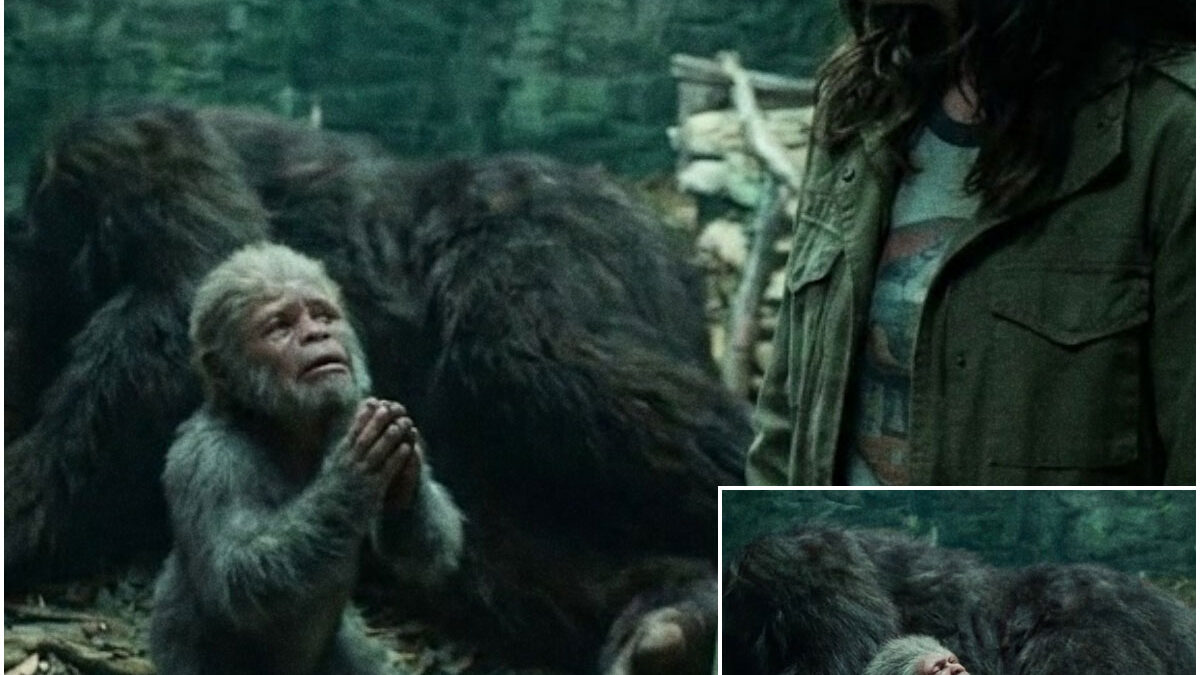
She Lived With Bigfoot for 20 Years – You Won’t Believe Why She Stayed
20 years.
Can you believe that?
A woman has decided to live in the forest with Bigfoot for 20 years.
That is my story.
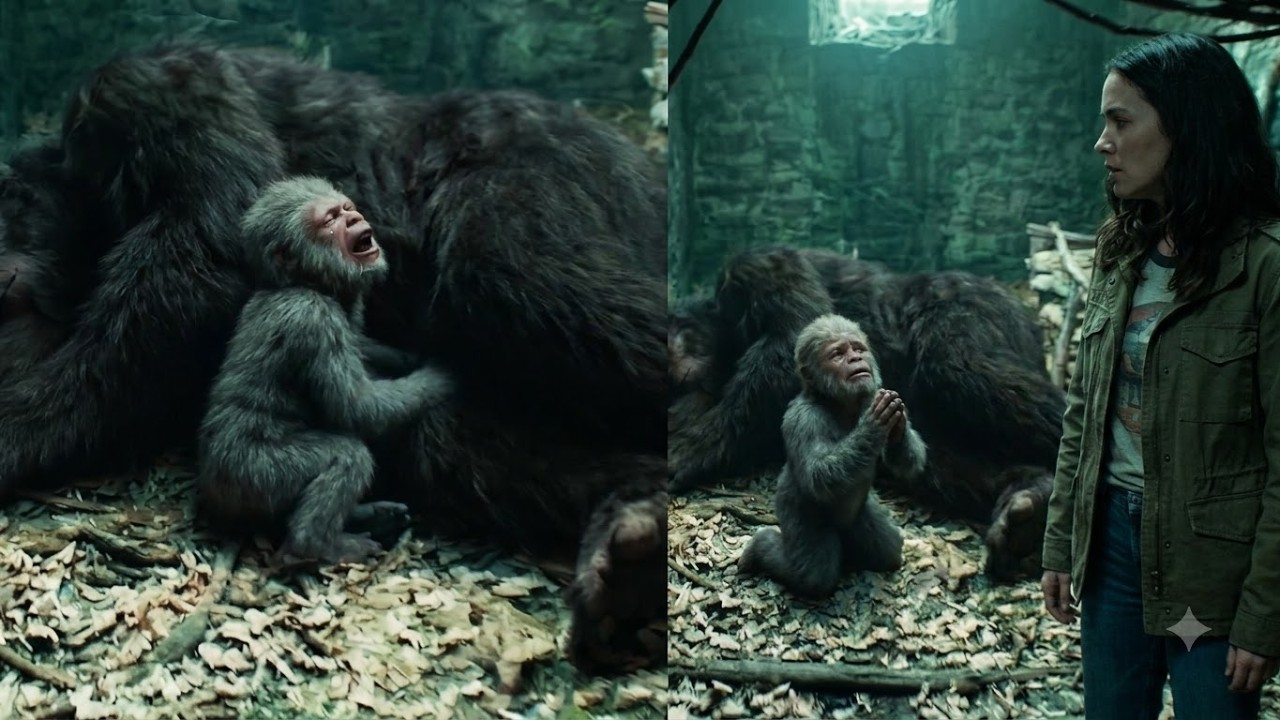
My name is Clara WilliaMs.
If someone had said that to me when I was young, I would have thought they were insane or trying to make up some cheap sensational story.
But I really did vanish from the human world for all those years.
Not because I was kidnapped and not because I was hopelessly loSt.
I stayed because in that forest there was a child who needed me more than anyone had ever needed me in my life.
And that child was not human.
My name is Clara WilliaMs.
When I disappeared I was only 24 years old.
At that age people usually talk about the future.
Back then I only knew one feeling and that was exhaustion.
It wasn’t the type of fatigue that results from working excessively for several weeks.
It was the kind that sits in your bones, like the way your stomach tightens when you hear a door open and how even a simple question makes you want to leave.
I grew up in a house where tenderness always came with conditions.
After my birth father died early, my mother remarried a man whom other people would have called decent, calm, and responsible.
Men like that are dangerous because they understand exactly how to keep their surface clean.
They know how to say the right thing, smile at the right time, and ensure that someone else’s suffering never becomes visible enough in front of witnesses.
I would rather not turn that part of my life into a long complaint.
I grew up in a place where silence was scarier than shouting.
Later, after I had left that house, I walked straight into another relationship that carried the same feeling.
A man who made me feel constantly indebted, constantly wrong, constantly inadequate, and somehow still expected me to be grateful for being kept around at all.
You only understand how a person can wear away while still looking perfectly normal from the outside after you have lived through something like that.
By the time I was 24, I no longer had the strength to keep lying to myself that everything would somehow become better on its own.
I had no grand plan, not much money.
No one is waiting for me at the kindergarten.
The only thing I had was a basic urge to get away from all the voices that had twisted my mind for years.
The trip into the forest was not meant to be a permanent disappearance.
I had only planned to stay a few days, just a few days with no phone, no explanations, no apologies, no trying to guess someone’s mood before opening my mouth.
At the time I thought I was already asking for a lot.
The first day in the forest was not exactly pleasant, but at least it was honeSt.
I pitched my tent more clumsily than I wanted to admit, and had to start my fire twice before it held, and by evening my arms and legs were aching, because a person who has spent most of her life inside tension does not suddenly know how to relax just because the scenery is prettier.
But inside all that awkwardness, I felt something I had not felt in a very long time.
No one knew exactly where I was.
No one could call my name from another room.
No one needed me to explain why I had been sitting still for too long.
That alone was enough to make me stay outside my tent longer than I had planned.
The next morning, I went deeper.
I was not doing it for danger.
I was doing it because of a very childish feeling that if I had already come into the forest, I ought to go a little farther so I could really feel that I had left my old life behind.
The weather was still holding.
The light was beautiful.
The ground was damp but not unpleasant yet, and everything around me carried a quiet that began to soften my mind in a way I had not expected.
I followed a stretch of higher ground, crossed over a few fallen trunks, and came near a rocky slope where the earth narrowed into something that was not quite a trail.
It was the kind of place that makes people careless, not because it is too beautiful.
It instills in you a sense of control, if only for a brief moment.
I remember that moment very clearly.
I stepped toward the edge of a mosscovered rock shelf, looked down at the incline below, and thought that if I just made it across to the other side, I could turn back.
That thought was so small, so ordinary that I hated it for years afterward.
In many accidents, disaster does not begin with a major decision.
It begins with sentences like just a few more steps.
The first step was fine.
The second slipped a little, but not enough to stop me.
On the third, the ground beneath my foot broke apart into a sheet of mud and loose stone.
I lost my balance almost instantly.
My whole body pitched to the left.
The only reflex I had was to throw out my arm and grab for anything at all.
I caught nothing but air for one short beat, and then my body dropped down the slope.
I did not fall all the way to the bottom.
The shoulder bag I wore across my body caught on a heavy tree branch, jutting out from the face of the slope.
Everything stopped with brutal suddenness.
The strap tightened hard across my chest and shoulder, jerking me into the air, so I hung suspended halfway down, my legs slamming against the rock face and bouncing away.
The first pain did not come from my head or my legs.
It came from my chest, where the strap was nearly cutting off my breath.
I remember making a strange sound, not quite a scream and not quite a cry.
It was the sound that comes out when your body has been violently stopped, but your mind has not yet understood whether you are still alive.
I swung several times before I settled.
Below me was a stretch of jagged rock, much deeper than I had first thought.
It was not a vertical drop, but it was steep enough and packed with enough sharp edges that I knew if the straps snapped or the branch broke, the next fall would not be gentle.
My hands clawed at dirt, roots, and mud, trying to find some point of support, but my body was still hanging off center because of the bag.
Every movement made the strap bite deeper in my shoulder and ribs.
I was in pain.
I could barely breathe and my mind was nothing but blank.
Maybe I called for help a few times.
I do not remember exactly what I shouted.
It might have been somebody’s name that meant nothing anymore.
It might have just been a weak cracked heel.
In that moment, I understood one thing with unbearable clarity.
No one could hear me.
Even if someone had been close enough, they might not have reached me in time.
I was hanging in a place where one more little weakness in the branch would send my whole body sliding down like a heavy object after its rope had been cut.
I could feel my grip starting to slip.
Mud coated my palMs. The small root I was trying to hold was slowly giving way.
The bag strap was cutting so deeply into my skin that my left shoulder went numb quickly.
I thought very clearly that maybe this was how I was going to die.
Not in some grand event, not because someone deliberately hurt me, but a bag snagged on a tree branch, giving me a few extra minutes of awareness before I dropped onto the rocks.
Then I heard movement above me.
At first I thought more earth was giving way.
Then I heard it more clearly, a heavy, steady rhythm crossing the ground above the slope.
I looked up, my eyes burning and blurred from panic, and saw a shape darker and larger than anything that should have been there.
It appeared at the edge of the slope, not in the sudden jolting way of a cheap scare story.
It stood there for one short beat, looking down at me, and then lowered itself.
I did not understand at once what I was seeing.
My mind was too busy hanging on to the idea of survival.
But then it leaned down farther, one long furcovered arm reaching over the edge, and the deepest instinct in me understood one second before reason did.
That was not human.
I did not even have time to scream.
I could only stare as that enormous hand came down near my shoulder, caught the bag strap and the taut fabric beneath it, while the other hand braced against the tree above for leverage.
There was no gentleness in the movement.
It was strong, decisive, and completely overpowering.
But because of that, within a few seconds, the pressure crushing my chest changed direction.
I felt my body hauled up from the hanging position, my back scraping hard over wet dirt and roots, then sliding a short way before that same hand seized my arm fully.
It pulled me up as if I weighed no more than a wet sack.
When my chest finally hit level ground again, I lay there gasping, mud all over my face and clothes, my hands shaking too badly to push myself up, I only managed to turn my head and see it more clearly under a narrow cut of light through the canopy.
A huge creature covered in dark fur with broad shoulders, long arms, and a face so unfamiliar and so chilling that there were too many things in it that I could not name.
It did not loom over me immediately.
It simply stood there, head slightly tilted, as though trying to judge whether the small creature it had just pulled back from the edge of death could still move.
That was the first time I saw Bigfoot.
And in that moment, lying face down on wet earth with my bag still partly hooked on the branch behind me, I understood that my old life had just closed faster than any door I had ever chosen to shut for myself.
I do not know how long I lay still on the wet ground after Bigfoot pulled me up from the slope.
In my memory, that span of time feels layered.
One layer was the dull pain in my left shoulder, where the bag strap had bitten in so hard it felt as though the flesh and muscle had been cut by wire.
One layer was the nausea drifting at the back of my throat after the suspended fall.
And the heaviest layer of all was the very clear awareness that a being with no place in any accepted scientific book had just saved my life with a movement so direct it seemed not to strike her as strange at all.
When I finally pushed myself up a little, Bigfoot still had not left.
She stood a short distance away, head inclined toward me, her whole body holding a readiness that I could feel even through my exhaustion.
She did not look gentle in the way human beings like to imagine and rescue stories.
She also did not look savage in the way my first fear wanted me to believe.
She looked like a creature caught between two instincts.
One that remained wary of me and another that had already decided I was not yet allowed to die there.
I remember trying to say thank you.
Or at least I think that is what I meant to say.
But what came out of my mouth was only a broken, ragged stream of breath.
Bigfoot reacted the instant I made a sound.
Her shoulders tightened.
One large hand lifted slightly, not toward me, but in a warning that I should stay still.
It was only then that I realized my knees were trembling so badly that I was on the verge of sliding down another patch of loose dirt near the edge.
I froze.
She froze, too.
We looked at each other for several seconds, and even now, I think that was one of the strangest silences of my life.
I had just been saved, but I did not feel relief.
I felt only that I had been held back temporarily between life and something completely outside of understanding.
Then Bigfoot turned away.
At first, my immediate thought was that she had done what she meant to do and was now going to leave me there.
A part of me even thought I should be grateful if she did, because at least the world would become a little more understandable again.
But she did not disappear fully.
She walked a short distance, then stopped and looked back at me.
When I did not move, she did it again, more clearly, as if she wanted to make certain that a slow creature like me finally grasped the simplest message.
Follow.
I have thought a great deal about why I stood up then.
Told easily, people would say it was because I had no other choice.
That is true in part, but the truth was more complicated.
A person who has lived inside fear for too long becomes adept at recognizing the difference between danger that wants to consume her and danger that does not.
Bigfoot still terrified me.
She still made my whole body go cold and tight.
But in her eyes, there was none of what I had seen so often in human beings before.
There was no hunger to control, no pleasure in watching someone weaker struggle, no watchfulness that tells you you are about to become someone else’s property.
There was only the caution of a compelling being deciding whether to give me a chance to keep walking.
Standing was harder than I expected.
My ankle hurt, my left shoulder burned, and my knees were muddy and scraped raw.
My bag still hung crooked, one strap stretched out.
I adjusted it while never letting my eyes leave Bigfoot for too long.
She waited.
That is what stayed with me.
She did not come back and drag me like a useless object.
She waited for me to stand by my body.
When I managed my first step, she turned and moved a little farther ahead.
So slowly it was obvious she was keeping pace for me.
The path that followed was nothing like a trail.
It was a sequence of choices in the land itself that I would never have imagined on my own.
Bigfoot always chose stretches where exposed roots gave traction, avoided places where rotting leaves lay too thick, and curved around wet rock instead of crossing directly over it.
The farther we went, the more I understood that she was not moving randomly through the foreSt. She knew where the ground slipped, where water could be found, where the wind could be avoided, where she could lead me without being seen from a distance.
That thought gave me a reluctant sort of comfort, and at the same time made the astonishment in my mind grow even larger.
A being like this did not simply exiSt. She lived here with profound knowledge.
We continued that way until night truly fell.
The light drained from between the trees faster than I had expected.
The cold began to seep into me, especially after the fall, and the distance I had walked in pain.
Bigfoot seemed to notice.
She slowed, then angled into a low, rocky place, screened by fallen wood and thick branches.
Inside was not the deep cave human beings like to imagine when they talk cheaply about monster dens.
It was a shelter that was dry enough, protected enough from the wind, and lined with leaves and soft boughs flattened by repeated use.
The moment I stepped inside, I could feel the temperature difference.
Not true warmth, but enough of a barrier to keep the full force of the forest night off my cheSt. Bigfoot entered first, then moved aside.
I stopped at the threshold and hesitated.
I knew I no longer had the strength to return to my tent in the dark.
I also knew that staying there meant placing the rest of my life in the hands of a truth I could not yet understand.
But then my body decided that part of my mind was still trying to resiSt. My legs gave way.
My shoulder throbbed hard.
I stepped inside and nearly collapsed onto the edge of the leaf littered floor as soon as my knees found solid ground.
Bigfoot stood watching me for another moment, then turned and vanished into the dark outside.
I thought perhaps she had left me there to decide the rest of the night on my own.
Only a few minutes later, she returned carrying a bundle of leaves and thin branches.
She set them down near me, then sat lower to the ground a few steps away.
I did not understand what she meant to do until she picked up one branch, pointed at my leg, and then demonstrated something on her own leg as if modeling an action that needed to happen.
It was not language, not any refined system of signals, just the primitive logic of repeated action.
Leg hurts.
Tie it.
Keep it still.
I looked down at my ankle.
It had swollen clearly beneath the fabric and throbbed with each pulse.
In my old world, I would have called it an injury that needed rest and stabilization.
In that forest shelter, the sight of a female Bigfoot trying to show me how to splint my own leg sounded both absurd and so obvious that I could no longer cling to the idea that this was some fever delusion after trauma.
I pulled back the fabric around my ankle, gritted my teeth against the pain, and used the sticks and torn cloth from my bag to bind it as best I could.
Bigfoot did not touch me directly then, but her eyes followed every movement closely.
When I reached the point where I could not hold both splints in place, she moved closer and used one enormous hand to steady a branch for a few seconds, just long enough for me to secure the rest of the cloth.
That indirect touch made me stop breathing for a beat.
I was still frightened enough to feel my stomach tighten.
And yet there was something stronger than fear rising underneath it.
Truth.
The truth that I was not imagining kindness.
She was helping me in her own way, clumsy but intentional.
The first night in that shelter stretched strangely long.
Bigfoot did not sleep the way human beings sleep.
Most of the time she sat near the entrance or went out and came back after a while.
Perhaps she was checking the area.
Perhaps she was simply making sure I remained within sight.
I barely slept at all.
Every time I shut my eyes, my mind threw up every question I couldn’t answer.
Why had she saved me?
Why had she not left after pulling me up?
Why had she brought me here, helped me brace my leg, and allowed me to live beside her through the night?
I had once thought the most important questions in a person’s life would be about love, family, or escaping a bad paSt. That night, the only question that mattered was how something the whole region treated like a legend could be in front of me so concretely.
I drifted off near dawn.
When I woke, the first thing I heard was the faint sound of trickling water somewhere nearby.
Pale light was working its way through the shelter entrance.
Bigfoot was not inside.
For one short second, panic came back because I did not know whether being left alone there was good or bad.
Then she returned, carrying something like a cluster of roots and a hollowed hard shell filled with water.
She set it near me, then sat back the way she had before.
I looked at the water, then at the roots, and finally at her.
The gesture that followed was almost absurdly simple.
She touched her chest, pointed at the water, then touched her mouth.
Drink.
I lifted it with both trembling hands.
The water was cold and had a light mineral taste, but it was clean.
Just being able to drink after that long night of pain was enough to make my throat burn.
I don’t understand why that almost made me cry.
Maybe because for the first time in a very long while, someone had handed me what I needed without demanding fear or gratitude in return.
The second day moved more slowly, but my mind grew clearer in it.
Bigfoot did not lead me back toward my tent.
Maybe she knew the smell of humans lingered there.
Maybe she did not want me to draw more trouble toward the shelter.
Whatever the reason, I understood that I had shifted completely away from my old life.
Now I started to hear distant human voices by late morning.
I could not make out the words at first, but I knew the sound.
Later, closer, I heard something else.
Clara, Clara.
My whole body went rigid.
That should have been the moment I forced myself up, shouted as loudly as I could, and did anything possible to let the searchers know I was alive.
Morally, that was the correct thing.
Instinctively, too.
But I did not do it.
I lay there with my hand clenched in the cloth over my thigh so hard I could feel my pulse hurting in my fingers.
Bigfoot heard it too.
I knew because she turned toward the sound at once.
She did not charge out.
She did not assume a threatening stance.
She listened cautiously and then she looked back at me.
I cannot fully explain what happened inside me then with simple words.
To say I stayed silent only because I was afraid to go back would not be enough.
To say I stayed because I had already begun trusting Bigfoot more than human beings would make it sound too neat for something far more complicated.
The truth is that the moment I heard my name moving through the trees, my whole body remembered exactly what would happen if I went back.
Questions turned into accusations.
Hands are squeezing too hard and then being called a concern.
The looks that made me feel indebted simply for still being alive.
Rooms where I always had to shrink so others could feel comfortable.
Those voices could have taken me back to the human world.
But to me, in that moment, they did not stand for rescue.
They stood for being pulled back into the place I had run from to keep some small part of me intact.
I looked at Bigfoot.
She looked at me and for the first time in my life I understood that I was standing before a choice that no one else would have to carry the consequences of.
I might face expulsion from the forest that day if I raised my voice.
If I stayed silent, I would step all the way into something no one had ever taught me how to live with.
I stayed silent.
It was not a beautiful moment.
There was no music, no nobility, just a young injured woman shaking with fear, listening to her own name drift away through the trees while biting her lips so hard she could taste blood.
The calling slowly faded.
Then it was gone.
Thereafter, inside that small windblocked shelter, the silence came back, but it was no longer the old silence.
It had become a decision.
Bigfoot stood, went outside, and returned later with more dry leaves and soft branches.
She set them near where I lay, as if the shelter had accepted my presence one degree further.
That was when I understood that the thing that changed me most deeply that day was not that I had refused to call the searchers.
It was that the creature in front of me, without understanding what I had just given up, was still carrying out her part with total clarity.
She was keeping me alive.
That afternoon, as the light dropped, and the pain in my leg turned from sharp to heavy, Bigfoot disappeared for longer than usual, I found myself worrying strangely, as though I had already been abandoned after sealing shut the last door back, but then she returned with a strip of old hide, a few small edible fruits, and a bundle of leaves with a sharp but pleasant smell.
She placed them down and sat by the entrance, not right next to me, not too near, but it was close enough for me to understand that on this second night, I still had not been forsaken.
I once thought the hardest thing in life was leaving a terrible place.
Later, I learned that something much harder is accepting that the first place that ever made you feel safe does not belong to the human world.
That night, listening to Bigfoot’s steady breathing near the entrance, and feeling the pain in my leg, held in check a little better by the rough splint, I began to understand that the life opening in front of me would look nothing like anything I had ever been taught to prepare for.
And I also began to understand something else, something I did not yet dare to name.
On the morning of the third day, I woke because of a tiny sound I had never heard inside that shelter before.
It did not sound like wind through leaves or water or any sound Bigfoot had made in the first two days.
It was thinner, shorter, and broken in the way only a creature too small to hide all its fear can sound.
I lay still for a few seconds, thinking I might have imagined it in my weakness.
Then it came again, clearer this time, like a horse breath being stretched into half a call.
I pushed myself up slowly, my hand feeling for the rock wall to steady me.
Bigfoot was not by the entrance the way she usually was.
The place where she often sat was still pressed down in the leaves, but empty.
That was enough to make something cold settle in my stomach.
I did not yet know why, only that the emptiness felt wrong enough to make my whole body tighten.
I called softly, not by name, because I had none for her, but with the instinctive human sound of someone noticing something familiar missing from where it should be.
Nothing answered except the small sound again, still coming from deeper inside.
I braced myself against the wall and edged step by step across the lower stone toward the back of the shelter.
Only then did I realize this place had more to it than the outer section I had seen for two days.
It ran deeper into a darker recess screened by a fallen trunk and a thick weave of branches like a crude curtain.
Behind that screen was a narrower space, slightly warmer.
And there I saw the thing that split my life permanently in two.
Bigfoot lay on her side on the bed of leaves.
Her shoulders and chest almost no longer moving.
One section of fur along her right side was darkened and clotted as if it had once been wet with blood and mud and then dried that way.
The smell reaching me was no longer the aroma of medicinal leaves and damp soil.
It was the smell of a wound left open through the night.
Not so strong that it made me sick, but strong enough to tell me that the condition was not temporary exhaustion.
I stood there frozen for several seconds, my mind refusing to call what I was seeing by its true name.
Then that little sound came again, right beside her body, a Bigfoot child.
It was curled up tightly against her belly, smaller than any image I had ever carried of the species.
Its fur was thinner and softer, its face not yet lengthened the way an adults was, and its eyes were so large and taut in the dimness that my chest tightened when it looked at me.
It did not rush at me.
It did not flee.
It only pressed closer against the body that was already growing cold and made that broken sound again, more call than voice, but with no hope left of being answered.
I do not know when I dropped to my knees.
Part of me was still frightened enough to want to back away immediately.
But another part of me, the part that had lived too long beside losses no one bothered to name properly, recognized the scene before fear could.
I reached out very slowly and touched Bigfoot’s neck.
No response.
I put my hand lower against her chest and waited for the slightest lift.
Nothing.
Her body still held the last trace of warmth, but life had already gone before I woke.
I sat beside her for a long time without being able to think one whole thought.
There were only fragments.
Maybe the wound had come from some earlier fall before she saved me.
Maybe from a trap.
Maybe it was from a hunter I had never seen.
Or maybe she had held on through those extra two days to keep me alive long enough and keep this small one from being left entirely alone too soon.
I do not know.
I still do not know.
The only thing I know for certain is that she saved me while carrying a wound severe enough that she could not survive one more night.
The Bigfoot child kept staring at me.
There was none of the stern force in its eyes that its mother had carried.
Only the raw confusion of a child whose only anchor in the world had just gone still forever remained.
It shifted once when I moved, then made a softer, weaker sound.
In that moment, a simple truth became so clear in my mind that I hated having to think it.
If I left, it would die.
Not that minute.
Maybe not even that same day, but it would die.
It was too small to gather enough food, too young to choose safety, and too attached to its mother’s body to understand that it would never rise again.
I could have told myself that this was the law of the forest, that I was only an injured woman and had no responsibility toward this species.
I could have chosen the gentler path for myself, dragged my body back toward the outside world, left its fate to nature, and spent the rest of my life with another quiet wound like all the others.
But the moment that thought crossed my mind, I knew I could not do it.
I lost my mother very early in one sense, even though she lived many years afterward.
I know what it feels like when an adult is physically present in a house, but no longer strong enough to protect anyone.
I know what an unanswered call can do to a child.
Perhaps that was the reason why, upon observing the Bigfoot juvenile pressed against its mother’s cold side.
I no longer perceived it as a mythical creature, I saw a child who had been left behind.
I began doing things that up to that point I would not have thought I was capable of.
Inside that kind of mental shock.
I pulled a piece of cloth over Bigfoot’s body, not to hide her, but she needed to keep the child from staring at the stillness that was spreading through her.
Then I backed away, opened my things, and took out the softest food I had left, and some water.
The child instantly tensed when I came closer.
It did not attack, but every part of its body braced, its eyes fixed on my hands.
I set the food and water down and moved back and waited.
It took a very long time before it finally edged away from its mother’s side, sniffed the water first and then touched its tongue to the bottle.
That tiny movement alone made my throat tighten.
Life can be so thin sometimes that it comes down to whether a being is still willing to drink.
For the rest of that day, I existed in a state that was half caretaking, and partially mourning something I had not yet managed to understand in full.
I could not bury Bigfoot the way I would bury a person.
I was not strong enough to drag her body anywhere.
In the end, I did the smallest thing I could live with.
I gathered stones, branches, and leaves, and built a low separation around where she lay, enough to create a small divide between that space and the one where the child and I would have to remain.
It was not a beautiful ritual, just a clumsy way of saying that I had seen her sacrifice, and I would not leave her ending exposed to the cold rain like the nameless body of an animal.
That night, the Bigfoot Child did not sleep alone.
It did not come close to me at firSt. At first it sat halfway between us, in a place where it could still watch both me and the place where its mother lay.
But when the temperature dropped and I pulled the thin blanket tighter around myself, it began shifting closer little by little, not because it trusted me completely, only because it was too small to fight off loneliness that first night.
When it finally curled up near the edge of my blanket, no more than an arm’s length from my knees, I understood that my life had just passed through another door.
I was no longer the woman lost in the forest and saved by Bigfoot.
I was no longer someone merely hiding from the human world.
That night, beside the body of the being who had rescued me, I became the only barrier between a Bigfoot child and death in a windsheltered place in the mountains.
And that moment decided the next 20 years of my life.
The first years after that night did not pass in the way human beings usually mean when they talk about time.
I no longer lived by calendars, by months, by appointments, or by holidays.
I lived by far more concrete things.
On which nights does the Bigfoot child sleep better?
On some mornings my leg hurt less and I could walk farther.
How long did the rain have to last before I needed to move the fire?
At what point did the soft food run out and did I have to start introducing things closer to the life of their own kind?
For a very long stretch, every day was a chain of small, urgent tasks that left no space to think too deeply about the largest question.
How long would I stay here?
Or more precisely, where else could I go now?
The Bigfoot Child at first only tolerated being near me when the air turned cold, or its hunger was too strong.
Most of the time I was curious and frightened at once.
If I moved my hand too quickly, it would shrink back.
If I raised my voice, it would tense up as if waiting for something bad.
We did not come together through some beautiful truSt. We came together through loss.
It had lost its mother.
I had lost the road back to a life I could bear.
Maybe for that reason, the first thing that grew between us was not attachment.
It was a habit.
We developed the habit of seeing each other every morning without any fear or anxiety.
I made it a habit to leave water close enough for it to drink.
It had the habit of following me a few steps when I went to the stream and then stopping to watch until I came back.
Small things like that keep people, and maybe not only people, together far longer than vows ever do.
My ankle took a long time to heal well enough for me to walk properly.
During that time, I had to learn the forest from the position of someone no longer entitled to carelessness.
Before, the forest had been a place I entered to run away.
Now it was the only place keeping me alive.
I learned where the cleanest water was after rain, which roots could be softened enough to eat, how to tell when the weather was changing, and more leaves had to be pulled in before the wind arrived.
I learned that the child liked to sit where lights still touched the entrance rather than far back in the dark.
Perhaps because some part of it still expected its mother to return from somewhere.
It took a very long time before it stopped looking toward that old place whenever it woke.
It also took a very long time before I allowed myself to call it anything in my mind.
I did not provide it a human name.
I would rather not turn it into something softer than it was.
But the human mind always needs some way to hold something close.
In the end, I began calling it ash because the younger fur across its shoulders and arms turned a strange ash gray in the early morning light.
I did not say the name aloud in those first months.
I only kept it inside my head, a thin thread to remind me that the small being living beside me was no longer the first raw terror of a legend.
It was a distinct individual with its breath, habits, eyes, and fears.
I could not raise Ash the way one raises a human child.
I understood that very early.
There were moments when my instinct wanted to pull it closer, keep it sitting beside me, and comfort it with the familiar rhythm of a human voice.
But it did not belong to that kind of reassurance.
In the beginning, if I stayed too near for too long, it would tense up.
If I touched it before it was ready, it would retreat all the way to the outer edge of the shelter and lie there for hours, its eyes still fixed on me while its body went stiff as wood.
I had to learn the whole meaning of care all over again.
Caring for it meant keeping water near enough.
Keep the fire warm, but never too large.
Place food in the correct location and return to your previous position.
It’s sad at a distance, able to choose whether to come closer or not.
Waiting.
A great deal of mothering, it turns out, is not about holding.
It is about being able to wait until the other being feels safe enough to come on its own.
The first season was the hardeSt. I was still hurt.
It was still too small.
Food was scarce.
And the fear in both of us had not faded enough yet to harden into routine.
There were times I considered trying to find my way back out once my leg improved.
Carrying whatever memory I still had and forcing myself back into the human world as though none of these events had ever happened.
But every time that thought took shape, I would look at Ash sleeping in a tight curl near the edge of the old blanket or sitting with its head tilted while I tried to build a fire, and the question inside me would turn in another direction.
What would happen to it if I left?
A creature born for this forest might have stronger instincts than I understood.
Yes, but instinct does not replace a mother after a few days, and I knew too well what it was like to be left behind, guessing the world on your own.
I had lived the first part of my life that way already.
I could not do it a second time to another child, human or not.
When the weather finally softened, ash changed, too.
It curled up less.
It went farther from the shelter.
It brought back strange things like smooth stones, bird feathers, and bark stripped into odd shapes, and laid them near my feet, as if trying to share something without language.
Once it dragged in a cluster of red berries, so sour I almost spit them back out.
It sat there, watching me with complete concentration, while I tasted one and grimaced.
That was the first time I saw something close to joy in its face, not human laughter, just a brightening in the eyes and a loosening of the shoulders.
That small moment hit my heart with such warmth that I had to turn away because the instant it appeared, I understood I had already gone far beyond the place of a temporary guardian.
Ash grew rapidly.
That was both logical and painful.
Creatures that live outside the rules of houses, schools, and dinner tables grow on another rhythm.
After only a few seasons, the soft baby fur on its arms and throat had darkened.
Its shoulders had begun to broaden.
Its stride had lengthened.
It spent more time climbing low trunks and looking down at me from above.
There were mornings when I woke and realized the thing curled at the edge of my blanket was already too large to call little anymore.
The feeling struck me exactly the way I had once heard other mothers describe it.
Waking one morning to find that the child’s face had already begun to retreat from their son or daughter without warning.
But while ash was growing, I was changing, too.
I was no longer the 24year-old woman who had walked into the forest with a shoulder bag, shoes that were not nearly sturdy enough, and a mind full of panic.
I learned how to mend clothing with forest fibers, how to keep tinder dry through long stretches of rain, how to tell the smell of a predator from the smell of something merely passing through.
Where in the stream were the small fish easiest to catch, how to read the coming weather from wind pressure and the hour when the insects suddenly fell quiet.
At some point, I realized I had stopped remembering my old life as something that could simply resume at any time.
The city, cars, stores, uncomfortable conversations, and doors that locked with keys, all of it had begun to blur.
Not because I had forgotten, but because my body no longer lived according to that logic.
I still thought about human beings.
Of course, I did.
I thought about my mother more often than I wanted to admit.
There were nights when rain went on for hours, and the shelter held the sound in such a way that it resembled footsteps in a hallway, and I missed her so sharply my chest hurt.
Not because I wanted to return to the old house, but because in everything that had happened, the only person I had ever truly wished I could save alongside myself was the person I had never been strong enough to save.
Thoughts like that came and went, leaving behind a heaviness that was no longer as sharp.
The forest did not erase pain.
It only kept it from living in the center of every daily decision.
Then one day, the human world came back.
They did not find the shelter immediately.
But the first signs of them were clear enough that the blood in me turned cold.
A new piece of wire is lowered down near the stream.
A rusting can that had not lain there very long.
Bootprints.
Not many, but unmistakably human.
I stood looking at them for a long time, long enough that Ash dropped what it had been chewing and came closer.
It looked from my face down to the ground and then toward the thinner forest beyond.
Maybe it did not understand everything, but it understood my reaction.
Its whole body changed in a few quick seconds.
The shoulders lifted, the head lowered a little.
It was no longer the child bringing me sour berries just to watch me react.
Something within its species had begun to rise alongside its growing strength.
From then on, I lived inside a different kind of tension.
No longer the fear of being dragged back to my old life, but the fear of my old life finding a way in here.
I erased traces more carefully, kept the fire lower, moved our path of travel farther off.
Ash changed, too.
It started ranging farther at night, returning with the thick smell of forest on it, sometimes mixed with cold mud from places I had never visited.
At first, I thought this was only part of growing, part of living more fully into the life of its kind.
Later, I understood that it had begun doing what Bigfoot had once done, watching the outer ring, checking what moved into our territory.
And for the first time inside the silence of that forest, I understood I was no longer only raising a child.
I was living beside a being that was beginning to resemble the thing the outside world always described in fearful tones.
That was what made my feelings for Ash more complicated than the simple stories people like to tell about unconditional love.
I loved Ash.
That part is true.
But I never forgot it was not human.
There were days when it was very near me, days when it spent hours far away and came back with an expression I could not fully read.
At times it sat beside me, listening to the rain as if it were a child.
Other times, when it stood at the edge of the trees, looking outward with a stillness that told me if anyone came too close, its response would not be soft the way the part of it I knew could be.
Living with it meant having two truths at once.
One, that it was the child I had raised.
Two, it belonged to a world that would never fully blend into mine.
The years passed that way.
Season after season, the fur on its shoulders darkened, its arms lengthened, its head lowered more when moving through narrow, rocky places.
Every time I looked at it from behind, while it stood at the shelter entrance, I saw something of its mother in the line of those shoulders.
Sometimes that hurts.
Sometimes it gave me peace because I knew I had not let the unspoken promise of that first night fail.
Then one morning, seeing ash standing in a stripe of light, tall enough now that it nearly brushed a lower branch, I understood something I had been trying not to name for years.
It was no longer a child who needed me in the old way.
And at the same time, the traces of human beings in the lower forest had begun to multiply.
The human world was coming closer, and Ash was now large enough to place itself between me and any danger that approached.
Those two truths together could only lead to one ending.
Not tomorrow, perhaps, not even within a month, but inevitably.
And when that ending came, I would have to choose again, just as I had chosen the night I did not call to the searchers.
Only this time, the cost would not be mine alone.
I think the moment that truly made me understand I could no longer keep that life intact did not come with a gunshot or a direct encounter.
It came on a very ordinary afternoon, almost dull, while I was separating dried roots into small bundles, and Ash was standing in the strip of light outside the shelter, its back to me, head slightly inclined, as though listening to something far away.
That posture later became one of the deepest memories I carried.
Not because it was dramatic.
This was due to its striking clarity.
I looked at Ash’s broadening back, the widening line of its shoulders, and the stillness of its neck and head as if it already knew it was meant to protect something.
And I understood rapidly that our time could no longer be measured as a mother raising a child.
It was moving into something else.
It was no longer only the small being that had curled against the edge of my blanket on the first night after losing its mother.
It had become a creature strong enough to stand in the forest and be part of it.
In one sense that should have eased me.
I had kept my promise to Bigfoot.
I had carried Ash through the most fragile years.
But because I understood that, I also understood the reSt. A being like that, once fully grown, would never choose to run if something threatened the ground it lived on.
And human beings were coming nearer every year.
I do not remember exactly who first came too deep into that part of the forest after all those quiet years.
Maybe a party of seasonal hunters.
Maybe some hikers had seen giant tracks near the creek and wanted a better look.
Maybe a ranger who strayed off course and noticed things he could not explain.
What I remember clearly is that the evidence of human presence grew too thick for me to pretend it might simply disappear if I stayed clever enough.
There were more bootprints below.
Twice I saw traces of smoke in places where no one should have had reason to camp.
Once I found fresh cuts on a trunk near the stream.
Not random chopping marks, but the sort of careful sign left so that the next person could follow the location.
Around that same period, Ash stayed out longer at night and returned with a different kind of energy.
Don’t panic, not exhaustion.
A heavier kind of silence, as though its life had begun opening outward into a place I could no longer enter with it.
I considered leaving early many times, not because I wanted my old life back.
That part of me had been dead for years, but I imagined that if I vanished from here first, Ash might have less reason to remain near the old shelter, and less reason to return to areas where traces were easier to find, and therefore be safer.
It sounded reasonable in my own head, but every time I tried to prepare myself for it, honestly, I realized I was lying to myself.
I was not afraid of leaving the foreSt. I was afraid that the moment I left would turn those 20 years into something no one had ever witnessed except me.
I was afraid of carrying it all back to humanity alone.
And deeper still, I was afraid Ash would think I had abandoned it.
That may sound foolish, as though I were giving a fully grown Bigfoot human feelings too neatly, but anyone who has lived beside another being long enough understands that attachment does not need speech to be real.
Everything finally changed in the 20th winter.
The cold came early that year, not postcard cold, the kind that makes every sound in the woods grow sharper and thinner.
I had started aging for real by then.
My right knee hurts badly in the mornings.
My back stiffened after every night on a surface that was never quite soft enough.
I could still manage.
I could gather wood, prepare medicine, and walk the familiar distances.
But I knew my body could not do many more seasons like that.
Perhaps Ash knew it, too.
It began carrying back more, more food, drier branches.
Once or twice, even pieces of old cloth found somewhere in the world beyond were dragged near the shelter, as though understanding I needed more layers against the wind than before.
One afternoon, near the end of that cold season, I was below the shelter, near the stream, gathering more roots when I heard voices, not far, closer than ever before.
Two men spoke in low, taught voices, trying to sound casual despite being unsettled by something they had seen.
I stood so still I felt as if my whole body had turned into part of a tree.
Through sparse branches I caught a glimpse of a heavy faded orange jacket and the brief line of a gun barrel before it disappeared.
They did not see me, but the simple fact that two armed men had come that close was enough to freeze every vein in me.
I backed away very slowly, not turning my back at first, not hurrying, only easing myself toward higher ground, and then circling along the path I knew back to the shelter.
I moved as fast as I could without making a foolish sound.
In my mind, there were no questions left.
Only one command, hard and clear.
I had to get Ash away from there immediately.
Not tomorrow.
Not after one more night of planning, immediately.
When I reached the shelter, ash was not there.
That emptiness made my heart beat so hard it hurt.
I waited there, still trembling, eyes sweeping every familiar path between the trunks.
It took nearly half an hour for it to emerge from the western trees, shoulders and back marked with dried mud, its eyes fixing on my face at once, in the way they had learned to do over the years.
It always knew before I said a word when something was wrong.
I had never tried to communicate huge, complex ideas to Ash, because I understood very well the line between being known for it and imagining a perfect system of mutual understanding.
But some messages, after so many years, had become clear enough.
I pointed toward the lower woods where I had seen the men.
I signed two people.
I shaped my hands like the long thing they had carried.
Then I pointed at Ash at the shelter and shook my head hard.
Do not stay.
Go now.
Ash stood still, following every movement of my hands and face.
Then, exactly as I had feared, it turned its head toward the direction I had indicated, and its whole body changed in a single beat.
Not panic, not confusion.
Focus.
The frightening focus of a creature fully capable of deciding to fight.
I stepped closer than usual, close enough that I could have touched its arm if I had needed to, and repeated the headshake.
I don’t understand why I started speaking aloud then when after so many years I knew perfectly well that human words did not decide much between us.
Perhaps because my fear had grown too large to stay quiet.
I told it not to go that way.
I told it to listen to me this time.
I told it that if it just moved farther north for a while, left this place behind for a time, things might still be all right.
Even as I said the last part, I knew it was a lie I was telling myself.
Once human beings had come that close, all rights would never return in their original shape.
Ash looked at me for a very long time.
Then it did something that nearly made my knees buckle.
It touched its chest and then placed that same hand flat against the ground between us.
Not once, twice.
Clearly, it would stay.
This was its land.
In that instant, I realized I had been hoping for the wrong miracle all along.
I had kept imagining that when true danger came, ash would choose me, the way human beings are supposed to choose the ones they love.
I had hoped it would leave its territory because I was afraid of losing it.
But Ash was not human.
The strongest thing inside was not a fear of losing me.
The strongest thing was its bond to that place, to the water, the medicinal plants, the shelter, the paths through the woods, and to the entire invisible web that made up the life of its species.
And if I truly loved it, I could not ask it to betray that deepest part of itself.
So I changed what I was asking.
I no longer begged them to leave forever.
I pointed farther north toward the stone ridge and the much older, denser forest beyond, a place I had only followed it to a handful of times, and never fully crossed.
I pointed there, and then back toward the lower ground, where bootprints would continue to gather.
My meaning was simple.
If it did not leave this forest entirely, then it had to leave the old shelter, it had to be far enough away that human beings would not be able to track it directly.
This time Ash did not resist immediately.
It looked at me, then toward the direction I was indicating, and then back at the darkness of the place where we had lived for 20 years.
I understood that moment in a way that hurt all the way through my cheSt. This was not just changing sleeping places.
It was saying goodbye to a life.
We did not sleep that night.
I packed what could be carried, not much.
Some cloth, small bundles of dried roots, an old knife, a tin box we had found long ago.
Most things had to be left, not because they were useless, but because they were too heavy and too tied to that place.
I found myself unable to breathe properly while folding the old blanket.
I had once been wrapped around ash in its earliest seasons.
I held it for a long time, and then in the end still had to leave it behind.
Ash moved in and out constantly, carrying more than I would have guessed it would care to.
Old blocks of beeswax, tied bundles of kindling, even the dented metal bowl that had been with us for years.
In that quiet haste, I saw more clearly than ever that for Ash this habitation was not simply a shelter.
It truly was a home.
We left near dawn before the light grew strong enough to make our traces easier to follow.
Ash went ahead.
I came behind much more slowly.
It had learned to adjust its pauses to my pace years earlier, but this time I felt the difference between our bodies more sharply than ever.
I was old.
It was in the strongest years of its life.
The climb north was long and hard, but I stayed with it.
Not because I was stronger than I knew, but because every time I looked up and saw it glance back from a higher point to wait, I understood that this was the last journey we would take together in the old way.
We reached the stone country near the end of the day.
It was better concealed, higher, harder to track, and colder.
Ash immediately began putting together a new shelter using the same rough, practical intelligence I had seen Bigfoot use.
In the first year, I helped very little.
My knees and my back felt drained of all strength.
That night, when I finally sat against the rock and watched Ash go out to check the outer ring of the new place, I understood a truth I had delayed too long.
I could not follow it for many more years, a few months perhaps, maybe one season, no more.
My body had reached the point where it demanded honesty.
The decision to leave did not arrive in one single night.
It came through many mornings when it took me far too long to stand up straight.
Through afternoons, when ash brought back too much, it was clear I could no longer go far.
It was a rainy night when I woke because both my hands had gone numb enough that I could barely hold the bowl.
I had never feared aging until then, not because of wrinkles or gray hair, but because I understood that if I insisted on staying, I would become a burden to the very being I had raised to live free.
I do not know whether Ash fully understood my decision.
But I believe the most important part was understood.
One morning, I tied together the few things I could carry, stood at the edge of the new shelter, and pointed south toward the human world.
Then I touched my chest and placed my hand against its arm.
I was not trying to give a speech.
There was only one meaning.
I had to go.
Ash did not let me go right away.
It stood blocking the descent for a long time.
Not aggressive, not forcing me.
Simply standing there as though its whole body refused to imagine what was coming.
I had never seen it like that.
In 20 years, Ash had often followed me, stayed close, guarded me, learned from me, but there had always been a part of it anchored in the steadiness of the foreSt. That morning, for the first time, I saw something in it that came close to hurt, in a way a human being could understand, not weakness.
The kind of hurt that comes from being forced to accept a loss that strength cannot repair.
I did not cry right away.
I think perhaps because my life had already trained me too well to hold everything inside without letting it sound.
I only stepped closer, close enough to lay my hand on the thick fur across its cheSt. After all those years, that touch no longer frightened me.
It only hurt.
I left my hand there for a long moment.
Then Ash slowly moved aside.
We walked together almost all the way down to the lower edge of the forest, where the terrain began to resemble the oldest parts of my memory.
Ash never stepped out into open ground.
It moved only through the cover of shadow, stopping at the edges to watch me descend the stones and old paths.
At a place where if I went any farther, human beings could find me before they could ever see it.
Ash stopped completely.
It placed at my feet a bundle of medicinal plants, a cloth pouch tied with fiber cord, and the dented old bowl from our first shelter.
I looked at those things, then at it, and finally everything I had been forcing inward broke open.
I cried like a person bearing a beloved life for the second time.
Ash did not embrace me the way human beings do.
It did not pull me close in comfort.
It only stood there watching and then lowered its head once very deeply.
To this day, that remains the closest thing to a farewell anyone has ever given me without language.
Thereafter, it turned away first, not slowly, not with repeated looks back like a child.
It moved like a creature that understood if it hesitated any longer.
Neither of us would manage the final distance.
I do not remember clearly how I reached the first signs of the human world.
I remember an old pickup truck stopping, a man’s stunned face, a rush of questions, dizziness, then a bed in a hospital.
People mistakenly believe that I was a woman who had spent too much time living wild in the foreSt. That story was strange enough to make the rounds for a while and then died down.
I did not correct them.
I kept only what needed keeping.
I said I had lived on water, berries, small fish, rough shelter, and luck.
All of that was true.
I simply omitted the largest truth of all.
Not because I was afraid of being called insane, but from the moment I stepped out of the forest, I understood that my final duty was no longer to stay with Ash.
My duty was to prevent human curiosity from tearing apart the shape of Ash’s life.
The years after that were quieter than the 20 I had spent in the woods, but they were not easier.
I had to relearn how to live among people like someone migrating in the wrong season.
I had to relearn money, relearn sleeping inside walls, relearn how to answer ordinary questions without seeming too different from everyone else.
Some people were kind to me.
Some people held the belief that I required rescue from a protracted delusion.
No one truly understood what I had lost by walking out of that forest, and in time I stopped hoping anyone would.
But ash did not disappear from my life.
The first autumn after I returned, right at the time when the air smelled exactly the way it had on those deep mountain mornings, and the leaves began turning, I opened my door and found a bundle of medicinal plants lying on my porch.
No obvious tracks, no noise in the night before, just that bundle tied with bark fiber in the same way I had seen hundreds of times in the foreSt. I stood there on the porch for a very long time, my hand shaking so hard I nearly dropped it.
From that point on, the pattern never fully stopped, though it was never regular.
Some years it was plants.
Some years it was a scrap of old beeswax.
Once it was a cluster of mushrooms exactly like the kind I had used for a long cough long ago.
I did not need to see Ash to know it was alive.
And in its own way it still passed along the edge of my life.
Now sitting in front of that young reporter.
I am not telling these things because I want pity.
I am not telling them because I want to be seen as the mysterious woman who lived with Bigfoot for 20 years.
If that were what I wanted, I would have told the story in a far more sensational way.
I am telling you this because that forest is about to be named more precisely on maps by people who do not understand what they are approaching.
I am telling it because there are secrets that if no one speaks soon enough, silence stops being protection and becomes cooperation with destruction.
At the end of our conversation, the reporter asked me whether if I could choose again, I would still stay in the foreSt. I did not answer immediately, not because I was uncertain, only because some questions, if answered too quickly, make people think the answer was lighter than it really was.
I lost my youth, my old name, and my chance at an ordinary life, as most people define it.
I buried one Bigfoot, raised another, and then walked away from it with my hands, so it might live the life of the forest fully.
None of those choices was easy.
Nothing about it was beautiful in the sentimental sense.
But eventually I looked at him and gave him the only truth I had.
Yes, I would stay again, because in the first part of my life among human beings, I never truly knew what safety was.
In that forest between a creature the world would call a monster and a child who did not belong to my species.
I understood for the first time what family could be.
And maybe that is the most unbelievable part of the whole story.
Not that Bigfoot is real, but sometimes the thing that saves a human being from being crushed completely by life.
Comes from exactly the place the civilized world is certain must be darkness.
>> Hello everyone.
I’m Mike.
The voice that journeys with you here on Sasquatch story.
You’ve just heard the story of Clara Williams, a woman who lived in the forest for 20 years and raised a Bigfoot child after Bigfoot saved her life and then died.
What makes this story haunting is not only the existence of Bigfoot, but also the truth that sometimes the place that gives us the deepest sense of family and safety is not found in the human world at all.
Through Clara’s story, maybe the biggest lesson is this.
Do not be too quick to call what you do not understand a monster.
Because sometimes compassion appears from the last place anyone expects.
Our team has edited this story for the channel’s storytelling format and used AI to help create the supporting visuals and video illustrations.
What do you think about Clara’s story?
Leave your thoughts in the comments.
Send your own story to our email and do not forget to like, subscribe, and turn on notifications.








