She Had No Children, So She Raised a Sasquatch Cub – Until His Family Came Back
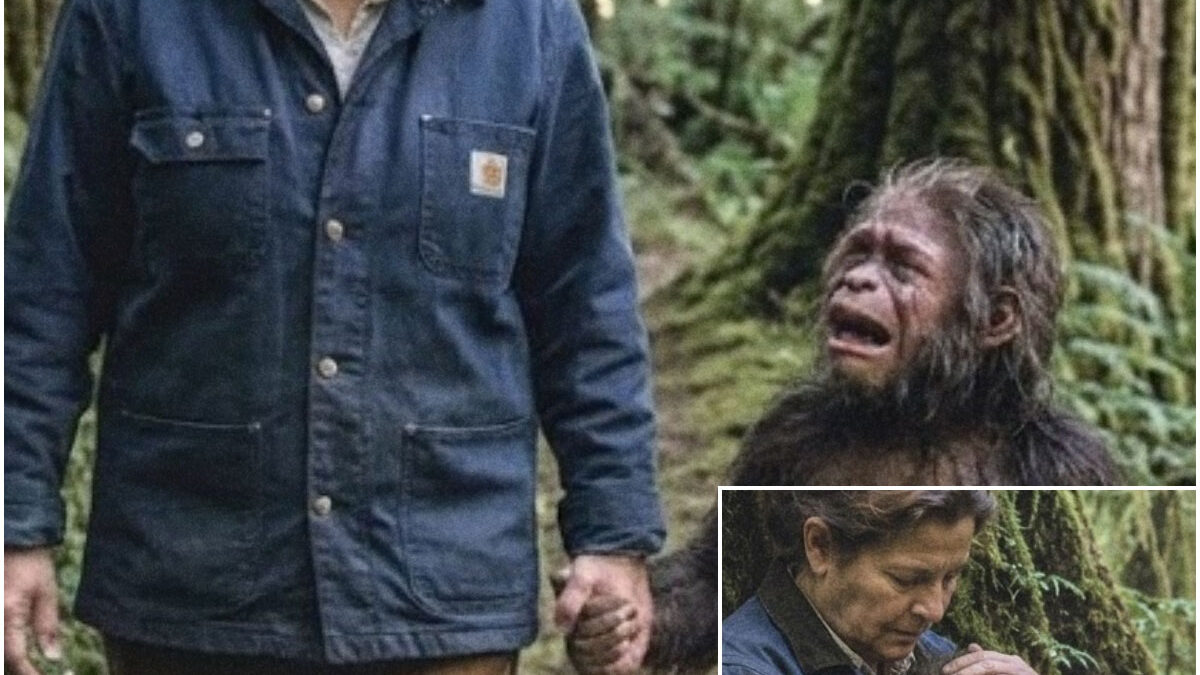
She Had No Children, So She Raised a Sasquatch Cub – Until His Family Came Back
My husband Wendell died on a Tuesday in March of 1971.
And by Friday, I had buried him under the big western red cedar at the edge of our property because that was where he had asked to be put and because there was no one left in the world I needed to ask permission from.
We had no children.
We had tried for 11 years and stopped trying in 1968 when the doctor in Forks told me kindly that whatever was wrong with me was not going to be fixed by hoping.

Wendell took the news harder than I did.
He had wanted children the way some men want a particular piece of land with a steady, patient ache that did not fade.
I had wanted them too, but I had also learned earlier than him to bend my wanting around what was actually possible.
After the doctor’s visit, we did not speak of it again.
We just kept living on the homestead his grandfather had cleared in 1906.
42 acres tucked into a bend of the Ho River on the west side of the Olympic Peninsula, surrounded on three sides by some of the oldest standing rainforest left in the lower 48.
When the lung cancer came for Wendell in the winter of 1970, it moved faSt. And by the time the snow melted, I was a 43-year-old widow with no children, two milk goats, a vegetable garden that was already trying to come back without permission, and a silence in the cabin that had a weight to it I had not been prepared for.
I am telling you all of this because the boy I raised did not arrive in my life as a story or a miracle or a discovery.
He arrived as a sound I heard from the porch on the seventh evening after Wendell’s burial when I was sitting in the rocking chair with a cup of black coffee gone cold in my hands and the last of the daylight bleeding out behind the ridge across the river.
A sound I cannot describe well even now 54 years later.
It was somewhere between a child crying and a calf calling for its mother low at first and then climbing.
And it was coming from the timber behind the goat shed.
Anyone else would have stayed on the porch.
I had been a countrywoman my whole life.
Born in 1927 outside of Aberdine, married at 19, and I had learned the difference between sounds you walk toward and sounds you walked away from.
This one I should have walked away from.
I did not.
My name is Opel May Tanner.
I was born Opel May Hollis.
I have lived on the Ho River Homestead since 1947, and I have not slept anywhere else but this cabin for any night of my life since Wendell carried me across the threshold the morning after our wedding.
I am 97 years old now.
My hands shake when I try to thread a needle, and my voice is not what it was.
But my memory is the one thing in this old body that has not betrayed me, and I’m going to use it while I still have it.
There is a young woman who comes from the Quilute Health Clinic once a week to check on me, and she is the one who set up this recorder for me, and she does not know what is on these tapes.
Nobody knows.
Nobody has ever known except me and the boy, and in the end, the family who came back for him.
I want to be honest about what I am because I think it matters.
I was never a fanciful woman.
Wendell used to say I had the imagination of a fence post and he meant it as a compliment.
I was practical.
I rendered lard.
I shot a black bear in the corn patch in 1953 and butchered it myself because Wendell was at the mill.
I had buried two parents, three brothers in the war, a stillborn niece and a husband by the time I was 43 years old.
And none of that grief had broken me in the way grief is supposed to break a person.
So when I tell you what I am about to tell you, I want you to understand that this is not a story I made up to comfort myself in my widowhood.
This is what happened.
I walked off that porch in March of 71 and I followed the crying into the timber and what I found there changed the rest of my life.
He was at the base of a fallen Sitka spruce maybe 40 yards in past the goat shed in a hollow where the root ball had pulled up out of the ground and made a little cave of dirt and torn roots.
He was small.
Not infant small, not the way a human baby is small, but small the way a young thing is when it has not yet grown into the body it is going to have.
I am going to guess at his weight that night because I did not weigh him for several weeks, but I would say he was somewhere around 35 lb.
He was covered in dark hair, fine and soft like the hair on the muzzle of a fawn, except across his chest and belly, where the hair was thinner, and the skin showed through, a kind of dark olive color, almost gray in the dusk.
His face was the part of him that made me set the lantern down on a stump and crouch in the wet leaf duff and put my hand over my mouth.
His face was not the face of an animal.
I want to be specific about what I mean by that.
I had grown up around animals, wild and domestic, and I knew the difference between an animal looking at you and a person looking at you.
The difference is not in the eyes alone, though it is there.
It is in the whole face.
It is in the way the small muscles around the mouth and the brow move.
The way expression rides across features that have been built to carry it.
This little one looked at me and his face moved through fear and curiosity and something I can only call assessment.
And then it settled into a kind of trembling stillness that I recognized from human children.
He was hurt.
He was alone.
And he had decided in the way a small wounded thing decides that I was either going to help him or kill him.
And he was too tired to do anything about either outcome.
His left leg was wrong.
The lower part of it between the knee and the ankle was bent at an angle that no leg should bend at.
And there was a small wet patch in the hair where the skin had broken from the inside.
He had pulled himself into the hollow of the root ball probably hours before I heard him.
And he had been calling calling for whoever had left him or lost him or been taken from him.
I will never know the answer to that question.
I have my theories.
I have had 54 years to develop them.
But that first night, all I knew was that there was a child in the timber who was not a human child, and his leg was broken, and the calling had stopped because he had heard me coming.
I did the thing I would later spend many years questioning.
I did not go back to the cabin for the rifle.
I did not drive the truck to Forks to find someone who knew what to do.
I crouched in the dirt about 6 ft from him and I spoke to him the way I had spoken to my goats when they were nervous and the way I had spoken to a stray dog that wandered onto our porch in 1962 and stayed for 9 years.
I told him my name.
I told him I was not going to hurt him.
I told him that his leg was broken and that I knew how to fix broken legs because Wendell had broken his arm falling out of the hoft in 1958.
And I had set it on the kitchen table with two pine slats and an old leather belt.
And the doctor in fork said later I had done a better job than he could have done.
I just talked.
I kept my voice low and even and I did not move closer.
He watched me.
He watched me for what must have been 20 minutes with the light going down around us and the river noise rising as the wind shifted.
And at some point he made a small sound that was not a cry.
It was a soft throaty thing, like a question.
I answered it.
I do not know what I said.
I just kept talking.
Then he did something that decided the rest of my life, though I did not understand it that way at the time.
He reached out one small hand with fingers that were longer than a human child’s fingers and thicker through the knuckles, and he laid that hand palm up on the dirt between us.
An offering or a request or a surrender.
I have been thinking about that gesture for half a century, and I am still not sure what he meant by it, but I know what I did.
I crawled forward on my knees, and I took his hand in mine, and his fingers closed around my hand, and his grip was so strong that for a second I almost cried out, and then he loosened it, and his eyes did not leave my face.
I carried him back to the cabin.
He weighed more than he looked like he should weigh the way wet wood weighs more than dry wood of the same size.
And by the time I got him into the kitchen and laid him on the table, he was breathing fast and shallow and shivering hard.
I built up the fire in the cook stove until the kitchen was hot enough to bake bread in.
I heated water.
I cleaned the break in his leg with carbolic and warm water.
And I set the bone the way Wendell had taught me to set a bone with my hands and his hands together, pulling the leg straight while he counted to three.
Except this time, Wendle’s hands were not there, and I had to do it alone.
The little one made a sound when the bone went back into place that I will hear until I die.
It was not a scream.
It was a long, low note deep in his chest, and it shook the cups in the cupboard above the table.
I splinted the leg with two cedar shakes and strips of clean muslin from a pillowcase.
I covered him with a wool blanket that had been my mother’s.
I sat in the chair by the cook stove and watched him sleep, and at some point in the middle of the night, I realized I had been holding his hand the whole time, and his small, thick fingers had not let go of mine.
That was the first night.
The next morning, I sat at the kitchen table and looked at him sleeping on the bench by the cook stove, and I tried to think about what I had done.
I was a 43-year-old widow nine days out from burying her husband, and I had brought a wild thing into my house, and I had not told anyone, and there was no one I could tell.
I thought about the rifle on its rack above the door.
I thought about how easy it would have been to do the practical thing, the thing Wendell might have advised me to do if he had been sitting across from me, which was to take the rifle and end the situation before it became any more complicated than it already was.
I did not pick up the rifle.
I do not know that I ever could have.
Something in me had decided under the spruce the night before, and the decision was not the kind you could go back on without becoming a different person than the one who had made it.
I drank my coffee.
I watched him sleep.
His breathing was slow and even, and the splendid leg twitch once in some dream he was having, and I thought about how 6 days earlier, I had not been able to imagine any future at all.
Just a long flat stretch of being alone.
And now the future had a shape in it that was wholly unfamiliar.
And the unfamiliarity was for the first time since Wendell got sick something close to a reason to get out of the chair.
The first week was mostly fevers.
His body would run hot for a few hours and then drop and then run hot again.
And I sat with him through all of it.
I had nursed Wendell through pneumonia in 1964.
And I knew the rhythm of a body fighting itself.
I gave him water and small sips from a tin cup.
I changed the dressing on his leg twice a day.
I held him when he shook.
He did not cry out, not even in the worst of the fever, though sometimes he made the low chest sound and his hand would close around my wrist with a grip that left bruises I would find days later when I was washing up.
He did not seem to know he was doing it.
I did not mind.
The bruises felt like proof of something.
Proof that he was still here, holding on to me, holding on to whatever this was we had become to each other in a handful of hours.
I did not name him for a long time.
Names felt presumptuous.
I called him you and little one.
And sometimes when I was tired and not thinking, I called him honey the way I had called Wendell honey.
And the first time it slipped out, I had to set down the spoon I was holding and go stand out on the porch for a few minutes.
After about six weeks, when his leg was healing well and he had started to follow me around the kitchen on his hands and one knee, dragging the spinted leg behind him, I started calling him Henry.
I do not know why.
It was not a name I had ever particularly liked.
It just came out of my mouth one morning when I was feeding him a bowl of oatmeal with honey in it.
And he looked at me when I said it.
And after that, I said it again.
And after a few days, he made a sound that was close to it.
Hen.
He could not say the second part, but he could say the first part, and he said it back to me, and that was his name.
I am going to tell you what those first months looked like because I think people need to understand that this was not a magical thing.
This was a small, broken, frightened child living in the kitchen of a 43-year-old widow who had no business raising any kind of young thing, let alone one that was not from her own species.
He was wild in ways that took some getting used to.
He did not understand a toilet, and he did not understand that the inside of the cabin was not a place to relieve himself.
And for the first two months, I cleaned up after him the way you clean up after a puppy with a bucket and a rag and a great deal of patience.
He understood eventually he learned faster than any puppy I had ever raised.
By the end of the second month, he was using a chamber pot Wendell had kept in the corner of the bedroom for cold nights, and he had figured out how to empty it himself into the outhouse.
He did not understand cooked food at firSt. He picked at the oatmeal the first time I gave it to him and he sniffed the bread and he refused the milk.
What he would eat eagerly was raw.
Raw eggs from the chicken coupe which I started letting him collect himself once his leg was healed enough to walk on.
Raw fish from the river when I caught one and laid it on the porch boards.
Raw vegetables from the garden.
He would take a carrot still stre with dirt and eat it like an apple.
Dirt and all and his teeth made short work of it.
His teeth were not human teeth.
He had mers that were broader and flatter, and his canines were a little longer than a child’s canines, and his incizers had a slight ridge to them that I noticed when he yawned.
But they were teeth in a mouth, and they did what teeth in a mouth are supposed to do.
He grew into cooked food slowly.
By summer, he would eat oatmeal if I put honey on it.
By fall, he would eat bread, especially if it was warm.
He never grew to like milk, and he never grew to like meat that had been heavily cooked.
The way he preferred meat was barely warm, the way you might warm a piece of steak by laying it on a flat stone next to a fire for a minute on each side.
I learned to cook for him that way.
I learned a lot of things.
He grew.
That was the thing I had to come to terms with that first summer.
He grew at a rate that no human child grows at.
When I found him in March, I estimated his age at maybe four or 5 years old, the way I would estimate a human child’s age.
By July, he was the size of a 7-year-old.
By the end of summer, he was nearly my height, which was 5’4, and I had stopped trying to put him in the few clothes I had managed to fit him with because he tore through them within days.
He preferred to be naked or wrapped in a blanket when it was cold, and I came to accept that.
The cabin was warm in winter from the cook stove, and he had his own warmth.
Besides, I learned the second week he was with me that his body temperature ran several degrees above mine.
When he slept against me in the rocking chair in those first weeks, the heat of him was like sitting next to a kettle.
He was smart.
I want to say this clearly because I think the world has decided that what he was must be dumb.
And I am here to tell you the world is wrong.
By the end of the first summer, he understood more English than my niece Wanda’s three-year-old, who I had babysat that spring.
He could not speak much of it.
His mouth was not built quite right for the sounds we make, but he understood.
I would tell him to bring me a piece of wood from the porch and he would bring me a piece of wood.
I would tell him to leave the goats alone and he would leave the goats alone.
I would tell him a story about Wendell and he would sit on the floor with his legs crossed and his hands in his lap and his dark eyes on my face and I would see him following every word.
He had his own language.
He did not use it often at first because I think he understood quickly that I could not understand it.
But as the months went on, he started using it more, especially at night.
He would sit on the porch after the sun went down and make sounds that were not human sounds.
Low, resonant tones that I could feel in the wood of the porch beneath my feet, and high soft humming that almost did not sound like a voice at all.
He was not calling for anyone.
I asked him once in the second year and he looked at me with that grave little face and made a gesture I had taught him for no.
He was not calling.
He was just talking.
I think the way I talked to myself when I was alone in the kitchen needing bread.
He was being in his own language for a little while.
I left him alone to do it.
The winter of 1971 was the hardest stretch we had together.
And I want to tell you about it because I think it explains how we became what we became to each other.
The snow came early that year, the first week of November, and it kept coming.
By the middle of the month, the road out to the highway was closed and would stay closed until the thaw, and I had not finished laying in firewood, and the goats had not been moved into the lower shed.
Henry’s leg was healed by then, though he still favored it when he was tired.
He had grown 4 in in 7 months.
He was the size of a strong 12-year-old with arms that already had more strength in them than mine.
He saw me struggling.
The first morning after the heavy snow, I went out to dig a path to the goat shed, and I could not get the snow shovel through the drift at the porch steps.
The drift was up to my waiSt. I had been at it for 15 minutes, and I was getting nowhere.
Henry watched me from the kitchen window.
Then he came out in nothing but the blanket I had wrapped around him, and he took the shovel out of my hand gently, and he set it against the porch rail, and he started moving the snow with his hands, with his hands.
He scooped it up in arm loads and tossed it aside, and within 20 minutes he had cleared a path that would have taken me half a day.
He did not seem cold.
The snow stuck to the hair on his arms and chest, and he ignored it.
When he was done, he handed me the shovel back and he looked at me and he made a small sound that I had come to recognize as his way of asking whether he had done it right.
I told him he had done it better than right.
He smiled a small smile that took me about a year to learn to see because his mouth did not curve up the way ours does, but his eyes changed in a way that meant the same thing.
That became how we did things after that.
He carried the firewood from the woodshed in arm loads that weighed more than I could lift in a wheelbarrow.
He carried the water from the spring when the pump froze in December.
He held the ladder steady while I climbed up to clear the snow off the cabin roof.
And once when I slipped and started to fall, he caught me before I had gone 6 in with one hand around my arm and the other braced against the eve.
And he set me back on the rung as gently as if I had been a teacup.
We made it through that winter because of him.
I would not have made it alone.
Not that year.
Not with Wendell gone and the grief still raw and the snow heavier than it had been in a decade.
Henry kept me alive that winter.
I have never said that out loud to anyone, but it is true.
He kept me alive the same way I had kept him alive in March under the spruce.
We had saved each other by the time the thaw came in April, and we both knew it without having to discuss it.
The fall of 1971 was the first time someone almost saw him.
My nearest neighbor was a man named Earl Whitaker, who lived about a mile and a half up river and made his living doing odd jobs for the Forest Service and trapping coyote for the bounty.
Earl had been Wendell’s friend, not mine particularly, but he had taken to checking on me every few weeks after Wendell’s death.
And on a Saturday in October, he drove his pickup down the rudded track to my cabin to drop off a quarter of elk meat.
His nephew had shot.
I heard the truck on the gravel from a long way off.
Henry was in the kitchen with me.
I told him to go up to the loft and stay there and not come down for any reason until I called him and he went.
He understood completely.
He understood the same way a child understands when a parent says someone is coming and we are going to be quiet for a few minutes.
He went up the ladder and he stayed there.
And Earl Whitaker sat at my kitchen table for 40 minutes drinking coffee and talking about elk season and never had any idea that there was a wild boy in the loft above his head, listening to every word.
After Earl left, I climbed up the ladder and Henry was sitting on the loft floor with his knees pulled up to his chest, watching me with a look on his face that I had not seen before.
It was not fear, it was a question.
I sat down on the law floor next to him and I told him about Earl and I told him that there were other people in the world besides me and that those people would not understand what he was and that for now for as long as he was with me he had to be very careful when people came.
He listened.
He nodded once slowly the way I had taught him to nod for yes.
Then he leaned his head against my shoulder and we sat there together on the law floor in the gray afternoon light and I understood for the first time that this was going to be the shape of our life.
Hiding, listening for trucks, climbing ladders.
I did not know how I felt about that.
I had not chosen it, but I had chosen him that night under the spruce.
And the rest of it was just what came with the choosing.
The second year, 1972, was the year he started going into the timber by himself.
He had been going with me from the beginning, holding my hand sometimes, walking ahead of me other times, but always with me there.
In the spring of that year, when he was the size of a 10-year-old human, but moving with a confidence in a quietness no human child has, he started slipping out of the cabin at night.
I would wake at 2:00 or 3:00 in the morning and find the kitchen door open a crack and his blanket folded on the chair and he would be gone for an hour or two, sometimes longer.
I worried the first few times I sat by the window with the lantern lit and waited for him.
He always came back.
He would push the door open and look at me sitting there and his face would do that thing where it apologized without any words and he would come over and lay his hand on my arm and then he would go to his blanket and curl up and sleep until late morning.
There was a closer call in the summer of 1973 and I am going to tell you about it because it shaped a lot of what came after.
A timber survey crew from the Department of Natural Resources came up the road on a Wednesday morning in late July.
They had not warned me.
They were doing some kind of inventory on the state trust lands that boarded my property to the eaSt. And one of them, a young man with a clipboard and a hard hat, walked right up to my porch while the other two stayed near the truck.
Henry was in the garden behind the cabin pulling weeds.
He had been getting tall fast that summer, and there was no way he could pass for anything other than what he was, even at a glance from a distance.
I saw the young man coming up the steps, and I felt the bottom of my stomach drop out.
I called out to him from inside the screen door, friendly as I could manage, and I asked him if he wanted coffee.
He said, “No, ma’am.
He just had a quick question about the property line.”
I made him stand on the porch and I made myself stand in the doorway and I kept him talking for as long as I could about the survey markers his grandfather had probably set in 1936 while Henry somewhere behind the cabin heard the truck and the voices and did exactly what I had taught him to do.
He did not run.
Running would have made noise.
He sank down into the cornrows.
He laid himself flat between the stalks and he stayed there and he did not move a muscle for the entire 45 minutes the survey crew was on my property.
The young man eventually thanked me and went back to his truck and they drove off.
And I stood on the porch until the dust had settled in the road.
And then I walked around the cabin to the garden and Henry was still there in the corn flat on his belly with his face pressed to the dirt and his hands over the back of his head the way I had shown him.
I knelt down next to him.
I told him they were gone.
He looked up at me.
He had been crying silently.
He was 8 or 9 years old by my estimate of his age and he had understood what was happening with a clarity that broke my heart.
He was old enough to know that those men would have done something terrible if they had seen him.
He was old enough to understand that he had to stay still for me.
He had stayed still.
I helped him up.
I brushed the dirt off his face.
I told him that he had done the right thing, exactly the right thing, and that I was proud of him, and that he was the best son a woman could ask for.
I had not used that word before, son.
It came out of my mouth before I had decided to say it.
He heard me say it.
He looked at me.
He made a small sound that I had not heard before, a soft, questioning hum.
And I said it again, “Son, you are my son.”
He laid his head against my shoulder and we stood there in the cornrows for a long time.
And I think that was the day he understood what he was to me and what I was to him and that whatever the world thought about either of us did not change that.
There was a worse scare the spring of 1974 and I did not handle it as well.
A man I did not know drove up the road on a Saturday afternoon in April with a rifle in a rack across the back window of his truck.
He was younger than me, maybe 30, with a sunburn across his cheekbones and a way of standing that suggested he had been drinking, though it was barely past noon.
He said his name was Lyall, and he was looking for a buck he had wounded the day before that the buck had crossed onto my property, and he wanted permission to track it.
There was no hunting season open in April.
He was poaching, and we both knew it, and he was telling me a story because he had not expected to find a woman alone in the cabin.
Henry was in the kitchen.
He had heard the truck.
He had gone up to the loft before I had even reached the porch because by then he could read the sound of an engine the way I could read the weather.
And a strange engine meant the loft every time without me having to say.
Lyall stood at the foot of the porch steps and looked at me and looked past me into the cabin and asked if my husband was around.
I told him my husband had passed three years before.
I watched his face when I said it, and I saw the small adjustment that men of his particular type make when they learn that a woman is alone in a remote place.
I did not like the adjustment.
I told him there was no buck on my land, and that if there had been, I would have heard him because I noticed everything that moved in the timber within a mile of my cabin.
I told him he should leave.
I kept my voice level.
I did not raise it.
He looked at me for a long moment and he smiled in a way that was not a smile and he said he would just take a quick walk down to the river to check and he started to move past the porch steps toward the side of the cabin.
I told him no.
I told him to stop.
I told him my property was posted and he did not have permission to walk anywhere on it.
He kept walking.
He was about 10 ft past me when I heard the kitchen door open behind me.
Henry had come down from the loft.
He was not supposed to.
He had broken the rule we had built for 3 years.
He was standing in the doorway and he was filling the doorway and he was looking at Lyall with an expression that I had never seen on his face before.
It was not anger.
Henry did not have anger in him, not the kind humans have.
It was a stillness, the stillness of a thing that had decided not to allow another thing to continue.
He stepped onto the porch.
The porch boards groaned under his weight.
He was 6 feet tall by then, broad through the chest with a coat of dark hair across his shoulders and a heavy brow over those dark eyes.
And he was not wearing anything.
And there was no way on earth that Lyall was going to see what he was seeing and explain it to himself as anything other than what it was.
Lyall stopped walking.
He turned around.
He looked at Henry.
He did not move.
He did not reach for the rifle in his truck.
He did not say anything.
He just stood there with his mouth slightly open and I watched the color drain out of his sunburned face.
Henry made a sound.
It was the lowest sound I had ever heard him make.
A deep chest note that I felt in the porch boards under my feet and in the kitchen windows behind me.
It was not loud.
It did not need to be.
It was the sound of something telling another something that there was a line and the line had been reached.
Lyall backed up.
He backed up all the way to his truck, never taking his eyes off Henry.
And he got in the cab and he started the engine.
And he drove out so fast that his back tires kicked gravel against the side of the goat shed 30 yards away.
I did not move from the porch until the dust had settled and the engine sound had faded down the road.
Then I turned around.
Henry was still in the doorway.
He was shaking.
He had been more frightened than Lyall had been.
I realized he had broken the rule because he had heard the man speaking to me in a way he did not like.
And he had decided that the rule about hiding was less important than the rule about me.
And he had done what he had done with no idea what would happen after.
I took him inside.
I sat him down at the kitchen table.
I made him a cup of warm milk with honey, which was the one thing he would drink that was not water.
And I sat across from him and waited for him to stop shaking.
When he had stopped, I told him he had been brave.
I told him I had been afraid, too.
I told him that he had probably saved me from something I did not want to think about.
But I also told him gently that the man would be back or he would tell someone and that the next time strangers came up the road, they might come with intent and that we were going to have to be more careful for a long time because of what had just happened.
He nodded.
He understood every word.
He laid his head on the table and he closed his eyes and he did not move for a long time.
And I sat with my hand on the back of his neck and felt the warmth of him under my palm and thought about how this was going to be the rest of my life, watching, listening, waiting for the road, hoping that what had happened that afternoon had scared Lyall enough to make him believe he had imagined it.
Because the only thing worse than the world believing him would be the world taking him seriously.
Lyall never came back.
I do not know what he told himself about what he had seen on my porch that day.
I do not know if he told anyone.
If he did, no one ever followed up.
I have wondered sometimes whether he was the source of certain stories that I have heard floated around forks over the years.
Stories about a creature seen out near the hole that some old drunk talked about in a bar.
If he was, no one ever connected those stories to my homestead.
And Lyall himself, I learned later, died in a logging accident outside of Aberdine in 1977.
And whatever he had seen on my porch went into the ground with him.
I asked him once, where he went at night.
He could not tell me, not in words.
He took me out the next afternoon and showed me.
He led me up river, past the spruce where I had found him, and then up the slope behind the cabin into the deep timber, climbing through the salmon berry and the devil’s club with a steady patience that left me winded, trying to keep up.
He stopped in a small clearing where two enormous big leaf maples had fallen across each other, making a kind of shelter underneath.
He pointed at the shelter, then he pointed at himself.
Then he made a sound, a soft one, and put his palm flat against his cheSt. I understood he had made himself a place, a place that was his, not mine, not the cabins, just his.
He could go to it at night when he needed to be in his own kind of space, and he could come back to me in the morning.
I had a place like that, too, I told him.
I had the rocking chair on the porch.
I had the cedar at the edge of the property where Wendell was.
He listened.
He nodded.
He understood without me having to explain further the way he always understood.
He fished.
I want to tell you about this because it was one of the first things he did that I could not teach him that he taught himself.
And watching him do it the first time was when I understood that there was a whole self in him that had nothing to do with me that had come from somewhere older.
In the late summer of 1972, when he was strong on his leg again and confident on the slope down to the river, I took him to a deep pool below a bend where Wendell and I used to fish for cutthroat.
I had brought a rod with the idea of teaching him.
I rigged it up.
I cast it out.
He watched me with that patient watching he had.
And then he stood up from the rock he had been sitting on.
And he walked into the water up to his knees and he stood there.
He stood there for almost 10 minutes without moving.
I told him the fish would come past him eventually if he just waited.
I do not know why I said it.
He was already waiting.
He did not need me to tell him.
Then his hand went into the water.
There was no warning, no drawback, no shift in his shoulders.
The hand simply was where it had been and then was in the river to the elbow.
And when it came up, there was a cutthroat thrashing in his fist in long.
He looked at me.
He looked at the fish.
He looked at me again.
Then he turned and waited back to the bank and laid the cutthroat at my feet.
The way a cat lays a mouse at its owner’s feet and his face had a look on it that was so close to pride that I had to bite the inside of my cheek to keep from laughing.
He fished for me after that all summer.
Every few days he would go down to the river by himself and come back with a fish, sometimes two, and he would lay them on the porch and wait for me to clean them and cook them and tell him how good they were.
The cutthroat were a kind of conversation between us.
He could not tell me he loved me in English.
He told me with fish the way he had been told, I think, by whoever had raised him before he was lost to them.
Food given freely.
The oldest love word there is.
Wendell would have understood Henry.
I want to say this because I think about it often.
Wendell had been a man with an unusual capacity for accepting things he could not explain.
He had grown up out here, the third generation on this land, and he had seen things in the timber over the years that he had told me about in the quiet hours after we had been married long enough for him to trust me with them.
He had seen tracks in 1958 that he could not account for.
He had heard calls in the night in 1963 that he had not been able to identify and that no one in Forks could identify when he described them.
He had once in 1966 sat very still on a stump for nearly an hour while something large stood on the other side of a stand of vine maple watching him and he had walked away unheard and unhurried and he had come home and told me about it over supper as if he had seen an unusual bird.
I asked him then what he thought it was.
He said he did not know and he did not need to know.
He said that whatever lived in the timber out here had been there a long time and as long as it left him alone, he was going to leave it alone and he was not going to spend his life trying to put a name on something that did not seem to want a name.
I had loved him for that answer at the time.
I loved him even more for it after Henry came.
Wendell had given me before he died the framework I needed to accept what I had found.
The timber out here was older and stranger than people gave it credit for, and there were things living in it that did not need to be hunted down or explained or written about in the newspaper.
Some things were just allowed to be.
I want to talk now about the things I learned about Henry over those first years because I think they matter.
I have read in the years since some of what people say about what he was.
I have read that they are savage, that they are mindless, that they are violent, that they are merely apes wearing the shape of people.
I am here to tell you, having lived with one for almost 14 years, that none of that is true.
Henry was gentle.
Henry was so gentle that I worried sometimes in the early years that he would not be able to defend himself if he needed to.
He moved through the cabin with a care that bordered on reverence.
He never broke a dish.
He never knocked anything over.
He learned how to handle the things in my kitchen with hands that were strong enough to crush a coffee mug if he wanted to.
And he never crushed one.
When the goats kitted in the spring of 1973, he sat outside the goat shed for the entire 14 hours of labor.
And when the new kids came out, he watched them with an expression of such tenderness that I had to look away because it was making me cry.
He grew to love those goats.
He named them in his own language, sounds that I came to associate with each specific animal.
When one of the older does died of bloat in 1975, he carried her body up to the clearing under the big leaf maples and laid her there himself and he came back to the cabin and sat on the porch for the rest of the afternoon, not eating, not speaking, just sitting.
He grieved.
He grieved the way I had grieved Wendell, except quieter and longer.
He was curious about everything.
He learned to read.
I want to be clear about this because I do not know if anyone is going to believe me.
I had a copy of Charlotte’s Web that my niece had left behind one summer and I started reading it to him in the evenings when he was about 8 months into living with me and within a year he was pointing at the words on the page as I read them and within two years he was reading them himself, sounding them out under his breath in a soft mumble because his mouth could not say them clearly.
By the time he was four years in, he had read every book in the cabin.
Charlotte’s Web, a King James Bible that had belonged to Wendell’s mother, a Webster’s dictionary from 1941, a collection of Robert’s service poems, a book about Pacific Northwest birds that Wendell had bought in Aberdeene on our honeymoon.
He read them in order, and he read them more than once, and he asked me questions about them.
The questions a thoughtful child asks when they are trying to understand a world they have only encountered through paper.
He asked me about death in the second year.
He had been thinking about Wendell, I think, because he had been spending time at the cedar where Wendell was buried.
He pointed at the cedar and he pointed at himself and he made a small sound.
I sat with him on the porch and I tried to explain death to him in the way I would explain it to a child, which is the only way I knew how.
I told him that everyone died eventually.
I told him that when Wendell died, it was very sad, but that Wendell was a part of the cedar now and a part of the land, and that he was not gone in the way that gone usually means.
Henry listened.
He thought about it for a long time.
Then he made a sound I did not know yet, a soft falling sound, and he laid his hand on my hand, and I understood that he was telling me he was sorry.
Sorry that Wendell had died.
Sorry that I was alone before he came.
I could not speak for several minutes after that.
He asked me about himself in the fourth year.
He was somewhere around 10 years into his life by then, I thought, though he was already nearly 6t tall and built like a strong young man.
He pointed at himself and then he pointed at me and he made a gesture I had not seen him make before.
A kind of empty-handed shrug that was so human it startled me.
He wanted to know what he was.
I had been waiting for this question for a long time.
And I had thought about how I would answer it.
I told him the truth as best as I knew it.
I told him I did not know what he was exactly.
I told him that there were stories from before white settlers had come to this country told by the Kilote and the Ho and the Maka about people who lived in the deep timber and who looked like him.
I told him that white settlers had picked up those stories and called them by other names and that most white people now thought those stories were not true, but that I had grown up here and Wendell had grown up here and we had both known that the stories were true, even if we had not known the details.
I told him that I thought he had a family somewhere in the deep timber and that something had happened to separate him from them when he was very small and that I did not know what that something was.
I told him I had found him under the spruce and I had brought him home because I could not do anything else.
And I told him I was glad I had.
He listened.
He thought about it.
He asked me in his way with gestures and a few halting sounds whether his family was looking for him.
I told him I did not know.
I told him I had not seen any signs of them, but I had not gone looking either because I had been afraid of what it would mean if I found them.
He understood the fear.
He laid his hand on my arm and made the soft sound that meant something close to it is all right.
And I knew then that he had been thinking about this question for a long time without asking and that he was not going to push me toward an answer I was not ready for.
That conversation changed something in me.
After that, I started watching the timber differently.
I started looking for signs and I started to see them slowly.
The way you start to see something after someone has told you what to look for.
The first sign was in the spring of 1976.
I went out to the goat shed one morning and there was a pile of fresh salmon laid on the flat rock at the edge of the clearing behind the shed where the trees came up close.
Four salmon, big ones, fresh enough that they had been caught that morning at the earlieSt. There were no human tracks anywhere near them.
I stood there for a long time looking at the salmon and then I looked up the slope into the timber and I had a feeling that something was looking back at me, not threatening, just there.
I took the salmon inside.
I cleaned them and smoked them in the smokehouse Wendell had built in 1952.
I did not tell Henry about them right away.
I do not know exactly why.
I think I wanted some time to sit with what they meant.
The second sign was in the fall of that same year.
I found on the porch one morning a small pile of wild huckleberries arranged neatly on a piece of cedar bark.
Not many, maybe a cup, but arranged with deliberate care.
There was also beside the berries a piece of obsidian about the size of my thumb that had been napped into a rough scraping tool.
I picked it up.
I had seen tools like it in the small museum and forks in the cases of artifacts from before the settlers.
This one was not old.
The edges were sharp and clean, the way they would be on a tool that had been made recently.
I sat on the porch with the obsidian in my hand for a long time.
Henry was inside asleep.
He had been growing fast that year, and he slept a lot.
I told him about both of those things eventually, the salmon and the berries and the obsidian.
I waited until a winter evening when we were sitting by the cook stove, and he was reading the Robert’s service book for the third time.
I told him that I thought his family knew where he was.
I told him that I thought they were watching and they were leaving things and they were being patient.
I told him I did not know what they wanted exactly, but I thought they might want him back eventually when he was ready.
He put the book down on his lap.
He looked at me for a long time.
And then he did something I had never seen him do.
He cried.
He had never cried in front of me.
He had made the deep grief sound when the old dough died, but he had not cried with tears the way humans cry.
That night, sitting by the cook stove with the snow falling outside, he cried in a way that was almost human and almost not with tears running down his face and his shoulders shaking.
And he did not make a sound except for one small word in his own language that I had never heard before.
He said it twice.
Then he reached out and took my hand and held it and we sat there together for a long time and we did not say anything else.
He was crying, I think, now because he had known.
He had known for some time.
He had known and he had not said anything because he did not want to leave me and he did not want me to think he was ungrateful and he did not want to make me sad.
And I had just told him that he could go, that his family was there, that they were waiting.
I had given him permission without meaning to, without knowing I was giving it.
And he had cried because he loved them and he wanted to go back to them and because he loved me and he did not want to leave.
We did not talk about it again for a long time.
The years that came after that evening were, I think, the best years of my life.
I want to be clear because I do not want anyone to misunderstand what I’m saying.
I had loved Wendell.
I had loved him for 24 years and I love him still.
But Wendell had been a steady and quiet love the way a good field is steady and quiet.
And what I had with Henry was something else.
Henry was my son.
He was not the son I would have had with Wendell.
And he was not human.
And the world would never have called him my son.
But he was the child I raised.
He sat at my table and ate my food and read my books and helped me carry water from the spring and split wood for the cook stove with an axe that he could swing through a round of fur in a single stroke.
He sat on the porch with me in the evenings and watched the light go down behind the ridge.
He laid his head in my lap once when I had a bad fever in the winter of 1978.
And he stayed there for two days while the fever broke.
And when I woke up clear-headed, he was still there and his face was stre with tears that had dried.
And I knew he had been afraid I was going to die.
I want to say more about that fever because of what he did during it.
I had come down with something on a Thursday in late January, and by Friday morning, I could not get out of bed.
I remember the cold sweat.
I remember Henry sitting on the edge of the bed with a cool wet cloth in his hand, dabbing my forehead the way I had dabbed his forehead the night his leg had been set seven years earlier.
He had remembered.
He had remembered exactly what I had done for him, and he was doing it back.
He brought me water.
He brought me broth, which he made himself by simmering a chicken carcass in a pot on the cook stove, having watched me do it dozens of times.
He kept the fire going.
He stayed awake while I slept and he slept on the floor next to the bed when I was awake because he wanted to be there the moment I needed anything.
On the second night when the fever was at its worst, I started to think I might die.
And I tried to tell him things.
I tried to tell him where the deed to the homestead was and where the rifle was and which of my neighbors he could go to if he had to leave the cabin.
He put his hand over my mouth gently.
He shook his head.
He laid his head down on the bed next to my hand and he made a low sound, a soft morning sound.
And I understood that he was telling me to stop talking like that.
I was not allowed to die.
He was not ready.
I stopped talking.
I held his hand.
The fever broke the next morning.
When I could finally get up 3 days later, I went into the kitchen and Henry had cleaned everything.
The dishes were washed and stacked.
The floor was swept.
The cook stove had been kept fed the whole time because the cabin was warm.
He had taken care of the goats.
He had brought in firewood.
He had done all of it without me telling him, without me being there to ask, because he had watched me do all of it for seven years.
And he knew.
He knew the whole shape of the life we had built.
He was 11 years into his life and he was already more capable than most grown men I had known.
And the only thing he could not do was show his face in the world.
And so the only person who would ever know how capable he was was me.
He was 11 years into his life by then by my count.
11 years since the night under the spruce.
He was nearly 7 feet tall and he weighed I would guess somewhere around 350 lbs.
Though I never put him on a scale and he would not have fit on the one I had.
He was beautiful.
I am going to use that word and I am not going to apologize for it.
His hair was dark, almost black, with rustcoled shading at the shoulders and across the upper back.
His face had grown into itself with a strong, heavy brow and a wide flat nose and a mouth that smiled in a way that was unmistakable once you knew how to look for it.
His eyes were dark brown, almost black in low light, and they looked at the world with a patient intelligence that I had not seen in any human face, except sometimes in old Wendell’s face when he was sitting on the porch in his last summer thinking about things he did not tell me.
There came a time in the late spring of 1982 when I realized he was not going to be with me much longer.
I do not want to make it sound like I had a vision or a premonition.
It was not that.
It was just that I knew him by then.
I had been watching him for 11 years and I could read his moods the way I could read the river.
He was restless.
He spent more time in the timber at night.
He came back smelling of cedar and wet stone and something musky that was not him.
That was something he had been close to.
He started doing the calls more often, the resonant ones, the ones that came from deep in his cheSt. He did them at dusk, sitting at the edge of the clearing where the timber started.
And once in late June of that year, I heard something call back.
Far off, miles away, deep in the hoe drainage, a sound that was Henry’s sound, but different, older, lower, bigger.
He heard it.
He stood up from where he had been sitting and he listened and his whole body changed.
He stood the way a person stands when they have heard their name spoken from across a long distance.
And they are trying to decide whether to answer.
He did not answer that night.
He came back inside.
He sat at the kitchen table and he was quiet for a long time.
I sat down across from him.
I told him that I had heard it too.
I told him that I knew what it was.
I told him that I had been thinking about this for a long time and that I had made my peace with it mostly and that he did not need to protect me from what came next.
He did not believe me.
I could see it in his face.
He thought I was telling him what he needed to hear.
The way a mother tells a son what he needs to hear.
And he thought that underneath the telling, I was breaking.
He was partly right and partly wrong.
I was breaking a little.
I had been breaking for months.
Ever since I had started to feel the change in him, but I was also telling him the truth.
I had loved him for 11 years.
And the thing about loving something for a long time is that you stop wanting to keep it from the things it is supposed to do.
You start wanting it to become what it is supposed to be.
Even if the becoming means it goes away from you.
That is the difference I think between loving something and owning it.
I had not owned Henry.
I had loved him.
And love means you let the thing you love go where it is meant to go.
He stayed through the summer.
They came closer, his family.
I started seeing them.
Glimpses at the edge of the clearing in the early morning.
Dark shapes moving in the timber that were larger than him, and that did not flinch when I saw them.
There was an old one, I thought, a male with silver at the shoulders and a slow, careful way of moving.
There were others smaller that I thought might be females, though I could not always be sure.
They did not come into the clearing.
They watched.
They left things.
More fish, more berries.
Once a beautifully made cedar bark mat that I found folded on the porch one morning and that I have used as a runner on my kitchen table for 43 years and that is on the table next to me as I am speaking.
They were thanking me.
I think they had been thanking me for years in their own way.
The salmon, the huckleberries, the obsidian, all of it had been thank you.
Said in the only language we could share.
Henry started spending nights with them in late AuguSt. He would leave at sundown and come back at dawn and I would be sitting on the porch with my coffee and he would walk out of the timber and his eyes would be bright and his shoulders would be set in a way I had not seen before.
He had a family.
He had a family that was big and old and patient and they had waited for him for 11 years and now he was coming back to them.
I would smile at him from the porch and he would come and sit beside me and he would lay his hand on my hand the way he had done in the loft that day in 1971 when Earl Whitaker had come and we would sit together while the sky got light.
The night he left for good was the 14th of September 1982.
I knew it was coming.
He had been preparing for it for weeks.
He had been sitting with me longer in the evenings.
He had been telling me things in his halting way with words and gestures and the soft sounds we had built between us over the years, things he had not told me before.
He told me he loved me.
He told me he was sorry.
He told me he would come back when he could to see me.
He told me that his family had wanted to thank me for a long time and that they did not know how to do it directly because they had been afraid and because they had learned to be afraid of humans for reasons that were older than him and older than me.
The afternoon of the 14th he asked me to come with him.
He led me down the path to the clearing under the big leaf maples where he had made his place all those years ago.
The clearing had changed.
I had not been to it in a long time.
He had been working on it.
I realized he had built a shelter out of cedar and salal, low and tidy with a kind of bed inside made of cedar boughs and a folded skin of some animal I did not recognize.
He had built a fire ring of stones outside the shelter.
He had stacked split wood beside the fire ring the same way I stacked it on the porch.
He had made a small home in the timber that was a version of the home I had made in the cabin.
And I understood that he had been practicing.
He had been getting ready to leave the cabin without leaving it entirely.
He had been making a place that was halfway between his world and mine.
And he had wanted me to see it before he went.
He sat down on a fallen log next to the fire ring.
He patted the log next to him.
I sat down.
He took my hand.
He held it for a long time.
And then he made a sound low and resonant, the kind he had been doing more often that year.
And from the timber around us, on three sides, others answered, “Not far off, close.
They had been there the whole time we had been walking up.
They had been with us.
I had not known.
I had felt something, but I had not known.”
He pointed at himself, and he pointed at the timber.
Then he pointed at me, and he pointed at the cabin.
Then he laid his hand over his chest and he pointed at me and he laid his hand over his chest again.
And I knew what he was saying.
He was saying that his heart was in two places now.
That he had grown to be the kind of person whose heart did not fit in just one place anymore.
He had a family in the timber and he had a mother in the cabin.
And he was not going to forget either one of those things.
I cried then.
I cried the way I had not cried at Wendell’s funeral.
Because at Wendle’s funeral, I had been numb.
And what I felt sitting on that log was the opposite of numb.
I felt everything.
I felt the 11 years and the night under the spruce and the broken leg and the oatmeal and the books and the goats and the obsidian on the porch and the loft floor and the head in my lap during the fever and all of it, all of it at once.
And I cried into the front of my shirt while Henry held my hand and waited for me to be done.
When I was done, he stood up.
He helped me to my feet.
He walked me back down the path to the cabin.
At the edge of the clearing where the timber started, he stopped.
He turned to face me.
He put both of his hands on my shoulders gently, and he leaned his head down and laid his forehead against my forehead for a long moment.
Then he straightened up.
He let me go.
He turned around and he walked into the timber.
And I watched him until he was a dark shape between the trunks.
And then I watched the dark shape until it was not there anymore.
And then I watched the empty place where the dark shape had been.
And I did not move from the edge of the clearing for a long time.
He did come back.
He came back four times over the next 12 years.
The first time was the spring of 1983, about 6 months after he left.
I was on the porch one morning and I looked up and he was standing at the edge of the clearing.
He was bigger than when he had left.
He was thicker through the shoulders and his hair was longer and there was a streak of mud across his cheek that he had not bothered to wipe off.
He walked up to the porch and he sat down on the step at my feet and he leaned his head against my knee the way he had done when he was small and I put my hand on his head and I did not say anything for a long time.
He stayed for two days.
He helped me split wood.
He ate at my table.
He read three chapters of a Steinbeck book I had picked up in forks.
Then he left again.
The second time was the fall of 1985.
He brought someone with him.
He stood at the edge of the clearing and he made the resonant sound.
And after a moment another figure stepped out beside him, a female smaller than him, but still much larger than me, with dark hair shading toward gray at the temples, and a face that was watching me with the same patient assessment I had seen on Henry’s face that first night under the spruce.
Henry came halfway across the clearing.
He stopped.
He waited.
I came down off the porch.
I walked toward him and the female.
I stopped about 10 ft from them.
The female looked at Henry and Henry made a soft sound and the female looked at me.
She came forward slowly.
She stopped two feet from me.
She raised her hand.
I raised mine.
She laid her palm against my palm.
Her hand was bigger than my hand by half again, and it was warm, and it was rough at the tips of the fingers in a way that reminded me of the calluses on Wendell’s hands after a hard week at the mill.
She made a sound that was very soft, a kind of low murmur.
Then she stepped back.
Henry made the sound again, and the female nodded once.
They went back into the timber.
I stood there for a long time.
I do not know what passed between us.
I think she was his wife or whatever Henry’s people had instead of wives.
I think she had wanted to see me.
I think she had wanted to thank me in person for raising the one she had ended up with.
I think she had been generous in doing it.
I have thought about that woman’s hand against mine for 40 years now, and I have never gotten tired of thinking about it.
Her hand had told me things in those three seconds of contact that no words could have carried.
It had told me that she knew exactly what I had done for the small, broken one she had eventually claimed as her own.
It had told me that she had been raised in her turn to understand that food and shelter and a warm place to sleep were not small gifts and that whoever gave them was owed a recognition that did not need language to be paid in full.
It had told me that she was not afraid of me anymore, if she had ever been afraid, and that she had decided for whatever reasons her people decided things that I was a part of Henry’s life that she was not going to try to remove or replace.
I had not known how much I had been worried about that until her hand left mine and the worry left with it.
I had been afraid somewhere underneath everything that they might resent me, that they might think I had stolen him, that they might see me as a person who had taken 11 years of their child’s life and held it inside a cabin and a language and a way of being that was not theirs.
She had told me with the warmth of her palm against my palm that she did not see it that way.
She saw it the way I saw it.
She saw that we had both in our different ways kept him alive long enough for him to come home and that we were in some sense neither of us could name family to each other now through him.
The third time was in 1989.
He brought a child.
The child was small the size Henry had been when I found him.
The child stood behind Henry’s leg and looked at me with eyes that were Henry’s eyes.
Exactly.
And I knew without having to be told that the child was his.
He had become a father.
He had children.
He had a life out there in the deep timber that I would never see and never know the details of.
And he had brought the smallest part of that life out of the timber for a few minutes so that I could see it.
He stayed for an hour.
The child did not come closer than about 10 ft.
I sat on the porch and I waved and I smiled.
The child did not wave back, but he did not run either.
He watched.
He took me in.
He was learning, I think, what I was the way Henry had once learned.
And then they went back into the timber together, the big one and the small one, walking the same path.
And I stood on the porch, and I waved and I cried and I laughed all at once.
The fourth time was the last time.
It was September of 1994.
Henry was, by my count, somewhere in his 27th year of life.
I was 67 years old.
I had been alone in the cabin for the 12 years since he had left, and I had been managing well, but I had started to feel my age.
I had developed arthritis in my hands.
I had taken a fall in the spring and bruised my hip badly.
I had been thinking in the quiet hours about how much longer I was going to be able to keep the homestead going.
Henry came back on a clear morning in midepptember.
He came alone.
He sat with me on the porch the whole day.
He did not bring me anything and he did not ask me anything.
He just sat.
He held my hand.
He listened to me talk about the goats and the garden and the books I had been reading and the cousin from Aberdine who had written to say she was thinking of coming to visit.
He nodded.
He laughed once.
The soft chuffing sound that was his laugh when I told him about a fox that had been raiding the chicken coupe.
He stayed until the sun went down.
Then he stood up.
He kissed the top of my head the way I had used to kiss the top of his head when he was small.
He walked out into the timber.
He did not turn around.
I never saw him again.
I have thought about that day many times.
I think he knew somehow that it would be the last time.
I think his people know things about time and life and endings that I do not know.
I think back sometimes on the small things he did that afternoon, and I see them differently now than I saw them then.
He had touched the rocking chair where I had been sitting the night I heard him calling from the timber.
He had laid his hand on the wood of the porch rail and run his fingers along the grain, the way you run your fingers along a thing you are committing to memory.
He had eaten an apple I gave him slowly, more slowly than he ever ate, holding the core in his palm after he was done, and looking at it for a long while before setting it down on the porch boards beside him.
He had walked once slowly to the cedar where Wendell was buried, and he had laid his hand on the bark of the trunk, and stayed there with his eyes closed for the better part of an hour.
He had been saying goodbye not just to me to all of it to the homestead and the porch and the cabin and the man under the cedar and the woman in the rocking chair and the 11 years and the 12 years after the whole shape of the life he had passed through on his way to becoming whatever he had become out there in the deep timber.
He had been saying goodbye and I had not seen it for what it was because I had been so glad to have him there one more time that I had let myself believe there would be another.
I have not seen him in 31 years.
I have not heard the resonant call from the upper drainage in 20 years though I used to hear it sometimes in the years right after he left.
I do not know if he is still alive.
I’m not sure.
I want to know.
He would be in his late 50s now, and I do not know what the lifespan of his people is, though I suspect it is longer than ours.
I prefer to think of him as I last saw him walking into the timber on a September evening with the light coming through the cedars in long gold pillars and his shoulders set and his stride sure.
I want to say one more thing, and then I am going to stop.
I have been quiet about Henry for 54 years.
I have not told a single living person about him.
Not Earl Whitaker, who is dead now.
Not my niece Wanda, who is in a nursing home in Olympia.
Not the doctor who came out to set my hip after I fell.
Not the young woman from the clinic who set up this recorder.
I have kept Henry a secret because Henry asked me to in the only way he could.
By understanding from the beginning that he had to hide when people came and by living his life with me in a way that knew at every moment what the world would do if it found him.
I am telling the story now because I am 97 years old and I am going to die soon.
Not tomorrow, I do not think and not next month but soon.
I have outlived the world that knew Wendell and I have outlived almost everyone I grew up with and the people who are left do not know me in a way that would let them understand what I am about to leave behind.
There is a cabin on the Ho River on 42 acres of old timber with a cedar bark mat on the kitchen table that was woven by a hand I cannot describe to you.
And there is an obsidian scraper in a drawer that was made by someone who has never been written about in any book.
And there is a place under the big leaf maples about a/4 mile up the slope behind the cabin where a small shelter still stands mostly collapsed now.
And that shelter was built by a young man who I loved like my own son.
When I am gone, the homestead is going to my great niece, a woman named Pearl, who has been good to me.
And Pearl is going to find these tapes and Pearl is going to know what to do with them.
I trust her.
She has the steadiness her mother had.
I have not been a brave person in my life.
I have been a practical person and a patient person and a person who endured the things that came to her.
I did one brave thing.
I walked off the porch in March of 1971 and I followed the crying into the timber.
The rest of it, the 11 years and the fevers and the splints and the loft and the big leaf maples and the warm hand against my hand.
All of it was just love.
Love is not brave.
Love is just the thing that happens when you have decided to keep showing up.
I kept showing up.
He kept showing up.
And the timber in the river and the long quiet years of the Olympic Peninsula held both of us.
And they are holding him still somewhere up the drainage where the road does not go.
And they will hold me too when the time comes because Wendell is under the cedar and the cedar is in the timber and the timber is part of all the rest of it.
I am Opal May Tanner.
I lived a quiet life.
The most important thing I ever did was open my door to a child who was not mine and not human and not anyone the world would have approved of.
And the most important thing that ever happened to me was that he opened his hand to me first, palm up in the dirt under a fallen spruce before he knew whether I was going to help him or hurt him.
And he trusted me.
I have spent my whole life trying to deserve that truSt. I think I came close.
I am going to stop talking now.
The light is getting long across the porch and I want to sit out there for a while.
The cedar bark mat is on the table.
The obsidian scraper is in the drawer.
The clearing under the big leaf maples is still there.
The river is still running.
The timber is still listening.
I want to say one thing more, and this is the thing I want most of all to be heard.
People will ask when they listen to this whether Henry was a person.
They will want a yes or a no.
They will want to put him in a box.
I am 97 years old and I have thought about this question for 54 years.
And the only answer I have is the one I lived.
Henry was someone.
I do not know if the word person is the right word for what he was.
The word person was made by humans for humans.
And Henry was not human in the way that word usually means.
But he was someone.
He was a someone with a heart and a mind and a sense of right and wrong and the capacity to love and to grieve and to laugh and to remember and to choose.
He was a someone who sat at my table and called me by a sound that was as close to mother as his mouth could shape.
He was a someone who held a 43-year-old widow’s hand under a fallen spruce and decided in whatever way his kind decides things to trust her.
The world has a lot of words for what he might have been.
And most of those words are wrong.
The only word I ever needed for him was his name.
Henry, my son, whatever else he was, Henry is somewhere in it with his family, with his children and his children’s children, if his people live as long as I think they do.
And if you walk far enough up the whole drainage, past where the road ends, and past where the trail ends, and past where the map stop being any use at all, you might hear a call at dusk that does not belong to any animal you can name.
If you do, sit still.
Do not try to find what made the sound.
Do not bring a camera or a tape recorder or a gun.
Just sit still and listen.
And know that there are families out there in the old timber who have been there longer than any of us.
And that one of them in the upper hole has a member who once read Charlotte’s Web on a kitchen floor in front of a cook stove and who learned to laugh at foxes and who held a 43-year-old widow’s hand through a long winter night when she was sicker than she would admit and who walked away from her one September evening with his shoulders set and his stride sure and his heart as he told me with his hand on his chest in two places at once.
That is enough.
That is the story.
I am going to sit on the porch now while the light is good.








