She Gave Birth to a Bigfoot Baby and Didn’t Even Know
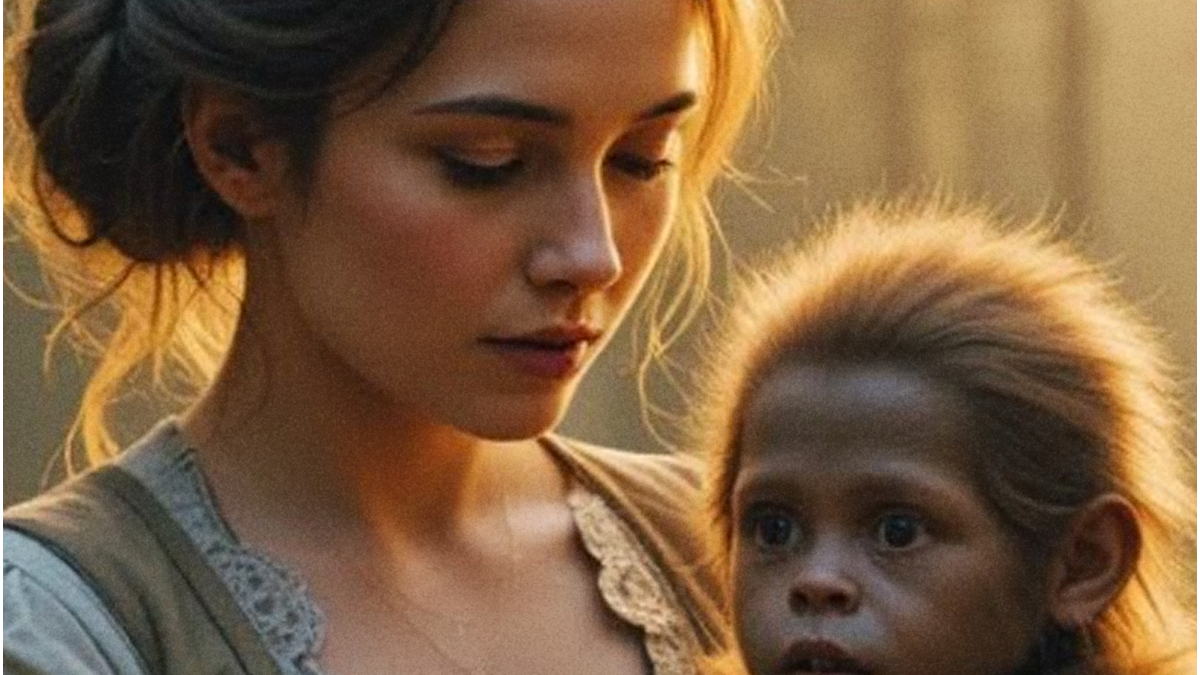
She Gave Birth to a Bigfoot Baby and Didn’t Even Know
Welcome back friends with another spine chilling encounter.
If you haven’t subscribed to my channel yet, please do.
It just takes 2 to 3 seconds and your support means everything to me.

Now, let’s dive into today’s story.
Twiggy, the half- wild son of the northern silence.
Some stories are born in silence, others claw their way out of the dark.
She said the baby wasn’t entirely human.
The woman, Willa Nash, they called her, had lived alone in the Oregon backwoods for most of her life.
Folks in town remembered her only as that mountain girl, the one with the steady eyes and calloused hands, who traded venison for salt and sugar and vanished back into the trees before anyone could ask too much.
She never came into town after 1902.
Years later, a journal surfaced, wrapped in oil cloth and hidden beneath the floorboards of a long rotted cabin.
Pages yellowed by dampness, ink faded but legible and between its lines.
Something else, a voice, Willow’s voice in that journal she told the truth or what she believed to be the truth.
About a night in September under a swollen moon, about a sound in the forest that didn’t belong.
About something watching her from the trees.
Not a man, not a bear, something else, something with hands.
And later about the child.
His name was Twiggy.
The story you’re about to hear is hers.
Some say it’s madness.
Others call it myth.
But once you’ve heard her voice, once you’ve looked through her eyes into that long, haunted silence, you might wonder too, what if she wasn’t lying?
Now listen closely.
This is where it begins.
The fire was almost out when she heard it.
A low, wet rumble, like a cough dragged from the throat of the forest itself.
Not the wind, not a bear.
Will Nash knew those sounds.
This was different, thicker, alive in a way that made the skin at the back of her neck pull tight.
She stayed still, the old rifle resting across her knees, finger hovering, not pressing the trigger.
In the distance, something massive cracked a branch with the sharp, careless certainty of something that had never needed to hide.
She didn’t run.
Not yet.
Her father, long dead and only present now in instant, had told her, “If you run, you’re prey.”
But when she saw the shape, taller than the treeine at its shoulder, fur thick and matted in places with leaves and something darker, her legs betrayed her, she backed toward the cabin, heart slamming in her throat, the ground no longer solid beneath her feet.
That was the last clear moment.
What followed?
Her arm gripped by a hand too large, too real.
The smell of wet cedar and something almost sweet came in flashes.
Her scream never made it out of her mouth.
Her vision narrowed to a point of blue moonlight on moss.
Then nothing.
When Will awoke, she wasn’t home.
Cold rock, damp air, a ceiling too low for the sky.
For a long while, she didn’t move.
Not from fear, but because the silence was so deep, it seemed to press her bones into the earth.
Then came the sound of water dripping.
One drop.
Two.
She sat up.
Pain lanced through her ribs, her shoulder.
Her clothes were torn.
A moss strewn wall bled green light from somewhere above.
And then, without warning, the scent returned.
Burnt meat, smoke, earth.
He was back.
The creature emerged not with menace, but with something else.
Caution, curiosity.
He crouched near the entrance, far enough to be shadows, close enough that she saw his eyes.
They weren’t wild.
Not fully.
And in them, she saw something more terrifying than rage recognition.
For days he came and went, brought food.
Roasted root, berries, something like venison but sweeter.
Never spoke, never touched her again.
And yet each night she felt watched.
Not violated, but studied, measured.
Her terror dulled into something else.
Not comfort, not familiarity, just endurance.
Then one wing, he didn’t return.
She left the cave 3 days later.
Finding the world she remembered colder, emptier.
Her cabin was still standing, though it looked smaller than she remembered.
Inside the kettle had rusted.
Her journal lay open to a page where she’d drawn the moon.
At first, she told herself it had been a dream, a fever, a wound in the mind left by isolation.
But then the changes began.
It started with nausea, then the exhaustion, the swelling in her belly that no food could explain.
She counted the days, then stopped.
There was no calendar for something like this.
No doctor for a pregnancy she could never admit to.
Her body betrayed her with each passing week.
Her face hollowed.
Her eyes darkened.
She never went back to town.
The risk was too great.
People noticed things.
She grew her hair long.
Let her body do what it needed to do.
But deep inside her.
Beneath the fear was a deeper roar truth.
She wasn’t alone anymore.
And then the dreams came.
Of the creature.
No, not a creature.
Of him watching her from the treeine, standing just beyond the firelight.
Of fingers brushing hers in sleep.
Of something ancient.
Something that had been waiting longer than memory for this moment.
One night, she woke to find herself outside barefoot in the frost, hand resting on her stomach, whispering a name she didn’t remember choosing.
Twiggy.
But the worst moment came weeks later when she saw herself in the mirror.
Her face, her mother’s face, her father’s mouth, but not entirely.
Something in the eyes had shifted just enough.
Like the woods had claimed her from the inside.
She began to write it down.
Not to make sense of it.
She’d stopped trying, but to leave something behind, a record for the child for herself, for the world if it ever came knocking.
But even as she wrote, part of her wanted to destroy it.
What if someone read this and thought her insane?
What if someone believed it?
That was the night she heard the voice.
Not outside.
Inside.
You are not wrong.
You are not alone.
She never knew if it was him or something that lived inside her now.
And that she would later realize was the real terror.
Not the creature in the woods, not the thing that had taken her, but what had remained.
I hadn’t lit the fire yet.
I remember that part clearly.
The sun had just dropped below the ridge, leaving a bruised sky stretching over the treetops.
I’d stacked the wood, wrapped myself in my father’s old coat, and was sitting on the front step with a tin mug of cool tea in my hands.
I didn’t hear it at first.
Not really.
It wasn’t a noise exactly, more like the feeling you get when someone’s looking at you from across a room.
Before you ever see them.
I raised my eyes to the treeine, and that’s when I saw it.
At first, it didn’t move.
The forest had already started folding itself into shadow, and for a moment, I thought it might just be an old stump or a blackened snag.
But then the wind shifted.
The light.
What little remained bent just enough to catch on something not wood, not rock.
Something covered in hair the color of wet bark.
And the eyes.
God.
The eyes.
Two orbs reflecting the last of the light.
Low and golden like twin coals waiting to ignite.
My hand went for the rifle, slow and careful.
But even that movement felt clumsy under its gaze.
I stood, not running yet, not ready to believe what I was seeing.
I’d live long enough for the forest to know its games.
Bears in the underbrush, cats in the trees, elk staring like statues.
But this thing, it didn’t look away.
It watched me like I was the only thing in the world worth watching.
And then it moved.
Not fast, not sudden.
Just a slow, sure step forward like it knew I wouldn’t shoot.
My breath caught, but I didn’t.
I just stood there rooted like one of the damn pines while the thing came closer, close enough for me to hear the dirt shift under its weight.
The low rasp of breath, heavy and calm.
When it reached the edge of the clearing, it stopped, tilted its head, raised one enormous hand, and then it stepped back.
Just one step.
Enough to let me breathe again.
Enough to let me run, which I did, slamming the door of the cabin behind me so hard the hinges squealled.
I bolted it shut, dropped to the floor, and waited.
Listened, heart slamming like a rabbit’s, but nothing followed.
I didn’t sleep that night.
I sat in the dark, watching the flames eat through the last of the wood, the rifle across my lap.
Every sound outside felt sharper, closer.
The wind through the trees, the rustle of leaves, the occasional crack of a branch that didn’t sound quite accidental, but it never came to the door.
Never tried to get in.
And by morning, the woods looked normal again.
Empty, peaceful.
Only it wasn’t.
Because from that moment on, I wasn’t alone out there.
Not really.
Something had seen me, and I had seen it.
And once you see something like that, the forest never feels quiet again.
I told myself it was a one-time thing.
A fluke.
My mind playing tricks.
But the next night, just after dusk, I found footprints, not bootprints, not bare.
They were wide, deep, with five long toe-like impressions spread unnaturally far apart.
The stride was wrong, too.
Too long for a man, too deliberate for an animal.
I followed them as far as I dared.
But they veered off toward the creek and vanished in a patch of moss so thick I couldn’t even see my own prince anymore.
I tried not to think about it, kept busy, cut wood, hung snares, cooked stew I couldn’t finish, but at night it came back.
Not the creature, just the feeling.
That pull an impossible sensation that somewhere out there something had set its eyes on me and had no intention of looking away.
Then came the third night.
I had gone out late, chasing off a raccoon that kept trying to get into my storage shed.
It was nearly midnight when I stepped out.
Moonh high, sky clean and bright with stars.
That’s when I heard it.
A sound low and guttural.
Not a growl, not quite.
It was deeper than anything I’d heard.
Less like an animal warning and more like the earth itself groaning from the inside.
My blood iced.
I turned slowly.
The treeine shimmerred with shadow, but I saw it closer than ever.
It wasn’t just tall.
It was massive.
Shoulders as wide as a door frame, arms hanging almost to its knees.
It wasn’t fur, not entirely.
There were patches of skin visible, raw and scarred.
Its chest rose with slow, methodical breaths.
And the face, the face was wrong.
Not beast, not man.
Something in between.
Ancient, unmoved.
I tried to speak.
I don’t know why.
Maybe I thought if I said something, anything, it would break the spell, give me back my feet, my Before I could form a word, it stepped forward just once and reached out.
The hand that gripped my wrist was warm.
Not hot, not cold, but warm, like a body, like a person.
And that was the most terrifying part.
I didn’t feel pain.
I didn’t feel threatened.
I felt known.
Then everything went dark.
I would later tell myself it must have knocked me out, that I hit my head, that maybe I had a seizure, a stroke, something to explain why I couldn’t remember the next hour the next day.
But when I woke up, I wasn’t on the porch anymore.
I was lying in the forest.
Not my forest.
Somewhere deeper, somewhere untouched.
I was alone, but I wasn’t free.
And the strangest part, I wasn’t afraid anymore.
That was the moment I made my first mistake because I should have been.
The cold came first.
Not the shiver of a cool breeze or the ache of a winter morning, but something deeper.
An animal cold, like being lowered into a grave too early.
I opened my eyes to blackness.
Not night, not sleep, but a pitch void so complete it felt like the world had blinked out.
I was lying on something soft and damp.
Moss, I thought, though it smelled of mold and stone.
For a moment, I couldn’t move, not from fear, but because nothing around me felt real.
There were no sounds, no bird song, no wind, only the faint trickle of water in the distance like the earth itself was whispering.
When I finally sat up, pain lanced through my ribs and shoulder.
My coat was gone.
My shirt was torn.
The last thing I remembered was his hand.
Huge, warm, almost careful.
And then nothing.
Now I was in a chamber of wet stone and creeping shadow led only by a faint slid of silver light leaking from a crack near the ceiling.
The air was thick with moisture and something else.
Something musky and sweet and old.
I could taste it on the back of my tongue.
I crawled toward the light, palms scraping against rough rock, knees bruising on cold earth.
My head throbbed.
My body felt used.
Not in the way of violence, but as if it had been carried for miles and laid down gently by something that did not breathe like we do.
I found a wall, pressed my back to it, and tried to slow my breath.
Every heartbeat sounded like a drum in the stillness.
That’s when I saw him.
He didn’t emerge with drama or noise.
One moment, the cave was empty.
The next he was there, crouched low, half shadowed, as if the darkness had shaped itself into him.
He held something in his hands, a bundle of roots, berries, and what shocked me most, a strip of smoked meat browned at the edges.
I stared, my body too stunned to react.
He didn’t approach, just set the bundle a few feet from where I sat and backed away.
His gaze never left mine.
I saw his chest rise and fall slower than any man’s.
His eyes didn’t blink.
I should have screamed.
Should have run in with fists and curses, but I didn’t.
Instead, I whispered the only word that came to me.
Why?
Of course, he didn’t answer.
Or maybe he couldn’t.
Or maybe he thought he already had.
Because after that, he turned and disappeared into the deeper dark without a sound.
That night, I didn’t sleep.
I ate what he brought me.
Not because I trusted him, but because hunger makes monsters of us all.
The meat was rich, like venison, but sweeter.
The berries tasted like summer, which made no sense in the cold belly of a cave.
He came again the next day.
And the next, always at dusk, always silent.
Somewhere around the fourth day, I began to study him the way he studied me.
He didn’t move like a beast.
Not really.
There was thought in his steps, care in his choices.
He didn’t toss the food at me like feeding a dog.
He arranged it.
Sometimes he sat across the cave just watching.
Not menacing, just present.
And then without warning, I began to feel something I didn’t expect.
Pity.
Not for myself, for him.
I couldn’t explain it then, and I barely can now.
But there was a loneliness in him.
I recognized something hungry.
Not for flesh or warmth, but for meaning, for connection.
That was the hook.
That’s where he got me.
Not with strength, not with fear, with loneliness.
By the end of the first week, I’d stopped flinching when he came.
I still didn’t trust him, but I didn’t fear him the same way.
I started to feel time again.
Not in minutes or hours, but in rhythMs. When the water slowed its drip.
When the light changed color.
When the silence grew heavier.
Then one morning, he didn’t come.
I waited all night.
All the next day, I called out, voice echoing off stone like a ghost I couldn’t outrun.
Nothing answered.
No food, no shadow, no eyes in the dark.
I was alone again.
That’s when the panic hit me.
Not fear of him, but fear of his absence.
I had to get out.
I didn’t know how far underground I was, how deep, or how twisted the tunnel might be.
But I knew if I stayed, I’d never see the sky again, so I stood.
My legs were weak, but I pushed forward.
I followed the faint path he used, tracing where moss had been flattened, or where the walls seemed smooth by massive shoulders.
I found the exit.
A narrow slit between stone hidden behind a curtain of roots.
I clawed my way through.
Nails splitting, skin tearing.
The light outside burned.
Even clouded daylight felt like fire after so long in the dark.
But I didn’t stop.
I stumbled through the trees for what felt like hours.
Every step pulled me away from him.
Every breath returned me to myself.
By nightfall, I found my cabin again.
Everything looked smaller, older, like it had been waiting for me.
Tired and cold.
I fell onto the floor and wept.
Not for the pain, not for the fear.
But because I knew something had changed.
I wasn’t just me anymore.
I’d seen something no one would believe.
I’d felt something no one could understand.
And then that night, I woke up screaming.
My hands clutched at my belly, skin hot and tight, my heart pounded because I remembered something that hadn’t been there before.
A dream or a memory, his hand, pressed gently to my stomach, like planting a seed.
And I knew he hadn’t just watched me.
He had chosen me.
And somehow I had let him.
I told myself it was over.
That I had survived something unnameable and returned.
That I could clean the soot off the walls, boil water so the tears in my shirt, and carry on like nothing had changed.
But things had changed.
The trees looked older.
The wind didn’t sound the same.
And I didn’t dream the way I used to.
It began with a heaviness I couldn’t shake.
I was no stranger to the way of fatigue.
Long winters taught you that.
But this was different.
Ppped up my spine and pressed down on my skull like something invisible was whispering to my bones.
Slow down.
I barely ate.
I would wake up in the middle of the night to find myself sweating, breathless, clutching my belly without knowing why.
Then came the sickness.
It wasn’t just morning nausea.
It was constant.
The kind that sour everything.
The smell of soup.
The feel of sunlight on skin.
My hands trembled.
My eyes watered from smells that had never bothered me before.
The scent of wood smoke.
The coppery tang of river water.
Even the earth beneath my cabin.
Once comforting, now rire of something metallic and wrong.
I tried to explain it away.
A fever.
A parasite.
The stress of being alone.
But when I finally dared to count the weeks, tracing them backward to the night, I stumbled home.
Soaked in moss and memory, I stopped breathing.
I was late, too late.
No bleeding, no signs of sickness that would explain the weight growing inside me.
Just silence.
A silence I recognized, not from fear, but from knowing there was something inside me.
At first, I refused to believe it.
I had lived alone.
There was no one else, no man, no possibility.
Not unless I counted him.
The one whose breath I could still feel on my skin, whose eyes had followed me into my dreams like two moons drowning in fog.
The thought made me sick again, but not from fear this time.
From the weight of what it meant.
And yet, I didn’t tell anyone.
Not that there was anyone to tell.
The people in town already looked at me like I was strange.
A woman living alone in the woods, bartering meat and herbs for matches and flour, speaking more to the trees than to them.
If I had returned and said what I suspected, what I knew, they’d have locked me up or laughed me into silence.
So I stay I disappeared even deeper.
I stopped making my monthly trips.
I faked a broken ankle as an excuse to miss a scheduled trade.
I buried myself in chores I couldn’t complete.
Wrote letters I never sent.
Tore out pages from my journal just so I could write them again.
All while my belly swelled and my skin stretched and my heartbeat became second to another.
I learned to move slower, to avoid mirrors, to ration food I didn’t have the stomach for.
And most of all, I learned to lie to myself.
That this wasn’t real.
That it would pass.
That the thing inside me would vanish or dissolve or wake me up screaming and sweating from a terrible impossible dream.
But it didn’t.
Instead, the thing inside me kicked.
It was subtle at first, like a ripple under the skin.
A fish caught beneath thin ice.
I froze, hand on my stomach, terrified.
But then it happened again and again.
Each time stronger, each time more certain.
It wasn’t just movement.
It was will.
There was a presence inside me, a mind, a purpose.
And one night, in the middle of a late November storm, when the wind howled like it wanted to peel the cabin apart, I spoke to it for the first time.
“I don’t know what you are,” I whispered.
But I’ll keep you safe.
I swear.
A few minutes later, it kicked again.
That was the first time I cried, not out of fear, but out of something closer to love.
And yet, there was still the question, the thing I couldn’t say out loud, even to myself.
What if it’s not human?
Not entirely.
What if I wasn’t just a mother, but something else now?
Something ancient women warned each other about in stories they pretended were just for fun.
I scoured the few old books I owned.
Botanical guides, folk, medicine, a field manual on western mammals, but none of them had answers for what grows when a woman carries a myth.
I even started writing down my thoughts as if I were speaking to him, the creature.
I didn’t know why.
Maybe I thought if I addressed him, I could make it more real or more manageable.
One of those nights I wrote this line in the margin.
If he is your father, then I am no longer a woman.
I am a wilderness.
And still I waited.
The days passed.
The winds grew colder.
Snow crept across the clearing.
The stove burned low.
I ate noon.
I taught myself how to bind my belly, how to brace my back, how to breathe through the weight, and all the while I listened not just for sounds outside the cabin, but for him.
I never saw him again.
Not really.
But some nights I heard movement beyond the trees.
The long deliberate stride I’d never mistake.
The low aching groan of something not quite human watching from the dark.
One night, I thought I saw two glowing eyes again, far off, just past the fire light.
I didn’t move, didn’t speak.
I just stood at the window, one hand on my belly, and let the stillness take hold.
I thought I was safe, but I was wrong.
Because the thing about carrying the wild is it doesn’t stay quiet forever.
The night Twiggy was born, the world had gone quiet in that terrible way that only happens before something ancient wakes up.
The snow had come hard that day, hammering down in sheets thick enough to drown the trees.
The fire inside my cabin barely held against the draft, and I’d run out of the herbs I’d gathered to dull the aches in my spine.
My belly felt like a stretched drum head, every nerve pulled to its limit.
I remember thinking, “He’s coming and I might not survive it.”
But it wasn’t fear I felt.
Not really.
It was something harder to name.
Something old.
The same feeling I’d had when I first saw his father standing in the treeine.
The knowing.
The labor came fast.
No gentle onset.
No warning cramps.
Just a sharp crack deep in my gut.
Like a branch snapping underfoot.
I dropped to the floor, knees buckling, breath ripped from my chest.
The storm howled against the windows, rattling the shutters as if the woods themselves wanted in to witness it.
My hands gripped the edge of the stove as another wave tore through me.
Fire light casting shadows that twisted like claws along the walls.
I crawled to the bed.
Every inch of me burned, skin hot and slick with sweat.
My heart beat so hard I could feel it in my throat.
I bit down on a rag to keep from screaming.
There was no one to hear, but the silence still felt sacred, like this wasn’t meant to be interrupted.
The next hour stretched into something timeless.
There were moments I left my body entirely, floated above it, watching this primal animal version of myself claw at the sheets, whisper prayers to gods I’d never believed in.
And through it all, I felt him moving.
Not like a child, not fully.
He shifted with purpose, not kicking, not squirming, but turning.
And then something split, not my body, something deeper.
And he arrived.
There was no cry, just silence.
At first, I thought he hadn’t survived it.
That I’d gone through all of this just to hold death in my hands.
But then he opened his eyes.
Dark, liquid, deep like old water.
No whites, no blinking, just that stare.
He didn’t wail like a newborn.
He exhaled low, quiet, like air escaping a cave.
And I saw that he was covered in something not quite hair and not quite fur.
A soft layer of down, brown, black, and warm.
His arms were thick, his fingers long.
The pads of his hands were rough already, as if he’d been climbing trees in the womb.
I held him.
I didn’t hesitate.
My body screamed, my skin bled, but my arms knew what to do.
I wrapped him in the softest fabric I had, cradled him against my chest, and whispered the name that had haunted my sleep for months.
Twiggy.
He didn’t respond, just stared, not blankly, with intention, as if he already knew me.
The fire hissed low.
The storm outside finally broke.
For a moment, it felt like the entire world had frozen in place just to watch us.
Just to witness this impossible holy rupture.
And for the first time since the cave, I felt peace.
That peace didn’t last.
A few days later, I noticed something strange.
Twiggy didn’t sleep like other babies.
Not deeply, not long.
He would shut his eyes, but his body remained alert.
Muscles tense, nose twitching.
He listened constantly to every creek, every breath, every flicker of flame.
He grew fast.
By his third month, he could sit up unassisted.
By six, he crawled like a forest creature, low, efficient, always toward light or shadow.
He rarely cried.
When he did, it was low and guttural, vibrating through the cabin floor.
I could feel it in my chest more than I heard it, but it was his eyes that stayed the same.
Always wide, always watching.
I used to catch him staring at the ceiling at night as if he saw things I didn’t, as if he remembered.
One night, I woke to find him standing at the window.
Just standing barefoot in the cold eyes fixed on the trees.
I whispered his name.
He didn’t turn, just lifted one hand slowly and pointed.
There was nothing there.
At least I thought there was nothing there.
I never opened the door to check.
As he grew, I taught him what I could.
Words, silence, how to tell safe berries from poison.
How to be kind to animals, even the ones that frightened him.
How to hide.
That was the most important lesson.
He learned quickly.
When hunters passed too close to the clearing, I showed him where to crawl under the floorboards, how to hold his breath, how to become a shadow.
He didn’t ask why.
He didn’t cry.
He didn’t cry.
He just obeyed with that strange heavy understanding in his.
But then came the day I made a mistake.
I left him outside just for a moment while I fetched water from the stream.
When I came back, he was gone.
My heart stopped.
I ran through the woods barefoot, lungs on fire, calling his name with every breath I had.
Minutes blurred.
Trees closed in.
I couldn’t see.
I couldn’t think.
I thought he’s gone.
I’d lost him.
The forest took him back.
Then I saw him perched in a tree, 20 ft high, legs dangling, eyes calm.
He looked at me like he’d been waiting, like he knew I’d come.
I didn’t yell.
I didn’t scold.
I just knelt on the ground and cried.
And when he climbed down, slow and sure like he’d done it a thousand times.
He placed one hand on my face and said the first word I’d ever heard from him.
Safe.
I don’t know how he knew that word.
I don’t remember teaching it, but it broke me because in that moment I realized he wasn’t just mine.
He was something else.
And someday he might have to go back to wherever that something came from.
But until then, I would fight the world to keep him safe.
By the time Twiggy was walking, the forest had already claimed him.
He didn’t toddle like other children.
He moved with a balance too refined, too feral, like he had lived here before in some other life.
His footsteps never snapped a twig.
His breath disappeared into the wind.
He climbed before he spoke, and when he finally spoke, it was in whispers, short, weighty words that sounded like they were older than me.
We had a rhythm.
Mornings were for chores.
Afternoons for gathering, evenings for fire and starlight.
But always in every action, I taught him the most important lesson.
How to vanish.
How to move like mist.
How to hear the difference between a branch breaking under snow and a branch breaking under boot.
How to sense when the forest was watching.
I never called it by name.
I never said Bigfoot or creature or father.
I didn’t have to.
The forest didn’t deal in names.
It dealt in shadows.
I built a crawl space beneath the floorboards and just tall enough for him to slide into when danger came near.
I’d knocked twice on the floor with my heel, our signal.
No words, no panic.
And he understood.
God help me.
He always understood.
Quiggy didn’t laugh the way most children do.
He had joy.
Unmistakable joy.
But it came in strange shapes.
His smile would spread slowly, like a secret.
His eyes lit up when snow fell heavy, when a deer passed near the clearing, when a hawk called overhead.
He never sought toys.
He wanted branches, stones, bones, things that felt real in his hands.
He was six when he started asking questions I couldn’t answer.
Why do we hide from them?
He asked one day after spotting two men in the distance, rifles slung across their backs.
I janked him down into the crawl space, heart thuting, my palm covering his mouth until the danger passed.
“They wouldn’t understand,” I said, brushing the dirt from his arms, trying to stay calm.
“They’re afraid of what they don’t know.”
“Am I something they don’t know?”
I didn’t answer because I wasn’t sure.
Some days I watched him play, watched the way he tilted his head at insects or mimicked the sound of crows.
And I thought, he’s just a boy.
My boy, mine.
But other days, in the stillness, I’d see the way his shoulders moved, the way his eyes reflected fire light, and I felt it.
That thin sliver of something else, something wild.
Still, I loved him with a kind of madness I didn’t know was possible.
I loved him like a tree loves its roots, silent, unshakable.
When he hugged me, his arms were strong enough to bruise.
When he kissed my cheek, I swore I could feel the forest humming through him.
I began to write more.
Not in the old journal.
I kept that hidden beneath the loose board near the stove, but on scraps of paper tucked under his mattress, behind the rafters.
Messages I knew he’d find one day.
You are not a mistake.
You were chosen by something older than fear.
Whatever you become, remember I saw you first.
One evening, as the fire crackled low and snow whispered against the windows.
Twiggy crawled into my lap, bigger than he used to be, but still small enough to fit there.
“Do I look like him?”
He asked, voice nearly swallowed by the wind.
I didn’t speak right away.
Sometimes I finally said, “Do you miss him?”
Hooked.
That question split me like lightning through dry timber.
Not because I miss the creature, but because I missed the version of myself before he came, before the silence, before the watchfulness.
I miss what I was, I said.
But I wouldn’t trade you for who I used to be.
He nodded slowly like he understood.
Maybe he did.
I began to notice shifts in the forest.
Birds vanished earlier in the day.
The creek water ran cold even in spring.
One morning, I found claw marks near the chicken coupe.
Deep, deliberate, too big for any bear.
Too wide for a cougar.
They weren’t twiggies.
I measured.
Someone or something had come close again.
That night, I laid out extra snares.
I didn’t tell Twiggy, but he knew.
The next morning, he stood at the edge of the treeine, motionless, he said.
I didn’t ask how he knew.
The silence had become its own language.
We spoke in looks, in movements, in the way the wind curved around the corners of our cabin.
But the danger was no longer just in the forest.
It came in boots.
Two hunters, strangers, tall, one missing a thumb.
The other with a voice too loud for these woods.
They knocked on my door two weeks later.
Asked if I’d seen anything strange.
Tracks, they said.
Not bare, not elk.
Big upright.
They laughed like they didn’t mean it, but their eyes didn’t.
I lied.
Told them the snow had covered anything unusual.
Told them I’d been sick, that I hadn’t gone beyond the river in weeks.
They nodded, asked to look around.
I smiled, even as my spine screamed.
“Oh, of course,” I said.
But I walked with them every step, every glance, my hand never far from the hatchet tucked in my boot.
They didn’t find the crawl space.
They didn’t smell the extra bed of pine needles hidden behind the curtain.
They didn’t notice the slight indentation where Twiggy had been standing under the porch just moments before they arrived.
When they left, I collapsed.
Not from fear, from the knowledge that next time I might not be enough.
I began digging that night.
A tunnel, shallow and crude, leading into the base of the hill behind our cabin.
I worked until my fingers bled, until my breath steamed white in the lantern glow.
I built him a door, not to keep him in, but to let him escape.
The forest may have brought him to me.
But someday it may have to take him back, and I needed to be the one to show him how to leave without fear, because no matter how much I taught him to hide, I couldn’t teach the world not to look.
The day started like any other.
Cold breath on the window, the smell of damp earth thawing, twiggy stacking firewood with the ease of someone twice his age.
He was nearly 12 then, taller than me already, his shoulders widening like saplings turning into trunks.
I watched him from the doorway, the way he moved, the silent strength of him, and felt something twist low in my gut.
Pride, fear, both.
It had been months since the last visitor, months since I’d heard anything louder than bird song or the wind knocking snow from the pines.
I let myself believe we’d been forgotten, that the world had finally turned away from our little patch of forest and left us in peace.
I should have known better.
The knock in just past noon.
Not hard, not hurried, just two quiet taps that landed like thunder against the door.
I froze mid stir at the stove, my breath caught halfway between inhale and prayer.
I didn’t look at Twiggy.
I didn’t need to.
I felt him already sliding beneath the floorboards.
The silence between us sharpened by instinct.
I opened the door with a calm I didn’t feel.
Two men stood there, one with a scar across his cheekbone and a patchy beard, the other younger, broad- shouldered, and holding a notebook too clean for these parts.
They wore state colors, official boots, the kind of eyes that had seen strange things and wanted proof.
We’re looking into reports of a creature, the older one said, glancing over my shoulder like he expected something to snarl from the shadows.
Upright, massive, leaves strange prints.
Neighbors say it moves like a man, but too fast, too quiet.
I gave them nothing.
A blink, a shrug.
I don’t see much, I said, voice steady.
Just snow and trees.
They asked to look around.
I said, “Yes, of course I did.”
But I stayed with them every step, offering tea, pointing to harmless fox prints, drawing their attention to owl droppings and stories of old logging ghosts.
They walked the perimeter, took notes, asked too many questions.
Ever heard strange howling?
No seambroken trees higher than eye level, winter storMs. Ever feel like someone’s watching you out here?
I smiled.
That one I didn’t have to fake.
Don’t we all?
They stayed too long.
Look too close.
One of them stopped near the back shed where the earth had been disturbed from the emergency tunnel I dug months earlier.
My palms went cold.
He bent down, ran his gloved hand through the dirt, and that was when I heard it.
A breath behind me.
Not a voice, not a word, just a shift in the air.
Twiggy from beneath the floorboards, listening, waiting.
So I moved.
I faked a stumble, spilled half a can of lamp oil across the path.
I cursed out my lantern, made them help me clean it up.
The moment passed.
The man stood, dusted off his hands.
They left not long after with promises to stay in touch.
I didn’t watch them go.
I bolted the door behind them and sat on the floor until my legs went numb.
Twiggy didn’t come out right away.
When he did, his face was still “Too still.
They were here for me,” he said.
“Not a question.”
I nod.
“If you said they wouldn’t come, I was wrong.”
He sat beside me, his hand resting over mine.
It swallowed my fingers whole.
I don’t want to leave, he said.
But we both knew what I knew.
The world wasn’t going to leave us alone.
That night, I opened the hidden hatch behind the stove and handed him a small canvas bag.
Inside, dried meat, a compass, a notebook, the knife his father never gave him, but should have.
My journal wrapped in wax cloth just in case, I said.
He didn’t argue.
In the following weeks, I reinforced the tunnel.
Taught him how to mask his scent, how to move with the wind, not against it.
We practiced climbing higher, moving faster.
At night, we mapped the forest from memory, safe zones, echo spots, deer trails turned escape routes.
He never complained.
He absorbed it all like bark drinks rain.
And then one morning we woke to silence.
Not peace, absence, no birds, no rustle, just cold, tight, wrong.
I stepped outside with my rifle.
At the edge of the clearing, where the snow thinned near the bramble line, I saw it.
A footprint, not Twiggies, not mine, larger than either, heavier, three times the spread of a man’s.
The snow around it slightly melted as if it had been warm-blooded.
Recent.
My breath caught.
I followed the trail with my eyes.
It circled the cabin and then vanished.
That night, Twiggy didn’t sleep.
Neither did I.
I sat by the window rifle across my lap, watching the woods breathe.
At some point, past midnight, I whispered into the dark, “Are you watching your son?”
No answer.
But the wind shifted, and for the first time in years, I felt a presence I hadn’t let myself name.
Something massive, patient, just beyond the treeine.
And then something darker sank into my gut.
Not everything watching us came from the forest.
Some things came with maps and guns and notebooks, and if they came back, we wouldn’t run.
We’d vanish like smoke, like myth, like we had never been real at all.
The fire was low, the kind of low that speaks in whispers and ash.
I had stopped adding wood hours ago, letting the glow dwindle until the cabin slipped into that blueedged darkness where everything softens.
Edges, memories, time.
Twiggy sat across from me, knees drawn up, his massive hands wrapped around a tin mug.
He hadn’t said much that day.
Neither had I.
There wasn’t much left to say.
He was 12, maybe more.
His back had begun to hunch in that way his father’s did.
Spine curving like the branch of something wind-shaped.
He’d long outgrown the boots I’d sewn from deerhide, now padding around barefoot, barely making a sound.
His jaw had thickened, his shoulders stretched wide.
But his eyes, they were still mine, still human.
That night, I looked at him and saw a man.
But I also saw a myth, and I knew I’d been refusing to believe he wouldn’t be mine forever.
The hunters hadn’t returned.
Not yet.
But weed found their marks.
Snares set deep.
Cameras nailed high into tree trunks.
Their lenses like black eyes that never blinked.
They were patient, these men.
And they were smart, smarter than the ones before.
So I began writing again.
Not for the world, for him.
The truth unvarnished.
The kind I used to whisper into the forest, only now carved into paper.
I wrote about the cave.
The night I disappeared, his father.
What I saw in those eyes the first time he looked at me.
Not as prey, not his curiosity, but his choice.
I wrote about the weight I carried.
The silence I swallowed.
The way I learned to love something, not because it was easy, but because it was mine.
I told him what I feared most.
That someday the world would find him.
And that when it did, it wouldn’t ask questions.
It would only take I sealed the journal beneath the floorboards next to the small sack of his baby hair I’d cut years ago.
The teeth he’d lost and buried like seeds.
And then I waited because I knew it was coming.
That night we sat in silence for hours.
The forest outside had gone still again.
Too still.
Not even the creek sang.
Something was watching.
I could feel it.
Twiggy spoke first.
I had a dream, he said.
I looked up.
You were gone.
He whispered.
“But you were everywhere.”
I tried to smile.
“Sounds like a peaceful end.”
He shook his head.
It didn’t feel like an end.
And that’s when I knew he was ready.
Or maybe I was.
Maybe that’s what being a mother is.
Learning how to make peace with letting go.
Even when every bone in your body wants to keep holding on.
Just before dawn, I packed a small bundle.
I gave him the compass again, the one I’d held the night I found my way home from the cave.
The one that spun without reason every time we got near the ridge.
I pressed it into his palm.
When the fire goes out, I said, “Don’t wait.”
He nodded.
“Blook.”
His voice broke then, and he said something I wasn’t ready to hear.
Will I forget you?
I couldn’t lie.
Maybe.
But I hope the trees remember.
For a while, neither of us moved.
The sky turned a pale gray.
That in between color that always made me think of breath held too long.
The coals hissed one last time.
And then the cabin slipped into shadow.
I pressed my forehead to his, whispered his name.
And then I left the cabin.
I didn’t go far, just into the trees.
Just far enough so that when they came and I knew they would, I would not be there.
And neither would he.
At least that’s the hope.
I let myself believe that when they opened the door, they would find only a cold hearth, a blank journal, and the deep hush of a place that no longer remembered warmth.
But somewhere beyond their reach, a boy with bark on his skin and fire in his bones would be running beneath stars, remembering the sound of his mother’s voice.
Not the words, but the rhythm.
And the forest, older than all of us, would keep the rest.
For now, years later, the cabin still stood, not untouched.
No place like that stays whole but standing.
Moss curling over the roof.
Windows clouded.
Doors zagging inward like the last breath of something forgotten.
Most people wouldn’t have noticed it.
Tucked so deep behind unmarked switchbacks and old logging trails that had long surrendered to vines and silence.
Most people wouldn’t have known what it meant, but he did.
He stood at the edge of the clearing now, taller than the porch, broader than the doorway.
His skin, where it showed, had darkened like old bark.
His hair was matted in places, thick in others, wild with leaves and wind.
He didn’t wear shoes he didn’t need to.
His hands, those hands, had broken trees and carried deer, and once, long ago, held the trembling fingers of the woman who named him Twiggy.
He hadn’t spoken that name in years.
Not allowed.
Now he stepped forward, each movement careful, reverent, like he was afraid the ground might still remember.
The door creaked open when he touched it.
Inside, dust rose in lazy columns through the broken light.
A kettle still hung over the rusted stove.
A blanket, threadbear, and full of holes, lay folded at the foot of the bed.
He knelt, pulled back a floorboard with ease, as if he’d never left.
The journal was still there.
So was the bundle of hair, the knife.
He didn’t need to read it.
He remembered every word.
But he did anyway.
The pages crackled.
The ink faded, but the voice remained.
Her voice, his mother, her breath etched into every line.
Her pain, her wonder, her warnings, and her love.
He read until the sun fell, and then he heard it.
A branch snapping beyond the trees.
Not loud, not close, but wrong.
He stood slowly, backstraightening.
That old feeling returned.
Not fear, not even instinct, memory, something watching.
For years, he’d run through these forests, lived in caves, spoken to no one.
He had seen others, men with cameras, rifles, boots.
He never let them see him.
But now, someone was near.
And this time, it wasn’t him they’d come for.
They’d come for her.
For her story, her truth.
The journal would never be safe here.
Not anymore.
So, he burned it.
He stepped out into the clearing, tossed the book onto the fire pit where she used to cook rabbit and boil pine.
It flared fast.
Dry paper and love always do.
He watched it until the last word turned to smoke.
And then he turned to the trees.
He didn’t run.
He walked back into the woods that had made him, that had held him, that had remembered everything.
And behind him, where the cabin once breathed, only cinders remained.
But high in the canopy, hidden among the limbs, a pair of golden eyes blinked once, then vanished, and the forest went still again, except for the sound of something ancient breathing, long and deep, like it had just woken up and wasn’t quite done listening.
Some stories are never meant to be fully understood.
They don’t follow the clean lines of reason or offer answers tucked neatly in the margins.
Instead, they linger in the spaces between the known and the unknown.
In the hush of the trees at dusk, in the breath you didn’t know you were holding when the world feels just a little too quiet.
What you’ve heard tonight isn’t just a tale of wilderness or wonder, fear or faith.
It’s a reminder that some truths don’t live in books or records or the mouths of experts.
They live in silence, in memory, in the weight of what we feel but cannot prove.
The forest has always held more than it reveals.
For every footprint we find, there are a hundred we miss.
For every shadow we chase, a thousand vanish before our eyes.
And maybe that’s the point.
Maybe not everything was meant to be captured.
Maybe some mysteries ask not to be solved, but respected.
This story, like the woods themselves, doesn’t end.
It breathes.
It watches.
It waits.
And perhaps if you’ve ever found yourself alone in the middle of nowhere with the wind whispering like it knows your name, you felt it, too.
That flicker of something ancient, something just beyond the veil.
Not everything in this world was built to fit into our understanding.
Some things live outside it.
Some things choose not to be known, but love, survival, the need to protect what matters most.
Those things we all understand.
Thank you for walking this path with us.
If it stirred something in you, wonder, doubt, belief, or simply the echo of a memory, we’d love to hear about it.
Share your thoughts in the comments.
Let us know what you think, what you felt, what still lingers with you now that the fire’s gone low.
And if stories like this speak to you, if the shadows still hold your curiosity, consider subscribing, following, and joining us again.
There’s always another trail, another voice, another silence waiting to be heard.
Until next time, keep listening.
The woods are never truly








