Ill Marry Anyone to Escape Him She Chose a Mountain Man And Discovered True Love
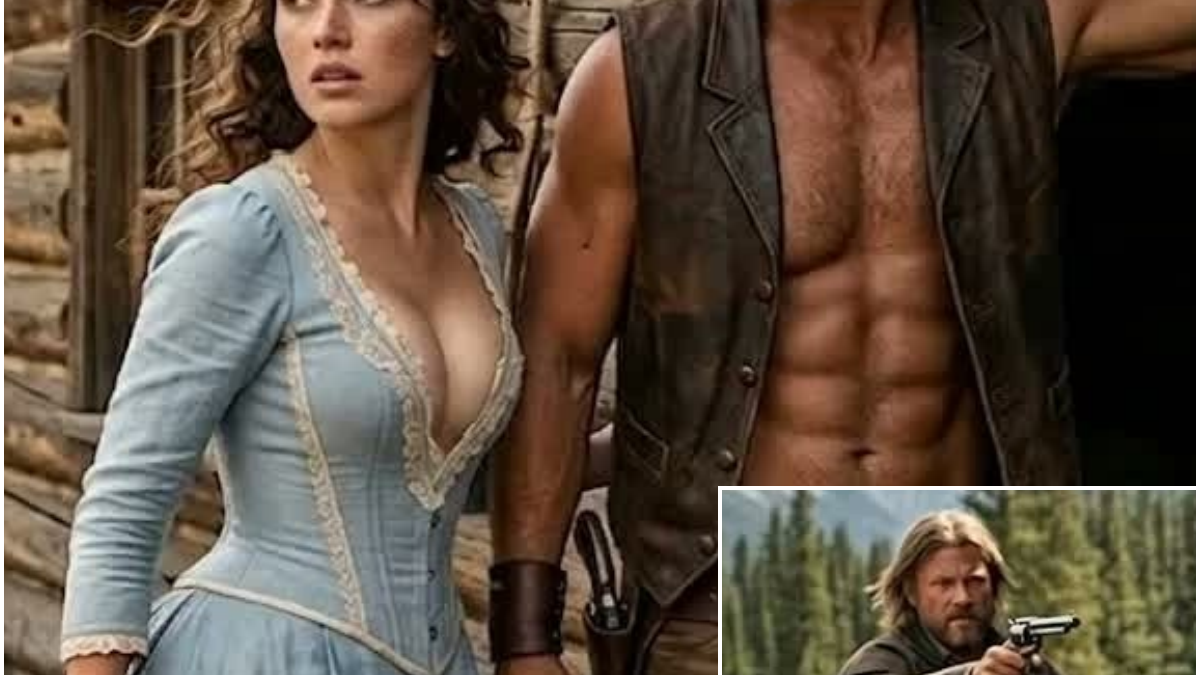
Ill Marry Anyone to Escape Him She Chose a Mountain Man And Discovered True Love
The letter burned fast, but Elizabeth Carter didn’t move her hand away.
Flames climbed the paper like they had been waiting for it, curling the edges, swallowing the name that had followed her for 6 years.
She watched it turned black in the dirt behind the boarding house, and did not blink, not once.

When it was gone, she didn’t reach for another match.
She reached for the small tin box hidden in her dress.
$340.
That was everything she owned.
If you’re still here, don’t look away because this is the moment her life split in two.
The letter had come the day before.
Short, cold, final.
Come home.
You will marry Gerald Finch before the month is out.
Elizabeth had read it, standing in the narrow hallway, her back straight, her breath slow, until something inside her went still in a way that felt dangerous.
Not panic, not fear, something quieter, something that didn’t ask permission anymore.
She folded the paper once, then again, then walked outside and lit the match.
Now there was nothing left to answer.
She sat in the dirt, skirt gathering dust, and opened the tin box again.
$340 and one folded advertisement.
She had carried it for 2 weeks.
Read it so often the creases had softened under her fingers.
Honest man seeking hardworking partner for Mountain Ranch.
No luxury promised.
Respect guaranteed.
Nathan Cole, Harland Ridge, Colorado.
She had almost written three times.
Each time she told herself the same thing.
You don’t run towards strangers.
But Samuel’s letter had changed something because running away had never ended anything.
It had only moved the cage.
Elizabeth stood, brushed the dirt from her skirt, and went inside.
She didn’t think anymore.
Thinking had kept her stuck.
She sat at the desk and wrote, “I can work.
I can learn.
I can stay quiet when needed and speak when it matters.
I’m not asking for comfort.
Only to be treated like a person.”
She sealed it before doubt could catch up.
By evening, the letter was gone.
6 days later, the reply came.
One word, come.
That night, she packed.
No ceremony, no looking back, just a worn leather bag, the tin box, and the last of her courage.
Willow Creek had never been kind to her.
Not when her father died, not when her mother followed him two years later, and not when Samuel became the only voice left in the house.
He had learned early that control didn’t need to shout.
It only needed to repeat, “You’re wrong.
You’re careless.
You make things worse.”
She learned to shrink, to move carefully, to make herself smaller than his temper.
But it never stayed enough.
The night everything changed came in the general store.
She had only meant to help.
A simple mistake in the ledger.
40 cents.
She pointed it out quietly.
Samuel didn’t thank her.
He didn’t even look at the numbers.
He looked at her.
You’re here to carry flour, he said.
Loud enough for everyone to hear.
Not to think.
The room turned away.
Every face, every eye except hers.
She placed the correct coins on the counter, picked up the sack, and walked out.
That was the first time she left him standing alone.
It took 6 months to leave for good.
The train ride west felt longer than it was.
She ate the biscuits she brought, drank water slowly, watched the land change through the window, flat fields turning to rising hills, then mountains.
By the time she stepped off at Harland Ridge, the air felt different, thinner, sharper, real.
She stood on the wooden platform with her bag, her tin box, and $3.40.
Nathan Cole was late.
10 minutes, then 20.
The sun pressed hard against her shoulders.
A thought tried to slip in.
You made a mistake.
She pushed it away.
Boots sounded behind her.
Slow, steady.
She turned.
He was taller than she expected.
Broad shoulders, sunworn face, dark eyes that didn’t hurry.
He looked at her once like a man measuring distance.
Miss Carter, not a question.
Mr. Cole.
He glanced at her bag, at her hands, at the empty space around her.
You eat today?
The question caught her off guard.
Biscuits?
She said.
He nodded once.
We’ll get a meal.
I’m fine.
He met her eyes.
I didn’t ask that.
No edge in his voice, no force, just certainty.
She held his gaze a moment longer, then nodded.
“All right.”
The town was small.
The food was simple.
Beans, cornbread, coffee strong enough to wake the dead.
He didn’t talk much, but his silence didn’t press on her.
It didn’t demand anything.
It just was.
And for the first time in years, she ate until she was full.
She was full.
The ride up the mountain came next.
The trail climbed through trees and stone, winding higher with every step.
The air cooled.
The valley fell away behind them.
She focused on the horse beneath her, the steady rhythm of hooves, the scent of pine.
Nathan wrote ahead, glancing back now and then, not hovering, not correcting, just making sure she was still there.
When the trail narrowed and the horse shifted, he paused.
That’s the rough part, he said.
Then rode on.
No lecture, no judgment, just information.
The ranch appeared at sunset.
A cabin, a barn, a fence that had seen better days.
Nothing pretty, nothing easy, but solid, real.
She stared at it longer than she meant to.
“It’s real,” she said softly.
Nathan stopped beside her.
“What did you expect?”
She shook her head.
“I didn’t know.”
He looked at the land.
“Different good or different bad?”
She breathed in the mountain air.
“I don’t know yet,” she said, then quieter.
“But it’s real,” he nodded once.
“Yeah.”
They rode down together in the fading light.
Elizabeth woke before the light reached the mountains, not because she had to, because her body no longer waited for permission.
The cabin was quiet.
Cold air slipped through the cracks in the logs, carrying the scent of pine and damp earth.
She moved carefully, learning the space by memory, not fear.
Coffee first.
The stove fought her.
She fought back.
By the time the flame held steady, something inside her settled with it.
When Nathan stepped into the room, pulling on his vest, he stopped, looked at the pot, at the cup, then at her.
You didn’t have to.
I wanted to.
She didn’t look at him when she said it.
Didn’t need to.
He poured the coffee, tasted it.
You made it right.
Four simple words, but they didn’t land like anything she was used to.
No correction after, no hidden edge, just right.
She nodded once.
My mother taught me.
She did well.
That was all.
And somehow it was enough.
The work began that morning.
Real work.
Not the careful, invisible kind she had done her whole life.
This left marks on her hands, on her shoulders, on her breath.
She cleaned, sorted, lifted, carried.
By midday, her muscles burned in places she had forgotten existed.
By evening, the cabin felt different.
Not bigger, just hers.
Nathan watched without hovering, spoke when needed, explained what mattered, left the rest alone.
When she made mistakes, he didn’t reach for them.
He stepped around them, like they were just part of the ground.
That changed something she hadn’t expected.
The first real crack came 3 days later.
The barn, a grain sack, too heavy.
It slipped, fell sideways, burst open across the floor.
Dust and grain everywhere.
The noise echoed louder than it should have.
She stood in the middle of it, breathing hard, waiting for the voice, for the look, for the weight of it.
Nathan appeared in the doorway, took in the mess, the broken seam, then her.
You hurt?
She blinked.
No.
He nodded.
Good.
Then he picked up the barrel.
I’ll get the broom.
No lecture, no disappointment, no moment stretched thin to make her feel it.
Just fix it together.
She knelt in the grain, pressing the torn seam closed with her fingers.
Something tight behind her eyes she didn’t recognize.
Not weakness, something else, something that didn’t have a name yet.
That night, she stitched the sack back together under lamplight.
Careful, precise, like numbers, like something she could control.
Nathan didn’t mention it again, and that silence held something steady.
Weeks passed.
The rhythm built.
Morning coffee, work accounts, evenings that settled without wait.
She found his ledger one afternoon.
Three years of numbers, unbalanced, messy, not wrong, just incomplete.
She fixed it.
Didn’t ask, didn’t think, just followed the lines until they made sense.
When Nathan saw it, he didn’t speak at first.
Sat across from her.
Read the pages.
Slowly.
“You’ve been off all winter,” she said quietly.
He nodded once, couldn’t see it.
She tapped the column.
Started here.
He studied it again, then looked up at her.
“You did this today?
I’m good with numbers.”
Again, no apology.
No shrinking, just truth.
He leaned back slightly.
Something shifted in his expression.
Not surprise, not doubt, recognition.
You ever thought about doing this for a living?
She held still.
I’ve thought about it.
Think about it again.
That was all.
But the words stayed.
The town came next.
Harland Ridge.
Small, rough, watching everything.
She went twice a week, helped a merchant with his books, earned money that was hers, held it in her hand, felt the weight of it, different from survival, different from scraps.
This was earned, chosen, owned.
Clara told her about Margaret.
Not gently, not harshly, just straight.
Wife, child, gone in winter, three days apart.
Elizabeth didn’t ask Nathan about it, but she noticed the quiet stretches, the way he stayed outside longer some evenings, the photograph on the shelf, a woman smiling into the sun, alive in a way the room wasn’t.
That night at supper, he spoke first.
Her name was Margaret.
Elizabeth looked at him.
She was beautiful.
He nodded once.
Yeah.
Silence again, but not empty.
She held her breath a second, then said.
I’m sorry.
He looked up.
I’m sorry for what you lost.
He studied her longer than usual.
Then I’m sorry for what you left behind.
That hit different.
Not advice, not fixing, just seeing.
She lowered her eyes.
Thank you.
The fire cracked softly.
Neither of them spoke again, but something had changed.
Not loudly, not all at once.
Just a shift like ground settling under a house.
The letter came on a Thursday.
She knew before she opened it.
Samuel, same handwriting, same pressure in the ink.
She sat on the bench outside the post office, opened it, read it once, then again, I will come and get you.
Her hands stayed still.
No shaking, no rush, just steady.
She folded it, put it away, finished her work.
But riding back up the mountain, the thought followed her.
Not fear, not the old kind, something sharper, more aware.
He would come.
And when he did, she wouldn’t be alone.
That night, she told Nathan, “Not everything, but enough control, the store, the letter, the threat.”
He listened, didn’t interrupt, didn’t fill the space.
When she finished, the room held quiet for a moment.
“He’s coming,” she said.
“I know.
I’m not going back.”
“All right, simple.
Final.”
She looked at him.
You understand?
He met her eyes.
You’re here.
That was his answer.
Not explanation, not hesitation, just fact.
She exhaled slowly.
Something inside her loosened again, a little more than before.
Outside, the wind moved through the trees.
The mountain stood still and for the first time in years, the thing coming toward her.
Didn’t feel like something she had to run from.
Samuel Carter arrived just after noon.
No warning, no hesitation.
The sound of hooves carried up the road before she saw him, steady and deliberate, like a man who believed the ground would always give way when he stepped on it.
Elizabeth stood in the yard, didn’t move.
Didn’t go inside.
Didn’t call for Nathan.
She waited.
Samuel pulled his horse to a stop 10 ft from her.
Same posture, same controlled face, same eyes that measured everything like it belonged to him.
Elizabeth?
Her name sounded like ownership.
She didn’t answer right away.
Let the silence sit between them.
I told you to come home, he said.
I remember.
You’ve made a mistake.
No, she said quietly.
I didn’t.
His jaw tightened.
He glanced at the cabin, at the fence, at the land, then back at her.
This isn’t your place.
Her fingers curled slightly at her sides.
It is now.
He stepped down from his horse.
Slow, careful, like he was approaching something fragile he intended to take.
“You don’t understand what you’ve done,” he said.
“Running off like this, living here.”
He let the words hang.
She didn’t fill them.
Didn’t shrink from them.
“I understand it better than you do,” she said.
That stopped him just for a second.
Then the anger came.
Quieter than before, more controlled.
You embarrassed this family.
You tried to sell me.
The words landed hard, flat, real.
Samuel’s face shifted, only slightly, but enough.
That’s not what this is.
That’s exactly what it is.
He stepped closer.
Gerald Finch.
I’m not marrying him.
You don’t get to decide that.
She held his gaze.
I already did.
The wind moved through the yard.
The fence creaked softly behind her.
Samuel exhaled slowly.
Changed his tone.
Shifted tactics.
Elizabeth, he said, softer now.
You don’t know this man.
She didn’t look back.
Didn’t need to.
I know enough.
You think this is better?
He said, “You think this ranch, this life is worth throwing everything away?”
She let the question sit, then answered it without raising her voice.
I didn’t throw anything away.
His eyes narrowed.
You walked out.
I walked out of being controlled.
You walked out of your responsibility.
I’m not your responsibility.
Silence again.
Longer this time.
He wasn’t used to that.
Wasn’t used to her not filling it for him.
You don’t belong here, he said.
She took one step forward, closed the distance he thought he owned.
I choose where I belong.
The words didn’t shake.
Didn’t rush.
They settled between them like something permanent.
Samuel looked at her like he was seeing her for the first time.
Not the version he had built.
Not the one he controlled.
Someone else.
Something else.
You’ll regret this, he said finally.
Maybe, she said.
That answer caught him off guard.
But it’ll be mine.
Boots sounded behind her.
Slow, steady.
Nathan.
He didn’t step in front of her.
Didn’t take her place.
He stopped beside her.
Close enough to be there, far enough to let her stand.
Samuel’s eyes moved to him, measured, dismissive.
Then less so.
This you’re doing?
Samuel asked.
Nathan didn’t react.
She made her choice.
Samuel’s lip curled slightly.
You think you can keep her?
Nathan met his gaze.
I’m not keeping anyone.
The words were quiet, but they didn’t move.
Samuel looked between them.
Something in his face shifted again.
Not anger this time.
Not control.
Something closer to uncertainty.
She’s my sister, he said.
And she’s her own person, Nathan replied.
No raised voice, no challenge, just fact.
Samuel stared at him, then back at her, then at the land, the fence, the cabin, everything she had stepped into.
Everything she had chosen.
And for the first time, he didn’t have an answer ready.
You don’t understand how this works, he said, but it sounded thinner now.
Elizabeth shook her head slightly.
No, she said.
You don’t.
Another long silence, the kind that doesn’t wait to be filled.
Samuel turned away first, walked back to his horse, stopped with his hand on the saddle, didn’t look back when he spoke.
You’ll need more than stubbornness out here.
I have more than that.”
He nodded once, like he heard it, like he believed it, even if he didn’t want to.
Then he mounted, pulled the rains, and rode away.
The sound of hooves faded slower this time.
Not sharp, not final, just leaving.
Elizabeth stood where she was.
Didn’t move until the dust settled.
Didn’t speak until the silence came back.
Then you all right?
Nathan’s voice low, steady.
She exhaled long, deep.
“Yeah,” she said.
And this time it was true.
She turned toward the fence, toward the work waiting, toward the life she had stepped into.
Nathan watched her a moment, then followed.
Not leading, not pulling, just beside her.
The sun dipped lower over the mountains.
Light stretching long across the land.
The fence line still needed fixing.
The posts leaned.
The wire sagged.
Work that would take time.
Effort.
Patience.
Nathan picked up the tools.
She reached for the level.
Show me again, she said.
He did.
Hands steady, voice simple.
They worked side by side as the light faded.
No rush, no noise, just the sound of wood settling into earth, wire pulling tight, something broken, being made solid again.
At one point, she looked up, caught him watching her, not measuring, not judging, just there.
The corner of his mouth shifted, almost a smile.
She looked back down, focused on the level, but her hand didn’t shake.
The last post went in just as the sun dropped behind the ridge.
Nathan pressed it once, tested it.
It held.
He looked at her.
Good.
She nodded.
Yeah.
The wind moved through the trees.
The mountain stood quiet and somewhere far behind them, the life she had left stayed gone.
Nathan rested his hand briefly on the fence.
Then Elizabeth, she turned.
Stay.
Not a command, not a request, something in between, something honest.
She held his gaze.
Didn’t answer right away.
Let the moment breathe.
Then I already am.
The light faded completely and the ranch stayed.








