The Horrifying Tragedy at Port Chicago | Disaster Documentary
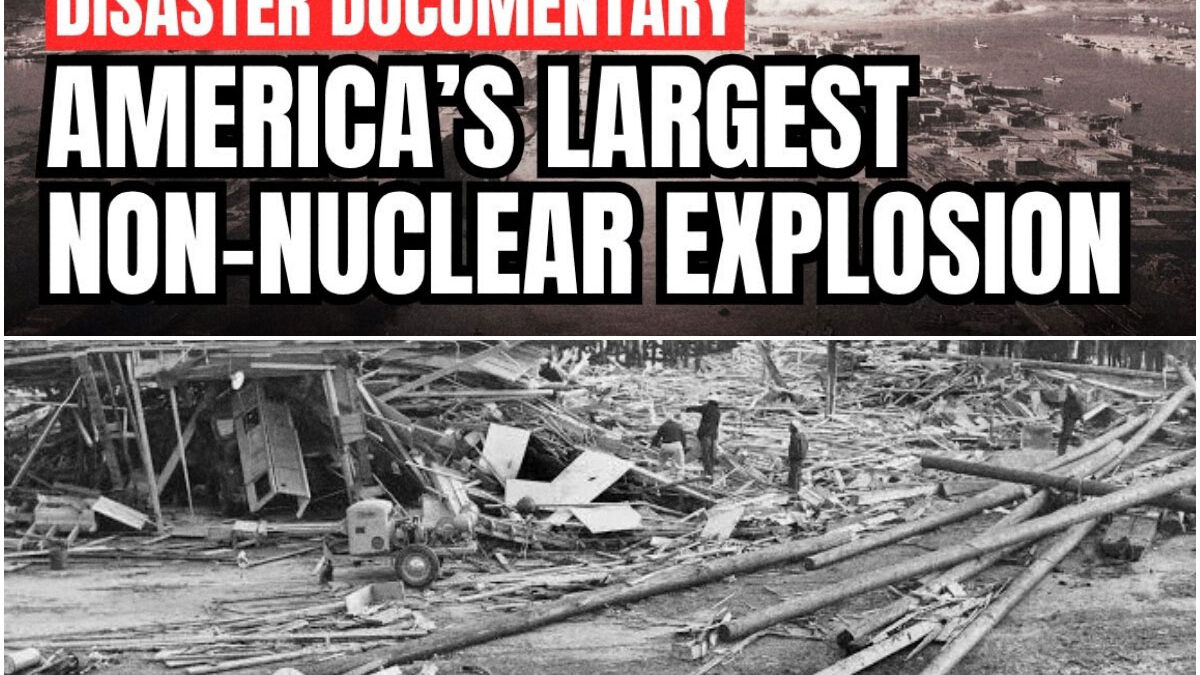
The Horrifying Tragedy at Port Chicago | Disaster Documentary
July 17th, 1944.
Port Chicago, California.
At 10:18 p.m., the night sky over Swissen Bay split apart.
Two massive explosions tore through the naval ammunition dock.

A white flash, then a thunderclap that flattened everything within a mile.
Steel twisted like paper.
Box cars vanished.
A mushroom cloud rose 2 mi high.
Windows shattered 40 m away.
People thought an earthquake had struck.
320 men, sailors, civilians, sons, and fathers were gone in an instant.
It was the deadliest homeront disaster of World War II.
So, how could something like this happen?
In the summer of 1944, the quiet town of Port Chicago sat along the marshy edge of Swissen Bay, 30 mi northeast of San Francisco.
It was a place most Americans had never heard of.
Little more than a rail spur, a dock, and rows of barracks surrounded by tulie reeds and salt wind.
But every night the stillness trembled with the sound of freight trains arriving from inland depots carrying the lifeblood of war.
Bombs, shells, depth charges, and torpedoes bound for the Pacific.
The men who handled them were mostly young African-American sailors, barely out of training.
They had joined the Navy to serve their country, yet were barred from combat and assigned to the most dangerous job on base, loading live ammunition by hand.
They were organized into segregated divisions commanded entirely by white officers.
Most had never been trained in ordinance handling.
Yet each day they stack shells and powder as if moving barrels of flour.
The orders were simple.
Move faSt. Keep the ships full and never question the pace.
The town around them pulsed with wartime rhythm.
Cantens filled with laughter.
Trains clattering through the night.
Families watching from porches as the glow of welding torches shimmered across the water.
Wives wrote letters that took weeks to arrive.
Paychecks were small, but hope was bigger.
The men joked that they were loading the war by the ton, but beneath the pride ran exhaustion, resentment, and quiet fear.
Supervisors demanded speed records.
Safety drills were ignored.
The pier shook under the weight of the next shipment.
In the humid darkness, fuses rattled, crates splintered, and no one knew which spark might be the one that ended it all.
The warning signs.
By 1944, America’s war machine was running at full speed.
The Pacific front devoured ammunition faster than factories could produce it, and every coastal port was under pressure to keep ships supplied.
Port Chicago was small, but its output was enormous.
Critical artery feeding the Navy’s campaigns in the Pacific.
More than 400 men worked in shifts around the clock, moving hundreds of tons of explosives each day.
The job demanded precision, patience, and training.
But what these men had instead was urgency, inexperience, and fear of discipline.
The Navy had never imagined that young men fresh from basic training would be responsible for handling live ordinance.
But wartime segregation dictated everything from where men slept to where they ate to the kind of work they were allowed to do.
Black sailors were excluded from combat duty, barred from engine rooms, denied promotions, so they were sent to the docks.
It was considered labor, not service.
At Port Chicago, the white officers in charge were often just as inexperienced.
Some were reserveists with no background in munitions handling.
Yet, they gave orders to sailors moving bombs weighing hundreds of pounds.
To make matters worse, competition between divisions was encouraged.
Officers kept scoreboards pitting their men against one another in reckless contests of speed.
Whoever loads the most tonight, one lieutenant boasted, gets liberty this weekend.
There were no manuals, no proper briefings, and almost no safety gear.
Sailors worked shirtless under the summer heat, sweat stinging their eyes as they lifted crates and shells into slings.
The air smelled of cordite and oil.
Sometimes when a shell slipped and clanged, men froze, but the supervisors would wave them on.
Keep moving, they’d shout.
You’re holding up the line.
A 20-year-old seaman named Freddy Meeks remembered how the shells looked under the lights.
Like eggs stacked on top of each other, only they could kill you.
He had grown up picking cotton in North Carolina before joining the Navy, hoping for a steady wage and a way to help his family.
Now he spent 12-hour shifts lifting live explosives into the holds of ships with nothing but his hands and prayer.
“We didn’t know what we were doing,” he said years later.
We just knew we had to work faSt. The loading pier was a narrow wooden platform stretching out over the bay where two cargo ships could tie up at once.
Each vessel carried tons of depth charges, shells, and bombs.
Forklifts rolled across the planks, cranes creaked overhead, and every thud sent vibrations through the structure.
At times, sailors joked that the whole dock seemed ready to explode.
But laughter was easier than fear.
Reports of danger reached higher ranks more than once.
In June 1944, a safety inspector warned that the pace of loading was unsafe, especially at night when visibility was poor and fatigue set in, but little changed.
Wartime production left no room for hesitation.
Officers reassured one another that the men will learn by doing.
Meanwhile, frustration simmered among the sailors.
They watched white officers bark orders from a distance while they handled the risk.
When one man questioned why the officers stayed behind the yellow line far from the cargo, he was told, “That’s not your concern.
The system was built on hierarchy, and hierarchy demanded obedience.
Men who complained were written up or threatened with court marshal.”
“You didn’t argue,” remembered another survivor.
“You just kept your mouth shut and did what you were told.”
In early July, the tempo intensified.
Shipments bound for the Mariana Islands campaign were arriving daily.
The dock crews were exhausted.
Some men had worked 20 straight days without reSt. A few noticed strange popping sounds from certain crates, the wooden slats expanding in the heat.
But the warnings went nowhere.
The officers were chasing numbers and headquarters in San Francisco wanted results.
One sailor later recalled watching a 500B bomb slip from its sling and hit the deck.
It didn’t explode, but it dented the casing.
The men froze.
The officer in charge laughed it off.
See, these things aren’t as dangerous as they look.
He was wrong.
Dangerously wrong.
Underneath the wooden pier, the river’s current eroded the support piles, causing faint tremors when heavy loads passed.
Cranes jerked, slings swung, chains sparked.
None of it seemed serious enough to stop work.
Danger had become routine, a background hum everyone had learned to ignore.
Segregation compounded everything.
The black sailors were forbidden from joining white units or taking orders directly from senior ordinance officers.
Training manuals were kept in offices they couldn’t enter.
When they asked for clarification, the response was usually, “Just do it the way you’ve been doing it.”
A few men tried to speak up.
Bosen’s mate, Joseph Small, one of the more senior sailors, quietly warned his crew to slow down.
“These bombs don’t care what color you are,” he said.
“But he knew the price of defiance.
Slow loading meant punishment, lost liberty, maybe demotion.
So the men kept moving.
At night, the air base across the bay glowed orange as planes landed and refueled.
The war felt close, not as a distant battlefront, but as a pulse in the air.
Letters from home spoke of rationing, of brothers fighting in Italy or the Pacific.
Many of these dock workers wondered if they’d ever see those places themselves.
They didn’t know that the war would find them right where they stood.
On July 13th, a Thursday, the SS Quinno Victory arrived at the dock, brand new, it greyhole gleaming in the sun.
It was designed to carry heavy munitions, and Port Chicago’s officers were eager to test its capacity.
Alongside it lay the S SA Brian, already half loaded with thousands of pounds of bombs and shells.
The two ships bobbed gently at the pier, their decks stacked with crates labeled explosives handled carefully.
As the men worked through the night, some noticed sparks flickering where steel cables scraped across the cargo.
Others heard the occasional dull thud of shifting loads below deck, but no one called a halt.
Stopping the operation required authorization, and no officer wanted to explain a delay to command.
Saturday came and went.
On Sunday, July 16th, the men were given a half day off, a rare break.
Many went into town, catching the train to Oakland, or just resting in their bunks.
Laughter echoed through the barracks that evening.
Some sang along to the radio.
Others played cards and talked about home.
One man, Seaman Albryant, scribbled a letter to his mother.
“I’m all right,” he wrote, working hard, hoping to get some time off soon.
He folded carefully, unaware it would never be sent.
By Monday morning, July 17th, the Tempo returned.
The officers pushed for record numbers again.
More than 4,600 tons of ammunition were scheduled for loading that night.
It would be the heaviest shipment yet.
The sailors groaned but obeyed.
They knew better than to question the orders.
When the sun set, the dock lights flickered on.
Tall poles casting white halos across the pier.
The bay was calm, the smell of salt mixed with oil and tar.
Herware in the darkness, a crane engine sputtered and coughed back to life.
The men formed lines, passing shells, loading crates, tightening ropes.
Above them, the stars shimmerred faintly through the haze.
To an outsider, it might have looked like order, a symphony of movement.
Men and machines working in rhythm for the war effort.
But beneath that rhythm lay chaos, waiting for a spark.
And that spark, when it came, would change everything.
The disaster unfolds.
Night settled over Port Chicago with a heavy quiet that belied the danger waiting beneath it.
The tide was low, the water black and still, and the wooden dock creaked as men moved across it.
Silhouettes beneath harsh flood lights that buzzed like insects.
A warm wind came off the bay carrying the smell of diesel and salt.
From the hills beyond, faint lights of farmhouses flickered, unaware of what was coming.
The EA Brian sat mowed at the pier, her gray hull looming against the shoreline.
Inside her cargo holds lay more than 4,000 tons of explosives, aerial bombs, depth charges, naval shells, and torpedoes, each packed and stacked with mathematical precision, or as much precision as tired hands and guesswork could manage.
Alongside her, the Kino Victory floated higher in the water, newly arrived, waiting to be loaded next.
Both ships, steel giants of war, swayed gently in rhythm, held fast by thick ropes tied to the dock’s weathered posts.
It was just after 10:00.
The work lights glared down like miniature suns.
Teams of sailors moved along the deck, heaving boxes onto cranes, guiding them into the open hatches.
The rhythmic clatter of machinery echoed across the bay, a steady, hypnotic pulse that mixed with the drone of generators.
To the men, it was familiar music, the nightly song of labor.
The officers on duty stood back, clipboards in hand.
The air was tense but routine.
Each man knew his task.
Each hoped the night would pass like all the others.
Sweat, exhaustion, and relief when the shift was finally done.
Inside the EA Brian’s holds, layers of ordinance were stacked from floor to ceiling.
Some crates had loosened in the heat, their wood expanding slightly, nails groaning under the pressure.
The smell of sulfur and varnish clung to the air.
Near the hatch, a crane swung overhead, his chain rattling, lowering a fresh pallet of bombs toward the men below.
A sailor shouted for it to come slower.
Another cursed as the load jolted to one side.
The crane operator eased the chain, muttering to himself, eyes stinging from the floodlike glare.
Sparks flashed briefly as the hook scraped metal.
No one noticed.
Farther down the pier, a diesel truck backed up with another shipment.
Fuses, detonators, and high explosive shells, all marked with bright stencils warning danger.
The driver killed the engine, and for a moment the sudden silence was startling.
Then the clatter resumed.
Boots thudding on planks, chain scraping, boxes thumping as they shifted position.
From the barracks a mile away, some men off duty could see the faint glow of the dock lights through their windows.
They were used to it.
They joked that Port Chicago never slept.
The town itself, a collection of small houses, a mess hall, a canteen, was quiet now, except for the occasional rumble of trains on the distant line.
On the pier, the foreman barked in order to pick up the pace.
The night was warm, humid.
Mosquitoes drifted in clouds near the waterline.
Men wiped sweat from their faces and kept moving.
The officers wanted the EA Brian fully loaded before dawn.
Every detail of that moment, every sound, every vibration was captured in memory by those few who survived it.
The clink of chains, the wine of a winch, the smell of creassot and fuel.
Somewhere a crate slid against another and splintered.
The echo was sharp, hollow, insignificant.
Then came a pause.
Someone called out, a voice lost in the den, and the work continued.
The first flash came without warning.
It was not large, not yet.
A quick burst of orange somewhere deep inside the hold of a momentary flicker like a struck match in darkness.
A second later, a roar followed and the night exploded into light.
The initial blast shattered the deck.
Men were thrown into the air as if lifted by invisible hands.
The EA Brian vanished in a white flash so bright it seared the sky.
For a heartbeat the entire pier seemed to rise from the earth.
Then came the second explosion, far greater than the first, as the ship’s munitions ignited, but in a single chain reaction.
The sound was indescribable.
Witnesses miles away said it was like the Earth itself splitting open.
The blast tore through the air at supersonic speed, flattening everything in its path.
Steel beams twisted like straw.
Box cars weighing 20 tons were hurled half a mile in land.
A fireball 2 mi wide lit the night as bright as day.
The shock wave rippled outward, smashing buildings, splintering glass in towns across the bay.
In Vallejo, windows burst in their frames.
In San Francisco, 40 mi away, people ran into the streets, convinced they were under attack.
The blast registered as a small earthquake at the University of California seismograph in Barkley.
At the pier, there was nothing left.
The EA Brian disintegrated, vaporized in a single instant.
The Quinnel Victory morowed nearby was torn apart.
Its steel hull folding in on itself before sinking in seconds.
Every man on the dock, every sailor on board, every officer within reach of the pier gone.
The air filled with a rain of debris, twisted metal, splinters of wood, and burning fragments that fell across the water like meteors.
The shock wave rippled through the bay, creating a wall of wind that snapped trees and tore roofs from buildings.
At the barracks, a mile and a half away, men were thrown from their bunks.
Windows shattered inward, showering glass across the rooMs. The lights went out.
A second later came the sound.
Not one but two colossal detonations that rolled together into a single endless roar.
Those who stumbled outside saw an enormous column of fire climbing into the sky.
Orange, white, then black, forming a mushroom cloud that rose two miles high.
The entire horizon glowed.
For a few moments, it looked like the dawn of another world.
The dock itself was gone.
Where it had stood was now a crater 300 ft wide and 40 ft deep, filled with boiling water and scattered wreckage.
The blast had carved a new shoreline into the bay.
Closer to the site where the town met the base.
Barracks were flattened, roofs torn away, and cars tossed like toys.
Telephone poles leaned at impossible angles.
People lay stunned on the ground, ears ringing, lungs burning from the shockwave.
Those who could still stand ran toward the light.
But the path to the docks was blocked.
The road a maze of wreckage and flame.
The air stank of smoke, oil, and gunpowder.
The night that had begun so ordinary was now unrecognizable.
A mile offshore, fishermen in small boats felt the concussion slam through the water.
Waves roped out of nowhere, tossing their vessels like leaves.
One man later said it felt as if the sea itself had jumped.
Back at the base, the first cries began to rise.
Men called out for friends, for officers, for anyone who could answer.
There was only the crackle of fire and the hiss of wind.
The dock was a sheet of flame stretching into the bay, where black water lapped against burning debris.
At the northern edge of the base, a group of men tried to reach the pier.
They found the railroad tracks ripped from the ground, box cars on their sides like discarded toys.
The closer they got, the hotter the air became.
An oven heat that forced them to their knees.
Somewhere beyond the flames, ammunition continued to detonate.
Small explosions popped in succession, grenades, shells, torpedoes cooking off, a grim reminder of what had been stored there.
Each new blast sent fresh showers of sparks into the night.
It was impossible to tell where the dock had been.
Only the pilings remained, jutting from the bay like broken teeth.
The EA Brian was gone so completely that investigators later said they never found a single recognizable piece of her hull larger than a few feet across.
The blast’s fury had done more than destroy it had erased.
In the nearby town of Clyde, residents rushed from their homes, thinking a ship had collided or an enemy had struck.
Mothers clutched their children.
Men grabbed buckets, ready to fight a fire that would never come close enough.
They could see the glow over the water, but not the source.
The radio offered no answers.
The Navy base scrambled to assess what had happened, but the phone lines were down.
The command post was dark.
For long minutes, confusion rained.
Officers stumbled through debris, shouting names that no one answered.
On the distant shore of Martinez, people stood along the waterfront, staring at the inferno across the bay.
It burned like a city on fire.
At 10:20 p.m., barely 2 minutes after the first flash, the night over Swiss Bay was transformed into chaos.
Flames licked the sky, ash fell like snow, and the smell of burning fuel drifted for miles.
The sound rolled across the water, echoing through the hills.
Those who survived the shock wandered aimlessly, dazed.
Some were bleeding from ears and noses, their clothes torn by the blaSt. Others were barefoot, their shoes blown off by the force.
One man, stumbling through the urekage kept repeating a single phrase.
They’re all gone.
Within minutes, ambulances from neighboring bases began to arrive.
The roads were clogged with debris, and drivers had to steer around craters and fallen trees.
The flames illuminated their faces as they stepped from the vehicles, the scene before them too vast to comprehend.
They had expected survivors.
There were none to be found.
The dock that had once been the pride of Port Chicago was now a smoldering scar on the shoreline, a wound carved by its own labor.
No one could yet grasp the scale of loss or the strange silence that followed.
The sound of the explosion had traveled farther than anyone’s voice could ever reach.
And for the men still standing on the edges of that broken base, the question that hung in the air was the same one that history would later ask.
What could possibly have gone so wrong?
The night after the explosion was one of chaos, confusion, and silence all at once.
For miles around Swisson Bay, the world had been jolted awake.
Windows shattered in Vallejo.
Chandeliers swung in Oakland.
In San Francisco, sailors ran from barracks into the streets, convinced a Japanese bomber had struck the coaSt. For a moment, no one could tell what had happened, only that something vast and terrible had torn the night apart.
Back at Port Chicago, darkness fell again where the blinding light had been.
The flood lights on the base were gone.
Power lines snapped and smoldering in the dirt.
A haze of smoke hung low over the wreckage.
The only illumination came from fires licking at twisted steel and the eerie unbroken glow still rising from the bay.
The men who survived inside the barracks were deafened, stunned, bleeding from shattered glass.
Some had been blown from their bunks.
Others clawed their way out from collapsed roofs.
For a long moment, no one spoke.
The sound had been too much for the human ear.
A wall of noise that seemed to crush the air itself.
Then the shouting began.
“Get outside!”
Someone yelled.
Get to the dock.
Boots stumbled over splintered floorboards.
Men poured out into the night, disoriented, clutching flashlights or whatever they could find.
Some thought a bomb had hit the ammunition trains.
Others imagined enemy planes overhead, but the sky was empty, glowing only with the light of their own destruction.
As they ran toward the waterfront, they found the ground changed beneath their feet.
The familiar gravel paths were cratered, the fences torn away, the air was thick with dust and smoke.
Somewhere ahead, the faint roar of burning fuel rolled like thunder.
They came to where the dock should have be and stopped.
Nothing was left.
The pier, the ships, the cranes, the rail cars, all of it was gone.
In its place yawned a black crater filled with churning water where flames floated like oil lamps on the surface.
The shock wave had driven the bay backward, and it was now rushing in again, swallowing the debris in great sucking waves.
A man dropped to his knees, whispering prayers he couldn’t hear himself speak.
Another simply stared, his flashlight beam trembling across the water.
Everywhere they turned, there was destruction.
A rail car lay on its side, wheels half buried in the earth.
The tracks it had been on were gone.
A truck twisted into a mangled shape, lay upside down of 100 yards from where it had been parked.
Shreds of clothing fluttered from the barbed wire fence.
The smell hit next.
A mix of burning oil, charred wood, and something chemical, metallic.
The air stung the eyes and throat.
Every breath tasted of smoke.
Men began shouting names.
No one answered.
Brian Meeks Jones.
Only the crackle of fire replied.
A few tried to move closer to the crater, but the heat drove them back.
Ammunition continued to detonate in small bursts.
Depth charges, rockets, tracer rounds, each one lighting up the sky for a moment before fading.
Every explosion felt like the echo of the first, a cruel reminder of what had happened minutes before.
One man found a body, or what was left of one, near the edge of the field.
He froze, unable to recognize who it had been.
A ring, a scrap of uniform, a boot.
That was all that marked the sailors who had once stood shoulderto-shoulder on the dock.
Farther in land, the barracks were chaos.
Walls had collapsed, beams splintered, windows blown in.
Men wandered half-dressed, faces pale with shock.
Some thought the war had reached them.
Others thought the world had ended.
The blast had knocked clocks from walls, shattering time itself.
The base commander, stunned but alive, gathered what officers he could find.
They stumbled towards the operations building, where phones were dead and radios silent.
It took nearly 20 minutes to locate a working field set.
When they finally reached the regional command center, the message was brief and uncertain.
Port Chicago destroyed.
Many dead.
Need help immediately.
Help was already on the way.
Across the bay, fire brigades and medical crews from May Island and Benia were scrambling to respond.
But the roads were blocked.
Telephone poles down, rail lines buckled, fires burning along the way.
It would take hours to reach the site.
In the meantime, those who remained began to do what they could.
Sailors without orders turned into rescuers.
They carried lanterns, makeshift stretchers, blankets, and anything useful.
They searched the perimeter first, calling into the smoke for survivors.
A few injured men were found near the rail spur, their bodies torn by flying debris.
One had been thrown nearly 200 ft and lived, though every bone in his body seemed broken.
Another stumbled from a ditch, face blackened, hair singed, his uniform in rags.
He spoke one word, ship, before collapsing.
They laid the wounded on the grass outside the mesh hall, the only building still partly intact.
Someone tore sheets into the bandages.
Someone else boiled water over a broken stove.
In the flickering light, the wounded groaned softly, their faces reflecting the glow of the fire still burning on the bay.
All night the survivors worked in silence, broken only by the distant hiss of steam and the low rumble of ammunition still cooking off in the water.
There was no rhythm, no order, only instinct and exhaustion.
Near midnight, a few few officers reached the base by jeep from Bissia.
They brought news, confusion, and little else.
No one yet understood what had exploded or why.
Some whispered that an enemy submarine had fired torpedoes into the bay.
Others believed a collision between the ships had set off the blaSt. But those theories faded as the truth became visible.
The crater, the debris, the endless field of twisted metal.
At 1:00 a.m., the fire still burned.
The wind carried the smoke in land, spreading a fine gray ash across the fields.
It settled on rooftops, on uniforms, on the faces of the dead.
In the small town nearby, civilians were awake, standing in their yards, watching the horizon burn.
They could see the column of smoke illuminated by fire from below, turning the night orange and red.
Some thought it was San Francisco in flames.
Others thought it was the end of the world.
Trains halted on nearby tracks.
Engineers refusing to move until they knew it was safe.
A few men from town tried to reach the base, but the guards turned them back, not out of cruelty, but to protect them from what lay ahead.
There was nothing they could do.
By 2:00 in the morning, the first organized rescue parties arrived from Mayor Island.
They came with ambulances, fire trucks, and medical officers, their headlights cutting through the smoke.
The scene that greeted them was beyond comprehension.
The road to the pier was littered with debris, chunks of steel, blown tires, cratered asphalt.
They had to walk the last stretch on foot, carrying lanterns through the verage.
Every few steps, the ground shifted under them, the earth still trembling from the blaSt. When as they reached the waterfront, they found what looked less like a dock and more like a wound.
The crater was still steaming, its edges lined with molten debris.
The remains of the ships were scattered across acres, chunks of hole plating, pieces of railcar wheels, splintered timbers, all fused by heat.
Search lights from the rescue truck swept across the scene, revealing fragments of uniforms, helmets, shoes.
The rescuers worked in silence.
Some began to weep as they realized the scale of loss.
By dawn, the fires had dimmed, but the smoke still rose in tall pillars, drifting east with the wind.
The sun came up red and hazy, its light diffused through the ash.
What had once been the busiest dock on the Pacific coast was now a smoldering ruin.
The survivors, many still barefoot and burned, stood in small groups along the hillside overlooking the bay.
Some clutched blankets, others held nothing at all.
Their faces were blank, their eyes fixed on the crater where their friends had vanished.
At 6:00 a.m., the first formal rescue operations began.
Navy doctors set up triage stations near the main gate.
Trucks arrive carrying supplies, stretchers, medical kits, canvas for covering the dead.
Reporters began to appear, though none were allowed onto the base.
They stood at the perimeter, watching smoke curl into the morning sky, scribbling what little they could confirm.
Rumors spread faster than truth that a Japanese attack had destroyed a naval installation, that hundreds were killed, that the base had been erased.
By midm morning, the full scale of the disaster began to emerge.
Out of roughly 320 men working on the pier and ships, none had survived.
The blast had killed every man within a quarter mile.
The Navy began assembling lists of the missing.
Most of the names were the same.
There were young black sailors and segregated divisions.
Their families would not learn the truth for days.
Telegrams would be sent with simple words missing in the line of D.
At sunrise, the water of Swiss Bay was calm again, but pieces of wreckage still floated on its surface.
Twisted beams, fragments of crates, bits of painted metal that had once been part of a ship’s name.
The wind carried the faint smell of explosives miles in land.
The men on duty that morning would later say it felt like standing on another planet.
The dock was gone.
The pier erased.
The world transformed in a single night.
And yet work bests again almost immediately.
Bulldozers were brought in to clear wreckage.
Engineers began surveying the crater.
The Navy needed to know what had happened and how to prevent it from happening again.
But for the men who survived, the question was deeper than investigational blame.
They had lost friends, brothers, entire divisions in a flash.
They had seen what no human eye was meant to see, a light brighter than war itself, and silence deeper than the sea.
As the sun climbed higher over the Port Chicago, it revealed a landscape of ruin and resolve, a scar that would not heal quickly.
The men who stood there would carry that night with them for the rest of their lives.
And as the last fires flickered out, the long work of rescue began.
The rescue and the aftermath.
Morning came to Port Chicago like a slow confession.
The smoke that had hidden the stars through the night still hung low over the bay, gray and bitter, drifting in land over fields and rooftops.
The light revealed what darkness had spared from sight.
The full shape of destruction.
Nothing on the waterfront was left standing.
The wooden pier had vanished into a churning pit of black water.
What had once been the EA Brian and Quinno victory now lay scattered across two square miles of wreckage.
The first formal rescue teams moved carefully through the brush ruins.
Men from May Island, Benia, and Oakland arrived with stretches and body bags, boots crunching through twisted metal and shards of glass.
The heat still rose from the ground.
Fires smoldered under piles of debris, and ammunition continued to detonate in the distance.
Every few minutes, a sharp crack would echo, sending rescuers ducking for cover.
They searched for survivors, though none were expected.
The crater was a grave, a yawning scar where hundreds of men had vanished in an instant.
The air was thick with the smell of oil and salt and something sweetly metallic that no one wanted to name.
Pieces of rail cars were embedded in the earth.
A locomotive wheel blown half a mile in land lay resting against a fence.
Searchers found small things firSt. A torn sleeve, a bent dog tag, a shoe.
Each discovery stopped them cold.
They knelt, whispered a prayer, and moved on.
Teams combed the shoreline, pulling wreckage from the water.
Some pieces were still warm to the touch.
The Navy doctors waited behind the line, knowing there would be little to treat.
They set up tents anyway, for the wounded who might appear, or for the men who would need help once the shock wore off.
At the edge of the base, sailors not assigned to the rescue stood silently in groups.
Many had lost entire divisions, entire circles of friends.
The barracks looked empty now, blankets still neatly folded on bunks that would never be used again.
Names were called, checked, crossed out.
The lists grew longer with each hour.
By midday, the sky over the bay turned a pale, unnatural yellow.
Helicopters and planes circled overhead, photographing the damage.
Journalists tried to approach, but the Navy sealed the area.
Trucks rolled in with lumber and canvas to build makeshift morgs.
When the first bodies were recovered, they were carried under tarps to the medical tents.
The chaplain stood by the entrance, his Bible blackened by soot, his face expressionless.
He said the same short prayer over each stretcher.
For those who served and were lost, may God receive them home.
Many of the men assisting had never seen death on this scale.
Some were barely 20 years old, fresh from training.
They worked in silence, sleeves rolled up, eyes glazed with fatigue.
When the wind shifted, it brought the faint sound of gulls circling above the bay.
The only living things that dared come near.
In town, civilians gathered outside the gates.
Families from nearby Vallejo and Fairfield arrived desperate for news.
They were met by guards who could tell them nothing.
The Navy would not release names until confirmations were made, and there was little left to confirm.
Mothers clutched photographs, fathers asked if their sons were on the liSt. All they heard was that the entire loading crew was gone.
Back on base, sailors tried to make sense of the loss.
Many blamed themselves for not being on shift, for surviving when others hadn’t.
They replayed the night in their minds, the flash, the roar, the silence that followed.
Some swore they’d felt the ground lift beneath them, as if the earth had tried to shake them off.
Psychologists would later call it survivors guilt.
At the time, the men called it what it felt like, a curse.
By the second day, the fires had mostly burned out, but smoke still curled from the crater.
Divers were brought in to search the bay.
They found little, fragments of steel, scraps of fabric, shards of hull plating fused by heat.
One diver surfaced in tears, saying there was nothing left her down there.
Only mud and wreckage.
Every few hours, an explosion echoed in the distance as a stray ammunition cooked off.
The men barely flinched anymore.
The noise had become part of the landscape like thunder that never left.
A temporary command post was set up on higher ground.
Officers poured over maps and loading records, trying to determine exactly how much ordinance had been on board.
The numbers staggered even them.
Thousands of tons of high explosives all packed within yards of one another.
Rescue crews worked for 3 days without reSt. They filled trucks with debris, cleared roads, built containment lines to prevent fires from spreading.
Each new findine brought a hush, a watch, a belt buckle, a name stitched into cloth.
These were all that remained of men who had once filled the docks with laughter and music.
By the fourth day, recovery had become routine.
The morg tents filled.
The chaplain’s voice grew hoarse.
Workers rotated in shifts, washing soot from their hands, eating in silence.
Some wrote letters they couldn’t send to mothers of the missing, to sweethearts who would never understand.
On the fifth morning, the base flag was lowered to half maSt. A siren wailed softly across the hills, marking the moment when hope finally ended.
That same day, Navy officials announced the official death toll.
320 men.
Of them, 202 were African-American sailors.
The largest number of black servicemen ever killed in a single incident in US history.
The news spread slowly, filtered through official channels and censored dispatches.
Newspapers printed cautious headlines.
Explosion at ammunition loading base.
Many feared dead.
The full story would not be told for weeks.
Among the survivors, grief turned to numbness.
The barracks were eerily quiet now, the laughter gone, the radio silent.
Some men refused to return to the docks.
Others volunteered for burial duty, saying it was the least they could do.
The work of clearing the site continued.
Bulldozers flattened what was left of the pier, pushing the splintered remains into piles.
The crater filled gradually with seaater, becoming a dark lagoon where seagulls gathered on the surface.
From a distance, it looked peaceful.
Up close, it was unbearable.
Every evening, as the sun set behind the smoke streaked hills, the men who remained on base gathered by the messaul.
They didn’t speak much.
Some smoked in silence.
Others just stared at the horizon.
They were waiting for something.
Perhaps orders, perhaps answers, perhaps forgiveness.
In nearby towns, the funerals began.
Most families received sealed coffins.
Many received none at all.
The Navy declared many of the bodies unreoverable.
For mothers and wives, there was nothing to bury but memory.
The community of Port Chicago, once a small, humming wartime town, fell quiet.
Churches overflowed with mourners.
Flags lined the streets.
Yet, even in grief, a strange stillness remained.
No one knew how to talk about what had happened.
The tragedy was too large, too sudden, too senseless.
In the weeks that followed, the base struggled to return to operation.
New sailors arrived, unfamiliar faces filling the emptied bunks.
They looked out across the water at the place where their predecessors had stood, and felt the weight of invisible eyes watching them.
For the men who had lived through that night, sleep came rarely.
The sound of the blast replayed in their dreams, that single instant when the world had turned white, then black.
Some refused to walk near the shore again.
Others stared at the crater each day as if trying to understand it.
They found little comfort in official words.
The Navy promised an investigation, but few expected the truth to bring peace.
What comfort could a report offer to men who had watched their entire division vanish?
Still, they kept working.
They cleared debris, repaired buildings, rebuilt fences.
The base needed to function.
The war had not paused for their grief.
Port Chicago remained a cog in the vast machine of war, one that demanded motion, no matter the coSt. But among the men, something had changed.
Obedience no longer came so easily.
Fear of reprisal meant less now than fear of the dock itself.
When new orders came to resume loading ammunition, many refused.
They remembered the heat, the sound the bodies carried out under sheets.
They knew what waited at the end of carelessness and speed.
That defiance would soon grow into something larger, a protest, a trial, a question that would challenge the very structure of the Navy.
But that belonged to the next chapter.
For now, in those first days after the explosion, Port Chicago was a wound, raw, smoking, and silent.
The men who remained stood among the ruins, their faces gray with ash and disbelief, staring into the still water that had swallowed their friends.
They did not yet know what history would call this night.
They only knew that the sound of it would never leave them.
And as the fires faded into the distance, the first morning without their brothers rose over the bay, quiet, pale, and empty, a lasting legacy.
In the days following the explosion, Port Chicago became a restricted zone.
Military police patrolled its perimeter and armed guards turned away reporters.
The Navy wanted answers, but it also wanted silence.
Wartime secrecy was absolute and no one beyond the chain of command was permitted to speak.
Within 48 hours, an investigative board was convened at Mayor Island.
Admirals, engineers, and ordinance experts gathered in a makeshift courtroom, the air thick with the smell of smoke drifting from across the bay.
They studied photographs of the crater, examined fragments of steel brought from the site, and listened to officers recount the final hours before the blaSt. What they heard was a story of pressure, of speed over safety, of ignorance over training.
But in the official record, the words were softened.
The report concluded that the exact cause could not be determined, though improper handling of explosives could not be ruled out.
There was no mention of segregation, no recognition that the men who died had been set up to fail by the very system they served.
The disaster was described as a wartime accident.
The underlying truth that it was the direct result of negligence and racial inequality remained unspoken, but among the survivors, silence did not laSt. After the explosion, roughly 400 black sailors were transferred to nearby bases.
Most had lost close friends, and all had seen the consequences of unsafe conditions when just weeks later, they were ordered to resume loading ammunition under the same circumstances.
Fear mixed with defiance.
The men refused.
It was an extraordinary act in 1944.
Black enlisted sailors standing together against orders from white officers.
They were not rioting, not deserting.
They simply refused to risk their lives again.
One by one, they said no.
The Navy called it mutiny.
50 men were singled out and charged under military law, the largest mass mutiny trial in US naval history.
The proceedings were held at the naval base in Vallejo under tight security and press censorship.
The accused sat in rows, their uniforms crisp, their expressions grim.
Each faced the possibility of execution.
The prosecution argued that obedience was the foundation of discipline.
The defense countered that obedience did not mean walking willingly to death.
The men insisted they were not rebelling.
They were protesting unsafe conditions that had already killed hundreds of their comrades.
“We were afraid,” one sailor said plainly.
“We didn’t want to die like the rest of them.”
Among the observers at the trial was a young Thood Marshall, then an attorney for the NAACP.
He watched the proceedings closely, convinced that racism, not discipline, was on trial.
Afterward, he spoke to the press, calling the Navy’s actions a clear case of discrimination and a tragedy made worse by injustice.
His presence brought national attention.
For the first time, the story of Port Chicago and the unequal treatment of black servicemen began to reach the public.
Still, the verdict was harsh.
All 50 men were found guilty.
Sentences ranged up to 15 years of hard labor.
They were sent to military prisons, their service records permanently stained.
But history has a way of reshaping verdicts.
As the war ended and the nation reflected on what it had fought for abroad, questions arose about the freedoms denied at home.
The Port Chicago case became part of a growing conversation about race, equality, and the hypocrisy of segregation in the armed forces.
In 1945, as public pressure mounted, the Navy quietly reduced the sentences.
Many of the convicted men were released early and reassigned to less hazardous duties.
But the deeper change would take time and would come from the very shock that had destroyed the base.
In 1946, the Navy began its first steps toward desegregation, merging training programs and ship assignments.
Two years later, President Harry S.
Truman signed Executive Order 9981, formally ending racial segregation in the US military.
Historians would later trace that decision in part back to Port Chicago, to the fire that exposed what discrimination could coSt. The base itself was reboodled, though not quite as it had been.
New safety protocols were introduced.
Training and munitions handling became mandatory, but the name Port Chicago remained synonymous with catastrophe.
Many sailors refused to speak of it.
Others could not stop.
In the years that followed, the story faded from the headlines, but lived on in whispers.
Survivors carried it quietly, their memories heavy and unshared.
Some returned to civilian life and never mentioned their service again.
Others wrote letters to Congress asking for recognition for justice, for something more than silence.
It would take decades.
In the 1980s, historians and activists began to revisit the case.
Records were unsealed.
Transcripts we read.
What had once been dismissed as mutiny was re-examined as protest, an act of courage in the face of systemic injustice.
Journalists interviewed surviving sailors, now elderly men, who still remembered the smell of smoke, the roar of the blast, and the feeling of being treated as expendable.
One of them, Freddy Meeks, who had been among the convicted 50, received a presidential pardon in 1999.
Standing at 90 years old, his voice soft but steady, he said.
I just wanted it cleared up so people would know what really happened.
By then, Port Chicago itself was quiet.
The base had long since closed.
The crater had filled with water, becoming part of the bay once more.
The shoreline was lined with reeds and gulls, the only witnesses left.
In 1994, on the 50th anniversary of the explosion, Congress established the Port Chicago Naval Magazine National Memorial.
It stands today on the site of the disaster.
A stone wall inscribed with the names of the 320 men who lost their lives and a plaque honoring those who stood for justice afterward.
Each year, sailors, families, and visitors gather there to remember.
The site is peaceful now.
The wind rustles through the grass.
The water laps gently against the shore.
But beneath that calm lies the memory of a single night when the the sky turned white and the cost of inequality was measured in lives.
The Port Chicago disaster changed the Navy and in time the nation.
It revealed the hidden fractures within the country’s own ranks, forcing America to confront the contradiction between its ideals and its reality.
It was not just an explosion of steel and powder.
It was the detonation of conscience, one that would echo for generations.
The time for reflection.
Time has softened the edges of that night, but it has never erased them.
The bay where the pier once stood is quiet now, a wide, unbroken sheet of water that mirrors the sky.
The wind carries only the sound of reeds brushing together, and the faint hum of trains passing on the distant line.
No cranes, no shouts, no engines, just the whisper of history rising from below.
If you stand at the memorial today, you can still feel it.
A kind of pulse beneath the calm.
The water hides the crater, but the earth remembers.
Beneath the surface lies the twisted steel of the EA Brian, the Quinnol Victory, and the men who worked until the world came apart.
The tide covers them now, but the silence does not forget.
After the war ended, the story of Port Chicago faded into footnotes.
The Navy moved on, the nation moved on, and for many, the disaster became just another wartime statistic.
But for those who survived, and for the families who never received their son’s remains, the memory was a weight that never lifted.
Letters kept arriving for months after the blast, written by men who were already gone.
A mother in Louisiana received one from her boy who had written the night before, promising to come home soon.
Another family in Alabama received a photograph singed at the edges of their son smiling on the pier.
These small ordinary things became relics, proof that they had existed, that their lives had mattered.
In the years that followed, the survivors scattered.
Some stayed in the Navy, others left and returned to quiet civilian lives.
A few spoke about what they’d seen, but most carried the memory in silence.
It was too painful to explain, too impossible to describe.
For decades, Port Chicago was rarely mentioned in textbooks or documentaries.
It was uncomfortable history, a tragedy that revealed not just the danger of explosives, but the danger of inequality.
America was at war with tyranny abroad, but inside its own walls, injustice still ruled the deck.
And yet, out of that injustice came change.
The explosion forced the Navy and the country as to confront the truth it had long ignored.
It took the courage of men who refused to load another bomb and the persistence of those who demanded their story be heard to begin the slow dismantling of segregation within the armed forces.
In that sense, the men of Port Chicago did not die in vain.
Their loss became a mirror, showing a nation what it could no longer deny.
When the memorial was dedicated in 1994, a few aging survivors stood at the site where they had once worked.
They wore their old uniforms pressed and clean.
The brass buttons dulled by time.
Reporters asked what they remembered, and one man simply said, “Everything.”
He pointed toward the water and added, “They’re still here.”
The crowd fell silent.
The bay rippled faintly, as if in acknowledgement.
There is something sacred about a place where ordinary people met extraordinary danger, not by choice, but by circumstance.
The men at Port Chicago were not heroes in the way history usually defines them.
They had no weapons, no glory, no battlefield.
They were laborers in uniform, serving a a nation that did not yet serve them equally.
And yet, when their moment came, their sacrifice carried the same weight as any lost in battle.
Their story lingers because it says something about America itself, about how progress so often begins with pain, and how freedom must be fought for not only overseas, but at home.
Each July, the Navy holds a ceremony at the memorial.
Flags ripple in the wind.
Sailors stand at attention.
And the names of the dead are read aloud.
There are 320 of them.
It takes more than 10 minutes to say them all.
When the last name is spoken, the sound of the bell echoes once across the bay, a single low tone that fades into the wind.
Some who visit bring flowers, others bring silence.
They stand by the water’s edge and watch the tide move in and out.
The same tide that moved on the night of the disaster.
Time, it seems, has carried everything away.
But it has also brought something back.
Understanding.
Because Port Chicago was not just a moment of loss.
It was a reckoning.
It showed what happens when urgency eclipses safety.
When prejudice replaces training, when human lives are treated as expendable in the name of efficiency.
It was the cost of arrogance, of blindness, of believing that progress could be built on unequal ground.
The blast did not just destroy a dock.
It exposed a fault line running through the heart of the nation.
A line between the ideals America preached and the reality it lived.
And though that night belongs to history now, its echo continues.
Every reform that followed and every policy of inclusion, every lesson in safety, every acknowledgement of shared humanity carries a trace of the men who died here.
There is a line from an old Navy letter written after the disaster, seldom quoted but quietly profound.
They were lost in service to their country and in the service of what their country might yet become.
That perhaps is the truest legacy of Port Chicago.
When the sky lit up over Swisson Bay in 1944, it was more than an explosion.
It was a revelation, terrible and illuminating at once.
It tore open not just steel and earth, but conscience.
And from that wound came the slow healing of a nation learning painfully to see all its sons as equal.
Now the bay is calm again.
The reeds sway.
The gulls wheel overhead.
The sun glints off the water where the dock once stood.
And for a moment it’s easy to imagine the sound of voices, laughter, work songs, the rhythm of crates being moved, echoing faintly through the wind.
The world kept building.
The ships kept sailing.
But here beneath this quiet stretch of water, lies the price of haste and the proof of endurance.
Port Chicago is not just a place on a map.
It is a reminder that progress, even when it arrives, carries the memory of those who paid for it in silence.
And though the bay has long since healed, the story remains, waiting like the tide to rise








