Old Woman Rescues Three Baby Bigfoots – When The Bigfoot Father Returns, No One Expects What Follows
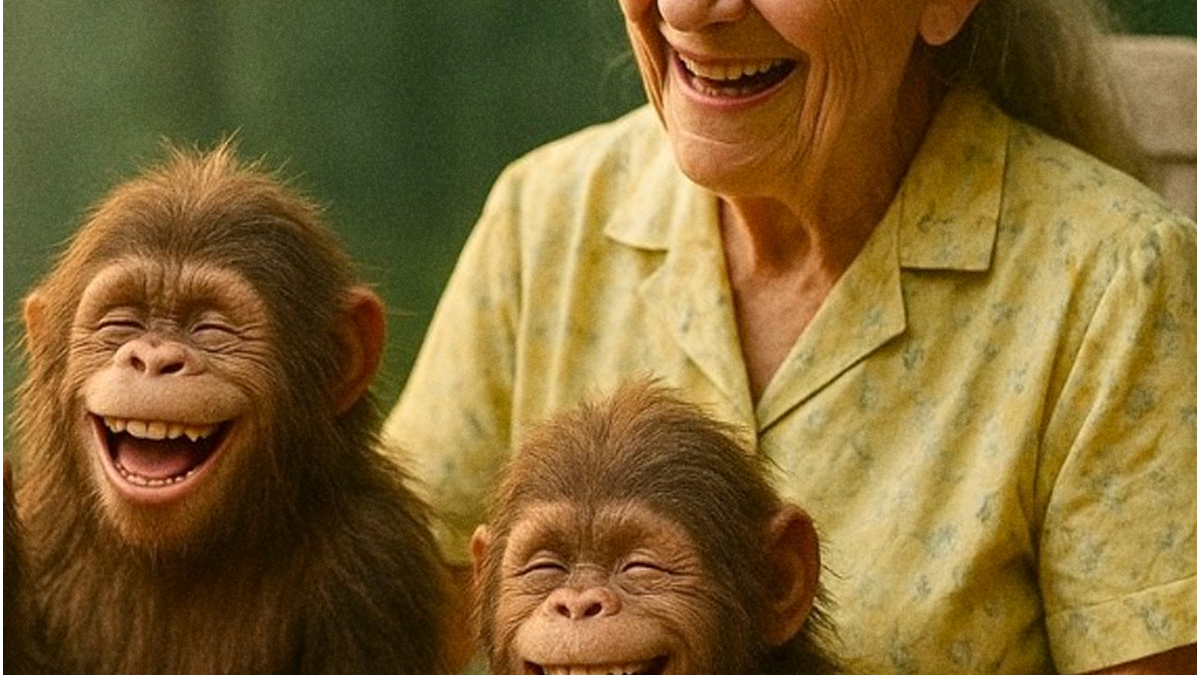
Old Woman Rescues Three Baby Bigfoots – When The Bigfoot Father Returns, No One Expects What Follows
Have you ever heard of a widow who became the mother not to children but to three baby Bigfoots?
In the winter of 1992, deep in the snow-covered Blue Ridge Mountains, Margaret Holloway, an elderly widow living alone, found a dying creature trapped in steel, a Bigfoot mother.
Unable to save her, Margaret ended her pain and took in the three trembling orphans.
But that was only the beginning.

The truth.
These creatures weren’t wild monsters.
They felt love, loyalty, and loss.
And every night, a giant Bigfoot appeared silently at the edge of the woods, watching over them.
But when a poacher tried to break into her cabin, it was that towering figure who stepped forward and stood silently in the snow to protect her.
This isn’t folklore.
Even the town sheriff confirmed what he saw with his own eyes.
A family of Bigfoot, real, alive, and deeply human in their emotions.
Watch until the end, and you’ll discover how a lonely woman’s act of compassion didn’t just save three wild beings, but healed her own shattered soul.
And you’ll realize, sometimes silence says more than words ever could.
That spring, the grown Bigfoots returned.
They stood across the river, bowed their heads toward the old woman, and vanished into the mist.
No drama, no sound, just goodbye.
If you’ve ever felt alone, don’t skip this story.
It might just restore your faith in quiet kindness and in the invisible bonds that make us family.
The wind hadn’t just howled that night.
It screamed, shrieked, tore through Cedar Hollow like a wounded animal, searching for something it lost in the snow.
The kind of cold that made bones ache before skin even knew it was touched.
Inside the small cabin nestled in the belly of the Blue Ridge Mountains, Margaret Holloway paused with her hand on the window frame.
Something out there.
She could feel it.
A sound barely distinguishable from the storm itself.
Thin, high, almost like a baby’s cry, pierced the veil of wind.
She didn’t want to go out.
No one in their right mind would.
The blizzard was mean, but goats don’t feed themselves, and old habits don’t die easy.
Wrapped in three layers, scarf knotted tight around her throat.
She stepped into a world swallowed by white.
The snow rose nearly to her knees, and every step felt like pushing through wet cement.
Her flashlight cut through the thick air barely.
The wind made it hard to breathe.
Her boots crunched forward across the frozen path between cabin and barn.
She coughed, a harsh rattle that echoed too loud in the silence between gusts.
The cry came again.
She froze.
It was closer now, behind the barn.
Not goat, not wind, not coyote.
It didn’t sound angry or wild.
It sounded scared.
She didn’t remember choosing to follow it.
Only that suddenly she was behind the barn, eyes wide, breath visible, heart clanging against her ribs like a church bell during a thunderstorm.
That’s when she saw it.
The shape first.
Too big to be a deer, too slumped to be a bear.
Then the blood in the snow, then the eyes, glowing faint, pleading.
A creature, massive, fur covered, collapsed in the white.
One hind leg mangled in a rusted steel trap.
Her light trembled.
She stepped closer.
Its chest rose in quick, shallow gasps.
It was dying, but that wasn’t what stopped her breath.
Three smaller forms curled up against the massive torso, shivered in a pathetic huddle, tiny compared to the adult.
Not bear cubs, not wolves, not anything she knew.
Wide eyes blinked at her.
Muzzles damp with snow and panic.
For a long suspended moment, nobody moved.
Then the creature, mother it had to be, lifted her head an inch and met Margaret’s gaze.
There was no growl, no defiance, just pain and an unbearable silent plea.
Margaret sank to her knees.
“I’m sorry,” she whispered, voice cracking.
She couldn’t save it.
The trap had done its job too well.
Infection had already blackened the flesh.
Blood steamed in the cold.
The thing could barely breathe, and those babies, they’d freeze without her.
Tears froze to her lashes.
Her breath came shallow and quick.
She reached for the old hunting knife strapped to her belt.
The same one her husband had once carried.
The same one she’d used back when her son.
She didn’t let the thought finish.
Not now.
The knife went in fast, deep, right behind the ear.
The breath stopped.
She stayed there a moment, hands still on the creature’s fur, head bowed.
And then one by one, she reached out and lifted the three small beings into her arMs. They didn’t fight her.
They just clung.
Clung like she was warmth, like she was the last thing between them and death.
Back inside the cabin, the storm tried to pound its way in.
The windows rattled in protest.
Margaret set the wood stove high, dragged every old quilt she owned into the living room, and set them down gently near the fire.
They were soaked to the bone.
Thin fur matted, eyes wide with something that wasn’t quite fear, but definitely wasn’t trust.
She poured goats milk into a saucepan, warmed it just barely, crushed some dog biscuits into it for texture.
It smelled awful.
They drank it anyway.
She sat close watching them.
They weren’t monkeys, not apes, either, but they weren’t exactly human.
Limbs too long.
Toes and fingers like tools.
Faces too knowing.
The smallest one, the one with the nick in his ear, stared at her longer than the others.
Unblinking, curious, almost like he recognized something in her.
She coughed again, violent, pulling a handkerchief to her lips.
Red bloomed against the white cotton.
She tried to hide it, but the little one was already climbing closer.
He stood uncertainly, moved like a child, just learning to walk, still unsteady, still new.
He came right up to her knee, and then he did something that froze her more than any storm could have.
He coughed, not the sick kind, not imitation, but mimicry, like a child playing house, like he was trying to speak her language.
His mouth formed it imperfectly, but it was there.
A soft throaty rattle, a mirror of the noise she just made.
Margaret blinked, then laughed.
Just once, a strange broken sound that cracked through the quiet.
“You little devil,” she whispered.
“You’re not beasts.
You’re children.”
That was the moment everything changed.
The moment the cabin stopped being a place she was trapped in and started being a place she was meant to be.
The moment the fire’s crackle became less about survival and more about company.
The moment the grief that had lived under her ribs for over a decade finally shifted its weight just enough for her to breathe.
She wrapped the little one in a flannel shirt, tucked the other two in next to him, and leaned back against the wall.
Outside, the wind still raged.
But inside, for the first time in years, something felt still.
Not quiet, not safe, but still.
There were no explanations, no logic, no labels for what had arrived into her life through a broken trap and a cruel blizzard.
But there was warmth.
There was breath.
There was a faint sound of sleep from the corner of the room, and it was enough for now.
But even then, she could feel something larger moving beneath the silence.
The kind of quiet that doesn’t last.
The kind of peace that comes just before something else knocks.
Something bigger.
Something watching from the woods.
Still tonight.
She stayed near the fire, head tilted back, eyes on the ceiling.
Her fingers rested on the smallest one’s back, feeling its heartbeat.
Steady, alive.
She didn’t know what they were, but she knew this.
They were no longer alone, and neither was she.
The snow didn’t stop.
It didn’t ease.
It just kept coming.
Day after day, the white piled higher around the cabin, swallowing the fence line, then the shed roof, then everything but a narrow path Margaret kept clearing with a rusted shovel and a will that refused to give in.
The storm had sealed her in like a coffin, but she didn’t mind as much as she thought she would.
Not this time.
Not now that she wasn’t alone.
Inside the cabin, the air smelled of wood smoke and goats milk and damp fur.
The fire never stopped burning.
Every few hours, Margaret would feed it another log, sometimes just for the excuse to see the sparks leap into the dimness like fireflies that had lost their minds.
She had names for them now.
Cedar, the biggest of the three, bold but quiet, always watching.
Birch, the middle one, restless and twitchy, forever poking at furniture, curtains, her boots.
And Juniper, the smallest, the one with the cough mimic, the one who stayed closest to her.
She didn’t know why those names felt right.
Maybe because they sounded like they belonged to the forest.
Maybe because no one else was going to name them if she didn’t.
They were still afraid of the windows.
Every time the wind picked up, they huddled against the walls like something was coming for them.
Margaret started to keep the drapes closed.
Let them feel hidden.
Let them feel safe.
They were eating now slowly, messily, curiously.
Milk with ground oats, crushed berries, warm potatoes with butter, which they didn’t like at first until Bur licked a spoon and made a startled noise that sounded too much like laughter.
The nights were the hardest.
Not for them, for her.
That was when the silence came.
Not the normal kind, not the peaceful kind, the deep kind, the kind that stretches out too wide, too still, where every creek of wood feels like it doesn’t belong.
She noticed it first around the third night.
No owls, no coyotes, no branches falling from snow, just nothing.
The kind of nothing that presses in on your chest and makes your thoughts feel too loud.
Margaret tried to ignore it until she went out to check the goats and saw the prince.
They weren’t hers or the kids or the dogs back when she still had them.
These prints were big, bigger than any bear.
Deep, like something heavy had walked slow, careful all the way around the cabin.
Not close, but not far either.
Circling, she didn’t mention it to the little ones.
Just locked the door tighter and moved the oil lamp closer to the window.
She watched the dark that night longer than she meant to.
The next day, she was weaker.
The cough had gotten worse.
Not constant, but sharp, like something inside her ribs was cracking open just a little more each time.
She didn’t want to scare them.
She kept smiling, kept humming little tunes under her breath, kept moving slowly, stubbornly.
But the kids could tell.
That evening, as she sat near the fire, breathing shallow, trying to hide the shake in her hands, Juniper crawled up beside her and did something strange.
He touched her chest right where it hurt.
His palm was warm, not hot, not glowing, just warm.
His eyes locked onto hers, unblinking.
For a second, she thought she might cry.
But then something shifted.
Not a miracle, not magic, but her lungs opened.
The pain eased just a notch enough to breathe.
She didn’t speak.
She just rested her hand over his and left it there.
That night, it snowed again, harder than before.
Wind howled like a woman screaming through trees.
The cabin shook, but she didn’t move from the floor.
She lay on the rug with a quilt pulled over her and the three of them curled into her sides like puppies, breathing, warm, alive.
At some point, deep in the dark, the dog started barking.
She hadn’t heard him bark like that in years.
Not since before his eyes clouded over and his legs started to give out.
He was old now, could barely stand, but something in the night had woken him up, riled him up.
His barking turned frantic.
Margaret bolted upright, grabbing the oil lamp with shaking fingers.
The flame flickered hard against the window.
She stood slowly across the room.
The dog barked again, pressed against the door now growling.
She drew back the curtain and saw them eyes.
Two of them high.
Too high.
Orange red like coals watching.
Not close, but not far.
She didn’t scream.
She didn’t run.
She just stood there, her hand tightening on the edge of the window frame.
Whatever it was didn’t move, just stared.
Then, like a breath sucked back into the trees.
It vanished.
The forest swallowed it whole.
She let the curtain fall, turned slowly.
The children hadn’t moved, but their eyes were wide, alert.
They’d seen it, too.
Or felt it.
She knelt beside them.
Juniper reached for her hand.
She didn’t say anything, but in her chest, something settled.
A question.
She’d thought she was protecting them, but maybe, just maybe, someone out there was protecting them all.
The next morning, the silence didn’t feel as heavy.
The sky stayed gray, the wind cold, but something had changed.
She fed them early.
Let them play with old pots and spoons.
Let Cedar knock over a chair and look proud of it.
Let Burch tear apart a rolled up newspaper like it had wronged him personally.
Let Juniper fall asleep curled against her side as she read aloud from a book that had no pictures, no story they could understand, but somehow made them all feel normal.
She was careful not to go far from the cabin, but she couldn’t help checking the snowbank behind the house.
The prince were there again, clear, deep, circling, but never crossing the fence line, never stepping closer.
She stood for a long time, coat pulled tight, wind clawing at her scarf.
Then she turned back that night before bed.
She sat near the fire and whispered to herself.
“Who’s watching who here?”
She didn’t expect an answer.
But when she turned, Cedar was staring at her, and behind him, through the tiny sliver of curtain she hadn’t fully closed.
Something else was watching, too.
No movement, no threat, just presence.
Margaret sat still.
The wind outside rattled the glass.
But inside, the only sound was breathing.
Three small chests rising and falling.
And somewhere, just beyond what the eye could see, something bigger standing guard in the dark.
She didn’t know what was coming next, but she wasn’t afraid.
Not yet.
Not with them here.
Not with the woods still watching.
The knock came just after midnight.
Not loud, not rushed, just wrong.
Three slow wraps against the wooden door.
Too steady, too calm for a storm this deep in the mountains.
Margaret had been half awake, eyes heavy from the fire’s warmth.
A blanket of cedar smoke and quiet breath settling over the room.
Cedar, birch, and juniper were curled beside her, limbs tangled, small chests rising and falling in rhythm with the crackling of the last log.
Her heart hadn’t been ready for the sound.
She didn’t move at first.
The knock came again.
This time it felt like it belonged to something that didn’t care what hour it was, something that believed it had the right to be let in.
Margaret rose slow, careful not to wake the children.
Her bones achd with the cold that never seemed to leave anymore.
She reached for the oil lamp, lit the flame with hands she didn’t realize were shaking.
The third knock echoed through the wood.
She moved to the door and placed her eye against the peepphole.
Frost had crawled halfway up the glass, but beyond it, framed in snow and breath, stood a man, tall, wrapped in a brown coat crusted with ice, face like sandpaper, lined, darkened by wind and suspicion.
He had a duffel slung over one shoulder, boots that looked too new for this place, and a grin that didn’t quite touch his eyes.
She knew that kind of grin.
He knocked again, knuckles bare despite the cold.
Margaret opened the door only a crack, keeping the chain hooked.
“Can I help you?”
“Evening, ma’am,” he said.
“Name’s Grady.”
“Thomas Grady.
I was passing through, saw smoke, thought I’d check if y’all were all right.
No one passes through here.”
He smiled wider.
“That’s what makes it nice, isn’t it?”
She didn’t smile back.
“It’s late.”
Grady tilted his head, eyes flicking toward the side of the cabin.
“Looks like you’ve had company.”
Margaret didn’t answer.
His gaze lingered on the muddy prince near the porch.
Prince far too small for boots.
She could see the thoughts clicking behind his eyes, calculating, cataloging.
“You live here alone?”
He asked.
“No one’s lived alone in this hollow for a long time,” she said, voice low.
“That’s just something folks tell themselves.”
Grady’s grin didn’t waver, but something colder crept into his tone.
Must get awful quiet out here,” she nodded once, and I prefer it that way.
They stood in silence.
Snow drifted behind him in lazy spirals.
The wind tugged at his coat.
Then, finally, Grady stepped back and tipped his head.
“Well, if you need anything, I’m camped a couple miles east.
Just follow the creek.
Can’t miss it.”
He turned, boots crunching back into the white.
Margaret closed the door, locked it, bolted it, then stayed there listening until the sound of footsteps faded entirely.
She didn’t sleep the rest of the night.
The next day, she didn’t let the children near the windows.
They could sense it.
Juniper clung tighter to her leg than usual.
Birch wouldn’t stop pacing.
Cedar sat stiff near the stove, eyes darting toward the front door whenever the wind creaked the porch.
She tried to act normal, read aloud, made their milk thicker with oats, laughed even if it sounded hollow, but every few minutes she checked the window.
He hadn’t gone far.
She could feel it.
The kind of man who didn’t leave empty-handed.
By nightfall, her hands were too unsteady to light the stove without spilling kerosene.
She told herself it was just fear.
But then she saw the flicker.
A light, too steady to be a reflection, too bright to be the moon.
A flashlight moving through the trees behind the barn.
She moved quick, silently, pulled the children into the root cellar beneath the floorboards.
They didn’t argue, didn’t whine, as if they already knew how to hide, as if they’d done it before.
She covered the trap door with an old rug, slid the heavy trunk back over it.
Then she waited.
The knock didn’t come this time, just the slow scrape of boots across the porch.
A long pause, then the creek of snow under shifting weight.
She grabbed the rifle off the mantle.
It hadn’t been fired in years, but it still carried weight.
A flash of light cut across the window.
Then a shadow, moving fast.
Too fast.
She stepped back, heart pounding.
The front door rattled.
Then silence.
Then footsteps again, fainter now, circling.
She held her breath.
Then something else moved from the trees.
Heavy, deliberate.
It wasn’t Grady.
The porch groaned once, then fell silent.
Then something stood outside the window, tall enough to block the moonlight.
The shape, motionless, watching, and then, just as quickly, it was gone.
The forest went quiet again, but the silence wasn’t empty.
It was full, full of a presence too large to name.
When she lifted the rug and opened the trap door, Juniper climbed out first.
He looked at her face, then turned toward the window.
His shoulders rose like he knew, she whispered.
He’ll come back.
Juniper nodded once.
Margaret didn’t sleep that night either.
The following morning, fresh tracks cut through the snow behind the house.
Gradies, unmistakable, but they stopped halfway around the cabin, turned sharply, doubled back, and beside them, just for a moment, another set of prints, massive toes spled, claws dug deep.
She didn’t mention them, just stirred more milk.
Let Birch gnaw on the firewood pile.
Let Cedar curl beside the dog, who didn’t even seem to mind anymore.
She kept the rifle loaded, set the axe by the door, pretended she wasn’t afraid.
But that night, it happened again.
This time louder, faster.
Grady came back with more light, more noise, and a shotgun.
She saw the beam sweep across the window, heard his boots on the porch.
The handle jiggled, then stopped because something else was out there, not near the house, behind him.
She watched through the crack in the curtain, watched him freeze, watched him turn, watched the flashlight drop into the snow.
A shape moved behind him.
Tall, wide, covered in shadow and steam.
It didn’t make a sound, just stood, blocking the path back to the woods.
Grady backed away, raised the shotgun, didn’t fire.
Couldn’t.
His arms trembled.
The thing took a single step forward.
Snow crunched.
Grady dropped the gun and ran.
Margaret didn’t chase him.
She just watched.
Watched the massive figure stand alone in the clearing.
Its breath fogged in the air.
It didn’t look at her, but she knew it knew she was watching.
It turned and disappeared into the trees.
When she finally sat down, her knees nearly gave out.
The cabin was quiet again.
Inside, the fire hissed.
The children were asleep.
She picked up the flashlight Grady had dropped.
Checked the batteries.
Still working.
She clicked it off.
Stared into the dark a little longer.
And for the first time since this began, she realized something strange.
She wasn’t afraid anymore.
Not of Grady, not of the thing in the woods.
Not of what the world would think if they saw what she was protecting.
Because deep down, she understood now.
Whatever this place was, whoever these children were, she didn’t just save them.
They were saving her, too.
And out there, somewhere in the trees, something was watching, waiting.
But not as a threat.
No, as a guardian.
It happened just before dawn, the hour when shadows pull back from the edges of the world and the frost breathes heavy against every window pane.
Margaret had barely slept.
Her body achd in all the old places, and her mind wouldn’t quit, turning over everything like cold stones in her hand again and again.
She’d fed the fire three times that night, lit two lamps, listened for sounds that never came, and still sleep wouldn’t take her.
She sat on the edge of her bed, wool blanket around her shoulders, watching the steam rise from her cup of broth.
The children were still asleep, cedar snoring gently under the kitchen table, Birch wrapped up like a burrito in an old quilt, Juniper tucked up close to the stove like he belonged there.
Then the dog growled.
A low, strained growl, the kind that only came from the gut.
Not panic, not warning, recognition.
Margaret moved toward the door slowly, cautiously.
She drew the curtain back, heart stuttering.
And there he was, collapsed on the porch, half frozen, knees buckled, back against the wall.
One hand still raised like he’d tried to knock, but never made it.
His hat was gone, his coat torn and stiff with ice.
His skin looked gray beneath the cold, and there was blood around his mouth.
Henry.
Her voice barely came out, but the name hit like a slap to the heart.
She shoved the door open, knees buckling into the snow as she reached him.
His eyelids fluttered, lips moved, but no sound came.
She wrapped her arms around his torso, grunting from the weight.
Dragged him over the threshold with every ounce of strength she had left.
His boots left long, wet streaks across the floor.
The dog circled once, then whined.
She rolled Henry onto the rug beside the fire and pulled the children away.
They watched from the corner, wideeyed and silent.
She peeled off his coat, pulled the flannel shirt from his chest, soaked through, soaked in red.
There was a gash along his ribs, crusted with frozen blood, and his fingers were raw, scraped down to meat and bone.
Whatever happened out there hadn’t been kind.
For a while, it was just a blur.
Boiling water, stitching torn skin with trembling hands, spooning warm broth between cracked lips, murmuring his name again and again like it might anchor him to this world.
By midday, he stirred.
His eyes opened pale blue.
Still human, though barely.
He looked at her, blinked once, and croked.
Took me long enough.
Margaret didn’t laugh.
Her throat clenched.
She poured more broth, held it to his lips.
“He drank slow.”
“Weak!
You should be dead,” she said, voiceing.
Felt like it.
She shook her head, brushing a damp strand of hair from his brow.
He took a breath.
Another.
Then he whispered.
I saw it.
She froze.
In the woods.
Thought I was a goner.
Slipped near the gorge.
Rolled down hard.
Landed bad.
My leg.
I couldn’t feel it.
Margaret nodded, afraid to speak.
It was snowing.
Night coming fast.
I figured I’d just lay there, wait it out.
He blinked again, slow.
Then it came.
What did?
His eyes shifted, unfocused.
Not a man, not a bear.
I I don’t have the words.
He coughed and she pressed a warm rag to his lips.
It pulled me out, carried me like I weigh nothing.
I thought I was dreaming till it left me by the riverbend.
With this, he reached down, barely able, and fumbled with the edge of his coat.
Tucked beneath the pocket flap was a branch, smooth, dark with three small carvings on its surface, three dots inside a ring.
Margaret took it, held it gently in her palm.
Juniper crept forward, silent as fog, and stopped at her knee.
He looked at the branch, then up at her, then back down.
One finger reached out and touched the symbol with startling familiarity.
Henry’s eyes flicked toward the child, his breath caught.
“You,” he whispered.
Margaret nodded slow and quiet.
She could see the questions forming in his face.
“The memories, the old ache behind his eyes.”
“What are they?”
He asked.
“I don’t know,” she said.
“But they’re not monsters,” Henry nodded just once, like that was enough.
They didn’t speak much the rest of the day.
The fire spoke for them.
The snow light through the window shifted from gray to gold and back again.
Margaret made tea.
Juniper stayed close to Henry’s side as if sensing something deep inside him that needed watching.
Later that evening, as the wind returned, Henry lay with a blanket pulled to his chest.
Voice rasped from sleep.
I thought I was past saving, he said.
You’re not.
I let my wife drive that night, he murmured.
The roads were slick.
Should have told her no.
She just wanted to surprise our boy for his birthday.
I was too tired to argue.
Margaret didn’t move.
I saw the headlights coming.
I didn’t even shout.
I just froze like it was already decided.
She stared into the fire.
I buried them both on the same day.
Then I came up here to rot.
You didn’t rot, she said.
Henry chuckled dry.
Pretty damn close.
They sat in silence.
Then Margaret said, “My son, he was on life support after the accident.
They said there was nothing more they could do, but they wouldn’t let him go.
Not unless I signed,” Henry turned toward her.
“I signed,” she whispered.
Her hand trembled.
“I was the one who let the light leave him.”
Henry didn’t speak.
Just reached across and put his hand over hers.
And in that silence, something shifted.
Not gone, but less heavy.
There were two broken people sitting in a room filled with breath and warmth and the quiet sound of new life playing on the wooden floor.
Just before midnight, Margaret rose to check the shutters.
A chill crept up her spine.
Then she saw it.
Drawn into the frost on the glass with black smudges like cold dust were three small dots inside a circle.
Just like the branch, no hand had touched that glass.
She turned toward the fire.
Juniper was already watching her.
She whispered.
“Family!”
Juniper nodded.
That night, Margaret didn’t sleep out of fear.
She stayed awake because for the first time in years, she didn’t want to miss a single breath.
The house was still broken, the world outside still cruel.
But something had shifted.
And in the morning, there would be something more.
The first thing she saw were the lights, orange, flickering, too many for a forest this deep and too steady to belong to fireflies.
Torches moving like a slow current through the trees, bobbing between trunks with grim purpose.
Margaret stood in the dark behind her curtain, watching them come.
Not quickly, but not cautiously either.
As if they believed they already knew what they’d find.
As if the woods owed them something.
The snow had finally let up, leaving the world still and brittle, like glass stretched too thin.
Her breath fogged the window as she leaned closer.
She counted three figures, four, maybe five.
The wind pushed the smoke from their torches sideways, painting streaks of orange through the woods.
One of them moved with a hunched posture of someone who knew this land, but had never belonged to it.
Grady.
Back again, but not alone this time.
She could make out the glint of a badge on one of the others.
A ranger’s coat.
Another man walked taller than the rest.
Heavy boots, confident stride, the kind of man who’d kicked in more than a few doors in his life.
Margaret stepped back.
The fire popped in the corner of the room.
The children stirred.
Juniper blinked up at her, sensing the tension in her frame.
Cedar rose slowly from where he’d been curled beneath the table.
Ears perked.
Birch froze mid-motion with a spoon still in his mouth.
Henry sat in the rocker by the stove, blanket pulled over his lap, jaw tight.
“They’re here for them,” he said.
“Not a question.”
Margaret nodded.
She locked the door.
Then she walked to the mantle, took down the old shotgun, the one her husband had cleaned more times than he ever fired it.
She didn’t check if it was loaded.
She already knew.
The knock came a moment later.
Hard.
Two wraps, no paws, no manners.
She stepped to the door.
Grady’s voice carried through the wood like a rusted nail.
Evening, ma’am.
We’d like a word.
Margaret didn’t answer.
Behind her, Cedar stepped forward, placing his body between her and the door.
Small but firm.
His chest rose and fell in slow, deep breaths.
Another voice now.
This one smoother.
Professional.
The ranger, maybe.
Ms. Holloway, we’ve received some concerns.
Local trappers reported unusual tracks.
Mr. Grady here mentioned you might have something rare under your roof.
Margaret’s hand stayed firm on the shotgun.
There’s nothing here that belongs to you, she said.
Then you won’t mind if we take a look.
Henry stood now, hand gripping the side of the chair for balance.
They’ve got no warrant, he muttered.
Margaret turned the lock slowly, then opened the door.
The night rushed in, cold, raw, heavy with the scent of smoke and steel.
Grady’s face was the first thing she saw.
He looked thinner than before, or maybe just hungrier.
His eyes darted over her shoulder, trying to catch movement inside.
Behind him, the ranger looked tired, like a man dragged into something he didn’t quite believe, but couldn’t ignore.
The others flanked them, men with flashlights, rifles, and tight jaws.
You brought a posi, she said.
We brought protection, Grady replied.
From children?
Grady’s mouth twitched.
He didn’t answer.
The ranger cleared his throat.
We’re just trying to keep everyone safe.
There are laws about harboring wildlife, especially if it’s dangerous.
You don’t even know what they are, she said.
We know they’re not yours.
No, she said quietly.
But they’re not yours either.
Silence.
Grady stepped forward, one boot on the threshold.
Then something moved in the dark.
A sound, soft at first, like snow slipping off a high branch.
Then the ground trembled.
A shadow emerged from the treeine.
Large, slow, unapologetic.
The torch light flickered as the men turned.
It wasn’t charging, wasn’t roaring.
It just walked.
Massive, furcovered, eyes glowing faint in the fire light.
It stopped halfway between the woods and the porch and stood.
Margaret heard the breath catch in one of the men’s throats.
Grady reached for his rifle.
The ranger stepped in front of him.
Hand out.
Don’t.
But I said don’t.
From inside the cabin.
A low sound rose like a song made of breath and bone.
The children stepped into the doorway.
One by one.
Cedar, birch, juniper.
Each small, each trembling but not backing away.
They stood beside Margaret.
The torch light danced across their faces.
The silence stretched too long, too thick.
Then the sound of crunching snow behind them.
Another figure approached.
Sheriff Alvin Collins, hat pulled low, mustache dusted with frost.
His voice came like a church bell in winter.
Steady, clear, impossible to ignore.
Stand down, Grady turned.
Sheriff, you can’t.
I can, he said.
And I will.
He stepped between the armed men in the cabin, eyes locked on Margaret.
Then on the creatures, and then on the thing in the woods.
He didn’t draw his gun.
Didn’t blink.
I saw it, he said.
Two nights ago.
I didn’t believe it at first.
Nobody moved.
It was watching my house from the edge of the ridge.
It didn’t move, didn’t growl, just stood there.
He took a slow breath.
If it wanted us dead, we’d be dead.
The men shifted, uncomfortable.
Grady’s voice broke.
You’re siding with them.
I’m siding with common sense.
Margaret stepped forward now slowly, her hand resting gently on Juniper’s shoulder.
They’ve done nothing wrong, she said.
They’re lost like the rest of us.
The giant in the woods didn’t move, but something passed between it and the children.
Something wordless.
Bir reached into the folds of Margaret’s coat and pulled out a small stone.
Smooth, dark.
He held it out in both hands.
The men watched.
No one dared touch it.
The moment passed.
The giant turned, walked back into the trees.
Gone like mist.
The torches lowered one by one.
No one spoke.
Not for a long time.
Then the sheriff turned to Margaret.
You might want to lock that door again.
She nodded.
Grady didn’t say another word.
He just stood there, mouth set, eyes burning with something too bitter to name.
Then he walked back into the dark, away from the fire.
The others followed.
Margaret closed the door.
The cabin fell silent again, safe for the fire.
The children nestled against her coat.
She didn’t cry, but something cracked open in her chest.
Not pain, something older, something sacred.
The fire had burned low, just a faint orange glow at the heart of the wood pile, when the first whispers started drifting in from town.
They came not through letters or radios or phone calls, none of which Margaret had or wanted, but through footfalls on the porch, through the way the mail slot clattered one cold morning, spitting in a folded sheet of paper with no signature, through Henry’s solemn eyes after a trip to the general store for flower and cough syrup, when he returned wordless and laid a scrap of notebook paper on the table.
Someone had drawn three dots in a circle.
Underneath it, in jagged ink, the word abomination, the world outside was starting to stir again.
Snow banks receded, revealing frozen grass and cracked twigs.
The air no longer bit the same, though it still warned, and from the hollow to the church steeple, to the back rooms of diners and feed shops, mouths moved and fingers pointed.
She wasn’t blind to it.
She’d seen the faces.
Some were twisted in fear, others in something worse, curiosity.
But it wasn’t until she saw Sheriff Collins parked on her dirt road.
Engine idling, window rolled down, cigarette burning down between his fingers that she knew it had reached the town line.
He didn’t get out of the car, just watched.
She watched back, then he nodded once, slow, like he was weighing what might happen next.
She nodded too, then turned back inside.
The house felt smaller now, not because the children had grown, though they had, but because the outside world was getting louder.
The silence that once wrapped around the cabin like wool now buzzed with tension.
Even Juniper had grown quiet, clinging closer than usual, his soft hands always finding her elbow, her sleeve, her shadow.
Then came the town meeting.
It was Henry who brought the word.
The town council had posted it on the board outside the post office.
6:30 p.m. Thursday at the old schoolhouse.
No agenda listed, but the implication hung in the air like wood smoke.
They want you there, Henry said.
Margaret stood at the sink, scraping bark off a potato.
She didn’t look up.
They want blood, she said.
He didn’t argue, but he offered to drive her.
The sky was slate gray when they pulled into the lot.
Rusted pickups, a sheriff cruiser, even the preacher’s old Ford sat crooked in the gravel.
Smoke coiled from the chimney of the old hall.
Lamps inside glowed yellow against the frost touched windows.
Margaret didn’t speak on the way in.
Just stepped across the threshold with her head high and her palms cold.
Henry stayed close.
People turned, some with surprise, some with shame, others with something older in their eyes.
Old debts, old hurts, old judgments.
The council sat up front.
Six men, two women, all known to her, people she’d lived near, shared coffee with, even grieved beside once.
They let her speak.
But not first.
Grady was there.
Of course he was standing near the wood stove like he owned it.
Voice slick as oil.
He told them of the danger, the size, the weight, the inhuman sounds.
Said he’d seen one tall as a doorway, covered in fur, eyes red like coals.
Claimed it had followed him.
Watched him, hunted him.
He spoke of disease, of property rights, of things man was never meant to live beside.
Some nodded.
Then came others.
A mother ringing her hands over children walking to school alone.
A rancher worried about livestock.
A man in his 70s who barely remembered her name, but declared her unnatural just the same.
Then came quiet until Colin stood up from the back of the room, cleared his throat, and simply said, “I saw it, too.”
That silenced the buzz.
He lit a cigarette right there in the hall, ashing into his palm.
“It didn’t hurt nobody,” he said.
“Didn’t threaten, just watched, and then it left.”
He looked right at Grady.
“Sometimes we’re scared of things just because they ain’t ours.”
Then he sat, eyes turned again, and then it was her.
Margaret stepped forward.
No podium, no speech, just her voice steady as she could make it.
They came to me cold and starving and motherless.
They were babies.
They’re still babies.
They drink warm milk.
They play with wooden spoons.
They huddle by the stove when the wind howls.
Someone shifted in their seat.
I’ve lived here longer than some of you have been alive.
I buried a husband and a child on this land.
I’ve known what it means to grieve in silence.
And I’ve known what it means to find life again in a place you thought was done giving.
She swallowed.
I didn’t choose them.
They found me.
Her voice trembled once, then steadied.
And if loving them makes me a monster, then so be it.
She turned, walked back to her seat.
Henry’s hand found hers.
The silence stretched until one of the council women, gray hair in a tight bun, hands folded like a Bible verse, cleared her throat and said, “Let’s put it to vote.”
The ballots were scribbled, folded, collected.
It took 10 minutes, felt like hours.
When the head councilman read the results, his voice was dry.
Effective immediately, Cedar Hollow is hereby designated a provisional wildlife protection zone.
No hunting or trapping, no entry without permit.
The room didn’t shear, but neither did it erupt.
Just quiet again.
The kind that comes after a storm passes.
But before you see the damage, Margaret stood.
She didn’t say thank you, didn’t look back, just walked out into the cold night.
Boots crunching softly, the breath in her chest finally deep enough to hurt.
The next morning, a letter came left by her door.
No name, just four words in handwriting she didn’t recognize.
You will regret this.
She burned it in the stove.
That afternoon, she found Cedar placing pine cones in a line across the porch like centuries.
Juniper sat by the fire, carving a face into a piece of bark with a butter knife.
Burch was hiding in the laundry pile again, and for the first time in a long while, she let herself sit.
The sun crept in through the window.
She felt tired, but not broken.
She reached for Juniper’s carving and held it in her hand.
It was crude, barely shaped, but it had eyes, and they looked like hers.
The thaw came slow, not in grand gestures, but in quiet moments, like the way the icicles began to drip from the eaves, one drop at a time, ticking against the porch rail like an old clock remembering how to count.
The creek behind the cabin, frozen solid for weeks, loosened into trickles and gurgles, the sound low and cautious, like it too wasn’t sure if the danger had passed.
The air carried bird song again, thin at first, but building.
A warbler one day, a finch the next, then a whole morning chorus, fragile but defiant.
Inside the children grew restless.
It started with glances.
Juniper spent long minutes pressed against the glass, eyes tracking the horizon, as if something out there was calling.
Cedar’s body tensed more often now, his gaze stretching beyond the walls.
Birch disappeared behind the woodshed twice in one week, returning with bark in his hair and silent guilt in his eyes.
Margaret knew the signs.
She recognized the ache, that old restless pull toward something bigger than the walls you’ve grown used to.
It was the same ache that had pulled her into the forest that night long ago, the night she’d found them.
The same ache that had once drawn her son to the edge of his own bravery.
The same ache that now whispered in the stillness of the trees.
It’s time.
She didn’t fight it.
She just started carving.
At first, the children thought she was making toys.
Bur laughed when he saw the first one, thinking it was a rattle.
But Margaret didn’t explain, just sanded the wood until it was smooth, shaped it into a loop with a small tag on the side, and set it by the fire.
The next day, she made another.
Then a third.
Each ring etched with names, small, careful letters.
Cedar, birch, juniper.
When they finally understood, they didn’t protest, didn’t run, didn’t weep.
Instead, they came to her silently, each one resting their foreheads against her chest.
In turn, she felt their breath, their warmth, the weight of everything unsaid.
The next morning, she opened the back gate.
It hadn’t been touched in over a decade.
Rust clung to the hinges like regret.
Her husband had built it with his own hands back when this place still held laughter in a vegetable garden before silence became her closest companion.
She wiped the dust away with an old rag and watched the wooden latch drop with a dull click.
Then she stepped back.
Cedar was the first to move.
Not in a rush, not like a wild animal released from a cage, but with a steady step of someone who knew exactly where they needed to go.
Bur followed, stumbling once on the icy patch just past the porch, then catching himself, pausing to look back just once before taking another step forward.
Juniper hesitated.
He turned to her, dark eyes wide with something deeper than fear.
She knelt, pressed the carved ring into his hand.
It’s not goodbye, she whispered.
Just forward.
He held the ring close to his chest, then reached into the small pouch tied to his side and pulled out a stone, smooth oval, warm from his skin.
He pressed it into her palm.
Tiny fingers curling hers shut.
Then he turned.
They stepped beyond the gate into the trees.
Margaret didn’t call after them, didn’t follow.
She just stood there, arms wrapped tight across her chest, watching the shadows swallow their shapes.
She didn’t cry.
Not yet.
She turned back to the porch, heart hollow in that familiar way only loss can carve.
But before she stepped inside, something caught her eye.
A small glint.
Just at the edge of the porch step, she knelt.
It was a stone.
Not just any stone.
Not one of the hundreds scattered by the creek or tossed in the yard.
This one had been placed carefully, deliberately.
It was warm, no bigger than a skipping stone, but polished smooth with a faint indentation in the center like a thumb had held it there over and over.
A gift, a promise, a goodbye that wasn’t really goodbye.
Margaret closed her fingers around it, holding it like something sacred.
The world stayed quiet that afternoon.
No footsteps, no broken branches, just the sounds of birds returning, ice cracking on the roof, the low hum of the thaw.
Inside, she placed the stone on the mantle beside the rings.
The cabin felt too quiet now, but not empty.
Henry came by just before dusk.
He didn’t knock.
Just leaned against the porch railing, boots caked in mud and eyes heavy with the kind of understanding that doesn’t need words.
“They gone?”
He asked.
She nodded.
He looked toward the trees where the trail had vanished in a mess of melting snow and faint tracks.
They’ll be all right.
I know, he rubbed his hands together, breath visible in the cooling air.
Town’s been quiet, he said.
Grady left.
Said he had bigger things to deal with.
I think that means no one else wants to deal with him.
She half smiled.
Good.
You okay?
She looked at the stone in her hand, then at the open gate.
“No,” she said, “but I will be.”
Henry stayed for supper.
They didn’t talk much, just past cornbread and stew between them, the radio humming old gospel songs in the background, barely audible.
It felt like breathing again after holding it in too long.
Later, when he’d gone, she lit the oil lamp and sat by the fire, stone in her lap, the rings resting nearby like forgotten jewelry.
The wind passed through the trees outside, not howling, not angry, just moving, and something in her chest loosened.
She didn’t go to bed that night, just dozed in the chair with the fire burning low, the stone still warm against her skin.
At some point before dawn, she thought she heard something.
Not footsteps, not howls, but a sound like branches shifting under something gentle, something alive.
She didn’t get up to check, didn’t need to.
The sun rose differently that morning, not in fanfair, not with warmth that filled every crack, but gently, like fingers brushing dust off something long forgotten.
It crept through the trees in soft amber strands, casting gold against the wet bark, spilling across the cabin windows in silence.
The kind of light that feels like memory.
Margaret stood at the sink, hands wrapped around a chipped mug, the warmth of coffee barely cutting through the chill in her fingers.
The cabin felt quiet again, but not hollow.
She watched the steam rise, watched it disappear.
The stone juniper had left her sat on the window sill, catching the first edge of light.
It hadn’t lost its warmth.
Not even once.
Somewhere beyond the treeine, a branch snapped.
Not loud, not threatening, just present.
She turned slowly, set the mug down, and walked to the door, opened it.
The air outside still carried winter in its lungs, but something green pressed up beneath the surface.
Grass just beginning to wake.
The creek, no longer a whisper, now flowed clear, bubbling with soft defiance.
She stepped onto the porch, boots sinking just enough into the softening earth.
Her fingers curled around the rail.
At first, she thought it was a trick of light.
A deer maybe, or the wind stirring shapes into something almost real, but then it moved.
Three shapes.
Standing still by the edge of the water where the trees open just enough to let morning pass through.
Bigger now, taller, limbs longer, fur darker and thicker, shoulders square, not quite grown, but no longer children.
They didn’t step forward, didn’t call out.
They just stood there, cedar, birch, juniper, side by side.
Margaret didn’t breathe.
Then from the trees behind them came something more.
A larger shape, stepping forward with the patience of something that belonged to this land long before people put fences around it.
The Bigfoot, the one she’d seen only in flashes, only in the dark, towering, silent, eyes deep set beneath a heavy brow, the kind of presence that could command wind to still and rivers to pause if it wanted.
It stood just behind them, not touching, not hurting, just being.
Margaret didn’t move.
She wasn’t sure she could.
And then the creature, this protector, this watcher, this thing that the world would never understand, lowered its head.
A slow, deep gesture, not submission.
Not fear, but something older than that.
Respect, gratitude, recognition.
She felt her eyes sting, but she didn’t cry.
She just nodded back.
The three younger ones didn’t speak.
Didn’t need to.
They stood a moment longer, long enough for her to see their eyes.
Different now, wiser, but still familiar.
Juniper’s head tilted just a little, like he wanted to step forward.
But he didn’t.
Instead, he reached out and touched Cedar’s arm.
Then Burch’s hand, and then all four turned, vanished into the woods.
No sound, no trail, just gone.
Margaret stood there long after the forest swallowed them whole.
The cold nipped at her fingers, but she didn’t move.
She looked down at her palm.
She didn’t remember opening it, but there it was.
The small stone Juniper had given her, the very one she’d left inside on the window sill, was back in her hand, warmer than the air, warmer than memory.
She closed her fist around it, walked back inside.
Henry was already at the table pouring sugar into his tea with the slowness of someone who didn’t ask many questions anymore.
“You saw them?”
He asked without looking up.
“I did?”
He nodded.
“They all right?
They’re where they need to be.”
He stirred the tea, the spoon clinking once.
Margaret sat across from him.
For a while, they didn’t speak.
The wind moved outside, but nothing urgent.
Just the woods breathing in and out like they’d always done.
The birds returned to the feeder.
A squirrel chased its shadow along the fence.
Inside, the cabin was still, still full, still home.
Margaret reached up and touched the old photo hanging crooked above the mantle.
Her husband in his rers’s uniform, their son standing beside him, both faces young and unscarred by time.
She let her fingers rest there, not for mourning, but because they’d finally made peace with what was left behind.
She turned back toward the porch.
The back gate was still open.
It would stay that way now.
She didn’t need to close it.
Didn’t need to guard anything.
The forest had its own guardians.
And her part in their story was never meant to last forever.
Just long enough.
She stepped outside again just before noon.
Let the wind touch her cheek.
Let the light fall over her shoulders like a soft blanket.
The stone stayed in her palm.
Not heavy, just real.
She didn’t know when they’d return again.
Maybe never.
But somewhere in her bones, in the breath between heartbeats, she knew they were out there, watching, thriving, becoming.
And she, an old woman in an old cabin surrounded by ghosts and snow melt and spring bird song, wasn’t alone anymore.
Not truly.
Not ever again.
Some stories don’t end with answers.
They end with a quiet understanding, one that settles deep, not in the mind, but in the heart.
This was never a tale about proving what’s real or winning over those who doubt.
It was about the space between fear and compassion.
The fragile bridge that forms when someone chooses to protect instead of possess, to listen instead of judge.
Sometimes it takes a season of silence to understand what connection truly means.
We often think the wild is something out there, untouched, untamed, separate from us.
But maybe the wild lives inside the parts of us that remember what it feels like to lose and still choose to care anyway.
Maybe kindness isn’t about being fearless, but about choosing to love even when it hurts.
Maybe family doesn’t need to look like us, speak like us, or come from the same world at all.
Maybe it only needs to show up when it matters most.
In a world so quick to label what doesn’t fit, to fear what can’t be controlled, this story reminds us that not everything unknown is dangerous, and not every monster comes from the shadows.
Sometimes the greatest danger is the silence we let grow between ourselves and the things we don’t understand.
But healing, real healing, starts the moment someone decides to reach across that distance with open hands instead of closed fists.
Because sometimes the ones we save end up saving us.
Not by changing who we are, but by reminding us of what we’ve almost forgotten, how to feel, how to see, how to stay soft in a world that rewards hard edges.
Love in its purest form is not ownership.
Its presence, it’s staying, it’s letting go when the time is right and trusting that what you gave was enough.
And when spring returns, as it always does, it carries with it the proof that what was once broken can bloom again.
If this story moved something in you, even just a little, we’d love to hear your thoughts in the comments below.
Let us know what stayed with you most or share how it made you feel.
And if you’d like to be part of more stories like this, stories that speak not just to the eyes, but to the heart, don’t forget to follow, like, and subscribe.
Your presence here means more than you know.
Until next time, thank you for listening.








