Old Man Saves a Drowning Bigfoot – But on Shore, It Does Something Horrifying
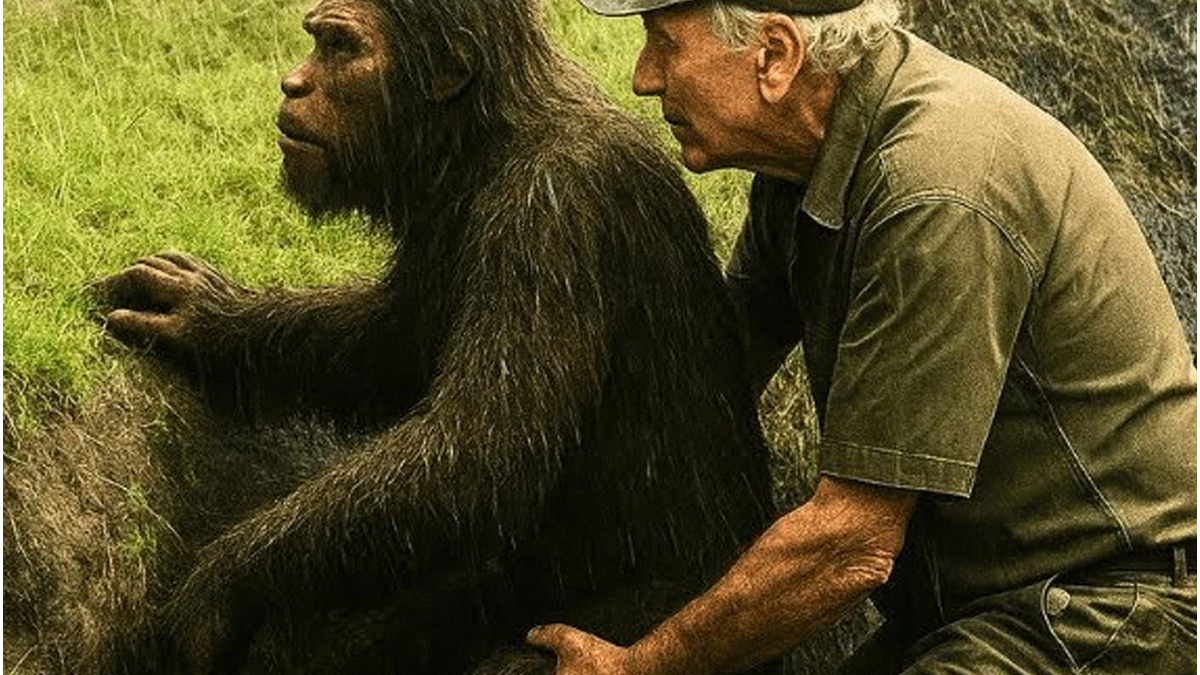
Old Man Saves a Drowning Bigfoot – But on Shore, It Does Something Horrifying
Can you imagine a forest that remembers and chooses to repay a debt?
On a freezing autumn night in 1989, an aging forest ranger pulled a strange matted creature from a muddy sinkhole, never realizing he was rescuing the very being that would one day rescue him.
The creature didn’t panic or run.
Its eyes, golden, emberlike, locked onto his with an eerie calm, almost as if it recognized him.

The truth is, not everything in the forest is truly wild.
From that moment on, the man began discovering strange offerings, polished stones, perfectly ripe apples arranged with care, like messages in a language only the two of them understood.
This account was uncovered in a weathered journal found in a forgotten cabin in the Appalachian wilderness.
It belonged to Harlon Moes, a man who lived alone in the forest for 15 years.
Stay with this video and you’ll uncover why a mysterious being might choose to protect a man.
What sacred bond can exist between human and nature?
And why to this day a single red apple appears every fall on a mosscovered step.
A young ranger once said, “Every year on the same day that Apple returns, the cabin’s empty, but in the old sketchbook, two figures still sit by the fire.
Miss this story, and you might never grasp the quiet, haunting beauty of a promise kept between a man and something far older than man.”
The rain had been falling for three straight days, cold and slow, like the sky had forgotten how to stop.
It coated every surface of East Meyer Crest in a steady gray shimmer, turned the forest floor into a pulpy mess of roots and slick moss, and brought the fog rolling in so thick it felt like the woods were holding their breath.
Nothing moved much out there.
Not the deer, not the crows, just the creek and the silence it carved through the trees.
On the third morning, Harlon Moat stepped out of his cabin with his coat unbuttoned and the collar turned up.
The leather was older than most things, still breathing in this part of West Virginia, but it held the shape of his shoulders like it had been waiting for him.
He didn’t lock the door.
There was no one to keep out.
No one came this far up the slope.
Not anymore.
He carried a short-handled shovel and a rusted walking stick, the kind he’d carved himself back in 79 during a blackout winter.
The cabin sat just shy of Windlow Creek, tucked into the belly of the ridge.
Nothing around it but rock and pine and sky.
Harlon liked it that way.
Had lived like this for 11 years, since the world folded in on him, since the world forgot his name.
He walked like someone still listening for sounds the rest of us stopped hearing.
The crunch of old bones in the soil.
The creek of roots giving way.
The quiet collapse of something that had been too tired to hold on.
Down near the creek.
The land had changed.
The bank looked chewed at the edges, like something had tried to climb out and failed.
Mud spilled like melted chocolate across the flat stones, and the water foamed with twigs and broken leaves.
Harlon narrowed his eyes and moved closer, the tip of his boot sinking with a soft squelch.
The rain slapped against his hat and rolled down the side of his face, catching in his beard.
He wasn’t cold.
Not anymore.
Not out here.
He crouched low, studying the shape of the mud.
Something had churned it up from beneath.
Something big.
Then it happened.
A movement.
Barely a flicker in the corner of his eye.
A tremor beneath the surface.
And then slowly, impossibly, a hand rose from the sludge.
It wasn’t a man’s hand.
Three thick fingers coated in dark hair and wet soil, curled upward like they were reaching for something they couldn’t find.
Each digit was broad, powerful, ending in a nail that looked more like horn than keratin.
One of them was torn, split back to the quick.
Harlon didn’t breathe.
It twitched.
His body went still as the trees.
For a moment, there was only the sound of the creek and the ticking of rain on his shoulders.
Then the thing shifted again, struggling as though the earth itself had decided to hold it captive.
The fingers clawed at the air once, then dropped back down, swallowed halfway by the muck.
A heavy choking groan leaked up through the water, muffled and thick like it came from lungs packed with gravel.
Not animal, not entirely human.
Something in between, something left behind.
Harlon stepped back, his chest tightened.
Not from fear, not yet, but from something older, more familiar, like recognition buried under years of silence.
His grip tightened on the handle of the shovel.
He looked down at the thing’s arm, the way the hair clung to the skin, slick and matted.
The way the bone showed through near the joint, wounded, starving, dying.
His mouth felt dry.
He turned away.
He didn’t even know why.
Habit, maybe.
Instinct.
It should have been enough.
He should have walked.
But then that sound again.
Not the groan.
This one was softer.
High-pitched, choked.
It was the sound he hadn’t heard in over a decade.
Not since the day his daughter died in a hospital bed up in Fairmont.
Lungs drowning from the inside out.
Her breath rasping through split lips like broken glass against tile.
That same sound, that same desperate plea.
Something cracked inside him then, low and sudden, like the splinter of a tree struck by frost.
He turned back.
The creature, whatever it was, was still half buried in the earth, but its eye was open.
Just one, amber colored, glossy with mud, but burning underneath like the last coal in a dying fire.
That eye locked onto his.
It didn’t glare.
It didn’t growl.
It begged.
And Harlon Moes, a man who hadn’t heard his own voice in weeks, stepped forward through the mud and whispered under his breath.
Not to the creature, not to the trees, but to something deeper, something broken in the marrow of his bones.
“All right,” he muttered, jaw clenched.
He reached out.
The skin was rough, hot to the touch under all the grime.
The fingers didn’t curl around his, but they didn’t flinch either.
He braced his weight and dug into the mud with both hands, feeling it suck at his arms like it wanted to pull him under, too.
The rain poured harder.
Windlow Creek hissed louder.
The trees groaned, and somewhere deep in the woods, something watched, waiting.
He didn’t care.
His breath came short.
His knees achd, but he kept digging.
He’d failed once.
He wouldn’t do it again.
By the time he pulled the thing free, his arms were shaking so hard he nearly collapsed on top of it.
It rolled slightly onto its side, motionless, except for the faint rise and fall of its chest.
Blood mixed with mud at its feet.
The stink of rot filled the air.
A gash on its leg was wrapped in something sharp and rusted, a forgotten trap, its steel teeth buried in flesh, caked with old filth.
Harlon stared at it, chest heaving, unsure if he just made the biggest mistake of his life or the only decision that had ever truly mattered.
Somewhere nearby, Rook howled once, long and low.
The wind shifted, and for the first time in 11 years, Harlen Moes felt something move in the center of his silence.
It wasn’t peace.
It wasn’t fear.
It was the weight of being seen.
The rain didn’t let up.
If anything, it came harder, colder, angrier, like the mountain itself wanted to wash away what had just been pulled from its gut.
Windlow Creek surged at the edges, carrying with it branches and memories and pieces of things long dead.
Harlland’s boots sank deeper with every step, his legs trembling, lungs clawing for breath.
He wasn’t built for this anymore.
His body had been strong once.
Not now.
Not since the accident.
Not since Mary.
The creature weighed more than any bear he’d ever hauled.
It wasn’t just the size.
It was the way it resisted gravity, as if something in it didn’t want to leave the earth.
He’d looped an old mule harness around its chest and under the arms, or what he figured were arms, and dragged it inch by inch from the sucking mud.
The trap still clung to its leg.
Rusted steel teeth sunk so deep into the muscle that fresh blood mixed with the black sludge dripping from its fur.
The woods around them were watching.
That kind of hush you only notice when something unnatural is happening.
Not a single bird call.
No squirrels rustling.
Even the rain sounded distant.
Harlon’s breath came in short bursts.
His shoulders screamed.
The shovel had long since been dropped, forgotten near the creek bank.
All he had now was the harness, the weight of the beast, and a memory pressing into the back of his skull like a hand.
He stumbled, fell once, catching himself on a tree root slick with rot.
Mud splashed across his chest.
His knees hit the earth so hard he tasted iron, but he didn’t let go.
Couldn’t.
He cursed low, dragged himself up, and pulled again.
The thing behind him groaned, an awful slow sound, like pain remembered more than felt.
Haron didn’t know if it was conscious.
He didn’t look back.
The walk back to the cabin felt longer than it ever had.
Every step came with a whisper from the forest.
The old pines bowed under the rain, branches dipping like old men nodding off in prayer.
The clouds pressed low, his coat stuck to his back.
The ground pitched, his breath fogged in front of him.
And for a second, he saw her again.
Mary, just the shape of her in the mist, barefoot in her night gown, looking back over her shoulder.
He blinked.
Gone.
He didn’t speak.
Hadn’t.
Not since the fire that took her.
Not really.
Not to people.
Not even to Rook, who met him halfway down the hill, ears perked despite the blindness.
The old hound sniffed once, stiffened, then fell in beside him without a sound.
No bark, no growl, just quiet understanding.
By the time they reached the cabin, Harlon was shaking.
His legs buckled as he hit the porch.
The harness slipped through his fingers.
The creature thudded against the wooden planks.
A low, wet sound that made Rook whine under his breath.
The door groaned open.
Harlon staggered inside, lit the fire with hands that barely worked.
Flint sparked.
Smoke curled up into the low rafters.
The hearth caught slow, orange, licking the dry pine like it was starved.
He pulled the creature in next, dragging it across the floorboards like a man moving a felled tree.
The thing left a dark trail behind it, mud, blood, something thicker.
He laid it near the fire.
The trap on its leg glinted in the light.
He didn’t touch it.
Not yet.
The wound was too swollen.
The metal fused too deep.
It would need time, heat, and something stronger than whiskey to deal with the infection.
Harlon knelt beside it.
His hands hovered but didn’t reach.
The face was halfcovered in tangled hair, soaked and matted.
But under the grime, he could see the bone structure wasn’t right.
The jaw too wide, the eyes too far apart.
The skin wasn’t quite skin, coarser, leathered, but it wasn’t animal either.
There was something symmetrical, deliberate, built with purpose.
The fire light caught one of its eyes, just a flicker, amber, and there, reflected in that glassy surface just for a second, was her again, Mary.
Not the way she looked before, but the way he remembered her when she was sick, fragile, pale, still trying to smile.
Her photograph was on the mantle, tilted from where the heat had shifted the wood.
And in that reflection, it shimmerred, burned bright like it belonged inside this thing.
He didn’t move, didn’t blink.
The breath in his chest didn’t come.
Rook made a soft noise behind him, pawed gently at the floor as if he too felt the room tilt.
Then, just above a whisper, Harlon said it.
The words cracked, unused for too long.
I’m sorry.
He didn’t know why.
Not really.
He wasn’t speaking to the creature.
Not directly.
Maybe to the girl in the photo.
Maybe to the part of himself that had been buried deeper than any trap.
But the sound filled the room like thunder.
A man’s voice not heard aloud in years.
It echoed against the stone, faded into the corners of the cabin, and disappeared.
He sat back.
The rain still fell outside, steady and unbroken.
The creature didn’t stir, but its chest rose and fell, slow and shallow, alive, just barely.
Harlon reached for the old wool blanket, laid it over the thing like you do for someone freezing on the floor of a church.
His hands were raw, his eyes stung, the fire popped once, and shadows danced along the walls.
Rook curled at the foot of the hearth, nose pointed toward the stranger, but body relaxed.
It was late by the time Harlon moved again.
He stood in front of the fireplace, arms crossed over his chest, staring into the flames as if they could explain anything.
Outside, the fog thickened.
Inside, something old had shifted.
It wasn’t forgiveness.
It wasn’t peace.
But it was the start of something he hadn’t felt in a very long time.
And just behind that feeling, almost too quiet to name, was the weight of what might come next.
By the time the first light filtered through the slats of the cabin windows, the rain had thinned to a fine mist.
Not quite silence, but close enough that every creek of the roof, and every breath from the old hound sleeping near the hearth sounded louder than they should have.
The fire had long since burned down to its last glowing coal, and the scent of wet fur and old smoke lingered heavy in the air.
Harlon sat slumped in the wooden chair near the fire, boots still caked in dried mud, arms crossed over his chest.
He hadn’t slept.
Not really, just let the hours drift over him like another kind of weather.
The creature hadn’t moved once during the night.
Its body had remained curled slightly on its side, breathing shallow but steady.
The leg was still a mess.
The trap hadn’t loosened its grip, and Harlon hadn’t dared try to remove it in the dark.
Whatever it was, it had survived something most things wouldn’t.
Something primal, painful, meant to kill, and quick.
But now, in the morning haze, the cabin felt different.
Quieter, too quiet.
Rook stirred first, lifting his head and sniffing the air.
His ears twitched, body stiffened.
Then slowly he eased upright and padded toward the wall near the door.
No bark, no growl, just that quiet, alert tension he used to carry back when Harlon still worked patrol before the fire, before everything.
Then Harlon looked back toward the hearth.
The creature was gone.
No trace, no dragging, no prince, just gone.
The blanket lay bunched in a heap, still damp from the night before.
The floor where it had bled was dry now, scrubbed clean.
Not a drop remained, not in the cracks of the wood.
Not along the baseboard.
The fire hadn’t been tended, but it hadn’t gone out either.
A steady glow remained, pulsing dimly like the last heartbeat of something warm.
And there, on the table beneath the faded picture of his wife and daughter, sat a single red apple.
It hadn’t been there the night before.
He was sure of it.
Harlon stared motionless, chest tight, throat dry.
It looked too perfect, too red.
Not from any tree on his property.
He hadn’t grown fruit in years.
His last tree had rotted out from the base during a frost in 85.
No one had come near the cabin since then.
There was nowhere nearby to buy anything.
No one who’d bring him something like this.
Not out here.
Not this deep into East Meyer.
Beside the apple was something smaller.
At first he thought it was bark, but when he leaned in closer, he saw it wasn’t.
It was a piece of pine cone, not just broken off, but carved, smoothedged, etched with care.
The spiral on its surface was deliberate.
Tiny cuts curling inward in a way that pulled the eye to its center.
Harlon blinked and his stomach turned.
Because that spiral, it was the same symbol he’d scratched into the headstone of his daughter’s grave the day they buried her.
A swirl, rough and shallow, cut into stone with a pocketk knife, because the funeral home had left the plot marker blank, and he couldn’t stand seeing her name without something sacred beside it.
Now it was here, whittleled into pine, next to a spotless apple.
Harlon didn’t touch it.
Not yet.
He stepped back, eyes scanning the room.
The door was unlocked, just barely a jar.
He hadn’t left it that way.
Cold air leaked in through the crack, bringing with it the faint smell of moss and something sweet, like wet cedar.
He pushed the door open.
Rook followed without hesitation.
Outside, the world looked unchanged.
The mist clung to the treetops.
The ground was soft beneath his boots.
No footprints, no blood, nothing broken or moved.
He circled the cabin once.
The woods didn’t answer.
Not with movement, not with bird song, just that same hush, a feeling like being watched without menace.
Studied.
Back inside, Harlon stood before the table.
He looked at the photo again.
It hadn’t moved, but the light hit it differently now.
Warmer, like the glass was glowing faintly from the inside.
He sat down, reached out.
Fingers hovered above the apple, then slowly picked up the pine cone piece instead.
He turned it over in his hand.
It was warm somehow, not just from the cabin’s heat, deeper than that, like it had been held, cherished, left on purpose.
He traced the spiral with his thumb.
Then he looked down at the apple, still untouched, too red, too real.
He didn’t eat it.
He didn’t throw it away either.
Instead, he left it on the edge of the porch, just beneath the old black pine that leaned too close to the roof.
He placed it gently on the ground.
No words, no ritual, just instinct.
And then he went back inside, closed the door, and waited.
Morning bled into afternoon, and still nothing.
He drank coffee gone cold, read the same page of a book four times.
By sundown, he’d almost forgotten why his chest still felt tight.
But when he stepped outside again just after dusk, the apple was gone.
In its place on the first step of the porch lay a stone, not just any stone, amber colored, not polished, not chipped, set deliberately, it caught the last of the evening light and glowed faintly like it remembered fire.
Harlon bent down slowly and picked it up.
It was heavy for its size, dense, ancient.
Rook stayed by the door, ears forward, body still.
The forest whispered again, not loud, not menacing, just present.
Harlon stared at the stone, then at the trees, then back at the empty ground where the apple had been.
He didn’t speak.
He didn’t have to, because somewhere out there in the deep, something was listening.
Not hunting, not stalking, listening.
And for the first time in years, Harlon felt like maybe he wasn’t as alone as he thought.
Not anymore.
Not quite.
The next morning brought frost.
Not hard enough to kill, but sharp enough to remind the trees they were losing time.
Mist still hung low around East Meer Crest, rolling across the ridge like breath that never left the lungs.
The old pine near Harlland’s cabin glistened with dew that hadn’t quite frozen yet.
Rook waited by the steps, tails slow, ears pivoting toward sounds only he could catch.
Harlon stepped out with the apple in his hand, still red, still unblenmished, and placed it on the mossy route, as he’d done each morning for nearly a week now.
Same place, same quiet ritual.
He didn’t know what it meant, if it meant anything at all, but he kept doing it.
Something in him insisted.
Every time he offered one by sunrise, it was gone.
And each morning after, in its place, something would be left.
The first was the amber stone.
Then came a flat piece of shale with a single groove cut down the center, worn smooth from water and time.
After that, a small wooden bead carved from what looked like birch, notched at three even intervals.
Then a feather, not from any bird he recognized, long and black with streaks of copper down the center vein.
Each object was left in silence.
No sound of approach, no shifting of trees, no broken twigs in the underbrush, just exchange, like the rules had been written long before either of them remembered how.
He kept them all in a small bowl on the window sill now, one by one, lined up like tokens from a place no map could reach.
And something changed in the air when they began trading.
Not loud, not obvious, just stillness, the kind that made the forest feel thicker, older, more awake.
He found himself walking slower near the treeine, pausing more often to listen.
His hands itched to make things, not to trap or to carve, but to remember.
He’d found an old graphite stick at the bottom of a drawer, halfworn and wrapped in cracked masking tape.
The moment it touched paper, his fingers moved like they’d never forgotten how.
The first drawing was rough, just lines, shadows.
But the face came to him like smoke curling up from a fire.
Long jaw, deep set eyes, the brows heavy with weight.
Not menace, not even sadness, just time.
Layers of it, woven into every line on its face like bark wrapping around years.
He named it ember eyes.
He didn’t say the name out loud, not even to Rook, but he wrote it once in the corner of the sketch, then tucked the paper behind the stone bowl like a secret no one had asked for.
Each night, Harlon sat by the fire, the pine logs popping soft against the stone, and he’d watch the door.
Not with fear, with expectation.
He never locked it anymore.
Sometimes when the wind blew just right, he swore he could hear something shift beyond the tree line.
A weight, a breath, but it never came close.
Not loud enough to disturb the stillness, just enough to let him know he wasn’t unobserved.
And Rook, blind, old, faithful, never barked, never growled.
But each time something moved out there, his ears would twitch, and he’d inch closer to the door.
Not guarding, not afraid, just waiting, like he knew something was watching over them both.
On the fifth night, just past 1:00 in the morning, Harlon sat up suddenly.
Not because he heard anything, not really, because he didn’t.
The fire had dimmed to soft coals.
Rook lay curled near the hearth, his breaths slow.
The room was bathed in deep orange shadow.
Harlon stared at the door.
Nothing stirred.
He rose, crossed the floor quietly, and peered through the thin crack between the boards of the shutters.
Nothing but darkness.
He opened the door, and as he stepped out barefoot onto the porch, the cold bit into his souls, but he didn’t flinch.
The apple was gone again.
The moss where it had rested was damp, freshly pressed, but there were no prints, no marks, no sound.
Then, in the silence, he saw it happen right before his eyes.
Not with noise, not with motion, just absence.
The apple, which he was sure he’d placed no more than seconds ago, still whole, still shining under the moonlight, blinked out of sight.
No blur, no hand, gone.
And in its place, like it had always been there, sat a thin flake of obsidian, smooth and sharp as glass, resting at the edge of the root like a promise.
His breath caught, not from fear, from understanding.
Something had changed.
The exchange was no longer about objects.
It was communication language, but not spoken, not written.
Trust was being built, one gesture at a time.
Harlon knelt slowly, picked up the obsidian, felt its weight.
He turned it in his fingers, careful not to slice himself.
It gleamed even in the pale light.
He looked out into the woods, saw only fog and limbs and shadows that refused to move.
But deep down he felt it, that something was learning him.
Just as he was learning it, he whispered into the air, unsure if the sound would carry, “Thank you.”
The woods didn’t answer.
They didn’t need to.
Inside, Rook wagged his tail once, slow and steady, and then went back to sleep.
Haron placed the stone in the bowl beside the others.
Tomorrow he’d sketch again.
He had a feeling this time he wouldn’t need to guess what came next.
Spring had not yet softened the edges of East Meer Crest, but the trees had started to breathe again.
Patches of moss pulsed green along the creek banks.
Buds hung swollen on the branches like promises waiting to break open.
But the rain hadn’t let go.
Not really.
It returned in waves.
Never heavy enough to flood.
Never light enough to forget.
That morning, Harlon packed the small canvas satchel he used for surveys.
Not because he had a reason, because his bones said it was time to walk the boundary.
He didn’t write anything down.
He hadn’t in years.
No one expected reports.
No one remembered he’d ever worn the patch of a ranger, but the wood still felt like his.
Still whispered under his feet like they remembered what he used to be.
And there were places deeper in the forest he hadn’t visited since long before the fire.
Places that curved away from the path and swallowed sound.
Places even his memory held with caution.
He left just after dawn.
Rook stayed behind, his hip had been giving him trouble.
The old hound whed as Harlon shut the cabin door, then curled beside the hearth, head tilted like he knew this wasn’t just another walk.
The forest was soaked.
Everything it touched left a print.
Harlon moved slow, boots sinking into black soil that pulled at the heels like wet clay.
Ferns brushed his thighs.
The sky above disappeared behind layers of branches that hadn’t leafed out yet.
Just bare limbs reaching for light.
Mist clung to the trees.
It wasn’t fog, not exactly.
It was thinner, like smoke without a fire.
By midm morning, the rain thickened.
Not fast, just steady.
Enough to press his coat to his back, drip from his cap, blur the edges of the trail.
He passed the old hollow maple that had split in two during a storm in 78.
Then the stone ridge where the creek doubled back, carving into the rock like a scar that never healed.
Beyond that, everything got quieter, as if the trees themselves leaned closer.
Listening, he stopped near a shallow cut in the hill, an old game trail that had grown over long ago.
Something about the shape of it made him turn.
He stepped off the path and followed it in, ducking under low-hanging limbs, boots sinking deeper now, the ground growing soft beneath him.
And then it hit him, a sound.
Low, distant, but not far enough.
It wasn’t wind, wasn’t a branch cracking.
It was a howl.
No, not even that.
It started as a moan, long and drawn from deep inside something wounded.
Then it climbed slightly into a shape that sounded like grief pulled through teeth.
He froze.
It didn’t repeat just once, but it didn’t feel like it came from a throat that wanted to be heard.
It felt like a warning.
The woods leaned in tighter after that.
Light dimmed beneath the clouds, and something in the rain changed.
It wasn’t just falling anymore.
It pressed sideways against his cheek into his coat like it wanted to drive him back.
But he didn’t turn around.
He walked slower, more deliberate, and then the ground gave out beneath his boot.
Not all the way, just enough for his leg to sink to the knee.
Mud grabbed at him like it had hands.
He cursed under his breath, yanked himself free, stumbled against a tree trunk, breath ragged.
Then the cry came again, this time closer and clearer.
Still not human, still wrong, but layered like it carried pain from more than one mouth.
He knew that sound, not from any recording, not from memory, from the woods themselves.
It was the sound they made in 76, the night they lost the man with the pacemaker down near Devil’s Cliff.
Harlon had been new then, still green.
The man went missing after sunset.
Harlon heard something like that howl echo through the canyons hours before the blood hounds picked up the trail.
He didn’t follow it then.
He didn’t tell anyone what he heard.
They found the man’s body 2 days later, his chest torn open.
No sign of a bear, no drag marks, just silence.
He thought of that howl every winter since.
And now it was back.
He moved forward faster, not out of bravery, out of instinct.
The sound had come from the ridge above the creek bed, just past the bend.
He climbed the slope, boots slipping in the runoff, hands scraping against stone.
The trees parted and the sky cracked.
Thunder rolled like something ancient shaking loose.
And in the distance, through the veil of rain, he saw a figure move.
Not a shadow, not imagined.
It stepped between trees so massive its head nearly brushed the limbs.
Its gate was slow, its shoulders hunched.
But its presence hit like cold water, like a pressure drop before lightning.
It didn’t look back.
It didn’t run.
But its path curved away from where the sound had come, as if circling something, Harlon ducked, waited.
The figure disappeared into mist.
No sound followed, not even birds.
He stayed still for a long time after that, listening, breathing, trying not to hear his own heart clawing at his ribs.
Eventually, the rain slowed.
The wind picked up slightly, and the woods exhaled again, but not with peace.
With anticipation, he turned back, not because he was finished, because something was, and whatever it was, it had let him hear it.
Not once, but twice.
He moved faster down the trail.
The shadows behind him didn’t follow, but they didn’t recede either.
They just waited.
By the time he reached the cabin again, night was pressing in.
Rook lifted his head, let out a low huff, then laid it back down.
The fire inside had gone cold.
The air held the smell of wet bark and old stone.
Harlon peeled off his coat, dropped it over the back of the chair, and looked at the apple bowl on the window sill.
Nothing new, no offering, no stone, just quiet.
He sat down, closed his eyes, and heard it again.
Not from memory, from the edge of the forest.
The sound, that cry one last time, like a breath trying to say his name without a mouth.
He didn’t speak, didn’t move, just let the silence settle back into the room.
And somewhere in the trees, something waited for him to understand.
The storm came down hard that night.
No warning, no rumble, just sky tearing open like something ancient had finally remembered how to weep.
The kind of rain that made the trees bend low and the ground feel like it might slide out from under your boots.
Wind snarled through the hollows like it had teeth.
Harlon had barely enough time to pitch the old canvas lean to before the lightning started.
Threading through the clouds above the ridgeel line.
He’d planned a short loop, two nights, maybe three, just to check the runoff north of the high valley.
But Eastmeer didn’t care about plans.
He huddled near the base of a rock outcrop, fireless, soaked through.
Every stitch on him was heavy with water.
The rain thutdded against the tarp in a steady rhythm.
But it wasn’t the storm that kept him awake.
It was the sound beneath it, buried low, too irregular to be wind, too long to be branches snapping, footsteps heavy, measured, and then silence again.
Even the frogs had stopped.
The stillness was worse than the thunder.
His knife sat just inside reach, unshathed, the blade cold in the dark.
Rook wasn’t with him.
The dog had stayed home this time, too old for the slick ridges and twisted gullies.
But Harlon felt the weight of him anyway, his absence louder than his bark ever was.
He strained his ears again.
The forest was holding its breath.
Then the cry returned high, wounded, echoed low against the rock face behind him.
But it wasn’t a wolf.
He knew wolves, knew coyotes, knew every throat in these woods.
This was different.
It started like a howl, but deeper, almost hollow in the center, and carried through the trees like it didn’t belong to any one point, like the forest itself was making the sound.
He pressed his back tighter to the stone, breath shallow, the kind of sound you don’t run from.
Not because you’re brave, because you already know it would follow.
A new noise stirred behind it.
Branches shifting, something moving through brush, wide and low, and eyes.
He couldn’t see them.
He didn’t have to.
He felt them, not singular.
Multiple spread through the tree line like stars you didn’t notice until they blinked.
Then came the growls.
Low layered circling.
The storm should have drowned them out.
But the rain wasn’t the loudest thing anymore.
He grabbed the knife, dropped into a crouch, his back to the stone, heart pounding so hard he could taste it in his throat.
Shapes moved in the dark, long, lean, gliding just past the reach of his vision.
And then one stepped forward.
A wolf, but not like the others.
It was huge.
Its shoulders too tall, its head too wide, its fur soaked down like it had crawled from the river bottom.
Its eyes glowed dull white in the dark.
Not the sharp glint of curiosity.
Hunger.
It bared its teeth, stepped closer.
Harlon didn’t move.
His knife wouldn’t matter.
Not against this.
More emerged behind it, circling, calculating.
Then a tremor in the ground, so small, so sudden, like the earth had inhaled.
The wolves paused.
The big one turned its head just slightly, and from the dark beyond the trees, a shadow moved.
Not fast, not loud, just presence.
And everything changed.
The wolf stepped back.
Then a sound rose impossibly deep.
It wasn’t a growl.
It wasn’t even a roar.
It was pressure made into sound.
A blast of breath that rumbled through the trunks and echoed down the valley like a memory you could feel in your teeth.
It shook the rain loose from the leaves.
It made the big wolf crouch.
Then came the figure from the left, stepping into the storm as if it didn’t notice the rain at all.
Towering, broad-shouldered, fur matted and gleaming under the flash of lightning.
Its silhouette blurred at the edges like fog didn’t know whether to hide or reveal it.
Ember eyes, he didn’t charge.
He didn’t scream.
He just stepped forward once and the wolves scattered.
No yelp, no fight, just gone.
The big one bolted first, crashing through the underbrush with a snarl.
The others followed, fading into the dark like they’d never been there at all.
Harlon stayed crouched, frozen.
The creature turned, the same eyes, amber lit from inside, like something burning soft behind glass.
It walked toward him, slow, deliberate, no threat.
It stopped just 10 ft away.
The two stared at each other through rain and silence.
Then ember eyes knelt, lowered its head, extended one massive hand, palm up open.
Harlon stared, his fingers trembled, and he stepped forward just enough to close the gap.
His hand reached out, hovered, and then the creature leaned in and placed its brow gently against Harland’s palm.
The skin was warm, coarse, alive.
Not beast, not man.
Something else, something that remembered.
Harlon didn’t speak.
He didn’t move.
He stood there, the rain pouring down around them, his hand resting on the head of something the world said couldn’t exist.
And in that moment, there was no past, no grave, no storm, just the stillness between breath.
Then Ember stepped back, melted into the treeine, gone, and Harlon was alone again.
But it didn’t feel like absence.
It felt like something sacred had been returned.
And somewhere in the trees, something had decided he was worth protecting.
It had been 11 days since Ember Eyes last appeared.
The forest had gone quiet in a different kind of way.
Not the eerie stillness before a storm, not the hush of snowfall.
This silence carried weight, like something had been removed, leaving an outline in the air where a presence used to be.
Harlon felt it most at night when the fire was low and the wind scraped low through the trees.
He’d looked toward the window, half expecting to catch a glimpse of the silhouette standing beyond the glass like it had so many times before, but the window stayed empty.
The trees beyond stayed still, and the porch remained untouched.
No apples had been taken, no stones had been left.
He waited, of course, every morning, every dusk.
The red fruit left under the pine tree turned soft then brown.
He didn’t replace it.
Couldn’t.
It didn’t feel right.
Like setting a table for someone who’d already left for good.
Rook noticed it, too.
The dog had grown restless.
Not agitated, just different.
He’d linger longer by the door, sniffed the air with his blind nose, ears twitching toward the treeine like he was listening for something only he could feel.
On the 12th morning, Rook didn’t wait by the hearth.
He stood by the door, tail low, body tense, like some part of him knew before Harland did that the silence had changed again.
That afternoon, the wind shifted.
Not much, just a small breath through the trees.
A dry scent carried with it.
Pine, earth, and something else, something warm.
When Harlon stepped outside near dusk, he almost missed it.
There, at the edge of the clearing near the wood pile, resting against the mosscovered rock just beneath the hanging limbs of the pine, was a small wreath.
It wasn’t made of flowers, not of vines or rope or bark.
It was woven from strands of fur, long, thick, coarse, familiar, dark brown, streaked with copper and flexcks of silver.
He stepped closer, slow.
The wreath was shaped with precision, too careful to be coincidence.
It hadn’t fallen there.
It hadn’t been lost or carried on the wind.
It had been placed, set down gently, without sound, like a hand had lowered it in the quietest hours of the morning.
Harlon crouched, his breath caught.
A piece of him wanted to speak, but the air around it felt too still, too sacred.
He didn’t pick it up, didn’t move it, just stared.
A pulse thutdded at the base of his throat.
Something about the way it sat, the way it curved slightly in on itself made it feel less like a gift and more like a memory.
He didn’t sleep that night.
He sat by the window with the fire low and the rifle untouched.
Rook curled nearby, nose twitching occasionally, but otherwise calm.
And when dawn finally broke through the heavy sky, and Harlon opened the door to let the pale light stretch across the porch, Rook wasn’t there.
His food bowl was full.
The fire still warm, but the old hound was gone.
No drag marks, no broken latch, just absence, Harlon called once quietly, but no bark answered.
He pulled on his coat and stepped outside, scanning the clearing.
He checked the trail behind the woodshed, the slope near the creek.
No sound, no movement.
Then something caught his eye.
A set of paw prints, still damp, still fresh, leading toward the ridge.
And beside them, massive, unmistakable, another print, not canine, not human, five toes, wide heel, heavy, set down deep in the earth.
He followed them slowly, deliberately through the narrow pines, past the twisted root arch near the old asht tree, up to the stone shelf where the mountain opened wide into a clearing.
And there, beneath the long shadow of a leaning boulder, Rook lay curled, alive, breathing slow, his muzzle resting on his front paws like a pup in sleep.
Beside him, pressed into the earth, was a handprint, not made of flesh, etched in the dirt like something had pressed down, paused, and left a mark behind.
And in the center of that mark was a carved heart, not perfect, not clean, but unmistakably shaped.
Two curves, one point, the edges trembling like they’d been made with fingers too large for delicacy.
Harlon stood still for a long time.
His lungs burned with the need to speak, but he didn’t.
Couldn’t.
The air around that stone felt hushed.
Sacred.
He crouched beside the dog.
Rook didn’t wake, just sighed and leaned gently into his touch.
The ground was still warm.
He looked toward the treeine again.
Nothing moved, but the feeling remained.
Not of being watched, not of being left, but something in between.
The kind of feeling you get when someone you love walks out of a room and you know they’ll never come back the same.
But they’re still somewhere close.
He reached forward, his hand brushing the edge of the fur wreath still tucked into his coat pocket, held it tight, then laid it beside the heart in the dirt.
There was nothing else to say.
Not yet, maybe not ever.
But the message had been received, and even in absence, some things never truly leave.
The boy had only been on the mountain for 3 days.
A fresh recruit, 22 maybe, maybe less.
His badge was still too clean, his boots not yet broken.
They’d sent him up to East Meyer as part of his orientation.
Told him to survey old cabin routes along the outer ridge line, places marked on maps, but long since abandoned.
They never mentioned Harlon Moes by name.
Just said there had once been someone living off-rid out there.
Some kind of recluse.
No family, no phone, didn’t pay taxes.
Not their concern.
But the mountain remembered.
He hiked up the ridge under a sky just beginning to bruise purple.
Spring had crept in slow that year.
Ice still clung to the shadowed gullies, and the air had that bite to it, sharp and pine soaked.
He didn’t talk much on the trail, just kept his head down.
Radio off, chewing gum to stay awake.
There wasn’t supposed to be anything interesting up this far, just ghosts and wind and whatever the trees refused to give back.
The first sign something wasn’t right came when he crossed the old logging path and found no fresh animal prints, no deer, no raccoon, nothing.
Just a hush that sat heavy on his shoulders, like he was walking into a room no one had touched in years.
The cabin appeared around a bend with no warning.
One moment it was just trees, the next it was there.
Wood darkened with time, roof slouched to one side like a tired old man in a rocker.
Smokehouse collapsed behind it.
Firewood stacked too neatly to be old.
The door was closed, shutters, too, but the front porch was clean, swept.
The kids stopped, heart ticking faster.
No tire tracks, no bootprints.
And yet it didn’t feel abandoned.
He stepped up slowly, hand resting on his hip like it mattered.
The air near the cabin smelled faintly of ash and cedar.
He knocked once, nothing.
Knocked again, still no answer.
He tried the handle.
The door opened easy, hinges barely creaking.
Inside, it was warm, or had been recently.
The fireplace was down to the last curl of ash.
On the table sat a single ceramic bowl filled with smooth stones, red, amber, black.
Each one shaped different, polished like riverworn bone.
Next to it, a notebook.
No lines, no names, just page after page of graphite sketches, hands, trees, shapes that didn’t quite fit the world outside, and faces.
The same one over and over.
Broad, heavy brow, eyes that burned like dusk behind fog.
The back room was empty.
Bed made, blanket folded tight.
On the nightstand, a photograph of a young girl in a sundress holding a wooden toy horse, black and white, corners curled.
Someone had drawn a spiral in pencil just above her shoulder.
The boy stood there for a long time staring at it.
Then he stepped out.
It was only when he turned to walk away that he saw it.
On the far side of the porch, tucked beneath the old pine tree, a small object lay on the moss.
A red apple, not rotting, not bruised, fresh, and beneath it, pressed into the soft earth.
Three lines, deep, parallel, like claw marks left with intention.
He crouched, brushed his fingers against the soil.
The grooves weren’t old, the edges still damp.
He swallowed hard, eyes drifting to the treeine.
And that’s when he saw the shape far up on the ridge, standing still against the light.
Too tall to be a man, too still to be animal.
Black silhouette edged in gold where the sun hit the treetops.
Watching, not moving, he blinked.
It didn’t.
And then the wind came low through the valley, curling around his shoulders, slipping under his collar.
And it carried something.
Not words exactly, not breath, but a sound so old it felt like memory.
I remember that night when the boy hiked back down the mountain.
He didn’t radio it in.
He didn’t say anything about the apple or the stones or the sketches in the book.
But something followed him back.
Not in the woods, not on the trail.
Inside a feeling like someone had brushed the edge of his life and decided for now to let him walk away.
And far up on East Meyer Crest, where the trees closed tight over a cabin that had no lights and no name, the fireplace lit itself again, and the mountain, as always, kept what it had been given.
Sometimes what disappears from the world doesn’t truly vanish.
It lingers in silence, in echoes, in the spaces between trees or breaths, in the quiet kindness we offer when no one is watching.
In the eyes of something we don’t understand, but somehow recognize.
There are stories not written in ink or carved into stone, but traded through gestures, shared between strangers who never speak, and bound by a trust deeper than words.
And when that trust is honored, the wild places remember, not with signs or thunder, but with stillness, with the subtle grace of something staying close long after it’s gone.
In a world so often deafened by noise.
Sometimes the truest language is silence.
The language of memory, of recognition, of forgiveness that comes not in grand declarations, but in a quiet turning back, a soft return, a gaze held just long enough to mean, “I see you still.”
Because not every goodbye is an ending.
Sometimes it’s a beginning we weren’t ready to understand.
And maybe that’s the point, that not everything broken needs to be fixed, and not everything lost needs to be found.
Some things once touched by compassion simply stay with us in the rustle of leaves, the weight of a stone, or the warmth of a fire long after the embers fade.
Thank you for sharing this story with us.
If it moved something in you, no matter how small, we invite you to leave a thought, a feeling, or even just a moment of stillness in the comments.
Don’t forget to follow and subscribe for more midnight stories like this.
Tales that live in the dark, but reach quietly for the light.








