Old Man Pulled Burnt Bigfoot Child from Ditch – What Happened Next Shocked Everyone
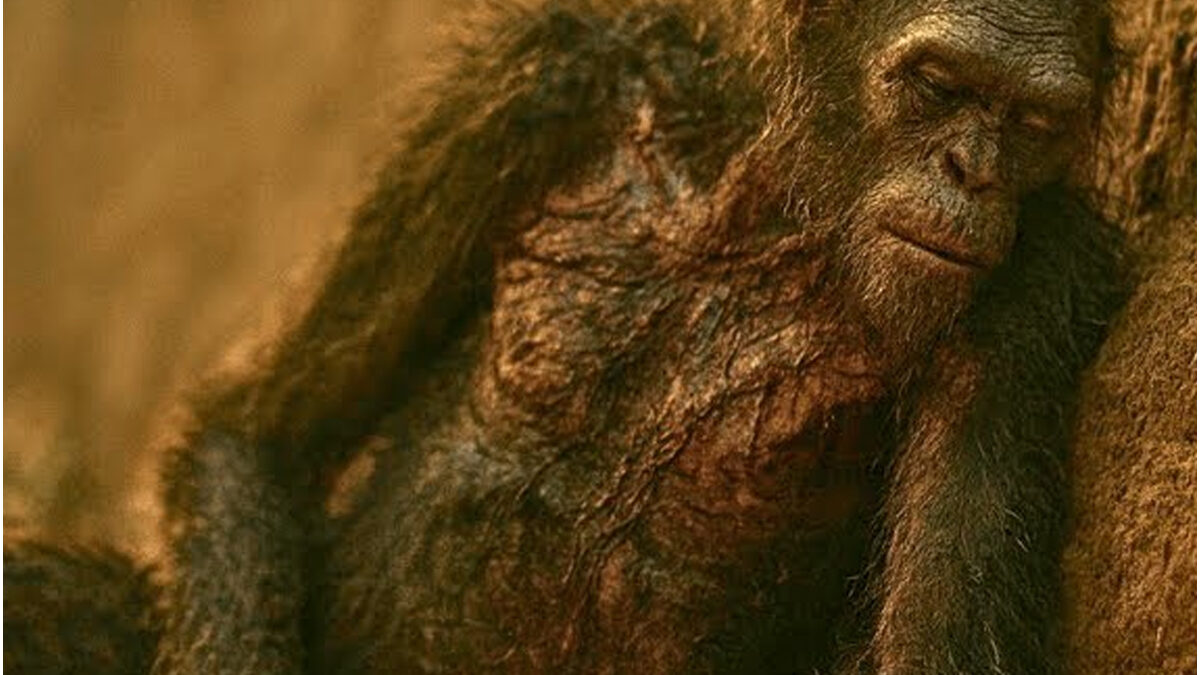
Old Man Pulled Burnt Bigfoot Child from Ditch – What Happened Next Shocked Everyone
In the remote woods of Idaho.
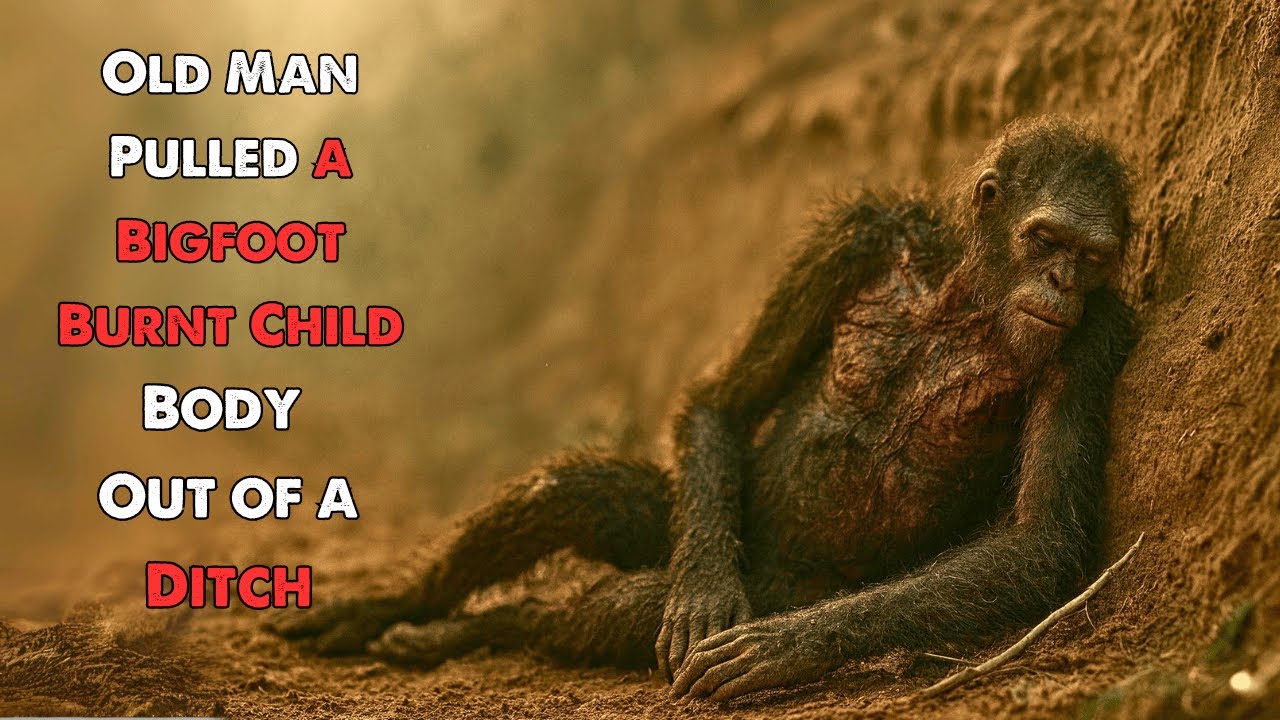
1987, a 68-year-old widowerower living alone in the forests of Idaho with only a blind dog who ended up saving a creature that science says doesn’t exiSt. In 1987, Elmer Sloan stumbled upon a young half-dead Bigfoot under a pile of decayed branches.
But instead of calling the authorities, he hid it in his late wife’s old cabin room, the same one she once lay dying in, and began a journey of quiet, mutual healing.
This isn’t fiction.
It’s a story reconstructed from a rers’s report, Elmer’s handwritten journals, and physical traces left behind.
In just 5 minutes, you’ll see Bigfoot not as a myth, but as a mirror of grief, solitude, and connection.
When the creature finally left, it didn’t speak, but it left behind three red berries, a white stone, and the wooden spoon Elmer once used to feed it, and carved into a piece of bark, the letter L, his wife’s initial.
This story will remind you.
Sometimes the only thing that holds a broken soul together is the silent presence of another.
Watch till the end.
Because once you do, you’ll never forget Elmer or Thorne.
It had rained all night.
That kind of Idaho rain that wasn’t loud, wasn’t hard, just there, constant, like the breath of something sleeping with its eyes open.
The pine needles were soaked, the dirt turned to syrup, and the sky hung low like a wet sheet strung between the mountains.
Still Water Ridge didn’t welcome mornings.
It just tolerated them.
Elmer Sloan, shoulders hunched under a coat patched at the elbows, stood by the sagging fence at the edge of his land.
He was prying up the old posts one by one, hands calloused, knees aching, the shovels slick with rain.
68 and his spine had started curving like the trees behind him, bent but still standing.
There was no one around for miles, just the dog murmur, blind and old, lying under the porch, listening with ears that twitched to memories more than sounds.
The fence had split down at the southern corner, same spot as always.
Maybe elk, maybe wind, maybe just time.
Time had a way of unmaking things that no longer mattered.
He braced a boot against the shovel’s worn handle and pushed.
The blade sank into mud, then stopped.
Something was wrong.
Not rock, not root, something soft, something that resisted like meat.
Elmer paused, shoved again, slower this time.
He heard a crack.
Not wood, not clean.
Something wet beneath the earth gave way with a sigh.
He set the shovel down, stepped back.
The ground around the fence post had slumped in like a broken lung beneath the slushed pine branches and runoff.
Something was breathing, just barely.
The ribs moved in and out.
A broken rhythm like wind through a rusted flu.
Elmer stared.
It wasn’t a bear.
He crouched slowly, joints screaming, pulled back a handful of damp needles.
Underneath a mass of fur, matted, dark, smeared with blood and mud.
A shoulder, or what looked like one, caved in slightly.
One arm lay twisted at an unnatural angle.
The creature was curled up tight as if the cold had folded it in on itself.
He saw the face next, not clearly, but enough.
The muzzle was short, the nose flat.
The skin around one eye was torn, blackened with old blood.
The lips moved barely.
A sound escaped, thin, raw, like the rasp of smoke too long trapped in a chimney.
Not a growl, not a snarl, just pain.
Elmer stumbled back.
His heart thutdded against the inside of his ribs like it wanted out.
He should have run, left it, shut the door, and pretended the storm had washed it away.
But he didn’t because when the creature opened its eyes just for a second, it looked at him.
And in that look, something shifted.
Not the world, him.
It was the same look Lorna had given him on the last day.
In that little room, pale light on the floor, the smell of vinegar and wet cloth.
She’d held his hand tight, not because she was afraid, but because she was asking him to stay just a little longer.
That same look right there in the mud.
Elmer pulled off his coat, the old one, the one with the lining she’d sewn and the buttons she’d never finished replacing, and he laid it over the creature like he would have done with her, if he’d had another day.
He stood up, legs shaking, reached for the walking stick he always carried when the cold got into his hip.
He didn’t look at the thing again, just walked back to the porch, each step heavy, as if the air had thickened around him.
Inside the cabin, everything smelled like wood and iron and old dog.
He reached for the rotary phone mounted on the wall, fingers trembling, dialed slow.
Every number a click, a breath, a memory.
“Vernett,” he said when the line picked up, voice rough as the fence post outside.
You need to come bring the kit.
A pause on the other end.
Then is it bad?
Elmer looked out the window.
The fog hung low, swallowing the pines.
Rain tapped soft against the glass like a secret trying not to be heard.
I don’t know what it is, he said.
But it’s hurt, he hung up.
Outside, thunder rolled across the valley, low and long, like something waking in the hills.
The clouds broke for a heartbeat, casting a pale gray light across the soden field.
Elmer walked back outside.
He stood by the broken fence, looking down at the coach.
The shape underneath barely moved now, but it was breathing.
That was enough.
Murmur crept out from under the porch, slow and stiff.
The old dog padded through the grass until he reached Elmer’s feet, sat beside him, whed once.
Elmer didn’t say a word.
The camera would pull back now if this were a film.
Rise slowly.
Rain softening the edges of the frame.
The old man, the old dog, the broken fence.
And beneath it, a creature that shouldn’t be there, shouldn’t exist, but was.
Two beings, both forgotten by the world, both soaked in the same cold, both waiting for something.
Maybe mercy, maybe just morning, but for now just silence and rain.
The truck arrived before sunrise.
Its headlights cut through the fog like slowmoving search lights, carving pale wounds across the gravel path.
Elmer was already outside, boots soaked, standing by the edge of the broken fence like a man guarding a grave that hadn’t been named yet.
He hadn’t slept, not because he couldn’t, but because something about that breathing beneath the coat had held him there all night, like a thread around the chest that pulled tighter every time he blinked.
Vernette climbed out of the truck with his usual limp, the kind that came from bad boots and worse memories.
He didn’t ask where, he could see it.
Elmer pointed without a word.
Just down the slope, where the rain had carved lines through the mud like veins under thin skin, the coat still lay over the creature.
It hadn’t moved, or at least not enough to make a sound.
Vernette was a ranger by title, but grief had stripped the shine off that badge long ago.
His boy had died in the red hollow fire, and after that, something in him stopped returning home.
He looked at the coat, then back at Elmer.
His eyes narrowed, not with suspicion, but with the kind of knowing that made you older than your age.
They walked down together, Elmer first, stiff, but steady, boots sinking slightly with each step.
Bernett crouched by the coat, lifted it carefully.
A breath caught in his throat.
Not fear, not awe, but something in between.
It wasn’t a bear.
The creature’s side rose and fell in uneven gasps.
Fur was matted with blood, thick around the chest and shoulder.
The left hand, if you could call it that, had torn knuckles and was missing every nail.
One ear hung in a ragged split.
The ribs showed through patches of fur like the old rafters in Elmer’s shed, worn, exposed, half broken.
Verette swore under his breath.
What the hell is this?
Elmer didn’t answer.
He just stood there, arms crossed, rain dripping from the brim of his hat.
It’s not human, Fernette said.
But it’s not, Elmer.
This thing shouldn’t exiSt. The wind came down the ridge then, soft but cold.
The kind that cuts through layers and leaves something raw underneath.
“If it’s still breathing after 5 days in this weather,” Elmer said, voice low.
Then it wasn’t meant to die.
Vernette glanced up at him.
A long look the kind men gave each other when the world shifted underfoot and neither one wanted to say it out loud.
They couldn’t call it in.
That was the unspoken truth between them.
Whatever this was, animal anomaly myth come to life.
If the others got wind of it, it wouldn’t be left in peace.
There’d be helicopters, trucks, scientists in clean boots, guns not meant for protection.
Elmer could already see the headlines, the chainlink cages, the cameras flashing like strobe lights in a nightmare.
When no one can know, Vernett said it wasn’t a question.
I know.
They used a tarp to build a stretcher.
Quiet hands, careful rope.
Elmer moved slow but steady.
Vernette handled the weight.
Together, they carried it toward the cabin, legs sinking slightly into the ground with each step.
The woods didn’t make a sound, as if even the trees were holding their breath.
They brought it to the old shed behind Elmer’s place.
Once it had been a healing room built for Lorna after her last miscarriage.
The air inside still smelled faintly of cedar oil and cloth.
Dust danced in the morning light, and the roof leaked slightly in the corner, but it was warm enough and quiet.
They laid the creature on the cot.
Its breathing was shallow, but it still drew in the air like someone who decided not to give up yet.
Elmer lit the oil lamp.
The soft flicker threw shadows across the wall, big ones, distorted by fur and silence.
He looked at the shape lying there, unmoving, wrapped in the coat she’d stitched long ago.
It didn’t fit.
But maybe that was the point.
Maybe nothing fit anymore.
Vernett opened the kit.
Bandages, saline, tweezers, though they both knew it would take more than that.
He started on the shoulder, cleaning the wound.
The creature didn’t wake, but its hand twitched once, curling slightly around the edge of the cot.
You ever seen claws like this?
Verette whispered.
Elmer shook his head.
No, it was hunted or left for dead.
Same thing sometimes.
The lamp flickered.
The wind picked up again.
Murmur scratched at the door once, then lay back down.
Bernett paused.
What do we do if it wakes?
Elmer didn’t answer right away.
He walked to the corner of the shed where a single shelf held a few of Lorna’s old things.
A cup carved from bone.
A dried bundle of lavender tied with yarn.
Her Bible worn down the spine, opened to psalMs. He placed the cup on the table beside the cut, poured in warm water.
“If it wakes,” he said.
“We treat it like anything that’s been hurt too long.
Let it reSt. Let it breathe.”
Fernet looked at him like he wanted to say something else, but didn’t.
He finished dressing the wounds, wiped the blood from its face.
They could see the bones better now.
The shape beneath the fur.
Human in some ways, not in others, something between.
Outside, the rain had stopped, but the fog still hung low, curling between the trees like a whisper that didn’t know where to land.
Verett stood.
I’ll check back tomorrow.
Don’t bring anyone.
I won’t.
He left without another word.
His truck faded into the mist the same way it had come.
Quiet, slow, like it didn’t want to be seen.
Elmer stayed in the shed.
He sat on the old wooden chair.
The same one he’d held Lorna’s hand from the floor creaked under his weight.
He didn’t speak, just watched the creature breathe.
The rise and fall, the shiver when the cold crept in again.
He pulled a second blanket over it, checked the wounds one more time, then he sat back.
The oil lamp hummed.
Somewhere outside, a pine cone dropped, soft against the damp earth.
He remembered something Lorna had once told him.
She was lying in the same room, weak, pale, smiling like she still had something to give.
She’d said, “Sometimes the only thing that saves us is when we choose to save something no one else would.”
He hadn’t understood it then.
He did now.
He looked at the creature.
Not a monster, not a miracle, just something left behind.
And somehow that made it familiar.
He whispered a line from the Bible.
Not out loud, just in his cheSt. One of the ones she used to say when the light was dim and the world felt too heavy.
He stayed there for hours, and somewhere just before dawn, the creature stirred.
Not a movement, not a sound, just the faintest shift of breath, as if it knew it wasn’t alone anymore.
It didn’t move that first night, not once.
Just lay there on the cot, curled into itself, like a fire left too long in the rain.
The old shed held the cold in its bones, even with a stove lit, and the oil lamp glowing faint behind fogged glass.
Elmer didn’t sleep.
He pulled the chair close and sat without speaking, hands folded over his knees, eyes trained on the rise and fall of that heaving cheSt. Not steady, not strong, just enough to know the thing hadn’t given up yet.
Outside, the woods sighed and settled.
The rain had stopped, but the wind still lingered, whispering through the pines like it was looking for someone who never came home.
Murmur lay curled by the door, chin resting on crossed paws, ears twitching in halfream.
Elmer leaned forward, elbows on his thighs, the leather of his jacket creaking with the motion, his breath fogged in the air.
Time passed the way grief does, quiet, heavy, without asking permission.
The creature didn’t open its eyes.
He read from the Bible for a while, not out loud, not like Sunday service, but soft and low, like how Lorna used to read before bed.
Psalms mostly, sometimes revelation when she felt like tempting thunder.
The words didn’t have power in them.
Not anymore.
But they had weight, and sometimes weight was enough.
Around midnight, the wind died.
He got up to check the fire, then sat back down.
Poured a little broth from the pot into the bone cup and let it cool.
He lifted the creature’s head with a hand under the jaw, fingers brushing against damp fur and heat that came in waves like fever.
He tilted the cub.
Most of it spilled down its chin, but a few drops slid past the teeth.
That was enough.
He wiped its mouth with an old cloth and sat back again, watching.
At some point, his mind wandered, not far, just to the edge of memory where it always hovered.
He remembered the day Lorna died.
Not the sickness.
That part had dragged on for months.
Slow and cruel.
No, he remembered the breath before the laSt. The way her fingers curled around his.
Her eyes had been cloudy then, but they’d seen him all the way through.
And in them was something he hadn’t earned.
Mercy.
He blinked it away.
He wasn’t going to lose another soul in that room.
Not again.
The next morning came gray and slow.
The mist clung to the trees like spiderw webs, too tired to fall.
Elmer fed Murmur first, then boiled water, tore up soft bread, mixed in a little canned venison from the cellar.
It had to be warm, but not hot.
He took his time.
Everything had to be right.
He carried the bowl back to the shed, pushed the door open with his shoulder.
The creature was still there, still breathing.
This time when Elmer knelt beside it and held the spoon to its lips, the wooden one, the one he’d carved for Lorna and branded with the letter L.
The creature stirred.
Its mouth parted, tongue slow, eyes still shut.
The broth went down.
Some of it, not much, but enough.
An hour later, it drank again.
By afternoon, it shifted its weight, a leg dragging slightly across the cut, as if trying to find a more familiar shape.
Its fingers curled around the edge of the blanket.
The ear that wasn’t torn, flicked at a sound only it could hear.
Elmer spoke for the first time since sunrise.
Just a whisper.
You’re not done yet.
He didn’t expect it to understand.
Didn’t care.
The sun didn’t come out, but the light changed.
Turned from gray to the color of old paper.
Dust floated through it, soft and slow.
Elmer opened the shed window just enough to let the air move.
A sparrow landed on the sill, looked in, then flew off without sound.
That night, he brought his own cod into the shed, set it beside the stove.
He wasn’t leaving it alone.
Not in there, not with the ghosts.
He laid out his pillow, the same one he’d used since 81, and stretched out.
His knees popped.
His back achd, but he felt something settle in his chest that hadn’t been still in years.
Around 3:00 in the morning, he woke.
Something had changed.
The air was warmer.
Not from the fire, from breath.
The creature had moved.
Its head was turned toward him, eyes half-litted, golden in the lamplight.
Not fully open, not fully there, but watching.
Elmer didn’t move.
He held its gaze, let the silence fill the room like smoke.
The creature blinked, not like an animal, not fast and shallow.
Slow, deliberate.
Elmer felt the skin on his arms rise.
Not in fear.
Recognition.
He didn’t speak.
Didn’t dare.
He just sat up, pulled the blanket tighter around its shoulders, and poured water into the cup again.
The eyes didn’t follow the cup.
They followed him all the way.
He held it close, let the rim touch its lips.
It drank four sips, then turned its head slightly as if to say, “Enough!”
Elmer set the cup down.
The creature exhaled, a deep, rattling breath that sounded like a chimney clearing for the first time in winter.
“Then it closed its eyes.
Elmer sat back on the cot.
Murmur stirred at his feet, letting out a soft wine, but didn’t lift his head.
In that moment, the shed wasn’t a shed.
It wasn’t a sick room.
It wasn’t a secret.
It was a threshold between what had been broken and what might still hold.
The lamp flickered once.
The fire cracked low, and outside, beyond the pines.
Something howled in the distance, not close, not urgent, but far and wide and aching.
Elmer listened, not with fear, but with the feeling that for the first time in years, he wasn’t the only thing in that cabin carrying a pass too heavy to speak of.
And maybe, just maybe, that meant neither of them had to carry it alone anymore.
The morning after the blink, Elmer didn’t speak.
He just opened the shed door and stood there a while, one hand on the frame, watching the light pour in and spill across the floorboards like it didn’t belong.
The creature hadn’t moved much, but something in the air had.
The silence wasn’t as hollow.
It had weight now.
Something shared, and it was the first time Elmer felt like he wasn’t the only one remembering.
He brought oatmeal in a chipped enamel bowl, added a little honey from the last jar they’d saved for winter.
Lorna used to ration it like gold.
He dipped the wooden spoon into the mix and offered it again.
This time the creature opened its mouth slower than before, but without hesitation, swallowed once, twice, then stopped.
The eyes stayed half-litted, watching him, not like prey watching predator, but like someone trying to understand what it meant to be cared for.
Elmer wiped its chin with a cloth.
“We’ll go slow,” he said, though his voice cracked on the last word.
“Slow is the only way I know how anymore.
By the third day, it sat up.”
Only for a minute, but it used its arms to brace itself against the cut.
Elmer noticed the left hand, mangled, missing nails, swollen along the knuckles, barely touched the frame.
The right arm bore most of the weight, trembling, but trying, its chest rose faster when upright.
Not panic, effort, determination.
That night, Elmer cleared out the corner of the shed, brought in planks, hammered them into a square frame with a slanted roof and an open front.
It wasn’t a cage.
It was a space.
Shelter without walls.
He called it thicket, though no one heard him say the name.
It was the kind of thing you only whisper to the air when you needed to stick.
He lined it with hay and burlap sacks, left a wool blanket folded in the middle.
It was enough.
When he opened the door the next morning, the creature had left the cot.
Not far, just a few steps, but it had found the edge of the new shelter and curled inside, arms around its knees, back against the frame like it had known exactly what that space was meant to be.
It looked up when Elmer entered.
Just once, no fear in the eyes, just that same quiet, watchful, solemn, as if every gesture might be the last it was allowed.
Murmur wandered in behind him, sniffing at the hay.
His back legs dragged a little more than usual.
He let out a grunt, turned once, then settled beside the shelter, eyes toward the stove.
The creature shifted.
Elmer watched from the corner of his eye.
It extended one arm slowly, as if testing the air.
Its fingers, still swollen and rough, touched the top of Murmur’s head, just briefly.
A gesture not born of instinct, of intention.
Elmer didn’t move, didn’t say a word.
That night, it stormed.
The kind of wind that came down from the ridge with a voice, snapping branches and clawing its shutters like it was trying to peel the world back.
Elmer stayed in the shed, threw another log on the fire.
He checked the window twice, then sat beside Murmur, the old dog’s breathing shallow, his body curled tight against the cold.
Sometime after midnight, the creature rose.
It didn’t stand tall, just crouched and walked low on all fours, the way a wounded thing learns to move.
It crossed the room to where Murmur lay.
Elmer tensed but didn’t stop it.
The creature lowered itself beside the dog, rested one hand across Murmur’s ribs like it was listening to the rhythm inside.
Then it stayed all night, didn’t move again.
Elmer watched from the cot, eyes half closed.
He didn’t sleep, but for the first time in years, he didn’t feel like he had to stay awake to keep something from slipping away.
In the morning, when the light cracked through the eastern window, Elmer saw the creature still curled beside the dog.
Its eyes were closed, but its chest rose and fell in sink with murmurss.
He sat down at the stove, made coffee thick and dark, poured some into Lorna’s old cup with a chipped handle.
He looked at the creature, still sleeping, hands still resting on the dog, and let the warmth of the cup bleed into his palMs. Outside, the woods had changed.
The storm had stripped leaves from the pines, left the world raw and honeSt. Elmer stepped onto the porch, stared at the clearing beyond the fence.
Somewhere out there, something had once abandoned this creature, left it to rot in a ditch.
Whatever it was, whoever they were, they’d chosen not to look back.
Elmer had spent most of his life living with choices like that.
He stepped back inside.
The creature was awake now, sitting beside Murmur.
Its breathing was steadier, its eyes clearer.
He set the bowl of oatmeal near the edge of the shelter and didn’t push it.
It reached out, picked up the spoon in a clumsy fist, fed itself three slow bites before setting it down.
Then it turned its face toward the window.
Toward the light, Elmer crouched nearby.
Not close, just enough.
You’re holding on, he said.
Good.
He didn’t name it yet.
That came later.
That evening, he found it by the far wall, bent over a piece of wood from the fire pile.
It was holding something, a sliver of pine worn at one end and carving into the bark with its nail.
Slow strokes, shallow.
Elmer stepped close enough to see the shape, a line with a cross through it.
Not a symbol he knew, but not random, not mindless.
He looked down at the wound on its leg, still healing.
A sharp little branch had snapped under the knee and wedged itself deep.
He’d pulled it free the second day.
It had bled for almost an hour, but the thing never cried out.
He pointed at the cot, then the wound.
“That thing in your leg,” he said.
“A thorn?”
The creature looked up, not confused, not hostile, just aware.
So Elmer said it again.
“Thorn, and for the first time, the creature blinked once, slow, deliberate.
That was enough for a name.
Days passed.
Thorne ate more, moved more.
Elmer kept the shed clean, kept the food warm.
They didn’t speak, not in words.
But something had formed between them, thin and strong, like fishing line you couldn’t see unless the light hit it just right.
He caught Thorne watching the dog again.
Murmur, for all his age, seemed calmer now.
His eyes clearer, the limp in his step less pronounced.
One night, Elmer came in to find the creature curled around Murmur, the dog breathing steady, tail thumping once in sleep.
He stared at them both for a long time.
Then he sat down and said nothing.
But in his chest, something started to shift.
Not all at once, just the edges, the corners, the places that had long ago gone cold.
And for the first time in more years than he could count, Elmer Sloan wasn’t thinking about how much he’d loSt. He was wondering quietly, painfully, how much more he might still have to give.
The rain came down hard that morning, not in drops, but in sheets, gray, slanting sideways across the ridge, like the sky had split just enough to pour grief straight through.
Elmer stood under the eve, coffee in hand, watching the mist cling to the pines, and the world fold in on itself one inch at a time.
The roof of the shed clattered, the old nails groaning.
He could smell wet bark, rust, pine needles rotting.
He could feel it in his chest, too.
The ache before weather, the pressure where memory used to sleep.
Thorne was outside.
He hadn’t gone far, just into the clearing beyond the cabin, feet sunk in the cold grass, head tilted up toward the sky like he was trying to remember the sound of something only he had ever heard.
His fur was soaked, sllicked against his ribs, but he didn’t move.
Just stood there letting the storm fall through him.
Not flinching, not sheltering, Elmer opened his mouth to call him in.
But the words didn’t come.
There was something in the way Thorne stood.
Still, but not frozen, like a statue built out of hurt that reminded Elmer of Lorna.
She’d done the same thing once years back after the last miscarriage.
It had rained just like this.
Not loud, not violent, just relentless.
She’d walked barefoot out to the line where the trees met the field and tilted her face to the clouds, arms at her sides, hands open.
She didn’t cry, didn’t speak, just stood there like maybe the sky would take her too if she stood still long enough.
Long.
He’d watched from the porch then, too, and he hadn’t gone after her.
Thorne made a sound, sharp and thin.
Something between a howl and a breath that caught in the throat.
It wasn’t loud, but it felt ancient, like a signal or a name.
A call sent out with no certainty it would ever be answered.
Elmer set the cup down.
Inside, Murmur was shivering.
He hadn’t eaten since the day before, nose dry, eyes duller than usual.
Elmer knelt beside him, pressing a hand gently to the old dog’s cheSt. still breathing, but slow, shallow.
Time had been pulling at Murmur for months now, inch by inch, like it was afraid to take him all at once.
Elmer stayed there for a while, not speaking.
He had no prayers left to say, no promises left to barter.
That night, the storm rolled deeper into the valley.
Thunder low, constant.
No lightning, just the sound of weight moving through clouds.
Thorne didn’t return to the shed.
Elmer found him crouched beside Murmur in the cabin, close but not touching.
The dog’s body rose and fell under the blanket.
Thorne watched him the way Elmer had watched Lorna once, quiet, steady, with something in his face that didn’t belong to animals.
Elmer didn’t say anything, just sat down nearby, back against the wood stove, legs stretched out, hands folded across his lap.
The fire crackled, and outside the wind tangled itself in the trees.
Later, when Elmer rose to stoke the fire, he noticed something odd.
Around the blanket, near Murmur’s paws, were leaves, not scattered, not random, placed, dried pine, and curled fern, arranged in a soft half circle, almost ceremonial.
Beside them, a few smooth stones, pale and flat, stacked neatly in a crescent.
Elmer didn’t move them.
He just looked at Thorne.
The creature looked back.
They didn’t need to speak.
Some things didn’t come from books or tools or time.
Some things were older than all that.
Elmer sat with them until the fire burned down to embers.
He didn’t sleep, just leaned against the stove, listening to the wind moan across the eaves and the soft rhythm of two breaths.
One slow, one slower, against the quiet.
In the morning, Murmur was still breathing, stronger now.
The color had returned to his guMs. He stood, wobbled to the water bowl, and drank, then laid down again, this time without the shaking.
Elmer blinked, then chuckled under his breath.
Not disbelief, just something like wonder.
He turned to Thorne, who had curled back into the shelter.
Elmer said nothing.
But in the silence, something moved through the room that felt like gratitude.
Not thorns, his own.
Later that day, while sweeping out the corner of the shed, Elmer noticed something else.
His Bible, which hadn’t been touched since the weak Lorna passed, sat open on the stool beside the cot, not where he’d left it.
Pages slightly damp, edges curled, but the crease was new.
The fold landed between verses, one he hadn’t read in a long time.
He bent down and saw it.
A line drawn in soft charcoal, almost smudged across the edge of the margin.
The handwriting wasn’t his.
It wasn’t Lorna’s.
Three words.
We remember the kindness.
He stared at them until his knees hurt.
Didn’t say a word.
He didn’t ask how it got there or why it used English or if it was real because something deeper in him already understood.
That night, Thorne stayed near the porch.
Elmer sat on the steps, a blanket over his knees, coffee gone cold in his hand.
The sky had cleared, stars out, pale and shaking.
The kind of sky that made you feel like the world above was older than the world below.
Still Water Ridge breathed differently after rain.
The trees seemed taller, the air thinner.
Thorne tilted his head once more, like he was listening to something Elmer couldn’t hear.
Then he lay down in the grass, eyes never leaving the treeine.
The wind didn’t speak anymore.
It just passed through like it had delivered its message and was done now.
Elmer leaned back against the porch poSt. Watched the darkness settle in.
Heard murmur shift on the floor behind him.
Felt the night stretch long across the land.
He didn’t know what would come next.
But for the first time since Lorna’s breath had stilled.
Elmer didn’t feel like something was slipping through his fingers.
Something was staying.
And maybe in a place like still water, that was enough to begin again.
The frost came early that year.
Still Water Ridge, already quiet by October, turned to glass in the mornings.
Branches brittle with ice.
Blades of grass coated in shimmer.
The whole landscape holding its breath like something waiting for permission to exhale.
The days were getting shorter.
The sun slower to rise, quicker to leave.
Elmer felt it in his bones before he saw it on the land.
That creeping hush, that shift in the air that told you things were about to change, and not all of it would be kind.
He was chopping wood when Vernett’s truck pulled up.
Tires cracked against the frozen mud.
Elmer didn’t turn around until the engine cut.
He knew that sound.
He knew the weight in those footsteps, too.
Measured, but quickened by something just beneath the surface.
Vernette didn’t say hello, just lifted his hand, palm tight around a folded map.
His eyes were sharper than usual.
Breath came faSt. They’re back, he said.
Elmer wiped his hands on his coat.
Waited.
This morning, red hollow trail, three prints, each one over 20 in.
Not human, not bare, fresh, less than 5 hours old.
Elmer felt something drop inside him.
Slow and deep.
Not fear, not surprise, but something close to warning.
Thorne hasn’t gone that far, he said.
Not yet.
The two men stood there between the trees and the cold, the silence between them louder than the wind.
Vernette stepped closer.
You think it’s them?
Elmer didn’t answer right away.
He looked toward the treeine where Thorne usually vanished when the light got too bright.
He’d been wandering more lately.
Further, watching the hills, listening.
I think it’s his kind, Elmer said quietly.
Think they’re looking for him?
Elmer looked down or watching to see if he’s still alive.
They didn’t speak after that.
Fernette left without finishing his coffee.
That night, Elmer sat on the porch with his shotgun beside him.
Not raised, not loaded, just there.
The fire inside crackled low, and Murmur dozed near his feet, snoring in soft, uneven bursts.
Thorne hadn’t come in yet.
The moon hung thin and sharp over the ridge like a sickle, casting silver threads across the field.
He spotted Thorne just past the shed, motionless, looking north.
Elmer didn’t call him.
The creature stood there for nearly 10 minutes.
Then he moved slow and certain toward the trees.
Not hurried, not afraid, just going, Elmer didn’t follow.
Not at first, but he waited.
And when morning came, Thorne didn’t return.
Not at breakfast, not by midday.
And when the second evening fell, and the sky turned the color of bruised plum, Elmer stood again by the porch rail.
Same place, same coat, heart hammering like it hadn’t in years.
He told himself not to worry, but worry was already inside him, eating quiet holes.
Then, just before dark, movement, not from the woods, from the side of the shed.
Elmer turned slowly, fingers tightening at the hem of his coat.
There, leaning against the firewood stack, was a stone, pale, oval, polished, and beside it, a shape carved in the dirt.
An L just like the one he’d carved years ago by the tree where Lorna used to sit, thinking no one saw, just like the one she’d pressed into the bark the day before she passed.
A shape not meant for names, but for remembrance.
Thorne hadn’t returned, but something had.
That night, Elmer left the back door open a little longer, left the light in the shed on, kept Murmur close.
He didn’t sleep, not because he was afraid, but because the silence had changed.
By dawn, he walked the edge of the fence, boots crunching frost, hands shoved deep into his coat pockets.
He reached the far end where the trail dipped down into a hollow choked with fog and memories.
And he paused.
There in the dirt three sets of prints, large, one deeper than the others, wider, the gate slower, maybe older, maybe injured, another smaller, spaced far apart like it had run ahead and circled back.
And a third familiar, wider in the heel, lighter in the step.
Thorn, they’d been here.
He crouched down, tracing the edge of one print with the back of his knuckle.
The shape was clear, but it wasn’t just the foot that told the story.
It was what came after.
Nothing.
The prince stopped as if lifted, as if carried.
Elmer stood there long after the cold had numbed his fingers.
He didn’t cry.
He didn’t move.
He just breathed and let the woods breathe with him.
Later that afternoon, he found something else inside the shed on the cot.
Tucked into the folded blanket sat the spoon.
The one he’d carved.
The one Lorna used to use when her hands trembled too much to grip metal.
It wasn’t dirty, wasn’t cracked, just left.
Beside it, a small white stone, smooth, still cold from the air outside.
He held it for a while, closed his hand around it, didn’t open it again.
The wind picked up again that night.
The first snow came soft, thin, just a whisper brushing the tops of the trees, the kind that melts before it lands.
But it meant something.
Elmer stepped onto the porch and looked toward the ridge, toward Red Hollow, and said nothing.
But in his chest, something was shifting again, not breaking, moving.
And maybe that was harder because the kind of goodbye that doesn’t come with words, that’s the kind you never stop hearing.
By the time the trees shed the last of their yellow, Elmer had stopped expecting to see thorn again.
That kind of hope, he’d learned, wasn’t something you fed every day.
It was something you buried soft and deep and waited on the way you wait on old seeds in bad soil.
If they sprouted, fine.
But mostly they didn’t.
And mostly it was better not to look too hard at the places where nothing had grown.
Still, he walked out to the thicket every morning.
Same boots, same slow limp, brushing the frost off the hay, adjusting the plank roof when the wind had knocked it sideways in the night.
He didn’t say much anymore, not out loud, but Murmur followed him still, tail low, breathing shallow but steady.
They kept the ritual alive between them, as if the air might still carry the scent of someone who’d once laid there, curled in pain, half alive and all alone.
It wasn’t until the third week that Elmer found them.
Not thorn, but the offering.
He hadn’t noticed it at firSt. The light was bad that morning.
Sky overcast, mist clinging to the valley like old bed sheets.
He’d almost turned back when Murmur stopped walking.
Just froze, ears twitching, nose tilted.
Elmer followed his gaze and saw the pattern.
Right at the mouth of the thicket, three red berries, bright as blood, placed in a perfect line across the threshold, not random, not dropped by birds or wind or luck.
They were arranged, careful and intentional, with space between them.
Space that meant something.
And beside them a string of stones woven with dried grass and pressed into the shape of a curve.
He stood there for a long time staring at the symmetry of it.
Then he knelt.
The berries were still cold from the night, but not frozen.
Picked recently and not local.
They weren’t the kind that grew near still water.
He would have known.
He and Lorna had picked through these woods every fall.
These weren’t from here.
He took the string in his hands gently, like it might fall apart.
The weave was simple but tight.
The knots knuckled into the shape of a single letter or something close to it.
Looked like a backward E or maybe a symbol.
Maybe both.
He held it to his chest and closed his eyes.
Didn’t cry.
Didn’t smile.
Just remembered.
That afternoon, Vernette came by again.
Pulled up slow.
Engine quieter than usual.
Eyes scanning the treeine before he even knocked.
“I went back to Red Hollow,” he said, voice low.
“All the prints are gone.”
Elmer didn’t respond.
“But I found this.”
Vernett reached into his coat, pulled out a folded napkin.
Inside it, a piece of bark, rough, worn.
The edge was burned slightly, like it had been pulled from a fire, but not consumed.
And across the surface, in dark cuts, a single line slashed at a diagonal.
Then three small cross-hatches beneath it.
Not random, not accidental.
You think it’s a warning?
Verett asked.
Elmer stared at it, then slowly shook his head.
I think it’s a message from him.
No.
He looked up.
From them.
That night.
Elmer sat on the porch past dark, wrapped in Lorna’s old quilt, steam curling from the mug in his hands.
The stars were out for the first time in a week, sharp and pale and too far to touch.
Murmur lay beside him, snoring and pulses, the kind of sleep that sounded more like waiting than reSt. He didn’t expect to hear anything, but then he did.
A soft rustle, not in the woods.
Behind him, he turned.
Nothing there.
Not at first, then movement.
Just a flicker.
A shape pulling away from the shadows by the back shed.
He stood, heart hammering, not from fear, but recognition.
He stepped toward it, slow and careful, like approaching a deer that might vanish.
There on the ground, another shape, this one made of wood.
Two pieces crossed over one another, tied at the center with twine, a symbol.
He’d seen it before on a reservation down south years ago.
Lorna had explained it.
It meant gratitude, not spoken.
Shown.
He didn’t follow the shadow.
Didn’t need to.
It had left what it came to leave.
He bent down, picked up the cross, smoothed the twine with his thumb, then looked toward the ridge.
There was nothing left to chase.
And yet, for the first time, he didn’t feel abandoned.
He just felt known.
The next day, Elmer walked out to the old pine tree at the edge of the northern fence.
The one Lorna used to sit under when the sun got too hot, the one she’d once whispered secrets to, like the bark could hold them better than he ever could.
He cleared the base of dead needles and knelt there, slow, creaking in every joint.
He pulled a stone from his coat pocket, one of the ones Thorne had left, and he set it gently at the tree’s base, just beside the one he’d left all those years ago, the one that bore her name, carved with shaking hands and a heart too broken to be neat.
He didn’t say anything, but he stayed, and when he rose, he felt lighter, not less burdened, just more shared.
That night, when the wind moved through the walls and the stove crackled long into the dark, Elmer dreamed not of faces, but of shapes, stone, fire berry cloth, gestures passed down in silence, like threads from one wounded hand to another.
And somewhere inside that dream, a voice, not human, not language, but real, saying, “We remember.”
And in the quiet that followed, he finally believed it.
The first snow didn’t fall like a surprise that year.
It came in slow and certain, like a breath taken in by something ancient.
The sky turned the color of ash just after dawn, and by the time Murmur stirred beside the stove, the world beyond the cabin had vanished into white.
Trees blurred into their own silhouettes.
The fields gone, fence posts swallowed.
The world shrank down to walls and fire light and the hush of falling snow that made even memory feel farther away.
Elmer hadn’t stood up since the night before.
Not really.
His knees had gone stiff beneath the wool blanket Lorna had sewn from scraps decades back.
He felt the cold behind his ribs now in the hollow places where strength used to be.
The kind of cold that didn’t bite, just pressed, constant and steady, like the tick of a clock counting down something you already know.
The coffee had gone cold on the table.
Murmur’s ears twitched once, but didn’t lift.
He was too old for this kind of winter.
They both were.
Elmer shifted slightly.
The movement burned through his spine.
He reached for the charcoal he’d been using the night before.
Just a stub now, worn down to nothing, but enough.
He turned to the wall beside the cot.
Not the Bible, not the window, just an old plank, dry and bare and waiting.
He pressed the charcoal down, wrote slowly.
He lived.
So did I.
No more, just that.
His fingers trembled as he let the charcoal fall.
He leaned back against the headboard, chest rising in slow, uneven beats.
Every breath sounded like it had a question mark at the end of it.
Not pain, just waiting.
The room felt smaller now, not in size, in time.
Like all the years he’d lived in this place had folded in around him.
The nights with Lorna after the miscarriages, when the house was too quiet and neither of them could sleep.
The days after the funeral when the front door hadn’t opened for weeks.
The mornings with thorn, moving slow through thawing frost, feeding something wild with hands that only knew how to build.
Outside, the wind whispered low against the glass.
And then, just after the stove cracked from settling heat, he heard it.
A sound.
Not the wind, not a branch, not imagination.
The back door creaked open.
Slow, soft, not from age, from care.
Elmer didn’t lift his head.
Didn’t need to.
He heard the footsteps.
Only three of them.
Then stillness.
Murmur stirred.
His old body pushing up just enough to lift his head.
He didn’t bark, didn’t whine, just looked toward the door and stayed that way.
Eyes steady, ears raised.
Then Elmer felt the air change.
Not colder, not warmer, just real.
A presence like something the room had been waiting on finally returning home.
He didn’t open his eyes, but if he had, he’d have seen what was left behind on the wood floor near the cot.
Not loud, not grand, just a quiet leaving.
Three red berries, a tuft of gray fur damp with melted snow, and a strip of bark curled at the edge with a single shape carved into it.
Ooh.
The snow outside thickened, turning the windows to soft gray lanterns.
The sky pressed low, and the trees leaned under the weight.
The cabin didn’t groan.
It held like it always had.
And by morning, there was no more sound from the back room.
No more shifting in the cot, just murmur, curled beneath it, tail over his nose, ears still twitching to something only he could hear.
When Vernett came by 2 days later, he didn’t knock.
He just stepped inside like a man who already knew.
He kept his voice low when he spoke.
Not out of respect, out of recognition.
The kind that doesn’t need words.
He found the message first, scrolled in charcoal, faint but sure.
He lived.
So did I.
He stared at it a long while.
Then stepped to the porch and stood in the snow.
There, at the edge of the hill where the forest met the clearing, a single figure stood, far enough not to intrude, close enough to be seen.
Massive, still, covered in snow that melted off his shoulders like it didn’t dare stay.
He didn’t move, just watched, long and slow.
And then, without turning, the creature walked back into the trees.
Not running, not hiding, just returning.
The sky stayed quiet.
The world held its breath, and inside the cabin, nothing stirred.
But somehow everything had changed.
Sometimes the quietest stories leave the loudest echoes.
They don’t always come with answers or endings tied in ribbon.
They unfold slowly through the hush of snow, the silence between breaths, the weight of an outstretched hand in the dark.
These are the stories that live not in what’s said, but in what’s felt.
In the spaces where fear meets compassion.
Where memory holds its ground.
Where something unloved is given a place to reSt. And maybe that’s what we’re all really looking for in the end.
Not miracles, not certainty, but presence.
The kind that stays through storms and seasons.
The kind that doesn’t turn away when something wild and broken shows up at the door.
There’s something deeply human in that.
Not just in the act of saving, but in being changed by what you choose to save.
There are moments that never make headlines.
Small trembling choices that no one sees.
But sometimes those are the ones that matter most because even in a world that forgets, even in places untouched by signal or spotlight, kindness remembers.
And memory, real memory, isn’t made of facts.
It’s made of warmth, of shared silence, of eyes meeting across the distance and saying, “You are not alone.”
That’s where healing begins.
Not in grand gestures, but in gentle ones, the bowl of food left out in the cold, the blanket draped without question, the name whispered without needing to be returned.
If we listen close enough, we can still hear the pulse of those moments long after they’ve passed.
They don’t fade, they root.
And when they do, they change the landscape.
Not just of forests and fences, but of hearts.
So if this story reached you in some quiet part of yourself, let it sit there a while.
Let it echo.
Let it remind you that even the forgotten corners of the world are still breathing.
That mercy doesn’t always roar.
Sometimes it just lingers.
And sometimes that’s enough to bring something back to life.
Thank you for walking this path with us.
If the story moved you, we invite you to share your thoughts in the comments below.
We’d love to hear how it made you feel.
And if you’d like more stories like this, stories of quiet courage, of connection in unlikely places, consider subscribing to the channel and turning on notifications.
It helps us keep these voices alive and these moments remembered.
Until next time, stay warm, stay kind, and never stop listening for the things that most people miss.








