NASA Is Sending A Nuclear Rover To The Moon… Right Now
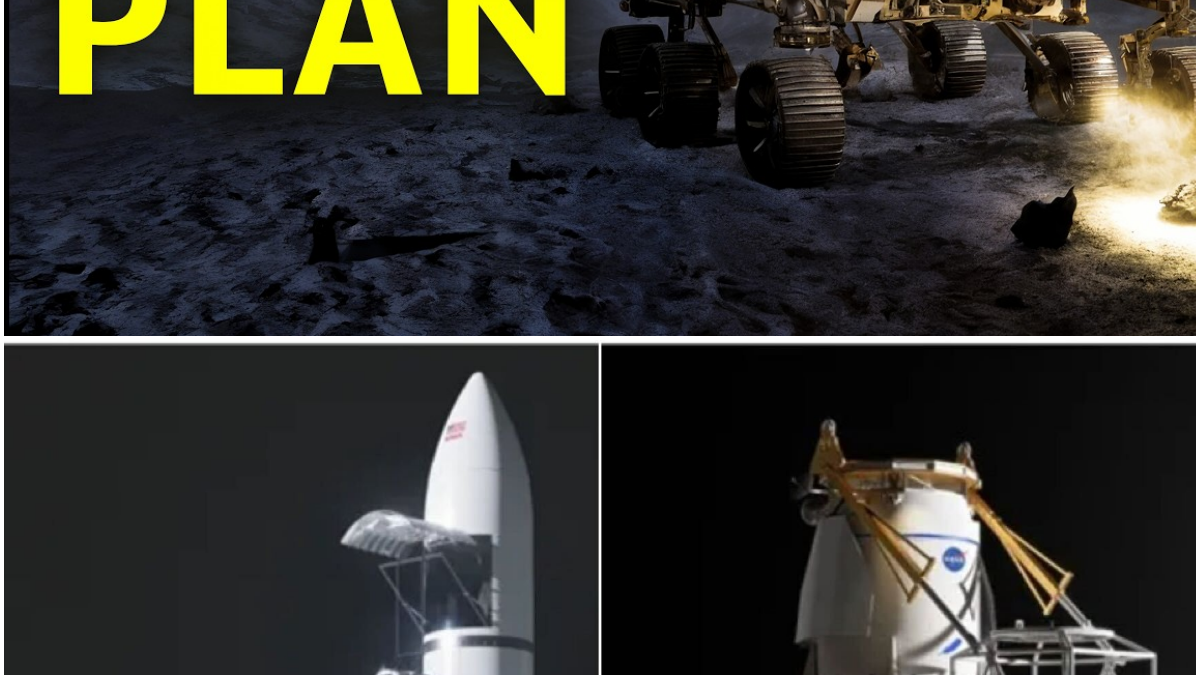
NASA Is Sending A Nuclear Rover To The Moon… Right Now
The rover is already on the pad.
The plutonium core inside it is already warm, already generating electricity through slow radioactive decay that will outlive most of the engineers who assembled it.
In the briefing rooms in Washington, the language has quietly shifted.
The word being used is not exploration.
The word is infrastructure.
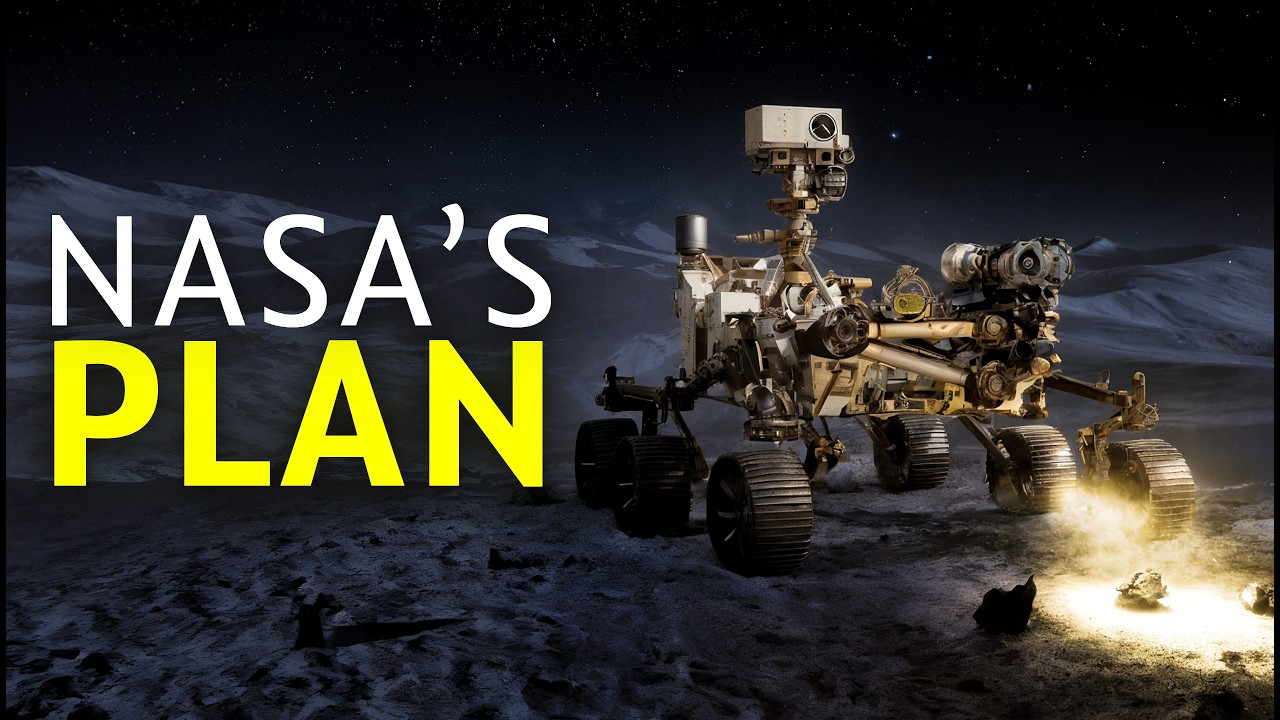
The rover is the size of a compact car.
Its destination is a shadowed crater at the lunar South Pole, where the sun has not touched the ground in over 2 billion years.
And the country that built it is not calling it a science instrument.
It is calling it a positioning asset.
The public heard nuclear rover and thought space adventure.
The internal documents describe something closer to a claim stake.
That gap is the story.
Here is what I want you to understand.
The reason NASA is sending a plutonium-powered vehicle to the lunar South Pole right now is not curiosity.
Another nation is running the same clock, targeting the same craters with the same objective.
Whoever gets there first controls the opening move of an industrial expansion that will define the next 100 years.
Let me stack three signals fast.
First, the power source.
Solar panels are cheaper and lighter.
NASA is not using them.
It is using plutonium-238, a radioisotope so rare the United States nearly ran out of it.
You do not spend that fuel casually.
You spend it because you need something to survive a 2-week lunar night at minus 240° C.
You spend it because you are building for permanence.
Second, the target.
The rover is going to specific craters where water ice has already been confirmed.
Not suspected, confirmed.
Lcross confirmed it in 2009.
Chandrayaan-1 confirmed it.
SOFIA confirmed it.
The mission is not searching.
It is surveying.
One is science, the other is prospecting.
Third, the timeline.
This program was canceled, then resurrected on a schedule that does not match a scientific priority queue.
It matches a strategic one.
It matches a competitor’s program.
Before we go further, where are you watching this from?
Because if you had not heard about this mission before now, that itself is part of the point.
I am not saying the rover is a weapon.
I am not saying NASA is lying.
I’m saying every sentence in the public framing is technically true and strategically incomplete.
By the end of this video, the phrase nuclear rover will not sound like science news.
It will sound like a status report.
Chapter two.
Let me read the official framing back to you slowly.
Not to mock it, to show you what it is doing.
NASA describes the mission in three phrases.
Search for water.
Prepare for Artemis.
Understand lunar volatiles.
Every phrase is true, and every phrase is doing quite strategic work most viewers are not equipped to see.
Start with search for water.
That framing implies uncertainty.
It is a decade and a half out of date.
L Cross confirmed water ice at Cabeus crater in 2009.
Chandrayaan-1 detected hydroxyl signatures across the surface.
SOFIA confirmed molecular water.
The Lunar Reconnaissance Orbiter has been mapping hydrogen concentrations at the poles for over a decade.
The scientific question of whether water exists was answered years ago.
The current question is how much, in what form, at what extractable concentrations, and at what industrial cost.
That is not searching.
That is inventory.
And inventory is what you do before extraction, not before discovery.
Move to the second phrase.
Prepare for Artemis.
That sounds like science support.
Read the technical documents.
The rover is characterizing water ice deposits for extraction feasibility.
It is identifying candidate sites for a sustained human base with an attached nuclear surface power system.
NASA is not planning visits to the moon.
It is planning a base.
With a reactor.
This rover is the surveyor for where that base will be installed.
That is not preparation for a mission.
That is preparation for occupation.
The third phrase is the most carefully constructed.
Understand lunar volatiles.
Volatiles is a neutral sounding word covering water, hydrogen, methane, and other compounds that shift states under lunar conditions.
Translate it.
Volatiles are fuel.
Volatiles are life support.
Volatiles are the raw materials that determine whether you can sustain human presence off Earth without shipping every gram from home.
Calling them volatiles is agency safe language for inventorying a strategic reserve.
None of this is hidden.
It is in congressional testimony.
It is in NASA’s technical documents.
It is in the budget justifications.
The information is not classified.
It is just presented in a register most people do not read.
This is not a conspiracy.
It is a translation problem.
Think back to Apollo.
Publicly, it was about scientific discovery.
Internally, the record was about Cold War signaling, about proving American superiority to the Soviet Union.
The science was real.
The primary driver was strategic competition.
The public got the softer story because the softer story was easier to sustain.
The same pattern is running right now.
Which raises the next question.
If the public framing is this softened, why does the mission need a nuclear power source in the first place?
The answer to that changes the story.
Chapter 3.
Here is the physics that everything else rests on.
The moon rotates once every 27.3 Earth days.
Any given point on the surface experiences 14 Earth days of continuous sunlight followed by 14 days of continuous darkness.
Not night as we understand it.
Not the 8 or 10 hours a solar-powered vehicle can bridge with batteries.
Two full weeks of unbroken shadow.
And during those two weeks, temperatures collapse.
Not gradually, catastrophically.
At the lunar equator, surface temperatures drop to minus 173° C during the long night.
That alone is colder than anywhere on Earth has ever recorded.
But the equator is the easy part.
Go to the South Pole into the permanently shadowed craters, and temperatures stabilize around minus 240° C.
That is 50° colder than the surface of Pluto.
That is only 30° above absolute zero, the temperature at which atomic motion effectively stops.
Now, imagine a solar panel in that environment.
It cannot see the sun.
The sun never rises above the crater rim.
Batteries freeze, circuitry shatters, lubricant seize.
Every piece of engineering that works on Earth or Mars fails at these temperatures.
Even the rovers that have survived lunar nights, like China’s Chang’e 4, do so by hibernating, shutting down almost every system.
They do not operate through the night.
They wait.
You cannot survey a resource by waiting.
If you want a vehicle that operates continuously in the shadowed craters where the ice actually is, you need power that does not depend on the sun.
You need power that generates heat as a byproduct, so your electronics do not freeze.
You need power that lasts for years.
There is exactly one technology that meets those requirements.
Plutonium 238.
NASA is not choosing plutonium because it is elegant.
It is choosing it because nothing else works.
And that choice tells you something important about the mission’s ambition.
You do not build a plutonium-powered vehicle for a short visit.
Plutonium 238 has a half-life of 87.7 years.
The rover’s power source will still be generating electricity long after the mission is officially declared over.
Compare this to the deep space missions that have used the same fuel.
Voyager 1, launched in 1977, and is still transmitting from interstellar space.
Curiosity has been operating on Mars since 2012.
These are the vehicles NASA reserves plutonium for.
Long-duration missions in environments hostile to every other power source.
That is the category this rover has been placed into.
Not a science visit.
A long-duration surface asset in a resource zone.
Which reveals the mission’s most serious vulnerability.
Because there is barely any plutonium left.
Chapter 4.
Here is a fact almost no one outside the nuclear engineering community knows.
The United States stopped producing plutonium 238 in 1988.
For nearly three decades, the entire American deep space program was powered by a strategic reserve that was not being replenished.
The Department of Energy imported material from Russia to keep missions flying.
When that supply became unreliable, NASA was forced to confront a reality it had been avoiding.
The country that put men on the moon and launched the two most distant human-made objects in history had allowed the fuel supply for those missions to run dry.
Oak Ridge National Laboratory restarted domestic production in the mid-2010s.
The current output is measured not in tons, not in kilograms, but in grams per year.
The United States produces around 1.5 kg of plutonium 238 annually.
Scaling nuclear material production is not a switch you flip.
It is a decade-long industrial process involving reactor time, chemical separation, and safety protocols that cannot be rushed.
Let me put those numbers in perspective.
The total usable American inventory of plutonium 238 is roughly 35 kg.
That is the entire strategic reserve.
A single Mars class radioisotope power system uses approximately 4.8 kg.
A lunar rover uses 3 to 4 kg depending on power output.
The country’s entire fuel reserve for deep space and long duration lunar missions weighs less than a bag of concrete.
It fits in a container you could carry in one hand.
That is the reality underneath every ambitious American space program announced in the last decade.
Every Mars sample return mission, every proposed Europa lander, every Titan probe, every lunar rover, all of them drawing from the same reserve.
The reserve is not big enough to fund the missions already announced.
Every gram of plutonium loaded into this rover is a gram that will not fly to Europa, will not power a Titan mission, will not sustain an interstellar probe.
NASA is making a choice.
The choice is that mapping water ice in a shadowed lunar crater is more strategically important right now than exploring the moons of Jupiter and Saturn.
That is not a scientific prioritization.
Scientists have been begging for outer planet missions for decades.
Compare this to Voyager.
Those spacecraft launched in 1977 with plutonium generators fueled from a Cold War reserve.
The engineers working on today’s rover are working with leftovers of a program that ended before most of them were born.
The nuclear rover is not evidence of American industrial strength.
It is evidence of a strategic reserve being burned faster than it can be replenished.
Which raises the next question.
If plutonium is this scarce, why does the plan assume we can send more rovers whenever we want?
Chapter 5 Here is the intuition almost every viewer brings to a story like this.
If one rover works, we send 10.
If we can land astronauts once, we can land them every few months.
The public imagination scales linearly.
One success implies a series.
In almost every domain of human expansion before, that intuition has been roughly correct.
But not here.
Not on the moon.
Not at the South Pole.
Doubling the ambition does not double the difficulty.
It changes the category of the problem entirely.
Start with the fuel.
American production of plutonium 238 is capped near 1.5 kg per year.
If a single rover consumes 3 to 4 kg and annual production is 1.5, the math is unforgiving.
The country can fuel one lunar rover every two to three years.
And only if it defers every Mars mission and every outer planet probe.
That is not a fleet.
That is a trickle.
Constrained by the physical rate at which nuclear reactors can produce the isotope, which cannot be accelerated by writing bigger checks.
Now stack the launch constraint.
The Space Launch System is being produced at roughly one rocket per year.
Every SLS launch costs between two and four billion dollars.
That price is not a market inefficiency.
It is the structural cost of a rocket built from a supply chain designed decades ago.
Stack the surface infrastructure problem.
A rover at the South Pole cannot phone home directly for most of its orbit.
NASA is planning a lunar communication system called LunaNet, but it does not exist yet.
A permanent human base needs shelters, radiation protection, oxygen production, water processing, thermal management, and reliable landing zones.
None of that has been built.
Almost none of it has been tested at scale.
The rover is the leading edge of a system still being drawn on whiteboards.
Think about how humans have handled comparable expansions.
Antarctica is the closest analog.
The first confirmed landing on the continent was in 1895.
The first permanent research station was not established until 1956.
60 years from first contact to permanent presence.
And Antarctica has breathable air, liquid water within reach, and no 14-day nights.
The moon is harder in every dimension.
Let me put this in the sharpest terMs. Apollo 17 landed in December 1972.
That was the last time humans walked on the moon.
53 years have passed since then.
Not because interest died, because the system to sustain lunar presence was never built.
Every subsequent proposal collapsed under budget, under political change, under the weight of the fact that going to the moon is categorically hard.
This is before we talk about what the moon does to the humans supposed to follow the rover.
Chapter six, the rover has a plutonium heart.
It generates its own warmth.
It shrugs off temperatures that would shatter steel.
It does not breathe.
It does not bleed.
It does not need to sleep or eat or process the psychological weight of being the most isolated object in the solar system.
The astronauts who are supposed to follow it have none of those advantages.
They are biological.
They are fragile.
And the environment the rover is being sent to characterize is trying in every measurable way to kill them.
Start with the ground itself.
Lunar regolith is not dust in any sense a human would recognize.
It is the pulverized debris of 4 billion years of micrometeorite impacts, ground to particles as fine as talcum powder, but shaped like microscopic glass shards.
There is no wind on the moon to erode those edges smooth.
Every grain is angular, jagged, and electrically charged.
Apollo astronauts reported the dust destroying suit seals within hours.
Back inside the lunar module, they described a burning smell in their sinuses.
Doctors called it lunar hay fever.
What it actually was, they now suspect, was the beginning of a chronic inflammatory response.
The astronauts were exposed for at most 3 days.
What happens to a lung after 3 weeks of exposure is a question no one has been forced to answer yet.
Now add radiation.
The moon has no atmosphere and no magnetic field.
Every cosmic ray hits the surface unfiltered.
Every solar particle event arrives with lethal force.
A human standing on the lunar surface during a moderate solar storm receives a radiation dose that current space suits are not designed to survive.
NASA’s own risk assessments describe this as acceptable only because the probability of a major event during a short mission is low.
Extend the mission to weeks and the probability curve inverts.
Now add the thermal problem.
In sunlight, the surface reaches 120° C.
In shadow, it collapses to 240 below.
A single crater rim presents both temperatures within meters of each other.
Battery life on the lunar EVA is measured in hours, not days.
Hours.
And there is the isolation.
A radio signal takes 1.3 seconds to travel from the moon to Earth.
Manageable for engineering, not manageable for medical emergencies.
If an astronaut suffers a heart attack at the South Pole, the response time from Earth is measured in days.
Picture the tableau.
The rover has a plutonium core that will generate power for decades.
The astronaut has a backpack rated for 8 hours.
The machines are the advanced party because the biology is the bottleneck.
Which raises the question that makes the rest of this story make sense.
What makes the South Pole worth this?
Chapter 7.
The answer is water.
But saying the answer is water is like saying the reason nations went to war over the Persian Gulf was oil.
Technically correct, useless without the second sentence.
Water at the lunar South Pole is the single most valuable industrial resource in the inner solar system.
And every major spacefaring nation knows it.
Here is the physics that makes water so valuable in space.
Water is hydrogen and oxygen.
Split it with electricity and you have the two most powerful chemical rocket propellants humanity has ever used.
Liquid hydrogen and liquid oxygen powered the space shuttle main engines.
They power the SLS core stage.
Water is also breathable air once split.
It is drinking water once purified.
It is radiation shielding when placed in bulk around a habitat.
Every kilogram of water you find in space is a kilogram you did not have to lift out of Earth’s gravity well at thousands of dollars per kilogram.
Do the math on what that means economically.
Launching 1 kg from Earth to the moon costs between 10,000 and 100,000 dollars.
Refueling a spacecraft in lunar orbit with water sourced from the moon itself is estimated to be 20 times cheaper.
That is not a marginal improvement.
That is a cost curve inversion.
Whoever controls extractable lunar water controls the price of every mission beyond lower Earth orbit for the next century.
The estimated quantity of water ice at the lunar poles, based on measurements from Lcross, Chandrayaan, and the Lunar Reconnaissance Orbiter, is on the order of 600 million metric tons.
A single well-placed lunar fuel depot could reduce the total life cycle cost of a Mars program by an estimated hundred billion dollars.
That number is in NASA’s own architecture studies.
Look at who is showing up.
China’s Chang’e program has announced plans for a lunar research station at the South Pole by the mid-2030s.
India’s Chandrayaan-3 successfully landed near the South Pole in August 2023.
Russia attempted the same region with Luna 25 and crashed.
Japan, South Korea, the European Space Agency, and several private consortia are all developing South Pole landers.
This is a race with multiple runners aimed at the same handful of craters.
The legal architecture is already being built.
The Outer Space Treaty of 1967 forbids national appropriation of celestial bodies.
In 2020, the United States introduced the Artemis Accords, which reinterpret the treaty to permit resource extraction.
Over 30 nations have signed.
China and Russia have not.
The rover is a survey vehicle for the opening move of an extraction economy, which brings us to why the agency running this mission cannot structurally say what it actually is.
Chapter 8.
NASA is a civilian agency.
That single fact explains most of what you have been noticing.
Its founding legislation, the Space Act of 1958, explicitly separates civilian space activities from military ones.
Its charter forbids framing missions in overtly strategic terMs. Its budget depends on congressional appropriations that must survive changes of administration.
Its international partnerships require language other nations can sign on to without appearing to endorse resource appropriation.
Every one of those constraints pushes the agency’s public voice in the same direction.
Softer, more neutral, less strategic.
This is not a criticism of the people who work there.
The problem is not the people.
The problem is the institutional grammar.
NASA cannot say in a press release that a mission targets a specific crater because China targets the same crater.
It cannot say that a nuclear power source was chosen because sustained industrial extraction requires uninterrupted electricity.
It cannot say the timeline was compressed because a rival’s program forced the schedule.
It cannot say these things because the moment it does, the mission becomes politically complicated, internationally provocative, and legally exposed under the outer space treaty.
So it says softer things, true things, but incomplete.
Think about the three audiences NASA speaks to simultaneously.
First, the American taxpayer who wants inspiration.
Frame the mission as strategic competition and a fraction of the public turns hostile.
Frame it as pure science and the mission survives budget cycles.
Second, Congress, which wants strategic advantage but cannot say so out loud without triggering diplomatic friction.
The same members of Congress in different hearings talk about lunar water in terms of scientific value and in terms of national competitiveness.
Both are happening.
Third, international partners whose participation gives the program political cover.
Every signatory to the Artemis Accords needs to tell its own public that this is peaceful cooperation.
The result is a peculiar double voice.
Every NASA press release must sound like Carl Sagan.
Every internal briefing reads like a supply chain strategy document.
The gap between those registers is not deception.
It is institutional survival.
Go back to Apollo.
Publicly, it was about human achievement.
Internally, it was about winning a Cold War competition.
Kennedy did not send men to the moon because he was moved by planetary science.
The declassified memos are unambiguous.
Here is where I want to be careful.
I am not saying NASA is lying.
I am not saying scientists are hiding a conspiracy.
I am not saying exploration is bad.
What I am saying is that the institutional grammar of a civilian space agency in a competitive environment requires softer public language than the underlying reality supports.
The rover itself is not the point of the story.
It never was.
The story is what the rover represents.
Chapter nine.
Zoom all the way out.
Not to the moon, not to the rover, to the century.
Look at where humanity is now.
And the rover on that launchpad stops looking like a science mission at all.
It starts looking like the first visible move of a restructuring of civilization that no one is publicly naming, but that everyone in the strategic planning rooms is quietly preparing for.
Humanity is not going back to the moon.
Humanity is beginning to leave the economic monopoly of Earth.
And this rover is the surveying stake for that transition.
Here is the frame that makes everything else make sense.
For all of recorded history, human industrial activity has happened on the surface of one planet.
Every gram of steel, every joule of energy, every consumer product, every piece of medicine manufactured on Earth using resources extracted from Earth.
That fact has defined the boundaries of human economics and the ceiling of what civilization can become.
Earth has finite resources.
Earth has finite land.
Earth has a finite capacity to absorb the byproducts of industrial civilization.
Every serious long-term planning document produced in the last 20 years has confronted the same wall.
Continued economic growth on Earth alone is running into physical limits.
The response to that wall is now visible in the actions of every major spacefaring power.
Mining asteroids for rare Earth elements.
Manufacturing pharmaceuticals in microgravity.
Building solar power stations in orbit.
Extracting fuel from lunar water.
These are not science fiction ideas anymore.
They are line items in national strategy documents.
The estimated value of cis-lunar economic activity within 30 years is projected to exceed $1 trillion.
Off-Earth manufacturing may be economically necessary for advanced electronics given constraints on terrestrial rare earth supplies.
Compare this to earlier expansions.
The East India Company began in 1600 as a trading venture chartered to buy spices in Asia and sell them in Europe.
Within 200 years, it had become the governing infrastructure of a subcontinent with its own army, its own currency, its own foreign policy.
No one at the founding meeting in London imagined that outcome.
But the logic of expansion, once initial investment cleared profitability, drove the enterprise from trade to occupation.
Early industrial expansions always look smaller than they are.
The rover is the trade ship.
The plutonium is the compass.
The Artemis Accords are the charter.
The lunar South Pole is the port.
And the century that follows is being decided right now, mission by mission, treaty by treaty, contract by contract until the infrastructure exists and the reversibility is gone.
You are watching in real time the opening of the largest reorganization of human economic activity since the Industrial Revolution.
Presented to you as a science headline.
Chapter 10.
So here is the verdict.
This mission is exactly what it looks like and nothing like what it was sold as, and both statements are simultaneously true.
It is a real science mission with real scientific value.
And it is a strategic positioning operation that will help determine which nation controls the opening move of an industrial expansion into space.
It is a technology demonstration and it is a claim stake.
Every one of these framings is accurate.
The story only breaks down when you insist on hearing only one of them.
Let me consolidate the case.
The plutonium power source is not a scientific preference.
It is a declaration of long duration intent funded from a strategic reserve nearly empty enough to constitute a national vulnerability.
The South Pole targeting is not curiosity.
It is resource characterization for extraction in a region already confirmed to contain the most valuable industrial material in the inner solar system.
The compressed timeline is not scientific ambition.
It is a schedule set by strategic competition.
The softened public messaging is not deception.
It is the structural output of a civilian agency operating under legal and diplomatic constraints.
And the widest frame, the one almost no one is stating publicly, is that this mission is the opening move in a restructuring of human economic activity that will define the next 100 years.
Strip away the last comfortable illusion.
The illusion is that this is just another space mission.
That the century ahead will resemble the century behind.
That the moon is a destination rather than a foothold.
And that the decisions being made now can be undone later.
None of those illusions survive contact with the evidence.
The century behind was defined by economic activity confined to one planet.
The century ahead is beginning the process of leaving that confinement.
The moon is not a destination.
It is a foothold.
And the decisions being made now about which craters get claimed, which nations set the legal framework, which industries build the extraction infrastructure, will shape the geopolitics of space for generations.
These decisions are not being made in public.
They are being made mission by mission.
Return with me to the opening image, the rover sitting on the launchpad, the plutonium core already warm inside it.
That is how the story began, but now you see it differently.
You do not see a science instrument, you see a marker being planted at the edge of a resource zone, in a race no one is publicly admitting is a race, at a historical moment no one is publicly admitting is historic.
The exploration itself is not bad.
The science will be real.
The water is real.
The possibilities are real.
But those futures are more possible, not less, when the citizens funding them understand what is actually being built.
Informed publics make better long-term decisions than reassured ones.
And you cannot make good decisions about a transition you have not been told is happening.
The rover will land.
The drill will turn.
The plutonium will keep it warm through the long lunar night.
And one way or another, the century ahead was decided the moment we chose to send it.








