After the cookout, my neighbor handed me a note… she looked away fast and said, “No one else can…”
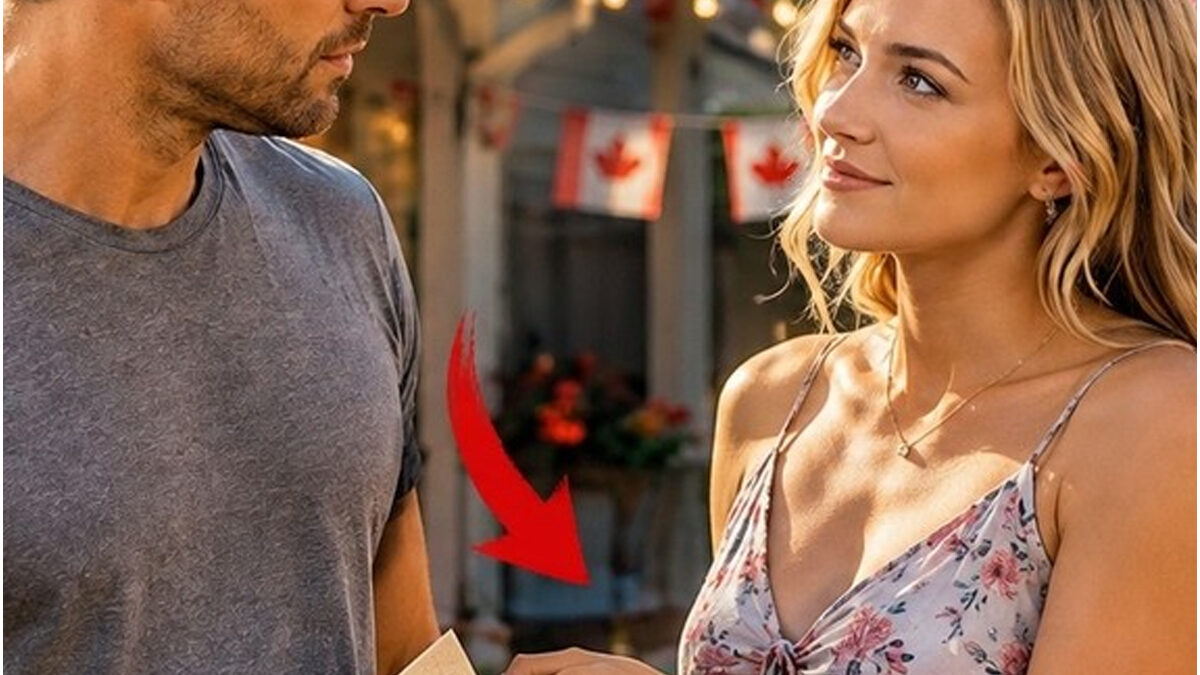
After the cookout, my neighbor handed me a note… she looked away fast and said, “No one else can…”
The gathering was winding down by 9:00.
The Bow River Valley had gone dark beyond the tree line, and the last few stragglers were rolling up the tablecloths and stacking paper plates.
When Callie crossed the lawn toward me, I was about to pick up the empty cooler.
She reached me before I could.

She pressed a folded square of paper into my hand, her cheeks flushed pink in the string light glow, and said very quietly, almost under her breath, “Please don’t open this until you’re inside.”
Then she turned and walked straight back to her house, her front door closing softly behind her.
I stood there on the damp grass with a piece of paper that still carried the warmth of her hand.
And I did not move for a long time.
My name is Hayden Lowry.
I’m 38 years old and I’ve spent the last 11 years working as a building inspector for the town of Canmore, Alberta.
It’s the kind of work most people don’t think about until something goes wrong.
Assessing structural damage after floods, certifying renovations, signing off on the work that keeps walls standing and roofs doing what roofs are supposed to do.
Canour sits at the mouth of the Bow Valley with the three sisters peaks rising above it in a way that never quite stops being impressive no matter how many mornings you’ve seen them.
It’s small in the way that really matters.
You recognize faces.
You know who shovels their walk and who doesn’t.
And everyone on your street can identify the sound of your truck.
I was married to Shannon for 5 years, no children.
The marriage ended because Canmore was never where Shannon truly wanted to be.
She had moved here from Calgary for me and for a while she was willing to call it an adventure, but adventure has an expiry date.
And once it ran out, she started measuring the distance between what our life was and what she’d imagined a life could look like.
She wanted the city back.
The restaurants, the career networking, the the Saturday morning farmers market on 17th Avenue with the cold brew and the artisan jam.
I didn’t blame her for wanting those things.
I just couldn’t honestly pretend I wanted them, too.
We were kind to each other through the separation, which is both a good thing and a quietly sad one.
She moved back to Calgary in March.
I signed the papers on the house on Rundle Drive 4 months later.
A 1970s split level with a cracked back deck and a spruce tree that had grown directly into the fence line.
I rebuilt the deck myself.
I dug out the spruce.
I stripped and restained the cedar sighting on my days off and felt for the first time in years like I was exactly where I was supposed to be.
Cali Norwood moved into the house next to mine about 10 months before that Canada Day potluck.
She taught visual arts at Canour Collegiate, oils, watercolor, printmaking, the kind of classes that always had a waiting list, but never enough budget.
She’d come from Toronto, which in a small Alberta mountain town carries its own particular social weight.
People notice when you move from somewhere large to somewhere small, and they wait quietly to see whether you’ll survive the first winter.
Callie lasted two winters without complaint.
She bought proper ice cleat.
She learned to read the mountain weather.
She drove the Ice Fields Parkway in October just to see the larches turn gold.
And she told me about it the next day over the fence like a person who had just been given something they hadn’t known to ask for.
We became friendly in that careful low pressure way that works best between neighbors.
She knocked on my door in November of her first year because her hot water tank had started making a sound she described as a large animal being slowly insulted.
Sediment buildup.
I drained and flushed it in 40 minutes.
She thanked me the next afternoon with a jar of lemon curd she made every winter and a small watercolor she’d done of the Rundle range at dusk.
I hung it above the kitchen table.
That’s where it still is.
After that, we had a comfortable rhythm, morning waves from the driveway, the occasional conversation over the back fence, a shared awareness of each other’s schedules that never crossed into intrusion.
The street had a Canada Day potluck tradition going back years.
Everyone brought something, pushed the tables together under the big spruce in the Hennessy yard, and the whole block ate and talked until the mountain dark came in.
I always ran the grill.
Callie brought her pasta salad with sundried tomatoes and fresh basil.
That particular July 1st, she spent most of the evening near Mrs. Hennessy and the other women from the north end of the block, and I thought nothing of it.
She glanced in my direction a few times through the evening.
I thought nothing of that either.
I was wrong to think nothing of it.
I went inside and sat at the kitchen table with the folded note under the overhead light.
Her handwriting was small and deliberate, the kind that develops in someone who spends years annotating student artwork and marking rubrics under deadline.
She asked me to pretend to be her boyfriend for 10 days.
Her parents, Jerry and Janet Norwood, were driving out from Toronto at the end of the month.
They worried about her.
She’d left a long-term relationship 2 years before the move west, and they had never entirely stopped grieving that breakup on her behalf.
Now, they were arriving with a plan.
They wanted her to meet Malcolm Fitch, the son of her father’s law school roommate, a commercial mortgage broker from Calgary, who was apparently steady, sensible, and very interested in meeting her.
They had been mentioning Malcolm for 4 months.
Callie had met him once at her cousin’s engagement party in Missaga.
He’d talked about capitalization rates for 45 minutes without once asking her a single question about herself.
She could not face 10 days of her parents pushing Malcolm Fitch across every dinner table.
She wrote, “I know this is a strange thing to ask, but you are the only person on this street I trust enough, and I need it to stay between us.
I’d be mortified if people here found out I was staging this.”
At the bottom, if yes, knock on my door tomorrow at 7:30.
If no, throw this away and we won’t speak of it again.
I read it twice.
I folded it carefully along the original crease and put it in the kitchen drawer under the flashlight batteries.
I opened the drawer again and read it one more time.
I closed it.
I set my alarm for 7.
I knocked at 7:28.
She answered the door in a gray hoodie holding a mug in both hand.
She hadn’t slept much.
I said I read it.
She said, “And I said, make me coffee and tell me the terMs.” The relief on her face was something I filed away to think about later.
We sat at her kitchen table while she walked me through it.
Her parents were traditional, not controlling, but genuinely anxious.
Her mother, Janet, had a gift for turning worry into logistics.
Her father, Jerry, expressed love through problem solving.
Malcolm Fitch, was their solution to a problem.
Callie hadn’t asked them to solve.
She needed something credible enough that the subject would quietly drop.
The terms were clear.
First names only, no invented backstory beyond, “We’ve been spending time together.”
Handholding if her parents were present, nothing beyond that.
She slid a notepad across the table with a short list of questions.
Her father always asked new people, “What do you do?
Where’s your family from?
Do you own or rent?
5-year plans, thoughts on starting a family.”
She’d written them out neatly with brief suggested answers bracketed beside each one.
I looked at the list, then looked at her.
You prepared for this like a sight inspection.
She laughed just for a moment unguarded.
The kind of laugh that catches you offguard because it’s so much warmer than the careful version.
I’m a teacher, she said.
I annotate everything.
Jerry and Janet Norwood arrived on a Thursday afternoon in a rented Pathfinder loaded with things they’d picked up from an Italian grocery in Calgary.
Jerry was a retired corporate lawyer, measured and attentive, the kind of man who shakes your hand and uses the time to decide something about you.
Janet watched the space between Cali and me with the quiet precision of someone who had spent decades reading a room.
I arrived with a bottle of Okanagan rosé and whatever composure I could assemble in 45 seconds at the door.
The first dinner went well.
I talked about the work, building assessments, flood recovery projects, what it takes to maintain infrastructure in a mountain town where every winter brings new variables.
Jerry asked about the housing market in Canmore, which had been running hot for years, and I gave him an honest answer rather than a flattering one.
He seemed to appreciate the difference.
Janet watched Callie pass me the bread basket without being asked.
I watched Janet notice that over the following days, a routine formed.
I came over every evening, sometimes for dinner, once to help reposition a bookshelf.
Callie had been meaning to move for 6 months.
One afternoon, while sitting at her kitchen table, I heard the slow rhythmic drip of a compression fitting that had started to work itself loose beneath the sink.
Nobody mentioned it.
I just found the toolbox in the utility closet, lay down on the kitchen floor, and fixed it.
20 minutes.
Callie stood in the doorway with her arms crossed, watching me work, wearing an expression I couldn’t quite read, somewhere between surprise and something I didn’t have language for yet.
On Saturday, Jerry and I walked the Boow Valley Trail while the women stayed back.
He talked about salmon fishing on the Miramichi River in New Brunswick where his family had a cabin when he was young.
The water temperature, the depth of the pools, the way fish hold differently in August versus October.
The exactness of his attention to that landscape reminded me of what I loved about this valley.
By the time we got back to the trail head, he was calling me Hayden without the slight formality he’d started with.
The moment I keep returning to happened on Sunday afternoon.
I was under the kitchen sink tightening a water supply line I’d noticed wobbling the day before.
I heard Janet’s voice from the other side of the kitchen wall.
Low private not meant for me.
She said, “Do you really like him?”
There was a pause, just Callie said.
Yes.
Flat, certain.
No hesitation in it.
The way you say something that has been true for longer than you’ve admitted, and you’ve finally given yourself permission to let someone hear it.
I stayed on that kitchen floor with a wrench in my hand and said nothing.
Tuesday night, her parents went to bed early.
Callie and I sat on her front porch with mugs of Rebos’s tea.
The Rundle Range was at shape against a sky so thick with stars that the town felt small beneath it.
We didn’t speak for a long time.
Then she said quietly, “Thank you.
This was kind of you,” I said.
“It’s not as much of an effort as you probably think.”
She looked at me then, and in the porch light, I saw something I had been carefully not seeing for days.
She wasn’t looking at me like someone relieved by a favor.
She was looking at me the way you look at something you’re afraid of losing.
It lasted only a few seconds before she turned back toward the mountains.
But it was enough.
I didn’t say anything.
I was too uncertain I was reading it correctly.
Her parents last full day arrived on Thursday.
That morning, a gray Audi pulled into Callie’s driveway that neither of us had been expecting, Malcolm Fitch.
Jerry had apparently passed the itinerary to his old roommate, and Malcolm had driven up from Calgary on his own initiative, presenting it as a friendly dropin.
He stepped out in pressed chinos and a collared shirt with the sleeves rolled just so.
His handshake was the kind that applies exactly enough pressure to remind you it’s happening.
Over lunch, he described a mixeduse development he was financing in Erdri, retail anchor on the ground floor, stacked town homes above, strong pre-sale numbers.
He turned to Cali and mentioned that the artist lofts he’d earmarked in the project might suit someone in her position.
She thanked him with the particular politeness she reserved for things she found exhausting.
Then Malcolm looked across the table at me and said, “Building inspector, right, municipal salary?
What does that come out to roughly?”
The table went completely quiet.
Even Jerry set down his fork.
I looked at Malcolm for a moment without answering.
Then I said, “I’ve never once needed to ask anyone that question.”
Jerry made a sound.
Short, genuine, the kind that arrives before the socially appropriate version can stop it.
And in that moment, something shifted.
He wasn’t looking at me as a temporary placeholder in his daughter’s life.
He was looking at me as a person he recognized.
Malcolm left after dessert.
Jerry and Janet drove out Friday morning for their flight.
Callie and I stood in the driveway and watched the Pathfinder disappear around the bend at the bottom of the street.
The arrangement was over.
We went back to what we had been before.
Waves from the driveway, the occasional conversation over the fence.
But something had changed in the texture of the silence between us.
Before the distance had been comfortable, the easy quiet of two people who simply didn’t need anything from each other.
Now, it was heavy, like a room the morning after something significant has happened, and nothing has been said about it.
I put her note back in the kitchen drawer and left it there.
Shannon called 3 weeks later.
She said she was passing through Canmore on her way to Jasper and wanted coffee.
I said yes.
She arrived looking exactly as I remembered, composed, energy filling the room the moment she walked through the door.
She said she missed Canmore, that Calgary had turned out to be louder than she’d remembered wanting.
I listened without contributing much.
I was watching someone rehearse a feeling they had decided to perform.
She sat on my front porch through the afternoon.
Through the gap between our houses, I could see Callie’s living room window.
The curtain was pulled aside just slightly.
When I looked again, it had fallen closed.
Shannon came back twice more that week.
On her second visit, she spent 15 minutes at the mailbox talking with Mrs. Hennessy.
I watched from the kitchen window.
The story moved through the street quickly after that.
Shannon had told Mrs. Hennessy that we were reconnecting, which was technically accurate and precisely calibrated.
Shannon had always had a talent for arranging true things in an order that produced the conclusion she wanted.
The more damaging version followed later.
The detail about Callie’s arrangement surfaced.
I still don’t know exactly how whether Jerry had mentioned something in passing to his old roommate or whether Malcolm had pieced it together on his own and it reached Shannon who brought it to Mrs. Hennessy with the tone of delicate concern she had perfected over years.
Apparently Callie had asked her neighbor to play the role of boyfriend to manage a family visit.
Poor Hayden.
Shannon had said he’s just too decent to have said no.
Every word was factually true.
The framing did everything.
By the time the next block potluck came around in August, the story had reached every house on the street.
Callie came and sat far from me on the opposite end of the table and did not look in my direction once during the two hours she stayed.
I stood behind the grill flipping burgers I wasn’t tasting and Mrs. Hennessy leaned over and said not unkindly, “You two have a falling out.”
Callie looked up from her plate and produced a smile that didn’t travel above her cheekbones.
Just been a busy stretch.
I knocked on her door twice in the two weeks that followed and received silence both times.
The third time the door opened about 6 in.
Her face was pale.
The skin under her eyes was darkened by exhaustion or crying or both.
She said, “I’m sorry I put you in this position.
You didn’t deserve what got said about you.”
Her voice was barely above a whisper.
Then the door closed.
I stood on her porch in the late afternoon light and understood fully clearly for the first time what I had been too slow to understand for months.
That note from the potluck had never been a practical requeSt. It had been the only door she could find that felt safe enough to walk through.
She’d wrapped something real inside a workable excuse.
The way you pack something impossibly fragile in layers of padding when you’re terrified of what happens if it breaks open in the open air.
The following morning, I drove to the coffee shop on Main Street where Shannon and I had agreed to meet.
I arrived first, ordered nothing, and waited.
When she sat down, I kept my voice even.
“You told people about Callie’s arrangement.”
She tilted her head in the way she always did before saying something she’d prepared.
“I only told the truth,” I said.
“You arranged the truth.
That’s different, and you’ve always known it.”
You’d assemble facts until they pointed exactly where you wanted and then look confused when other people didn’t see the same picture.
She looked at the table.
I stood up.
What we had ended 2 years ago, Shannon, I’m leaving now because I finally understand why it had to.
I walked out without looking back.
Some doors closed slowly and then all at once.
That night, I sat at my kitchen table with only the range hood lamp burning.
I opened the drawer.
Her note was still there under the flashlight batteries.
I took it out and read it one more time.
The small deliberate handwriting, the word mortified, the final line about truSt. I sat with it for a while.
Then I took a blank page from the notepad by the phone and wrote by hand for the first time in years.
My handwriting is uneven and slightly cramped, nothing like hers, but I meant every word.
I was not pretending.
None of it was.
If you want to talk, knock on my door tomorrow morning at 7:30.
If not, I understand completely.
I won’t bring it up again.
I read it back twice.
I folded it the same way she had folded hers in half, then in half again.
And at quarter to midnight, I walked across the dark lawn to her porch.
The grass was cold and wet through my boots.
Her house was completely dark.
I crouched at the front door and slid the note through the narrow gap at the bottom, listening to it hiss across the tile on the other side.
I stood up.
I walked home.
I sat at the kitchen table and did not sleep.
7:42.
I was making coffee.
My hands were not entirely steady on the pot.
7:45.
I put two mugs on the counter, put one back, put it out again.
7:48 I stood at the window watching the driveway.
7:59 A knock soft twice.
The kind of knock that sounds like someone afraid to break something fragile that both of them have been holding without touching.
I opened the door.
Callie stood on the step in the early Alberta morning, hair loose from what had been a braid, her eyes red and swollen.
She was holding my note in both hands.
The way you hold something, you don’t want to crease any further.
Neither of us said anything.
I stepped back from the door.
She walked past me into the kitchen and sat down at the table.
After a long time, she said, “I didn’t need you to pretend to be my boyfriend.”
I said, “I know.”
She looked up.
“How long have you known since Sunday afternoon in your kitchen?”
I said, “When you told your mother yes, your voice didn’t waver for even a second.”
She looked back down at the table, her eyes filled.
Then she told me everything, all of it, without the safety of a folded note or a practical reason wrapped around it.
She said she had noticed me for months before she moved in, before she was my neighbor.
The house on Rundle Drive had come up on a rental listing in April, and she had recognized the address because she’d driven past it twice that winter after school, going slightly out of her way because she’d liked the look of the porch light on a cold evening.
She told me she’d watched me rebuild the back deck on my days off from her car parked near the end of the block.
She said she chose the house next door deliberately.
She said, telling me that terrified her more than anything else she had told another person in years.
She said, “I teach teenagers to put themselves into their work every day.
I tell them that vulnerability is the thing that makes a painting breathe and then I couldn’t walk 12 m across a lawn and say one honest thing to a person who had hung my watercolor above his kitchen table.”
“I sat down my coffee mug.
I fixed the fitting under your kitchen sink,” I said, and nobody asked me to.
I told myself the dripping sound bothered me, but that wasn’t it.
I just wanted a reason to stay in your house a little longer.
She laughed, shaky and genuine, the kind that surprises you out of crying.
The kitchen felt warmer for it.
I’m not going to pretend I’m not a little scared of this, I said.
I’ve been through a marriage that came apart.
I’ve been alone for 3 years and I’ve gotten used to the quiet, but I don’t want to keep pretending there’s nothing here when there is.
I want to try this the right way.
She reached into the front pocket of her hoodie and placed my note on the table.
Then she reached into the other pocket and set her original note beside it.
The one I had taken from the drawer the night before and left out while I wrote.
Two folded pieces of paper, two sets of handwriting, acts of terrified honesty side by side on the old wooden.
She said, “No ground rules this time.”
I said, “Just one.
Real?”
She nodded.
And for the first time since the potluck, the silence between us felt the way it used to.
Not heavy, not full of things waiting to be said, just quiet, the good kind.
There was no announcement.
We started with the small ordinary things that accumulate slowly into something you can’t imagine being without.
I brought coffee to her porch before her early morning school days.
Two mugs in my hands crossing the cold September grass.
She left her kitchen light on overnight when I was on call for emergency sight inspections.
From the cab of my truck at 2:00 in the morning, heading out to assess a retaining wall failure in the upper valley.
I could see that warm yellow glow from three blocks away.
It made the drive feel shorter.
The neighbors noticed.
Of course, they did.
This is Canmore.
Mrs. Hennessy spotted us on my front steps with coffee one Saturday morning, watched for a long moment, and gave a single slow nod that said everything without opening her mouth.
Shannon’s version of the story faded on its own.
The way smoke clears once you open all the windows and let the clean air through.
By November, Callie was leaving small things in my kitchen drawer.
An extra house key first, then a slim volume of Mary Oliver poetry she thought I should read.
I finished it in two evenings and left a sticky note on the last page.
You were right.
I started leaving things at her place without deciding.
She reorganized her art supply closet one Saturday and made a dedicated shelf for my level and measuring tape.
Neither of us said a word about it.
Jerry called me in October and we talked for half an hour about the Bow River Trail system.
He mentioned in in passing that Malcolm Fitch had recently become engaged to someone someone he’d met at a real estate conference in BA.
He said this without editorial comment, but I could hear the quiet satisfaction in his voice.
Janet emailed Callie a winter squash soup recipe with a note at the bottom that said simply, “Make this for Hayden.
He’ll like it.”
The certainty in those four plain words told me more about her parents’ acceptance than any formal blessing ever could have.
The following July, the Rundle Drive Canada Day potluck came around again.
Callie and I showed up together, one contribution, one household.
She brought her pasta salad.
I ran the grill.
She stood beside me in the smoke, passing me the tongs before I asked for them, reaching across to adjust the far burner without a word, the way you do when you know someone’s habits from months of paying close attention.
Mrs. Hennessy walked over with her plate and looked at the two of us standing shoulderto-shoulder behind the grill.
She said, “Last year, you two weren’t even talking.
This year, I couldn’t fit a piece of paper between you.”
She had absolutely no idea how precisely true those words were.
6 months after the second potluck, a can more winter, the deep silent kind where the three sisters vanish behind low gray cloud for days at a stretch and the town pulls inward and the streets go still by 8 in the evening.
I came home from an emergency call.
A foundation issue up dead man’s flats.
Tired and cold and carrying the particular weight of a full day spent assessing damage.
Callie was in my house.
The kitchen light was on.
Coffee was warm on the counter.
She was curled on the couch with a paperback and a wool blanket pulled over her legs.
On the kitchen table, there was a folded piece of paper.
I picked it up.
Her handwriting small and deliberate and unhurried.
I don’t need a practical reason anymore.
This house is where I want to be.
I think you already know that, but I wanted to write it down.
I stood there in my workclo reading those two sentences until the words blurred at the edges.
Then I folded the note along its crease, opened the kitchen drawer, and placed it carefully inside beside the other two.
Three folded pieces of paper.
Three separate moments when one of us had been brave enough to set something fragile down on the table and trust the other person not to break it.
I looked across the room at her on the couch.
She was watching me over the top of her book.
I said, “Do you want to hear my answer or should I check under your kitchen sink first?”
She looked confused for half a second.
Then she laughed.
The full version, eyes crinkling.
The kind that escapes before you can stop at the one I had first heard in her kitchen over a notepad of questions that neither of us had needed in the end.
The faucet’s fine, she said.
I know, I said.
She moved in the following spring.
She rented her house to a quiet young couple who kept the garden tidy and waved when they saw us.
My porch had two chairs now, and every morning, without exception, there were two mugs of coffee on the railing, steaming in the cold, Rocky Mountain air.
One evening, late the following summer, I opened the kitchen drawer.
Three folded notes side by side.
The first in her handwriting, please don’t open this until you’re inside.
The second in mine, I was not pretending.
The third in hers again, this house is where I want to be.
I didn’t unfold any of them.
I didn’t need to reread a single word.
I closed the drawer and walked out to the porch and sat down in the chair beside hers.
We didn’t need paper anymore.
Everything that needed to be said, we had already said by deciding to stay.
I used to think that life after a marriage ends means you get very good at being alone and then that just quietly becomes who you are.
I wasn’t unhappy.
I was just careful.
I’d learned to need very little.
And then Callie Norwood moved into the house next door and started leaving her kitchen light on for me and putting her paintings above my table and choosing the house on that specific street because of who already lived beside it.
And I didn’t see any of it until she pressed a folded piece of paper into my hand at the end of a Canada Day potluck and told me to wait until I was inside to read it.
I thought it was a request for a favor.
I know now that it was something she’d been carrying for months, packed inside a practical excuse because the truth felt too exposed to set down in the open air.
Here is the thing I believe now.
The thing I couldn’t have told you two years ago.
You don’t fix a stranger’s leaking pipe.
You don’t lie on a stranger’s kitchen floor with a wrench in your hand longer than the job requires.
You do that for the person you want a reason to be near.
I was already there.
She already knew.
It just took two pieces of paper, one long winter, and a pot of coffee neither of us needed to boil together for either of us to finally say so.
So, I’ll ask you two things.
If someone pressed a folded note into your hand at the end of a neighborhood evening and told you to keep it between you, would you open it?
And if you were Cali, holding something real, but wrapping it inside something practical, because the truth felt too raw to say plainly, would you have done the same thing?
Or would you have just walked across the lawn and knocked on the door?
Leave your answer in the comments.
I read every single one of them.
And if this story reached something in you tonight, I hope you’ll share it with someone who might need to hear








