My ex-wife was remarrying… then she came to my door and asked, “Do you still have it?”
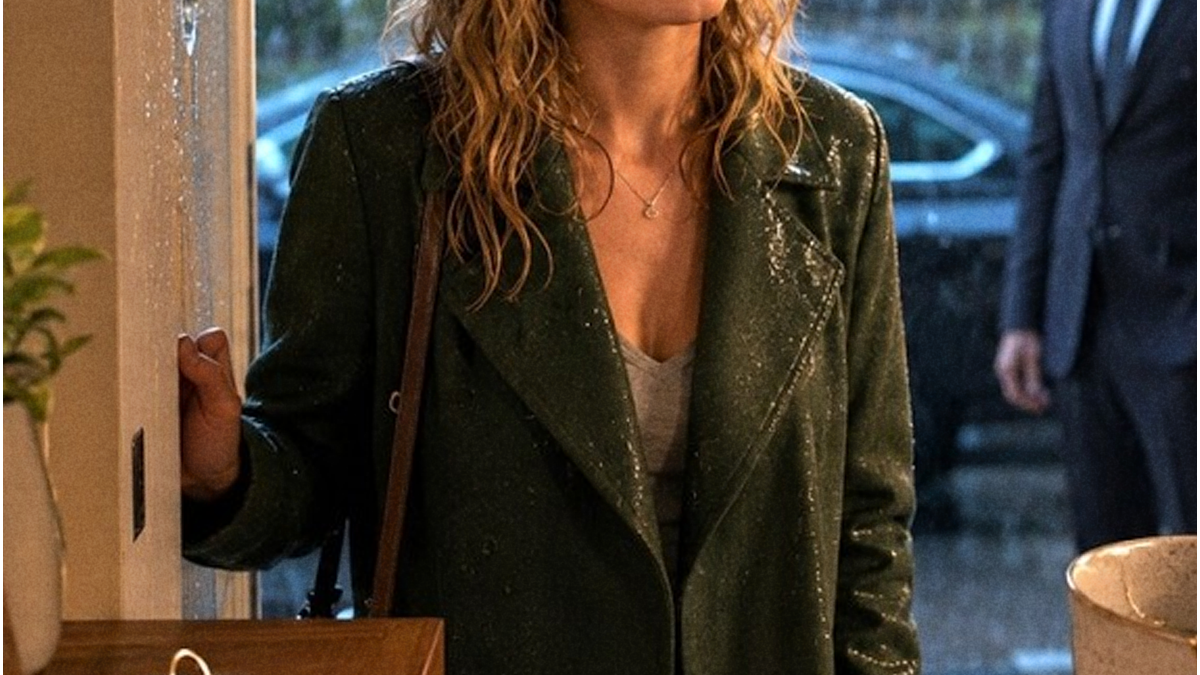
My ex-wife was remarrying… then she came to my door and asked, “Do you still have it?”
The bowl was on the entryway shelf where it always sits holding my keys in a folded SkyTrain ticket I’d been meaning to throw away for 3 weeks when the knock came at my door.
It was just past 9:00 on a Tuesday in November, the kind of Vancouver evening where the rain falls so fine it doesn’t seem like rain at all until you step outside and realize you’re completely wet.
I wasn’t expecting anyone.
I set down my coffee and opened the door.

Lara stood on my front step in a dark green coat I hadn’t seen before.
Her hair damp at the edges from the walk from wherever she’d parked.
She looked at me the way you look at someone when you’ve been rehearsing what to say, but the words still feel wrong once you’re actually standing there.
“I’m getting married,” she said, “next month.”
And then, after a pause long enough to change the shape of the evening entirely, she asked me something I wasn’t ready for.
“Can I come in and see if you still have it?”
My name is Evan Sutcliffe.
I’m 42 years old and I design parks for a living.
Not the small decorative kind.
I work on large-scale public green spaces, waterfronts, urban commons, the kind of places where a city breathes.
I’ve been doing it for 15 years out of a small office on Commercial Drive in East Vancouver, mostly for the city and Metro Vancouver Regional District, occasionally for private developers when the project actually means something to the neighborhood.
I live in the bottom half of a duplex on street three blocks from the drive, stucco exterior, a cedar hedge that needs cutting every spring, a covered front porch where I drink coffee on weekend mornings even when it’s raining, which in Vancouver means almost always.
My life since the divorce has been consistent in a way I’ve come to appreciate.
I wake early.
I walk along the seawall before the cyclists take over.
I come home, make coffee, go to work.
In the evenings I cook something simple, roast chicken, pasta, sometimes salmon with whatever’s good at the market.
I read until I’m tired.
I sleep well.
I haven’t been on a date in 2 years and I’m not particularly bothered by that.
So, I understand why other people find it strange.
The one thing I’ve never been able to explain clearly is the bowl.
It sits on the narrow shelf just inside my front door, small ceramic, roughly the size of my palm, a pale grey-white glaze that’s uneven on one side where the kiln heat wasn’t distributed evenly.
There’s a crack that runs from the rim down to the base, thin as a hair, filled with gold.
Laura made it in the ceramic studio she rented space in during our third year together, the year we moved into the East Van place where I still live.
She brought it home one evening, set it on the kitchen table and said, “I cracked it in the bisque firing.
I could start over, but I think it’s better this way.”
She’d repaired it herself with a kit she ordered online, pushing gold-laced resin into the crack with a toothpick, slow and deliberate as surgery.
Kintsugi, she called it, the Japanese idea that what’s broken and repaired is more beautiful for having been broken at all.
She gave it to me to hold my keys, and I had every single day since.
Laura and I met when I was 28 at an open studio night on Granville Island.
She was showing small sculptural pieces alongside two other artists.
I stood in front of one of hers, a series of bowls meant to represent stages of a conversation, and said something that was probably more pretentious than insightful.
She laughed at me, gently, and then explained what she’d actually been thinking when she made them.
We talked for 2 hours.
I asked her to dinner.
We were together inside a month.
We got married 4 years later in a small ceremony at Lighthouse Park with 12 people.
Her parents, my sister, a few close friends.
It rained, of course.
Nobody cared.
The marriage ended without drama, no betrayal, no single terrible night.
What happened between Laura and me was quieter than that, and in some ways harder to explain because of it.
She wanted more momentum in her life, more social, more visible, more in motion.
I wanted to come home and be still.
She wanted the energy of rooms full of people.
I wanted to hear the rain on the cedar hedge.
Neither of those things is wrong.
They just don’t live in the same house forever without eventually pulling in different directions.
We separated on a Thursday in February.
She moved into a sublet in Kitsilano.
I stayed.
I kept the bowl.
Six months before Lara showed up at my door, I’d heard through her friend Petra that she was engaged to a man named Donovan Marsh.
I didn’t know him personally, but the name was familiar.
He was a commercial real estate developer, well-known in Vancouver circles.
Mixed-use towers in Burnaby, a controversial high-rise project near False Creek.
His photo in the business section of the province every other month.
The type of man who showed up at city planning presentations and made certain everyone in the room registered his presence before he said a word.
I heard the news, looked at the bowl on the shelf, and went back to whatever I was doing.
My colleague Ray, a civil engineer I’d worked with for a decade, the kind of man who notices everything and says only what’s necessary, watched me quietly for a few days after that, and eventually said, without preamble, “You’re quieter than usual.”
I told him I was fine.
He nodded unconvinced and didn’t mention it again, but I could tell the observation had been filed somewhere.
So, when Lara stood at my door and asked if she could come in and see if I still had it, I stepped back and let her in.
She crossed into the entryway and stopped.
Her eyes went to the shelf immediately, the way you look at something when you already know the answer, but need to confirm it with your own eyes.
The bowl was right there, same place it’s always been.
Her expression shifted in a way I couldn’t fully decode.
Relief, maybe, or the particular feeling of having a question answered that you were afraid to ask.
She didn’t say anything about it right away.
She sat at the kitchen table and I poured her tea because I knew she’d stopped drinking coffee years ago and we talked about nothing much for a while.
She told me the wedding was at the Fairmont downtown, 80 guests, a weekend in Tofino beforehand for close friends.
Everything arranged, she said with the careful precision of someone reading from a list they didn’t write.
She asked about my current projects.
I told her about a waterfront commons I was designing for a municipality up the coast.
A park meant to connect a residential neighborhood to the inlet with native plantings and a community gathering space.
She asked questions that were specific and real, the way she always had.
She’d always understood what I was trying to do in my work better than most people who’d known me far longer.
When she left that night, she paused at the door and looked at the bowl one more time.
“You really kept it,” she said, not a question.
I said it still worked.
She nodded once slowly and stepped out into the rain.
Three days later, she texted asking whether I still had the recipe for the baked salmon we used to make, the one with the maple miso glaze she’d found in an old magazine.
I sent it to her.
A week after that, she asked if I remembered the name of the small jazz venue on Main Street where we’d gone for her birthday years ago.
I told her.
Five days after that, she showed up on a Saturday afternoon with a container of homemade lentil soup.
“I made too much,” she said, and I recognized the precision of that excuse.
The visits started becoming regular.
She’d text a few hours ahead, usually just her availability framed as a question.
“Free this evening?”
And I’d say yes.
We’d cook something together or sit with wine while the rain came down outside.
The old rhythm of being around her returned in a way that unsettled me because it felt less like nostalgia and more like recognition.
Like putting on a coat you’d stored away and discovering it still fits.
I noticed things I didn’t say out loud.
When her phone rang and she saw his name, her posture changed before she even answered.
Not tension, exactly.
More like a careful arrangement.
The way you hold yourself when you’re trying not to give anything away.
She talked about her life with Donovan the way you describe a place where you’ve been staying, not somewhere where you live.
The apartment in West Vancouver was beautiful, she said.
Floor-to-ceiling windows, a view of the inlet.
But the details she chose were always aesthetic, never warm.
She’d stopped working in ceramics the year before.
She mentioned it casually, the way you mention something you’ve filed under practical reality.
Studio space is expensive, and I wasn’t selling enough to justify the overhead.
I knew that wasn’t the whole story.
She’d been building a real following through galleries in Gastown and Granville Island before.
But I didn’t push.
Ray noticed the change in me before I’d acknowledged it to myself.
One afternoon, he came and stood beside my desk, looked at the drawings I was supposedly reviewing, and said, “Your ex is coming around again.”
It wasn’t a question.
He’d seen the texts I’d answered mid-meeting.
He went back to his desk without waiting for a response, which is what made him easy to work with, and occasionally very difficult to be around.
Laura and I were sitting on my back porch one Saturday in late October, her with a glass of Okanagan red and me with tea, watching the neighborhood cats negotiate territory in the lane behind the hedge.
When the gate opened, and a man in an expensive jacket walked in like he’d built the place.
Donovan was taller than I’d imagined.
He had the physical confidence of someone who’d never had to prove anything in a room because his presence alone had always been proof enough.
He took in the scene, the wine, the two of us, the porch light, and smiled.
That smile was the most controlled expression I’ve ever seen on another person’s face.
Not anger, not even jealousy.
Something colder.
The the of a man who considers himself three steps ahead of everyone in any given situation.
He extended his hand.
Evan, I’ve heard about you, the good ex-husband.
His grip was firm and held a beat too long, the kind that isn’t a greeting but an inventory.
He pulled over the spare chair from against the wall, not beside Lara, not beside me, but directly between us, and sat down like he’d arranged the room himself.
He talked about the wedding for a few minutes, the block they’d reserved at the Fairmont, the caterer flying in from Calgary, the honeymoon in Portugal.
He described it all the way a contractor describes a job he’s been commissioned for, budget, scope, timeline.
He wasn’t sharing joy.
He was narrating an acquisition.
Then he turned to Lara and said, conversationally, as if it had just occurred to him, “You told Evan about the residency, right?”
Lara went very still, not the composed stillness of someone who’s prepared, a different kind entirely, the kind that happens when something cracks inside you before the surface has time to catch up.
Donovan looked back at me.
“She was accepted into a ceramics residency in Quebec City, fully funded, six months.”
He said it lightly, the way you mention something that’s been resolved and filed away.
“She turned it down.
Priority shift, you know how it is.”
Lara was looking at the wooden boards of the deck floor.
Her wine glass was completely still.
I didn’t understand the full weight of what he’d said in the moment, but I watched her face, and I watched the way her jaw set in a particular way I recognized from years of knowing her, the expression she made when she was holding something back that she wasn’t yet sure she was allowed to express.
“I should get home tonight,” she said.
Her voice was level, carefully, precisely level, the voice of someone who has learned to make their face cooperate even when everything underneath is in motion.
Donovan stood, placed a hand on her shoulder for just a moment, not affectionate, more like someone setting something back in its designated place, then turned to me and said, “Nothing personal, just time to wind these things down.”
He walked back through the gate the way he’d come.
The latch clicked behind him like a period at the end of a sentence.
The silence that settled after had nothing in common with the easy quiet Laura and I had shared over the past few weeks.
This silence had walls.
It had mass.
“He turned it down,” she said after a long moment, not exactly to me, more to the air in front of her, “not me.
I never declined.
I was waiting for the right moment to tell him I wanted to go.”
She told me everything.
The acceptance had arrived 5 months earlier.
She’d printed it out and left it on the kitchen counter in their West Vancouver apartment, waiting to have the conversation.
The next morning it was gone.
She assumed she’d misplaced it.
A week later she’d logged into her email to forward the letter to her mother and found that the acceptance had been replied to from her own account.
A polite, formal decline, sent while she was out at a gallery.
She asked Donovan about it that evening.
He said he’d handled it because she’d been overwhelmed with wedding planning and he was looking out for her time.
He said it the way you mention returning a library book on someone else’s behalf, a favor efficiently done.
She had let it go.
That was the part she said quietly looking at her hands.
She had let it go.
She left around midnight.
At the gate she stopped and turned back.
I was still standing on the porch.
She looked at the entryway shelf through the open door where the bowl was just barely visible in the hall light.
“I needed to know it was there,” she said.
“I told myself when I knocked on your door that first night, if he still has it, then I understand something about what I walked away from.”
She paused, “and what I walked toward.”
She left without looking back.
I didn’t sleep much that night.
I sat in the kitchen with only the range hood light on because it was the dimmest one and I let myself think about things I’d spent two years carefully not thinking about.
The next morning at work, Ray set a business card on my desk without saying anything.
Off, one of the best in the city.
Went to you Vivic with her, he said.
She doesn’t do anything halfway.
I picked up the card.
I didn’t call, but I didn’t put it in the recycling either.
A week of silence, no texts, no updates.
I held my routine together carefully, both hands not looking at it too directly.
Every morning when I dropped my keys into the bowl, my hand stayed on the ceramic a moment longer than necessary.
Then I drove to Granville Island.
She’d mentioned months earlier that she’d been sneaking into the ceramics cooperative on Johnston Street when she could, not renting space anymore, just paying the day use fee to keep her hands in clay.
I found her on a Wednesday afternoon at a wheel in the corner of the studio shaping something that might become a small vessel or might still become something else.
She looked up when I came in.
Her hands went still but stayed on the clay.
I sat in the plastic chair across from the wheel and said what I’d come to say.
I wasn’t there to offer her somewhere soft to land before she’d made a decision.
That wasn’t why I’d driven out here.
I told her that the residency existed because someone had looked at her work and decided it was worth funding.
That Donovan had taken that decision away from her quietly and then told her nothing and that whatever she chose to do next, the first question wasn’t about me or about him.
It was about what she owed herself for that.
I put Ray’s card on the work table beside the wheel.
She looked at it, looked at her hands, then at me.
I’ve been so careful for so long about not being too much, she said, not wanting too much, not taking up too much room.
I thought that was maturity.
She looked at the clay.
I think it was just practice at disappearing.
She picked up the card and turned it over.
She called the lawyer 3 days later.
She had a small amount of savings in a personal account Donovan hadn’t managed to absorb into their joint finances.
A quiet habit she’d maintained without examining why she maintained it.
She found a one-bedroom on Kingsway, a neighborhood that is not glamorous and does not pretend to be.
She texted me the address with three words, got my own place.
Donovan called me once.
I didn’t recognize the number, picked up and heard his polished voice stripped down to something much less composed.
He said I’d convinced her to throw away a good life, that she’d regret it, that she’d be back to him within a year.
I found that the only thing I felt during that call was a large settled calm.
When he stopped, I said, “Take care of yourself.”
And ended it.
I kept my distance from Laura for a long time after that, not because I didn’t want to reach out, because I understood more clearly than I’d understood anything in years that what she needed wasn’t me, not yet.
What she needed was to find out what her own foundation felt like before she built anything new on top of it.
If she came back to me before she knew who she was outside of someone else’s life, we’d only repeat the same pattern in a different key.
I knew that the way I know load-bearing calculations, intuitively and with complete certainty about what happens when you ignore them.
So instead, every Sunday morning I stopped at the Korean grocery on Kingsway that opens early and picked up whatever was good, bread, eggs, good olive oil, persimmons when they had them, sometimes a small bunch of whatever flowers were cheap and looked like they meant something.
I left everything on her doorstep, texted door, and walked back to my truck.
I didn’t knock.
I didn’t wait.
A few times I sat in the truck for 30 seconds after sending the sent, watching the lit window of her unit on the second floor, and then drove away.
It was the most difficult form of care I’ve ever practiced.
The kind where wanting something and doing the right thing are not the same thing, and you choose the right thing anyway.
She started working in clay again, seriously this time, with her own monthly arrangement at the cooperative.
She sent short updates, a photo of a piece she’d finished, captioned only with the dimensions, a text that said good day in the studio.
Once a picture of an empty Sunday morning street outside her building with the message, “It’s quiet here and I like it.”
In March, I was reviewing site drawings at the kitchen table when my phone lit up.
A photo from her, a wooden window sill in late afternoon light, a small ceramic bowl sitting in the patch of sun where the window faced southwest, pale gray-white glaze, a crack filled with gold running from rim to base.
Not the one from my shelf, a new one.
She had made it herself.
I looked at the photo for a long time, then I looked up at the bowl on the entryway shelf, then back at the photo.
Two broken things repaired with gold, two different window sills, the same understanding living in both of them.
My throat did something I didn’t have a name for.
In April, the Vancouver Sun reported that Donovan Marsh’s development company was under investigation by BC Housing for misrepresented zoning compliance on two Burnaby projects.
Permits pulled, financial penalties pending.
One of his business partners had already distanced himself publicly.
Ray showed me the article at the office and said only, “A man like that never just does one thing wrong.”
I folded the paper.
We went back to work.
The separation agreement closed cleanly.
Everything that had been financially entangled was untangled.
Everything that had been Lara’s was returned to her.
She signed her own name on every document at every line.
In June, she called me.
Not about anything specific, she just called the way you call someone when you’ve been thinking about them and decide to stop thinking and simply do it.
We talked for an hour about a current project of mine, about a new artist at the cooperative she’d been trading techniques with, about a gray whale that had been spotted near the Horseshoe Bay ferry terminal, and the subsequent news coverage that had been, by all accounts, extremely sincere.
Near the end of the call, she asked if I wanted to come over for dinner Friday.
“I’ve been working on the maple miso salmon again,” she said.
“I think I’ve improved on it.”
I told her Friday worked.
There was a pause, easy, warm, the kind that doesn’t need to be filled.
Then she said goodnight.
Friday came.
She made the salmon.
It was better than the original.
We ate at her small kitchen table with the window cracked open to the June air, and she talked the way she used to in our first years, quickly, freely, without editing herself in real time.
She told me about her ceramics instructor at the cooperative, a woman in her 60s who corrected Laura’s wheel technique with such directness that it had taken her 2 weeks to stop crying after sessions and start actually improving.
She’d been accepted onto a wait list for a shorter residency program in Nelson in the autumn.
She had applied herself.
She had answered their follow-up questions herself.
She had made all of it happen without asking anyone’s permission.
When we stood at her kitchen sink washing dishes afterward, shoulders close, warm water running over our hands, she said, “I know I left you.”
A simple sentence offered without drama.
“I know I went looking for something bigger and found something that was only louder.”
She rinsed the last plate.
“I spent a long time being ashamed of that.
My therapist keeps reminding me that shame is the least useful thing I could spend energy on.”
She glanced at me sideways.
“She’s probably right.”
I dried the plate.
I thought about what I wanted to say and whether I was ready to say it.
Then I said it anyway.
“Every morning when I put my keys in the bowl, I think about it.
I don’t know if that counts as anything particular, but it’s true.
I never once thought about putting it in a drawer.”
She didn’t say anything.
She set the last glass on the drying rack, and we stood there for a moment, neither of us in any hurry to move.
We didn’t make declarations that night.
We didn’t need to.
What we had was the beginning of something that had been patient enough to wait, and we were both, finally, patient enough to let it arrive at its own pace.
8 months later, Lara moved into the duplex.
Her bowl sits on the entryway shelf beside mine.
She placed it there herself on the afternoon she brought the second box of her things.
She lined them up, adjusted the spacing until it looked right, stepped back to consider it, and then walked into the kitchen to start dinner.
Every morning I put my keys in mine.
She puts her studio card and her phone in hers.
We drink coffee together at the kitchen counter, mostly without talking, listening to the street coming awake outside, and the single crow that has decided the cedar hedge is its personal property.
The silence between us has space in it now.
It breathes.
The Nelson residency went well.
She came back with 12 new pieces and a slightly different relationship with her own process, harder to describe from the outside, but visible in how she moves around the studio.
The difference between someone who makes things because they love the making and someone who has stopped apologizing for what they’re capable of.
Last month, a gallery in Gastown offered her a two-person show in the spring.
She said yes without waiting to see if it fit anyone else’s plans.
On the entryway shelf, two small bowls sit side by side.
Mine is 15 years old, the gold in its crack worn smooth from years of hands passing over it.
Hers is newer, the gold still bright, the form slightly more refined.
Both cracked, both repaired, both better for it.
The night Lara knocked on my door, she said she needed to see if I still had it.
What she was really asking was whether anything she’d been before had survived somewhere she trusted, whether something of her was still being held carefully in a place that hadn’t moved.
The answer was yes, but more than that, the answer was that the break and the repair were part of it.
The crack running through the glaze wasn’t a flaw in what we’d had.
It was just what happens when things are put down too hard, and what becomes possible when someone decides the thing is worth keeping anyway.
Have you ever held on to something cracked?
Not because you meant to, not because you forgot to let go, but because somewhere underneath you understood that the crack was the whole point.
And if someone knocked on your door tonight looking for proof that something of them still existed in your life, what would they find?
If this story stayed with you, drop a comment below and tell me.
I read every single one.








