Why Being a Munitions Worker Was a Guaranteed Death Sentence? | Disaster Documentary
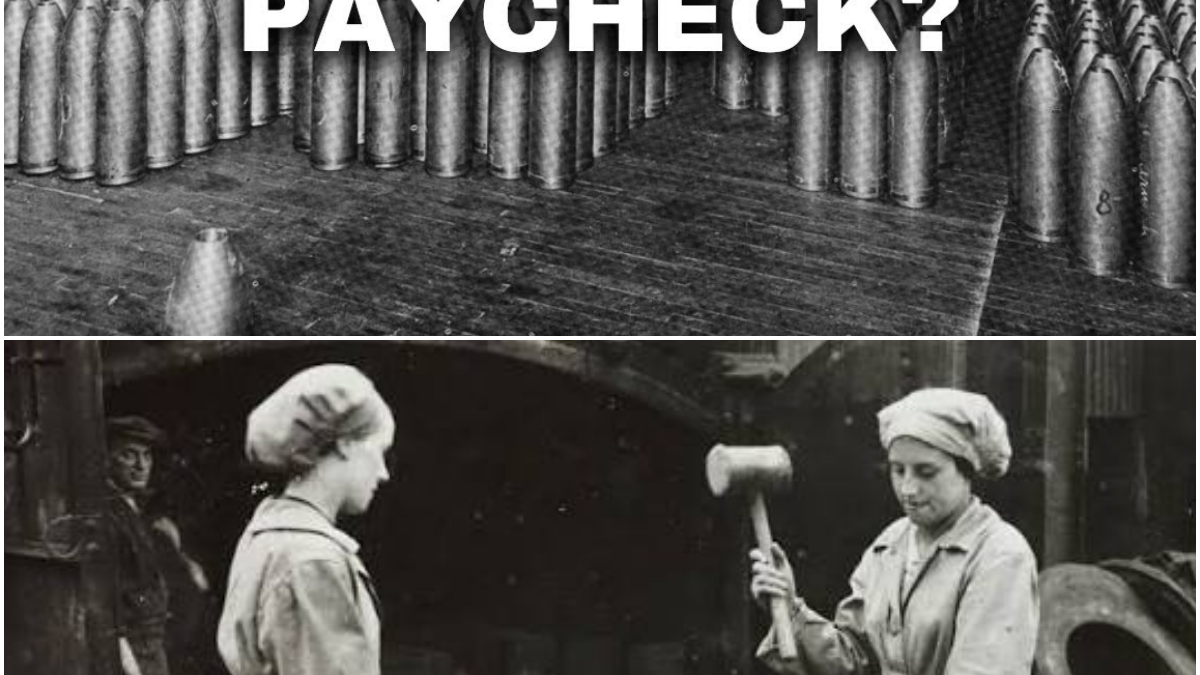
Why Being a Munitions Worker Was a Guaranteed Death Sentence? | Disaster Documentary
Factories that stored explosives were some of the quietest places on Earth.
Yet the danger inside them never slept.
Men and women walked between crates that could erase a town, trusting wood floors, dim bulbs, and habits passed down through the shift.
Most people today have no idea how fragile those worlds were.

One spark could decide everything, and it often did.
If stories like this move you, consider subscribing to help preserve the forgotten lives of the workers who built our world.
To understand why munitions workers risked everything for a day’s pay, we have to step back into a world where danger was part of the job description.
Long before the world understood the scale of industrial explosives, thousands of men and women were already working beside them, munitions depots appeared on the outskirts of towns set along rail spurs and waterfronts built with thin walls and high ceilings intended to release pressure upward if something went wrong.
To the workers who stepped through those doors each day, these buildings were ordinary parts of their landscape.
They were warehouses, magazines, and storage sheds.
But every one of them carried a danger that remained invisible until the instant it chose to show itself.
Inside these depots, wooden crates filled with shells were stacked in long, neat aisles.
To an outsider, nothing about them suggested the power they contained.
But the workers understood that each crate had its own temperament.
Some held newly cast shells, still faintly warm from the foundry.
Others had traveled across regions and battlefronts, handled by countless hands, exposed to weather, vibration, and time.
Aging munitions made people uneasy.
No one needed a scientific explanation.
They could smell when stabilizers began to break down, hear a rattle inside a case that should have been silent, or feel a shift in weight that suggested a compound was no longer behaving as it once had.
Explosives resist stillness, chemical bonds drift, moisture seeps in, and heat triggers reactions that cannot be undone.
By the early 20th century, many depots held shells long past their intended service life, stored beside fresh batches with little distinction.
Regulations existed, but wartime demand often outpaced caution.
Workers learned to keep quiet about what worried them.
Questioning conditions meant risking a paycheck, and losing a paycheck meant something different for every household depending on it.
Whether they were fathers or mothers, sons or daughters, the stakes were always the same.
Someone at home needed their earnings.
The atmosphere inside these depots carried its own signals.
When workers swept the floors, the scrape of a broom across the boards told them whether the building felt normal.
Some noticed when the air grew too warm or when a faint oily scent drifted from the crates.
These instincts were never written into manuals.
They were the quiet knowledge of people who understood that familiarity did not erase danger.
It only made it easier to live beside it.
Most disasters began not with spectacle, but with something small, a dropped wrench, a spark from a nail in a boot heel, friction where no one expected it.
Aging compounds did not need much to awaken.
One ignition could leap to the next crate and then the next, racing through aisles with such speed that workers often never had time to run.
Survivors described the same sensations across decades.
The flash, a pressure that seemed to fold the world inward, and a sound that erased everything that followed.
Yet every day, men and women returned to these depots because the work was steady and the wages mattered.
Danger became routine, and routine became survival.
But under that routine lived a truth everyone understood.
The depot was peaceful only because it had not yet proven otherwise.
Long before a shell ever reached the battlefield, its fate was shaped by time itself.
Munitions were not designed to last forever.
They were temporary tools meant to be used quickly before their chemistry drifted from stability into uncertainty.
Yet throughout the early 20th century, stockpiles across Europe, Asia, and North America continued to grow.
Warehouses filled with ammunition that had been carried from one conflict to the next, stored during ceasefires, then forgotten as new shipments arrived.
The longer these shells sat, the more unpredictable they became.
Every explosive compound ages in its own way.
Some grow brittle, forming crystals that can detonate from even the slightest shock.
Others exude oily films that seep through metal seams and darken the wood around them.
Workers would sometimes find damp rings beneath crates and know immediately what it meant.
Inside the shell, stabilizers were breaking down and the material was turning volatile.
In some cases, the explosive could even separate into layers, creating pockets of material that reacted violently to temperature changes.
None of this was visible from the outside.
A shell could appear clean and intact while the danger inside it intensified hourby hour.
The process accelerated in poor conditions.
Depots that lacked proper ventilation became ovens in the summer months.
Heat seeped into the stacks, warming the compounds beyond safe levels.
In colder climates, repeated freeze and thaw cycles caused microscopic fractures that weakened casings.
By the time inspectors reached these depots, the damage had already advanced far beyond what paperwork suggested.
Labels might list a manufacturing date, but time inside a warehouse did not behave like time on a calendar every season left its mark.
Historical records show countless warnings.
In 1916, British investigators discovered entire aisles of shells in Favversham that had begun to exude nitric fumes, a sign of advanced decomposition.
In the United States, reports from Pennsylvania and New Jersey described stockpiles stored so long that workers no longer remembered which crates were safe and which were not.
By the late 1930s, militaries around the world understood that aging ammunition posed a threat equal to enemy fire.
Yet, disposal programs struggled to keep pace.
The material kept arriving faster than it could be inspected or destroyed.
What made aging munitions especially dangerous was their unpredictability.
Two identical shells could react differently under the same conditions.
One might sit quietly for years.
Another, identical in every visible way, might detonate from a gentle jolt or even from chemical heat generated within its own walls.
This uncertainty shaped every decision workers made.
They handled crates slowly, stacked them carefully, and avoided any movement that created unnecessary vibration.
But caution had limits.
They could not see the internal changes that determined whether a shell was stable or waiting for the final nudge.
As years passed, thousands of these aging shells accumulated in depots worldwide, forming silent stockpiles of material that no longer behaved the way engineers intended.
Workers understood what it meant to be surrounded by aging explosives.
They knew time could turn a routine task into a fatal one without warning.
All they could do was move carefully, trust their instincts, and hope the long shadows of storage did not hide a reaction already underway.
Chain reactions inside munitions depots were not dramatic at first.
They rarely began with an explosion that shook the ground.
Most started with something so small that no one noticed it at all.
A shock wave travels faster than the eye can follow, and inside a storage block filled with thousands of pounds of explosive force.
Speed becomes the deciding factor.
What workers feared most was not a single shell detonating.
It was the moment the surrounding crates answered back.
Sympathetic detonation is a simple idea with consequences that defy imagination.
When one explosive charge ignites, it sends a pressure wave outward.
If that wave reaches another shell before the energy dissipates, the second shell can respond by detonating as well.
The blasts multiply, each one feeding the next until the entire building becomes a single united source of energy.
A chain reaction like this does not move with hesitation.
It sweeps through a warehouse with the force of a stormfront, consuming every aisle and tearing apart everything that stands in its path.
Early engineers underestimated how quickly this process could unfold.
They believed distance alone was protection.
They spaced crates by inches rather than feet, assuming the air between them would absorb enough of the shock.
But the compounds inside the shells were more sensitive than anyone expected.
A pressure wave needed only a fraction of a second to cross that small gap.
Once one shell responded, dozens followed.
Survivors described the experience not as a sound, but as an abrupt shifting of reality, the difference between one breath and the next, becoming the line between life and death.
Many of history’s worst depo disasters were built on this principle.
In 1921 at the Opau storage facility in Germany, a blast meant only to break apart hardened fertilizer instead triggered a chain reaction that flattened the surrounding district.
In 1944, the disaster at Bombay docks began with a single explosion aboard the Fort Steen.
But the shock ignited nearby cargo so quickly that firefighters could not distinguish one blast from another.
Every time investigators mapped the sequence, the same pattern emerged.
One ignition, then dozens, then hundreds, all in a span too short to measure.
Inside a depot, the layout determined the scale of destruction.
Long corridors created pathways for pressure to travel uninterrupted.
Low ceilings bounced shock waves back into the stacks.
Solid walls reflected the force inward, amplifying it instead of releasing it.
The very design intended to store weapons safely often became the mechanism that accelerated their failure.
Once the first detonation occurred, the building itself became an unwilling participant in the reaction.
Workers understood that chain reactions did not announce themselves.
They did not build gradually or offer time to escape.
They erupted all at once, turning a quiet workday into a catastrophe before anyone could take a single step.
This knowledge sat at the back of every worker’s mind.
They did their jobs with a steady hand because they knew that inside a depot, the moment a single spark found its mark, everything else followed whether anyone was ready or not.
Long before an explosion tore through a depot, the groundwork for disaster was often laid quietly by small, unremarkable decisions.
Storage mistakes did not look dangerous when they were made.
They looked like shortcuts, improvisations, or the natural adjustments of workers trying to keep pace with relentless quotas.
A crate set slightly too close to another, a mislabeled pallet placed in the wrong aisle, a stack built one layer higher than recommended.
Each choice seemed harmless.
Yet within these minor deviations lived an accelerating danger that few people outside the industry ever understood.
Depos were built on systems that depended on precision, not convenience.
Every aisle had a designated content type.
Every crate size had a specific position.
And every stacking pattern was intended to control the spread of heat, vibration, and pressure.
When these rules were followed exactly, the environment remained predictable.
When they were altered, even by a small margin, the condition shifted.
In a warehouse filled with explosives, that shift could determine whether a fault stayed isolated or became the spark that traveled far beyond its origin.
Mislabeling was one of the most common failures.
A single crate marked incorrectly could place unstable shells beside freshly manufactured ones.
Workers sorting the inventory would trust the label, unaware that they had just created a cluster of materials that reacted differently under stress.
Over time, heat from newer shells could bleed into older ones, raising their temperatures to unsafe levels.
In some facilities, entire rows of crates were discovered mismatched after months of storage, long after any corrective action could have made a difference.
Improper stacking created another hidden hazard.
When crates were piled unevenly, pressure shifted unpredictably from one shell to another.
The wood could warp, the nails could loosen, and vibration from passing equipment could push weight into places never designed to bear it.
These stresses did not cause immediate failure, but they weakened the stability of the entire stack.
A single bump from a hand cart or a slight tremor in the floorboards could trigger movement deep inside the pile.
And in a depot, movement was often all it took to begin a chain of events no one could stop.
Ventilation errors added yet another layer of risk.
Explosives needed stable temperatures, but many depots relied on natural air flow rather than mechanical systeMs. When vents were blocked or windows remained closed during busy periods, heat gathered in the corners of the building.
A warm draft drifting through the aisles might seem harmless, but in areas where crates were placed too closely, that warmth could create pockets of elevated temperature.
These hot spots were invisible to workers carrying out their routines.
Yet, the chemicals inside the shells responded to them long before anyone noticed.
Historical investigations repeatedly found the same patterns.
In 1907, a depot in Hull was destroyed after a mislabeled crate was stored beside a volatile batch of percussion fuses.
In Australia, a 1941 inquiry concluded that improper stacking played a direct role in a catastrophic ignition that swept through an entire block in seconds.
No single mistake caused the destruction.
It was the combination of small, ordinary errors that allowed a spark to move farther and faster than anyone expected.
Inside a munitions depot, fire was not the fastest threat.
Information, heat, pressure, and chance traveled even quicker.
Once a mistake altered the environment, everything that followed moved at a pace no worker could outrun.
For the men and women who reported to munition depots each day, the danger was not an abstraction.
It was part of the air they breathed, woven into the routines that carried them from morning to evening.
Most workers knew someone who had been injured on the job.
Many knew someone who had not come home at all.
Yet they arrived on time, hung their coats on wooden pegs, and stepped into environments where every movement required thought.
Inside these depots, daily life followed a rhythm shaped by caution.
Workers walked with deliberate steps, not out of fear, but out of habit.
Boots were checked for exposed nails.
Clothing was chosen for materials that would not create static.
Even the tools were different from those used in ordinary warehouses.
Brass hammers, copper tongs, and wooden paddles replaced steel implements because sparks were never acceptable risks.
Everything in the building served a purpose, and everything that did not belong was kept outside.
The sounds inside a depot were equally distinct.
Machinery was limited to small, low-speed equipment.
Conveyors crept along gently.
Carts were pushed by hand rather than pulled by engines.
There was no clatter, no echo of metal striking metal.
The quiet was not eerie because workers were accustomed to it.
They communicated in low voices, often relying more on gestures than speech, and they listened for anything that broke the familiar harmony.
A scrape, a shift, or a thud could mean something had moved where it should not have.
Outside the building, the routine seemed ordinary.
Morning trains dropped off new shipments.
Lunch pales were carried in neat rows.
Smoke stacks from nearby factories filled the sky with familiar haze.
But once workers stepped into the depot, the rest of the world felt distant.
Every crate, every aisle, every shelf contained material capable of ending the workday without warning.
Yet the people inside learned how to live with that knowledge.
They did not dwell on it.
They managed it.
Many workers carried responsibilities beyond the depo.
Families depended on their wages.
During wartime, patriotic duty added another layer of pressure.
Ammunition was needed and someone had to keep the supply lines running.
Women who joined the munitions workforce often balanced household duties with shifts that stretched late into the night.
Men returning from other industrial jobs took positions in depots because the pay, though modest, was steady.
Both understood the risks.
Both accepted them in exchange for security that was hard to find elsewhere.
Despite the danger, camaraderie developed in these buildings, workers trusted each other in ways few outside industries could understand.
They knew whose hands were steady under pressure, who could spot a potential hazard quickly, and who needed quiet encouragement on difficult days.
Their shared environment created bonds formed not through conversation, but through the awareness that every person in the room played a role in keeping everyone else alive.
And yet, even with experience and caution, the sense of control was incomplete.
Workers understood they could manage their actions, but not the hidden reactions inside the shells, nor the temperature in a sealed crate, nor the unseen floors in a batch that had traveled halfway across the world.
They lived with that uncertainty every shift.
Still, they continued to show up, not because the work was safe, but because the world depended on people willing to stand beside a powder keg and trust themselves to do the job right.
Safety rules inside munition depots were designed with care, yet they carried a flaw few administrators acknowledged.
The protocols assumed conditions that rarely matched reality.
On paper, every step was precise.
Temperature logs, spacing charts, tool restrictions, cleaning schedules, and inspection routines formed a system that seemed airtight.
But systems function only when the world behaves predictably, and explosives were never predictable.
Workers followed the rules as best they could.
They kept aisles clear, used approved tools, and carried out detailed inspections.
But the demands placed on these facilities, especially during wartime, strained every safeguard.
Shipments arrived faster than they could be processed.
Rail cars deposited crates by the hundreds.
Storage blocks filled to capacity, leaving little room to maintain the ideal distances between stacks.
In some depots, walkways narrowed until workers had to turn sideways to pass.
Rules about spacing could not be followed when there was nowhere else to put the material.
Time pressure weakened safety more than negligence ever did.
When production at nearby factories surged, the depots felt the impact immediately.
Workers were told to move faster, clear space, and keep the flow uninterrupted.
Inspections that once took several minutes became brief visual checks.
Temperature readings were taken less frequently.
A crate with a questionable odor might be left in place until someone had time to investigate, and that time often never arrived.
In these moments, the protocols existed more as suggestions than enforcable standards.
Some hazards escaped human control entirely.
Chemical reactions inside an aging shell did not pause because a worker followed every rule.
Moisture from a stormfront could seep through an old roof and gather inside a corner crate.
Heat from a July afternoon could push a batch of sensitive detonators past their safe threshold.
Rats could gnor through packaging, leaving exposed surfaces that friction might ignite.
None of these scenarios were accounted for in the manuals.
They unfolded quietly, indifferent to procedure.
Investigators studying depo failures frequently found the same conclusion.
The people inside had followed their training.
They had done what the rules required.
Yet, the disaster moved faster than any rule could stop.
In 1917, at the national shell filling factory at Chillwell, thousands of workers followed every safety measure available.
But instability in a batch of aminal rendered the precautions irrelevant.
In 1944 at the East Ohio Gas Company disaster, workers operated within guidelines.
Yet the structural design failed to contain what came next.
The protocols were strong.
The materials were stronger.
Another limitation lay in the chain of communication.
Managers were required to report questionable stock, but the response often came too late.
Bureaucracy slowed decisions to a crawl.
A warning might travel through several offices before reaching someone with the authority to act.
And by then the dangerous crate had already been stacked, moved, or surrounded by other materials.
For the workers on the floor, safety was real, but it was also conditional.
They could control their movements, but not the chemistry, the workload, or the structural weaknesses that surrounded them.
Protocols could guide them, but could not guarantee them.
Inside a munitions depot, safety existed only as long as nothing unexpected occurred, and the unexpected was never far away.
When investigators stepped into the remains of a destroyed munition depot, the landscape rarely looked human.
Twisted metal lay draped over tree limbs.
Roof beams were lodged in the earth like spears.
Craters marked the spots where entire storage blocks had once stood.
In many cases, the ground still radiated heat hours after the blast.
What the team searched for was not answers in the conventional sense, but patterns.
They needed to understand how a facility that stood intact moments earlier could be reduced to fragments scattered across miles.
The first clues often came from the shape of the blast zone.
A single explosion created a clean circular pattern, but chain reactions left jagged outlines indicating multiple ignition points.
Investigators studied the direction of shattered boards, the angles of bent nails, and the locations of scorched fragments.
In some depots, the force traveled in straight lines along the aisles.
In others, it curved through corners where air pressure had built differently.
Each variation revealed part of the sequence that unfolded within seconds among the debris.
Workers tools told their own stories.
A broom fused to the floor metal suggested the blast reached extreme temperatures instantly.
A copper mallet found without its handle showed how shock waves shredded wood into dust.
In a few cases, investigators located watch faces frozen at the exact moment of detonation.
The hands stopped by the force that tore through the building.
These relics were not just artifacts.
They were timestamps that mapped the speed of the disaster.
Chemical traces provided additional evidence.
Residues from the explosive compounds revealed which materials ignited first.
If aminal showed high concentration near the origin point, investigators knew unstable batches played a significant role.
If cordite left broad burn streaks, it suggested intense pressure waves, not fire, drove the destruction.
Each residue acted like a fingerprint, pointing to the underlying causes no witness could have observed.
Structural fragments exposed weaknesses no one noticed until too late.
In some depots, investigators discovered loadbearing columns weakened by decades of moisture.
In others, they found ventilation systems blocked by dust or warped panels that had trapped heat against the stacks.
These structural clues often demonstrated how the building itself magnified the violence.
A narrow corridor might have funneled the blast.
A low ceiling might have forced shock waves back into the crates, amplifying the chain reaction.
Human factors appeared clearly in the evidence as well.
Recovered log books showed attempts to keep up with incoming shipments.
Handwritten notes revealed which aisles were overcrowded.
In a few cases, investigators discovered mislabeled crates, the markings smeared or faded, their true contents hidden until the blast exposed them.
These errors were never malicious.
They reflected the pressures of a system trying to move faster than its workers could safely manage.
By the time reports were written, the conclusion was usually the same.
The disaster was not the result of a single mistake, nor a single defective shell, nor a single missed inspection.
It was a convergence of conditions that formed quietly, invisibly, and relentlessly.
When investigators stood in the rubble, they were not identifying one failure.
They were identifying the moment when dozens of small vulnerabilities chose the same second to reveal themselves.
There were depot disasters so sudden, so complete that survivors could not describe a sequence of events.
They spoke instead of a single instant when the world changed shape.
One moment the structures stood in their familiar rows, and the next the horizon was replaced by fire, dust, and a pressure that swept through soil and sky alike.
These were the explosions that left investigators with little more than fragments to study.
The complexes had not merely failed.
They had ceased to exist.
The most unsettling fact about these events was their silence before impact.
Workers reported nothing unusual in the minutes leading up to the blast.
No strange odor, no shifting crates, no rising heat.
The buildings looked as they always had.
But deep within the stacked layers of munitions, a hidden condition was taking shape.
Chemical instability existed at a microscopic level.
A weak seam in a shell casing, a pressure pocket inside an explosive compound, or a flaw introduced during manufacturing could transform a single shell from stable to volatile without providing any external warning.
When one of these concealed weaknesses ignited, the reaction moved inward before it moved outward.
Instead of detonating at the surface where workers might have noticed it, the force expanded through the core of the stack, igniting adjacent layers faster than pressure could escape.
In these scenarios, the initial blast did not merely trigger a chain reaction.
It compressed energy within a confined zone until the surrounding structure reached its breaking point.
When that pressure finally released, the resulting explosion had the power of dozens of detonations combined.
Historical accounts show several examples of depots vanishing in this way.
In 1947 at the port of Texas City, a fire aboard the SS Grand Camp intensified so rapidly that the ship detonated in a single overpowering flash, erasing the dock and everything near it.
In 1916, at the Quinton Hill depot in the United Kingdom, the initial ignition unfolded so quickly that entire sections of the facility were lifted into the air as a single mass before disintegrating.
The violence of these events stem not from scale alone, but from pressure accumulating in a confined space until the boundaries could no longer contain it.
The physical location of a depo also influenced how completely it vanished.
Facilities built in shallow valleys or surrounded by natural ridges concentrated shock waves.
Instead of dispersing outward, the pressure ricocheted through the site, multiplying its force.
Wooden buildings splintered instantly, while brick structures shattered into fragments that traveled remarkable distances.
In several cases, debris was found miles away, indicating the explosion had launched materials with tremendous velocity.
For the people living near these complexes, the disappearance of an entire depot was almost impossible to comprehend.
Homes shook violently.
Windows burst inward.
In some towns, the shockwave extinguished lanterns inside houses while toppling walls in the streets outside.
Residents who rushed toward the site often found little recognizable.
Earth had been carved open, leaving a crater where buildings once stood.
The absence of familiar structures was more startling than the destruction itself.
When a complex vanished, it left no gradual timeline, no moment for workers to flee, and no opportunity for intervention.
The disaster unfolded entirely within a single breath.
And for the communities that depended on these facilities, the silence preceding the blast was often the most haunting detail of all.
Every depo disaster left a physical scar on the landscape, but the deeper wounds settled on the families and communities who lived in the shadow of those storage yards.
When workers stepped into these facilities each morning, they carried with them the quiet understanding that they might not return.
Their relatives understood it, too.
The wages helped keep households afloat.
But the risk lingered over every supper table, every goodbye at the door, and every evening when footsteps were a minute later than expected.
After an explosion, the cost revealed itself in ways that were not recorded in ledgers or official reports.
Houses near depots often suffered damage so severe that families had to live with shattered windows, buckled walls, and fallen roofs for months.
Insurance rarely covered the destruction, and government compensation took time workers could not afford.
Entire streets found themselves rebuilding with their own hands.
Repairing the damage caused by a blast they had no control over.
For those who lost someone inside, the silence afterward carried its own weight.
Identification was often difficult, sometimes impossible.
Loved ones waited for news, hoping for any confirmation, even when it came in the form of a personal item found in the rubble.
Funerals were held with empty coffins or none at all.
The rituals meant to provide closure could not fully bridge the distance between what had been and what remained.
Communities built support systems because they had no alternative.
Neighbors cooked meals for families who lost their sole earners.
Churches organized collections to help repair damaged homes.
In some towns, former workers volunteered to guard dangerous zones or assist investigators driven by the need to do something meaningful in the aftermath.
These gestures did not erase the hardship, but they shaped a sense of unity born from shared vulnerability.
Emotional tolls appeared in subtle ways, too.
Children learned to interpret every distant thump or rumble as potential disaster.
Parents checked the sky for smoke when they heard a train whistle.
Workers who survived an explosion often returned to their jobs out of necessity, carrying with them memories they seldom spoke aloud.
The sound of a crate shifting, the hiss of escaping air, or the hollow thud of something falling could trigger unease that lingered long after the danger had passed.
Governments conducted inquiries, wrote reports, and issued new guidelines.
But the people who continued working inside these depots understood that no regulation could erase the risks entirely.
They had felt the blast waves shake the ground.
They’d seen the empty places in the lunchroom.
They returned nonetheless because wages were needed and alternatives were scarce.
Their resilience did not come from bravery in the romantic sense, but from the steady obligation of providing for their families.
In towns where depos stood for generations, the danger became part of local identity.
Residents measured time by incidents, remembered years by which explosion marked them and carried forward stories that blended caution with survival.
These narratives passed through families, reminding each new generation of the price earlier ones paid.
The unseen cost of these disasters was not limited to the moment of impact.
It lived in the routines resumed afterward, the quiet endurance of those who rebuilt their lives, and the understanding that every new workday began with the same fragile hope.
That hope, more than anything, showed the true burden carried by the people who stayed.
Modern ammunition depots look nothing like the wooden structures of the early 20th century.
Yet the lessons written into those ruins still guide the way nations store their most volatile materials.
Engineers today understand that explosive compounds behave according to chemistry, not convenience.
Shells are tracked with precise records.
Climate controls maintain stable temperatures.
Blast walls are built from reinforced earthworks rather than thin timber.
But even with these improvements, the core truth remains unchanged.
Explosives demand respect, and the consequences of forgetting that are as severe now as they were a century ago.
Inspectors who study present-day facilities often acknowledge that technology alone cannot eliminate risk.
Aging stockpiles still exist, especially in countries where resources are limited or where conflicts have left behind forgotten caches.
Some of these munitions sit buried in shallow pits, others in deteriorating bunkers, their markings long faded.
The chemical reactions inside them have not paused with time.
They continue to evolve, quietly shaping their own future.
When one of these forgotten depots fails, investigators find patterns reminiscent of the disasters that shaped early safety standards.
International efforts to remove or neutralize unstable ammunition show just how persistent the challenge remains.
Programs across Eastern Europe, Southeast Asia, and parts of Africa dedicate years to clearing ordinance from remote storage sites.
Workers sort, classify, and destroy shells that have been aging since the midentth century.
Some operations require robots to handle the most unstable materials because even approaching the crates by hand poses unacceptable danger.
In these settings, the world is reminded that munitions do not lose potency simply because decades have passed.
The military and industrial sectors continue to study historical failures to understand how pressure waves interact with structures, how temperature gradients form in stacked materials, and how minor administrative errors can cascade into catastrophe.
Modern storage designs incorporate lessons drawn directly from past tragedies.
Aisles are wider.
Ventilation is carefully regulated.
Explosive types are separated by composition rather than convenience.
These measures reflect the knowledge gained from investigators who sifted through rubble long after the smoke had cleared.
For communities near current depots, the echoes of earlier disasters shape their expectations.
They want clear communication, transparent safety practices, and reassurance that risks are understood, not ignored.
Some towns hold annual emergency drills, a reminder that vigilance is part of living beside a facility that stores large quantities of sensitive material.
The history behind these precautions is rarely spoken aloud, but it guides every decision.
What endures most strongly is the human element.
Workers today, much like those from the past, carry out their tasks knowing the stakes.
They trust the systems designed around them, but they also rely on their own awareness.
They watch for signs of heat, listen for unusual sounds, and handle each item with practice care.
Modern equipment has reduced danger, but responsibility still rests on the people who manage these materials daily.
The story of munitions depots is not merely about explosions.
It is about the fragile balance between control and uncertainty and about the people who stand at that intersection.
Their diligence, shaped by lessons written in fire across generations, continues to protect the communities that depend on them.
The past reminds us that safety is never permanent.
It must be earned continuously through knowledge, vigilance, and a respect for forces that do not forgive mistakes.








