Märtha Of Norway Was Promised A Throne She Never Lived To Take
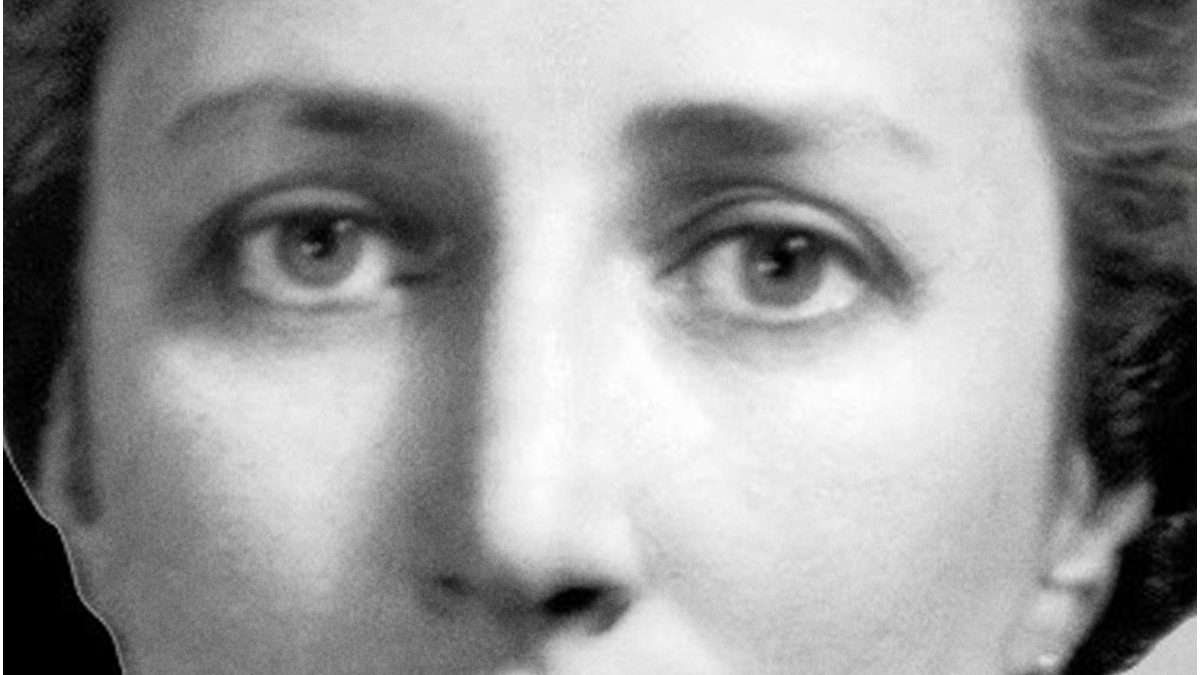
Märtha Of Norway Was Promised A Throne She Never Lived To Take
At 28 minutes past 4:00 in the morning on the 5th of April, 1954, Märtha of Sweden died in a hospital bed in Oslo, aged 53 years and 8 days.
3 years and 5 months later, her husband was crowned King of Norway.
She is remembered as the royal refugee who charmed wartime Washington.
The real story is colder than that.

She did a queen’s work for 16 years and died a crown princess.
She was born on the 28th of March, 1901, in the palace of the hereditary prince in Stockholm, and christened Märtha Sophia Lovisa Dagmar Thyra.
Her father was Prince Carl, Duke of Västergötland, third son of Oscar II.
Her mother was Princess Ingeborg of Denmark.
Märtha was the second of four children, wedged between her elder sister, Margaretha, and her younger sister, Astrid, with a brother, Carl, arriving in 1911.
At the moment of her birth, her grandfather ruled two countries.
Sweden and Norway were joined in a union, and Märtha was born a princess of both.
That lasted 4 years.
On the 7th of June, 1905, the union was dissolved.
Norway went looking for a king of its own and elected her mother’s brother, Prince Carl of Denmark, who took the throne as Haakon VII.
Overnight, Märtha’s own uncle became the sovereign of a country that had just walked out on hers.
Nobody wrote that down as a plan.
It became one anyway.
Her education was the standard issue for a royal girl of her generation.
She was taught at home alongside a handful of selected companions.
The curriculum ran to childcare, first aid, sewing, household management, and porcelain painting.
Norwegian reference works note that she was genuinely bookish and that her schooling was fitted to the domestic ideal expected of royal women rather than to her ability.
It was training designed to produce a decorative wife.
It produced an international operator instead.
Though it took a war to prove it.
There is one other detail from these years that matters more than it looks.
Norwegian sources describe a migraine that troubled her for most of her life.
A headache is not a scandal.
But it is the first entry in a long medical ledger, and that ledger eventually decides this entire story.
The next entry was a love affair the newspapers were not supposed to know about.
In the summer of 1928, at the Amsterdam Olympic Games, Märtha and Crown Prince Olav of Norway became secretly engaged.
He was 25.
She was 27.
They were also first cousins.
Her mother and his father were brother and sister.
Before the marriage went ahead, the couple consulted the geneticist Professor Otto Lous Mohr.
Olav said in later years that Mohr told them the risk was no greater than for any unrelated couple.
That consultation survives through Olav’s own recollection rather than through a published letter from Mohr, so it belongs to family testimony rather than to the archive.
What is documented is that they asked.
The engagement was made public in January 1929.
The 14th, according to the Norwegian Royal House.
The 15th, according to Store Norske Lexicon.
And the sources have never fully agreed.
The political reading was immediate and enormous.
24 years after Norway walked away from Sweden, the Norwegian heir was marrying a Swedish princess.
Haakon checked in advance whether the match would cause offense.
It did not.
It was received as a wound closing.
They married on the 21st of March 1929 in Vor Frelsers Kirke in Oslo.
Standard reference works describe it as the first royal wedding held on Norwegian soil in 340 years.
Oslo lit the route.
There were floodlit blocks of ice along the streets.
She was 3 days short of her 28th birthday.
And she had just become the next queen of Norway.
All she had to do was wait.
The waiting turned out to be the hard part.
Home was Skaugum, an estate in Asker acquired from Baron Fritz Wedel-Jarlsberg.
14 months into the marriage, on the 20th of May, 1930, an electrical fault set the wooden main house on fire.
Olav later described seeing flames through the roof windows and running the salvage himself.
Märtha was pregnant at the time.
The house was rebuilt in stone on the original foundations by the architect Arnstein Arneberg and finished in 1932.
3 weeks after the fire, on the 9th of June, 1930, Princess Ragnhild was born.
Princess Astrid followed on the 12th of February, 1932.
Then came the year that broke something in her.
On the 29th of August, 1935, her younger sister, Astrid, by then Queen of the Belgians, was killed in a car crash at Küsnacht in Switzerland.
She was 29.
Olav said afterwards that it took Märtha more than 10 years to come to terms with it.
And that he did not believe she ever entirely did.
That is a husband’s assessment, not a diagnosis, but it is the second entry in the ledger, and grief of that weight leaves a mark on a body.
On the 21st of February, 1937, at Skaugum, she gave birth to Prince Harald.
The official wording, then and now, is that he was the first heir to the Norwegian throne born inside Norway in 567 years.
She was 35 and she had just delivered the future of the dynasty.
18 months later, the job description changed entirely.
On the 20th of November, 1938, Queen Maud died.
Norway had a king and no queen.
And from that day, Märtha was the country’s first lady in everything but title.
This is the part the school book skipped.
She was not regent.
She held no constitutional power whatsoever.
What she had was every duty of a queen consort and none of the standing.
And she did that job for the rest of her life without ever once being called by the name of it.
Her first great test was not in Norway at all.
In the spring of 1939, she and Olaf toured the United States for roughly 70 days across 29 states.
She gave speeches, still an unusual act for a royal woman in 1939.
Somewhere in that tour, at Hyde Park in New York, she met Franklin and Eleanor Roosevelt.
It looked like ordinary goodwill diplomacy.
11 months later, it was the only thing standing between her children and a German-controlled throne.
On the 9th of April, 1940, Germany invaded Norway.
The royal family fled Oslo and the train carrying the government and the royals was attacked near Elverum.
Haakon refused to appoint a collaborator government.
Olav stayed with his father to fight and then to run the war from London.
Martha took the children over the Swedish border around the 10th and 11th of April.
Ragnhild was nine.
Astrid was eight.
Harald was three.
She went home to Stockholm to her own parents in the country of her birth.
And her country of birth did not want her.
Neutral Sweden was terrified of provoking Germany.
And some Swedish politicians wanted the Norwegian royals gone.
She had crossed a border into her own family’s house and found herself classified as a diplomatic hazard.
Meanwhile, the pressure from the other direction was far worse.
German-aligned Norwegians pushed her to bring the boy home, to return to occupied Norway and accept a regency for three-year-old Harald, installing her son as a child king under German management.
She refused.
Contemporary reporting from 1940 describes that refusal and says her mother Ingeborg backed her in it.
That refusal is the hinge of the whole war for the Norwegian monarchy and it left her stranded in a neutral country that wanted rid of her with the only heir to the throne sitting in her lap.
The way out came from Washington.
On the 12th of July, 1940, Secretary of State Cordell Hull sent a telegram to the American minister in Sweden.
The president had decided to send a transport to Petsamo in the Finnish Arctic to collect stranded Americans and to bring the Crown Princess and her family to the United States.
The minister was instructed to ask whether she wished to come.
That document is in the published American diplomatic record.
The president of the United States personally arranged an extraction for a woman he had met at a picnic.
On the 12th of August, 1940, she left Stockholm incognito with the three children, her lady-in-waiting Ragni Ostgaard, and a small suite.
The route ran north through Haparanda, then Rovaniemi, then Inari, then Petsamo.
Marshal Mannerheim assigned a Finnish officer to escort them.
On the 15th of August, at around 8:00 in the evening, the party of 11 boarded the American transport SS American Legion.
There were 897 people on that ship.
Among them were the American diplomat Florence Jaffray Harriman and a young comedian named Victor Borge.
Down in the hold, loaded as covert cargo, sat a 40-mm Bofors gun with 3,000 rounds of ammunition bound for the Allies.
Officially, it was a humanitarian evacuation of American citizens.
It was also an arms shipment with a royal family on top.
The ship sailed at 11:30 at night on the 16th of August.
The crossing took 12 days.
What happened during those 12 days has been dramatized half to death.
A New York Times report filed from London on the 23rd of August claimed Hitler had personally ordered the ship intercepted.
No captured German order supporting that has ever surfaced and it should be treated as wartime allegation rather than documented fact.
What is not in dispute is that the passengers were frightened.
Princess Astrid said decades later that her mother slept badly and lay awake afraid of what capture would mean for the children.
They reached New York on the 28th of August 1940.
And there, the shy princess who had been taught porcelain painting began the most effective work of her life.
The family stayed first at the White House and at Hyde Park, then moved into a rented Tudor house called Pooks Hill in Bethesda, Maryland.
Roosevelt helped with the house, with schools, and in the family’s own recollection, with a puppy.
Princess Astrid told Norwegian television in 2001 that he was like a grandfather to them.
The access she was given was extraordinary.
Dinners, drives, Christmases at the White House.
The historian Trond Noren Isaksen has stated that his research documents Martha spending all or part of 248 days in Roosevelt’s company between 1940 and 1945.
A count, that is his research finding rather than a published appointment ledger, but a staggering figure for the representative of any occupied nation.
Margaret Suckley, Roosevelt’s cousin and confidante, recorded her impression of Märtha in a diary published long afterwards.
She called her gentle and sympathetic.
Eleanor Roosevelt’s own papers register a certain jealousy of the friendship without ever denting her admiration for the woman herself.
And this is where the gossip machine started and where it has never stopped.
Washington whispered that they were lovers.
American opponents of Roosevelt used the rumor as a weapon against him.
80 years later, a television series revived it for an int- international audience.
And its own writers have since confirmed that a near kiss scene was invented.
And that a transatlantic confrontation between Olav and Roosevelt never happened at all.
The two historians who have gone deepest into this material, Isaachsen and Tor Bomann-Larsen, both report the same result, no evidence of a sexual affair.
Bomann-Larsen has described the relationship as intimate and private in the sense of unusual personal access.
Infatuation on Roosevelt’s side is an interpretation, not a document.
What she actually did with that access is far more interesting than a bedroom.
On the 16th of September, 1942, at the Washington Navy Yard, Roosevelt transferred an American-built submarine chaser to Norway and delivered the speech now remembered as “Look Märtha accepted the vessel on behalf of King Haakon and the Norwegian government.
A woman with no constitutional authority stood on an American dock and took delivery of a warship for a country under occupation.
That same year, in London, on Haakon’s 70th birthday, the old king invested her with the Grand Cross with collar of the Order of St.
Olav.
The memorial book published after her death records his reasoning.
Not because she was Crown Princess, but because she had earned it.
She had, and it was costing her more than anyone was counting.
On the 7th of June, 1945, she came home to Oslo with the children and with Haakon into an enormous public welcome.
Skaugum had been occupied during the war by the Reichskommissar, Josef Terboven.
She went straight back to work.
She delivered the Christmas address to the Norwegian people on Christmas Eve, 1948.
She gave the national New Year radio speeches in 1946 and again in 1950, still unusual work for a royal woman.
In 1950, she opened the children’s clinic at Rikshospitalet.
That last detail is a grim piece of symmetry because Rikshospitalet is where the story ends.
The ledger was filling up fast now.
The migraines had never gone away.
Sciatica set in.
Then came the jaundice.
The yellowing that signals a liver in trouble and repeated hospitalizations.
Court-linked accounts describe periods of convalescence in Florida.
By the spring of 1953, she could no longer hide it.
At her daughter Ragnhild’s wedding to Erling Lorentzen on the 15th of May, 1953, Norwegian sources record that she was visibly marked by illness.
She was 52.
Her father-in-law, born in 1872, was still on the throne and in reasonable health.
She had 1 year left.
On the 12th of March, 1954, she was admitted to Rikshospitalet as an emergency.
9 days later, on the 21st of March, came the 25th anniversary of the wedding in Vor Frelsers Kirke.
The silver wedding, the celebration a nation had been planning.
The public event was canceled.
Olav said afterwards that the liver disease had struck again and that they simply held the day at the sickbed.
On the Saturday before her death, she collapsed a second time and lost consciousness.
She did not meaningfully recover.
She died at 4:28 in the morning on the 5th of April, 1954.
In the room were King Haakon, Olav, all three of her children, her mother Ingeborg, and her uncle and aunt Prince Axel and Princess Margaretha of Denmark.
She was 53 years and 8 days old.
Haakon, then 82, said afterwards that it should have been him instead.
An old, useless man.
He had outlived the woman who had done his queen’s work for 16 years.
She was buried on the 21st of April, 1954 in the Royal Mausoleum at Akershus Fortress.
3 years, 5 months, and 16 days later on the 21st of September, 1957, Haakon VII died and Olav became King of Norway.
He never remarried.
He reigned for 33 years until his death in January, 1991 and Norway never had a Queen Olav.
Which leaves the question nobody has ever definitively answered.
What actually killed her?
The Norwegian public in 1954 was told it was jaundice.
Chronic jaundice, liver disease, the language of symptoms rather than causes.
Store Norske Leksikon, the standard Norwegian reference work, still records the official term and adds that the process was probably liver cancer.
Probably.
That word is doing an enormous amount of work in the historical record of a future queen.
Then, there is the account that circulates through the Norwegian court itself, repeated in later royal history writing, and attributed to King Harold’s own family knowledge.
In that version, it was not cancer at all.
It was hepatitis, contracted from a blood transfusion during back surgery in the United States, which progressed over years into cirrhosis of the liver.
The surgery is usually placed around 7 years before her death, though no medical record in the public domain fixes the date, the hospital, or the surgeon.
There is no published autopsy.
There has been no exhumation and no DNA testing.
English-language reference works simply list the cause as disputed between cancer and hepatitis.
And leave it there.
So, the final entry in the ledger is blank.
A woman who spent 25 years as the next queen of Norway died of something the record cannot name, and both leading candidates were quietly incompatible with each other for 70 years.
But if the court’s version is the right one, the irony is close to unbearable.
America sent a ship into the Arctic to save her.
America gave her a house, a president’s friendship, and the platform from which she kept occupied Norway visible to the most powerful man alive.
And on an American operating table in the country that sheltered her, she may have been handed the infection that dissolved her liver and cost her the crown.
She was never poisoned.
There was no plot.
The thing that beat her was a bad unit of blood and a slow chemical failure and it took its time.
Through the migraines, through the sciatica, through the yellowing skin at her daughter’s wedding, through the silver wedding held at a bedside instead of in a cathedral.
At her funeral, Bishop Johannes Smemo said, “As the Norwegian royal house records it, that she had long held the queen’s seat in their minds and would never lose it.”
It was the only throne she ever got.
Was Märtha a woman who coolly weaponized a president’s affection to keep her country alive or simply a woman in an impossible position doing the only thing left to her?








