Man Lets Freezing Bobcat And Her Cubs Into His Home – Then The Unthinkable Happens!
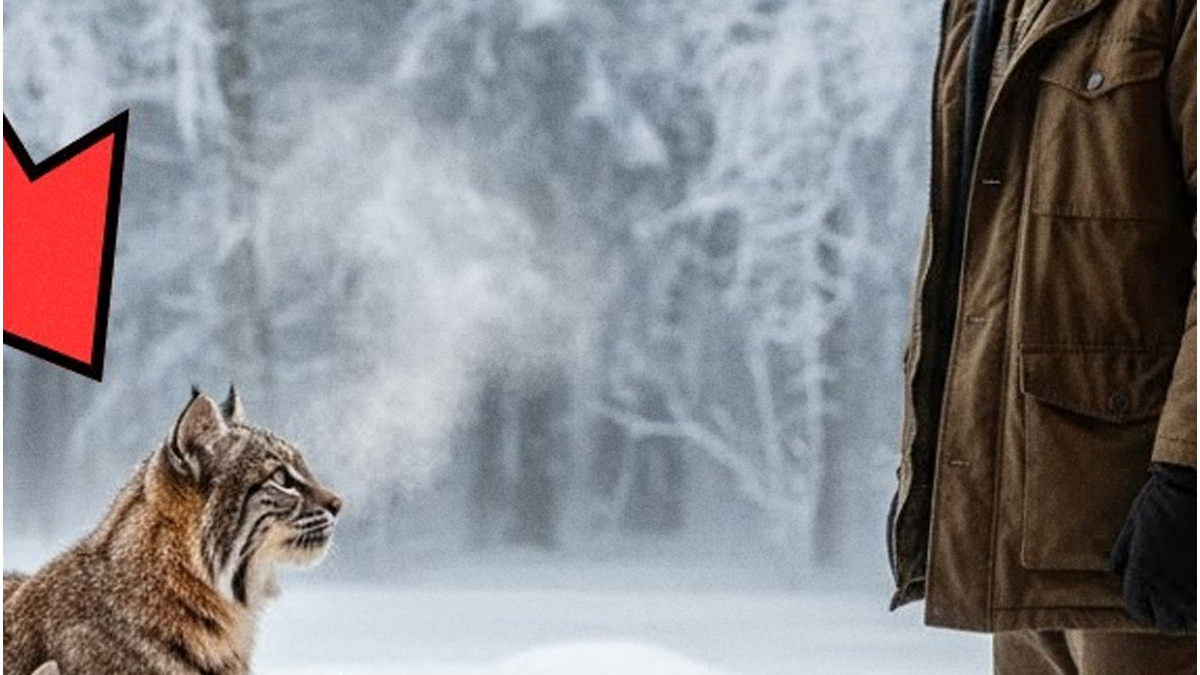
Man Lets Freezing Bobcat And Her Cubs Into His Home – Then The Unthinkable Happens!
A desperate knock in the middle of a snowstorm changed everything.
Snow hammered against the lonely cabin deep in Cascade Ridge.
Inside, Jack Monroe, a man who’d long forgotten what hope felt like, heard a faint knock beneath the roar of the storm.
When he opened the door, a half-frozen bobcat and her two cubs collapsed at his feet.

He could have shut the door and saved himself, but that night mercy overruled fear, and nothing would ever be the same again.
The wind screamed through the Cascade Ridge that night, dragging waves of snow across the valley like white ghosts.
The storm had been building for hours, pounding against the cabin that stood alone at the edge of the tree line.
Inside, Jack Monroe sat by the fireplace, the orange light flickering across the lines of a face that had weathered too many winters and too much silence.
The clock on the wall had stopped ticking long ago.
Out here, time didn’t matter.
Only survival did.
Jack stirred the fire absently, listening to the wind claw at the wooden walls.
Every sound out here had meaning.
A creak in the rafters, the shift of snow off the roof, the distant moan of trees under pressure.
But then came a noise that didn’t belong to the storm.
A thud.
Then another.
Jack froze.
The poker in his hand stopped midair.
He wasn’t sure at first, maybe a fallen branch, but then came the sound again, heavier, deliberate.
A knock.
No one knocked this far from town.
He rose slowly, boots heavy against the floorboards.
His breath visible in the chill that lingered even near the fire.
The wind pushed against the windows like a living thing, and for a moment he wondered if his mind was playing tricks on him again.
Solitude could do that.
Two winters alone since Rachel died.
It had changed him.
The silence had become both friend and curse.
The knock came again, softer this time, almost pleading.
Jack reached for the rifle leaning by the door.
Habit.
Reflex.
Out here, everything was a threat until proven otherwise.
He moved carefully, the floor creaking beneath his weight.
The storm roaring louder as he drew closer to the entrance.
He pressed his ear against the door.
Nothing but wind.
He waited.
Five long seconds.
10.
Then through the crack in the wood, he heard something faint but distinct.
A low whimper followed by another sound, higher, trembling, like the cry of something small trying not to be heard.
Jack’s pulse quickened.
It wasn’t human.
He hesitated, hand tightening on the doorknob.
Every instinct screamed at him to leave it shut.
Wild animals sought shelter in storms, wolves, coyotes, worse.
And a desperate creature could tear through a man before he even had a chance to fire.
But that sound, it wasn’t a growl.
It was pain.
Jack drew in a slow breath and unlatched the door, opening it just enough for the wind to shove a flurry of snow into the room.
The air outside burned his face as he squinted into the storm’s white chaos.
At first, he saw nothing but shifting light and shadow.
Then movement.
A shape low to the ground, trembling.
Two smaller forms huddled beside it.
It took his eyes a moment to adjust, but when they did, his breath caught.
A bobcat.
A female.
Her coat matted with ice and blood.
Eyes clouded by exhaustion.
She stood barely upright, her sides heaving with shallow breaths.
The two cubs at her flank were even worse off, shivering violently, their paws half buried in the snow.
For a long, suspended moment, man and beast stared at each other.
Jack’s rifle rose almost on its own.
The mother didn’t move.
She didn’t bare her teeth or snarl.
She only looked at him.
Those gold eyes dim with fatigue, not fear.
There was something else there.
Something he hadn’t seen in a wild creature before.
A plea.
Jack’s finger hovered near the trigger.
His heart pounded against his ribs.
He had seen plenty of bobcats during his years as a ranger.
Most were quick, fierce, untouchable.
This one, this one was broken.
Snow clung to her fur like frostbitten armor, and her legs trembled with the effort to stay upright.
Behind her, the cubs pressed against her body, their small faces turned toward the cabin’s faint glow, as if they sensed warmth behind the human standing in the doorway.
Jack swallowed.
Damn it.
He muttered under his breath.
He should close the door.
Let nature take its course.
That was the rule of the wild.
But he remembered another night years ago, when Rachel had found a stray dog half frozen near the same doorstep.
He’d told her to leave it be, that the cold would take it soon enough.
She’d ignored him, wrapped the animal in her coat, and whispered, “If something knocks on your door in a storm, it’s because it’s already chosen to trust you.”
That dog had lived.
Rachel hadn’t.
The memory hit him like the wind itself.
Jack lowered the rifle.
He stepped back from the threshold, opening the door wider.
All right.
He murmured, his voice nearly lost to the storm.
Just for tonight.
The bobcat hesitated.
Her body swayed, one paw sinking deeper into the snow.
Then, with a faint sound, half growl, half groan, she moved forward.
The cubs followed, stumbling through the doorway and collapsing onto the wooden floor.
Jack shut the door quickly, the sound of the storm fading to a muffled roar outside.
Inside, the cabin felt impossibly small.
The mother bobcat stood just a few feet from him, her sides rising and falling in slow, heavy rhythm.
Steam lifted from her fur as the heat of the fire reached her.
The cubs curled instinctively into each other, tiny bodies still shaking.
Jack didn’t move.
Neither did she.
The only sound was the crackle of the fire and the wind pressing against the walls.
Minutes passed.
Then finally, the bobcat lowered herself to the floor with a soft, exhausted thud.
She didn’t take her eyes off him, even as her breathing slowed.
Her cubs crawled close, burying themselves against her scent.
Jack took a single step backward, rifle still in hand, but hanging low.
What in God’s name had he just done?
He knew the risks.
A wounded wildcat could kill without warning.
But as he looked at the three of them lying there, so still, so small, he couldn’t shake the feeling that the real danger wasn’t them.
It was what he’d become without moments like this.
For the first time in years, his cabin wasn’t silent.
There was life in it again.
Fragile, wild, uninvited, but alive.
Jack leaned the autist rifle against the wall and sat back down by the fire, his eyes never leaving the creatures on the floor.
He stayed that way for hours, listening to their shallow breaths Outside, the storm raged on, tearing through the trees.
Inside, a man and a dying bobcat shared the same fragile warmth.
And for reasons he couldn’t yet understand, Jack Monroe felt the faint, impossible stir of something he thought he’d lost forever.
Hope.
He didn’t move for a long time.
The fire hissed and crackled, throwing light across the room.
The mother bobcat hadn’t stirred since she’d collapsed near the hearth.
The cubs lay pressed against her belly, their fur steaming slightly as the ice melted away.
Every now and then one of them would twitch, a small sound escaping their throat, something between a sigh and a whimper.
Jack’s hand hovered near the rifle beside his chair, not because he meant harm, but because instinct never truly left a man who had spent decades in the woods.
He studied the animal in front of him.
Her ribs visible beneath the matted coat.
The deep wound at her leg half concealed under melting snow and dirt.
There was no threat left in her, only exhaustion.
He looked away and rubbed a calloused hand across his face.
“What in God’s name am I doing?”
He muttered.
The answer didn’t come.
Only the wind outside, shoving against the walls as if demanding to be let in.
He stood and walked toward the door, feeling the cold slip through the cracks in the wood.
His cabin had always been built for one man.
A small stove, a cot, shelves filled with canned food and tools.
It had been enough for years, but tonight, it felt crowded, alive in ways it hadn’t since Rachel died.
Jack turned back toward the fire.
The mother bobcat’s eyes were half open, reflecting the light.
Not wild anymore, just weary.
She was watching him, and for a brief moment, he swore she knew exactly who he was.
A creature cornered by life, just like her.
Easy, he whispered.
He crouched down slowly, stopping a few feet away.
The cubs stirred.
Their small heads lifted, their ears twitching at the sound of his voice.
He hesitated, then grabbed an old wool blanket from the couch.
He tore it into halves, leaving the other piece draped near the fire.
He tossed one half gently onto the floor a few inches from the cubs.
They flinched, but didn’t run.
One of them sniffed the cloth, its tiny pink nose twitching, and then crawled onto it, curling up tight.
The other followed, pressing into its sibling’s side.
Jack exhaled.
The mother bobcat’s head dropped a little lower.
He could hear her breathing now, uneven, heavy, but steady.
He poured water from the kettle into a small bowl and set it near the edge of the hearth.
The mother’s eyes flicked toward it, but she didn’t move.
The cubs would need it soon enough.
For the first time that night, Jack realized how tired he was.
His back ached, his hands numb from cold.
He sank back into the chair, the warmth of the fire brushing against his boots.
He tried not to look at the corner where Rachel’s photograph still sat on the mantel.
A faded picture of her holding the stray dog they’d rescued years ago.
She’d smiled like she was born to save things.
Jack had always admired that about her.
He’d also resented it, just a little.
The wild didn’t forgive kindness easily.
He’d learned that the hard way the day the fire took her.
He turned back toward the animals.
Guess you found the right fool tonight, he said softly.
Hours passed.
The storm howled without mercy, rattling the chimney, pressing against the windows until it felt like the whole cabin might lift off the ground.
But, inside the rhythm of the night began to shift.
The fierce wind became background noise.
The fire’s crackle grew steady, almost hypnotic.
At some point, Jack must have dozed off in the chair.
When he opened his eyes again, the storm had eased.
The silence was almost jarring.
He blinked, trying to make sense of the dim room around him.
The embers glowed faintly, painting red shadows across the floor.
He could hear it, the slow, even breathing of the animals.
The cubs were still nestled together, their bodies no longer trembling.
The mother bobcat was awake now.
She hadn’t moved much, but her eyes were clear, fixed on him.
Jack sat up slowly, stretching the stiffness from his limbs.
You made it through, he murmured.
The bobcat didn’t react, but she didn’t flinch, either.
Her gaze followed him as he stood, walked to the stove, and pulled down a can of beans.
He opened it, poured half into a metal bowl, and placed it on the floor a few feet away from her.
He wasn’t sure why he did it.
Habit, maybe, or guilt.
The scent filled the small space.
The cubs stirred, tiny noses twitching.
They crept forward, hesitating, then began to lick the food timidly.
The mother didn’t stop them.
Jack watched, something tugging deep inside him.
He thought of Rachel again, of her voice on nights like this.
Mercy isn’t weakness, Jack.
It’s the hardest thing you’ll ever choose.
When the cubs finished, they stumbled back to their mother, pressing against her side.
The bobcat let out a long, low sound, a deep, vibrating hum that seemed to fill the room.
Jack froze.
It wasn’t a growl.
It was something else.
A lullaby.
He sat back down, rubbing the back of his neck.
Never thought I’d see this, he whispered.
The mother blinked slowly, then closed her eyes.
Outside, the first light of dawn began to filter through the frost-covered window, pale and cold.
The storm had passed, leaving behind an eerie stillness.
The world looked different in the aftermath of survival.
It always did.
Jack rose, stepping toward the window.
The snow had piled up nearly to the sill.
The trees were bent under the weight, their branches glistening like glass.
The mountains beyond were nothing but white and shadow.
He looked down at the prints leading to his door, now almost gone.
By morning, they’d be erased completely, as if none of this had ever happened.
Behind him, a sound drew his attention.
The mother was shifting her weight, dragging her injured leg slightly.
She tried to stand, managed halfway, then sank back down.
Jack knelt near her, keeping his movements slow.
He could see the wound clearly now, raw, angry, still bleeding.
The metal from the trap had cut deep.
He reached for his tool chest under the hutch counter, pulling out an old first-aid kit.
He hadn’t opened it in years.
Don’t you move, he said softly, half to himself, half to her.
We’re not dying tonight, not in my house.
He tore a strip from his flannel shirt, poured disinfectant over it.
The bobcat’s eyes opened again, wary, but not hostile.
He held out his hand just close enough for her to smell.
She didn’t pull away.
Jack wrapped the wound carefully, the way he’d once done for fellow rangers.
His hands were steady.
The smell of blood and antiseptic mixed with the smoke from the fire.
The cubs pressed closer, watching.
When he was done, he sat back on his heels, breathing hard.
The bobcat didn’t attack, didn’t even snarl.
She just lowered her head, eyes closing again.
Yeah, Jack whispered, almost to himself.
We’re both a little broken, huh?
He rose, placed another log in the fire, and watched the flames flare up.
The warmth filled the room again, wrapping around them like something sacred.
For the first time in 2 years, Jack Monroe didn’t feel alone.
Not really.
Outside, the wind had died completely.
A thin beam of light stretched across the floorboards, catching on the rough bandage around the bobcat’s leg.
Jack leaned against the doorframe, staring out into the quiet morning.
The snow would bury the tracks soon.
By the time the sun climbed over the ridge, no one would ever know what had found its way to his door in the heart of a storm.
He turned back to the sleeping animals, the firelight dancing across their fur.
And though he couldn’t explain why, he felt that something in his life had shifted, quietly, irrevocably, like the first crack of ice before spring.
Rest easy, he whispered.
You’re safe here.
Then, for the first time in years, Jack Monroe let himself believe it, too.
The fire had dimmed to embers, glowing red beneath the weight of ash.
Outside, the world had fallen eerily still.
No more howling wind, no more groaning pines, just the muffled hush that always followed a storm.
It was the kind of silence that could either comfort or suffocate, depending on how long a man had been alone.
Jack sat back in his chair, watching the faint glow flicker across the rough logs of the cabin.
The bobcat and her two cubs lay on the floor near the fire.
The little ones were asleep, their small bodies curled like commas against their mother’s side.
The mother, Lena, he hadn’t meant to name her yet, but the word had slipped into his mind uninvited, was breathing slowly.
Her sides rising and falling in the rhythm of fragile life.
He could hear it, the soft sound of her breath, the whisper of fur brushing against the blanket he’d given her.
It was strange, after so many years of isolation, to share space with something alive, something warm.
Jack rubbed his face, feeling the roughness of his unshaven beard.
He’d spent too long talking only to the wind, to ghosts that didn’t answer back.
Rachel’s voice sometimes still filled the cabin, hidden in the creaks of the wood, or the hiss of the kettle.
He wondered what she would have thought of this night, of him letting a wild animal into their home.
Probably that same quiet smile, the one that always said, you finally listened to your heart instead of your fear.
He stood and walked toward the window.
Frost rimmed the glass like lace, catching the faint glow of dawn that was beginning to break.
Snow hung heavy on the trees, bending their branches low.
The world looked almost peaceful again, deceptive after the chaos that had just passed.
Behind him, he heard a sound, a low, soft rumble.
He turned sharply, every instinct alive again, but it wasn’t a growl.
It was a sigh, deep and contented, from the mother bobcat.
She had shifted slightly, one paw draped protectively over her cubs.
Her golden eyes opened, catching the firelight.
Jack froze, caught in that gaze.
There was still wildness in it, but not hostility, just awareness, recognition.
He spoke softly, his voice little more than breath.
You’re something else, aren’t you?
The bobcat blinked slowly, her tail flicking once against the floor.
Jack took a step closer, careful, deliberate.
The floor creaked, and the cubs stirred, but didn’t wake.
He knelt near the fire, keeping a respectful distance.
The heat was fading, and he added a few pieces of wood, watching sparks spiral upward into the chimney.
The flames licked back to life, lighting up the small room again.
For a fleeting moment, it felt almost normal.
He noticed the wound on her leg again, the rough bandage he tied the night before.
Blood had seeped through in spots, but it wasn’t fresh.
She’d survived worse, that much he could tell.
Jack had seen animals die before, hundreds, maybe more.
He knew what it looked like when they gave up, but she hadn’t.
Not yet.
And somehow, that meant he couldn’t either.
He leaned back against the chair leg, exhaling slowly.
You and me, he murmured, looks like we’re both too stubborn to quit.
The fire popped.
The sound startled one of the cubs, who lifted its small head and looked straight at him.
Its eyes were impossibly big, blue-gray and wet, reflecting the flame.
It was the size of his hand, tiny ears flattened back, fur still damp in places.
Jack smiled, an expression that felt foreign on his face.
Hey there, little one, he said softly.
The cub blinked and let out a small noise, half squeak, half purr, before curling back down into sleep.
That small, simple sound hit Jack harder than he expected.
It had been years since anything had trusted him enough to close its eyes.
Hours passed.
The snow outside stopped falling, leaving the world blanketed in untouched white.
Inside, the temperature began to drop as the fire burned low again.
Jack stood, stretching the ache from his joints.
He moved toward the cupboard and rummaged through supplies, cans, dried meat, a few tins of beans, enough for him to last the winter, but not for a family of wildcats.
He poured himself some coffee from the pot that had been sitting too long on the stove.
It was bitter, lukewarm, but it did the job.
He took a sip and turned back toward the animals.
The mother’s eyes were still on him, watchful.
He felt it again, the strange sense that there was an understanding forming between them, something that went beyond language or reason.
She wasn’t afraid of him anymore, not entirely.
Jack walked toward the small cabinet by the wall and took out a folded tarp.
He spread it near the fire, layering it with an old blanket.
You can have that spot, he said quietly, even though he knew she couldn’t understand.
But she moved anyway, slowly, painfully, dragging herself and her cubs toward the warmth of it.
Jack stayed still, hardly breathing, afraid to break whatever fragile peace hung in the air.
When she settled, she let out another sound, soft, low, like a hum.
Jack realized it wasn’t a warning.
It was gratitude.
He sat back down, watching the scene in silence.
Night gave way to dawn.
The first streaks of sunlight crept through the frost-covered glass, spilling across the floorboards.
The glow touched the bobcat’s fur, and for a moment, she looked almost golden, like she belonged to the morning itself.
Jack leaned forward, elbows on his knees, his voice barely above a whisper.
You’ll make it, won’t you?
She blinked at him once, so slow and deliberate, before lowering her head again.
He stayed awake, keeping the fire alive through the early light.
The cabin felt different now, not just a shelter against the cold, but a heartbeat in the middle of nowhere.
When the sun finally cleared the ridge, the silence returned, but it wasn’t empty this time.
It was peaceful, warm, filled with quiet breath and the faint crackle of life surviving.
Jack stood and walked to the door.
He cracked it open just enough to look outside.
The snow was deep, glittering in the light.
The tracks that had led the bobcat here were half-buried now.
By midday, they’d be gone entirely, erased by wind and sun.
He let the door close gently, turning back to the fire.
The bobcat lifted her head for a moment, meeting his gaze.
There was no fear in her anymore.
Jack sat again, the warmth of the flames brushing against his boots.
You’re safe, he murmured, for as long as you need.
She made that soft rumbling sound again, a sound that would stay in his memory long after she was gone.
Outside, the cascades shimmered beneath a clear winter sky.
The storm already nothing but a memory.
Inside, for the first time in years, there was life.
Not human, not tame, but life all the same.
And as the firelight flickered across his face, Jack Monroe closed his eyes, no longer haunted by the quiet.
For once, the silence didn’t hurt.
It healed.
When he woke, the fire had burned low, and the morning sun stretched long, golden fingers through the frost-laced window.
The cabin felt warmer, filled with the soft sounds of breathing and the faint crackle of ash.
The bobcat mother hadn’t moved far.
She was still by the hearth, her cubs curled tight against her belly.
But Jack noticed something that twisted his chest.
The blood had spread.
It wasn’t much, just a small, dark stain on the wooden floor where she had shifted in her sleep.
The bandage he had tied the night before had loosened, and a thin red line seeped through the cloth.
He crouched beside her, careful not to startle.
Easy now, he murmured.
Let’s take a look.
The cubs stirred at his voice, their tiny faces lifting toward him.
The mother didn’t growl, but her muscles tensed, her breath quickened.
Jack could feel the line between fear and trust balancing like a blade.
It’s all right, he whispered.
Just helping.
Slowly, he reached out.
The bobcat’s ears flicked back, but she didn’t strike.
Jack eased the edge of the bandage away, and his heart sank.
The wound wasn’t clean.
The metal trap had torn deeper than he’d thought, slicing through muscle.
Infection had already started.
He could smell it, faint, but unmistakable.
Jack exhaled through his nose.
Damn it.
He stood, crossing to his cabinet.
The first aid kit was nearly empty now, but there were still a few antiseptic wipes and a roll of gauze left.
He poured some hot water from the kettle into a bowl and dipped a clean cloth into it.
The bobcat watched him, unblinking.
Jack knelt again, setting the bowl beside her.
This is going to hurt, he said quietly, more to prepare himself than her.
But you’ve made it this far.
We’re not stopping now.
He reached forward, slow as the shifting of shadows, and began to clean the wound.
The animal flinched, a low rumble rising in her chest.
The cubs mewed softly, sensing her pain.
Jack froze, waiting for the explosion, the claws, the teeth, but it didn’t come.
Instead, the mother stayed still, shaking, yes, but still.
He worked carefully, wiping away the grime and old blood until the torn flesh looked raw, but clean.
Then he pressed a strip of gauze over it and wrapped her leg again, tighter this time.
His hands were steady, his movements practiced.
When he was done, he sat back on his heels, breathing hard.
The mother bobcat let out a long, trembling sigh and collapsed back onto the blanket.
Her breathing slowed, her eyes half-lidded.
Jack rested his elbows on his knees and rubbed his face.
You’re a fighter, he said softly.
I’ll give you that.
The cubs crept closer to her, sniffing at the bandage, then turned their attention to him.
One took a cautious step forward, its paws whispering against the wood.
It stopped a few feet from Jack, eyes wide, nose twitching.
He didn’t move, just watched.
After a moment, the cub made a small sound, something between a chirp and a purr, and returned to its mother.
Jack felt his throat tighten.
“Well,” he said quietly, “guess that’s progress.”
He stood and went to the small window over the sink.
The sunlight was brighter now, reflecting off endless drifts of snow.
The storm had stripped the forest bare.
Branches were broken, trees bowed under the weight, but there was a strange beauty to it all.
The way the light caught the ice, the way the world looked clean again.
Ashes and snow, he thought.
Everything that burns, everything that falls, starts over eventually.
He made himself a pot of coffee, the smell filling the room.
For a while, he just stood there, staring at the cup in his hand, listening to the soft breathing behind him.
A sudden sound outside made him freeze.
A creak, faint but sharp, the unmistakable crack of snow giving way under weight.
He set the cup down slowly and reached for his rifle.
Old habits died hard.
Moving to the window, he peered through the frost.
Nothing.
Just the forest, silent and white.
He waited another moment, scanning the tree line.
A raven fluttered from a branch, its black feathers stark against the snow.
Jack let out a breath.
Maybe it was just that.
Or maybe he was hearing ghosts again.
He turned back to the cabin.
The bobcat’s eyes were on him, watching.
Always watching.
He lowered the rifle.
“You’re not the only one with instincts,” he muttered.
He went to check the stove, stirring the embers back to life.
The room warmed quickly, the firelight painting the walls in flickering gold.
The bobcat shifted closer to the heat, dragging her injured leg carefully.
Jack poured a little more water into the bowl and slid it toward her.
“Drink,” he said.
The mother sniffed it, then lowered her head and lapped at it slowly.
Her cubs followed, clumsily dipping their faces into the bowl.
The sight made Jack chuckle.
“Messy,” he murmured, “but you’re learning.”
When they were done, he pushed the bowl aside and stood again.
The cabin felt smaller than ever, but not in the lonely way it used to.
The presence of the animals filled it, gave it purpose.
He remembered something Rachel used to say when he’d scold her for bringing home every stray she found.
“You can’t close your door to the wild, Jack.
It’ll find its way in one way or another.”
He smiled faintly, the memory warm and sharp all at once.
“You were right,” he said to no one.
He spent the rest of the morning tending to chores, splitting wood, checking traps, making sure the chimney hadn’t frozen over.
Every so often, he’d glance back through the open door and see the three shapes by the fire.
The mother, sleeping now, the cubs wrestling gently, their small paws tapping against the floor.
The sound was soft, rhythmic.
Life.
By afternoon, clouds began to roll in again.
The temperature dropped fast and the light dimmed to gray.
Jack closed the shutters and fed the fire one more time before sitting back in his chair.
He looked at the mother bobcat again.
Her breathing was easier now.
The bandage stayed clean.
The cubs were quiet, curled beside her.
He leaned back, listening to the fire.
Outside, snow began to fall again.
Not the violent kind from before, but slow, lazy flakes that drifted like ashes falling from a dying fire.
Ashes and snow.
That night, as the wind whispered through the pines, Jack dreamed of Rachel standing at the door, holding out her hand to him, her smile soft, her voice calm.
“You did the right thing,” she said.
“You always do when you listen.”
When he woke, the fire had burned low again.
The bobcat was watching him, her eyes gleaming in the dim light.
Jack sat up, blinking the dream away.
“You still here?”
He murmured, his voice rough from sleep.
The mother made a low sound, not a growl, not a threat, something closer to acknowledgement.
He smiled.
“Good.”
He poured water into the kettle, set it on the stove, and glanced at the window.
The snow had stopped.
The world outside was calm, silent, gleaming beneath the first pale light of morning.
He leaned back in his chair, rubbing the sleep from his eyes.
“We made it another night,” he said quietly.
The bobcat blinked slowly, her gaze steady, as if she understood.
Jack exhaled, watching the steam on some curl from the kettle.
Somewhere deep inside him, something uncoiled, a knot that had been tightening for years.
The wild hadn’t taken anything from him this time.
It had given something back.
He didn’t know what tomorrow would bring, but for now, in this fragile peace between man and nature, it was enough.
And as the sun rose over Cascade Ridge, the cabin at the edge of the woods came alive once more.
Not with words, but with breath, warmth, and the quiet rhythm of healing.
By midmorning, the storm had fully passed, leaving behind a sky so clear it almost hurt to look at.
Light spilled through the frosted windowpanes, scattering across the wooden floor like broken glass.
Jack stood at the doorway, one hand resting on the frame, staring out at the white wilderness beyond.
The air was still, the forest muffled beneath the snow.
Everything looked calm again, but out here, calm never lasted long.
Behind him, the faint sound of claws against wood reminded him he wasn’t alone.
He turned to see the mother bobcat stretching, her injured leg tucked awkwardly beneath her body.
The cubs were awake, tumbling over each other near the fire.
For a moment, it almost looked like any ordinary morning, a man by the fire, a mother tending to her young.
Almost.
Jack stepped closer, crouching near the hearth.
“Morning,” he said softly, his voice rough from the cold air.
The bobcat blinked at him, but didn’t move.
Her golden eyes followed his hands as he reached for a few scraps of dried meat.
He laid them gently on a small tin plate near the fire and stepped back.
The cubs hesitated, then crept forward, sniffing at the food.
The mother didn’t stop them this time.
She only watched, her ears twitching slightly.
When they finished, she leaned forward and ate the rest, slow and careful, never taking her eyes off Jack.
He smiled faintly.
“Guess that’s our deal now,” he said.
“You eat, I’ll keep the fire going.”
He didn’t expect an answer, but the mother’s tail flicked once, as if acknowledging the terMs. It had been 3 days since the storm, and each morning, the same routine repeated itself.
He’d feed them, she’d watch.
He’d stoke the fire and the cubs would curl up near his boots, too young or too tired to fear him anymore.
Every night, she’d let him sit closer, the space between them shrinking by inches.
A truce was forming, one built not on words, but on something older, simpler, trust.
Jack wasn’t sure when it started to change inside him, but it did.
The loneliness that had hung over the cabin like smoke began to thin.
The silence didn’t press down on him anymore.
He found himself talking again, quietly at first, mostly to the fire, but eventually, to her.
He’d sit in the old chair and say things he hadn’t said aloud in years.
“Rachel would have liked you,” he said one night as the firelight danced across the walls.
“She was the one who believed every creature had a story, even the ones people are afraid of.”
The mother bobcat lifted her head slightly at the sound of his voice, eyes reflecting the flames.
“She used to tell me I was too hard for this world,” Jack continued.
“Guess she was right.
But you,” he exhaled, “you found your way in, didn’t you?”
Outside, snow slipped from the branches in heavy clumps.
The sound echoed faintly through the forest.
Inside, the only response was the soft crack of the fire.
The days grew longer, the sun climbing higher with each dawn.
Jack repaired the roof, shoveled snow from the porch, and checked the traps along the ridge.
Though lately, he’d been leaving them empty on purpose.
He couldn’t bring himself to harm anything, not with those golden eyes watching him every night.
Once, while he was splitting wood outside, he heard a sound behind him.
A low, rhythmic purr.
He turned to see the mother bobcat sitting at the open doorway, her cubs peeking out from behind her.
Jack lowered the axe, heart thudding.
She didn’t run, didn’t hide.
She just sat there.
Snow dusting her fur, eyes calm and steady.
“Not afraid anymore, huh?”
He said, smiling faintly.
The bobcat blinked slowly.
Then, with the kind of quiet grace only the wild carried, she turned and disappeared back inside.
He stood there a long moment, the cold biting at his hands, before setting the axe aside and following her in.
That night, he found the cubs asleep on his old wool blanket near the fire.
The mother was a few feet away, her head resting on her paws, eyes half closed.
Jack watched them in silence, the rhythm of their breathing sinking with the crackle of the flames.
He sat down in the chair, feeling something stir deep in his chest.
A small, hesitant warmth he hadn’t felt since Rachel’s laughter filled this same room.
For a while, he said nothing.
Then, quietly, almost to himself, he murmured, “Maybe you needed saving.
Or maybe I did.”
The bobcat’s ears twitched, and she let out a soft sound.
One of those low, vibrating rumbles he’d learned to recognize.
It wasn’t a growl.
It was something gentler.
Jack chuckled under his breath.
“Yeah, I thought so.”
He spent the next few days in a rhythm that felt both strange and familiar.
In the mornings, he’d brew coffee, then share scraps of meat with the bobcats.
By noon, he’d venture outside for wood or water, always returning to find them waiting near the window.
At dusk, he’d sit near the fire and talk, his voice mingling with the sound of the wind.
Once, as the snow began to melt along the eaves, he found himself laughing, really laughing, for the first time in years.
The cubs had been chasing each other in circles, knocking over his boots, slipping on the floor.
Their tiny growls filled the cabin, their chaos impossible to ignore.
The sound startled him at first.
It felt foreign in his own throat, rusty and unfamiliar.
But it came anyway, loud and genuine, echoing off the cabin walls like something long buried.
The bobcat lifted her head, watching him, and for a brief moment, it almost felt as if Rachel were there, too, smiling, nodding, whispering, “Woah.
You’re still alive.”
That night, Jack opened the window above the sink.
Cold air drifted in, carrying the scent of pine and thawing earth.
Somewhere in the distance, a river murmured beneath the ice.
Spring was coming, slow but certain.
The cubs were asleep, piled together in a tangle of fur near the hearth.
The mother sat beside them, head high, her eyes trained on some the forest outside.
Jack leaned against the counter, mug in hand.
“You’ll leave when you’re ready,” he said quietly.
“That’s how it should be.”
The bobcat didn’t look at him, but her ears flicked, catching the sound of his voice.
“Until then,” he added, “this place is yours, too.”
For a while, the only sound was the fire.
Then, from the bobcat came a faint rumbling exhale, a noise so soft he almost missed it.
But it was there.
That was the night Jack realized the line between their worlds had blurred.
She no longer saw him as a threat, and he no longer saw her as wild.
They were something else now, bound by the same unspoken need for connection, for survival, for peace.
The truce had become something deeper.
When he finally went to bed, the cabin was warm, the air filled with quiet, living breath, the kind of silence that didn’t crush him anymore.
It held him.
Outside, the moon rose over Cascade Ridge, spilling silver light across the snow.
And inside, beneath that same light, a man and a bobcat, once strangers divided by fear, slept under the same fragile truce, each finding in the other what the world had taken away.
By morning, the world had changed again.
The first signs of thaw crept into the forest, the sound of dripping water from the eaves, the smell of damp pine breaking through the cold air.
Jack Monroe stirred awake to the familiar pop of the wood stove and the soft rustle of movement near the hearth.
The mother bobcat was already up.
She sat upright, tail curled around her cubs, golden eyes alert.
Her leg, though still bound in rough cloth, was healing.
The wound no longer seeped blood, and the swelling had gone down.
But Jack noticed something new in her that morning.
Restlessness.
She kept glancing toward the door.
Her ears twitched at every faint sound beyond the walls.
The forest was calling her back, he realized.
The storm had passed.
Nature was reclaiming its rhythm.
Jack poured himself a cup of coffee, the steam curling through the chill.
“You hear it, too, huh?”
He said softly.
“The quiet’s got its own kind of voice out there.”
The bobcat’s head tilted slightly at the sound of his voice.
Her cubs played at her feet, batting at one another with tiny, clumsy paws.
Jack smiled faintly, but behind that warmth was a flicker of something else.
Dread.
He knew what was coming.
The truce couldn’t last forever.
He turned toward the window.
The sun was rising pale over the ridgeline, turning the snow into fields of gold.
The world looked alive again.
For months, he had watched that same sunrise alone, never caring how beautiful it was.
Now, for the first time, he wished he could make it last.
The ring of his old landline broke the silence.
It startled the cubs, who scrambled behind their mother.
Jack set the mug down, sighing.
Hardly anyone called him anymore.
He walked over and picked up the receiver.
“Yeah?”
“Jack?”
Came a familiar voice, steady, worn, and sharp.
“It’s Aiden.”
Jack leaned against the counter, rubbing a hand over his face.
“Aiden Cole.
Been a long time.”
“Too long,” the vet replied.
“Heard about that storm up your way.
You still breathing?”
“Barely,” Jack said, glancing toward the fire.
“Cabin held.”
“That so?
I figured it would.
You always built things to outlast the rest of us.”
There was a pause, then a shift in Aiden’s tone.
“You sound different.
Everything all right?”
Jack hesitated.
His eyes drifted toward the bobcat.
The mother was watching him again, her eyes glinting in the firelight.
“I’ve got company,” he said finally.
Aiden chuckled.
“Company?
Out there?
Don’t tell me you found another stray.”
“Not exactly a dog this time.”
The laughter stopped.
“What do you mean, not a dog?”
Jack exhaled, scratching at his beard.
“A bobcat.
She came in during the storm.
Two cubs with her, half frozen.
I patched her up.”
There was silence on the line for a moment, then a sharp breath.
“Jack, you can’t keep a wild cat in your cabin.”
“I know that.”
“Do you?”
Aiden’s voice softened, but it carried weight.
“You’re a ranger.
You know the laws.
You know the risks.
If she turns, you won’t have time to reach that rifle of yours.”
“She won’t,” Jack said quietly.
“You can’t be sure of that.”
He looked at the bobcat again.
The cubs were tumbling over the blanket now, one of them squeaking as it bit the other’s tail.
The mother stayed still, calm, her gaze fixed on Jack.
“I am,” he said.
Aiden sighed.
“You always had a soft spot.
Rachel used to tell me you were part wild yourself.”
Jack felt that familiar ache at the mention of her name.
It was a wound that had never healed, a scar beneath the skin.
“Yeah,” he said softly.
“She did.”
“Look,” Aiden continued, “I’m not saying you’re wrong for helping her.
But you can’t keep her there forever.
She’s got a territory.
The longer she stays, the harder it’ll be for her to go back.
I know.
You planning to let Fish and Wildlife know?
Not yet.
Jack, he cut him off gently.
Aiden, I’ll figure it out.
She’s not just some animal that wandered in.
She She came to me.
Maybe I needed that.
The other end of the line was silent for a long moment.
Then Aiden said, I know that voice, Jack.
You sound like a man who’s starting to believe again.
Just remember, mercy’s not the same as saving.
Sometimes, it’s letting go.
Jack didn’t answer.
He hung up the phone slowly, the sound of the receiver echoing in the still cabin.
He turned back to the bobcat.
She hadn’t moved, but there was something different in her gaze.
Something knowing, almost human.
Jack knelt by the fire, rubbing his hands together.
You heard all that, didn’t you?
He said.
The bobcat blinked once, slow and deliberate.
Yeah.
Thought so.
That afternoon, Jack took a walk to the edge of the clearing behind the cabin.
The snow crunched under his boots, the cold sharp in his lungs.
He hadn’t been this far out since before the storm.
The world was quiet, but it wasn’t empty.
He could see tracks in the snow, deer, rabbits, even a coyote’s trail cutting across the ridge.
Life was still moving.
He followed a narrow path down toward the creek.
The ice was melting, water trickling through the cracks.
He crouched there for a while, listening to the sound.
You’d like it out here, he murmured as if the bobcat could hear him.
Back at the cabin, he found her standing by the open door.
He’d left it cracked for air, but she’d pushed it wider with her paw.
She wasn’t trying to escape, just testing the world again.
The cubs clung to her legs, mewing softly.
Jack stood in the doorway, the cold rushing around him.
You smell the trees, don’t you?
He said.
You remember where you came from.
The bobcat turned her head slightly, meeting his eyes.
He knew what Aiden had meant.
Sooner or later, she’d have to leave.
The wild didn’t belong inside walls, no matter how kind those walls were.
But not yet.
He closed the door gently.
That night, he couldn’t sleep.
The fire burned low, throwing long shadows across the room.
The bobcat was restless, pacing near the window, ears twitching at every distant sound.
The cubs stirred and whimpered, sensing her unease.
Jack watched from the chair, the light flickering across his tired face.
You want to go, don’t you?
He said quietly.
But you’re not ready.
He stood, walking to the window.
Outside, the forest shimmered under moonlight.
It looked peaceful, but he knew better.
Out there was hunger, danger, death waiting in the shadows.
Inside was warmth, safety.
And yet, one could only cage the wild for so long.
He rested a hand on the glass.
Maybe Aiden’s right, he murmured.
Maybe mercy isn’t keeping you here.
The bobcat turned her head at the sound of his voice.
For a moment, their eyes met, the flicker of firelight and moonlight blending between them.
She made a low, soft sound, not a growl, but something that almost resembled understanding.
Jack smiled faintly.
Guess that’s your way of telling me not to overthink it.
He sat back down, letting the warmth seep through his bones.
The cubs had crawled closer to the fire again, tiny shapes lost in a sea of blankets.
Their mother lay beside them, her tail curling protectively around their bodies.
The rhythm of her breathing filled the room, steady, calm.
Jack leaned back, eyes heavy.
All right, he said softly.
One more night.
Outside, the wind stirred through the pines, whispering through the snow-laden branches.
It wasn’t the cry of a storm anymore.
It was the quiet, eternal song of the wilderness, the one he had listened to all his life, the call of the wild.
And though Jack Monroe didn’t yet know it, that same call would soon test everything he’d come to believe about fear, about love, and about the fine, dangerous line between mercy and freedom.
The next morning, the world felt strangely still.
The kind of stillness that comes after something shifts, silent, but not peaceful.
The sun had barely lifted over the ridge when Jack noticed the change.
The air outside the cabin was sharper, the kind that cut through the lungs and made each breath feel like a warning.
He stood by the window, sipping his coffee, watching the forest wake beneath a thin veil of mist.
It looked calm, but there was a tension in it, a quiet alertness, as if the trees themselves were listening.
Behind him, the bobcat moved restlessly.
Her cubs climbed over her side, playfully biting at her ears, but she didn’t respond.
She was focused on something beyond the cabin walls, her ears twitching toward the woods.
Jack followed her gaze.
You hear something out there?
He asked softly.
She didn’t move, didn’t even blink, but her body stiffened.
That was answer enough.
Jack set down his mug and reached for his coat.
The snow outside had hardened overnight, forming a thin crust that crunched beneath his boots as he stepped off the porch.
He breathed in the cold, scanning the edge of the tree line.
It took him only a few seconds to see it.
Faint, but unmistakable.
Tracks.
Human.
They led through the clearing, weaving between the pines before vanishing near the creek.
The prints were fresh, maybe a few hours old, pressed deep into the snow.
Whoever had left them hadn’t been wandering.
They’d been hunting.
Jack crouched down, brushing his glove across one of the impressions.
A boot print, size large.
Deep heel strike.
He knew the type.
Someone carrying weight, maybe a rifle slung over the shoulder.
His gut tightened.
The forest was vast, but not many men came this far up Cascade Ridge without a reason.
He looked back toward the cabin.
Through the frosted glass, he could see Lena.
Yes.
He’d finally named her, even if only to himself, standing near the window, her amber eyes following him.
Jack straightened slowly.
You’ve been found before, haven’t you?
He murmured.
A cold wind swept through the clearing, lifting snow from the branches.
Jack’s instincts, honed by decades in the wild, told him everything he needed to know.
Someone had been here before dawn, and whoever it was hadn’t come for him.
They’d come for her.
He followed the tracks a little further, stopping where the trail bent behind a fallen spruce.
That’s when he saw it.
A rusted metal trap, half buried in the snow.
Old, but not ancient.
Someone had set it recently.
The teeth were smeared with a faint brown stain, frozen in the cold.
Jack’s breath caught.
The shape, the placement, it was the same kind of trap that had nearly taken Lena’s leg.
He knelt beside it, jaw tightening.
Son of a He cut himself off, his voice low, trembling with controlled anger.
He disarmed the trap with a swift motion, the steel snapping shut with a metallic clank that echoed through the woods.
The sound made the hair rise on the back of his tongue, neck.
He didn’t know who had been setting traps up here again, but he had a name in mind.
Mason Briggs, the local hunter who’d been caught poaching on federal land two winters ago.
Jack had been the one who turned him in.
Mason had sworn revenge before he’d vanished into the mountains.
Jack stood, scanning the forest again.
He couldn’t see anyone, but the silence felt too heavy.
The kind of quiet that hides movement.
He turned and made his way back to the cabin, boots crunching over snow.
Inside, Lena had moved closer to the door, her ears pricked.
The cubs huddled behind her.
Jack shut the door firmly behind him, locking it.
It’s fine, he said softly, though his voice didn’t sound convincing even to himself.
Just checking the traps.
He hung his coat and walked to the fire, rubbing warmth into his hands.
But his mind was already racing.
He couldn’t protect them if someone like Mason was nearby.
The law said wild animals didn’t belong in homes, but the law didn’t understand what it meant to look into those eyes, to see the same fear, the same exhaustion that haunted him.
He wasn’t just saving her.
She was saving him.
He spent the rest of the morning tending to small tasks to keep his mind busy, splitting wood, sharpening knives, pretending life hadn’t changed.
But every time he caught a flicker of movement outside, his chest tightened.
At midday, he took his rifle and circled the cabin again.
The snow was untouched except for the single trail he’d seen earlier.
Still, he couldn’t shake the feeling of being watched.
When he returned, Lena was pacing.
Her tail swished low, her body tense.
Jack knelt by the fire, his voice steady.
You sense him, too, don’t you?
The bobcat’s eyes locked on his.
No sound, no movement, just the raw understanding between two creatures who’d both learned the cost of trust.
As the day faded, the light turned gold and thin.
Jack stood by the window, watching the long shadows stretch across the clearing.
He saw them before he heard them.
A flicker of movement in the distance.
A dark shape slipping between the trees.
A man.
Tall, broad-shouldered, rifle slung over one arm.
Jack’s grip on his own weapon tightened.
He didn’t raise it.
Yet.
The figure was still too far, a ghost moving through the dusk, but he knew that walk.
He knew that posture.
Mason Briggs.
The hunter was back.
Jack’s breath came slow and steady.
So, it’s you, he whispered.
He turned toward Lena.
She was alert now, crouched low near the cubs.
Her muscles quivered beneath her fur, her wounded leg trembling with the effort of standing.
Jack set the rifle beside the chair and crouched next to her.
If he comes closer, we’ll deal with it, he said softly.
You hear me?
We’ll deal with it.
Her ears flicked, and she made that deep, guttural sound again.
Not a growl of warning this time, but something else.
A promise.
The night came fast.
The temperature dropped.
Jack lit the lamps and threw another log onto the fire.
The sound of the forest grew faint, swallowed by the dark.
But outside, somewhere beyond the reach of light, the faint echo of footsteps moved through the snow, closer.
Jack stood motionless, listening.
He couldn’t see him, but he could feel him.
The rhythm of the steps matched the beating of his heart.
He reached for the rifle and checked the chamber.
Loaded.
Then he crossed to the window, careful not to cast a shadow.
Through the faint frost, he saw the outline again.
Mason, pausing near the tree line, staring toward the cabin.
Even from a distance, Jack could see the gleam of metal in his hands.
The hunter raised a pair of binoculars to his eyes.
Jack moved back from the window.
He didn’t breathe.
Inside, the fire crackled softly.
The cubs had gone still, sensing the shift.
Lena was crouched, her eyes glowing faintly in the light.
Jack whispered, It’s all right.
He won’t get near you.
But even as he said it, he wasn’t sure.
He sat down by the fire again, staring into the flames, listening to the faint rhythm of the woods outside.
He knew Mason.
The man wasn’t patient.
He was proud, reckless, and cruel.
This wasn’t over.
Jack leaned forward, elbows on his knees.
If he comes for you again, he murmured, he’ll have to go through me first.
The bobcat’s tail twitched once, as if she understood.
And as the night deepened over Cascade Ridge, the line between man and wild blurred even more.
A shared instinct rising in both of them.
Not fear, not mercy, survival.
Jack Monroe didn’t sleep that night.
He sat by the window with his rifle across his lap, eyes scanning the tree line.
Outside, the wind had died, but the cold was relentless.
The moon hung low, spilling silver light over the snow.
It was too quiet.
No owls, no coyotes, no movement except the faint shimmer of frost in the distance.
Lena lay near the hearth, her cubs curled tight against her belly.
Every so often, her ears twitched, her head lifting toward the soundless woods beyond the door.
She felt it, too.
The presence of something that didn’t belong.
Jack rubbed his thumb along the barrel of the rifle.
He knew the way hunters thought, how they moved.
A man like Mason Briggs wouldn’t strike during the day.
He’d wait, patient, until dawn, until the light softened and shadows stretched long enough to hide a man’s sins.
He exhaled, his breath fogging in the cold cabin air.
The fire had burned low, throwing long, uneasy shadows.
Go to sleep, he whispered toward the bobcat.
I’ll keep watch.
She didn’t move, but her eyes opened halfway, reflecting the faint glow of embers.
She trusted him now, at least enough to rest while he was near.
It was strange comfort, that trust, even if it came from a creature of the wild.
Hours passed.
The snow outside began to fall again, soft and steady.
Jack’s eyelids grew heavy, but every small creak in the wood kept him awake.
Then, just as the first pale light of dawn began to bleed into the horizon, he heard it.
A crunch of boots in the snow.
He froze.
The sound came again, closer this time, slow, deliberate.
A man’s weight shifting through the drifts.
Jack stood, moving soundlessly to the door.
His pulse hammered in his ears as he peered through the narrow crack between the boards.
A figure emerged from the shadows of the trees, dark against the snow.
The same wide shoulders, the same slow gait.
Mason Briggs.
Jack’s jaw tightened.
Mason walked into the clearing like he owned it.
His rifle hung from his shoulder, gloved hands resting casually on the strap.
He stopped at the edge of the porch and looked up at the cabin.
Jack’s fingers tightened on the doorknob.
He hadn’t seen Mason in almost 2 years, not since that day in town when he’d called the sheriff and turned him in for trapping and killing endangered lynx in these same woods.
Mason had been fined, banned from hunting, and humiliated.
And now he was back.
Jack opened the door just enough for his voice to carry.
You lost, Mason?
The man looked up.
His beard was longer, his face leaner, but the eyes were the same, cold, small, and calculating.
Well, I’ll be damned, Mason said, his tone almost cheerful.
Didn’t think anyone still lived up here.
You knew someone did, Jack said flatly.
You’re not here by accident.
Mason smirked.
You always were sharp.
Still got that ranger blood in you, huh?
He took another step forward, the snow crunching under his boots.
Heard some stories in, uh, town.
Folks said they saw tracks up this way.
Big ones.
Looked like a cat’s.
Thought I’d come see for myself.
Jack’s stomach turned.
There’s nothing here for you.
Mason’s grin widened.
That so?
He nodded toward the door behind Jack.
Then what’s that I hear breathing in there?
Jack didn’t move.
You should leave.
Relax, Mason said, raising both hands slightly.
I’m just curious.
You know, old habits die hard.
You can’t blame a man for wanting to earn a living.
Jack stepped onto the porch, blocking the doorway.
Trapping’s illegal on federal land.
And I’m still the man who’ll report you for it.
Mason chuckled.
You think anyone in town gives a damn what happens up here?
You’re the only one who ever cared about these animals.
Look where that got you.
He glanced past Jack, trying to peer inside.
What’s in there, Jack?
You keeping something warm for the winter?
Jack’s voice dropped low.
Turn around.
Now.
For a moment, neither man moved.
The snow drifted down between them, soft as ash.
Then Mason’s grin faded.
You’re protecting it, aren’t you?
Jack didn’t answer.
You found one of mine, Mason said, his voice hardening.
That bobcat that chewed out of my trap, I’ve been tracking her for days.
You should have left her where she belonged, in the dirt.
Jack’s eyes narrowed.
You set that trap near the creek?
Mason smirked.
Where else?
She’s a big one.
You see her claws?
Her pelt could buy me a year’s rent.
The air between them changed.
Thicker, colder.
Jack raised his rifle slightly, not aiming, just enough to make the message clear.
You’ll have to go through me first.
Mason’s hand hovered near his weapon, but he didn’t draw it.
He studied Jack for a long moment, eyes narrowed, then smiled again.
A cruel, thin line.
Didn’t peg you for the sentimental type, he said.
Guess living alone makes a man forget what’s what.
You’re letting that thing make a fool out of you.
Jack didn’t blink.
Get off my land.
Mason tilted his head.
You know what’s funny, Jack?
I used to think you were one of us.
A man who understood the wild for what it is.
Hard, cruel, unforgiving.
But now you’re just another fool trying to tame it.
Jack’s voice was low, steady.
The wild doesn’t need taming.
It needs protecting.
There’s a difference.
Mason’s eyes darkened.
Then maybe you need protecting from yourself.
Before Jack could respond, a sound came from inside the cabin.
A sharp, guttural growl.
Lena.
Mason’s head snapped toward the doorway.
His expression shifting from mockery to shock.
You’ve got it in there, he said.
His voice was filled with disbelief and something else.
Greed.
You actually let it in.
Jack stepped forward, blocking his view completely.
You need to walk away.
Mason’s hand twitched toward his rifle.
I don’t think so.
The air snapped tight between them.
Then, behind Jack, the door creaked open.
Mason’s eyes widened.
Lena stood in the doorway, her body low, muscles coiled.
The cubs were nowhere in sight.
Her injured leg trembled but held.
Her fur bristled in the cold light, her eyes glowing gold against the gray morning.
Jack didn’t turn around.
He could feel her there.
The weight of her presence, the raw tension in her body.
Mason, he said quietly.
Don’t.
Mason stared, frozen.
She’s half dead, he muttered.
You think you can keep her?
She’s not yours.
Jack’s voice hardened.
You’re right.
She’s not mine.
But she’s not yours, either.
Mason took a slow step forward.
And Lena let out a low, dangerous growl that vibrated through the air like thunder.
Jack lifted the rifle, pointing it squarely at Mason’s chest.
That’s close enough.
For a long moment, everything stood still.
The hunter, the ranger, and the wounded predator between them.
Then Mason smiled again, but there was no humor in it.
You’re making a mistake, old man.
That thing will turn on you.
The wild doesn’t love anyone.
Jack’s hands didn’t waver.
Neither do men like you.
Mason’s eyes narrowed, but he didn’t move.
He backed away slowly, the smirk never leaving his face.
You’re going soft, Jack.
That’ll get you killed.
He turned and disappeared into the trees, his figure swallowed by the gray light.
Jack stood there for a long moment, rifle still raised, listening until the sound of footsteps faded completely.
Then, slowly, he lowered the weapon.
He turned toward Lena.
She was still crouched in the doorway, her breath misting in the air.
Her eyes met his, steady, searching.
You did good, he murmured.
She made a sound, low and short, then stepped back inside, limping toward the fire.
Jack closed the door behind them and leaned against it, his heart still pounding.
Guess we’re both in trouble now, he said under his breath.
The bobcat lay down beside the cubs, wrapping her body around them.
The fire crackled, and for the first time since Mason’s return, Jack felt something close to calm.
He looked out the window one last time, toward the endless white of the woods.
He knew Mason wasn’t done.
Men like him never walked away for long.
But for now, the cabin was safe.
Inside, the flames painted the room in soft amber light.
The cubs purred quietly.
The mother watched Jack, her breathing steady.
And as night fell again over Cascade Ridge, the fragile truce they’d built grew stronger.
Not out of peace, but out of shared defiance.
The storm wasn’t over.
It had just changed shape.
The wind returned that night, low and haunting, winding through the pines like an old ghost.
The cabin groaned under its weight.
Snow drifted in slow spirals past the windows, shimmering in the moonlight.
Jack Monroe sat by the dying fire, rifle across his knees, the weight of exhaustion pulling at his shoulders.
He hadn’t seen Mason Briggs since morning.
But that didn’t mean the man was gone.
Men like Mason didn’t leave unfinished business.
They lingered, waiting for weakness.
Lena was restless again.
The bobcat paced near the door, her body tense, ears flicking toward the forest.
Her cubs whimpered quietly from their place near the hearth, sensing their mother’s unease.
Jack set his rifle aside and stood, pulling on his coat.
You smell him, don’t you?
He murmured.
You know he’s still out there.
Lena turned her head, eyes glinting amber in the firelight.
Jack walked to the window and peered out.
The forest was black and still, but his instincts told him otherwise.
Somewhere beyond that dark wall of trees, Mason was watching, waiting.
Jack moved toward the door and unlatched it quietly.
The cold hit him like a blade, sharp and clean.
The world outside glittered under the moon, a world of silence and snow, the kind that could hide anything.
He stepped onto the porch, his boots crunching softly.
He scanned the tree line, every sense stretched thin.
The only sound was the faint rustle of the wind through the branches.
Then there it was.
A flicker of movement, too quick to be an animal.
Jack raised his rifle, his pulse quickening.
Mason, he called quietly.
If you’re out there, you’d better turn around now.
No answer.
Just the whisper of snow.
Jack exhaled, lowering the weapon slightly.
Maybe his mind was playing tricks.
Maybe the fear was getting the better of him.
He turned to head back inside, and the shot rang out.
The world exploded in sound and light.
The bullet struck the doorframe inches from his shoulder, splintering the wood.
Jack dove for cover, heart pounding.
Inside, the cubs shrieked.
Lena let out a low, guttural roar, a sound that filled the cabin like thunder.
Jack crawled toward the steps, pressing his back against the wall.
You bastard!
He hissed.
Another shot cracked through the night, shattering one of the windows.
Glass sprayed across the floor.
The firelight flickered violently in the gust of cold air.
Jack peeked over the edge of the porch, catching a glimpse of Mason near the tree line, rifle in hand, face half hidden beneath his hood.
You should have stayed out of it, Jack.
Mason’s voice echoed through the clearing.
That cat’s mine!
Jack shouted back.
Not tonight it isn’t!
Lena’s roar answered him, low and fierce.
Jack glanced over his shoulder.
She was standing in the doorway now, her body stretched tall, fur bristling.
Her cubs were behind her, pressed tight against the far wall.
Mason raised his rifle again.
Jack didn’t think, he moved.
He stepped into the open, firing a warning shot into the air.
You’ll hit me before you hit her.
Mason hesitated, just for a second.
And in that second, everything changed.
Lena lunged.
She burst from the cabin like a streak of light and fury, her paws cutting through the snow, a wild cry ripping from her throat.
Mason fired, once, twice, but it was too late.
The sound was chaos.
Gunfire, growls, the crunch of snow under desperate feet.
Jack ran forward, yelling, No!
He reached them just as Mason stumbled backward, his rifle clattering into the snow.
Lena was on him, her claws sinking into his coat.
Mason cried out, kicking, rolling, the struggle violent and raw.
Then another shot, too close.
Jack froze.
The air went still.
Lena staggered, her body twisting as the bullet tore through her shoulder.
She collapsed into the snow with a low, broken cry.
Mason scrambled back, clutching his arm.
His face was pale, breath heavy.
“You’re insane, Jack.
You let that thing in your house.”
Jack rushed to Lena’s side, dropping to his knees.
Blood bloomed across her fur, dark against the white snow.
“No, no, no.”
He whispered.
“Stay with me.”
She looked at him, her breath ragged, eyes wide, not with anger, but confusion.
Pain.
The cubs cried from inside the cabin, their small voices piercing the night.
Jack turned, fury surging through him.
Mason was trying to stand, fumbling for his rifle.
Jack’s hand moved on instinct.
He grabbed the weapon from the snow and leveled it.
“Drop it.”
Mason froze.
His lips parted, disbelief flashing across his face.
“You wouldn’t.”
Jack’s voice was low, shaking.
“You came to kill something that never meant you harm.
You shot her.”
Mason’s hand twitched toward his belt.
“It’s a wild animal, Jack.
It’s not worth dying for.”
Jack’s eyes hardened.
“Maybe not to you.”
He fired into the ground at Mason’s feet.
The man flinched, stumbled backward, then turned and bolted into the trees.
His footsteps faded quickly, swallowed by the wind.
Jack dropped the rifle and turned back to Lena.
She was trembling, her breaths shallow, snow already gathering on her fur.
“Easy.”
He whispered, pressing his coat against the wound.
Blood seeped through the fabric, hot against his hands.
“You’re all right.
You’re going to be all right.”
Her body tensed beneath his touch, then relaxed.
She blinked slowly, her gaze meeting his.
“You saved me.”
Jack murmured.
“You you actually saved me.”
Her eyes fluttered, and she made a faint sound, soft, fragile, like a sigh.
Jack swallowed hard, fighting the burn in his chest.
He tore off another piece of his shirt and tied it around her shoulder.
“Stay with me.”
He whispered.
“Please.”
The cubs were crying now, louder, frightened by the noise and the smell of blood.
Jack looked back toward the cabin.
The firelight glowed faintly through the shattered window, a warm halo against the cold night.
He lifted Lena gently, his um muscles straining under her weight, and carried her inside.
Her blood trailed behind them, streaking the snow in a dark, uneven line.
Inside, he laid her down near the fire.
The cubs pressed close to her immediately, their tiny faces wet with fear.
Jack sat beside her, his breath trembling.
“You’re safe.”
He whispered.
“He’s gone.
You did good.”
Lena’s eyes drifted closed, her chest rising and falling unevenly.
Jack sat there for hours, not moving, barely breathing.
The night outside had fallen completely silent.
Even the wind had stopped, as if the forest itself was holding its breath.
When dawn came, it found Jack still sitting there, one hand resting gently on Lena’s fur.
The bandage was soaked through, but the bleeding had slowed.
Her breathing was weak, but steady.
She had survived.
Jack let out a long, shaky breath.
“You stubborn girl.”
He murmured, a faint smile breaking through the exhaustion.
“You’re tougher than both of us.”
The cubs were curled up beside her now, tiny bundles of fur pressed close to the warmth of the fire.
Jack looked at them, then at their mother, and felt something shift deep in his chest, a breaking and a mending all at once.
He leaned back against the wall, closing his eyes as the morning light crept across the floor.
Outside, the snow had stopped falling.
The storm was finally over.
But in that cabin on Cascade Ridge, surrounded by the scent of smoke and blood, something far greater had begun.
A bond forged in pain, tested by fire, and sealed by the unthinkable.
Jack Monroe sat slumped against the wall, his hands still pressed to the blood-stained fabric wrapped around the bobcat’s shoulder.
The fire had burned low, embers glowing faintly, like the heartbeats of dying stars.
The air smelled of iron and wood smoke, thick and heavy with the memory of what had just happened.
He had no idea how long he’d been sitting there, minutes, maybe hours.
Every muscle in his body ached, but he didn’t dare move.
He could feel the faint rise and fall of Lena’s breathing under his palms, weak, unsteady, but there.
She was alive.
That single truth anchored him in a world that otherwise felt like it had cracked apart.
Outside, dawn had come timidly, pale light spilling across the snow like a whisper.
Inside, the firelight flickered over the walls, throwing shadows that looked almost human in their shapes, shadows that made Jack think of the man he used to be.
He glanced toward the door.
The snow Mason had trampled was already beginning to cover his footprints.
Soon, even that proof of violence would disappear beneath the white.
“Guess that’s how it always goes out here.”
Jack murmured to no one.
“The world just swallows what it doesn’t want to remember.”
A low sound broke his thoughts.
Not a growl, a hum.
The faint, trembling breath of the wounded bobcat beside him.
Jack leaned closer.
“Hey.”
He said softly, voice cracking.
“You’re still with me.”
Her golden eyes fluttered open.
For a heartbeat, they met his, wild and weary, filled with something ancient.
Then slowly, she exhaled, the sound deep and ragged, and rested her head on the floor again.
Jack’s throat tightened.
“It’s all right.”
He whispered.
“You’re safe here.”
He stayed like that for a long time, speaking in low tones that were more for himself than for her.
The cubs stirred once, whimpering softly before pressing closer against their mother’s side.
Their small bodies shivered, not from cold, but from confusion, from the unspoken fear that something in their small world had broken.
Jack stood finally, stiff and unsteady, and went to the stove.
His hands shook as he filled the kettle.
The sound of water hitting the iron pot seemed almost too loud in the hush.
When the coffee began to boil, he poured a cup and stared into it for a while.
The surface trembled from the faint tremor in his hands.
He hadn’t felt this powerless since Rachel’s last night, since he’d held her hand, whispering promises he couldn’t keep as the world took her away.
Now, years later, he found himself whispering to a creature who couldn’t understand words, only the tone of them.
Yet somehow, it felt the same.
He turned back to Lena.
The bleeding had slowed, but the wound was ugly, angry red under the bandage, seeping through the cloth.
He’d seen worse in his ranger days, but not on something he cared about this much.
He grabbed his first aid kit and knelt beside her again.
“This is going to hurt.”
He murmured.
“But it’s the only way.”
She didn’t resist, didn’t flinch, just watched him with those unblinking eyes as he cleaned and rewrapped the wound.
Her breath hitched once when he pressed too hard, but she didn’t move away.
Jack swallowed hard.
“You trust me.”
He said under his breath, almost like a confession.
“After everything people did to you, you still trust.”
Outside, the wind picked up again, rattling the shutters.
But inside, a different warmth began to grow, the kind that had nothing to do with fire.
He sat back, resting on his heels.
“You saved my life out there.”
He said quietly.
“You didn’t have to.
You could have run, but you didn’t.”
Lena blinked slowly.
Her breathing steadied.
Jack exhaled, his gaze softening.
“I don’t know what that means.
I don’t know what you understand, but thank you.”
The cabin was silent again, except for the faint pop of the fire.
Jack leaned back against the wall, exhaustion pulling at him.
He felt the weight of the night settle deep into his bones.
He must have dozed off for a while, because when he opened his eyes again, the light in the cabin had changed.
The sun was higher, brighter.
The snow outside sparkled like crushed glass.
Lena hadn’t moved, but the color in her fur looked different now, richer in the sunlight.
The cubs were still pressed close, breathing slow, steady breaths.
Jack stood and went to the door.
The air that rushed in when he cracked it open was sharp, but clean.
The kind of cold that wakes rather than wounds.
The forest beyond was impossibly still, as if holding its breath in apology for what it had allowed to happen.
He stepped outside and saw the bloodstains trailing away from the porch, dark streaks against the white.
They led to the place where the fight had happened.
Mason’s rifle was still there, half-buried in the snow.
Jack stared at it for a long moment.
He should have been angry.
He should have felt hate.
But instead, he felt something else.
Pity.
He picked up the weapon, broke it open, and tossed the remaining cartridges into the snow.
Then he threw the rifle into the fire pit outside, watching it hiss as the metal met the cold.
“Enough,” he muttered.
“No more killing.”
When he stepped back inside, the warmth wrapped around him like a blanket.
Lena lifted her head slightly, following him with her eyes.
“Rest easy,” he said softly.
“He’s not coming back.”
The cubs mewed, one of them stretching out a paw toward him before curling back into the blanket.
Jack crouched near them, smiling faintly.
“You’ll get your strength back soon.
When you do, you’ll leave this place.
I’ll make sure you can.”
The words hurt more than he expected.
He didn’t want to think about the day they’d be gone, the silence that would return with them.
But he knew what had to be done.
The wild was calling them home, even if it hadn’t yet called him.
The day passed slowly.
Jack split firewood, cleaned his tools, and checked the snares along the ridge.
Anything to keep his mind from the memory of Mason’s voice echoing through the snow.
When he came back, the cabin smelled faintly of pine and smoke.
Lena was awake, her head lifted.
The cubs were playing near the hearth, clumsy and small, tumbling over each other in the warmth.
Jack stopped in the doorway, a smile tugging at the corner of his mouth.
“You’re getting better,” he said.
She blinked at him.
The slow, deliberate blink he had learned meant she wasn’t afraid.
He set down the supplies and crouched beside her again.
For a moment, man and wild animal simply existed together in the same quiet breath.
Then she moved, slowly, carefully.
Her head dipped, and she pressed her nose, wet and cold, against the back of his hand.
Jack froze.
The gesture was small, fleeting, but it felt like something sacred.
When she pulled back, he saw it.
The faintest trace of understanding in her gaze, a wordless truce, a forgiveness that didn’t need language.
Jack swallowed the lump in his throat and smiled.
“Yeah,” he whispered.
“I get it.”
That night, the fire burned bright again, steady and calm.
Jack sat in his chair, the journal Rachel had given him open on his lap.
He hadn’t written in it since she died.
Not until now.
He flipped to a blank page and began to write, the pen shaking in his fingers.
A mother fought for her children tonight.
I saw courage in its purest form.
Maybe I’ve been wrong about what strength really looks like.
Maybe it’s not about fighting nature.
It’s about learning from it.
He paused, then added, “Her name is Lena.
She saved my life.”
He set the journal down and looked toward the fire.
Lena and her cubs slept close together, the soft rise and fall of their breaths filling the cabin.
Outside, the snow glittered under the moonlight, untouched, unscarred.
The forest was quiet again, not because it was empty, but because it was healing.
Jack leaned back, eyes heavy.
“Stay with me,” he whispered one last time, though he knew she might not.
The fire crackled in reply, and somewhere in that sound was peace.
And for the first time in years, Jack Monroe believed in something more powerful than survival.
He believed in forgiveness.
Winter faded slowly over Cascade Ridge, not with warmth, but with light.
The snow that had blanketed the cabin for months began to melt, revealing the dark soil beneath, the pine needles that had waited all season for the sun.
The river that had once frozen solid now murmured softly again, alive with movement.
The world was stirring, waking up.
Inside the cabin, so was she.
Lena’s wound had nearly healed.
The fur on her shoulder was still patchy, the scar bright against her coat, but she walked now without a limp.
Her cubs, bigger, stronger, more curious, followed her everywhere, their paws padding softly across the wooden floor.
They had learned to climb onto Jack’s chair, to paw at his boots, to steal strips of jerky when he wasn’t looking.
And Jack let them.
He’d never been one for laughter after Rachel died, but lately, it came quietly, unexpectedly.
Soft chuckles at their mischief, the kind that shook the dust off parts of him he’d long forgotten.
The cabin no longer felt empty.
It felt alive.
He’d taken to writing again.
Every evening after feeding the cubs and stoking the fire, he’d open Rachel’s old journal and fill the pages with his clumsy handwriting.
He wrote about the forest, the snow, the storms, and the wild eyes that had found him in the dark.
“I don’t think she needed saving,” he wrote one night.
“Maybe I did.
Maybe that’s the real reason she came to my door.”
But as the days stretched longer and the air began to soften, an unease grew quietly in him.
Lena had begun by the door again.
Every morning, just after dawn, she’d rest her paw on the wooden frame, staring out toward the trees.
She’d stay there for long minutes, her ears turning to the sounds outside, the rustle of birds returning, the river flowing again.
Her cubs would sit beside her, mimicking her posture, their tails twitching.
Jack knew what it meant.
The wild was calling her back.
He’d known this day would come.
It had to.
He’d told himself from the beginning that this was temporary, that once she was strong, she’d leave.
But knowing something and being ready for it were never the same.
That afternoon, as he chopped wood near the cabin, he looked up and saw her watching him from the doorway.
The cubs were wrestling behind her in the snow, but her eyes were fixed on him.
“You’re thinking about it, aren’t you?”
He said quietly.
“About leaving.”
She didn’t move, didn’t make a sound.
But he didn’t need an answer.
He could see it in the way her body tensed at the sound of the wind through the trees, the way her tail flicked when a raven passed overhead.
Jack wiped the sweat from his forehead and sighed.
“Yeah,” he murmured.
“It’s time, isn’t it?”
That night, he didn’t write in the journal.
He just sat by the fire, watching the flames dance across the walls.
Lena lay on the floor, her cubs asleep against her belly.
Jack reached down and brushed his hand gently against her back.
She didn’t pull away.
“You know,” he said softly, “Rachel used to say that love isn’t about keeping something close.
It’s about letting it go when it needs to fly.”
He smiled faintly.
“Never thought I’d be saying that to a bobcat.”
Her ears twitched, and for a moment, she lifted her head to look at him.
He nodded.
“Tomorrow,” he whispered.
“Tomorrow, you go home.”
When dawn came, it was quiet.
No wind, no snow, just the soft hum of spring in the distance.
Jack woke early, made coffee, and stood at the window watching the trees sway gently in the light.
Lena was already awake.
She sat by the door with her cubs beside her, eyes turned toward the forest.
Jack swallowed the lump in his throat.
“You ready?”
He opened the door.
The morning air rushed in, cold, but not cruel.
The smell of pine and wet earth filled the cabin.
The cubs stepped forward first, tentative and curious.
One paw touched the snow, then another.
Lena waited a moment longer, her gaze shifting from the forest to him.
Jack crouched down, his voice rough.
You did it.
You made it through.
For a moment, the cabin seemed to hold its breath.
The light hit her eyes just right, turning them gold.
She blinked slowly, that same gentle wordless gesture she’d given him the night she first trusted him.
Then she stepped forward.
Her paws left faint prints in the snow as she crossed the threshold.
The cubs followed close behind, tumbling over each other as they went.
Jack watched them move through the clearing, their shapes small against the endless white.
The mother paused once at the edge of the pines.
She turned her head, looking back.
Jack felt something inside him crack and heal all at once.
Go on, he whispered.
You’re home now.
She turned again, disappearing into the trees.
The silence that followed was heavy, but not empty.
It was a silence full of life.
The whisper of wind through the branches, the distant call of birds, the sound of the river below.
Jack stood there for a long while, watching the snow melt into the soil, the footprints fading.
When he finally stepped back inside, the cabin felt different.
Still warm, still safe, but changed.
The space where they’d slept was empty now.
The blanket lay rumpled by the fire.
A single tuft of fur clung to the edge of the hearthstone.
Jack picked it up and held it for a moment before tucking it into the journal.
He sat down, staring into the fire, and whispered, “Thank you.”
Outside, the sun climbed higher, painting the ridge in gold.
The forest was alive again.
And though the cabin stood alone, it didn’t feel lonely anymore.
Because in that stillness, Jack could feel it.
The echo of breath, of trust, of something wild that had once shared his heart.
He looked toward the door, half expecting to see her there again, but there was only light.
He smiled, a quiet, weary smile that reached his eyes.
“Goodbye, Lena,” he murmured.
“You did what you came here to do.”
He closed the door gently, the sauce sound soft as a sigh.
And outside, beneath the pines, three sets of paw prints led deeper into the woods, fading into the wild.
For a long time, Jack Monroe didn’t move.
He stood with his hand on the door, feeling the quiet press in from all sides.
The air inside the cabin was still warm from the morning fire, but it felt different now.
Emptier, softer, as if the walls themselves were exhaling after months of holding something sacred.
He turned and looked around.
The cabin was spotless again, too clean, too quiet.
The folded blankets by the hearth, the polished kettle on the stove, the sunlight drifting through the window, catching motes of dust in a slow, golden dance.
But there were signs, small, subtle, that she’d been there.
Scratchers on the wooden floor where the cubs had played, a dent in the corner of his chair from where Lena had once brushed against it, and the smell, a faint, wild musk that lingered in the air, half memory, half miracle.
Jack smiled faintly, though his eyes burned.
He walked to the table and sat down.
Rachel’s journal still lay open, the last words from the night before staring up at him.
“Love isn’t about keeping something close.
It’s about letting it go when it needs to fly.”
He traced the letters with his thumb, then closed the book gently and set it aside.
The clock on the wall ticked softly.
Outside, the sound of melting snow dripped from the eaves, rhythmic and patient.
Each drop seemed to echo something inside him, something that had once been broken and was now, somehow, whole again.
He poured himself a cup of coffee, black and bitter, and sat by the window.
The view stretched out across the ridge, tall pines swaying, patches of sunlight breaking through the last of the mist.
The same view he’d stared at every morning for years.
But today, it didn’t feel like a cage.
It felt like a beginning.
For the first time since Rachel’s passing, Jack didn’t dread the quiet.
It no longer screamed of loss.
It hummed with life.
He spent the next few days rebuilding small things that winter had taken, mending the roof, stacking wood, patching the fence behind the cabin.
The work steadied him.
It gave his hands something to do while his heart learned how to be still again.
At night, when the stars appeared, he’d sit on the porch with the old blanket wrapped around his shoulders, listening to the forest.
Some nights it was just the wind.
Other nights, the distant call of an owl or the rustle of deer through the brush.
But sometimes, only sometimes, he thought he heard something else.
A soft, breathy sound.
A chuff.
He never moved when he heard it.
Never called out.
Just smiled and waited, heart thudding like a boy hearing his name whispered by the wild.
Days turned to weeks.
The snow vanished completely, leaving the ground dark and rich.
Wildflowers began to bloom along the edge of the clearing.
The creek ran fast again, singing the song of spring.
One morning, as Jack stepped outside to fetch more firewood, he noticed something strange near the porch.
A feather.
Not just any feather, a raven’s feather, black and glossy, tucked neatly against the step.
Besides it, faint but unmistakable, were paw prints.
Three sets.
Jack crouched down, his breath catching.
The prints were small, lighter than he remembered, pressed into the damp earth.
He followed them a few paces before they vanished into the pines.
A smile spread across his face, slow and certain.
“You remember,” he whispered.
He spent that day in quiet awe.
Every sound, every scent, every flicker of movement in the trees seemed sharper, clearer.
He wasn’t alone.
Not really.
Not anymore.
That evening, he sat by the fire again, the journal open on his lap.
He picked up his pen, stared at the blank page for a long moment, then began to write.
“I used to think the wild was something you survived, something you fought against.
But maybe it’s the opposite.
Maybe the wild is where we find the parts of ourselves the world made us forget.”
He paused, then added, “She came back today.
Not for food, not for shelter, just to remind me that some bonds aren’t meant to be broken.
They’re meant to echo.”
Jack set the pen down, leaned back, and listened.
The fire crackled softly.
The scent of pine smoke curled through the air.
Outside, the forest breathed, vast and alive.
The sound came again, quiet, almost hidden beneath the whisper of wind.
A chuff.
He turned his head toward the door.
Through the small window, he could see the fading light of dusk.
And there, at the edge of the clearing, stood a shape he would have known anywhere.
Lena.
Her coat gleamed silver in the twilight.
She stood tall, strong.
Her scar barely visible now beneath the fur.
Besides her were two figures, bigger now, lean and quick.
Their movements confident but cautious.
Her cubs.
They didn’t approach the cabin.
They didn’t need to.
Lena stood still for a moment, her gaze fixed on the porch.
Jack stepped outside slowly, not wanting to startle them.
The air was cool, smelling of earth and rain.
He didn’t speak.
He just stood there, his heart pounding, letting the silence stretch between them.
Lena tilted her head slightly.
For a moment, time folded in on itself.
The storm, the blood, the nights by the fire.
It all came rushing back, every moment that had led to this one.
Then she made that sound again.
The soft, rumbling chuff that had once meant trust, peace, and something deeper.
Jack smiled.
“You made it,” he said quietly.
The cubs shifted beside her, restless, curious.
Lena looked at them once, then back at him.
And then, just as gently as she had come, she turned.
The three of them melted into the trees, their shapes slipping between the shadows until they were gone.
Jack stayed there long after the forest had swallowed them, his breath visible in the cool air.
He felt no sadness this time, only gratitude.
He turned back toward the cabin, the door still half open.
The fire inside burned bright and steady, casting a golden glow across the wooden floor.
He stood in the doorway for a moment, listening to the last sounds of the day, the wind through the branches, the distant call of a hawk, and the faintest echo of that wild voice fading into the night.
Then he stepped inside and closed the door.
The cabin was quiet again, but it no longer felt lonely.
It felt alive.
Jack sat by the fire, the warmth washing over him.
He took a slow breath and whispered into the stillness, “Thank you.”
Outside the stars came out over Cascade Ridge, scattered like sparks across the dark.
The wind carried a single sound through the pines, a whisper soft and low that might have been the forest itself saying, “You’re welcome.”
And somewhere beyond the reach of light, three shadows moved through the trees, free, wild, and unbroken.
The last snow melted from the ridge that night, leaving behind footprints, feathers, and a memory that would never fade.
Jack Monroe closed his eyes, listening to the quiet heartbeat of the wilderness.
And as the dawn began to rise, he smiled because he finally understood.
The wild hadn’t taken something from him.
It had given it back.
And if this story touched something deep inside you, if it reminded you that compassion can exist even in the coldest places, leave a simple comment below.
Just type one if you felt it, or zero if you’re still thinking about it.
Your words mean more than you know.
They help this community of hearts that believe in second chances, in both people and the wild.
Don’t forget to subscribe and turn on the bell because there are more true stories waiting, stories of courage, healing, and the quiet miracles that happen when humans and nature meet again.
Thank you for watching, and remember, sometimes the wild doesn’t just test us, it saves us.








