Mail-Order Bride With Hidden Fortune Arrives to Burnt Homestead Rebuilds With Sca
Mail-Order Bride With Hidden Fortune Arrives to Burnt Homestead Rebuilds With Sca
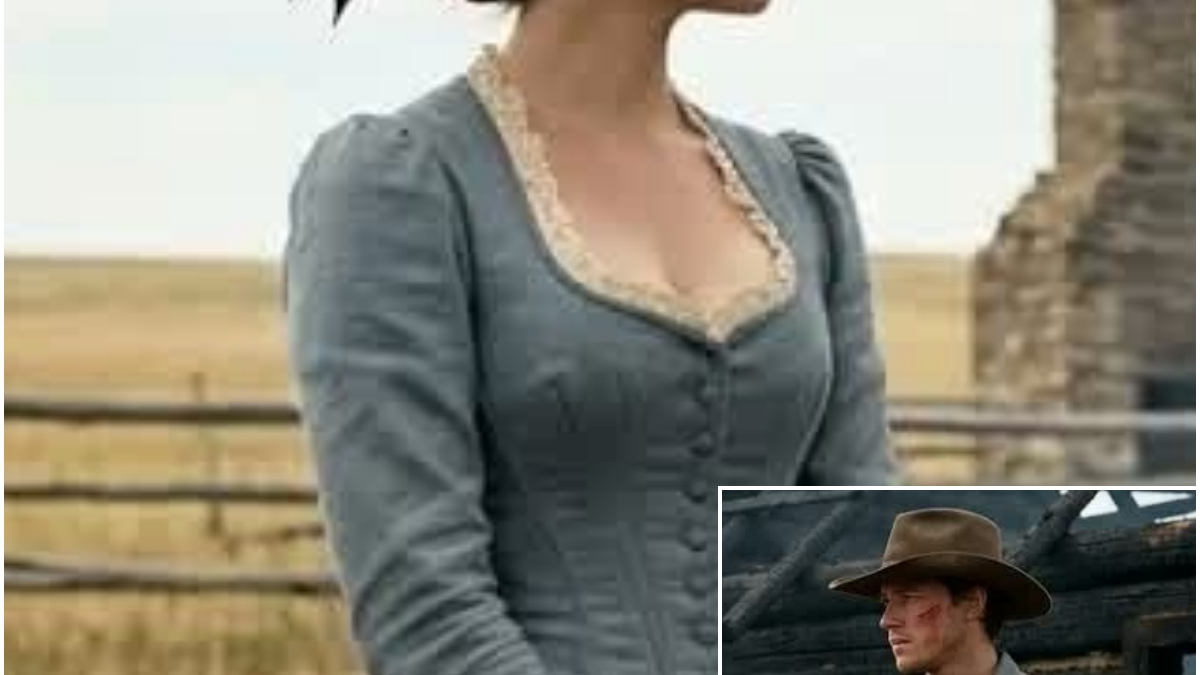
Clara Marsh did not step down from the wagon right away.
She stood there, fingers locked around the worn handle of her trunk, staring at what was left of her future.
Three blackened walls clawed at the sky.
No roof, no door, nothing that looked like a home, just ash, and a man sitting in the middle of it.

He didn’t move, didn’t even turn his head.
The wind carried the smell of wet charcoal and something older.
Something that had burned deep and stayed.
If you’ve ever stood at the edge of something you thought would save you only to find it already gone, you know that feeling.
Clara stepped down slowly.
Her boots hit dry Texas dirt.
The trunk followed heavy enough to pull her shoulder tight as she dragged it forward.
Still, the man didn’t look back.
You shouldn’t be here.
His voice came out low, rough, like it had been scraped against too many hard days.
Clara stopped a few feet behind him.
I came for Silus Brennan.
A pause.
Then he stood tall, broad, and when he turned, the left side of his face caught the light.
Scar tissue ran from his jaw up past his temple, tight and uneven like melted rope.
One eye narrowed under it.
The other watched her sharp.
“I am Silas,” he said.
Clara nodded once.
“Then I came to the right place.”
Silas glanced at the ruins behind him, then back at her.
“You came too late.”
Clara looked past him.
The chimney stood alone like a grave marker.
The ground was littered with broken boards and twisted metal.
“How long?”
She asked.
3 weeks and you stayed?”
His jaw shifted.
“Where else would I go?”
Claraara said nothing.
Instead, she walked past him, set her trunk down in the dirt, and opened it.
The metal clasps snapped loud in the quiet.
Silas frowned.
“What are you doing?”
Claraara didn’t answer.
She pulled out folded dresses, set them aside, then a bundle of seed packets wrapped tight, a cast iron pot, bandages, a bottle of medicine.
Each item placed careful like she was laying out a plan no one else could see yet.
I came 300 miles, she said.
Her voice stayed steady.
So, I reckon I’ll see what I came for.
There ain’t nothing here.”
Silas snapped.
Clara finally looked up at him.
“Then we’ll start with nothing.”
The words hit harder than shouting.
Silas stared at her, then at the items in the dirt, then back at her again.
“You don’t understand.
Then explain it.”
His hands curled at his sides, blisters cracked across his palms, fresh and angry.
I can’t take a wife, he said.
Claraara stood, brushed the dust from her skirt.
I didn’t come here for flowers and promises.
Silas took a step closer.
Then why?
She met his gaze.
Because you didn’t ask about money.
Didn’t ask about looks.
Didn’t ask for anything but work.
And I can work.
Silas let out a breath.
Sharp.
Unsteady.
Where are you sleeping?”
She asked.
He hesitated, then nodded toward the barn.
Didn’t burn.
Clara picked up the iron pot.
Then we’ve got a start.
He reached for her wrist.
Not hard, but fast.
How much money you got?
Clara stilled, looked down at his hand, the raw skin, the trembling fingers.
Then to back up at his face.
Enough.
That don’t mean nothing.
It means we won’t starve.
Silas pulled his hand back like he’d touched fire.
I don’t take charity.
Clara stepped closer.
Close enough to see the tight pull of his scar.
I didn’t offer charity.
Silence stretched between them.
Long, heavy.
A crow called somewhere in the trees.
Clara turned, grabbed the trunk, and dragged it toward the barn.
It scraped against the dirt, catching on stones.
Her hands burned, but she didn’t stop.
Behind her, Silas stood frozen, watching, not helping, not leaving, just watching.
The barn door creaked when she pushed it open.
Inside, the air smelled of leather and dust.
Dry hay crunched under her boots.
Light slipped through cracks in the wood.
Clara looked around once, then nodded.
This will do.
Silas appeared in the doorway.
You don’t have to do this.
Clara didn’t look at him.
Neither do you.
She pulled oil cloth across a corner, tied it tight, made a small space, private, then dragged hay bales together, spread her quilt over them.
The fabric bright against the dim barn.
Silas watched every move like he was trying to understand something that didn’t make sense.
From behind the cloth, his voice came again.
My scars.
Clara paused.
You’ll want to know.
She stepped out.
He stood in the fading light.
The edge of the sun caught the scars on his face.
I was seven, he said.
Fire took the barn.
I got my sister out.
His jaw tightened.
She died anyway.
Clara didn’t rush to speak.
Didn’t look away.
Just stood there.
“I’m sorry,” she said quietly.
Silas nodded once, but his eyes stayed somewhere far away, like he was still standing in that fire.
Clara turned, walked to the well.
The pump shrieked when she worked it.
Water burst out cold and clear.
She filled the pot, built a small fire, fed it until it caught, cooked simple food.
When she handed him a plate, he hesitated, then took it.
They sat on opposite ends of a hay bale, eating in silence.
The fire cracked between them.
That night, the sky stretched wide and dark above the ruined land.
Silas stood outside facing what used to be his home.
“Chara stepped beside him.”
“My father died in there,” he said.
His voice came hollow.
I was holding his hand.
Clara looked at the broken walls, then at him.
“You’re still here,” she said.
He didn’t answer.
A thin cat crept out of the shadows, ribs showing, eyes bright.
Claraara went back inside, brought out a small piece of cheese, held it low.
The cat came closer, took it, ate fast.
Silus crouched, careful, scratched behind its ears.
The animal leaned into his hand, and for a moment, just a moment, something in his face softened.
Clara watched it happen.
Didn’t say a word.
Later, as the night deepened, Silas looked at her again.
“How much money you really got?”
The question hung between them.
Clara didn’t answer right away.
The wind moved through the trees.
Dry leaves whispered.
“Finally, enough.”
He studied her long, hard, like he knew there was more, but didn’t push.
At dawn, the sound of an axe split the quiet.
Clara woke fast, pushed aside the cloth.
Silas stood in the ruins, swinging hard again and again.
Blood soaked through the bandages on his hands.
But he didn’t stop.
Clara stepped forward.
Stop.
He ignored her.
The axe came down again.
She moved in front of him, caught the handle mid swing.
You can’t build anything if you tear yourself apart first.
His breath came heavy.
His grip tightened.
Then [clears throat] slowly he let go.
Claris set the axe down, went to the barn, came back with clean cloth.
Water, medicine.
Sit, she said.
Silas didn’t argue this time.
He sat on a burnt beam, held out his hands.
Clara unwrapped the old bandages.
Raw flesh, dirt ground deep.
She poured water over them.
He flinched, didn’t pull away.
When the medicine touched skin, his jaw locked tight, but he stayed still.
Clara wrapped fresh cloth, firm, careful.
No more lifting today, she said.
Silas looked at his hands, then at the ruins, then at her.
You really staying?
Clara picked up a broken beam, dragged it aside.
Looks like it.
He watched her, then reached for another piece.
Together, they started clearing the ashes.
Silas did not speak while they worked.
He lifted.
Clara dragged.
Charred beams scraped across the ground, leaving black streaks in the dirt.
The sun climbed higher.
Heat settled on their backs.
Sweat soaked through Claraara’s dress clung to her spine.
Still, she didn’t stop.
Every piece of wood she moved felt like proof.
Proof she hadn’t made a mistake coming here.
Proof something could still stand again.
Silas watched her more than he worked.
Not obvious, just quick glances.
The way she kept going without complaint.
The way her hands soft once were already splitting at the edges.
“You don’t got to prove nothing,” he muttered.
Clara didn’t look up.
“I ain’t proving anything.”
“Then why keep pushing like that?”
She dropped a beam into the pile, wiped her forehead with her sleeve.
Because if I stop, this stays what it is.
Silus looked around.
Ash, broken boards, the remains of something he couldn’t save.
His jaw tightened.
Then he bent down again, picked up another piece.
By midday, the foundation showed.
Stone still solid beneath the wreckage.
Claraara knelt beside it, ran her fingers along the edge.
“Still holds,” she said.
Silas stood behind her, hat casting shadow across his face.
“Yeah,” she looked up.
“Then we build on that.”
He didn’t answer right away, but he didn’t argue either.
That meant something.
The sound of wagon wheels came late afternoon.
Both of them turned.
Two wagons rolled in slow.
Neighbors.
Men climbed down first, then women.
Careful steps, eyes taking in everything.
Silas’s shoulders went tight like a man bracing for something he didn’t want.
Brennan, one of them called.
Big man, red face, hands like tree roots.
Heard what happened?
Silas nodded once, didn’t move closer, didn’t invite them in.
The man jerked his thumb toward the wagon.
We brought lumber.
Silas’s head snapped up.
I can’t pay for that.
Didn’t ask you to.
The words landed heavy.
Silas’s jaw locked.
Clara stepped forward before he could say anything else.
“That’s real kind of you,” she said.
The women smiled at her.
Warm, curious, not judging.
We’ll trade, Clara added.
Labor come harvest.
Silas looked at her, sharp, surprised, but she didn’t look back.
She held steady.
The big man studied her, then nodded.
Fair enough.
The lumber came off the wagon, stacked neat.
Fresh pine, clean, smelling like something new.
Silas stood off to the side, hands clenched, cloth already spotted dark where the wounds pushed through.
Clara saw it.
Walked over.
Pressed fresh cloth into his palm.
Hold that.
I’m fine.
You’re bleeding.
He didn’t argue this time.
Just took the cloth, held it tight, watched as the others worked, watched his place come back to life without his say.
When the wagons rolled away, the yard felt different.
Not empty anymore.
Full, too full.
Silas turned toward the barn without a word.
Clara followed.
Inside.
He stood near the doorway, hands on his head, breathing hard.
I didn’t ask for that.
I know.
They’ll think I can’t stand on my own.
Clara stepped closer.
They already know you can.
He laughed once.
Short, rough.
They just watched me take help.
They watched you accept a future.
Silas looked at her long like he was trying to decide if she believed that or if she was just saying it.
“You always talk like that?”
He asked.
“Only when it matters.”
He shook his head, but something in his shoulders eased just a little.
The days started to blur.
Morning came with the same rhythm.
Work, heat, dust.
By the end of the first week, the outline of a house stood again.
Not whole, not yet, but rising.
Silas moved differently now, still careful, still quiet, but steadier.
His hands healed into thick skin.
Clara’s hands followed.
Blisters hardened, cracked, then toughened.
One evening, she drew lines in the dirt, sticks scratching out rooms, bigger windows, more space.
Silus leaned over her shoulder.
That’s a lot.
I don’t do small.
He almost smiled.
Almost.
A week later, Clara walked to town alone.
3 miles, dust rising with every step, heat pressing down.
The store sat on the main street, white boards, green trim.
Bell above the door rang when she stepped inside.
The woman behind the counter looked up.
Sharp eyes.
You Brennan’s wife?
Clara set a small basket down.
Just Clara?
She pulled out eggs, wrapped careful.
Thought you might need these?
The woman cracked one into a bowl.
Yellow clean.
Perfect.
She nodded.
Fresh.
Clara reached into her pocket.
Coins, silver.
I need nails, salt.
The woman filled the order, then added coffee.
Good kind.
Claraara smelled it before she saw it.
30 cents, the woman said.
Claraara handed over a dollar.
Got change back.
As she turned to leave, the woman spoke again.
Your husband know you got money?
Claraara paused.
My husband’s got pride.
The woman’s mouth shifted.
Most do.
Clara walked out into the heat again.
The road home felt longer, heavier.
The nails weighed in her pocket, but not as heavy as the truth she still hadn’t said.
Silas waited near the fence when she came back.
Saw the way she limped.
Didn’t say anything at first.
Just took the bag from her, opened it, checked the nails.
Good ones.
Where’d you get the money?
Clara kept her voice even, worked it out.
He didn’t believe her.
She saw it in his eyes, but he didn’t push.
Not yet.
That evening, they raised the first wall together.
Silas hammered.
Clara held the board steady.
The sun dipped low.
Gold light stretched across the land.
When the final nail went in, Silas stepped back, looked at what they’d done.
His mouth moved just a little.
The first real sign of something shifting inside him.
Claraara turned away before he could see her face.
Walked to the well, hands shaking.
Later, under the dim glow of a lamp, she pulled paper from her trunk, wrote a short note, asked the storekeeper to hold any letters, folded it, set it aside.
Each small lie stacking on top of the last.
She closed the trunk, sat still, listening to the quiet.
The house grew day by day, bored by board.
Silas showed her how to shape wood.
His hands guiding hers.
Close.
Too close.
His breath near her ear.
Then gone just as fast.
Like he’d stepped into something he wasn’t ready to face.
Clara felt it too.
Didn’t say it.
Didn’t need to.
By midsummer, the frame stood tall.
Roof beams stretched across like ribs.
The place had shape again.
Silas climbed the ladder one morning, shirts soaked, scars across his back catching the light.
He worked steady, whistling under his breath.
Off tune, but alive.
Clara knelt in the dirt, pressed seeds into rows, hands deep in soil, building something that didn’t exist yet, something you couldn’t see right away.
Never done that before, Silas said behind her.
My mother did.
He crouched beside her, picked up a handful of dirt, let it fall through his fingers.
You staying?
He asked.
Clara didn’t look up.
Looks like it?
He nodded.
Slow, like he was letting that answer settle.
That night, they sat on the unfinished porch, feet hanging over open space, coffee between them, steam rising.
Silas stared out at the land.
“I ain’t good at reading,” he said suddenly.
Clara turned.
“What?”
“I can.
Just not good.”
She stood, went inside, came back with a paper, handed it to him.
“Try.”
He stumbled through the words, stopped, started again.
She helped when he needed it, didn’t rush him, didn’t make it smaller than it was.
When he finished, he handed it back, face tight.
I sound like a fool.
You sound like a man learning.
He looked at her, something deep behind his eyes shifting again.
The wind picked up that night, moved through the trees, soft, restless.
Silas leaned forward, elbows on his knees.
“Why’d you really come?”
Clara held her cup, warm in her hands.
Why’d you ask for a wife?
He smiled.
Faint.
Fair.
Silence settled again, but it wasn’t the same silence as before.
This one held something growing.
Something neither of them had named yet.
And somewhere deep in Clara’s trunk, hidden beneath cloth and papers, the truth waited, heavy, quiet, and getting harder to keep buried with every passing day.
The first crack did not come from the house.
It came from inside Silus.
The windows arrived just after sunrise, wrapped tight, handled careful.
Too careful.
Silas stood in the yard as the wagon pulled away.
Didn’t touch the glass right away.
Just looked at it, then looked at Clara.
You didn’t trade for this.
It wasn’t a question.
Clara set her hands on her hips.
Does it matter?
It does to me.
His voice stayed low.
But there was something in it now.
Something tighter, something pulling.
Clara stepped forward, unwrapped one pane, held it up.
Sunlight passed through clean.
Bright.
It’ll keep the wind out, she said.
Silas didn’t move.
How much?
Clara met his eyes.
Enough.
The same answer.
The same wall.
This time it didn’t hold.
Silas turned away.
Grabbed a hammer.
Said it then.
No argument, no fight, just distance.
They worked side by side, but something had shifted.
Not gone, not broken, just strained.
Silas handled the glass like it might cut him, even if it didn’t break.
Set each pane slow, pressed it into place.
Clara held the frame steady.
Their hands brushed once.
Neither pulled away, neither stayed.
By afternoon, light filled the cabin.
Clear, warm, alive.
Clara stepped inside, turned slow, took it in.
“It’s beautiful.”
Silus stood in the doorway, watching her instead of the house.
“Yeah,” he said.
But he wasn’t looking at the walls.
That night, the truth refused to stay buried.
Clara sat at the table, lamp burning low.
The papers lay in front of her.
Neat, stacked, heavy in a way no wood ever was.
Outside, Silas’s boots moved in the dirt, back and forth, back and forth, like he was wearing a path into the ground.
Claraara stood, picked up the papers, walked to the door, opened it.
Silas.
He stopped, didn’t turn.
I need to tell you something.
He let out a breath.
Long, slow, then say it.
Claraara stepped closer, held the papers out.
I got more money than I said.
Silas turned now, eyes sharp.
How much more?
Her grip tightened.
Enough to build this place twice over.
Silence then.
How much?
His voice cut deeper.
Clara swallowed.
23,000.
The number hung there.
Heavy.
Still.
Silus didn’t move.
Didn’t blink.
Didn’t breathe.
Then he laughed.
Short, dry, like it hurt coming out.
23,000.
He looked at the house, at the walls, at the roof, at his own hands.
You’ve been watching me swing a hammer like this mattered.
It does matter.
It don’t.
His voice rose now.
You bought all of it.
I didn’t buy you.
I didn’t say you did.
But the way he said it made it worse.
He stepped closer.
Close enough she could see the tight pull of his scar.
You let me think I was building something.
We were building something with your money.
With your hands.
That ain’t the same.
Clara shook her head.
It is to me.
Silus turned away fast like he couldn’t stand looking at her.
I ain’t taking it.
You already did.
I’ll pay it back.
Clara stepped forward.
No.
His head snapped toward her.
I will.
How?
Don’t matter.
It does matter.
Silas grabbed his hat, jammed it down hard.
I’ll find work.
You already got work.
Not this.
He pointed at the house.
This ain’t mine.
The words hit harder than anything else.
Clara stood still.
Didn’t move, didn’t breathe.
You built it, she said.
I didn’t pay for it.
You made it stand.
Silus laughed again.
That same sharp sound.
Guess I’m just the help then.
Clara’s chest tightened.
That ain’t fair.
Fair?
He stepped closer again, eyes burning now.
You let me believe I was something I ain’t.
You are something.
I ain’t a man living off his wife.
You’re a man building a life with her.
He shook his head hard.
No.
Silence fell.
Heavy.
Final.
Then he walked past her out into the night.
Clara didn’t follow.
Didn’t call after him.
Just stood there holding the papers, listening to his footsteps fade.
Days passed.
Slow, empty.
The house stood finished, but it felt hollow.
Clara worked alone, fed the animals, tended the garden, fixed what needed fixing.
Every sound echoed too loud, every quiet stretched too long.
At night, she sat at the table, ran her fingers over the wood he’d shaped, the letters carved underneath.
Her name, his name, still there, still real, even if he wasn’t.
On the third evening, Hooves sounded on the road.
Clara stood before she realized she had walked to the door.
Silas rode in slow, not their mule, another man’s.
He looked different, dust covered.
Tired, but steady.
He stepped down, walked straight to her, pulled an envelope from his pocket, set it on the table.
$18.
Clara stared at it, then at him.
I don’t want it.
He nodded once.
I know.
Silence stretched.
Then Clara stepped closer.
You think money makes you small?
Silus didn’t answer.
You think working yourself into the ground fixes that?
Still nothing.
Clara’s voice dropped.
I came here because you didn’t care about money.
He looked at her now.
I cared about building something.
So build it with me.
With what?
With everything.
She reached for his hand.
This time he didn’t pull away.
Not your money, he said.
Our money.
The word landed different.
He felt it.
She was it.
Silas looked around the house.
Really looked this time.
The walls, the table, the windows, the life they’d made.
His jaw worked.
Then he sat down hard.
Ran both hands over his face.
I don’t know how to carry it.
Claraara knelt in front of him.
You don’t carry it alone.
He looked at her, eyes tired, but softer now.
What if I never feel right about it?
Then we keep going anyway.
Silus let out a breath.
Slow, heavy, then nodded once.
Together.
Clara held his gaze.
Together.
Morning came quiet but different.
Silas stood outside watching the land.
Not the ruins anymore.
The future.
Clara stepped beside him.
Didn’t say anything.
Didn’t need to.
After a moment, he spoke.
We ain’t done.
Clara followed his eyes.
The house stood behind them, but beyond it.
Empty land waiting.
For what?
She asked.
Silas looked at her.
Really looked.
For whatever we build next.
The wind moved through the trees, soft, steady.
Claraara slipped her hand into his.
This time he held it without hesitation and didn’t let








