I’m 92. If Your Kids Don’t VISIT, Don’t Call CRYING. Do THIS, And They’ll Come ALONE.
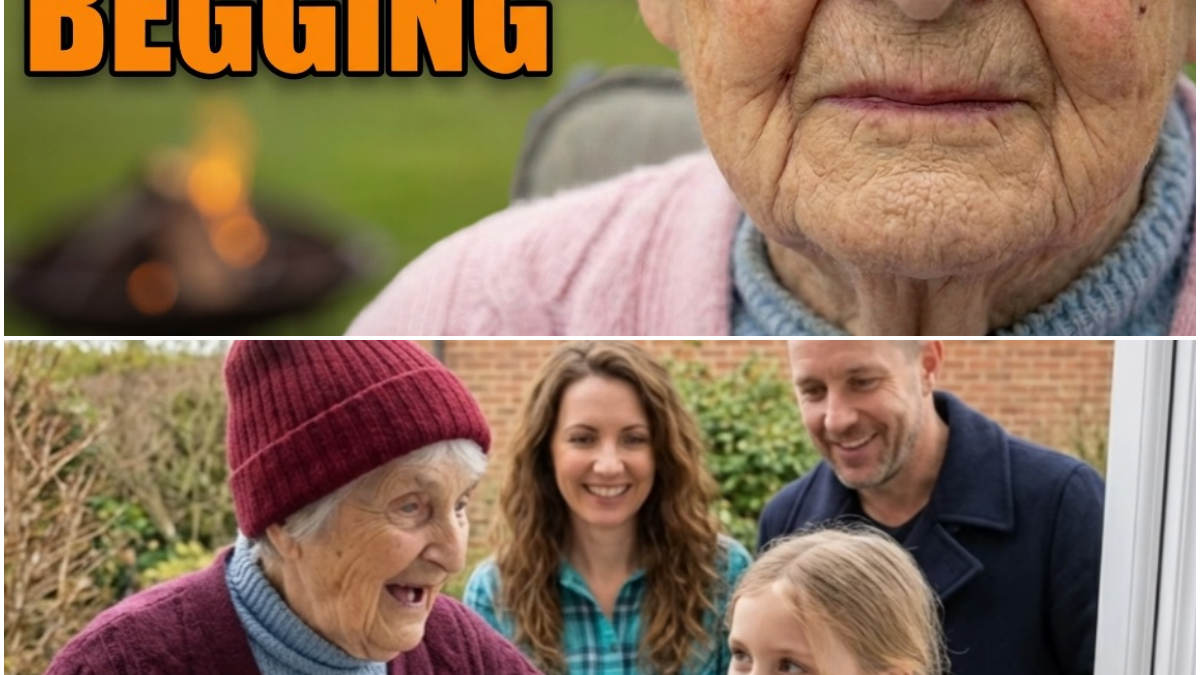
I’m 92. If Your Kids Don’t VISIT, Don’t Call CRYING. Do THIS, And They’ll Come ALONE.
I stopped crying over my kids a long time ago.
If you think calling them up on your mobile and crying into it is going to make them drive over for Sunday lunch, you’re dead wrong.
Listen to me.

It just makes them screen your calls.
I learned that the hard way.
I just turned 92 last week.
92.
And I’ll tell you something, I didn’t expect to still be here.
But I am.
And I’m not just sitting around waiting for the end, either.
I’ve got things to do.
I’ve got a garden that needs tending.
I’ve got a little girl who needs collecting from school.
And I’ve got two cats who seem to think I exist purely to serve them.
Which, if I’m honest, I probably do.
But I’ll get to that in a minute.
First, I want to say something.
Some of you, and I still can’t believe this, some of you heard me talk before.
My first story about moving in with my daughter, about the care home, about meeting Sarah and little Emma next door.
I had no idea anyone would listen to that.
I truly didn’t.
I thought maybe a handful of people might hear an old woman rambling on.
But then Sarah showed me her phone one evening.
She said, “Margaret, you need to see this.”
And she showed me all these messages, thousands of them.
People from all over the world.
America, Australia, Brazil, Germany, places I can’t even pronounce.
And they were all so kind.
So unbelievably kind.
People saying my words helped them.
People saying they rang their mom after hearing my story.
People saying they cried.
I sat there in my kitchen reading those messages, and I’ll tell you honestly, I had to take my glasses off because I couldn’t see through the tears.
So, if you were one of those people, if you took the time to write something, thank you.
From the very bottom of my old, stubborn heart, thank you.
I’m sending you the biggest hug these creaky arms can manage.
You have no idea what that meant to me.
Truly.
Right then.
Now, let me tell you what’s been happening since.
Because life doesn’t stop just because you’re 92, does it?
It just gets more interesting.
So, I just turned 92 last week.
I woke up that morning and I thought, “92.
Good lord.
I’ve been alive for 92 years.
I’ve seen 12 prime ministers.
I’ve survived rationing, a pandemic, burying my Richard, and learning how to use a mobile phone.
Not bad for one lifetime, is it?
Now, I wasn’t expecting much.
I really wasn’t.
At my age, birthdays are just another day.
You wake up, you make your tea, you check the weather, same as always.
But that afternoon, there was a knock at my door.
I opened it, and there was little Emma.
She’s 10 now.
Can you believe that?
Tall as my shoulder already.
She was standing there with this enormous grin on her face, holding a cake.
A proper homemade Victoria sponge with cream and jam, and these little wobbly letters in pink icing.
It said, “Happy birthday, Mrs. Margaret.”
The R in Margaret was backwards.
I loved it.
Behind her was Sarah, carrying balloons.
Tom was there, too, back from the rigs for the week, holding a bottle of sherry.
“We’re not letting you spend your birthday alone,” Sarah said.
And they came in.
They set up balloons in my sitting room.
Emma had made me a card with glitter on it.
There was glitter everywhere for days afterwards.
I’m still finding bits of it in the carpet.
We had tea and cake.
Tom fixed the latch on my garden gate while he was at it.
Emma showed me a dance she’d learned at school.
Nearly knocked over my lamp, but I didn’t care.
It was wonderful.
It was absolutely wonderful.
And my daughters?
Well, my eldest rang the next day.
“Oh, Mom, was it yesterday?
I’m so sorry.
Work’s been mad.”
The other one sent a text.
Just a text.
“Happy day, Mom.
Hope you had a nice one.”
No phone call.
No visit.
Not even a card.
A few years ago, that would have destroyed me.
I would have sat by the window and cried all afternoon.
I would have rung them back and said something sharp.
Something bitter that would have made them feel guilty and made me feel worse.
But you know what?
I just let it go.
I looked at Emma’s card on my mantelpiece.
I looked at the glitter still sparkling on my kitchen table.
And I thought, “I’ve got people who remembered.
I’ve got people who care.
They just don’t happen to share my blood.
And that’s all right.
That’s more than all right.
Because I’ve learned something in 92 years that most people never figure out.
Family isn’t always the people you’re related to.
Sometimes family is the woman next door who brings you soup when it’s cold.
Sometimes family is a 10-year-old girl who puts a backwards R on your birthday cake and thinks you’re the most interesting person in the world.
Right.
Now, I promised I’d tell you about the cats.
I’ve got two of them.
The first one, his name is Arthur.
He’s this big, fluffy, gray thing with long, soft fur, and the most ridiculous green eyes you’ve ever seen.
Arthur is my shadow.
Where I go, he goes.
If I’m in the kitchen making tea, he’s on the counter watching me.
If I’m in the garden pulling weeds, he’s sitting in the flower bed staring at me.
If I’m reading in my chair, he’s on my lap.
Always on my lap.
Purring away like a little engine.
Sometimes I’ll be talking to Sarah or Emma, and Arthur will climb up onto my chest, and just press his face against my chin.
Like he’s saying, “Stop talking to them.
Pay attention to me.”
He sleeps at the foot of my bed every single night.
And if I get up to use the loo at 3:00 in the morning, he follows me.
I’ll be sitting there half asleep, and there’s Arthur, sitting on the bath mat, staring at me with those big green eyes.
No privacy whatsoever.
But I wouldn’t change him for the world.
The other one is called Biscuit.
He’s white with these patches of pale gold, like someone dipped him in weak tea.
Biscuit is a different creature entirely.
He doesn’t do cuddles.
He doesn’t do laps.
If you try to pick him up, he gives you this look.
You know the look.
The one that says, “I will tolerate you, but only from a distance.”
He comes and goes as he pleases.
Some days he’ll sit at the end of the sofa, just close enough to be in the room, but far enough that you can’t reach him.
Other days he disappears into the garden for hours.
But every evening, without fail, he comes and sits on the windowsill while I do my crossword.
He doesn’t want to be touched.
He just wants to be near.
And I respect that.
Not everyone shows love the same way, do they?
Some people are Arthurs, right up in your face, kneading you, holding on tight.
And some people are biscuits, keeping their distance, watching quietly, loving you from the other side of the room.
I think my daughters might be biscuits, actually.
They love me in their own way, from a distance.
And I’ve made my peace with that.
Now, people have asked me, “Margaret, why don’t you get a dog?”
And oh, I’d love one.
I really would.
A little terrier or something following me around the garden.
Something that would actually come when I called it, unlike Biscuit, who pretends he can’t hear me.
But I know myself.
I’m 92.
A dog needs walking every day, rain or shine.
A dog needs bathing, grooming, taking to the vet.
A dog is commitment.
And I’ll be honest with you, I can barely get myself in and out of the bath these days.
I’m not about to try wrestling a wet spaniel into a towel.
So, the cats will do.
Arthur gives me the love.
Biscuit gives me the independence.
Between the two of them, they’ve got it covered.
Now, let me tell you what really matters, because that’s why you’re here, isn’t it?
You want to know the secret?
The thing that keeps a 92-year-old woman going when half the world thinks she should be sat in a beige room somewhere eating bland food at 5:00 and being told when to sleep?
It’s your brain.
Your brain is everything.
It’s the one thing that’s truly yours, and if you don’t look after it, you lose everything else.
I had a scare last year.
A proper scare.
I was making my morning tea, Earl Grey, same as always.
The kettle was on, and suddenly, my mind just went blank.
Like someone had pulled the plug.
I stood there in my own kitchen, the kitchen I’ve cooked in for over 50 years, and I didn’t recognize it.
I didn’t know why I was standing there.
I didn’t know how to turn off the cooker.
My heart was pounding so hard I could feel it in my temples.
I grabbed the edge of the worktop, and I held on.
I squeezed my eyes shut, and I whispered my own name.
Margaret.
Margaret, think.
It lasted about 2 minutes.
2 minutes of complete, terrifying nothing.
And then slowly, the fog lifted.
The memory came back.
I reached out and turned the knob to off.
My legs gave out, and I slid down the cupboards to the floor.
I sat there on the cold lino, smelling the faint trace of gas and stale tea.
And I wept.
Not because I was lonely, because I was terrified.
I’d seen what happened to my sister Helen back in the ’90s.
Started with forgetting her keys.
Then she forgot her own daughter’s name.
By ’98, she was in a facility staring at a wall.
And I thought, that’s my future.
If my brain goes, I lose this house.
I lose my independence.
I lose Arthur and Biscuit.
I lose my afternoons with Emma.
I become a patient.
So, I decided right there on that cold floor, no.
I am Margaret.
I survived the rationing.
I survived burying the love of my life.
I am not going out like this.
The next morning, I walked to the chemist on the high street.
I found the pharmacist.
Nice young man called Kevin.
I looked him straight in the eye and said, “Kevin, my brain is rusting, and I need whatever oil you’ve got.”
He pointed me to brain supplements.
Ginkgo biloba, omega-3s, B complex.
Little golden capsules that looked like drops of amber.
Cost me £48.
I didn’t care.
I went home and swallowed two of them with a glass of water.
They tasted like seaweed and old fish.
I nearly gagged, but I forced them down.
But pills weren’t going to be enough.
A pill doesn’t fix a lonely, stagnant life.
The brain is a muscle.
If you just sit in your armchair watching the telly all day, your brain turns to mush.
So, I changed everything.
I started with the garden.
It was early spring, March.
The ground was still hard, but I didn’t care.
I put on my old canvas gardening gloves, the ones with the holes in the thumbs.
I went out to the back garden.
The cold wind stung my cheeks, made my nose run, but the smell of the damp earth, there’s nothing like it.
It smells like life.
I got down on my knees and dug my hands into the soil.
I planted tomatoes, courgettes, and marigolds.
Every single day I went out there.
I watered them.
I talked to them.
Yes, I talked to the plants.
I don’t care if the neighbors think I’m mad.
I was keeping my mind alive.
And when I wasn’t in the garden, I was working my brain inside.
I bought thick books of crossword puzzles, the difficult ones.
I sat at the kitchen table with a sharpened pencil.
I forced myself to remember words I hadn’t used since school.
I started writing, too.
I found a thick leather journal Richard gave me back in ’89.
The leather was cracked and smelled like old dust and cedar.
I opened it up.
The pages were thick and yellowed, and I started writing down my memories.
Not just the big things, the little things.
The exact shade of blue of the dress I wore to the village fête in 1955.
The taste of candy floss at the seaside.
I forced my brain to dig deep and pull up the details.
And you know what?
It worked.
Thank the Lord it worked.
Weeks turned into months.
The fog never came back.
My mind felt sharper.
The heavy, sluggish feeling behind my eyes vanished.
I was waking up at 6:00 in the morning with energy.
I wasn’t staring at my mobile waiting for someone to ring.
I wasn’t watching the clock.
I was too busy living.
And listen, it’s not just the brain.
Your body matters, too.
If you stop moving, your body rusts.
Just like an old gate that nobody opens anymore, it seizes up.
Your legs get weak.
Your balance goes.
And once you lose your mobility, you lose your independence.
That’s the truth.
If you want to stay in your own home, you need legs that can carry you.
And the secret to that is simple.
Don’t stop.
Don’t lie in bed all day waiting for the end to come.
Get up.
Clean something.
Wipe down the kitchen counter.
Sweep the floor.
Go outside and pull a weed.
It doesn’t matter what it is.
Just move.
And if you’re already feeling your legs getting weaker, do this.
Sit down in a chair.
Stand up.
Sit down again.
Stand up again.
Do that five or six times.
Do it every day.
It’s not much, but it strengthens your legs more than you’d think.
I do it every morning while I wait for the kettle to boil.
Arthur sits there watching me like I’ve lost my mind.
But my legs are still carrying me to the school gates and back every day.
So, something’s working.
And if you can afford it, get a physiotherapist.
Even once a fortnight.
They know what they’re doing.
They’ll give you the right exercises for your body.
It makes a real difference.
A real difference.
And can I tell you something that people don’t want to hear?
Having children is not a guarantee that someone will look after you when you’re old.
That’s the biggest lie anyone ever told us.
Have kids, and you’ll never be alone.
Nonsense.
Some children are absolute angels.
Truly.
They ring every day.
They visit.
They bring food.
They hold your hand.
God bless those children and the parents who raised them.
But some children, they grow up.
They get their own jobs, their own families, their own worries.
And little by little, you start to fade into the background.
You become a phone call they’ll make later.
A visit they’ll do next month.
A name on a they swipe past because they’re busy.
It doesn’t make them bad people.
It just makes them people.
And if you sit there feeling sorry for yourself because your kids are absent, that’s the worst thing you can do.
Because that bitterness eats you alive.
It poisons everything.
And here’s the thing about kids.
They can smell desperation.
Just like a dog smells fear.
If they know you’re sitting at home miserable waiting for them, they feel guilty.
And people avoid things that make them feel guilty.
But when you stop caring, when you start building your own joy, they get curious.
It was late July.
Hotter than I can ever remember.
The birds were going mad in the trees outside.
I was on the back step.
I had a jug of ice-cold elderflower cordial.
The condensation was dripping down the sides of the glass.
I was repotting some begonias.
My hands were covered in black soil.
Arthur was sat on the warm paving stones watching a butterfly.
And I heard someone coming up the path.
I didn’t even look up.
I just kept packing the dirt around the roots.
I could hear footsteps getting closer on the gravel.
Mum?
It was my eldest daughter.
I slowly turned around.
She was standing there in a nice summer dress holding her handbag looking confused.
She looked at me.
She looked at the garden.
She looked at the jug of cordial.
She looked at Arthur stretched out in the sun.
“You didn’t answer your mobile.”
She said.
Her voice sounded a little tight.
A little defensive.
Now, a year ago, I would have snapped at her.
I would have said, “Oh, so now you care?
Where were you on my birthday?”
I almost did.
The bitterness rose up in my throat.
Familiar and metallic.
But I stopped.
I took a breath.
I smiled.
A real, genuine smile.
“Oh, love.”
I said.
“I must not have heard it.
I’ve been so busy out here.”
I wiped my dirty hands on my apron.
I poured her a glass of cordial.
Handed it to her.
The ice clinked against the glass.
She took it.
She stared at me like she didn’t even know who I was.
She was expecting the guilt trip.
She was braced for it.
Her shoulders were tense.
But when the guilt trip didn’t come, her shoulders dropped.
She sat down on the garden chair.
It creaked under her.
She took a sip of the cordial.
“Your garden looks beautiful, Mum.”
She said softly.
“Thank you.”
I said.
“Keeps the brain sharp, you know.”
We sat there for 2 hours.
We didn’t talk about the past.
We didn’t argue.
Arthur climbed onto her lap and she laughed.
“He’s rather needy, isn’t he?”
She said.
“He’s loyal.”
I said.
“There’s a difference.”
And you know what happened?
She came back the next week.
And the week after that, her sister came, too.
They didn’t come out of obligation.
They came because my house wasn’t a museum of misery anymore.
It was a home.
It had life in it.
It smelled like fresh basil and lemon polish, not stale regret.
They saw a woman who was fighting for her mind, fighting for her life, and they wanted to be part of it.
I went inside later that evening after they’d left.
The sun was setting casting long orange shadows across the hallway.
I walked past the mirror by the front door.
I stopped.
I looked at myself.
Really looked.
My hair is thin and white as a dandelion clock.
My skin is mapped with wrinkles.
Deep lines around my mouth from a lifetime of worrying.
But my eyes my eyes were bright.
They were alive.
Arthur was sitting at my feet looking up at me.
Biscuit was on the windowsill pretending not to care.
I touched my own face.
Felt the rough, papery skin.
And for the first time in my life, I was proud of the old woman looking back at me.
I wasn’t a burden.
I wasn’t a patient.
I wasn’t someone to be managed.
I was Margaret.
And I was still here.
I’m telling you this because I know there are people out there right now doing exactly what I used to do.
Staring at a mobile phone.
Crying over children who are too busy with their own lives to notice yours slipping away.
Stop it.
Dry your tears.
Get up off the sofa.
Go plant a seed.
Do a puzzle.
Get a cat if you can manage it.
Even one like Biscuit who won’t sit on your lap but will sit in the same room as you.
And that’s enough.
Take care of your brain because it’s the only thing that’s truly yours.
If you build a beautiful garden, the butterflies will come on their own.
You don’t have to chase them with a net.
Right?
I’m telling you it’s the hardest lesson I ever had to learn.
But it saved my life.
And it saved my family.
Well, I suppose that’s about it for today.
That’s my piece of truth.
The sun’s going down now.
The house is getting quiet.
But it’s a good quiet.
A peaceful quiet.
Arthur is curled up on my lap purring away.
Biscuit is on the windowsill watching the birds.
I can smell the lavender I picked this morning.
I’ve got a crossword puzzle waiting for me.
And a cup of chamomile tea.
Tomorrow I’ll collect Emma from school.
She’ll talk my ear off about whatever they’re learning this week.
Probably the tutors or something.
And Sarah will pop round with something for tea.
That’s my life now.
Small things.
Real things.
Beautiful things.
I don’t know who needed to hear this today.
Maybe nobody.
Maybe just me saying it out loud to remind myself.
But if you did listen, if you’re out there holding onto a quiet house and a heavy heart, thank you for spending a little time with me.
It means the world.
It really does.
And to all of you who heard my first story, all of you who wrote those beautiful messages, I carry every single one of those words with me.
You made an old woman feel like she still mattered.
And I want you to know you matter, too.
Every single one of you.
Now then, I’m curious.
How old are you?
Where are you listening from?
Drop it in the comments for me, won’t you?
I’d love to know how far this old lady’s voice has managed to travel.
All right, my dears.
You take care of yourselves.
And take care of that brain of yours.
Arthur says goodbye, too.
Though he’s fast asleep, so he doesn’t know he’s saying it.
Until next time.








