I’m 74. My husband’s 42-year Secret Destroyed Our Family.
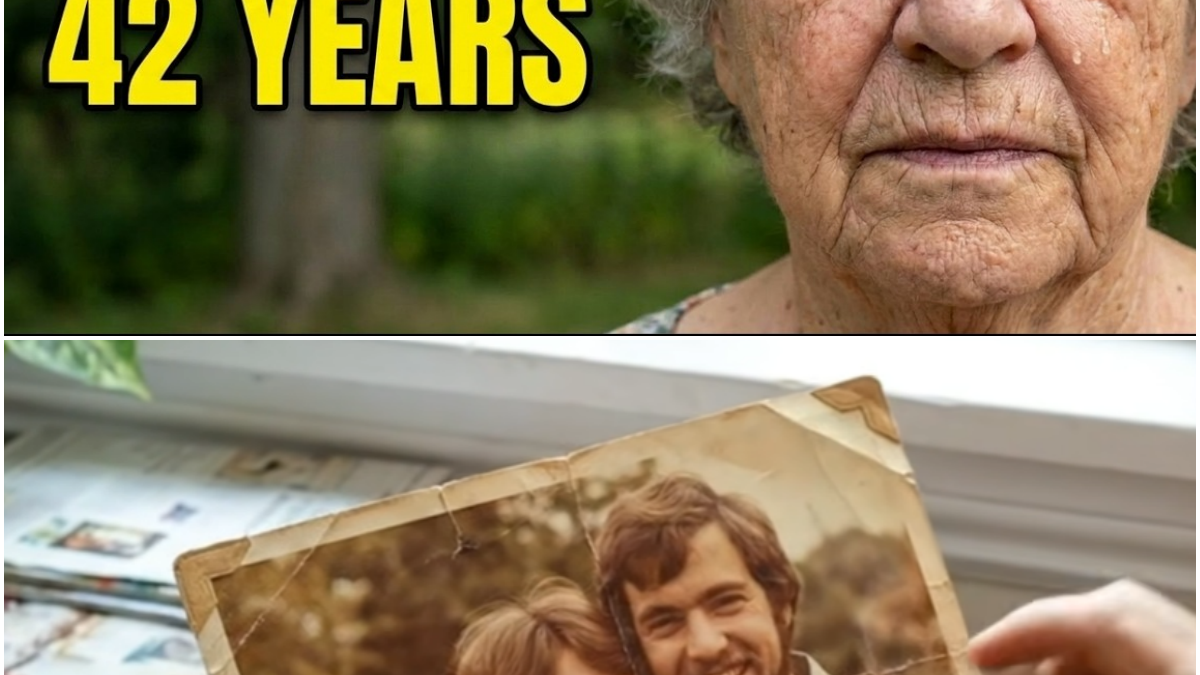
I’m 74. My husband’s 42-year Secret Destroyed Our Family.
I am 74 years old and I spent 42 years of my life sleeping next to a man who didn’t exist.
I gave him my youth, my absolute trust, and every single penny I ever made working double shifts at the Starlight Diner in Scranton.
Today, I live in a cramped, drafty, 300-square-foot efficiency apartment on the bad side of Erie.
I eat canned soup for dinner because I can’t afford fresh meat.

While the woman he secretly loved, the woman he spent my money on, lives in a beautiful four-bedroom house with a wrap-around porch.
But if you think losing my home and my retirement is the worst part, no.
That was just the first domino to fall.
What I found out about my children, well, that’s the part that still makes my chest physically ache every time I take a breath.
You see, my husband Arthur was a quiet man.
We met in the summer of 1972, right when Nixon was on every television screen, and gas was about 36 cents a gallon.
Arthur worked on the freight trains, a mechanic for the Union Pacific.
He’d come home smelling like diesel fuel, heavy machinery, and that cheap Old Spice cologne he always wore.
I can still smell it.
If I close my eyes, I can feel the rough fabric of his work jacket when he’d hug me in the kitchen.
He seemed so steady, so reliable.
We bought a little aluminum-sided house on Maple Street, three bedrooms, one tiny bathroom with pink tiles that always felt freezing cold on my bare feet in the mornings.
I thought we were building a life, you know, a real, solid life.
I worked my fingers to the bone.
I’m telling you, my hands would be cracked and bleeding from washing industrial coffee pots at the diner.
Every Friday, I’d take my tips, mostly crumpled $1 bills and heavy handfuls of quarters, and I’d put them in a Folgers coffee can under the sink.
That was for our girls, Sarah and Emily, for their college, for their weddings, for their future.
Arthur handled the bank accounts.
He told me, “Honey, let me carry the stress of the bills.
You work hard enough.”
And I believed him.
Lord, I was so naive.
I thought he was protecting me from the burden, but he wasn’t protecting me.
He was building a fence around his lies.
I remember the first time I almost caught him.
It was October of 1989, a Tuesday afternoon.
The sky was that heavy, bruised purple color right before a big Pennsylvania thunderstorm rolls in.
I had just walked in from the grocery store carrying two heavy paper bags that were digging into my arMs. I dropped them on the kitchen counter and I saw the mail scattered on the table.
There was an envelope, thick, cream-colored, with a return address from a bank in Ohio.
We didn’t live in Ohio.
We didn’t know anybody in Ohio.
I picked it up.
The paper felt expensive, crisp between my fingers.
My thumb slipped under the flap.
I almost opened it.
I swear to you, the glue was already starting to give way.
I was 1 second away from ripping it open and seeing everything.
But then, I heard the heavy thud of the front door, Arthur’s heavy boots walking down the hallway.
“What’s that you got there?”
He asked.
His voice was completely calm, but his eyes, his eyes locked onto that envelope like a hawk.
I panicked, felt my face get hot, and I just handed it to him.
“Just junk mail, I think.”
I said.
He smiled, took it from my hand, and slid it right into his coat pocket.
He almost got caught that day.
I almost saved myself 30 years of misery.
But I let it go.
I let it go because, well, because when you love someone, you don’t want to see the cracks in the foundation.
You just paint over them.
Things went on like that for years, just normal, quiet years.
Sarah graduated high school in 1994.
Emily followed 2 years later.
Every time I asked Arthur about the college fund, the money in the coffee can that he supposedly moved to a high-yield savings account, he’d show me these pieces of paper, handwritten ledgers.
He’d point with his thick, grease-stained finger, and say, “Look here, Maggie.
We’ve got $42,000 saved up.
The girls are going to be just fine.”
I didn’t know how to read financial statements back then.
I just saw the numbers, saw his reassuring nod, and felt this wave of relief wash over my tired shoulders.
I didn’t know.
I couldn’t have known that those numbers were nothing but ink on a page.
Then came the second time things almost unraveled.
It was 2002.
Sarah was getting married.
We were in the middle of planning the reception, figuring out how to pay the caterer for 120 guests.
The phone on the kitchen wall rang, that heavy yellow rotary phone we’d had since the kids were toddlers.
Arthur was out in the garage.
I wiped my wet hands on my apron, walked over, and I almost answered it.
My hand was hovering right over the receiver.
I could feel the plastic, smooth and warm from the afternoon sun shining through the window.
I lifted it off the hook.
I was just about to say hello when the cord got tangled around the toaster on the counter.
I fumbled.
The receiver slipped from my fingers and clattered onto the linoleum floor.
By the time I bent down and picked it up, putting the heavy plastic to my ear, I just heard the click of someone hanging up.
A dead dial tone buzzing in my ear.
Arthur came rushing in from the garage, breathing hard, wiping oil off his hands with a dirty rag.
“Who was that?”
He demanded.
Not asked, demanded.
His voice had this sharp edge to it that made my stomach tighten.
“They hung up.”
I said.
He exhaled a long, shaky breath.
He looked relieved, too relieved.
If I had picked up that phone 1 second faster, I would have heard her voice.
I would have heard Evelyn, but I didn’t.
The years just slipped through my fingers like water.
Four Christmases came and went.
Four times I roasted a turkey, set the good china on the dining table, and looked at my husband sitting at the head of the table thinking how lucky I was.
Eight more Thanksgiving dinners, carving the meat, pouring the gravy, completely blind to the fact that half of our income, half of my tips from the diner, was disappearing into a black hole across state lines.
And then, 2 years ago, Arthur got sick.
It happened fast.
Pancreatic cancer.
One day he was complaining about a dull ache in his stomach, and 3 months later, he was lying in a hospice bed in our living room.
The house smelled like rubbing alcohol, dust, and that terrible, sickly sweet smell of decay.
I sat by his bed for days.
I held his hand, felt his skin turn thin and papery like old parchment.
I watched the man I loved fade away to nothing.
I cried so hard my throat bled.
I really did.
I mourned him with every fiber of my being.
On his last night, he looked up at me.
His eyes were cloudy, sunk deep into his skull.
He squeezed my fingers.
His grip was so weak and he whispered, “Maggie, I’m so sorry.
The toolbox.
Look in the green toolbox.”
And then he closed his eyes and he was gone.
I didn’t know what he meant.
I thought um I thought he was apologizing for leaving me alone.
I thought the toolbox had some old love letters or maybe a life insurance policy he kept as a surprise.
Lord, how stupid could one woman be?
It took me a week after the funeral to go out to the garage.
It was freezing cold.
January in Pennsylvania.
The air hit my lungs like swallowed glass.
I found the green metal toolbox shoved under his workbench.
It was covered in a thick layer of oily dust.
I pulled it out, the metal scraping against the concrete floor, making a screeching sound that made my teeth ache.
My hands were shaking.
I popped the rusted latches.
They snapped open, stiff and loud.
I opened the lid.
There were no love letters for me.
There was no life insurance policy for my comfort.
There were bank statements, dozens of them, bound together with dry rotted rubber bands.
There were property deeds and there were photographs.
I picked up the first photo.
My knees gave out.
I literally collapsed onto the freezing concrete floor.
The cold seeped right through my jeans, but I didn’t even care.
I was staring at a picture of my husband, my Arthur, standing on a porch with a blonde woman.
He had his arm around her waist and standing in front of them were two little boys.
They had Arthur’s nose, Arthur’s eyes.
I turned the photo over.
Written in blue ink, in Arthur’s terrible handwriting, “Christmas 1998.”
My beautiful Evelyn, Tommy, and Sam.
1998.
That was the year I worked double shifts all through December because Arthur told me his hours at the railyard had been cut.
He told me we couldn’t afford presents for our girls that year.
I remember Sarah crying because she didn’t get that winter coat she wanted.
And here he was buying bicycles for another woman’s children.
I couldn’t breathe.
My chest felt like someone had parked a truck on top of it.
I started digging through the papers, frantic, tearing envelopes open.
I found the bank statements for an account in Akron, Ohio.
I tracked the withdrawals.
Every month for 30 years.
He’d been siphoning money from our joint account.
But that wasn’t the worst part.
No.
The worst part was a document from 1994.
A withdrawal slip.
He had emptied the coffee can.
He had taken the $42,000 I saved for my daughters and he used it as a down payment for a house in Akron for Evelyn.
He stole his own daughter’s future to buy a house for his secret family.
I sat on that garage floor for 5 hours.
The sun went down.
The garage went completely black.
I didn’t move.
I couldn’t.
I felt like my blood had turned to lead.
Everything I knew, every memory I had, was infected, tainted.
When we went to the beach in ’85, was he thinking of her?
When he kissed me goodnight, was he wishing it was her face on the pillow?
But I didn’t know yet.
The absolute worst was still coming.
I had to know.
I couldn’t just sit there with these papers.
Two days later, I put on my heavy winter coat, grabbed my car keys, and I drove my rusty 2008 Honda Civic across the state line to Ohio.
It took 3 hours.
The heater in my car was broken, so I drove shivering, my hands gripping the steering wheel so tight my knuckles were white.
I pulled up to the address on the property deed.
It was a beautiful house, two stories, white siding, black shutters, a manicured lawn, even in the dead of winter.
There was a brand new SUV parked in the driveway.
I sat in my cold car looking at the house my diner tips had paid for.
I tasted copper in my mouth.
I realized I was biting my own lips so hard it was bleeding.
I wiped the blood away with the back of my hand.
I got out of the car.
My legs felt like they were walking underwater, heavy, clumsy.
I walked up the paved driveway.
I climbed the three wooden steps to the porch.
I raised my fist and I knocked on the thick wooden door.
My heart was beating so hard.
I swear I could feel it pulsing behind my eyes.
The door opened.
It was her, Evelyn.
She was older now, of course, but she still had that blonde hair, now fading to gray.
She was wearing a thick cashmere sweater that looked softer than anything I’d ever owned in my life.
She looked at me.
Her eyes narrowed, confused for a second.
“Can I help you?”
She asked.
Her voice was soft, refined, not like my raspy, tired waitress voice.
“I’m Margaret,” I said.
Just that.
Just my name.
I watched her face.
I was waiting for the shock.
I was waiting for the horror of a woman discovering her husband was a bigamist.
I was waiting for her to collapse like I did.
But she didn’t.
Her face didn’t drop.
She didn’t scream.
She just sighed.
A long, heavy sigh, like she was annoyed.
She looked over her shoulder into the house, then stepped out onto the porch and pulled the door half shut behind her.
“Arthur told me you might figure it out eventually,” she said.
The wind blew against my face, but I didn’t feel the cold anymore.
I felt absolutely nothing.
“You knew?”
I whispered.
My voice sounded like dry leaves scraping on pavement.
“Of course I knew, Margaret,” she said, crossing her arms over her chest.
“He told me about you from the beginning.
You were his responsibility.
I was his choice.”
Responsibility.
That word hit me like a physical punch to the stomach.
I doubled over gasping for air.
I grabbed the wooden porch railing to keep from falling.
The wood was rough, splintering under my desperate grip.
“He loved us,” I choked out.
“He gave you his leftover time,” she replied.
Her voice perfectly calm, like we were discussing the weather.
“He gave me the best parts of himself.
He gave my boys a college education.
He gave us this home.
You should go, Margaret.
You’re just embarrassing yourself now.”
Um she turned around, walked back inside, and shut the heavy door.
I heard the deadbolt click into place.
That sound, that metallic click, it broke something inside me that can never ever be fixed.
I stumbled back to my car.
I don’t even remember the drive home.
I really don’t.
It’s just a blank space in my memory.
When I finally walked back into my house in Scranton, the house felt like a tomb.
I walked into the kitchen.
I turned on the overhead light.
The fluorescent bulb hummed, flickering a little bit.
I looked at the microwave.
The glass door was dark, reflecting the kitchen.
I caught a glimpse of myself in that dark glass and I stopped.
I stared at the woman looking back at me.
Her hair was messy, thinning.
Her face was lined with deep wrinkles, carved by 40 years of stress, 40 years of worrying about bills, 40 years of smelling like old grease and bleached rags.
And for the first time in life, I truly saw myself.
I didn’t see a devoted wife.
I saw a victim who had happily handed over the knife.
I saw a woman who had willingly traded her entire youth, her dreams, her physical health, for a lie.
I hated the woman in the reflection.
I really did.
I wanted to smash the glass.
I wanted to scream until my vocal cords snapped.
But I just stood there, staring, letting the bitter truth wash over me like dirty water.
The aftermath was a nightmare.
Because Arthur had forged my signature on a second mortgage to pay off some debts he racked up in Ohio, the bank foreclosed on my house.
The house I had cleaned, the floors I had scrubbed on my hands and knees for four decades, gone.
Taken by the bank.
Sarah and Emily, my beautiful girls, they were furious.
But not at him.
They couldn’t be mad at a ghost.
They were mad at me.
“How could you not know, Mom?”
Emily yelled at me in my living room right before the movers took the sofa away.
“How could you let him steal from us?
How could you be so blind?”
She looked at me with such disgust, like my ignorance was a disease she was afraid of catching.
They didn’t understand.
They didn’t understand that when you’re busy surviving, when you’re busy keeping the lights on and the food on the table, you don’t have the luxury of playing detective.
So, here I am, living in this tiny box of a room in Erie.
The walls are paper thin.
I can hear my neighbor’s television blaring all night.
I sleep on a twin bed that hurts my back.
I look out my one window at a brick wall.
I lost my husband.
I lost my savings.
I lost my home.
And worst of all, I lost the respect of my own children.
Because they look at me, and they just see a fool.
They don’t call much anymore.
Sarah sent a card for my birthday.
No phone call.
Just a card with a printed signature.
It hurts.
God, it hurts so much.
But you know what I’ve learned in the quiet hours, sitting here in the dark, listening to the rain hit the windowpane, I’ve learned that the most dangerous lies aren’t the ones other people tell us.
No, the most dangerous lies are the ones we tell ourselves.
The ones we use to keep our comfortable little world from falling apart.
I wanted the illusion of a good marriage more than I wanted the truth.
And the bill for that illusion, well, it cost me everything.
It cost me my life.
Sometimes I wake up in the middle of the night, and for a split second, I think I can smell that cheap Old Spice cologne.
My heart jumps thinking he’s right there next to me.
And then the cold air of this empty apartment hits my face, and I remember.
I remember it all.
I don’t know why I’m sitting here telling you all this.
I really don’t.
Maybe I just couldn’t carry the weight of it alone anymore.
It’s heavy, you know, carrying the ghost of a life that never really belonged to you, just dragging it around like a chained suitcase.
I guess um I guess I just hope somebody out there hears me.
Somebody who might be ignoring the cracks in their own foundation.
If you see something wrong, if you feel that knot in your stomach, don’t turn away.
Look at it.
Even if it ruins your life today, it’s better than waking up at 74 with absolutely nothing.
Well, I think my voice is starting to give out.
My throat is getting awful dry.
I appreciate you letting an old woman ramble on.
I really do.
It’s quiet in this apartment, and just talking out loud makes it feel a little less lonely.
I’d love to know who’s out there listening.
How old are you?
Where are you watching this from?
If you’ve got a minute, just drop it down in the comments.
It makes me feel connected to the world, knowing my story reached across the country, maybe even across the ocean.
All right.
You take care of yourself now, and guard your heart.
Guard it fiercely.








