I’m 69 years old. My Son Raised His Hand at Me – So I Did This. Don’t Make My Mistake
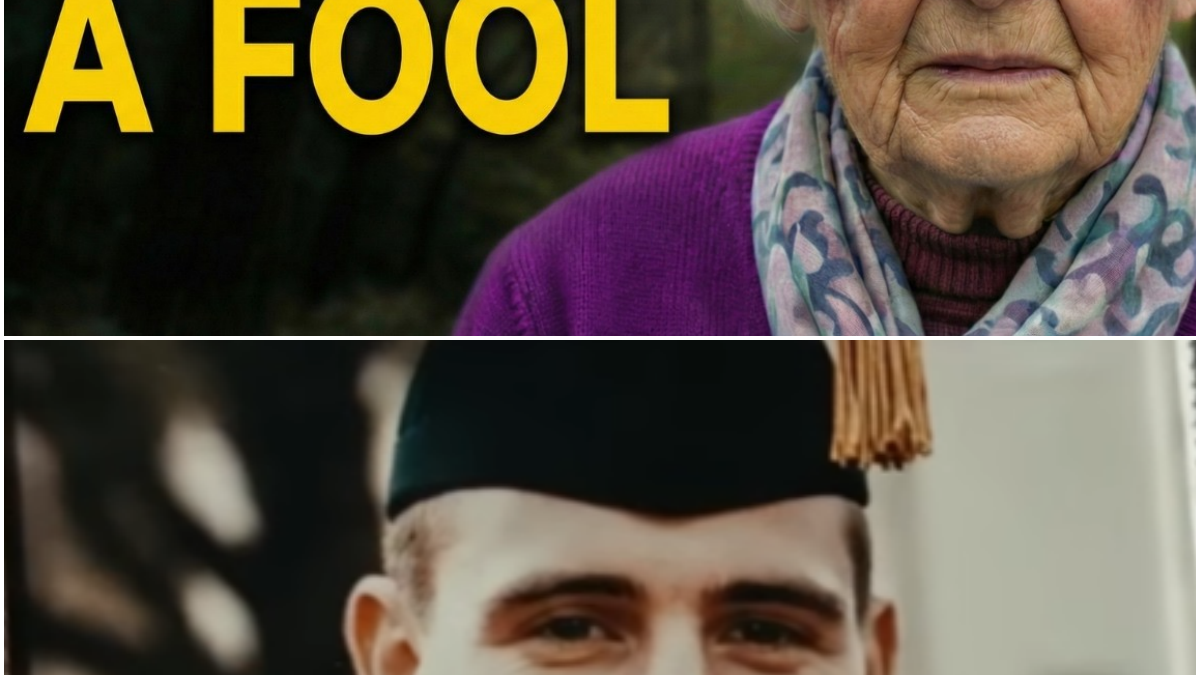
I’m 69 years old. My Son Raised His Hand at Me – So I Did This. Don’t Make My Mistake
My son hit me over 10,000 pounds of debt that I never owed him a single penny of.
He raised his hand inside my own kitchen.
And I didn’t say a word, not one word.

I just picked myself up off that floor and I baked.
I cooked his favorite breakfast.
Every single thing he loved.
Scones, strawberry jam, porridge, set the table with my best china.
And when he came downstairs and saw it all laid out beautiful, he looked at me with that smug little smile and said, “See, took you long enough to learn, Mom.
A bit of discipline and everything falls right back into place.
I let him pick up a scone.
I let him take a bite.
And then the doorbell rang.
And the color drained clean out of his face when he saw who was standing at my front door, ready to sit down at that table with us.
That’s where we’re going today, love.
But first, let me take you back because you need to understand who I am and what I endured before you can understand what I did and why I don’t regret a single moment of it.
My name is Jillian.
I’m 69 years old and I’ve lived in the same house in Southampton for going on 31 years.
A proper terrace house, end of row, with a bay window at the front and a little garden out the back that Robert, God rest his soul, used to spend every Sunday morning in talking to his roses like they were people.
Blimey, I used to tease him rotten about that.
He was a good man, Robert.
The kind of man that doesn’t make a lot of noise but holds everything together just by being there.
When he died, a heart attack right there on the docks at Southampton on an ordinary Tuesday.
I thought the whole world had just stopped.
Our James was in his final year at university, 22 years old, and already he’d lost his dad.
I carried on because that’s what you do in it.
Two jobs for years.
Mornings at the council offices, three evenings a week at Marks and Spencer to make sure that house was paid off and nothing fell apart.
It’s worth around £380,000 now.
That house, not that the money was ever the point.
The point was that it was ours.
Mine and Robert’s built on years of sacrifice and love.
And after the funeral, James rang me, his voice young and cracked with grief.
And he said, “I’m going to take care of you now, Mom.
I promise.
I’m going to make Dad proud of me.”
And for years, love, he did.
But that was before the drinking.
Last night, gone 3:00 in the morning, I was sitting in my rocking chair in the kitchen with classic FM on low because the sleep just wouldn’t come.
I heard the gate first, that particular creek it makes, which I’ve always meant to oil, and now I’m glad I never did.
Then those footsteps on the path, heavy and uneven, telling me everything I needed to know before the door even opened.
He came in, fumbled in the corridor, and then came that sharp sound of something hitting the floor and shattering.
My heart just dropped.
It was the blue ceramic vase that had sat on the hall table for 26 years.
A present from Robert’s mom.
Irreplaceable.
Gone in an instant.
The smell reached the kitchen before he did.
Cheap whiskey and stale cigarettes.
He appeared in the doorway.
James, my boy, 40 years old, eyes red and unfocused, and he looked at me like I was the problem.
The shouting started almost immediately.
He said his life was a waste, that nothing ever went right, that I cared more about the furniture and my bloody antiques than I ever cared about him.
And then I did what any mother would do.
I stood up, kept my voice low and steady, and I said, “Son, go to bed.
You’re not well.”
Those five words, that’s all it took.
He crossed that kitchen in three steps.
He grabbed my arms, both of them, and he shook me hard.
I felt my back hit the oak cabinet, the corner driving into my spine, and then the back of my head caught the glass panel, that dull, thick crack.
And I thought, God almighty, is this really happening?
And then he raised his hand.
He raised his hand and he hit me.
The sound of it filled the whole kitchen and the pain, the pain was something I will never forget.
I knew straight away something had changed.
Not just in that room, but in me.
And I didn’t say a word.
I sat down on the floor where he’d put me.
And I looked up at him.
He looked back at me and something crossed his face.
Not quite regret, but close enough to frighten him.
He huffed, turned around, went upstairs.
The bedroom door closed.
I sat on that kitchen floor until the music on the radio moved on to something slow and sad that I couldn’t name.
Then I got up.
I went to the bathroom and looked at myself in the mirror.
The lip was cut, a bruise already starting along my cheekbone.
69 years old.
A house paid off.
A dead husband who would have wept.
A son asleep upstairs in a bed I bought under a roof I bled for.
No more.
I washed my face, cleaned the floor, took out my new baking trays and set them on the worktop, put on my apron, and I started to bake because my hands needed something to do while my mind got to work.
And by the time that first batch of scones went into the oven, love, the plan was already forming, clear and sharp and decided.
I wasn’t going to shout, beg, or cry.
I’d done all of that before in smaller ways, and it had never once made a single blind bit of difference.
What I was going to do was something James had never once expected from his quiet, patient, forgiving mother.
I was going to let the law into my kitchen and the smell of fresh scones was going to be there to greet it.
You know what it’s like when your hands are busy but your mind won’t stop.
That’s what that whole night was.
Just me, the kitchen, the oven light, and 30 odd years of memories I hadn’t asked for.
There’s a digital photo frame on the kitchen counter, a Christmas present from my sister Sandra up in Manchester.
It cycled through pictures in the dark while I worked, lit up soft and quiet, and I couldn’t look away from it.
The first one that stopped me was James at about 9 years old.
Him and Robert up in the Lake District on one of our summer holidays.
James is holding up this tiny little trout, barely the size of his hand, like he’s just won the World Cup.
And Robert is beside him with his hand on the boy’s shoulder.
And the pride on that man’s face.
Lord, it undid me every time.
That little boy.
That little boy who used to follow his dad everywhere.
Who once cried for 40 minutes because a blackbird died in the garden.
Where did he go?
Then James’s graduation.
Mortarboard slightly wonky, grinning at the camera.
Me beside him in my best navy dress with my eyes already red.
Robert had been gone 8 months by then.
That seat in the front row where he should have been was just empty air.
I remember thinking I had to be happy enough for both of us.
I clapped until my palms were sore.
The next photo was the barbecue three summers ago in the back garden.
James laughing at something.
The sun on his face looking like himself.
The last time I think he truly looked like himself because just a few weeks after that photo was taken, everything began to unravel.
There’d been a restructure at the port.
James had been passed over for a promotion.
Worse, he’d been demoted.
And the way he took it, it was as though something had decided that was the proof of everything he’d always feared, that he wasn’t enough, that he’d never be enough.
The drinking started properly after that.
Every night alone in his room with the telly on, stumbling down in the morning, gray and hollow, I tried to talk to him.
Every time he’d shut me down or walk out, then came the money.
20 here, 50 there, and I gave it because he was my son, and I thought it was temporary.
Before long, he’d borrowed what added up to over £10,000.
£10,000.
I denied myself holidays and simple pleasures for gone.
Every time I tried to raise it gently, he’d make me feel as though I was the one being cruel.
The first time I saw something truly frightening in his eyes was over a dripping tap.
I just asked him to fix it.
A 20inut job, nothing more.
He turned on me in a way I hadn’t seen before.
Said I cared more about the house than I ever cared about him.
And the look behind those words wasn’t just anger.
It was contempt.
Six months after that, he lost his job altogether.
The blame for everything landed squarely on me.
The house became somewhere I walked carefully in.
I stopped inviting my friend Judith round because I was too ashamed.
I told her everything was fine.
I told myself it was temporary.
I lied to us both.
The second batch came out golden and perfect.
I set them on the rack, looked at the clock.
5:42 in the morning.
The sky outside was beginning to go that gray that comes before the light.
I stood there with the oven gloves still on and I thought right then, Jillian, it’s time.
I took off the gloves, smoothed down my apron, picked up the phone, and I made the first call.
The first call was to Judith.
Judith has lived next door to me for 24 years.
She’s 73, sharp as attack, and she spent the better part of her career as a barristister in the family courts.
She’s also the person who sat with me the night Robert died and didn’t leave until the sun came up, my oldest friend in the world.
She picked up on the second ring at 5:45 in the morning.
Didn’t even sound groggy.
I told her plainly what had happened.
No dressing it up.
James had come home drunk, grabbed me, thrown me against the cabinet, hit me across the face.
I told her about the lip, the cheekbone, and then I told her what I wanted to do about it.
There was a brief pause, and then Judith said, “Jillian, I’m not coming for breakfast.
I’m coming to hold court.”
I felt something loosen in my chest when she said that.
Something I hadn’t realized I’d been holding tight for months, maybe years.
The second call was harder.
Detective Constable Steven works out of Southampton Central and I know him from St.
Michaels.
He’s been part of our parish for years.
Confirmed both his children there.
Knew Robert well.
I told him everything.
He asked me what I wanted, not what he could do, what I wanted.
I told him I didn’t want sirens.
I didn’t want James dragged out in front of the neighbors in his dressing gown.
What I wanted was for my son to feel the weight of his community’s disappointment sitting at his mother’s breakfast table.
To look into the faces of people who had known him since he was a boy and understand in that moment exactly what he had thrown away.
Steven said he’d be there at 8.
Two officers, quiet, no fuss.
The third call was to Sandra in Manchester, who has spent two years watching me make excuses for James and biting her tongue.
When I told her what had happened, she went so quiet I thought the line had dropped.
And then she started crying.
Proper sobbing, the kind that comes from somewhere deep.
And I found myself having to comfort her when I was the one with the bruised face.
She told me she was proud of me, that she’d been waiting for me to make this call for a long time.
That stung.
Not because she was wrong, because she was absolutely right.
I put the phone down.
The scones were cooling on the rack.
The porridge was on low.
The strawberry jam from the farm shop in the New Forest that James had always loved was in its little dish.
Everything smelled warm and safe, like a Sunday morning, like nothing had happened at all.
That was deliberate love.
Every single bit of it.
I changed into my navy blue dress, put on the pearl earrings that had been Robert’s mother’s, did my hair, stood in front of the hallway mirror.
A woman with a cut lip and a bruised cheekbone in her Sunday best with a table full of scones and the law coming at 8:00.
Right then, Jillian, I thought, let’s see this through.
I heard him at 20 7.
The groan of the mattress, the shuffle of his feet, the drag of his slippers on the landing.
I stood at the kitchen counter with my hands around my mug and I waited.
He came down slowly and stopped in the doorway, looked at the table, looked at me, looked at the table again, and then that settling, satisfied look came across his face.
The look of a man who believes he’s got away with something.
He walked in, picked up a scone, and took a bite.
And then he looked at me with that smile, and he said, “See, took you long enough to learn, Mom.
A bit of discipline and everything falls right back into place.”
I didn’t answer.
I just looked at him very calmly over the rim of my mug.
And then the doorbell rang.
I opened that front door and there they were, Judith first, standing straight, coat buttoned, handbag over her arm like she was arriving at court.
Behind her, Detective Constable Steven in plain clothes, and two uniformed officers standing just back from the step, quiet and professional, exactly as I’d asked.
No fuss, no spectacle, just presence.
I stepped aside and let them in.
I don’t think I’ll ever forget the sound of James’s chair scraping back when he saw them come through the kitchen doorway.
That sudden jerking scrape of wood on tile.
The sound of a man who’s just understood that the ground has shifted and there is nowhere left to go.
The scone was still in his hand and then it wasn’t.
It hit the floor and crumbled.
He stood there gray as ash, staring.
Judith didn’t look at him straight away.
She came in, set her handbag on the counter, pulled out the chair at the head of the table, Robert’s chair, the one nobody had sat in since he died, and she sat down in it like she owned the room, which in that moment she did.
James started saying it was a misunderstanding, the things had got out of hand, that we were family and this was a private matter.
He was speaking fast, the way people do when the ground is crumbling and they’re hoping words can somehow hold it together.
Steven let him finish, and then very quietly he told James there had been several recent complaints against him.
A disturbance outside a pub 3 weeks prior, an altercation witnessed by two people already on record.
And then he told him about the formal complaint of domestic assault filed that morning by his mother.
James went very still.
Judith spoke then.
No shouting, no performance.
She simply looked at my son across that breakfast table and reminded him of the boy he had been.
James at 12 years old carrying her shopping, shoveling her path clear in the snow without being asked.
She said she had watched him grow up in this house and she had expected more from him.
Not demanded, expected, as though decency was something she had always assumed he was capable of.
And I watched something behind his eyes that I hadn’t seen in a very long time.
Real shame.
Not the panic shame of being caught.
The quieter, heavier kind that comes when someone who truly knows you holds a mirror up and you cannot look away.
Then it was my turn.
I stood up.
My back achd where I’d hit the cabinet.
My cheekbone was throbbing, but I stood up straight in my navy dress, hands folded, and I looked at my son, and I said everything I had swallowed for years.
I talked about Robert, about what that man sacrificed so James could have a future.
About how I had carried on that sacrifice alone for 17 years without ever once asking for thanks.
The two jobs, the£10,000, the sleepless nights, the shame of lying to my own friends to protect him.
And then I looked him in the eyes and I said, “My silence, my forgiveness, they told you it was okay.
Every time I stayed quiet, I gave you permission to go further.”
And last night, last night they told you that you could hit me.
James opened his mouth.
I held up my hand.
I told him this was not hatred.
I had loved him every day of his life.
But love does not mean accepting being broken.
Love sometimes means being the one brave enough to draw the line even when it breaks your own heart to do it.
He said he was sorry that he’d get help, that he’d pay back every penny.
His voice cracked and for just a moment, just a moment, I saw the little boy from the Lake District photograph.
I felt that old, deep, dangerous pull of a mother’s forgiveness.
But I had felt it a hundred times before, and a hundred times before, I had let it win.
Not today.
I looked at him steadily and I said, “I only care about one thing.
My peace and my peace, James, begins with your absence from this house.”
Judith gave the nod to Steven.
The handcuffs went on.
James didn’t resist.
He just deflated like something had finally let go inside him, too.
They walked him through the hall and out the front door.
And just before he reached the step, he turned and said, “You’re going to regret this, Mom.”
I stood in my doorway, cut lip, bruised face, best china on the table behind me, and I said, “Maybe I’ll regret that it had to come to this, but I will never ever regret choosing my own life today.”
The door closed and my house went quiet.
Properly, deeply, beautifully quiet in a way it hadn’t been in a very long time.
After they left, I stood in the hallway and I just listened.
No heavy footsteps overhead, no doors slamming.
No that low hum of tension I’d stop noticing because it had become so constant.
Like a noise you only realize was there when it finally stops.
Just the tick of the clock on the wall, a blackbird starting up outside, and the smell of scones cooling in the kitchen.
I went back inside, sat down at my table in my chair in my house, poured myself a cup of tea, put a scone on a plate, a proper spoonful of jam, and love, I’m telling you, it was the best cup of tea I’d had in years.
Judith came back round that afternoon and sat with me without making a fuss.
Sandra was on the first train the next morning, arriving with her eyes still red from the journey down.
We sat together for 3 days, the three of us, and slowly I started to feel like myself again.
I had a security system fitted, cameras front and back.
It felt strange at first, but then I thought, “No, this house is mine, and I get to decide who comes through that door.”
That thought didn’t frighten me.
It steadied me.
I started seeing a counselor, a woman called Patricia, near the bargate.
It was in one of those sessions that I finally admitted something I’d been avoiding.
That I had enabled James, not caused his behavior.
I’d already spent too long carrying things that weren’t mine.
But every time I’d stayed silent, handed over money, cancelled plans to hide what was happening, I’d been holding a door open that should have been shut years earlier.
That was a hard thing to sit with.
It still is some days.
James went before the magistrate.
6 months on a mandatory rehabilitation program.
Residential, structured, proper support for the drinking and everything underneath it.
I didn’t feel triumphant when I heard the sentence.
I felt something closer to grief.
But underneath it, steady and solid relief.
About two months in, a letter arrived.
Handwritten, plain paper.
James’s handwriting I hadn’t seen in years.
I stood at the counter and read it.
Set it down.
Read it again.
He said he was sorry.
Not the frantic bargaining sorry of the breakfast table, but something slower, more considered.
He talked about Robert, about how losing his dad had broken something in him that he’d never properly dealt with, and how instead of grieving, he’d turned it into anger and aimed it at whatever was nearest.
And then he said the part that made me cry, properly cry.
He said he was grateful that I’d had the courage he hadn’t had.
That what I’d done that morning was the thing that saved him.
I read that letter three more times before I put it away in the drawer where I keep Robert’s things.
Six months later, a mediator rang.
James had completed the program, sober, working in Eastley, paying his own rent.
He wanted to see me, not to come back, not to ask for anything, just to say what needed saying in person.
I thought about it for a week, and Judith, as always, said the most sensible thing in the fewest words.
She said, “Jillian, forgiveness is for you, not for him.
The question isn’t whether he deserves it.
The question is whether carrying this is still serving you.
So I went.
We sat across from each other with a mediator present.
And I looked at my son, shadows still under his eyes, but something steadier behind them.
And I said, “I forgive you, but forgiving is not forgetting, and it is not an invitation.
We will not live together again, ever.
The house, my finances, my peace, those are mine, and they stay mine.”
He nodded.
He didn’t argue.
And that told me more than anything he said that day.
That was just over a year ago now.
We meet for coffee every couple of weeks.
A little cafe near the waterfront.
No more than an hour.
It’s not what we were.
It’ll never be what we were, but it’s real and honest, and nobody leaves feeling afraid.
The restriction order stays in place until 2026.
I sleep soundly.
I’ve started going back to St.
Michael’s on Sunday mornings.
I’ve had Judith round for proper Sunday dinner.
I rang Sandra last week just to chat, not because something was wrong.
And I bought myself a new pair of earrings.
Nothing fancy, just pretty, because I wanted them and I could.
We grow old thinking we’ve already learned the hardest lessons.
We think the worst betrayals come from strangers.
But sometimes, and this is the part nobody warns you about, sometimes the person who brings you to your lowest point is the one you loved first and longest.
And when that happens, you have two choices.
You can keep walking into the fire because it’s familiar.
Or you can step back and choose yourself even when every bone in your body tells you that love means staying.
I chose myself.
At 69 years old, with a cut lip and a bruised cheekbone and a kitchen full of scones, I chose myself.
And if you are sitting somewhere right now recognizing something in what I’ve told you, please love, hear me when I say this.
You are allowed to draw that line.
You are allowed to protect your peace.
You are allowed to love someone and still say, “Not like this.
Never again like this.
It is never too late.
I promise you that.
Well, then, thank you ever so much for listening to me all the way through.
Truly, from the bottom of my heart, thank you for giving me a little of your time.
Now, I’d love to know how old are you and where are you listening from?
Do write it down there in the comments so I can see how far my story has traveled.
All right, my dears.
Until next time.








