I Watched 21 Men Choose Death Over ISLAM – And Their Moment of Death Became My Beginning in Jesus!
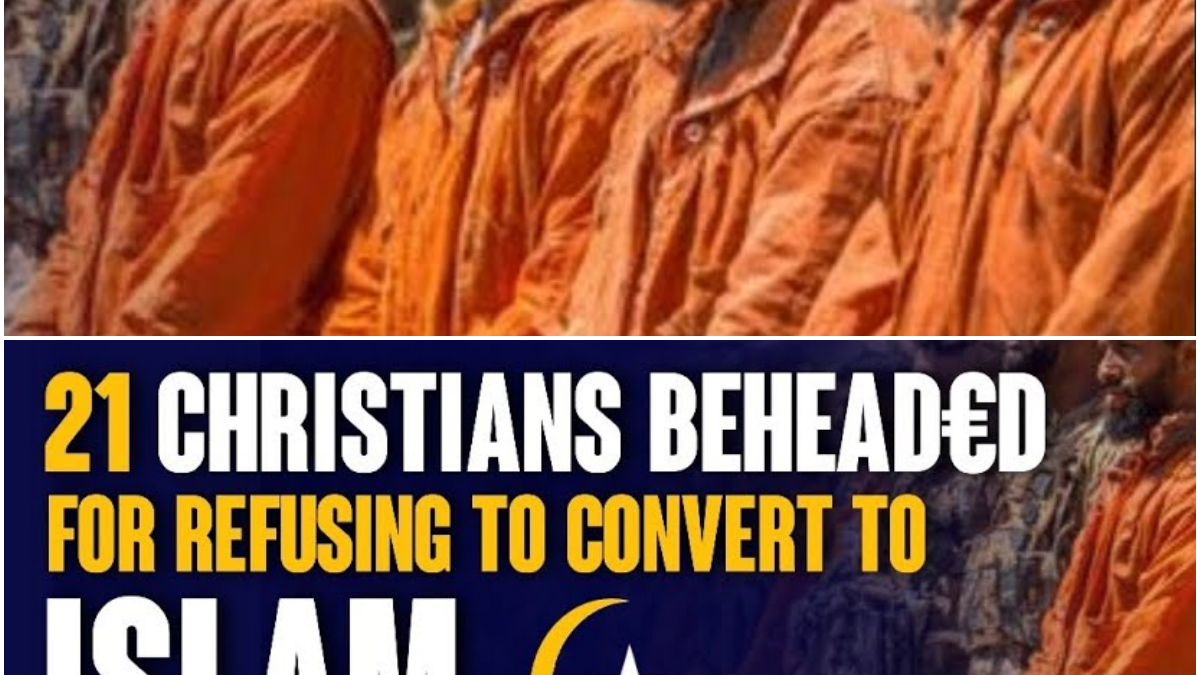
I Watched 21 Men Choose Death Over ISLAM – And Their Moment of Death Became My Beginning in Jesus!
This is the story of how I watched 21 Christian men get killed in my own country in a village not far from where I live.
This is the story of how seeing those men die changed everything about me and who I am.
This is the story of how watching them refuse to turn away from their faith even when it meant death made me question everything I believed.
And this is the story of how that one day turned me from a Muslim girl into a Christian woman.
Everything you’re about to hear comes from that one moment on that one day.
That moment changed my life completely.

My name is Amina Hassan and I’m from Kano, Nigeria.
It’s a big city in the northern part of the country where I was born and where I still live today.
I come from a Muslim family, but not the kind of Muslim family that was very strict or very religious in a deep way.
My father, Ahmed Hassan, he was a traitor.
He sold fabrics and materials in the market.
He wasn’t a very religious man, but he was Muslim because his father was Muslim and his father before him.
We lived in a house with a small courtyard where my mother grew tomatoes and peppers.
I remember my mother spending hours in that courtyard working in the soil, her hands getting dirty, her hijab tied tight around her head.
I have three brothers, Kareem, Malik, and Hassan.
We were a normal family, not rich, not poor.
My brothers would tease me and play rough games.
My father would come home tired from the market and sleep under a tree in that same courtyard before dinner.
When I was old enough to work, I got a job at a small shop selling clothes in the market.
I was around 22 years old when the thing I’m about to tell you happened.
I wasn’t married yet, which was a little unusual for a girl my age in Kano, but my family wasn’t pushing it too hard.
I was doing what I was supposed to do.
I went to work.
I came home.
I helped my mother.
I prayed when it was time to pray.
That was my life.
It was a simple life.
I didn’t think too much about things.
Then one day, someone came to my cousin’s house with news.
This person was a man we didn’t know very well.
He came with information that made Ila very upset and very excited at the same time.
He told her that there was going to be an event in a village near Kano.
He said that some Christians were going to be executed because they refused to turn away from their God.
He said it was something that needed to happen, something that would show people what happens when you don’t obey.
This man told Ila that she should come and see it.
He said it would be important for her to witness it.
He said it would help her understand the power of true religion.
And then Ila, my cousin, she came to me and asked me if I wanted to go with her.
I should have said no.
I should have asked her what she was talking about.
I should have told her this was a crazy idea and that we shouldn’t go anywhere near such a thing.
But I didn’t.
I was curious.
I was bored.
I wasn’t thinking clearly.
I just said yes.
We got in a car with the man who had told Ila about it and one other man we didn’t know.
We drove away from Kano, heading toward a small village in the countryside.
The drive took a few hours.
We passed through different areas.
The buildings became fewer.
The people became fewer.
The air felt different, heavier somehow.
Everything felt strange and wrong.
Even before anything happened.
When we arrived at the village, there was already a crowd of people there.
Not a happy crowd.
Not a crowd that was excited about something good.
It was a crowd that felt dark and heavy and dangerous.
I remember thinking that this was a mistake, that I should have said no to Ila.
But it was too late.
We were already there.
The man told us to stay quiet and not to draw too much attention.
He said there were men from fani groups there, men who were very serious about what they were about to do.
He said we should just watch and not say anything.
So we stood there and we waited.
That’s when I saw them.
There were 21 men lined up in the village.
21.
I count them in my head even now.
Almost every day for the past year.
They were all wearing orange jumpsuits.
They were Christian men.
They were from Coptic families.
They had been captured and brought to this place by members of a fani group, people from my own country, people who lived not far from where I lived.
And there were armed men standing behind them.
Men with guns and masks on their faces.
I remember my heart starting to beat very fast.
I remember feeling like I couldn’t breathe properly.
I remember thinking that this was real, that this was actually happening and that I was watching it happen.
I didn’t remember the exact sounds they made or the exact words that were said.
What I remember is what I felt and what I saw in those men’s faces.
I remember thinking these men knew they were going to die.
They had probably known for a while and they were terrified.
Of course they were terrified.
But underneath the terror, underneath the fear, there was something else.
Something I had never seen in a person’s face before.
It was like they already knew something the rest of us didn’t.
It was like they were already somewhere else, somewhere safe, even though their bodies were standing in that village.
I remember thinking, “This didn’t make sense.
How could a person look peaceful when they were about to die?
How was that possible?
The armed men started asking them questions.
They asked them to say certain words to turn away from their god and say that they believed in Islam.
They gave them a choice.
They said, “If you say the words, if you turn away from your god, you can live.
But if you don’t say the words, if you keep believing in Jesus, then you will die.”
And I watched to see what they would do.
I thought maybe they would say the words.
I thought maybe they would lie to save their lives because that’s what any person would do, right?
That’s what I would do.
That’s what most people would do.
You would say whatever they wanted to hear just to stay alive.
But they didn’t.
One by one, these 21 men refused.
They said no.
They said they believed in Jesus Christ.
They said they would not turn away from their faith no matter what happened to them.
And I watched their faces as they said these things, knowing it meant they would die, knowing that they were choosing death over life.
I don’t want to describe what happened after that.
That’s not the part I want to talk about.
Even though that’s what people always want to know about.
People always ask me about the violence.
Like that’s the part that would break you the most.
But what actually broke me?
What I couldn’t stop thinking about for months and months afterward was watching them choose their death.
Watching them say no to life and yes to their god.
Watching them refuse to save themselves.
The men with guns, they were angry.
They were shouting things.
They thought they were powerful.
They thought they were strong.
But I realized something watching them.
They looked lost.
They looked like they were searching for something and could never find it.
They looked like they were running away from something inside themselves.
And these other men, these 21 men who were about to die, they looked like they had already found what they were looking for.
They looked like they knew something that made them unafraid.
I remember my cousin Ila next to me.
She was crying.
She was upset, too.
But I don’t think she understood why the way I did.
Or maybe she did.
Maybe we both understood, but we couldn’t talk about it because we were too scared because we were still in that place with those armed men.
We left after it was over.
We drove back to Kano in complete silence.
Nobody talked.
The men who brought us didn’t say anything.
My cousin didn’t say anything.
I didn’t say anything.
It was like we were all pretending it hadn’t happened, even though it had.
It was like if we didn’t talk about it, maybe we could convince ourselves that we had dreamed it.
When I got home, my mother asked me where I had been.
I told her I went to visit a friend.
I lied.
I didn’t tell her what I had seen.
I didn’t think she would understand.
I didn’t think anyone would understand.
For the first few days after, I tried to go back to normal.
I went to work at the shop.
I came home and helped my mother cook.
I prayed when I was supposed to pray, but nothing felt the same.
Everything felt different, like I was watching my life from far away, like I wasn’t really inside it anymore.
At night, I couldn’t sleep.
I kept seeing their faces.
I kept thinking about the moment they said no.
I kept asking myself the question that wouldn’t leave me alone.
Why did they say no?
What gave them the strength to say no when they could have said yes?
And lived.
And then another question started forming in my mind.
And this one was scarier than the first.
Would I have said no?
I knew the answer.
I knew I would have lied.
I would have said anything to save my own life.
I would have denied everything.
I would have turned away from everything.
And that realization made me feel sick inside.
It made me feel like I didn’t really believe anything at all.
Like everything I thought I believed was just something I said because I was supposed to say it.
By the second week, I started asking my mother questions about faith.
I asked her what it meant to really believe something.
I asked her if she would die for Islam.
She looked at me strangely and asked me why I was asking such questions.
She said these were not questions a young woman should be thinking about.
She said I should focus on my work and my family, not on these big dark thoughts.
So I stopped asking her, but I didn’t stop thinking about it.
By the third week, I realized I needed to understand what those men believed.
I needed to read their words.
I needed to understand what was so powerful that it could make a person say no to their own life.
So I started reading quietly in secret.
I would read about Jesus and about Christianity.
I would read about faith and about what it meant to believe in something so strongly that nothing else mattered.
And the more I read, the more something started to change inside me.
It wasn’t like a lightning bolt or a sudden moment of clarity.
It was more like waking up slowly from a very long sleep.
It was like I had been asleep my whole life going through the motions of being Muslim without ever actually thinking about what it meant or what I believed.
I realized that I didn’t believe what I had been saying I believed.
I realized that all my prayers and all my practices, they were just things I was doing because I was supposed to do them.
But those 21 men, they believed something.
They really truly believed it with their whole hearts.
And that’s why they could say no.
By the fourth week, I knew I wanted to convert to Christianity.
But I was terrified.
I was terrified of what it would mean for my family.
I was terrified of what it would mean for my life in Kano.
I was terrified of losing everything I had ever known.
So, I waited.
I read more.
I thought about it constantly.
I went to secret meetings with people who had converted.
I talked to people who understood what I was going through.
I prayed.
But this time I was praying to Jesus, not to Allah.
And every single day I was terrified.
6 months after I saw those 21 men die, I made my decision.
I converted to Christianity.
I did it secretly.
At first, my family didn’t know.
My friends didn’t know.
My neighbors didn’t know.
For a while, I lived two lives.
One life where I was Amina Hassan, the Muslim girl from Kano who went to work and helped her mother and did what she was supposed to do.
And another life where I was someone else entirely, someone who was trying to find out what it meant to truly believe in something.
But secrets are hard to keep and lies are heavy to carry.
8 months ago, my mother found a Bible under my mattress.
That’s when everything changed.
That’s when I had to tell the truth.
My father didn’t speak to me for weeks.
He wouldn’t even look at me.
My brothers were angry.
They said I had brought shame to our family name.
They said I had betrayed our ancestors.
My mother cried and said I was no longer her daughter.
She said I had killed a part of her.
My cousin Ila, the same cousin who took me to that village, she said she had made a terrible mistake taking me there.
She said she would try to help me come back to Islam.
She said she couldn’t accept that I had become a Christian.
The neighborhood found out.
People I had known my whole life started treating me differently.
Some were angry.
Some were afraid of me, like I had become something dangerous.
Some tried to convince me to change my mind.
My job at the shop, I couldn’t keep it anymore because the owner said he couldn’t have a Christian working for him.
He said his customers would not want to buy clothes from someone who had left Islam.
So I lost a lot of things.
I lost my family.
I lost my job.
I lost my place in the community I had known my whole life.
I lost the life I was supposed to have.
And now I’m here.
It’s been almost a year since I saw those 21 men die.
It’s been 8 months since my family stopped speaking to me.
And I still don’t know if what I did was right.
People ask me if I forgive the men who killed those Christians.
People ask me if I feel happy now, if I’ve found peace.
People ask me if I’m sure about my decision.
And the truth is, I don’t have simple answers to any of these questions.
Some days I feel like I made the right choice.
I feel like I understand those men now, the ones who said no.
I feel like I’m standing on solid ground because I chose to stand there, not because I was born there.
I feel like my faith is real now in a way it never was before.
But other days, I hate myself for what I’ve done to my family.
I hate myself for causing my mother so much pain.
I hate myself for losing my home and my community and my life the way it was.
And I think about going back, about telling my family I made a mistake, about going back to being Muslim so that I can have my life back.
And then I remember those 21 men.
I remember their faces.
I remember the moment they said no.
I remember that they chose death instead of lying.
And I know I can’t go back.
I know that if I go back, I would be betraying them.
I would be saying that my comfort and my family and my old life are more important than truth.
And I can’t do that.
But that doesn’t mean I’m at peace.
I’m not at peace.
I’m angry and confused and sad and scared all at the same time.
I’m angry at the men who killed those Christians.
I’m angry at the system that allowed it to happen.
I’m angry at my family for not understanding.
I’m angry at myself for being so weak that I wish I could go back.
I’m confused about whether God is real and whether he cares about any of us.
I’m confused about why he let those 21 men die.
I’m confused about why he let me see it.
I’m confused about what I’m supposed to do with my life now.
I’m sad for what I’ve lost.
I’m sad for my mother who cries when she thinks about me.
I’m sad for the life I could have had if I had never seen that village.
I’m sad for the girl I was before.
The girl who didn’t have to think about any of this.
And I’m scared.
I’m scared every day.
I’m scared about what will happen to me.
I’m scared that I made the wrong choice.
I’m scared that I’ll never see my family again.
I’m scared that my life will always be like this.
Standing outside of everything I knew, belonging nowhere, being neither Muslim nor fully accepted by the Christians either.
So when people ask me if I found peace, I tell them the truth.
I tell them that I haven’t found peace.
I found something else.
I found a question that I can’t ignore.
I found a truth that I can’t unknow.
I found a choice that I can’t take back.
And I don’t know if that’s enough.
I really don’t.
But it’s all I have.








