I Helped My Ex’s Sister Move to a New City… Then I Found What She’d Been Carrying for Seven Years.
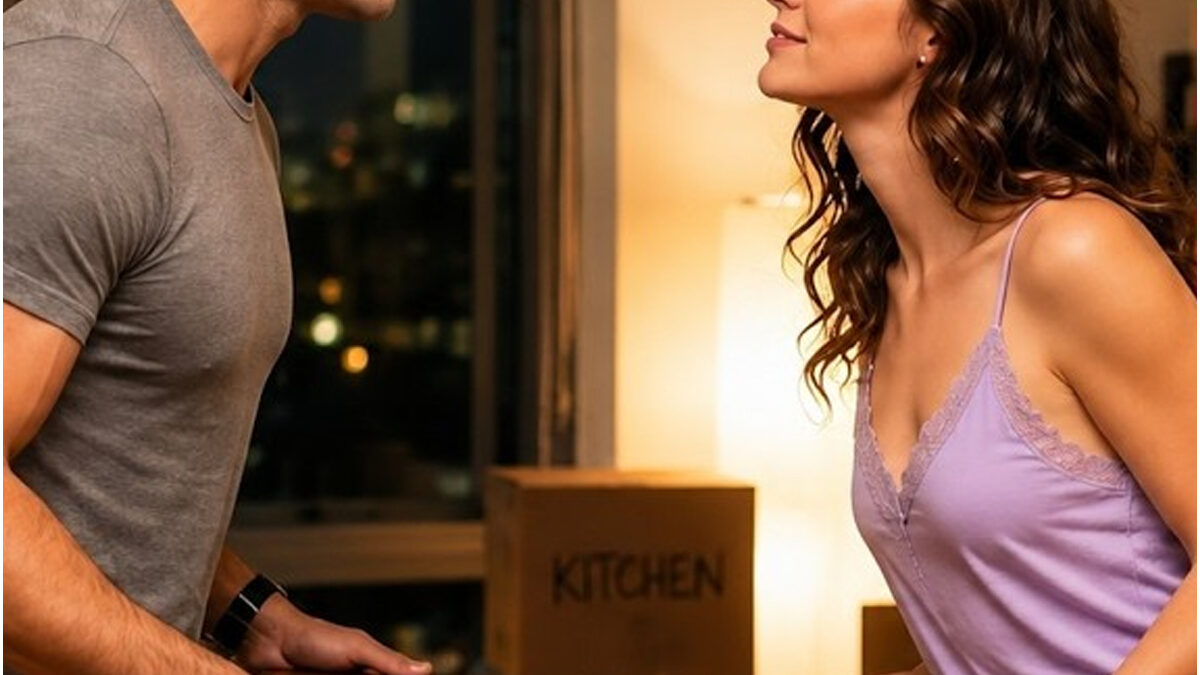
I Helped My Ex’s Sister Move to a New City… Then I Found What She’d Been Carrying for Seven Years.
She was standing in my driveway holding a cardboard box that was too heavy for her, and when she looked up and saw me, she didn’t say hello.
She said, “You look exactly the same.”
Her name was Tessa.
She was my ex-wife’s older sister, and I hadn’t seen her in 2 years, not since the day I signed the papers and quietly became a man who used to belong to someone else’s family.

That moment, the box, the driveway, the cold October air off Georgian Bay, that’s where I need to start.
But to explain what it meant, I have to go back to the phone call I got 3 weeks before that.
On a Tuesday night in late September when I was eating leftover chili at my kitchen table and not thinking about much of anything.
My name is Owen Darcy.
I’m 38 years old.
I work as a structural inspector for a construction management firm based in Barrie, Ontario.
It’s not the kind of work that comes up up at dinner parties unless someone is renovating their deck and wants free advice, which happens more often than I’d like.
I drive out to job sites before sunrise.
I look at beams, load-bearing walls, concrete foundations.
I write reports that nobody reads until something goes wrong.
The work suits me.
It asks for attention and patience, and those are things I have in quantity.
I had been living alone in a house in Collingwood for a year and a half by then, ever since my divorce from Christine was finalized.
We’d been married for 5 years.
No kids.
The split wasn’t dramatic in the way divorces are in movies.
There were no affairs, no blowout fights, no lawyers at each other’s throats.
What happened was quieter and harder to explain.
Christine told me one evening, very calmly, that she felt like she was living next to someone who had decided the world was fine from a distance.
She said, “I watched things more than I participated in them.”
She wasn’t wrong, but being seen accurately doesn’t always feel like a gift.
After the divorce, I bought the house in Collingwood because it needed work and I needed something to do with my hands on weekends.
It sat on a half-acre lot two streets back from the water.
The previous owner had let the back porch rot through.
The kitchen tiles were lifting in three corners, and the gas fireplace hadn’t been serviced in years.
I fixed all of it over the first winter.
By February, the porch had new cedar decking, the tiles were level, and the fireplace worked.
I sat in front of it most evenings with a book and a glass of Sleeman’s and thought, “This is manageable.
This is what I have now.”
And I was okay with that, mostly.
Tessa Brandt was Christine’s older sister by four years.
She was 42 now.
When I was still married to Christine, Tessa lived up in Sudbury and worked as a landscape architect for a firm that did municipal contracts, city parks, trail systems, that kind of thing.
She drove down for Christmases, the occasional long weekend.
She was composed in a way that stood out.
Christine’s family what was loud and easy with each other, the kind of family that talks over every meal and laughs at things that aren’t quite jokes yet.
Tessa could be in the middle of all of that and somehow not be part of the noise.
She’d be at the far end of the table, hands wrapped around a mug, listening, just listening, with this expression that made you think she was hearing things the rest of the room wasn’t.
I remember one specific thing about her.
She always had a folded piece of paper in her jacket pocket, not a phone, not a notebook, just a single piece of paper folded into quarters that she’d pull out occasionally and read or write on and then fold back up and return to her pocket.
I never asked what was on it.
It didn’t seem like my question to ask.
After Christine and I separated, Tessa and I had no reason to stay in contact.
She was Christine’s sister.
The lines were clear.
I packed up the version of myself that had belonged to that family and moved on, which mostly meant moving 60 km north and learning to be comfortable in a house that echoed.
Then my phone rang on a Tuesday night in late September.
I didn’t recognize the area code at first, Sudbury 705.
When I picked up, the voice on the other end was measured and a little careful like someone who’d thought about what they were going to say and wasn’t sure it sounded right.
Owen, it’s Tessa.
Brant, I know this is probably strange.
I told her it wasn’t.
I asked what she needed.
She’d taken a new position, she said, a senior role with a landscape firm in Barrie.
She was moving south at the end of October and didn’t know many people in the area anymore.
Her car wasn’t big enough to move furniture.
She couldn’t justify the cost of a full moving truck for what she had.
Not much, just some furniture and a few things from her studio.
You have a truck, she said.
There was a pause.
And you’re in Collingwood, which is close.
I know it’s a lot to ask.
I held the phone for a second.
My ex-wife’s sister asking me to help her move.
On paper it sounded like the setup for a very uncomfortable afternoon, but there was nothing in her voice that made it feel complicated.
No second meaning I could detect, just a practical person asking for practical help because she genuinely had no one else nearby who could do it.
I said, yes.
I drove up to Sudbury on a Saturday in late October.
The Trans-Canada was already icy past Parry Sound and I hit construction delays near Estaire.
So, by the time I pulled up to Tessa’s building, it was nearly noon.
The apartment was on the third floor of a walk-up near the Science North area.
Small, clean, south-facing windows.
When she opened the door, she looked at me for a moment before she said anything, the way someone does when they’ve imagined a conversation many times and the reality of it is slightly different than expected.
She’d been organized about everything.
The furniture she needed moved, a drafting table, a narrow bookshelf, a floor lamp, three boxes of tools and supplies from her studio was already wrapped and stacked near the door.
She’d labeled everything in the same clear architectural print.
Studio, books, kitchen.
There wasn’t much that required two people, honestly, but she’d called someone who would show up and not make it awkward and that was worth something.
We loaded the truck in under 90 minutes.
I took the heavy end of the drafting table down the stairwell.
Tessa carried her studio boxes two at a time without asking for help or commentary.
On the drive south, we talked more than I expected to.
She asked whether I was still with the same firm.
I told her about the Collingwood house, the deck I’d rebuilt, the fireplace.
She mentioned a trail project she’d done outside Sudbury, a 15-km system that had taken of bureaucratic back and forth before the city approved the soil remediation plan.
She said it with no bitterness, which impressed me.
I’d have been bitter about it.
We stopped for coffee at a Tim Hortons in Parry Sound because the fuel light came on, and I refused to let it get lower than that in October north of Muskoka.
We sat at a corner table for 20 minutes while the truck warmed up again.
She drank her coffee with both hands on the cup and looked out at the parking lot and the gray sky over the bay.
Christine told me what she said to you, Tessa said, not looking at me.
When she ended it, the thing about watching from a distance, I said I remembered.
She wasn’t being fair to you, Tessa said.
She was describing the part of you she didn’t understand.
That’s different.
I didn’t say anything.
I wasn’t sure what to do with that.
She didn’t push it.
We finished the coffee and got back on the road.
Her new apartment was on the second floor of a low-rise building in Barrie’s East End, 10 minutes from the lakeshore, smaller than the Sudbury place.
But the building had a workshop in the basement that residents could book, and that mattered to her more than square footage.
We moved everything up in two trips.
I assembled the bookshelf and reattached a bracket on the drafting table that had worked itself loose during the drive.
Tessa stood in the doorway of the small second room, the one she was turning into a studio, and watched me tighten the bracket without a word.
Then she turned back toward the boxes and started unpacking, and I got the feeling she’d been about to say something and decided not to.
On the drive home to Collingwood, I thought about that conversation at Tim Hortons.
She wasn’t being fair to you.
It was such a specific thing to say.
Not Christine was wrong, or it wasn’t your fault.
It was more precise than that.
She was describing the part of you she didn’t understand.
Someone who says that has thought about the difference for a long time.
Over the next few weeks, I kept finding reasons to stop by Barrie.
Not contrived ones exactly.
I had a job site inspection in the East End in early November and texted to ask if she needed anything before I drove back.
She mentioned a ceiling light fixture that had stopped working, and she wasn’t sure if it was the bulb or the wiring.
I came by and checked.
It was the wiring connector in the base, a simple fix, 15 minutes.
She made tea while I worked.
Not a tea bag, she had a proper pot and loose leaf in a tin from an independent shop on Dunlop Street.
We sat at her kitchen table and talked about nothing in particular.
The Barrie weather, the firm she was starting at on Monday, a book she was editing.
Wait, no, that had been Nora in the other story.
Tessa was reading a long biography of Frederick Law Olmsted that she’d been carrying since AuguSt. She said she read it in short sessions because she didn’t want it to end.
I started noticing things I shouldn’t have been noticing.
She remembered, without me telling her, that I took my coffee black.
She knew I drove a half-ton even though during the years I was married to Christine, I’d had truck.
She remembered a comment I made once at a Christmas dinner about preferring the ride on a full-size to a compact.
She asked about the gas fireplace in the Collingwood house, the same way someone asks about something they’ve thought about since it was mentioned, not in passing.
These weren’t casual observations.
You don’t retain that kind of detail unless you’ve been paying close attention for a long time.
And the thing about Tessa was that she never signaled it.
She said these things easily, naturally, the way you mention something obvious, like it would be stranger not to know.
In early December, she came out to Collingwood, not for any particular reason.
She said she wanted to see the lake in winter and had never driven the shore road past Wasaga in the off-season.
We walked the beach at Collingwood Harbor in the cold, which in December means you have the whole thing to yourself except for a few people exercising dogs.
The sand was frozen at the tideline and the bay was just starting to skin over with ice near the creek mouth.
She stopped at one point and looked north across the gray water toward the escarpment and said, “I always imagined you ending up somewhere like this.”
I asked her what she meant.
She shook her head slightly, not dismissively, but like the answer was something she didn’t feel ready to say out loud.
“Just something about you,” she said.
“You belong to places that have weather.”
I didn’t know how to respond to that, so I didn’t.
We walked back to the truck and I drove us to a pub on the main drag that had a wood stove and a decent fish and chips.
We stayed 2 hours.
We talked about her Olmsted book, about a development project I’d flagged that week for inadequate frost protection on the foundation footings.
She asked the right questions.
She always asked the right questions, the kind that told you she’d been listening to everything you said, not waiting for a pause to say her own thing.
When I dropped her at her car, she thanked me for the walk and the dinner and I said it was nothing because that’s what I always say, and she looked at me for a second like that was the wrong answer, but she wasn’t going to correct me about it.
Then she got in her car and drove back toward Barrie.
It was about 6 weeks after the move when things shifted.
I was at my desk on a Thursday night reviewing load calculations for a site in Midland when my phone buzzed with a name I hadn’t expected, Christine.
We hadn’t spoken in 5 months.
The last time we talked it was logistical, forwarding mail, a question about the joint account we’d both forgotten to close.
This call felt different before I even answered it.
Something in the way the name sat on my screen.
Her voice when I picked up was the voice I’d spent 5 years with, measured and sharp, capable of delivering a complicated message in very few words.
She got there within 30 seconds.
What are you doing with Tessa?
I told her I’d help Tessa move to Barry, that I’d been over a couple of times to help with some things in the apartment.
Nothing more than that.
There was a pause, then Christine said, “Owen, she’s had feelings for you for years.”
She said it matter-of-factly, not like a warning.
More like she was informing me of something she assumed I already knew and had been conveniently ignoring.
She told me that Tessa had said something, once, years before Christine and I even met.
A comment to a mutual friend, vague enough to be denied, clear enough that Christine had remembered it.
She told me Tessa had always been careful around me, and that being careful was, for Tessa, the same as having something to hide.
Then she added, “I’m not telling you this to start something.
I just think you should know what you’re walking into.”
I said thank you and got off the phone as quickly as I reasonably could.
I sat there for a while with the calculation sheet in front of me, not seeing it.
Christine was not a person who made things up.
She was precise, honest, not given to manipulation.
That had never been her issue.
Her issue, and mine, was that we were precise in different ways and about different things, and over 5 years that added up.
But she wasn’t calling to hurt anyone.
She was probably telling the truth.
The question was what the truth meant.
The next time I drove to Barry, something had shifted in me by a degree or two.
Not enough for most people to see, but enough for Tessa.
She noticed before I’d been there 20 minutes.
I stood on the other side of her kitchen island instead of leaning against the counter next to her.
I I stay for tea.
I said I had an early site visit in the morning, which was true, but not the reason I was leaving.
She didn’t say anything about it.
She walked me to the door and said she’d let me know if anything else came up with the wiring situation.
Her voice was steady and her expression gave nothing away.
But when I got to my truck and looked up at the building, she was already gone from the window.
I knew she’d noticed.
With Tessa notice things was not a skill.
It was a reflex.
The week after that Christine appeared in Barry.
I didn’t know she was coming.
Tessa didn’t either.
She showed up at the apartment on a Saturday afternoon while I was there helping move the drafting table.
Tessa had rearranged the studio and needed it shifted 4 ft toward the window for the light.
I was in the middle of it when the knock came and Tessa opened the door and went absolutely still.
Christine walked in.
She looked around the apartment with the eye of someone cataloging a scene.
Then she looked at her sister.
“Tell him.”
She said.
She didn’t say hello.
She didn’t remove her coat.
“Go ahead, Tess.
Tell Owen what you told Rachel in 2017.”
Tessa didn’t answer.
Christine turned to me.
Her voice was the same one she used when she was making an argument she knew she’d win.
She told Rachel “That’s our cousin.”
That she’d had feelings for you since the first time she met you.
Three weeks before my first date with you.
She never said anything to me.
She just She paused something tightening at the edge of her composure.
She just let it go.
Everything Christine was saying was likely accurate.
But she was using accuracy the way a contractor uses a punch liSt. Not to build something to prove someone wrong.
She was turning Tessa’s silence into evidence of something calculated.
She was taking six years of careful, costly restraint and calling it deception.
Tessa still hadn’t moved.
She was standing near the doorway to the studio.
Her arms at her sides.
Her face very still.
She didn’t look at me.
She looked at Christine.
“You’re right about the facts.”
She said quietly.
“You’ve got the order wrong.”
Christine waited for more.
Tessa didn’t give it to her.
Instead, she turned to me and she apologized.
“Not for the feelings,” she said, “but for not being clearer once Christine and I had separated and there was no longer a reason to stay quiet.”
Her voice didn’t waver.
It had the sound of someone saying a thing they’d rehearsed not to perform it, but because they’d lived with it so long it had worn grooves.
Then she crossed to the kitchen table and picked up the piece of paper, the folded piece of paper, from her jacket on the chair, and set it down in front of me.
Then she walked into the studio and sat on the edge of the drafting stool with her back to both of us.
Christine looked at me.
I could feel the weight of what she expected, the confirmation.
She had driven down from wherever she was now, she’d moved to Oakville after the divorce, and made this trip, and she needed me to take her side of it to make the trip mean something.
I looked at the folded piece of paper on the table.
Then I looked at Christine and I said, “You came here to protect a version of things, not either of us.”
She opened her mouth, closed it.
She was not accustomed to people declining an argument without raising their voice.
She stood there for a moment and I could see something moving behind her eyes.
Not just anger, something rawer than that, something that had more to do with what it would mean if Tessa had been right about me all along.
Then she picked up her bag and walked out.
The door shut with a click that sounded louder than it was, and the apartment got very quiet.
I stood there for a moment.
Through the studio doorway I could see Tessa’s back, the line of her shoulders pulled inward, her hands flat on her thighs.
I picked up the piece of paper.
It was folded into quarters, worn at the creases from being folded and unfolded many times.
I opened it.
It wasn’t full of writing.
At the top, in Tessa’s architectural print, was a rough sketch, a floor plan, the kind she probably drew a hundred times a week, but this one was small, A house maybe a thousand square feet, a back porch, a fireplace on north wall, a workshop space off the back.
In the margin in handwriting smaller than the print were two letters, OD.
I held the paper for a long time.
I thought about the way she’d stood in the doorway watching me fix that drafting table bracket without saying a word.
The way she’d said you belong to places that have weather like she’d imagined it.
The way she’d always remembered, across years of dinners and Christmases and occasional long weekends, exactly how I took my coffee.
You don’t draw a floor plan for someone you’re not thinking about.
You don’t put their initials in the margin of a house you sketched for yourself and fold it into quarters and carry it in your jacket pocket through a move to a new city in a new province, unless those initials mean something that goes beyond the point where you can explain it away.
I folded the paper back along the same creases and carried it into the studio.
Tessa didn’t turn around.
I sat down on the window sill, the same window she’d wanted the table to move toward for the light.
Below us the street was quiet.
A thin snow had started while we weren’t paying attention, light and dry, the kind that doesn’t stick but makes the air look different.
The floor plan, I said.
My voice sounded strange to me in the quiet room.
The initials.
She was still for a moment, then, I drew it seven years ago.
I was redesigning the layout of my apartment in Sudbury.
I do it when I’m thinking through Pause.
I wasn’t thinking about the apartment.
You carried it across two provinces, I said.
Three, she said.
I had a contract in Vancouver before Sudbury.
I had it there, too.
I didn’t say anything for a while.
She still hadn’t turned around.
Outside the snow kept coming down, very light, very quiet.
Christine said you told Rachel in 2017, I said.
Rachel asked me a direct question, Tessa said.
I gave her an honest answer.
I asked her to keep it between us.
She She kept it for six years, which is longer than I expected.
The smallest pause, I met you 3 weeks before Christine did.
It was a fundraiser for the Simcoe County Greenbelt project.
You were there because your firm had done the structural work on one of the land trust buildings.
You were the only person at the event who wasn’t talking about himself.
You were standing next to a load-bearing wall in a 100-year-old barn making a mental note about the post spacing.
I saw you doing it.
Nobody else did.
She paused again.
Then Christine met you and I made a decision.
She was my sister.
That was the end of it.
But you kept the paper, I said.
I kept the paper, she said.
I sat there with the snow outside and the studio going gradually dark around us and I thought about what it cost to do what she’d done.
To make the decision to step back before you’ve even stepped forward.
To show up at Christmas dinners for 6 years and sit at the end of the table and listen and fold your paper back into quarters and put it away.
To transfer to a city specifically, partly, and then be too careful to say so.
To call someone you have no remaining claim on because you finally decided that 2 years was long enough to wait and you needed a reason that was honest enough to live with.
I stood up.
I crun- crossed the room.
I placed the paper back in her hand.
Don’t fold it away again, I said.
Nothing happened right away.
That’s the honest version.
I drove back to Collingwood that evening.
I ate dinner, finished the Midland calculations, went to bed at a reasonable hour.
The next morning I went to work and inspected a residential foundation near Angus and wrote a report and ate a sandwich at a folding table in a site trailer.
It was a perfectly ordinary Thursday.
But that evening I picked up my phone and typed, “There’s a trail system out past Wasaga I keep meaning to walk.
Saturday morning?”
She replied 20 minutes later.
“Dress warm.
I’ll bring the coffee.”
I smiled at my phone.
It was the first time I’d smiled at a text message in 2 years.
What followed was slow, which was exactly right.
We didn’t have the kind of beginning that people make into a story at dinner parties.
There were no declarations, no grand moments.
There was a cold trail walk on a Saturday, then another one 2 weeks later.
There were Sunday afternoons in Collingwood where she brought her Olmsted book and read it on the couch while I worked on something in the workshop.
And occasionally, one of us would say something from the other room and the other would answer.
And it felt strangely like we had been doing this for a long time.
She had opinions about the back porch I’d rebuilt and why the cedar hadn’t been the right choice for the climate.
She was right and I told her so and she didn’t make anything of it.
I started keeping a pair of work boots near her back door because the trails she liked were muddy and my regular boots were the wrong kind.
She cleared a shelf in her studio for the structural reference books I kept leaving at her place by accident or not by accident.
We didn’t have a conversation about what we were.
We didn’t need one.
Things moved into their right places on their own.
By January, she was in Collingwood most weekends.
By March, her key was on a hook by my front door.
In April, when her lease renewal came up, she let it lapse.
Christine texted once in February.
Just, “I heard.
I mean it when I said she deserves it.”
I read it twice and then put the phone down and thought about whether I believed her.
Probably I’d never be fully certain, but something in how she said it felt different from the version of Christine who’d stood in Tessa’s apartment and demanded accountability.
This felt like something she’d sat with for a while.
I texted back, “Thank you.”
And I meant it.
We spent a weekend in the spring resealing the back porch.
The cedar boards had cupped slightly over winter.
Tessa had been right about the wood choice, but the fix was manageable.
She worked methodically sealing each board from the back before I laid it, which I would not have thought to do and which was the correct way to do it.
I said so.
She said she had professional opinions about wood moisture management and I should learn to ask before I bought materials.
“You could have said that two years ago.”
I said.
“You didn’t ask.”
She said.
After that we were quiet for a while working and the afternoon light came across Georgian Bay and turned the wet boards gold and neither of us said anything because there was nothing that needed saying.
One evening I was going through the bookshelf in the front room.
We’d been reorganizing it to fit both our books which had turned into a longer project than expected because Tessa had opinions about whether you organize by subject or alphabetically and I refused to commit and I found the folded piece of paper tucked inside the cover of a book.
Not her book, mine.
A site inspection manual I used as a desk reference.
She’d tucked it there without telling me.
I stood in the front room with the paper in my hands.
I didn’t say anything about it that night or the next day but I thought about it for a long time.
How long it had been folded in that pocket.
How many rooms it had been in before this one.
How much had been carried inside those four creases across years and cities and seasons and decisions made in silence.
Some things don’t get said because they don’t need to be said.
They just need to find the right shelf.
The back porch is almost done now.
We added a second chair this summer.
Mine was out there alone for a year and a half and now it isn’t.
Most evenings when I get home from a site, Tessa is already there with the tea made and a book open on her knee.
The bay goes gray and silver in the late afternoon and the air smells like the lake and sometimes the escarpment when the wind is right.
I used to think that being quiet was a failing.
Christine told me I watched things instead of participating in them and I spent a long time wondering if she was right.
Maybe I was a person who stood next to walls and noticed post spacing while everyone else was dancing but Tessa saw me doing that in a barn in Simcoe County seven years ago and she thought it was worth folding into quarters and carrying across three provinces.
Sometimes love doesn’t arrive on time.
Sometimes it gets there first and has to stand quietly in the corner of the room and wait, and fold its paper, and keep waiting.
And sometimes, eventually, you look up from the wall you’re inspecting, and it’s still there.
It was always there.
Have you ever met someone and immediately had to put that feeling somewhere quiet because the timing wasn’t right?
What did you do with it?
Leave a comment.
I read every single one.
And if you’ve been carrying something like this for longer than you’d like to admit, hit that like button.
You’re not alone.








