They Rebuilt The Habsburg Faces From Their Skulls
They Rebuilt The Habsburg Faces From Their Skulls
A blonde 5-year-old in white and gold, her ladies fussing around her, and a mirror at the back with her parents in it.
What you might not know is that the girl, the father in that mirror, and the brother who hadn’t been born yet, all carried the same face, and that the most notorious member of this family is remembered as a monster when the evidence treats him far more kindly than we do.
Today, we’ll walk through their lives, then dig into the portraits, and what these three really looked like.
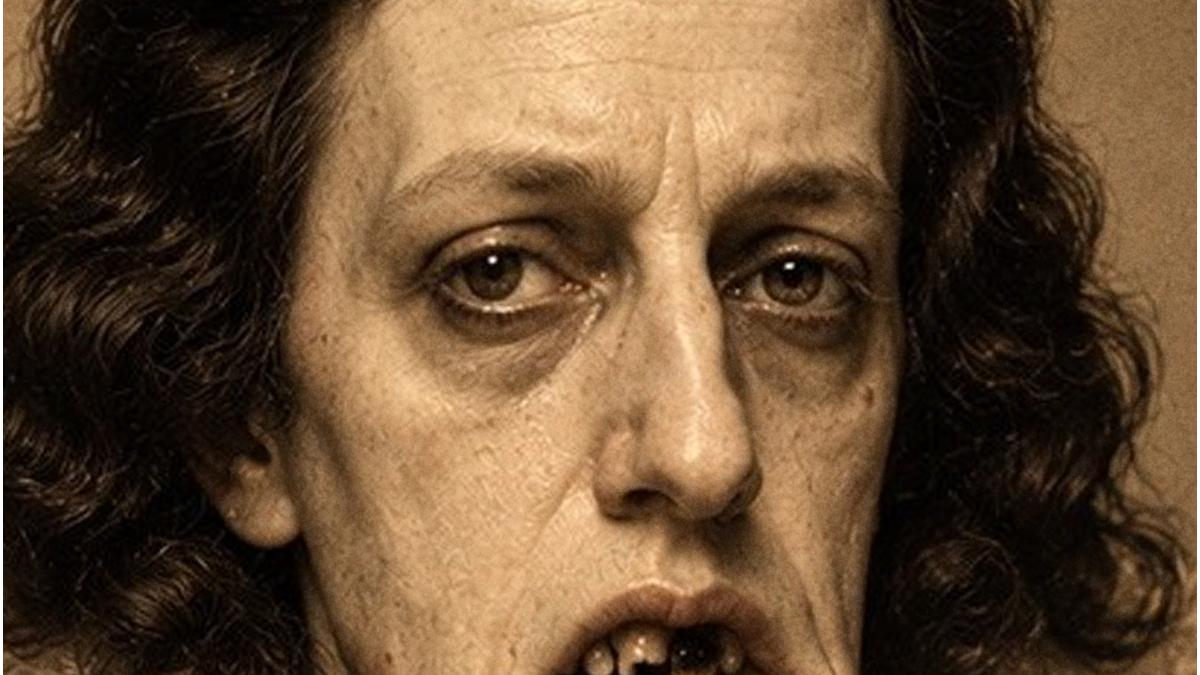
And I’ll reveal three new recreations at the end.
So, let’s go ahead and get started.

Philip was born in Valladolid on the 8th of April, 1605, and he became king of Spain at 15 on the 31st of March, 1621.
He was king of Portugal, too, and he’d been married since he was 10 to Isabel de Bourbon, a French princess of 13.
For most of the 20 years, the actual governing was done by his favorite, the Count-Duke of Olivares, while Philip did something foreign visitors found genuinely unsettling.
A French traveler who was in Madrid in the 1650s left an account describing the king in audience as a kind of statue.
Perfectly still, moving nothing but his lips and his eyes when he spoke.
That was the point.
The impassive face was Spanish majesty.
And it’s the same face Velázquez painted over and over for more than 30 years, which matters later.
So, hold on to it.
Behind the mask, the reign came apart.
Portugal broke away on the 1st of December, 1640, and Philip never got it back.
Catalonia rose.
Olivares was dismissed in January 1643, and then the family started to go.
Isabel died in October 1644.
Two years later, their son and heir, Balthazar Charles, fell ill at 16.
On the 7th of October, 1646, with the boy delirious, Philip wrote to a cloistered nun called Sor Maria de Agreda, a woman he’d been writing to for years about his conscience.
He told her he knew he deserved heavy punishment, and that nothing that came to him in this life could ever repay his sins.
Two days later, Balthazar Charles was dead.
That’s the thread to hold.
Philip also had acknowledged children outside his marriages.
The one who mattered politically was Don Juan José de Austria, son of an actress.
You’ll see the number 30 attached to his illegitimate children all over popular history.
That’s a later count, not a ledger.
Nobody has produced the register it’s supposed to come from.
What is documented is a king who kept writing to a nun that the deaths in his nursery were what he had coming.
So, in October 1649 at 44, Philip married again.
The bride was Mariana of Austria and she was 14.
She was also his sister’s daughter, his niece, and his first cousin.
And she had originally been promised to the son who had just died.
He married his dead boy’s fiance.
Both of them were already the product of generations of cousin marriages and that is the fact this entire video turns on.
Their daughter, Margarita Teresa, was born on the 12th of July, 1651.
From toddlerhood, she was painted repeatedly and the paintings were created up and sent to Vienna.
Because she was promised to the imperial branch of the family and her grandfather, the emperor, wanted to watch her grow.
On the 1st of January, 1654, Ferdinand III was still writing to Madrid to say he would await the portrait of his granddaughter at the king’s convenience.
That is why the child’s face exists at all.
Velázquez painted her in a pink dress at about two, in a blue dress at eight, and in 1656, he put her at the center of Las Meninas, aged five, with her mother and father reflected in the mirror behind her.
Philip’s elder daughter from the first marriage, Maria Teresa, had already gone to France to marry Louis the 14th.
And she is a completely different woman from Mariana, the young queen.
People mix those two up constantly.
Then, in the autumn of 1661’s, the succession collapsed and rebuilt itself inside five days.
The little heir, Felipe Prospero, died on the 1st of November, aged four.
On the 6th of November, Mariana gave birth to a son.
Philip was 56.
The baby was Charles II, and I should say this straight away, because the names collide so badly in English.
This is not the Charles II you’re picturing.
The merry monarch with the spaniels is the English one, a different man in a different country.
This one is his Spanish cousin.
And he looks nothing like him.
Philip died on the 17th of September, 1665, at 60.
He left behind Velázquez, Calderón, the tail end of a golden age, and a four-year-old king.
Three years and 10 months to be exact, with Mariana as regent.
Which brings us back to the girl in the painting.
Margarita was betrothed at 11, in April 1663, to Leopold I, Holy Roman Emperor.
He was 22, and he was her mother’s brother, her uncle, and her cousin.
When her father died, she was 14, and somebody painted her in mourning black.
Leopold received her at Schottwien in November 1666.
She made her formal entry into Vienna in December, and they married on the 12th of that month.
She was 15.
He was 26.
And then came 6 years I find genuinely hard to read.
Ferdinand Wenzel, born September 1667, dead by January.
Maria Antonia, born January 1669, the only one of her children who reached adulthood.
Johann Leopold, born and dead on the same February day in 1670.
Maria Anna Antonia, born February 1672, dead within a fortnight.
There were miscarriages in there as well.
The biographies count them differently, so I’m not going to give you a number I can’t stand behind.
By January 1673, she was pregnant again, and a Spanish midwife, Lucia Panesi, arrived in Vienna on the 11th to attend her.
In March, Leopold wrote that his wife had had a cold in her throat for about 3 weeks.
At around 2:00 in the morning on the 12th of March, 1673, Margarita died.
She was 21.
Her husband recorded that she was pregnant, and that a dead son was found in the womb.
Here’s what we don’t have.
Not one line survives in which she tells us what she made of Vienna, of Leopold, or of her own face.
Her adult record is pregnancies, piety, and her husband’s calendar.
Leopold remarried 7 months later.
Maria Antonia, the daughter who lived, died at 23.
Her little brother, meanwhile, was late to everything.
Charles didn’t walk until he was around eight.
He didn’t speak until he was about four.
Foreign courts wrote him off as feeble-minded, and that judgment has stuck for 300 years.
But, I’d be careful with it.
Almost everyone describing him was an ambassador who had a professional interest in a weak Spanish king, and nothing about his mind has ever been settled on tissue.
How much was disease, and how much was enemies talking him down?
We honestly don’t know.
He married twice.
First, in person at Quintana Palace in November 1679 to Marie Louise d’Orléans, Louis the 14th’s niece.
He was 18.
She was 17.
And French diplomatic circles had already sent word home that the bridegroom was frightening to look at.
She died on the 12th of February, 1689, at 26, after abdominal pain, convulsions, and vomiting following a ride.
France whispered poison.
The autopsy done at the time said otherwise, and modern doctors usually talk about a burst appendix.
We can’t reopen her, so nobody should be telling you confidently that she was murdered.
In May 1690, he married Maria Anna of Neuburg, chosen essentially because her parents had produced an enormous family.
There were no children.
By the mid-1690s, the British envoy, Alexander Stanhope, was writing home that the king had a ravenous stomach and swallowed everything whole because his lower jaw stood so far out that his two rows of teeth could not meet.
That’s one hostile witness with a fascinated eye, not a medical chart.
But it lines up uncomfortably well with the late portraits.
The court’s explanation was witchcraft.
That’s not a Victorian invention.
El Hechizado, the Bewitched, is period language, and they acted on it.
An astrologer suggested the king’s sterility came from never having taken leave of his father on his deathbed.
So, Charles went to El Escorial, had Philip’s body brought up, and spent time with the corpse.
In 1698, his own confessor, Fray Froilán Díaz, ran exorcisms and put questions to demons to find out who had cursed the king.
Now, no historian thinks he was cursed, but the fact that Spain believed it and staged it is real, and it tells you how far past medicine they’d gone.
Mariana died in 1696.
Charles died in Madrid on the 1st of November, 1700, 5 days short of 39.
His will left the whole undivided monarchy to Philip of Anjou, Louis the 14th’s grandson, and Europe went to war over it.
Because the court believed he’d been bewitched, they opened him up, which was not routine for kings.
The report that comes down to us says they found a heart the size of a peppercorn, corroded lungs, three large kidney stones, one testicle black as coal, and a head full of water.
That’s a 17th century catalog, not a lab result.
But it’s the closest thing to an inside view of a Habsburg body that we have.
So, let’s go ahead and talk about what these three really looked like.
We have four period voices, and every one of them wants something.
In the mid-1680s, a papal nuncio’s secretary described Charles at about 25 as short rather than tall, not badly formed, ugly of face with a long neck and a long face that curves inwards, and the lower lip typical of the House of Austria.
That’s a Vatican diplomat watching a Catholic monarchy fail.
Stanhope, who we’ve already heard from, was a Protestant envoy, appalled and unable to look away.
For Philip, there’s no ambassador’s description with that kind authority.
And you’ll see it claimed online that he stood over 6 ft, which isn’t anchored to any measurement I can point you to, so I won’t repeat it as fact.
And for the adult Margarita, nothing.
No one wrote down her coloring, her build, or her jaw.
That silence is itself a finding.
What we have instead is paint.
For Philip, start with Philip the fourth in brown and silver, painted around 1631 and now in the National Gallery in London.
The petition in his hand is a fictive one, signed by Velázquez himself.
Then Philip the fourth at Fraga, 1644, in the Frick, a documented three days sitting in a makeshift studio on campaign, so we know that face was worked from life.
Then the late bust in black around 1656, also in London.
The last painted image Velázquez made of him, with the flesh sagging, the lids it, and the jaw and lower lip completely undisguised.
There’s also a 17th century marble head in the Prado.
This is one of my favorite objects in the story, and it’s the disputed one.
The museum attributes it with a question mark to Pietro Tacca or his circle, and the nose you see isn’t original.
It’s plaster, added in a 1982 restoration.
So, it’s a useful three-dimensional check, and nothing more.
Margarita’s set runs from the pink dress in Vienna at about two through Las Meninas in 1656 to the blue dress of 1659.
The betrothal picture shipped off to her fiance.
You’ll hear it said she was secretly hideous and Velázquez simply lied.
I don’t think that’s it.
In the child portraits, she’s a five-year-old dressed for dynasty and children’s faces haven’t finished.
The family mouth is quieter there than it will be later.
That’s age plus court painting, not proof she escaped the face.
What settles it is Vienna.
Velázquez never painted her as a wife.
He died in 1660.
So, the adult evidence is Jan Thomas van Iperen who painted her on copper in 1667 at 16 costumed as Galatea for a court festival.
The adult lower face is there under the pearls.
So, is it more plainly in the black dress empress portraits from about 1672.
Charles has the most complete run of all thanks to Juan Carreño de Miranda.
There’s the 1673 Hall of Mirrors portrait in the Prado, the boy king at 11 standing between gilt bronze lions with a mirror catching his profile.
Then the armor portrait of 1681 and this is where it gets interesting.
Because the Prado’s technical imaging showed that Carreño painted the 20-year-old on top of an existing portrait of the child and had a strip of canvas added at the top to make him taller.
The furniture in these rooms never changes size while the king does.
So, the height in them is a convention, not a measurement.
Then the late half-length, around 1680 to 1685.
The jutting jaw, the hanging lower lip, the drooping nose, the collapsed mid-face.
Now the science at its actual size.
In 2009, a genetics team reconstructed the family pedigree and calculated inbreeding coefficients.
Charles came out at 0.254.
A first cousin child is 0.0625.
His figure is what you’d expect from a brother and sister because nine of 11’s Spanish Habsburg marriages across two centuries were consanguineous.
Then in 2019, Roman Vilas, Francisco Ceballos and colleagues did something clever.
They handed 66 portraits of 15 Habsburgs to 10 maxillofacial surgeons and had them score the faces like patients.
As Vilas put it, they showed for the first time a clear positive relationship between inbreeding and the appearance of the Habsburg jaw.
Two things came out that people get wrong.
First, it isn’t just a chin.
Ceballos, standing in front of a Carreño, said it plainly, “It’s not just the underbite.
Charles had a drooping nose, eyes, and cheeks, a deficient jawbone, and his whole face fell.
Second, and this is the one that’ll surprise you.
The surgeons scored the strongest underbite not on Charles, but on his father, Philip the fourth.
And inbreeding explained only about 22% of the variation.
A real signal, not the whole story.
Which brings me to what this video is not.
There is no facial reconstruction of these three from their skulls.
There’s no DNA study, no CT scan, no photogrammetry.
Philip and Charles are sealed in the Pantheon at El Escorial, and Margarita is in the Imperial Crypt in Vienna, and nobody has opened any of it for science.
Every study I’ve described scored paintings and did pedigree arithmetic.
If you see a channel telling you the tombs were opened and the faces rebuilt from bone, that didn’t happen.
And the paintings come with their own filter.
Spanish court portraiture ran on rules.
Black clothing, the stiff golilla collar isolating the head, women locked into the garden fante hoop, and palalet as piety.
Above all, the mouths are always closed.
Written sources insist on an oversized tongue and teeth that couldn’t meet, and not one canvas shows you an open bite.
Portraits were the original photo filters and in Spain the filter worked by subtraction.
So, here’s my methodology.
I haven’t got a skull and I’m not going to pretend otherwise.
Philip is built from the Velázquez life record.
Silver Philip, Fraga, and that exhausted late bust because no other European monarch was watched by one painter for that long.
Margarita is built from the Vienna childhood set and the adult John Thomas pictures weighted toward the adult since that’s the face that actually finished.
And Charles is built from Carreño’s dated sequence ending with the late half length.
The canvases the 2019 surgeon scored.
So, without further ado, let’s take a look at my recreations of Philip, Margarita, and Charles.
Now, and here’s the girl from the painting grown into the empress Velázquez never lived to see.
And here’s the last of them.
So, here’s what I want to know from you.
In every single one of those canvases, the mouth is closed.
Were the court painters doing history a disservice by softening what was in front of them?
Or was that just the 17th century version of a filter protecting a family that never asked for the face it was born with?
And settle the other one for me.
Father or son, who’s got the worst jaw?
Let me know in the comments.








