I Was In The Wrong Hotel Room… Then My CEO Opened The Bathroom Door And Just Froze
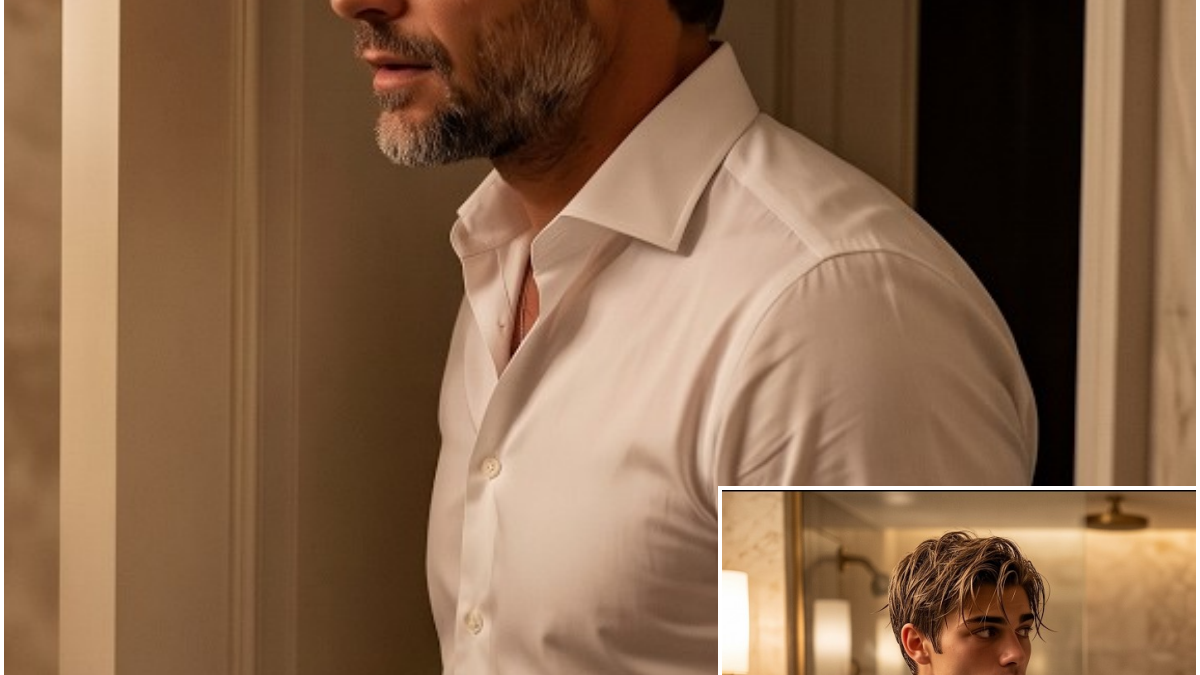
I Was In The Wrong Hotel Room… Then My CEO Opened The Bathroom Door And Just Froze
The first thing I noticed was that the room smelled wrong.
Not bad, just wrong.
My hotel room back in Seattle never smelled like cedar soap and clean linen, obviously.
But after three nights at the Houseian Grand in Chicago, I had already learned the scent of the place.
Bergamont from the lobby diffusers, industrial carpet cleaner, and the faint burnt coffee smell that seemed to follow every conference attendee upstairs after midnight.
Room 1824 smelled like rain, cedar, and somebody else’s cologne.
I stood inside the door with my laptop bag hanging from one shoulder and stared at the dark and suite.
There was a navy suit jacket folded over the back of a chair.
A silver watch sat beside the lamp.
A pair of black dress shoes had been placed under the desk, so precisely their toes lined up with the edge of the rug.
I should have backed out immediately.
Instead, exhausted after 14 hours on my feet at the National Hospitality Technology Summit, I looked down at the key sleeve in my hand.
1824.
I looked at the brass numbers beside the door.
1824.
Great, I muttered.
Apparently, I have become the kind of man who travels with a watch worth more than my car.
Then, water stopped running somewhere behind the bedroom wall.
My stomach dropped.
There was a pause, the kind that suddenly makes every small sound in a room too clear.
The compressor under the mini bar.
Traffic 18 floors below.
My own thumbs sliding against the cardboard key sleeve.
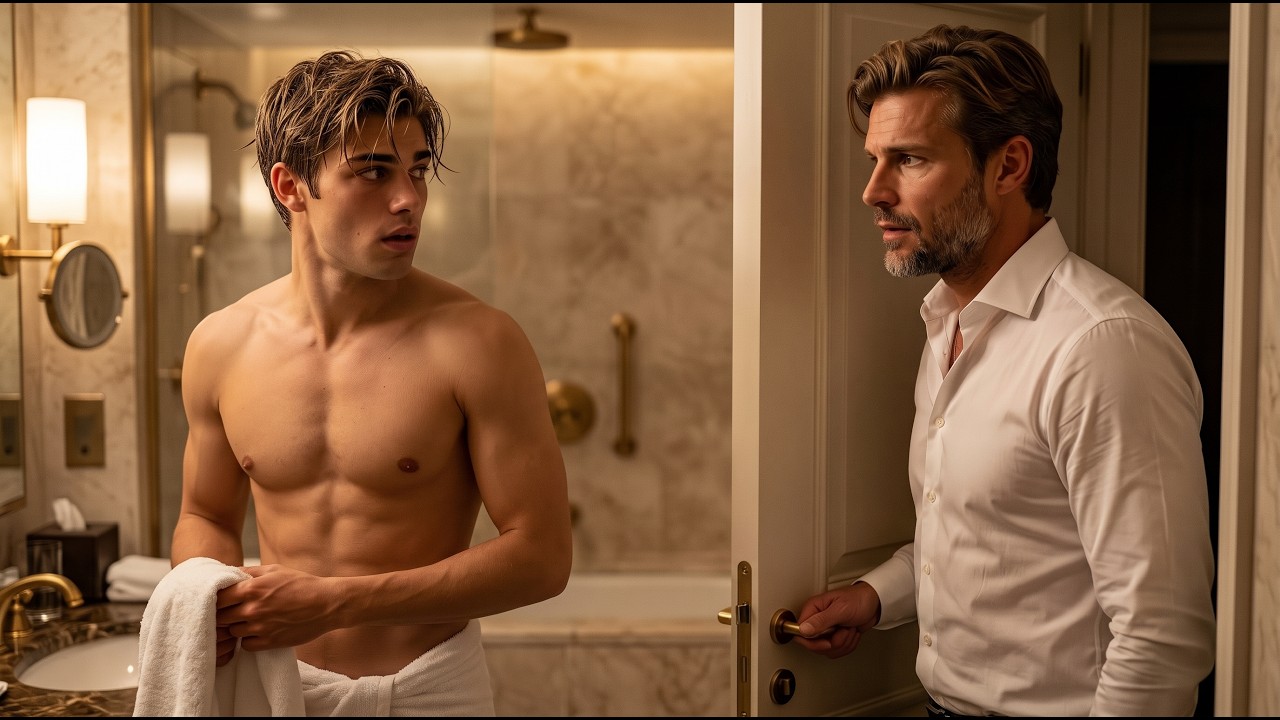
The bathroom door opened.
Rowan Pierce stepped out wearing black lounge pants and nothing else.
Our CEO froze with one hand still on the handle.
I froze too for exactly one second.
Neither of us said anything.
Rowan had a towel in his other hand, his dark hair still wet, water running from his temple down the side of his neck.
I had seen him in tailored suits, on stage under white conference lights, in investor interviews, in companywide meetings where he could make 600 employees stop whispering simply by looking up from his notes.
I had never seen him barefoot.
That detail absurdly was the one my brain chose to hold on to.
Not his bare chest, not the fact that I was standing in his hotel suite after midnight.
His bare feet on the gray carpet.
He stared at me.
I stared at him.
Then his expression changed.
Not embarrassment, not anger, recognition.
His eyes went to the key sleeve in my hand.
How did you get in?
His voice was quiet enough to scare me more than if he had shouted.
I lifted the card with this.
That isn’t possible.
I agree this is not my ideal Tuesday night either.
Normally, if I made a joke in front of Rowan Pierce, he ignored it with the patience of a man allowing a child to finish a story.
This time he crossed the room in three fast steps, took the sleeve from my hand and read the number.
His face went still.
Where did you get the card?
Registration desk 7 this morning.
Same one I’ve been using all day.
You used it before?
Three times on 17.
My actual room is 1724.
His eyes lifted to mine.
For a moment, the hotel room vanished.
So did the ridiculous fact that my CEO was half-dressed 3 ft away from me.
I knew that.
Look, I worked in product assurance at Sable Key.
The company Rowan had built around one promise.
A digital access credential should never open the wrong door.
And in my hand was proof that one just had.
Don’t move, Rowan said.
I was actually thinking of moving very quickly toward the hallway.
Eli, it was the first time he had ever used my first name without a title, a meeting agenda, or 10 other people in the room.
I stopped.
He grabbed a t-shirt from the bed, pulled it over his head, and reached for his phone.
I looked away too late.
Who are you calling?
No one yet.
That is not what phones are usually for.
His eyes flicked toward me.
I’m checking the credential log.
Of course, he was.
The house in was one of Sable Keys pilot properties.
Every mobile key, physical backup card, staff override, and emergency unlock generated an event in our access platform.
My team had spent 6 months certifying the software for the exact kind of failure that had apparently just put me in my CEO’s room while he was in the shower.
Rowan opened the internal diagnostics app.
I moved beside him before I thought about whether I should.
What’s the credential ID?
I read the tiny string printed beneath the barcode.
He typed it in.
The screen loaded.
My room assignment appeared first.
1724.
Then beneath it, a second line, 1824.
Temporary reassignment token generated 11:41 p.m. Neither of us spoke.
I had been downstairs at 11:41 trying to convince one of our integration partners that the demo environment was stable enough for tomorrow morning.
Rowan had been up here.
That token shouldn’t exist.
I said, “I know.
No, I mean the failover service isn’t supposed to create a second physical card mapping unless the original room is marked unavailable.”
His jaw tightened.
I leaned closer to the phone.
Pull the reason code.
He did.
Blank.
I felt the back of my neck go cold.
3 weeks earlier, I had filed an internal anomaly report about duplicate room associations appearing for less than 2 seconds during load testing.
The duplicates had never produced a successful unlock.
We couldn’t reproduce the event outside our staging cluster.
My director had marked it low confidence and scheduled it for investigation after the conference.
I had argued.
Not loudly.
I had learned not to argue loudly in rooms where someone else controlled the agenda.
But I had argued.
I wrote this up.
I said Rowan’s head turned.
What?
Not this exact event.
A shadow assignment during failover 3 weeks ago.
Build April 8th, 17.
I never saw it.
The words landed harder than they should have.
It was filed.
Under whose review?
Martin Hail.
Rowan closed his eyes for half a second.
Martin was my director, which meant I had just told the CEO that my boss might have delayed a security concern during the biggest customer event of the year.
I suddenly remembered where I was standing.
I should go.
No.
I looked at him.
He lowered the phone.
Not until we understand what happened.
Rowan, I’m in your room.
Yes, I noticed.
And you were also here.
I bit the inside of my cheek.
He looked down at himself, then at me.
For the first time, something almost human passed through his face.
Not a smile exactly, more like he realized the situation was objectively insane.
He walked to the closet, pulled out a gray sweater, and put it on.
I hated that I was relieved.
I hated more that part of me was disappointed.
Better, he asked professionally significantly.
That time, he did smile small, fast, gone before I could decide whether I imagined it.
Then he pointed toward the desk laptop.
We worked for the next 40 minutes shoulderto-shoulder in a room neither of us acknowledged was his bedroom.
I connected to the incident console.
Rowan opened the property gateway locks.
We compared timestamps, badge hashes, room state events, and retry sequences.
The more we looked, the worse it got.
At 11:39, the houseian’s property management system had lost connection to our cloud gateway for 23 seconds.
At 11:40, the local failover service had cued several credential updates.
At 11:41, when the connection returned, one of those updates had merged two room records sharing the same final three digits.
1,724 1824.
A stupid pattern, a dangerous result.
The match function is truncating the floor prefix during reconciliation, I said.
Rowan leaned over my screen.
That was fixed in April 8th, 12.
It was fixed for mobile keys.
He looked at me.
I turned the laptop so he could see the event type.
Physical_backup_card.
He swore quietly.
I had never heard Rowan Pierce swear.
Somehow that was more intimate than seeing him shirtless.
How many properties are running this build?
He asked.
Pilot environment nine.
Production none.
How many conference guests here are on physical backup cards?
I thought about the registration desk, the rows of envelopes, the staff handing out branded key sleeves because the mobile key demo had overloaded guest phones earlier in the day.
Maybe 150.
His expression sharpened.
I already knew what he was about to say.
We need to kill physical failover at this property.
Yes, without taking every room offline.
Give me 15 minutes.
He glanced at the clock.
You need 25.
I need 15.
You’re going to test it.
Obviously, then you need 25.
It annoyed me that he was right.
It annoyed me more that he knew how I worked well enough to be right.
Fine.
20.
He sat across from me at the desk.
At 10:07 a.m., I had a patch script ready.
At 1:15, we had tested it against a local replay of the incident.
At 119, Rowan authorized the property gateway change himself, bypassing the usual approval queue because the flaw could expose guests to unauthorized room access.
At 1:23, the vulnerable failover path was disabled.
I leaned back and realized my hands were shaking.
Rowan noticed.
He didn’t mention it.
He went to the mini bar, took out two bottles of water, and set one beside my laptop.
Drink.
Is that an executive directive?
No.
I opened the bottle.
He sat on the edge of the opposite chair and looked at the incident screen again.
You said you filed this 3 weeks ago.
I nodded.
Show me.
I pulled up the ticket.
There it was.
QA 8841.
Duplicate association observed under interrupted failover reconciliation.
Unable to reproduce successful unauthorized unlock.
Recommend deeper review before pilot expansion.
My name sat at the bottom.
Eli Navaro.
Martin’s comment sat beneath it.
Low confidence.
No customer impact observed.
Defer until postsummit sprint.
Rowan read the thread without speaking.
His eyes stopped on my last reply.
I had forgotten the exact wording.
If the duplicate survives long enough to bind a physical credential, we won’t have a display bug.
We’ll have the wrong person standing in the wrong room.
Rowan looked around his suite.
I wish the carpet would open and swallow me.
Well, I said, “I hate being right in such a literal way.”
He looked at me again.
This time, the smile stayed a second longer.
You usually are.
Only when no one listens early enough for it to be useful.
The words were out before I could soften them.
His smile disappeared.
I closed the ticket.
“Sorry, don’t be.”
That sounded more pointed than I intended.
“Did it?”
I looked at him.
He was watching me in that unnerving way he watched a dashboard when he thought the numbers were hiding something.
You think I don’t listen?
He said, I think you’re the CEO of a company with 600 employees.
Listening is probably Triov.
That’s not what I asked.
There it was.
Rowan’s favorite weapon.
Precision.
I looked at my bottle instead of him.
I think information changes on its way up.
He was quiet.
And I think, I added, people learn which information gets rewarded.
The air conditioner clicked on.
For a moment, all I heard was the low rush of air through the vent.
Was Martin rewarded for this?
Rowan asked.
I don’t know.
That’s not what you meant.
No, he waited.
I knew I could stop.
I should have stopped.
But something about being in the wrong room at 1:30 in the morning had broken the normal geometry between us.
There was no conference table, no glass wall, no department hierarchy mapped and chairs, just a desk too small for both our laptops and a bug that should never have made it this far.
I meant that launch dates get rewarded.
I said smooth demos get rewarded.
People who tell executives what can ship get remembered more than people who explain why it shouldn’t.
Rowan’s fingers tightened once around the cap of his water bottle.
You think that’s what I reward?
I exhaled.
I think that’s what the company thinks you reward.
He looked away.
That was worse.
I had expected defense.
A clip response.
Maybe a reminder that I didn’t have enough visibility into executive decisions.
Instead, he stared toward the windows where the city lights reflected faintly against the glass.
Tomorrow morning, he said, you’re coming to the incident review.
Martin will love that.
Martin is not my immediate concern.
Easy for you to say.
He doesn’t approve your performance review.
Rowan’s gaze snapped back to mine.
I almost laughed at the expression on his face.
You really don’t know what people say to you, do you?
Apparently not.
That was a joke.
A bad one.
It was 1:30 in the morning.
My standards are lower.
His mouth shifted again.
There it was.
He almost smiled.
I had spent 2 years thinking Rowan Pierce was incapable of spontaneous expression.
It turned out he was capable.
He just rationed it.
And suddenly, dangerously, I wanted another one.
I stood before that thought could become something worse.
If the patch holds, I should get out of your room, Eli.
I stopped near the door.
He picked up the cardboard sleeve that had started all of this.
1824.
He turned it over between his fingers.
Don’t throw this away.
Why?
Because tomorrow someone is going to tell us this couldn’t have happened.
I slipped the sleeve into my jacket pocket.
And this proves it did.
You standing here proved it did.
His eyes met mine.
The room seemed to shrink.
He looked tired now.
Not CEO.
Tired.
Not polished.
Overscheduled.
I have three more calls.
Tired.
Just tired.
I noticed a faint red mark at the bridge of his nose where his glasses usually sat, though he wasn’t wearing them.
A tiny thing, nothing.
It made something inside me shift anyway.
“Good night, Rowan,” I said.
He didn’t correct me for using his first name.
“Good night, Eli.”
The hallway outside was empty.
I walked to the elevator, pressed 17, and only when the doors closed did I realize I had left my suitcase in 1724 all evening, and never once checked whether my own key still worked.
It did.
I stood inside my actual room staring at my bed and felt absurdly disappointed by how ordinary everything looked.
The next morning, Martin Hail tried to tell the incident review that the failure was a hotel configuration issue.
I had been in the room for 12 minutes when I understood exactly why Rowan had told me to keep the key sleeve.
There were nine people around the conference table.
Rowan, our chief product officer, two engineers from platform infrastructure, the houseian’s technology director, hotel operations, legal, Martin, and me.
Martin clicked through three slides explaining how the hotel’s property system had produced malformed room data during a temporary network outage.
Technically, none of it was false.
That was what made it dangerous.
The malformed payload created an edge condition.
He said, “Our system displayed a temporary secondary assignment, but there is no evidence that it resulted in unauthorized access.”
I looked at Rowan.
He was sitting at the head of the table in a charcoal suit, hair dry, expression unreadable.
If I had not seen him barefoot 7 hours earlier, I would have believed the man in front of me slept in a conference room and charged by USB.
He didn’t look at me.
Martin continued.
Given that no guest impact has been confirmed, my recommendation is that we patch the mapping issue after the summit and proceed with today’s demonstration as planned.
Rowan folded his hands.
No guest impact has been confirmed.
Martin nodded.
Correct.
Eli.
Everyone looked at me.
My pulse kicked once hard.
Rowan’s gaze finally met mine.
Show him the card.
I reached into my notebook and put the sleeve on the table.
1824.
Martin frowned.
“What is that?”
“My backup key,” I said.
“Your room is 1724.”
“Exactly.
Silence.”
The Houseian’s technology director leaned forward.
It opened.
1824.
I nodded.
Martin looked at me, then at Rowan.
His face changed as the rest of the story assembled itself.
“How do we know the lock wasn’t?”
“Because I was inside,” Rowan said.
“No one moved.
I saw the chief product officer’s eyebrows rise a fraction.”
Rowan didn’t explain further.
He didn’t need to.
Martin stared at the key sleeve.
Then we have a confirmed unauthorized entry.
Yes, Rowan said.
His voice stayed calm.
And we had a prior report indicating the failure mode was possible.
Martin looked at me.
I could practically hear the performance review writing itself.
Then Rowan did something I wasn’t expecting.
He turned the room’s display toward the ticket log and said, “Eli identified the risk 3 weeks ago.
We did not escalate it appropriately.
That’s on our process and ultimately on me.
We are not calling this a hotel configuration problem.
The word should have felt vindicating.
Instead, shame moved through me so quickly.
I almost missed the relief underneath it.
My ticket was right.
That part mattered.
So did the fact that Martin had marked it low confidence and I had let the conversation end there.
3 weeks ago, I had told myself I had done my job because the warning existed in writing.
Sitting in that room looking at a key sleeve that should never have opened Rowan’s door.
I wasn’t sure that was true anymore.
We canled the live physical key demonstration.
That decision cost us immediately.
By lunch, rumors moved through the summit that Sable Key had pulled a feature because of a technical issue.
By two, a potential client delayed a signing meeting.
By four, our communications team was drafting language for pilot properties in case the incident required formal disclosure.
I spent most of the day in a temporary war room on the 18th floor with engineering.
Rowan came in twice.
The first time he asked for status.
The second time he carried in four paper bags, dropped them in the center of the table and said, “I have no idea what any of you eat.
Fix that yourselves.”
Nina from Platform Engineering opened one and laughed.
This one is three salads.
Then someone here is having a very healthy crisis, Rowan said.
I looked up from my laptop.
He did not ask whether I had eaten.
He did not hand me a perfectly chosen order.
He wasn’t that kind of person.
And suddenly, I was glad he wasn’t pretending to be.
He pointed at my screen instead.
Did the duplicate survive the second replay?
For 41 milliseconds, long enough to bind.
Not after the patch.
Before it, yes.
His expression tightened.
Put that sentence in the customer update.
Martin standing near the whiteboard said we may want to phrase it less aggressively until legal.
Rowan didn’t look at him.
Is the sentence true?
I answered before anyone else could.
Yes.
Then it stays.
He walked out to his next call.
I stared at the doorway a moment longer than I should have.
Not because he had remembered what I liked.
Because he had just chosen the harder sentence when an easier one was available.
In one, Sable Key was still the polished silver booth near the center aisle with looping demos on three screens and salespeople telling hotel executives that secure access could feel effortless.
In the other 12 floors above, we were running failure simulations against every pilot property and trying to prove that effortless had not become careless.
I preferred the second reality.
Systems were easier than people.
A system lied only when someone had told it to.
At 9:10 the next morning, Martin pulled me into the hallway.
You should have come to me before taking this to Rowan.
I did come to you 3 weeks ago.
You filed a low confidence anomaly.
That’s not the same as escalating a confirmed defect.
The answer was defensive, but not completely wrong.
That was what hurt.
Before Sable Key, I had worked at Northline SysteMs. Once I had raised a serious release risk, watched management lower the severity, and let the meeting end because I was tired of being the difficult person in the room.
The failure later happened almost exactly as I had warned.
No one blamed me.
I blamed myself anyway, not for being overruled, for knowing I should push again and choosing silence because the process gave me somewhere to hide.
3 weeks ago, when Martin deferred QA 8841, I had done a cleaner version of the same thing.
I filed the warning and let myself believe the ticket was enough.
“You’re right about one thing,” I said.
Martin’s eyebrows lifted.
“I should have escalated it farther.”
“He clearly had not expected that, but that doesn’t make the downgrade correct.
It means both things failed.
You lowered the risk.”
I let that end the argument.
“I’m not doing that again.”
His face hardened.
Be careful.
I am.
That’s the point.
The war room door opened behind me.
Rowan stepped into the hallway.
He looked from Martin to me.
Am I interrupting?
Martin answered too quickly.
No, I said yes, but we’re done.
Rowan’s eyes stayed on me for a beat, then moved to Martin.
I need the original pilot signoff chain before noon.
All of it.
Martin went back inside.
I headed for the elevators.
Rowan caught up near the windows.
You told him he was right.
About one sentence.
Most people don’t do that in the middle of a fight.
Most people are smarter.
He ignored the joke.
Northline.
My stomach tightened.
You heard that?
Enough.
You don’t have to explain.
The elevator arrived.
Two conference attendees stepped in with us, so neither of us spoke until they got off at 12:00.
When the doors closed again, Rowan said, “You looked angrier at yourself than at Martin.
I watched the floor numbers change.”
“Later,” I said.
He nodded.
“No pressure, no rescue.”
At the lobby, he said, “Writing the warning down still mattered.”
It did.
And pushing now matters, too.
The doors opened.
He walked toward the client meeting, already checking his phone.
I followed, unsettled by the fact that he had noticed the difference between being right and standing behind what you knew.
The Houseian meeting went badly, which was useful.
Their CIO wanted a written incident summary by the end of the day.
Operations wanted every physical conference card reissued.
The general manager wanted to know why a pilot feature had been used before every failover path had been tested under live property conditions.
I answered what I could.
When I didn’t know, I said I didn’t know.
Rowan did the same.
Then the CIO asked whether we could guarantee the issue was isolated to the Houseian’s network interruption.
The room went still.
It was exactly the kind of question executives answered with reassuring fog.
Rowan looked at me, not as permission, not as warning, as a question.
I shook my head once.
He turned back to the CIO.
No, we can’t guarantee that yet.
The contract team visibly winced.
I almost smiled.
Later in the corridor, Rowan caught me doing it.
Something funny?
You just cost sales three years of their lives.
They’ll recover.
You said I don’t know twice in one meeting.
Rumors are going to start about what?
That you’re mortal.
He looked at me, then put one hand over his heart.
Devastating.
I had to bite my lip to keep from laughing.
At 9:30 that night, the war room finally emptied.
I was staring at a graph when Rowan set a folder beside my laptop.
That is the least comforting object anyone has ever brought after 14 hours of incident response.
It’s not for comfort.
Inside were three old customer escalations with my name on them.
I looked at him.
Why do you have these?
I asked operations for cases where assurance contradicted the release team and turned out to be right.
He tapped the first.
Maui telemetry said a service door sensor was failing.
You called housekeeping.
The door closer was too aggressive.
They were propping it open to move carts.
Eight people modeled a sensor fault for 2 days.
You asked one person what she was doing at 2:30 every afternoon.
He tapped the second Tacoma.
The pilot report said the credential timeout was within tolerance.
You wrote, “We don’t know that.
We only know the lab stayed within tolerance.”
Then the third Phoenix sales wanted couldn’t be reproduced.
You changed it to has not yet been reproduced.
I stared at him.
You remember my disclaimers?
I remember warnings.
Do you remember anything normal about me?
He considered it.
Probably not.
Birthday?
No.
Favorite food?
No.
That is almost reassuring.
His fingers rested on the Phoenix packet.
I remember when people tell me something I don’t want to hear.
The joke left me.
Most executives say that.
I’m not saying I always act on it.
That was different.
Why pull these tonight?
Because I missed your ticket.
It never reached you.
Same result, not the same responsibility.
No, but if people think bad news has to be clean before it reaches me, that’s still my problem.
I looked at him.
You really distrust?
Easy answers.
Yes.
Why?
For a second, I expected the executive version of him to return.
Instead, he said, Barcelona.
I was 28.
I came back to my hotel after dinner, and my room had been opened with a clone service credential.
Laptop gone, passport gone, contract drafts gone.
Jesus.
The lock showed no forced entry.
The hotel told me I must have left the door unsecured.
2 days later, they found footage of a contractor using a copied staff card on three floors.
I thought of the cardboard sleeve in my pocket.
1824.
So, you built Sable Key because a system couldn’t prove what happened to you.
Partly, what stayed with me was being told something couldn’t have happened because the evidence wasn’t there yet.
So, you decided to build better evidence.
Yes.
And now your own system let the wrong employee into your room.
His mouth tightened.
Yes.
I understood something then.
Rowan didn’t worship control because he liked authority.
He trusted proof because uncertainty felt like being told his own experience was unreliable.
It made sense.
It also explained why he watched systems more easily than people.
He nodded at the folder.
Your turn.
North line.
I exhaled.
We built hospital operations software.
I found a failover bug that could suppress a high priority lab notification after a server reconnect.
I rated it severe.
He stayed quiet.
Management wanted moderate because we hadn’t seen it in production.
Six people had reasons.
Release date.
Contract timing.
No confirmed patient impact.
I was 26 and tired of slowing everyone down.
When they asked if I could live with moderate, I said yes.
Then it happened.
2 weeks later.
A client lost a stat alert for several hours.
They caught it before permanent harm, but the release was suspended.
I looked down at the reports.
Everyone tells that story like management ignored QA.
They did, but what I remember is knowing I should push again and deciding I’d pushed enough.
Rowan did not rush to absolve me.
That helped.
I left 3 months later.
I said I didn’t like who I’d been in that room and now you keep pushing.
I try.
You stopped at Martin.
The words landed cleanly.
Yeah.
Why?
Because the ticket let me pretend my part was finished.
He nodded once.
I know that trick.
For a while, we sat with the building humming around us.
Nothing about the moment was romantic.
No low lights, no music, just two men admitting systems could fail long before the software did.
I asked, “What do you do when someone tells you something you don’t want to hear?”
He looked at the old reports.
I remember it.
That’s not the same as believing it.
No.
Or acting on it.
No.
A beat passed.
I’m working on that part.
It was the least certain thing he had said all week.
I liked it more than I should have.
The next evening, Rowan asked me back to 1824 to verify the patched physical card behavior in the original room.
The door was propped open with the security latch when I arrived.
Door stays open, he said.
I wasn’t going to ask.
You were thinking it.
You don’t know what I’m thinking.
His eyes lifted to mine.
No, that one word carried more weight than it should have.
We worked.
We generated valid and invalid credentials, simulated network drops, forced room state conflicts, and confirmed that 1724 could no longer become 1824.
Room service arrived halfway through.
We ate beside the test deck because neither of us had the energy to pretend this was a normal dinner.
You really read those incident reports?
I asked.
The ones that change release decisions.
And you remember who wrote them?
Usually, but not birthdays.
Almost never.
Favorite restaurants?
No.
Coffee orders?
I know.
Mine.
Your future dating life is in serious trouble.
The sentence slipped out.
Rowan went still.
I set down my fork.
Sorry.
For what?
Making that personal.
His gaze stayed on me.
It was already personal.
My pulse shifted.
The open hotel door remained 10 ft away.
What’s the first warning of mine you remember?
I asked Maui because I solved it.
No, because everyone wanted the telemetry to be right and you didn’t care which answer made the product look better.
You cared which answer matched what the customer was actually living with.
I looked down at my plate.
He continued, “Cedar Bay 2, you delayed the pilot because the front desk override made sense in our demo and no sense at 2 in the morning with one clerk working alone.
Sales loved me.
They survived.
You remember all of that?”
You tell inconvenient truths.
There was no flirtation in the sentence.
That was why it hit harder than one.
I cleared my throat and turned back to the laptop.
The next test failed.
One invalid card took 4 seconds too long to reject after a network restore.
We stared at the screen.
Then I started laughing.
What?
Rowan asked.
This room hates us.
He held out for half a second, then laughed too.
We changed a timing parameter, reran the cycle, and got a clean result.
While I packed the test deck, I asked, “Does all the evidence actually make you trust people more?”
His hands stopped on the logs.
“No,” the honesty surprised me.
“It makes me trust the evidence more.”
“That’s not the same thing.”
I know.
He looked toward the open door.
“People are harder because they don’t produce logs.”
Because two people can remember the same thing honestly and differently.
Because someone can mean well and still be wrong.
Systems can do that, too.
Systems don’t ask you to love them.
The room went quiet.
His face changed as if he wanted the sentence back.
“That came out wrong,” he said.
“More revealing than intended isn’t the same as wrong.”
He gave me a look.
I smiled.
Then I took the 1824 sleeve from my pocket.
“Practice something.
Why did you freeze when you opened the bathroom door and saw me?”
He stared at the cardboard.
I don’t know.
I blinked.
Wow.
You keep rewarding that answer.
I do.
Try the part you know.
His eyes lifted to mine.
I knew exactly who you were.
Not a random employee.
The person whose reports I’d been reading for 2 years.
The person who had written the warning that was now standing in front of me is proof.
My heartbeat picked up and the other part.
His jaw tightened.
Still don’t know.
Coward.
A brief smile.
Possibly.
I put the sleeve away.
For what it’s worth, I froze too because I was half-dressed.
Let’s not destroy the integrity theme with a dishonest answer.
He laughed.
At the door, he said, “I’ll lie.”
I turned.
The reports aren’t why I trust your work.
Reports are evidence after the choice.
I trust the choice you keep making before you know whether anyone will like it.
That was worse than flirting.
Flirting I could have survived.
Good night, Rowan.
Good night.
The door stayed open until I reached the elevator.
We flew back to Seattle on Friday.
Nothing happened on the plane, which was technically true and emotionally useless.
On Monday, the incident followed us home.
Remediation plans, code reviews, customer calls, audit requests, and a post-mortem I was asked to co-author.
Martin lost final signoff authority while leadership reviewed YQA.
8841 had not been escalated.
No one fired him.
I didn’t want revenge.
I wanted the company to stop teaching people that inconvenient information should be sanded smooth before it traveled upward.
For 4 days, Rowan and I kept everything between us professional.
I told myself that was a relief.
On Wednesday afternoon, we had the executive postmortem, not the engineering version, the expensive version with legal, product, sales, customer success, and three vice presidents who had not been in Chicago, but had strong opinions about what the incident should be called.
The argument started with one phrase, configuration collision.
A vice president from commercial operations wanted it in the customer summary because technically the hotel had supplied the shortened room identifier that triggered the bug.
I read the sentence twice.
Then I said, “No.”
The room quieted.
Martin looked at me from across the table, not angry this time, mostly tired.
The vice president frowned.
No to what that phrase.
It makes the hotel sound like the cause.
Their configuration was part of the cause part.
Our reconciliation service accepted ambiguous data and created a valid second room mapping.
That’s our failure.
Someone from legal said, “We need to be careful about assigning liability before the review is complete.
I’m not assigning liability.
I’m describing the system behavior.”
The commercial VP leaned back.
We can describe that without volunteering language customers will use against us.
There it was.
The old room, different table, different industry.
Same pressure to make a warning easier to live with.
My pulse kicked hard enough that I could feel it in my throat.
For one second, I wanted to stop.
I had made the point.
Everyone had heard me.
The record would show that I objected.
That used to be where I quit.
I looked at Rowan.
He had not spoken once.
He wasn’t rescuing me.
He wasn’t signaling what answer he wanted.
He was waiting.
So, I kept going.
If a customer reads this summary and concludes the unsafe behavior only exists when a hotel configures something incorrectly, they will make the wrong operational decision.
We don’t know enough to let them believe that.
The vice president looked at Rowan.
Do you agree?
Rowan did not look at the draft.
He looked at me.
Can you support that statement from the incident record?
Yes.
Then I agree.
The vice president’s mouth tightened.
You haven’t reviewed his supporting notes?
No.
You usually do.
I usually do.
A beat passed and now Rowan’s voice stayed calm.
Now I’m listening to the person who has spent three days inside the failure.
If he’s wrong, the record will show it, but I’m not going to soften a customer warning because certainty would be more convenient.
Nobody said anything for a moment.
Then legal suggested different wording.
We changed the sentence to during recovery, Sable Key accepted an ambiguous room identifier and failed to reject a conflicting credential assignment.
It was ugly.
It was accurate.
I loved it.
After the meeting, Rowan passed me in the hallway.
He did not stop.
He only said, “Good push.”
I answered, “Good listening.”
Neither of us turned around.
I spent the rest of the day thinking about that exchange far more than was professionally useful.
Then Thursday at 7:12 p.m. my phone bust.
Rowan, roof terrace, 10 minutes.
If you want, if you want.
I read those three words twice.
The roof terrace on the 23rd floor was mostly empty after business hours.
In March, the wind off Elliot Bay made it a bad place for any conversation you wanted to pretend was casual.
Rowan was standing near the glass railing in a dark coat when I arrived.
This is a terrible meeting location, I said.
It’s not a meeting.
My pulse shifted, right?
Terrible non-meating location.
For several seconds, we looked at the city.
The incident review closes tomorrow, he said.
I know.
Your post-mortem was good.
You brought me onto a freezing roof to compliment my documentation.
No.
He rubbed his thumb along the edge of one glove.
I had seen him face furious customers and board members without losing a sentence.
Now, language seemed unreliable.
The worst night this company has had this year, he said, was the first time I trusted someone beside me without checking their work.
I stared at him.
That is an unbelievably bad confession.
I know.
Try again.
He looked at me.
I want to take you to dinner.
There it was.
No metaphor, no risk model pretending to be romance.
Just a sentence he could not outsource to a system.
Better, I said, his shoulders loosened a fraction.
Is that a yes?
Not yet.
You’re the CEO.
I’m an employee.
If we do this badly, I pay for it differently than you do.
He didn’t interrupt.
No special projects because you like me.
No disappearing projects because you like me.
No promotion or compensation decision you touched.
If I say stop, it stops.
If I tell you something feels wrong, you don’t explain why the evidence says it shouldn’t.
His face changed at the last sentence.
Agreed.
You already talked to counsel, didn’t you?
A pause.
Yes.
I closed my eyes.
Of course you did.
Without naming you, board chair disclosure, HR review, independent compensation, and performance decisions.
You conducted a control assessment before asking me to dinner.
I wanted to know what I was asking you to risk.
That answer was annoyingly good.
Do you know my birthday?
I asked.
No.
My coffee order?
No.
Favorite restaurant?
No.
You’re terrible at the normal part of this.
A small smile.
I can learn.
What do you know?
The smile faded.
You say, “I don’t know.”
When everyone else is trying to sound certain, you ask the person using the system before you blame the system.
You change words when the original sentence claims more than we know.
You filed QA 8841.
And when Martin said you should have escalated it farther, you admitted he was right about that part even while you were furious.
My chest tightened.
None of that tells you whether I’ll be fun at dinner.
No, I might talk about access logs all night.
That would be familiar.
I laughed.
Then I became serious again.
Rowan, I don’t want to be a case you solved.
You don’t get to eliminate every risk before deciding whether you want this.
He looked past me at the city lights.
I know.
I waited.
He corrected himself.
No, I understand the sentence.
I’m not sure I know how to do it.
The admission changed something because it was incomplete.
He had stopped before certainty and left the answer honest.
That’s better, too, I said.
His eyes came back to mine.
So I stepped closer.
Dinner Saturday with me.
Don’t ruin it.
Clarifying scope.
Yes, Rowan.
With you?
He nodded once like someone had approved a proposal that terrified him.
I looked at his mouth.
He noticed.
Can I kiss you?
He asked.
His hands stayed at his sides while he waited.
Yes.
He stepped forward.
His fingers rested lightly against the side of my neck.
I closed the rest of the distance.
The kiss was warm, brief, and somehow more destabilizing than walking into his hotel room while he was half-dressed.
He pulled back.
I stared at him.
That’s it.
His eyes widened slightly.
You said, “Kiss singular.”
I laughed and grabbed his coat.
Stop being precise.
So, he kissed me again.
My back touched the freezing glass railing and I jerked forward with a curse.
Rowan pulled away instantly.
What happened?
The railing is made of ice.
For half a second, he looked genuinely alarmed.
Then he laughed, forehead dropping against mine.
That was how our first kiss ended.
Both of us laughing because no amount of due diligence had accounted for the temperature of the glass.
It was perfect.
For the next 6 weeks, we built something neither of us knew how to name without making it sound more stable than it was.
We dated carefully at first.
Saturday dinner became Wednesday walks after work.
Then Sunday mornings, then the toothbrush I left at Rowan’s apartment because carrying one back and forth began to feel ridiculous.
HR knew.
The board chair knew.
My compensation review was reassigned to a committee Rowan did not sit on.
Martin, to my surprise, handled the disclosure professionally and never mentioned it to me.
At work, Rowan was still Rowan.
He disagreed with me in meetings.
Once he rejected a proposed insurance budget I had helped, write.
I went home furious.
He called an hour later.
Are we discussing the budget as co-workers or the fact that you’re mad at me as people?
Both.
A pause.
Those may require different calls.
Good start.
He still did not remember my coffee order.
Twice he bought the wrong thing and drank it himself rather than pretending he had meant to.
But he remembered every time I changed a risk rating and asked why.
He remembered when I said, “I don’t know yet.”
And never tried to turn it into probably fine for a client.
He remembered the names of front desk agents who had found workflow failures our own simulations missed.
That was his language of attention.
Mine became asking him questions with no clean answer and waiting long enough for him not to manufacture one.
We learned each other outside work more slowly.
He read history when he couldn’t sleep.
I reorganized his refrigerator without permission.
He hated being touched unexpectedly from behind.
I hated anyone reading over my shoulder.
He kept hotel key sleeves from trips in a box in his home office because he liked comparing how properties explained access and emergency procedures.
When I found the box, I laughed for five straight minutes.
This is your hobby.
Some people collect watches.
You also collect watches.
Then I have two hobbies.
I pulled the battered sleeve from Chicago out of my wallet.
1824.
I had kept it too.
His expression changed when he saw it.
You still have that evidence of the bug.
I looked at him among other things.
He took it from my fingers, then tucked it back into my wallet instead of adding it to his box.
Keep that one, he said.
I did.
The problem with happiness is that it makes ordinary days feel trustworthy.
That was why the leak hurt so much.
It happened on a Tuesday morning in late April.
A trade publication called lodging current published a story with the headline sable key pilot flaw allowed employee toe enter CEO’s hotel room.
I found out because Nenina from platform engineering sent me the link with one message.
Oh The article knew too much.
It knew the room numbers had shared the final three digits.
It knew the failure occurred during a 23-second gateway outage.
It knew a prior QA report had identified duplicate associations before the summit.
It even knew the phrase we used internally for the patch, collision safe reconciliation.
Only about 20 people had access to the complete incident file.
I read the article twice.
Then I walked straight to Rowan’s office.
His assistant waved me in without asking.
He was on the phone.
Call you back, he said, and ended it.
I held up my phone.
How bad?
Three pilot clients called 21 emergency reviews.
Legal is trying to determine whether the story contains any information that triggers additional disclosure obligations.
Do we know who leaked?
No.
The answer came too fast, I noticed.
So, did he?
What?
I asked.
He looked toward the glass wall behind me.
Nothing yet.
My stomach tightened.
Rowan.
He got up and closed the office door.
That should have felt familiar by then.
Instead, something about it made me cold.
Legal is reviewing access to the incident file, he said.
Standard response.
Okay.
There were 23 people with full access more with partial.
Okay.
He put both hands on the back of his chair.
The article paraphrases something you said in Chicago.
I went still.
What?
The line about the wrong person standing in the wrong room.
I stared at him.
That sentence had been in my original ticket.
It had also been read by everyone in the incident review.
You’re not serious.
I didn’t say I thought it was you.
Then why are you telling me this?
He looked frustrated, which made my pulse climb.
Because I don’t want you blindsided by the review.
What review?
A pause.
Too long.
Rowan legal asked security to preserve access logs and communications for everyone who had the file.
Everyone?
Yes.
Including me?
Yes.
The room seemed to tilt slightly.
My communications work systems only.
Email, Slack, file access.
Eli, did you approve it?
He didn’t answer.
That was the answer.
I took one step back.
You approved a review of my messages without telling me.
I approved the same preservation process for 23 people.
That’s not what I asked.
His jaw tightened.
Yes.
I laughed once because the alternative was saying something I could not take back.
Wow.
It isn’t an accusation.
You keep saying things that aren’t supposed to mean what they mean.
This is a security incident.
I know what it is.
Then you know we can’t exempt someone because I’m involved with him.
I did not ask to be exempt.
My voice cracked hard enough that we both heard it.
I lowered it.
I asked whether you trusted me.
Those are different questions.
That sentence ended us.
Not immediately, not officially, but I felt it happen.
I looked at the man I had slept beside two nights earlier.
The man who had once trusted my answer in a client room when everyone wanted reassurance and understood that when fear arrived close enough to touch him, he still trusted procedure before he trusted the person standing in front of him.
Maybe that was reasonable for a CEO.
It was unbearable from the man I loved.
I had not said that word to him yet.
Loved it appeared in my head at exactly the wrong time.
You should have told me before you approved it, I said.
I couldn’t interfere with the review.
Telling me my records were being preserved is not interference.
Legal advised limited notification until stop.
He stopped.
I had never used that tone with him.
His hands dropped from the chair.
Don’t make legal your mouth.
I said, “You made a choice.”
He looked at me for once.
He had nothing precise enough to hide behind.
Yes, he said.
The honesty hurt worse.
I nodded.
Okay, Eli, I need to go.
He came around the desk, then stopped before getting close.
Don’t leave like this.
My whole body went rigid.
How should I leave?
That’s not what I meant.
No, I know.
You keep not meaning things.
I opened the door.
He said my name again.
I did not turn around.
That night, I took my toothbrush home.
For 9 days, Rowan respected the stop I had given him.
No flowers, no late night calls, no appearing at my apartment with food and a face that made it difficult to stay angry.
At work.
He treated me exactly as he had before we dated, which was somehow both a relief and a fresh kind of pain.
The investigation continued.
Security preserved locks.
Legal interviewed everyone with access.
The reporter refused to identify the source.
Two pilot clients paused expansion and one threatened to terminate unless Sable Key could prove the leak had not come from an employee handling their data.
I answered every question asked of me.
Then I went home and hated that part of me still wanted Rowan to call.
On the 10th day, Nenah came to my desk with two coffees, remembered I didn’t drink coffee after 4:00 and replaced mine with water from the kitchen.
You look awful, she said.
Thank you.
I mean emotionally.
Your skin is fine.
I stared at her.
She sat on the edge of the neighboring desk.
Did you hear about Crestwell?
Crestwell Hotels was the client threatening to walk.
No.
They wanted a name.
I frowned.
A name for what?
The leak.
Their council apparently said they wouldn’t continue the pilot unless Rowan could certify that the person responsible no longer had access to client systeMs. My chest he tightened.
We don’t know who did it exactly.
She took a sip of coffee.
So Rowan told them he wouldn’t fire or suspend anyone based on suspicion.
They terminated the pilot this morning.
I said nothing.
Creswell was not our biggest customer, but they were the first major chain willing to test Sable Key across multiple properties.
Losing them would be public expensive.
Why are you telling me?
Nah shrugged.
Because half the floor thinks he’s lost his mind, and the other half suddenly likes him.
I thought you’d enjoy the confusion.
She walked away.
I sat very still.
Rowan did not message me.
That mattered.
3 days later, the investigation found the source.
Not an employee.
A risk consultant working for one of the pilot properties had downloaded the remediation packet from the client portal and forwarded it to a former colleague at lodging current.
The packet included the original incident chronology as an appendix which contained my ticket language and the patch terminology.
Security cleared every sable key employee.
My anger should have disappeared.
It didn’t.
The result proved I had not leaked anything.
It did not prove Rowan had been right to hide the review from me.
Apparently, he understood the difference.
The only message he sent was four lines.
The investigation cleared you.
I know that doesn’t fix what I did.
I should have told you before I approved the review, and I should not have treated procedure as a substitute for trust.
I won’t ask you to answer this.
I read it five times.
Then, I put my phone face down and did not answer.
The following week, I presented a proposal to the product council that I had been building since Chicago.
I called it field assurance.
The idea was simple.
Stop testing hotel access as if hotels were clean diagraMs. Build a team that spent time with front desk agents, housekeepers, maintenance staff, night auditors, and actual guests.
Test not only whether the software behaved as designed, but whether the design survived the way people really worked.
I added one rule that had nothing to do with hotel floors and everything to do with Northline.
Any high severity field concern could be downgraded, but not silently.
The person who raised it had to be in the review.
The reason had to be written in plain language, and we haven’t seen harm yet, could not substitute for evidence that the risk was safe.
Before Chicago, I would have routed the proposal through Martin and waited for permission.
This time I submitted it directly through the internal innovation process and volunteered to defend it in the review.
The council pushed hard.
One vice president asked whether the escalation rule would slow releases.
Sometimes I said, “And you’re comfortable with that?”
A year earlier that question would have sent me searching for a softer answer.
This time I said, “I’m comfortable making the trade-off visible.
If we still ship, we should know what we’re choosing.”
The council approved a six-month pilot.
The new team would report to the chief product officer, not Martin.
Rowan had no vote in the decision.
I checked.
That mattered, too.
I moved desks 3 weeks later.
By then, Rowan and I had been apart for more than a month.
I missed him in strange places.
A customer saying, “We can probably assume.”
A hotel key sleeve left beside an airport kiosk.
A meeting where someone actually said, “I don’t know.”
And nobody punished them for it.
Missing him did not mean I was ready.
That was something I was learning without borrowing the lesson from anyone else.
You could want a person and still require different behavior from him.
You could be hurt and still admit the good parts had been real.
Neither truth canled the other.
In June, Field Assurance ran its first property study at a hotel in Portland.
We found three workflow problems nobody had caught in simulation.
None were severe.
All were real.
I wrote the report and sent it to product leadership with the sentence nobody on my old team would have enjoyed.
These findings are small because we found them early, not because the conditions that produce them are unimportant.
Rowan replied to the group thread with one sentence.
Agreed.
Keep the sentence.
He did not message me privately.
He did not use the thread to reach me.
That restraint mattered more than another apology would have.
No private note followed.
No attempt to turn professional praise into a personal opening.
He left the work standing on its own.
That was the first time I wondered whether we might have another chance.
The second came in August.
Sable Key held a customer forum in Chicago at the House and Grant.
The location was deliberate.
Rowan had insisted we return to the property where the failure happened and show customers what had changed.
Field Assurance was asked to present the new testing model.
I said yes before I could think too hard about the hotel.
When I checked in, the front desk agent handed me a key sleeve.
1,724.
I laughed out loud.
She looked concerned.
Is there a problem, sir?
No.
Sorry.
Long story.
My presentation was the next afternoon.
Rowan sat in the second row.
He did not introduce me.
He did not stand beside the stage.
He listened.
When questions came, he let me answer them.
Afterward, while customers move toward the reception, I found him alone near the ballroom doors.
For a second, we just looked at each other.
He had changed less than I expected and more than I could explain.
Same controlled posture, same dark suit, same careful eyes, but he did not cross the distance between us.
Good presentation, he said.
Thank you.
The housekeeping test in Portland was smart.
They were smarter.
We just finally asked them.
A small smile.
Still doing that.
Apparently, silence settled between us.
Not awkward.
Not easy either.
I reached into my jacket pocket and pulled out a battered piece of cardboard.
1824.
His eyes dropped to it.
He looked genuinely stunned.
You brought that.
I found it in my wallet this morning.
You still carry it?
Not always.
That was a lie.
We both knew it.
He looked toward the elevators.
Eli, I don’t want to assume.
Good.
He stopped.
I turned the sleeve over in my fingers.
You know what I kept thinking about?
He waited.
The first night you told me not to throw this away because someone would say what happened was impossible.
His face went still.
Yeah, that mattered to me more than I understood.
Then you believed the event before the system could explain it.
He lowered his eyes.
I continued before I lost the nerve.
At Northline, I knew something was wrong and let people talk me into a quieter version of the truth.
I promised myself I would never do that again.
He looked back at me.
When the leak happened, you did your own version of it.
You didn’t lie.
You didn’t accuse me.
You just kept the ugliest part of the truth outside the room until procedure made it safe to say.
His jaw tightened.
I know.
I asked if you trusted me.
You answered like the question was whether I should be exempt from review.
I know.
I let the silence sit.
He did not defend himself.
That mattered.
I don’t need you to punish yourself forever.
I said I’m not.
Good.
That would be exhausting.
A breath of laughter escaped him.
I had missed that sound more than I wanted to admit.
But I need to know something.
Okay, if you’re scared again, and you will be.
What happens before legal, before logs, before you build the perfect safe answer?
He did not answer quickly.
That was the right beginning.
I tell you what I know, he said, and what I don’t.
I watched him, he continued.
If you’re part of a review, I tell you as early as I’m allowed to tell anyone in the same position.
If I suspect something, I don’t turn suspicion into silence because I think silence is neutral.
And if the evidence points at me, his face tightened, but he didn’t look away.
Then I tell you that, too, even if I hate you for it.
Yes, even if you can’t prove you’re right.
A pause, especially then.
That answer landed somewhere deep.
Not because it guaranteed safety, because it didn’t.
I slid the key sleeve back into my pocket.
Crestwell, he went still.
What about them?
You lost the pilot.
Yes, you could have suspended someone and kept it.
We didn’t know who leaked the file.
I know.
Then there was no honest name to give them.
There it was again.
The harder sentence.
He had chosen it when he did not know whether I would ever come back.
That was the only kind of proof I trusted.
Now Rowan stepped back half a pace.
Not forward.
You don’t owe me another try because I learned one thing, he said.
I wanted you to know that, too.
Space without disappearance.
I looked at the old sleeve in my hand.
What room are you in?
His brows lifted.
1824.
I laughed.
Of course you are.
They offered to change it.
And you said no.
I decided avoiding a room number would be an irrational control strategy.
That is the least romantic sentence you’ve ever said to me.
Strong competition.
I smiled.
Then I stepped closer.
He did not touch me.
I’m not ready to pretend nothing happened.
I said, I don’t want that.
And I’m not coming back to what we had.
Something flickered in his eyes, but he nodded.
Okay, but maybe we could see if there’s something better.
He went very still.
Are you asking me out?
Don’t make this difficult.
I need precision.
I laughed and the last hard piece inside me loosened.
Dinner, I said.
With me tomorrow.
His voice was softer when he answered.
Yes.
We did not kiss in the ballroom hallway.
We went to dinner the next night at a small restaurant two blocks from the hotel somewhere neither of us had business history or incident history or any history at all.
We talked for 3 hours not about fixing us about Portland, about his mother selling her house and moving closer to his sister.
About my field assurance team about the book he hated and finished anyway.
About whether Lemon belonged in pasta.
We argued about that for 20 minutes.
When we returned to the houseion, the lobby was nearly empty.
The elevator stopped at 17 first.
My floor.
The doors opened.
I didn’t move.
Rowan looked at me.
Your room.
I know.
The doors started to close.
I pressed the open button.
He waited.
I pulled the old sleeve from my pocket one last time.
Looked at 1824, then at him.
I spent months making sure the wrong key can never open the wrong room again.
I know.
So if I end up in 1824 tonight, it won’t be an accident.
His breath caught.
He did not reach for me.
He only asked, “Are you sure?”
I looked at the man who had once believed trust was what remained after every risk had been eliminated.
There would always be risk.
That was the part neither software nor love could engineer away.
“Yes,” I said.
I let the elevator doors close.
On 18, we walked down the same hallway where I had once been terrified to be seen leaving his room.
This time I didn’t care who saw us.
Rowan stopped at 1824 and took out his key card.
Before he touched it to the reader, he glanced at me.
Right room.
I smiled, opened the door.
The lock flashed green.
And this time, when I stepped inside, both of us knew exactly why I was there.
6 months later, Field Assurance became a permanent team.
I became its director after a panel that did not include Rowan approved the role.
I still read the decision trail because trust had not turned me into someone who stopped checking important things.
We were better the second time, mostly because we stopped pretending integrity meant certainty.
When Rowan was afraid, he said the incomplete thing before he had a complete case.
When I saw a risk, I pushed until the decision was actually made instead of treating a filed warning as moral absolution.
We still fought once over a customer disclosure draft.
We did not speak for the entire drive home.
At a red light, Rowan finally said, “Are we fighting as co-workers or boyfriends?”
I said, “Both different reasons.”
He nodded.
“That seems inefficient.”
I laughed so hard I missed the light turning green.
The old 1824 sleeve eventually tore along one edge.
I put it in a frame above my desk where nobody knew what it meant except us.
People assumed it marked the incident that changed our testing program.
They were not wrong.
Sometimes Rowan would stop in my office, glance at it, then look at me with the smallest smile.
A wrong key had opened the wrong room because a system made a bad assumption.
What happened after was harder to fix.
Rowan had built his life around proving risk before he trusted anything.
I had built mine around never again being the man who knew something was wrong and stayed quiet when louder people made uncertainty sound harmless.
Neither of us got the safety we wanted.
We got something less certain and more honest.
The knowledge that trust was not a guarantee that the door was safe.
It was telling the truth about what might be on the other side and choosing to open it together anyway.








