Woman Disappeared in 1977 – Found With Bigfoot in 2001, But Her Children Were Unbelievable
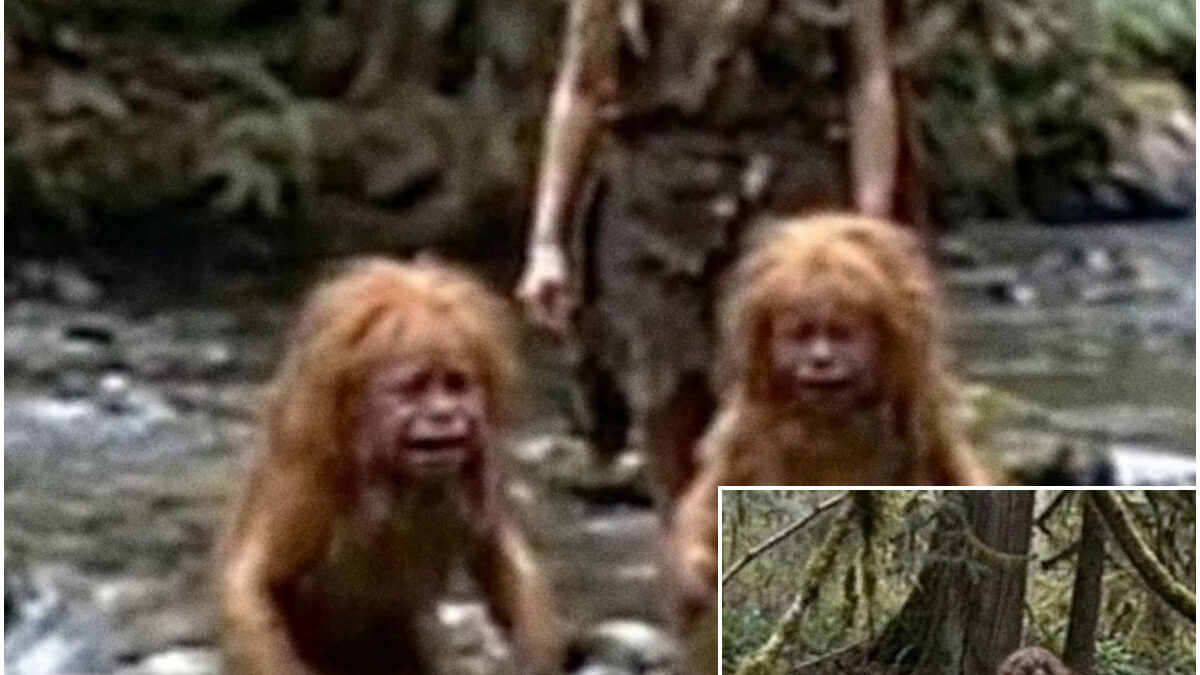
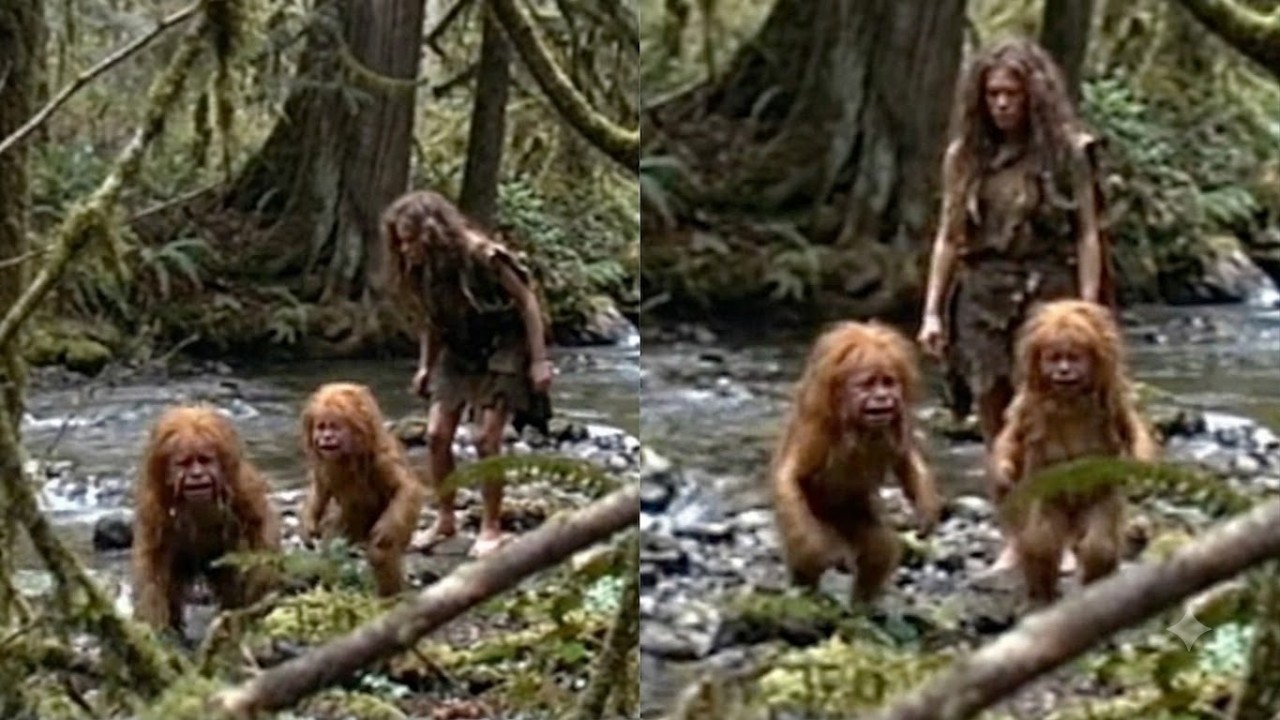
Woman Disappeared in 1977 – Found With Bigfoot in 2001, But Her Children Were Unbelievable
I retired from the United States Marshall’s service in 2004 after 29 years of tracking down people who did not want to be found.
Fugitives, witnesses in protection, parental abduction cases, you name it.
I worked every kind of missing person case the federal government could throw at me.
But there is one case that I locked inside a filing cabinet in my home office in Belleview and never opened again.
I told my wife it was classified, which was technically true.
I told the service psychologist that the assignment had been uneventful, which was the most consequential lie I have ever spoken out loud.
My partner Steve Novak and I made a pact on the drive back from the trail head that we would take what we saw to our graves.
And for 21 years, that is exactly what we did.
I am 76 years old now and the nondisclosure agreement I signed expired 18 months ago.
My former supervisor Dale Whitmore passed away last spring and with him went the last person who could contradict what I am about to tell you.
So I am going to say it plain.
In the fall of 2001, I was part of a three-man team sent into the Cascade Range of Washington State to locate a woman named Linda Dwire, who had been reported missing from Tacoma in 1977.
We found her.
She was alive.
She was healthy.
And she was living in a settlement that should not have existed with a family that modern science has no classification for.
My name is Paul Kesler.
I served as a deputy United States Marshall from 1975 until my retirement, most of that time assigned to fugitive recovery and missing persons investigations in the Pacific NorthweSt. I was not a man given to imagination.
My colleagues would tell you I was the most literal-minded investigator they had ever worked with.
I believed in evidence, in documentation, in following the trail until it ended at a door I could knock on.
I say this because what I am about to describe to you requires that kind of credibility.
And I am aware that the moment I start talking about what we found in those mountains, most people will decide I have lost my faculties.
I have not.
I had my cognitive assessment 8 weeks ago.
I am sharp.
I am specific.
And I remember every detail of those seven days in October of 2001 like they happened this morning.
Linda Dwire disappeared from her home at 1427 Spruce Lane in Tacoma on March 11th, 1977.
She was 31 years old, mother of no children, married to a man named Gary Dwire, who worked as a longhaul trucker for a freight company based out of Portland.
The initial missing person’s report was filed by her sister Diane 2 days after Linda failed to show up for a family dinner.
Gary was on a run to Salt Lake City at the time and claimed he had spoken to Linda by phone the evening before she vanished.
The Tacoma police investigated for approximately 6 weeks before the case went cold.
There were no signs of forced entry, no indication of foul play, no suspicious financial activity.
Linda’s car, a 1973 Datson 210 in faded yellow, was found parked at a trail head off Forest Road 2560 in the Gford Pincho National Forest about 90 mi south of Tacoma.
The keys were on the front seat, her purse was in the trunk with $43 in cash and her driver’s license still inside.
The assumption at the time was suicide, though no body was ever recovered despite two separate search operations involving dogs and volunteer hikers.
The case sat dormant for 24 years.
I want you to understand that.
24 years of nothing.
Linda Dwire became a name in a filing cabinet, one of thousands of cold cases that accumulate in every law enforcement jurisdiction in America.
Her husband Gary remarried in 1981, moved to Boise, and by all accounts never spoke about Linda again.
Her sister Diane kept a small memorial page going, first in local newspapers, then eventually on one of those early internet missing persons databases that started popping up in the late 1990s.
It was that internet posting that restarted everything.
In August of 2001, a timber survey crew working in a remote drainage basin about 40 mi east of Mount St. Helens reported something unusual to the Forest Service.
They had been conducting inventory on old growth stands in preparation for a salvage logging assessment.
And in the process of hiking to a GPS waypoint, they crossed through a narrow valley that was not on their survey map.
The crew leader, a man named Tom Briggs, who had been doing timber work in the Cascades for 15 years, told the Forest Service ranger that they had found evidence of sustained human habitation in an area where no habitation should exiSt. He described crude but functional shelters made from logs and bark, a fire ring with recent ash, drying racks that appeared to be used for preserving meat and fish.
And most disturbing to him, a series of footprints in the mud along a creek bed that were, in his words, human- shaped, but far too large to be human.
Now Tom Briggs was not a man who went looking for trouble or attention.
He filed his report with the Forest Service because he thought there might be an illegal camp, maybe a marijuana grow operation or a group of survivalists who had gone off the grid.
The Forest Service ranger, whose name I am not going to share because she is still alive and still working in federal service, forwarded the report to law enforcement.
It bounced between the county sheriff and the forest services own law enforcement division for about 3 weeks before somebody with a longer memory ran the GPS coordinates against old missing person’s cases and realized that Tom Briggs had been hiking less than 7 mi from the trail head where Linda Dwire’s car had been found in 1977.
That connection landed on my desk on September 28th, 2001.
Now you have to remember what was happening in America at that time.
We were 17 days out from the attacks on the World Trade Center and the Pentagon.
Every federal law enforcement agency in the country had been pulled into counterterrorism operations.
The Marshall Service was stretched thinner than I had ever seen in my career.
I was 55 years old and had been quietly counting the months until my retirement when my supervisor, Dale Whitmore, called me into his office in Seattle and dropped a manila folder on his desk.
Dale was a big man, 6’3 with hands like catcher mitts, and he had this habit of rubbing his jaw when he was about to ask you to do something unreasonable.
He was rubbing his jaw when I walked in.
He told me he had a case that was either a complete waste of time or the strangest missing person’s recovery in the history of the Pacific Northwest and he did not have the manpower to find out which.
He said the Forest Service had sent a helicopter over the area.
Tom Briggs had reported and confirmed the presence of structures in the valley.
Thermal imaging had picked up at least four heat signatures in the area, possibly more.
The terrain was extremely rugged.
The nearest road was 19 mi away.
And the weather window for getting a team in and out before the fall rains made the drainage impassible was closing faSt. He asked me to take two men and hike in to investigate.
Confirm whether there was a connection to the Dwire case, document whatever we found, and get out.
He gave me 10 days.
I picked my team that afternoon.
Steve Novak was a deputy I had worked with for 12 years, a former Army Ranger who had served in the Gulf War and was the best man in difficult terrain that I knew personally.
The second was a younger deputy named Chris Allen, who had only been with the service for 4 years, but was technically gifted with communications equipment and had a background in emergency medicine.
Between the three of us, we had over 40 years of law enforcement experience and a combined total of probably a thousand days in the back country of Washington and Oregon.
I felt confident that whatever we found in that valley, we could handle it professionally.
We flew by helicopter to a drop point on a rgeline about 8 mi north of the target valley on October 3rd.
The pilot was under instructions not to overfly the valley itself.
Dale had been very specific about that, and at the time I assumed it was because he did not want to spook a potential fugitive or alert an illegal camp.
Looking back, I think Dale knew more about what was down there than he told me.
I think the Forest Service thermal imaging had shown him something that he chose not to share.
Because if he had shared it, I might not have agreed to go.
The first two days were just hiking, hard hiking, the kind that reminds you that you are 55 and not 35 anymore.
The terrain was steep, heavily forested, old growth Douglas fur and western red cedar with an understory so thick in places that we were cutting through sword fern and devil’s club with machetes.
Chris was carrying the heaviest pack because of the communications equipment, a satellite phone and a portable radio repeater that weighed about 11 lb.
Steve had the primary weapon, a Remington 870 shotgun that he carried in addition to our standard sidearMs. I carried the case file, the GPS unit, and the photographs that the Forest Service had taken from the air.
On the evening of October 4th, we made camp on a bench of flat ground above the creek drainage that would eventually lead us into the target valley.
We were still about 4 miles out.
The forest around us was old, and I mean truly old, trees that were 4 and 500 years in age, with trunks you could not wrap your arms around.
There was very little light even at midday and by 5 in the afternoon it was dark enough under the canopy that we needed headlamps.
The silence was the thing that struck me.
I had spent years in the cascades, but this drainage felt different.
There were no bird calls, no squirrel chatter.
The creek below us made noise, but above the water, the forest was simply still.
Steve noticed it, too.
He mentioned it while we were eating our freeze-dried meals that evening.
Said it reminded him of something he had experienced in Iraq.
The way a village would go quiet before contact.
I told him not to start with that kind of talk.
We were looking for a missing woman who had probably died of exposure in 1977, or at best some squatters who had built themselves a camp.
There was no reason to be theatrical about it.
But that night, something happened that I cannot explain away as coincidence or wildlife.
At approximately 2:15 in the morning, I was awakened by a sound.
Steve was already awake in his sleeping bag with his hand on the shotgun.
The sound was a vocalization, low-pitched, resonant, and sustained, that seemed to come from the ridge above us.
It lasted for approximately 8 to 10 seconds, then stopped.
About 30 seconds later, an identical sound responded from somewhere below us in the drainage, maybe half a mile away, then a third from a direction I could not determine.
The three vocalizations went back and forth for several minutes.
And I am telling you, as a man who has spent his entire adult life in the forests of the Pacific Northwest, I have never heard any animal native to these mountains produce a sound like that.
It was not an elk.
It was not an owl.
It was not a cougar.
The closest comparison I can make is that it sounded like a human voice, but pitched lower than any human voice I have ever heard, producing a sound that carried across that valley with a force that vibrated in my sternum.
Chris slept through the whole thing, which gives you some idea of how exhausted he was from humping that equipment through the brush.
Steve and I did not discuss it in the morning.
We just packed up and kept moving.
By midday on October 5th, we had descended into the main valley floor.
The creek here was wider, maybe 20 ft across, running clear and cold over a gravel bed.
The forest canopy was so dense overhead that the light had a greenish quality like being underwater.
We were following the creek south toward the GPS coordinates from the Forest Service report when Steve, who was on point about 40 yard ahead of me, stopped and raised his fiSt. Military signal.
I stopped.
Chris stopped behind me.
We waited.
Steve waved me forward.
When I reached him, he pointed at the creek bank without saying a word.
There, in a stretch of soft mud between the waterline and the fern, was a footprint.
It was roughly 18 in long and about 7 in wide at the ball.
The toes were clearly defined, five of them, proportioned like a human foot, but scaled up to a size that was simply not possible for any person.
The impression was deep, maybe 2 in, into the mud, which meant whatever had made it was carrying significant weight.
I knelt down and examined it for a long time.
I am not a track expert, but I have taken enough tracking courses to know what I was looking at.
The dermal ridges were visible.
The pressure distribution was consistent with a bipedal gate.
This was not carved, not stamped, not faked.
Something with a foot that size had walked through this mud within the last 12 to 18 hours.
I looked at Steve.
He looked at me.
Neither of us said the word that was forming in both of our minds.
We just kept moving.
Over the next mile, we found more prints.
Some were the same size as the firSt. Others were smaller, maybe 14 in, and there was one set that was clearly from a different individual, slightly narrower, with a distinctive ridge along the outside edge.
We were tracking at least three separate individuals.
All of them walking the same path along the creek.
All of them leaving impressions that would be considered anatomically impossible by any podiatrist in the country.
Then we smelled smoke, wood smoke, faint but unmistakable, drifting down the valley on a light breeze from the south.
I radioed Dale on the satellite phone, told him we had found evidence of habitation, were proceeding with caution.
He told me to document everything and maintain communication every 6 hours.
There was something in his voice that I had not heard before.
Dale Whitmore was not a man who got nervous, but he sounded nervous.
We rounded a bend in the creek where a massive cedar had fallen and created a natural dam backing up the water into a pool about 50 ft across.
Beyond the pool, the valley widened into a flat area maybe 300 yd long and 100 yardd wide, flanked on both sides by steep ridges covered in old growth.
And there in that flat area was something that stopped all three of us in our tracks.
There were structures, not lean-to-s, not brush shelters, not the kind of thing you see at a transient camp.
These were buildings, crude but deliberate, constructed from logs and bark with a level of craftsmanship that spoke to years of accumulated skill.
I counted seven of them from where we stood, arranged in a rough semicircle around a central clearing where a fire burned low in a stone-lined pit.
There were drying racks along the creek bank strung with strips of what appeared to be salmon.
There were storage platforms raised on poles, the kind of thing you see in old photographs of indigenous food caches.
And there were hides, animal hides, deer and elk from what I could see, stretched on frames and in various stages of processing.
But it was not the structures or the food processing that made the three of us stand there with our mouths open.
It was the figure sitting beside the fire.
She was small, maybe 5’2, thin but not emaciated, with long gray hair pulled back from her face and tied with what looked like a strip of leather.
She was wearing clothing made from animal hides, a tunicstyle garment that reached her knees with leggings and some kind of moccasin on her feet.
She was sitting cross-legged on a folded hide, using a stone tool to scrape the inner surface of a fresh deer skin.
She worked with the kind of practice deficiency that comes from doing something thousands of times.
And she was humming a tune I could not quite place.
Something that sounded like it might have been a pop song from the 1970s translated into a rhythm that was not quite right.
Not quite the way I remembered it.
I reached into my pack and pulled out the photograph from the case file.
Linda Dwire, age 31, taken in 1976 for her Washington state driver’s license.
Brown hair, round face, slight overbite, a mole on her left cheek near her ear.
I looked at the woman by the fire.
The hair was gray now instead of brown.
The face was weathered and deeply lined, but the overbite was there.
The mole was there.
And when she looked up from her work and saw us standing at the edge of her clearing, the eyes that met mine were the same eyes from that driver’s license photo, just 24 years older and carrying a weight of experience that I could not begin to fathom.
She did not scream.
She did not run.
She set down her scraping tool very carefully, wiped her hands on her leggings, and stood up.
Then she said in English in a voice that was rusty and halting but perfectly understandable.
You should not be here.
You need to leave before they come back.
I identified myself, told her my name, my title, showed her my credentials.
She looked at the badge and the identification card the way you might look at an artifact from a civilization you had almost forgotten existed.
Then she shook her head slowly and said, “Federal.”
Of course, they would send Federal.
Steve had positioned himself at the perimeter with the shotgun, scanning the tree line.
Chris was behind me already pulling out the satellite phone.
I told Linda that we were there to help her, that her sister Diane had been looking for her for 24 years, that we could get her out of there and back to her family.
And Linda Dwire.
This small gay-haired woman in animal skins, standing in a clearing in the middle of one of the most remote valleys in the state of Washington, looked at me with an expression that I can only describe as pity.
She pied me.
She felt sorry for me because I did not understand what I had walked into.
“This is my family,” she said.
“They have been my family longer than anything I had before.
And if they see you here, if they think you are a threat, you will not leave this valley.”
I asked her who she meant by they, who she stared at me for a long moment, then gestured toward the structures around us, toward the oversized doorways, the sleeping platforms that were 8 ft long and 4t wide, the stone tools that were scaled for hands much larger than any human hand.
“Who do you think built all of this, Paul?”
She said.
She used my first name even though I had only said it once.
Who do you think I have been living with for 24 years?
Before I could answer, Steve made a sound behind me.
Not a word, just a sharp intake of breath followed by the unmistakable click of a shotgun safety being disengaged.
I turned and followed his gaze to the treeine at the south end of the clearing.
Something was standing there.
It was standing upright on two legs in the shadows between two massive cedar trunks and it was watching us.
The shape was humanoid, but the scale was wrong.
It was enormous, at least 8 ft tall, with shoulders that were easily 4 ft across.
It was covered in hair, dark brown, almost black, that was dense and close to the body like the coat of a healthy bear in autumn.
But it was not a bear.
Bears do not stand perfectly still on two legs with their arms at their sides.
Bears do not tilt their heads to one side the way a curious person might.
And bears do not have eyes that catch the faint green light filtering through the canopy and reflect it back with an intelligence that is unmistakable.
I have tried for 21 years to find the right word for what I saw in that creature’s eyes.
It was not animal.
It was not mindless.
The closest I can come is deliberate.
Everything about the way it stood, the way it observed us, the way it held its position without aggression, but also without any trace of fear.
Everything was deliberate.
This was a being that was deciding what to do about us, running calculations, weighing options, assessing threats.
It was thinking.
Linda’s voice came from behind me, calm and steady.
Do not raise that weapon.
If you raise that weapon, we are all dead.
There are six of them in these trees right now, and you cannot see a single one except the one who is letting you see him.
Steve did not lower the shotgun.
His hands were steady.
His breathing was controlled.
He was doing exactly what his army training had taught him to do when confronted with a potential threat.
But I could see the muscles in his jaw working, and I knew that what he was looking at was dismantling every framework of reality he had carried with him into these mountains.
I made a decision in that moment that went against every protocol in the marshall’s handbook.
I told Steve to lower the weapon.
He looked at me like I had lost my mind.
I told him again.
He lowered it slowly, keeping it at port arMs. The figure in the treeine did not move.
Linda walked past me, past Steve, toward the treeine.
She stopped about 30 ft from the massive figure and spoke.
Not in English, in a language I had never heard before.
A mixture of vocalizations that included deep chest tones, clicking sounds, and what I can only describe as tonal shifts that seem to carry more information than the individual sounds themselves.
She spoke for about 30 seconds.
The figure responded.
Its voice was the sound we had heard in the night.
That deep resonant vocalization, but modulated now into patterns that were clearly linguistic.
There was syntax.
There was rhythm.
There was meaning being exchanged.
I stood there in that clearing with my badge in my hand and my career behind me and I watched a woman who had been missing for 24 years have a conversation with a creature that the entire scientific establishment of the Western world has declared does not exiSt. The exchange lasted several minutes.
At one point, Linda laughed, actually laughed, a genuine sound of amusement, and I saw the massive figure’s posture shift in a way that might have been its version of the same response.
When she turned back to us, her expression had changed.
The weariness was still there, but something else had joined it.
Resignation, maybe, or perhaps relief.
He says you can stay until morning, she said.
But your weapons stay with me, all of them, and you do not use that phone.
Chris started to protest about the satellite phone.
I held up my hand and stopped him.
I looked at Linda Dwire standing there in her deerkin clothing with the absolute confidence of a woman who had survived two and a half decades in one of the most unforgiving landscapes on the continent.
And I made another decision that went against protocol.
I handed her my sidearm.
I told Steve to give her the shotgun.
Chris gave up his weapon, too, along with the satellite phone.
After I gave him a look that made it clear this was not a negotiation.
Linda gathered the weapons and the phone and carried them to one of the smaller structures at the edge of the clearing.
When she came back, the figure in the treeine had gone.
I had not seen it move.
I had not heard it move.
One moment it was there, the next it was not.
And the space between those two moments contained no information whatsoever.
8 ft tall, 400 lb at minimum, and it had vanished from my sighteline without disturbing a single fern.
Linda sat back down beside the fire and gestured for us to join her.
You are going to want to sit down for the rest of this,” she said.
And then she told us the story of how she had come to be there, and it was a story that took most of the night, and by the time dawn began to lighten the canopy above us, I understood two things with absolute clarity.
The first was that Linda Dwire had not been kidnapped.
She had not been held against her will.
She had made a choice in 1977 that most people would consider insane, and it had turned out to be the most consequential decision in the hidden history of human and nonhuman contact.
The second thing I understood was that the children she spoke of, the ones she had raised in this valley, were something that should not have been possible.
They were not entirely human.
They were not entirely like the creatures in the trees.
They were something in between, something new, and their existence carried implications so profound that I suddenly understood why Dale Whitmore had sounded nervous on the satellite phone.
Linda told us she had started hiking in the Cascades in the early 1970s after she and Gary moved to Tacoma from Minnesota.
Gary was gone more than he was home, sometimes for weeks at a time on his trucking routes.
And Linda had been raised in a family that spent their weekends in the Boundary Waters.
She loved the outdoors.
The forests of the Pacific Northwest were different from what she had known in Minnesota.
Bigger, denser, wilder, and she was drawn to them in a way that went beyond recreation.
She said it felt like the trees were asking her to come deeper.
By 1975, she was hiking alone in areas that most experienced outdoors people would avoid.
Remote drainages, unmarked trails, places where the Forest Service had not maintained access in years.
Gary did not know the extent of her solo trips.
He thought she was going on day hikes with friends from her church group.
She let him believe that because the truth was that she had started finding things in the forest that she could not explain and did not want to share.
The first was a structure, a dome-shaped shelter of woven branches tucked into a grove of old growth cedar about 12 mi from the nearest trail head.
It was too large for any person.
The doorway was nearly 7 ft high and the construction was deliberate with the branches interlocked in a pattern that shed rain and held heat.
She found it in the summer of 1975 and went back three times over the following months.
Each time there were signs of recent use, fresh bedding material inside, scraps of animal bone, a smell that she described as musky and rich, like wet earth mixed with something alive.
The second thing she found was a gift.
On her fourth visit to the shelter in early 1976, she had brought a bag of apples from a roadside stand, thinking she might eat them during her hike.
She set the bag down near the shelter while she examined the exterior, and when she turned around, the apples were gone.
The bag was still there, opened neatly, but every apple had been removed.
She heard a sound in the trees.
That deep vocalization that I would hear 25 years later, and when she looked up, she saw a hand reach out from behind a cedar trunk and set something on a flat rock about 20 ft away.
Then the hand withdrew.
She waited 10 minutes before approaching the rock.
On it was a piece of honeycomb about the size of her palm, fresh and dripping.
A trade, an exchange, an act of reciprocity that implied intelligence, awareness, and intent.
Linda said she sat on the ground next to that rock and ate the honeycomb and cried, not from fear, from the overwhelming recognition that she was in the presence of something that understood the concept of a gift, something that had observed her, assessed her, determined she was not a threat, and chosen to initiate contact through the most universal language there is.
Here I have something, you have something.
Let us share.
She went back every week after that, sometimes twice a week.
She brought apples, dried fruit, packages of beef jerky, once a whole smoked trout that she bought at a fish market in Tacoma.
Every time the food was taken, every time something was left in return, honeycomb, a cluster of wild blackberries arranged on a leaf, a piece of obsidian that had been worked into a rough blade shape, a bundle of dried herbs tied with grass.
The exchanges escalated in complexity over the months, and Linda began to notice that the gifts she received were not random.
If she brought something sweet, the return was sweet.
If she brought something practical like the jerky, the return was practical like the obsidian blade.
Whatever was on the other end of this exchange understood categories, understood intention, understood that the nature of a gift communicates something about the relationship between giver and receiver.
She did not see the giver clearly until January of 1977.
It was a cold day, frost on the ferns, the creek running low and clear.
She had hiked in with a heavy pack, planning to spend the night near the shelter for the first time.
She told herself it was because she wanted to observe the nocturnal behavior of whatever was trading with her.
The truth, she admitted to us that night by the fire, was that she was happier in that forest than she had been anywhere in her adult life.
Her marriage to Gary was not abusive.
She was careful to say that.
But it was empty.
He was a decent man who was never there.
And when he was there, they had nothing to say to each other.
The forest, the exchange, the mystery of it.
That was the first thing in years that had made her feel, like she was part of something that mattered.
She set up her camp near the shelter as the light faded and built a small fire.
She was sitting beside it, eating a can of soup she had heated on the flames when she heard movement behind her.
Not the stealthy, silent movement I would later witness.
This was deliberate audible, meant to announce a presence without startling her.
She turned around slowly.
He was standing at the edge of the fire light, 8 ft tall, exactly as I would see his kind 24 years later.
Dark hair covering a body of immense proportions, arms that hung past the knees, hands that were wider than dinner plates.
But the face, Linda said, the face was what broke through every wall of fear and disbelief.
The features were heavier than a human face, the brow more pronounced, the jaw wider, the nose broader and flatter, but the eyes were looking at her with an expression she recognized.
Curiosity, gentleness, the same look her father used to give her when she was a little girl, showing him a drawing she had made, a look of quiet attention and genuine intereSt. He sat down, not on the ground, but on a fallen log about 15 ft from her fire, and the log creaked under his weight.
He sat the way a person sits with his hands resting on his thighs and his back straight.
And he looked at her fire and he looked at her food and he looked at her.
And Linda said that in that moment she understood with perfect clarity that this was the being who had been leaving her gifts, who had been watching her for over a year, who had made the calculated decision to show himself because the relationship had reached a point where the next step was this.
Face to face, no more hiding.
She held out the pot of soup.
He did not take it.
Instead, he reached behind the log where he sat and produced something she had not seen.
A fish freshly caught, still glistening, a steel head trout that must have weighed 10 lb.
He set it on the ground between them.
Another exchange, another step in a conversation that had been going on for 16 months without either party ever seeing the other clearly.
Linda said they sat by that fire for 3 hours.
She talked to him in English, not because she thought he understood the words, but because the sound of a calm human voice seemed to hold his attention.
He listened with his head tilted slightly to one side, and occasionally he responded with soft vocalizations that she was beginning to recognize as distinct sounds with consistent meanings, a low hum that seemed to indicate acknowledgement.
A series of clicks that she would later learn meant something like curiosity or tell me more.
A deep resonant tone that conveyed, as far as she could interpret, satisfaction or agreement.
When she woke in the morning, he was gone.
But the fish had been cleaned and filleted and laid on a flat rock beside her dead fire, ready to cook.
She said that was the moment she knew, not the moment she decided, but the moment she knew that her life was never going to follow the path it had been on.
Something fundamental had shifted inside her.
Some ancient recognition had been activated.
And the world she was going back to.
The empty house in Tacoma, the absent husband, the quiet desperation of a life that looked fine on the surface, but felt like slow suffocation underneath.
That world had become the dream.
This the forest, the fire, the impossible creature who cleaned fish for her while she slept.
This was the reality she was supposed to be living.
She went back to Tacoma.
She went back six more times over the next 2 months, and each time the return was harder.
She described it like decompression sickness, the way divers feel when they surface too quickly.
The pressure of normal life after the freedom of those woods was physically painful to her.
Gary noticed she was different.
He asked if she was having an affair.
She laughed and the laugh had a quality that frightened him, she said, because it contained a truth that she could not explain and he could never accept.
On March 11th, 1977, she drove her yellow Datson to the trail head, took her pack from the trunk, locked the car, dropped the keys on the front seat through the cracked window, and walked into the foreSt. She did not leave a note.
She did not tell anyone.
She simply walked away from every element of her previous life with the deliberate intention of never coming back.
She found him waiting for her, not at the shelter where they had first sat together, but two mi deeper into the drainage, at a place where the creek split around a gravel island, and the old growth opened into a natural meadow.
He was standing at the far edge of the meadow with two others smaller than him, one male and one female, based on what Linda would later teach herself to recognize.
They watched her approach without moving.
She said she dropped her pack in the middle of the meadow, sat down on the wet grass, and waited.
After about 20 minutes, the large male, the one she had been trading with, walked toward her.
He stopped 3 ft away and extended his hand.
In it was a bundle of cedar bark woven into a rough pouch, and inside the pouch were dried berries and strips of smoked meat.
A welcome, a provision for the journey ahead.
He turned and walked south toward the deeper mountains, and Linda stood up and followed him.
She did not explain to us everything about those first months.
Some of it, she said she could not translate into English, that certain experiences in the forest had a quality that language was not built to carry.
But she told us enough for me to understand the broad shape of what happened.
The group she joined, the clan as she called them, consisted of nine individuals at that time.
Three adult males, two adult females, and four juveniles of varying ages.
They were nomadic within a territory of roughly a 100 square miles of the most remote terrain in the Cascades, moving between seasonal camps based on food availability, weather patterns, and what Linda described as social obligations with other groups in the region.
She said there were at least four other clans that she became aware of during her years in the mountains, each occupying adjacent territories with periodic gatherings at specific locations during certain times of the year.
The first winter nearly killed her.
She wanted me to know that because she did not want me to think she was romanticizing what she had done.
March in the Cascades at elevation is brutal.
And she arrived with a 60-lb pack that contained a tent, a sleeping bag rated to 15°, 2 weeks of freeze-dried food, basic first aid supplies, a camp stove with four fuel canisters, and the clothes on her back.
By midappril, the freeze-dried food was gone.
The fuel canisters were empty.
She had lost 14 lbs and was sleeping in the shelter that Co’s clan had built, wrapped in her sleeping bag with two woven bark blankets that one of the females had given her without being asked.
She told us she survived those first months because the clan fed her, not with ceremony or any apparent sense of obligation, but with the same casual efficiency with which they fed each other.
If a hunt was successful, portions were distributed.
Linda received hers.
If roots were dug, berries gathered, fish pulled from the creek, she was included in the distribution.
She said the first time one of the juveniles, a young male, she estimated at about 8 years old, walked up to her and placed a piece of smoked elk in her lap and then walked away without acknowledgement.
She sat there staring at the meat for 5 minutes trying to comprehend the simplicity of it.
No transaction, no expectation, no debt.
The clan shared food because that is what the clan did.
It was the most fundamental expression of belonging she had ever witnessed.
And it was offered to her before she had earned it.
Before she could communicate, before she was anything more than a strange small creature who had followed Co from the lands, she learned to contribute.
By the end of that first summer, she could identify over 40 edible plants in the drainage and knew which creek pools held trout and which were barren.
She learned to weave bark cordage by watching the females and imitating their hand movements until her fingers bled and then hardened into calluses that never fully went away.
She learned the seasonal roots between camps, learned to read the weather by watching how the clan responded to shifts in wind and barometric pressure that her human senses could not detect.
She said there was a moment in late August of that first year when she was walking with the clan between camps, carrying her share of the dried food stores on her back, and she realized she had not thought about Tacoma in 6 days.
Not the house, not Gary, not her sister, not the yellow Datson sitting at the trail head.
6 days without a single thought of her previous life.
That was when she knew the transition was real.
The language came slowly.
Linda said it took her nearly 2 years before she could communicate in anything beyond basic gestures and a handful of vocalized words.
The language of the clan was not like any human language she could compare it to.
It operated on multiple channels simultaneously.
There were the vocalizations which carried primary meaning, but there were also physical components, subtle shifts in posture, hand positions, even the direction of gaze that modified or amplified the spoken element.
She compared it to trying to learn a language where the words change meaning depending on how you are standing when you say them.
It was the most intellectually demanding thing she had ever attempted.
And she said there were periods during those first years when the frustration of being unable to communicate nearly drove her back to civilization.
What kept her was the male.
She called him by a vocalization that I cannot reproduce in English.
But for the purpose of this account, she told us the closest approximation was a sound like co, a deep resonant syllable that she said meant something close to steady one or he who remains.
Co was the individual who had initiated contact with her, who had traded gifts for the better part of a year, who had made the decision to reveal himself that January night by her campfire.
He was, as far as Linda could determine, the leader of the clan, though she said their social structure did not map neatly onto human concepts of hierarchy.
Leadership among them was situational.
Co led when decisions about territory and safety were needed.
One of the females, an older individual Linda called Ma, led when decisions about food gathering and camp location were required.
The juveniles deferred to all adults, but not in the rigid way human children are expected to obey.
There was a quality of earned respect in their social interactions that Linda said she found more functional and more honest than anything she had observed in human society.
I asked her the question that had been pressing against my professional obligation since the moment she told me about the children.
I asked her about the nature of her relationship with Co.
She looked at me across the fire with an expression that dared me to judge her and said, “He is my mate.
He has been my mate since 1979.
And before you decide what to think about that, you need to understand something.
I chose this.
Every step, every day, every year, I chose this.
Nobody took anything from me.
I gave it freely because what I received in return was a life that had meaning and purpose and a kind of love that I did not know was possible between two beings who share no common ancestry.
She said the relationship developed gradually over the first two years.
Co was patient in a way she said no human man she had known had ever been.
He seemed to understand that she was operating on a different time scale, processing a different set of cultural expectations, working through barriers that were psychological as much as physical.
The first time he touched her deliberately, placing his massive hand on her shoulder in a gesture of reassurance after she had fallen and injured her ankle on a rock scramble.
She said the warmth of his palm was shocking, not because it was alien, but because it was familiar.
His body temperature ran slightly higher than human, and the weight of his hand on her shoulder felt like safety itself.
I am going to tell you what she told me next because it is central to the rest of this story and because omitting it would be dishoneSt. In the spring of 1979, Linda became pregnant.
She had not thought it possible.
She said the biological distance between herself and co seemed too great, like expecting a horse and a deer to produce offspring simply because they were both large mammals with four legs.
But the body does not consult the intellect before it does what it does.
And by early summer, she knew with certainty that she was carrying a child.
The pregnancy was difficult.
She said there were times she believed she would die in those mountains.
That whatever was growing inside her was too large or too different for her body to sustain.
The clan knew.
They all knew even before she was showing, which she attributed to their extraordinary sense of smell and their ability to detect changes in the chemical composition of sweat and breath that humans produce during pregnancy.
Ma, the older female, became her constant companion during this period.
Ma brought her specific plants to eat, herbs that ease nausea, bark teas that reduced the swelling in her legs and feet, root preparations that she was certain contained natural compounds equivalent to prenatal vitamins.
Linda said Ma’s botanical knowledge was staggering, encompassing hundreds of species and their medicinal applications, all of it transmitted orally across generations through their language and through direct apprenticeship.
The birth happened in February of 1980 during a stretch of cold weather that kept the clan in their winter camp deep in the drainage.
Linda said it lasted 18 hours and that there were moments when she lost consciousness from the pain.
Ma and one of the younger females attended her.
Co stayed outside the shelter and Linda said she could hear him vocalizing throughout the labor, a sound she had never heard him make before, low and rhythmic, almost like chanting.
When the baby came, Linda said the first thing she noticed was the sound it made.
Not a human cry, not quite.
Something between a cry and that deep vocalization she had come to associate with the clan’s speech.
A sound that carried frequencies she could feel in her cheSt. The baby was a girl.
Linda named her Dawn because she was born as the first gray light was coming through the gaps in the shelter walls.
Dawn was smaller than a typical infant of the clan would have been.
Linda estimated about 9 lbs, but larger than an average human newborn.
She had hair fine and dark, covering her body more densely than a human infant, but less densely than a newborn of the clan.
Her features were a blend that Linda said was arresting to look at.
The heavy brow and broad nose of her father, softened by the smaller scale and finer bones of her mother’s facial structure.
Her eyes were brown like Linda’s, but set deeper under a brow ridge that was more pronounced than any human child’s.
Her hands were large for her body, with fingers that were thick and strong from birth, and her feet were broad with toes that spled naturally like hands designed for gripping.
Dawn grew faster than a human child and slower than a child of the clan.
She was walking by 10 months, which startled Linda, and she began producing her first vocalizations, actual words in the clan’s language.
By 14 months, she spoke to her father in his language before she spoke to her mother in English.
And Linda said that was both painful and appropriate.
This was Dawn’s world, the forest, the clan, the ancient rhythms of a people who had never known anything else.
English was the foreign language here.
Linda had a second child in 1983.
A boy she named River, born in the same drainage during a warm September when the salmon were running thick and the clan was camped beside the creek for the annual harveSt. River was larger than Dawn had been at birth, almost 11 lb, and his features leaned more heavily toward his father’s side.
His body hair was thicker, his frame broader, and by the time he was 2 years old, it was clear that he was going to be significantly larger than his sister.
But his temperament was gentle, almost dreamy.
And Linda said he would sit for hours watching the water in the creek, completely absorbed, occasionally reaching in with those big hands to catch crayfish that he would examine with a careful delicacy before releasing them back into the current.
The third child came in 1987, another girl whom Linda named Fern, and it was Fern who changed everything because Fern was different from her siblings in ways that even Linda had not anticipated.
Fern was small, smaller than Dawn had been, barely 8 lb at birth, and her body hair was so fine as to be almost invisible, like the downy fuzz on a peach.
Her features were predominantly human.
If you had seen Fern as an infant, you might have thought she was simply a large boned, slightly unusual looking baby.
Her brow was prominent, but not dramatically so.
Her nose was wider than average, but within human range.
Her hands, while strong, were proportioned like a human child’s.
The only feature that would have stopped you, that would have made you look twice, was her eyes.
They were green, a vivid, almost luminous green that neither Linda nor Co possessed, and they tracked movement with a precision that was unsettling in an infant.
Linda said Fern watched the world the way a hawk watches a field, missing nothing, cataloging everything, processing visual information at a speed that seemed to outpace her physical development.
Fern also did something that none of the other hybrid children did.
She learned to read.
Linda had brought a few books with her into the forest, paperbacks she had stuffed into her pack on that final walk in 1977, a novel by Kurt Vonagget, a field guide to Pacific Northwest Wild Flowers, and a pocket Bible that had belonged to her grandmother.
Those three books were the entire library of the Cascade settlement.
And by the time Fern was six years old, she had read all three of them cover to cover, sounding out the words with Linda’s help, absorbing the concept of written language with a veracity that frightened her mother.
By 8, Fern was asking questions that Linda could not answer.
Questions about the world beyond the mountains, questions about why other people did not know about the clan.
Questions about what would happen if they ever did.
I sat by that fire listening to Linda Dwire describe her children and I felt the professional architecture of my mind beginning to buckle.
I was trained to evaluate testimony, to separate truth from fabrication, to identify the tells that indicate deception or delusion.
Linda Dwire showed none of those tells.
Her account was consistent, detailed, self-correcting when she misspoke about a date or a sequence, and delivered with the calm authority of a woman who has lived with her truth for so long that she no longer cares whether anyone believes it.
She was not trying to convince me.
She was simply telling me what happened.
Steve had been silent for hours.
When Linda paused to add wood to the fire, he spoke for the first time since we had entered the clearing.
He asked her if we could see the children.
Linda looked at him for a long time, then looked into the darkness beyond the firelight toward the structures that loomed at the edges of the clearing like sleeping giants.
She said something in the clan’s language, not loudly, just above a conversational tone.
And from the darkness, something answered.
Three figures emerged from the largest structure, the one at the center of the semicircle.
They moved with a fluid grace that was neither entirely human nor entirely like the massive figure I had seen at the treeine.
They were intermediate in every way.
Intermediate in size, the tallest was maybe 6’4, the shortest about 5’10.
Intermediate in build, heavier and broader than average humans, but not the overwhelming mass of their father.
Intermediate in their hair coverage, which ranged from the near human fern to the more heavily furred river.
They stepped into the firelight, and I saw their faces, and I understood what Linda meant when she said they were something else.
Dawn was 21 years old that October.
She was about 5’11 with a strong athletic build and dark hair that grew thickly on her arms and legs, but thinned across her torso and face.
Her features were striking, the kind of face that would stop you on the street, not because it was wrong, but because it was unfamiliar, like meeting someone from an ethnic group you had never encountered.
She looked at us with her mother’s brown eyes set under her father’s heavy brow, and her expression was one of frank assessment.
She was sizing us up the way her father had, deciding what we were and what we meant.
River was 18, and he was big, 6’4 and broad across the shoulders, with hands that dwarfed mine and a covering of dark hair that was dense enough on his arms and chest to be immediately noticeable.
His face was wider than his sisters, more like coes, and he moved with a deliberate heaviness that made the ground seem to register each of his steps.
But his eyes were soft, gentle, almost shy, and when he looked at us, there was a quality of empathy in his gaze that was startling in someone of his physical presence.
He stood slightly behind his sisters, not hiding exactly, but choosing the background in a way that suggested this was his natural position in social interactions.
And then there was Fern.
14 years old, small for her age by the standards of her siblings, standing barely 5’4.
She was the one who looked most human, the one who could have walked into a school in Tacoma and been taken for an unusually intense girl with strong features and remarkable green eyes.
She was also the only one of the three who spoke to us directly in English without Linda translating.
You are from the government, she said.
Her English was accented, shaped by years of being a secondary language to the vocalizations of the clan, but it was grammatically precise in a way that suggested extensive practice.
My mother told us about the government.
She said you would come eventually.
I asked Fern how she had learned to speak English so well.
She looked at me with those green eyes and said, “My mother teaches me.”
And the books.
I have read the books many times.
The Bible is the most interesting because it describes a God who made everything.
And I wonder if that God knew about us when he was making.
That sentence delivered by a 14-year-old girl standing barefoot in a fire lit clearing in the remote Cascades.
A girl who was the biological product of a union between a human woman and a creature that science refuses to acknowledge.
That sentence is the thing I have carried with me for 21 years.
I wonder if that God knew about us when he was making.
It contained everything.
The isolation, the curiosity, the existential questioning of a being who exists between two worlds and belongs fully to neither.
Steve sat down heavily on a log and put his face in his hands.
Chris was staring at the three young people with his mouth open.
I realized I needed to regain some professional composure, so I asked Linda the question that my mission required.
I asked her if she wanted to come home.
I asked her if she wanted to bring her children out of these mountains and into the world she had left behind.
She was quiet for a long time.
The fire crackled.
Somewhere in the darkness, I heard movement, heavy and deliberate.
The clan members who were still out there, still watching.
Linda looked at dawn, at River, at Fern.
Then she looked at me and spoke with a precision that told me she had rehearsed this answer in her mind many times, preparing for the day someone would ask, “What would that world do with my children, Paul?
Think about it carefully before you answer.
What would your government do with three individuals who are living proof that a species exists which would upend every model of human uniqueness your civilization has built?
What would your scientists do?
What would your military do?
What would happen to Co and his family when the news cameras came?
When the helicopters came?
When men with tranquilizer guns and containment cages decided that the most important biological specimens in the history of the world were too valuable to leave in the wild.
I did not answer because I knew what the answer was and so did she.
She said, “I will give you something.
I will give you my sister’s peace of mind.
You can tell Diane that I am alive.
You can tell her that I left by my own choice.
You can tell her that I am well and that I am loved and that I have a family, but you cannot tell her where I am.
You cannot tell anyone what you found in this valley and you cannot come back.
I told her that I had a legal obligation to report my findings.
She nodded as if she had expected that.
Then she said, “Your supervisor already knows.
The man who sent you, he knows what is here.
The Forest Service has known for years they rroot trails.
They close access roads.
They file the thermal imaging under classifications that nobody with a standard clearance can access.
You are not discovering something, Paul.
You are confirming something that people above your pay grade decided a long time ago to keep hidden.
That statement hit me harder than anything else she had said because it explained Dale’s nervousness.
It explained the very specific instructions about not overflying the valley.
It explained why in the middle of the largest counterterrorism mobilization in American history, resources had been allocated to send three marshals on a week-long hike into the remote Cascades to find a woman who had been missing for 24 years.
This was not a rescue mission.
This was a security check.
Someone wanted to know if the Dwire settlement was still intact, still hidden, still contained.
And they had sent me because I was thorough, trustworthy, and close enough to retirement that I had more to lose by talking than by staying quiet.
I spent three more days in that valley.
I know I was only authorized for one night, but what happened over those three days was the most extraordinary experience of my life, and leaving after a single night would have been like walking out of the cyine chapel after seeing the first panel.
On the second day, co allowed himself to be seen clearly in daylight for the first time.
He came into the clearing in the late morning, walking with a gate that was both human and something else, a rolling stride that covered ground with an efficiency that no human biomechanics could match.
In full light, he was both more and less terrifying than he had been in shadow.
Less because the proportions of his body, while massive, were harmonious, well-made, adapted to a purpose.
More because in daylight I could see the musculature under that dark hair, the cable thick tendons in his forearms, the power coiled in his shoulders, and I understood on a visceral level that this being could have torn any of us apart as easily as we would tear a sheet of paper, but he did not.
He sat near the fire pit and Dawn brought him a piece of smoked salmon which he ate with the same unhurried deliberation with which he did everything.
He watched us while he ate.
Occasionally he exchanged vocalizations with Linda and she would translate fragments for us.
He wanted to know where we had come from.
He wanted to know how many others knew about the valley.
He wanted to know if we intended harm.
Linda assured him on each point, and I watched his body language shift with each assurance, the tension in his shoulders loosening by degrees, the set of his jaw softening.
At one point during that morning, Co stood and walked to the creek.
He waited in up to his knees, which meant the water came to about midshin on him and stood perfectly still for maybe 3 minutes.
Then his hand shot into the water with a speed that seemed impossible for something that large and came up holding a steelhead trout of at least 8 lb.
He killed it instantly with a precise compression of his fingers behind the head, then carried it back to the clearing and set it down beside the fire pit.
He looked at Linda.
She looked at me.
Then Co made a vocalization, soft and brief, and Linda translated.
He says, “This is for you.”
He says, “A guest should eat.”
I sat there, a federal law enforcement officer with a badge and a pension and a mortgage on a house in Belleview.
And I accepted a fish from a creature that every textbook in every university in the country says is a myth.
I thanked him.
Linda translated my thanks.
Co made a sound that I had come to recognize as acknowledgement and sat back down.
The interaction lasted less than 2 minutes, and it rearranged the architecture of my understanding of the world, more completely than 4 years of college and 26 years of federal service combined.
That same morning, Dawn approached Chris, who had been sitting against a log, looking somewhat shell shocked since the night before.
She crouched in front of him with the fluid balance of someone who had spent her entire life on uneven terrain, and she studied his face from about 3 ft away with an intensity that made Chris lean backward.
Then she reached out and touched the zipper on his jacket.
She pulled it up an inch, then down an inch, then up again, watching the teeth interlock and separate with obvious fascination.
She looked at Chris and made a sound, a questioning tone that rose at the end the same way a human question does.
Chris, to his credit, unzipped the jacket and handed it to her.
Dawn spent 20 minutes examining every seam, every snap, every pocket.
She put her hand inside the sleeve and wiggled her fingers out the end and made a sound that was unmistakably laughter.
Then she folded the jacket neatly, more neatly than Chris had ever folded it based on the wrinkled state it had been in, and handed it back to him with a vocalization that Linda said meant something close to clever making.
On the second afternoon, Fern sat with me by the creek and asked me questions about the outside world for 3 hours.
She wanted to know about cities, about cars, about airplanes, which she had seen passing overhead and which the clan called Skywalkers.
She wanted to know about schools and what children learned in them.
She wanted to know about books, how many existed, whether there were enough to read for an entire lifetime.
Her questions were precise, intelligent, and occasionally devastating in their implications.
She asked me if people in the outside world were happy.
I told her some were and some were not.
She asked me if the ones who were not happy could go into the forest and find a better life the way her mother had.
I told her it was more complicated than that.
She considered this for a moment and said, “Most things that people call complicated are actually simple things they have decided not to do.”
On the third day, River took Steve fishing.
I am not sure how it happened exactly.
Steve had barely spoken since the first night, processing what he was witnessing with the same disciplined silence he had brought to his military service.
But River approached him that morning with a fishing implement, a spear made from a straight young fur trunk with an obsidian point lashed on with senue and gestured toward the creek.
Steve looked at me.
I nodded.
They walked to the water together, the former Army Ranger and the half-human young man who had never seen a road, and they spent the morning pulling steelhead trout from the creek in a shared silence that seemed to satisfy both of them more than words could have.
When Steve came back to camp, he had tears on his face.
He wiped them away quickly and did not explain, and I did not ask.
But I saw the way he looked at River walking back toward the structures, and I knew that whatever Steve Novak had believed about the world before he entered that valley, he believed something different now.
On the evening of the third day, Linda told me it was time for us to leave.
The clan was becoming uneasy with our presence.
There were others in the nearby territory who had been alerted to the situation and their tolerance for human visitors was significantly lower than co.
She gave us back our weapons and the satellite phone.
She walked us to the northern edge of the clearing and stood there while we shouldered our packs.
I asked her one last time if there was anything she needed, anything I could send, medicine, supplies, tools.
She shook her head.
Then she paused and said, “Books.
If you could leave books at the trail head where my car was found.
Fern needs books.
She has read the three I have so many times that she can recite them from memory.
She needs more.
She deserves more.
I promised I would.”
She touched my arm, a brief gesture, and said, “Tell Diane I think about her.
Tell her I am sorry I could not explain.
Tell her the word for what I am in Co’s language translates roughly as bridge between.
That is what I have become.
A bridge between your world and theirs.
And bridges do not get to choose which side they stand on.
We hiked out in 2 days.
The return trip was faster, partly because we were going downhill and partly because none of us wanted to spend any more time in those mountains than necessary.
Not because of fear, because of the weight of what we were carrying.
The knowledge, the impossible, undeniable paradigm destroying knowledge of what lived in those trees and what it meant for everything we thought we understood about our place in the natural world.
We did not talk much during the hike out.
Each of us was processing what we had witnessed through our own particular lens.
Chris, who was the youngest and the most tied to the conventional world, kept stopping on the trail and staring back the way we had come, as if he expected to wake up and find himself back in his apartment in Tacoma, with a bad case of the flu and a fever dream fading in the morning light.
Steve moved through the forest with the mechanical efficiency of a man who has decided to postpone his emotional reckoning until he is somewhere with four walls and a locked door.
I just walked.
I put one foot in front of the other and I thought about Linda Dwire humming a song from the 1970s by a campfire in a valley that the United States government had apparently decided to erase from its own maps.
On the second morning of the hike out, about two miles from the trail head, Steve stopped on the trail and held up his fiSt. I froze.
Chris froze behind me.
Steve pointed to the ridge above us about 300 yards up the slope.
There, silhouetted against the gray October sky, standing on a rock outcrop in full view, was a figure, not co.
This one was slightly smaller and its hair was lighter, a reddish brown that caught what little sun was coming through the clouds.
It stood there watching us for maybe 15 seconds.
Then it raised one arm, extended it toward us, and held the position for a long moment.
I looked at Steve.
Steve looked at me.
Neither of us had any training or protocol for what to do when a creature from a different branch of the primate family tree appears to be waving goodbye.
The figure lowered its arm and stepped back from the outcrop and disappeared.
We never saw it again.
Steve said one word after it vanished.
He said, “Centuries.”
I nodded.
They had been watching us the entire way out, making sure we left.
Making sure we left alone.
I called Dale from the trail head.
He answered on the first ring which told me he had been waiting.
I gave him a verbal report.
He was quiet for a long time afterward.
Then he said, “Write it up.
Classification level four, my eyes only.”
And Paul, you never went into that valley.
Your report will state that you found evidence of historical habitation consistent with seasonal camping by unknown individuals.
No connection to the Dwire case established.
That is the official finding.
Do you understand?
I understood.
The official closure of the Linda Dwire missing person’s case occurred in 2002 when she was declared legally dead based on the passage of time and the absence of evidence of survival.
Her sister Diane held a small memorial service in Tacoma.
I was not there, but I sent flowers.
I also sent a letter anonymously to Diane’s home address.
It said only that Linda was alive, that she had left by her own choice, and that she was loved.
I do not know if Diane believed it.
I hope she did.
I retired in 2004.
Steve Novak retired the following year and moved to a small town in Montana where he does not talk to many people.
Chris Allen is still with the service, I believe, though we have not spoken since 2003.
And when I last saw him, he had the look of a man who was spending a lot of energy not thinking about something.
I kept my promise to Linda about the books.
Every 3 months from 2001 until 2012, I drove to that trail head off Forest Road 2560 and left a waterproof bag at the base of a specific cedar tree.
Inside were books, novels, histories, science texts, philosophy, poetry, field guides, dictionaries, atlases, books about the world that Fern was hungry to understand.
The bag was always gone when I returned 3 months later, replaced by a small token, a piece of obsidian, a bundle of dried herbs, a feather.
The exchange continued just as it had begun between Linda and Co.
In 1976.
A gift for a gift.
A bridge between worlds maintained by the oldest language there is.
In 2008, the token changed.
Instead of a natural object, I found a piece of bark in the bag, and on it, scratched with a sharp stone in careful block letters were two words.
Thank you.
The handwriting was precise and deliberate.
The letters formed by someone who had learned to write from reading rather than from instruction.
I sat in my truck at that trail head and held that piece of bark and I wept for the only time in my adult life.
Not for sadness, for the staggering, humbling recognition that somewhere in those mountains, a young woman who was something the world had never seen, was teaching herself to write so that she could say two words to a stranger who brought her books.
I stopped making the trips in 2012 because my knees could no longer handle the halfmile walk from the trail head to the drop tree on rough terrain.
I was 66 years old and my body was telling me things I did not want to hear.
I left one final bag with a note inside that said I could not come anymore and that I was sorry.
The next time I checked, the bag was gone.
In its place was a token I had never received before, a small carved figure no bigger than my thumb, shaped from a piece of cedar heartwood.
It was a rough but recognizable representation of a human figure standing next to a much larger figure and between them a smaller figure with its arms stretched wide touching both.
A bridge, a bridge between.
I have that carving in my desk drawer.
I look at it sometimes when the world feels too small and too certain and too convinced of its own completeness.
I look at it and I remember that in a valley in the cascades there are children who are neither one thing nor another but something entirely new.
Something that carries the best of both worlds in their blood and their bones and their bright impossible eyes.
I remember a woman who walked away from everything familiar because she recognized something more true.
I remember a creature 8t tall who cleaned fish for the woman he loved and stood in the shadows of ancient trees deciding whether three strangers with guns deserved his truSt. Linda Dwire chose the foreSt. Her children are the proof that sometimes the greatest discovery is not finding something new, but recognizing that what was always there was bigger and more magnificent and more strange than we ever allowed ourselves to imagine.
I am 76 years old.
I have told you everything I know.
And if you drive to a certain trail head in the Gford Pincho National Forest and stand very still at the base of a cedar tree with your back to the road and your face to the mountains, and if you are quiet, truly quiet, the kind of quiet that means you have set down everything you think you know, and are willing to simply listen, you might hear them.
That deep voice in the trees.
That call and response across the valley.
That ancient conversation that has been going on since long before we arrived and will continue long after we are gone.
They are there.
They have always been there.
And they are watching to see if we are finally ready to understand what that means.








