How EGO Allowed a Bridge to Fall TWICE | Disaster Documentary
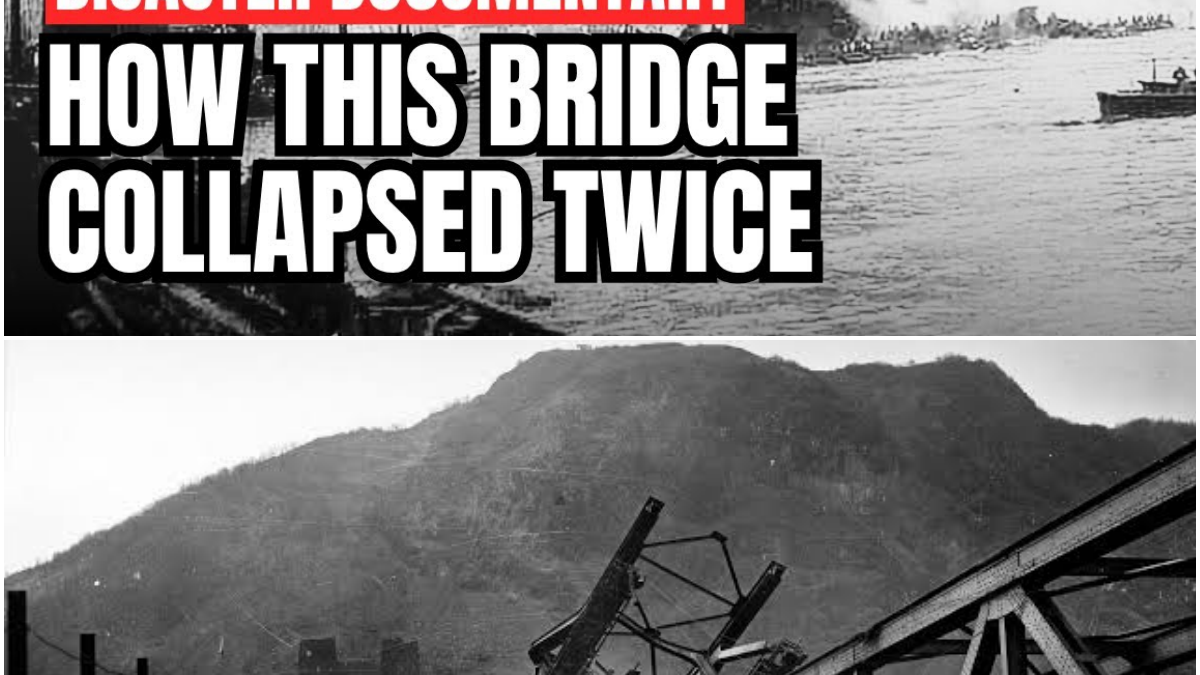
How EGO Allowed a Bridge to Fall TWICE | Disaster Documentary
August 29th, 1907.
Quebec City, Canada.
At 5:30 p.m., the great bridge over the St.
Lawrence shuddered.

A low groan rose from its steel spine, echoing across the river.
Then, a crack like thunder.
3 million pounds of iron twisted, snapped, and fell in a single terrible roar.
Men working hundreds of feet above the water vanished in an instant.
Boilers hissed.
The river boiled with wreckage.
Smoke, screams, and silence followed.
75 fathers, sons, and brothers gone.
Nine years later, it would happen again.
How could something like this possibly happen?
At the turn of the 20th century, the St.
Lawrence River stood as one of the last great obstacles to Canada’s dream of uniting its coast by rail.
Quebec City, proud and old, sat divided from its southern shore, a crossing too wide for fairies alone.
The river was nearly a mile across, swift and unforgiving.
To span, it would require one of the longest bridges ever built.
In 1900, the Dominion Bridge Company and a brilliant but aging engineer named Theodore Cooper, took on the challenge.
Cooper, an American famed for his ironclad precision, designed a cantalie bridge unlike anything the world had seen.
It would stretch 1,800 ft, a world record, and carry the weight of locomotives bound for the new century.
Newspapers called it the bridge that would never fall.
Work began in 1904 on the south bank of Libby.
Hundreds of men, Canadians, Mohawk iron workers from Kaknoir K and immigrant laborers hammered and riveted through the heat of summer and the bite of Quebec winters.
From dawn to dusk they inched the steel skeleton farther out over the current, bolting together a monument to progress.
Locals watched from the riverbanks in awe as the dark lattice grew against the sky.
Children counted the beaMs. Shopkeepers pointed it out to travelers.
Wives waved to their husbands high above the water.
It became a symbol of confidence, proof that Canada could build what even America had not.
But beneath the optimism, small concerns began to surface.
Strange vibrations, bent steel, calculations that didn’t quite add up.
Men spoke of the quietly over lunch pales and cigarettes, trusting the engineers knew best.
The bridge kept growing, stretching farther, heavier, and more uncertain with every bolt.
The warning signs beneath the confidence.
Cracks had already begun to form, not in the steel alone, but in the certainty of the men who built it, when the first girders of the Quebec bridge began to rise in 1904.
It was a marvel of modern ambition.
Nothing on the continent compared to it.
The cantalivver arms that reached from each shore would eventually meet in the middle, like the outstretched hands of a giant.
To those who watched from the banks of the St.
Lawrence, the bridge seemed to climb into the clouds, proof that human intellect could bend nature to its will.
The man behind it, Theodore Cooper, was already a legend.
He had designed railways, consulted for government boards, and was regarded as one of the finest bridge engineers in North America.
But by the early 1900s, he was 65, slowed by illness, and confined to his New York office.
He rarely visited the site, relying instead on drawings and reports sent by telegraph.
What the workers saw with their own eyes, he often learned of weeks later.
At first, the numbers made sense.
The plans had been bold, yes, but sound, at least on paper.
The Dominion Bridge Company’s chief engineer, Peter Slapka, had questioned the extraordinary length of the main span.
He proposed reducing it to make the structure lighter and safer.
But Cooper resisted.
A longer span meant fewer peers in the river, fewer interruptions to shipping, and not least a place in the record books.
The design remained unchanged.
The steel arrived by train from Pennsylvania.
Thousands of tons of it unloaded piece by piece along the frozen shore.
Men set up dereks and scaffolds, building their workplace as they built the bridge itself.
In the bitter Quebec winters, the shiver froze solid.
In spring, it churned with ice flows that clanged against the half-finished peers.
Still the work went on.
By 1906, the cantaliever arms stretched hundreds of feet out over the water.
The further they reached, the greater the stress on their lower cords, those enormous horizontal beams that bore the bridge’s weight.
To compensate, engineers added more steel, reinforcing as they went.
Each new plate and a rivet made the structure stronger, they believed, yet also heavier.
In New York, Cooper reviewed progress reports and recalculated stresses.
Somewhere in those calculations, an error crept in.
The assumed weight of the bridge was far less than the real one.
Each new girder added thousands of pounds more than the design had allowed.
The margin of safety shrank day by day, and no one realized it.
Among the men on site, small signs appeared first, but subtle, easy to dismiss, bolts that refused to line up perfectly, slight bends in the web of a beam.
When a measurement seemed off, Foreman ordered it corrected and moved on.
After all, the bridge was enormous.
Some flexing was expected.
Steel, they said, had a life of its own.
But the distortions grew on the lower cords near the south anchor arm.
Workers noticed the metal beginning to bow.
It was not visible from a distance, only when you stood close, tracing the line of rivets with your eye.
One man described it as a gentle sag, another as a belly in the steel.
They told their superiors, who in turn sent word to Cooper.
Cooper, alarmed, telegraphed back in March 1907, “Stop work and investigate.”
For a brief moment, the great bridge stood silent over the river while measurements were taken.
The results were troubling yet not disastrous.
Dominion’s local engineers assured him that the deformationations were small and could be explained by temporary strain.
Cooper accepted the explanation and allowed work to continue.
Through the spring, the project pressed forward.
Riveters hammered, hoists groaned, and the cantaliever arms crept ever farther toward the center.
Each new section added weight and multiplied the forces at play.
The men on the lower cords began hearing faint rhythmic clicks when the wind shifted, the sound of rivets moving in their holes.
Some said it reminded them of a ship’s timbers creaking in a gale.
By early August, Cooper received another troubling letter from the site.
The bends had deepened.
The numbers no longer matched his expectations.
He telegraphed again, instructing the engineers to measure every lower cord and send him the data immediately.
Days passed before the results arrived.
When they did, Cooper studied them in silence.
The deformationations were far greater than before, nearly double.
On August 27th, he sent a curt reply, “Add no more load until I advise.”
It was an order to halt construction, but the message reached Quebec slowly, delayed in transit.
By the time it arrived on site, the foreman had already scheduled another heavy section to be lifted into place that week.
Stopping the job would mean idle men, wasted days, and anger from the Quebec Bridge and Railway Company.
The client pushing to finish the span before winter.
Schlapka, confident that the structure could bear it, chose to proceed.
2 days later, August 29th, was warm and clear.
The river shone like polished glass.
Dozens of men clambored across the framework, tightening bolts and guiding new girders into position.
On the south arm, several laborers paused to examine one of the cords that had concerned them for weeks.
The steel looked bruised, faintly buckled near the joints.
They exchanged glances, but said nothing.
At 5:00 p.m., the final section for the day was nearly in place.
The air was still, broken only by the clatter of hammers and the whistle of a foreman signaling for the crane to lift.
A few minutes later, those nearby heard a sharp metallic ping, then another.
The sound came from below where the massive lower cords met the pier.
One man shouted, “What was that?”
No one had time to answer.
The signs had been there all along, etched in steel and silence.
Yet each one had been reasoned away, dismissed as normal, temporary, or exaggerated.
Even Cooper’s warnings had been softened by distance and deference.
No one wanted to believe that the bridge, their bridge of gauge, could be unsound.
In truth, the danger was not hidden at all.
It was visible in every strain mark and bent plate.
But the human mind is adept at ignoring what it cannot bear to face.
Pride, deadlines, and faith in authority formed a wall stronger than any riveted beam.
In the days before the collapse, the bridge was a paradox of beauty and peril, sunlight flashing on steel, men laughing in the wind, unaware that the structure beneath their boots was fatally overstressed.
The instruments could not warn them.
The calculations had failed them.
The hierarchy of command had silenced them.
Somewhere in New York, Cooper paced his office, awaiting the next telegram.
He sensed the numbers were wrong, but did not yet grasp how wrong.
His health was failing.
The project consumed his waking thoughts.
To abandon it now would mean professional ruin.
He convinced himself that the structure could hold a little longer, just until he verified his figures.
By the morning of August 29th, the bridge carried the weight of its own ambition.
Tens of thousands of tons of it poised above the river.
The men who worked there felt pride, but some also felt unease.
She groans now and then, one laborer said to another, like she’s talking to us.
They laughed it off.
In the language of steel, groaning was a sign of life.
That afternoon, the yard whistle blew for the final shift.
On shore, families prepared supper.
Smoke curled from chimneys across the water.
The bridge glimmered against the sky, its shadow stretching long and dark over the current.
Beneath it, the river moved steadily toward the sea, as if nothing at all were about to happen.
The story of those final weeks is one of small decisions, each defensible in isolation, each catastrophic in some.
An engineers’s overconfidence, a company’s haste, a telegram that came too late.
Together they formed a chain stronger than steel, a chain of human error that would snap in an instant.
When the first cord fractured that evening, no one truly understood what was happening.
The sound was not a single explosion, but a chorus of metallic screaMs. Beams tore free, rivets sheared like bullets.
The massive cantalivver arm twisted downward, dragging men and machinery with it.
In less than 15 seconds, the work of three years disintegrated into the river.
Those who survived would later recall that the bridge seemed to hesitate before it fell, as if taking a breath.
Some thought it was the wind.
Others said it was the voice of the bridge itself, giving one last warning that no one could hear in time.
The tragedy that unfolded that day would claim 75 lives and haunt Canadian engineering for generations.
Yet, its seeds were sewn long before the final moment in miscalculated loads, ignored warnings, and a culture of silence.
The Quebec Bridge did not simply collapse, it was allowed to fail.
And as night fell over the St.
Lawrence, the glow of the setting sun caught the drifting pieces of steel and turned them red, as if the bridge itself were bleeding into the water.
The disaster unfolds.
The morning of August 29th, 1907, broke warm and still over the St.
Lawrence.
Mist hung low on the water like breath that refused to rise.
To the men arriving at the Southshore site in Levie, it seemed an ordinary Thursday, one more day in a season of endless days.
They lit their pipes, joked about wages, and crossed the gangways that trembled faintly beneath their boots.
Above them stretched the unfinished giant, 1,800 ft of iron and ambition, its black ribs catching the first light of dawn.
By midm morning, the clang of steel echoed clear across the river.
Riveters perched on beams barely a foot wide, sparks raining past their legs into the current below.
Foreman barked orders in French and English.
The sound of hammers rolled like gunfire.
The bridge’s south arm now reached 1,200 ft from the shore, so long that standing on its tip made a man feel as if he were floating between earth and sky.
Beneath the St.
Lawrence moved with slow authority, wide enough to swallow every mistake.
At the center of this world worked Mohawk iron workers from the Mohawk community, famed for their fearlessness in high places.
They moved with the easy balance of men who trusted their feet more than the planks they stood on.
Among them was Peter Rabbit Stacy, barely 23, who carried his lunch in a tin pale tied with string so it wouldn’t fall into the river.
He had spent 3 years on the bridge and planned to marry that winter.
When asked if he was afraid, he only smiled.
The steel talks to you.
You just have to listen.
By noon, the heat shimmerred through the girders.
Far below, the water turned the color of mercury.
Work slowed to the rhythm of exhaustion.
Men rested on beams, legs dangling over nothing, their laughter carried away by the breeze.
They could feel the bridge breathing beneath them, the faint expansion of metal warmed by the sun.
It had always done that.
No one worried.
At 2 p.m., foreman James Mccryis received word from the shop floor.
A new diagonal compression member, number A9L, was ready to be hoisted into place.
It weighed close to 90 tons, the largest yet lifted.
The massive traveler crane that crawled along the upper cords grown to life, its engine coughing black smoke.
Below, teams prepared the pins and bolts that would hold the new member in line.
Every addition meant more load on the lower cords, the same ones that had shown signs of distress.
No one spoke of it openly.
Rumors had spread about the bent steel near the pier, but the official order from New York had come late.
The men trusted that someone somewhere had cleared the danger.
Work, after all, was how they ate.
By 4:30 p.m., the sun began to tilt westward.
Shadows lengthened across the river, and the entire skeleton of the bridge seemed to glow from within, each beam catching the low light like molten glass.
From the Northshore, town’s people often gathered to watch at this hour, children pointing at the men who appeared like ants on a cathedral.
The newspapers had promised a triumph of modern engineering.
The crowd believed them.
Then, sometime after 5:00 p.m., a worker named John Finnegan noticed something strange near the base of the south arm.
A section of the lower cord, 6 in thick, bolted tight with massive gusset plates, had begun to deform.
It looked, he said later, as though the steel were sweating.
A faint haze shimmerred around it, not from heat, but from the microscopic fracturing of metal under stress.
Finnegan reported it to his foreman, who frowned, and sent a messenger to the site office.
The messenger climbed down the scaffolding, found the assistant engineer, and relayed the news.
The assistant engineer hesitated and said quietly, “Keep an eye on it.
We’ll note it in the evening report.”
Minutes later, a loud ping rang through the structure.
A clean musical note like a tuning fork struck by an unseen hand.
Every man nearby stopped.
Then another ping, “Lower, dar.”
Someone muttered that a rivet had cheered.
A foreman called up, “Easy, boys.
Keep steady.”
At 5:30 p.m., the traveler crane reached the midpoint of its path and halted.
The operator, Tom Len, wiped his hands on a rag, waiting for the signal to begin lowering the new member.
He would later recall feeling the whole machine shiver.
Not sway, the bridge always swayed, but tremble, as if the iron beneath him had turned alive.
Below him, along the lower cord between panels 8 and 9, an audible crack split the air.
Witnesses compared it to the firing of a cannon.
For a single impossible second, the entire south arm bowed downward, its lattice distorting into a giant wave of steel.
Then came the roar.
The sound defied comprehension.
It was not an explosion, but a series of them, rapid deafening as beam after beam gave way.
The great cantalivver arm folded like cloth.
Each fracture triggering the next in an unstoppable chain.
Men screamed warnings that vanished in the noise.
The traveler crane, 90 tons of iron, slid from its track and plunged toward the water, taking Len and six others with it.
The collapse lasted less than 15 seconds.
From the northshore, spectators saw the south end of the bridge sink first, its tip striking the water with a force that sent a geyser 50 ft into the air.
Then the central span tore free, twisting as it fell.
The air filled with dust and flying rivets.
The entire structure disintegrated into the river, a wave of steel and smoke racing outward like a blast from a volcano.
On the south bank, workers ran for their lives as the pier buckled.
Some jumped, some clung to cables, others vanished beneath a rain of girders.
Those in boats nearby were thrown into the churning water, their vessels crushed by falling debris.
The river moments earlier, smooth and silver, became a graveyard of twisted iron.
When the last echo faded, the only sound left was steam hissing from broken machinery.
A dark haze rose above the water.
Dust, smoke, and the fine mist of shattered metal.
The massive bridge that had taken 3 years to build was gone, reduced to a tangled heap spanning less than 200 ft of the river’s width.
On shore, silence held for several seconds before reality returned.
Then came shouting, running chaos.
Survivors stumbled out of the smoke, faces gray with ash.
One man’s shirt had been torn away by wind alone.
Another’s hands were burned from sliding down a cable.
They looked toward the river, where moments before hundreds of tons of steel had stood, and all they saw was water churning over fragments of red paint.
Within minutes, boats from both shores began to converge on the wreckage.
Fishermen, soldiers from the nearby citadel, and towns people joined the rescue effort without waiting for orders.
They rode through floating beams slick with oil, calling out names.
Now and then, a faint cry answered back.
Most of the time, there was nothing.
The first body recovered was that of a riveter from Ley, his hands still clutching a wrench.
He had fallen nearly 200 ft.
Others followed, some miraculously alive, clinging to bits of framework, others motionless.
The river carried them slowly downstream, as if reluctant to let them go.
On the southern shore, a temporary infirmary sprang up in a tool shed.
Doctors from Quebec City arrived by carriage, bringing lanterns and bandages.
They worked through the night, dressing wounds and taking names that few could spell correctly.
Families gathered at the edge of the cordon, weeping, begging for news.
The list of missing grew with every hour.
The telegraph office in Ley crackled to life, sending a brief, almost unbelievable message to New York.
Bridge collapsed 5:30 this evening.
Many men killed.
The message reached Theodore Cooper just before midnight.
Neighbors later said he went white, whispered, “Oh, my here.”
And collapsed into a chair.
He would never again set foot on a bridge site.
Back in Quebec, the night deepened.
Fires burned along the shoreline where rescuers had built torches to light their search.
The twisted wreckage glowed faintly red in the reflection.
A ruin so vast it seemed impossible to comprehend.
Some said the sound of snapping metal still echoed hours later, a phantom chorus carried by the wind.
At dawn, the scale of destruction revealed itself.
The south anchor pier jutted from the river like the stump of a broken tooth.
On the north side, only the first few panels of the cantaliever remained intact.
Everything between them, nearly half a mile of bridge, had vanished.
Floating among the girders were the remnants of men’s lives.
Lunch pales, gloves, boots without feet inside them.
By the end of that first day, 75 men were confirmed dead.
22 bodies were recovered within 24 hours.
The rest would take weeks.
The B St.
Lawrence carried many downstream to the sea where they were never found.
The Mohawk community of Kahan Key lost 33 of its sons.
An entire generation of high steel workers gone in an instant.
Reporters arrived from Montreal, Toronto, and New York.
Their headlines somber yet tinged with awe.
Greatest bridge disaster in history, one declared.
Another called it the fall of a modern wonder.
Cameramen photographed the twisted mass for newspapers around the world.
To many readers, the site seemed less a failure of engineering than an act of divine retribution against human pride.
But for the families standing along the shore, it was not a parable.
It was the sound of a husband’s watch found in the mud, stopped at 5:33 p.m. It was the sight of children clinging to their mother’s skirts as bodies were brought ashore beneath tarps.
It was the smell of oil iron and grief.
Through the night, the river kept its secrets.
Lanterns swung from boats and from the few upright beams that still jutted above the current, throwing long, trembling reflections across the water.
The rescuers worked by touch more than by sight, guided by the groan of shifting metal and the faint smell of creassote from the ruined timbers.
When dawn came, they were still there, blackeyed, soaked and shivering, unwilling to leave what remained of the bridge or of their friends.
By sunrise on August 30th, the first full day after the fall, word of the disaster had spread across Canada.
Special trains brought reporters, engineers, and officials from Ottawa.
Crowds gathered along the riverbanks, silent and stunned.
Some carried flowers, others carried notebooks.
The smoke still drifted from the wreckage, rising like incense from a cathedral turned to ruin.
The Dominion Bridge Company erected a temporary platform on the southshore, where rescuers laid each body as it was brought in.
Identification was difficult.
Many had been crushed beyond recognition, their clothes torn away, faces blackened by oil.
Family members moved among them in quiet procession, calling out names, clutching photographs, searching for a sign.
Now and then a cry broke the hush, echoing off the stone cliffs.
Then silence again.
Among those waiting was Mary Stacy, fiance of Peter Rabbit Stacy.
She had come from Kak Nawa K that morning.
Her hands red from gripping the train seat the entire journey.
When they brought him ashore, his lunch pale was still tied to his wrist.
She pressed her face to it and wept around her.
Other Mohawk women began to sing softly in their language, a low rising chant that carried across the water.
Even hardened riveters removed their caps.
The newspapers would later write about the heroism of the Mohawk workers.
But in the days immediately after the collapse, grief outweighed pride.
Entire families had lost fathers, brothers, sons.
In carakare, the church bell told 33 times.
Funerals were held in quick succession, coffins arranged in rows like sleepers.
The priest could not find enough words.
They built the sky, he said simply.
And the sky took them.
Meanwhile, the engineers arrived to see for themselves what had gone wrong.
Among them was Henry Holgate, sent from Montreal by the Canadian government, and Professor CC Schneider representing the American Society of Civil Engineers.
They stood on the southern bluff overlooking the wreckage, sketchbooks in hand measuring angles through the haze.
The scene was almost incomprehensible.
Massive girders twisted like wire.
Entire panels crumpled into the riverbed.
One plate 16 in thick had folded in half.
The scale of the forces defied imagination.
The inquiry began within days.
Survivors were called to testify.
Foreman, riveters, and clarks who had handled telegrams from New York.
Each told the same story, warnings sent, delays received, orders misunderstood.
The panel listened grimly, the weight of 75 deaths pressing heavier than any load of steel.
The evidence was devastating.
Calculations in the original design had been wrong by thousands of tons.
The lower cords, intended to bear£10,000 per square in, had been carrying nearly 20,000.
The very moment Cooper ordered the halt, the bridge was already doomed.
The failure was inevitable, Schneder wrote in his notes.
The wonder is that it stood as long as it did.
When the official report was released that winter, its tone was cold and clinical.
The collapse was due to the failure of the lower cords under excessive stress.
But between the lines lay the human truth, ambition unchecked by humility, oversight clouded by pride.
Cooper, shattered by guilt, withdrew from public life.
He never built again.
He would die a recluse in 1919.
The Quebec bridge still standing unfinished in his dreaMs. The recovery dragged on for weeks.
Teams of divers, their suits waited with lead, descended into the murky water to search the tangled mass below.
Visibility was almost zero.
They groped blindly through beams sharp enough to slice rubber.
Many came up bleeding.
One diver surfaced clutching a watch that had stopped at the exact moment of collapse, 5:33 p.m. He handed it to the coroner without a word.
On shore, the Dominion Bridgeard became both morg and memorial.
Each evening, when the whistle blew to end the day’s grim work, the survivors stood together in silence.
Some still heard the echo of the fall in their sleep, a deep metallic thunder that returned each night just before waking.
They called it the bridge dreaming.
Winter arrived early that year.
Snow settled on the wreckage, softening its outlines, hiding the violence beneath a white calm.
Children skating on the frozen river could see the twisted beams just below the ice, black veins running through the pale surface.
To them, it was part of the landscape, a cautionary monument rising from the water.
Adults, though, could not look without remembering the sound.
In the months that followed, committees argued over whether to rebuild.
The government feared the cost.
The rail companies feared the shame of abandoning the project.
Finally, in 1908, it was decided the bridge would rise again, stronger, safer, and finished in honor of the dead.
A new design was commissioned, this time with double the safety factor, thicker cords, more conservative spans.
The contract passed to the St.
Lawrence Bridge Company under engineer Ralph Majeski, who swore publicly, “There will be no second tragedy.”
But in those early days after the first collapse, before promises and politics, Quebec City mourned.
Churches overflowed.
Flags hung at half mast from every government building.
The parliament in Ottawa observed a minute of silence, the first time it had ever done so for industrial workers.
The tragedy transcended class and the language.
It united the country in disbelief.
The Mohawk men were remembered as heroes.
Their families received modest compensation.
Small sums that did nothing to fill the empty chairs at their tables.
Yet from that grief came a lasting legacy.
The Mohawk Nation’s bond with high steel work passed down through generations.
To this day, descendants of the Quebec bridge workers build the skylines of New York, Chicago, and Toronto.
Every time they step onto a beam, they honor those who fell into the St.
Lawrence.
In the technical journals, engineers debated for years how the failure could have been prevented.
Some blamed the use of Nickelson brittle steel.
Others pointed to the lack of on-site stress testing.
A few defended Cooper, insisting that the true culprit was the rush for progress.
But the deeper question was not mechanical.
It was moral.
How had an entire system of oversight failed to see what the riveters saw with their eyes.
The inquiry’s chairman said it plainly.
Responsibility was divided until it vanished.
Each man had trusted another to catch the error.
Each had believed the structure sound because it had not yet fallen.
It was a lesson that would echo far beyond Quebec, a warning to every engineer who ever dared to build bigger than before.
By the first anniversary, the site had become a place of pilgrimage.
Families brought flowers, engineers brought notebooks, and visitors from across the world came to stand where the bridge had stood.
The river was calm again, as though it had forgiven the intrusion.
But when the wind blew through the valley, locals swore they could hear a faint metallic hum like cables singing in the distance.
The disaster left behind more than wreckage.
It left an imprint on the human imagination.
In offices and classrooms, young engineers studied photographs of the fallen span the way doctors study disease.
The lesson was brutal, but clear.
Numbers alone could lie, and pride could weigh more than steal.
New safety codes emerged from the wreck, demanding peerreview redundancy and humility.
The cost was measured in lives, the benefit in every bridge that still stands today.
Yet for all the technical reforms, memory remained the most powerful safeguard.
Survivors carried it with them to every job thereafter.
One riveter interviewed in 1910 said, “You don’t forget the sound.
When I hear a beam creek, I still see the river.”
In the quiet of that same river valley, pieces of the old bridge remained visible for years, jagged ribs breaking the surface at low tide.
Children growing up in Quebec would point to them and whisper that ghosts lived there.
Fishermen avoided the spot, claiming their nets caught on the bones of the giant.
Even the currents changed course, eddying around the wreckage as if unwilling to disturb it.
For the widows, time did little to heal.
They met once a month in Quebec City, sharing letters, photographs, and stories of the men they’d lost.
They called themselves Lev Dupon, the widows of the bridge.
In 1915, when talk of rebuilding began again in earnest, they sent a single letter to Parliament.
If it must rise, let it rise for them.
In the years ahead, that wish would be honored.
But fate had one more lesson to deliver.
For now, though, in 1907, Quebec lay in mourning.
The snow fell thicker, muffling the sound of the river.
The wreckage stood half submerged like a monument carved by tragedy itself, and in the hearts of those who had watched it fall, the memory remained raw, unhealed, and echoing.
The greatest bridge in the world had promised to unite a nation.
Instead, it had shown how thin the line was between progress and hubris, between triumph and ruin.
The silence that followed was not peace.
It was disbelief.
When the dust finally settled over the St.
Lawrence, Quebec City entered a kind of mourning that no ceremony could soothe.
For weeks, the river remained choked with steel.
Its surface shimmerred with oil that caught the light like black glass, and beneath that the bodies of men who had tried to outbuild the horizon.
Each morning, long after the official search was declared over, families still came to the riverbank.
They stood in silence, scanning the water for signs of the missing.
A cap, a boot, a flash of metal that might be a tool belt.
Some tossed flowers into the current and watched them drift toward the sea.
Others refused to leave at all.
A reporter from the Montreal Star described it best.
The river has become a grave and the air witness.
The Dominion Bridge Company, reeling from the catastrophe, attempted to maintain control of the site, but grief had no chain of command.
Volunteers from both shores joined the effort, building makeshift rafts to reach the twisted wreckage.
Many of them were fishermen who knew the river’s moods better than any engineer.
They cut through cables, overturned beams, and searched the shadows beneath.
At times, they worked shoulderto-shoulder with priests.
By early September, 75 names filled the list of the dead.
22 bodies were recovered intact enough for burial.
The rest were claimed by the current.
Quebec’s churches rang their bells for days on end, the sound overlapping until it became one long, aching note over the city.
The first formal memorial took place 2 weeks after the collapse.
Mourers gathered at St.
Patrick’s Church, filling every pew.
Engineers in black coats stood beside widows and shaws.
The governor general sent a wreath.
A single beam from the bridge, warped but still recognizable, was placed outside the church door like a coffin lid.
On it.
Someone had stencileled the words, “They built the dream.”
The dream fell.
The newspapers carried photographs of the ceremony, but they could not capture its silence.
The Mohawk families from Kaware sat together near the front, their faces solemn, their grief immense.
The priest spoke of sacrifice and progress, but his voice wavered when he reached their names.
They had been among the best iron workers in North America, known for their courage at height.
33 were gone and with them a century of inherited skill.
One journalist noted that not a single survivor blamed the men who built the bridge.
They blamed the world that demanded it.
In Ottawa, the federal government convened a royal commission to determine what had gone wrong.
The inquiry room was stark, just a long table, a few chairs, and the grim awareness that every word spoken there represented lives lost.
The commissioners examined blueprints, load charts, and correspondence between Cooper in New York and the on-site engineers.
The evidence was irrefutable.
Cooper’s design had underestimated the bridge’s own weight by thousands of tons.
His assistants had spotted the error too late.
When he finally ordered construction halted, the telegram arrived after the bridge had already begun to yield.
The report concluded, “The bridge failed not from an act of God, but from the act of men.
It was a damning verdict and a rare admission in an age when engineering was treated as near infallible.
For the first time, the profession faced public reckoning.
The collapse of the Quebec bridge became a cautionary tale in classrooms and journals around the world.
Cooper never recovered.
Confined to his New York apartment, he read the report in silence, refusing interviews.
Friends who visited said he kept a small model of the bridge on his desk.
He would stare at it for a for hours, tracing the broken span with his fingers.
One evening, he murmured, “The numbers betrayed me.”
But the truth was harsher.
It was the faith placed in those numbers that had betrayed the men.
In the years that followed, the wreckage remained a scar on the river.
Pieces of the old bridge jutted from the ice each winter, black against the snow.
The site became both warning and pilgrimage.
Engineers came to study it.
Families came to remember.
Canada’s government faced the difficult choice.
Abandon the project or rebuild and redeem it.
To leave it unfinished would be an open wound, a symbol of failure too large to ignore.
Yet to rebuild meant facing the ghosts that still lingered beneath the water.
In 1908, the decision was made.
The Quebec Bridge would rise again.
A new engineering board was appointed, this time with stricter oversight and shared accountability.
The project was placed under Ralph Majeski, one of the most respected bridgebuilders of his era.
Born in Poland and trained in America, Majeski was meticulous, quiet, and cautious, the opposite of the brilliant but overconfident Cooper.
He began by studying every bolt of the old design, every miscalculation, every warning unheeded.
His conclusion was blunt.
The old bridge had been too ambitious.
The new one must be not just larger, but wiser.
Majeski’s plan was to reuse the surviving peers and rebuild the cantaliever arms with reinforced steel.
The central span, the piece that would connect both sides, would be fabricated separately, floated into position on barges, and then raised by hydraulic jacks.
It would be the heaviest lift ever attempted in bridge construction, but he believed it could be done safely.
By 1911, reconstruction was underway.
The ruins were cleared piece by piece, hauled to shore, and melted down.
Workers said it felt like dismantling a tomb.
When they uncovered the final twisted beam from the original bridge, a priest blessed it with holy water.
The men removed their caps.
The new bridge rose slowly, deliberately.
Every calculation was checked twice, sometimes three times.
Inspectors roamed the site daily.
Safety drills were held before each shift.
Newspapers followed the progress closely, printing sketches of the rising structure with the captions like, “The Phoenix of Quebec.”
Yet beneath the optimism, there lingered unease.
The memory of 1907 had not faded.
Every groan of metal, every unexpected vibration drew nervous glances.
Many of the older workers had lost friends in the first collapse.
They worked with reverence now, not pride.
The Mohawk iron workers returned as well, not out of vengeance, but out of duty.
Their fathers had died building the first bridge.
They would complete the second.
One of them, Jacob Deer, told a reporter, “It must be finished.
If it falls again, it falls with us on it.”
As the years passed, the Quebec bridge took shape once more.
The new Cantalver arms reached farther than before, designed to meet across a central gap of 640 ft, the largest in the world.
The structure dwarfed everything around it.
From a distance, it looked eternal, a black ark across the pale sky.
By 1916, the project was nearing completion.
After nearly a decade, confidence returned.
Engineers from across North America visited to witness the final phase, the raising of the Great Central Span weighing over 5,000 tons.
It was to be floated into position on the river and hoisted 150 ft into place using 16 hydraulic jacks.
The operation was scheduled for early September.
On both shores, families gathered to watch.
The city buzzed with anticipation.
Quebec would finally have its bridge.
It had taken tragedy, patience, and millions of dollars, but the dream of uniting the two banks of the St.
Lawrence was within reach.
In the offices of the St.
Lawrence Bridge Company, telegrams arrived from dignitaries congratulating the engineers on their perseverance.
One message read, “The whole Dominion awaits your success.”
And so, on the morning of September 11th, 1916, the workers assembled.
The river was calm.
The weather perfect.
Barges floated the enormous central span into position beneath the towering arMs. Photographers lined the shore to capture the moment the bridge would finally be whole again.
Men checked cables, tightened bolts, and began the lift.
The jacks groaned, the chains creaked, and slowly, magnificently, the great span began to rise from the water.
But for now, in this chapter of our story, we will leave them there.
The bridge ascending, the crowd cheering, the illusion of redemption gleaming in the sun.
9 years after 75 men fell into the St.
Lawrence, Quebec believed it had buried its ghosts.
The engineers trusted their new numbers.
The people trusted the engineers, and the river, silent and patient, waited.
Reconstruction and the second collapse in 1916.
The morning of September 11th, 1916, began with clear skies and a light wind from the west.
On the surface of the St.
Lawrence River, two great barges floated side by side, supporting the heart of a nation’s second attempt at redemption.
Above them loomed the New Quebec Bridge, vast, dark, and motionless, its arms reaching toward each other across a 640 ft gulf.
A top the barges rested the central span, 5,000 tons of steel assembled like the backbone of some prehistoric creature.
For months it had been built on shore, measured and rememeasured until every bolt gleamed with certainty.
Now it would be lifted into place, an act both scientific and ceremonial.
If successful, it would be the largest single lift ever attempted.
If it failed, the cost would be unthinkable.
By midm morning, hundreds of spectators lined the riverbanks.
Newspapers had printed the hour of the hoist.
Factories closed early so that workers could witness the completion of what tragedy had begun 9 years before.
The air buzzed with anticipation of the scent of hot oil.
Children sat on fences waving flags.
The river was still as glass.
At precisely 10:45 a.m., the signal was given.
16 hydraulic jacks began to hiss and groan, raising the massive span inch by inch.
Steam drifted upward from their valves, curling through the sunlight.
The engineers on deck, Charles N.
Schneider, CP Bradley, and Ralph Majesky’s assistant, Edward watched through field glasses, calling out measurements every few minutes.
The operation was proceeding perfectly.
By 11:30, the span hung 10 ft above the barges.
The crowd erupted in cheers.
From a distance, the motion seemed effortless, a triumph of precision over fear.
Reporters scribbled notes for the next day’s headlines.
Bridge to be joined by the nightfall.
But aboard the lift platform, small things began to go wrong.
A pressure gauge fluttered.
One of the jacks emitted thin metallic squeal.
The cables, thick as a man’s arm, quivered under load.
Noticed a slight tilt to the span, only a few degrees, but enough to quicken the pulse.
He shouted for the crew to halt the lift.
The order came late.
At 11:50 a.m., witnesses on the shore saw the great span shudder.
There was no thunder this time, no long drawn out groan like in 1907.
Just a single percussive snap, a sound like a giant rope breaking.
The western end of the span dropped first, tearing free from its chains.
The entire structure pitched sideways and plunged into the river with a roar that shook the ground.
A column of spray and smoke rose 200 ft high.
The barges vanished beneath it.
Men on deck were thrown clear, hurled into the churning water.
Others were trapped inside the falling mass, their cries drowned in the noise.
It was over in seconds, 15, perhaps 20.
But to those who watched, it seemed to last forever.
When the spray cleared, nothing remained between the two cantalivver arms but an empty void and a boiling patch of river.
The span had shattered on impact, twisting into sections that sank one after another.
The crowd stood frozen.
Some screamed, others could not make a sound.
Within minutes, rescue boats pushed off from shore.
Survivors clung to floating timbers, their hands slick with oil.
Engineers who had been observing from the northbank raced to the scene, shouting orders over the den.
The air rire of steam and burning grease.
By noon, the first bodies began to surface.
In Quebec City, church bells that had once rung for victory, now told for disaster again.
The same telegram routes that had carried news of triumph were reused for death notices.
The headlines changed before the presses cooled.
Quebec Bridge falls again.
13 killed.
Though the death toll was smaller than in 1907, the shock was deeper.
This was supposed to be the bridge that redeemed Canada’s faith in engineering.
The bridge that proved lessons had been learned.
Now, before the eyes of the nation, it had failed again.
Among the dead was Edward the young assistant engineer who had ordered the halt.
He had remained at his post, waving frantically as the structure gave way.
Witnesses said his final act was to warn others to jump clear.
He did not survive.
Another victim, CP Bradley, had written in his diary the night before, “Tomorrow we close the wound.”
That afternoon, Ralph Majesky, received the telegram while traveling in Chicago.
The message was brief, merciless.
Span fell.
Heavy loss of life.
For several minutes, he said nothing.
Then he took off his hat, placed it on the table, and whispered again.
Majeski returned to Quebec within days.
He walked the banks alone, inspecting the wreckage.
Unlike 1907, the main structure had held firm.
Only the central span was lost.
The hydraulic jacks had failed under uneven pressure, a technical miscalculation in the lifting apparatus rather than the bridge itself.
Still, it was another wound on a project already scarred by tragedy.
Investigations began immediately, but this time there was no rush to assign blame.
Mod Jesy himself demanded full accountability.
The bridge will stand, he said, but not until it deserves to.
For months, the work stopped while engineers redesigned every joint of the lifting system.
The dead were buried quietly in family plots, their names added to the long list begun 9 years earlier.
Public faith wavered.
Newspapers questioned whether the bridge was cursed.
Some editorials urged abandoning it altogether, arguing that the river had claimed it twice and would not let it pass.
Yet the nation could not turn away.
The Quebec Bridge had become more than steel.
It was a test of endurance, a monument to both failure and persistence.
When construction resumed in 1917, the war in Europe overshadowed all else.
Many of the men now working on the bridge had brothers or son fighting overseas.
They labored under the twin shadows of battle and memory.
Safety lines hung from every beam.
Inspectors recorded each lift in duplicate ledges.
The work proceeded inch by cautious inch.
At last, on September 20th, 1917, the new central span, rebuilt, recalculated, and consecrated by loss, was raised successfully into place.
No cheers erupted this time.
The crowd that gathered on the shore watched in silence as the final bolts were set.
When the engineer in charge signaled completion, a single whistle blew.
A short mournful note.
The bridge stood at last.
It was the largest Cantiever bridge in the world.
It had taken 17 years, two collapses, and 88 lives to complete.
Newspapers called it the most expensive lesson ever built.
In the months that followed, trains began to cross the new span.
Locomotives slowed as they reached the midpoint, as though paying respect to the ghosts beneath them.
Passengers leaned out to see the view.
Miles of river, endless sky, and most never guessed what lay below.
For the men who survived both disasters, life divided itself into before and after.
Some refused to work on bridges again.
Others carried on, unable to leave the trade that had defined them.
A few returned every year on the anniversary, standing on the shore as the sun set in the same direction it had on both collapses.
They said the light always looked the same, gold fading to red over the river.
In 1919, when Theodore Cooper died alone in New York, his obituary mentioned the Quebec Bridge in a single sentence.
His last design became his undoing.
Yet by then, the bridge had finally fulfilled his original purpose.
It united the rails of Canada from coast to coast.
Trains rolled across it, carrying coal, mail, and soldiers returning from war.
The bridge that had twice fallen now stood as a symbol of endurance, built not merely of steel, but of grief forged into caution.
Still, those who knew the story could never cross without feeling the weight of what lay beneath.
In the St.
Lawrence, under layers of silt and memory, the remains of the first span still rest, silent, corroded, untouched.
Divers say that when the current is calm, you can still see the shape of the old cords lying like rivers of a skeleton, pointing upstream.
And perhaps that is fitting.
For every triumph in modern engineering, somewhere in its foundation lies the echo of this river, the reminder that every number has a cost and every structure a soul.
Reflecting on past mistakes and moving forward, for months after the bridge was completed, the people of Quebec walked past it as though passing a grave.
Trains thundered across its deck, whistles cutting through the wind, but the city never again greeted that sound with joy.
It had become something else, a reminder of all that had been paid for the privilege of progress.
When the light hit it just right, the bridge looked almost holy.
The great cantalvers arched over the water like open arms, their shadows trailing far down the river toward the sea.
Fishermen called it Leja Andomi, the sleeping giant, and at sunset its iron turned the color of blood.
Children growing up beneath its span learned early that beauty and sorrow could share the same shape.
In the decades that followed, the story of the Quebec bridge passed from memory to legend.
Old men told it in taverns, their voices low, as if speaking too loud might wake the river.
In classrooms, engineers studied the collapse as a lesson written in rust.
The words factor of safety and load distribution took on moral weight, not just technical.
For the first time, engineering was treated not as conquest, but as stewardship.
The numbers would never again stand alone.
By the 1920s, industry across North America had absorbed the lesson.
Steel mills, shipyards, and railroads adopted new standards for oversight.
Calculations were checked independently, materials tested twice.
Out of the ruins of Quebec emerged a modern creed.
No bridge, however grand, is worth a life.
The ghosts of 1907 and 1916 had become silent mentors to every builder who followed.
Yet progress is a strange mourner.
The world moved on faster each year.
New bridges rose across the continent higher, longer, stronger.
The men who walked their beams still carried the old stories, but time wears down even memory.
By midentury, few remembered the names of those lost in the St.
Lawrence.
Their photos yellowed in attics, their graves sank into the grass.
Only the bridge endured, still standing against the current, proof that the price had not been in vain.
But beneath the triumph lingered a quieter truth.
The Quebec Bridge did not simply teach engineers how to build better.
It taught nations how easily human certainty becomes blindness.
Every rivet driven without question.
Every warning delayed by pride was a thread in the web that finally tore.
It was not a story of metal failing.
It was a story of men refusing to listen.
Each spring when the river thawed, the families of the dead returned to the shore.
They brought wreaths woven with cedar and placed them in the water.
Some prayed aloud, others simply watched the current take the flowers downstream toward the sea.
On clear days, you could see pieces of the old bridge through the surface, faint shapes resting on the riverbed, like fossils of a dream.
The water had worn them smooth, but they were still there.
They always would be.
In 1927, on the 20th anniversary of the first collapse, a bronze plaque was mounted near the South Pier.
Its inscription was simple, to the memory of those who labored, who fell, and who taught us caution through their courage.
People still pause there, tracing the letters with their fingers.
On quiet afternoons, you can hear the faint hum to a faint hum of a train passing overhead.
A sound so steady, it feels eternal.
The whistle echoes down the valley and fades into the same silence that followed both collapses.
Today, more than a century later, the Quebec Bridge still stands.
It carries freight trains, passenger lines, and the invisible weight of remembrance.
Engineers call it overbuilt now, nearly indestructible.
It is, in a way, the safest bridge ever made, not because of its design, but because of the caution that built it.
Every beam has been tested, every rivet inspected, every lesson written in loss.
Standing beneath it, one can still feel the paradox of its presence.
How something born of failure could embody endurance.
How tragedy could harden into grace.
The air smells of salt and iron.
The wind sings through the lattis, producing a low musical hum that never quite fades.
Locals say it’s the bridge breathing or perhaps remembering at dusk when the sun falls behind the Laurentians the structure glows a deep copper red.
The river mirrors it perfectly turning the water into molten fire.
It is a sight so beautiful, so still that it hurts to look at for too long.
Somewhere beneath that reflection lie the ghosts of 1907 and 1916.
Men who believed they were building the future and in doing so gave it shape.
In every age there are monuments to human ambition.
Some rise in triumph, others collapse under their own weight.
The Quebec Bridge belongs to both worlds.
It is at once a symbol of progress and a memorial to its cost, proof that greatness, when untempered by humility, demands a reckoning.
Yet from that reckoning came something larger than steel, a conscience.
The bridge changed not only how we build, but how we remember what we build upon.
Its shadow reaches far beyond the banks of the St.
Lawrence, stretching across time into every blueprint, every safety check, every engineer who pauses before signing his name.
And perhaps that that is the truest legacy of all, that in learning to count the weight of iron, we also learn to count the worth of life.
At night, when the last train crosses and the flood lights flicker against the mist, the Quebec bridge looks timeless.
The wind carries the low moan of the rails.
The water below whispers against its peers.
It is hard to tell where the sound of the bridge ends and the sound of memory begins.
If you listen long enough, you can almost hear them.
The riveters, the foreman, the engineers, voices folded into the rhythm of the river, still working, still calling out through time.
And when the whistle falls silent, the valley holds its breath, as it did more than a century ago when the world first learned what steel can take and what it can never give back.
When the whistle fell silent, Canada learned what it cost to build itself.








