Engineers Warned Officials Not to Build It There | Disaster Documentary
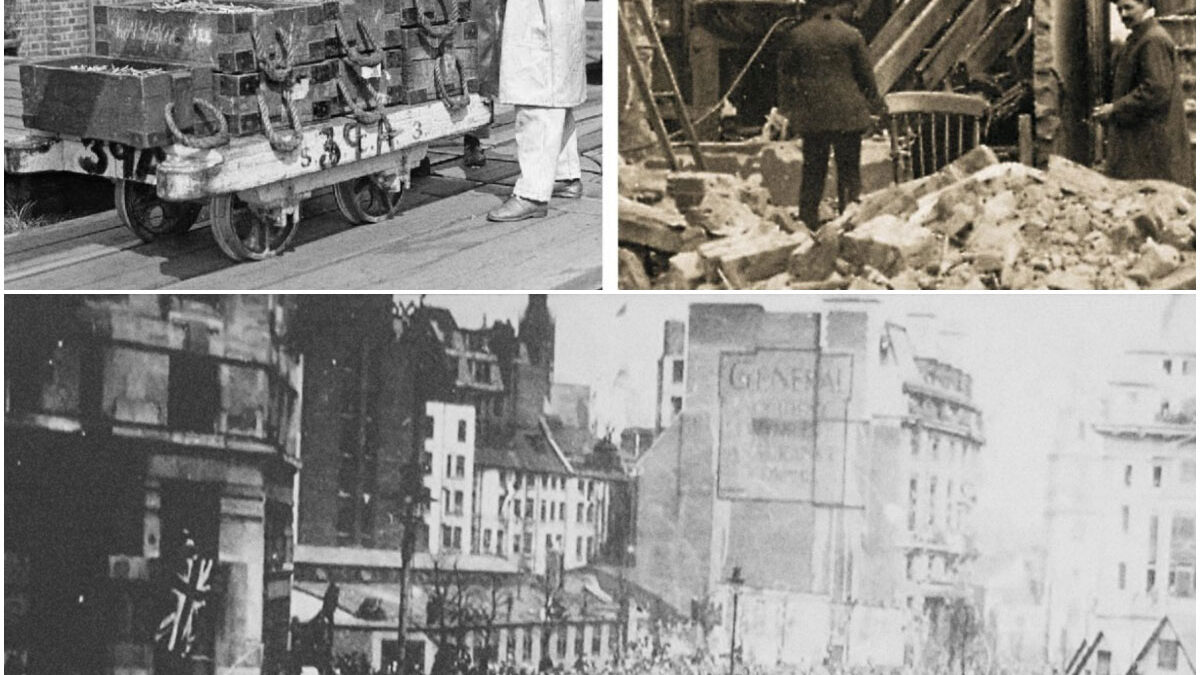
Engineers Warned Officials Not to Build It There | Disaster Documentary
January 19th, 1917.
Silvertown, East London.
The night air trembles as a fire glows behind factory walls.
Inside the Bruner Mound Munitions plant, workers shout over the hiss of steam and crackle of burning timber.
Then, at 6:52 p.m., the world turns white.
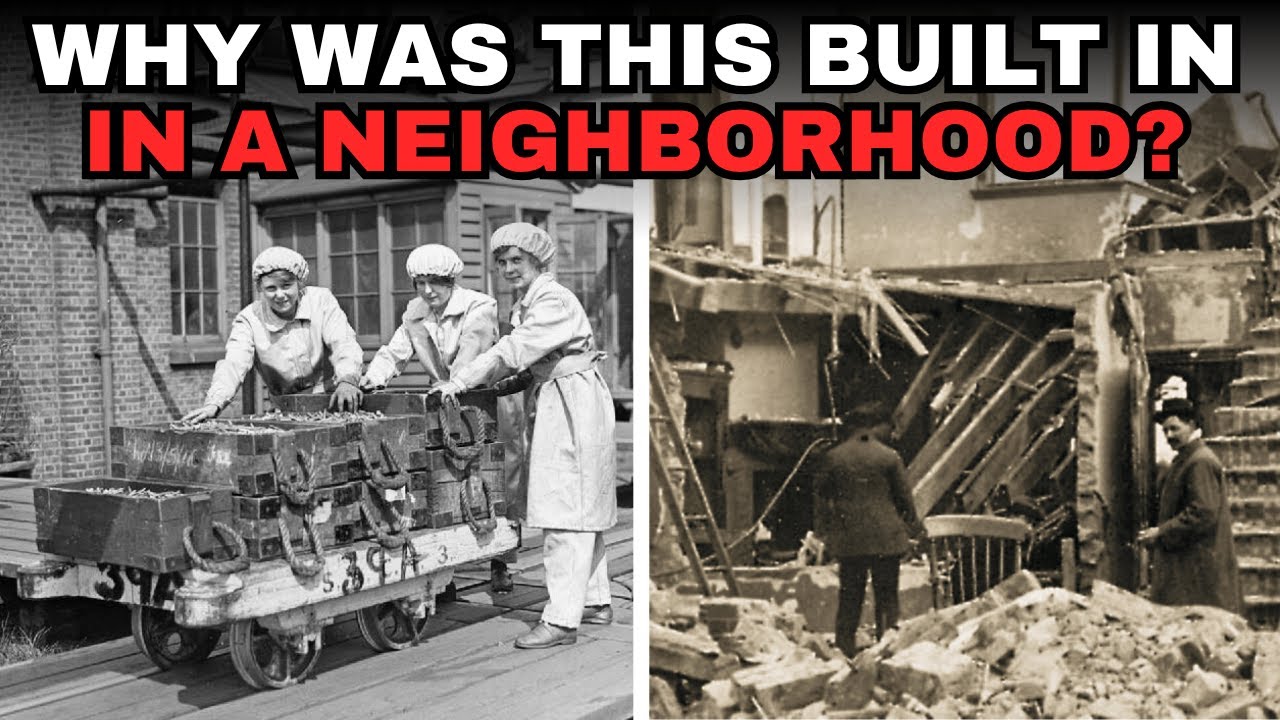
A shock wave slams through the city, ripping the roofs from homes, shattering windows as far as the West End.
Gas lights flicker.
Rail lines twist like ribbon.
Londoners dropped to the ground, certain the Germans have struck again.
But this was no air raid.
It was something far more human and far more preventable.
By 1917, London was a city both fortified and fragile.
Nearly 3 years of war had stretched its nerves thin.
The hum of factories had replaced the songs of the streets, and every warehouse, mill, and foundry seemed to pulse with the same single-minded rhythm.
Feed the front, fuel the fight.
In this fever transformation, safety became an afterthought.
The British Empire’s survival depended on production, and so ordinary neighborhoods became extensions of the battlefield.
In the East End, the docks of Silvertown glowed through the night.
The district had once been known for glass works and sugar refineries, a patchwork of labor and grit along the tempames.
But in 1915, under government pressure, one of its largest industrial sites, the Bruner Mond Chemical Works, was converted into a TNT purification plant.
It was a decision born of necessity and of denial.
The plant stood surrounded by houses, shops, and public houses, all within a few hundred ft.
Moving it to an isolated site was deemed impractical.
So the war came home instead.
The irony was that Bruner Mond had built its reputation on soda crystals, a harmless domestic product.
Its directors had resisted making explosives, warning that their facilities were never designed for such volatile work.
But the Ministry of Munitions insisted.
The need for TNT was desperate, and London’s existing transport links made the site ideal for quick distribution.
Engineers retrofitted the buildings, trained new crews, and began the dangerous work of purifying the crude explosive powder that powered the shells raining down on the Western Front.
For the people of Silvertown, the new factory meant jobs and wages when both were scarce.
Each dawn, hundreds of men and women walked through its gates, past the sign that declared no smoking danger of fire.
Inside, the air shimmerred faintly with the yellow dust of Trinituane, coating skin, clothes, and hair in a fine toxic sheen.
The women who handled the substance came to be called canaries.
Their faces tinged a sickly yellow from exposure.
They laughed about it sometimes, as if joking might make it less real.
The facto’s presence became an unspoken truth of life in the East End.
People lived beside it, worked in sid, and prayed it would never fail them.
Trains rattled past its gates.
Children played in its shadow, and housewives hung laundry on lines, strung between walls that hid a stockpile of raw explosive powerful enough to erase the entire district.
By the winter of 1917, the war’s appetite had grown insatiable.
The demand for shells never slowed, and the men and women of Silvertown labored under the weight of both duty and danger.
They could not have known that the same war effort which sustained their wages, was quietly constructing their ruin.
In the city’s rush to arm itself, it had built a weapon pointed inward, one that would soon detonate at the heart of London itself.
The men and women of Silvertown worked in a powder factory they tried not to think about.
Each morning the streets around Silvertown filled with the shuffle of boots and the clatter of lunch tins.
The faces in the crowd were young and old.
Men returned from the front with injuries that left them unfit for battle.
Women whose husbands were far away in France and boys barely out of school who wanted to help the war effort in any way they could.
They joined the steady line of workers filing into the Bruner Mond works.
Past the centuries and the warning signs, their breath visible in the cold.
Inside the gates, the air grew heavier.
The hum of machinery mixed with the sharp scent of chemicals and steam.
The workers moved methodically through narrow aisles lined with vats, pipes, and storage drums, each step governed by caution and habit.
A single spark could have spelled catastrophe, but routine dulled the fear.
They learned to work slowly, to keep their sleeves tight and their tempers tighter.
The explosions, they were told, were rare, the kind of thing that happened somewhere else to someone else.
Among them were the Canary girls, women whose skin and hair had turned a faint yellow from constant exposure to TNT duSt. They joked about it during breaks, calling one another glowworms, pretending the danger was distant.
But many felt the toll quietly, nausea, headaches, weakness that lingered long after their shifts ended.
It was wartime, and discomfort was a form of patriotism.
Nobody wanted to be seen complaining.
In those days, the line between civilian and soldier had blurred.
Every shell, every cartridge, every ounce of purified explosive seemed to link the workers directly to the trenches of the Western Front.
They imagined that somewhere in France their labor might save a British regiment from being overrun.
That thought gave purpose to the long hours and the constant risk.
We were part of it, one worker later recalled, and that made it worth the danger.
Yet the danger was greater than anyone admitted.
The plant was surrounded on all sides by terrace housing, rows of narrow homes with shared walls and thin windows.
Children played in the streets, unaware that the same factory which gave their parents a living also stored hundreds of tons of TNT.
Some nights, when the glow from the furnaces flickered against the low clouds, the air itself seemed to pulse with unease.
But the people of Silvertown had lived with smoke and fire all their lives.
They trusted that someone somewhere was keeping them safe.
The managers of Brunamond followed the ministry’s instructions, reporting every small fire, every chemical reaction that ran too hot.
Most were extinguished quickly.
The memory of past accidents elsewhere lingered.
Reminders of how easily heat and nitration could spiral out of control, but habits hardened and vigilance wavered.
The work continued because it had to.
And so, as the winter deepened, the people of Silvertown carried on, living beside a bomb they could not see, bound together by routine and resignation.
In a city at war, danger had become ordinary, and ordinary was the most dangerous thing of all.
The fire that changed everything began like so many others.
January 19th, 1917 began without distinction.
A bitter wind swept across the tempames, carrying the smell of coal smoke from the nearby docks.
Inside the Brunamond plant, the dayshift was ending.
Workers scrubbed residue from the purification vats, cleaned tools, and prepared to hand off to the night crew.
The usual noises filled the air, steam valves sighing, metal clanging, the faint hiss of gas lamps.
To anyone watching, it looked like any other winter evening in wartime London.
Shortly after 6:00, a small fire was spotted in the melt house near one of the TNT purification units.
It wasn’t unusual.
Fires had happened before.
Minor incidents quickly controlled.
A few workers reached for sand and water buckets while others sounded the internal alarm.
Flames licked up a wooden beam and danced along a pipe coated with duSt. The air began to shimmer with heat.
Supervisors moved quickly but not decisively.
Witnesses later recalled a moment of hesitation whether to evacuate or fight the fire on site.
The plant’s manager, George Wer, a veteran engineer known for his calm, believed they could contain it.
He stayed behind to direct the efforts.
For a few tense minutes, it seemed he might be right.
The flames dimmed.
Smoke thickened and hoses drenched the immediate area.
But deep inside the unit, where a zu from earlier batches clung to metal, the heat kept building.
Outside the factory walls, the world remained unaware.
Commuters passed by on the trams that rattled along North Wulitch Road.
Children in the nearby houses were finishing their evening tea.
Shopkeepers were pulling down their shutters.
The glow of the fire barely rose above the factory roof line.
Only a faint column of smoke betrayed the danger within.
By 6:45 p.m., the situation had changed.
A sudden roar of heat forced the fire brigade to retreat from the building.
Windows shattered outward, scattering shards onto the yard.
Workers fled through the gates, shouting warnings to those nearby.
Wena, still inside, was last seen shouting for more men to clear the remaining barrels.
He knew what was coming.
What no one could grasp in those final moments was the sheer scale of the risk.
Stored within the plant was roughly 50 tons of TNT, unstable, volatile, and already warming from the fire’s growing intensity.
It was enough explosive to flatten an entire district.
Yet, the streets outside were still filled with people.
At 6:52 p.m., the fire reached the purification building’s core.
The TNT ignited in a blinding flash that turned night into day.
For a fraction of a second, there was silence.
Then, a sound so violent it seemed to tear the air itself apart.
In that instant, the factory, the fire, and much of Silvertown ceased to exiSt. At 6:52 p.m., London was shaken to its core.
At 6:52 p.m., the sky above the temps erupted in light.
The explosion tore through the Brunammon plant with the force of a battlefield shell, magnified a thousand times.
For a moment, the night vanished.
Witnesses miles away described the horizon turning white, then red, as a rolling thunderclap ripped through London.
People as far as Guilford and Cambridge heard the blaSt. Windows shattered in Essex.
Doors flew off hinges in the West End.
The city, long accustomed to the fear of Zeppelin raids, thought the Germans had struck again.
But no airship had come.
The enemy was the city itself.
In Silvertown, the effect was beyond imagination.
The entire works disintegrated in an instant.
The shockwave flattened houses in every direction.
Streets were erased.
Iron girders flew like splinters.
A 60tonon steel gassometer tank was hurled across the temps, landing in the river’s shallows.
Freight cars were lifted from the rails and tossed like toys.
People standing blocks away were thrown to the ground, dazed, their ears bleeding from the pressure.
Fires ignited across the district.
The neighboring flower mill burst into flames, turning into a roaring torch that illuminated the devastation.
Whole blocks of terrace homes were burning or gone entirely.
The smell of dust, smoke, and chemicals filled the air.
Those who survived stumbled through a wasteland of debris and silence.
For many, the only sound was the ringing in their ears.
At nearby pontoon dock, railway workers looked up to see a cloud of fire rising thousands of feet high.
It was like the end of the world, one man later recalled.
Everything went up and then everything came down.
The ground shook as if struck by an earthquake.
The clock at a nearby church stopped precisely at 6:52.
Across the river in Greenwich and the aisle of dogs, residents rushed to their windows to see the glow spreading over the water.
Flames climbed higher than the tallest cranes.
The reflection on the temps made the whole river seem to burn.
Many believed London’s eastern districts were gone entirely.
For nearly a full minute, the shockwave echoed outward.
Gas manses ruptured.
Roofs caved in miles from the epicenter.
The telegraph network went down and rail lines buckled.
Hundreds of thousands felt the force without understanding its cause.
In the chaos of war, the first thought was always the same.
The enemy had reached them.
But there were no sirens, no search lights, no engines in the sky, only the slow realization that the danger had come from within.
By the time the echo faded, Silvertown was unrecognizable.
Where once stood homes, workshops, and factories, there was now a crater 50 m wide and deeper than a house.
The night that had begun with fire now ended in ruin, and the heart of the East End beat no more.
The streets of Silvertown disappeared in seconds.
When the blast subsided, what had once been Silvertown was no longer a place, only a shape in the smoke.
The rows of narrow terrace houses that once lined North Woolitch Road were gone, erased as if swept from the earth.
Fires raged in every direction, painting the ruins in orange and black.
The few walls still standing leaned at impossible angles.
Their interiors laid bare to the cold night air.
Families stumbled from cellers, coughing, faces gray with ash.
Some found only rubble where their neighbors had lived minutes before.
The destruction was precise in its cruelty.
On one side of a street, a row of homes still stood.
On the other, nothing but a crater filled with smoldering timber and twisted rails.
The explosion had followed no pattern.
Its fury determined by chance by which way the blast wave turned when it met a wall, a gas line, or a roof beam.
Survivors spoke of people simply vanishing.
Their bodies never recovered.
Their names known only from the list drawn up in the days that followed.
The royal docks, only a few hundred yards away, looked as though they’d been shelled.
Barges burned at their moorings.
Warehouses collapsed inward, and the cranes that once towered over the river now lay in heaps of steel and cable.
The air shimmerred with dust so thick it dulled the moonlight.
Flames danced along the water, fed by leaking oil and chemicals.
The sound of sirens began to rise, distant at first, then closer as fire brigades from across London raced toward the East End.
In the streets beyond, chaos spread.
Shopfronts shattered miles from the epicenter.
At the Wulitch Arsenal, soldiers dropped their tools, certain the enemy had bombed the city.
People poured from underground stations and tram stops, dazed and terrified.
For those nearest the blast, there was no time to flee.
Witnesses recalled a sudden wind, hot, violent, carrying with it shards of glass and dust that cut the skin.
Then came the silence, heavy and absolute.
In one small house near the docks, a woman found her husband alive, but her children gone.
In another, a man clawed through debris to find a single photograph amid the wreckage.
These fragments, a button, a shoe, a bent watch, became the only remains of entire families.
Rescue workers would later mark the ruins with chalk, writing the number of bodies found inside.
Though in many cases there were none to count.
By the end of the night, more than 900 homes had been destroyed or rendered uninhabitable.
73 people were dead, hundreds wounded, and thousands left without shelter.
The blast had struck at the very core of London’s working class.
People already burdened by rationing, war taxes, and grief from the front.
Now the war had found them in their own beds.
In the cold hours that followed, Silvertown survivors stood among the flames and ash, waiting for dawn, unsure whether the city would ever remember them or if it too would simply move on.
The first responders raced toward what they thought was a zeppelin attack.
Within minutes of the blast, London’s night sky was alive with confusion.
Fire crews from across the city were jolted into motion, their horses and engines tearing down cobblestone streets toward the glow on the eastern horizon.
To many, it could only mean one thing, a zeppelin raid.
The east end had been bombed before, and the scale of the explosion suggested a direct hit.
Yet, as the first engines reached Silvertown, the truth was far worse.
There was no enemy in the air.
The enemy was fire itself.
The streets leading to the Brunamond works were impossible.
Craters yawned where roads had been, and rails twisted like corkcrews across the tram lines.
Rescuers picked their way through debris, dragging hoses over rubble and broken glass.
The air was thick with the smell of cordite and sulfur, mingled with the choking fumes of burning chemicals.
A soft, persistent rain of ash fell over the district, coating everything in pale gray duSt. Firemen had to cover their faces with wet rags just to breathe.
They found scenes of devastation that defied belief.
The factory was gone.
Nothing remained but a deep pit still glowing red at its center.
The surrounding homes were flattened or burning fiercely.
Cries came from the ruins, faint and scattered, as survivors called out for help.
Many rescuers later said they could not tell where voices came from.
Sound seemed to come from everywhere and nowhere at once.
Ambulances began to arrive from nearby hospitals, their headlights cutting narrow paths through the smoke.
Doctors and nurses wed through the mud and debris, tending to the wounded in makeshift triage stations.
The injured arrived on doors, on carts, sometimes carried in blankets by neighbors.
Burns, fractures, and shock were everywhere.
Many of the victims were unrecognizable, their faces stre with soot and blood.
Others wandered aimlessly, silent and glasseyed, unable to comprehend what had happened.
At the Royal docks, naval personnel joined the effort, forming human chains to pass water buckets and lift rubble by hand.
Soldiers from the Wulitch arsenal soon followed, using shovels and picks to dig for survivors.
Some of the men were veterans of the Western Front, and even they said the destruction reminded them of the battlefields of France.
Through it all, the fires burned.
Gas manses continued to roar, and every new gust of wind sent embers spiraling across the ruins.
Explosions still sounded, smaller now, but enough to make rescuers flinch.
Ammunition stores from nearby rail cars detonated intermittently, sending showers of sparks into the night.
By midnight, thousands of people had converged on the area.
Some searched for loved ones.
Others came simply to help.
The silence that followed each new collapse was unbearable.
Everyone listening for the faintest sign of life beneath the wreckage.
And amid that chaos, London’s first responders, firemen, medics, dock workers, soldiers kept digging, kept carrying, kept fighting a battle with no enemy to defeat.
In the glow of the fires, London understood the cost of its own industry.
When dawn finally came, the flames still burned.
Smoke drifted low across the temps, carrying the acrid scent of chemicals and charred timber.
The scale of the destruction became visible in the gray morning light.
A landscape flattened as if by artillery.
Rows of homes were reduced to foundations, their bricks scattered like dice across the mud.
In the center lay the remains of the Bruner Mond works, now a crater so vast that rescuers said you could fit a house inside it.
London had seen fire before, but never like this.
The city’s eastern edge looked like a battlefield.
Carts carried the wounded to makeshift hospitals set up in churches and school houses.
Families wandered between the ruins, calling out names, sifting through ash for any trace of the lives they’d built.
One survivor, a woman named Ellen Hurley, recalled finding only the handle of her teapot in the rubble of her kitchen.
Everything else, she said, was gone.
Not burned, not broken, gone.
Fire brigades continued their work long after exhaustion set in.
Water pressure had fallen, so they pumped directly from the river, sending muddy streams over glowing embers.
The men’s faces were blackened with soot, their eyes red from smoke.
Many had worked through the night without food or reSt. By now, the official toll was beginning to emerge.
73 dead, more than 400 injured, and 900 homes destroyed or damaged beyond repair.
Yet those numbers barely conveyed the human weight of the disaster.
In the nearby Wulitch infirmary, rows of beds filled with the burned and the broken.
Nurses moved quietly among them, changing bandages, offering water.
The patients rarely spoke.
Some were factory workers.
Others were simply residents who had been sitting down to supper when their walls came down around them.
The shock ran deeper than pain.
It was like the war had come to my doorstep.
One man later said, and didn’t bother to leave.
Among the dead was George Wer, the factory manager, who had refused to abandon his post when the fire began.
He had remained inside, directing efforts to contain the blaze until the final seconds.
When his body was found, it was near the place where the fire had started.
Newspapers would later call him a hero, a man who stayed to the end, knowing what it would cost him.
As night fell again, the fires began to dim.
The people of Silvertown gathered in silent groups, staring at the crater that had once been the heart of their neighborhood.
Londoners from across the city came to see the devastation for themselves.
Crowds standing at the police cordons, hats in hand, whispering as if at a funeral.
The East End had always been the engine of Britain’s industry, its furnaces and factories keeping the empire alive.
But now, in the glow of its own ruin, London understood the price of its ambition.
The explosion was not an accident.
It was a consequence of wartime denial.
In the weeks that followed, the official explanations began to take shape.
Investigators from the Ministry of Munitions arrived within days, moving through the ruins with clipboards and guarded expressions.
They measured the crater, interviewed survivors, and reviewed the plant safety records.
What they found was both predictable and damning.
The Silvertown explosion, they concluded, was not an act of fate.
It was the inevitable outcome of decisions made in haste and held in denial.
From the beginning, experts had warned that the Brunamond works was a disaster waiting to happen.
The company itself had objected when ordered to purify TNT on its premises.
Its directors knew the site, surrounded by homes and warehouses, was unsuitable for explosives.
The ministry’s own engineers had agreed, recommending that the dangerous operations be moved to an isolated area outside the city.
But the demands of war silenced caution.
The Western Front consumed thousands of shells each day.
Every delay in production was measured in lives lost abroad.
And so the work went on.
Documents later revealed that safety complaints had been filed as early as 1916 after several small fires and chemical reactions had forced temporary shutdowns.
The correspondence between Bruna Mond and the government read like a slow motion warning, each letter more urgent, each reply more dismissive.
The necessity of maintaining output, one official wrote, must outweigh hypothetical risk.
It was bureaucracy speaking in the language of inevitability.
The physical design of the factory only worsened the danger.
TNT purification required intense heat and open vats of volatile compounds.
The equipment, never intended for such work, was retrofitted hastily.
Ventilation was poor, storage areas overflowed with raw materials, and fire brakes were minimal.
When the blaze began on January 19th, the factory held roughly 50 tons of explosive, enough to destroy a city block for every ton.
For those who survived, the investigation felt hollow.
They didn’t need a report to tell them what they already knew, that profit, pressure, and pride had built the bomb that killed their neighbors.
A worker named William Cross put it plainly.
They said we were fighting the Germans, but the war took us all the same.
His words carried the truth no official statement could disguise.
In Parliament, questions were raised, but quietly deflected.
The nation was still at war, and public morale could not withstand a scandal about government negligence.
The newspapers were instructed to keep coverage minimal, to focus on heroism rather than failure.
Britain mourned, but it did not rage.
Not yet.
And Silvertown’s destruction was written off as the cost of victory, a tragedy, but a necessary one.
It was easier to call it an accident than to admit what it really was, a collision between human error and human ambition.
The people of the East End buried their dead while the war pressed on, and in offices far from the crater, production continued.
Now, unbroken and unquestioned.
Out of the crater, a new awareness of industrial danger began to rise.
When the fires were finally out and the dead were laid to rest, London began to reckon with what Silver Town had revealed.
The explosion had not just destroyed a neighborhood.
It had exposed the fragile line between progress and peril that defined the industrial age.
The war had forced Britain to build faster, to produce more, to blur the boundaries between factory and front line.
But Silvertown’s crater was impossible to ignore.
It was a wound carved into the capital itself, and it demanded answers.
Public attention grew slowly as wartime censorship eased.
Local newspapers began printing the names of the victims, accompanied by photographs of smiling families, now gone.
Benefit committees were established to support the hundreds left homeless.
Donations poured in from across the city.
Pennies from school children, shillings from dock workers, even contributions from soldiers abroad who had read about the explosion in dispatches.
The response was humble, human, and deeply British.
If the government would not make it right, the people would.
Behind closed doors, policymakers faced a reckoning.
The Silvertown disaster prompted the Ministry of Munitions to re-examine every similar site in the country.
Inspectors were dispatched to chemical works in Kent, Chesher, and the Midlands, where munitions plants operated close to towns and rail lines.
Within months, several were relocated or rebuilt to meet new safety standards.
The concept of buffer zones, physical distances between explosive materials and civilian areas, began to take shape.
It was a lesson written in smoke and blood.
The explosion also reshaped public perception of the industrial risk.
Before Silvertown, the hazards of chemical production had been treated as part of life, an acceptable cost of progress.
Afterward, the illusion cracked.
The working classes who had built the empire’s factories and filled its trenches began to see that patriotism could not protect them from policy.
They called it fate.
One East End survivor later said, “But fate didn’t store TNT next to our houses.”
Memorials followed.
In 1919, a plaque was placed near the site to honor those killed, though for years it stood alone in an empty field.
The land was cleared, then rebuilt.
In time, new streets and warehouses rose where the crater had been, as if London were determined to erase the scar.
Yet beneath the pavement, traces of the explosion remained.
Fragments of brick, twisted metal, and glass fused by heat.
The earth itself still carried the memory.
The lessons of Silvertown reached far beyond the temps.
Across the world, from Canada to Australia, governments studying wartime production cited the disaster as proof of what could happen when urgency overrode caution.
The phrase another silver town entered engineering reports as shorthand for catastrophe born of complacency.
It was a name no city wanted to repeat.
Out of destruction came regulation and from silence awareness.
The people of Silvertown had paid in lives for knowledge their leaders had refused to learn.
The sound of Silvertown echoed far beyond the East End.
Long after the smoke cleared, the echo of that night lingered.
For those who survived, the memory of the explosion never faded.
The blinding flash, the sudden silence, the world ripped apart in an instant.
Some never spoke of it again.
Others told the story for the rest of their lives, unable to forget how an ordinary evening turned into a moment that defined them forever.
The blast had ended in seconds, but its sound carried through generations.
The people of Silvertown rebuilt because there was no other choice.
Within months, temporary housing appeared among the ruins.
Rows of prefabricated huts and brick shells hastily erected by local councils.
Families returned to the only place they knew, sweeping away the soot, planting flowers wherether the crater’s edge once lay.
The river kept flowing.
Trains resumed along repaired rails, and the steady rhythm of labor returned to the East End.
Life, as always, pressed forward, stubborn, bruised, and unbroken.
Yet the wound beneath that resilience remained.
For decades, the Silvertown explosion was remembered quietly, often overshadowed by the wars that came after.
When the Second World War brought the Blitz to London, survivors of 1917 watched the skies burn again and said it felt familiar.
The same shock, the same courage, the same sound of walls falling in the dark.
The difference, they noted, was that this time the destruction came from an enemy’s hand, not their own.
In the years that followed, historians began to see Silvertown as more than an accident, as a symbol of the human cost hidden behind progress.
It was a story about trust and about blindness.
How a nation so intent on defending itself could overlook the danger it had built within.
For engineers, it became a case study.
For citizens, a warning.
For families, a scar passed down through quiet remembrance.
Today, the sight of the explosion bears little resemblance to what it once was.
Roads and warehouses now cover the ground, and commuters cross the same stretch of land each day without knowing what sleeps beneath their feet.
A memorial stands nearby, simple and unadorned, inscribed with the names of those who died.
Each January, a handful of people gather there, descendants, historians, locals, and for a moment, the noise of the city seems to pause.
Standing there, it’s hard not to imagine the sound that once tore through this place.
A single deafening instant that reached as far as a 100 miles away.
The echo may have faded, but the meaning endures.
That progress without caution can destroy the very people it seeks to protect.
The story of Silvertown is not just about an explosion.
It is about the price of urgency, the silence of warnings, and the strength of those who rebuild from ashes.
Because sometimes the loudest explosions come not from hatred, but from haste.








