Deformed Baby Bigfoot Rejected by Mother – What a Stranger Did Next Will Leave You in Tears!
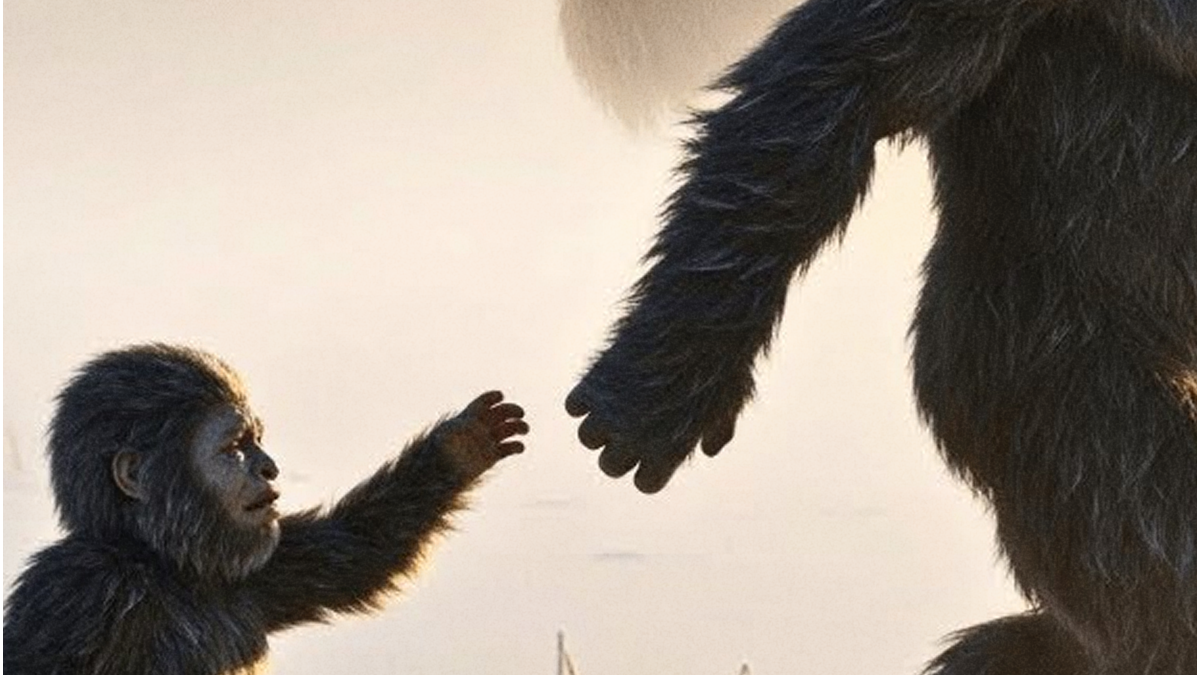
Deformed Baby Bigfoot Rejected by Mother – What a Stranger Did Next Will Leave You in Tears!
He’s barely breathing.
Oh my goodness.
All right, let’s get him warm.
Vitals are dropping.
Sh.
Easy now.

Its lungs sound clear, but the heart is struggling.
In the dead of winter 1988, deep in the frozen Aderondex, a forest ranger named Reed Halpern stumbled upon something no one would believe.
A dying Bigfoot infant barely breathing, its face hauntingly human with intelligent amber eyes and frost dampened fur.
A massive silhouette loomed in the mist.
The mother standing motionless, watching from afar.
But instead of fear, Reed felt something else.
And he carried the creature into town.
What followed was a 2-year journey that turned an entire community into silent witnesses of a bond no science could explain.
This child didn’t just survive.
It learned to move in its own way, led raccoons in games of tag, calmed hawks, and even saved a young girl from drowning before vanishing back into the wild.
And in that moment when a hardened lumberjack stepped forward and simply said it saved her, something in the town shifted forever.
If you think Bigfoot is just a myth, wait till you hear what happened next.
Where in the world are you hearing this story from let us know in the comments and imagine how far this tale might travel from the heart of Long Lake to wherever you are.
Thank you for listening and with all our warmth, we send you our love.
In the freezing gray stillness of dawn, the trees cracked like old bones under Reed Halpern’s boots.
The air stung, sharp and metallic, full of rusted snow and the deep sleeping stink of Pete.
He moved slow through the reeds, shotgun slung, and breath rising in thick clouds.
Nothing moved but the wind scraping through frostbitten cattails.
Then came a sound, not loud, not sudden, but long and low, like a worn saw catching on hardwood.
It stretched across the stillness and faded into the hush like breath into cloth.
Reed froze, one hand dropped to his belt, the other steady on the grip of his rifle.
But there was nothing.
Only his own breath, too loud now.
And something else, something small, half buried in the crusted snow at his knees, lay a handprint, delicate and wrong, not flattened like a raccoon’s, not wide like a man’s.
Tiny, almost childlike.
But there were no bootprints, no shoe prints, just the one hand pressed into the top layer of frozen slush like it had come from above.
He followed the broken reads, boots crunching louder now until he saw it.
Curled into a dip of black mud and bent cattails, a shape shivered, struggling just to breathe, his throat clenched.
The thing was alive, but barely.
Its fur was dark and wet, stuck in frozen ropes to thin limbs, ribs heaving shallow and fast.
Its mouth hung open but soundless, lips purpleling from the cold, eyes open, wide and glassy.
Amber, like melted sap, and human, too.
Human, not just in shape, but in the way they moved, watching, pleading, not with words, but with something deeper.
Under the frostbitten fur, the face had skin, bare in places.
A thin sheen of sweat or dew caught the light as the sun broke pale across the horizon.
There was a small beard, more like a patch of soft, short hair, clinging wet to the chin like a child’s.
The legs were wrong.
Reed could see that even from where he stood.
One ankle twisted at a crooked angle, the other swelling beneath skin pulled too tight.
Breathing was shallow, desperate.
But it was breathing.
And behind the reeds, where the forest met the fog, something massive moved.
Not a charge, not a retreat, a shift like wind across the upper branches.
Just enough to catch the eye, just enough to make the breath stay low in the lungs.
Reed didn’t raise his rifle.
He didn’t run either.
Something in him.
Deep an animal.
Told him not to.
This wasn’t a trap.
This wasn’t a chase.
This was a ritual.
A line was being drawn.
He dropped to one knee.
The cold soaked through his pants immediately, and he didn’t care.
He pulled off his gloves with his teeth, peeled back his coat, then stripped the outer layer, ripping the seams without thinking, and bundled the infant creature inside.
It didn’t resist.
It couldn’t.
Its eyes closed for the first time.
Maybe sleep, maybe surrender.
Reed pressed it to his chest, clutching the bundle under the weight of his flannel and sweat, and stood.
He turned, walking backward at first, eyes on the treeine, but the forest stayed still.
No more movement, no charge, just breath, just watchfulness.
He didn’t know what was watching him, only that it was still there.
The path back to the truck was slow.
The snow had refrozen overnight, thin crust over slush, breaking with every step.
The bundle at his chest made no sound.
He crossed a patch of open ice near the center of the marsh, heading for the edge of the timberline.
Then behind him came a soft sound.
Not loud, not hurried, a crack of branch, a settling.
He turned and saw it near the edge of the dark brush.
Something had been placed delicately, purposefully at the frozen rim of the trail.
A branch, thin, dried, split clean from a hemlock sapling.
Reed saw no hand put it there.
Heard no footstep.
It was simply there.
It wasn’t meant to frighten.
It wasn’t meant to stop him.
It was something else.
He stepped forward and studied it.
There were no marks, no carvings, just a branch.
But it had weight, a signal, not a threat, not a warning, a recognition, a quiet allowance, something that said, “We know.
We see.
Go.”
He didn’t touch it, just nodded once and walked on.
Back in the truck, he cut the heater to full blast, cradled the bundle closer.
The little one still didn’t move.
Its breathing came in thin, fluttering puffs.
Reed could feel the tiny ribs against his chest.
Could feel the heat bleeding off its body and the cold sinking in deeper behind it.
He turned the truck onto the frozen road, tires cracking against ice, windshield fogging with each exhale.
Every so often, he looked into the rear view mirror.
Not because he thought he was being followed.
Because he knew somehow he still was.
Not a chase, a vigil.
He didn’t speak.
Couldn’t.
There were no words for this.
Not in any language he knew.
He just drove.
Breath shallow, hands shaking, eyes scanning the trees, until the woods broke open into open road, and Long Lake shimmerred in the distance like a plate of glass under the low sun.
He wasn’t sure what he was doing.
He wasn’t sure where this was going.
All he knew was that when he saw that tiny hand in the snow without tracks, without origin, he had already crossed the point of decision.
You didn’t walk past something like that.
You didn’t pretend you hadn’t seen.
That was the first rule of the woods.
If something needs help and you have the strength to give it, you do.
Not because it’s safe, not because it’s smart, but because it’s right.
At a red light on the edge of town, the bundle stirred, just a flicker, a twitch of a finger, then a quiet breath, deeper than before.
It wasn’t a sound of recovery, but it was a sound, and it mattered.
He pulled around back of the old clinic where the windows were dark and the porch sagged slightly.
The air smelled like kerosene and old bandages.
Reed killed the engine and stepped out.
The door creaked open before he knocked.
Iris Dunham stood there, hair pinned in a loose knot, bathrobe open over an apron still smudged with iodine.
She looked down at the bundle, eyes narrowing.
Then she said very quietly, “You brought a child of the woods.”
Reed didn’t speak.
She stepped aside.
Inside the light was low, the air warm with stove heat and menthol.
Dr. Mera Talbot, barely 30, eyes tired and steady, stepped out from a side room with an old stethoscope and a chipped enamel basin.
She didn’t ask questions either.
She didn’t need to.
They laid the bundle on a flannel line table.
Meera peeled back the soaked layers, her jaw tightened.
“Lungs are shallow,” she said.
“Hearts faint, those legs.”
Reed sat by the door, hands wrapped tight around his knit cap.
Iris pressed the flat of her palm to the infant’s chest.
Not roughly, just enough to feel where the breath sat, where it stalled, where it trembled.
Meera lit the alcohol lamp, dipped a cloth in warm water, began to wipe down the trembling limbs.
Colt Avery, maybe 17, swept the floor in the next room.
When he caught a glimpse of what lay on the table, he froze, then quietly folded a sheet of paper in half and tucked it under the mattress.
A sketch.
A charcoal hand, small, desperate, gripping the stem of a swamp reed.
Something like a promise scratched into paper grain.
Outside, dusk folded in.
Wind scraped across the old windows.
The chimney rattled.
Somewhere out in the dark, a shape moved across the porch light, slow and large enough to douse the glow that reached under the door.
Iris stood and opened the door.
Nothing waited.
No knock, no howl, only the smell of wet moss and the faint sound of breath.
She placed a basin of warm water on the stoop and closed the door again.
They didn’t speak about it.
Some things are understood without speaking.
Some things stay just outside the light, not because they are afraid, but because they are waiting.
And the story was only beginning.
It would not end with snow.
It would not end with rescue.
It would follow breath by breath.
And the night did not end in silence, but in a long patient exhale that no one in the room could hear, but all of them somehow felt.
The back door of the clinic creaked open into air thick with a sharp bite of kerosene and something cleaner, older, rubbing alcohol, dried cotton.
A faint trace of iodine sunk into the wood.
Iris Dunham stepped onto the porch with a towel slung over her shoulder.
Her gray hair clipped back in a tight clasp like always.
Morning light hadn’t quite touched the lake yet.
The world still felt bruised from night.
And then she stopped.
Her hand clenched slightly at her side.
“You brought a child of the woods,” she said, not asking.
Her voice was quiet, flat, but not surprised.
Reed Halpern didn’t speak.
He just nodded once like a man holding something too fragile to explain.
His coat hung open, tattered from the shoulders down where he’d torn it.
And inside against his chest was the small bundled shape he had carried all the way from Horseshoe Marsh through ice and silence and something that still hadn’t stopped watching.
Iris didn’t hesitate.
She opened the door wider and led him in without another word.
Inside the clinic was dim.
The space held heat like a cupped hand.
Old walls, soft humming from the radiator, yellow lamp light over the counter where notes were scribbled in thick black pencil.
Dr. Meera Talbet emerged from the hallway, wiping her hands on a towel.
Her long braid was damp from a rushed rinse, eyes clearer than they should have been at this hour.
Young, too young, some had said when she first came up from Syracuse, but not green.
She saw the shape in Reed’s arms, the pour in his face, and moved without pause.
“In here,” she said, pushing open the door to the left exam room.
They laid the bundle on the padded table with a slowness that felt sacred.
Reed’s hands hovered until he was sure it was safe to let go.
Meera peeled back the layers of cloth, wet from sweat and snow melt, and the child lay there, skin flushed and clammy beneath thin fur.
Its chest struggling to rise.
The breath came uneven like it couldn’t quite catch or release.
One leg trembled involuntarily.
The other hung loose, foot turned at a wrong angle.
Meera placed her stethoscope, listened.
Her brow furrowed.
Lungs are compromised, she murmured.
Heart slow.
Her fingers moved to the creature’s twisted ankles.
Fractures, possibly congenital joint misplacement.
We don’t have time to debate options.
Reed said nothing.
He was sitting on the edge of a wooden chair, his wool hat clenched so tight in his hands it looked like he might tear it in half.
I didn’t know where else to go, he finally said.
Meera shook her head once, firm.
You did right, Iris stepped forward and laid the flat of her hand across the infant’s sternum.
Not heavy, just enough to ground the breath.
Her palm rose and fell with each fragile inhale, steadying it.
“Keep it here,” she said softly, more to the child than to the room.
“Don’t you let go.”
Down the hall, Colt Avery was mopping the corridor floor.
17 maybe.
Always there at the crack of dawn when the town was quiet, when the front porch was still rimmed in frost.
He moved without looking up at first until something in the air shifted.
He caught sight of the figure on the table through the halfopen door.
Just a glance, and his chest lifted like he forgot to breathe.
No one told him to stop.
No one told him to look away.
He simply turned, went to the storage cabinet, and took out a piece of charcoal he kept tucked behind the door frame.
Quiet as a mouse, he knelt beside the exam table, pulled a scrap of paper from under the supply bin, and started to draw.
The hand came first, small, gripping, as if trying to hold onto the earth itself.
The stalk of a reed bent beneath its grasp.
A line, uncertain, tender, connected skin to soil.
He didn’t finish it.
Just folded it once and slipped it under the edge of the cot’s mattress where no one would see unless they were meant to.
Outside, daylight pushed at the windows like a soft shoulder.
The glass fogged and cleared with every gust of wind.
The town hadn’t woken yet, but the clinic felt like it sat between two worlds, one with rules and names and clocks ticking, and the other with breath and pulse and things older than language.
Meera worked in silence, eyes darting between the heart monitor and the child’s chest, adjusting the angle of its neck to open the airway.
She pulled a shallow metal basin from the shelf, filled it with warm water, and rung out a cotton cloth.
Iris held the child steady as Meera cleaned away the mud and blood and remnants of the marsh.
It didn’t cry, not once.
Its eyes fluttered but didn’t open, and that was somehow worse.
Time thickened.
The walls didn’t echo.
Every movement was careful, unspoken.
The way Iris cradled the legs to keep them from trembling too hard.
The way Meera worked quickly but with reverence, like treating something rare and undeserving of pain.
The child’s face, so impossibly strange and familiar, rested in the crook of the towel.
Amber lids twitching faintly.
A breath caught, then steadied.
Outside the back door, something stirred.
A soft thump against the porch railing.
Not a knock, not even close, just the brush of presence.
Iris paused, glanced toward the noise, then walked to the door, and opened it a crack.
There was no one there, but the light shifted.
The porch bulb hummed and flickered once, casting a ripple of shadow across the floor.
For a moment, the warm glow dimmed as if something large passed between the source and the earth.
The smell came next.
Moss, damp dirt, something wild.
Not offensive, not threatening, just real.
Old, as if the woods themselves had leaned in for a moment to check.
Iris placed a small ceramic bowl of warm water on the step and closed the door without a word.
In the exam room, Meera adjusted the blanket around the infant.
Its breathing had grown marginally stronger, as if the warmth had convinced the lungs to try again.
She glanced toward Reed.
“It needs rest,” she said.
“Constant temperature, low light, no loud sounds, and time.
A lot of time.
Will it live?”
Reed asked voicehorse.
Meera didn’t answer right away.
Then it shouldn’t have made it through the night, but it did.
That counts for something.
Reed nodded slowly, eyes never leaving the child.
It was alone, he said.
But not abandoned.
Meera looked at him.
I think they left it there, he continued.
On purpose, not to die, but to see what we do.
No one challenged that.
No one called it crazy.
In this room, logic had already shifted.
Colt finished mopping.
He hung the mop back on the hook, wiped his hands on his jeans, and lingered in the doorway.
“Can I sit with it later?”
He asked.
Iris smiled faintly.
“Later?
Right now?
It needs quiet.”
Colt nodded and disappeared down the hallway.
The clinic returned to silence.
Meera dimmed the lights.
Iris closed the blinds.
Reed sat in the chair beside the cot and rested his elbows on his knees, fingers still wrapped around that same knit cap, now rung out and damp from his palMs. Outside, wind scraped across the siding.
The smell of pine and thaw and whatever passed for spring in this part of upstate New York lingered at the edges of the walls.
Nothing was certain.
Nothing about this moment could be measured.
But there was a kind of stillness that settled in, like a held breath finally exhaled.
The kind of stillness you didn’t question.
That night, when the town began to stir and delivery trucks rattled past the lake, and someone lit the stove at the diner three blocks down, the clinic remained quiet.
Lamps burned low.
The back hallway stayed warm, and the bundle on the cot shifted slightly beneath the blankets.
Not in pain, not in panic, just a twitch, the kind that comes when sleep gives way to breath again.
And just before midnight, when Iris passed through the hallway with a glass of water, she found the front door still locked, the light still soft, and a small shape curled tighter under the wool, as if it had finally decided, for now at least, that it wasn’t alone.
Not anymore.
And outside somewhere in the woods beyond the lake, nothing moved.
But the air still held weight.
The kind of weight that said, “This isn’t over.
This is only just beginning.”
By early spring, the snow had stopped crusting over the marsh and started sinking into mud.
The world around Long Lake grew soft again.
Bark darkened, the air heavier with thawed roots and slow dripping sap.
Out back, past the split rail fence and the old birch stump that everyone used as a bench, Mera Talbet had turned the sugar shack into something else.
It used to be where they boiled maple sap in March, back when winters were simpler and spring came with steam.
Now it was a room of slow miracles.
Blankets layered thick on the floor.
Thin plywood boards nailed into place to form ramps and slopes and uneven ledges.
It wasn’t much, but it was a start.
Reed watched from the side one morning, leaning against the door frame as Iris Dunham adjusted the homemade sling she’d sewn from old feedcloth and a broken rucks sack strap.
The creature, still small but heavier now, limbs no longer trembled with every breath, was nestled into the harness against her chest.
Its body rested against the fabric, but its eyes were alert, watching, studying.
Human-like wild man face turned toward the open light of the doorway.
Amber eyes reflecting the dull silver of the wet sky.
Iris moved slowly with the rhythm of someone who’d carried life before, even if not like this.
The sling held the child upright, chest open, airways clear.
Every detail had purpose now.
Mera had set chalk marks across the wooden floor, faint looping arcs that curved like riverbends, like a child’s sketch of flight paths.
At each turn, she placed a small pile of dried pine cones or a flat stone for reference.
Cold Avery had come by the night before and outlined them again with white chalk, little arrows curling like question marks, pointing toward a wall made of stacked lumber padded with grain sacks.
The kid didn’t say much anymore, but he never missed a morning.
He just knelt down and drew his maps, eyes flicking between the creature and the room as if trying to read something the rest of them couldn’t see.
That morning, the creature was trying again.
It crawled, no, slid across the floor with something that was more intention than skill.
Its hands, long-fingered and broad, spled across the boards.
One elbow dropped.
The shoulder twisted, its head dipped low.
Then it slipped, chest thudding against the floor with a dull thump.
Reed almost moved to help, but Iris lifted a hand without looking.
Wait.
The creature didn’t cry.
It lay there, cheek against the wood, breath caught in its throat.
Then slowly, it turned its face toward the wall.
The light from the open window fell across its features.
Skin visible under wet fur.
That short strange beard catching bits of straw.
Its lips parted.
Not for sound, but for effort.
And then it tried again.
Shoulder, elbow, hip, push.
It was a sequence, a pattern.
Something deeper than instinct.
Meera watched from the other side of the room and didn’t speak.
She’d learned that silence meant more.
Now, that progress came not with noise, but with the quiet tension of a choice made again and again.
By the second attempt, the creature had made it to the low ramp.
Not upright, never upright, but curled and coiled, using leverage where bone had failed.
It gripped the edge of the plank, eyes focused hard on the chalk arrows, and hauled its frame up one inch at a time.
Breath short, muscles taught, its legs dragged behind like weightless sticks, but its arms moved with a deliberate grace.
At the top of the ramp, it paused.
Reed leaned forward, breath caught in his throat.
The creature turned to look at him briefly, and Reed felt something crack open in his chest.
Not pity, not pride, something harder, something older, like witnessing the first flame take hold on cold bark.
Then the creature lowered its head and slid down the other side, landing with a muffled thud and a little grunt of effort.
Meera smiled barely.
Iris knelt beside it and placed her hand gently on its back.
It lifted its head and looked toward the corner where three orphaned raccoons were curled together in a wool lined crate.
The smallest one, a lanky little thing with one ear bent from frostbite, stared back.
The creature reached out with one long arm, pulled a smooth pine block toward itself and began to push it in slow arcs across the floor, carving tracks in the chalk.
The raccoons watched.
Then one by one they followed.
It was never taught.
It was never spoken, but the creature had begun to teach.
Cold came later that afternoon.
Muddy boots and charcoal still smudged on his fingers.
He walked to the edge of the room and crouched, watching.
He didn’t say hello.
The creature didn’t look up.
Colt sat down a new sketchbook and began to draw slow lines capturing the curve of the creature’s shoulder.
The way its hand pushed the block in deliberate circles.
Meera saw him and nodded once, then left him be.
The movements continued, smoother now.
Shoulder, elbow, hip, wall, push.
The pattern repeated again and again.
The chalk lines smudging and spreading until they became trails.
Then loops, then something like language, not written, not spoken, but real.
Reed watched it all and felt something shift.
Not in the creature, in himself.
He remembered that first morning, the way the small handprint lay in the snow like a question.
He remembered the weight of the child against his chest, how quiet it had been, how deliberate.
That had been the moment everything after hinged on.
The moment that said, “If you pick this up, you don’t put it down.
If you choose to carry, you carry it all the way.
That night, the air turned colder again.
The thaw stalled.
Ice formed along the edges of the puddles outside the clinic.
The sugar shacks windows fogged over with breath and steam.
Inside, the creature lay wrapped in thick wool, tucked into a corner beside the stone heater.
Meera checked its lungs.
Iris rubbed a bit of salve over a rash on its shoulder.
No one said much anymore.
There was nothing to say that wasn’t already being said.
In the way hands moved, in the way towels were warmed before touching skin, in the way quiet wasn’t empty, but full.
When the lamps were low and the wind started pressing against the siding, the creature opened its eyes.
Amber glints in the dim light.
It looked toward the doorway where Reed stood, not to beckon, not to beg, just to hold the space.
It blinked once, then pressed its forehead gently to the wall beside it, and closed its eyes again.
Reed didn’t move.
Outside, the wind kept whispering across the lake, and the trees didn’t shake much, but they listened, and somewhere just past the edge of the yard, where the last of the winter weeds bowed under snow melt.
Something massive stood still behind the trees, watching, not ready to step forward.
Not yet, but watching always.
And inside the creature slept with its hand resting on a wooden block, one finger pointing toward the chalk line that never quite stopped, just curved toward another beginning.
By early summer, Long Lake smelled of warm pine sap and dockwood bleached by the sun.
The trees breathed deeper, wider.
The clinic, once hushed and braced for winter’s breath, had shifted into something more lived in, more open.
The windows stayed cracked for breeze.
Light stretched longer across the old wooden floorboards, and laughter from the town kids drifted in around noon like bird song, quick and echoing.
Inside the clinic’s side room, the one they never really named, but everyone started calling the warm room.
The creature had made itself a teacher.
It didn’t know the word, didn’t need it.
What it had was rhythm, instinct, something older than explanation.
The pine block it once pushed alone now spun in wide arcs across the floor, chased by two clumsy raccoons with muddy paws and endless curiosity.
The youngest, a little male with torn fur along his shoulder, tumbled over himself, trying to match the speed.
The creature didn’t mind.
It rolled slower, then faster, adjusting to match the raccoon’s gates, carving pathways between the chalk lines that Colt refreshed every few days.
Colt had started calling it the trail game, but only when no one was listening.
Most afternoons, the creature would inch its way toward the pegboard.
Someone had rescued it from the elementary school supply room years back, a relic of some forgotten motor therapy program.
Meera had dusted it off, drilled it into a plank, and set it on the floor low enough to be nose height for the raccoons.
The creature would roll over to it, line its shoulder up just right, and knock one of the small wooden pegs free with the side of its head.
Always the forehead, never the hand.
The peg would clatter to the floor, and the raccoons would chase it like it was prey.
Then it would reset again and again.
Each time the movement was cleaner, not easier, but more deliberate.
It was learning precision through play.
And somehow, without ever speaking, it was passing that precision on above the pegboard, perched on a high shelf near the back window.
The red-tailed hawk watched with one wing still crooked.
Meera had named it Darby, mostly to keep track of the feeding chart.
Its flight feathers were growing and crooked, but it had learned to turn its head in sync with the game.
That day, when one peg rolled too far and bounced beneath the hawk’s perch, the creature followed its trajectory, crawled slow, stretched out, and Darby leaned forward.
The beak came fast, not hard, just quick.
It tapped at the soft space beneath the creature’s cheek, where skin showed through thin fur.
A warning.
The creature stilled.
Not in fear, just calculation.
Then slowly its left hand lifted, five fingers open, steady, palm turned out.
Emotion not defensive, not dominant, just communicative.
Enough.
Derby blinked.
Then stepped back half a pace.
Talons curling in.
That was it.
No sound, no scuffle, just space created by recognition.
Colt saw the whole thing from the other room and sketched it later, pressing charcoal into paper so hard the outline of the creature’s palm bled through onto the table beneath.
When Iris found the drawing, she folded it once and placed it behind the tea, where she kept old notes from patients who’d passed.
She didn’t say why.
She didn’t have to.
That summer, the clinic wasn’t just a clinic anymore.
Word had spread quietly without talk.
Mlin Dyer started showing up again, not for appointments, but to drop off scraps of wood or lengths of soft canvas, acting like he didn’t know where else to leave them.
Meera let him.
Iris watched him with guarded eyes, but didn’t send him away.
After what happened in the marsh, after the way he talked less and limped more, she figured silence was his best apology.
One afternoon, he stood at the edge of the sugar shack and watched as the creature used its elbows to nudge a string of buttons across a dusty beam, showing one of the raccoons how to hook its paw around the twine.
He didn’t smile.
He just left a sack of cedar shavings on the bench and walked back toward town, eyes low.
That same week, a man named Tanner from the mill up on Ridge View Road caught sight of something tall and still near the treeine above his hauling trail.
It didn’t run.
It didn’t wave.
It just stood breathing with the trees.
He didn’t tell his boss, didn’t tell his wife.
But the next night, after two bourbons and an argument about payroll, he mentioned it to the bartender at Vicky’s.
Big, bigger than a bear, he said, but quieter, like it belonged.
People laughed, shrugged it off.
But a few listened harder, and those were the ones who didn’t ask questions when they saw Reed’s truck backed up to the clinic at dusk, or noticed how Colt started carrying folded paper under his coat, like something sacred.
Nobody in town knew exactly what was happening, but they knew something was.
And for the first time in a long while, the quiet around Long Lake felt less like silence and more like reverence.
Inside the warm room, the creature had begun to hum, notes, not melody, just a vibration in the throat that rose and fell when the raccoons followed its lead, or when the hawk blinked in sync with its movements.
Meera noticed it during a heatwave in early June.
She leaned close, hand on the creature’s back, and felt the soft buzz of sound travel up her wrist.
The creature didn’t stop.
It just let her feel it.
Later that night, Iris sat on the front step with a bowl of boiled greens and listened to the wind shift through the grass.
The crickets were louder now.
The lake was higher and somewhere far off.
Maybe the north slope, maybe the hollow past the bend.
She swore she heard something echo the hum.
Not a song.
Not quite.
Just a low shared note passed between trees like breath through leaves.
The next morning, while Meera cleaned out the old cabinets in the east hallway, the creature crawled toward the pegboard with more urgency.
One of the raccoons had chewed a hole in the chalk line, and it paused there, unsure.
Then slowly, it dipped its forehead and pushed a peg across the gap, tracing the same shoulder, elbow, hip, wall sequence that had become its ritual.
The movement wasn’t just learned.
It was chosen.
Reed came later that day, just after Ren, boots caked in mud.
He watched for a long time from the far end of the room.
Said nothing.
Just stood there with his hands in his jacket, brow furrowed.
Mera approached soft.
“You okay?”
He nodded, then pointed at the movement.
“That pattern,” he said.
“It’s like like writing.”
Meera tilted her head.
“Maybe it is like a language without words.”
“It’s all language,” she said.
If it shared.
He exhaled and watched the creature press its forehead once more into the wood, then glance up at the hawk, which shifted slightly on its perch.
That night, after Colt finished a new sketch, and Iris dimmed the hall lights, Meera walked the length of the warm room once more before turning in.
She paused beside the pegboard and looked down at the smudged chalk, the softened corners of the pine blocks, the little tuft of fur clinging to the edge of the door frame.
Then she stepped back, caught sight of the creature curled beside the raccoons.
Its arm draped gently over one of them like a sibling’s shoulder.
And for a moment the stillness wasn’t quiet.
It was communion.
And outside, just past the edge of the porch light, something tall stood in the weeds again, half shadowed by the golden rod.
Meera didn’t move.
She didn’t need to.
She just let the moment breathe.
And the breath was returned.
Not taken, not borrowed, given, and that was enough for now.
By late August, the air over Long Lake began to lean heavy again, sticky with wet leaves and that faint trace of mildew that crept in once the sun shifted south.
The animals knew at first raccoons became restless at dusk, snapping twigs under porch steps, and the red hawk stirred more often at night, feathers rising with the static charge that always came before the storMs. Even the trees looked nervous.
Leaves curled early.
Shadows stretched longer across the road by the diner.
Change doesn’t always arrive loud.
Sometimes it creeps in on the scent of burnt oil and unasked questions.
They showed up on a Tuesday.
Two men, outsiders, though they tried not to act like it.
Clean boots, city cuts on their jeans, and button-ups too pressed for a county that didn’t own an iron.
They drove a maroon pickup with no license plate on the front, parked it crooked outside the gas station, and walked into Hannah Avery’s diner like they knew something she didn’t.
Hannah was wiping down the piecase when she heard the first one speak.
Midwestern draw, but clipped, like a man used to getting what he asked for.
The second man said less, but his eyes never stopped moving.
They didn’t order anything, just leaned on the counter and asked if she’d heard stories about something big out in the trees, something not quite bare, not quite man.
They laughed after they said it, but not with humor.
It was the kind of laugh that comes when someone thinks they’re testing you without saying what for.
Hannah looked them over once, caught the flicker of a concealed badge tucked too deep into a worn wallet to be casual.
Then she smiled slow, slid the coffee pot across the burner like it was any other day, and nodded once toward the window.
“You see trees,” she said.
“People see all kinds of things in trees.”
Then, behind that calm smile, she flicked her eyes toward Colt.
The boy caught it instantly.
He was refilling sugar jars by the sink, but dropped everything in a heartbeat, muttering something about a wrench in his bike chain, and darted out the side door so fast he nearly took the screen off its hinges.
By the time the two men turned to look, he was already gone.
Colt didn’t run toward home.
He ran toward the clinic.
By the time his shoes hit gravel outside the sugar shack, his face was red, shirt stuck to his spine, breath ragged.
Reed was out back chopping kindling when he saw him.
“They’re here,” Colt gasped.
“Asking?”
Reed didn’t speak.
He dropped the axe into the stump, brushed off his hands, and nodded.
Inside, Meera flicked off the lights without needing to be told.
Iris pulled down the thick curtain across the back door.
No one said, “Go!”
No one shouted, but everyone moved like they’d rehearsed this before.
Iris lifted the child into her arMs. still so small, though the muscles had started to take shape in its shoulders.
Its eyes opened wide, not with fear, but with alertness.
It knew something had changed.
She didn’t speak to it, just touched her forehead gently to its own and carried it down the cellar steps, past the jars of canned beets and the old storm blankets into the root shelter they’d cleared months earlier, a space that held silence like a secret.
Upstairs, Meera locked the front.
Reed rolled his truck into place to block the gravel path.
Engine off.
Everything held its breath.
Outside, the rain came soft and steady, dripping off the tin eaves in rhythmic taps, the kind of sound that made everything else louder.
The wind barely moved, but the air was swollen with it.
You could smell the storm under your ribs.
There was no knock, no car door slam, just the quiet sense that someone was standing just past the fence line, eyes scanning between windows, counting lights.
Iris crouched in the root cellar, rocking slow.
The child didn’t cry.
Its hand rested against her chest, warm and still.
And outside, beyond the wall, beneath the trees, they came.
Not men, not bears.
A presence.
It was felt before it was seen.
Like a ripple through water, too deep to show the wind.
Breath moved in a rhythm not quite human.
A weight that didn’t press, but waited as if holding guard.
Meera didn’t say a word.
She just poured warm water into a basin, walked it out onto the porch, and set it down beside the wooden step like leaving something out for the rain.
No one knocked, but the presence stayed.
Later that night, when the men had left town, too quick, too quiet, not liking the way folks didn’t answer direct questions, Mlin Dyer moved through the thicket with a coil of wire in one hand and shame heavy in the other.
He hadn’t meant to say it, but he had.
Not in detail, just a slip.
A mumble in the back booth at Vickiy’s two weeks prior.
Something about odd footprints and a kid in town who drew things that weren’t supposed to be seen.
Someone heard him.
Someone passed it along.
And now those men had come looking.
So Mlin did what he could.
He made his way down to the runoff creek where he’d once set a line of traps.
Old habits hard to break.
He found the one closest to the old elk trail, the one he should have pulled months ago.
He crouched to uncip it, fingers numb from rain.
Then the trap snapped.
Steel teeth slammed shut across his ankle, and the pain came like lightning down a railroad spike.
He didn’t scream.
Not at first.
Not when the rust bit bone, but when he saw the blood mixing with the red mud beneath him, he let out one raw howl that punched the storm open above.
And then footsteps, heavy, measured, not running, coming closer.
He looked up through the downpour and saw it.
The shape, massive, upright, but not towering over him like a predator.
It knelt, one knee in the mud, the other, still half shadowed in the brush.
A hand, huge, bear of claw, fingers thick and strong like carved timber, reached forward, not to strike, but to lift.
The jaws of the trap peeled open without a sound.
The creature’s hand cradled the metal, not forcing, but guiding.
When the steel loosened, Mlin didn’t feel more pain.
He felt breath, warm, steady.
And then he saw the face, that humanlike wild man face glistening with rain.
The short beard stuck to its chin.
Thin fur ran along the jawline, but left the cheekbones bare, skin slick with storm water.
The amber eyes held no malice, only calculation and something else or mercy.
They locked eyes for one breath, too.
Then it was gone, just shadows and dripping leaves.
Mlin lay back, soaked in rust and guilt and wet pine needles.
And he cried, not from pain, but from the terrible weight of being forgiven.
At dawn, Reed found him half limping up the trail, face pale, ankle bandaged with a piece of old cloth not his own.
He didn’t explain.
He didn’t have to.
Later that morning, in the dewy grass outside the sugar shack, Reed spotted something half tucked into the roots of the crab apple tree.
Thin, handb braided, a loop of sedge.
Small, delicate.
Nothing attached.
No tooth, no mark, no charm.
Just the loop.
A message unspoken.
We are all trying to keep each other safe.
Reed picked it up, turned it in his palm, then looked toward the trees, not expecting to see anything, but knowing someone was already there.
And as the sun finally broke through the clouds, the air shifted just enough to let the weight of the night settle in the soil.
But not enough to say it was over.
By the first week of fall, the ridge trails were breathing again.
Hemlock needles dusted the air like green confetti, and the ground beneath the trees had that soft, spongy give that only came after weeks of late summer rain.
Mushrooms bloomed in strange places.
The wind rustled low, not to chill the skin, but to stir old stories buried beneath the roots.
It was the kind of morning that made silence feel alive.
They left just after first light.
Meera packed light, just water, gauze, and a rolled up length of wool.
Iris tied a blue cloth around her wrist.
Same one she’d worn the day her daughter left for college.
Same one she’d worn the day she buried her husband and said nothing about it.
Colt came along because Reed told him this wasn’t something you learned from books.
He had to learn how to read the earth the way some folks read faces.
Reed led them down a path that wasn’t marked, but his boots knew every turn.
The creature moved with them, not carried this time, but crawling in its own rhythm.
Shoulder, elbow, hip, wall, over and over.
Not flawless, but fluent.
Its arms had gained strength, its breath steadied with the weight of pinescented air.
It paused only once at a patch of birch saplings where two trunks had fused at the base and pressed its forehead against the bark for half a second before moving on.
Meera noticed, didn’t ask.
They passed into the gully just before the sun cleared the ridge.
The air cooled as it dipped, damp and quiet, like the mouth of something sacred.
At the center of the ravine, a long dead tree lay fallen over the ditch like a bridge no one built.
Reed stopped.
He looked back.
The creature came forward slow, scanning the incline.
It studied the tree, then the slope, then the angle of the light.
It dropped low and launched into the movement.
Shoulder, elbow, hip, wall, push.
It cleared the fallen trunk without a sound, then stopped at the other side and waited.
Then the forest moved, not like wind, not like animals, but like breath.
From three directions, as if summoned by timing more ancient than speech, the shapes appeared.
Tall, broad, upright.
They emerged not by accident, but as if stepping into a moment they’d already rehearsed.
No weapons, no threat, just stillness, heavy, and patient.
Their fur caught the light in strands.
Their steps made no noise.
Each had a face.
Wild, yes, but unmistakably shaped by emotion, by time.
Not apes, not beasts.
Human like wild man faces.
Everyone different.
One had soft gray toughs under the chin, like a winter beard.
Another bore a streak of reddish fur across the brow.
One looked younger, not by size, but by the brightness in the amber eyes.
But it was the one who came last that made Iris stop breathing.
She stepped forward, not rushed, not cautious, just present.
Her face was gentler than the others.
Same shape, same amber eyes, but lined with something older.
Her forearm bore a long scar, healed in a crooked stripe of pale skin.
She carried no offering, no sound, just memory.
The creature saw her and froze.
Then she did something none of them expected.
She crouched low, slow, deliberate, and began the motion.
Shoulder, elbow, hip, wall, push, exactly as the child had learned.
Her breath moved with it.
Her hands never touched the ground.
She mimicked each part of the crawl, not as mockery, not as test, but as ritual, a conversation in motion.
When she finished, she stayed crouched, eyes forward.
Then, just as slowly, she reached out her arm, not toward the child, but toward Iris, and touched the back of her wrist just once where the blue cloth sat.
It wasn’t a claim.
It wasn’t permission.
It was a language.
I’ve seen what you’ve done, and I respect the path you chose.”
Then she stood and stepped back.
No one moved to take the child.
No one gestured or called out.
This wasn’t a handoff.
This wasn’t an end.
The child stayed with them by choice.
The mother didn’t retreat.
None of them did.
They remained in the shadows of the trees, quiet as stone.
The kind of quiet that wasn’t absence, but acknowledgment.
The sun cracked the edge of the ravine.
Light cut through the trees like water.
The child leaned its head against Iris’s leg, then looked up and nodded.
It had understood.
Later that afternoon, when the sky turned gold, and the ridge wind picked up, they returned to the clinic the same way they’d left it.
Quiet, steady, together, Colt said almost nothing the entire walk back.
But once, near the top of the rise, he asked softly, “Did they know we were coming?”
Reed said, “They knew before we did.”
That evening, while Meera checked the animal cages and Iris made tea, the child sat near the front window and watched the light fall across the floorboards.
It had started drawing again, not on paper, but in dust.
Simple trails, curves, arcs.
The motion of the crawl now shaped into symbols.
Colt watched it from the porch.
Sketchbook closed for once.
He wasn’t trying to record it, just witness it.
Outside, the last light folded over the pine tops like a closing book.
But inside, something stayed open.
A hand, a path, a promise.
And in the woods, behind the ridge, someone stood still, watching with eyes that had never closed.
Not even once since the day the child was carried away.
Because some goodbyes aren’t endings.
Some are just breaths between chapters.
Long Lake froze thicker than usual that year.
The kind of ice that didn’t just hold It sang, sharp, warbling moans that rolled across the surface just before dusk, like something ancient stirring beneath the weight.
By late December, the snow had packed hard around the town, muffling engines, softening footfalls, making every front porch feel farther from the road than it did in summer.
But the ice was clean, clear in places, like smoked glass.
Kids tested it with hesitant boots, then with sleds and ropes.
By mid January, they danced across it.
The firehouse put out the folding chairs.
Vicky’s brought cider and soup and tin druMs. Someone strung up white lights around the maples, and it was decided without vote that the ice would become the center of everything for one weekend.
They called it winter light, though no one really said why.
Just sounded nice.
That Saturday morning, Iris pulled a box of knitted hats out to the clinic’s porch and set them by the door.
“Take what you need,” she wrote on a cardboard sign.
Meera taped a thermos of tea to the railing and smiled when Colt, now nearly grown, took it upon himself to offer it to anyone passing by who looked cold.
No one called it charity.
Around Long Lake, it was just how things were done.
The child, no longer just a bundle in a sling, but still crawling by instinct, watched from the threshold.
Its shoulders had broadened.
The back fur darkened slightly with the season.
Not tall yet, not loud, but present.
When Colt rolled a length of twine toward it across the floor, the child caught it mid spin with one elbow and sent it curving back in a perfect arc.
It no longer needed pegs to teach.
Its body had become the story.
Outside, the lake glinted.
Wind cut across in bursts, sharp but playful.
Children played their version of log roll near the edge, rolling thick wooden beams and racing one another to stay balanced.
Meera watched them from the truck with quiet nerves, fingers tapping against the wheel.
Colt was on the ice already, helping a younger kid tie an extra loop in her scarf.
He didn’t see the child step out from the doorway and edge down the porch steps.
Reed was across the street talking to a lumber rep about weatherproofing the cabin siding, but he noticed his words trailed off.
He kept his eyes on the porch as the child moved low to the ground, steady, using the same rhythm it had refined for nearly a year.
Shoulder, elbow, hip, wall, push.
But now it moved with weight, with awareness.
It didn’t follow chalk or pine cones anymore.
It followed laughter.
The sound drew it toward the ice.
The lake’s edge near the old boat house had grown thin from use.
Too many boots, too much weight, too much warmth from the sun earlier that morning.
No one had marked it off.
No one expected danger until one of the younger girls, maybe seven, maybe eight, tried to pivot midame and lost her footing.
The ice didn’t groan.
It cracked like a pistol shot.
A sharp tearing sound that stopped every sound around it.
Then she vanished, gone beneath the jagged lip.
No scream, just an instant of absence.
Someone shouted.
Another kid slipped trying to reach her.
A rope was thrown, but the current pulled fast beneath the crust.
Adults scrambled.
Meera dropped her cup.
Reed sprinted, yelling for Colt, but none of them made it first.
The child had already moved.
It crossed the distance like it had trained for this moment alone.
No upright stance, no hesitation.
It dropped to the ice on its stomach, slaying limbs wide to distribute weight, and crawled fast, pushing with elbows, sliding with hips.
Its fur gathered snow, stuck with frost.
But it didn’t slow.
Near the fracture, the girl’s fingers clawed up against the edge, trying to grip, slipping back.
Water dragged her coat down.
The child reached her just as she lost hold.
No rope, no tools, just instinct.
It pressed its body lengthwise along the brake, jammed its feet against the thicker ice, and stretched forward.
Shoulder locked, arm extended, amber eyes wide.
The girl surfaced again, gasping.
The child grabbed her sleeve, not with panic, not with brute force, but with quiet force.
It braced, pulled, groaned, and the lake answered.
The girl came free in one sudden jerk, landed halfway across the child’s chest, sobbing.
Another adult grabbed her by the waist, and pulled her the rest of the way.
But the child didn’t move.
It stayed, pressed against the ice, shivering, breath ragged, watching until it was sure she was safe.
Then it looked up.
Dozens had seen, eyes wide, mouths frozen open.
They had seen the human-like wild man face, red from wind, wet from spray, amber eyes locked in stillness, thin fur plastered back, skin showing around the cheeks and jaw.
A short beard now, not fuzz.
Expression not wild, not strange, just certain.
Someone moved toward it.
Not fast, just enough.
Mlin Dyer, still limping, still quiet, stepped between.
It saved her, he said.
No anger, just a truth dropped like a stone.
It saved her.
That was enough.
No one rushed.
No one shouted.
They stepped back one by one.
Room made not out of fear, but respect.
Reed arrived second, Iris third.
Colt helped lift the child gently into Reed’s arMs. It didn’t resist, but it didn’t close its eyes either.
It stared past them all toward the treeine.
Far off, maybe 30 yards from the edge of town, barely visible through the veil of snow, stood the watchers, four tall figures, too still to be mistaken.
They hadn’t moved during the chaos, but now one of them did.
Just a step, then stilled again.
No one chased, no one called out.
The wind passed between them like memory.
Later that night, as the firehouse cleared out and cider pots ran dry, Mera sat by the window, watching the stars flicker above the trees, the child lay beside the stove, wrapped in dry towels, breathing slow.
Colt sketched a version of the rescue, not for himself, but for the child.
He said it might want to remember later.
He folded it up and left it under the wool blanket.
Iris made tea and said nothing.
Outside, fresh snow softened the lake’s scar.
The ice had frozen over again, as if erasing the break, but the echo of that moment stayed, hung in the air like breath held between words.
And in the woods, quiet feet retreated, not out of defeat, but trust.
The story was not finished.
And the child, no longer just rescued, no longer just learning, had carved a new path with no chalk, no pegs, no map, just the instinct to move toward the sound of a breaking world, and become the brace that held someone else above the cold.
By the time the cattails dried to husks and dragonflies stitched slow green loops above the shallows, summer had already started pulling away.
The sun leaned lower.
The air thickened not with heat, but with memory.
Long Lake sat still under a pale sky that had lost its bless, like it had been rinsed too many times.
The marsh buzzed with the last chorus of insects, and the cottonwood seeds floated slower now, drifting like breath.
He was no longer small.
The creature who had once been carried wrapped in torn flannel now moved with a rhythm that no longer came from practice, but from knowing.
His arms had thickened, shoulders broad beneath soft fur darkened by age and sun.
The way he crawled was no longer just to adapt.
It was a choice, a style of movement that suited the earth beneath him.
He slid across moss-like water finding its way home.
When he paused at the bend near the old garden bed, where Meera had once laid down chalk arrows, he no longer needed guidance.
The rhythm lived in his body now.
Shoulder, elbow, hip, wall, push.
Then he glided.
Meera watched him from the porch, her face half in shadow.
She could hear the breath in his chest, steady and strong.
He no longer gasped.
His lungs had grown.
His heart beat without panic.
She didn’t keep records anymore.
There were no charts, just instinct and trust.
Inside the clinic, the upstairs room had changed.
Iris had opened the old attic a few weeks earlier, not because it was needed, but because it felt right.
She had cleared out her daughter’s old furniture, folded the quilt she’d stitched before the accident, boxed up the posters that once hung crooked on the far wall, and left the windows cracked.
For days, the room held a silence so deep it didn’t echo.
Then one morning, she opened the door without knocking and found him there.
He hadn’t climbed.
He had pulled himself up step by step, no help, no noise, and lay curled beside the window sill, watching the treetop sway in the morning wind.
She didn’t speak.
She just sat beside him and rested her wrist where his forehead could reach.
He leaned into her gently and closed his eyes.
That became their goodbye.
Not a word, not a gift, just the press of his forehead against the veins of her hand, like a stamp burned into something only they could carry.
After that, he slept outdoors most nights near the shed, close to the stones where the raccoons once played.
He dug shallow spots in the tall grass and curled there, facing the woods.
He had started waking early, earlier than anyone else.
Iris would open the back door and find fresh trails marked in dew, not footprints, just the subtle press of elbow or knee, a gentle scuff in the dirt.
He never wandered.
He just prepared.
One morning, when the sun hadn’t yet broken the mist, they came.
Not all at once.
First a sound.
A rhythm of movement against tall grass.
Then a shape near the fence line.
Too tall to be a deer.
Too wide to be a man.
Then three more.
They didn’t speak.
Didn’t gesture.
Just waited.
Not near.
Not far.
Not watching the house.
Watching him.
He stood from the hill.
Shoulders square.
Head tilted toward the treeine.
He didn’t crawl.
He didn’t bow.
He just moved toward them with the pace of someone who understood this was already decided.
Meera followed from a distance.
Iris stood at the porch, hands tucked beneath her arMs. Colt came out quietly, sketchbook in one hand, but didn’t lift the pencil.
They all understood.
At the edge of the field, she waited.
His mother, her shape, was unmistakable now.
Fur slightly silvered at the temples, a stripe of healed scar along one bicep.
She held nothing, said nothing.
But when he approached, she stepped aside.
He didn’t reach for her.
Instead, he turned, looked back toward the slope, toward the building, toward the wooden ramp Meera had once hammered together with salvaged planks from the schoolhouse renovation.
He paused, then lowered himself, not in weakness, in tribute.
He moved, shoulder, elbow, hip, across the grass, across the flattened ridge of dried earth, toward the edge of the porch, where the walls still bore smudges of old chalk.
He traced the full ark one final time, not for them, for himself, to mark that the path had never been abandoned.
He reached the bottom step and turned.
Iris was already waiting.
She stepped forward, opened her palm, not holding anything, just offering.
He pressed his forehead against her wrist, held, then let go.
Behind her, Colt stepped forward.
In his hands, a flat piece of cedar roughly sanded.
On it, a trail etched in charcoal, one long line looping back into itself, ending not in a point, but in a spiral.
He placed it gently beside the porch, then stepped back.
The creature lifted his eyes once more, then turned.
He didn’t crawl this time.
He rose onto hands and feet, shoulders rolling with ease, and moved toward the treeine with a pace that had nothing left to prove.
The others followed, some tall, some younger, all marked with their own subtle traits, shadows of personality and fur and posture.
One bore a branch tucked into the crook of its elbow.
Another turned its face briefly toward the house and blinked.
Slow, deliberate.
The air warmed as the wind passed.
Not rushed, just full.
By the time they reached the edge of the marsh, the sun had risen through the mist.
Meera stood at the fence line long after they vanished.
It wasn’t grief.
It wasn’t relief.
It was something in between.
Later that day, two hikers passed the Western Ridge Trail.
They stopped at the overlook, pointed into the valley.
Did you see that?
One asked, the other squinted.
What?
I thought I saw people.
The trees shifted, but no answer came.
Just the low sound of cicas and something moving slowly in rhythm beneath the canopy.
Not fast, not loud, just steady.
At twilight, Iris sat on the back step.
Long Lake breathed quiet and calm.
No birds, no traffic, only the breeze and the way light curled around the pines.
She didn’t expect him to return.
Not tonight, maybe not ever, but she left the upstairs window cracked anyway, just in case.
And in the night, the porch light flickered once.
Not from wind, but from the brush of something just outside the frame.
Not goodbye, just still here.
Always in the quiet after a story ends.
Something always lingers.
Not the names, not the places, but the feeling, the pulse that stays behind in the silence, like warmth held in wood long after the fire goes out.
Maybe that’s what this was always meant to be.
Not a tale of strange creatures or people doing the impossible, but something quieter, a reminder.
Sometimes the most powerful change doesn’t happen all at once.
It unfolds in gestures, a hand outstretched without words, a door left open just enough, a bowl of warm water left on a step, not for thanks, but for trust.
We live in a world that moves fast, that forgets to look down, to kneel, to listen.
But this story reminds us that not everything worth knowing is loud.
Not every bond is forged with language.
Some are made in silence, in sacrifice, in small moments of mutual courage.
And sometimes the most human thing isn’t said by a human at all.
There’s a kind of grace in meeting something different from you and not turning away.
A kind of truth in choosing care over fear again and again, even when no one’s watching.
And there’s something deeply good, maybe the most good, in choosing to protect something not because it belongs to you, but simply because it doesn’t deserve to be hurt.
Maybe we all carry pieces of that child inside us.
The part that had to crawl before it could move.
The part that needed time to heal.
The part that didn’t understand words, but understood kindness.
And maybe somewhere in the trees behind all our noise and worry, something watches us, too.
Not to punish, not to hide, but just to see if we’re worth walking toward.
So, if you find yourself standing at the edge of something unknown, pause.
If someone reaches for you without asking, hold still.
And if you ever feel that low hum in your chest, the one that says this matters, listen to it.
Because every life, every voice, every breath has meaning, even the ones we don’t yet understand.
Thank you for walking this path with us.
If this story meant something to you, if it stirred something quiet or deep or longforgotten, we’d love to hear what it left behind.
Feel free to leave a comment below, share your thoughts, or tell us what stayed with you after the final word.
And if you’d like to stay connected for more stories like this, stories that dig deep, that carry heart, that honor the quiet places, please consider subscribing and following the channel.
Until next time, stay kind and stay listening.








