Three Deadly Train Wrecks That Shattered Small-Town America
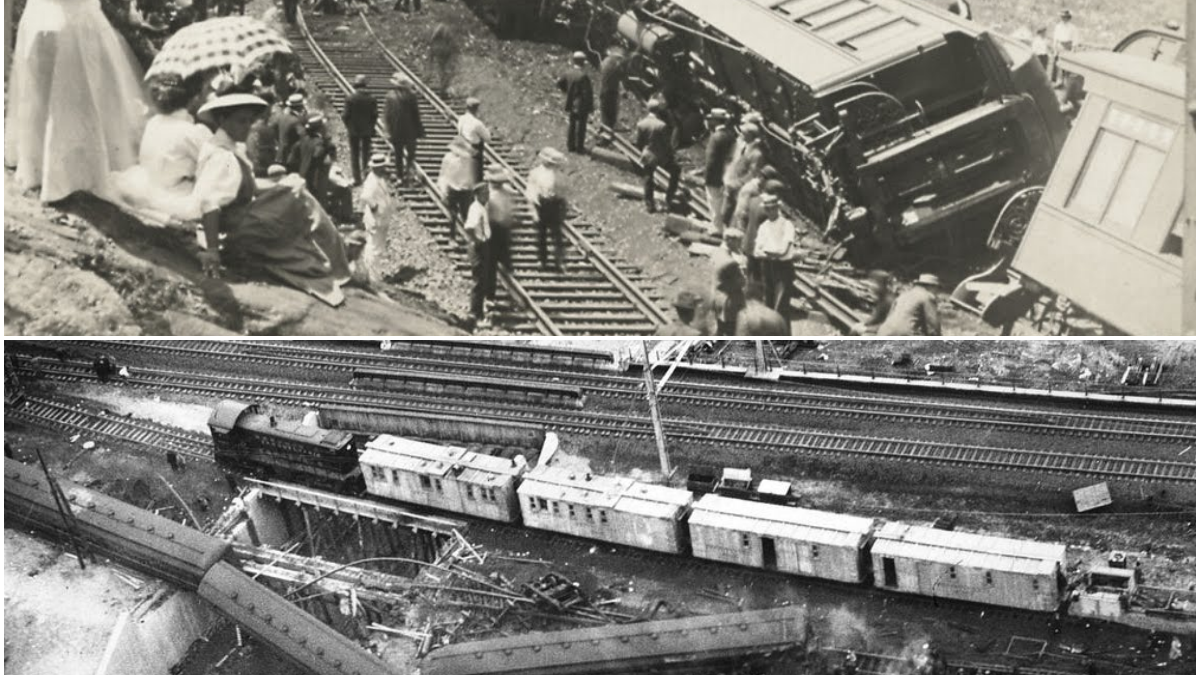
Three Deadly Train Wrecks That Shattered Small-Town America
Thick white snow covers the rails as an express train shutters onto an iron bridge.
The metal is groaning, the wheels are screaming, and the lantern light gets swallowed by storm.
In Ohio, cars snap loose and plunge into black water while 92 lives vanish in minutes.
Far out on the prairie, a trestle weakened by fire gives way with packed coaches folding like kindling.
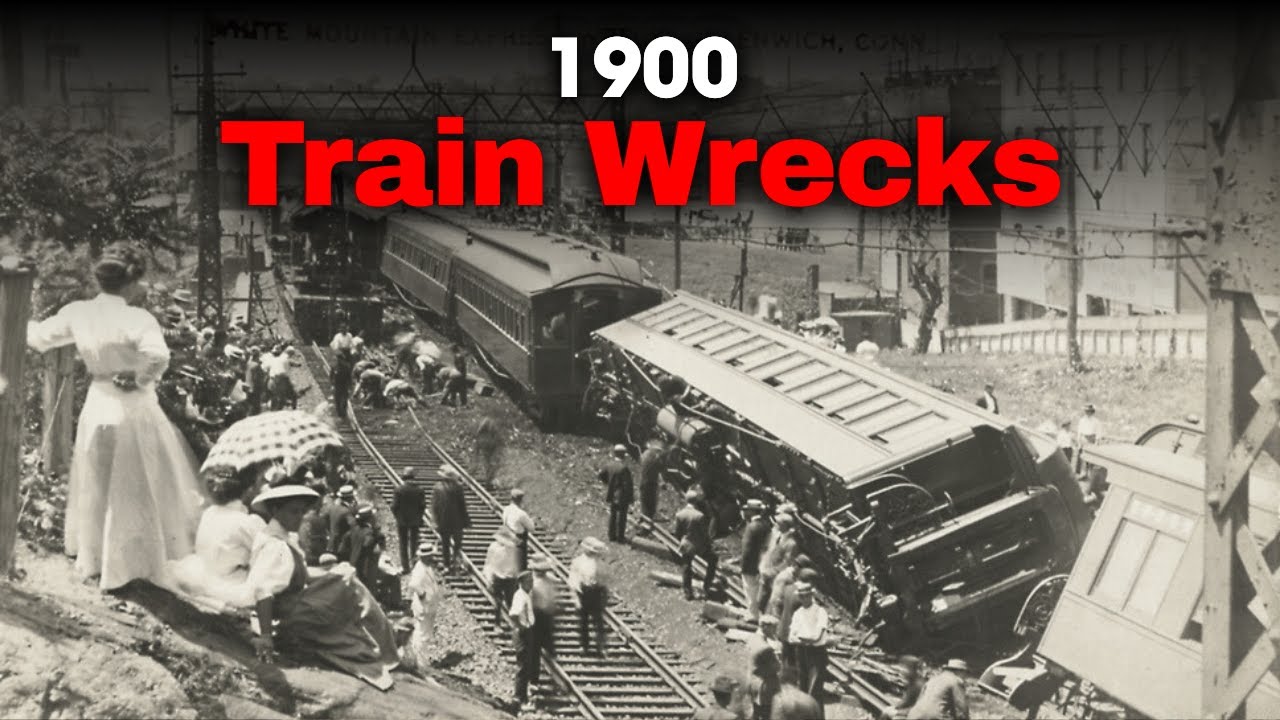
And high in the Cascades, the mountain finally awakens, sweeping two trapped trains into a ravine, killing 96.
This is not misfortune.
It is pressure made fatal on tracks built for speed, not mercy.
Was it chance or was it choice, a warning or inevitability?
If stories like this move you, please like, subscribe, and tell me in the comments which disasters to explore next.
Your support makes these detailed stories possible.
Thank you for being here.
Now, step onto the platform with three quiet towns and listen for the moment the night breaks.
Let’s dive right in.
The rails could turn a peaceful depot into a battlefield without warning.
In the late 1800s, the steam railroad was the loudest promise America made to itself.
Faster mail, fuller markets, and a timetable that did not care about fatigue or weather.
Small towns built their days around the whistle because the train did not just pass through.
It carried paychecks, news, and suns coming home.
But speed demanded weight, and weight demanded trust in iron, timber, and human judgment.
When an excursion crowd packs into wooden coaches, when crews work long nights by lamp and memory, and when signals are little more than rules on paper, a single weak point can become a sentence.
What happens when the whole system depends on everyone being perfect?
Every mile, every night.
These three disasters did not share the same trigger, but they shared the same vulnerability.
One would begin with a bridge meant to represent progress, another with a trestle quietly weakened by fire, and the last with two trains pinned in the mountains until nature chose the hour.
Near Chhatzsworth, Illinois in 1887, an excursion that felt like a holiday ended as a wreck with roughly 80 to 85 dead and hundreds more injured.
The explanation offered at the time was simple and terrifying.
A grass and culvert fire undermined a trestle, and the weakness held just long enough to betray the next set of wheels.
Yet questions lingered about inspection, caution, and speed.
And then there is the arithmetic of risk.
Three towns, three nights, and families measuring time by the delay of a headlight that never appears.
The first warning comes in winter on the edge of an icy ravine where an express train approaches an iron span that should have held and does not in plain sight.
December 29th, 1876, Ashtabula, Ohio.
The storm did not feel like weather.
It felt like a hand closing around the rails.
On Friday night, December 29th, 1876, the Pacific Express rolled toward Ashtabula with snow driving sideways.
The headlamp smeared into a blur, and the engineer reading the world by instinct as much as sight.
Inside the cars, breath hung in the air, coat stayed on, and travelers listened to the rhythm that usually meant safety.
Ahead waited an iron bridge that looked modern from a distance, an all metal span praised as the next step beyond wood.
It carried the track over the river valley, and it carried the town’s trust.
The train was heavy, pulled by two locomotives and followed by 11 wooden cars, each one packed with winter travel.
Nearly 160 people rode that night, families, strangers, and railroad men who had crossed spans like this again and again.
But what is a bridge if not an argument between load and strength, made in rivets and guesses?
Some blamed design, arguing the truss and bracing were not arranged for the stresses they would face, and that inspections became habit instead of scrutiny.
Others pointed to construction and workmanship, to tiny flaws that multiply when cold metal tightens, and a long span is asked to carry more than its drawings imagined.
The verdict was never simple, only the reality that the bridge had one job, hold, and nobody on board could verify it still could.
As the lead engine eased onto the span, a crack sounded through the storm, sharp and final, like a tree splitting under ice.
The cars behind continued forward, and the bridge began to answer the weight with movement.
In the next instant, the argument ends, and the river waits below, with fire and ice, ready to decide survival tonight.
It happened so fast that the mind could not file it as real.
In the Ashtabula River Railroad disaster, the iron span gave a final shudder.
Then the track simply disappeared beneath the cars.
Wood and steel broke apart in midair and the train dropped into the ravine with a sound like the earth being struck.
The fall did not end the danger.
It multiplied it.
Stoves, oil lamps, and splintered timbers turned the wreckage into a furnace, and flames ran along dry boards while icy water surged below.
People who survived the impact found themselves pinned by seats and beams, trapped between smoke above and freezing darkness beneath.
By the winter of 1876, railroad travel had become ordinary enough that passengers expected delay, not disaster.
Yet, the moment those cars hit, ordinary rules vanished, and the first screams were answered by the crackle of fire.
What chance does a person have when the only exits are blocked and the air itself becomes poison?
Investigators would later argue over why the bridge failed, some pointing to a trust design that may not have distributed weight safely, others to workmanship and inspection that may have overlooked growing weakness in iron and joints.
The evidence suggested a chain of vulnerabilities rather than a single villain.
But the verdict never softened the result.
About 92 people would die in this one collapse and blaze, with many more injured, not by speed alone, but by what followed after the impact.
Above the ravine, the town heard the commotion through the storm, and men grabbed ropes, axes, and lanterns with bare hands.
As those lights began to descend into the snow, the fire below kept rising, and the night was not finished taking what it came for.
Lanterns appeared on the ridge like a moving constellation.
Each one proof that someone heard the crash and ran toward it.
In the 1870s, Ashtabula was built for river work, church bells, and the steady arrivals at the depot.
Now the ravine below the bridge was a pit of steam and smoke where broken coaches hissed in the water and fire crawled along shattered roofs.
Men slid down the snowy slope with ropes and axes, while others formed lines to pass survivors up through blowing flakes.
The heat scorched wool near the wreck.
Yet the cold a few steps back locked fingers stiff, and both extremes slowed the work.
Inside, voices called out from places no lantern could reach, trapped beneath seats and beaMs. About 92 would die in the Ashtabula disaster, and nearly 160 had been aboard, a number too large for a small town to hold in one night.
How do you save a person when the only path to them runs through flame, and the water beneath is already turning to ice?
The local fire brigade fought hard, but the blaze fed on dry wood and oil, and hoses could not reach the deepest pockets of burning debris.
Families gathered above the ravine, counting minutes, listening for an answer that never came, then realizing silence could mean smoke, water, or both.
Toward dawn, rescuers pulled the living from gaps no wider than a shoulder, and carried the dead with a careful tenderness.
11 cars had gone down and the scene kept shifting as timbers settled and embers flared again.
When the last cries faded, the town faced a new kind of heat.
The demand to explain how iron could fail so completely and who would be forced to answer for it because the disaster was not finished.
The smoke cleared, but the town did not return to what it was.
By early 1877, Ashtabella’s ravine was no longer just a place beneath the tracks.
It was a scar people measured with their eyes every time a locomotive approached.
The count settled at about 92 dead with dozens more injured.
And the bridge that had promised modern strength became a symbol of how quickly confidence can burn away.
The railroad called it an extraordinary failure, an unforgiving night, an act of weather.
Others insisted the real story was quieter, a structure that had been pushed, patched, and trusted because stopping the trains would have cost money and pride.
If a bridge is experimental, who is truly taking the risk?
The engineer, the passenger, or the town beneath it?
Investigations pointed toward a web of possibilities, design that may have concentrated stress where iron could not forgive it, fabrication that may have left hidden weakness in joints, an oversight that may have accepted small warnings as normal.
No single explanation fit every witness and document, and the final verdict never erased the feeling that the collapse was not random.
It was allowed to become possible.
In the 19th century, it stood as the worst rail accident in the United States, and it remained the deadliest until 1918, a grim benchmark that traveled farther than the tracks.
Yet, even that notoriety could not slow the nation’s appetite for speed, comfort, and packed timets.
11 cars had fallen, but the lesson was larger than the wreckage.
Progress without margin becomes a trap.
And as winter grief faded into routine, another town prepared for a very different kind of journey.
A night excursion through Illinois farmland, where laughter filled wooden coaches and a small, unnoticed fire waited ahead just beyond the trestle.
August 10th, 1887, Chhatzsworth, Illinois.
The train felt like a celebration until the darkness began to feel too quiet.
In 1887, families climbed aboard an excursion bound for Niagara Falls, dressed for wonder, not warning.
Wooden coaches rattled behind the engine while the prairie near Chhatzsworth, Illinois slid past.
Nearly everyone trusted the rails because the rails had earned it.
A night ride through Cornfield seemed safer than a wagon road, and the timetable sounded like certainty.
But what happens when a holiday crowd is asked to stake their lives on a bridge they will never truly see?
Ahead, the line crossed a low trestle, the kind so common it barely registered as a place where fate could hide.
The threat was not a sabotur.
It was a small fire near a culvert, the sort of thing dismissed as brush and smoke.
There were no electric alarms, no radio calls, no instant warnings, only the assumption that the track was sound.
The train held its pace, and the passengers kept talking about the trip they believed had already begun.
When the great Chhatzsworth train wreck struck, destruction spread across fields with terrifying speed.
Cars toppled and piled.
Timbers split.
Lamps and stoves turned wreckage into fuel.
And the rural night became a theater of flame.
Around 80 to 85 people would be killed and hundreds more injured in one of the deadliest American train disasters of the 19th century.
Officials later pointed to the firew weakened trestle as the cause.
Yet the verdict stayed unsettled because the fire was only the trigger.
The deeper question was why a hidden weakness on a country line was allowed to meet a train at full trust.
Lantern soon dotted the farmland, moving toward a glow that should never have existed, and the trestle’s damage was about to show itself.
The danger was already burning hours before anyone on board felt a thing.
On August 10th, 1887, the line east of Chhatzsworth lay under a dry summer heat, and a low bridge over a drainage run sat in tall grass, ordinary, unguarded, and made of timber that had seen too many seasons.
Earlier that day, railroad crews had worked fires along the right of way to clear weeds, a practice meant to prevent worse blazes from sparks.
Yet, it left the land smelling faintly of smoke.
The Chhatzsworth wreck begins with a cruel truth.
Wood can look solid while it’s turning to charcoal inside.
Witnesses later described a culvert fire that smoldered beneath the trestle, charring supports until they could bear a load in daylight, then fail under strain at night.
Others insisted something more sinister was possible because the timing was too perfect.
But the evidence never silenced every doubt.
If danger is invisible, who is responsible for seeing it?
The men on the ground, the officials who signed off, or the passengers who never had a choice.
By late evening, the Niagara excursion had grown into a traveling crowd.
Roughly 500 people spread through sleepers and coaches, trusting the rails the way farmers trust a fence line.
The engines pulled into the darkness.
And on the downgrade before the crossing, the train gathered speed, reaching about 40 mph, fast enough to keep time, fast enough to magnify any weakness.
Somewhere ahead, embers were still at work, eating the last safe margin out of a structure nobody would think to fear.
And as the headlights swept across the trestle, the first wheels found the span, and the bridge began to answer.
It was near 11:55 p.m. and the countryside went still as if holding its breath.
The first jolt felt like rough track.
Then the ground vanished.
Near midnight the engine and tender cleared the trestle, and for a heartbeat it seemed the crossing would pass like every other.
Then the weakened timber gave way under the weight of the cars, and the coaches behind began to drop, twist, and collide in the open fields.
Wooden frames shattered on impact.
Iron wheels tore through planks, and the train folded into itself across the prairie.
What should have been a single line of travel became a tangled heap, roofs crushed flat, seats splintered, and bodies pinned in angles no human was meant to hold.
The wreck did not end when the car stopped moving.
Lamps broke, coal and embers spilled, and fire found the dry lumber as if it had been waiting.
The cornfields lit up with a flickering orange that carried for miles, drawing farmers and towns people toward a sound that did not match any storm.
How do you pull someone free when every board you touch collapses and every second the heat grows stronger?
Around 80 to 85 people would be killed in the Chhatzsworth disaster and hundreds more injured.
A toll so large that it overwhelmed rural help on arrival.
Roughly 500 had been aboard, and many were trapped in the center of the pile, where smoke thickened and screams became.
Officials would later point to a grass and culvert fire that weakened the trestle.
A grounded explanation that fits the char and the collapse.
Yet questions remained about inspection, speed, and why a known hazard could survive long enough to meet a packed train.
The verdict stayed open, but the consequences were not.
As lanterns rushed across the fields, the scene turned from crash sight to battlefield triage, and the prairie began to teach a small town what helplessness feels like.
The first rescuers arrived to a glow that looked like a sunrise in the wrong place.
That summer, the farmland near Chhatzworth was not built for mass tragedy.
It was built for harvest, prayer, and long, quiet nights.
Yet now it held a shattered excursion train with wreckage spread across fields and heat radiating from broken coaches.
Men ran in from nearby houses with buckets and lanterns, then backed away as the fire surged, realizing the flames were fed by dry wood and the trapped pockets of air inside collapsed cars.
Others crawled into gaps with knives and bare hands, pulling at clothing, listening for voices.
Hundreds were injured and around 80 to 85 died.
Numbers that turned neighbors into stretcherbearers and farm sheds into makeshift wards.
Roughly 500 had been on board.
And that sheer count meant the wounded arrived in waves, not one by one.
What does a town do when it has more broken bodies than beds, more burns than bandages, and not enough light to see the faces?
Some later said the culprit was simple.
The trestle had been weakened by a grass and culvert fire and the train hid it at speed around 40 mph as the timetable demanded.
Others argued the deeper failure was organizational inspection practices that relied on routine, a culture that accepted small risks because most days nothing happened.
The verdict in memory was never settled because too many people saw too many small preventable moments before the final collapse.
By morning the fields were littered with blackened timbers and the quiet shock of possessions left behind.
The town learned that the railroad could bring joy to a platform and then in the next hour bring funerals.
And still the nation kept running trains through weather no timetable could tame, pushing steel into places where the mountains didn’t bargain.
Far west, above a tiny railroad stop called Wellington, two trains would soon discover what it means to wait for nature to decide.
March 1st, 1910.
Wellington, Washington.
The tracks did not fail first.
The sky did.
In late February of 1910, the great northern line in Washington’s Cascades became a corridor of white, with drifts rising like walls and wind carving the cuts faster than crews could clear them.
Two trains, one a passenger run and the other loaded with mail and travelers, stopped near the small railroad town of Wellington, then could not move again.
The snow came in repeated waves, and each hour added weight to the slopes above the line.
Cars sat in the open, then in partial shelter, passengers wrapped in blankets and coats, listening to the scrape of shovels outside and the constant breath of the storm.
Nearly 100 people were on those trains, men, women, workers, and families.
And by the second day, the situation stopped feeling like a delay and began to feel like captivity.
Food supplies dwindled.
Coal and heat became precious.
And the outside world felt impossibly far for a place only a few miles from the next station.
What happens to discipline, to patience, to hope?
When time stretches and the mountain never stops building pressure, rail officials and crews wrestled with choices that had no clean answer.
Stay put and trust the snowsheds in the line or attempt movement through drifts that could strand them in a worse position.
Some later argued the trains should have been moved earlier.
Others insisted the blizzard made that impossible, and the verdict remains open because the weather itself refused to be measured by human plans.
By early 1910, rail travel in the West depended on winter defenses like snowsheds and crews with picks and dynamite, but no defense could fully control a loaded slope.
The storm kept stacking the mountain side, layer by layer, as if it were packing a weapon.
And then one night, the sound outside changed from wind to something deeper.
A low rumble that made even seasoned railroad men sit upright and listen.
The waiting became its own kind of terror.
By March of 1910, the snow around Wellington was measured not in inches, but in walls, with drifts higher than a man, and new falls erasing shovel work overnight.
Crews fought to keep passages open, and passengers watched their breath fog the windows, counting the hours by lantern light and the thump of boots on packed boards.
Two trains sat pinned above the tiny settlement, and each one carried a different kind of pressure.
The passenger cars held families and working men who wanted movement, while the male and mix consist behind it carried travelers who listened for rumors and tried not to imagine the slope above them.
Wellington was small, but the situation was not.
Nearly 100 souls waited in close quarters, and after days in confinement, small arguments could flare, then fade, as everyone remembered there was only one real enemy outside.
How do you sleep when the mountain feels alive, and the only certainty is that it is gaining weight?
Officials later offered grounded reasons for why the trains remained.
The line ahead was buried, the power to push through was limited, and moving could have stranded the cars in an even more exposed cut.
Others pointed to human decision-making, delays, misjudged timing, and a belief that snowsheds and experience would hold.
The kind of confidence that works right up until it does not.
The verdict stays open because the blizzard was real, yet choices were real, too.
During the early 20th century, snowsheds were meant to deflect slides, and crews used shovels, plows, and dynamite to tame the route.
But nature did not follow engineering drawings.
Nearby, smaller slides had already fallen, and each one felt like a warning that arrived without instructions.
On the night of February 28th, turning into March Fen, the wind sharpened, then suddenly eased.
And that calm did not bring relief.
It brought a silence heavy enough to hear the slope settle, and somewhere above the tracks, the mountain began to move.
The sound arrived first, a deep roar that swallowed every other noise.
The mountainside released all at once.
Snow, ice, and timber came surging down in a single mass that moved faster than any man could run.
The avalanche slammed into the trains with a force of a collision, tearing cars from the track and pushing steel and wood into the ravine below.
Passengers who had been awake listening had only seconds to react.
Grabbing a coat, reaching for a child, bracing against a wall that suddenly became a floor.
Windows burst, lamps went out, and the world turned into darkness packed with snow.
The snow sheds that had been trusted as protection were overwhelmed.
Their timbers shattered and swept along like matchsticks.
In an instant, roughly 96 people were killed with only a couple dozen surviving.
A toll that still marks this as one of the worst train disasters in American history.
It remains Washington’s deadliest natural disaster.
A number so stark it feels less like counting and more like naming the missing.
What does a person fight when the enem is not fire, not steel, but the weight of a mountain?
Some later insisted the slide was unavoidable, the blizzard had loaded the slope for days, and the release was simply nature obeying gravity.
Others argued the trains never should have been left in that cut, that the danger zone was known, and earlier movement might have changed the outcome.
Yet the storm had blocked options and reduced every decision to imperfect choices.
The verdict remains open, but the result was absolute.
Survivors clawed at snow to find air, and those who surfaced heard only silence and distant wind, as if the world had been wiped clean.
Below them, cars lay twisted in the ravine, buried so deeply that even shouting felt useless.
And then the next pressure arrived.
The living were still down there, and every minute the past turned rescue into recovery.
The first rescuers did not see wreckage, they saw a blank slope that looked untouched.
Men reached the Wellington site and found a mountainside smoothed over by fresh snow, as if the trains had never existed.
Only broken timbers and small scraps of luggage hinted at what lay beneath, and the ravine below was choked with debris that could not be approached quickly.
They began digging with shovels, axes, and bare hands, cutting steps, probing with poles, listening for a sound that might mean someone still breathed.
Snow packed hard, and in places it lay meters deep, pressing down with a kind of weight that turns minutes into years.
The casualty count would settle around 96 dead with only a couple dozen survivors, but in the first hours, no one knew who was alive or where the cars had been carried.
They dug toward faint voices, then found silence, and kept digging anyway.
How do you keep moving when every hole you open might reveal a survivor or a body, and you cannot control which?
A grounded explanation for the devastation was simple.
The blizzard had loaded the slope until it released, and the trains sat in the path when it came.
Yet the verdict remained unsettled because human choices still sat inside the story.
Where to park, when to move, what risks were accepted because the line had endured other winters.
Nature triggered the slide, but the question of exposure never fully closed.
In the early 20th century, winter railroading in the Cascades demanded confidence in snowsheds, crews, and luck.
But luck does not sign timets.
Rescuers worked until their shoulders failed, and every recovered person made the next search feel more urgent.
When the last living voices were finally accounted for, the work did not end.
It only darkened because the mountain still held most of the train.
And once the bodies came out, America faced a heavier decision.
Whether these wrecks were cruel exceptions or warnings that the rails had outgrown their safety, the country tried to turn these wrecks into lessons, but the lessons did not arrive all at once.
From the 1870s into the early 1900s, railroads were expanding faster than safety could standardize, and each disaster exposed a different crack in the system.
Ashtaber showed what happens when a structure fails and fire finishes the work.
Chadzsworth showed how a small hidden burn can collapse a whole holiday train.
And Wellington showed that nature can erase every plan in a single roar.
Together they left a brutal ledger.
About 92 dead in Ohio, around 80 to 85 in Illinois, and roughly 96 in Washington, more than 260 lives across three scenes that small towns would never forget.
Those numbers forced changes.
Stronger bridge practices, closer attention to inspection, and better signaling and winter defenses.
Yet reform moved at the pace of politics, money, and memory.
If the fix only comes after bodies, is it safety, or is it simply the cost of doing business?
The causes were argued with grounded explanations.
Trust design and workmanship in the Ashtabula collapse, fire weakened supports in the Chhatzsworth wreck, and avalanche loading in the Wellington disaster.
But the verdict stayed open in a deeper sense because each explanation pointed back to human judgment.
What was inspected, what was ignored, what was rushed, and what was considered acceptable risk for ordinary passengers.
In the decades that followed, railroads added heavier steel cars, improved braking systems, and more formalized operating rules, and winter lines learned to treat slopes with greater fear.
Yet, even as technology advanced, the fundamental bargain remained.
People would keep boarding trains because they needed to travel and because most days the rails behaved.
Small town America kept hearing the whistle, kept meeting the headlight at the depot, and kept trusting that tonight would be normal.
And that trust is why the final pressure never truly leaves.
Because the next disaster is always born in a routine moment when everyone believes nothing can happen.
Even now, the whistle can sound like comfort until you remember what it once became.
In the late 19th and early 20th centuries, these wrecks did more than kill.
They changed the way small towns heard the railroad.
A bridge collapse in Ohio, a burning pileup in Illinois, and an avalanche in Washington proved that disaster could arrive with the same schedule as the male and leave behind a silence that never fully lifts.
About 92 died in the Ashtabula collapse.
Around 80 to 85 perished in the Chhatzsworth wreck and roughly 96 were lost in the Wellington disaster.
Totals that turned three ordinary communities into names spoken with caution.
Those numbers are not merely statistics.
They are chairs left empty.
Depot benches where no one returned and families who learned that a single mistake on the rails can erase a town’s sense of safety in seconds.
What does progress mean if it can deliver prosperity on one day and funeral processions on the next?
Each event carried a grounded explanation for how it happened.
Iron and design or construction questions in Ashtabula, a fire damaged trestle in Chhatzsworth and avalanche pressure that finally released above Wellington.
Yet the verdict remains open in the place that matters most.
Because the line between unavoidable tragedy and preventable failure is rarely clear when decisions are made under storm, under darkness, and under the demand to keep moving.
These were stories told from the ground, from railroad men who worked by lantern and rulebooks, and from towns people who ran towards smoke with nothing but rope, buckets, and courage.
They remind us that the rails were never just steel.
They were trust made physical, stretched across rivers, fields, and mountains.
And if you live in a place where the tracks still cut through town, there’s a question that lingers every time the night train passes.
Was every lesson truly learned?
Or are we simply riding forward, hoping the old pressures never return?








