Why Being a Coal Miner in the Early 1900s Was a Guaranteed Death Sentence | Disaster Documentary
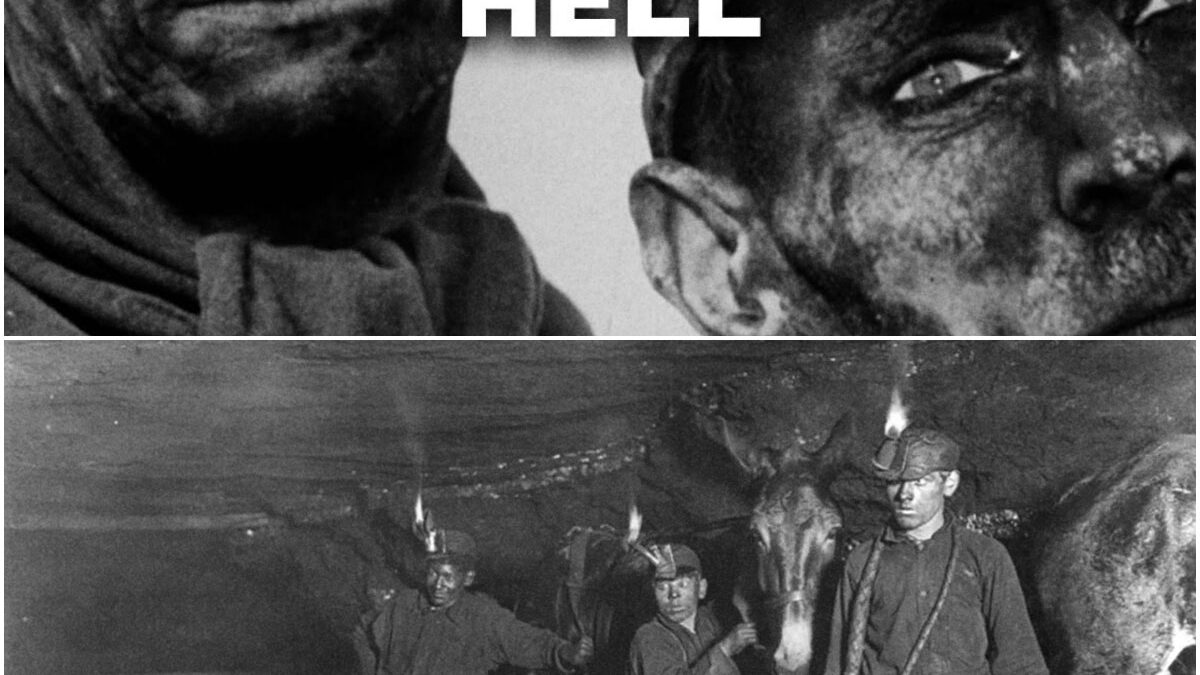
Why Being a Coal Miner in the Early 1900s Was a Guaranteed Death Sentence | Disaster Documentary
Most people today think danger is something you avoid.
But coal miners walked straight into it because they had no other choice.
Every shift began with the same quiet understanding that the roof above them could fall, the air around them could poison them, or the gas they could not see might ignite without warning.
These men powered entire nations while knowing the odds, and the deeper you look into their world, the more impossible their survival truly seeMs.

Now, let us step into the mines themselves, where the danger was constant, the air was uncertain, and every man knew exactly what he was risking the moment he went below.
To understand why coal mining claimed so many lives, you have to picture the moment a man stepped off the last rung of the ladder and felt the temperature change around him.
The air grew heavier, wetter, and colder, carrying the scent of earth that had not seen sunlight in millions of years.
The only light came from a small flame or a dim electric lamp, and even that seemed to be swallowed by the surrounding blackness.
This was the first reminder that the world below followed no rules found on the surface.
Men spoke quietly in these places because sound behaved differently underground.
It carried far, traveled through rock, and came back distorted.
Even experienced miners struggled to shake the feeling that the tunnels were listening.
The boots of a crew walking down the main entry created a low rumble that vibrated through timbers and wall plates, a constant warning that the mine itself was always shifting, always adjusting, always alive in its own way.
By the early 1900s, American coal fields were expanding at a pace few could comprehend.
Mines in Pennsylvania, West Virginia, Kentucky, Illinois, and Colorado were producing millions of tons each year.
Steam locomotives, factories, steel mills, and electric power stations all depended on coal.
And this dependence meant the demand never slowed.
The deeper the mines pushed, the more dangerous the conditions became.
Harder rock, increasing gas pockets, unstable roofs, and complicated networks of tunnels turned routine work into a daily test of nerve.
A minor shift often started before sunrise.
But down below the hour did not matter.
There was no concept of morning or afternoon, only the faint glow from a lamp reflecting off a pick, a shovel, or the dust floating in the air.
The lamps revealed just enough to keep a man on track, but never enough to let him see what waited beyond the edges of the light.
Many veterans described the first few minutes underground as the moment their senses sharpened the moSt. They listened for the groan of the roof, watched for drifting dust, and tested the air with every breath.
The journey to the coalace could take half an hour or more.
Crews moved through headings supported by rough timber posts that creaked under the weight of millions of tons of earth pressing from above.
Some mines use stone arches or iron beams for added strength.
But even these were not guarantees.
When a roof wanted to come down, no engineering could stop it.
Miners learned to read the warning signs.
A popping sound in the rock, a small shower of dust, a sudden soft patch in the floor.
These were signals that the ceiling was warping or the pressure had reached its breaking point.
What made this world even more unnerving was how quickly conditions could change.
A tunnel that felt stable in the morning could be a death trap by lunch.
Ventilation shifted, humidity increased, or a distant blast altered the stress on surrounding rock.
The mind did not care how experienced a crew was or how long a man had been working there.
When the Earth wanted to tighten, twist, or collapse, it did so without hesitation and without mercy.
This was the reality miners accepted without complaint.
The moment they entered the ground, they stepped into an environment that was ancient, unpredictable, and indifferent to their survival.
And before they ever swung a pick, they had already gambled more than most men would in a lifetime.
Every minor knew that the most dangerous things underground were the ones he could not see.
Coal was simply the resource they were after.
But surrounding it were invisible threats that turned the mines into some of the deadliest workplaces in the industrial world.
Before a man even reached the coal seam, he was already moving through pockets of gases that shifted with every blast, every change in air flow and every collapse somewhere down the line.
These gases had names miners learned early, and each carried a different kind of death.
The most feared was methane, known simply as fire damp.
Methane collected silently in roof cavities, rising above lantern beams and waiting for the slightest ignition.
The presence of a single spark, even one small enough to be unnoticed on the surface, could transform a quiet tunnel into a fireball that raced through the entries faster than a man could run.
These explosions were powerful enough to break supports, lift rails from the ground, and throw entire crews against the walls.
Early in the century, open flame lamps made methane especially deadly.
And even when safety lamps were introduced, they were far from foolproof.
Black damp was another enemy, a mixture of carbon dioxide and nitrogen that slowly displaced oxygen without warning.
Men working in these areas often never knew it was there until their legs weakened or their breaths became shallow.
Black damp did not burn or explode, but it suffocated.
Entire crews were found slumped against their tools, their lamps extinguished, the air around them heavy and still.
Miners carried canaries, mice, or even small candles to detect it.
But detection required constant vigilance.
A shift in ventilation could turn a safe area deadly in minutes.
Then there was after damp, the toxic cocktail that filled the air after an explosion.
It was a mixture of carbon monoxide and other byproducts of combustion, and it killed more miners than the blast itself.
After damp moved through tunnels like a ghost, colorless and odless, and struck down rescuers who rushed into quickly.
Many of the worst mining disasters in the United States, including the Manonga disaster of 1907 and the Cherry Mine disaster of 1909 saw the majority of deaths occur not in the initial explosion, but in the silent aftermath.
Ventilation systems were the only line of defense against these threats.
Fans on the surface pulled fresh air into the mine and forced stale air out.
But this process was extremely fragile.
A single blocked passage, a collapsed wall, or a malfunctioning fan could undermine the entire system.
When companies expanded mines rapidly to meet demand, ventilation often lagged behind.
New headings were opened before air flow was properly established, and crews paid the price for this haste.
Because gases were invisible, miners relied heavily on intuition.
A slight sting in the nose, a lamp burning too bright or too low, a canary’s sudden silence.
These were the signals they learned to read.
Because no written rule book could capture the complexity of an environment that changed every hour.
The deeper a mine reached, the more unpredictable these gases became, and the closer every crew worked to disaster.
To the outside world, coal mining seemed like physical labor.
To the men underground, it was a constant negotiation with the atmosphere itself.
Every breath was a teSt. Every step carried risk.
And the further they moved into the darkness, the more they understood that the real danger was not the coal they sought, but the unseen forces surrounding it.
The most powerful force miners faced was not fire or gas, but gravity.
The roofs of coal mines were held up by whatever structure the company could afford, and sometimes by nothing more than hope.
Above every crew sat millions of tons of rock compressed over geological time, waiting for the smallest shift to release that pressure.
Miners understood this threat instinctively.
They moved through each entry with their heads slightly lowered, listening for sounds that most people would never notice.
A small crack, a faint pop, or a tightening in the timbers meant that the roof was changing, and the miners needed to change with it.
Roof collapses were common enough that every man in the coal fields could recall someone who had been buried alive.
Unlike explosions, which struck with dramatic violence, a collapse often began quietly.
Timber props, often cut from nearby trees and installed quickly, creaked under strain.
As the mine expanded, the pressure redistributed, moving along the roof until it found a weak point.
When that point failed, there was rarely any warning.
Entire sections of the entry could drop at once, turning a tunnel into a mass of jagged stone, shattered beams, and compressed air that rushed out in a violent guSt. In some regions, particularly in the Appalachian coal, slate roofs were the greatest danger.
Slates separated into thin layers that appeared stable to the untrained eye, but were notorious for breaking without warning.
Miners tapped the roof with their picks or bars, listening for the hollow sound that indicated instability.
If the rock responded with a dull echo, they knew it could fall within minutes.
Many experienced men made a habit of scanning the roof every few steps.
A survival instinct developed after witnessing collapses that crushed entire mule teams in seconds.
Geology varied from mine to mine, but the danger was universal.
In Illinois and Indiana, soft shale layers could crumble even under heavy support, causing slow motion collapses that trapped miners before they realized the ground around them was shifting.
In western states like Colorado and Utah, steeply pitched seams created pressure points that put enormous strain on timbers.
Engineers understood these hazards in theory, but miners understood them through experience.
They often joked that the mine reminded them who was in charge.
During the early 20th century, roof control methods evolved, but not quickly enough to keep pace with demand.
Steel arches, roof bolts, and engineered supports eventually reduced risk.
But in the decades before these became standard, timbering was the only protection available.
Timbers twisted under weight, absorbed moisture, and eventually weakened.
Some companies reused beams from abandoned sections, a cost-saving choice that left workers under supports barely capable of holding their own weight.
When a beam snapped, the sound was unforgettable.
A sharp report that echoed through the tunnels and sent every man diving instinctively for safety.
Survivors of collapses often describe the terrifying silence that followed.
Dust hung in the air, lamps flickered, and the world felt smaller, tighter, and more unforgiving.
A man pinned under a rock might remain alive for hours, listening to rescuers work toward him, each swing of a pick sounding both too close and impossibly far.
Many never made it out, not because rescuers stopped trying, but because the surrounding roof continued to shift, threatening to bury anyone who attempted the recovery.
Every miner knew that no amount of skill could guarantee safety from the crushing weight overhead.
The mine chose when the roof held and when it failed, and the men below had no choice but to keep working beneath it.
Every miner eventually learned that the air underground behaved like a living organism.
It shifted, pulsed, and moved with a rhythm that seemed to ignore the needs of the men who depended on it.
Ventilation was the single most important factor in keeping a mine alive.
Yet, it was also the most delicate.
The slightest disruption could send clean air spiraling away from the places it was needed most, leaving crews surrounded by stale pockets that built pressure like a tightening cheSt. Miners listened for these changes, not with tools, but with instinct.
Air flow worked through a system of intake and return passages.
Fresh air was drawn down one side of the mine, guided by doors and stoppings, then pushed across the working face before returning through a separate network.
When the system worked perfectly, a miner could feel the faint draft brushing past his neck as he swung his pick or shoveled coal.
When the system faltered, that gentle movement vanished.
The stillness was immediate and unmistakable.
Men stopped working the moment they sensed it because a quiet mine was a dangerous mine.
The movement of air underground created strange sensations.
In some headings, it rushed like wind through a narrow canyon strong enough to flicker lamp flames.
In others, it drifted slowly, hugging the ground and carrying with it the smell of dust, oil, and sweat.
When large fans on the surface changed speed or direction, pressure waves rippled through the mine.
These waves made tunnels groan with low vibrations as if the earth itself was exhaling.
Miners referred to these moments as the mine breathing, a description that captured both the wonder and the unease of working in such an environment.
The balance of air could be disrupted by almost anything.
A collapse miles away might block a return entry, sending foul air back through areas that had been safe minutes before.
A ventilation door left open by a hurried mule driver could alter the entire system, starving distant crews of oxygen.
Blasting operations created sudden voids that pulled air into new pathways, often toward pockets of methane, waiting for ignition.
Ventilation officers tried to predict these movements, but even the most experienced struggled to manage the mine’s shifting lungs.
In the early 20th century, many mines relied on furnace ventilation, a method that used underground fires to draw air by creating heat-driven drafts.
These fires consumed oxygen and filled old workings with deadly gases, but they remained in use because they were inexpensive.
Mechanical fans eventually replaced furnace systeMs. Yet, even these modern methods had limitations.
Power outages, mechanical failures, or poorly constructed ventilation walls could turn a deep mine into a trap.
When air flow reversed unexpectedly, the results were catastrophic.
Methane that had been safely diluted could suddenly sweep toward open flames.
Black damp that had pulled in abandoned headings could drift back into active work areas.
Rescue teams often described entering mines after disasters and feeling the air pulling in unnatural directions, tugging at their clothing as if pointing them toward the source of the destruction.
To miners, these shifts were personal.
They felt the air thinning long before instruments confirmed it.
They tasted the difference between safe air and bad air.
They sensed pressure changes in their ears, their breathing, their movements.
The mine was always speaking, and the men below survived by learning its language.
But even the most experienced crews could not anticipate every change.
The mind breathed according to its own laws, indifferent to the men who depended on it.
And when that breath turned against them, there was no warning loud enough or clear enough to save those in its path.
Down in the mines, fire did not behave like it did on the surface.
It did not crackle or glow in familiar ways.
It did not need fuel in the traditional sense.
Sometimes all it took was a tiny spark, something so small a man might not even notice to set off a chain reaction that could tear through miles of tunnels in a single heartbeat.
Miners understood that they were surrounded by materials waiting for ignition.
And the frightening part was how ordinary the spark often seemed.
Before electric lighting became common, miners carried open flame lamps.
These simple devices illuminated only a few feet ahead.
But they also became one of the greatest hazards underground.
A lamp brushing against low rock, a flicker of flame catching a sudden draft, or a fall that cracked the lamp’s glass could expose the flame to methane rich air.
When that happened, the explosion was immediate.
Early safety lamps, such as the Davy lamp, were designed to contain ignition, but they required careful handling.
In any moment of haste, the very tool meant to protect a minor could become the cause of his death.
Explosions were not always caused by lamps.
Friction from picks striking pyrite nodules, static electricity building along conveyor belts, or overheated machinery could produce sparks powerful enough to ignite a gas pocket.
Even metal tools colliding in the wrong environment were dangerous.
Some mines required brass or copper tools to reduce the risk.
But many operations ignored such rules to save money.
The smallest violation of safety standards in these places became a lethal gamble.
Blasting was another routine source of disaster.
Black powder and later dynamite were used to break coal and rock, but setting charges required precision.
If a hole was drilled too shallow, or if the charge was tamped incorrectly, the blast could break through into a pocket of methane or force the gas outward at high speed.
Misfires were especially perilous.
A charge that failed to detonate left behind a hidden threat, forcing miners to approach cautiously, knowing a delayed explosion could occur at any moment.
Many catastrophic mine disasters began with a single misfire that ignited methane, which in turn spread flame through coal dust suspended in the air.
Coal dust itself was one of the most underestimated dangers.
Finely powdered coal, when disturbed, created a cloud that needed only the faintest spark to erupt.
In some explosions, investigators reported flame fronts that traveled faster than the human eye could follow, racing through entries and upshafts with violent force.
The 1907 Manonga disaster, the worst mining accident in American history, demonstrated this deadly combination.
A blast triggered by gas ignited coal dust throughout the mine, killing nearly every man underground within seconds.
The dust fed the explosion like dry timber, turning the tunnels into a furnace.
Attempts to manage dust came slowly.
Sprinkling water on the floor, rock dusting with powdered limestone, and improving ventilation helped.
But none of these methods guaranteed protection.
A dry week, a missed section during rock dusting, or a new heading open too quickly could undo months of prevention work.
Miners lived with the constant knowledge that fire underground was unlike anything on the surface.
It did not warn, sputter, or hesitate.
It erupted silently or violently without regard for experience or preparation.
In a world where one invisible spark could ignite the very air they breathed, every man understood he was working inside a potential firestorm waiting to ignite.
As mining moved into the 20th century, companies introduced machines to speed production and reduced the physical burden on workers.
But underground, every technological improvement brought a new set of hazards.
Machines that were meant to make work safer instead created dangers few could have predicted.
The mine was already an unpredictable place, and adding engines, belts, and steel components into tight, low, gas filled tunnels only heightened the stakes.
One of the earliest and most notorious of these machines was the cutting machine, a heavy device that carved into the coal seam with rotating blades.
These cutters produced sparks when they struck rock or pyite, and the bright flash of a single strike was enough to ignite suspended coal duSt. Operators crouched beside these machines in cramped spaces, their lamps barely illuminating the cloud of particles rising around them.
When the cutter’s motor overheated or the cables frayed, the risk of ignition increased.
A man could not simply step back from danger because the seam offered no room to retreat.
Compressed air drills introduced a different threat.
They vibrated violently, cracking rock and sending dust into the air, but they also produced intense heat.
In mines where methane lingered near the roof, the combination of heat, friction, and poor ventilation became lethal.
Even when explosions did not occur, the noise permanently damaged hearing.
Many miners later said that the sound of a drill was the loudest and most exhausting part of the job.
A reminder that even machines not directly involved in disasters still eroded their health day after day.
Holage systems were another source of constant fear.
Coal cars pulled by mules at first and later by electric or diesel locomotives moved through the main entries at speeds faster than a man could dodge.
These cars ran on narrow rails and any derailment could crush workers walking alongside them.
Locomotive operators fought to see through clouds of dust, their headlights piercing only a few feet ahead.
In some mines, locomotives sparked when their wheels slipped on rails slick with moisture.
Those sparks, small and common, were deadly in the wrong conditions.
Many miners preferred mules because at least animals could sense danger that machines could not.
Conveyor belts installed to transport coal more efficiently, carried their own set of hazards.
Belts slipped, caught clothing, or dragged unsuspecting workers into machinery before anyone could react.
When a belt’s motor overheated or it bearing failed, the friction set coal dust on fire, creating long, slow burning blazes that filled entire sections of the mine with smoke.
Fighting these fires underground was nearly impossible.
The smoke moved unpredictably, trapping men between entries.
Some crew survived only by lying flat on the floor, where the last traces of breathable air lingered.
Electrification was supposed to modernize the mines, but electricity in a damp gas- fil environment was a risk no engineer could fully control.
Faulty wiring, damaged cables or exposed conductors created arcs that could ignite gas instantly.
Miners learned to avoid stepping on electric lines buried under dust because even a loose connection could send current through the rails they walked on.
Shock injuries were common and many occurred in total darkness when lights failed without warning.
To the companies, machines increased production and reduced labor costs.
To the men underground, machines brought speed and efficiency, but also chaos and danger.
Every new device introduced another variable the mind could exploit, another opportunity for disaster.
In a place where conditions could change within moments, machinery became both a lifeline and a silent threat.
The tools designed to help miners survive often became the very things that put them in harm’s way.
After a mine exploded, the world above often assumed operations would pause, investigations would begin, and safety reforms would follow.
But miners knew the reality was far harsher.
Disasters did not shut mines down for long.
Companies pushed to reopen as quickly as possible, sometimes within days, and the same men who had just carried the bodies of their co-workers to the surface were ordered to descend again.
This was not courage in the cinematic sense.
It was economic survival forced upon men who had no other means to feed their families.
Mine owners argued that production could not stop because coal powered every industry in the country.
Steel mills, railroads, and urban power stations all relied on constant supply.
When a mine went silent, thousands of other operations felt the strain.
Pressure traveled quickly down to the workers.
Even widows knew that their husband’s deaths would not halt the machines above.
The country’s industrial appetite was relentless, and coal miners were expected to match that pace regardless of loss.
Investigations after explosions often focused on restoring operations rather than preventing future tragedies.
State inspectors, many of whom were former miners themselves, lacked the funding and authority to fight powerful coal companies.
Reports documented the causes of disasters, but those findings rarely translated into mandatory reforMs. Ventilation improvements, rock dusting, safety lamps, and roof support techniques were slow to become standardized because they cost money.
And when a mine stood idle, every hour cut into profits.
Families of the dead understood this grim cycle.
In the aftermath of the 1907 Manonga disaster, women watched as surviving miners returned underground while the smoke still hung in the air above the shaft.
At the cherry mine in Illinois, where fire killed hundreds, crews were sent back long before the last bodies were recovered.
Men did not volunteer for this duty out of loyalty.
They did it because refusal meant losing their jobs and possibly their homes.
For many miners, the fear was not the mine itself, but the threat of being labeled unreliable.
Company towns made this pressure absolute.
Rent, food, heat, and even medical care were tied directly to employment.
A man who refused to go back underground after a disaster might find his family removed from company housing.
If he attempted to leave, he faced a labor market that offered little for someone with specialized skills rooted in a single industry.
These conditions kept miners in a cycle where danger was unavoidable and death, though feared, was treated as part of the job.
There was also the matter of loyalty to the crew.
Many miners felt an obligation to return because abandoning their fellow workers meant leaving others to face the hazards alone.
Brotherhood in the mines was not a romantic ideal but a practical necessity.
Survival depended on truSt. Men who hesitated after a disaster often felt they were placing additional burdens on those who were willing to go back.
Companies sometimes use the language of heroism to motivate crews, framing their return as a noble duty rather than a financial decision.
Posters, speeches, and even local newspapers praised miners for their bravery.
But these narratives hid the uncomfortable truth.
Most miners returned because they were trapped economically, socially, and geographically.
The same country that relied on their labor offered few alternatives.
A mine could explode on a Tuesday and reopen by Friday.
Its scars hidden beneath the surface.
As soon as the air cleared enough to breathe, as soon as the timbers could be reset and the tracks repaired, production resumed.
The old dangers remained.
The same pockets of gas, the same fragile supports, the same inadequate ventilation systems, and the men who had just buried their friends walked back into those tunnels because the world above demanded it.
For all the sudden disasters that took miners’s lives, the slowest and crulest killer was the dust they breathed every single day.
Cold dust drifted through the air in thick clouds, settling on clothing, skin, hair, and tools, coating everything in a fine black film.
Men wiped their faces with rags so darkened by soot they barely resembled fabric.
The dust filled the tunnels from the moment a shift began, rising from picks striking coal, drifting from conveyor belts, and spilling from shuttle cars as they rattled down the entries.
It was a constant presence, as natural underground as the air itself.
Most miners understood that breathing the dust was harmful, but few realized just how devastating it could be.
Black lung or coal workers pneumocis developed quietly.
At first, men dismissed their morning coughs and short breaths as normal signs of hard labor.
A minor was expected to be winded after shoveling tons of coal by hand or pushing loaded cars across uneven rails.
But as the years passed, many noticed that the breathless moments lasted longer.
The tightness in the chest worsened, and the simple act of climbing a set of stairs became a struggle.
By the time Black Lung revealed its full impact, it was too late.
Dust particles had lodged deep within the lungs, scarring tissue and reducing their ability to absorb oxygen.
The disease progressed relentlessly, even after a man left the mines, there was no cure.
Doctors in mining towns saw the same pattern repeatedly.
Middle-aged men gasping for breath like elderly patients.
Lungs so damaged they could barely expand.
Some miners, still in their 40s, wheezed heavily through the night, unable to lie flat without suffocating.
The tragedy deepened because black lung was preventable.
As early as the late 1800s, physicians documented the effects of coal dust on respiratory health.
But mining companies resisted installing dust suppression systems, wet drilling, ventilation upgrades, and dust collectors were available.
Yet, these measures cost money and slowed production.
Many owners chose speed over safety, arguing that the effects of coal dust were exaggerated or unavoidable.
Meanwhile, miners paid the price with every breath.
Conditions in some mining regions were especially brutal.
In West Virginia and Kentucky, where low seam mines required men to crawl or work in stoop positions, dust hovered inches from their faces.
These mines often had poor air flow, trapping the dust in pockets that lingered long after the machine stopped.
In Pennsylvania’s anthraite mines, the hard coal generated fine, sharp particles that cut into lung tissue.
The deeper the mines went, the more dust they produced, and the more men suffered long-term consequences they could not escape.
Families witnessed this suffering firsthand.
Wives described husbands who coughed through the night, spitting black mucus into handkerchiefs each morning.
Children listened to the labored breathing of fathers who had once swank picks with incredible strength.
Entire communities felt the weight of a disease that slowly drained the life from men who had spent years powering the nation.
Black lung did not kill suddenly, nor did it make headlines like explosions or collapses.
It worked in silence, hiding its progress until the damage was irreversible.
A minor could survive decades underground, escape countless close calls, and still lose his life to the dust that clung to him long after he stepped out into the daylight.
For many miners, the most deceptive moment of the day came when they reached the surface.
Sunlight felt like relief.
Fresh air tasted clean, and the open sky offered a sense of safety that the underground world never could.
But daylight did not erase the dangers they faced.
In truth, many of the forces determining whether a minor lived or died were decided before he ever stepped onto the hoiSt. Long before his boots scraped the coal dust from the morning shift, a man’s fate often depended on factors he could not see, influence, or escape.
Weather on the surface played a larger role in underground safety than most people realized.
High atmospheric pressure could push gases deeper into the mine, while low pressure allowed methane to migrate into working areas.
A sudden storm could disrupt ventilation by altering air flow through surface openings.
Heavy rain sometimes seeped into weak sections, saturating rock until roofs gave way without warning.
Miners learned to watch the sky the same way sailors read the sea because a change in weather above meant danger below.
Corporate decisions had even greater influence.
The placement of shafts, the speed at which new headings were developed, the number of men assigned to a section, and the type of supports installed were all dictated by managers who rarely went underground.
Production targets set in distant offices shaped the daily reality of miners more than any geological feature.
Pushing for increased output meant working deeper, advancing faster, and skipping steps that slowed progress.
If a company underestimated the risks of an area or ignored warnings from workers, the entire crew faced the consequences.
The quality of the coal seam itself introduced unpredictable hazards.
Some seams contained ancient pockets of gas sealed for millions of years.
When miners broke through these areas, methane flooded the tunnel instantly, extinguishing lamps or igniting with explosive force.
Other seams were surrounded by unstable shale that shifted as soon as the coal was removed.
Geologists could make educated guesses about the formation, but they could not predict every hidden weakness.
Even the tools miners relied on contributed to their vulnerability.
Safety lamps depended on consistent air flow.
Respirators clogged with duSt. Timbers warped under humidity.
Ventilation doors swelled with moisture and failed to close properly.
Underground, every piece of equipment had a lifespan determined not by its design, but by the environment crushing down upon it.
A small failure in the wrong place could trigger a disaster that had nothing to do with a minor skill or caution.
Above all, the structure of mining towns trapped families in a system where danger was unavoidable.
Many miners lived in company-owned houses, bought food at company stores, and owed debts to company doctors.
Leaving the job was nearly impossible.
Even if a man recognized the risks growing around him, he could not simply walk away.
His family depended on the wages he earned below ground, and in regions where mining was the only industry, there were no alternatives.
Men returned home at the end of a shift covered in dust and soaked in sweat, grateful to have survived another day.
But the safety of daylight was temporary.
The same forces that threatened them underground were already reshaping the mine, preparing the next set of hazards.
And before the sun rose again, every man knew he would have to face those hidden dangers once more.
To understand coal mining, you have to understand the men who kept returning to the darkness even when they knew what waited for them.
Outsiders often ask why miners did not simply walk away.
Why they chose a life where every shift could be their laSt. But the truth was far more complicated than choice.
Mining was woven into the identity of entire regions.
Generations grew up knowing the mine as the engine of their community, the foundation of every home, school, church, and store.
Leaving the mine meant leaving everything familiar behind.
For many families, mining was the only available work that paid enough to survive.
Rural towns built around coal seams offered few alternatives, and the industries powered by coal demanded more labor than the surface world could provide.
Boys watched their fathers and uncles descend into the shafts and understood that one day they would follow.
Even the rhythms of daily life depended on the mine whistle echoing through that valley, calling men to work at dawn and sending them home at dusk.
The mine was not just an employer.
It was the center of the world they knew.
Economic pressure alone, however, does not explain why miners kept returning.
There was also a deep sense of duty that came from the bonds between men underground.
Mining crews depended on one another in ways few other professions required.
A man’s safety rested on the judgment of the worker beside him, the awareness of the loader behind him, and the instincts of the timberman who secured the roof.
These relationships formed a brotherhood that softened the brutality of the work.
To leave the mine was to leave these men behind, and that decision carried its own form of guilt.
There was pride as well.
Mining demanded strength, endurance, and skill.
The work was dangerous, but it was also essential.
Miners knew that the nation’s factories, railroads, and power stations depended on the coal they brought to the surface.
They understood that their labor fueled the growth of cities and the expansion of industry.
Even if the world above rarely acknowledged their sacrifices, miners took pride in knowing they kept modern life running.
That sense of purpose was powerful enough to pull them back into the tunnels day after day.
Some men returned because they believed that danger was simply part of life.
In the early 20th century, workplace risk was common across industries, but the danger underground felt different.
It was immediate, intimate, and impossible to forget.
Yet miners accepted it the way farmers accepted bad harvests or sailors accepted storMs. They believed that hardship built character and that courage meant facing threats directly rather than avoiding them.
To them, the mind tested a man’s spirit as much as his body.
Still, beneath all the practical and emotional reasons lay a deeper truth.
Many miners returned because hope was scarce.
Even when disaster struck, even when the mine claimed dozens of lives, the world above remained unchanged, coal was still needed, wages were still low, and opportunities elsewhere were still limited.
The mine did not care who stayed or who left.
It simply waited, its tunnels stretching like a shadow beneath the earth.
So the men went back, not because they ignored the danger, but because danger was the price of survival.
And in the dim glow of their lamps, surrounded by the weight of the earth and the silence of the deep, they carried a quiet resolve that few outside their world ever truly understood.








