The Chain Reaction That Obliterated Entire Port Cities | Disaster Documentary
The Chain Reaction That Obliterated Entire Port Cities | Disaster Documentary
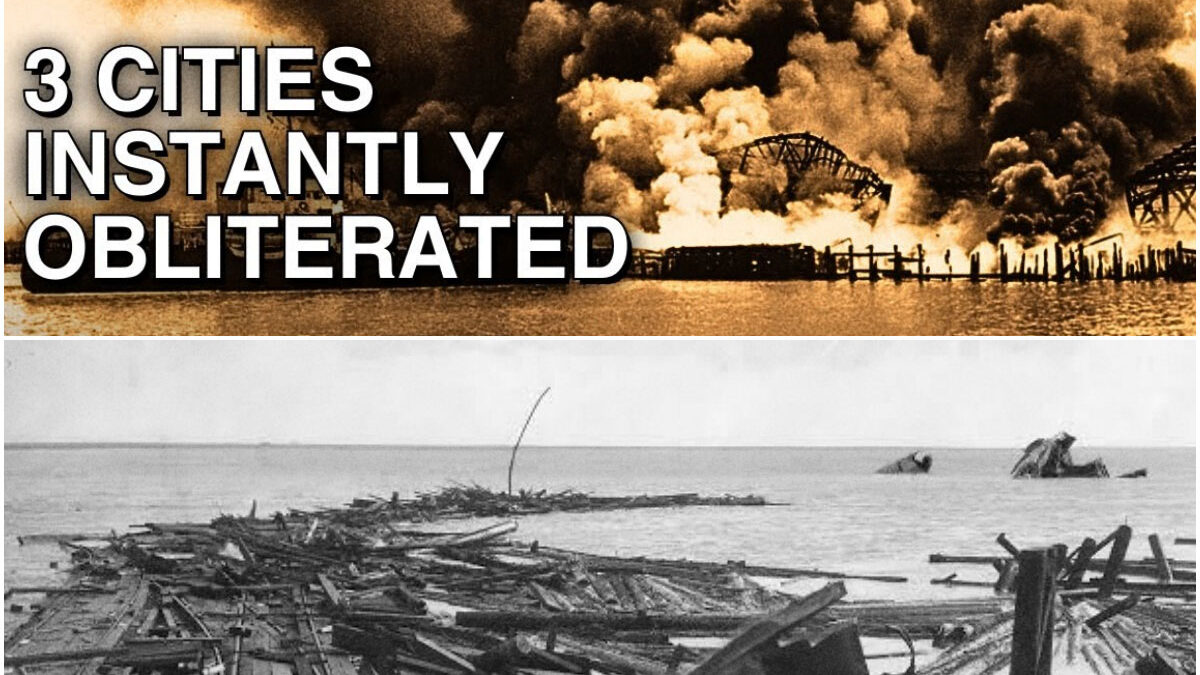
Some of the deadliest explosions ever recorded erupted not on battlefields, but along quiet waterfronts where families lived only steps from danger they never saw coming.
In these overloaded port cities, unstable chemicals, wartime munitions, and congested docks created the conditions for blasts that killed thousands in seconds.
Entire neighborhoods were swept away before anyone understood what was happening.
The violence was sudden, total, and unforgettable.
And it forces a single question.
How did everyday harbors become some of the world’s most lethal places?
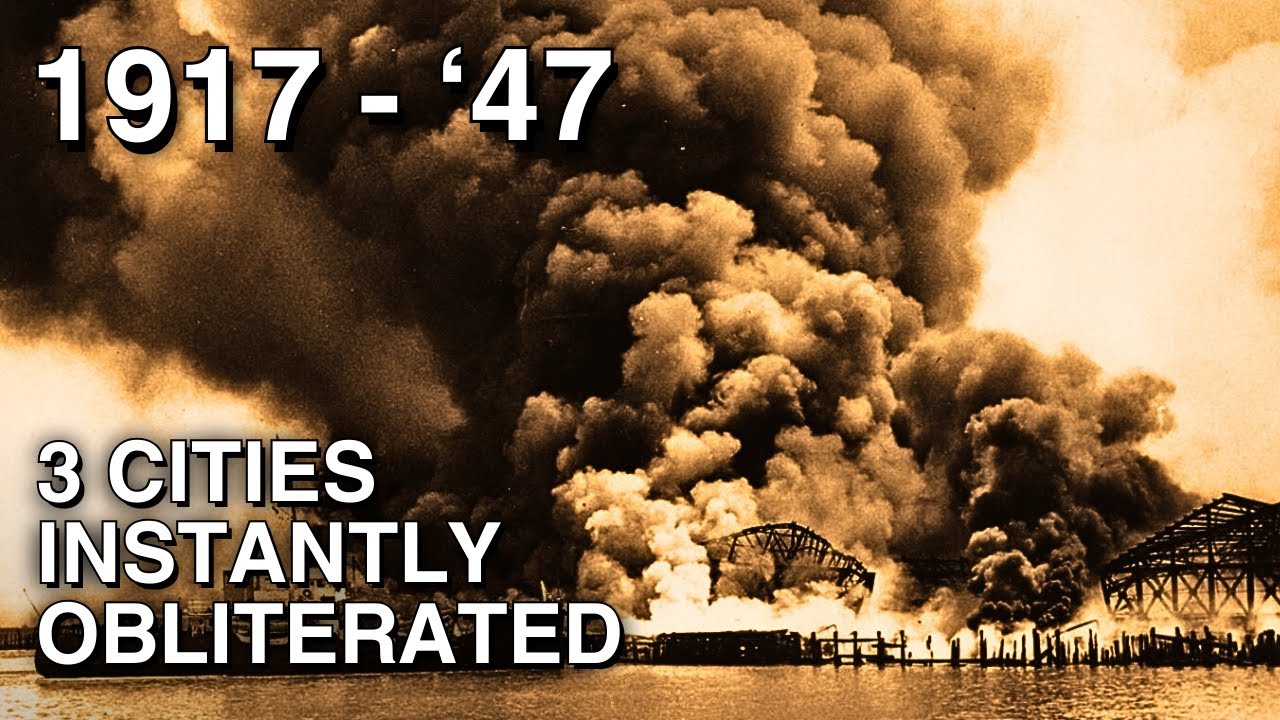
Let us begin with the waterfront conditions that turned busy harbors into some of the most volatile places on Earth.
Ports were built to keep nations alive, yet they were engineered with risks that could kill a city in seconds.
In every major harbor, rail cars clattered toward the waterfront carrying chemicals no one fully understood, while warehouses overflowed with cargo that reacted violently to heat, friction, or the slightest contamination.
Workers moved mountains of freight under tight schedules, often unaware that the crates at their feet held the same power as battlefield munitions.
The pressure to keep ships loaded never eased, and mistakes were treated as the cost of doing business.
Crowded docks meant danger traveled in every direction.
Sparks from steel tools, drifting embers from coal fired engines, and jarring impacts from shifting cargo all created invisible threats.
Safety protocols existed on paper, but few were enforced with any consistency, and even fewer could keep pace with the explosive growth of maritime trade.
Harbor commissioners focused on efficiency, not the physics of confined blast waves that could amplify a single detonation into citywide destruction.
What made these places so vulnerable was not one single floor, but the layering of hazards that touched everything.
In these environments, danger needed no introduction.
It only needed a moment to reveal what had been hiding in plain sight.
The 1917 Halifax Harbor explosion did not just shatter a city.
It proved how a single mistake in a crowded port could unleash destruction on a scale no civilian imagined.
Halifax was a vital wartime hub, a place where military urgency eclipsed caution and where ships moved through narrow channels packed with explosive cargo that few residents knew anything about.
The morning the Mont Blanc entered the harbor, it carried a floating arsenal that rivaled frontline ammunition depots.
Yet nothing about the waterfront suggested danger was only minutes away.
Harbor traffic was dense, and tension always hung in the air as captains threaded their ships through tight passages designed long before modern maritime demands.
Crews worked quickly, navigating without the clarity of coordinated signaling systeMs. Small misunderstandings were common.
Most ended with shouted course corrections or confident maneuvers that kept vessels apart.
On that morning, the chain of decisions that unfolded between the Mont Blanc and the Immo looked ordinary until it was too late to reverse.
When the collision occurred, metal scraped against metal with a sound that echoed across the harbor.
Few watching from the shoreline realized the stakes.
Within seconds, sparks ignited vapors seeping from the Mont Blanc’s cargo, creating a fire so fierce that flames climbed the rigging like a fuse racing toward a buried charge.
Dock workers paused only long enough to see smoke rise before rushing toward the scene.
Unaware of the violence gathering inside the ship’s holds, families stepped onto porches to watch what they thought was a typical harbor accident.
In those minutes, Halifax stood still.
The Mont Blanc drifted toward Pier 6, fully engulfed, glowing with an intensity that worried only a handful of observers who understood what munition ships carried during wartime.
A few officers shouted warnings, but the city’s waterfront remained calm.
Curiosity drew more people toward the blaze.
Windows filled with onlookers.
Children gathered at railings.
Boats rode closer to the drifting vessel.
Then the ship’s hull could no longer contain the heat.
The blast that followed tore across Halifax with almost inconceivable force.
A pressure wave ripped through entire districts, flattening buildings, throwing rail cars into the air, and tearing ships from their moorings.
The shock was so violent that telegraph lines snapped across the region and glass shattered miles from the waterfront.
The fireball rose into the winter sky, leaving a silence that felt impossible after such a roar.
What made the Halifax explosion so devastating was not just the cargo, but the environment that surrounded it.
The harbor acted like a sealed chamber, amplifying the force and channeling destruction into neighborhoods built too close to the waterfront.
The city had grown around the docks without considering the hidden dangers tied to wartime shipping.
Halifax learned the cost of that oversight in a single morning.
Wartime ports were some of the most dangerous places on Earth.
Yet, most civilians never realized they were living beside floating stockpiles of explosive cargo.
As global conflict intensified, harbors became the final link in a supply chain that moved munitions, accelerants, detonators, and experimental chemicals at a pace no safety system could match.
Every crate, barrel, and shell demanded careful handling, yet the pressure to keep ships sailing left little room for hesitation.
The waterfront became a place where urgency overshadowed caution, and where invisible risks grew heavier with each arriving train.
The sheer volume of material moving through these ports created hazards that no single group could manage.
Rail cars loaded with artillery arrived at all hours, coupling and uncoupling with loud impacts that sent vibrations through fragile containers.
Cranes swung pallets of shells with precision, but wind, miscommunication, or a worn cable could turn a routine lift into a catastrophe.
Workers relied on experience rather than formal training, learning by watching others navigate the unpredictable.
Mistakes were rarely documented.
They were simply corrected and forgotten.
Military secrecy added another layer of danger.
Manifests were incomplete or intentionally misleading, preventing civilians from knowing what sat inside the holds of ships or the warehouses lining the peers.
At times, even dock supervisors had only partial information.
Inspectors arrived sporadically, and warnings were often buried beneath wartime necessity.
The mindset was simple.
Deliver the cargo, keep the supply lines moving, worry about the rest later.
This pressure shaped the behavior of everyone on the waterfront.
Crews moved faster than conditions allowed, stacking shells too close together or loading them during storms because schedules could not slip.
Forklifts bounced across uneven planks, sending delicate items rattling in their crates.
Sparks from metal tools, friction from rope lines, and static from wool clothing all held the potential to ignite something unstable.
Most days the risks remained invisible.
But in wartime ports, even minor oversightes could grow into disasters capable of destroying entire districts.
As demand surged, storage problems worsened.
Warehouses overflowed and open air staging areas became cluttered with rows of ammunition waiting for ships that were always delayed.
Hazardous chemicals sat beside everyday goods because there was no space to separate them.
Drums of fuel leaked into the cracks of aging peers, soaking into wood already weakened by years of heavy use.
Every harbor carried its own hidden weaknesses that no one had time to repair.
These conditions shaped the tragedies that followed.
Disasters like the Halifax blast showed how quickly small sparks could ignite massive stockpiles.
The same pressures would later shape the events at Port Chicago, where inexperienced sailors faced impossible demands.
Wartime ports were not built for the weight placed upon them.
They were engineered for commerce, not for the constant movement of volatile cargo.
The warnings were always there.
The problem was that no one could slow the system long enough to address them.
Ports had become lifelines for armies spread across the world, and the urgency of war ensured that dangerous cargo kept flowing toward the water, no matter the cost.
The Port Chicago Pier explosion of July 17th, 1944 showed how an overloaded wartime dock could turn into a killing ground in less than a second.
Port Chicago was a small naval facility on the California coast, but its role in the war made it one of the busiest ammunition loading points in the country.
Every night, trains arrived carrying bombs, shells, depth charges, and high explosives that needed to be transferred onto cargo ships bound for the Pacific.
The pressure to move these materials quickly was relentless.
Most of the work fell to young sailors who had never handled ammunition before arriving at the base.
Many had grown up far from the ocean and had no experience with dangerous cargo.
They received little training beyond basic instructions and officers often pushed them to load faster to meet shipping quotas.
The speed expected on the pier created an atmosphere where safety became secondary to output.
Mistakes were inevitable and no one had the authority to slow the pace.
The ships themselves added complexity.
Ammunition vessels sat tightly morowed at the pier, their holds filling with munitions stacked by hand under dim lighting.
Cranes swung loads across narrow gaps between the ship and the dock.
If a shell slipped or a pallet hit the deck too hard, the consequences could be severe.
Yet, these concerns rarely slowed the workflow.
Everyone understood that the war demanded constant movement.
On the night of the disaster, two cargo ships sat at the pier being loaded simultaneously.
Workers lifted bombs of varying sizes, some weighing hundreds of pounds, while the pier beneath them trembled under the strain of heavy machinery.
The conditions felt routine, but the hazards grew with each load.
The combination of inexperience, speed, and inconsistent supervision created a dangerous environment.
Shortly after 10 p.m., a sudden flash lit the sky.
An explosion erupted with such violence that it instantly obliterated the pier.
The two ships vanished in a plume of fire and debris that rose hundreds of feet into the air.
The shock wave shattered windows across the region.
Buildings swayed miles from the waterfront.
People who lived nearby saw the night turn white before darkness returned just as quickly.
More than 300 sailors and civilians were killed.
Many never found.
The scale of destruction shocked the nation because it occurred far from the front lines.
Investigators struggled to determine the exact cause.
Whether a dropped bomb, a friction spark, or a chain reaction triggered the blast remained unclear.
What was clear was that the conditions on the pier had created a perfect path to catastrophe.
The Port Chicago event forced the Navy to reconsider how ammunition was handled, stored, and loaded.
It highlighted the need for proper training and exposed the dangers created when inexperienced workers were asked to manage some of the most volatile cargo imaginable.
The lessons were costly and came too late for those who stood on the pier that night.
Crowded docks turned ordinary mishaps into city level disasters, and no part of a port carried more hidden danger than the narrow spaces where ships, rail cars, and warehouses collided in constant motion.
These tight waterfront corridors were never designed for the volume of cargo that wartime and industrial expansion forced upon them.
Crates stacked too high, chemicals stored too close together, and rail lines packed with rolling stock created a landscape where a single spark could set multiple sectors ablaze within seconds.
The danger was not theoretical.
It was woven into daily life.
Ports grew outward rather than upward, adding new peers and sheds wherever space appeared.
Each expansion happened without a grand plan, leaving chaotic networks of wooden structures vulnerable to fire and blast pressure.
The materials that filled these spaces made the risk even greater.
Kerosene, benzol, explosives, ammunition, and fertilizers all moved through the same bottlenecks.
When ships lined the waterfront bow to stern, their hulls formed walls that trapped heat and intensified shock waves.
Any explosion that started on one vessel almost always threatened the ships beside it.
On land, the conditions were equally precarious.
Rail lines fed directly into peers with no buffer zones.
Box cars carrying flammable liquid sat only feet from piles of lumber, sacks of nitrates, or barrels of solvents.
A derailed car or a minor collision could rupture a container and start a fire.
Workers operated with limited visibility inside smoky warehouses, guided only by lanterns or dim electric bulbs that flickered under heavy load.
Ventilation was poor.
Heat from machinery collected under low ceilings, increasing the likelihood that vapors would accumulate.
Human activity added another layer of unpredictability.
Thousands of laborers handled cargo by hand using hooks, rope slings, and steel tools that frequently struck sparks.
Cranes swung overhead while forklifts rumbled across aging planks that creaked under their weight.
Each move required coordination, but shouting across busy peers often led to misunderstandings.
The constant motion created countless moments where objects collided, shifted, or scraped.
Most days, these incidents were harmless.
On the wrong day, they were the beginning of catastrophe.
The confined nature of docks amplified the effects of every accident.
When fires ignited, they spread fastest through the open sheds and wooden pilings that supported entire peers.
Flames raced along tarcoated ropes and climbed the sides of buildings.
If ammunition or chemicals were nearby, the fire instantly took on new dimensions.
Blast waves rebounded off warehouses and retaining walls, multiplying their force.
Thick smoke trapped workers, making escape difficult.
These structural weaknesses appeared in nearly every major port of the early 20th century.
Halifax learned how a single burning ship could devastate a city.
Port Chicago showed how overloading narrow peers created explosive pressure points that could not be contained.
These events were not anomalies.
They reflected the dangerous way ports were built and operated.
In truth, the crowded waterfronts themselves were as responsible as the cargo they carried.
When the wrong element ignited, there was never room to absorb the force.
It could only move outward toward the city behind it.
The Texas City disaster on April 16th, 1947 revealed how a single fire in a port packed with volatile cargo could unleash destruction far beyond anything officials believed possible.
Texas City was a booming industrial hub with refineries, storage tanks, and warehouses lining every edge of the harbor.
Freighters arrived constantly, carrying chemicals essential to postwar reconstruction.
Among those chemicals was ammonium nitrate, a compound widely used in fertilizers, but capable of catastrophic detonation under the wrong conditions.
Few understood how unstable it could become when heated or confined.
That morning, the French freighter Grand Camp sat at the dock, being loaded with a fresh shipment of ammonium nitrate.
The cargo was packed in paper bags stacked tightly inside the hold.
Conditions in the harbor were warm, and the ship’s ventilation was poor.
Steve Doors noticed smoke drifting from the lower decks and a faint crackling sound echoed through the steel hull.
Believing the fire was small, the crew attempted to smother it by sealing off the hold and introducing steam.
This approach only increased the temperature inside, feeding the chemical reaction that had already begun.
Firefighters arrived quickly, but the flames intensified faster than anyone expected.
The ship’s hull bulged as heat built within the enclosed cargo.
Spectators gathered along the waterfront, drawn by the column of smoke rising over the harbor.
Some stood directly beside the pier.
Others watched from rooftops or leaned from open windows.
Very few realized they were standing near a chemical mixture that could explode with the force of a military bomb.
The blast came without warning.
The Grand Camp erupted in a violent explosion that tore the ship apart and sent a shock wave across the port.
Buildings collapsed instantly.
Windows shattered miles away.
Flames ignited refineries and tank farms throughout the industrial district.
The fireball climbed high into the air, leaving a crater where the pier had been.
Hundreds of workers and onlookers died in the first moments.
And the harbor became unrecognizable.
The danger did not end there.
Another ship, the high-f flyier, was morowed nearby with a cargo of ammonium nitrate and sulfur.
The initial explosion damaged the vessel and ignited fires in its hold.
Crews attempted to move it away, but the tangled wreckage left by the Grand Camp blocked any chance of escape.
As fires spread across the harbor, the highf flyers cargo heated beyond its limits.
Hours after the first blast, the ship exploded with equal force, compounding the destruction and killing additional rescuers who had arrived to help.
The Texas City event demonstrated how interconnected port hazards were.
A single smoldering fire inside one ship created a chain reaction that consumed an entire industrial complex.
The proximity of chemical plants, storage tanks, and loaded vessels turned the waterfront into a confined arena where each ignition strengthened the next.
Investigators later noted that the layout of the harbor gave the explosions nowhere to dissipate.
Texas City became a symbol of the dangers hidden within everyday industrial cargo.
It showed that the calm surface of a port could mask risks capable of reshaping an entire community in a single morning.
Chemical cargo in early port cities was far more unpredictable than anyone realized, and that ignorance turned countless waterfronts into accidental powder kegs.
Materials that appeared harmless under normal conditions could transform into powerful explosives when exposed to heat, pressure, friction, or contamination.
Dock workers handled these substances every day without knowing how easily they could turn volatile.
What they moved, stacked, and stored was shaped by chemistry that even experts had not fully mastered.
Compounds like ammonium nitrate, pickric acid, TNT, benzol, and smokeless powder often arrived in bulk shipments.
Each substance carried its own hazards, and many reacted violently when confined in ship holds with poor ventilation.
Temperature fluctuations inside steel hulls accelerated chemical breakdowns.
Moisture seeped through damaged packaging.
Drums leaked.
Wooden pallets splintered against sharp edges.
Every shift introduced new variables that workers could not see and had no way to measure.
Labels on containers offered little clarity.
Some were printed vaguely to avoid alarming civilian populations.
Others were misleading by design because wartime secrecy demanded discretion.
As a result, dock crews often treated unstable materials like ordinary freight.
Bags were tossed into stacks.
Barrels were rolled across uneven planks.
Containers marked as fertilizers sat beside solvents or fuels without anyone realizing the combination could magnify the effects of a future fire.
Port managers struggled to keep pace with the risks.
Scientific knowledge improved slowly, and many older warehouses were built long before chemical hazards were widely understood.
Their wooden beams absorbed flammable vapors over time, turning the structures into tinder boxes.
Batteries of chemicals stored under one roof could heat each other through simple proximity.
In the summer months, temperatures inside these buildings became dangerous, even without an open flame.
Ship crews faced similar challenges.
Air circulation below deck was poor.
Heat from nearby engines seeped into storage compartments.
Cargo shifted during storms, scraping metal against metal or crushing bags packed too tightly.
The longer a ship waited at anchor, the greater the risks became.
Fires often started as smoldering spots hidden deep inside the hold, unnoticed until they gained enough strength to break through.
By the time flames appeared, the chemistry was already working against everyone on the waterfront.
Some compounds released gases that accelerated combustion, others detonated when exposed to water.
Attempts to fight the fires occasionally made them worse.
Fire crews rarely had training specific to chemical reactions, and few ports possess the equipment needed to contain such hazards.
These dangers shaped catastrophic events like the Texas City blast where ammonium nitrate heated beyond stability and the Halifax explosion where munitions ignited after a collision that seemed minor at first.
Although the causes differed, the underlying threat was the same.
Chemical cargo carried risks far greater than anyone acknowledged publicly.
The unpredictability of these materials meant that even experienced workers could not sense when danger was building.
Every warehouse, every hold, every pier carried the potential for disaster simply because no one fully understood what they were handling.
It was a silent vulnerability that hovered over every port city, waiting for the smallest spark to reveal its power.
Dock workers lived with dangers that grew heavier with every shift.
Yet few had the power to change the conditions around them.
They lifted crates packed with explosives, rolled barrels filled with volatile liquids, and guided sling loads that could crush them if a single rope failed.
The risks were constant, and the work left little room for hesitation.
Every movement required strength, balance, and trust in the men beside them, because the margin for error was as thin as the planking under their feet.
Most workers learned through observation rather than formal instruction.
New hires were paired with experienced hands, absorbing habits passed down through generations.
These lessons were practical but incomplete.
No one explained the chemistry behind the materials being handled.
No one warned how heat, friction, or confinement could turn a harmless load into something far more dangerous.
Knowledge gaps followed everyone on the waterfront, creating blind spots that shaped countless tragedies.
Fatigue made the hazards worse.
Long shifts blurred concentration and production quotas pushed crews to move faster than conditions allowed.
Supervisors measured success in tonnage, not safety.
Men worked despite aches, illnesses, and injuries because the pay was too important to risk losing.
They understood the danger, but accepted it because the docks fed entire communities.
When disaster struck, these workers bore the brunt.
Their bravery was unquestioned, and their losses were felt across neighborhoods built around the port.
Each tragedy revealed what they had always known.
The work demanded everything, and the danger was never more than an arms length away.
The aftermath support disasters reshaped safety standards.
But every reform arrived only after lives had already been lost.
In the wake of each catastrophe, investigators pieced together fragments of evidence to understand what had gone wrong.
They studied broken hulls, collapsed warehouses, and twisted rails, searching for the small details that revealed larger systemic failures.
Their conclusions were often the same.
Ports lacked clear oversight, cargo moved without proper classification, and hazardous materials were stored far too close to homes and businesses.
These findings pushed governments to act.
Navigation rules were strengthened so ships could move through crowded harbors with fewer misunderstandings.
Ammunition handling procedures were rewritten to prevent inexperienced crews from facing impossible workloads.
Chemical storage laws evolved to require separation, ventilation, and labeling that reflected the true nature of the cargo.
Engineers developed new building codes that prioritized fire resistant steel framing and wider spacing between peers.
Yet, these improvements carried a heavy cost.
They were lessons written in the ruins of places like Halifax, Port Chicago, and Texas City.
Each disaster revealed dangers that had been present for years, waiting for the wrong combination of heat, pressure, or human error.
Communities rebuilt with a deeper respect for the risks that once hid in plain sight.
Modern ports were safer because of these changes, but the reforms served as reminders rather than solutions.
They showed how fragile the system had been and how much had been sacrificed before meaningful progress could begin.
Port cities have long carried the memory of fire, and the echoes of their greatest disasters still shape the waterfronts we see today.
Modern harbors move more cargo than ever before.
Yet, the lessons carved into history stand as quiet warnings.
Explosions in places like Halifax, Port Chicago, and Texas City revealed how vulnerable these industrial gateways could become when oversight faltered or dangerous materials were underestimated.
Their stories endure because they showed what happens when a single error meets the wrong environment.
Today’s ports rely on stricter regulations, improved engineering, and better training.
But the core realities remain unchanged.
Volatile chemicals still arrive in bulk.
Ships still dock within close proximity.
Workers still guide heavy loads across narrow peers, trusting that the system surrounding them will hold.
The risks have not disappeared.
They have only been managed with greater awareness.
What history makes clear is that vigilance cannot fade.
Waterfronts have always been places where industry meets unpredictability.
Even now, the boundary between safe operation and sudden catastrophe is thinner than most people realize.
The tragedies of the past serve as reminders that ports operate with forces powerful enough to reshape entire communities.
In every harbor, the water may look calm, but beneath that calm lies the same truth carried through generations.
Ports are lifelines, yet they remain places where danger waits quietly, revealed only when the wrong moment arrives.








