A Man Who Saved a Baby Bigfoot – And Discovered The Creature Could Speak
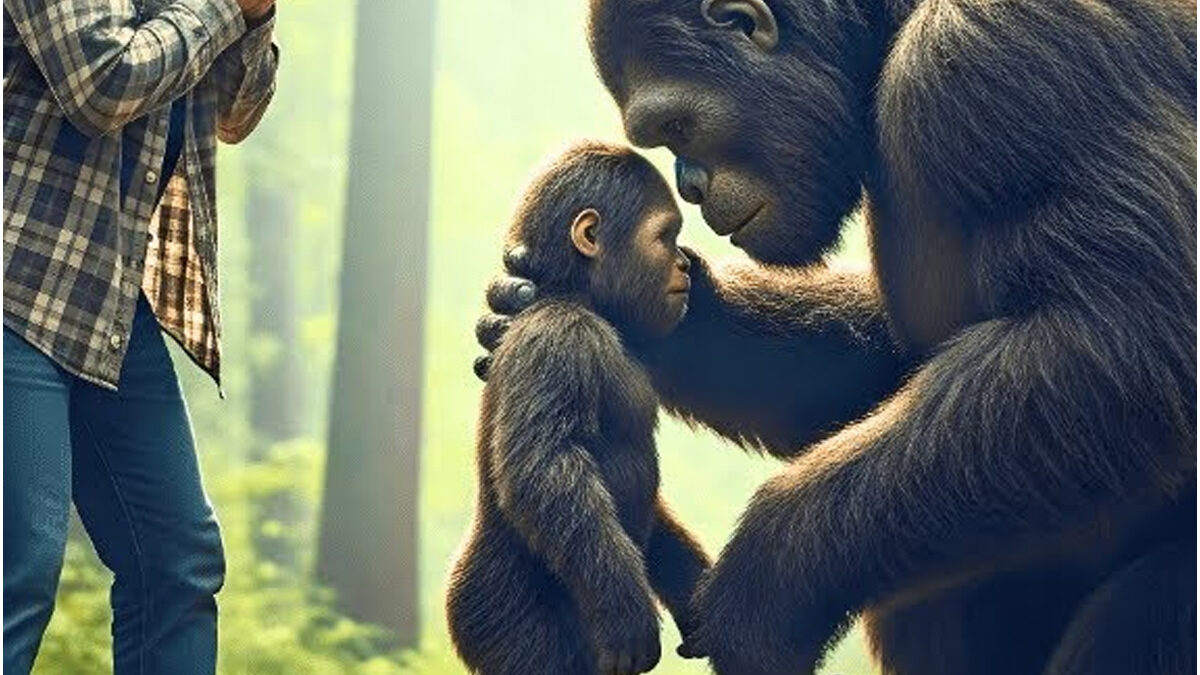
A Man Who Saved a Baby Bigfoot – And Discovered The Creature Could Speak
Have you ever imagined what you’d do if deep in the cold forest you stumbled upon a crying sound?
Not human, not animal, but something in between.
In a quiet corner of Maple Hollow, Montana, a reclusive man named Graham Holt, grieving the loss of his wife, finds a creature thought only to exist in myths.
A baby Bigfoot trapped and whimpering under a mossy root.
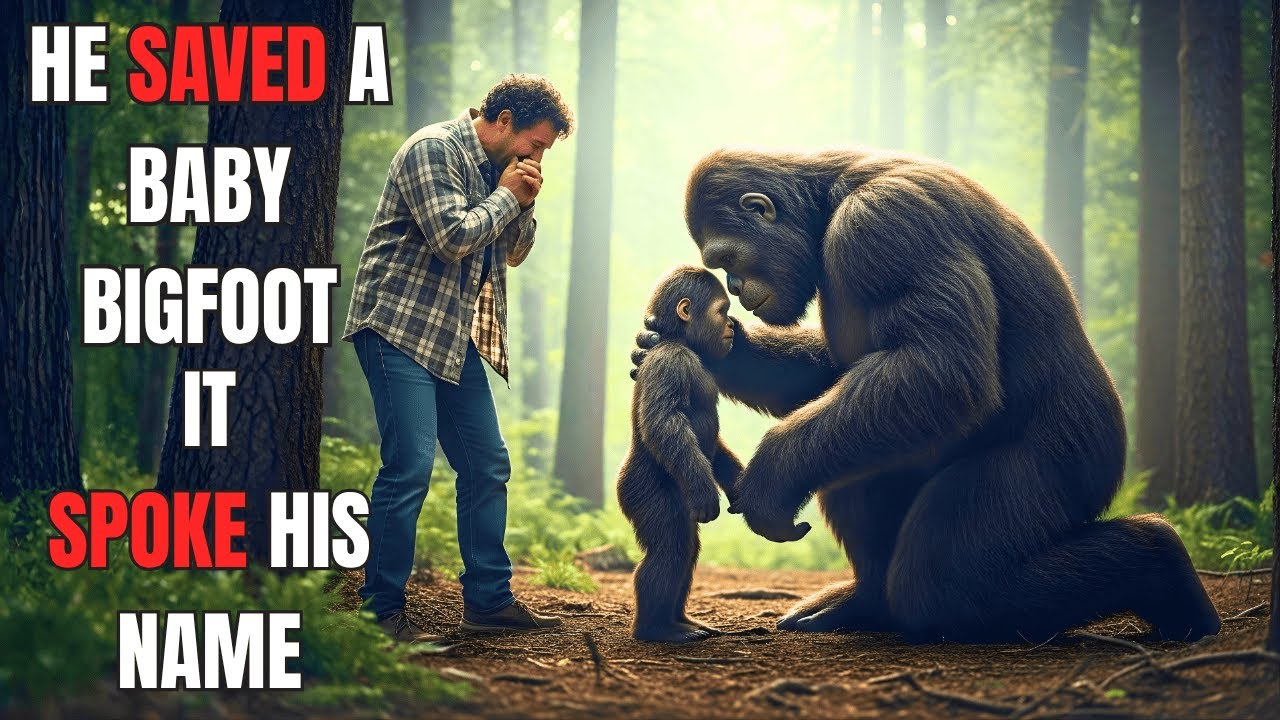
He could have walked away, but something in that cry pulled at his soul.
This isn’t just a tale of the unknown.
It’s the true story of how an old hunter laid down his rifle and opened his heart to something wild, wounded, and wondrous.
Together they formed an unlikely bond, one built not on words, but on trust, healing, and shared silence.
And one day, when the time came to say goodbye, the creature looked back and whispered his name, Gray.
Um this story was hidden for years until now.
So, dearest viewer, where are you watching from?
And may I ask, what’s your name?
Because stories like this, they travel.
From cabin to screen, from heart to heart.
If this touched you, even just a little, hit like, subscribe, and help us grow a community that believes Bigfoot might just be real.
And sometimes the wildest things are what make us human.
From the forest to your screen, we send you all our warmth.
Thank you for being here.
The wind was dry with memory.
Graham Holt trudged through the rustle of late autumn leaves, each step cracking over the golden deadfall carpeting the slope above Stillwater Lake.
Maple Hollow sat two ridges below, but up here in the forest, the real forest, it was only wind, silence, and the brittle whisper of pine needles brushing past his shoulders like ghosts that had something to say but wouldn’t.
He hadn’t fired a shot in years, not since he buried the last box of rifle rounds in a rusted tin behind the cabin.
Still carried the old bolt-action across his back, more out of ritual than purpose.
Sometimes a man needed the weight of something familiar to keep him upright.
He tracked the elk not for blood, not anymore, but for the quiet comfort of the trail, hoof prints in soft soil, snapped branches like a breadcrumb path through trees that remembered things better than people did.
That afternoon the light was leaning west, slanting gold through the pine trunks, casting long shadows that bent like fingers across the forest floor.
The cold was creeping in, not harsh, just sharp enough to make his breath visible and his joints complain.
He welcomed it.
Cold didn’t ask questions.
Cold didn’t sit across from you with pity in its eyes and ask about Rebecca.
He adjusted the worn strap of his pack and paused near a sunken cluster of stones overgrown with moss, a place he knew well, too well.
He could have walked this trail blindfolded.
The tilt of the terrain, the smell of damp earth, even the bend of the larch branches overhead, they were part of him now.
But there were parts of life he’d never gotten familiar with.
His daughter’s voice, grown brittle with years of distance.
The way she flinched when he hesitated to say her name out loud.
He was reaching for a canteen when the sound came, a low sound, a breath caught in pain, a noise that didn’t belong.
He froze.
Every instinct honed from decades in the wilderness went rigid.
He turned slowly, letting the silence settle again, his hand resting lightly on the stock of the rifle slung across his back.
Then it came again, softer this time, but unmistakable.
Not elk, not deer, not bird, not even the wheeze of a bear cub.
It was something else.
A whimper, like a child trying not to cry.
Graham took one careful step toward the slope below, boots pressing deep into the mulch of last season’s leaves.
His heartbeat slower now, measured, not panic, not yet, but his gut was awake.
Bear cubs didn’t cry alone.
And where there was a cub, there was a mother not far.
And a mother bear’s rage could rip a man open before he ever chambered a round.
He moved in a curve, wide and low, keeping the wind at his back so his scent wouldn’t give him away.
It was old reflex, a dance he hadn’t forgotten.
His breath shallow, his ears tuned to the woods like an old radio dial turned just right.
He crouched behind a log, lifting his eyes toward the sound, and there it was, half hidden in a hollow beneath a fallen cedar, shrouded in moss and rot and needles.
Something shifted, something small.
He narrowed his gaze.
Not a bear.
The shape was hunched, covered in thick reddish-brown fur, matted with dirt and dried blood.
It curled around itself like an animal in pain, but the shape was wrong.
The limbs were too long, the head too upright.
Then the face turned.
Graham’s breath caught in his throat.
Not an animal, not quite.
The creature was the size of a 3-year-old child, crouched and shaking, but its face, its face was something else.
Human, primitive, ancient.
The brow protruded slightly, the nose flattened, but the mouth, the cheekbones, the wide wet eyes that locked with his, those [snorts] were unmistakably someone’s child, and it was looking at him.
Not with fear, not with malice, with pleading.
Its right leg was trapped in a rusted steel trap, the kind designed to maim something 10 times its size.
The jaws of it clamped deep around the creature’s shin, the metal digging into flesh and fur alike.
Blood had dried in streaks down the limb.
It hadn’t screamed.
It hadn’t moved, but now it whimpered.
Graham swallowed, his jaw clenched.
He knew that trap, not just in type, he knew that exact model.
An old bear trap outlawed for decades.
And anyone using it now was no casual poacher.
Someone out here was hunting something they knew wasn’t legal, hunting something rare, something like this.
He took one step closer, the leaves crunching lightly beneath his boot.
The creature didn’t flinch.
Another step.
Closer now, enough to see the way its fingers, long, dextrous, strangely familiar, clutched at the earth, holding pain like a secret it couldn’t afford to spill.
Graham’s mind screamed for retreat.
Walk away.
This wasn’t his world.
This wasn’t a thing that could be explained or carried back down the hill.
He took a breath, turned slightly as if to step back.
The creature let out a single sound, not a moan this time, a soft choking gasp, like a child about to sob but holding it in as best it could.
And just like that, Graham was in the delivery room again.
A lifetime away, but clear as blood on snow.
Rebecca’s hand going cold in his.
The machines flatlining.
The nurse’s voice gentle and slow when she handed him the infant, crying and red and alive.
He couldn’t hold her, couldn’t even look at her.
And now here was this thing, this child in pain, alone, crying like that.
He dropped to his knees before he knew it.
The rifle slid from his back and landed in the moss with a dull thump.
He pushed it away from reach.
He looked straight into the creature’s eyes.
“I’m not going to leave you,” he said, barely a whisper.
His voice cracked.
“I’m not.”
He reached forward, slow and cautious, hands open like surrender.
The creature didn’t move.
Its gaze followed his fingers.
When he touched the trap, its body trembled, but still it didn’t pull away.
Graham exhaled through his nose.
Carefully he tested the tension on the trap.
The spring was stiff, rusted, unforgiving.
This would hurt.
It would take strength and speed, and there would be blood.
He looked at the creature again.
Its eyes never left his.
“I’m going to help you,” he murmured.
“But it’s going to hurt, little one.”
He didn’t expect understanding, but then the creature, with a tiny motion, reached out and placed its hand, small, rough, warm, against his wrist.
No sound, no gesture, just that, as if to say, “Do it.”
He nodded once, then shifted to wedge a fallen limb into the trap’s joint.
Every muscle in his shoulders tensed.
He pressed.
The metal groaned.
The jaws didn’t budge.
A harder push.
A crack of rust.
The jaws creaked open an inch.
The creature jerked in pain, a soft hiss escaping its throat.
Its grip on Graham’s wrist tightened, but it didn’t cry out.
Another breath.
Graham braced his knee against the edge and drove all his weight into the lever.
The trap snapped open.
The creature yelped, a strangled cry that echoed through the trees like a wounded echo, but it was free.
Graham pulled the leg out gently.
Blood oozed from the wound, thick and dark, coating his hands.
He ripped the flannel from his arm, wrapped it around the gash, pressing down until the bleeding slowed.
And still, no teeth, no claws, no violence, just those eyes, big and black and filled with something close to trust.
He sat back, chest heaving, hands shaking.
The creature didn’t run.
It stayed there, breathing shallowly, watching him.
“Christ,” Graham whispered.
He looked around, suddenly aware of the silence.
Too silent.
The birds had stopped.
The trees held their breath.
Somewhere deeper in the woods, he felt it.
Not a sound, but a presence.
They weren’t alone.
And yet, no rush of movement, no thunderous charge.
Whoever or whatever was out there, it wasn’t ready to attack.
Not yet.
The child lay still.
Graham stood slowly, wiped his hands on the moss, and looked down.
He didn’t know what it was, not really, but it wasn’t just some forest animal.
It was someone’s, and it was hurt.
He crouched again, slipped one arm behind its shoulders, the other under its knees.
It tensed, but didn’t resist.
He lifted it with effort, the warmth of its body bleeding through his coat.
Its blood stained his sleeve.
It smelled like wet bark and old earth.
“Let’s get you out of here,” he said.
The sun had nearly vanished behind the trees.
He turned toward the cabin, and somewhere far behind him, something huge shifted in the forest, but didn’t follow.
At least, not yet.
He didn’t look back, not because he wasn’t afraid, but because something about carrying this creature, this child, felt like the first thing he hadn’t run from in years.
As he stepped onto the old trail toward home, leaves crunched under his boots, steady and real.
The weight in his arms shifted slightly, then went still.
And when he whispered, “If I help you, will you let me live?”
He didn’t expect an answer, but the creature’s head turned, eyes closing in something that wasn’t sleep, but wasn’t fear, either.
Something closer to peace.
He walked on, not knowing that everything behind him had already begun to follow.
The cabin was still too far to see, but Graham’s arms had already begun to tremble.
The weight of the creature wasn’t overwhelming.
He’d carried heavier packs, downed deer, even his own wounded pride up these hills before.
But there was something different about holding this thing.
It wasn’t the physical weight.
It was the eyes, the heat of its blood on his sleeve, the breathing, shallow and uneven, against his chest.
It was the fact that whatever this was, it had let him touch it, carry it, trust it wouldn’t be dropped.
And in the quiet trail between moss-covered stones and bent pine, something else settled over his shoulders.
A silence too perfect to be natural.
The woods were never truly silent, not in autumn, not in this part of Montana.
Even as the day dimmed and the sun thinned across the treetops, there should have been the occasional bird call, the sigh of breeze through pine needles, the scurry of chipmunks making last-minute preparations for winter.
But now, it was still.
Held-breath kind of still, as if every living thing within a hundred yards had stepped back and was just watching.
Graham stopped.
The air had cooled.
His breath fogged soft in front of him.
He adjusted the creature’s body, its head resting against his collarbone, one small hand still loosely gripping his coat, and turned slowly on his heel.
There was nothing visible between the trees, no obvious shape or figure, but the feeling was undeniable.
He wasn’t alone.
He knelt beside an old rotting log and eased the child creature Kip, his mind whispered without knowing why, onto the mossy ground.
“I need to see the damage,” he said aloud, not because the creature would understand, but because it made the tension in his spine ease just a notch.
Its leg was worse than he thought.
The steel trap had torn through fur and flesh down to muscle.
Blood had slowed, but not stopped.
The skin beneath was swollen, bluish, angry.
Infection wasn’t just a possibility, it was already creeping in.
He reached into his jacket, pulling out a battered first aid kit, the kind he kept more out of stubborn habit than real hope.
Alcohol wipes, gauze, a cracked tube of antiseptic cream.
Not enough, not really, but better than nothing.
He paused, meeting the creature’s gaze again.
“I’m going to touch your leg now.
It’s going to hurt.”
It blinked.
He reached.
The second his fingers made contact with the fur, the creature winced.
Its breath stuttered, but then, again, it did something that froze him.
It reached up, slow and deliberate, and placed its hand on his wrist, not pushing away, just there, a weightless, impossible gesture, one that said, “Go ahead.
I know you’re not here to harm me.”
Graham swallowed the tightness in his throat and got to work.
He tore strips from the hem of his shirt, dabbing away dried blood, cleaning what he could.
The creature hissed when the alcohol hit raw skin, but it didn’t pull back.
It didn’t cry.
It endured.
The trap had left more than just injury.
It had left a memory, a mark.
The forest seemed to lean in, breathless, as he worked.
When the dressing was finished, rough but snug, he sat back on his heels, wiping his hands on the moss.
The child was still watching him, eyes darker than midnight, but full of something painfully close to recognition.
And then the creature did something else entirely unexpected.
It leaned forward, slow, unsure, and pressed its forehead gently against his.
Graham didn’t move.
He didn’t dare.
The gesture was so soft, so familiar, it shattered something inside him.
For a few seconds, they stayed like that.
Two creatures alone in the woods, bound by injury, silence, and something wordless.
Then he stood.
It was getting darker.
The forest light had shifted from gold to blue-gray, and the cold was starting to bite deeper.
He couldn’t leave it here.
He knew that now, without question.
A bleeding animal in the woods was bait for worse things.
Coyotes, bears, maybe even men, especially men.
He bent, scooped the child into his arms again, and started down the trail toward the cabin.
But as he walked, something kept tugging at the edge of his senses.
A presence, not just one, multiple.
He didn’t see them, but every so often, between the trees, where the shadows ran deeper than they should, he noticed breaks in the underbrush, places where moss had been crushed under immense weight.
Tracks too large to be a man’s, too quiet to be a bear’s.
They weren’t following, they were flanking, staying just out of sight, moving with him, watching him.
He didn’t speed up, didn’t speak, just walked.
His cabin came into view, a gray shape through the trees, tucked near a shelf of stone like it had grown there.
He crossed the last stretch of ground, each step slower than the last.
The porch groaned beneath his boots.
He hesitated with his hand on the doorknob, then he turned.
The woods were still, unmoving, but the feeling hadn’t left.
He didn’t meet it with fear, just a nod, a silent agreement.
You let me bring him home.
I’ll keep him safe.
He opened the door, stepped inside, and the warmth of the place, what little there was, met him like a hesitant old friend.
The smell of pine smoke and oil lanterns, the familiar creak of wood beneath his boots.
Shadows clung to the corners like old coats left on hooks.
Everything here was worn, modest, but it was his.
And now it was Kip’s, too.
He laid the creature down on the faded quilt on the small couch near the fire.
The embers were still warm.
He stoked them, added wood, coaxed the flames higher.
As the room brightened, he turned and saw the creature looking around, not in fear, in curiosity.
Its gaze tracked the ceiling beams, the books on the shelf, the framed photograph of Rebecca on the mantel.
It looked present, awake.
He knelt again beside it.
“You’re safe now,” he whispered.
The creature made a low, soft noise, almost like a sigh.
Then it closed its eyes.
Outside, the last light vanished from the trees.
Shadows deepened, but somewhere out there, beyond the edge of the clearing, something massive paused, watched, and turned away, not with threat, but with assurance.
The child had been delivered, and for tonight, that was enough.
Inside, Graham sat beside the couch watching the creature breathe, listening to the crackle of fire, feeling, maybe for the first time in years, like he wasn’t the only one left carrying weight he couldn’t speak of.
And as the night closed in, the cabin didn’t feel so empty anymore.
Not because it was full of noise, but because it finally had someone willing to listen.
And far off, deep in the woods behind the house, something ancient exhaled into the cold and let the silence resume.
For now.
By the time night came down fully, the cabin had returned to its usual quiet.
Not the sterile silence of a forgotten place, but the worn, creaky hush of something used to being alone.
Wind moaned softly around the corners, slipped under the eaves like it knew the place by name.
Inside, the fire popped low and steady in the stone hearth, sending a gentle orange shimmer dancing across the old pine floorboards.
Graham sat hunched in the armchair closest to the fire, elbow propped on his knee, eyes fixed on the figure resting under a folded wool blanket on the couch.
The creature hadn’t moved much since he’d laid it down.
It had shifted only once, just a curl of its fingers around the edge of the blanket, like a kid holding onto the corner of a baby quilt.
Outside, the wind picked up a bit.
Dead leaves scraped against the window like fingernails, slow and thin.
Graham didn’t flinch.
This time of year, the cold came early, and the woods whispered more than usual.
He leaned back, hands resting flat against his thighs.
His body was tired, but his mind had turned into something like static.
The quiet kind that hummed behind your ears when you couldn’t sleep.
The cabin looked the same as it always had.
Small, sturdy, full of old wood and quiet corners.
A single bed pushed against the wall, one wooden table under a dusty window, two shelves sagging with paperbacks and a few field guides he hadn’t cracked open in years.
The oil lamp on the side table glowed dull and gold, casting soft shapes across the faded photo frames.
One picture, Rebecca sitting on the porch in summer light.
Another, never hung, just leaning behind the books, an ultrasound curling with age.
He’d kept it, couldn’t throw it out, couldn’t look at it either.
Next to the hearth, the creature stirred.
Its breathing changed.
Graham leaned forward, instinct flaring.
The blanket shifted.
One arm emerged.
Fur brushed the fabric, fingers stretching.
The creature blinked slowly, groggy from pain or sleep or both.
“I didn’t think you’d make it through the night.”
Graham murmured.
The child, because that’s what it was, no matter how strange, turned toward the sound.
Its eyes found him in the firelight, eyes full of awareness, still no sign of fear.
Graham stood slowly, knees popping, and moved toward the wood stove tucked in the far corner.
He set a kettle on to boil, working quiet, every movement second nature.
As the water heated, he pulled out a metal bowl, a bar of lye soap, an old towel stiff from disuse.
He paused near the sink, glancing back.
“You let me check that leg.”
He said gently, “or it’s going to rot off before winter’s done.”
No reaction, but no retreat either.
He knelt next to the couch, soaked the towel, and dabbed around the bandage.
The creature hissed softly, a tremor running through its body.
Graham paused, giving it room to pull away, but it didn’t.
Instead, it reached again.
This time not to grab, not even to brace, just to touch, lightly, one hand on his forearm.
The pressure was so faint it could have been a leaf.
He nodded, eyes burning for reasons he wouldn’t name, and peeled the cloth back.
The wound looked angry, but not deadly.
Swollen, deep, but not hopeless.
He cleaned it in slow, firm strokes.
When the creature’s breath quickened, he paused, but every time he tried to stop, it gave the slightest tug, urging him to finish.
He cleaned, dried, re-wrapped it with a strip of fresh cotton, then leaned back with a sigh.
“Braver than I was.”
He muttered.
“Hell of a lot braver.”
He tossed the towel into the bucket near the door and stood to fetch something from the cupboard.
Crackers, cured venison.
He laid them on a chipped plate and set it gently on the table.
The creature looked, but didn’t move.
Graham sat nearby, tearing a piece of jerky, chewing it without taste.
After a beat, he pushed a few berries toward the edge of the plate.
Last of the autumn’s pickings from the ridge behind the cabin, wild Oregon grapes, small and deep purple.
That got the creature’s attention.
It sniffed.
Then, slowly, it slid off the couch, limping but upright, every motion deliberate.
It reached the table and picked up a single berry, holding it between its fingers like something sacred, then another, then another.
It ate in small, careful bites.
No gulping, no frenzy, like it was honoring something.
Graham watched, unmoving.
The kettle whistled behind him.
He turned it off without rising.
Back at the table, the creature pointed at its own chest.
It made a sound, soft and clipped, like a cough caught halfway through a word.
“Kip.”
It said.
Graham blinked.
“You That your name?”
The creature touched its chest again.
“Kip.”
Not a perfect word, but close enough to strike something deep.
He let it settle between them.
Kip.
Then, almost as an afterthought, Graham rubbed his temple and muttered under his breath, “Graham, you dumb old bastard.”
The creature looked up, eyes sharp again, alert.
It repeated the sound, not perfectly, not even fully, but close enough to make his hand freeze mid-motion.
“Gra- um Graham froze.
It wasn’t mimicry, it was memory.
He didn’t speak for a long moment, just stared.
Then, slowly, without meaning to, he smiled.
A dry, tight-lipped, near-forgotten smile, one that cracked like ice across the surface of a frozen pond.
A sound broke the moment, a soft tick, steady and deliberate.
The wall clock.
An old pendulum piece he hadn’t wound in months, but that still ticked from sheer stubbornness.
Kip turned toward it, mesmerized.
It moved closer, head tilted, watched the brass pendulum swing, left, right, left, right.
Then, without hesitation, Kip began to mimic the motion with its body, rocking gently in sync.
The rhythm seemed to anchor it, a tether in a strange place.
Graham leaned back in his chair, eyes following the quiet dance.
“Yeah.”
He whispered.
“That’s time, kid.
Steals more than it gives.”
The lamp burned lower now, the fire down to embers, the kind of darkness that wrapped around you rather than fell upon you.
Outside, the wind had calmed, but then, something shifted.
Three soft knocks, not at the door, not human, dull, deliberate strikes, wood on wood.
Somewhere out in the forest, echoing just enough to be heard, just quiet enough to be missed if you didn’t know what to listen for.
Kip straightened.
It listened, then answered.
A short, low moan, no fear in it, no plea, just acknowledgement.
Graham didn’t stand.
He didn’t reach for the door.
He just stared at the dark window beyond the curtain, then looked back to Kip.
“You’ve got people out there, don’t you?”
He said softly.
Kip didn’t answer, didn’t need to.
Graham stood, crossed to the fireplace, tossed another log on the coals, and watched the flames rise again.
Then he pulled the old quilt off the foot of his bed and laid it beside the couch.
Kip was already curling up there, small and round, the shape of something that didn’t know safety until it found it, and now refused to let it go.
Graham took the chair again, leaned his head back, closed his eyes.
“I don’t know what you are.”
He said into the half-dark, “but I’ve known loss longer than most people get to know love, and I’ll be damned if I watch something else disappear without trying.”
The fire cracked.
Kip shifted, letting out a low sound, neither awake nor asleep.
Outside, the woods were still, but someone was listening, someone waiting.
He could feel it in the trees, but tonight, the door stayed closed, and inside that little cabin tucked deep into the side of a forgotten mountain, [snorts] a lonely man and a wounded child from a different world slept beneath the same roof.
Not as strangers, not anymore.
And for the first time in years, when Graham dreamed, it wasn’t of empty rooms or closed hospital doors.
It was of the forest, and something reaching back.
By mid-morning the next day, the light had changed.
A softer kind of gold pushed through the cabin window, catching in the dust motes that drifted lazily like suspended snowflakes.
The sun hadn’t been this warm in days.
Not since Graham had first found Kip curled in that mossy hollow, trembling and small, and so impossibly hurt.
But now, the world outside the cabin window seemed almost gentle.
Like the forest, too, was catching its breath.
Inside, the air carried the smell of pine ash and black coffee, faint with a sharp trace of antiseptic and old wool.
The kettle let out a low hiss from the stovetop.
Somewhere, a floorboard settled with a groan.
Like the house itself had just woken up.
Kip had started moving more that morning.
It hadn’t been a leap or even a walk at first, just a shift.
A slow scoot from the couch to the floor, where a pile of Graham’s flannel shirts lay like a makeshift nest.
Then later, a limping wander from the hearth to the corner where Graham kept his boots.
Kip had crouched there for nearly 20 minutes.
Just sniffing at the leather.
Running his hand over the scuffed rubber soles like they were relics from another world.
Graham didn’t say much.
He just watched from the table, a chipped mug in hand, thumb brushing the rim out of habit.
There was something peaceful about the way Kip moved.
Careful, curious.
Not the twitchy kind of curiosity animals had.
But something deeper.
Thoughtful.
Everything he touched, he did so like it had a story to tell.
He’d tried climbing into the wooden chair earlier and had nearly tipped it, yelping as the back legs scraped out.
But then, after a moment of watching Graham silently sip from his mug, he’d lifted his hand and mimic the motion.
Not perfectly.
The fingers curled wrong.
The weight was off.
But the shape was there.
It wasn’t imitation.
It was absorption.
And Graham knew what that meant.
This wasn’t a creature that lived only by instinct.
This was something that learned.
He’d been reading an old book out loud to himself the night before.
Nothing fancy, just a collection of backwoods stories from some cranky old trapper who’d exaggerated half his life and published the rest.
He didn’t expect Kip to understand the words.
But when he’d turned the page, Kip had inched closer.
Not to read, but to watch his hands.
And this morning, when Graham laid that same book down on the end table and walked away, Kip picked up a twig from beside the fireplace and tried to use it to flip the page.
Didn’t quite get it.
The twig bent, the page stuck.
But he tried again.
Graham had to turn away for a moment.
He wasn’t used to things like that hurting in a good way.
And for the first time in what felt like years, the cabin felt less like a place to wait out time and more like a place something was starting.
Not something grand or dramatic.
Just starting.
Kip limped back toward the table, drawn by the bowl of berries Graham had refilled.
He picked through them carefully.
Didn’t reach for the biggest or the easiest.
He sniffed each one, rolled it in his fingers, inspected the shape, then ate.
One at a time.
Like it mattered.
And then, he did something Graham wasn’t expecting.
He reached across the table, picked up the cracked salt cellar Graham always left out, and set it gently beside the berries.
Not to use, just placing it with purpose.
It wasn’t a game.
It was a gesture, a rhythm.
Graham watched him a long while, then cleared his throat.
He didn’t want to talk about Rebecca.
He never did.
But the cabin had a way of peeling people open when they weren’t watching.
And the way Kip was sitting there, still, present, not looking away, it did something to his chest.
“She used to sit where you are,” Graham said finally, voice low.
“That chair wobbled even then.
I always meant to fix it.
Never did.”
Kip didn’t look up.
He just listened.
“I was holding her hand when it happened,” Graham murmured.
“The light above us flickered, just once, then it went out.”
He paused, pressed his thumb hard against the mug again.
“People kept saying I should have held the baby.
They brought her to me, tiny thing, pink, breathing, screaming.
I couldn’t lift her.
Couldn’t even look.
All I saw was Rebecca’s hand going cold.”
He looked up then, half expecting Kip to have turned away.
But Kip hadn’t moved, not even an inch.
Instead, he reached forward and laid his hand, small, warm, fur-covered, flat against Graham’s chest.
Just over the heart.
No force, no sound, just pressure, just presence.
And Graham, for the first time in over two decades, let himself cry in front of someone else.
The tears didn’t come loud, no gasps, no shaking, just that slow, quiet breaking that sneaks up and pours out like the start of rain you didn’t notice until your shoulders were soaked.
When he opened his eyes, Kip was still there, still touching his chest, still looking at him like he was something worth staying for.
Later, when Graham had stepped out to bring in more firewood, Kip moved toward the window.
He didn’t peer through the glass like someone staring out.
He just stood near it, arms hanging loose, swaying gently side to side like he was measuring the light.
Something about his stance, upright, tilted forward slightly, reminded Graham of a tree adjusting to wind.
He was starting to feel stronger.
Graham could see it in the way he moved now.
Less guarded.
More curious.
There was still a limp.
Still a flinch when he twisted wrong.
But it was clear he wasn’t just surviving anymore.
He was exploring, learning, becoming.
Which is why, when the knock came at the door, it felt like thunder cracking straight through the air.
Kip froze.
Graham dropped the armload of kindling.
The knock wasn’t hard, just firm, three short raps, and then a voice.
“Dad?”
Maeve.
Her voice cut through the cabin like a breeze through brittle leaves.
“Dad, you in there?”
Graham stared at the door, then turned sharply to Kip.
Kip backed away instantly, eyes wide.
Not in fear, but alert.
The sound of the truck still hummed just beyond the trees.
Maeve’s boots crunched softly as she paced near the porch.
Graham crossed the room in two strides, whispered, “Stay hidden.”
And gestured toward the curtain that hung in front of the pantry shelves.
Kip hesitated, then ducked behind it.
The knock came again.
Graham opened the door.
Maeve stood there, wind in her dark red hair, jacket open, a tired crease between her brows.
“I thought you were ignoring my messages again,” she said.
He stepped aside.
“I’ve been busy.”
“With what?”
She stepped inside and froze.
Her eyes swept the cabin.
“Why does it smell like antiseptic?”
“I cut my hand.”
She looked him over.
“Which hand?”
He didn’t answer.
She moved past him, glanced at the couch.
The pillow was rumpled.
The bandages on the table weren’t hidden.
The floor had a trail of small footprints in the dust.
Her eyes narrowed.
“Are you hiding something?”
“No.”
“Don’t lie to me, Dad.”
The silence stretched.
She turned, voice tight.
“You’ve always kept secrets.
Even when Mom died, you locked everything down.
You don’t tell me anything.
You just disappear up here and pretend none of it happened.”
“I didn’t ask you to come.”
“That’s exactly the point.”
The curtain near the pantry rustled, just a flicker.
Graham’s heart dropped.
Maeve turned her head, sharp as a deer hearing something in brush.
“What was that?”
“Rats,” he said quickly.
“Big ones.”
She didn’t buy it, but she didn’t press, not yet.
A pot on the stove boiled over, hissing like a warning.
Maeve exhaled, tired and angry, then stepped back toward the door.
“You know what?
Never mind.
I shouldn’t have come.
You don’t want to talk, and I’m done begging for your honesty.”
She opened the door and stepped out into the late morning chill.
Graham didn’t follow.
When the truck engine roared to life and rumbled down the gravel path, the silence came back.
He turned.
Kip emerged from behind the curtain, watching the empty doorway.
He didn’t speak, but he walked to Graham and placed his hand, just like before, on his chest, then on his shoulder.
This time, he held it there.
Graham closed his eyes.
“Yeah,” he whispered.
“I know.
She’s not gone, but I’m not ready, either.”
Kip didn’t move, and that was answer enough.
Later that afternoon, Graham sat by the fire with his head in his hands.
Kip curled nearby, his leg bandaged again, his breathing slow.
Graham looked at him, this strange little soul with his big eyes and broken leg in patient silence, and whispered, “When you’re strong enough, I’ll take you home.
Even if I don’t know where home is.”
And from the far ridge, the wind carried a faint echo back toward them, as if someone or something had heard him.
The light had shifted again.
It was late morning now, clean and crisp, with the kind of sky that seemed to stretch just a little wider than usual.
Overhead, the clouds rolled thin and high above the ridge, like long, pale brushstrokes across the blue.
The air held that early November hush, cool, sharp, and open like breath just taken in and not yet let out.
Graham stood at the edge of the clearing, his jacket zipped halfway.
The back of his neck still warm from the effort of walking up the ridge with Kip trailing behind.
It wasn’t a long hike, but it had taken time.
Kip’s limp had improved, still uneven, still stiff, but he moved now without hesitation.
A little stronger, a little braver.
He didn’t cling anymore, didn’t stumble every third step.
And when they reached the ridge above Stillvine Lake, he stepped forward first.
The view was always something to stop for.
Stillvine stretched out below them like glass.
The trees along its edge were burnt gold and ember red, mirrored in the still water so perfectly it almost looked like the world had flipped upside down.
The silence up there was deeper, gentler.
No town noise, no roads, just the soft rustle of wind through branches and the quiet breath of water lapping at stones far below.
Kip knelt beside a moss-covered boulder near the overlook.
His hand brushed the stone slowly, fingers pausing at a pattern scratched faintly into the rock face.
Graham stepped closer, squinting.
There were three vertical marks, thin but deep, each one spaced evenly apart.
A horizontal line crossed through them, not sloppy, not random, etched deliberately with intention.
Kip touched the center groove and let out a soft, low sound.
Not pain, not confusion, something older, something that resonated in his chest like memory.
Graham didn’t speak, didn’t have to.
He could see the shimmer in Kip’s eyes, not tears, but something right next to it.
Recognition.
This wasn’t just a mark on a rock, it was a message, a symbol, maybe a name, a family sign.
Graham felt the ache rise in his throat, but held it back.
He’d buried names before, buried whole stories, but this one, this one was starting to tell itself without needing his permission.
Kip pressed both hands to the stone, then leaned his forehead against it.
A moment passed, then he stepped back, calmer, steadier.
Graham lowered himself to sit on a fallen log nearby, adjusting the strap of his canteen.
He watched the lake, then the forest line, then back to Kip.
The boy, creature, whatever he was, wasn’t just here, he was home, or close to it.
That’s when Graham noticed the bottle, just off the trail, near a clump of ferns, half buried in damp leaves.
A green plastic spray bottle, faded, the kind hikers used to keep mosquitoes off their ankles.
He walked toward it, picked it up, turned it in his hands.
It was recent, too clean for forest litter, not torn by weather, no mold, no teeth marks.
There were boot prints, too, deep ones heading toward the lake’s edge.
Not his, too fresh, too defined.
Whoever left them had been here maybe a day, maybe less.
He glanced back at Kip, who was staring at the trees.
They weren’t alone out here, hadn’t been for a while.
Something tightened in Graham’s gut.
He knew what that kind of curiosity meant.
People didn’t hike this far out for exercise, especially not with bear traps.
A low rumble rolled up the hill, wheels on gravel.
Graham’s head snapped toward the trailhead.
An old pickup pulled into view, its engine coughing twice before settling into idle.
Olive green, rust at the wheel wells, the passenger mirror gone.
He knew that truck.
Loretta Burns climbed out, badge clipped to her belt, flannel shirt tucked under her sheriff’s coat.
She carried herself like someone who’d seen more than enough of this world to recognize trouble by smell alone.
Loretta, Graham said, voice tight but not unfriendly.
She gave him a slow nod and squinted toward Kip, who had already slipped behind the boulder, half hidden by shadow and moss.
“He yours?”
She asked softly.
Graham didn’t answer.
Loretta didn’t push.
She walked a few steps toward the lake, stopped beside the boot prints, and crouched.
Ran a thumb along the edge of one.
“Men came through here,” she said.
“Three, maybe four.
Big guys, loud.
Left camp wrappers by the ranger’s post.
Talked to old Maggie Clark, said they were just here to film some wildlife.”
She stood again.
Her eyes found his.
“You know what kind of wildlife they’re after?”
Graham exhaled through his nose.
“Yeah.”
She pulled something from her jacket pocket, a single curled strand of reddish-brown hair, almost 3 in long, too thick for deer, too clean for bear.
She didn’t hand it to him, just let the wind take it from her fingers.
It drifted a second, caught the light, then vanished over the ledge.
“That was from this morning,” she said.
“Found it snagged on the edge of their cooler.”
She didn’t say the rest.
She didn’t have to.
They weren’t just out here filming, they were hunting.
Graham’s jaw tightened.
Loretta stepped back, looking toward the spot where Kip had disappeared.
Her voice softened.
“There’s some things in this forest that ain’t meant to be dragged out and put on display.
Not everything’s ours to catch.”
She met his gaze again, longer this time.
“Whatever you’re keeping,” she said, “keep it safe, cuz if it falls into the wrong hands, it won’t come back the same, if it comes back at all.”
Graham nodded.
Loretta turned, made her way back to the truck.
The engine groaned to life again.
She didn’t look back.
By the time the sound faded, Kip had come out of hiding.
He didn’t ask what was said, didn’t need to.
His eyes found Graham’s, and for a long moment, they just stood there, the lake behind them, the woods ahead.
And then Kip looked down the trail, back the way they’d come.
Not fear, not doubt, readiness.
Graham gave a slow nod.
They didn’t talk on the way down the ridge, didn’t have to.
The forest had its own kind of quiet when it listened closely.
Branches leaned, roots settled.
And every so often Graham caught the faintest echo behind them.
Footsteps not their own, weight too heavy to be deer, too slow to be careless, but they didn’t catch up.
They stayed behind, watching.
By the time the cabin came into view again, the sun had shifted low, casting the clearing in a warm, late afternoon glow.
Kip limped up the porch steps ahead of him this time, stopping at the door, not going in, just listening.
Graham turned to the woods.
He felt it again, that weight, that pressure, not hostile, not yet, but present.
They were being tracked, and not just by the sheriff.
Somebody else was getting close, closer than either of them could afford.
Kip looked at him, then at the tree line, then back at him again.
That look said more than words ever could.
It said, “Time’s running short,” and Graham, without even meaning to, nodded back.
That night he didn’t light the stove.
He kept the lights low, the windows curtained, the rifle down but loaded, just in case.
He watched Kip fall asleep near the fire again, curled in the blanket with one hand gripping the edge, the other resting over his still bandaged leg.
And when Graham finally sat down at the table, eyes burning from the day, heart heavy from things unspoken, he whispered to no one, “We’re running out of time, kid.”
Then, from deep in the woods, far beyond what most folks would ever hear, came the muffled sound of something else, a single distant gunshot, followed by silence so loud it pressed against the glass.
And in that moment, Graham knew.
Whatever was coming for them was already on its way.
The air was thicker that evening, not with heat, but with something heavier, quiet tension clinging to the trees like sap.
The cold had crept deeper into the soil, and the last light of the sun clung stubbornly to the tops of the pines, bleeding gold through a sky already darkening into ash.
It was the kind of night where sound carried differently, where even a breath felt too loud.
Graham stood at the edge of the porch, the old kettle cooling behind him on the stove.
Kip sat inside, curled close to the fire, drawing circles with his finger in the dust on the wooden floor.
His leg was healing, still tender, still stiff, but healing.
He didn’t whimper when he moved now.
He didn’t hide behind the stove, but he watched the woods more closely than before.
He heard it, too.
Two sharp cracks, distantly spaced.
One, then a pause, then another.
Guns, not rifles made for deer or elk.
These were louder, short-barreled, heavy, meant for stopping something that didn’t stop easy.
Graham turned his head toward the sound, jaw tightening.
He didn’t need to look at Kip to know the boy was holding his breath.
The forest had gone flat again.
No birdsong, no wind in the high trees, just that ringing absence that made the world feel hollow.
He stepped back inside, shut the door gently behind him.
Kip’s eyes tracked him the whole way.
When Graham bent to add wood to the fire, Kip shifted closer.
There’s people out there, Graham muttered, mostly to himself.
People who don’t care about what’s right.
They just want a trophy.
Kip didn’t respond, but his body tensed.
That night, after dark swallowed the ridgeline, Graham packed a flashlight, a knife, and his old binoculars into a canvas shoulder bag.
He left the rifle propped by the door, locked and loaded.
Kip watched him dress like someone preparing to walk into weather he knew he wouldn’t come back from.
You stay here, Graham said low.
You don’t open that door unless it’s me, no matter what.
Kip didn’t nod, didn’t blink, just held his gaze.
That was answer enough.
The forest looked different at night.
Older, like it remembered more than it wanted to tell.
Graham moved low and quiet along the narrow game trail above the ravine.
He knew where to go, past the dead pine that split into three near the base, down to the flat near the creek where hunters sometimes camped during elk season.
But tonight, the air stank of something else.
Oil, metal, sweat.
As he neared the edge of the clearing, he dropped to his knees and crawled the last few feet, parting a curtain of dry brush just enough to see.
Three tents, one truck, four men.
One of them stoked a fire pit.
Another laughed too loud as he unwrapped a slab of meat and tossed it onto the flames.
They didn’t look like locals.
Too clean, too arrogant.
The kind of men who showed up with high-end cameras and brand new boots still squeaking.
One of them leaned against the open bed of the truck, holding up a set of photos.
Graham couldn’t make out the details, but he didn’t have to.
Bigfoot.
That was the story they were chasing.
Probably sold a few clips to some backwater cable show or ran their own online channel.
Didn’t matter.
They weren’t here to learn.
They were here to take.
And the man kneeling beside the fire, tall, beard like burnt grass, jacket stitched with faux military patches, was holding a bear trap.
Big, old, illegal.
Same kind Graham had destroyed years ago.
His stomach turned.
They talked about baiting near the creek.
Said they’d seen movement.
Said the trail cams caught something two nights back.
A figure, 7 ft minimum, one of them bragged.
We catch this thing, we’re going to make national news.
Graham backed away, hands shaking with a fury he hadn’t felt in years.
He turned, took the long way around the ridge, came home by moonlight.
The cabin was dark except for the fire.
Kip was sitting by the hearth, rocking slightly, not afraid, just alert.
Waiting.
When Graham walked in, Kip stood.
Their eyes met, and something passed between them.
Not fear, understanding.
Later that night, as the forest curled around the cabin again, there was movement in the trees.
Boots, cracking brush, someone breaking off from the group.
Graham heard the snap of twigs outside.
Slow, deliberate.
He stood without a word, doused the oil lamp, stepped away from the window.
Outside, a beam of flashlight swept across the yard, narrow and searching.
The handle clicked with each shift, the light jittering across the side of the shed, up the cabin wall, then stopping on the front door.
Kip didn’t run.
He stood near the window, shoulders squared, watching.
Graham stepped beside him, one hand resting on the rifle now pulled close.
The light hovered, paused, then passed.
A moment later, footsteps faded, swallowed again by the underbrush.
They were circling, mapping, marking.
And if they didn’t find what they wanted tonight, they’d be back.
In the quiet that followed, Kip walked to the rifle propped against the wall.
He didn’t touch it, just stood in front of it, body planted like a shield, then looked at Graham.
No words, but the message was clear.
If they came back, Kip would stand.
He’d fight.
Graham stepped to the corner of the room where the old cedar chest sat gathering dust.
It hadn’t been opened in years.
Inside, coiled like memories best forgotten, lay two bear traps, still sharp, still spring-loaded.
He stared at them a long while, then lifted them out, took them outside, set them in the fire pit, doused them in fuel, and lit the match.
The flames licked high and fast, metal hissing and curling black.
Sparks kicked skyward.
The fire cast long, wild shadows across his face, lines deeper now, brows furrowed with something not just anger, not just grief, conviction.
He turned to Kip, who stood in the doorway, bare feet barely over the threshold.
No more traps, Graham said.
Not for you, not for anyone.
Inside, he leaned the rifle back in the corner, untouched.
He poured himself a glass of water, sat down slow.
You and me, he said, voice steady now.
We leave tomorrow before they find their way back.
We go deep where they won’t follow.
He looked at Kip, eyes met.
I don’t care what it costs.
I don’t care if I make it back.
I won’t let them take you.
Kip moved forward, sat cross-legged in front of the fire, leaned his forehead against Graham’s knee.
Graham let his hand rest lightly on Kip’s head, breath steady now.
And outside, just past the clearing, deep in the dark beyond the glow of flame, something large shifted.
Not coming forward, not retreating, just there, watching.
And as dawn threatened to bleed into the sky, Graham didn’t sleep.
He packed.
He sharpened his blade.
He left the rifle behind because sometimes a man fights not with bullets, but with promises.
And this one, this promise, was made the second he knelt by a moss-covered hollow and chose not to walk away.
By morning, they were gone.
Two shapes moving deeper into the wild, one old, one young, and something far older still shadowing them at a distance, waiting for the moment to stand beside them when the world finally tried to take too much.
The sun hadn’t risen yet, but the forest was already awake.
Thin mist coiled between the trees, hugging the roots and creeping low across the path like it was afraid of being seen.
A pale gray-blue stretched across the horizon, slow and patient, the kind of dawn that didn’t rush.
It just unfolded.
The light wasn’t warm, but it was honest.
Graham stepped out from the tree line and let it touch his face just for a moment.
It felt like a promise that hadn’t yet been broken.
Kip walked beside him, quieter than usual, but not because he was afraid.
He was listening, really listening, ears twitching slightly, feet stepping with a rhythm that didn’t belong to any man Graham had ever known.
It was like he could feel the forest’s pulse and let it guide him, every motion reading the signs beneath the surface.
Air pressure, bark scent, shifts in birdsong.
At first, Graham led.
He followed old game trails he remembered from seasons past, trails only locals or deer knew.
But the deeper they went, the more the trees thickened, bending toward one another like secrets sharing breath.
By midmorning, Kip had taken the lead.
He didn’t look back for permission.
He didn’t ask, just moved with certainty, turning off the path, then down an incline so steep Graham had to brace against saplings to keep from sliding.
And Graham let him.
He didn’t say it out loud, but he knew it.
This forest didn’t belong to him, not this far in, not anymore.
The signs came slow at first.
Scratch marks on a trunk, three lines vertical.
A stone laid deliberately atop a tree stump, nothing around it.
A cedar branch twisted into a knot that couldn’t have happened naturally.
Kip noticed each one, paused, touched them gently, sometimes letting out a low breath like a memory brushing past.
The trail kept bending toward water, a stream first, narrow, fast, icy cold, then a long rocky stretch that smelled like moss and the edge of something older.
Graham didn’t ask questions.
His breath was heavier than Kip’s now, knees aching more.
The distance between them grew, not from resistance, just from design.
Kip didn’t look back because he knew Graham would follow.
And Graham did, without doubt, even as the shadows grew longer and the silence grew heavier.
Somewhere far behind them, someone else was moving.
It wasn’t loud, but Graham knew how to hear men when they thought they were being quiet.
He heard the snapping of twigs under boots, the hiss of breath held too long.
Once, even the soft metallic clink of something shifting against a belt, probably a weapon.
The poachers were trailing them, and not far.
He didn’t tell Kip, no need.
The boy knew.
He’d stiffened once or twice, paused just long enough to catch the air in his throat, then moved faster.
The ground eventually leveled into a wide hollow.
Light filtered through in long, perfect beaMs. Dust and pollen hung like smoke.
The clearing was small, ringed by stone and thick pines leaning inward.
Kip stopped at the edge, eyes wide, breathing shallow.
He stepped into it like a church, and Gram understood why.
The quiet here wasn’t empty.
It was sacred.
Then came the sound, a deep pulse, not thunder, not breath.
It vibrated through the earth before it ever hit the air.
A resonance, like something massive moving beneath the surface and letting the world know without stepping forward.
Kip answered, not in words, but in a low-throated call, unsure at first, then louder.
From across the clearing, a figure stepped out from between two trees, massive, still, alive in a way that didn’t need motion.
8 and 1/2 ft tall, maybe more, with fur dark as midnight river rock, matted along the shoulders, lighter near the chest.
But it was the face that made Gram stop breathing.
Human, but not.
Brows thick and expressive.
Jaw square, skin like bark in winter.
And the eyes, those eyes were older than pain, older than fire.
They looked at Kip the way someone looks at a song they haven’t heard since childhood.
The giant knelt, and Kip ran to him, not with fear, not with doubt, but with relief so pure it softened the air around them.
He collided with a massive chest, and wrapped his arms around the thick torso.
The giant, Harbor, Gram would learn later, held him gently, one massive hand cradling the back of Kip’s head, the other resting lightly on the bandaged leg.
No words, just breath, just memory.
And Gram watched.
He felt like an intruder, like someone who’d read half a story and only now saw how much he didn’t understand.
A second figure moved at the edge of the trees.
Another one, smaller, older, keeping distance but watching closely.
A third shape far back, all eyes on Kip, on Gram, on the moment.
But it didn’t stay untouched.
Behind them, from the eastern ridge, came the crack of branches, then heavy boots, and the gleam of steel.
The poachers broke into the clearing like drunk hunters stepping into a graveyard.
Four of them, guns up, camera mounted on one shoulder, red light blinking.
One of them froze when he saw Harbor.
The others didn’t.
Jesus, that’s it, one breathed.
Back it up.
Get the shot, another muttered, fumbling with his gear.
Don’t let it move.
Don’t let the kid run.
Then Gram stepped between them, didn’t shout, didn’t posture, just moved, slow and deliberate, until his body blocked their line of fire.
He raised his hands.
“If you’re going to shoot,” he said, “you shoot me first.”
The one closest to him flinched, eyes narrowing.
We’re not here for you, old man.
No, Gram said.
You’re here to kill something you don’t understand, to stuff it into your version of a story so you can sell the ending.
You don’t know what this is.
I know enough.
He took one more step, and they hesitated, just long enough.
Because from the trees behind, the forest responded, not with words, but with movement.
Loretta emerged from the shadows, badge glinting, shotgun loose but steady in her hands.
Her voice was sharp and tired and full of authority.
“This is protected land,” she said, “and those weapons aren’t legal here.”
One man turned, another cursed.
Loretta didn’t lift her gun.
She didn’t have to.
“You came in without permits, with traps outlawed in this entire zone, and you brought cameras.”
She pulled a paper from her coat.
“This area is under active ecological study.
You’re interfering.
That’s federal.”
They hesitated again.
The biggest one lowered his weapon first.
Loretta stepped forward.
“Leave, now, or you’ll be explaining every minute of this to a judge in Missoula.”
One by one, they backed out, eyes wide, faces pale.
When they were gone, Gram turned back toward Harbor.
He wasn’t looking at him.
He was watching Kip.
The boy stepped forward, hesitated once, then turned to face Gram, walked toward him, stopped just inches away.
Gram crouched low, waited.
Kip leaned in, pressed his forehead to Gram’s like he’d done that first night in the cabin, then pulled back, eyes bright, and said it.
“Gray, um.”
Gram blinked.
The sound of his name, real, shaped, spoken, hit him harder than any bullet could.
It wasn’t mimicry.
It was memory.
A thank you carved into the only syllables Kip had ever heard him say with his own name attached.
Gram didn’t answer at first, couldn’t.
Then he nodded.
“You go on now,” he whispered.
“You’re home.”
Kip turned, took Harbor’s hand, and disappeared into the trees.
Not alone, never alone again.
Gram stood there long after they vanished, long after the light dimmed, long after the last leaf fell without sound.
He didn’t speak, didn’t move, just closed his eyes and let the forest wrap around him like an old, tired friend.
And somewhere far behind him, the cabin stood quiet and waiting.
Because not every story ends when the character leaves the page.
Some just walk deeper into the woods, and are never lost again.
The woods had changed, or maybe it was him.
It was sometime in late November.
The leaves had already turned, and most had fallen.
The forest no longer whispered the rustling joy of autumn, but held a quieter breath, soft and damp, the kind of stillness that makes every footstep feel louder than it should.
Maple Hollow stood quiet as it always had, but it welcomed Gram now, not as a trespasser, not as a man dragging loss behind him like a chain of tin cans, but as someone who finally understood where to walk and when to stop walking.
He didn’t carry a rifle anymore.
The old case stayed locked in the attic, and not because of guilt, though that lingered in small doses, but because he’d finally admitted he didn’t need to hunt to feel alive.
These days, he spent his mornings walking the perimeter of the old trails, fixing broken signage with a hammer borrowed from town, flagging down careless hikers, and hauling plastic wrappers and beer cans from under mossy roots.
It wasn’t glamorous work, no badge, no uniform, but he’d asked for it.
At the ranger station, he’d filled out the forms, signed the waivers, taken the online course for unofficial seasonal volunteers.
The rangers had been short-handed anyway.
He got an orange vest and a laminated map, but to Gram, it felt like a commission, a calling.
He patched up a few of the old boundary markers himself, even rebuilt the shaky log railing near the south ridge overlook.
It was a simple job, but something about placing his palm on each beam, feeling the wood, the grain, the give, made him feel like he was leaving something of himself behind.
Something useful, Maeve noticed.
She hadn’t said it outright at first, but he caught the way she looked at him over her mug of cocoa during those weekends she started staying longer than usual.
The silence between them wasn’t sharp anymore.
It was careful, like watching someone place one foot on a frozen lake to test if the ice would hold.
One evening, as dusk painted the window panes lavender, she stood in the doorway watching him sort screws in an old tackle box.
“You ever going to charge them for all this work?”
She asked, smiling but serious.
He didn’t look up.
“I’m already paid.”
“By who?”
He shrugged.
“The trees.”
She rolled her eyes, but she didn’t leave.
Instead, she pulled out a stool and sat beside him, watching the screws clink into their compartments.
Later that night, sitting by the fire, she asked the question.
“Do you think,” she said slowly, “that there’s something out there in those woods, something not quite human?”
He didn’t answer right away.
The logs crackled and spat, a spark landing on the stone hearth between them.
“I think,” he finally said, “there are beings in this world who remember kindness, even if they’ve never spoken a word of our language.”
She held his gaze, didn’t ask again, just nodded softly.
He told her stories after that, not the full ones, not the kind that would make her worry about his mind, but enough.
About her mother, about the day Maeve was born, about the time her mother had carved a heart in the cabin post and made him swear never to send it down, about how he’d once gone 21 days without speaking to a single soul, and how that silence nearly swallowed him whole.
He didn’t mention Kip by name, but something in his voice, in the way it cracked when he spoke about second chances, made her listen in a way she never had before.
Then came the morning.
A thick veil of fog draped over the porch like an old wedding train.
Gram pushed open the creaky cabin door to fetch wood and stopped cold.
There, right at the top step, was something that hadn’t been there the night before.
A small block of wood, smoothed on all sides, light cedar, no signature, no message, but carved into it with careful pressure, two hands, one large, rough, one small.
Fingers slightly curled, their palms almost touching, like frozen echoes of a moment long past.
He didn’t move for a long time.
The air smelled like wet leaves and pine tar.
He knelt slowly, ran his fingertips over the carved grooves.
They weren’t just decorative.
They were specific.
The larger hand had a scar line through the pinky.
Just like his.
The smaller one had an elongated thumb, just slightly too long for a human child.
A familiar tremor danced in his palm.
He’d felt it before.
When Kip had touched his hand in the shadows of the hollow.
When the little one had pressed their forehead to his knee by the fire.
This wasn’t imagination.
It was memory.
Etched into wood.
A gesture.
A reminder.
He brought the block inside and placed it on the mantle.
For hours, he didn’t speak.
Maeve watched him, didn’t press.
That night he brewed two mugs of tea, hibiscus and mint, and joined her on the porch step.
The fog had lifted.
The stars peeked through pine branches like old secrets.
They sat in silence, their shoulders touching.
The wood creaked beneath them.
The only sound besides the faint chirp of something small in the underbrush.
“You afraid of anything?”
She asked suddenly.
He thought for a long while.
Then, “For a long time, I was afraid of forgetting.”
“Her?”
“Everything.
The sound of her laugh.
The way the floor creaked when she made coffee.
The way your hand fit in mine when you were four.”
He paused.
“But mostly, I was afraid of being too broken to remember any of it, right?”
Maeve looked out toward the trees.
“I used to be scared of you.”
She admitted, voice barely above a whisper.
“Not because you yelled or anything, just because you were somewhere else.
Even when you were in the room.”
He nodded, eyes fixed ahead.
“I’m not scared anymore.”
From the edge of the clearing, something shifted.
Both of them saw it.
A massive silhouette, half swallowed by shadow, stood just at the edge of the tree line.
Not hiding, not moving, watching.
No wind, no breath of air, just presence, quiet, steady, certain.
Graham’s hand tightened around his mug, but he didn’t stand, didn’t call out, didn’t shine a light.
The figure remained still for a beat longer, then slowly stepped backward, vanishing into the woods.
Not fleeing, just fading.
Like a sentry changing shifts.
Maeve turned to him, lips parted.
He just smiled gently.
“We watch over each other.”
He didn’t explain further, didn’t need to.
Later, when the cabin lights were off and Maeve had fallen asleep reading on the couch, Graham stood by the mantle, staring at the carved wooden hands.
He reached out and picked it up once more, tracing the lines.
Then, almost reverently, he set it down again.
Not tucked away.
Not hidden.
Right in the center of the shelf.
Beside the carved heart in the beam and a framed photo of a much younger him holding a much smaller Maeve on his shoulders.
He looked once more toward the forest through the window.
The trees now nothing but silhouettes in the dark.
“If you can still hear me, Kip.”
He whispered, voice hoarse with the weight of everything left unsaid.
“I’m still here, too.”
He didn’t expect an answer.
He didn’t need one.
Some promises don’t need words.
Some families aren’t born.
Some spirits never leave.
The hollow stood quiet.
And in its silence, a bond endured between man and creature, between grief and grace, between memory and meaning.
And somewhere beyond the tree line, a pair of intelligent, watchful eyes blinked once, then vanished.
Sometimes the quietest stories are the ones that stay with us longest.
Not because they were loud or grand or filled with spectacle, but because they whispered something true into the spaces we don’t often talk about.
The parts of us that ache, that hope, that remember.
This wasn’t just a story about the forest or strange encounters or unexplained mysteries.
At its heart, it was about something far simpler and far more powerful.
It was about what it means to be seen, even when you’ve been silent for too long.
About how healing doesn’t always come with answers, but sometimes arrives in the form of a presence, a gesture, a choice.
We all carry things we don’t talk about.
Regret, grief, guilt, love left behind or never spoken out loud.
And sometimes, life doesn’t offer us redemption wrapped neatly in words.
Sometimes it gives us a second chance in the form of a path we didn’t expect to walk, or a stranger who reminds us we’re not alone, or a moment when we finally stop running.
Not because we figured it all out, but because we’ve decided to stay.
There’s something sacred about choosing to protect something fragile, even if no one ever sees it, even if you never get credit.
Because somewhere deep inside, you know, kindness was never meant to be loud.
It was meant to be lived.
And maybe the biggest shift isn’t when the world changes around us.
Maybe it’s when we change how we stand in it.
Not with fear, not with bitterness, but with a heart that says, “I’m still here.
I’m still trying.
And that matters.
In the end, what lasts isn’t the noise we made, but the quiet care we gave.
The way we listened.
The way we watched over each other.
The way we chose love in places where no one expected it to grow.
And in that, there’s a kind of magic more powerful than myth.
A kind of legacy that needs no monument.
Just a whisper between the trees.
A hand on weathered wood.
A smile held in the dark.
If this story stirred something in you, if it made you think or remember or simply feel a little less alone, then maybe that’s enough.
That’s all stories like this ever hope to do.
Thank you for sitting with us, for letting this tale unfold in your heart.
We’d love to hear what it meant to you.
Your thoughts, your reflections, or even just where you’re listening from.
Drop them in the comments below.
And if you believe in stories that remind us of kindness, second chances, and the silent strength of compassion, consider subscribing to our channel.
It helps us keep sharing the kinds of stories that don’t just entertain, but connect.
Until next time, stay warm, stay curious, and never stop listening for the things the forest still wants to tell us.
Mhm.








