My Father Left Me in the Woods – A Bigfoot Became the Only Parent I Had
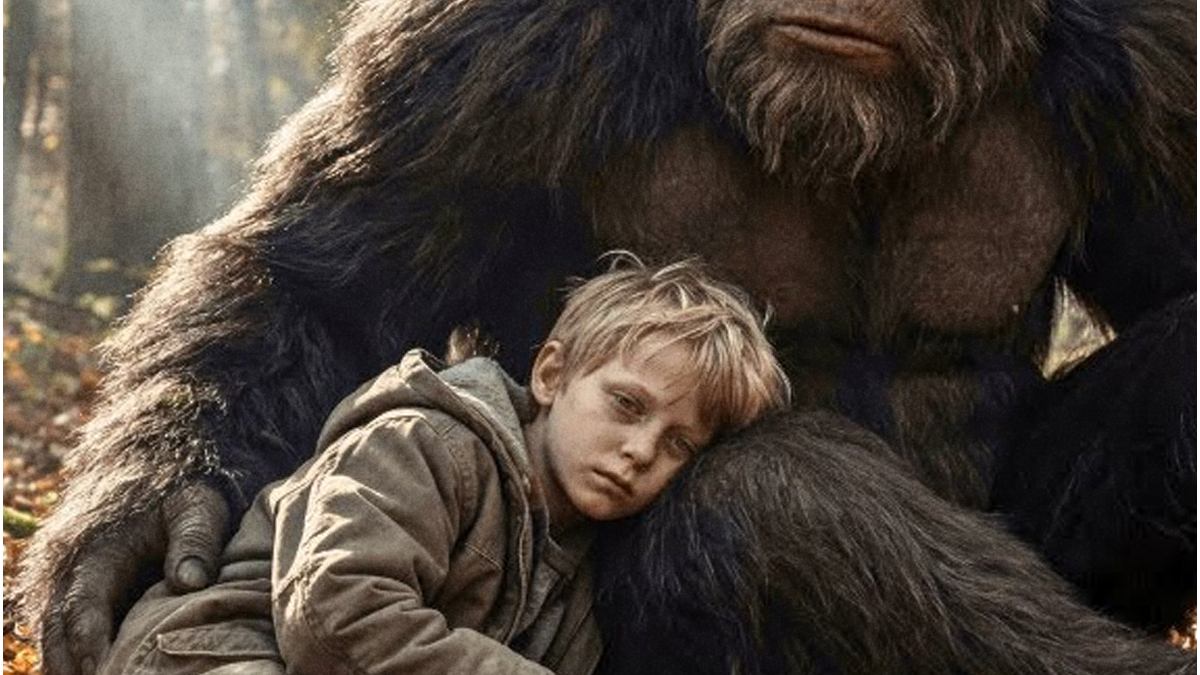
My Father Left Me in the Woods – A Bigfoot Became the Only Parent I Had
Have you ever been abandoned by your own father in the middle of the forest when you were only 10 years old.
I thought I was going to die until a creature appeared.
15 years ago, when I was just 10, my father left me in the heart of the Upper Peninsula woods in Michigan.
He was a logger with a storm inside.
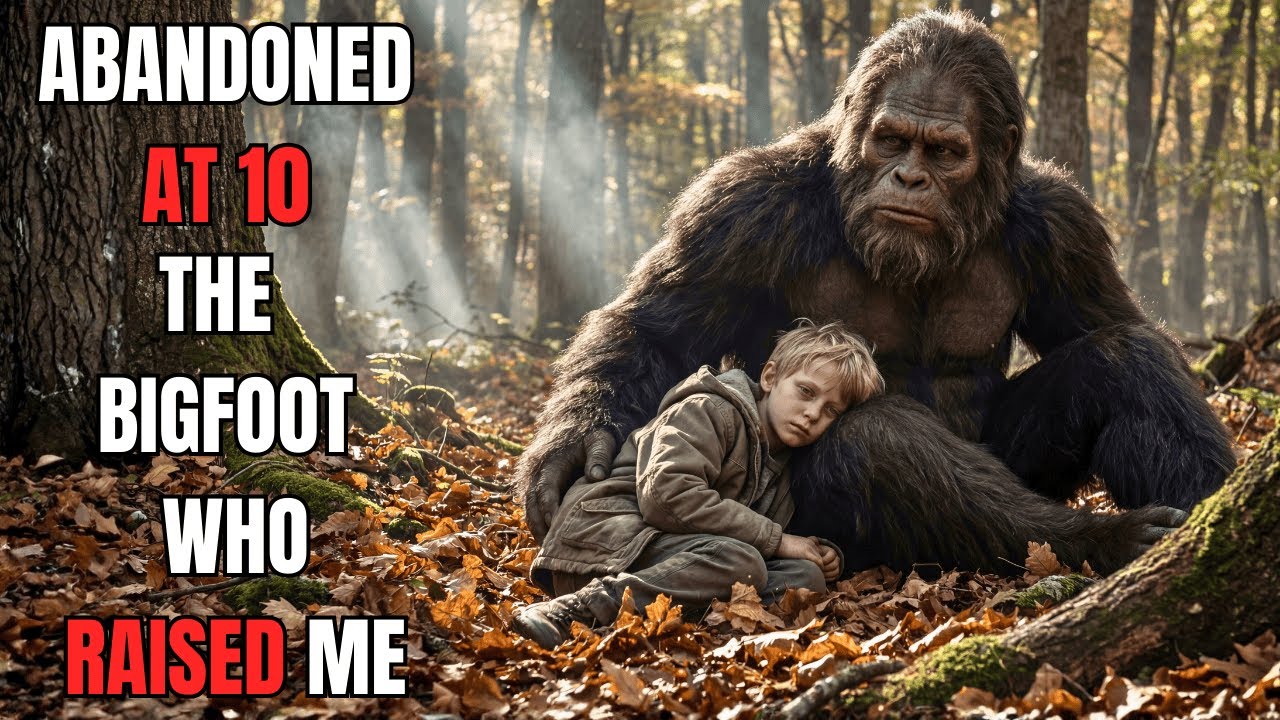
A storm that one day pushed me off the trail and drove off, leaving me to the cold, the dark, and the wild.
I thought I’d die there.
I drank from streams, ate berries, curled under trees as the autumn chill crept in.
And on that first night, when fear had swallowed all thought, I heard rhythmic knocks echoing through the forest.
Then I saw it.
A towering figure, bigger than any human I’d known, stepped into the clearing.
It didn’t charge.
It didn’t growl.
It simply sat across from me as if keeping watch.
That night I survived.
Over the next few days it he protected me.
I called him Marorrow.
He left food, showed me clean water, shielded me from the wind.
He never treated me like prey, but like something broken that needed fixing.
Eventually, he led me to a hidden valley where his family lived.
Selen, the quiet nurturer, and Bracken, the playful young one who mirrored my every move.
They never spoke, but they understood me better than any adult ever had.
When wildfires came, humans pushed deeper into the woods.
Marorrow didn’t fight back.
He protected, and I realized if I stayed, I’d endanger them.
So, I left.
Marorrow walked me to the edge.
When the search team found me, my father didn’t run to hug me, but Maro stepped out just enough for him to see who had done the fathering.
No one believed my story.
They called it fever dreams of a starving child.
But I know the truth.
Today, I’m a biologist.
Not to prove Bigfoot is real, but to protect the forests they call home.
Sometimes I return and on warm summer nights I still hear that slow familiar knock.
I knock back just a thank you and a promise to keep their secret because family isn’t always blood.
Sometimes it’s who finds you when you’re lost and brings you home without asking anything in return.
And now my dear viewer, I’d love to know where are you watching from today?
What name should I call you, friend?
How far do you think a story like this can travel?
If this touched something in you, tap like, hit subscribe, and let’s grow a community that doesn’t just believe in Bigfoot, but loves him back.
The forest in late autumn had a cruel way of holding its breath.
The trees stood bareboned and waiting, their limbs thin and silver against a graying sky that hinted at an early snow.
Wind moved through them, not as a song, but as a warning.
Dry, sharp, and cold.
Along a narrow back road deep in the Ozark Timberlands, a rustedout Chevy pickup creaked and rattled through a corridor of dying maples, dragging a flatbed of roughcut oak behind it.
The truck’s exhaust coughed like a sick dog.
Inside the cab, Gideon Shaw’s knuckles were white against the wheel.
The man barely blinked, jaw grinding, every muscle wound tight from a storm that hadn’t even happened yet.
10-year-old Ben sat beside him, back straight, hands clenched around the frayed straps of his backpack.
He didn’t speak.
He never did during these drives.
Words had edges, and his father could catch them midair like knives.
The heater was busted.
Cold air slipped through the floorboards.
Ben’s sneakers were soaked from earlier, and he kept curling his toes inside them to keep feeling in his feet.
He glanced up once toward his father’s face and then looked back down at his hands.
His breath fogged the inside of the window.
Then he spoke.
It wasn’t loud.
It wasn’t cruel.
It was just honest.
You said we were only going to cut near the ridge, but this ain’t the ridge.
Silence.
Then the truck stopped hard.
Gideon slammed the gear into park, stepped out, slammed the door behind him.
Ben sat frozen for a second before scrambling out after him.
The wind hit harder out here.
Leaves scattered like dry bones over the gravel.
The forest on either side looked endless, dark, layered, thick with shadows that didn’t need the sun to exist.
Gideon turned, face blotched red with rage he didn’t seem to understand himself.
You watch your damn mouth.
I I just Ben stammered, heart hammering now, voice already folding.
I wasn’t trying to.
You think you know where we go?
You think you get to mouth off now?
You think you’re a little man, huh?
Ben flinched, but he didn’t run.
That was new.
That was the thing that changed it all.
Maybe it was the cold.
Maybe it was the weight of weeks and weeks of quiet endurance.
Maybe it was that this time the boy didn’t cry.
Gideon’s jaw clenched.
Then he said, “Get out.”
“I’m already out.”
Ben whispered.
“No, I mean stay.
You’re so damn smart.
Find your own way home.”
Ben blinked.
“What?”
Gideon grabbed the boy’s backpack, ripped it from his shoulders, and threw it in the dirt.
Then he turned toward the truck.
“Dad!”
The engine roared to life.
“Dad, I’m sorry.”
Gideon didn’t look back.
The tail lights flared, blinked red in the cold.
The truck jerked forward down the path and kept going, chains rattling, timber groaning.
Ben ran after it for a few yards, but the mud sucked at his shoes and his chest burned.
The wood swallowed the sound of the engine in seconds.
He was alone completely.
He stood frozen, eyes wide, throat tight.
Wind moved through the trees again, colder now, less like warning, more like judgment.
Ben turned back toward the road and for the first time noticed something odd.
Just off the path by the base of a stump were bootprints.
Not his father’s, bigger, wider, a second set.
They’d been there a while.
The leaf scatter around them was undisturbed like someone had stood there quietly watching, waiting, not walking, just standing still.
Ben’s stomach turned.
He picked up his backpack, dirt smudging the canvas.
The zipper was half broken.
He looked down at the road again and thought about walking it.
But which way?
He’d lost all sense of direction the moment the truck disappeared.
He remembered the compass.
He unzipped the front pocket.
Nothing.
Not nothing.
Just broken plastic.
The casing shattered, the needle missing.
He looked at it for a second.
Then at the trees, his dad had broken it.
He hadn’t just left him.
He’d made sure he couldn’t find his way back.
Ben felt the ground tilt beneath him.
The boy started to walk.
He chose the clearer path.
Not because he trusted it, but because it was the only one that looked like it led somewhere.
Maybe it was instinct.
Maybe it was hope.
The trees grew closer together.
The light dimmed.
Every few steps he thought he heard something.
A branch cracking, a shuffle, a rustle.
But every time he stopped, it stopped too.
He followed the path for an hour, maybe more.
But the strangest thing was it circled.
He came back to the same rotted log twice.
He came back to the bootprints.
He came back to his own steps, still shallow in the frost.
The path wasn’t a path.
It was a loop.
The woods somehow wouldn’t let him out.
He sat down on the roots of a tree and didn’t cry.
That was a rule he taught himself.
If you don’t cry, they can’t say you’re weak.
His breath came in sharp little clouds.
His fingers stung.
His stomach hurt, not from hunger, but from the tight twist of fear curling up inside him.
He wrapped his arms around his knees and rocked a little back and forth, barely making a sound.
When the sun dipped low and the light turned iron gray, the woods got quiet again.
Not normal quiet, heavy quiet.
He looked up.
At first it was nothing but trees.
Then he saw it.
Not moving, not breathing, just there, a shape across the small clearing, massive, dark, as still as the rock surrounded, but not part of them.
It sat on its hunches, arms resting on knees, head tilted slightly, watching, Ben’s first instinct was to run, but his legs didn’t move.
The shape didn’t either.
It wasn’t hiding, but it wasn’t coming closer either.
Just sitting, not blinking, not making a sound.
Ben’s chest rose and fell too fast now.
He couldn’t breathe right.
His fingers dug into the bark beneath him.
The wind whispered through the branches again, and still the figure didn’t move.
No threat, no comfort, just presence.
A silence so complete it pressed in on his ears.
Ben didn’t scream, didn’t speak, didn’t breathe too loud.
He stared until his eyes burned, then closed them tight, pulled his jacket tighter around him and curled up against the base of the tree, and still it didn’t move, but it didn’t leave either.
The night came down hard, like a weight.
The temperature dropped with it.
Somewhere in the distance, an owl called once and stopped.
Ben stayed still, every bone in his body shaking now.
Not from fear, but from cold and confusion and something else he couldn’t name.
Something that felt like being watched over, even if he didn’t understand why.
At some point, he drifted.
Sleep came in broken fragments.
A branch cracked.
Not near, not far.
He didn’t open his eyes.
Didn’t want to break whatever spell was holding the darkness back.
In the quiet of his mind, a single thought floated to the surface.
It wasn’t a monster.
It hadn’t hurt him.
It hadn’t come closer, but it hadn’t left.
And that somehow meant more than anything.
In the present, Bennett Shaw sat in front of a microphone, fingers folded, voice low.
I was 10 years old.
My father left me in those woods like I was nothing.
And that night, something found me.
Something that should have frightened me to death, but it didn’t.
He paused.
It didn’t run, didn’t attack, didn’t even speak, but it stayed.
A beat.
That night, the forest made a choice, and it chose not to let me die.
He looked away, eyes missed it.
Not for the thing that had watched him, but for the boy who hadn’t cried, because he didn’t know if anyone would come, and for the shadow in the woods, who did.
The silence returned.
But it wasn’t empty now.
It was full of memory, of meaning, of a bond that had no name, only truth.
And the story was just beginning.
Ben woke shivering.
He didn’t know what time it was, only that the sky above the treetops had pald into a heavy sort of blue, like an old bruise.
Frost sllicked the bark beside him.
His backpack was damp with night moisture.
He curled tighter, his knees pulled into his chest, but the cold was already inside, in his bones, in his breath.
It felt like it had seeped through him while he slept.
His body achd from staying still.
His stomach was empty, but he didn’t feel hunger anymore, just a dull hollowess that stretched from his throat down into the pit of his belly.
He blinked slowly and remembered the shape from the night before.
His eyes searched the clearing.
Nothing.
Nothing moving anyway.
But something was different.
Just to his right, a little ways from the tree he’d leaned against all night, there was a pile of dead leaves mounded too neatly to be natural.
Something had dragged them there carefully, not kicked by wind, not dropped from above, piled like a blanket.
He hadn’t noticed it last night, but now he saw the curve of where the leaves had been set around him, like a small nest built while he slept.
And there, beside that, a thick root had been wedged into the fork of a sapling.
It wasn’t random.
It had been placed, bent delicately so it wouldn’t fall.
Like a gift, Ben’s eyes fixed on it, breathing light and slow now.
It was a sweet root, wild parsnip maybe, or bo, still damp with earth.
Next to it was something ambercoled, sticky and glowing faintly in the morning chill.
Sap honey.
He didn’t move toward it right away.
He looked past it into the woods.
Something was still there.
He couldn’t see it, but he knew that same weight in the air, the same silence, full instead of empty.
His fingers curled a little in the dirt.
Slowly, slowly, he stood.
His legs were weak and shaky.
His feet tingled from cold.
He took one step forward, then another.
The root and honey sat untouched in front of him.
The trees loomed taller now.
Still waiting, Ben reached out and took the root.
Not fast, not greedy.
He held it in both hands like something sacred.
His hands trembled.
He brought it to his mouth and bit.
It was earthy and bitter.
It made his jaw tighten, but he chewed anyway.
Then he dipped his finger into the honey.
Thick, raw.
It stuck to his skin like glue.
He sucked it clean.
It warmed his chest in a way food hadn’t in weeks.
A sound came from the trees.
Then not a growl, not a word, just a low vibration, like something deep in the throat, a presence too large for language.
Ben didn’t flinch.
He only turned toward it, not afraid now.
Not exactly, but bracing for whatever came next.
Nothing did.
He waited a while longer.
Then he saw it, half-shadowed behind the trunk of a white oak, taller than any man, broad, covered in thick fur the color of stone and smoke.
The creature didn’t move forward, didn’t step out.
It just shifted its weight barely, and stood like a wall that chose not to fall.
Ben didn’t run.
The creature didn’t come closer.
And in that strange stillness, something shifted between them.
Ben turned back toward the mound of leaves and sat again, this time, not curled up.
He sat cross-legged and watched the trees.
The cold wasn’t so sharp now.
The sky brightened.
Blue bled slowly into gray, into silver.
Hours passed that way, or maybe minutes.
Time didn’t tick in the woods the same way it did anywhere else.
Ben chewed slowly.
He watched the breath rise from his lips in puffs.
The leaves rustled gently overhead.
Later, when the light was higher and the frost had melted into dark rings on the ground, he stood and wandered a little further, not far, just a few dozen paces, and he saw the claw marks, deep, high, clean, scratched across the bark of three different trees that formed the outer edge of a clearing.
Tall marks higher than a bear could reach, too wide apart for claws spaced like a cougar’s.
Four distinct streaks on each tree.
Not random, not reckless, purposeful.
They weren’t warnings to him.
They were warnings to others.
A perimeter.
He looked down.
There were no prints.
The ground here was layered with old pine needles.
But the message was clear, even to a 10-year-old boy.
This place had been claimed.
He took a step back, then another.
His foot slipped slightly in the dirt, and he caught himself.
That’s when he realized just how tired he still was.
His legs still hadn’t fully warmed up, and his fingers were stiff.
But for the first time since being left behind, his chest wasn’t clamped in fear.
The buzzing panic that had clung to him like static was quieter now.
Muted, he turned again.
The creature was still there, sitting now, not moving, watching, always watching.
Not like a predator, like a sentry.
Ben sat down again.
This time he whispered something under his breath.
Just one sentence.
Please don’t hit me.
It wasn’t aimed at the woods.
Not really.
It was just air leaving a body too small to hold so many memories.
But still, no hand came.
No voice rose in anger.
No boot stomped near.
No sudden pain followed.
Only wind.
Only silence.
Only presence.
The boy closed his eyes, slept.
When he woke again, it was near dusk.
He was cold, but not dangerously.
His hunger had returned in small waves.
He stood and walked slowly, stretching limbs that didn’t want to move.
He glanced toward the spot where the creature had been.
Still there, still watching, something new lay near the root of the tree again.
This time a cluster of winter green berries and a hollowed stump filled shallow with clean rainwater.
Ben stared at them.
Then at the figure, this wasn’t chance.
This was care.
He ate again, drank, and when night came, he pulled the leaves around him without fear, and for the second night in a row.
He was not alone.
That night, the temperature dropped sharply.
The air thinned.
A frost warning hung heavy in the wind, and still the creature stayed.
Ben didn’t sleep deeply.
He shifted often, muscles twitching from cold.
Sometime after midnight, when the moon had risen above the bare limbs of the trees, he opened his eyes and saw the dark mass move slightly closer.
Still 10, maybe 12 ft away, still not touching, but positioned just up wind, back turned to the night, broad shoulders blocking the gusts.
Ben didn’t speak.
He watched.
The figure crouched low, arms wrapped loosely around its own knees, head dipped.
It didn’t sleep.
It simply kept watch.
At one point, Ben stirred and shifted his weight.
The leaves rustled.
He made a small sound and the creature turned its head slightly, checking.
Ben felt a strange warmth bloom in his chest.
Not safety, not exactly, but something that almost felt like it.
In the morning, he moved further.
He began to follow, not close, not bold, but a few steps behind.
The creature moved with purpose, occasionally stopping, making sure Ben had caught up, but never coaxing, never looking back in invitation.
It placed food now at angles that required Ben to leave the shelter of tree trunks.
He had to cross open space.
He had to take steps on his own.
One time he hesitated too long.
The creature simply picked up the food and vanished into the trees.
Ben learned he stepped out faster next time.
He walked where he was shown.
He drank where he was led.
He began to understand he was being taught slowly, deliberately, not coddled.
Trained.
One afternoon, full of thin sun and brittle air, he tried to leave.
It wasn’t rebellion.
It was hope.
He recognized a slope maybe or thought he saw the edge of a road.
His heart leapt and he ran.
Branches whipped past.
Wind stung his cheeks.
Then he stopped.
The ground just ahead of him dipped strangely.
He leaned forward.
Soft.
Too soft.
One more step and he would have sunk kneedeep into a bogggy mess of old water and slick mud.
His foot hovered midair.
Behind him, a low growl, not angry.
Warning, he turned.
The creature stood a few paces behind him, still not touching, still not chasing, but it had known.
And it had come.
Ben backed up slowly, then faster.
The creature turned and began walking again, not punishing, not scolding, just continuing.
Ben followed, not because he was told, because he understood now.
This forest had rules, and the one watching him was not a monster.
He was a guardian.
Later that night, wrapped in leaves and sleep heavy limbs, Ben whispered the name he hadn’t said out loud before.
Marorrow.
He didn’t know why.
It had just come, like a word already written inside him.
The creature didn’t react, but from the shadows, a low sound rumbled, like a breath that carried meaning without speech.
Ben didn’t need more.
He closed his eyes, and for the first time since being left, he let himself fall asleep without fear.
Somewhere behind the trees, the moon kept climbing, and the watch never ended.
The frost had begun to give way.
It wasn’t quite spring, not yet, but something in the air had shifted.
The ice no longer clung to the edges of leaves.
The wind carried more scent than bite.
And high above the trees, the sun filtered through in thin blades like golden thread through a needle, not warm enough to comfort, but warm enough to promise.
Ben noticed the change without needing to name it.
His body adjusted without thinking.
Limbs looser, breath deeper.
He didn’t wake with the same sharp curl of cold in his gut anymore.
His toes didn’t sting.
He could walk longer without tiring.
Hunger was still there, but it no longer hollowed him out.
He was learning slowly, quietly, like the forest was teaching him its grammar, one sound at a time.
He had a way of listening now, a way of standing still and catching the way water moved, how wind played different through pine than oak.
Marorrow never spoke, never gestured in ways a human would.
But Ben understood him all the same.
When he stopped, Ben stopped.
When he tilted his head, Ben followed the direction with his eyes.
When he pressed a hand into mud, Ben watched how deep.
When he led them toward bark peeled back to reveal grubs, Ben chewed without gagging.
But that morning, something shifted.
It started with a sound, a voice, far, thin, carried on wind.
It sounded like his name, not how Marorrow would have made it.
Not the deep clack of the throat or the rattle of tongue and breath.
This was a voice like his mother’s.
Light, almost musical, tired in the edges.
Benny.
He froze.
Every part of him froze.
It wasn’t possible.
He turned his head slowly.
Marorrow was watching him.
Standing completely still.
Head tilted, but not the usual way.
There was tension in his shape.
Not fear, not threat, just awareness, a kind of readiness, like something had broken a boundary.
Ben took a step toward the sound.
It came again, closer this time.
Benny, you out here, baby.
It was wrong, not just in logic.
His mother had been gone over a year now, taken by something her body couldn’t fight.
Cancer.
Ben didn’t know the word then.
He only remembered the look in her eyes at the end.
How bright they’d been, even when her voice faded.
But this voice, it sounded like her, exactly like her.
He took another step.
Marorrow moved just slightly, blocking the direction.
Ben’s chest tightened.
He wasn’t sure what hurt more, the voice, or the way Marorrow didn’t want him to follow it.
“Please,” Ben whispered.
The voice came again, this time a little cracked, like it was crying.
“Benny, come home.”
His knees went weak.
He stepped around Marorrow.
This time the creature didn’t move to stop him.
Not with body, but the sound he made.
It wasn’t loud, wasn’t forceful.
Just a single breath pushed deep through his chest.
A note that trembled the branches above.
It stopped Ben midstep.
Something about it held sorrow.
Ben looked down and saw the ground ahead.
Flat at first glance, but marked with nearly invisible lines, threads, wire.
He squinted.
It wasn’t part of the forest.
It was too clean, too precise, almost hidden.
If the light hadn’t shifted just right, he never would have seen it.
A snare.
He scanned wider.
More lines looped, staked, camouflaged.
Ben’s breath caught.
The voice came again, but this time it cracked all wrong.
Not like a human voice breaks, like a copy fraying at the edges.
He turned slowly and stepped back.
The forest felt different now.
Not natural, invasive.
He crouched and traced one of the wires back to a tree.
Tucked behind the bark was something else.
Cylindrical, smooth, like a wooden pipe, hollowed.
He picked it up and held it close.
There were teeth marks on the edge.
Not animal, human.
Ben stared at it, heart thuting.
It was a voice box, a fake.
Someone had built it to echo, to stretch sound, to create what didn’t exist.
His mother’s voice was never there, only a trick.
He dropped it.
Behind him, Marorrow stood still.
Ben looked up at him, and something in his chest collapsed.
Not from fear, from understanding.
This was the world he was running from.
And it had followed him even here.
The people who’d made this trap, they didn’t want to help anyone.
They were hunting.
Later, as the day dimmed, Ben followed Marorrow deeper into a part of the woods he hadn’t seen before.
The trees grew closer, the canopy thicker.
They passed through a narrow ridge and stepped into a basin lined with slick moss and scattered rocks.
Here the forest muffled itself.
Sounds didn’t travel.
Even bird calls felt far away.
Marorrow crouched near a low bush and dug at the earth with quiet, patient strength.
He unearthed a cluster of old wire.
Rusted, snapped, buried half a foot deep.
Ben knelt beside him.
There were more.
Marorrow moved from trap to trap with deliberate care, pulling each one from the earth, bending the pieces, laying them out in a line.
He didn’t crush them, didn’t destroy them, just disabled, then laid bare.
This wasn’t cleanup.
It was a message, the same kind Ben had begun to understand.
The way the forest spoke in shapes and patterns, a language of balance, a way to say, “This doesn’t belong.”
That night, Ben didn’t sleep right away.
He sat under a tree while the cold settled in.
He watched the shadows shift.
He thought about the voice about how it had almost worked.
It hadn’t called with fear.
It hadn’t threatened.
It had said his name like someone who loved him.
And that was the danger.
Marorrow didn’t sit close that night.
He stayed on the outer edge of the fireless clearing, just inside the trees, watching.
Ben understood that now why he never came closer than he needed.
Respect.
This was still Ben’s journey.
Still his choice.
But Marl would stay as long as Ben did.
He looked down at the hollowedout voice pipe again.
He’d brought it with him, not to use, just to hold, just to remember he broke it that night, snapped it clean across his knee, and buried it in the dirt.
He didn’t want to keep any part of that lie.
In the days that followed, the traps grew fewer, but the signs of people didn’t disappear.
Bootprints near water, cut branches, bark scratched too low to be natural, and sometimes, sometimes Ben thought he saw movement at the edges of his vision that wasn’t Marorrow, but those shadows never stepped forward.
One evening, Marorrow didn’t return to their spot at dusk.
Ben waited.
The light faded.
Still no sign.
He didn’t panic, but he didn’t rest either.
He stood and walked the familiar trail they’d followed each day.
Over the ridge, across the stream, past the ring of cedar.
The place they usually sat to share food was empty.
Then he saw it.
A leather strap half buried under leaves.
Not Marorrow’s.
Ben crouched, pulled it free.
Attached to it was a compass, old, broken, but familiar.
It was his, the one his father had taken from him and smashed.
His breath caught.
It had been left deliberately and not by Marorrow.
Somebody else had been here too close.
Two knowing.
He looked up and for the first time in days, a chill ran all the way down his spine.
Not the chill of the forest.
Not cold from wind or wet.
A different kind.
The kind that said, “You’re being watched.”
He didn’t run.
He walked back, deliberate, measured, and found Maro waiting just beyond the fallen log.
Ben didn’t ask where he’d been.
Didn’t have to.
The traps were gone from that part of the forest the next morning.
No more wires.
No more echoes.
But Ben felt the tension hadn’t passed.
Not really.
He sat beside Marorrow that night closer than usual.
Neither of them moved for a long time.
Then softly Ben whispered, “Thank you.”
The forest didn’t answer.
But somewhere far off in the distance, an owl called once and went silent.
And the silence that followed was not empty.
It was full of meaning, of trust, of the understanding that danger wore many voices.
But the truth, the truth never needed to speak.
It only needed to stay, and tomorrow had stayed.
The days had grown quieter, not because there was less sound, but because Ben had learned how to listen differently.
What once felt like noise, branches creaking, birds calling, frogs pulsing near water, had shape now, meaning.
Even the wind had moods, and he was starting to understand them.
Marorrow no longer led him step by step.
The giant moved ahead, sometimes out of sight, sometimes just a shadow behind a curtain of trees.
But Ben never felt alone.
There were days when they didn’t move far, others when they wandered in long curving paths that made no sense until the sun shifted and the forest rearranged itself around them.
It was on one of those days that Marorrow stopped near a wide outcrop of stone where the ground dipped low and the moss thickened like a rug.
He looked back at Ben, then moved his hand down to touch the earth.
Not a gesture for attention, a signal.
There was something underneath.
Ben crouched beside him.
Maro pressed his weight into the ground.
It gave slightly, just enough.
A trap door of mud, if there were such a thing.
Not dug, not built.
Formed by years of footsteps that followed the same narrow groove, where roots had grown in ways that didn’t match the wild.
Marorrow rose again and started forward.
Ben followed without asking.
His feet moved with care now, not fear.
He ducked under branches, crossed small dips of lychens slick stone, stepped exactly where Marorrow had, even when he couldn’t see the reason.
At one point, they passed through a thicket so dense that sunlight disappeared entirely, replaced by a thick blue hush.
Just when Ben thought they’d hit a wall of nothing, Marorrow slipped between two trees that grew too close together and vanished.
Ben stepped through after him, and the world changed.
The light broke first, falling gently through high boughs into a pocket of earth that didn’t belong to any map.
It was a hollow in the hills, walled by stone and fallen timber, the air still and rich with damp life.
Ferns grew waist high.
A small stream curled along the far edge, glinting like a piece of glass laid into the dirt.
The sound of the world outside dimmed to a hush.
Ben stood frozen.
This wasn’t just a clearing.
This was home.
Not his, theirs.
Marorrow didn’t explain.
He didn’t need to.
He stepped into the space with the ease of someone returning.
Not arriving.
His shoulders loosened.
His steps slowed.
He glanced once at Ben.
Not a warning, not a challenge, an invitation, Ben stepped in.
At first, he didn’t see anyone else.
Only the curve of the land and the perfect stillness that came with it.
Then something shifted in the shadows near a ring of old trees.
A shape smaller than Marorrow, broad but softer.
Watching from a distance, Ben stopped.
The figure stepped forward, not rushing, not looming, moving like mist.
She was taller than any woman he’d seen, but carried none of the weight Marorrow did.
Her fur was a deep gray, brushed with streaks of white and brown, like bark under rain.
Her eyes were darker than glass, but sharp, measuring, not just observing.
She stopped a few feet from him.
Ben didn’t breathe.
She tilted her head slightly.
He felt like he was being read the moment stretched.
Then she crouched slowly and reached behind her, pulling something from a fold in the earth.
It was a root, clean, peeled.
She extended it halfway and placed it on a flat stone between them.
Not close enough to reach in one step, not far enough to miss the message.
Ben stepped forward, his stomach clenched as he bent down.
He took the route.
She didn’t move.
He backed up a step, then another.
He sat cross-legged and looked at it.
He hadn’t noticed the second piece until now.
A strip of dried mushroom and something bright red.
Berries or bark?
Simple.
Precise.
He unwrapped the food slowly.
A smaller movement caught the corner of his eye.
Not her.
Someone else, the child.
It peaked from behind a thick old stump, crouched so low its long arms barely fit under its weight.
It didn’t step out right away.
It tilted its head, mimicking the way Ben was sitting.
Ben stilled.
The child crept forward, wide eyes flickering between him and the female.
When it got close enough to see what was in Ben’s hands, it crouched again and let out a soft, chuffing breath.
Ben didn’t speak.
He didn’t know what to say and it didn’t matter.
The child mimicked his every movement.
When Ben lifted the root to his mouth, the child pandemd eating.
When Ben scratched the back of his head, the child did the same, giggling so faintly it sounded like wind through grass.
Ben smiled without meaning to.
The female, still crouched nearby, blinked slowly.
Approval maybe, or observation.
Ben held out the smaller strip of food toward the child.
A test.
The child hesitated, then reached forward and took it.
Their fingers brushed, and Ben felt how warm and real the small hand was.
Then the child darted back behind the stump.
Ben let the silence settle again.
The female stepped forward finally, not fast, just enough to close the space.
She reached out, not toward him, but toward his hair.
Her fingers moved through the knots gently, tugging loose a few tangles.
He didn’t flinch, didn’t speak.
He just closed his eyes for a moment and let it happen.
And for a boy who hadn’t been touched gently in a long time, that moment became something more than comfort.
It became memory.
That night, they let him sleep near the fire pit, more like a warm circle of stones with smoke instead of flame.
The smell was sweet, like moss and sap and something ancient.
He curled in his blanket of leaves and watched the child bracken.
He’d later come to think of him, bounce between rocks and roots, practicing how to mimic the low calls Marorrow made from his chest.
Each one sounded wrong, too high, too soft, but the effort was full of joy.
The female Sen, though no one ever said her name, watched from the edge, arms crossed, gaze quiet and vast.
Later, after the stars came out and the wind changed direction, something stirred beyond the ridge.
Not loud, not near.
A sound that didn’t belong, a sharp, short rhythm, not animal, not forest.
Ben sat up.
Marorrow stood in an instant.
He didn’t growl.
Didn’t move toward it, just listened.
So, Len turned, her body tense.
The sound came again.
Ben felt it now.
Three short beats, hollow, deliberate.
Not meant for him, meant for them.
Warning.
Marorrow moved toward the edge of the thicket.
Sen didn’t follow.
She turned back toward Bracken, her posture suddenly protective.
Ben realized then this place wasn’t as hidden as it looked, and someone out there knew the border lines.
The message didn’t repeat.
Just once enough.
Marorrow didn’t return until the stars had shifted.
When he did, he said nothing.
He didn’t need to.
But that night, Sen moved closer to where Ben lay, settling herself between him and the wind.
Not sheltering, shielding.
Ben didn’t sleep for a long time.
When he finally did, he dreamed not of his father, not of home, not of the truck or the road or the broken compass.
He dreamed of ferns taller than his shoulders, of water cold and clean, of a valley that didn’t exist on any map, and of a name whispered in a voice no human had ever spoken.
Not a command, not a question, just welcome.
And somewhere in that silence, something else stirred, far off, waiting, but not yet near.
By the time spring arrived in the valley, it didn’t tiptoe.
It bled in through the roots.
It broke ice in sudden veins across the stream.
It drumed through the trees at night like fingers tapping windows.
And when Ben woke one morning with water soaking through his makeshift bedding, he knew it wasn’t the snow melting politely.
It was the flood season coming fast, bold and unapologetic.
The forest groaned with it.
The thickets burst.
The ferns bowed low under sudden weight.
Even the air smelled different, muddy and alive, like something had stirred beneath the surface and risen just enough to whisper, “I’m still here.”
Ben had mudc cake to his ankles by noon.
His sleeves were soaked past the elbows.
Bracken splashed around him in chaotic joy, mimicking the frogs with short, raspy trills, and chasing his own reflection in puddles that shimmerred like cut glass.
Sen stayed near the treeine, her gaze as sharp as ever, though she didn’t step in.
She never interrupted when it was play.
Not unless it became risk.
Maro had taken to watching the ridgeel lines more than usual.
He hadn’t said why.
He didn’t need to.
His stillness had changed.
It was tighter now, less like rest and more like bracing.
Ben recognized it.
The same way a dog’s body hums low before a storm.
But for now, the valley still held, and Ben still learned.
He could tell now which bird calls marked dawn and which were late warnings.
He could distinguish between the wind that bent for rain and the wind that carried strangers.
He’d learned to walk without marking.
To crouch in shallow water without making ripples, to feel for fish not with his eyes, but with the sensitivity in the balls of his feet, slow and precise until one brushed against him, and then to strike fast, clean, like he’d been born to it.
Bracken clapped the first time Ben caught a small fish bare-handed.
It was barely longer than his palm, but it glistened like silver and flopped with stubborn life.
Ben didn’t kill it.
He let it go.
Bracken looked puzzled, then copied the gesture.
Later, Sen passed Ben a larger one.
Already caught, already still, a quiet offering.
He took it with a nod and knew what it meant.
Some things you earned.
Some things were given.
They moved camp slightly when the water rose too high.
Not far, just enough to stay dry.
And on that damp morning, when the frogs sang louder than the birds, Ben heard something he hadn’t heard in weeks.
A voice, but not one made of lies and hollow tubes.
A human voice.
Hi, shaky.
Young.
It didn’t say his name.
It didn’t call for help.
It cried out with the kind of sound only made by someone who’d already tried to be brave for too long.
And finally ran out of courage.
Ben stopped midstep.
Marorrow did, too.
Sen was already turning toward the sound.
Ben’s heart jumped into motion before his legs did.
He didn’t wait.
He ran.
The forest blurred.
His feet splashed through cold runoff and squaltched in places that would have swallowed him weeks ago.
But he knew this terrain now.
He moved like someone who belonged to it.
The girl couldn’t have been more than 12.
She was clinging to the side of a half-colapsed ravine.
Mud smeared across her cheeks and scratches running along one bare arm.
Her hair stuck to her forehead.
Her eyes were wide with that same kind of frightened heat Ben had once felt in his chest like a stone.
Her voice broke again.
“Hello, is someone there?”
She didn’t see him yet.
Ben stepped closer, but stayed behind the trees.
Close enough to watch, to weigh.
She wasn’t injured badly, just lost, cold, hungry.
Her backpack hung crooked from one shoulder, soaked and sagging.
Her socks were visible above her sneakers, both caked in wet dirt.
She tried to climb the edge again and slid halfway down.
Ben could have gone to her, but something inside him paused, not because he didn’t want to help, because he knew what was at stake if she saw too much.
He backed away, found Marorrow, and waited.
The plan wasn’t spoken.
It didn’t have to be.
Marorrow moved past him without a glance, taking a long curving route around the ridge.
Always staying just outside her vision.
Ben followed from a separate path, heart thutting not from fear, but from knowing the weight of what they were about to do.
It took nearly 2 hours to guide her out.
They let her wander at first, never too far, never too deep.
Then Marorrow cracked a branch on her right, making her pivot left.
So Len moved the brush subtly to reveal a clearer incline.
Ben placed a smooth stone at the fork she missed the first time, gleaming in the damp light.
She noticed it.
She followed.
She didn’t even know she was being led.
At one point, she stopped, looked around, whispered, “Thank you.”
To no one.
Ben heard it.
She reached a slope with faint trail marks, the kind only animals or rangers would recognize.
She climbed.
When she disappeared over the ridge, Ben turned away, but he saw her stop.
Saw her pull something from her backpack.
A strip of ribbon, pink, frayed, probably once tied to a ponytail or jacket zipper.
She bent and looped it around the branch of a low cedar tree, tied it gently, stepped back, and left it there.
Then she walked on.
When Ben returned to the valley, Bracken was waiting.
Sen didn’t speak, but when Ben sat, Bracken reached over and tugged a thread from Ben’s shirt, then tied it around a twig, mimicking the ribbon’s loop.
Ben looked at it.
Understood.
She wasn’t the first.
She wouldn’t be the last.
Some were saved.
Some were spared, but not all were meant to stay.
That night, the valley was quiet again.
The frogs softened.
The owls didn’t call.
Ben lay back against the moss and listened to the stream hum its way past stone and something opened in him.
Not like a wound, like a window.
He didn’t know her name.
But he’d remember her ribbon.
He’d remember the way she looked toward the trees and whispered thanks like she knew.
Not everything, but enough.
Far beyond the valley, things had started to move.
In the town where Ben had once lived, whispers had thickened into questions.
The sheriff had fielded three anonymous tips about an old man seen weeping in the woods.
A diner waitress, Lorna Kels, had begun asking questions more directly.
She’d known Ben, knew his mother, never trusted Gideon’s story about the boy running away.
She talked to Hank Baird, the ranger who patrolled the deep edges of the UA.
And Hank, tired of politics, tired of lies, began searching harder.
They hadn’t found the trail yet, but they would.
And Wade Cutter, man of reputation, man of greed, was still out there, too.
He’d noticed things disappearing.
Bait removed, traps mangled.
He knew someone or something was interfering, and he was narrowing the range.
Ben didn’t know that yet, but the wind was starting to change again.
One night, as the fog curled low and the tree frog stopped their song, Marorrow lifted his head, listened.
Ben felt it, too.
A pressure in the dark, a pulse from beyond the trees.
But no sound followed, only a long, still silence.
And in that silence, the understanding settled between them.
This wasn’t over.
It was only pausing for breath.
By early summer, the wind stopped carrying warnings.
It carried heat.
It dragged dry breath through the trees and left the moss brittle.
The ferns wilted at their edges.
Streams shrank down to muddy lines that barely moved, and the animals began shifting at dawn and dusk instead of midday.
Even Bracken grew quieter.
His usual bouncing pace slowed into careful watching.
Marorrow had taken to standing long hours near the stone ridge, unmoving, listening to a silence that thickened too fast.
Too deep.
Sen pressed her palm into the earth more often now, not searching, feeling.
Her brow furrowed in ways Ben didn’t fully understand, but the valley itself felt tight, as if holding in a breath it no longer trusted to release.
Then came the smoke.
It wasn’t much at first, a faint string, gray and tired, curling just above the pines near the south edge of the ridge.
Ben saw it as he was washing a gourd at the stream.
It didn’t rise high, just hovered, hesitant.
But wrong, he stood up slow.
Marorrow had already moved.
No words, no gestures, just gone from the edge of one tree and stepping through another, deeper into the boundary.
Ben followed.
So Len turned toward Bracken, brushed her hand gently against his shoulder, and motioned him back.
Bracken didn’t argue.
He crouched near a fallen log and stayed, eyes wide, breath short.
They walked fast, not panicked, focused.
When they reached the first sign, an old birch snapped unnaturally at the base.
Marorrow stopped.
His massive hand touched the scorched bark.
Not blackened, just kissed with heat.
Still fresh.
Ben smelled it too now.
Wood burned low intentionally.
It wasn’t wildfire.
Not yet.
It was bait.
They found the remains of a small fire ring not far beyond.
Tucked into a bend where trees open to sky.
It wasn’t abandoned.
It had been left.
Arranged to smolder without leaping.
That was the trap.
A lure fire that lingered.
Not wild.
Controlled.
Too controlled.
Wade Cutter knew what he was doing.
The forest couldn’t tolerate fire.
Not here.
Not in June.
The leaves crackled underfoot.
The bark was thirsty.
The ground hadn’t drunk real rain in over a month.
Ben watched Marorrow rake his hand across the dirt, sweeping out the coals.
He didn’t crush them, just buried them cold and clean.
Not one word spoken.
But Ben understood.
This wasn’t the first fire, just the first close enough.
He didn’t sleep that night.
The valley didn’t either.
The frogs were silent.
Even the wind forgot how to move.
And when morning came, the light was tinted with a shade of brown that didn’t belong in the sky.
The smoke had grown.
Gideon Shaw had spent most of his life pretending the world didn’t notice the lies he told himself.
He wasn’t a cruel man, he said.
Just a hard one, a provider, a realist.
He had never struck Ben out of hate.
He said.
Just frustration, just discipline, just the way men are made.
But deep in his bones, Gideon knew something had fractured the day he left that boy on the trail.
And for the last month, something hadn’t let him sleep.
Not the law, not the town, a sound, a thought, a rhythm he couldn’t shake.
Three knocks like wood on wood.
Sometimes far, sometimes near, like a memory knocking back.
So when Wade Cutter approached him at the edge of town, whispering about signs, big ones, strange ones, footprints where no prince should be, Gideon listened.
When Wade said, “If your boy’s still alive, he’s with them.”
Gideon didn’t argue.
He just stared.
Wade twisted the knife gently.
“They took him, didn’t they?”
Gideon didn’t correct him.
Couldn’t.
And when Wade offered to take him along, show him where the signs led.
Gideon nodded.
Because truth was a weight he wasn’t strong enough to carry alone.
By the time their boots cracked through the edges of the lower valley, the smoke was already rising too fast to be ordinary.
WDE smiled.
Ben saw them from the ridge above.
Not clearly, not faces, just outlines.
Two men, one tall and sure, the other slower, head down.
But he knew the walk, the slope of the shoulders, the uneven gate of someone carrying more shame than gear.
Gideon.
Ben didn’t move.
Marorrow stood beside him.
He said nothing, just watched, waiting for the boy’s choice.
Ben turned away, not out of fear, out of understanding.
If Gideon had come to save him, he would have done it before.
If he was here now, it wasn’t for Ben’s sake.
It was because something had rattled loose in him.
And sometimes too little too late isn’t better than nothing.
Wade had begun lighting small burns at intervals.
Not wildfire.
Not yet.
Just smoke bombs.
Enough to flush movement.
Enough to agitate.
Each one placed near game trails.
Each one timed.
And then the wind turned sharp, unpredictable, and the fire didn’t obey anymore.
It leapt not high, not fast, but wrong.
It bit into the edges of dry pine and licked across moss like skin.
The smoke rose hard, thick, angry.
Gideon turned fast, coughed, stumbled.
“What the hell?”
Wade cursed under his breath and ran toward the next trail, trying to reach the line before the flames did.
But the forest had changed.
It wasn’t quiet anymore.
Maro moved fast through the undergrowth.
Ben ran beside him.
They didn’t aim for the men.
They aimed for the edge, for the valley, for the family.
Sen had already gathered what they needed.
Bracken clung to her side, eyes burning from smoke, but feet steady.
Marorrow didn’t hesitate.
He bent low, pressed both hands to the base of a wide cedar, then pushed with a force that seemed to come from something deeper than muscle.
The tree groaned, splintered, tilted, then fell right across the slope.
It landed with a shutter, splitting the path the fire had begun to follow.
A barricade not just of wood, but memory, age, warning.
Wade stopped cold when he saw it.
He hadn’t seen Marorrow until then.
Not clearly, not at full height.
The man froze, then took one step back.
Marorrow didn’t chase.
He turned away, walked back into the smoke.
Ben followed.
Gideon stood further down, bent over, coughing, one hand against a tree for balance.
He looked up just in time to see his son’s outline vanish into the haze.
He didn’t call out.
He couldn’t.
His voice had no weight anymore.
By sundown, the fire was contained.
The wind had shifted again, carrying the worst of it eastward.
Rangers found the old fire pits, found the false trail markers.
They didn’t find Wade.
Not that night.
But someone would.
In time, the valley had emptied.
Not forever.
Just long enough, the moss would grow back.
The ash would fade.
But they couldn’t stay.
Not now.
Ben watched the sun drop behind the ridge as they crossed the river upstream.
Marorrow carrying Bracken.
Selen leading through the dark water.
He turned once, looked back.
The trees had faces if you stared long enough.
Some looked like home, some didn’t.
He stepped into the water and didn’t look back again.
That night, they camped further than they’d ever gone.
A place without roots he recognized, without familiar stones.
The sky looked different.
The stars too sharp.
Ben didn’t sleep.
He lay beside Bracken, who curled close, exhausted, and listened to the world finally exhale.
And somewhere inside him, something else began to shift.
He wasn’t running anymore.
He was choosing, and that would change everything.
The heat settled in thick as wool.
By the time the sun began rising before 5 and didn’t quit until past 8, everything in the forest felt baked into stillness.
Dust clung to the underbellies of leaves.
The air shimmerred at the edges of boulders, and the birds, once loud and full of chatter, fell into long, uneasy silences that stretched from morning into early dusk.
It was the kind of season where you didn’t need to be told to move slow.
The world told you with its breath alone.
Ben knew it was time.
He hadn’t said it aloud.
Not tomorrow, not to Sen.
Not even to himself.
But the rhythm had changed.
And when the forest changed, the ones who loved it listened.
He stood by the ridge that overlooked what used to be their valley.
It was recovering, yes, but not ready.
The fire hadn’t touched everything, but it had kissed the perimeter hard enough to leave the taste of warning behind.
Trees blackened at their feet.
Underbrush thinned and scarred.
New shoots were pushing up through ash, but slow, cautious, like the land itself had learned something about danger.
Ben stared out over the bend where the stream used to gurgle more confidently.
It was thinner now, clear, but shallow.
He could see fish still, tiny ones, slipping between the stones like streaks of silver thought.
He crouched, dipped his hand in, and let the water pass through his fingers.
Maro watched from a short distance behind him, arms at his sides, still as stone.
Ben spoke without turning.
“If I stay, they’ll come.”
The trees didn’t answer.
But the quiet shifted.
Marorrow’s head tilted just enough for Ben to know he’d been heard.
“They’ll keep looking,” Ben said.
“Wade, others.
As long as I’m here, they’ll come.”
He stood, still didn’t turn.
His voice dropped.
“And I don’t want them to find you.”
Marorrow took one step closer.
It was slow, heavy, but not resisting, just present like always.
Ben finally turned to face him.
His throat burned, but his eyes stayed dry.
I want to go, he said.
The words didn’t sound like betrayal.
They sounded like protection, and Marorrow understood.
Because guardians don’t always hold on.
Sometimes they walk you to the edge of where they can go, and then they stop.
That afternoon, Sen prepared a bundle for him.
Nothing large, just enough dried roots.
A strip of honey stone wrapped in bark.
A small bone charm carved into the shape of a fish.
Bracken’s gift.
Bracken didn’t speak, but he pressed it into Ben’s hand and hugged him too tight around the ribs.
When he let go, he ran off, arms flailing, hiding the shaking in his shoulders the only way he knew how.
By pretending it was play, Ben didn’t say goodbye.
Not out loud.
He just stood there and held the charm in his palm until the warmth from Bracken’s hand was gone.
The next morning, Marorrow led let him out.
They traveled in silence.
Not because there was nothing to say, but because nothing needed saying.
The path was deliberate, twisting, untraceable.
Marorrow never stepped where Ben stepped.
He moved ahead and erased signs as they went.
It was a path only ghosts would leave.
Two days.
They didn’t speak once, but they shared every sound, every glance, every breath.
At night, they didn’t build a shelter, just lay near enough for the heat of their bodies to cross the space between them, not touching, not distant.
On the second night, a light rain began to fall near dawn.
Ben woke and found Marorrow standing near the edge of a rise, watching the sky without blinking.
His body was so still, he almost looked like part of the treeine.
Ben walked over barefoot, squinting through the drizzle.
Below them stretched a long cut of old ranger trail.
Ben recognized the slope.
The way it dipped near the rock with a split center.
He’d seen it once before, just before everything broke.
This was the outer edge of search territory.
People would be close.
Ben’s feet achd.
Not from walking, from what came next.
They stood like that for a long while.
Then Marorrow turned toward him and did something he hadn’t done once in all the weeks, months, seasons they’d known each other.
He placed his hand on Ben’s shoulder gently, only for a moment, then let go.
Ben’s chest heaved, but no sound came out.
He looked up at the giant figure beside him, and for one impossible second wanted to say everything, but he didn’t because this part had no words.
So he just nodded, stepped forward, and didn’t look back.
Not yet.
He made it down the trail before the sun fully broke.
The air was warmer here.
He could smell people again.
Faint traces of soap and oil and burned coffee.
Then he heard voices calling, not close, but familiar.
He crouched in the bramble, heart pounding, not from fear, from knowing.
He moved slowly, not to be seen too soon, not to be swallowed by the wrong arMs. Then a dog barked.
A sharp low shout followed and then a voice cracked like thunder.
Oh my god.
Hey.
Feet running, hands scrambling through brush.
Ben stood up, straightened his spine.
He didn’t raise his arMs. He didn’t cry.
He just let them see him.
And that was enough.
The ranger who reached him first dropped to his knees.
Radio crackled.
Name shouted.
Ben heard his own like it belonged to someone else.
He didn’t speak.
But when they placed the emergency blanket over his shoulders, he let them.
He didn’t flinch.
Didn’t pull away.
Only when a second figure came into view.
Broad, familiar, slower.
Did Ben’s eyes shift.
Gideon, older, smaller.
His face was sunken.
Eyes ringed dark.
He stopped 10 feet away, didn’t speak, didn’t step forward.
His mouth opened, then closed.
Ben stared at him and for one surreal second saw the version of his father that existed before everything shattered.
Not angry, not proud, just ashamed and trying.
Gideon looked down.
Didn’t ask for forgiveness.
Didn’t demand acknowledgement.
He stepped to the side and let the rangers wrap Ben’s arm.
Let them guide him.
Said nothing.
It was the first time in Ben’s life his father hadn’t tried to control the moment.
And it told Ben more than any apology ever could.
He didn’t hate him, but he didn’t need him either.
He looked back up the ridge one last time.
No shadow, no sound, but in the space between trees, he could feel it.
A presence that had watched him through hunger, through cold, through fire and silence and change.
He didn’t expect Marorrow to be there, but he felt him anyway, and that was enough.
He turned, took one step forward, then another, and walked into the world that had forgotten him.
Not as a boy who’d been lost, but as one who had been found by something that never asked for anything in return, except that he lived.
He never told the full story.
Not in one sitting, not to one person, not even to himself.
The truth, as Bennett Shaw understood it now, wasn’t something you handed out all at once.
It had to live in the bones a while.
Had to settle, soften, shape you, then sometimes, only sometimes.
You could let pieces of it breathe.
15 years had passed.
He didn’t like counting them, but he knew everyone.
They’d grown inside him like rings in a tree, tight and quiet, marked by storms and stillness, both.
He’d walked through adolescence with a thousand invisible fingerprints pressed into his skin.
Learned to speak to animals softer than people.
Slept with his back to walls for years.
Carried weight in his chest he couldn’t name.
And still he lived.
He learned.
He healed.
People had their theories, of course.
The boy who vanished and returned.
Thin, quiet, different.
Some called it a miracle.
Some said trauma.
Some blamed the father and let the law handle what it could.
But no one ever found the truth because he didn’t want them to.
The doctors called it forest induced delirium, starvation, hallucinations, a fluke survival story wrapped in fragments of memory that didn’t hold up to logic.
The people who rescued him smiled gently and said he was lucky.
But luck had nothing to do with it.
There had been no luck, only choice, only watching, only something ancient and knowing, kneeling beside a boy once and deciding in that sacred stillness not to leave him alone.
Lorna Kels was the only one who never questioned him.
She let him wash dishes in the back of the diner, passed him soup without asking if he was hungry, and every now and then would say something like, “Not all roots grow straight, sugar.
Some got to twist through stone to find sun.”
He stayed with her until he could finish school.
She never asked where he’d been.
But one night when he broke a glass in the kitchen and dropped to the floor in tears without knowing why, she knelt beside him and whispered, “You didn’t deserve whatever left that kind of ache in you.
But you lived.
That’s enough.”
And somehow it was.
Gideon left town quietly.
No funeral, no letter, no attempt at redemption.
Just gone.
And Ben didn’t look for him.
He didn’t need to.
The apology had already been spoken in silence in the way Gideon had stood still that day, watching his son walk away with no words to offer and no power to pull him back.
Forgiveness didn’t need to feel like peace.
Sometimes it just felt like the first full breath you’d taken in years.
Bennett went on to study animal biology, then ecology, then conservation.
People asked him why.
He said he loved the woods.
That part was true, but it wasn’t just love.
It was duty.
It was keeping balance with something most of the world had forgotten how to see.
He didn’t mention the valley.
Didn’t mention Bracken’s wide, curious eyes, or the way Senni could press her palm to the dirt until when the river would rise.
Didn’t speak of the towering figure who watched the treeine like a priest might watch stained glass, knowing it was both fragile and holy.
He didn’t speak of the one who taught him to walk again after being broken.
But he never forgot.
That part stayed.
All of it stayed.
In time, the work gave him purpose.
He wasn’t chasing myth.
He wasn’t looking to prove anything.
He was protecting land, water, the thin line between what belongs to people and what doesn’t.
When a logging company set their eyes on an untouched stretch of the Watcha Hills, Bennett was the first to object.
He didn’t protest with signs.
He showed up with data, species charts, ecological impact maps, satellite overlays of migratory patterns that would shatter if the trees came down.
He spoke to town hall meetings in a voice so calm and precise they leaned in without knowing it.
And when he said, “Some things cannot be replaced,” they listened.
Not because he shouted, because something in him carried the weight of having lost something irreplaceable once.
And the town didn’t know what that was, but they felt it.
They felt it in the way he looked at the map like a body, not a business.
Felt it in the way he paused before naming a stretch of forest, like it had more meaning than language could hold.
They voted down the project.
The hills stayed, and still he never claimed victory, only exhaled.
One winter, while clearing old field notes and letters, he found an envelope at the bottom of a drawer.
It had no return address, postmarked from two towns over.
Inside was a check, small, but more than symbolic.
The name on the bank account didn’t exist in public records.
But Bennett recognized the handwriting.
It had helped pay his first semester of college.
The guilt had finally done something quiet.
He didn’t cash it, but he kept it.
Folded once, tucked inside a copy of The Hidden Life of Trees.
Years passed.
The hills remained.
The land healed.
So did he.
One summer, after a long session of fieldwork and grant writing, Bennett took a week alone.
He didn’t plan it like a return.
Didn’t map the way back.
He just followed the old itch in his chest.
A feeling, a pull.
He parked at a ranger gate, no longer used, left his truck, and walked.
Not fast, not slow, just steady.
He didn’t expect to find the exact trail.
He didn’t need to.
The forest remembered even when people didn’t.
It led him through overgrown switchbacks, through valleys that had changed shape but still smelled the same.
He stepped carefully over deadfall and crossed a stream he thought he’d never see again.
And just before dusk he heard it.
Not a call, not a cry, a rhythm.
Three knocks, wood on wood, spaced, measured, not made by storm or deer or wind.
He didn’t respond.
Not yet.
They walked another mile, and at the edge of a thicket, he paused.
There in the mud were two footprints, one large, one smaller, side by side, pressed deep, but fresh.
Bennett crouched, ran his fingers over the edges.
The prints weren’t just signs.
They were greetings.
He looked around, saw nothing, no movement, but the air held that same weight it had all those years ago, the kind of stillness that wasn’t empty.
He stood up, took a breath, then raised his hand to the nearest pine and knocked once, then again, then again, a pause.
Then from somewhere deeper in the woods, a low reply, not an echo, a response.
He didn’t follow it, didn’t chase it.
He just stood there and let the quiet wrap around him like a coat, then reached into his pocket and pulled out the small fish charm.
Brackens.
He’d carried it all these years.
Still smooth, still warm.
He tied it to a low branch and left it there.
A thank you, a promise.
Then he turned back toward the trail.
Not with grief, not with longing, with peace.
The kind that doesn’t erase the past, but lets you live with it.
And as he walked away, the wind shifted through the trees, soft and strange.
And for just a moment, sounded almost like a breath or a word or the rustle of someone walking beside him.
Unseen but near.
He didn’t stop.
Didn’t need to.
He already knew.
Family isn’t always blood.
Sometimes it’s who sits beside you when the fire comes and doesn’t leave.
And forgiveness isn’t forgetting.
It’s the moment your lungs start working again.
Bennett reached the edge of the clearing.
The sun was dipping low.
He placed one hand on the nearest tree, let his fingers rest against the bark, closed his eyes, and smiled.
Not wide, not long, just enough.
Like a boy who’d once been lost, had finally made it home.
Sometimes the wild doesn’t just test us.
It teaches us.
Not through words, not through explanations, but through moments that change how we see the world, how we carry ourselves, and how we treat each other.
It teaches us that strength isn’t always loud.
And that kindness doesn’t need to be returned to matter.
That silence isn’t emptiness.
Sometimes it’s reverence.
That not every answer needs to be spoken to be understood.
And not every scar is meant to be healed completely.
Some are meant to remind us how far we’ve come and who we’ve chosen to become.
The forest doesn’t explain itself.
It simply exists.
Ancient, vast, patient.
And maybe the greatest wisdom we can take from it is that life isn’t always about control.
It’s about respect, presence, balance.
What we think is forgotten may simply be watching.
What we label as wild may simply be wise in ways we can’t yet understand.
And sometimes, just sometimes, the ones we fear are the ones that remember us most clearly.
This story, like so many whispered on cold nights or shared beside campfires, isn’t about proving what’s real.
It’s about reminding us what matters.
That every living thing, seen or unseen, wants to feel safe.
That every heart, no matter how hidden, beats for connection.
That we are not alone here.
Not in the woods.
Not in the world.
Not if we choose not to be.
Because somewhere between the noise of our lives and the stillness of the trees, there’s a truth we often forget.
Compassion is never wasted.
It lingers.
It echoes.
And sometimes it finds its way back to us when we need it most.
So wherever you are tonight, whether surrounded by voices or sitting quietly with your own thoughts, let this be a gentle reminder that kindness leaves a trail.
Even when we don’t see where it goes.
Thank you for walking this path with us.
If this story touched something in you, if it made you think, feel, or simply pause for a moment, leave us a comment.
We’d love to know what stayed with you, what you saw between the lines, or what you believe about the world just beyond the treeine.
And if you haven’t already, we invite you to subscribe, to follow along, and to help us grow this quiet little corner of the world where stories like these still have a home.
Because sometimes the right story doesn’t just entertain us.
It finds us right when we need it and reminds us we’re still part of something bigger.








