Final Seconds – How Methane Gas Killed 439 Miners | Disaster Documentary
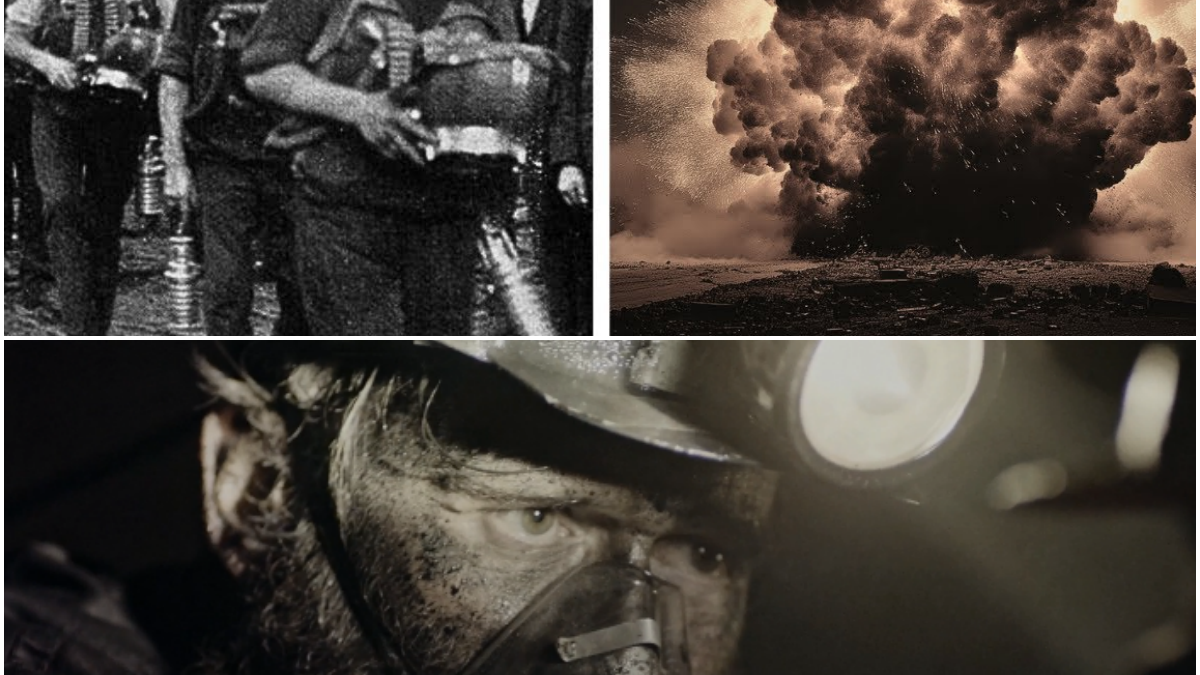
Final Seconds – How Methane Gas Killed 439 Miners | Disaster Documentary
October 14th, 1913.
Sang Hennv, Glamorgan, Wales.
At 8:10 in the morning, the ground shook beneath the quiet valley.
A thunderclap of fire erupted from the pit head, hurling debris skyward and turning the air black with cold dust.

Windows shattered miles away as smoke rolled over the town.
Men working on the surface were thrown to the ground.
Inside the mine, hundreds vanished in an instant.
Consumed by flame, pressure, and gas, mothers ran toward the pit, faces white with terror as the collery bell wailed through the valley.
So, how could something like this happen?
In the early years of the 20th century, Sanghav was a village built on coal and courage.
Nestled among the green slopes of the Welsh valleys, it pulsed with the rhythm of the mines below.
Each dawn the whistle of the universal collure called fathers and sons to work.
They marched through mist and rain, lunch tin swinging, lamps glowing like tiny stars in the gray.
Life revolved around the pit, its danger, its wages, its promise.
Above ground, the town lived in the steady routine of miners wives and children.
Wash was hung between cottages.
Chapel bells marked the hours, and soot drifted like fine snow from the winding tower.
The air always carried the scent of coal smoke and damp earth, a reminder of what lay beneath.
Everyone knew the risks.
Explosions, floods, and gas were part of mining life.
Yet for generations, the people of Sangv had accepted them.
They believed skill and faith would see them through another shift, another week, another year.
It was a hard world, but it was theirs.
The mountain that sheltered them also held the fire that would one day tear their valley apart.
The mine that fed the empire.
The universal collar was more than a workplace.
It was an engine of empire.
Its coal fueled ships, railways, and factories across Britain’s growing industrial world.
The seams beneath Sangunev were rich, and the company pushed them to their limits.
Every ton counted, every hour mattered.
Production was everything, but profit came at a cost.
Safety inspections were hurried, ventilation was poor, and cold dust clung to every beam and wall.
The mine had already tasted tragedy once before in 1901, when an explosion killed 81 men.
Promises of reform followed, but in truth, little changed.
The machinery grew larger, the tunnels deeper, and the danger more invisible.
Miners warned of gas pockets and faulty lamps, but their words carried little weight against quotas and deadlines.
The company’s ledger showed progress, while underground the air thickened with dust and neglect.
Officials called the operation efficient, modern even.
But in the darkness below, it was a different story.
By 1913, universal collure stood as a symbol of Britain’s industrial might and its blind faith that the cost of power could always be paid by someone else.
The morning shift begins like any other.
October 14th dawned cool and gray over the Aber Valley.
Thin smoke drifted from cottage chimneys as men and boys made their way to the pit.
Some carried tin lamps, others their lunch wrapped in cloth.
A few shared quiet jokes to shake off the chill.
At the collar gates, timekeepers checked names, the same as always.
Underground, the mine hummed with routine.
Picks struck rock, ponies pulled coal wagons, and the air grew thick with dust.
The men worked in teams, each trusting the others rhythm.
For the younger boys, some only 13, the pit was both terrifying and familiar.
They learned to move by instinct, went to duck, went to listen for the faint hiss of gas.
On the surface, life unfolded as usual.
Women scrubbed steps, shopkeepers opened shutters, and the valley echoed with the distant thrum of industry.
The whistle had sounded at 7:00 a.m., and by 8, over 900 men and boys were at work beneath the mountain.
None of them knew that a single spark, invisible, instantaneous, was about to turn their world into an inferno.
A spark in the darkness changes everything.
Deep in the north district of the universal collure, a pocket of methane gas leaked into the air.
The miners had smelled it before, a faint, sharp scent that clung to the throat, but it was part of the job.
At 8:10 a.m., somewhere along the seam, a flame met the gas.
It might have been a lamp, a spark from metal striking stone, or a loose cable brushing against rock.
In that instant, the mine ignited.
The explosion tore through the tunnels with devastating force.
Cold dust suspended in the air like powder turned the blast into a roaring firestorm.
Heat and pressure raced ahead of the flame, collapsing timbers, shattering lamps, and stealing the breath from men who never saw it coming.
The noise thundered through the valley, a sound so deep it seemed to come from the earth itself.
On the surface, the pit had shuddered.
Smoke and flame burst from the main shaft, hurling debris high into the air.
The collary whistle screamed, not in signal, but in warning.
In a heartbeat, ordinary life in Sangv was gone, replaced by silence, smoke, and the beginning of a tragedy that would scar Wales forever.
The surface erupts in panic and smoke.
Above ground, the explosion arrived like the breath of a volcano.
The blast ripped the iron doors from the mine’s mouth and sent them spinning through the air.
Windows shattered in nearby homes and roofs lifted clean from their beaMs. The air filled with dust so thick it turned morning into night.
Then just as suddenly came the silence.
A heavy unnatural quiet broken only by the faint crackle of fire and the ringing of twisted metal.
Within moments people came running.
Wives dropped their washing and sprinted toward the pit head.
Children terrified and confused followed.
The black plume rising from the collar could be seen for miles, a towering column of smoke and ash.
It carried with it the smell of burning coal and scorched flesh.
In the valley, the sound of crying began to echo from every direction.
The first survivors stumbled from the shaft, faces burned, hair singed, coughing up black soot.
Some collapsed where they stood, gasping for air that rire of sulfur.
Others tried to speak, but could only point back toward the darkness.
Their clothes were torn and smoldering, eyes wide with shock.
One man’s helmet was fused to his scalp by the heat.
Another’s voice was gone completely.
Word spread faster than the smoke itself.
Shopkeepers abandoned their tills.
Teachers left their classrooMs. And every able-bodied man in Sankv ran for the pit.
They knew instinctively what had happened.
Explosions were feared, but they were not unknown.
Every miner’s family carried that dread in the back of their mind the day the whistle would sound at the wrong hour.
At the Collier Gates, chaos reigned.
The winding gear was damaged.
His great steel arms bent and smoking.
The main ventilation fan had been destroyed, trapping whatever air remained below.
Managers barked orders, their faces ashen, but there was little direction to give.
The mine itself was on fire and the shafts were choked with debris.
Flames shot up from the main tunnel, burning so hot that rescuers could not get within yards.
Women fell to their knees, begging for news.
Some called out the names of their husbands and sons, hoping for a reply from the smoke.
A few tried to force their way past the guards, clawing at the blackened fence, refusing to accept that their loved ones were gone.
The sound of their screams mingled with the hiss of escaping steam and the distant clang of metal cooling in the air.
Rescue teams from nearby collaries arrived before noon.
Men from Abetrida, Penrael, and Lambradak came running, still in their workclo.
They carried breathing apparatus, stretches, and a grim understanding of what they were about to face.
They had all seen death underground before, but nothing on this scale.
Some stood for a long moment at the pit head, staring into the burning shaft before fastening their lamps and disappearing into the dark.
By afternoon, the entire valley was filled with smoke and noise.
Hundreds of people crowded the hillside overlooking the mine.
Horses strained to pull water carts closer, and fire crews tried in vain to dow the flames with hoses.
The wind shifted constantly, sending clouds of choking dust across the gathered crowd.
A local preacher began to pray aloud, his voice nearly drowned by the roar of the fire below.
In the midst of it all, the pit head bell continued to ring, a harsh metallic sound that carried across the town.
It had once marked the end of a shift, the signal for men to rise from the depths.
Now it told for those who would never return.
As daylight faded and the fires still burned, the valley of Sanganv became a place of waiting.
Every flicker of light near the shaft drew gasps of hope.
Every shout or movement sparked desperate belief that someone had survived.
But as night fell, the truth began to take hold.
The scale of the destruction was too great, the blast too fierce, the fire too deep.
The universal collure, the heart of the valley had become a tomb.
And above it stood a community staring into the smoke, praying for miracles that would not come.
Rescuers descend into a tomb.
By dawn the next morning, the flames still glowed faintly at the pit head.
The air above the collure shimmerred with heat, carrying the acrid smell of burned timber, oil, and coal.
A heavy mist clung to the valley, mixing with smoke to form a gray veil over Sankv.
Beneath it, hundreds gathered again, men with lanterns, women wrapped in shaws, children standing silently by their mothers.
Everyone was waiting for word from below.
The first rescue crews were exhausted but unbroken.
Many were miners themselves, volunteering after working all night at neighboring pits.
They came with rudimentary breathing sets, canvas stretchers, and little more than courage to protect them.
The plan was simple.
Re-enter the mine, clear the passages, and bring out anyone who might still be alive.
They knew the odds, but they also knew what it meant to leave their comrades in the dark.
Inside, the conditions were almost unbearable.
The explosion had torn away the supports, leaving ceilings sagging and tunnels twisted like broken ribs.
The air was thick with after damp, a deadly mix of carbon monoxide and carbon dioxide that could kill in seconds.
Every breath was a gamble.
Rescuers moved slowly, their lamps barely cutting through the smoke.
They followed the faint traces of rails and the sound of dripping water, marking their path with chalk as they went.
What they found was worse than anyone had imagined.
The first bodies appeared near the main shaft, burned beyond recognition, their lamp still clutched in their hands.
Farther in, they discovered men who had tried to crawl towards safety, overcome by gas before they made it 50 yards.
In one passage, several miners were found sitting upright as if asleep, their faces blackened, but peaceful.
They had suffocated before the fire reached them.
Every few hours, the teams had to retreat.
The gas grew too thick, the heat too intense.
Several rescuers collapsed on the spot, carried out limp and gasping for air.
Still others stepped forward to take their place.
Men who had lost brothers and sons descended willingly, their faces grim, their voices low.
“If I don’t go, who will?”
One rescuer reportedly said.
It became a quiet refrain among the teaMs. Not bravado, but duty.
On the surface, the pit head had transformed into a field hospital and morg.
Stretchers lined the ground, each covered with blankets or tarps.
Doctors stood ready with oxygen and bandages, though few needed them.
Most of the men brought up were beyond help.
Women stood along the perimeter, silent and motionless.
Each time a stretcher emerged, a murmur passed through the crowd, then a cry, or the sound of someone collapsing to their knees.
Identification was often impossible, the burns were too severe, the features too changed.
In many cases, only a belt buckle, a watch, or a scrap of clothing told the story of who had been found.
By evening, exhaustion began to set in.
The rescue effort had become a grim routine.
Descend, search, recover, return.
The same motions repeated endlessly, hour after hour.
Occasionally, someone shouted that a sound had been heard deeper in the tunnels.
A faint tapping, a movement.
Hope surged through the crowd each time, but none of those sounds led to survivors.
The mine was too vast, the fire too consuming, and yet they kept going.
Rescuers descended into the heat and smoke until their legs trembled and their lungs burned.
They carried out bodies one by one, laying them gently on the ground, removing their caps in respect.
The silence that followed each recovery was almost sacred.
It was not just the dead who were being lifted from the earth.
It was the pride and pain of an entire valley.
By the end of the second night, more than a hundred had been brought to the surface.
The number seemed impossibly small compared to those still trapped below.
Gas explosions continued to flash without warning, forcing crews to withdraw again and again.
At times, it seemed as if the mine itself refused to surrender its dead.
Above ground, the people of Sanganf refused to leave.
Lanterns burned through the night as families waited in the cold.
Tea was handed around, hands clasped in prayer, hymns whispered into the smoke.
The rescuers worked on, driven by something beyond orders or reason.
They were not trying to save a mine anymore.
They were trying to bring their people home.
The town becomes a field of mourning.
By the third day, Sanghenev had become a place of silence and smoke.
The fires underground were slowly dying, but above ground, the valley was filled with a different kind of heat.
Grief that seemed to burn through every home.
From the hillsides, the collar yard looked like a battlefield.
Tents for medical aid, carts of cold dust, wagons of supplies, and rows upon rows of stretches covered in tarpollins.
Behind them, the crowd waited, wives, mothers, and children clutching scarves, prayer books, and photographs worn thin from being held too long.
The rescue teams moved with hollow eyes, blackened faces stre with sweat and ash.
Every trip below seemed to strip a little more life from them.
Yet still they went down.
They emerged coughing, carrying another body, or sometimes two at a time.
Each stretcher was met with a hush, then a sound that cut through the valley, a mother’s whale, a brother’s shout, a child calling a name that would never answer again.
As the count of the dead rose, the scale of the loss began to sink in.
400, then more.
So many that the Collier’s office was turned into a place of recordkeeping and identification.
Men sat behind desks writing names on ledgers, cross-checking watch numbers and lamp tags.
Families lined up outside waiting to see if their loved ones name appeared.
Inside the clarks worked in silence, aware that every mark of their pen sealed a fate.
The chapels overflowed.
Ministers moved from group to group, offering what comfort they could, though many were too numb to hear it.
In one small chapel, the entire choir was gone.
In another, half the congregation had lost someone.
School masters closed the classrooms and walked door to door, delivering news that no words could soften.
“Your boy won’t be coming home,” they said, and then they moved on to the next.
By the end of the week, the entire town had become a field of mourning.
Coffins were brought in by the wagon load, plain wooden boxes stacked outside the undertakers and along the roadside.
Many were too small, made for boys who had been sent underground before they were old enough to shave.
Carpenters worked without rest, hammering through the night under the dim light of oil lamps.
The sound of nails and sores echoed through the valley, a grim rhythm marking each new loss.
Funerals began before the recovery was even finished.
Horsedrawn carts carried the coffins through streets lined with mourners.
Flags hung at half mast and black cloth draped over chapel doors.
Whole families were buried together, fathers beside sons, brothers side by side.
The air was heavy with the smell of flowers, coal smoke, and wet earth.
When the hymns rose, they carried across the valley like waves, solemn and steady, as if the hills themselves were singing.
The newspapers called it the worst mining disaster in British history.
Reporters arrived from Cardiff, London, even from abroad, their notebooks filling with statistics and sorrow.
Yet the numbers could not capture what had been lost.
439 men and boys, the youngest just 12 years old, were gone in an instant.
For a small valley community, it was devastation beyond measure.
There was not a single home untouched by grief.
In the evenings, the streets grew quiet.
Lamps flickered behind curtained windows, and the sound of weeping carried through the rain.
Some families left candles burning in their windows, hoping their loved ones might somehow find their way home.
Others could not bear to look at the mine at all.
The once proud Pithead tower, blackened and bent, stood as a reminder of everything they had given and everything they had lost.
When Sunday came, the valley gathered for a service on the hillside.
Thousands stood together shoulderto-shoulder in silence.
The wind carried the scent of coal and ash.
A preacher spoke softly about courage, about sacrifice, about the strength of those who went into the earth and never returned.
But even as the words hung in the air, the grief was too deep to be consoled.
In that silence, Sanganv became something more than a mining town.
It became a symbol of the cost of progress, of the burden carried by working men and the families who waited above.
The mine would one day fall quiet.
The fires would cool and grass would grow over the scars.
But the memory of that week, the faces, the smoke, the sound of the whistle that morning would never leave the valley, a reckoning that never truly came.
In the days that followed, grief gave way to questions, angry, urgent, and impossible to ignore.
How could this have happened again?
How could a mind that had already claimed 81 lives 12 years earlier still be so dangerous, so unprepared?
Families demanded answers, and newspapers demanded accountability.
The government promised an inquiry, but in the early hours of the investigation, it was clear that justice would move far more slowly than coal had ever been mined from the earth.
The inquest opened in November 1913, held in a crowded hall near the collery gates.
Reporters packed the benches, scribbling notes as officials, managers, and inspectors took the stand.
Survivors, some still coughing from the gas, gave their accounts in trembling voices.
They spoke of poor ventilation, of gas alarms ignored, of broken lamps that had been used long past their safe life.
A few testified that warnings had been made to supervisors in the weeks before the explosion.
Warnings that never reached the men who worked below.
Evidence mounted of neglect.
The inspector’s reports meant to ensure safety had been too few and too brief.
Some had not visited the mine in years.
Ventilation plans were outdated, and dust control was almost non-existent.
The explosion, it was revealed, had started where gas and dust had been allowed to collect for weeks.
One official described the mine’s airways as choked and deadly.
Still, the company’s representatives insisted that the collary metal required standards.
As the inquiry dragged on, the contrast between the world of the miners and the world of those who profited from them became painfully clear.
The men who had died earned barely enough firmly enough to feed their families.
The owners of the universal collure seated in the front rows of the courtroom spoke of production targets and efficiency as though the mine were a machine rather than a grave.
The language of profit felt obscene beside the names of the dead.
When the verdict finally came, it was met with disbelief.
The inquiry concluded that while safety measures were insufficient, there was no evidence of criminal negligence.
The Collier’s manager, a man named Edward Shaw, was fined just £24 for failing to maintain adequate ventilation and for neglecting dust precautions, the legal maximum under the Coalmines Act.
£24 for 439 lives.
To many in Sanganf, it felt less like a penalty and more like an insult.
The outrage spread beyond the valley.
Trade unions condemned the decision, calling it proof that working men’s lives were valued only so far as they could produce profit.
Editorials across Britain questioned how the richest empire on earth could tolerate such conditions.
Yet, Parliament offered little more than sympathy and vague promises of reform.
Within months, the headlines faded and the world moved on.
For the miners who survived, returning to work was an act of endurance.
They had seen what the pit could do.
But there were families to feed, debts to pay, and no other work to be found.
Some went back to Universal itself when it reopened under new supervision.
They walked once more beneath the same mountain that had swallowed their friends, believing, or perhaps forcing themselves to believe that lightning could not strike twice.
The disaster did lead to changes on paper.
The 1911 coal mines act passed 2 years before Sankanv had already called for stricter ventilation, better safety lamps, and improved training for firemen underground.
The tragedy made those regulations impossible to ignore.
Mines across Wales and England were ordered to comply more rigorously, and inspectors began to visit with greater frequency.
But the culture of mining, of speed, pressure, and profit, changed far more slowly than any law could dictate.
In the years that followed, memorials were erected and committees formed to support the widows and orphans.
Donations poured in from across Britain, a wave of compassion that spoke to the nation’s conscience.
Yet for the people of Sangv, no amount of charity could erase what they had seen.
The valley bore its scars quietly.
Its people moving through the routines of survival while carrying memories that would not fade.
When the First World War began less than a year later, the nation’s attention turned elsewhere.
Coal once again became a matter of national urgency.
The lessons of Sanganev were buried beneath the noise of a world at war.
Mines continued to operate under strain, and new accidents would claim new lives in the decades to come.
The reckoning that should have come in 1913 never truly arrived.
The mountain was silent again, but the silence was not peace.
It was resignation.
The sound of the people who had learned that justice, like coal, was something always promised, but rarely delivered without cost.
Lessons written in cold dust and tears.
In the months after the explosion, Sangh tried to find a rhythm again.
The sound of hammers returned to the workshops, and the collar yard, once filled with mourning, began to stir with the machinery and repairs.
Life in the valley went on because it had to.
But beneath the daily routine, something had changed forever.
Every family carried its own story, a face remembered, a name carved on a wooden cross, a lamp left hanging on a wall.
For those who had survived, work no longer felt like labor alone.
It was defiance.
Each descent into the pit was an act of remembrance for those who never came back.
Men went below the surface not because they trusted it, but because they had no other choice.
The tragedy forced Britain to look again at the price of its progress.
The coal that powered ships, railways, and factories had been won through human cost.
The faces of Sanganv’s miners made that cost impossible to ignore.
In Parliament, lawmakers spoke of reform and accountability.
Inspectors were given greater power and new rules were written.
But in the mining villages of South Wales, people knew the truth.
Safety came not from legislation, but from the courage of those who demanded it.
Unions gained strength from the ashes of Sanganv.
Miners organized, protested, and refused to accept there that their lives were expendable.
The disaster became a rallying cry.
Its memory woven into songs, sermons, and banners carried at marches for decades to come.
Yet, even as the nation industrialized and modernized, Cole’s shadow lingered.
The black dust that coated their homes and lungs was more than a mark of their trade.
It was a reminder of the fragility of life underground.
Each October, the valley grew quiet.
Families gathered at the memorial, their heads bowed as the names were read aloud.
439 voices silenced in a single breath of flame.
The lessons written in that cold dust would travel far beyond Wales, shaping the future of mine safety around the world.
And yet the people of Sanganov never saw themselves as victiMs. They were the descendants of miners who had built Britain’s strength with their hands and their lives.
Theirs was a story of endurance, of communities that stood together in grief and carried on in the face of loss.
The mine might have claimed their fathers, but it could not take their dignity, their faith, or their will to remember.
The valley that still remembers.
More than a century later, the Aber Valley lies quiet.
The pit head is gone.
The slag heaps have softened into green hills, and the air that once trembled with the rumble of machinery now carries only bird song and wind.
But beneath the soil, in the dark where the seams once ran, the memory of 1913 still lingers.
It is not written in stone or steel, but in the silence of the land itself, a silence earned through unimaginable loss.
Where the universal collure once stood, a memorial garden now rises.
Bronze plaques bear the names of every man and boy who perished that morning.
439 souls arranged in neat unending rows.
Visitors trace their fingers over the names, some faded, some familiar.
It is a place of stillness where the hum of modern life seems to stop and the weight of history presses gently against the heart.
Every October the people of Sangv gather there to remember.
They lay wreaths, light candles and sing the hymns once carried by their ancestors through the smoke.
The disaster changed not just a valley but a nation.
It exposed the human cost buried beneath the empire’s progress.
The invisible toll of men who had worked, bled, and died to power the modern world.
It forced questions that would echo across generations.
How much is too much to ask of a working man?
How many lives must be lost before safety is more than a promise?
Though the mine has long been sant, its legacy endures in the laws that protect workers, in the unions that fight for fairness, and in the quiet strength of communities that refuse to forget.
Each candle lit at the memorial, each story told in the homes that line the valley, is a small act of defiance against forgetting.
As dusk falls over the hills of Gleorggan, the wind carries the faint sound of the old collary whistle.
Or perhaps it is only the imagination of those who still listen for it.
Either way, the message remains the same.
Beneath the calm beauty of the Welsh valleys lies a story written in fire and smoke, in courage and sacrifice.
The mountain that once took so many lives now stands watch over a people who will never let them fade from memory.
In the stillness of that place, you can almost hear them.
The miners of Sanganf breathing in the darkness, holding their lamps high, their lights still burning against the endless








