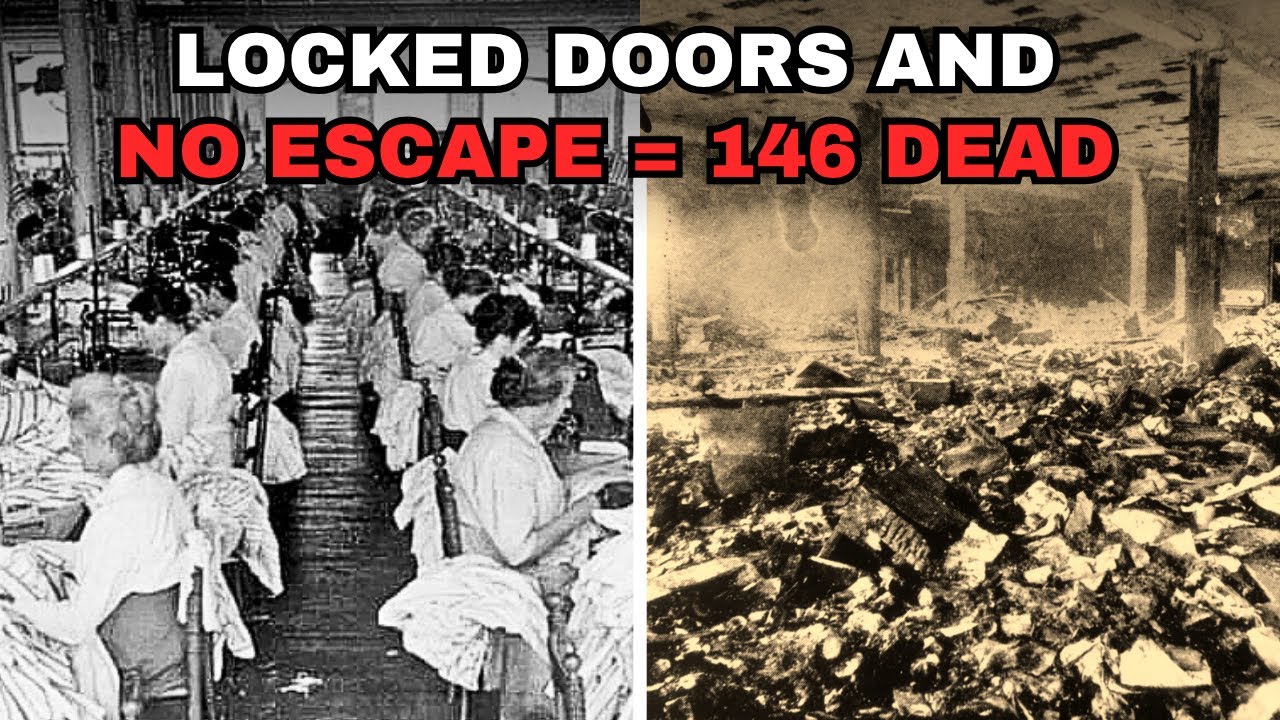
The Raging 18-Minute Factory Fire That Killed 146 | Disaster Documentary
The Raging 18-Minute Factory Fire That Killed 146 | Disaster Documentary
March 25th, 1911.
Washington Place, Manhattan.
A spark catches in a pile of cotton scraps inside the Triangle Shirt Waist Factory.
Within seconds, the ninth floor becomes an inferno of smoke, flame, and panic.
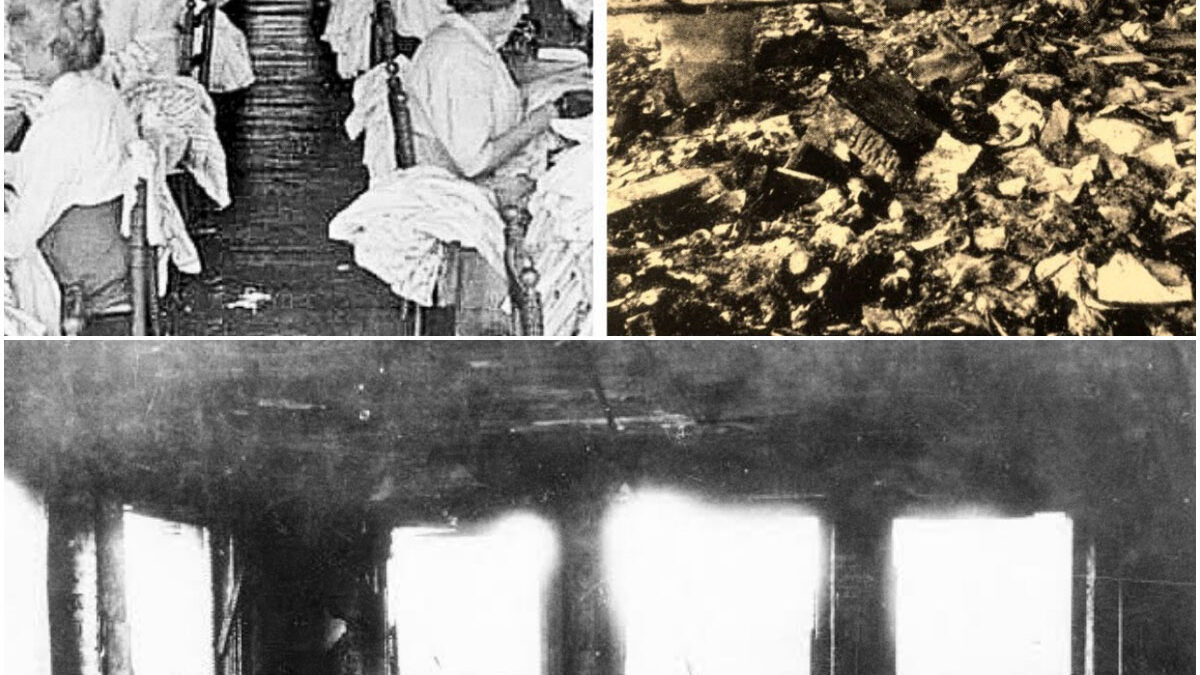
Sewing machines topple as the women scream for air, for water, for a way out.
The elevators jam, the stairwells choke, and the windows become the only escape left.
Outside on the cobblestones below, a crowd gathers, frozen in disbelief, as young women fall from the sky, their white dresses burning against the blue.
So, how could something like this happen?
A city on the rise.
In 1911, New York City was the beating heart of the modern world.
Its streets pulsed with noise and motion.
Trolley bells, horse hooves, the hiss of steam.
Along Broadway, department stores glittered with electric light, promising luxury to the few who could afford it.
But only a few blocks east, in the dim canyons of the Lower East Side, another kind of light glowed, the dull yellow of gas lamps burning through endless nights of labor.
Every day, tens of thousands of immigrants poured through Ellis Island, clutching suitcases and hopes in equal measure.
Italians, Jews, Poles, Hungarians, whole families fleeing poverty and persecution, chasing a promise they called America.
They spoke little English, carried less money, and found themselves crowded into tenementss where the air hung thick with cold dust and cooking smoke.
Yet from those narrow rooms they could see the skyline, the promise of something better.
For many young women that promise meant work in the garment trade.
The sewing needle was their ticket to survival.
Shirt waists, fashionable women’s blouses with high collars and puffed sleeves had become the symbol of the new century.
Clean, modern, independent, and the demand was endless.
Factories sprouted across the city like iron weeds.
Inside hundreds of women sat shoulderto-shoulder at long wooden tables, their feet pumping treddles, their fingers roaring quick.
The Triangle Shirt Waist Factory, perched on the top three floors of the Ash building near Washington Square, was one of the largest and most modern of them all.
It was bright, efficient, and profitable.
To the owners, Isaac Harris and Max Blank, it represented the pinnacle of industrial success.
To the workers, it was a place where a few dollars a week meant bread on the table and rent for another month.
Each morning the streets around Washington Place filled with chatter and laughter as the girls filed in, many no older than 16.
They came from Hester Street, from Malbury Bend, from cold water flats where entire families slept in one room.
They brought lunch wrapped in newspaper, bread, apples, sometimes a bit of cheese.
They tied their hair back, rolled up their sleeves, and worked until the sun dipped below the rooftops.
For some, the ash building felt like progress, a clean brick structure with the tall windows and new elevators.
The newspapers called it fireproof.
Inside, sunlight flooded the ninth floor.
But the light also revealed the truth.
Mountains of fabric scraps underfoot, oil stained floors, narrow aisles blocked with chairs and boxes.
The fireproof building was filled with everything that could burn.
In 1911, New York believed in the future.
It believed in invention, industry, and speed.
It believed that progress was unstoppable.
But in that same confidence, it forgot something older, something quieter.
It forgot to ask who paid the price for all that progress.
The girls of the 9inth floor.
They came from the tenementss, from narrow hallways where laundry lines sagged with damp clothes, and the smell of cabbage hung in the air.
Most were daughters of immigrants, Jewish, Italian, Russian, still learning the rhythm of English words, but fluent in the language of work.
Their hands were quick, their backs were straight, and their dreams were simple.
To earn enough to help the family, maybe to buy a hat, maybe to have one day off.
Inside the Triangle Shirtwaist Factory, they were known as the girls of the 9inth floor.
There were hundreds of them, teenagers and young women packed into a single vast room filled with the steady hum of sewing machines.
Rows stretched from window to window, each machine placed so close that one worker’s elbow brushed anothers.
The air was always thick with lint and the smell of hot cloth.
A single iron stove hissed near the center where someone boiled tea or warmed lunch.
The day began early.
By 8:00 the girls were at their tables, peddling treles, stitching collars, folding blouses into neat piles.
Foreman walked the aisles counting production, watching for wasted seconds.
Talking too much could cost you your job.
Sometimes a foreman would shout if a scene was crooked or if the rhythm of a machine slowed.
The girls learned to work without rest to keep the needle moving to hide fatigue behind a small smile.
But they weren’t silent victiMs. There was laughter, too.
Snatches of songs in Yiddish and Italian.
Small jokes passed down the rows.
They shared pins and scissors, whispered about sweethearts, traded stories of dances on Hester Street.
In a world that saw them as replaceable, they found friendship that could not be bought or dismissed.
Most of them earned 6 to12 a week, barely enough to live.
Many gave half their pay to their parents and still slept three to a bed.
Some had left school at 13.
Others sent money to sisters still in Europe.
They worked 6 days a week, often 14 hours a day, stitching the same sleeve, the same button hole thousands of times over.
Yet many felt pride.
They were helping to build something, the clothes that filled the shops up town that represented the new age of women’s independence.
Still, a quiet tension lived in that room.
They knew the doors were kept locked.
They knew the fillrills were a joke.
They saw the piles of cloth scraps and smelled the oil on the floors.
When a light bulb flickered or a match was struck, they looked up for a moment, then went back to work.
What choice did they have?
They were young, determined, and invisible.
In the city’s newspapers, they were nameless factory girls.
But inside that building, among the sound of clattering machines, they were something more.
Sisters, friends, dreamers, each with a name, each with a story, each waiting unknowingly for a fire that would change the world.
The bosses and the building.
The ash building stood at the corner of Green Street and Washington Place, a 10-story structure of brick and limestone.
It was new, just 8 years old, and advertised as fireproof, a word that soothed investors and reassured tenants.
Its owner, Joseph Ash, had designed it with wide windows and high ceilings to attract the modern manufacturer.
On paper, it was everything New York wanted to be, safe, efficient, forward-looking.
The Triangle Shirt Waist Factory occupied the top three floors.
There, two men ruled.
Isaac Harris and Max Blank, immigrant success stories who had risen from the sewing tables themselves.
Born in Russia, they had arrived in America with nothing but determination and skill.
They worked their way up from cutters to entrepreneurs, building a business that clothed half of New York’s working women.
The newspapers called them the shirtwaist kings.
Harris was meticulous, a perfectionist who believed every seam must be straight, every delivery on time.
Blank was more fiery, quick to anger, quicker still to cut corners when profit was at stake.
Together they were formidable, driven by the relentless pace of competition.
In an industry where margins were thin and styles changed with the season, every minute counted.
Every dollar saved mattered.
But their success had a shadow.
The Triangle Factory was a place where efficiency often came before safety.
Doors were locked to prevent theft and to keep workers from slipping out early.
Cloth scraps piled up under tables like tinder.
Buckets of water meant for emergencies often sat empty or stagnant.
Smoking was officially banned, but the rule was broken daily.
Foreman and cutters lighting cigarettes among the bales of fabric.
Harrison Blank had already faced fire before.
In 1902, one of their earlier factories burned to the ground.
So did another a few years later.
Both times insurance covered their losses handsomely.
It became something of a pattern, one that raised eyebrows among their peers, but never drew serious scrutiny.
They rebuilt quickly, always finding new buildings, new workers, new profits.
Still, the ash building felt different.
It was solid, modern, respectable.
His iron and brick frame was advertised as non-combustible.
Engineers claimed even the worst fire couldn’t spread beyond a single floor.
To many, that was enough.
The illusion of safety was more comforting than the reality of risk.
To the workers, the bosses were distant figures glimpsed only in passing.
Harris might appear to inspect production, his mustache neatly trimmed, his eyes sharp behind wire spectacles.
Blank’s voice could echo across the room, demanding speed, precision, obedience.
They rarely looked at the faces bent over the machines.
Below them, the girls stitched and sweated, trusting that someone somewhere had thought of their safety.
They didn’t know that the only fire escape was a narrow twisting staircase bolted to the outside wall.
Thin iron clinging to brick rusted by rain.
The bosses called the factory a triumph of modern industry.
But progress, as it turned out, was built on kindling.
The strike of 1909, 2 years before the fire.
The streets of New York filled with defiance.
It began in November 1909 when thousands of garment workers, most of them young immigrant women, walked off the job.
They were tired of 14-hour days of locked doors, of wages that barely paid for bread.
They were tired of foreman shouting, of being searched for stolen cloth at the end of every shift, of being treated like part of the machinery they operated.
What started as a small protest in one factory soon spread like wildfire.
Within weeks, more than 20,000 workers flooded the streets carrying handpainted signs that read, “We want ba bread,” and roses, too.
They called it the uprising of the 20,000.
One of the largest strikes ever led by women in America.
Winter settled hard that year.
The picket line stretched through snow and rain from Washington Square to Union Square.
The women stood shoulderto-shoulder in wool coats and fingerless gloves, singing songs in Yiddish and Italian.
They faced jeers from strike breakers and beatings from hired thugs.
Police dragged them into patrol wagons, their signs splintering beneath boots and batons.
Judges find them or sent them to the workhouse for disorderly conduct.
Yet every morning they returned, faces bruised, spirits unbroken.
Some newspapers mocked them, calling the strikers ungrateful girls.
Others saw something new in their courage.
Society ladies, horrified by the stories of abuse, joined the picket lines in fur coats, standing beside the factory girls in solidarity.
Together they made an unlikely sight.
The rich and poor united against injustice.
The movement could no longer be ignored.
At the center of it all were the workers of the Triangle Shirt Waist Factory.
They were among the loudest voices, demanding fair wages, safer conditions, and the simple dignity of unlocked doors.
For weeks, production halted.
But Harrison Blank held firm.
They refused most of the union’s demands, calling them impractical and costly.
To them, time was money and concessions meant weakness.
By early 1910, the strike began to fade.
Some factories agreed to small reforMs. Shorter hours, a few more fire drills, but Triangle did not.
The girls eventually returned to work, exhausted and hungry, their savings gone.
Some whispered that it had been for nothing.
Others believed it had lit a spark that could not be extinguished.
For a while, life went on as before.
The machines hummed again.
The orders poured in.
The profits returned.
Yet beneath the steady rhythm of stitching and steam, something had changed.
The women of the triangle factory had glimpsed their own power, even if only for a moment.
They couldn’t know it yet, but the fight they began in the cold winter of 1909 had not ended.
It had only gone quiet, waiting, like the piles of cloth beneath their tables for a single spark to bring everything back to flame.
Saturday, March 25th, 1911.
It was a bright, breezy Saturday in Greenwich Village, the kind of day that hinted at spring.
On Washington Place, carriages rattled past the brownstones and students from New York University strolled through the square.
Above them, the ash building stood quiet and confident against the sky, its 10 stories glowing in the afternoon light.
Inside, the Triangle Shirt Waist Factory was nearing the end of another long week.
Nearly 500 workers filled the 8th, 9th, and 10th floors, most of them young women, eager to finish their day.
The air buzzed with the rhythmic clatter of sewing machines and the hiss of pressing irons.
Finished shirt waists were folded, stacked, and packed into boxes.
Someone had propped open a window to let in the cool air, and for a brief moment to the room almost felt calm.
Quitting time was minutes away.
The clock on the wall ticked toward 4:40.
Foreman checked ledgers, cutters, swept fabric scraps into bins, and the elevator made its slow final rounds.
Down on the eighth floor, someone laughed.
On the 9th, a few girls were already reaching for their hats and shawls.
Then somewhere near the cutting tables on the eighth floor, a small flame appeared.
Maybe it came from a match, maybe from a discarded cigarette, maybe from the friction of a machine.
No one ever knew for certain, but within seconds, the fire found what it needed.
Dry cotton, tissue paper patterns, oily floors.
It raced across the room faster than anyone could shout a warning.
A supervisor grabbed a bucket of water only to find it half empty.
Another reached for a hose connected to the wall, but the valve was rusted shut.
Panic crippled through the floor as smoke began to pour upward through the elevator shaft and stairwell.
The hum of the machine stopped.
Someone screamed, “Fire!”
A sound that spread through the building like a bell of doom.
On the ninth floor, the girls looked up from their work to see smoke drifting under the doors.
For a few moments, there was confusion.
No alarm, no instructions, only the growing sound of chaos below.
Some thought it was another drill.
Others smelled the truth.
They ran for the exit only to find it locked.
In the hallways, the air thickened with smoke.
The elevator clanked its way up once more, its operator shouting for passengers.
Girls piled in, dozens at a time, until the car could hold no more.
As it descended, others pried open the shaft doors and jumped, hoping to catch the roof of the car below.
By the time the fire reached the ninth floor, the room was an inferno.
Flames curled across the ceiling.
Windows shattered from the heat.
A wall of fire blocked the only open stairwell, and outside the crowd began to gather, staring upward at the figures pressed against the glass.
The Triangle Shirt Waist Factory was burning.
The end of the workday had become the end of a generation, trapped above the city.
The fire rose like a living thing.
Within minutes, it reached the ninth floor, the largest, most crowded room in the factory.
The air was filled with smoke so thick it turned noon to night.
Flames leapt from one table to the next, feeding on blouses stacked by the hundreds.
A few women grabbed fabric to beat out the fire, but it spread too faSt. their sleeves caught first, then their hair, then the air itself.
The only stairway that wasn’t already engulfed was locked from the outside.
A policy meant to keep workers from stealing scraps or leaving early.
Panic erupted.
Some hurled themselves against the door until the glass shattered, only to find the metal frame bolted tight.
Others fled to the windows, their faces pale in the orange light.
Down below, hundreds of people had gathered, their eyes fixed on the impossible sight of fire blooming from the top floors of a building once called fireproof.
The elevator operator, Joseph Zto, became a hero that day.
As the fire raged, he kept running the car up and down over and over, packing it beyond capacity with screaming, coughing workers.
Each trip grew slower as heat warped the cables and smoke filled the shaft.
On his final ascent, flames reached the doors.
He shouted for the girls to jump into the car even as the walls glowed red around him.
Some did, others hesitated and vanished into the smoke.
When the elevator could no longer rise, desperate women pried open the shaft doors and leapt down, hoping to land on the roof of the car below.
Their bodies struck with dull, echoing thuds.
Those still alive on the floor watched, unable to breathe or look away.
A few reached the fire escape.
A narrow iron skeleton bolted to the back of the building.
It twisted and shook under their weight.
A fragile thread of hope in the smoke.
Then, as dozens crowded onto it, the bolts gave way.
Witnesses later said it peeled from the wall like a ribbon.
It crashed into the alley, taking every soul upon it.
Inside, the survivors turned to the windows.
Some clutched hands, others climbed onto the ledges, faces lit by the inferno behind them.
A few waved handkerchiefs, hoping the firemen below might bring ladders that could reach.
But the tallest ladder in the city stretched only to the sixth floor.
When the first woman jumped, the crowd gasped.
When the second followed, someone screamed.
Then one by one, they began to fall, white blouses fluttering like broken wings through the smoke.
From the street it looked as if the sky itself were raining fire.
The sound of their bodies striking the pavement mixed with the crackle of burning wood and the clang of collapsing glass.
Policemen turned away.
Firefighters cried openly and still the flames climbed higher, devouring everything they touched.
For those trapped inside, there were no choices left.
Only the impossible decision of how to die, the street below.
On Washington Place, the fire’s reflection danced across the windows of the brownstones.
Within minutes, hundreds of people had gathered.
Students from New York University passes by from Broadway.
Policemen, shopkeepers, mothers holding children by the hand.
They craned their necks toward the upper floors of the ash building, where black smoke poured into the bright afternoon sky.
What they saw would haunt them for the rest of their lives.
At first there were screams, high, frantic, and overlapping.
Then came the falling.
A young woman appeared in the window, her dresser flame, her hair trailing sparks.
She hesitated, one hand gripping the sill.
Below, the crowd shouted for her to stay, to wait for rescue, but she knew there was none.
She stepped forward into the open air.
The crowd gasped, then fell silent.
She hit the pavement with a sound that silenced everything else.
Moments later, another followed, and another.
Witnesses said they fell like snowflakes one after another until the ground was littered with twisted white shapes.
Firefighters unrolled their nets, but each impact tore through the fabric.
The bodies broke the life nets, the ladders, the illusions of safety.
Policemen tried to hold back the crowd as people surged forward, desperate to help, desperate to look away.
In the chaos, the fire engines arrived, horses foaming, bells clanging.
Firefighters hauled hoses toward the building, but the water arked helplessly below the ninth floor.
The nozzles hissed and sputtered, the spray falling short.
One captain shouted for longer ladders, but there were none.
New York’s tallest ladder reached only 85 ft.
The 9inth floor was 90.
On the sidewalks, the heat was unbearable.
The smell of burning cloth and hair hung heavy in the air.
Some bystanders wept openly.
Others crossed themselves, whispering prayers in Italian or Hebrew.
A few fainted where they stood, and yet no one left.
They stayed, rooted to the spot, unable to look away from the terrible theater above them.
A pair of lovers jumped together, their hands clasped.
The crowd gasped as they fell side by side.
A brief moment of grace before the end.
One man wrapped his coat around a woman’s shoulders before they leapt.
A girl no older than 15 dropped first a bundle of cloth, then herself, thinking perhaps the fall might be softened.
It was not.
By the time the fire had burned itself into silence, the street was strewn with debris.
Bodies, glass, ashes, and scraps of half-finish shirt waist drifting in the wind.
Reporters arriving at the scene described it as a vision of hell.
The sun set that evening over Washington Square, but its light could not reach the ground.
The city’s proud skyline had turned to smoke, and beneath it lay the cost of its own ambition, the aftermath.
By the next morning, the fire was out, but the city was still burning inside.
Smoke lingered over Washington Square as crowds drifted past the ash building, silent, stunned.
The iron skeleton of the factory still stood, but the windows gaped open and blackened.
Their glass melted into jagged frames.
The smell of ash and scorched cloth clung to the air.
Inside, the fire department found what the spectators had feared.
Rows of bodies piled near the locked doors, hands still reaching for freedom.
At Charity’s Pier on the East River, the city laid out the dead.
146 victims, mostly girls, most between the ages of 16 and 23, were placed in neat, endless rows.
Families arrived clutching photographs, bits of jewelry, and scraps of hope.
Identification was slow, often impossible.
Many faces were burned beyond recognition.
Many names would never be known.
A young man wandered from table to table, calling his fiance’s name until his voice gave out.
Mothers fainted at the sight of a ribbon, a shoe, a ring that once belonged to a daughter.
The newspapers captured the horror in black and white ink.
The evening world called it a holocaust of young lives.
The Times described the flutter of burning bodies.
The public’s grief quickly turned to fury.
Editorials demanded justice.
Labour leaders spoke of murder.
Priests, rabbis, and politicians all took to their pulpits, calling for reform.
Mass funerals followed in the days ahead.
Tens of thousands joined a silent march up Fifth Avenue.
Workers, suffragists, and ordinary citizens walking beneath a grayscale.
No one spoke.
Only the slow rhythm of shoes on cobblestone broke the silence.
Francis Perkins, a social worker who had watched the fire from across the square, later said, “The day the Triangle Fire happened was the day the New Deal began.”
At city hall, investigators interviewed survivors and inspected the building.
The evidence was undeniable.
Locked exits, broken hoses, no sprinklers, no alarMs. Yet, the machinery of accountability moved slowly.
Harrison Blank hired the best lawyers in New York.
Their defense argued that no one could have foreseen such a catastrophe.
Meanwhile, the survivors tried to return to life.
Some went back to work in other factories.
Others could not bring themselves to enter a sewing room again.
They carried the sounds with them, the screams, the breaking glass, the silence after the last body fell.
The ash building reopened within weeks.
A new tenant moved in, its windows scrubbed clean as if history could be washed away.
But the scorch marks remained, faint black lines tracing the shape of what the city had loSt. In death, the triangle girls achieved what their strike could not.
They forced America to look at the price of its progress and to decide at last whether it could bear it.
The famous trial, the trial of Isaac Harris and Max Blank began that December in a packed courtroom at the New York Criminal Courts building.
The two men once hailed as symbols of immigrant success now sat at the defendant’s table charged with manslaughter.
Across the aisle sat the families of the dead, mothers wrapped in black shaws, fathers holding photographs that had been folded and refolded until the faces were nearly worn away.
The prosecution’s case was simple.
The doors on the 9inth floor had been locked.
The girls had died trying to open them.
The city’s building inspectors had testified to this.
Survivors had testified to this.
The charred remains of the door latch itself had testified to this.
But the defense, led by the formidable attorney Max Stewart, attacked the witnesses with precision.
He asked one girl to demonstrate on the courtroom door how she had tried to turn the handle, forcing her to relive the moment as the spectators watched in silence.
When her hand trembled, he suggested her memory was unreliable.
For days, the courtroom was filled with the smell of sweat and ink, the scratch of reporters pens, the rustle of spectators shifting in their seats.
Outside, crowds gathered each morning, hoping to glimpse the men whose choices had cost 146 lives.
Harris sat rigid, his face drawn tight.
Blank stared straight ahead, stone stillill.
Neither spoke publicly.
The defense argued that the fire was an unforeseeable accident.
That the door might have been jammed, not locked, that the chaos made certainty impossible.
They painted the owners as victims of circumstance, men whose lives too had been ruined by the tragedy.
The jury made up mostly of businessmen listened with furrowed brows.
After 3 weeks, the verdict came swiftly.
Not guilty.
Harrison Blank walked free.
Outside the courthouse, the families wept.
One man shouted, “Murderers!”
Before collapsing in the street.
Reporters followed the owners back to their homes, where they should they slip behind closed doors and said nothing.
Public outrage flared again, but the Lord spoken.
The limits of justice had been drawn clearly.
A life could be lost for profit and no one might answer for it.
The Shirtwwayist King soon reopened another factory, this time with new insurance policies, new machines, and the same disregard for safety.
A year later, when a small fire broke out there, every exit was once again locked.
No one died that time.
But the lesson was not lost on those who still work the machines.
The trial exposed more than guilt or innocence.
It revealed the chasm between those who made the laws and those who lived and died by them.
It showed a city divided by the wealth and indifference and a justice system too timid to challenge the powerful.
In the courtroom’s silence after the verdict, one reporter wrote, “The dead have no lawyers.”
Out of the flames, approximately 500 words.
When the ashes cooled and the crowds dispersed, New York began to reckon with what it had seen.
The Triangle Fire had stripped away the illusions of progress, the myth that industry was benevolent, that modern buildings were safe, that the poor were protected by law.
For once the city looked inward, and what it saw was unbearable.
In the months that followed, outrage turned into organization.
The union swelled with new members, many of them women, who carried photographs of the fallen, in their coat pockets.
Meetings were held in churches and settlement houses where survivors told their stories again and again until even the powerful began to listen.
Journalists published drawings of the facto’s floor plans showing the locked doors, the missing alarms, the broken hoses.
Politicians who had once ignored labor reform now promised investigations.
From these ashes rose a generation of reformers.
Among them was Francis Perkins, a young social worker who had stood in Washington Square that day and watched the fire unfold.
She later said it was the day the New Deal began because it was the day she understood that government could not remain a bystander to suffering.
Two decades later, she would become Franklin D.
Roosevelt’s Secretary of Labor, the first woman in US history to hold a cabinet post and the architect of many of the nation’s worker protections.
The state legislature formed the factory investigating commission led by Al Smith and Robert Vagnner who walked through hundreds of factories measuring stairways, testing fire escapes, timing evacuations.
Their reports shocked the public.
Thousands of buildings lacked exits, sprinklers, or even windows that opened.
Out of their work came more than 30 new labor laws, governing everything from fire safety to child labor, wages, and working hours.
The Triangle Girls had not died in vain.
Yet the scars remained.
For years afterward, families placed flowers at the corner of Washington Place and Green Street.
Survivors lived with the fire in their dreaMs. The smoke, the screams, the memory of sunlight turning red.
The ash building still stands today, renamed the brown building, its bricks unchanged.
Students now walk its halls, unaware that beneath their feet hundreds once fought for air.
The fire’s legacy endures not only in laws, but in conscience.
It forced America to confront the human cost of progress, to see that profit built on suffering cannot laSt. It reminded a city that innovation without compassion is a fragile thing.
That every locked door, every ignored, worn, and inked is a choice, not an accident.
On that March afternoon in 1911, the Triangle Shirt Waist Factory burned for less than half an hour.
But in that brief time, it revealed a truth that still burns over a century later.
The measure of a nation is not in its wealth, but in how it protects those who make








