When 1,400 Tons of TNT Met a Single Spark | Disaster Documentary
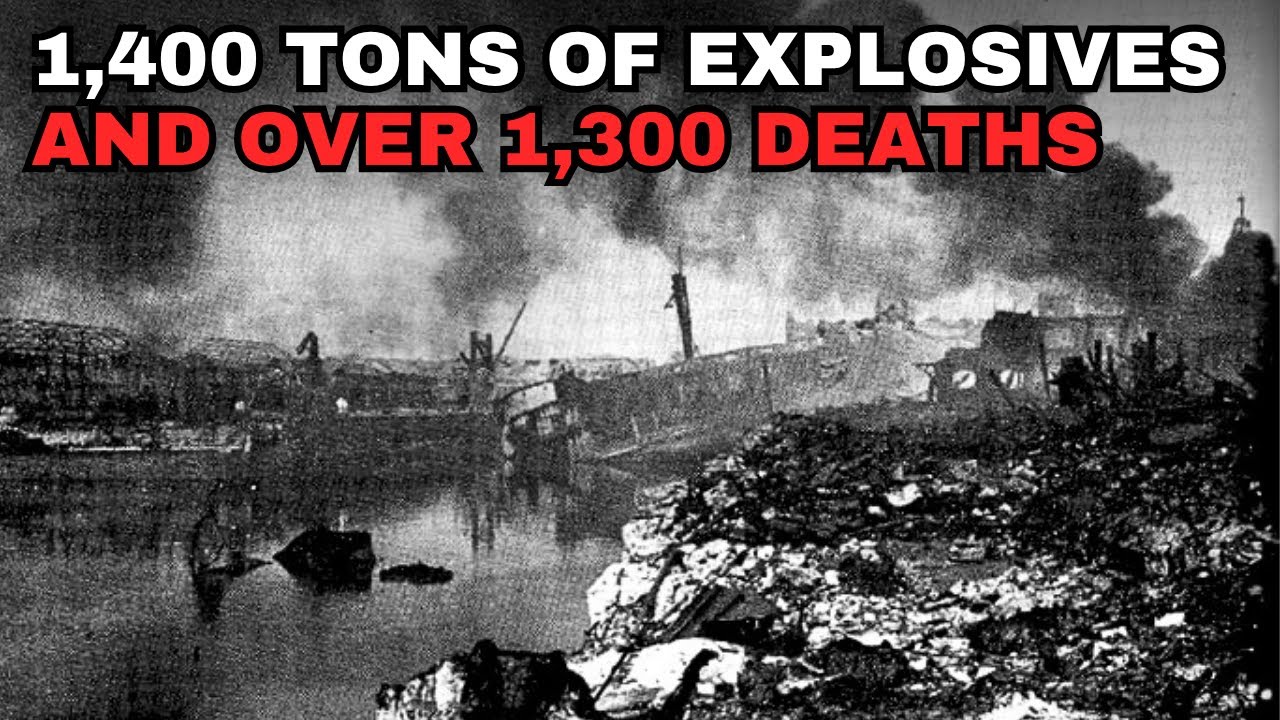
When 1,400 Tons of TNT Met a Single Spark | Disaster Documentary
April 14th, 1944.
Bombay, India.
At precisely 4:06 in the afternoon, the city shuddered.
A blinding flash tore through Victoria Dock, turning ships, buildings, and men into flame and dust.
Windows shattered 5 miles away.
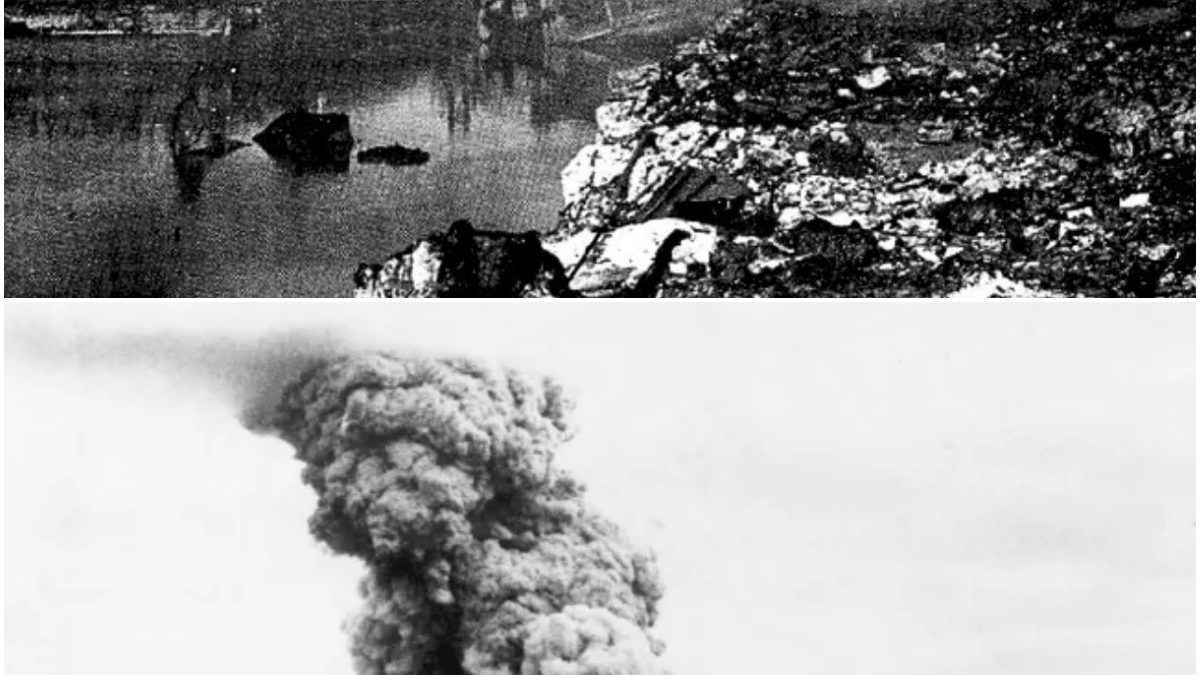
The harbor rose in a column of fire so fierce that the sky turned white.
And then silence.
For a heartbeat, the people of Bombay thought the world had ended.
Smoke rolled over the rooftops, glowing red in the fading sun.
They didn’t yet know what had happened or that a second blast was coming.
How could something like this possibly happen?
April 14th, 1944.
A cloud over Bombay.
Dawn broke over the city like any other wartime morning.
Humid, slow, and heavy with the smell of the sea.
At Victoria Dock, the heart of British India’s busiest port, long shoremen gathered beside rows of cargo ships, their silhouettes blurred by rising heat and cold dust.
From the warehouses came the echo of boots on planks, cranes creaked overhead, and gulls circled the harbor, crying over a city that had grown used to smoke.
Anchored among them was the SS Fort Stiken, a freighter of the British merchant fleet built in Canada and hardened by months at sea.
Her hull was stre with rust, her decks cluttered with drums, crates, and tarpolins.
To the men who worked the docks, she was just another wartime ship, another vessel carrying the Empire’s endless cargo of fuel, machinery, and munitions.
But to those who looked closely, something about her seemed uneasy.
She’s burning, but someone said near midday.
The remark carried more relief than alarm.
A thin column of smoke had begun to drift from one of her holds, rising lazily into the tropical air.
Dock workers paused their tasks, squinting against the sun.
A few joked that it looked like another smoky ship, a sight not uncommon in a harbor filled with oil and coal.
The fire seemed small, confined.
No one could hear the slow hiss building beneath their feet.
By 12:30 p.m., flames flickered through a hatch in the forward hold.
A fire brigade arrived, their hoses sputtering against the hull.
British officers stood on the key beside Indian firemen, pointing, debating, gesturing men, uncertain whether to sound an alarm or finish unloading cargo first.
A crowd began to gather along the waterfront.
Sailors, steodors, even passers by drawn by the sight of smoke curling above the docks.
In wartime Bombay, every explosion of light or sound carried rumors, but not fear.
An eyewitness later recalled, “The flames were low, dark smoke, not urgent.”
He remembered the oily smell, the way the heat shimmerred above the deck plates, and how no one seemed to think it was dangerous.
A tugboat drifted nearby, engines idling, waiting for instructions that would never come.
The ship’s siren remained silent.
In the warehouses behind them, men stacked bales of cotton, barrels of oil, and crates of ammunition marked with stencileled numbers.
The air was thick with dust and diesel fumes.
Yet the laughter continued, tired men, hardened by years of war, trading remarks about pay, rations, and the heat.
What none of them knew was that beneath that dark, lazy smoke lay a cargo unlike any other.
1,395 tons of explosives packed alongside fuel, metal, and flammable cotton.
The fort steen was a floating bomb, and it was morowed in the middle of one of the most crowded harbors in Asia.
They thought they were watching a routine fire.
In truth, they were standing beside one of the most dangerously loaded ships in wartime history, the ship that should never have docked.
She had sailed quietly across the Arabian Sea, an unremarkable freighter in a war that swallowed ships by the thousands.
The SS Fort Sten was built in Canada just 2 years earlier.
One of the many Fortass vessels designed to keep Britain’s supply lines alive.
Sturdy, square, and slow, she had carried everything from food to tanks, always flying the red end sign of the merchant navy.
But this voyage was different.
Her journey began in Karach.
The war in Asia was raging and the allies needed munitions fast.
Into her holds went an impossible mixture of cargo.
1,395 tons of high explosives, bombs, shells, and TNT stored beside drums of lubricating oil, timber, and cotton bales.
Tucked away among them, almost as an afterthought, were 31 gold bars destined for the Reserve Bank of India.
On paper, it was all part of a routine mixed load.
In practice, it was a floating contradiction.
Everything that burns beside everything that explodes.
The manifest listed danger in black ink, but bureaucracy dulled its meaning.
There was no single authority to take responsibility.
The Fort Stina was under British military charter.
Yet, Bombay’s harbor remained a civilian port.
The military expected the civilians to treat her like a warship.
The civilians assumed the military had cleared her for doside unloading.
Between those two assumptions lay the spark of disaster.
She arrived in Bombay on April 12th, 1944 after an 8-day voyage through calm seas.
Her captain requested an isolated birth.
Knowing the nature of his cargo, but space was scarce, and the dock master had a schedule to keep.
She was assigned a place at Victoria Dock beside two other freighters, Jalapadma and Boda, both heavy with oil, cotton, and ammunition.
There were no special safety precautions, no firefighting tugs on standby, just another ship among hundreds.
When unloading began the following morning, the long shoreman worked fast, unaware of what they were handling.
Crates of explosives were stacked near barrels of fuel.
Cotton bales lay open in the sun, and sparks from welding torches flashed only a few yards away.
Every regulation meant to prevent catastrophe had been quietly bent, then broken.
A few men noticed the risk.
A junior officer questioned whether the ship’s munitions should be kept separate.
His superior waved him off.
Routine offloading, the supervisor said.
We’ve handled worse.
There was always pressure to move faster to clear the docks for the next convoy.
In wartime Bombay, speed was patriotism.
And so the forteen sat, a ticking bomb disguised as a merchant ship surrounded by warehouses filled with fuel and men who trusted that someone somewhere was in control, but no one was.
She should never have been allowed to dock where she did.
Yet for two full days she sat at the heart of the city, her holds packed with death, waiting for a single ember to finish what negligence had begun.
The arsenal at the wrong warf, Victoria Dock lay like a steel cresant along the edge of Bombay, a maze of cranes, rails, and stone warehouses pressed against the teeming streets of the city.
It was not some remote military outpost, but a living artery of commerce and war.
Just beyond the gates were markets, offices, traml lines, and tenementss packed with families who could smell the salt and oil of the harbor from their windows.
In 1944, Bombay pulsed day and night with the rhythm of war production.
Every crate, barrel, and sack that passed through the docks carried the weight of empire.
And in the middle of it all, the Fort Steen had taken her birth.
She rested alongside Jalapadma and Boda.
Two Indian freighters loaded with cotton, oil, and general cargo.
The three ships sat shoulderto-shoulder, their holes nearly touching.
Rope stretched torp between keyside bolards.
Workers climbed the gangways with barrerows and hooks, shouting over the metallic groan of cranes.
It was routine.
It was noisy.
It was life.
No one could have guessed that within 48 hours this entire stretch of the harbor would be erased from the map.
The placement of the forts to Keen was more than careless.
It was catastrophic.
Victoria Dock was the beating heart of Bombay’s supply network.
A place built for speed, not safety.
Warehouses brimmed with kerosene, oil drums, and aviation fuel for Allied aircraft.
Nearby yards stored ammunition and small arMs. A single spark here could light a fire that would leap from ship to ship, warehouse to warehouse, until nothing remained but smoke.
But few outside the military understood how dangerous her cargo truly was.
Doc authorities knew she carried explosives, but not that the load exceeded a thousand tons.
The paperwork was vague, censored for security reasons.
Civilian dock workers were left completely in the dark.
Many thought they were unloading machinery or spare parts.
Safety drills were non-existent.
Fire hoses lay untested, extinguishers half empty.
In a city already stretched thin by wartime demands, risk became routine.
Everything burns, one steodor was overheard saying, “That’s why we keep buckets.
It was gallows humor, but it captured a truth.
Accidents were part of life at the docks.
A flare up, a spill, a small fire, all could be handled by experience and luck.
But luck has a way of running out.”
By midappril, the forteen had already begun offloading non-military cargo.
Her holds were opened, her hatches exposed to the sun.
The smell of oil mixed with cotton dust hung heavy in the air.
Sparks from machinery drifted on the wind.
The men working her decks didn’t know they were surrounded on all sides by fuel, ammunition, and volatile chemicals.
An arsenal packed into the wrong warf in the wrong city at the worst possible time.
In peace time, this would have been unthinkable.
But in war, corners were cut, paperwork rushed, and safety surrendered to urgency.
The stage was set.
All that was missing now was the spark.
The spark nobody noticed.
The morning of April 14th began without incident.
By noon, the air above Victoria Dock shimmerred with heat, and the smell of diesel hung thick as the Fort Steen’s crew continued unloading.
Then just after 12, a thin ribbon of smoke curled out from the number.
Too cold.
At first it looked harmless, a faint gray wisp drifting into the sunlight.
The foreman frowned, then shrugged.
Fires weren’t rare in Bombay’s docks.
Cotton bales could smolder for hours before bursting into flame.
And with so much oil around, smoke was practically part of the scenery.
The first report came through routine channels.
Small fire fort stick in number.
Two holder firefighting crew was dispatched from the dockside station.
They arrived with hoses and axes, their brass helmets gleaming in the sun.
The officer in charge asked the ship’s captain if he should sound the dock alarm.
The captain hesitated.
The fire seemed contained.
The ship’s own pumps were running.
“No panic,” he said.
“She’s burning but stable.”
By 1:00, the smoke had darkened to a heavier gray.
The heat from the forward hold was rising, forcing men to step back from the hatch.
Water hissed and steamed as it met the metal decks.
The firefighters tried to reach the heart of the blaze, but the passageways below were thick with fumes.
A few men coughed and stumbled up the ladders, their eyes watering from the acrid air.
Still, no one ordered an evacuation.
In the port offices nearby, debate broke out.
Should they unload the ammunition first, flood the hold, scuttle the ship?
Each minute lost meant more heat, more pressure, more risk.
The harbor master waited for word from the military leazison, a man who never came.
Every decision was trapped between departments, each afraid of making the wrong call.
By 1:30 p.m., the fire was visible from the waterfront.
Passers by paused to watch, drawn by curiosity more than fear.
Smoke drifted over the water, reflecting the afternoon light in shimmering waves.
“She’s burning well now,” someone muttered.
Children in the nearby bazaar pointed at the sky where a column of smoke twisted into the wind.
Below deck, the fire was feeding on disaster.
Cotton bales acted as kindling.
Oil barrels burst one by one, and the heat reached the hidden stores of explosives.
The ship’s thermometer climbed, then shattered.
Crewmen begged to open the hatches fully to vent at the heat, but it was too late.
The flames had found oxygen.
At 2 p.m., aviation fuel began leaking into the harbor, slicking the water with rainbows.
A chemical stench rolled across the dock.
Fire engines clattered in from the city, sirens wailing through the narrow streets.
Yet, amid the confusion, the tone remained eerily calm.
Another ship on fire, nothing more.
But inside the Fort Steen, the air was turning into a bomb.
Steel plates groaned, rivets popped, and somewhere deep in the hold, the spark that nobody noticed burned its way toward catastrophe.
4:06 p.m., the detonation.
At 4:06 in the afternoon, time stopped.
For a split second, there was only a glare, a light so fierce it erased color, shadow, and sound.
Then the harbor exploded.
The fort steen ceased to exist in an instant, torn apart by the force of nearly 300 tons of tenti.
The blast ripped through the dock like a living thing, flinging entire locomotives into the air and hurling fragments of the ship across the city.
Steel plates, each weighing several tons, flew like leaves in a storm.
People miles away saw the sky turn white.
Windows shattered across Bombay, and office workers were thrown from their desks as ceilings collapsed.
In the streets near the harbor, a wall of air flattened carts, tore signs from walls, and tossed men and horses into the sea.
The shockwave moved faster than sound, sweeping through the city in a single thunderous heartbeat.
An eyewitness said, “There was a flash, white, like the sun had fallen.
Then I was in the air.”
When he opened his eyes, he was lying in rubble.
The buildings that once lined the waterfront were gone, replaced by a crater 50 ft deep and hundreds wide.
The fort steen had vaporized, leaving only a pit of molten metal and burning water.
The explosion ignited everything around it.
The neighboring ships Jalapadma and Boda burst into flame, their decks collapsing as oil tanks detonated.
Warehouses along the key erupted one after another, sending black plumes thousands of feet into the air.
Burning debris rained down across the city.
Flaming wood, twisted steel, even human remains.
A cloud of smoke and dust rose 3,000 ft before curling in land, blotting out the sun from across the harbor.
Naval officers watched in disbelief.
It looked like the end of the world, one said later.
The air was filled with screams with the crack of burning timbers and the dull roar of secondary explosions.
For a moment, even the sea seemed to have caught fire, coated in oil burning in long orange ribbons.
More than 13 ships were destroyed instantly.
Buildings collapsed 5 mi from the blast.
The sound was heard nearly 80 km away.
Entire neighbors along the waterfront were flattened.
Their streets filled with dust and shards of glass.
In the markets beyond, people ran for cover, convinced that Bombay was under attack.
Then, as quickly as it began, there was silence.
The heat shimmered over a wasteland of smoke and ruin.
Men stumbled through the haze, deafened and half blind, calling for help that would never come.
In that brief moment, the beating heart of Bombay’s harbor was gone.
Thousands were dead, countless more injured, and the city stood still, not yet realizing that the worst was still to come, the second explosion.
The silence after the first blast lasted only long enough for people to stand up and look toward the harbor.
What they saw was indescribable.
The entire dock consumed by flame.
Smoke twisted into the sky, black at the base and red at the top, a column of fire visible for miles.
The smell of burning oil rolled across the water.
In the distance, ship sirens wailed aimlessly, their crews screaming orders no one could hear.
Then, at 4:33 p.m., the world tore open again.
The second explosion struck with brutal precision, triggered when the flames reached the adjacent ships and the warehouses behind them.
The Jalapad and Bara disintegrated, their fuel tanks erupting into a single blinding flash.
The concussion flattened rescuers who had rushed toward the docks moments earlier, killing firefighters, soldiers, and civilians alike.
The blast threw a rain of debris across the city.
Flaming cotton bales drifted over rooftops, landing in crowded neighborhoods and starting new fires wherever they fell.
Railway lines twisted into spirals, cranes toppled like matchsticks, and the sea boiled with oil.
Witnesses said the second explosion felt different, sharper, faster, more violent, as if the air itself had shattered.
Across Bombay, people screamed that the Japanese were bombing the city.
Rumors spread faster than the fire.
Crowds fled through the streets, trampling over broken glass and rubble.
Mothers clutched their children and ran inland toward the open fields beyond the city center.
From Malibar Hill to the gateway of India, people turned their eyes toward the harbor, unable to comprehend what they were seeing.
At Victoria Dock, there was nothing left to save.
Warehouses that had survived the first blast now collapsed in flames.
Gas mains ruptured, sending geysers of fire into the air.
Rail cars loaded with ammunition exploded one by one, echoing like artillery through the smoke.
Even the fire brigade’s engines were burning when we their crews killed in the first shock wave.
The air was so hot that glass melted in windows half a mile away.
Ships anchored offshore tried to escape, cutting their mooring lines and drifting out to sea.
Others were trapped by the inferno, their decks catching fire as burning oil spread across the water’s surface.
Witnesses described seeing men dive into the harbor to escape the flames only to vanish in the boiling slick.
For 3 days, the fires raged.
With each nightfall, the sky glowed red over the city.
A warning that more explosions could come at any moment.
Reinforcements from Pune, Ahmed Naga, and Deali arrived by train, their engines crawling through the wreckage of stations and collapsed bridges, but they found only ruin.
By the time the last flames died, Bombay’s great port had ceased to exist.
The second explosion had finished what the first had begun, turning the city’s most vital harbor into a graveyard of twisted steel and ash, a city in ashes.
When the smoke finally began to drift in land, the people of Bombay thought they were under attack.
Rumors swept through the city like wildfire.
Japanese bombers, German saboturs, divine punishment.
The sky glowed red through the night, and every explosion that followed was mistaken for another air raid.
But there were no planes, only fire.
The neighborhoods near Victoria Dock were gone.
Entire blocks had vanished.
Streets replaced by craters.
Railway yards reduced to molten rails.
The warside warehouses had become burning skeletons.
Their steel frames glowing like coals in the dark.
In the chaos, the living stumbled through the ruins, searching for the missing.
Some called out the names of loved ones.
Others simply dug with their hands.
At the city’s hospitals, the wounded arrived in endless waves, soldiers, dock workers, women, and children blackened by smoke and oil.
Many had been thrown through the air, their clothes burned away.
Doctors worked by the lantern light as the power failed, their hands trembling from exhaustion.
The morgs overflowed by mourning.
Corpses lay wrapped in sheets outside, lined up in the hundreds.
For hours after the second blast, nobody knew who was in charge.
The military thought it was a civil emergency.
The civil authorities assumed it was military.
Fire brigades that survived were scattered across the ruins, struggling to find water pressure and shattered mains.
A British officer later recalled that the fires burned wherever they wished, but we were powerless to command them.
At the height of the chaos, help began to arrive.
Units of American and Indian troops marched through the smoke to assist in rescue operations.
They pulled survivors from the debris, cleared paths through collapsed buildings, and dowsed flames where they could.
Volunteers from the city joined them, passing buckets in long human chains.
The air was thick with soot.
The ground littered with glass and twisted metal.
But every act of courage was shadowed by despair.
The fires burned for three days straight, leaping from street to street as oil flowed through the drains like liquid fire.
Rats fled the docks by the thousands, running through the alleys of Mazan and Dongri.
The smell of burnt flesh and fuel hung over the city.
At night, the horizon flickered orange, were reflecting in the harbor waters that now held more wreckage than ships.
Those who survived spoke later of a silence that followed, a heavy, unreal quiet once the roaring stopped.
Bombay, the jewel of the empire in the east, had become a city of ash and ghosts.
People wandered the streets barefoot, dazed, covered in gray dust.
Some carried photographs, others just names written on scraps of paper, hoping someone, anyone, might still be alive.
The fires would eventually die, but the memory of that night would linger.
A scar etched into the heart of the city forever, of the forgotten catastrophe.
In the days that followed, the true scale of the disaster slowly emerged, but only for those who were there to see it.
The rest of the world would never really know.
Official statements were brief, stripped of detail.
Newspapers ran headlines calling it a dock accident.
Reports of explosion, casualties, and missing ships were trimmed to a few cautious lines.
The British authorities, fearful of panic and determined to protect wartime morale, placed a blanket of censorship over the event.
The truth was silenced before it could travel beyond Bombay’s charred skyline.
The official death toll listed 800 and some odd lives.
Those who worked in the morgs, however, told another story.
Hundreds more buried without names, thousands injured, and countless missing.
Many bodies were never found at all.
Either vaporized in the initial blasts or buried beneath collapsed warehouses and submerged debris.
For weeks, divers searched the harbor, pulling twisted fragments of machinery and bone from the blackened water.
Survivors had little comfort.
Most were laborers, men who had come from villages across India to work for the docks.
With the war effort consuming resources, compensation was slow or non-existent.
Families received no letters, no pensions, not even confirmation of death.
We were workers, one survivor said years later, not soldiers.
Nobody wrote our names down.
When the fires finally cooled, the harbor lay still, a vast grave of steel and silt.
Ships that had floated hours earlier now rested beneath 30 ft of water.
The crater where Fort Stiken had been was filled with a slurry of ash and twisted iron.
The gold bars she carried vanished with her, either melted into the seabed or scattered in the blast.
Rumors of treasure would echo through the city for decades, drawing divers and fortune seekers long after the war ended.
But the story itself began to fade.
By the time the censorship lifted in the 1950s, the world had already moved on to Hiroshima, to partition, to newer horrors.
The Bombay explosion was overshadowed, reduced to a footnote in a century of greater wars.
For the men who had fought the fires, the memory remained vivid.
The roar of the blast, the blinding heat, the silence that followed.
Many carried scars or injuries that lasted a lifetime.
Yet when they spoke of it, few outside the city believed such devastation could have been caused by a single ship.
There were no memorials, no grand inquiries, no commissions of blame.
The port was rebuilt, business resumed, and the city’s rhythm returned.
But beneath the bustle of a recovering Bombay, something unspoken lingered.
A shared understanding that no one would ever truly be held accountable.
The disaster slipped quietly into history, buried under layers of bureaucracy and time.
For most of the world, it never happened at all.
Lessons that came too late.
In the aftermath, as the fires cooled and the wreckage was cleared, investigators began the slow and painful task of asking why.
The answers came easily enough, but far too late for the hundreds who had already died.
Every error, every shortcut, every ignored warning pointed to the same truth.
War had made them rush, and they had paid with lives.
The Fort Sten was never meant to carry so many types of cargo in one hold.
Explosives, oil, cotton, and metals, each dangerous on its own, but together a death sentence.
Yet the need to move supplies quickly had overruled every regulation.
In Karach, officers had protested the unsafe loading conditions.
Their warnings were noted, then buried beneath other paperwork stamped urgent.
The captain had requested a separate anchorage away from populated areas.
That too was denied.
No space available.
The British command was stretched thin across the empire and Bombay’s port was under civilian authority, a leftover from pre-war administration.
The result was confusion at every level.
A military ship in a civilian dock.
A dangerous manifest handled by men who didn’t even know what they were unloading.
No single person made the fatal decision.
Everyone simply failed to stop it.
After the explosion, commissions of inquiry were held quietly, away from public view.
Testimonies described the chaos.
Missing records, contradictory orders, officers unsure who held authority over safety.
One engineer summed it up bitterly.
Too many hands on the wheel and none on the brake.
The official reports recommended reforms, tighter controls on dangerous cargo, dedicated munitions docks, clearer chains of command between military and civilian authorities.
But these changes came slowly, buried in the bureaucracy of a fading empire.
For years, the same mistakes were repeated elsewhere, in other harbors, under new flags.
The lessons were always learned in hindsight, written in the smoke of tragedy.
In Bombay, the port was rebuilt, stronger and larger than before.
By the time India gained independence in 1947, Victoria Dock was again bustling with ships, cranes, and shouting men.
Few spoke of what had once happened there.
The new generation of dock workers walked over the ground that had once been a crater, unaware that they labored above the bones of their predecessors.
It took decades before the magnitude of the event was openly discussed.
Maritime historians would later compare it to Halifax in 1917 to Texas City in 1947.
Disasters born of the same arrogance.
The belief that efficiency could outweigh risk.
The explosion at Bombay should have been a turning point, a moment that redefined safety and wartime shipping.
Instead, it became another forgotten warning, a lesson written in fire, read by too few, remembered by even fewer.
In the end, all that remained were ashes, regulations, and a silence that felt like guilt.
The ghosts beneath the harbor.
Today, the harbor at Mumbai hums with cranes and engines once more.
Ships glide over calm waters where 80 years ago, the sea itself burned.
Beneath that surface lies the grave of the forteen, and with her the memory of more than a thousand lives lost in the blink of an eye.
Divers who have descended into the murky depths describe a world of twisted iron, splintered timber, and silence.
The wreck rests buried in silt.
Its outlines blurred by time, its secrets sealed by mud and memory.
Somewhere down there, they say, lie 31 gold bars, scattered in the blast, fused into the harbor floor, or lost forever.
For decades, treasure hunters searched the seabed, drawn by stories of sunken wealth.
A few coins were found, bits of brass, fragments of melted metal that might once have been gold, but most of what lies below cannot be recovered.
It is part of the harbor now, part of the city’s foundation, part of the price of progress.
The men who died that day were never meant to be heroes.
They were dock workers, sailors, soldiers, herands, firemen, ordinary people earning their living in a world at war.
When the forts token exploded, they became casualties of bureaucracy and haste.
Their names were written once in reports and rosters and then forgotten as the tides moved on.
Yet every ship that passes over that quiet stretch of water sails above their unmarked grave.
Survivors who lived long enough to tell their stories spoke of the sound, not the explosion itself, but the silence that followed it.
It was as if the world had stopped breathing.
One man said, “We weren’t soldiers.
We were workers, but war found us just the same.”
His words capture what the history books do not.
That in every great war, beyond the front lines, countless lives were risked in the name of speed and supply.
Bombay rebuilt itself as cities always do.
Skyscrapers rose where warehouses once stood.
The docks expanded, the scars filled in and the fires forgotten.
Tourists stroll the prominard nearby, unaware that beneath their feet lies one of the largest non-uclear explosions of the 20th century.
Only a handful of markers, a few plaques, a rusted propeller displayed near the port hint at what happened there.
But sometimes when the tide is low and the harbor quiet, old dock workers say you can still smell something faint in the air.
A trace of oil and smoke that the years have never washed away.
It lingers like memory itself.
Invisible, persistent, unwilling to fade.
Beneath the surface, among the wreckage and the silt, lie the ghosts of the forteen, the lost, the nameless, the forgotten.
Their story remains there, waiting in the dark beneath a city that has long since moved on.
The crater is gone, the smoke has cleared, but the silence that still endures.








