100,000+ Victims of a Deadly Blue Glow | Disaster Documentary
100,000+ Victims of a Deadly Blue Glow | Disaster Documentary
October 1987, Goyania, Brazil.
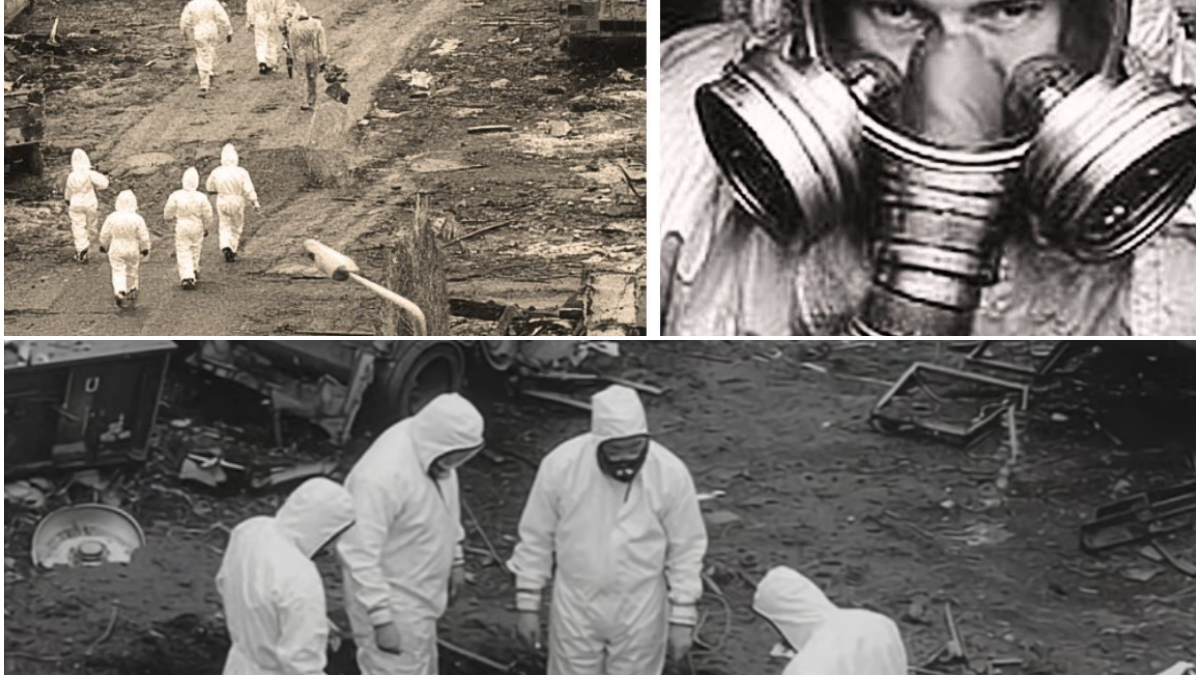
Soldiers in white suits move through silent streets, their masks fogging in the heat.
Whole blocks stand empty, windows open, curtains swaying in the still air.
A stadium has become a hospital.

Thousands wait to be scanned for an invisible enemy no one understands.
Mothers clutch children wrapped in sheets.
Doctors whisper words like contamination and radiation.
Terms that once belonged to science, not daily life.
The blue glow is gone now, buried in drums and memory, but the fear remains, thick as dust.
So, how could something like this happen?
In 1987, Goyana was a city caught between two worlds, not quite modern, not yet forgotten.
It sat in the dusty heart of Brazil, where heat shimmerred above red earth and the hum of motorbikes mixed with church bells and bird song.
Vendors filled the markets with fruit and chatter.
Families gathered each night outside their homes, the air thick with laughter, music, and the smell of grilled corn.
It was a place where people still trusted one another, where doors were left unlocked and neighbors borrowed sugar without asking.
The old radiotherapy clinic had been abandoned for nearly 2 years.
Its cracked walls and rusting equipment were just another reminder of a government that moved on too quickly.
Scavengers often wandered through, searching for metal they could sell by the kilo.
They had no reason to fear.
The dangers of radiation were distant things belonging to laboratories and nuclear plants, not the narrow streets of their city.
But inside that crumbling building sat a small, forgotten capsule, a relic of medicine and science, sealed tight and quietly pulsing with cesium 137.
It had survived storms, heat, and neglect.
Its warning labels had faded to nothing.
To anyone else, it looked like harmless scrap.
Each day the city went about its business.
Buses groaning through the dust, school children chasing soccer balls, the scent of rain clinging to the wind.
Yet somewhere in the dark, that blue light waited to be found, waiting for hands curious enough to open it.
And when they did, Goyani would never be the same again.
The people.
Goyani was not a city of wealth or influence, but of working people, mechanics, market sellers, nurses, drivers, the pulse of Brazil’s interior.
In the late 1980s, the country was still finding its way out of military rule, and the promise of democracy felt new and fragile.
Yet for most families, life was measured not in politics, but in the rhythm of survival, one day’s work leading to the next.
Among the city’s poorer neighborhoods, two men made their living scavenging.
Roberto Dos Santos Alves was 21, wiry, and restless, known for his easy grin and stubborn determination.
His friend Vagnner Motor Pereira was a few years older, quiet but loyal, the sort of man who could dismantle a machine with his bare hands.
Together they searched through junkyards and abandoned buildings, collecting whatever could be sold for scrap, copper wiring, old fans, broken tools.
It was honest work, though it rarely filled their pockets.
One morning, the two decided to explore the remains of the old institutia, a private clinic that had once treated cancer patients.
It had been closed for years, locked behind sagging gates, its windows shattered by storms and vandals.
The building looked forgotten by everyone but them.
Inside, they found medical tables coated with dust, broken instruments, and scattered papers that had long since lost their meaning.
But in one darkened treatment room stood something different.
A heavy metal cylinder attached to a rusted machine.
It was small, compact, and strangely solid.
To men who knew the worth of metal, it looked valuable.
They struggled to lift it, using a wheelbarrow to haul it back through the empty streets to Roberto’s home.
There, in a small courtyard shaded by banana trees, they began to take it apart, chipping at the lid casing with a hammer and screwdriver.
The work was slow.
Inside, they could see a narrow opening, and through it a faint blue glow.
They had never seen anything like it.
The light was mesmerizing, soft yet alive, as if trapped fireflies were swirling inside.
That night, Roberto felt ill.
Vomiting, dizzy, his skin hot to the touch.
He blamed something he ate.
Vagnner, too felt weak, but both shrugged it off.
Poverty teaches people to ignore pain.
They returned to work the next day.
A few days later, Roberto sold the cylinder to a nearby scrapyard owned by a man named Dare Alves Ferrer.
Dare was known throughout the neighborhood as a fair dealer, a man who kept his business honest.
He paid Robera the equivalent of a few dollars and set the cylinder aside for dismantling later.
But when evening came, he noticed the same strange glow shining from within.
He called his wife Gabriella to see it.
Together they watched, captivated, as a ghostly blue light spilled through their darkened room.
In a city where electricity often failed, the glow felt magical.
Dev scraped out some of the powdery substance inside, a fine shimmering dust that clung to his hands like sugar.
He couldn’t resist showing it to others, his brother, his friends, his neighbors.
Children were invited to see the glowing stone Gabriella even dusted a bit onto her skin, laughing at how it sparkled beneath the light.
No one imagined that this beauty could kill.
Over the next few days, the powder traveled from Dare’s home to his brother Evos to the nearby houses where curious neighbors came to see.
It coated chairs, clothing, and floors.
Children drew shapes with it, leaving glowing fingerprints along the walls.
One young girl, six-year-old Lady Des, found the powder irresistible.
She rubbed it on her skin and played with it like glitter.
Her mother thought nothing of it.
After all, what harm could come from something so beautiful?
Meanwhile, Dare’s employees began falling ill.
They suffered vomiting, weakness, burns that appeared without cause.
One man’s hands swelled and blistered.
Another’s hair began to fall out.
But they kept working, unaware that they were handling death itself.
Even doctors were confused when the first patients came in and feverish, covered in soores, skin peeling as though burned by fire.
No one recognized the symptoMs. By the time the truth began to emerge, the contamination had already spread beyond the scrapyard.
People carried the powder home on their shoes and clothes, bus seats, public phones, and sidewalks all glowed faintly under ultraviolet light.
The invisible enemy had moved into every corner of Goyania, and the city had no idea.
For Roberto and Vagnner, the men who started it all, the sickness grew worse.
Roberto’s arm became swollen and ulcerated, the skin darkening to black where he had held the cylinder.
He went to a clinic, but the doctors suspected infection, not radiation.
He was given painkillers and sent home.
Vagnner’s condition was similar, fever, nausea, fatigue.
They had unknowingly exposed themselves to one of the most dangerous radioactive materials on Earth.
And yet, amid this unfolding tragedy, none of them were villains.
They were ordinary people.
Men trying to earn a living, families trying to survive, children drawn to something that looked like wonder.
The capsule had been left behind by bureaucrats, abandoned without care.
Its warning labels meaningless to those who couldn’t read them.
The city was full of trust, not suspicion.
No one could have imagined that a forgotten machine from an empty clinic could unleash so much harm.
By late September, sickness was everywhere.
The blue glow that once seemed like magic now felt cursed.
Gabriella’s health declined rapidly.
Her skin began to burn and peel.
Dare refused to believe the powder was to blame.
He thought it might be supernatural and blessed even and tried to keep it safe from thieves.
But by then the capsule had already poisoned his family, his home, and much of his neighborhood.
It was the beginning of a nightmare that would spread far beyond Goyania.
A disaster born not from malice but from neglect.
The people had done nothing wrong.
They had simply trusted what the world had left behind.
The warning signs.
At first, no one in Goyania connected the sickness to the glowing powder.
The city’s hospitals were used to treating fevers, infections, and tropical illnesses, not something invisible and deadly.
When patients began arriving with strange burns and uncontrollable vomiting, doctors assumed it was food poisoning or an allergic reaction.
The symptoms didn’t follow any familiar pattern.
They seemed to appear at random and scrapyard workers, children, housewives, and bus drivers.
By the end of September, the confusion had deepened.
The hospitals were full of patients with burns that wouldn’t heal, blood counts collapsing, and hair falling out in clumps.
Nurses whispered that it was witchcraft, some curse or chemical in the water.
None of them had ever seen radiation sickness before.
Few even knew what it looked like.
At the same time, rumors began spreading through the city.
People spoke of a strange light in the junkyard, a powder that glowed like fireflies.
Others claimed to have seen ghosts or a miracle stone that healed the sick.
Dare, still unaware of the danger, invited more friends to see the capsule.
He even tried to bless it with holy water.
When Gabriella’s condition worsened, he thought perhaps the light was punishing them for their disbelief.
Meanwhile, the contamination continued to grow.
The powder clung to walls spread by wind and touch.
Every person who entered Dev’s home carried it somewhere new to buses, restaurants, and schools.
Lee, the six-year-old girl who had played with the powder began vomiting and refusing food.
Her mother, Maria, took her to the clinic several times, only to be sent home with medicine for a stomach virus.
No one thought to ask where the glowing dust had come from.
The first clear warning came not from a doctor, but from a scrap dealer named Evo Ferrer, Dev’s brother.
Evo had taken part of the cylinder to his own yard, where his employees were also falling ill.
One of them, noticing the burns on his hands, wondered if the light might be some kind of chemical.
Evo took a fragment to a local health office wrapped carefully in a plastic bag.
But the officials there dismissed him.
They didn’t understand the danger either.
By October 1987, the crisis had reached a tipping point.
Several of the scrapyard workers were gravely ill.
Roberto Dos Santos, the young scavenger who had first taken the capsule, had been hospitalized.
His arm was swollen and blackened.
Doctors considered amputation.
They treated him for infection and blood poisoning, but antibiotics had no effect.
One physician, puzzled by the burns, suspected something far stranger, a type of injury caused by radiation therapy machines, but that seemed impossible.
Goania had no nuclear facilities, no research centers, nothing that could explain such contamination.
On October 5th, Evo returned to the health office with another fragment of the capsule.
This time a young medical physicist named Walter Menddees took notice.
He recognized the possibility of radioactive material and contacted the state nuclear agency in Rio de Janeiro.
Within hours, a small team of specialists was dispatched to Goyania carrying Geiger counters and protective gear.
They arrived on October 7th, 3 weeks after the capsule had been opened.
When the team entered the scrapyard, the clicking of the Geiger counters grew frantic.
The levels of radiation were off the scale.
Even standing near the remains of the machine was dangerous.
The men quickly realized that they were dealing with CCM 137, one of the most hazardous isotopes known, used in medical radiotherapy.
The capsule, once sealed inside a hospital machine, had been ripped open and scattered across the city.
The team ordered an immediate evacuation of the area.
By then, the contamination had spread to more than 100 homes.
The powder had been carried in the folds of clothing, the soles of shoes, and the hair of children.
Even the soil was tainted.
Investigators used handheld detectors to trace the invisible poison, following faint readings from door to door, from bus seats to food stalls.
Entire neighborhoods were cordoned off with tape and guarded by soldiers.
The discovery sent shock waves through Goyania.
News spread faster than officials could control.
Radio stations warned people to report any contact with the glowing powder.
Crowds gathered outside hospitals demanding tests.
Some panicked and fled the city altogether.
Others turned against their neighbors, afraid to touch them, speak to them, or share food.
A new kind of fear, silent, invisible, and unrelenting, had arrived.
Inside the hospital’s chaos reigned.
Dozens of patients were now confirmed to be contaminated.
Doctors and nurses were forced to learn radiation protocol in real time, guided by experts from Brazil’s nuclear agency.
Leadlined isolation wards were set up.
Blood samples were rushed to laboratories.
For the first time, the full scope of the disaster began to emerge.
Later, the little girl who had played with the glowing dust was one of the worst cases.
Her skin was covered in burns, her organs failing.
She was transferred to a hospital in Rio where she was placed in isolation.
Her story captured the nation.
A child poisoned by something that should never have been within reach.
Despite every effort, she died on October the 23rd, just 6 years old.
Her death broke through the disbelief.
The public began to grasp the reality.
This was no curse, no accident of bad luck.
It was a catastrophe born from negligence, from a system that had allowed a radioactive capsule to sit forgotten in an abandoned building.
This government faced mounting outrage.
Questions filled the air.
Who had left it there?
Why had no one removed it?
And how could a city be so unprepared for something so deadly?
As the investigation unfolded, the answers were as shocking as the event itself.
The radiotherapy machine had been installed years earlier for medical treatments using cesium 137 sealed in stainless steel.
When the clinic shut down in 1985, the owners simply walked away, leaving the machine behind.
The building was later seized in a property dispute and the government failed to ensure its safe dismantling.
No one took responsibility.
That neglect, layers of it across years and agencies, was the true cause of Goyania’s suffering.
Not a single warning sign had been posted.
No guard had been stationed at the site.
The radioactive source was left alone, waiting for someone desperate enough to scavenge it.
When the cleanup began, the extent of contamination was staggering.
More than 3,500 cub m of radioactive waste had to be collected.
Soil, furniture, entire houses.
Hundreds of residents were tested.
Dozens required hospitalization.
Four people were confirmed dead, but thousands were exposed.
The event would become known as one of the worst radiological accidents in history, second only to Chernobyl.
Yet in those first frantic days of discovery, few in Goyana understood what that comparison meant.
They were farmers, drivers, and shopkeepers, not physicists.
They only knew that something invisible had invaded their lives, and that nothing, not the government, not the hospitals, not the prayers of their churches, could protect them.
Dare’s home was dismantled piece by piece.
His family, once admired in the neighborhood, became outcasts.
People whispered that they were cursed, that they had brought evil upon the city.
Children pointed at them in the streets.
When Gabriella died from radiation poisoning, the fear turned to fury.
Mourners stayed away from her funeral.
Even the cemetery workers hesitated to bury her, afraid of contamination.
In the days that followed, soldiers patrolled the streets wearing masks and gloves, spraying disinfectant, sealing contaminated objects in lead druMs. Buses carried evacuees to temporary shelters.
Journalists descended on Goyania from across the world.
The story of the glowing dust, beautiful, deadly, and utterly preventable, spread faster than the radiation itself.
But before the world’s cameras arrived, the warning signs had been there all along.
If only someone had known how to read them.
The abandoned clinic, the missing safety protocols, the faint blue glow that should have screamed danger.
Each piece of neglect had built upon the last until the inevitable happened.
The tragedy of Goyani was not sudden.
It was a slow motion collapse of responsibility, one that began years before a single man touched that capsule.
And when the light finally broke open, the true cost of that neglect illuminated far more than a scrapyard.
It exposed a system unprepared to protect its own people.
The moment when disaster strikes.
They arrive just after dawn.
Their truck grinding to a halt outside the scrapyard as the city wakes to the usual hum.
Roosters, buses, the first whistles of traffic police.
The specialists climb down in gray coveralls.
Their faces drawn tight from an overnight drive.
A geer counter is switched on.
The probe lifts.
The silence lasts a breath too.
Then the machine erupts in a dry, nervous rattle.
The sound spikes, stutters, and breaks into a frantic chatter so loud the men step back on instinct.
It’s not a subtle reading.
It’s not even a warning.
It’s a siren with teeth.
They try again, slower, sweeping along the ground where a slick of fine blue grit has settled into the seams of concrete.
The clicks climb into a continuous wine.
The senior physicist raises a hand and everything in the courtyard stops.
Chatter, movement, even breathing.
As if silence alone could pull the numbers back down.
It does not.
This is not a leak.
This is detonation spread in dust.
Word moves faster than protocol.
Policeman takes off his cap and puts it back on, not sure why.
A neighbor peers through Earth’s slatted fence.
The city, still stretching itself awake, doesn’t yet know it has stepped into a different calendar.
That at this hour on this ordinary morning Goyania has entered another kind of time measured not by minutes but by counts per second.
The first perimeter is nothing more than tape and a shouted command.
The second is soldiers arriving in a convoy that breathes diesel into the low heat.
They form a ring around the yard, then a wider ring around the block, moving on muscle memory learned for a crowd control, not for an enemy that has no face.
These specialists call for more equipment.
Survey meters, film badges, sample kits, leadline druMs. A runner goes to the truck to return with a roll of plastic sheeting and a battered toolbox.
Improvisation is now a method.
Inside the office, the scrapyard ledger sits open.
There are names and weights, tickets signed and crossed out.
A fan spins overhead, pushing warm air, and the fine taste of metal across the room.
On the ledger’s edge, the faintest trace of blue glimmers, where dust has settled in the tiny drop of sweat left by the hand that turned the page.
It will be weeks before the book itself is considered waste.
The men follow the instrument, not to where it is safest, but to where it screams loudest.
The probe passes over a chair, and the counter climbs.
It touches a rag, and the counter sings.
A wooden crate answers like a struck bell.
The reading above the fragment of metal casing, a small, innocent looking piece with a threaded lip, is beyond the scale of what the meter is meant to measure in the field.
They exchange glances that have no place for panic.
There is only the work.
A decision is made.
Evacuate the immediate area, then the next three streets.
From door to door, soldiers knock and repeat the same instruction.
Pack only what you can wash.
Leave now.
Families spill into the street with plastic bags and small children half-dressed.
Neighbors calling to one another as if this were a fire that can be watched from a doorway.
Some want to argue, to ask what could be so urgent on a morning like this.
Others see the masks, the gloves, the way the men hold themselves away from walls and handrails, and they stop arguing.
They walk.
At the hospital, the pattern that no one could read is suddenly legible.
Burns that aren’t burns.
Fevers that don’t submit.
Blood cells vanishing as if siphoned off.
The visiting physicist speaks with a head nurse.
His words are careful and unadorned.
We are dealing with cesium 137.
She writes it down letter by letter as if the act of naming could dull it.
Behind the glass, a boy coughs weakly into his sleeve.
A technician closes the curtain, her hands steady, only because they must be.
Back at the yard, the teams trace a path with the probe, following an invisible river.
They find a trail that leads to the street and then to a house two doors down where the readings jump again.
Another unit is sent along a parallel street, finding hot spots on a bus stop bench and the lip of a public fountain where children lean while speaking to each other at dusk.
The meter complains along a line of footprints, right foot hotter than left, where someone stepped out of the yard and into an ordinary day.
By late morning, a screening center opens in a stadium.
There’s concrete curves turning into a new kind of clinic.
Tents grow in rows, bright tarps pinched to steel frames by hands that learn this grip erecting markets and festival shade.
The first line forms, men and women carrying plastic bags, infants, the blank stare of people who have left everything that makes sense behind.
Volunteers hand out water.
Soldiers direct the flow with voices horse from repeating instructions.
No one argues now.
A man approaches the table with the detector.
The probe passes near his sleeve and the needle leaps.
He smiles reflexively, embarrassment, not joy, and is guided to another line where his clothes will be placed in bags and he’ll be asked to shower and to scrub, to scrub again, to scrub until the numbers fall.
An elderly woman arrives with a grandchild.
The child’s sandals are hot.
The woman’s rosary beads are quiet.
She squeezes them with a force learned in other emergencies.
Drought, debt, illness.
This one is different.
This one cannot be met with an offering.
Afternoon brings cameras.
A local news crew sets up outside the cordon.
Microphones shaking slightly in the hand of a reporter who has never stood in a story this large.
She speaks of a chemical incident, of contamination, of precautions underway.
The words are too small for the thing itself, but are the only bridge she has.
Behind her, a soldier ushers a family forward.
A father who turns back once, twice to glance at the low house he built in weekends with cement and pride.
As the line moves, he lifts his child to his shoulders, as if elevation could change what travels on skin.
Inside the scrapyard office, a plastic tablecloth becomes an examination surface.
The team in gray divides the space into zones, clean, suspect, dirty.
They speak softly, as if to lift their voices would shake the invisible dust into a new cloud.
Samples are taken with tweezers and sealed in small containers, each labeled with a number and the time.
By nightfall, a map will exist, not of streets and shops, but of readings and vectors of where people sat and what they touched.
It will look like a storm paused over a city, thickest at the center, tapering in ragged arms toward everywhere ordinary life happened.
Evening is a different gravity.
The sun leaves the city and with it the sense that this can be managed by daylight alone.
The stadium lights flicker on a white wash that makes the tents look like the set of a film about war.
The lines do not shorten.
The nurse at table writes and writes her handwriting flattening into practical strokes as the names accumulate.
Mothers, sons, grandfathers, cousins, lovers, neighbors.
Volunteers empty baskets of clothes into barrels labeled wash, burn, test.
A man argues to keep his wedding shirt.
In the end, he folds it once, twice, and places it in the barrel marked burn.
He does not look up.
On a side street near the scrapyard, a door hangs open.
The meter chatters at the threshold.
Inside, a child’s drawing is taped to a wall.
A house, a tree, a sun in the corner, and along its edges, a faint spectral shimmer where a mother slid the tape to straighten it the night before.
A photograph on a dresser shows a young couple standing in front of the same house.
Two smiles, a future.
The detector nudges the frame.
The sound jumps.
The team member lifts the photo with gloves and places it in a bag, sealing a memory out of sight.
In the first nights, the city learns new choreography.
Streets are closed and then closed again.
Trucks arrive with sand with cement with lead bricks.
A backhoe idles at the edge of the yard.
It is bucket lowered into a trench that was not there at noon.
Technicians in respirators lift fragments of the dismantled machine with tongs and drop them into druMs. When the drum is full, it is sealed and marked.
More drums arrive.
A young soldier, 20 and far from any training that could imagine this stands with a clipboard counting steel barrels that will never be touched again.
Fear moves faster than any vehicle.
In markets.
The following morning, um, a banana vendor finds himself alone.
The bus driver watches the seats behind him stay empty, his route transformed into a rehearsed loop.
A woman carrying her child down a sidewalk is met by the subtle choreography of avoidance.
Steps widening, glances sliding away, an invisible lane opening around her.
In the church courtyard, a priest reads a bulletin from the authorities and repeats it in a voice built to carry over rain.
Report if you have seen the blue light.
Do not keep souvenirs.
Do not try to wash this from your hands at home.
The authorities expand the sweep.
Household items are collected.
Chairs, rugs, televisions, toys.
Garden soil is dug and carted away.
In some places, the threshold between what can be saved and what must be buried is a line drawn across a floor tile.
In others, the calculation is more ruthless, the house itself.
A crew arrives with masks and sledgehammers.
The home that held a life is reduced to pieces and packed into drums as if grief could be compacted to fit a schedule.
Goyana is a city of conversation, but now words slow.
At the stadium, a child asks a soldier if the magic powder will make him glow in the dark.
The soldier who once stood in formation under a drilling sun looks at the boy and says, “No.”
He means, “I hope not.”
He means you are here and that is the best I can do.
He means none of this should ever have come to you.
The discovery at the yard opens doors elsewhere.
One team traces a spike to a small house where the owner prizes open a wardrobe and steps back as if he were revealing a secret held too long.
Inside, on a shelf, a tin holds a salted shimmer.
He had gathered the pretty light to show his brother the next night, then grew frightened and hid it.
He watches the men seal the tin in a bag.
He expects to be arrested.
No one arrests him.
They tell him to wash his hands.
Hospitals harden their routines.
Nurses move like lines in a script written overnight.
There are rituals now.
Gowns on, gloves on, mask up into the room, check vitals, note the rash, back out, gloves off, hands washed again.
Again.
Outside, families bring food they won’t be allowed to deliver, and wait in a heat that seems to press the world closer.
A young woman stands at the fence with a rosary and a plastic bag containing a child’s shirt.
She will hold both until the sun sinks beneath the edge of the stadium roof.
The press finds a language of scale second only to the worst since a reference point far away with a name everyone knows.
But Goyania is not a headline.
It is a woman kissing her fingertips and pressing them to the glass she has been told not to touch.
It is a man standing in a yard he can no longer enter, looking at a chair he will never sit in again.
It is the knowledge that everything familiar can be pronounced unsafe by a sound and a number.
In the second week, the cleanup takes on the shape of endurance.
Teams move house to house, block to block.
Their meters leading them like dowsing rods.
Some readings are mercifully low, a smudge on a doororknob, a hot nail head on a kitchen table.
Others are cruel, a child’s bed lit up like a flare.
In those rooms, the work is careful and merciless.
The mattress goes.
The curtains go.
The pillow with its crocheted edge goes.
A mother reaches out and stops her hand in the air.
A technician, eyes soft above his mask, nods once as if to say, “I see it, too.”
He does not say, “I’m Tori.”
The dead become a test of fear and grace.
A funeral is planned and then not planned, and then planned again under restrictions that feel like insults to grief.
Workers from the cemetery hesitate.
The coffin is sealed, then sealed again in a way that suggests superstition and science have shaken hands for once.
Outside the gates, a small crowd gathers, not to mourn, but to protest.
They do not want this body near their dead.
The mother passes through them, her head bowed, her courage a thing that cannot be measured by any instrument in the city.
The convoy to the disposal site begins in the dark, when the lanes are freer and the air a fraction cooler.
Trucks stacked with drums roll out like a procession of unlit lanterns.
At the roadside, a few people watch and do not wave.
A child counts the trucks and decides it is a good number because it ends before he loses patience.
On a map pinned to an office wall, a line is drawn from city to pit, from accident to storage, from morning to a future that will always include this road.
What authorities can do, they do.
They establish thresholds, paperwork, routines.
They issue ID cards to those screened and found clean.
A small laminated certificate of normaly.
They set up clinics for follow-up blood tests and counseling that will be asked to do the work of time.
But no notice, no protocol can keep rumor from throwing its own shadow.
A woman with a bakery sees customers taper to nothing.
A school falls quiet, then reopens to rows of halfoccupied desks.
A bus driver wears gloves and apologizes with his eyes.
At night, in corners of the city where the counters have gone quiet, the blue powder still glows in memory.
People see it behind their eyelids when the chew and they try to rest.
Tiny galaxies scattered across a table, a ring on a shirt cuff, a crescent on a child’s heel.
The mind is a meter of a different kind, and its needle does not easily return to zero.
The larger world arrives with experts and acronyMs. International agencies send advisers to simiters the calm grammar of standards and limits.
They walk the same streets, stand on the same thresholds, hold the same instruments whose voices the city now knows too well.
In meeting rooms, they speak of absorbed doses and decay paths, of half- livives measured in years that outnumber childhood.
Outside those rooms, a grandmother asks a nurse if she can hug her grandson.
The nurse says yes, and the nurse is right, and somehow the grandmother still hesitates.
The mind’s halflife longer than seesiuMs. There is a rhythm to the work now, almost lurggical.
Morning briefing, street assignments, load drums, break for water in the thin shade of a shuttered shop, return to the yard where it began, and measure again as if the city cannot help but circle back to the source.
The numbers are lower now.
The graph the team keeps, a jagged mountain of spikes and drops, has settled into foothills.
There is relief in that, but not celebration.
The disaster has already unfolded.
This is the census of its reach.
Days later, a woman returns to the stadium to collect her certificate.
She folds it into her pocket and stands for a moment before walking away.
The tents are fewer now, the lines shorter.
A child pedals through the parking lot on a bicycle, his father jogging behind, his laughter finally untethered from the hush that fell over the city.
In a corner, a volunteer removes a sign that says wash station and leans it against a wall.
The letters will leave a pale rectangle when the sun takes the rest of the color.
At the scrapyard, grass has started to push through cracks despite the constant trampling of boots.
The office window is boarded.
The perimeter stands, but the street has reclaimed its ordinary noise.
Dogs barking.
A radio playing a song that was a hit last year and will be forgotten next.
The team returns one last time to sweep the probe along the ground out of habit.
The meter murmurs, then rests.
The men look at one another.
The moment of discovery sits among them like a stone they cannot put down or throw away.
They are not heroes and they do not think of themselves that way.
They are technicians and soldiers and nurses who arrived in time to measure the harm and to begin barely to turn its tide.
The city will tell this story back to itself in duplexes and market stalls where someone was when the tape went up.
What it felt like to strip your own house of its softness piece by piece.
The way the Geiger counter’s voice became the soundtrack of a season.
In years to come, the word Goyania will travel far beyond Goyas and will be spoken by people who were not there.
But for those who were, the disaster remains not a headline or a comparison, but a series of mornings and nights of cues and signatures, of the simple, relentless work of closing a thing that should never have been opened.
And that is how it unfolded.
Not with a single explosion, but with a light mistaken for beauty.
Not with a flame, but with dust.
Not with firefighters, but with instruments that spoke in clicks, and a city that learned to listen.
The moment of discovery did not end when the meter first screamed.
It was a long echoing moment that filled days and rooms and the space between neighbors.
When the sound finally quieted, when the lines thinned and the tents came down, Goyana did not return to what it had been.
It moved forward carrying a knowledge that would not fade, that danger can be lovely, that negligence can be lethal, and that order, once broken, is rebuilt with hands and patience, one measured step at a time.
The rescue and aftermath.
When the radiation teams finally secured the capsule fragments, Goyania was no longer a city in crisis or it was a wound.
Streets once filled with chatter and commerce had gone silent.
Blocks of homes sat empty behind yellow tape.
Soldiers in masks patrolled the perimeters with rifles slung low, not to fight an enemy, but to keep order in a place gripped by invisible fear.
What had begun as confusion had hardened into a deep collective grief.
Hospitals became the new heart of the city.
Hundreds of patients streamed in, some visibly sick, others terrified that they might be next.
The corridors overflowed with families clutching towels, blankets, and bottles of water, waiting for names to be called.
Nurses moved like shadows between wards, faces hidden behind masks, their voices quiet but firm.
They washed burns, changed dressings, and comforted children whose parents had not returned from the stadium.
Every sound, the beeping of machines, the murmur of doctors, the shuffle of shoes felt like part of a single exhausted breath.
The medical staff had no manual for what they were facing.
Radiation injuries weren’t something Brazilian hospitals were trained to treat.
Blood counts plummeted inexplicably.
Wounds refused to heal.
Patients skin darkened, blistered, and peeled in layers.
Their immune systems collapsed under the assault.
Doctors learned to diagnose by instinct, guided by visiting specialists from Rio, Sao Paulo, and eventually from abroad.
France, the United States, and the International Atomic Energy Agency sent experts and equipment.
The world was watching now and helping, but for many victims, it was too late.
Among the sick was 6-year-old Lea Des, the little girl who had played with the glowing powder.
Her case became the symbol of the disaster.
She was flown to a special hospital in Rio de Janeiro, placed in isolation behind leadlined walls.
Nurses there took shifts by her bedside, reading to her softly through protective masks.
Her toys had to be destroyed.
Even her bed sheets were measured in micro severs before they were touched.
Despite every attempt, transfusions, antibiotics, grafts, her small body could not recover.
On October the 23rd, 1987, Lea died from acute radiation syndrome.
Her burial was a national reckoning.
When the coffin arrived back in Goyania, people lined the streets in protest, terrified that the child’s body would spread contamination.
Her small white coffin, sealed inside a lead and concrete capsule, was lowered into the earth under heavy security.
The priest’s words were drowned by the sound of helicopters circling overhead.
The crowd watched from a distance.
Some wept, others turned away.
It was the crulest image of all the a city afraid to bury its own dead.
For the survivors, healing meant far more than medicine.
Radiation sickness left scars both visible and unseen.
Skin grafts and bone marrow transplants saved a few, but not many.
Some lost limbs, others eyesight.
Many would live with chronic pain for the rest of their lives.
Psychologists began arriving weeks later to help those who hadn’t been physically touched by the cesium, but had lost everything.
Homes demolished, possessions buried, reputation shattered.
Fear lingered in every cough, every rash, every whisper of wind that blew dust across the streets.
The cleanup became an act of both science and mourning.
Nearly 200 houses were demolished.
Entire neighborhoods were scraped clean of their top soil.
Trucks carried tons of contaminated debris to a specially built burial site outside the city.
A deep pit lined with concrete sealed with layers of earth.
Workers in white suits loaded drums marked with radiation symbols, their faces expressionless.
Many were local men who had lost jobs when their businesses closed.
Now they earned their wages hauling the remains of their own community.
Each load of waste was a reminder of how thin the line was between the living and the dead.
By December, the worst of the contamination had been contained.
Radiation readings dropped.
The city’s core began to reopen cautiously, but the psychological contamination was harder to cleanse.
Goyania had become infamous.
Across Brazil, the name carried a sting, a place cursed, dangerous, untouchable.
Bus drivers refused to pick up passengers from the city.
Farmers in nearby towns found their produce unsellable.
A rumor spread that rain from Goyania carried poison.
People who had once been proud to call the city home now hid it on job applications, fearing rejection.
The victims too were treated like lepers.
Even after doctors confirmed they were no longer radioactive, neighbors avoided them.
Some were denied entry to restaurants.
Others found themselves shunned in church pews.
De Alvis Ferrer, the scrapyard owner who had handled the capsule, became both villain and victim.
He had lost his wife, his business, and much of his neighborhood.
Reporters him for interviews.
Strangers cursed him in the street.
He carried the unbearable guilt of having spread the powder, though he was as ignorant of its danger as anyone.
He died of cerosis in 1994, haunted by the memory of the light that destroyed his family.
The government, under enormous pressure, established emergency laws for nuclear safety.
The National Nuclear Energy Commission was granted new powers to regulate medical and industrial radiation sources.
Teams were dispatched across Brazil to locate and secure abandoned equipment.
A new awareness swept the country, an understanding that the age of atomic energy had reached even its poorest corners, often without the people’s consent or comprehension.
But for the people of Guyania, laws and commissions brought little comfort.
They were left to rebuild a city that had been reduced to suspicion.
Children were told not to play in the dirt.
Teenagers refused to swim in public pools.
Pregnant women fled to the countryside.
The once vibrant markets of Goyaz Avenue stood half empty, vendors whispering behind masks.
Scientists declared the city safe, yet even they carried to clipped to their belts as they spoke.
The international teams eventually left, their reports filed, their measurements complete.
For them, Goyania was a case study, a benchmark in radiological response.
For those who remained, it was a scar in the landscape of memory.
Each year on the anniversary of the disaster, survivors gathered at the site of the old clinic.
They brought candles, flowers, and photographs of those who never came home.
No grand speeches were given, only silence broken by the rustle of wind through the weeds growing between the cracks of what once was a foundation.
In that silence, there was a kind of resilience.
The same hands that once dismantled machines now built new homes.
The same streets that had carried contamination now carried children on bicycles again.
Life, stubborn and unglamorous, returned in fragments.
A church choir rehearsing, a school reopening, a fruit stand filled once more with the smell of guava and sugar cane.
Goania would live on, though never untouched.
In time, the world’s attention shifted elsewhere, to Chernobyl, to Fukushima, to other headlines and horrors.
But for those who lived through that autumn of 1987, the memories did not fade.
They remembered the clicking of the Geiger counter, the blue dust that shimmerred like a dream, the day soldiers came to take away everything they owned.
They remembered what it felt like to be abandoned by those who should have protected them, and then to be feared by those who didn’t understand.
Years later, a survivor was asked what she remembered most.
She didn’t mention the sickness or the fear.
She said it was the light, that blue glow, so beautiful and so wrong.
It looked like something holy,” she said softly.
“And I still don’t know why we thought it was safe.”
That was the cruel heart of the Goyania tragedy, the betrayal of beauty.
A light meant for healing became a weapon.
A city that trusted became a city scarred.
And yet, in the faces of those who stayed, who cleaned, who cared for the dying, there was something quietly defiant.
A refusal to let the invisible win.
They could not undo what had been done, but they could remember.
They could rebuild and in that there was a kind of rescue too.
The lasting legacy.
In the years that followed, Goyena became more than a city.
It became a lesson written in invisible ink.
The disaster was studied in classrooms, cited in scientific papers, and whispered about wherever radiological safety was discussed.
But to the people who had lived it, it was not a study.
It was a ghost.
One that lingered in the soil, in memory, and in the quiet mistrust that took root long after the Geiger counters went silent.
Brazil moved quickly to make sure it could never happen again.
Within months, the government enacted strict new laws requiring registration and inspection of every radioactive device in the country.
Abandoned clinics and laboratories were searched, their equipment dismantled and secured.
A new awareness spread through hospitals and universities, not born of curiosity, but of caution.
The Goyania incident had shown that technology without oversight was as dangerous as ignorance itself.
The cleanup site, once a rural stretch of scrubland, became a permanent repository.
Hundreds of concrete line trenches sealed with steel drums, each marked with the black and yellow tree foil of radiation.
Fences surrounded it for miles.
Even today, guards patrol its boundaries, keeping watch over a danger that will outlive them all.
For cesium 137, the halfife is 30 years.
The dust that destroyed a neighborhood will remain potent for centuries.
Yet, not all of the legacy was fear.
In the wake of disaster, Goyana also became a model of resilience.
Survivors organized to demand justice and recognition.
Compensation funds were created for the victims and their families.
Clinics opened to monitor long-term health effects, not only in those who were directly exposed, but in future generations.
Scientists and doctors trained in radiological response because of what had happened there.
Knowledge that would later save lives elsewhere.
Every year on the anniversary of the accident, the survivors gather at the small memorial built on the site of the old radiotherapy clinic.
It is simple, a stone plaque, a few flowers, a ring of candles that flicker against the evening wind.
They come not just to remember the dead, but to remind the living that negligence has a cost measured in human lives.
Parents bring their children, telling them about the Bedford glowing light that once turned their city upside down.
A warning disguised as a bedtime story.
Outside Brazil, the Goyania incident changed how the world thought about radiation.
It was not Chernobyl, not a reactor meltdown or an act of war.
It was ordinary people, workers, families, children undone by something they didn’t understand.
It forced governments to recognize that nuclear materials, even for peaceful use, required more than science to manage.
They required empathy, education, and vigilance.
Over time, the city rebuilt itself.
New homes rose where the contaminated ones had stood.
The markets filled again with laughter and music.
Life found its rhythm, as it always does.
But beneath that rhythm ran acquired awareness, that safety is not permanent, that progress can turn against its maker if left unattended.
Goyana became in its own way a symbol of both the danger and the dignity of modern life.
Decades later, the soil is clean, the air is safe, and the city’s people live without fear of the unseen.
But they do not forget.
The story of the blue light has become part of Goyania’s identity, not just as tragedy, but as testimony.
It reminds the world that beauty can deceive, that trust must be earned, and that even in the aftermath of catastrophe, human beings can rebuild with grace.
And so, when the sun sets over the city and the last light touches the memorial stone, there is no sound, but the wind moving through the trees.
The danger has faded, but the memory remains, steady, unblinking, eternal.
That is the legacy of Goyania.
Not the glow of seesium, but the endurance of those who refused to be defined by it.
Reflecting back in the heart of Brazil, time has softened the edges of what happened in Goyania.
The city hums again and the moon.
Buses rumble through the avenues.
Children play soccer in the dust.
Markets spill with color and sound.
Life as it always does has reclaimed the silence.
Yet beneath the rhythm of everyday noise, something endures.
Not fear, not shame, but remembrance.
The kind that lingers in the space between one generation and the next.
Today, the site of the old radiotherapy clinic is unrecognizable.
The walls that once hid a silent poison are gone, replaced by trees and quiet gardens.
At the small memorial, a plaque bears the names of the victims, carved into stone, smooth as bone.
Visitors leave flowers there.
Sometimes with notes folded between the petals.
Others simply stand, eyes closed, listening to the wind that moves through the leaves.
There are no sirens anymore, no soldiers, no masks or instruments clicking in warning.
Only the steady heartbeat of a city that learned in the hardest way imaginable how fragile trust can be.
Every year on the anniversary, a small procession gathers.
Some wear white, others carry candles in jars.
The air is heavy with prayer, but also with gratitude for survival, for knowledge, for the chance to begin again.
The survivors walk slowly, their faces lined not just by time, but by the memories of those weeks when everything they touched seemed dangerous.
Some hold photographs of loved ones lost.
Others bring their grandchildren, who know the story only through the whispers of their elders.
The blue light, the children call it, a phrase that still holds wonder, though they’ve been told it was death.
There is something uniquely human about that.
The way beauty and tragedy can intertwine.
The way the mind insists on finding light even in disaster.
The Goyana incident was at its core a story of ordinary people.
Men who scavenged to feed their families.
Women who trusted what they could see with their eyes.
Children who found magic in something that glowed.
None of them meant harm.
None of them imagined danger.
And yet their innocence met the fallout of modernity.
A machine left behind by progress, forgotten by those with power, discovered by those without it.
When the story reached the world’s newspapers, it was easy to frame as a cautionary tale, a failure of safety, a symbol of bureaucratic neglect.
And it was all of that.
But beneath the headlines lay a more personal truth, that progress without compassion always leaves someone behind.
Technology may advance, but humanity stumbles when it forgets the people it serves.
The capsule in that clinic wasn’t just a piece of metal.
It was a promise broken, a reminder that the tools we create can outlive our sense of responsibility.
Yet for all its sorrow, Goyana did not end in despair.
In its aftermath, the city became a living testament to recovery.
Slow, imperfect, but a real.
The doctors who once stood helpless learned to treat radiation sickness.
The government that once ignored its duty reformed its laws.
And the people who once feared the very air they breathed learned to trust again step by step.
Out of grief came a kind of wisdom that vigilance and empathy are not opposites but allies.
That every act of care from a nurse changing a bandage to a scientist labeling a drum can be a form of redemption.
Some survivors later said the hardest part wasn’t the sickness or the loss, but the isolation.
Being treated as if they themselves were contaminated long after the radiation was gone.
It took years for that stigma to fade.
Yet in time, their resilience became the city’s quiet strength.
They taught the rest of Brazil and the world that survival isn’t just about living through an event.
It’s about refusing to let fear define you after it’s over.
The cesium has long decayed.
The drums at the disposal site sit buried beneath concrete and soil.
Their danger contained, their senance unbroken.
But the lessons remain alive.
Scientists still reference Goyania into safety manuals and emergency drills.
The name has become a kind of warning written in light, invisible, but enduring.
A reminder that the smallest act of neglect can ripple through a thousand lives.
And that sometimes history’s greatest tragedies begin not with intent, but with forgetting.
Walk through Goania today, and you’ll find no visible scars.
The people smile easily.
The city sings again, but memory runs deep.
At dusk, when the street lights flicker on, their faint glow feels almost sacred, as if to reclaim light itself from the shadow of that glowing powder.
Children chase fireflies in the warm evening air, unaware that their laughter fulfills a promise their parents once feared would never return, that life could be normal again.
And for those who remember, that is enough.
They carry the past not as a burden, but as a vow.
To never look away from the unseen.
To never leave behind what should be safeguarded.
The Goyana incident is no longer just a tragedy.
It is a mirror.
It reflects how progress and peril can share the same light and how the strength of a community is measured not in its wealth or technology but in its humanity when both are stripped away.
In the end, it was not the scientists nor the soldiers nor the politicians who defined Goania’s legacy.
It was the people.
The mothers who washed their children’s hands roar trying to keep them safe.
The neighbors who shared water when fear kept them apart.
The workers who rebuilt homes on land once forbidden.
They are the quiet architects of the city’s rebirth.
And somewhere in that resilience lies the final truth that even after the unthinkable, life insists on continuing.
Stubborn, luminous, unafraid.
When the wind passes through the city at night, rustling the leaves of the memorial garden, it carries a whisper, faint but unmistakable.
It speaks of loss, of learning, of the cost of progress, and of the people who bore it with grace.
When the whistle fell silent, Goyena taught the world that beauty can betray, that carelessness can kill, and that even in the deepest night, the human spirit still finds a way to glow.








