The Insane Explosions That Killed Over 100,000 Americans
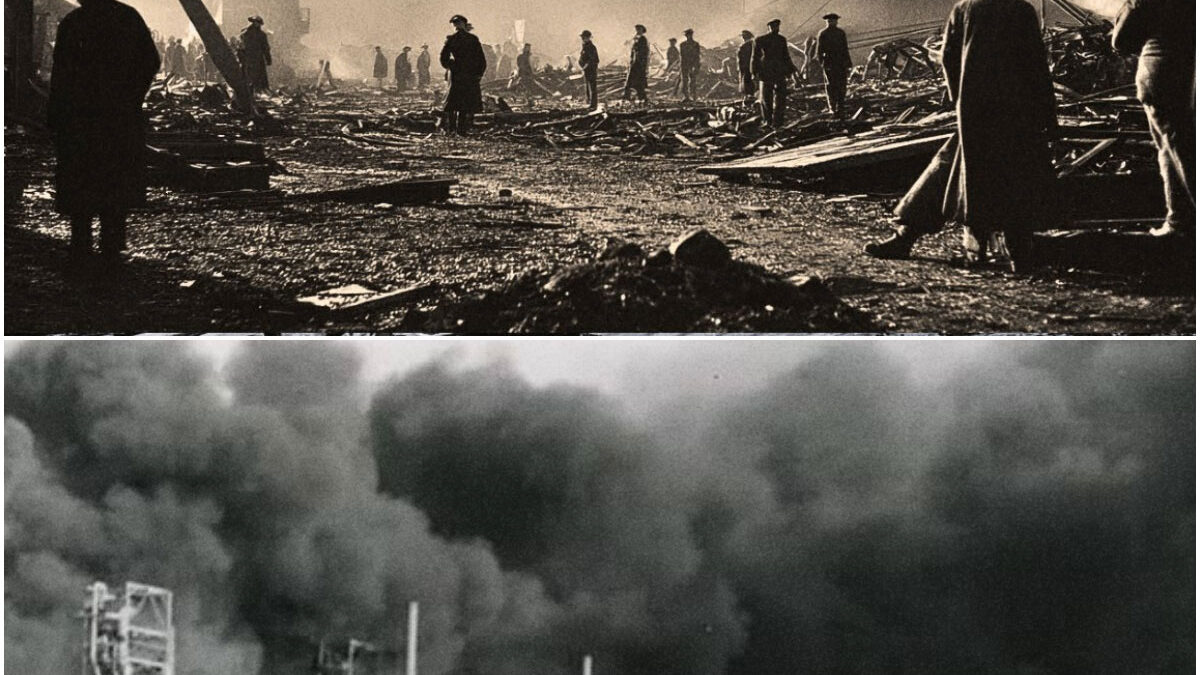
The Insane Explosions That Killed Over 100,000 Americans
For nearly a century, American industry was built on a dangerous assumption that explosions were simply part of the job.
From the 1880s through the 1950s, factories, mills, refineries, and rail yards erupted with deadly force, killing workers by the dozens, sometimes by the hundreds.
These were not freak accidents.
They were predictable, repeatable failures that industries learn to live with.
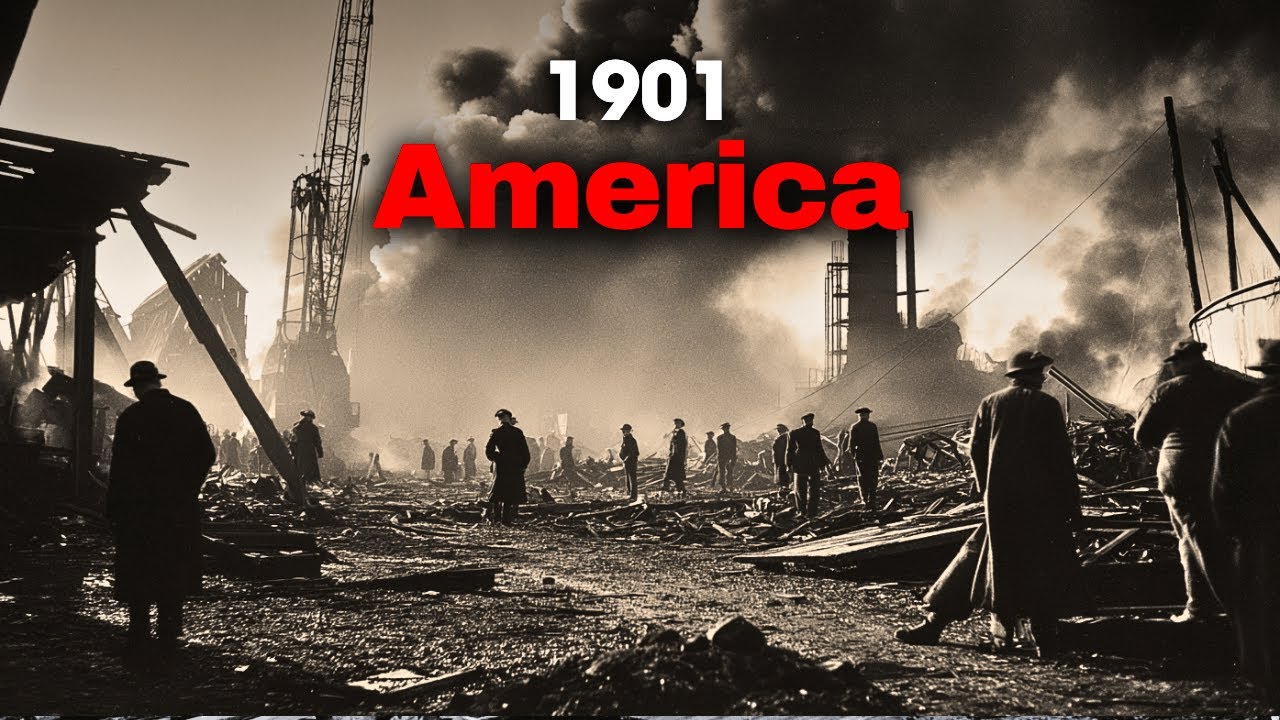
Tonight, we step into an era when catastrophic blasts were expected, accepted, and quietly endured by the men who powered a nation.
If stories like this move you, consider subscribing to our channel to help preserve the forgotten stories of those who built our world.
Now, to understand how explosions became routine, we have to begin inside the wreckage, where danger was not the exception, but the cost of showing up to work.
In the late 19th century, the sound of an explosion inside an American factory rarely stopped production for long.
Twisted beams, shattered brick, and burned machinery were cleared away with grim efficiency because everyone understood what had happened.
Something under pressure had failed, and someone nearby had paid the price.
From the 1880s into the early 1900s, industrial explosions were not viewed as extraordinary disasters.
They were treated as mechanical inevitabilities, the result of steam, heat, gas, and force pushed beyond their limits in pursuit of output.
Newspapers might mention the dead in a short column, but by the next shift, the machines were often running again.
Boilers ruptured without warning, tearing through floors and walls as if they were made of paper.
Steel furnaces erupted, sending molten metal across work platforms where men had nowhere to run.
In refineries, invisible clouds of vapor ignited with a violence that erased entire sections of a plant in seconds.
These events did not shock management.
They confirmed what many already believed.
The men who worked these jobs understood the risks in a way modern audiences rarely imagine.
They felt the vibrations in the pipes, smelled leaking gas, and watched pressure gauges creep higher with each passing hour.
They knew which machines had a history and which corners of the plant were most likely to kill them if something went wrong.
Yet, they kept coming back.
Wages were steady.
Families depended on them.
And safer work was often impossible to find in an industrial economy, racing toward the 20th century.
Danger was not hidden.
It was normalized, spoken about quietly, then set aside.
But why were these machines so prone to catastrophic failure in the first place?
And how did one source of power become the most feared force in American industry?
To answer that, we have to look at what was driving nearly everything.
By the turn of the 20th century, steam powered nearly everything that moved, lifted, cut, or crushed in American industry.
From textile mills in New England to rail yards in the Midwest, massive boilers worked day and night, holding water just below the point of violent release.
When they failed, they did not leak or sputter.
They detonated.
A steam boiler was a sealed iron vessel pushed far beyond safe limits.
Inside, water flashed into vapor under extreme heat, building pressure that early gauges often misread or failed to show at all.
Corrosion, low water levels, and metal fatigue turned these machines into unpredictable bombs.
Crown sheets weakened silently.
Rivets stretched and cracked.
Scale buildup hid damage from even experienced operators, many of whom had learned the job by watching someone else survive it.
When the metal finally gave way, the force could lift entire buildings off their foundations.
In the 1890s and early 1900s, boiler explosions killed thousands across the United States.
Some blasts sent heavy steel shells flying hundreds of feet, flattening homes, killing bystanders, and tearing through nearby shops.
Others scolded workers instantly, filling rooms with superheated steam that burned lungs and skin beyond recovery.
What made these explosions especially deadly was their speed.
There was no warning siren, no gradual failure, no time to escape.
One moment the boiler stood silent, the next it erased the space around it.
Investigations followed, but rarely led to meaningful change.
Manufacturers blamed operators.
Operators blamed poor equipment.
Companies quietly paid families or moved on without explanation, installing new boilers in the same vulnerable spaces.
Steam was dangerous, but it was also cheap, powerful, and indispensable.
As industries expanded, they accepted the risk without hesitation.
And nowhere was that acceptance more visible or more lethal than inside the furnaces and open pits of the steel mills that came next.
Inside the steel mills of the late 19th and early 20th centuries, danger was not hidden behind walls.
It glowed in open furnaces, flowed through overhead ladles, and pulled beneath grates in the form of molten slag.
These plants were designed around heat and speed, not containment.
Open hearth furnaces burned day and night, holding metal at temperatures that softened steel supports and warped platforMs. Ladles carrying tons of molten iron moved above workers heads, suspended by cranes that creaked under constant strain.
A single mechanical failure could send liquid metal pouring downward with unstoppable force.
Explosions in these mills took many forMs. Water trapped beneath molten steel flashed instantly into steam, blasting metal outward in violent eruptions.
Furnace linings cracked and failed, releasing waves of heat that ignited clothing and wooden structures in seconds.
Even a dropped tool could trigger disaster if it struck the wrong surface.
By the 1890s and into the 1910s, steel workers accepted these risks as part of the trade.
Protective equipment was minimal, often nothing more than thick clothing and learned instinct.
Men watched each other closely, memorizing the warning signs of a furnace about to turn deadly.
Management viewed losses differently.
Explosions were logged, repairs were made, and production resumed.
A damaged furnace could be rebuilt.
A dead worker was replaced.
The mills were too valuable and demand for steel too great to slow down for safety concerns.
Entire neighborhoods grew around these plants, their windows rattling with each blaSt. Families learned to distinguish routine noise from catastrophe, sometimes realizing too late which one they were hearing.
Steel mills showed how heat and pressure could be normalized in plain sight.
But molten metal was not the only threat simmering beneath American industry.
As manufacturing grew more complex, another kind of danger began to spread quietly through factories, one that workers could not see, smell, or outrun when it ignited.
As the 20th century progressed, American factories began producing substances far more volatile than steel or steam.
Chemical plants multiplied rapidly from the 1900s through the 1930s, manufacturing fertilizer, solvents, acids, and explosives with only a partial understanding of how unstable many of these compounds truly were.
These facilities were filled with pressurized vessels, reaction chambers, and storage tanks that relied on trial, habit, and optimism.
Temperature control was crude.
Ventilation was often inadequate.
A minor deviation in a chemical process could trigger a runaway reaction that no one on site knew how to stop.
Explosions in chemical plants were especially violent because the fuel was already primed to detonate.
Nitrates, ammonia compounds, and volatile solvents built pressure silently until containment failed.
When ignition occurred, entire buildings could vanish in a flash, leaving little more than scorched ground behind.
Workers were rarely told exactly what they were handling.
Labels were vague, warnings minimal, and training limited to keeping production moving.
Many men learned about the true nature of these materials only after watching a co-orker disappear in a blast that left no chance of survival.
Investigations followed, but chemistry itself was often blamed.
Executives described explosions as unavoidable reactions, the cost of innovation in a rapidly advancing industrial age.
Plants were repaired, formulas adjusted slightly, and production resumed within weeks.
Communities surrounding these facilities lived under constant threat.
A single failure could send shock waves miles away, shattering windows and spreading toxic debris into nearby homes.
Yet, zoning laws were weak, and economic dependence kept questions quiet.
Chemical plants revealed a new truth about industrial explosions.
Danger no longer needed open flames or visible pressure to kill.
It could build invisibly, waiting for a spark.
And as these volatile processes expanded, they found a natural partner in another rapidly growing industry, one built on fuel, vapor, and ignition, oil, and gas.
Oil and gas refineries transformed American energy between the 1910s and the 1940s.
But they did so by concentrating enormous explosive potential inside tightly packed industrial spaces.
These plants were networks of pipes, towers, and tanks filled with flammable vapor that could ignite with devastating speed.
Crude oil was heated, cracked, and distilled under pressure, releasing gases that seeped through faulty seals and aging joints.
A single spark from static electricity, a hot bearing, or an exposed flame could trigger an explosion that raced through a refinery faster than any man could run.
Unlike steam or steel, refinery explosions often came without noise or warning beforehand.
Vapor clouds formed invisibly, spreading across work floors and into control rooMs. When ignition occurred, the blast expanded outward in every direction, flattening structures and igniting secondary fires that burned for days.
From the Gulf Coast to California, refinery accidents in the early 20th century killed entire shifts in moments.
Fire brigades were overwhelmed.
Water lines failed.
Workers trapped by collapsing catwalks and burning crude had no viable escape routes.
Company records frequently described these events as operational hazards rather than failures.
Facilities were rebuilt larger and faster, often on the same ground where men had died only months earlier.
Improved output was celebrated, while safety changes lagged far behind.
Local economies depended on these refineries which made criticism difficult.
Towns tolerated smoke, odor, and danger in exchange for jobs and stability.
Explosions became grim landmarks in community memory rather than catalysts for reform.
Refineries showed how combustible environments could magnify even small errors into catastrophic outcomes.
But while danger in these plants was spread across open air and steel towers, another industry carried explosive risk into confined spaces where escape was nearly impossible.
To understand that danger, we have to go underground into the mines.
Beneath the surface of the earth, explosions carried a different kind of terror.
In coal mines from the late 19th century through the 1940s, danger was sealed into narrow tunnels where air barely moved and escape routes were limited by design.
What ignited underground rarely stayed contained.
Cold dust settled on every surface, fine as powder and highly combustible.
Methane gas seeped constantly from rock seams, collecting in pockets that miners could not see or smell.
A single spark from a lamp, a blasting charge, or a steel tool striking stone could turn the mine itself into a weapon.
When explosions occurred, they traveled fast and far.
Shock waves rushed through tunnels, lifting dust into the air and feeding secondary blasts that followed the firSt. Roof supports failed.
Fires consumed oxygen.
Men were often killed not by the initial ignition, but by suffocation or burns as the mine collapsed around them.
These disasters were common enough that entire regions learned to live with the risk.
In the early 1900s, mining towns expected mass funerals.
Companies posted casualty lists.
Relief funds were raised, then quietly exhausted.
Production resumed once debris was cleared and new crews were hired.
Safety measures existed on paper, but enforcement was weak and inconsistent.
Ventilation systems were outdated.
Inspections were rushed or announced in advance.
The pressure to meet output quotas outweighed the fear of what could happen if conditions were ignored.
For the men underground, every shift carried uncertainty.
A normal day could turn deadly without warning, leaving families above ground, waiting for news that often came too late.
Mining showed how explosions could propagate through confined spaces with ruthless efficiency.
But as deadly as these underground blasts were, industrial danger did not stay hidden below the surface.
It moved with people and goods carried by machines that brought explosive risk onto rails, roads, and waterways across the country.
Explosive danger did not end at factory gates or mine entrances.
It traveled with the machines that moved America itself.
From the 1890s through the 1940s, transportation systems carried immense pressure and fuel across towns, cities, and open countryside, often with little margin for failure.
Steam locomotives were among the most dangerous machines on the rails.
Their boilers operated under constant stress, weakened by vibration, corrosion, and uneven heating.
When one failed, the explosion could tear the engine apart, hurling steel fragments through rail yards and passenger cars alike.
Rail workers knew the signs of trouble, the strange sounds, the rising gauges, the smell of overheated metal.
But trains could not simply stop where they stood.
Schedules mattered, cargo mattered.
Many engineers pushed on, hoping to reach the next station before something went wrong.
On the water, ships carried similar risks.
Steam-powered frighters and tankers packed boilers, fuel stores, and cargo holds into confined hulls.
An ignition below deck could rip through a vessel in seconds, sending shock waves across harbors and docks, crowded with workers.
Ports and rail hubs became flash points.
Explosions at these sites often killed not only crew members but dock hands, passengers, and bystanders who had no connection to the machinery that failed.
Entire waterfront districts learned to fear sudden blasts that arrived without warning.
Yet transportation accidents were often framed as unfortunate necessities of progress.
Trains had to run.
Ships had to sail.
America’s economy depended on motion, even when that motion carried explosive consequences.
As these disasters mounted, a troubling pattern emerged.
Despite the growing body of evidence, explosions were still treated as isolated events rather than symptoms of a deeper problem.
To understand why nothing seemed to change, we have to examine the mindset that allowed this danger to persiSt. A culture that learned to accept catastrophe as routine.
By the early 20th century, explosions had become woven into the fabric of industrial life.
They were spoken about in plain terms, stripped of drama, reduced to facts and figures in ledgers and brief newspaper notices.
A boiler burst, a plant ignited, a mine collapsed.
The language itself softened the reality.
Employers framed these events as unavoidable risks of modern industry.
Progress required power, pressure, and speed, and those forces sometimes turned violent.
Loss of life was treated not as failure but as an unfortunate cost that accompanied growth.
This belief spread quietly, reinforced by repetition.
Workers absorbed it as well.
Men showed up each morning knowing which machines had already injured someone, which corners of the plant felt wrong, which sounds meant trouble.
They adjusted habits, relied on instinct, and trusted experience more than any written rule.
Danger became familiar.
Communities adapted around this acceptance.
Towns built next to mills, refineries, and rail yards learned to live with rattling windows and distant blasts.
Families measured fear against steady paychecks.
Explosions were remembered briefly, then folded into local history as part of how things were.
Insurance companies calculated losses.
Lawyers negotiated settlements.
Production schedules resumed.
Each system played its role in maintaining continuity.
Even as the human toll quietly mounted, there was little incentive to question the foundation itself.
This normalization did not come from ignorance alone.
It was reinforced by economic pressure, limited alternatives, and the belief that industry could not function any other way.
Safety improvements were seen as obstacles, not necessities.
But beneath this acceptance, warnings were accumulating.
Engineers documented weaknesses.
Inspectors noted patterns.
Workers raised concerns that echoed across decades.
The signs were there, written in reports and scars alike.
The question was not whether danger was understood, but why so many chose to look past it until the warnings became impossible to ignore.
Warnings did exist long before reforms ever took hold.
From the late 1800s through the 1930s, engineers, inspectors, and even some managers documented the same failures again and again.
Pressure limits were exceeded.
Materials were substandard.
Safety margins were ignored in favor of speed.
Technical journals published careful analyses of boiler ruptures and refinery fires.
Inspectors filed reports describing cracked plates, leaking valves, and inadequate ventilation.
In some cases, workers themselves refused to operate equipment they believed was unsafe, only to be replaced by someone more desperate for a paycheck.
These warnings rarely led to immediate action.
Inspections were often understaffed, underfunded, or influenced by the very industries they were meant to regulate.
Reports gathered dust while production targets continued to rise.
The machinery did not slow down, and neither did the danger.
Economic pressure played a central role.
Shutting down a plant for repairs meant lost output, missed contracts, and financial strain.
In competitive markets of the early 20th century, even brief interruptions could threaten survival.
Safety was weighed against profitability, and too often it loSt. When explosions followed, ignored warnings, investigations focused narrowly on technical details rather than systemic failure.
A valve was blamed.
An operator was faulted.
Rarely was the broader pattern acknowledged.
Each disaster was treated as an isolated incident, disconnected from the laSt. This cycle repeated across industries and decades.
Knowledge accumulated, but accountability did not.
The gap between what was known and what was done grew wider with every blaSt. Eventually, the consequences became impossible to minimize.
Some explosions were so large, so deadly that they forced the nation to pay attention, not just to individual failures, but to the cost of ignoring warnings altogether.
Those moments of reckoning would mark the beginning of a slow and uneven shift, driven not by foresight, but by tragedy on a scale no one could dismiss.
When explosions reached a certain scale, denial became impossible.
From the 1910s through the 1940s, a handful of catastrophic industrial blasts tore through entire facilities and surrounding communities, killing scores of workers in a single moment.
These were not confined accidents.
They reshaped cities, industries, and public awareness.
In these events, buildings vanished.
Rail cars were thrown from their tracks.
Fires spread far beyond plant boundaries, consuming homes and businesses alongside industrial ruins.
Survivors described shock waves that felt like earthquakes, followed by silence broken only by fire and collapsing structures.
What set these disasters apart was not just their violence, but their visibility.
Casualty lists stretched into the dozens, sometimes the hundreds.
National newspapers devoted front pages to scenes that could no longer be reduced to brief notices.
The scale forced a reckoning that smaller, routine explosions never did.
Investigations followed with greater urgency.
Congressional hearings were held.
Engineering standards were debated publicly.
For the first time, questions extended beyond individual equipment failures and toward systemic risk.
Why were so many people exposed to such concentrated danger in the first place?
Yet even these moments of reckoning were uneven.
Some industries adopted new codes and inspection regimes.
Others resisted, arguing that extreme disasters were rare anomalies.
Once headlines faded, pressure to reform often faded with them.
For workers and families, the damage was permanent.
Entire neighborhoods were altered by loss, injury, and displacement.
The memory of these blasts lingered long after factories reopened, marking a clear divide between before and after.
These mass casualty explosions cracked the illusion that danger was manageable.
They showed what happened when accepted risk accumulated unchecked.
But while they sparked change in some places, the burden of that change fell unevenly, especially on those who survived the blasts and had to live with the consequences long after the smoke cleared.
Survival did not mean safety.
For those who lived through industrial explosions in the early 20th century, the blast was often only the beginning of a longer ordeal.
Burns, crushed limbs, and internal injuries followed men home from factories and railards, marking them for life.
Medical care was limited and uneven.
Skin grafts were experimental.
Infection was common.
Many injured workers lost the ability to return to heavy labor, the only work they had ever known.
Compensation, when it existed at all, was often temporary and inadequate.
Families absorbed the shock quietly.
Wives became caretakers.
Children entered the workforce early.
Widows navigated relief funds that ran out quickly.
And legal systems designed to protect employers rather than the injured.
Entire households were reshaped by a single moment of industrial failure.
Psychological scars were rarely acknowledged.
Survivors carried vivid memories of heat, pressure, and sudden silence.
Nightmares were common.
Some refused to work near machines again, while others returned out of necessity, stepping back into environments that had already tried to kill them once.
Communities bore the weight collectively.
Churches filled with injured men on Sundays.
Neighborhoods organized in formal aid when official support failed.
Explosions became reference points in local memory, spoken of in hush tones years later.
Industry moved forward, but the human cost lingered behind the scenes.
The physical rebuilding of plants was swift.
The rebuilding of lives was not.
These invisible consequences rarely appeared in reports or statistics.
Yet, they shaped generations.
As these personal stories accumulated, they began to challenge the long-held belief that explosions were simply unavoidable.
Pressure mounted slowly, not from boardrooms or factories, but from the growing realization that the true cost of industrial danger was being paid far from the blast site.
And that realization would eventually force change, though not without resistance.
Change did not arrive suddenly.
It crept in unevenly from the 1920s through the 1950s, driven less by compassion than by pressure.
Insurance companies raised premiuMs. Courts began to side more often with injured workers.
Public tolerance for mass casualties slowly wore thin.
Engineering standards improved firSt. Boiler codes became stricter.
Pressure limits were enforced with more consistency.
Materials were tested rather than assumed safe.
In some industries, safety devices that had existed for years were finally installed, not because they were new, but because ignoring them had become too costly.
Government oversight expanded cautiously.
Inspection agencies gained authority.
Though often without sufficient staff.
Regulations were written in response to past disasters rather than future risk.
Each new rule carried the imprint of a tragedy that had already happened.
Factories and plants adapted where they had to.
Explosions became less frequent, though not eliminated.
The most dangerous practices were slowly phased out, replaced by safer designs that prioritized containment over raw output.
Progress was real, but it arrived late for many.
By the postwar years, industrial explosions were no longer accepted as routine.
When they occurred, they prompted outrage rather than resignation.
Headlines changed.
Investigations widened.
Accountability, once rare, became expected.
Yet, the memory of that earlier era faded quickly.
As safety improved, so did forgetfulness.
The conditions that had killed thousands were rarely taught or discussed.
The men who endured them aged, retired, or died, taking their stories with them.
What remained was a safer world built quietly on lessons learned the hard way.
But those lessons carry a warning of their own because systems forget, standards erode, pressure returns, and the line between controlled power and catastrophe is thinner than it ever appears.
A truth that history has already taught us once and may yet be forced to teach again.
By the midentth century, many Americans believed the age of industrial explosions had passed.
New codes, better materials, and modern oversight created a sense of control that earlier generations never knew.
The danger felt distant, belonging to another time.
Factories grew quieter.
Refineries looked cleaner.
Power was still immense, but it was hidden behind steel walls and technical language.
For a generation that came of age after the Second World War, catastrophic blasts seemed like relics of a rougher paSt. This shift in perception carried consequences of its own.
As memories faded, so did vigilance.
Safety became procedural rather than personal, a matter of compliance rather than survival.
The stories of men burned, crushed, or buried were no longer common knowledge.
History was condensed.
Explosions became footnotes.
Statistics or brief case studies.
The human experience was stripped away, replaced by diagrams and codes.
What had once been lived danger became abstract risk.
Yet the systems that produced those disasters never disappeared.
Pressure still builds.
Heat still escapes.
Human judgment still falters under economic strain.
The machinery changed, but the forces behind it did not.
The forgotten era matters because it reveals how easily catastrophe can be normalized.
It shows what happens when danger is accepted gradually, not imposed suddenly.
It warns that progress does not eliminate risk.
It only reshapes it.
Remembering these explosions is not about nostalgia or blame.
It is about understanding how quickly necessity can justify hazard, and how slowly lessons are learned when the cost is paid one worker at a time.
The past is quieter now, but it is not silent.
Its warnings remain, waiting for those willing to listen.
And the final question lingers, not about what happened then, but about what happens when the next generation forgets why these lessons were learned at all.
By the time the last of these reforms took hold, the era of routine industrial explosions had already claimed generations of workers.
What remained was a collective amnesia.
The machines were safer, the rules thicker, and the distance from those early disasters felt comforting.
But forgetting carried its own risk.
As older workers retired and factories modernized, firsthand knowledge vanished.
The instinctive caution born from survival was replaced by manuals, checklists, and assumptions that systems would always behave as designed.
This forgetting was subtle.
New engineers trusted calculations more than experience.
Managers trusted safeguards they had never seen fail.
Workers trusted that someone somewhere had already accounted for the danger.
Responsibility became diffuse, spread across departments and procedures.
History shows how fragile that confidence can be.
Nearly every reform had been written in response to bloodshed.
Each safety code existed because something once went catastrophically wrong.
Without memory, those lessons risked becoming hollow.
The industrial age had proven a hard truth.
Explosions were never acts of fate.
They were the result of pressure, speed, and compromise applied repeatedly until failure became inevitable.
When those forces aligned again, disaster followed, no matter the era.
The danger was not confined to old machinery or outdated practices.
It lived in decision-making, in corners cut quietly, and in the belief that catastrophe belonged to the paSt. That belief had surfaced before, often just before another blast proved it wrong.
As the 20th century closed, the question was no longer whether explosions could happen again.
It was whether society would recognize the warning signs in time or repeat the same pattern under a different name.
To answer that, we have to step back and look at the era as a whole, not as a collection of accidents, but as a mirror, one that reflects how progress is pursued, how risk is justified, and what is lost when danger becomes invisible.
Looking back across the span from the 1880s to the 1950s, it becomes clear that this was not an age defined by bad luck.
It was defined by choices.
Choices to push machinery harder, to accept known risks, and to measure success in output rather than survival.
Explosions became normal not because they were unavoidable, but because they were tolerated.
Each blast that failed to provoke change made the next one easier to accept.
Over time, catastrophe lost its power to shock.
Even as the death toll quietly climbed, this era shaped the modern world in steel, rail, energy, and industry.
It also shaped an unspoken understanding between workers and employers that danger was part of the bargain.
Men traded safety for wages, and society looked away as long as progress continued.
The reforms that followed did not erase this history.
They were built on it.
Every reinforced boiler, every pressure valve, every inspection protocol carries the imprint of earlier failure.
Modern safety exists because past systems broke violently and publicly.
What makes this era worth remembering is not its technology, but its lesson.
When risk is normalized gradually, it becomes invisible.
When danger is familiar, it feels manageable until it is not.
The conditions that once made explosions routine did not vanish.
They were restrained.
That restraint requires memory.
It requires an understanding of how quickly standards can erode when urgency, profit, or necessity returns.
The past offers a warning that feels distant only because it worked as a teacher.
The forgotten era reminds us that progress always carries force behind it.
The question is never whether power exists, but whether it is respected, because history shows what happens when it is not, and how easily the cycle can begin again when its lessons fade from view.








