Why a Sentry Refused Camilla’s Entry During William & Kate’s First Night in Their New Home| Best Emotional Royal AI Story
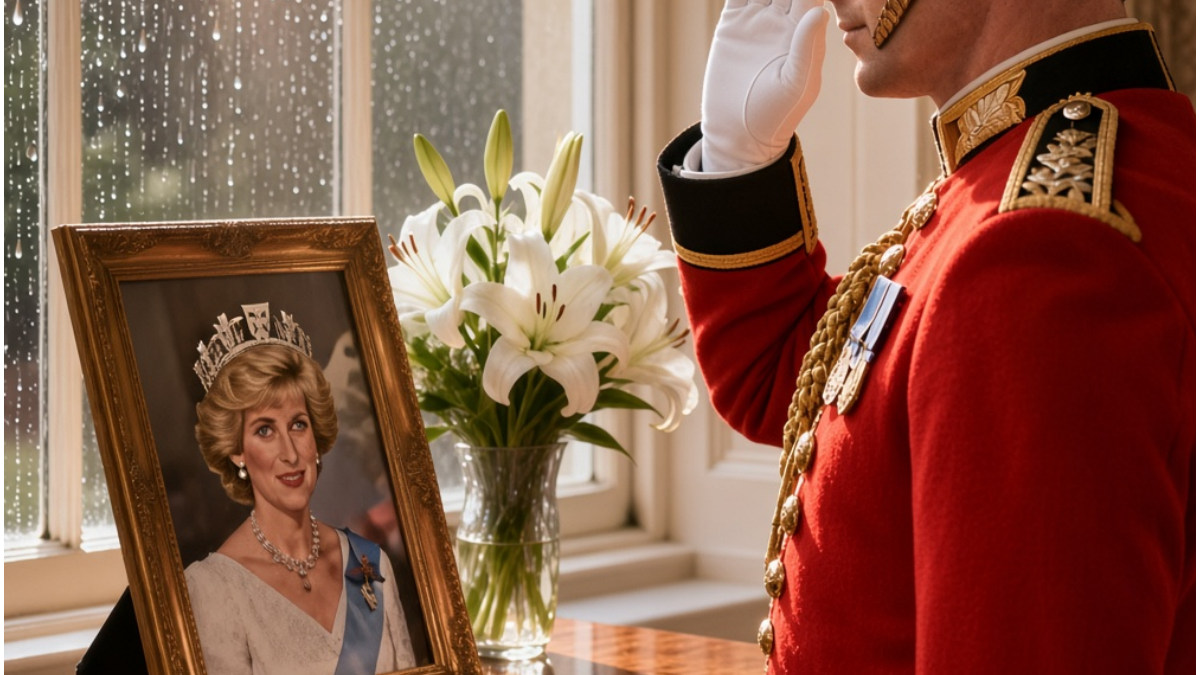
The rain hammered against the iron gates of Kensington Palace. It was past midnight, the kind of night where the cold sinks into your bones and everything feels heavier than it should.
William stood at the entrance of Adelaide Cottage, their new home, watching the rain blur the lights in the distance.
Kate was upstairs, finally asleep after weeks of sleepless nights. Their children were safe in their beds.
This was supposed to be a fresh start, a quieter life, away from the cameras, away from the pressure.
But something felt wrong. He heard footsteps on the gravel. Path sharp, deliberate, not the usual patrol.
William stepped outside, the rain soaking through his shirt in seconds. A figure emerged from the darkness.
A century young, maybe mid, his uniform was soaked, his face pale under the security lights.
Your royal highness, the sentry said, his voice tight. I need to speak with you, William frowned.
Protocol didn’t allow for this. Centuries didn’t approach royals directly. Not like this. Not at this hour.
What’s happened? William asked. The sentry hesitated. His eyes darted toward the main road, then back to William.
Someone tried to enter the grounds tonight. About an hour ago, William’s chest tightened. Who?
The Queen Consort, sir. The words hung in the air like smoke. William felt his pulse quicken.
Camila here. At midnight, without warning. What do you mean tried? William asked slowly. The sentry swallowed.
I refused her entry, sir. Silence. The rain was the only sound between them. William stared at the young man.
His mind raced. Camila had no reason to be here. Not tonight. Not without calling ahead.
And a sentry refusing entry to the queen consort. That was career ending. That was unthinkable.
Why? William’s voice was low. Controlled. The sentry looked down. Because she wasn’t alone, sir.
And the man with her. I didn’t recognize him. He wasn’t security. He wasn’t staff.
And when I asked for identification, he refused. William felt ice crawl down his spine.
Where is she now? She left, sir. But not before she said something. What did she say?
The sentry met his eyes. There was fear there. Real fear. She said you’d understand why she came.
She said to tell you it’s about Diana. The name hit William like a punch.
His mother gone for nearly three decades. Her name still carried weight. Still opened wounds.
William’s hands clenched into fists. Where did she go? Back toward London, sir. But the sentry hesitated again.
What? She left something at the gate. An envelope addressed to you. I have it here.
The sentry reached into his jacket and pulled out a small cream colored envelope. It was damp from the rain, but the handwriting on the front was clear.
Prince William. Private. Urgent. William took it. His fingers trembled slightly. He didn’t open it.
Not yet. Did anyone else see this? He asked, “No, sir. Just me.” William looked at the young sentry.
He was risking everything by being here, by refusing Camila. By bringing this directly to William instead of going through channels.
What’s your name? William asked. Corporal James Henley. Sir, you did the right thing, Corporal.
But this stays between us. Do you understand? Yes, sir. William nodded. Go back to your poSt. Don’t mention this to anyone.
Not your commanding officer. Not security. No one. The sentry saluted and disappeared back into the rain.
William stood there, envelope in his hand, water dripping from his hair. Inside the house, Kate was sleeping.
Their children were dreaming. Everything was supposed to be peaceful. But now, holding this envelope, William knew that peace was about to shatter.
He turned the envelope over. There was no seal. Just a thin piece of tape holding it closed.
He pulled it open. Inside was a single photograph. Old, faded, the colors doled by time.
It was his mother, Diana, younger, smiling, standing next to someone. William didn’t recognize, a man, dark hair, serious eyes.
On the back of the photo, written in ink that had smudged slightly, were six words.
He knows what really happened. William’s blood ran cold. Isk asterisk William didn’t sleep that night.
He sat in his study, the photograph on the desk in front of him, staring at his mother’s face.
She looked so alive in the picture, so real, like she might step out of the frame and speak to him.
But she couldn’t. She was gone. And whatever secret she’d carried had died with her, or so he’d thought.
The man in the photo bothered him. William had seen thousands of pictures of his mother, official ones, candid ones, paparazzi shots, but he’d never seen this man before.
And that was strange because Diana’s life had been documented in exhausting detail. Who was he?
And why would Camila bring this to him now? In the middle of the night with a stranger, refusing to identify herself properly, William turned the photo over again.
He knows what really happened. What really happened? Those words implied something darker. Something hidden.
The official story was clean. Tragic, but clean. A car crash in Paris. A driver who’d been drinking.
Paparazzi chasing them through a tunnel. An accident that stole his mother from the world.
But there had always been whispers, conspiracy theories, people who didn’t believe the official version.
William had dismissed them for years. Grief made people see patterns where there were none.
It made them search for meaning in chaos. But now, holding this photograph, those whispers felt louder.
A soft knock interrupted his thoughts. “William”? Kate stood in the doorway wrapped in a robe, her hair loose around her shoulders.
She looked concerned. “It’s 4 in the morning,” she said gently. “You never came to bed.”
William looked at her. His wife, his anchor, the person who kept him grounded when everything else felt like it was spinning out of control.
He couldn’t lie to her. Not about this. Camila was here tonight, he said. Kate’s expression shifted here at the cottage.
She tried to get past security. A sentry stopped her. She left this. He held up the photograph.
Kate crossed the room and took it, studying the image carefully. “Who is that?” She asked, pointing to the man beside Diana.
I don’t know, but Camila does. And apparently he knows something about my mother’s death.
Kate’s eyes widened. She set the photo down carefully like it might burn her fingers.
William, she said slowly. This could be anything. A misunderstanding. Someone playing a cruel game.
I know, but why would Camila bring it? Why in the middle of the night?
Why was someone she wouldn’t identify? Kate was quiet for a moment. Then she sat down beside him, taking his hand.
What are you going to do? William didn’t answer right away. He stared at the photograph again at his mother’s smile.
At the mystery man beside her. I need to find out who he is. William said finally.
And if this opens something you can’t close. Kate asked. If this brings everything back, the press, the speculation, the pain, then I’ll deal with it.
But I need to know, Kate, I need to know the truth. She squeezed his hand.
Then we’ll find it together. By morning, William had made calls, quiet ones. Two people he trusted, people who understood discretion.
One of them was Marcus Aldridge, former MI6 analyst who now worked as a private investigator.
Marcus specialized in cold cases, in finding people who didn’t want to be found, in uncovering truths that had been buried.
They met at a cafe in Chelsea, far from royal circles, far from prying eyes.
Marcus was in his 50s, gray-haired with sharp eyes that missed nothing. William slid the photograph across the table.
“I need to know who this man is,” William said. “And I need to know why Camila thinks he’s important.”
Marcus picked up the photo, examining it closely. He didn’t ask questions. That was one of the things William appreciated about him.
Marcus understood that some things weren’t meant to be explained. After a long moment, Marcus set the photo down.
This picture is old. Late ’90s, maybe. The quality, the clothing, the setting. It’s from before digital photography became standard.
Can you find him? William asked. Maybe, but I need more context. Where did this come from?
Who gave it to you? William hesitated. Then he told Marcus everything about Camila’s midnight visit.
About the sentry. About the message on the back of the photo, Marcus listened without interrupting.
When William finished, Marcus leaned back in his chair, his expression unreadable. “Your Royal Highness,” Marcus said carefully.
“If Camila brought this to you, there’s a reason. And if she’s involving someone outside official channels, it means she doesn’t trust the usual systeMs. That’s a red flag.
What are you saying? I’m saying this might be bigger than you think, and if you want to pursue it, you need to be prepared for what you might find.
William met his eyes. I’m prepared. Marcus nodded slowly. All right, give me 48 hours.
I’ll see what I can dig up. He pocketed the photograph and stood. But before he left, he turned back to William.
One more thing, Marcus said, “If this is about Diana, if there’s something hidden in her past, there are people who won’t want it uncovered.
Powerful people. Be careful.” Then he was gone. William sat alone in the cafe, his coffee growing cold.
The morning sun filtered through the windows, casting long shadows across the table. He thought about his mother, about the life she’d lived, the secrets she might have kept, and he wondered if he was ready for what came next.
Asterisk. Two days felt like two weeks. William went through the motions. Public appearances, family dinners, bedtime stories for the children, but his mind was elsewhere.
Always circling back to that photograph. To the man with the serious eyes standing next to his mother, Kate noticed.
She always did, but she didn’t push. She just stayed close. A steady presence when everything else felt uncertain.
On the third morning, William’s phone buzzed. A message from Marcus found something. Meet me at the same place.
Noon. William’s heart jumped. He cleared his schedule, made excuses, and drove to Chelsea alone.
No security detail, no official record, just him and the questions that had been burning in his chest for 3 days.
Marcus was already there when William arrived. He looked tired, like he hadn’t slept much.
“You found him?” William asked as he sat down. Marcus pulled out a thin folder.
He placed it on the table between them. “His name is Thomas Renwick,” Marcus said.
British former journaliSt. He covered international affairs in the9s. Paris, Moscow, Cairo. He was good.
Won awards. Then in 1997, right after Diana’s death, he disappeared. William’s stomach tightened. Disappeared.
How? Quit his job. Sold his flat. Left the country. No forwarding address. No contact with former colleagues, just gone.
Where is he now? Portugal. A small town on the coast called Tivera. He’s been there for over 20 years.
Keeps to himself. Runs a small bookshop. Uses a different name now. Thomas Ashford. William stared at the folder.
His hands felt cold. What was his connection to my mother? Marcus hesitated. That hesitation told William everything.
This wasn’t just a random acquaintance. This was something deeper. From what I could piece together, Marcus said slowly.
Renwick interviewed Diana several times in the months before her death. Off the record. No official transcripts, but people remember.
Colleagues say he was working on something big. A story about the royal family, about secrets.
Then Diana died and he vanished. Williams pulse hammered in his ears. Did he know something about the crash?
I don’t know, but the timing is suspicious. And if Camila is involved, if she’s pointing you toward him, then yes, he probably knows something.
William looked out the window. People walked by on the street. Normal people living normal lives, not carrying the weight of buried secrets and dead mothers and midnight visits.
I need to talk to him, William said. Marcus frowned. That’s risky. If anyone finds out you’re pursuing this, it becomes a story.
A scandal. The press will devour it. I don’t care. Your royal highness. I don’t care.
William repeated his voice harder now. If this man knows something about my mother, I need to hear it.
I’ve spent my whole life with questions, with wondering. I’m done wondering. Marcus studied him for a long moment.
Then he nodded. All right, but you can’t go alone. And you can’t go as Prince William.
Too many eyes, too many cameras. Then how? Marcus leaned forward. We make you disappear.
Just for a day or two. Tell your staff you’re taking a private trip. No details, no itinerary.
I’ll arrange transport. Fake identification. We fly to Portugal. Talk to Renwick and you’re back before anyone notices.
William considered it. The risk, the secrecy, the lies he’d have to tell. But then he thought about the photograph, about his mother’s smile, about the words on the back.
He knows what really happened. Set it up, William said. 3 days later, William stood in a small airport outside Lisbon.
He wore jeans, a plain jacket, and sunglasses. His hair was hidden under a cap.
Marcus had given him a passport under a false name. Michael Brennan, a businessman from London.
No one looked twice at him. That was the strange thing about disguises. People saw what they expected to see.
And no one expected a prince in faded jeans at a regional airport. They rented a car and drove east toward the coaSt. The Portuguese countryside rolled paSt. olive groves, whitewashed houses, a sky so blue it almost hurt to look at.
William tried to stay calm, but his hands gripped the steering wheel too tightly. His jaw achd from clenching.
What if Renwick refused to talk? What if this was all a mistake? What if the truth was worse than not knowing?
Tiver was a small town. Narrow streets, colorful buildings, a river cutting through the center.
It felt like a place where you could disappear, where you could leave the world behind.
Marcus directed William to a quiet street near the old market. A small bookshop sat wedged between a cafe and a pottery shop.
The sign above the door read Ashford’s books in faded letters. William parked. His heart pounded.
This was it. You want me to come in? Marcus asked. No, wait here. If he sees two of us, he might bolt.
Be careful. William got out of the car. The sun was warm on his face.
The smell of salt and flowers hung in the air. He crossed the street and pushed open the bookshop door.
A bell chimed inside. The shop was dimly lit. Shelves of books lined every wall.
Old ones, new ones, some in Portuguese, some in English. The air smelled like paper and duSt. An old man sat behind the counter.
Gray hair, thin frame, glasses perched on his nose. He looked up as William entered.
For a moment, they just stared at each other. Then the old man’s face went pale.
“Oh my god,” he whispered. “You look just like her.” William removed his sunglasses. “Thomas Renwick.”
The old man stood slowly, his hands trembling. “How did you find me? Camila sent me.”
Renwick’s expression shifted. Fear, sadness. Something else William couldn’t name. “Then it’s time,” Renwick said quietly.
“I knew this day would come. I just didn’t know when.” He walked to the door, locked it, and flipped the sign to close.
Then he turned back to William. “Sit down, your royal highness. What I’m about to tell you, it’s going to change everything.”
Asterisk asterisk William sat down in a worn armchair near the back of the shop.
Renwick disappeared for a moment and returned with two glasses of water. His hands still shook as he handed one to William.
The old man sat across from him, removed his glasses, and rubbed his eyes. “He looked like he’d aged 10 years in the last 5 minutes.”
“I’ve carried this for 27 years,” Renwick said softly. “Never told anyone. Not my wife, not my children.
I left my entire life behind to keep it buried. And why tell me now?
William asked. Because Camila found me two weeks ago. I don’t know how. I’ve been so careful.
But she knocked on that door and said she needed to talk. She said it was time for the truth to come out.
That you deserve to know. William leaned forward. Know what? Renwick took a long breath.
Your mother didn’t die in an accident. Your royal highness. She was murdered. The word hung in the air like a knife.
William felt the room tilt, his chest constricted. He’d heard the theories, the whispers. But hearing it spoken aloud by someone who’d known Diana made it real in a way it had never been before.
How do you know? William managed to ask. Because she told me. 3 days before she died, we met in Paris.
She was terrified. She said people were watching her. Following her, she said she’d learned something, something dangerous, something that certain people couldn’t allow to become public.
Renwick stood and walked to a locked cabinet in the corner. He pulled out a key from his pocket and opened it.
Inside was a small box. He brought it back to William and set it on the table between them.
Before I show you this, Renwick said, “I need you to understand something. Your mother was brave.
Braver than anyone gave her credit for. She knew the risks. She knew what she was doing could destroy her, but she believed it was the right thing.
She believed the truth mattered. William stared at the box. His hands felt numb. Renwick opened it.
Inside were documents, old ones, photocopies, handwritten notes, and Diana’s handwriting. And photographs. Your mother discovered financial irregularities, Renwick said.
Payments being made through charitable organizations connected to the royal family, millions of pounds, laundered money, tied two arms deals in the Middle East, illegal deals, deals that violated international law.
William felt sick. Who was involved? Renwick hesitated. People at the highest levels? Not your father.
He didn’t know. But others, advisers, officials, people with power and influence. Diana was building a case.
She was planning to go public to expose it all. She came to me because she trusted me.
She wanted a journalist who couldn’t be silenced. William looked at the documents. His mother’s handwriting jumped out at him.
Notes in the margins, dates, names he recognized, names that made his blood run cold.
Why didn’t you publish it? William asked. After she died, why didn’t you tell the world?
Renwick’s face crumpled. Tears filled his eyes. Because they came for me. 2 days after Diana died, men in suits, no names, no badges.
They told me if I published the story, my family would die. My wife, my two daughters.
They showed me photographs of them at school, at home. They knew everything. His voice broke, so I ran.
I took nothing. I disappeared. I’ve spent 27 years looking over my shoulder, terrified. But I kept these documents.
I kept them in case. In case someone came looking for the truth, someone who could actually do something about it.
William’s hands trembled as he picked up one of the photographs. It showed Diana at a meeting with a man he didn’t recognize.
The date on the back was August 1997, days before her death. The crash wasn’t an accident, Renwick continued.
It was staged. The driver was compromised. The paparazzi were a cover. She was killed because she was about to expose something that would have brought down powerful people, changed the course of history.
William couldn’t breathe. The room felt too small. It’s too hot. He wanted to scream, to rage, to tear the world apart, but he couldn’t.
Not yet. Why is Camila involved in this? William asked through clenched teeth. Renwick looked at him with sad eyes.
Because she found out recently. I don’t know how. But she learned about the coverup and she couldn’t live with it.
Whatever her faults, whatever mistakes she’s made, she couldn’t let this stay buried. She tracked me down.
She convinced me it was time. William stood abruptly. He paced the small shop, his mind spinning, everything he thought he knew was crumbling.
His mother’s death, the official story, the years of grief and wondering. It had all been a lie.
I need proof, William said finally. Real proof. These documents, they’re old. They could be dismissed.
I need something concrete. Renwick nodded. There’s one man, one of the people involved in the cover up.
He’s still alive, still in London. His name is Sir Edmund Graves. He was a senior intelligence officer in 1997.
He knows everything. Diana mentioned him specifically in her notes. William stopped pacing. Can we get to him?
Maybe, but he’s protected, connected. If you go after him directly, you’ll be stopped, silenced.
I don’t care, your royal highness. I don’t care. William’s voice echoed through the shop.
They killed my mother. They took her from me. From Harry? From the world, and they’ve gotten away with it for almost three decades.
I will not let them keep hiding. Renwick stood slowly. He looked at William with something like admiration, like recognition.
“You’re just like her,” he said quietly. “She had that same fire.” William’s eyes burned with unshed tears.
“Then help me finish what she started.” Renwick extended his hand. “I will, but you need to know.
If you do this, if you expose this, your life will never be the same.
The institution will turn on you. People you trust will betray you. You’ll lose everything.”
William shook his hand firmly. “Then I’ll lose it all. But I’ll do it for her.”
For the truth, they spent the next hour going through the documents, planning, strategizing. William took photographs of everything with his phone.
Evidence proof. When he finally left the bookshop, the sun was setting. The sky was painted in shades of orange and red.
Beautiful. But William barely noticed. Marcus was waiting in the car. He saw William’s face and knew immediately.
Something had changed. Something fundamental. “We’re going back to London,” William said as he got in.
“And then we’re going to war.” Asterisk asterisk. The flight back to London was silent.
William stared out the window at the darkness below, his mind replaying everything Renwick had told him.
The documents, the names, the conspiracy that had stolen his mother’s life. He thought about Diana, about the woman she’d been, strong, compassionate, willing to fight for what was right.
Even when it cost her everything, and it had cost her everything. When they landed, William went straight home.
Kate was waiting. She took one look at his face and knew. “You found him,” she said.
I found him and Kate. Everything we thought we knew is wrong. Sat together in the study.
William told her everything about Renwick, about the documents, about the cover up. Kate listened without interrupting, her face growing paler with each revelation.
When he finished, she was quiet for a long time. What are you going to do?
She finally asked. I’m going to expose it. All of it. William, they killed your mother to keep this quiet.
What makes you think they won’t come after you? Because I’m not alone and because the world is different now.
In 1997, they could control the narrative. They could silence journalists, make things disappear. But now with social media, with the internet, they can’t stop the truth from spreading.
Kate took his hand. I’m with you. Whatever happens. But we need to be smart about this, strategic.
You can’t just go public with allegations. You need irrefutable proof. William nodded. That’s where Sir Edmund Graves comes in.
Over the next week, William and Marcus worked in secret. They built a case, compiled evidence, cross-referenced Diana’s notes with public records, financial documents.
News reports from 1997. The pattern was undeniable. Money had flowed through charitable organizations. Arms deals had been made.
And people connected to the royal establishment had profited, but they needed more. They needed someone on the inside to confirm it.
Someone who’d been there, Sir Edmund Graves, lived in a grand townhouse in Mayfair. He was in his 70s now, retired, respected, a knight of the realm.
On the surface, he was the picture of British dignity. But William knew better. Marcus had arranged a meeting, not directly with Graves, but with someone who worked for him, a former assistant who’d grown a conscience over the years.
Her name was Helen Carter. She’d agreed to help. They met in a park. Evening.
Few people around. Helen was in her 50s, gray hair tied back, nervous eyes that darted around constantly.
I shouldn’t be here, she said immediately. If he finds out he won’t, Marcus assured her.
We’ve been careful. William stepped forward. Helen’s eyes widened when she recognized him. Your royal highness, she whispered.
Thank you for coming, William said gently. I know this is difficult. But I need your help.
I need to know the truth about what happened to my mother. Helen’s eyes filled with tears.
I’ve wanted to tell someone for so long, but I was afraid. Sir Edmund, he’s not a good man.
He’s dangerous. What do you know about Diana’s death? William asked. Helen took a shaky breath.
I was Sir Edmund’s assistant in 1997. I saw things, heard things, classified documents crossing his desk.
Phone calls in the middle of the night. He was involved in something. Something that required absolute secrecy.
What kind of thing? Damage control. That’s what he called it. After the princess died, he worked around the clock.
Meetings with officials, intelligence officers, foreign contacts. He was making sure something stayed hidden. I didn’t understand it at the time, but later later I realized he was covering up the truth.
William’s hands clenched. Did he ever say anything specific about how she died? About who was responsible?
Helen nodded slowly. One night about a month after the crash, he had too much to drink.
I was working late. He came into the office and started talking. He said, “We did what had to be done.
She was going to destroy everything. We had no choice. I pretended I didn’t hear, but I never forgot.”
William felt rage building in his chest, cold, focused. Would you testify to that publicly?
Helen palded. If I do that, I’ll be destroyed. My reputation, my career, maybe worse.
I understand, William said. But my mother died because she was trying to expose corruption.
Because she believed in truth and justice. If we don’t speak up now, if we let fear silence us, then she died for nothing.
Tears streamed down Helen’s face. She looked at William for a long moment, then she nodded.
I’ll testify. Whatever it takes. Your mother deserves justice. William felt something shift inside him.
Hope, determination. The pieces were falling into place. With Helen’s testimony and Renwick’s documents, they had enough to build a case.
But William knew that going through official channels would be suicide. The system was designed to protect itself, to bury scandals, to silence descent.
He needed a different approach. That’s when Kate suggested something unexpected. What if you didn’t go to the authorities?
She said one night. What if he went directly to the people? William frowned. What do you mean?
A documentary, an interview, something that can’t be suppressed or controlled. You sit down. You present the evidence.
You tell your mother’s story and you let the world decide. William considered it. It was risky.
It would cause an explosion. The palace would be furious. There would be consequences, severe ones.
But it would also work. The truth would be out there, undeniable, public. Who would do it?
William asked. What journalists would risk their career for this? Kate smiled slightly. I know someone, an American, independent, not beholden to British press regulations.
Someone with nothing to lose and everything to gain from the biggest story of the decade.
She pulled out her phone and showed William a name. William’s eyes widened. Can you set it up?
I already did. She’s flying to London tomorrow. William looked at his wife with awe.
When did you become a revolutionary? Kate’s expression turned serious. When I watched them try to do to me what they did to Diana, I won’t let them win.
Not again. They kissed. A quiet moment of solidarity, of partnership. The next evening, William met with the journalist in a secure location.
They talked for hours. William showed her the documents, the photographs, Helen’s statement. Everything the journalist’s eyes grew wider with each piece of evidence.
This is bigger than Diana, she said finally. This is about systemic corruption at the highest levels of government.
This is Watergate level scandal. Will you do it? William asked. She looked at him steadily.
If I do this, they’ll come after me. Try to discredit me. Maybe worse. I know.
But someone has to tell the story. Someone has to speak for those who can’t.
The journalist nodded slowly. Then let’s bring them down. The documentary was filmed over 3 days.
A secure location. No palace officials, no handlers, just William, the journalist, and the truth.
William sat in front of the camera and told his mother’s story. Not the sanitized version the world had been fed, the real one.
He showed the documents, played recordings of Helen’s testimony, explained the financial trails, named names, Sir Edmund Graves, senior officials, intelligence officers, people who’d built their careers on lies and blood money.
When the filming ended, William felt lighter, like a weight he’d carried for decades had finally been lifted.
But he also felt afraid because he knew what was coming. The documentary was scheduled to air in one week, 7 days for the world to prepare for the truth.
But the palace found out in three. William received a summons, an emergency meeting with the king, with senior advisers, with lawyers.
He went alone. Kate had offered to come, but he’d refused. This was his fight.
The meeting was brutal. Accusations, threats, legal action. They tried everything to stop him. To convince him to pull the documentary, to bury the story one more time.
But William stood firm. My mother died because she was trying to expose corruption, he said, his voice steady.
I will not dishonor her memory by covering it up again. The king looked at him with something like sadness.
You understand what this will do to the monarchy? To the institution? If the institution is built on lies and murder, William said coldly.
Then it deserves to fall. Silence filled the room. Finally, one of the advisers spoke.
If you do this, you’ll be removed from the line of succession. Stripped of your titles.
Exiled from the family. William met his eyes. Then exile me. He walked out. The door closed behind him with a finality that echoed through the halls.
That night, William held Kate close. Their children slept peacefully upstairs, unaware that their lives were about to change forever.
“Are you ready?” Kate asked softly. “No,” William admitted. “But I’m doing it anyway.” The documentary aired on a Tuesday night simultaneously in 15 countries, streaming platforms, news networks, social media within an hour.
It was the most watched program in history. The reaction was seismic shock, outrage, disbelief, but also something else.
Validation. People who’d suspected the truth for years suddenly had proof, evidence, confirmation. The #justice for Diana trended worldwide.
Protests erupted outside Buckingham Palace. Government officials were questioned. Sir Edmund Graves was arrested within 48 hours.
The British establishment tried to contain it. Spin doctors worked overtime. Official denials were issued, but it was too late.
The truth was out. In the weeks that followed, investigations were launched. Official ones, independent ones, international ones.
The documents William had provided were authenticated. Helen Carter testified before Parliament. Other witnesses came forward.
People who’d been afraid for decades suddenly found courage. The monarchy survived, but barely. Reforms were demanded.
Accountability, transparency. The old guard was forced out. New faces took their place. William watched it all unfold from Adelaide Cottage.
He’d been stripped of his HR title, removed from official duties. But he didn’t care.
He’d done what his mother couldn’t. He told the truth. One morning, several months after the documentary aired, there was a knock at the door.
William opened it to find Corporal James Henley. The sentry who’d refused Camila entry that rainy night.
The young man who’d started everything. “You’re Mr. William,” James said, awkward without the title.
“I wanted to thank you for everything. My commanding officer tried to have me discharged for refusing the queen consort, but after your documentary, after everything came out, they gave me a commenation instead.
William smiled. You did the right thing that night. You trusted your instincts. That takes courage.
James nodded. People are saying you’re a hero. That you stood up to the most powerful people in the world.
William shook his head. I’m not a hero. I’m just a son who wanted to know the truth about his mother.
Still, James said, “What you did, it mattered. It changed things.” After James left, William walked back inside.
Kate was in the kitchen with the children. Normal life. Quieter than before, but real.
That evening, William stood in his study. On his desk was a framed photograph. Diana Young smiling.
Full of life. He picked it up and looked at her face. “I did it, ma’am.”
He whispered. “I told your story the way you would have wanted. The truth.” A breeze drifted through the open window, gentle, warm, like a soft touch on his shoulder.
William closed his eyes. For the first time in his life, he felt at peace.
His mother’s death hadn’t been in vain. The corruption she’d tried to expose was finally being dismantled.
The people responsible were facing justice and her legacy. Her real legacy wasn’t just as a princess or a fashion icon or a humanitarian.
It was as a woman who’d fought for truth, who’d refused to stay silent, who’d believed that some things were worth dying for.
William set the photograph back down. Then he walked to the kitchen where his family was laughing, where life was messy and beautiful and real.
He’d lost his titles, his position, his place in the line of succession. But he’d gained something far more valuable.
He’d gained the truth and with it the freedom to live honestly, to honor his mother’s memory, not with silence, but with courage.
Outside, the rain began to fall. Soft at first, then harder. William stood at the window and watched it come down, washing everything clean.
And somewhere in a small bookshop in Portugal, Thomas Renwick read the news and smiled.
After 27 years of hiding, of fear, carrying secrets that weighed like stones, he could finally breathe.
The truth was out. Diana’s truth. And nothing would ever be the same again. In London, in living rooms, and pubs and coffee shops, people talked.
They debated. They demanded change. And slowly, painfully, the old institutions began to crack. Not because of violence or revolution, but because one person had decided that truth mattered more than tradition, that justice mattered, more than power, that love for a mother mattered more than loyalty to a crown.
And in the end, that was enough to change the world.








