They Mocked My “Fake” Tiara at the Ball—Until the King Demanded Everyone Bow to Me Now
My grandmother’s dying gift was a tarnished heavy hairpiece wrapped in an old velvet cloth.
For years, I kept it hidden in a shoe box, entirely unaware of its history.
When high society’s most vicious mean girl publicly humiliated me at the prestigious Waldorf Astoria what charity ball laughing at my costume jewelry est comme on to de petit tout forks, I thought my life was over.
But the laughter abruptly died the moment the king of Denmark walked through the doors, took one look at my head and fell to his knees.
Here is my story. Nobody in the upper echelons of New York’s elite actually earns their place.
They inherit it. I, on the other hand, spent my entire life trying to scrub the scent of cheap detergent and thrift store mothballs from my clothes just to blend in.
My name is Charity Walker and until last year, my life was a quiet, predictable rhythm of academic research and solitary evenings.
As is I worked as a junior antiquities restorer at the Metropolitan Museum of Art, a title that sounded incredibly prestigious but barely paid enough to cover the rent on my cramped apartment in Queens.
My world was defined by the past, by dusting off the forgotten relics of history and trying to piece together the stories of people who had long since turned to ash.
I loved my job. There was a certain peace in dealing with inanimate objects. No, they didn’t judge your bank account and they certainly didn’t care about the designer labels on your shoes.
The only family I ever knew was my grandmother Josephine. She was a stern, quiet woman with a thick European accent she adamantly refused to specify the origins of.
“Europe is Europe, Charity.” She would say waving her hand dismissively whenever I brought home a map for school.
“Borders are drawn by greedy men. Do not concern yourself with them.” When Josephine passed away, she left me nothing but a stack of medical bills and a worn leather shoe box tied with a frayed silk ribbon.
I remember sitting on the edge of my lumpy mattress the night after her funeral untying that ribbon with trembling hands.
Inside resting on a bed of decaying crimson velvet was a piece of jewelry. At first glance it was hideous.
It was heavy entirely blackened by decades of tarnish and shaped like a jagged crescent.
Several of what I assumed were glass stones were missing from their settings leaving empty dark sockets that made the piece look like a skeletal grin.
It was a tiara or at least the rusted skeleton of one. I didn’t think much of it.
To my trained eye it looked like a theatrical prop from the 1920s. Perhaps something Josephine had picked up at a flea market during her youth.
I tucked it under my bed and threw myself back into my work at the Met desperate to distract myself from the crushing grief of losing the only person who had ever loved me.
It was around this time that Victoria de Vedrine swept into my life like a perfectly manicured hurricane.
Victoria was the heiress to the Vedrine media empire a billion dollar conglomerate that owned half the magazines and television networks in the country.
She was also the newly appointed co-chair of the Met’s annual grand heritage gala a position her father had undoubtedly bought for her to boost her social profile.
Victoria was stunning in that terrifying surgically precise way that only unlimited wealth can buy.
She wore Chanel like it was armor and wielded her trust fund like a weapon.
Our first encounter set the tone for the misery that was to follow. Dr. Richard Alcott the head of my department had assigned me to present our latest acquisition, a collection of 18th century French cameos to the gala planning committee.
I had spent weeks meticulously cataloging the pieces, ensuring every historical detail was perfect. When I stood up in the board room, my notes shaking slightly in my hands, Victoria didn’t even look at me.
She was busy scrolling through her phone, her perfectly glossed lips curled in a perpetual sneer.
Uh these cameos I began, my voice a little too loud in the cavernous room, were rumored to have belonged to the court of Marie Antoinette.
Excuse me, Victoria interrupted, finally looking up. Her eyes, a cold piercing blue, scanned me from head to toe, lingering painfully on my scuffed loafers and my off-the-rack Zara blazer.
Are we really focusing the gala around this? It’s so dreary, so dusty. I thought we were aiming for glamour, Richard, not a high school history project presented by the librarian.
A few of the board members chuckled nervously. My face burned. I looked at Dr. Alcott expecting him to defend my work, but he simply cleared his throat and looked away.
Wealth dictated the rules in this room, and Victoria held the checkbook. It’s historical preservation, Ms. Vadrain, I managed to say, trying to keep my voice steady.
The gala is meant to celebrate the museum’s archives. Victoria leaned forward, resting her chin on her hands.
Sweetheart, nobody cares about the archives. They care about the champagne, the photographers, and who is wearing what.
Oh, and looking at you, I can tell you know absolutely nothing about any of those things.
Let’s pivot to the Cartier loan, shall we? I was dismissed. Sent back down to the basement archives like a misbehaving child.
That night I went home and cried out of sheer frustration. I was so tired of being invisible, of being treated like a peasant in a kingdom ruled by trust funds and nepotism.
In a fit of restless energy, I pulled the shoebox out from under my bed.
I took the blackened tiara to my small kitchen table, grabbed my restoration kit, a collection of soft brushes, mild solvents, and magnification lenses I used for independent projects, and began to clean it.
I didn’t know why I was doing it. Perhaps I just needed to exert control over something, to take something ugly and neglected and make it shine.
As the first layer of black tarnish wiped away beneath the solvent, I stopped. The metal underneath wasn’t the dull brass or copper I had expected from a cheap costume piece.
It was platinum, heavy, solid platinum. My heart skipped a beat. I applied a bit more solvent, working it into the intricate filigree at the base.
The craftsmanship was astounding. The floral motives weren’t stamped or molded. They had been hand-carved with a precision that bordered on the impossible.
And the stones, the ones that hadn’t fallen out, weren’t glass. As the grime fell away, they caught the harsh fluorescent light of my kitchen overheads and fractured it into a blinding rainbow of colors.
Diamonds, old mine-cut diamonds. I sat back, my breath catching in my throat. This wasn’t a theater prop.
This was a masterwork. But why did my grandmother, a woman who clipped coupons and sewed her own curtains, have a platinum and diamond tiara stuffed in a shoebox?
I turned the piece over, inspecting the inside of the band. There, barely visible to the naked eye, was a maker’s mark.
It wasn’t Cartier or Tiffany or Fabergé. It was a tiny engraved crest, a two-headed eagle clutching a broken sword surrounded by a ring of ivy.
I had a master’s degree in art history and specialized in European antiquities, yet I had never seen this hallmark in my life.
Over the next 2 months, I spent every free second researching the creSt. I scoured the Met’s databases, visited the New York Public Library’s rare books division, and even reached out to a contact at Sotheby’s in London.
Nothing. The two-headed eagle was common enough in Eastern European heraldry, but the specific combination of the broken sword and the ivy yielded zero results.
It was as if the crest, and by extension, the tiara did not exist in any official historical record.
Meanwhile, my life at the museum was rapidly deteriorating. Victoria Vedrine had made it her personal mission to ensure I was entirely excluded from the gala preparations.
She would schedule committee meetings and intentionally forget to email me the time. She ordered catered lunches for the department and explicitly told the intern not to order anything for the mole in the basement.
It was petty juvenile bullying, but it was incredibly effective. Dr. Alcott, desperate to secure her father’s donation, turned a blind eye to all of it.
But then, an unexpected lifeline appeared in the form of Nathaniel Hastings. Nathaniel was a senior curator of European decorative arts and one of the most respected figures in the museum.
He was also devastatingly handsome with sharp cheekbones and a calm, commanding presence that made even Victoria Vedrine dial back her usual venom.
He had noticed my exclusion and much to Victoria’s visible fury, personally requested that I assist him in escorting a group of high-profile international donors during the night of the Grand Heritage Gala.
“You know the piece is better than anyone, Charity.” Nathaniel had said, stopping by my desk one afternoon.
“I need someone who can actually answer their questions, not just smile for the cameras.”
“I I don’t have a ticket to the gala, Mr. Hastings.” I stammered, acutely aware of the fact that tickets started at $25,000.
“You’re coming as my professional associate.” He replied with a warm, reassuring smile. “Your name is on the liSt. I suggest you dress to impress.
The European delegations can be quite traditional.” I was going to the ball. The initial excitement lasted exactly 3 hours, right up until I opened my closet and realized I owned absolutely nothing appropriate for a white-tie event at the Waldorf Astoria.
The gala had been moved from the museum to the Waldorf’s grand ballroom to accommodate the sheer scale of the guest liSt. I couldn’t show up in a polyester blend.
I enlisted the help of my only close friend, Sarah, a theater costumer who lived in the apartment below mine.
For 3 weekends, we scoured every high-end consignment shop, thrift store, and vintage boutique in the tri-state area.
Everything was either violently outdated, completely damaged, or still wildly out of my price range.
“We are running out of time.” “Charity.” Sarah sighed, sitting on the floor of a dusty vintage shop in Brooklyn, surrounded by tulle and taffeta.
“Unless you want to go wrapped in a bedsheet, we need a miracle.” The miracle came in the form of a heavily discounted, slightly damaged Oscar It was a midnight blue silk velvet cut with a classic sweeping elegance that felt both timeless and dramatic.
It had a tear near the hem and a broken zipper. But Sarah, bless her heart, spent three nights meticulously repairing it until it looked custom-made for my body.
“It’s perfect.” Sarah breathed, zipping me into the gown the afternoon of the gala. The deep blue velvet brought out the paleness of my skin and made my ordinary brown eyes look almost striking.
“But it needs something. The neckline is too bare. Do you have a necklace? Earrings?”
I looked at my reflection in the cheap warped mirror of my bedroom. I had no jewelry.
But then my eyes drifted to the worn leather shoe box sitting on my dresser.
I hadn’t fully restored the tiara. I lacked the professional equipment needed to replace the missing stones without damaging the settings, but I had managed to clean it entirely.
The platinum shown with a brilliant cold fire and the remaining diamonds caught the afternoon light casting tiny rainbows across the bedroom walls.
“I have this.” I said quietly, walking over and lifting the tiara from the velvet.
Sarah gasped. “Charity, what is that? Is that real?” “I think so. It was my grandmother’s.”
“You have to wear it. It perfectly matches the drama of the dress.” I hesitated.
Wearing a tiara to a New York gala was a risky move. While the dress code was white tie, and extravagant tiaras were usually reserved for actual royalty or eccentric billionaires.
If I wore it, I would be making a massive statement. I would be painting a target on my back for people like Victoria Vittrine.
But as I held the cold metal in my hands, I felt a strange surge of defiance.
Victoria had spent months trying to make me feel small, insignificant, and ugly. She wanted me to hide in the basement.
Wearing this heirloom, a piece of my grandmother, a piece of my hidden history, felt like an act of rebellion.
“Okay.” I said, my voice steadying. “I’ll wear it.” Sarah styled my hair into an elegant sweeping updo, carefully pinning the heavy platinum piece into place.
The moment it rested on my head, something shifted. The weight of it forced me to stand taller, to pull my shoulders back.
I didn’t look like Charity, the basement archivist, anymore. I looked like someone who belonged, the Waldorf Astoria.
That night was a spectacle of obscene wealth. The grand foyer was draped in thousands of white orchids, and a string quartet played softly in the corner, entirely drowned out by the clinking of crystal champagne flutes, and the roar of privileged conversation.
Flash bulbs went off in rapid succession near the red carpet entrance, capturing the city’s elite in their finest couture.
I arrived in a standard yellow cab, feeling incredibly out of place the moment my borrowed Louboutin heels hit the pavement.
I kept my head down, navigating through the sea of photographers, grateful that they ignored me entirely to focus on a famous pop star arriving behind me.
Inside the grand ballroom, the opulence was suffocating. Chandeliers the size of small cars dripped from the ceiling, casting a warm golden glow over the crowd.
I stood near one of the massive marble pillars, waiting for Nathaniel to finish speaking with a museum board member.
I held my breath, hoping to remain unnoticed until I was needed. But in a room full of sharks, blood in the water is noticed instantly.
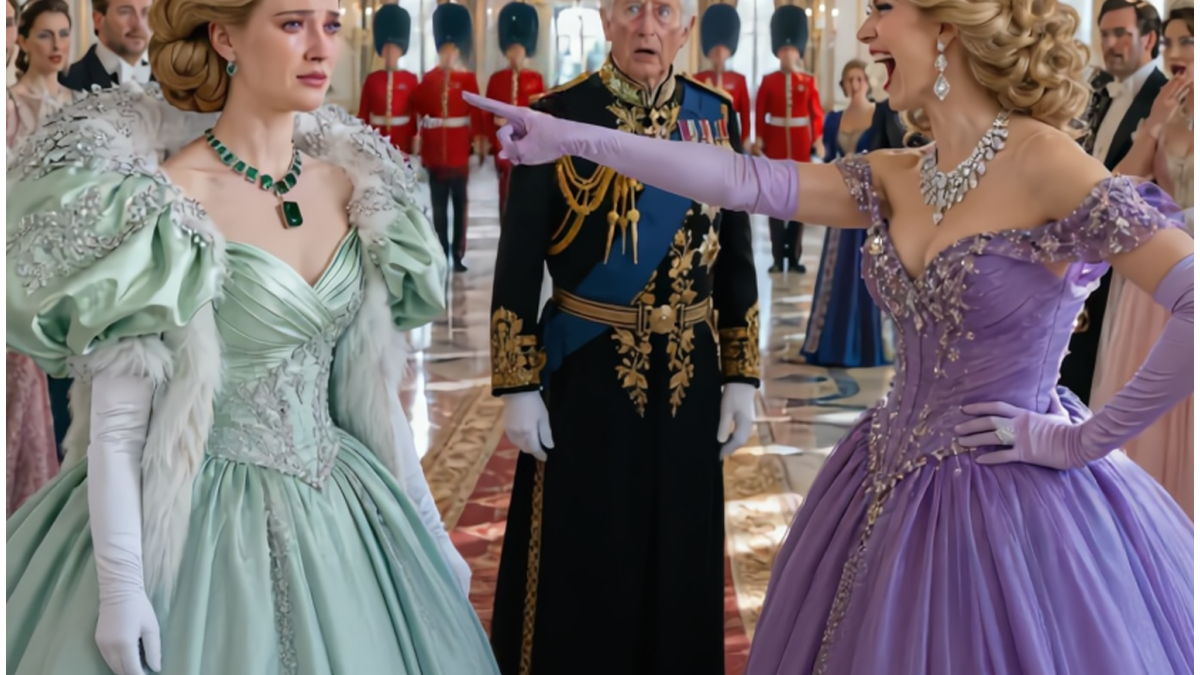
Well, well, well, look what the cat dragged in from the archives. The voice cut through the noise of the room like a serrated knife.
I turned to see Victoria Vidrine, flanked by three of her society friends. She was wearing a custom crimped and gown that looked like it had been painted onto her body, dripping in what I recognized as a $3 million Cartier diamond suite.
She stopped a few feet in front of me, her eyes slowly raking up and down my body.
She noted the vintage cut of the velvet dress, the complete lack of a designer handbag, and finally her gaze snapped to the top of my head.
A cruel, genuine smile broke across her face. “Oh, Charity.” She crooned, her voice loud enough to turn the heads of the people standing nearby.
“Are we going to a costume party after this? Because I think you misunderstood the dress code on “Victoria.”
I said calmly, fighting the urge to shrink back against the pillar. “Mr. Hastings asked me to attend to assist with the European delegation.”
“I’m sure he did.” She laughed, taking a sip from her champagne flute. “Nathaniel always did have a soft spot for charity cases.
But sweetie, let’s talk about the elephant in the room. What is that on your head?”
Her friends giggled, leaning in like vultures. The conversation in our immediate circle began to die down, people turning to watch the spectacle.
Victoria Vedrine destroying a nobody was the best free entertainment money could buy. “It’s a family heirloom.”
I said, keeping my chin high. The heavyweight of the platinum felt grounding. “A family heirloom.”
Victoria repeated, her voice dripping with mock awe. She took a step closer, invading my personal space.
Uh she reached out and before I could step back, tapped the side of my tiara with her manicured fingernail.
“From where? The clearance bin at Claire’s Accessories? Or did you win it at a carnival?”
“Don’t touch me.” I snapped, slapping her hand away. The crowd around us gasped. A circle had fully formed now.
Museum donors, socialites, and fashion editors were all watching. I could see the malicious delight in their eyes.
“Careful, peasant.” Victoria sneered, all pretense of politeness gone. “You’re embarrassing yourself. Did you really think you could show up to the most exclusive event of the year wearing plastic rhinestones and expect people not to laugh?
Look at it. Half the fake glass is missing. It’s rusted. It’s filthy, just like you.”
“They’re not glass,” I said, my voice trembling despite my best efforts. “They’re old mine cut diamonds, and it’s platinum.”
The room erupted into laughter, real booming laughter from the billionaires and heiresses surrounding me.
Victoria laughed the hardest, throwing her head back. “Platinum!” She shrieked. “Oh my god, she actually believes her own delusions.
Someone call security. The archivist has finally lost her mind.” She turned to the crowd, projecting her voice.
“Ladies and gentlemen, please be careful. We have a delusional fraud in our midst trying to pass off flea market junk as high jewelry.”
The humiliation was a physical weight pressing down on my chest, squeezing the air from my lungs.
Dozens of faces were staring at me, pointing, laughing. I saw cameras flashing from the periphery.
I was going to be a meme a joke in tomorrow’s gossip columns, the fake princess of the Waldorf.
Tears pricked the corners of my eyes. I couldn’t do this. I wasn’t built for this kind of cruelty.
I turned around, desperate to find an exit, to run out the service doors, and never come back to the museum again.
“Running away so soon, Cinderella?” Victoria called out after me. “Don’t lose your plastic slipper.”
More More laughter. I pushed my way through the crowd, my vision blurring with tears.
I just needed to get to the grand wooden doors at the entrance. I just needed to escape.
But as I reached the center of the ballroom, a sudden heavy silence fell over the room.
It didn’t happen gradually. It was as if someone had flipped a switch. The string quartet stopped playing mid-note.
The laughter died instantly. I stopped in my tracks, wiping a tear from my cheek, and looked toward the entrance.
The massive mahogany doors had been thrown open by the Waldorf security team. Standing in the threshold, flanked by men in dark tailored suits with ear pieces, was the guest of honor, a man whose arrival had been the primary focus of the entire gala’s planning committee, King Edward of the Principality of Valerius.
He was a tall, imposing man in his late 60s, dressed in immaculate white tie with a silk sash bearing the royal crest of his nation.
He projected an aura of absolute terrifying power. Behind him stood his royal delegation, an array of diplomats and guards that made the billionaires in the room suddenly look very, very small.
Victoria, realizing her golden opportunity, instantly abandoned her torment of me. She smoothed down her crimson dress, pasted on a radiant subservient smile, and practically shoved people out of the way to reach the center aisle.
As co-chair, it was her job to greet him. “Your Majesty,” Victoria said, her voice dripping with honeyed reverence.
She dipped into a flawless, practiced curtsy right in the middle of the aisle. “On behalf of the Metropolitan Museum of Art, it is our absolute honor to welcome you to” King Edward didn’t even look at her.
He had stopped dead in his tracks. His eyes, sharp and piercing, were locked entirely on me, standing a few yards behind Victoria, frozen like a deer in headlights.
The silence in the room stretched until it felt like a taut wire ready to snap.
The king ignored the curtsying heiress completely, stepping around her as if she were a piece of misplaced furniture.
Victoria stumbled slightly, her face flushing a deep, furious red as she was bypassed. He walked slowly down the aisle, his security detail tense and highly alert as he broke protocol.
The crowd parted for him like the Red Sea. He didn’t look at the Cartier jewels or the Oscar de la Renta gowns or the museum directors.
He was staring directly at my forehead. He stopped less than 2 ft away from me.
Up close, I could see the lines of age and burden etched deeply into his face.
His chest heaved slightly beneath his tailored jacket. For a terrifying second, I thought he was going to reprimand me, to echo Victoria’s mockery, and have me thrown out for insulting the dignity of the event with my presence.
Instead, King Edward of Valerius, a monarch who commanded armies and possessed a lineage stretching back 800 years, slowly lowered his head.
His knees bent the fabric of his trousers, creasing sharply, and he sank to the marble floor of the Waldorf Astoria.
He fell to his knees right in front of me. The entire ballroom collectively gasped.
The sound was deafening. The king bowed his head deeply, his voice echoing in the dead silent room, vibrating with a raw, overwhelming emotion.
“Your Highness,” he whispered, his voice cracking. “We have spent a lifetime searching for you.”
Gasps echoed through the cavernous ballroom, bouncing off the gilded ceiling and settling over the elite crowd like a suffocating blanket.
Hundreds of high-society aristocrats, Wall Street titans, and media moguls stood entirely paralyzed. Flashes from the paparazzi’s cameras outside the perimeter temporarily blinded me, casting harsh white light on the unbelievable scene unfolding at my feet.
King Edward, the ruler of a sovereign European state, remained kneeling on the marble floor.
His perfectly tailored tuxedo trousers pressed against the cold stone, a position of total submission that sent a shockwave of profound confusion through my brain.
“Your Majesty,” I whispered, my voice trembling so violently I barely recognized it. I instinctively took a step back, my Oscar de la Renta gown swishing around my ankles.
Please get up. There has to be a mistake. I am Charity Walker. I work in the museum basement.
Slowly, the monarch lifted his head. His eyes, a striking shade of slate gray, were brimming with unshed tears.
He did not look at my face. His gaze remained fiercely locked onto the heavy platinum and diamond piece resting in my hair.
There is no mistake, he said, his voice a deep gravelly baritone that carried easily through the dead silent room.
For 40 years I have believed that the sovereign diadem of the House of Valmont was lost to the ashes of history.
I would know those diamonds anywhere. My grandfather had them cut from the royal mines.
My father placed that exact crown upon my older sister’s head the night she came of age.
He reached out a trembling hand stopping just an inch from the tiara, treating it with the reverence of a holy relic.
You wear the crest of the two-headed eagle and the broken sword. Tell me, child, who gave this to you?
My grandmother. I stammered, clutching the velvet fabric of my dress. Josephine. A ragged sob escaped the king’s throat.
He closed his eyes and a solitary tear carved a path down his weathered cheek.
Josephina. He breathed the European pronunciation thick and emotional. She survived. Victoria Vadryn, who had been standing a few feet away with her face burning, i.e.
A mottled furious red, finally snapped out of her shock. Her reality, a world where she reigned supreme through daddy’s bank accounts, was shattering.
And she refused to accept it. Your Majesty, with all due respect, you are being conned.
Victoria shrieked, her voice shrill and desperate as she marched forward, her Cartier diamonds clinking aggressively.
“This girl is a nobody. She’s a junior archivist who catalogs dusty books. That piece on her head is rusted garbage she probably found at a thrift store.
She is manipulating you.” King Edward’s demeanor shifted with terrifying speed. The vulnerable weeping man vanished in a fraction of a second, replaced by a ruthless head of state.
He rose to his feet, towering over Victoria with a posture so rigid and intimidating that she physically recoiled.
“How dare you speak to me?” The king snarled, his voice dropping to a lethal, icy register.
“And how dare you raise your voice in the presence of your betters, Commander Hayes?”
Instantly, six men in dark suits detached themselves from the shadows of the entrance. They moved with military precision, forming a tight, impenetrable circle around me.
One of them, a broad-shouldered man with a tactical earpiece, stepped directly between me and Victoria, his hand resting casually but firmly on the inside of his jacket.
Victoria gasped, taking several clumsy steps backward, nearly tripping over her crimson train. Her society friends, who had been laughing at me moments prior, shrank away in sheer terror.
“She is wearing the stolen property of a royal family,” Victoria protested, though her voice wavered, her confidence bleeding out onto the floor.
“Doctor Alcott, tell them. Tell them she’s just charity.” Doctor Richard Alcott, the museum director who had turned a blind eye to my torment for months, was pale as a ghost, hiding behind a marble pillar completely unwilling to intervene against armed royal guards.
King Edward didn’t even look at Victoria as he delivered the final devastating blow. “The piece she wears is not stolen.
It is her birthright as the direct descendant of Crown Princess Josephini. This young woman outranks every single person in this room, myself included.
He finally turned to look at the heiress, his slate eyes narrowed with disguSt. You will lower your eyes when you look at her, Miss Vedrine, or I will have my security physically force you to the ground.
Complete, absolute devastation washed over Victoria’s face. The heiress who had commanded the room with cruel authority was suddenly reduced to a trembling, humiliated spectator.
Nathaniel Hastings, the senior curator who had secured my invitation, stepped forward from the crowd.
He wasn’t afraid. Instead, a slow, brilliant smile spread across his face as he looked at me.
He executed a flawless, sweeping bow. Your Highness, Nathaniel said, the respect in his voice genuine and warm.
That was the catalySt. Following Nathaniel’s lead, the wealthiest and most powerful people in New York City, the billionaires, the media tycoons, the fashion editors began to bow and curtsy.
It was a domino effect of submission. I stood in the center of the Waldorf Astoria ballroom, a girl who had eaten instant ramen for dinner two nights ago, watching the city’s elite bend their knees to me.
Commander, King Edward instructed softly, placing a gentle, protective hand on my shoulder. Clear a path.
We are leaving. My niece and I have a great deal to discuss. Escaping the ballroom was a blur of flashing lights and shouted questions from the paparazzi who had breached the perimeter.
The royal security detail moved me through the crowd like a precious gemstone, their bodies shielding me from the grasping hands and microphones.
We bypassed the standard elevators entirely, utilizing a private service lift that deposited us directly into the Waldorf’s presidential suite, a sprawling, multi-room penthouse that commanded a panoramic view of the Manhattan skyline.
Once the heavy oak doors clicked shut, plunging the suite into quiet security, the adrenaline holding me together finally evaporated.
My knees buckled. Commander Hayes caught me instantly, guiding me to a plush, silk-upholstered armchair by the window.
Someone pressed a glass of sparkling water into my trembling hands. Breathe, Charity. King Edward said gently, pulling up a chair opposite mine.
He had dismissed the guards to the outer hallway, leaving only Commander Hayes by the door.
The monarch looked exhausted, the weight of the evening pressing heavily on his shoulders. I know this is terrifying.
I know it defies all logic, but you are safe now. I took a sip of the water, the cold liquid doing little to soothe my dry throat.
My grandmother, she was a seamstress. She lived in a rent-controlled apartment in Queens. She clipped coupons from the Sunday paper.
How can she be a princess? King Edward leaned forward, resting his elbows on his knees.
In 1968, the Principality of Valmont was torn apart by a violent, military-backed coup. Our father, the king, was assassinated in his bed.
Josefin was the eldest, the crown princess, and the primary target of the insurgents. We were told she was killed trying to flee the palace grounds.
I was only 14 at the time, smuggled out in a diplomatic vehicle to Switzerland.
He paused, a shadow of profound grief both dark and crossing his face. Or him.
When the loyalists finally reclaimed the country 10 years later, I ascended the throne, but I never stopped looking for her.
We scoured Europe. We checked every grave, every rumor, but Josefin was exceptionally brilliant. She knew that as long as she lived, assassins would hunt her and any children she bore.
She didn’t just run, she erased herself entirely. She moved to America. I whispered, piecing the puzzle together.
“A, she changed her name. She never spoke of Europe. She always told me borders were drawn by greedy men and not to worry about them.”
“A perfect disguise.” Edward smiled sadly. “To hide the rightful queen of Valmont in the crowded loud boroughs of New York City and the tiara.
I found it in a shoe box after she died.” I explained, reaching up to touch the cold platinum still pinned in my hair.
It was completely black with tarnish. “Half the stones were missing. I only cleaned it a few weeks ago.
I wore it tonight because because a woman at the museum made me feel like I was nothing.
I just wanted to feel proud of where I came from, even if I didn’t know where that was.”
Edward’s eyes flashed with a sudden fierce anger at the mention of Victoria. But, he quickly softened it when he looked back at me.
“You have nothing to prove to people like that, Charity. That tiara, the sovereign diadem, was forged in 1812.
The missing diamonds were likely pried out and sold by your grandmother over the decades to pay for rent, groceries, and your education.
She sacrificed the royal treasury to keep you alive and safe.” Tears spilled over my eyelashes.
Josefina had never complained about the struggle. She had quietly dismantled her crown stone by stone to build my future.
“Edward.” I said, stumbling over the name, unsure of the protocol. “What happens now? I’m an archiviSt. I have a mountain of student debt.
I have an apartment that smells like cabbage.” Commander Hayes, standing by the door, let out a low, warm chuckle.
King Edward smiled, a genuine expression of joy that wiped years from his face. Charity, my dear.
Edward said, reaching out to clasp my hands in his. I never married. I have no children.
For 30 years I have ruled as a regent waiting for an heir that I thought was dead.
Under the laws of our constitution, the crown passes through the eldest line. You are not just a royal relative.
You are the crown princess. You are the sole heir to the throne of Valmont.
He gestured to the sprawling city lights beyond the window. Your student debt is erased.
Your apartment in Queens will be packed up by my staff tomorrow. The house of Valmont controls a sovereign wealth fund estimated at roughly 40 billion euros along with estates in Geneva, Paris, and our home country.
The people who mocked you tonight do not possess a fraction of your wealth and they possess none of your actual power.
My breath hitched. 40 billion euros, estates, a throne. It was incomprehensible. But more importantly, Edward continued, his voice hardening with a protective ruthless edge, you are my blood.
No one will ever disrespect you again. Tomorrow morning the royal palace will issue an official press release declaring your existence to the world.
We will host a formal coronation ball in Valmont next month. But first he paused, a dangerous, deeply satisfying gleam appearing in his eye.
First, we are going to have a little chat with the board of directors of the Metropolitan Museum of Art.
I believe they have allowed a certain hostile work environment to fester. And as their newest, most powerful benefactor, I think it is time for a change in management.
Part six, the boardroom reckoning. Room. Retribution didn’t arrive with a loud scream or a dramatic scene in public.
It came in the sterile mahogany-lined quiet of the Metropolitan Museum of Art’s executive boardroom at 9:00 the following morning.
I arrived not in my scuffed loafers, but in a tailored cream wool suit provided by King Edward’s staff, my hair pulled back neatly revealing the faint tan lines from a summer spent working under basement fluorescent bulbs.
Flanking me were Commander Hayes and a sharp-eyed royal legal counsel named Beatrice Sinclair. When we walked into the room, the atmosphere was thick with dread.
Sitting around the massive oval table were the museum’s top trustees, a trembling Dr. Richard Alcott, and Arthur Vedrine, Victoria’s father.
Arthur was a silver-haired billionaire whose media empire usually allowed him to dictate the narrative of any room he entered.
Next to him sat Victoria, her eyes red and puffy, looking entirely stripped of the venomous confidence she had wielded so casually the night before.
Ah, charity, your highness, Dr. Alcott stammered, rising so fast he knocked his water glass over.
Please sit. We are so incredibly honored to have you. Save your breath, Richard, King Edward said, walking into the room behind us.
He didn’t sit. He stood at the head of the table, casting a long intimidating shadow over the trustees.
Yesterday, my niece was referred to in this building as a delusional fraud and a peasant.
I believe those were your words, Ms. Vedrine. Victoria shrank back, clutching her designer handbag like a shield.
Arthur Vedrine cleared his throat, trying to salvage his family’s crumbling leverage. Your majesty, if I may, Arthur began, his voice smooth and practiced.
My daughter’s behavior was inexcusable, and she will issue a formal written public apology. But let us be practical.
The Vedrine family has pledged a $50 million endowment for the new wing of this museum.
We are the lifeblood of this institution’s expansion. Surely an unfortunate misunderstanding between young women shouldn’t derail our mutual interests.
I looked at Arthur realizing for the first time where Victoria inherited her chilling arrogance.
To these people everything had a price tag. Respect, dignity, and human decency were just commodities to be bought and sold.
A misunderstanding. I spoke up, my voice remarkably steady. The entire room snapped their focus to me.
Victoria didn’t just insult my clothes, Mr. Vedrine. She used her position to systematically isolate me, humiliate me, and ensure that anyone who associated with me would face professional consequences.
And Dr. Alcott allowed it because he valued your signature on a check more than the safety and dignity of his staff.
Dr. Alcott looked as if he might faint. Charity, please, Alcott whispered. I was under immense pressure.
You were weak, Richard, King Edward interrupted cleanly. He nodded to Beatrice Sinclair, who opened a leather portfolio and slid a series of financial documents across the table.
The sovereign transition of assets, the Principality of Valerius hereby revokes all pending cultural loans to the Metropolitan Museum of Art and initiates a complete buyout of the museum’s existing capital bonds as of 8:00 this morning.
Beatrice Sinclair announced, her voice precise and unyielding. The House of Valmont has matched the Vedrine endowment.
In fact, we have tripled it. A $150 million fund has been established under the sole direction of Crown Princess Charity Walker.
The trustees gasped. Arthur Vedrine’s face turned an ugly bruised shade of purple. Furthermore, Beatrice continued, the House of Valmont has purchased the outstanding debt for stat of the museum’s expansion project.
We are now the primary creditors of this institution and our first condition for maintaining this partnership is the immediate termination of Dr. Richard Alcott for gross negligence and administrative complicity in workplace harassment.
“You can’t do this.” Alcott cried out standing up. “I’ve dedicated 20 years to this department.”
“You dedicated 20 years to kissing the rings of billionaires, Richard.” I said softly. “You forgot about the history and you forgot about the people who preserve it.
You’re fired.” Two of Commander Hayes’ guards stepped into the room politely but firmly escorting the weeping former director out of the door.
The remaining trustees sat in absolute terrified silence realizing that the power dynamic of the New York art world had just shifted on its axis.
King Edward then turned his icy gaze to Arthur and Victoria Vitcheny. “As for the Vitrine family, your names will be scrubbed from every plaque, every brick, and every program associated with this museum.
Your funding is rejected. Your presence is no longer required.” “You’re making an enemy of the entire New York media landscape, Edward.”
Arthur threatened, his voice dropping its polite veneer, revealing the ruthless corporate dictator underneath. “My networks can ruin this girl’s reputation before she ever touches down in Europe.”
“Try it.” King Edward challenged leaning down until he was inches from Arthur’s face. “And I will lock your networks out of every European market, freeze your foreign assets, and tie your companies up in international litigation until your trust funds are dry.
Do not test the resolve of a sovereign nation, Arthur. Now take your daughter and get out of my sight.”
Victoria began to sob openly as her father rudely grabbed her by the arm, dragging her out of the board room.
The door clicked shut behind them, leaving a profound cleansing silence in the room. I let out a breath I felt like I’d been holding for years.
I looked up at Nathaniel Hastings who was sitting at the far end of the table.
He gave me a slow, proud wink. I smiled back. The basement archivist was officially gone, but the real mystery was just beginning.
Later that evening, the heavy velvet drapes of the presidential suite were drawn against the glowing New York horizon.
The room was quiet, save for the soft scratch of a fountain pen as Beatrice Sinclair finalized the legal transfers of my grandmother’s remaining estate.
Nathaniel Hastings had joined us at the king’s request, and because of his vast expertise in European decorative arts and his absolute loyalty during the gala incident, Edward had granted him full access to the royal archives we were currently unearthing.
On the large marble coffee table lay the sovereign diadem. Under the bright, clean light of a professional restoration lamp, the platinum filigree seemed to hum with history.
Nathaniel was meticulously examining the empty sockets where the missing diamonds had once lived, comparing them against an old, yellowed registry book brought over by diplomatic courier from Valerius that afternoon.
“It’s fascinating, Charity.” Nathaniel murmured, his magnifying loop pressed to his eye. “Look closely at the fracture points inside the prongs of these empty settings.
They weren’t removed by a professional jeweler trying to preserve the piece. They were pried out violently with a dull tool.
Probably a screwdriver or a heavy knife. My grandmother must have been desperate.” I said, a wave of profound sorrow washing over me.
“To have to damage her own crown just to buy groceries. No, that’s the piece that doesn’t fit.
King Edward said, pacing near the window, a deeply troubled expression on his face. Josefina knew the value of these specific stones.
If she had been the one to sell them to survive, she would have gone to a trusted broker in Paris or London before fleeing to America.
She wouldn’t have butchered the diadem. This damage happened during the coup in 1968. Nathaniel froze his hand hovering over the ancient registry.
He slowly turned a page, his eyes scanning a list of serial numbers and weights for the crown jewels of Valerius.
Your majesty, Nathaniel said, his voice dropping into a tense, breathless whisper. Look at the description of the three primary stones that occupied the central crest of this tiara.
They were known as the Triad of Valmont, three identical, flawless, 11-carat cushion-cut diamonds with an incredibly rare blue-white fluorescence.
Yes, Edward nodded, his eyes darkening. They were stolen from the palace vault by the leader of the military junta, General Vance.
He stopped himself, shaking his head. No, Vance’s men were supposed to have sold them to a private buyer in Switzerland to fund their weapons cache.
They didn’t sell them to Switzerland, Nathaniel said, his face draining of all color. He pulled out his laptop rapidly, pulling up high-resolution photographs from last night’s Waldorf Astoria charity ball.
He zoomed in on a specific image, projecting it onto the large television screen on the wall.
It was a close-up photo of Victoria Vedrine laughing maliciously at me. But the focus of the zoom wasn’t her face.
It was the $3 million Cartier diamond suite resting against her collarbone. I leaned forward, my heart hammering against my ribs.
Suspended from the center of Victoria’s crimson gown were three massive, flawless, cushion-cut diamonds. Even under the chaotic flash bulbs of the paparazzi, the stones emitted a distinct hauntingly beautiful blue white fluorescence.
The room went dead silent. The Triad of Valmont. I whispered the realization hitting me like a physical blow.
The diamonds on Victoria’s neck, they belong to my grandmother’s crown. My God, King Edward breathed his fists clenching so hard his knuckles turned white.
The Vidrine fortune, the media empire that Arthur’s father built in the late 60s, it wasn’t built on savvy investments, it was built on the blood of my family.
Nathaniel checked the museum’s internal acquisition records on his laptop, his fingers flying across the keyboard.
It matches your majesty. In 1969, Arthur Vidrine’s father Harrison Vidrine registered a massive unexplained influx of foreign capital through a shell company in Zurich.
A few months later, he discovered a private collection of loose diamonds that became the collateral for his first major television network buyout.
The twist was so monstrous, it made my stomach turn. The very family that had spent months treating me like a subhuman servant, the very girl who had mocked my fake tiara and called it thrift store garbage was currently wearing stolen pieces of my own heritage.
Her family’s entire billionaire lifestyle was funded by the violent destruction of my ancestral home.
They didn’t just buy stolen goods, I said a cold unyielding rage blooming inside me, replacing every ounce of fear I had ever felt.
They financed the coup that killed my grandfather. They paid the men who hunted my grandmother across Europe.
King Edward looked at me and for the first time I saw an expression of absolute pride in his eyes.
The frightened girl from the basement archives had vanished. In her place stood a woman who carried the fire of a thousand years of rulers.
“What do you want to do, Charity?” Edward asked, his voice low and deadly. “Say the word and I will have international law enforcement raid the Vidrine estate by midnight.”
“No.” I said, standing up and walking over to the television screen, staring directly into the smiling, arrogant face of Victoria Vidrine.
“A quiet arrest in the middle of the night is too merciful for them. They wanted a show.
They wanted to humiliate me in front of the entire world.” I turned back to face my uncle, my chin held high, the sovereign diadem gleaming on the table behind me.
“The formal coronation ball in Valerius is next month.” I stated, my voice echoing with absolute authority.
“We are going to invite every major media outlet in the world. We are going to invite the New York elite, the trustees, and the billionaires.
And we are going to issue a personal royal invitation to the Vidrine family. Let them bring their stolen diamonds to my kingdom and there, in front of the entire world, we will strip them of everything they have ever stolen.
Preparation for a royal coronation is a logistical leviathan, but organizing one designed specifically to execute an international takedown requires the precision of a military campaign.
For the next four weeks, my life transformed entirely. I was flown out of New York on King Edward’s private Gulfstream G65, all leaving the smog of Queens behind for the crisp Alpine air of the Principality of Valmont.
The royal residence, the Palais de L’Aube, made the Waldorf Astoria look like a suburban motel.
It was a sprawling 17th century masterpiece of baroque architecture, boasting terraced gardens that rivaled the Chateau de Versailles, and a throne room lined entirely in lapis lapis and gold leaf.
Yet, despite the breathtaking luxury, I spent most of my time in the subterranean royal archives with Nathaniel Hastings and Beatrice Sinclair.
We were building an airtight legal and historical case. Nathaniel reached out to his most discreet contacts at Christie’s and Sotheby’s in Geneva, pulling decades-old auction records and insurance appraisals.
Beatrice worked directly with Interpol’s Art Heritage Division, quietly securing warrants based on the serial numbers and gemological fingerprints of the Triad of Valmont.
Meanwhile, back in New York, the trap was baited. As expected, Arthur Vidrine’s media empire had launched a subtle but vicious smear campaign against me the moment we left American soil.
Blind items in Page Six and Vanity Fair hinted that the newly discovered Princess Charity was an impostor, a gold-digging American opportunist who had somehow manipulated an aging, grief-stricken king.
Victoria, desperate to reclaim her throne as the ultimate society IT girl, was photographed relentlessly, always looking perfectly composed, always pushing the narrative that she was the victim of a jealous, tyrannical monarchy.
They were arrogant, and that arrogance was the exact lever we needed to pull. When the heavy gold-embossed invitations to my official investiture ball were delivered via diplomatic courier to the New York elite, the Vidrines were placed at the very top of the guest liSt. “Will they actually come?”
I asked King Edward one evening, standing on the balcony of my newly appointed private wing, looking out over the glittering city of Valmont below.
“After what happened at the museum, why would they walk directly into our territory?” “Because they are terrified,” Edward replied, taking a sip of his espresso.
“Um, Arthur’s stock prices took a 5% dip the day we pulled our museum funding.
The rumors are starting to swirl among the elite that the Vidrines have lost their untouchable status.
If they decline an official royal invitation to the social event of the decade, it confirms they are cowards in exile.
But if they attend and they are photographed rubbing shoulders with European royalty, it legitimizes them again.
I finished understanding the psychology of the billionaire class. It proves to the world that there is no bad blood.
Exactly. Edward smiled a sharp predatory expression. And Arthur will want to show dominance. He will want to prove that American media money bows to no crown.
I guarantee you, Charity, they will not only attend, but Victoria will wear the Cartier suite.
It is their ultimate status symbol. He was entirely correct. 3 days before the ball, the flight manifests registered Arthur and Victoria Vidrine’s arrival at the private airstrip in Valmont.
The night of the coronation ball arrived with a level of media frenzy unseen since a British royal wedding.
Network anchors from CNN, BBC, and Al Jazeera broadcasted live from the palace gates. Inside the Grand Hall of Mirrors, 300 of the most powerful people on the planet were assembled.
The men wore tailored evening dress adorned with military honors. The women wore haute couture that cost more than most residential homes.
I stood in the antechamber staring at my reflection in a full-length antique mirror. Sarah, my costumer friend from Queens, whom I had flown out via first class to be my official stylist, was adjusting the sweeping train of my custom Dior gown.
It was spun from silver thread and midnight blue silk, a direct homage to the velvet dress I had worn the night my life changed.
“You look like a queen, Charity.” Sarah whispered, stepping back with tears in her eyes.
Nathaniel walked into the room holding the velvet box containing the sovereign diadem. It had been meticulously cleaned and polished the platinum blazing under the crystal chandeliers.
The empty sockets at the center crest remained conspicuously barren, a physical scar on a beautiful piece of history.
He lifted the heavy tiara and carefully secured it into my hair. “Are you ready, Your Highness?”
Nathaniel asked softly, offering me his arm. I looked at the empty spaces in my crown.
I thought of my grandmother sewing curtains until her fingers bled while the people who financed her family’s murder drank champagne on super yachts.
The fear that had once defined my life was entirely gone. “Let’s go get my grandmother’s diamonds back,” I said.
Wow, the heavy oak doors of the grand hall of mirrors swung open and the royal herald struck his staff against the marble floor three times.
The booming sound silenced the chatter of billionaires and aristocrats instantly. “Presenting Her Royal Highness, Crown Princess Charity Josephine of the House of Valmont.”
As I stepped onto the elevated landing overlooking the ballroom, the crowd erupted into applause.
Flashes from the approved press pool illuminated the room like a strobe light. King Edward stood at the base of the grand staircase beaming with pride waiting to receive me.
I descended the stairs slowly, my silver train cascading behind me. My eyes scanned the sea of faces dismissing the tech moguls and oil barons searching exclusively for the traps’ prey.
I found them near the center of the room. Arthur Vedrine stood rigidly, a tight artificial smile plastered on his face.
Beside him, Victoria was a vision in emerald green satin and there resting against her skin suspended in heavy platinum settings were the three flawless 11 carat cushion cut diamonds.
The triad of Valmont. Even from 20 yards away, their blue white fluorescence was unmistakable.
They looked alien on her, a stolen piece of my bloodline wrapped around the neck of a thief.
I took my place beside King Edward at the front of the room. He raised a hand and the applause faded into a respectful expectant silence.
Welcome honored guests to the principality of Valmont. King Edward’s voice boomed through the hall’s acoustics.
Tonight we celebrate the return of our bloodline, the restoration of our history, and the closing of a dark painful chapter.
But before we begin the festivities, my niece has a matter of historical preservation to address.
I stepped forward to the microphone. The television cameras swiveled, their red recording lights locking onto me.
Billions of people were watching live. History is not just a collection of dates and artifacts, I began my voice steady, projecting across the quiet room.
It is the record of human survival. For decades my grandmother Crown Princess Josefina was erased from that history by violent men who sought to destroy our family and steal our nation’s wealth.
I paused letting the weight of the words settle. I looked directly at Arthur and Victoria.
Victoria shifted uncomfortably, her hand instinctively rising to touch the diamond necklace. When she fled the palace in 1968 my grandmother took only one thing to remember her home, the sovereign diadem.
I gestured to the crown on my head. The cameras zoomed in projecting the image of the tiara onto the massive screens positioned around the ballroom.
The empty damaged sockets were visible to the world. But she did not escape unscathed.
During the coup, mercenaries pried the three center stones from this crown. The triad of Vidrine.
They sold these blood diamonds to a foreign investor to fund the military junta that murdered my grandfather.
A murmur rippled through the crowd. For 50 years, those stones were considered loSt. I continued stepping down from the dais and walking slowly into the crowd.
The aristocrats parted for me, creating a direct, unavoidable path toward the Vidrines. Until a month ago at a charity ball in New York, when I saw them worn as a trophy by a woman who mocked my heritage.
Arthur’s face drained of color. He finally realized the trap. He grabbed Victoria’s arm. “We are leaving.”
He hissed loudly, trying to push through the crowd. “Commander Hayes.” King Edward commanded. Instantly, the heavy doors of the ballroom slammed shut.
Eight armed royal guards in full dress uniform, heavily armed, stepped in front of every exit.
The crowd gasped, stepping back in sheer panic, leaving Arthur and Victoria entirely isolated in a wide circle of empty marble floor.
I stopped 5 ft away from them. “You are out of your mind.” Arthur shouted, pointing a trembling finger at me.
“This is a defamation. I will sue you in every international court on Earth. These diamonds belong to the Vidrine estate.”
“No, Mr. Vidrine.” Beatrice Sinclair said, stepping out from the crowd and handing me a thick leather folder.
I opened it and held up the documents for the cameras. “These are the original Swiss banking ledgers from 1969.
They detail a transaction of $10 million dollars your father, Harrison Vedrine to the military junta in exchange for three stolen undocumented diamonds.
We also have the gemological fingerprint scans from Interpol. The stones around your daughter’s neck are registered stolen property of the Valmont Crown.
Victoria let out a terrified sob clutching the necklace desperately. They’re mine. You’re lying. You’re just a basement rat.
Victoria, I said coldly my voice cutting through her hysterics. Your family’s media empire was built on the blood of my grandfather.
You financed murderers and you have the absolute audacity to wear the spoils of that murder into my home.
Interpol agents flanked by Valmont royal security stepped into the circle. Arthur Vedrine, the lead agent said producing a pair of steel handcuffs.
You are under arrest for the possession of stolen national heritage, international money laundering and financing an illegal military junta.
Arthur fought screaming obscenities as the guards wrestled him to the marble floor completely shattering his untouchable billionaire facade on global television.
The cameras captured every pathetic second of his downfall. Victoria was hyperventilating backing away from the guards until her back hit a marble pillar.
I walked up to her, the heiress who had humiliated me, who had laughed at my poverty and mocked my grandmother’s sacrifice was now shaking uncontrollably trapped in the crosshairs of international justice.
Please, she begged tears ruining her expensive makeup. Please Charity. Your Highness, I didn’t know.
You knew exactly who you were Victoria, I whispered reaching out. You are nothing but a thief draped in someone else’s legacy.
With a swift precise motion the Interpol agent unclasped the heavy platinum necklace from Victoria’s neck.
He placed the glittering Cartier suite into a secure evidence box held by Nathaniel Hastings.
Without the stolen diamonds, Victoria Vedrine looked remarkably small, ordinary, and utterly defeated. As the guards escorted the weeping heiress out of the ballroom, I turned back to face the crowd.
The silence was absolute. No one dared to breathe. I looked up at King Edward, who bowed his head to me a silent confirmation that the ghosts of 1968 had finally been put to reSt. The archivist from Queens was dead.
The queen of Valmont had arrived. Are you ready for more dramatic stories of revenge, royalty, and reclaimed destinies?
If you couldn’t get enough of Charity’s epic transformation from a bullied basement archivist to a powerful queen taking down corrupt billionaires, hit that like button.
Share this story with anyone who loves a the brilliant plot twist, and don’t forget to subscribe to the channel for more incredible high-stakes storytelling.
Ring the notification bell so you never miss an upload. What would you have done to the Vedrines?
Let me know in the comments below.








