She Signed The Divorce Silently—Then Stunned The World As A Secret $100M Billionaire Heiress
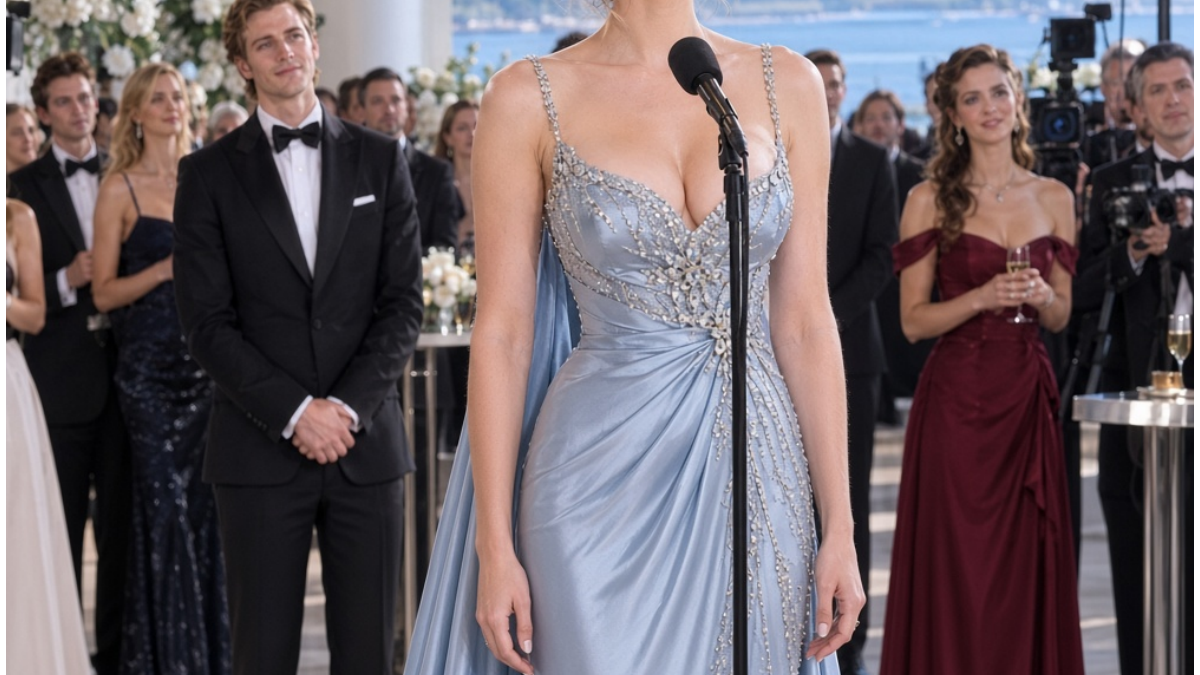
Tom Miller thought he had pulled off the ultimate victory, discarding his boring wife to keep his precious savings and chase a younger mistress.
He actually smirked when she signed the divorce papers without asking for a single penny.
But his arrogance blinded him to a hundred million dollar reality. He didn’t know that the woman he called plain and unambitious was actually the hidden heiress to one of Europe’s oldest banking dynasties quietly testing his loyalty.
By the time Tom realized he had thrown away a diamond to pick up a stone, it wasn’t just his marriage that was over.
It was his entire entire life. This is the brutal story of how one man’s greed cost him a fortune.
The clock on the dashboard of the Mercedes-Benz S-Class read 7:45 p.m. Tom Miller tapped his fingers impatiently against the leather steering wheel humming along to the thrum of the engine as he pulled into the driveway of his pristine two-story colonial in the suburbs of Greenwich, Connecticut.
It was a beautiful house, the kind that screamed mid-level executive on the rise, but lately it felt more like a cage.
Tom checked his reflection in the rearview mirror. At 34, he was in the prime of his life.
Vice president of sales at a mid-sized tech firm, a gym membership he actually used, and a jawline that had only gotten sharper with age.
He looked at the house again. The lights were on downstairs. Rachel was home. A familiar wave of irritation washed over him.
Rachel, his wife of six years. She was fine. That was the only word for her.
She was a nurse at the local pediatric center. She wore cardigans. She liked to bake bread on Sundays.
She was reliable, quiet, and utterly, painfully ordinary. When they had met in their late 20s, ordinary had felt like safe.
But now, now that Tom was closing deals with Fortune 500 companies and attending galas in Manhattan, Rachel felt like an anchor dragging behind a speedboat.
He grabbed his briefcase and stepped out into the cool October air. He had made a decision weeks ago, egged on by Jessica, the spirited 24-year-old marketing coordinator who had recently become much more than a colleague.
Jessica was fire. Rachel was lukewarm water. He opened the front door. The smell of pot roast hit him.
It was so cliché, it made his teeth ache. Tom. Rachel’s voice floated from the kitchen.
You’re late. Everything is cold. Tom walked into the kitchen, loosening his tie. Rachel was standing by the stove, scraping carrots into a bin.
She wore no makeup, her light brown hair pulled back in a messy bun. She looked tired.
I had a meeting. Tom lied, walking past her to the fridge to grab a sparkling water.
He didn’t kiss her hello. He hadn’t done that in months. You could have texted.
Rachel said, her voice devoid of anger, just resigned. That was the problem. She never fought.
She never screamed. She just took it. Tom slammed the fridge door a little harder than necessary.
Look, Rachel, we need to talk. I can’t do this anymore. Rachel paused, the spatula hovering over the pan.
She turned slowly to face him. Her blue eyes were calm, unreadable. Do what, Tom?
This. He gestured vaguely at the kitchen, the pot roaster. Us. The mediocrity. I feel like I’m suffocating here.
I’m evolving. I’m moving up in the world. And I feel like like we’re on two different planets.
He waited for the tears. He waited for the how could you? Or the begging.
He had rehearsed his speeches. He was ready to list her faults, her lack of ambition, her refusal to dress up for his work events, her silence.
Instead, Rachel just stared at him. She placed the spatula down on the counter. You want a divorce.
It wasn’t a question. Yes. Tom said, puffing out his cheSt. I do. I’ve met someone else.
I’m not going to lie to you about that. Someone who understands the world I live in now.
He dropped the bomb about Jessica, purposefully wanting a reaction. He wanted to feel like the prize being fought over.
Rachel looked down at her hands. She twisted the simple gold band on her finger.
Okay. Tom blinked. Okay. That’s it. I tell you I’m leaving you for another woman, and you say okay.
If you’re unhappy, Tom, I can’t force you to stay. She said, softly. I suppose I’ve known for a while that you were drifting away.
Drifting? I was sprinting, Rachel. He scoffed, disappointed by her lack of passion. I’ve already spoken to a lawyer, Richard Sterling.
You might have heard of him. Rachel’s brow furrowed slightly. The one on the billboards, the shark.
The best, Tom corrected. I want this done quickly. I’m willing to be fair, but I’m not going to be fleeced.
The house is in my name. The investments are from my salary. You have your nursing money.
He said nursing money with a distinct sneer as if saving sick children was a hobby compared to his software sales.
I see, Rachel said. She walked over to the table and sat down, her posture perfect, her face eerily composed.
So, you want me to move out? Eventually. Once the papers are signed. Jessica? Well, she has a lease ending soon, and I’d like to get the renovation started here.
It was cruel. He knew it was cruel. He was telling his wife that his mistress would be redecorating their home before the ink was even dry.
But Tom felt a twisted need to assert his dominance, to prove that he was the main character of this story.
Rachel nodded slowly. I understand. Send the papers to me. I’ll handle my end. You’ll need a lawyer, Tom said almost patronizingly.
I can recommend a cheap one if you want. That won’t be necessary, Rachel said standing up.
She looked at him, and for a second, Tom saw a flash of something in her eyes he had never seen before.
It wasn’t sadness. It looked almost like pity. I have a family contact, a Mr. Abernathy.
Tom snorted. Abernathy sounds like he practices out of a library basement. Fine. Just don’t drag this out, Rachel.
For your own sake. “I won’t.” She whispered. She untied her apron, folded it neatly, and placed it on the counter.
“I’m going to stay at a hotel tonight. You can have the pot roaSt.” She walked out of the kitchen past him and up the stairs.
10 minutes later, she came down with a single duffel bag. She didn’t look back.
She didn’t slam the door. She just left. Tom stood in the silent kitchen, the smell of cooling meat filling the air.
He pulled out his phone and texted Jessica. “It’s done. She’s gone. Easier than I thought.
Champagne tonight.” He felt a rush of victory. He had shed the dead weight. He had no idea that the dead weight was the only thing keeping him from drowning.
Three weeks later, the atmosphere in the conference room of Sterling, Finch and Associates was suffocatingly tense.
The room was glass and steel overlooking the gray Manhattan skyline. It smelled of expensive coffee and intimidation.
Tom sat at the head of the table flanked by Richard Sterling. Sterling was a man who looked like he had been tanned in a leather factory.
Slicked back silver hair, a suit that cost more than Rachel’s car, and a smile that didn’t reach his eyes.
Across from them sat Rachel. She looked smaller than usual in the large leather chair.
She was wearing a simple gray suit, no jewelry except a small watch. Next to her was her legal representation, Mr. Abernathy.
Tom had to suppress a laugh when he first saw him. Abernathy looked to be about 80 years old.
He wore a tweed jacket with elbow patches, thick bifocals, and he was currently struggling to open his briefcase.
He looked like a bewildered history teacher, not a litigator. “Gentlemen, Sterling started his voice booming.
We are here to expedite the dissolution of the marriage between Mr. Miller and Mrs. Miller.
As stated in our initial filing, Mr. Miller is contesting any claim to spousal support.
The marriage was brief, 6 years, and Mrs. Miller is a gainfully employed registered nurse capable of supporting herself.
Tom leaned back, crossing his arMs. He watched Rachel. She was looking at the documents in front of her, her face blank.
“Furthermore,” Sterling continued, sliding a thick packet across the table. “The marital home in Greenwich was purchased with a down payment from Mr. Miller’s premarital savings.
While the mortgage was paid during the marriage, Mr. Miller has been the primary earner, contributing 85% of the household income.
We are offering Mrs. Miller a lump sum settlement of $25,000 to vacate any claim to the property and equity.
$25,000? It was a lowball offer. So offensive, it was practically a slap in the face.
The equity in the house alone was worth over 200,000. Tom held his breath, waiting for the old man Abernathy to shout in proteSt. Mr. Abernathy adjusted his glasses.
He looked at the paper, then at Rachel. He leaned in and whispered something to her.
Rachel listened, then shook her head slightly. “Mr. Sterling,” Abernathy said, his voice raspy and quiet.
My client is not interested in the house. Tom’s eyebrows shot up. Excuse me. Rachel doesn’t want the house, Abernathy repeated.
Nor does she want spousal support. Sterling paused, his shark-like grin faltering for a microsecond.
This wasn’t how the script usually went. Usually there was screaming. Usually there was a fight for the China, the dog, the retirement accounts.
Well, Sterling cleared his throat. That is sensible. However, regarding the retirement accounts, Mr. Miller has a 401k valued at She doesn’t want the 401k, Abernathy interrupted gently.
Tom couldn’t help himself. What do you want then, Rachel? You’re not just going to walk away with nothing.
Are you trying to play the martyr? Rachel looked up, locking eyes with him. I just want a clean break, Tom.
I want my maiden name restored immediately. I want the divorce finalized by the end of the month.
And I want a clause stating that neither of us can claim assets from the other discovered or acquired after the date of separation.
Sterling narrowed his eyes. A standard non-disclosure and asset waiver. We usually insist on that to protect Mr. Miller, so we have no objection.
Good, Rachel said. Then I’ll sign. Wait. Sterling said, his suspicion aroused. Mr. Abernathy, surely you are advising your client that she is entitled to significantly more.
I represent Mr. Miller. But even I must ask if she understands she is walking away from potentially $200,000 in assets.
I have advised Mrs. Miller, Abernathy said, pulling a fountain pen from his pocket. She is quite adamant.
Tom felt a surge of adrenaline mixed with confusion. Why was she making this so easy?
Was she stupid? Or maybe she was just so heartbroken she couldn’t stand to fight him.
Yes, that had to be it. She was crushed. She just wanted to run away and lick her wounds in her little rental apartment.
Let her sign, Richard, Tom said grinning. If she wants a clean break, let’s give it to her.
I have a dinner reservation at 8:00. Sterling shrugged. Very well. They pushed the papers toward Rachel.
She didn’t hesitate. She signed Rachel Jenkins with a steady hand. One more thing, Tom said as she capped the pen.
The Mercedes, it’s in my name, but you’ve been driving it. I’ll need the keys.
It was petty. She would have to take the train or an Uber home. But Tom wanted to strip the last layer of his success away from her.
Rachel reached into her purse and placed the key fob on the mahogany table. I took the liberty of clearing my personal items out of the glove box.
Perfect, Tom said snatching the keys. Are we done? Rachel asked standing up.
Pending the judge’s signature, yes, Sterling said. You are effectively divorced. Rachel nodded to Sterling, then turned to Tom.
For the first time in the meeting, a small, genuine smile played on her lips.
It wasn’t a sad smile. It was the smile of someone who had just put down a heavy backpack after a long hike.
Goodbye, Tom. I hope you find what you’re looking for. I already have. Tom smirked thinking of Jessica waiting for him at the bar downstairs.
Rachel and Mr. Abernathy walked out of the conference room. As the door clicked shut, Tom let out a loud whoop.
Did you see that total surrender? I kept the house, the money, everything. That cost me practically nothing.
Sterling looked at the closed door frowning thoughtfully. It was unusual. In my 30 years of family law, I’ve never seen a spouse walk away from equity like that without a fight.
Are you sure there isn’t something she’s hiding? Debts, a gambling problem. Rachel. Tom laughed pouring himself a glass of water from the carafe.
Rachel doesn’t gamble. She coupons. She reads romance novels. She’s the most boring woman on earth, Richard.
She just didn’t have the guts to fight me. If you say so. Sterling said closing the file.
But usually when someone walks away from the table that fast, it’s because they have a better table waiting for them somewhere else.
Tom waved him off. She’s going back to a one-bedroom apartment and 12-hour shifts at the hospital.
Trust me, I won. Downstairs outside the skyscraper, Rachel stepped onto the busy sidewalk. The wind whipped her hair, but she didn’t shiver.
Are you sure, Rachel? Mr. Abernathy asked his voice losing the frailty he had feigned upstairs.
He sounded sharp, authoritative. You could have taken him for half. I don’t want half of his scraps, Arthur.
Rachel said, her voice steely. I just want it to be free. The paperwork is filed.
The waiver is ironclad. Arthur Abernathy confirmed. He cannot touch anything of yours, and you cannot touch anything of his.
As of this moment, your financial ties are severed. Good, Rachel said. She pulled a phone from her bag.
Not the cracked iPhone 8 she used around Tom, but a sleek black satellite phone.
She dialed a number. Prepare the jet, she said into the receiver. I’m coming home.
And tell grandfather I’m ready to take my seat on the board. A black Rolls-Royce Phantom pulled up to the curb, cutting through the line of yellow taxis.
A driver in uniform hopped out and opened the rear door. To the private airfield, Ms. Vanderhoven?
The driver asked. Yes. Rachel said, sliding into the plush leather interior. To the airfield.
Arthur Abernathy got in beside her. As the car pulled away, Rachel looked up at the glass tower where her ex-husband was likely celebrating his victory.
He thinks he won the lottery, Rachel murmured. He won pennies, Abernathy corrected, and he lost the bank.
Rachel Jenkins was gone. Rachel Vanderhoven was back. And the world and Tom Miller had no idea what was coming.
Three months had passed since the divorce was finalized, and the silence Tom had so despised in his marriage to Rachel had been replaced by a cacophony of chaos.
The colonial house in Greenwich, once a sanctuary of dull predictability, was now a construction zone.
The air was permanently thick with drywall dust that settled into the pores of Tom’s skin and coated his expensive suits.
The rhythmic thud thud thud of sledgehammers started at 7:00 a.m. sharp, a daily reminder of the vision Jessica had for their shared life.
Tom sat at the kitchen island, or what was left of it. The granite countertops Rachel had kept meticulously clean were gone, ripped out to make way for Calacatta Gold marble that Jessica insisted was the only acceptable surface for entertaining.
Babe. Jessica’s voice cut through the noise of a circular saw in the living room.
She walked in staring at her phone, not looking at him. She was wearing a silk kimono that probably cost more than Rachel’s entire wardrobe.
She looked stunning, undeniably. But lately when Tom looked at her, he didn’t feel the rush of excitement he used to.
He felt a tightening in his chest, specifically around his wallet. Babe, the contractor just told me the imported tiles for the master bath are stuck in custoMs. Jessica said, finally looking up.
Her perfectly manicured eyebrows were drawn together in annoyance. They need another 5,000 to expedite the shipping or we’re looking at a 6-week delay.
I told him to just put it on your Amex. Tom choked on his coffee.
5,000? Jessica, we’re already 40% over budget. Can’t we just wait the 6 weeks? Jessica’s face fell.
It wasn’t a look of sadness. It was the look of a child who had been told they couldn’t have ice cream.
Wait, Tom. We’re hosting the holiday party here next month. I can’t have guests using a bathroom with plywood floors.
It’s embarrassing. You’re a VP, aren’t you? We have to look the part. Look the part.
That was the mantra. I know, I know. Tom rubbed his temples. The headache was starting early today.
It’s just the liquidity is a bit tight right now. The divorce settlement, the lawyer fees, the down payments on the renovations.
You didn’t give her anything in the settlement. Jessica pointed out, her tone sharpening. You told me you won.
You kept everything. I did. Tom snapped, defensive now. But everything involves cash flow, and right now the cash is flowing out faster than it’s coming in.
Just use the domestic tile. It looks exactly the same. Jessica let out a cold, sharp laugh.
It does not look the same, Tom. God, you sound like her. The room went silent, save for the distant buzzing of a drill.
Like who? Tom asked quietly. Your ex, the nurse. Jessica sneered, pouring herself a glass of green juice.
Always pinching pennies. You told me you wanted a life of excitement, of luxury. Now I’m trying to build it for you, and you’re worried about five grand.
She turned on her heel and walked out, shouting over her shoulder. I’m going to the spa.
The dust gives me a migraine. Fix the tile situation, Tom. Tom sat alone in the half-demolished kitchen.
He looked at the empty spot where the coffee maker used to be. Rachel used to set the timer on the machine the night before, so the pot was fresh when he came down.
She used to pack him a lunch, which he often threw away because he wanted to eat out with colleagues.
He remembered one night a year ago when the water heater had broken. Rachel had quietly called a repairman, negotiated a discount, and cleaned up the flooded basement herself while Tom was on a business trip.
She hadn’t asked for credit. She hadn’t complained. She just handled it. Jessica didn’t handle things.
She created them. He pulled up his banking app on his phone. The numbers were glowing red.
He was leveraging his next bonus to pay for the marble. He was maxing out credit cards to pay for Jessica’s wardrobe updates because she couldn’t be seen in last season’s trends now that she was the partner of an executive.
A heavy pit formed in his stomach. He had traded a partner for a dependent.
He checked his email to distract himself. A message from Richard Sterling, his lawyer. Subject: Final decree {slash} asset confirmation.
Tom, just closing the file. The judge signed off. The waiver is absolute. You are legally clear of Rachel Jenkins.
Congratulations. Tom stared at the word congratulations. It felt hollow. He had won the war, but he was currently losing the peace.
He put the phone down and looked out the window at the garden. It was overgrown.
Rachel used to tend to the hydrangeas every Saturday. Now they were brown and dying, choked by weeds.
“It’s just an adjustment period.” Tom whispered to himself, trying to believe it. “Once the house is done, it’ll be perfect.”
But deep down, he knew the house would never be done. Because the hole Jessica was trying to fill, and the hole Tom had in his ego, was bottomless.
It was a Tuesday, 3 weeks later, when the ground beneath Tom Miller finally gave way.
The setting was the executive boardroom of his tech firm. It was the quarterly strategy meeting, a high-stakes gathering where the regional VPs tried to outshine each other in front of the CEO, a stern man named Marcus Thorne.
Tom had spent all night preparing his presentation. He needed to secure a larger budget for his department to trigger a bonus that would cover the mounting credit card bills for the Calacatta Gold marble.
He was tired, fueled by three espressos, and a lingering sense of dread that had become his constant companion.
He walked into the boardroom, adjusting his tie. He felt good. He looked sharp. Around the long mahogany table, his colleagues were already seated.
Usually, they would be checking their emails or making small talk about golf. Today, however, the atmosphere was different.
There was a huddle at the far end of the table. Gavin, Tom’s rival for the senior VP spot, was holding a magazine open.
Several other executives were leaning in, murmuring in hushed, awed tones. “Unbelievable,” one whispered. “I had no idea,” said another.
“To think she was living in Connecticut this whole time.” Tom set his briefcase down with a loud thud, trying to assert his presence.
“Morning, gentlemen. What’s the gossip? Stock market crash?” Gavin looked up. A strange expression crossed his face.
It wasn’t the usual competitive sneer. It was something worse. It was a look of pure, unadulterated shock mixed with a hint of dark amusement.
“Not the market, Tom.” Gavin said, sliding the magazine down the long, polished table. “The society pages.
You might want to take a look. It’s the new issue of Vanity Fair.” Tom frowned.
“I don’t read fashion magazines, Gavin.” “It’s not fashion. It’s the heirs and empires special edition.”
Gavin pressed his eyes, twinkling maliciously. “Page 42.” Curiosity cold and slithering wrapped around Tom’s spine.
He picked up the glossy magazine. On the cover was a collage of famous faces, royals, tech moguls, shipping magnates.
He flipped to page 42. The breath left his body in a violent rush, as if he had been punched in the solar plexus.
It was a full-page spread, a a high-resolution photograph taken in what looked like a European palace.
The woman in the photo was wearing a midnight blue gown that draped elegantly over her frame.
She wore a necklace of sapphires and diamonds that looked heavy enough to sink a small boat.
Her hair was blown out in sophisticated waves. Her makeup flawless, highlighting those piercing blue eyes.
It was Rachel. But it wasn’t the Rachel who wore scrubs and smelled of antiseptic.
It wasn’t the Rachel who made pot roaSt. This woman radiated power. She looked regal.
She looked untouchable. Tom’s hands shook as he read the headline printed in bold, elegant serif font.
The silent heiress returns. Rachel Vanderhoven takes her place at the head of the Vanderhoven banking dynasty.
Tom’s vision blurred. He forced himself to read the text. For 6 years, she lived in obscurity in the American suburbs working as a pediatric nurse under the alias Rachel Jenkins.
Now, following the death of her grandfather, Baron Friedrich Vanderhoven, the sole heiress to the $12 billion Swiss banking fortune has emerged from the shadows.
“I needed to know I could survive on my own.” The article quoted Rachel.
“I wanted to know what life was like without the weight of the name. I wanted to be loved for who I was, not what I owned.
But that chapter is closed. I am ready to modernize the family legacy.” Tom’s knees hit the floor.
He hadn’t realized he’d collapsed into his chair. Vanderhoven. He whispered, his voice cracking. That’s that’s a bank.
I have an account with them. We all do, Tom. Gavin said softly, enjoying the moment.
They financed our company’s IPO. They’re old money. Real money. Not rich. Wealthy. Tom’s mind was racing, flashing back to memories that suddenly took on a horrifying new context.
The family contact lawyer, Abernathy. Tom grabbed his phone and frantically Googled Arthur Abernathy, lawyer.
The first result, Arthur Abernathy, senior legal counsel for the Van der Hoven Trust, specialist in international asset protection, known as the Iron Gate.
Tom felt bile rise in his throat. He had mocked him. He had called him a library lawyer.
He had told the man who managed billions of dollars that he practiced out of a basement.
He read on. Ms. Van der Hoven has announced a new philanthropic initiative funded by her personal trust valued at approximately 100 million dollars, separate from the family’s primary holdings.
100 million dollars, liquid, hers. And then the kicker, the final paragraph of the article.
When asked about her time in America, Ms. Van der Hoven declined to comment on her personal life, stating only that she recently severed all ties to her past to focus on the future.
Sources close to the family confirm she is currently single and residing at the family’s estate in Lake Como.
She was a nurse. Tom stammered, looking up at the room full of staring faces.
She she drove a Honda. She clipped coupons for detergent. She was testing you, Tom.
The CEO, Marcus Thorne, said from the head of the table. His voice was grim.
Thorne was a man who respected money above all else, and he was looking at Tom like he was an idiot.
She was pretending to be ordinary to see if you were worth the extraordinary, and you divorced her.
I I didn’t know. Tom pleaded. She never told me. She signed a waiver, Gavin pointed out, tapping the magazine.
I heard you bragging about it in the break room last month. You made her sign a waiver so she couldn’t touch your assets.
Your 401k, your little house in Greenwich. Gavin started to laugh. It was a cruel, barking laugh.
You forced a woman worth billions to sign a document promising she wouldn’t take your Honda Civic.
You insulated her from you. The realization hit Tom like a freight train. The negotiation, Rachel’s calmness, the lack of fighting.
She wasn’t weak. She was terrified that he would find out. If he had dragged it out, if he had dug into her finances, he might have found the truSt. He might have been entitled to a settlement that would have set him up for 10 lifetimes.
But he had been so arrogant, so desperate to keep his pennies, as Abernathy had called them, that he had handed her the keys to her freedom on a silver platter.
She played you, Miller. Gavin said, shaking his head. She played you like a fiddle.
You traded a diamond for a rhinestone. Tom looked down at the photo again. Rachel’s eyes seemed to bore into him, filled with that same look he had seen in the kitchen.
Pity. She hadn’t been sad she was losing him. She was sad for him because she knew exactly what he was throwing away.
His phone buzzed. It was a text from Jessica. Babe, the contractor says the marble is here, but the card was declined.
Fix it. A S A P Tom stared at the message. The marble, the renovation, the debt, the shallow, grasping, expensive life he had built with Jessica.
It all felt like ash in his mouth. He looked at the magazine, then at the text.
He dropped the phone onto the table, the screen cracking slightly. “I need to go.”
Tom said, stumbling up. “Sit down, Miller.” The CEO barked. “You have a presentation to give, unless you can afford to quit.”
Tom froze. He couldn’t afford to quit. He couldn’t afford anything. He was trapped in the life he had chosen, while the wife he had discarded was flying on a private jet to Lake Como.
He sat down. He opened his laptop. But, as he began to speak about Q4 sales projections, his voice sounded like it belonged to a ghoSt. The silence of Rachel Vandehoven was gone.
But, the silence in Tom Miller’s soul was just beginning. The weeks following the revelation in Vanity Fair were a blur of humiliation and unraveling for Tom Miller.
The article hadn’t just stayed in the magazine. It had gone viral. Tech blogs, gossip sites, even the local Greenwich paper ran stories about the Cinderella nurse who was secretly a banking mogul.
And inevitably, Tom became the villain of the story, the blind husband who had discarded a fortune for a midlife crisis.
His life at home had become a war zone. Jessica, upon learning the truth, hadn’t been supportive.
She had been furious. Not at Rachel, but at Tom. She saw Rachel’s hidden wealth as a personal loss, a lottery ticket her boyfriend had ripped up before checking the numbers.
“If you hadn’t been so obsessed with a quick divorce, you could have gotten alimony.”
Jessica screamed one night, throwing a swatch of expensive curtain fabric at him. “We could be rich.
Tom, real rich. Instead, I’m arguing with a plumber about a payment plan because your credit card bounced.”
Tom couldn’t take it anymore. The debt was drowning him. The renovations were stalled, leaving the house a half-finished shell of ambition.
And at work, he was a pariah. The man who lost billions was not someone clients trusted with their accounts.
He needed a Hail Mary. He needed to fix this. In his deluded mind warped by stress and narcissism, Tom convinced himself of a new narrative.
Rachel had loved him once. She had married him, hadn’t she? She had cooked for him.
Cleaned for him. Maybe. Maybe she was still pining for him.
Maybe the divorce was just her way of acting out. And if he showed up, if he apologized, if he reminded her of what they had, she would take him back.
Or at least she would cut him a check to assuage her guilt. He liquidated his 401k, the one he had fought so hard to keep from her, to buy a first-class ticket to Milan and rent a high-end sports car.
He was going to Lake Como. The drive through the Italian Alps was breathtaking, but Tom didn’t see the scenery.
He was rehearsing his speech. He would be charming. He would be humble. He would tell her he made a mistake, that Jessica was a fling, a momentary lapse in judgment.
Sentimental. He arrived at the Villa Vandahoven in the late afternoon. It wasn’t just a house.
It was a fortress of limestone and ivory perched on the edge of the glittering lake.
Gates of wrought iron, twice as tall as a man, barred the entrance. Security cameras buzzed and turned as he approached.
Tom pulled the rented Ferrari up to the intercom. His heart was hammering against his ribs like a trapped bird.
“Yes.” A voice crackled from the speaker. It was deep, accented, and unwelcoming. “I’m uh I’m here to see Rachel.”
Tom stammered. “Rachel Vandahoven. It’s Tom Miller, her her husband.” Silence. “Ex-husband.” The voice corrected.
“Please.” Tom said, trying to inject desperation into his tone. “It’s urgent. It’s a personal matter.
Just tell her I’m here.” There was a long, agonizing pause. Then a heavy buzz.
The gate swung open slowly. Tom drove up the winding gravel path, flanked by manicured cypress trees.
He parked in front of the main entrance, where a fountain depicted Neptune taming the seas.
It made his luxury renovation in Greenwich look like a plastic dollhouse. The massive oak front door opened.
But it wasn’t Rachel who stepped out. It was Arthur Abernathy. The old lawyer looked different here.
In New York, he had looked like a bewildered academic in tweed. Here, in a tailored Italian suit, standing on the steps of his employer’s ancestral estate, he looked like the consigliere of a mafia family.
The iron gate, indeed. “Mr. Miller.” Abernathy said, not descending the stairs. You are a long way from Connecticut.
Tom got out of the car, smoothing his wrinkled jacket, trying to summon the arrogance that usually carried him through life.
I need to see her, Arthur. I need to talk to Rachel. Miss Vanderhoven is not receiving visitors, Abernathy said, his voice cold as the mountain air.
Especially not those who have signed legally binding non-contact agreements. I didn’t sign a restraining order, Tom argued, stepping forward.
I signed a financial waiver. We were married for 6 years, Arthur. You can’t just erase that.
I know she’s in there. I know she still cares. Abernathy stared at him with eyes like flint.
You seem to be laboring under a misunderstanding, Mr. Miller. You think Rachel hid her wealth because she was ashamed of it.
Or perhaps testing you. Yes, Tom cried. She wanted to know if I loved her for her.
And I did. No, Abernathy said, his voice dropping to a dangerous whisper. She hid it because she wanted a simple life.
She wanted to escape the sharks, the sycophants, the people who only saw the dollar signs.
She thought she found that with you. She thought you were a simple, decent man.
She loved you because you were ordinary. The words stung worse than a slap. But you proved yourself to be just like the rest, Abernathy continued, descending one step.
Greedy, shallow, cruel. You broke her heart, Mr. Miller. Not because you left, but because you showed her that even ordinary men can be corrupted by the prospect of a shiny new toy.
I made a mistake! Tom yelled at the facade of the villa, ignoring the old man.
Rachel! Rachel, please, just 5 minutes! A window on the second floor opened. Tom’s heart leaped.
He looked up. Rachel stood on the balcony. She was wearing white linen, her hair loose in the breeze.
She looked down at him not with anger, but with a profound, distant sadness. Like one might look at a dead bird on the sidewalk.
Rachel. Tom waved his arMs. Rachel, it’s me. I’m sorry. I was an idiot. Jessica is gone.
It’s just me. I love you. Rachel didn’t speak. She just watched him flail. Tell him to leave, Arthur, she said.
Her voice wasn’t loud, but in the quiet mountain air, it carried perfectly. Rachel, wait.
We can work this out. Tom took a step toward the stairs. Two men in dark suits materialized from the shadows of the portico.
They were large, silent, and clearly not lawyers. Miss Vanderhoven has given her instruction, Abernathy said.
You have 10 seconds to get back in your vehicle and leave the property. If you do not, you will be trespassing.
And unlike in Connecticut, the police here take the privacy of the Vanderhoven family very seriously.
Rachel! Tom screamed again, desperation turning into panic as the reality set in. I’m in debt.
Rachel. I lost everything. Just help me. You have millions. Just a little to get me back on my feet.
We were married. Doesn’t that mean anything? Rachel’s expression didn’t change. She didn’t flinch at his begging.
She simply turned around and walked back into the house, closing the French doors behind her.
The curtains were drawn shut. The finality of it was crushing. She hadn’t even bothered to yell at him.
She hadn’t bothered to explain. He was simply beneath her notice now. “Go home, Mr. Miller.”
Abernathy said, turning his back, “Before you lose the little dignity you have left.” Tom stood there shaking.
The security guards took a step forward. Defeated Tom scrambled back into the Ferrari. He reversed too fast, kicking up gravel, and sped down the driveway.
As he exited the gates, he realized he was crying. Not for Rachel, but for the money.
The beautiful, impossible money that had been sleeping next to him for 6 years, and that he had chased away for a remodel he couldn’t afford.
Tom returned to Greenwich, a broken man. The trip to Italy had cost him the last of his liquidity.
He returned to a house that was dark and cold. Jessica was gone. She hadn’t just left.
She had raided the place. The furniture they had bought on credit gone. The jewelry he had bought her gone.
Even the espresso machine was missing. She had left a note on the counter, scrawled on the back of an unpaid contractor’s invoice.
Tom, I can’t do this. You’re broke, and frankly, you’re pathetic. I’m going back to the city.
Don’t call me. Good luck with the heiress. J. Tom sat on the floor of the empty dust-filled living room.
The silence was absolute. The next few months were a slow-motion car crash. First, the car went.
The Mercedes S-Class was repossessed in the company parking lot in front of everyone. Gavin watched from his window sipping coffee, a smirk plastered on his face.
Then the job went. Marcus Thorne called Tom into his office on a Friday afternoon.
“It’s not working out, Tom.” Thorne said, not even looking up from his paperwork. “Your sales figures are down.
Your focus is elsewhere. And honestly, the clients are uncomfortable. You’ve become a bit of a punchline.”
“A punchline?” Tom whispered, his face pale. “The man who walked away from the Van der Hoeven fortune,” Thorne said brutally.
“It shows poor judgement, Tom. If you couldn’t spot value in your own home, how can clients trust you to spot value in the market?
We’re letting you go.” Tom was escorted out of the building by security. He didn’t even get to clear his desk.
The foreclosure notice on the house came 3 months later. Tom fought it as long as he could, but without an income and with mountains of debt from the half-finished renovations, it was hopeless.
The bank took it all. He packed his remaining belongings, mostly clothes and a few boxes of files into a used sedan he had bought with the last of his severance package.
He stood in the driveway one last time. The house looked awful.
The Calacatta gold marble in the kitchen was still unfinished, a jagged edge of stone jutting out where the money had run out.
The garden was a jungle. He remembered the day he had told Rachel he wanted a divorce.
He remembered thinking the house was a cage. Now he realized the house had been a shelter and Rachel had been the foundation.
He had taken a sledgehammer to the foundation and the whole thing had collapsed on top of him.
He drove away from Greenwich heading toward a cheap rental apartment in a run-down neighborhood two towns over.
It was the kind of place he used to drive past and sneer at. He stopped at a gas station to fill up.
As he stood by the pump, the cold wind biting his face, he saw a discarded newspaper in the trash bin.
The headline caught his eye. Vanderhoven Foundation opens new children’s hospital wing. He pulled it out, his fingers stained with grease.
There was a picture of Rachel. She was cutting a ribbon, smiling. She looked radiant, happy, and full of purpose.
Next to her was a man, a tall, distinguished-looking European architect who the article noted was her new fiance.
Tom stared at the photo. He looked at his own reflection in the gas station window.
He looked older, tired. His suit was frayed at the cuffs. He had wanted to be extraordinary.
He had wanted to live a life of drama and high stakes. Well, he had gotten his wish.
He was now part of a story that people would tell for years. But he wasn’t the hero.
He was the cautionary tale. He tossed the newspaper back into the trash, got into his dented car, and drove into the gray, ordinary night that he would now have to live in forever.
Five years later. The rain in Bridgeport was different than the rain in Greenwich. In Greenwich, rain felt like a soy excuse to light a fireplace.
In Bridgeport, it just felt cold and relentless, leaking through the thin window frames of Tom Miller’s third-floor walk-up.
Tom sat at a small, wobbly laminate table staring at a microwave dinner that was slowly congealing.
He was 40 now, but he looked 50. The sharp jawline was hidden beneath a layer of bloat from cheap food and stress, and his hairline had receded significantly.
He worked now as a floor manager at a used car dealership off I-95. It was a humiliating come down from vice president of sales, but after the foreclosure and the blackened reputation in the tech world, nobody else would hire him.
He spent his days haggling with people over interest rates on high-mileage sedans, the same kind of people he used to sneer at from the leather seat of his Mercedes.
The television in the corner was tuned to a global news channel. Tom usually kept it on for background noise, a habit from his days of tracking the stock market.
Now, he barely listened. But then, a familiar name cut through the static. Live from Vienna, where the wedding of the decade is taking place.
Tom’s head snapped up. On the screen, the footage was breathtaking. A cathedral in Vienna adorned with thousands of white roses.
Crowds lined the streets cheering. Rachel Vanderhoven, heiress to the Vanderhoven banking empire and renowned philanthropist, is set to wed architectural visionary Julian de Vries today.
The guest list reads like a who’s who of European royalty and global business leaders.
Tom put his fork down. His hand was trembling. The camera cut to a shot of Rachel getting out of a vintage Rolls-Royce.
She was breathtaking. She wore a gown of lace and silk that looked like it was woven from starlight.
She was smiling a genuine radiant smile that reached her eyes. She looked younger than she had 5 years ago.
Lighter. Next to her, helping her out of the car, was Julian. He was tall, handsome, and looked at her with an adoration that was painful for Tom to witness.
It was the look of a man who knew exactly what he was holding. Tom watched, mesmerized, and sickened.
He remembered their own wedding. It had been a small affair. He had complained about the cost of the flowers.
He had spent half the reception checking his work emails. He had treated her like an accessory, a box to be checked on his road to success.
The reporter continued. “To van der Hoven, known for her privacy, recently gave a rare interview where she spoke about her paSt. She mentioned that her greatest success was not her inheritance, but the courage to walk away from a life that made her feel small.”
Small. That’s what he had done. He had taken a woman capable of moving mountains and tried to shrink her into a housewife who fit his narrow definition of convenience.
And when she didn’t sparkle enough for his ego, he threw her away. The image on the TV shifted to the crowd.
For a split second, the camera panned over the VIP section. Tom squinted. There, sitting in the front row, looking dignified in a morning suit, was Arthur Abernathy.
The old lawyer was clapping a proud smile on his weathered face. A knock at the door startled Tom.
He muted the TV. “Yeah.” He shouted. The door opened. It was his neighbor, a kid named Mike, who was always borrowing money.
“Hey, Tom.” Mike said, leaning against the doorframe, “You got 20 bucks until payday. My car’s out of gas.”
Tom looked at Mike. He looked at the shabby apartment. He looked back at the TV, where Rachel was now walking down the aisle, a queen ascending her throne.
He reached into his pocket and pulled out a crumpled $20 bill. It was his lunch money for the next two days.
“Here.” Tom said, tossing it to him. “Thanks, man. You’re a lifesaver.” Mike said, grinning.
He glanced at the TV. “Who’s that?” “Some movie star.” Tom stared at the screen for a long moment.
He watched Rachel Vanderhoven take the hand of a man who deserved her. “No.” Tom whispered, his voice cracking.
“Just someone I used to know.” Mike shrugged and left, closing the door. Tom turned off the TV.
He The room plunged into silence. But it wasn’t the peaceful silence Rachel used to provide.
It was a heavy, suffocating silence. The silence of a man who had held the world in his hands and traded it for a handful of duSt. He picked up his cold dinner, took a bite, and tasted nothing but regret.
So, what is the lesson here? Tom Miller spent his life chasing the shiny, the new, and the loud.
He thought success looked like a flash car and a younger woman. He was so blinded by his own arrogance that he failed to see the immense value standing right in his own kitchen.
He mistook Rachel’s silence for weakness, her modesty for mediocrity. In the end, Tom learned the hardest truth of all.
Real wealth isn’t about flashing money. It’s about having nothing to prove. Rachel didn’t need to show off because she knew who she was.
Tom needed to show off because he didn’t. He discarded a diamond because he wanted a glittery piece of glass, and he paid the ultimate price for it.
Don’t be a Tom. Value the people who stand by you when things are quiet because they are the ones who actually have the power.








