Prince William Spotted Walking Into Secret Meeting With Earl Spencer Personally
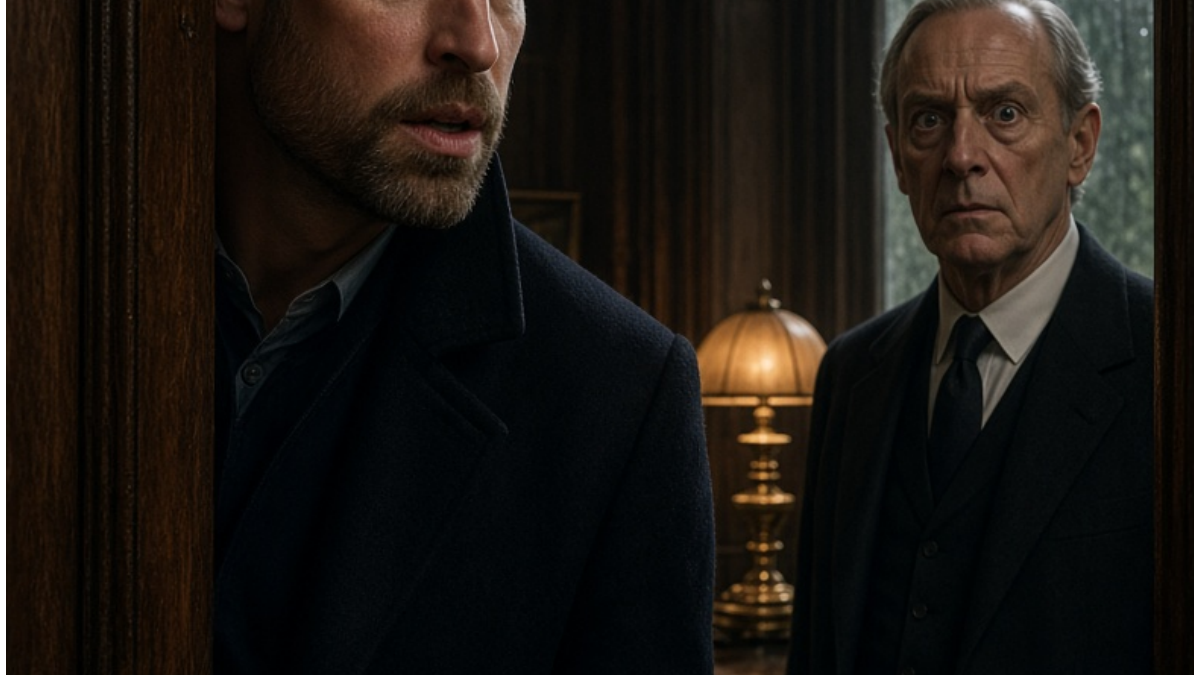
Chapter One: The Unsanctioned Journey
The rain over the East Midlands fell in steady, translucent sheets, blurring the treeline along the narrow country roads of Northamptonshire. Inside the dark, unbadged SUV, Prince William kept his eyes fixed on the ribbon of asphalt cutting through the gloom. There was no royal motorcade ahead, no outriders with flashing blue lights, and no royal protection officers in the passenger seat. For the first time in years, the heir to the British throne was traveling entirely alone, driven by a quiet, burning resolve that had been building inside him for months.
His phone, resting in the center console, vibrated continuously against the leather trim. The screen flickered with repeated incoming calls from the Private Secretary’s office at Kensington Palace, followed by urgent pings from Clarence House. He did not pick it up. To answer would mean offering explanations, permitting protocol to intervene, and allowing advisors to construct a diplomatic buffer between himself and the truth he was seeking.
At forty-four, William knew the weight of the institution better than anyone alive. He had been molded by its traditions, guarded by its officials, and trained to understand that individual emotion must always yield to the continuity of the Crown. Yet beneath the tailored suits and the composed public smile remained the lingering memory of a boy who had walked behind his mother’s coffin under the eyes of two billion people. For nearly three decades, he had carefully balanced duty with grief, believing he had settled his peace with the past.
That peace had shattered forty-eight hours earlier when an uncataloged archival ledger from his mother’s estate surfaced during a routine audit of family trusts. Tucked behind a legal brief was a single carbon copy of a letter sent years ago by his uncle, Charles Spencer, to the palace—a letter William had never been shown. Attached to it was a brief, bureaucratic note stamped by a retired palace official: Resolved without direct engagement. Material retained in private hold.
Now, as the iron gates of Althorp Estate loomed out of the mist, William slowed the vehicle and pressed the intercom button. The gates swung open in heavy, silent rhythm. He drove up the long gravel avenue, past the ancient oaks that had stood watch over generations of Spencers, stopping at last before the imposing stone façade of the ancestral house.
He switched off the engine. The silence inside the car was absolute, save for the rhythmic patter of rain against the windshield. William sat for a moment, his hands gripping the steering wheel. He knew that crossing this threshold without palace sanction was an act of quiet defiance—one that would ignite immediate alarms among the King’s senior advisors. But as he opened the door and stepped out into the cold night air, his jaw set. Rank could not protect him here, nor could it shield him from what waited inside.
Chapter Two: The Library at Althorp
Earl Spencer stood by the high carved mantlepiece of the Marlborough Room, a room whose walls were lined with dark oak bookcases holding centuries of family history. On the heavy mahogany table at the center of the room rested a single item: a dark green leather archival box, its brass lock dull with age. Across the lid, written in the sweeping, elegant hand of Diana, Princess of Wales, were six unmistakable words: For My Sons, William and Harry, Only.
When the door opened and William entered, the Earl did not immediately move forward. The two men looked at each other across the expanse of the oriental rug. There was no formal bow, no rehearsed court courtesy. In the quiet gloom of the library, they were not the Prince of Wales and a Peer of the Realm; they were a son and an uncle, bound by the memory of the same iconic, tragic woman.
“You came alone,” Charles Spencer said, his voice low and raspy against the quiet room.
“I had to,” William replied, closing the heavy oak door firmly behind him. “If I had brought a team, this wouldn’t be a family meeting. It would have become an institutional negotiation.”
The Earl offered a faint, sad smile, though his eyes remained guarded. He gestured toward the mahogany table. “Your office called three times while you were on the M1. Sir Marcus Sterling himself demanded to know if you were here.”
“I know,” William said, stepping closer to the table. His gaze fixed on the leather box. “Sir Marcus still believes he controls the flow of information in and out of my life.”
“He has controlled it for twenty-five years,” Spencer said quietly. He pulled out a leather armchair and motioned toward it. “You should sit before you look inside that box, William. What is in there isn’t palace history. It is your mother’s voice, unfiltered, unedited, and entirely unprotected by court public relations.”
William remained standing, his fingers lightly touching the edge of the mahogany table. “Why now, Charles? Why did you hold this back for so long?”
The Earl’s expression hardened, a flash of old, familiar anger surfacing in his eyes. “Because your mother left explicit written instructions that this box was only to be surrendered when one of her sons approached me directly, without palace mediation, without a private secretary drafting the request, and without the Crown overseeing the exchange. She knew how the system worked, William. She knew that if these letters entered the royal archives while you were a child, they would be categorized, restricted, and effectively buried under the state secrets clause.”
William stared at the handwritten script on the leather lid. The sight of his mother’s handwriting—the familiar, rounded loops and fluid strokes—sent a sharp, sudden pang through his chest. It was a physical reminder of a life cut short, of conversations left unfinished, and of a warmth that no formal palace history could ever recreate.
“Is my father mentioned in these?” William asked softly.
“Your father, your grandmother, the advisors, the courtiers, and most importantly, you and Harry,” Spencer answered. “She wrote these during the final two years of her life. They were not written in malice. They were written in fear—fear that as you grew up inside the machine, you would be taught to forget who she was beyond the headlines.”
Chapter Three: The Ghost in the Edits
The silence between them stretched, thick with decades of unexpressed grief and mutual suspicion. For years, the Palace and the Spencer family had existed in a state of polite, distant truce. To the public, the joint appearances at memorials and statues presented an image of unity. But behind the scenes, a quiet tug-of-war had always persisted over who held the true custodianship of Diana’s legacy.
“I always thought you pulled away from us after the funeral,” William admitted quietly, his voice carrying the weight of a long-held belief. “Growing up, every time your name came up in diary meetings, the narrative was the same—that the Spencers preferred to keep their distance, that you found the royal environment too uncomfortable.”
Charles Spencer let out a bitter, hollow laugh. He walked toward a side cabinet, poured two fingers of scotch into a crystal tumbler, and set it down near William, though neither man touched their glass.
“Is that what they told you?” Spencer asked, looking directly into his nephew’s eyes. “That we pulled away?”
“That was the impression,” William said cautiously. “The correspondence was always formal, handled through private secretaries. There were never personal calls, never informal invitations.”
“Let me tell you about the twentieth anniversary memorial,” Spencer said, leaning against the edge of the desk. “Months before that ceremony, I prepared a draft of the tribute I intended to read. In it, I quoted a letter your mother wrote to me in 1996. She talked about her intense desire that you and Harry should never become ‘prisoners of inherited silence’—that you should be allowed to express your feelings, your grief, and your doubts without fear of damaging the institution.”
William’s brows furrowed. “I don’t remember that line from the ceremony.”
“You don’t remember it because it was deleted,” Spencer said, his tone sharp. “Two weeks before the service, Sir Marcus Sterling—then serving as senior advisor to the household—called me into a private room at St. James’s Palace. He handed me my draft with that paragraph circled in red ink. He told me it was ‘politically destabilizing’ and that it implied a criticism of the royal family’s emotional culture. He made it clear that if I insisted on reading those words, my access to the official memorial planning would be revoked.”
William stood motionless. “He edited your speech?”
“He didn’t just edit the speech, William. When I refused to alter the text, he told me that you had reviewed the draft and agreed the line should be removed for the sake of family harmony.”
A sudden, cold anger flared in William’s chest. “I never saw your draft, Charles. I was told you were still writing it up until the night before.”
“I know that now,” Spencer said softly, his voice losing its sharp edge. “But at the time, sitting in that cold office, I believed him. I thought my twenty-five-year-old nephew was already so thoroughly absorbed by the palace machinery that he saw his mother’s words as a threat to his future reign. That was the day I decided that whatever Diana had left for you would stay locked in this room until you walked through that door on your own feet.”
Chapter Four: The Intercepted Lifeline
Earl Spencer reached into his jacket pocket and pulled out a key, small and brass, attached to a faded silk ribbon. He stepped forward and placed it in William’s hand.
“Open it,” Spencer said quietly. “See for yourself.”
William felt the cold metal against his palm. His heart hammered against his ribs as he inserted the key into the brass lock of the green leather box. The lock yielded with a soft, metallic click. Slowly, deliberately, William lifted the heavy lid.
Inside lay dozens of letters, neatly organized in chronological order, tied in ribbon. But resting directly on top was a modern paper file—a stark white folder that contrasted sharply with the vintage paper beneath.
William pulled out the folder and opened it. Inside were copies of official palace memoranda spanning more than fifteen years. As his eyes scanned the pages, the blood drained from his face.
There were copies of letters sent by Earl Spencer to Kensington Palace in 2008, 2012, and 2017—personal notes addressed to William, offering private family photographs, inviting him to Althorp away from the press, and asking to share memories of his mother.
On every single document, a standardized routing slip was attached. The stamp was identical: PRIVATE CORRESPONDENCE OFFICE – HIGHLY SENSITIVE. Below the stamp was handwritten notation in faded ink: Assessed as non-essential to Royal Highness’s official schedule. Acknowledged via formal secretarial template. No direct access required.
And at the bottom of each slip were the initials: M.S.
“Sir Marcus,” William whispered, his voice trembling with a mixture of shock and fury.
“Every single time I tried to reach you outside of official court channels,” Spencer explained, “the letters were intercepted by the Private Correspondence Office. They didn’t just filter the press, William. They filtered your own family. They created a digital and physical wall around you, deciding which personal relationships were safe for the future King and which ones carried too much emotional risk.”
William dropped the folder onto the table. The realization washed over him like a wave of icy water. For years, he had believed his mother’s family had gradually moved on, leaving him to navigate the lonely path of heir to the throne within the strict confines of the royal household. He had mistaken an artificial, bureaucratically enforced distance for personal indifference.
“They made me believe you didn’t want to be involved,” William said, his voice cracking slightly. “Every time I asked why we didn’t see more of the Spencers, the answers were always diplomatic, always smooth—’The Earl is extremely busy with the estate, Sir,’ or ‘We must be mindful of keeping family matters separate from public representation.'”
“It was an ongoing policy,” Spencer said gently. “The institution was terrified of Diana’s legacy. They loved her public image when it could be used to soften the monarchy’s reputation, but they were terrified of her truth. They feared that if you stayed too close to us, you would absorb her skepticism of the court, her independence, her refusal to be managed.”
William reached down and picked up the first bundle of Diana’s letters. The paper was crisp, carrying the faint, familiar scent of her favorite floral perfume—a scent that instantly catapulted him back to the sunlit sitting rooms of Kensington Palace in the early nineties.
He untied the ribbon with trembling fingers and unfolded the top letter.
Chapter Five: The Royal Summons
Before William could read the first line, the harsh, electronic ring tone of his encrypted smartphone shattered the quiet of the library.
William ignored it, keeping his eyes on his mother’s handwriting. But the phone rang continuously, cycling through three consecutive calls before transitioning to an urgent priority override signal—a tone reserved exclusively for communications from the reigning Sovereign.
Charles Spencer looked at the flashing screen. “You have to take that. If you don’t, Sir Marcus will have royal security at these gates within thirty minutes.”
William let out a long, slow breath. He picked up the phone, slid his thumb across the screen, and placed it to his ear. He did not speak first.
“William?” The voice on the line was unmistakable—King Charles III, his tone a complex mixture of parental anxiety, monarchical authority, and deep, underlying strain. “William, where are you? Your security detail reported that you left Kensington Palace unannounced over two hours ago.”
“I am at Althorp, Father,” William said, his voice calm, flat, and completely devoid of deference.
A sharp pause echoed over the encrypted line. In the background, William could hear the quiet murmur of advisors in the King’s private study at Clarence House.
“Althorp?” the King repeated, his tone tightening. “William, what are you doing there? You have an official briefing with the Chancellor in the morning. Sir Marcus has been trying to reach you for an hour. Leaving your protection officers behind is completely unacceptable—”
“I am here to collect what belongs to me,” William interrupted, his voice dropping an octave, cutting through his father’s words.
Silence fell over the line. “What belongs to you?” the King asked softly.
“My mother’s letters,” William said, looking directly at the green leather box. “The letters that were written for me and Harry. The letters that your advisors systematically hid from me for fifteen years.”
A heavy, painful stillness descended over the telephone connection. Across the room, Earl Spencer watched his nephew, recognizing the sudden, formidable authority in William’s posture. This was no longer a prince being scolded by a monarch; this was the future King establishing an unyielding boundary.
“William,” King Charles said, his voice losing its sharp authority, replaced by a weary, defensive sadness. “You do not understand the complexities of that time. After your mother died, the pressure on the family, on the institution, on you boys, was unimaginable. Decisions were made by the household to protect you from ongoing controversy, to allow you to grow up without being constantly pulled back into the pain of the past—”
“Protect me?” William broke in, his eyes blazing with restrained fury. “Sir Marcus didn’t protect me, Father. He managed me. He intercepted personal letters from my uncle. He edited speeches meant for my mother’s memorial. He decided who I was allowed to love, who I was allowed to trust, and which parts of my own family I was permitted to know!”
“William, please,” Charles pleaded quietly. “Come back to London. Let us discuss this privately at Clarence House. Bring the documents if you must, but do not do this in isolation.”
“No,” William said firmly. “I am staying here tonight. I am going to read every single page my mother wrote for me. And when I return to London tomorrow, Sir Marcus Sterling will no longer have an office in any palace representing my household.”
“William, Sir Marcus has served the Crown for thirty years—”
“He served the institution at the expense of my humanity,” William said coldly. “And I will not lead an institution that requires my emotional erasure to survive. I will see you tomorrow, Father.”
Without waiting for a reply, William ended the call and placed the phone face down on the mahogany table.
Chapter Six: The Voice of the Princess
The silence returned to the library, but it was no longer heavy with tension. It felt clear, cleansed by the confrontation that had just taken place across the telephone line.
Earl Spencer walked over to the cabinet, retrieved a small brass table lamp, and set it beside William, illuminating the pages of the open letter. “You stood your ground,” Spencer said softly.
“I should have done it ten years ago,” William replied, rubbing his face with his hands. “I spent so long believing that maintaining absolute loyalty to the system was the only way to honor my duty. I thought that any compromise, any crack in the armor, would let the chaos back in.”
“That is what they taught you to believe,” Spencer said. “Now, read what she actually wanted for you.”
William turned his attention back to the crisp, cream paper in his hands. The date at the top read: October 14th, 1996.
My dearest William,
If you are reading this, it means you have reached a moment in your life where you are ready to look past the official stories, the public representations, and the grand traditions that surround your world. I am writing this from my sitting room at Kensington, listening to the rain outside, thinking of you and Harry sleeping down the hall.
I know the life that waits for you, my darling boy. I know the immense pressure that will build around your shoulders as you move closer to the throne. I know how tempting it will be to build thick walls around your heart, to let the advisors tell you what to feel, what to say, and who to trust. I watched your father do it, and I watched how it slowly separated him from his own happiness.
Promise me, William, that you will never let the Crown erase the man inside you. The monarchy does not need another flawless, unfeeling symbol. It needs a human being who knows how to love, how to grieve, how to forgive, and how to stand up to the people who claim to protect you while stripping away your soul.
Your heritage does not belong solely to the House of Windsor. It belongs to the Spencers, to the people who loved you before you wore a title, and to the mother who will love you beyond her last breath. Never let them convince you that honoring my memory requires you to bury your own truth.
Always your devoted, Mummy
Tears, hot and silent, finally spilled over William’s eyelashes, tracing wet paths down his cheeks. He sat in the quiet library, holding the page close to his chest, his shoulders shaking with the quiet, cathartic release of decades of suppressed grief.
Charles Spencer walked over, placed a hand on his nephew’s shoulder, and held it there in steady, silent support. For the first time since August 1997, the rift between the two families dissolved completely, replaced by a profound, shared reverence for the woman who had loved them both.
Chapter Seven: The Confrontation at Clarence House
The following morning, the sun broke through the clouds over London, casting long, golden light across the courtyard of Clarence House.
Inside the grand drawing room, King Charles III sat near the fireplace, looking tired and pale. Standing near the window was Sir Marcus Sterling—a tall, immaculate man in a dark double-breasted suit, his posture rigid, his expression composed into a mask of professional confidence that had served him through three decades of court diplomacy.
The heavy double doors swung open. Prince William entered. He wore a simple dark suit, carrying a sleek leather briefcase under his arm. His expression was completely unreadable, but his stride was deliberate, carrying an unmistakable weight of authority.
“William,” King Charles said, standing up. “Thank you for coming.”
Sir Marcus bowed his head respectfully. “Your Royal Highness. I trust your journey back from Northamptonshire was smooth. I have prepared a briefing note regarding the handling of your schedule for the remainder of the week—”
“Save it, Sir Marcus,” William said, setting his briefcase down on the central table. He unlocked it, opened the lid, and pulled out the white folder containing the intercepted routing slips.
He tossed the folder onto the table directly in front of the courtier.
Sir Marcus looked down at the documents. For a brief second, his composed mask faltered, his eyelids flickering as he recognized his own handwritten initials on the yellowed routing slips.
“Do you know what those are?” William asked, his voice low and dangerous.
“Your Royal Highness,” Sir Marcus began smoothly, recovering his court demeanor, “the Private Correspondence Office operates under strict, long-standing guidelines established to protect senior members of the Royal Family from unnecessary emotional distress, reputational risk, and external pressures that could complicate their official duties—”
“You intercepted personal letters from my mother’s brother,” William said, stepping closer to the courtier until he was standing just inches away. “You edited speech transcripts meant for her memorial. You lied to my uncle, telling him that I had reviewed documents I was never shown. And you systematically isolated me from my mother’s family for over fifteen years.”
Sir Marcus held himself stiffly. “Every action I took was executed in good faith to protect the continuity of your future reign, Sir. The public perception of a unified, focused Royal Family requires absolute control over personal narrative—”
“My future reign,” William interrupted, his tone ringing like iron, “will not be built on lies, isolation, or the systematic erasure of human truth. You did not protect the monarchy, Sir Marcus. You degraded it. You turned a family into a cold, bureaucratic machine.”
William turned to his father. “Father, Sir Marcus’s secondment to my household is terminated immediately. He will vacate his office by five o’clock today. He will have no further access to my diary, my correspondence, or my family.”
King Charles looked at his senior advisor, then looked at his son. In William’s eyes, the King saw something he had never seen before—not just the grief of a son claiming his mother’s legacy, but the absolute, unshakeable authority of a monarch who had decided how he would rule.
Charles took a slow breath, adjusting his signet ring. “Your service to the Crown is concluded, Sir Marcus,” the King said quietly. “Please make the necessary arrangements with the Private Secretary.”
Sir Marcus stood frozen for a moment. Then, recognizing that the balance of power had permanently shifted, he bowed deeply to both men. “Understood, Your Majesty. Your Royal Highness.” He turned and walked out of the room, closing the door softly behind him.
Chapter Eight: A New Legacy
Six months later, the summer sun warmed the gardens of Kensington Palace.
A new private entrance had been constructed near the south wing, bypassing the main administrative offices. For the first time in decades, family members arrived without security briefings or secretarial vetting.
In the sunlit garden, Prince William sat at an outdoor table with his wife, Catherine, and his children. Walking down the stone path toward them were Earl Spencer and his family, carrying old photo albums and armfuls of summer flowers.
There were no press photographers stationed at the gates, no official palace statements issued to the media, and no advisors monitoring the conversation from the shadows.
William stood up to welcome his uncle, embracing him warmly in the open air. As the children ran off toward the lawns, William looked back at the palace windows—the windows where, years ago, a young princess had sat writing letters by the rain.
He pulled a small, leather-bound notebook from his pocket—a book where he now wrote his own private thoughts, unfiltered by speechwriters or courtiers. On the first page, he had written his mother’s words: Our duty is to guard the story, not to possess it.
The monarchy remained, standing as it had for a thousand years. But inside its ancient stone walls, something fundamental had changed. The false choice between duty and memory had been shattered forever. The heir to the throne had reclaimed his mother’s truth, proving that the greatest strength of a King lies not in the stiffness of his crown, but in the unyielding courage of his heart.








